
Hairstyle
18 Aesthetic Black Hair 2027 Styles
Aesthetic Black Hair 2027 showcasing 18 looks for natural afro hairstyles and long black braided hair. See the looks and save your favorite.

Lived-in color and glossy natural texture are the two ideas driving the current shift in black hair: a move away from flat-ironed lengths and toward soft face-framing layers that let the hair’s own pattern show. The result is a look that feels current without chasing a trend.
This collection of 18 ideas covers the range from low-upkeep protective styles to high-gloss salon finishes, for everyone who wants to see how a cut, a color technique, or a simple styling change can solve a specific problem: the fringe that won’t sit, the grow-out line that announces itself too early, or the fine hair that needs a shape that holds. Aesthetic Black Hair means working with what you have, not against it.
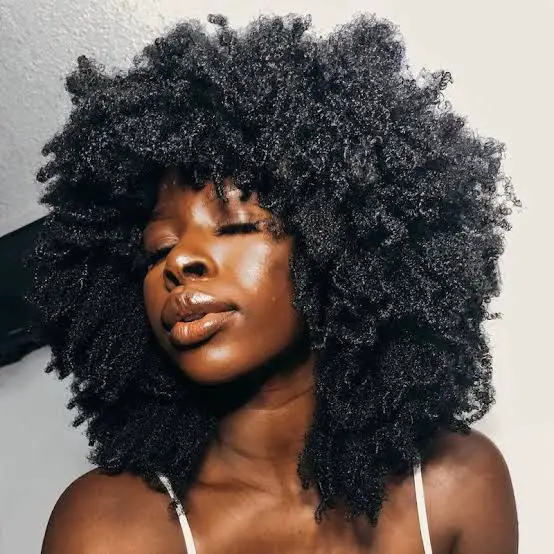
Voluminous Natural Afro
Courtesy of: byrdie.com
A voluminous afro works the shape outward from a center point, so the roundness you see is structure, not luck. The black base color stays deep and even, with no lighter pieces breaking up the surface, and the coily texture does the rest. Thick hair holds that height without help; fine or low-density hair collapses into a flat cap by noon. Length matters too: shoulder length or longer gives the pick something to lift, while anything shorter reads as a crop. This is a natural afro hairstyle at its most straightforward, and it earns the room it takes up. Ask your stylist for: a voluminous, natural afro. Round faces get good elongation from the vertical lift, and long faces can keep the sides a touch closer. Square jawlines have nothing to worry about here.
Thick Coily Shoulder Length Afro
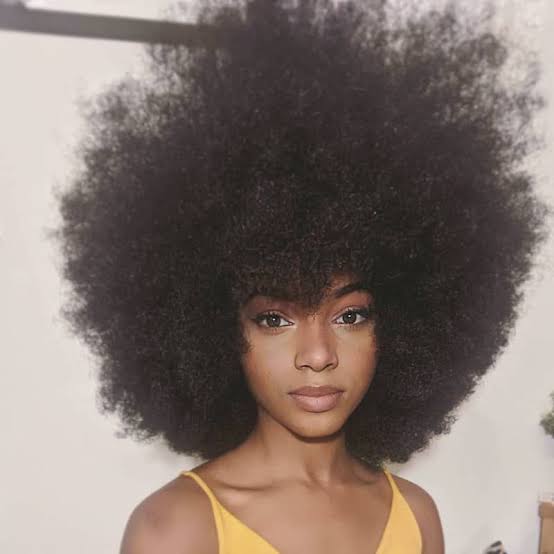
Photo credit: byrdie.com
Shoulder length is the sweet spot for a coily afro: long enough to shape, short enough to keep the outline crisp. The black base color runs uniform through the whole shape, so the volume comes from density alone. Day to day, this finish asks for damp styling, not dry fussing. Apply a curl cream to wet hair, scrunch upward, then air dry or use a diffuser until the coils set. Skip the cream and the same hair looks undefined by the afternoon. Ask your stylist for: a natural, voluminous afro. A trim every eight to ten weeks keeps the rounded silhouette from going lopsided, and a wide-tooth comb refreshes the shape between washes. Thick coily hair holds this form well; finer textures need more product to fake the same weight.
Long Twisted Braids Mid-Back
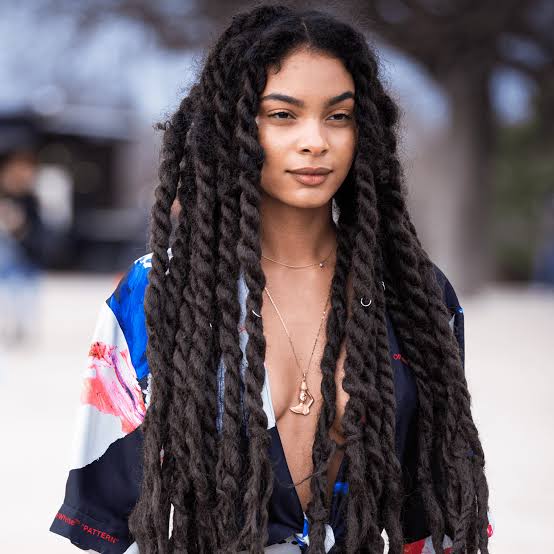
Image credit: byrdie.com
Twisted braids at mid-back length are a build, not a single step. The middle parting sets two clean sections first, then each one is divided into smaller subsections and twisted from root to tip, with the coil of each twist held tight enough to stay defined for weeks. Thick, coily hair gives the twists their weight and density; finer hair needs extra length added to reach the same mid-back drop. The black base color stays flat and even, which keeps attention on the texture instead of the shade.
Ask your stylist for: mid-back length twisted braids. Expect a long salon session, closer to a full afternoon than a quick appointment, and book it with clean, stretched hair to save time. This protective style keeps ends tucked away and holds its shape through travel and busy weeks. A silk or satin scarf at night preserves the smoothness and keeps frizz from creeping up the length.
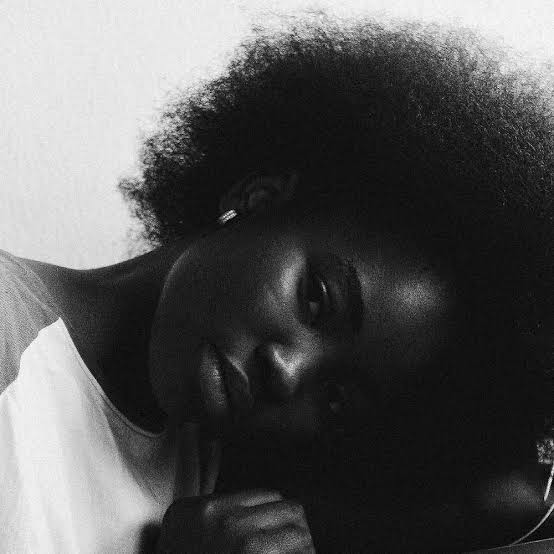
Mid-Back Natural Coily Hair
Source: byrdie.com
What do you actually say at the salon when you want your coily hair to hang at mid-back with its own texture intact? Start with the shape, not the styling. The air-dried finish is one detail that makes this look read natural instead of set, and it comes from how the hair is cut and left to dry. The black base color stays uniform, so the coil pattern is the whole show.
Ask your stylist for: mid-back length natural air-dried hair. Bring these points to the appointment:
- A shape that keeps the mid-back length without thinning the ends
- A middle parting that sits clean and stays put
- Layers placed so the coils clump instead of separating
- An air-dried finish, no smoothing or stretching
Thick hair holds this shape best; low-density coily hair can lose the mid-back weight once layers come out.
Shoulder Length Voluminous Curls
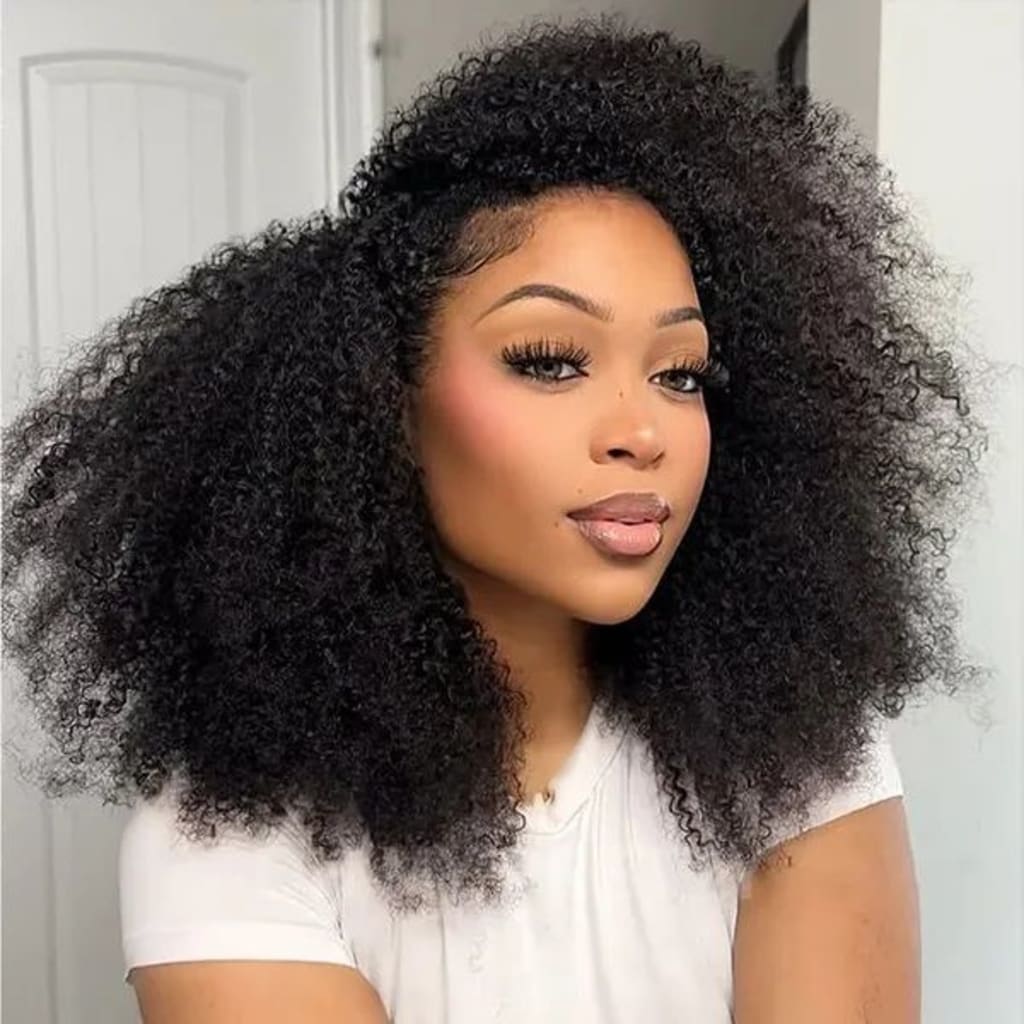
Via vocal.media
Layers cut through a shoulder length shape are what push these curls outward instead of down. The black base color stays consistent from root to tip, so the volume reads as shape rather than shine. Curly, thick hair is the natural home for this: the density fills out every layer, and the parting keeps the front from swallowing the face. Fine curls can wear it too, just with fewer layers so the ends do not thin. Ask your stylist for: shoulder length voluminous curls. Round faces get length below the jaw to balance the width; long faces can carry the fullness at the sides; square jawlines soften under curls that sit around the chin. A trim every eight to ten weeks keeps the layers from growing out into a triangle.
Mid-Back Wavy Hair With Blue Highlights
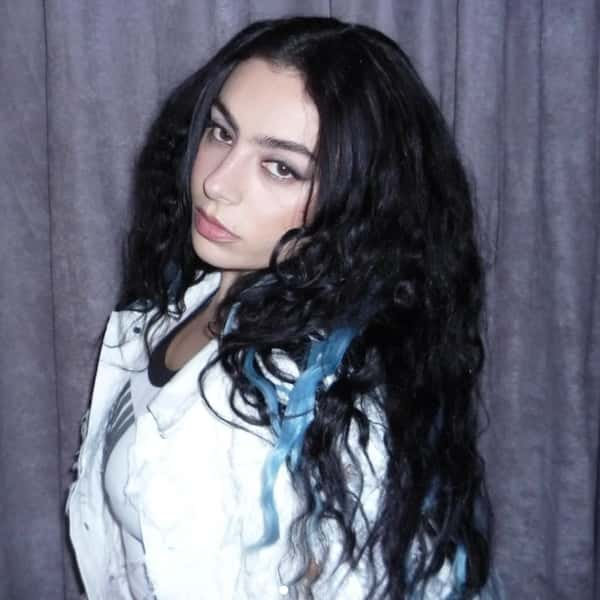
Courtesy of: behindthechair.com
Solid black hair keeps every reflection on the surface; a blue highlight breaks that surface and pulls the eye into the wave. On a thick, wavy mid-back cut, the blue sits inside the bend of each wave rather than on top of it, so it flashes when the hair moves and disappears when it falls flat. Ask your colorist for: mid-back wavy hair with subtle blue highlights. The middle parting keeps the color even on both sides, which matters when a highlight is this quiet.
Upkeep separates the two approaches. Solid black only needs a gloss when it dulls; blue highlights demand a color-safe shampoo and conditioner from day one, plus a color-depositing conditioner once a month to hold the tone before it drifts. Expect a salon visit every six to eight weeks to refresh the pieces near the root line, where fading shows first. Fine hair takes the blue louder than thick hair does, because there is less dark base to filter it.
Mid-Back Voluminous Wavy Blowout
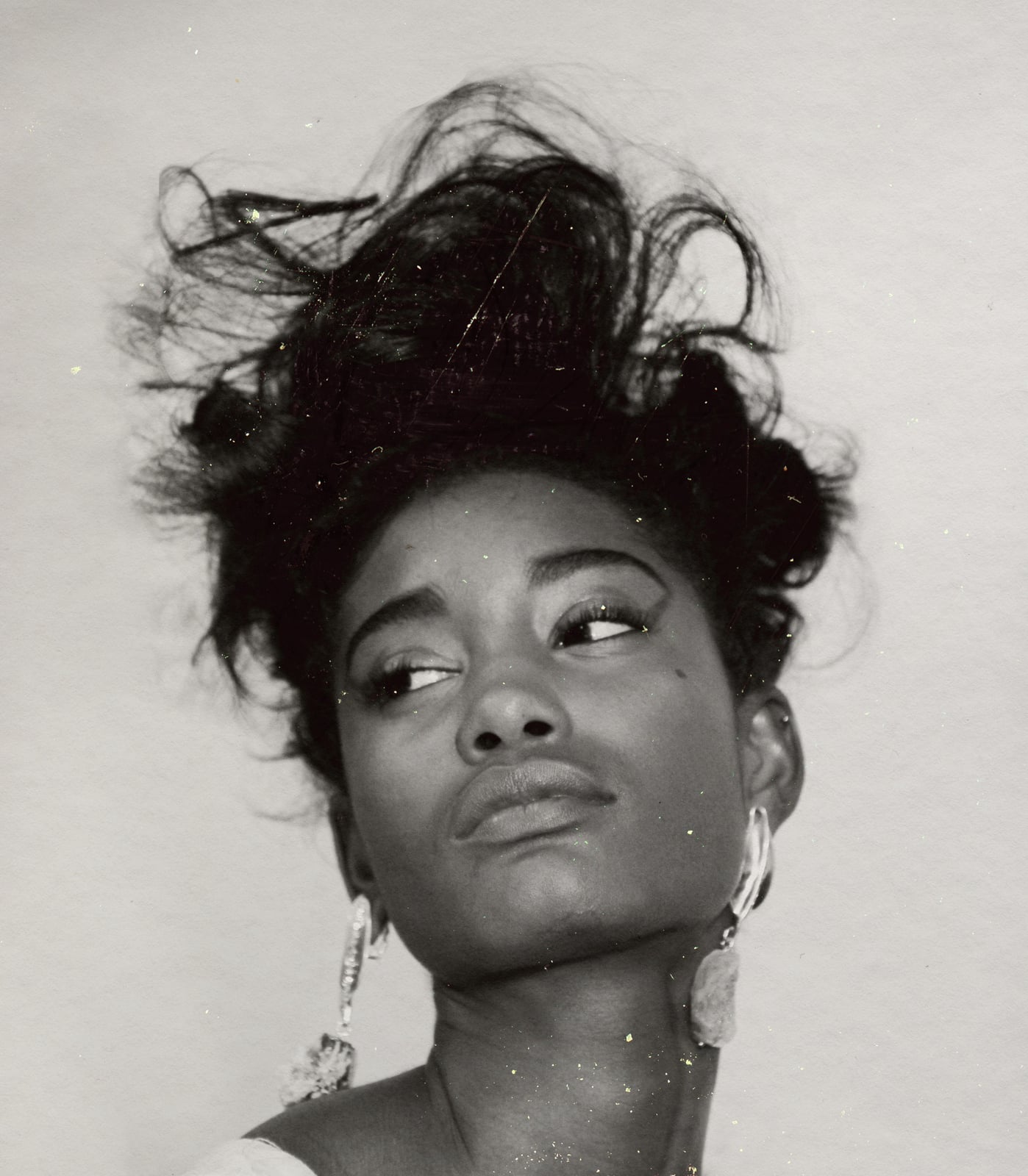
Photo credit: cosmopolitan.com
A voluminous blowout on thick, wavy mid-back hair is built on tension and section size. Soft face-framing layers do the rest: they release the weight near the jaw so the crown can stand up. Ask your stylist for: mid-back voluminous wavy blowout with face-framing layers.
This is a salon finish that requires daily maintenance. Volumizing mousse goes on damp hair before the dryer, then a large barrel brush lifts each section at the root. Skip a day and the crown flattens while the ends keep their wave, which is the giveaway. A trim every eight to ten weeks keeps the face-framing layers from growing into the length and dragging the whole shape down. On thick wavy texture, the gloss fades before the volume does, so a shine spray earns its place between washes.
Collarbone Curly Hair Blowout
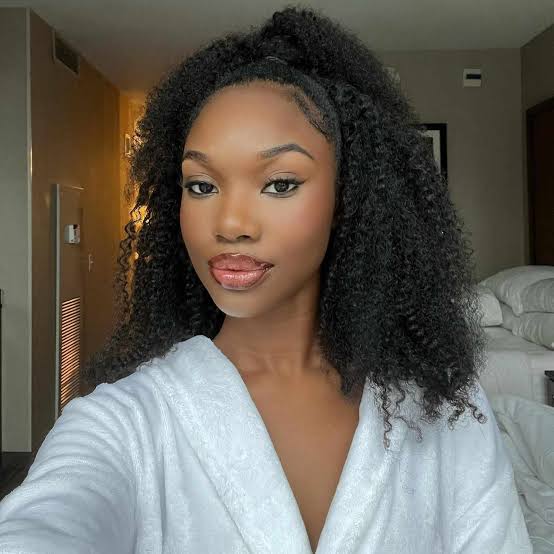
Image credit: byrdie.com
Wondering how to get defined curls and a fringe that does not swallow the forehead? Ask for them by name. Ask your stylist for: collarbone length curly blowout with wispy bangs. The collarbone length keeps thick, curly hair from weighing into a pyramid, and the wispy bangs are cut light enough to sit over the brow without a heavy line. A side parting lets the fringe sweep instead of splitting down the middle.
- Specify wispy bangs, not a full fringe, so the curl pattern stays visible underneath.
- Ask for layers through the collarbone length to stop the curls bunching at the ends.
- Bring a photo of the curl definition you want, since blowout tension changes the shape.
A curly blowout is salon-leaning: a dryer with a diffuser can approximate it at home, but the defined, clumped curl in a polished blowout usually needs a stylist’s hand and about two hours.
Shoulder Length Sleek Black Blowout
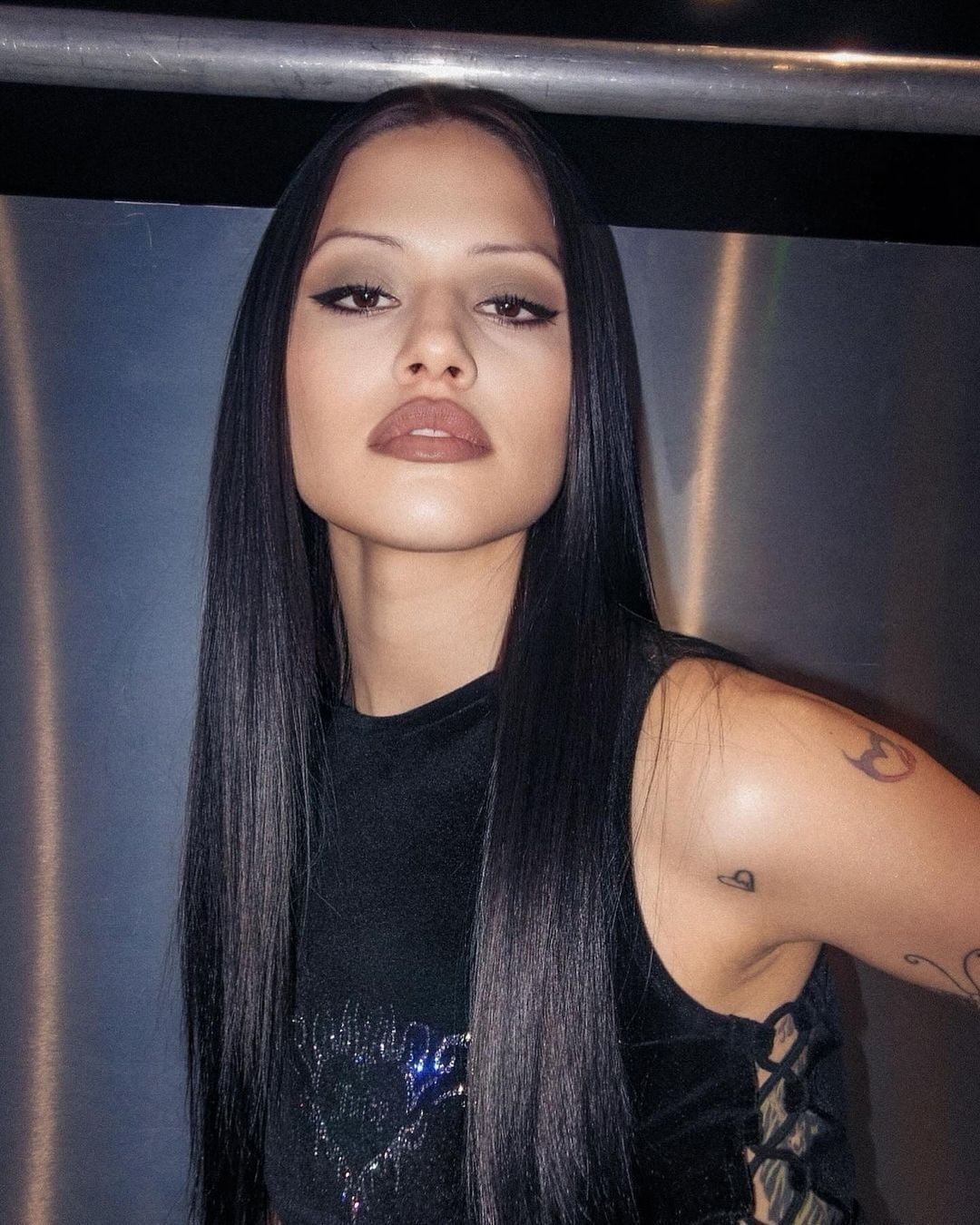
Source: glamour.com
A blunt cut at shoulder length with a high-gloss finish has nowhere to hide: every bend in the hair shows, and that is the point. On fine, straight hair the blunt line reads as weight it does not actually have. Ask your stylist for: shoulder length sleek black blowout.
Here is the drawback. Fine, straight hair holds a sleek blowout for about a day before it starts clinging and losing the gloss at the crown, and humidity undoes the ends faster than any serum can stop it. If you want a style that survives a commute without a brush in your bag, this one asks more of you than a layered cut would. It rewards hair that is already smooth and well conditioned; on dry ends, the shine spray only highlights the split.
Mid-Back Fine Straight Hair Blowout
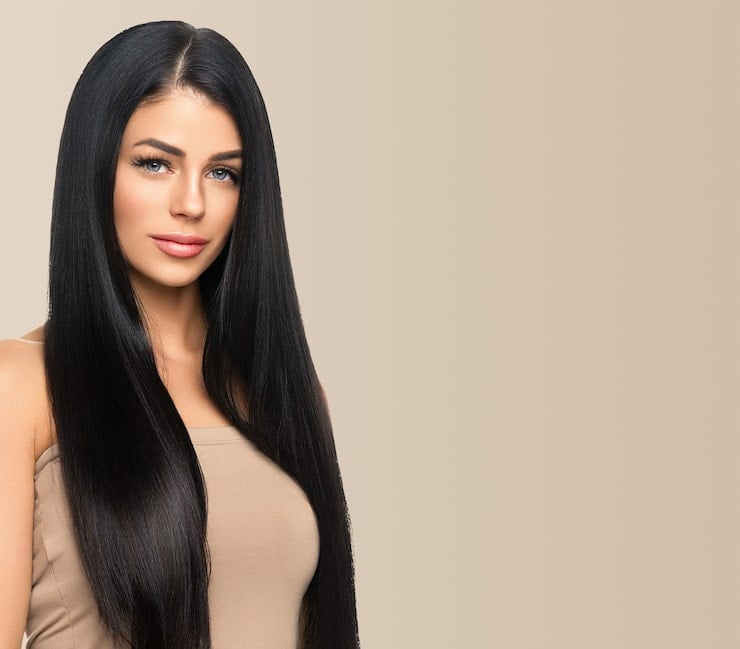
Source: magnific.com
Fine, straight hair reaches mid-back gloss fastest when the blowout is built in two passes: rough-dry to eighty percent with the nozzle pointed down the strand, then finish section by section with a round brush held under the hair, not over it. That under-directed airflow is what presses the cuticle flat and gives solid black its mirror finish. A side parting breaks the sheet of shine so the length does not look like one flat panel.
Ask your stylist for: mid-back length fine straight hair blowout. Product discipline matters more than heat here. A lightweight product at the roots before drying lifts the crown without weighing the mid-back down, and heavy creams or oils will collapse fine hair within hours. Keep the trim at every eight weeks, because fine hair shows a ragged end line sooner than thick hair does. Between visits, a gloss every six weeks keeps the black from going dull at the mid-back.
Long Wavy Black Hair Past Mid-Back
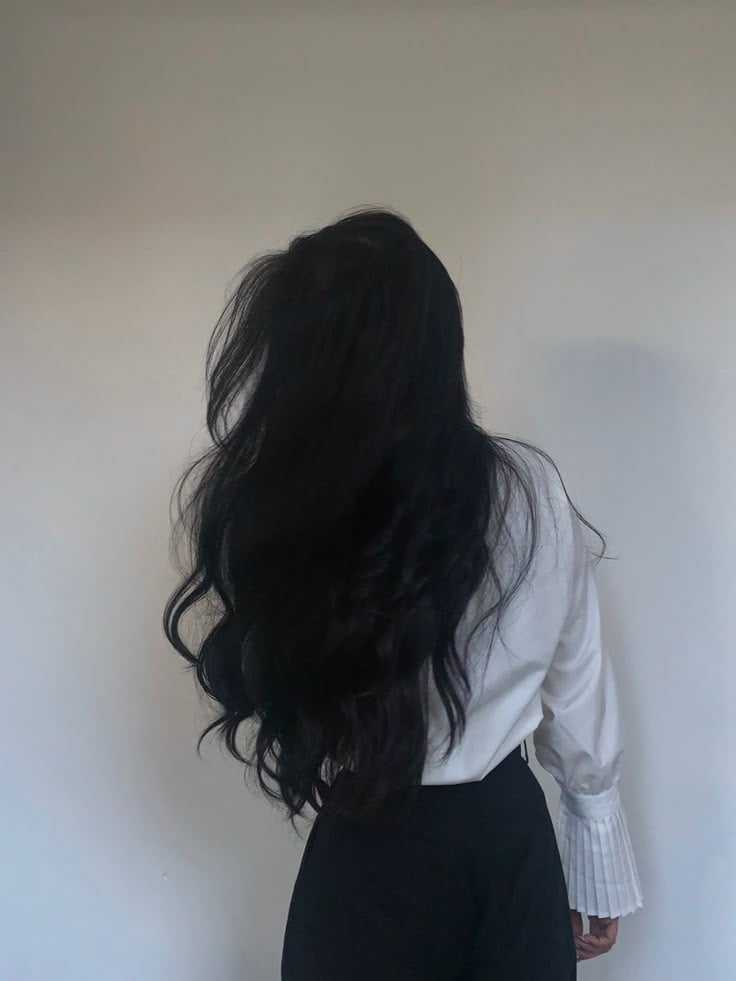
Via threet.pt
Long, loose waves are a favorite for summer evenings: they move, they catch the breeze, and they need almost no coaxing once they’re set. This mid-back length, cut with subtle layers, lets thick, wavy black hair fall in soft, natural waves that show off its texture and shine. The layers add movement while keeping density, so the style looks full and flowing with body through the ends.
Ask your stylist for: long, loose wavy black hair past mid-back. This look suits thick, wavy hair that’s already at least mid-back length, because the weight of the hair keeps the waves from frizzing too fast. In summer, the length is a bonus: it pulls up easily into a loose twist or low ponytail when the humidity spikes, and the waves mean a quick refresh with a spray bottle restores the shape. For evenings, a few face-framing pieces tucked behind the ears keeps it from feeling heavy.
Mid-Back Straight Blowout With Layers, Thick
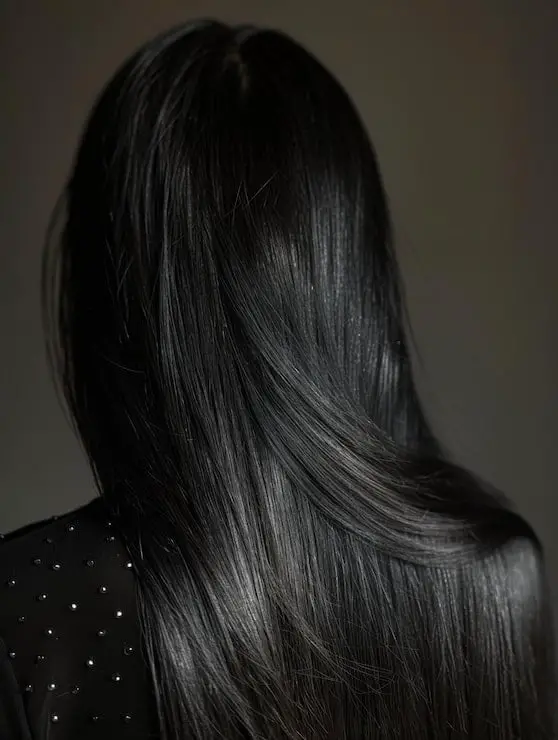
Courtesy of: magnific.com
Ask your stylist for: mid-back length glossy straight blowout with layers. This works best on thick, straight hair that’s already mid-back; the thickness gives the blowout its body, and the layers keep it from feeling heavy. Fine hair would fall flat with this much length, so it’s a look for those with density. To keep it sleek, a round brush while blow-drying smooths the cuticle, and a flat iron just on the ends polishes any stray pieces.
Mid-Back Updo With Loose Curls
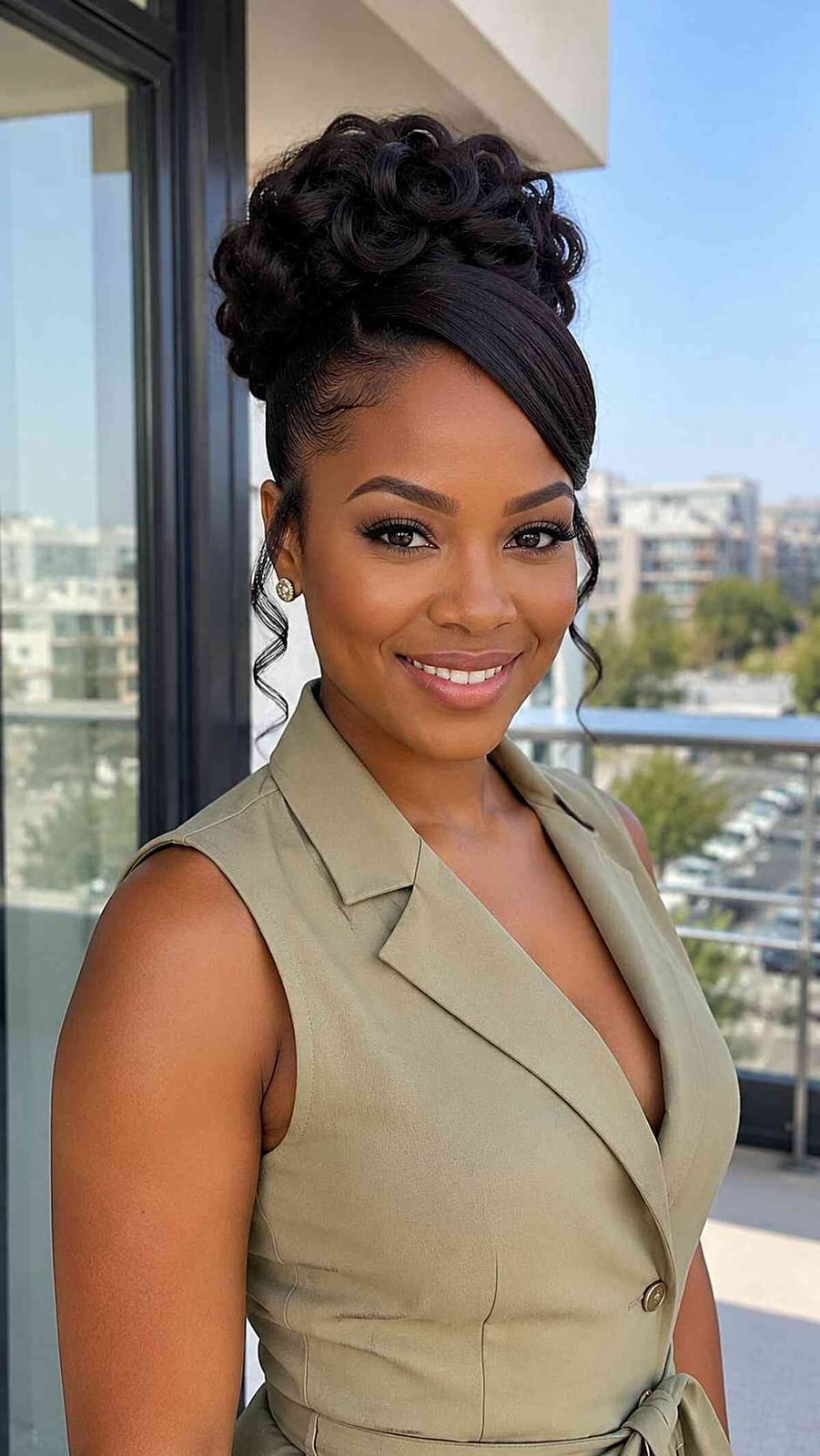
Photo credit: latest-hairstyles.com
How do you make an updo look like it took an hour when it took twenty minutes? Start with loose curls that have already been set, then pin them up without overthinking the placement. This voluminous updo works because the hair is wavy and thick, so the pinned sections have natural body that holds their shape. The side-swept bangs are the trick: they’re left down to soften the face, and they break up the mass of the updo so it doesn’t read as a helmet.
Ask your stylist for: mid-back updo with loose curls and side-swept bangs. This suits thick, wavy or curly hair at mid-back length, because the texture grips pins better than straight hair does. To build it, curl the hair in sections, then gather it loosely at the nape and pin each curl in place, leaving the bangs out. A few strands around the face get pinned back to frame the forehead. A spritz of hairspray over the finished updo keeps the curls from slipping, and the bangs can be smoothed with a flat iron for a sleek contrast.
- Curl sections with a wand, then pin each curl at the crown.
- Leave the side-swept bangs down, and tuck a few strands behind the ear.
- Finish with a light hairspray to set the pins.
Shoulder Length Sculpted Updo
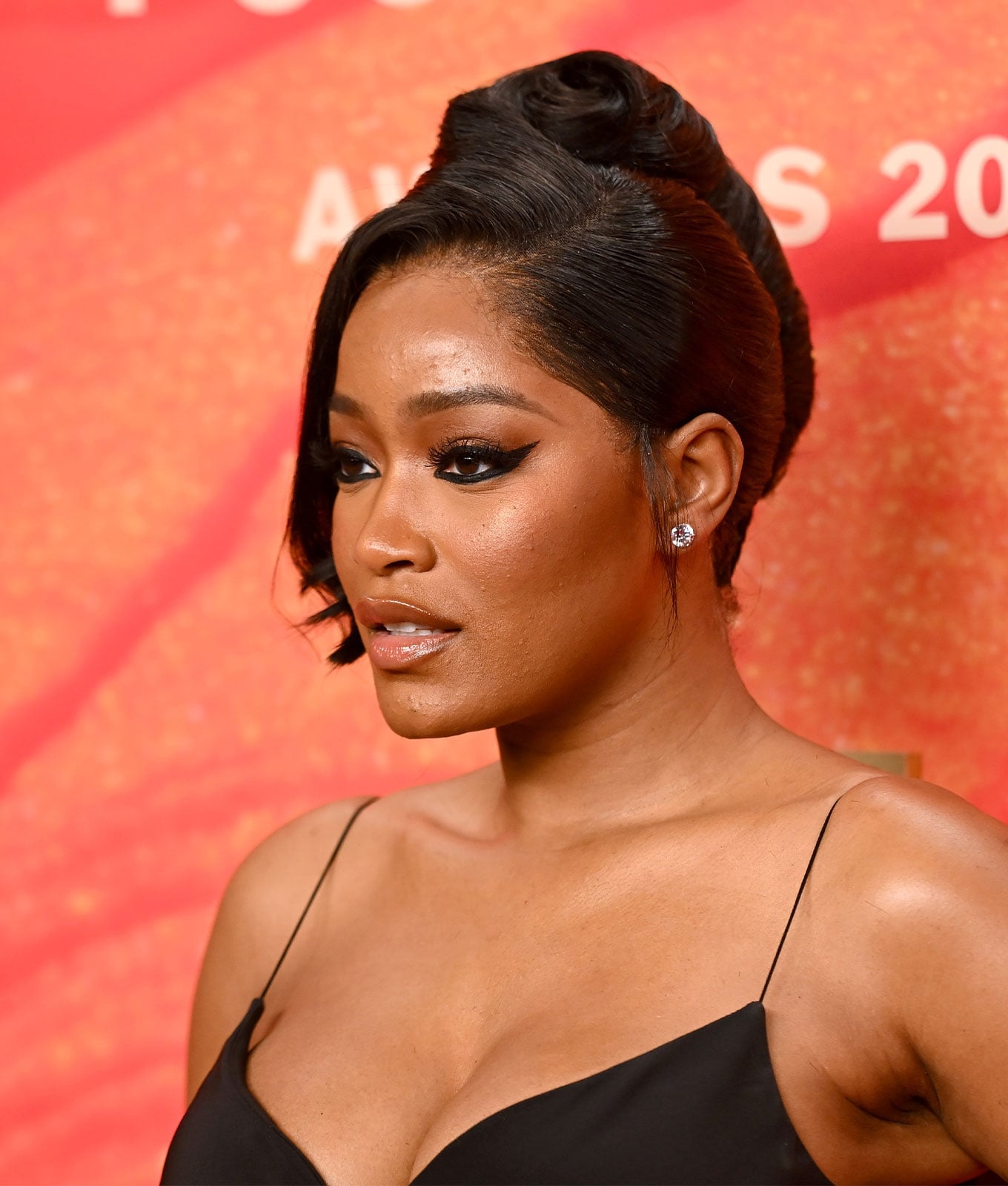
Image credit: purewow.com
A sculpted updo is a commitment: it’s not the style you toss together on a Tuesday, but it’s the one that looks deliberate for a formal event. Here, thick, straight black hair is slicked back from the face and pinned into a voluminous shape that sits at the crown, with the length stopping around shoulder level. The slicked-back front is the defining move, so the hair needs enough density to hold the shape without showing gaps.
Ask your stylist for: shoulder length sculpted updo, slicked back. This suits thick, straight hair that’s at least shoulder length; shorter hair won’t have enough weight to stay pinned. The daily reality is that this is a salon-level style, not a quick home job. To recreate it, you’d need a strong-hold gel to smooth the front, then pins to build the volume, and a generous layer of spray to keep it from unraveling. The payoff is a clean, architectural look that lasts through an evening without constant touching up.
Collarbone Long Bob With Side Bangs
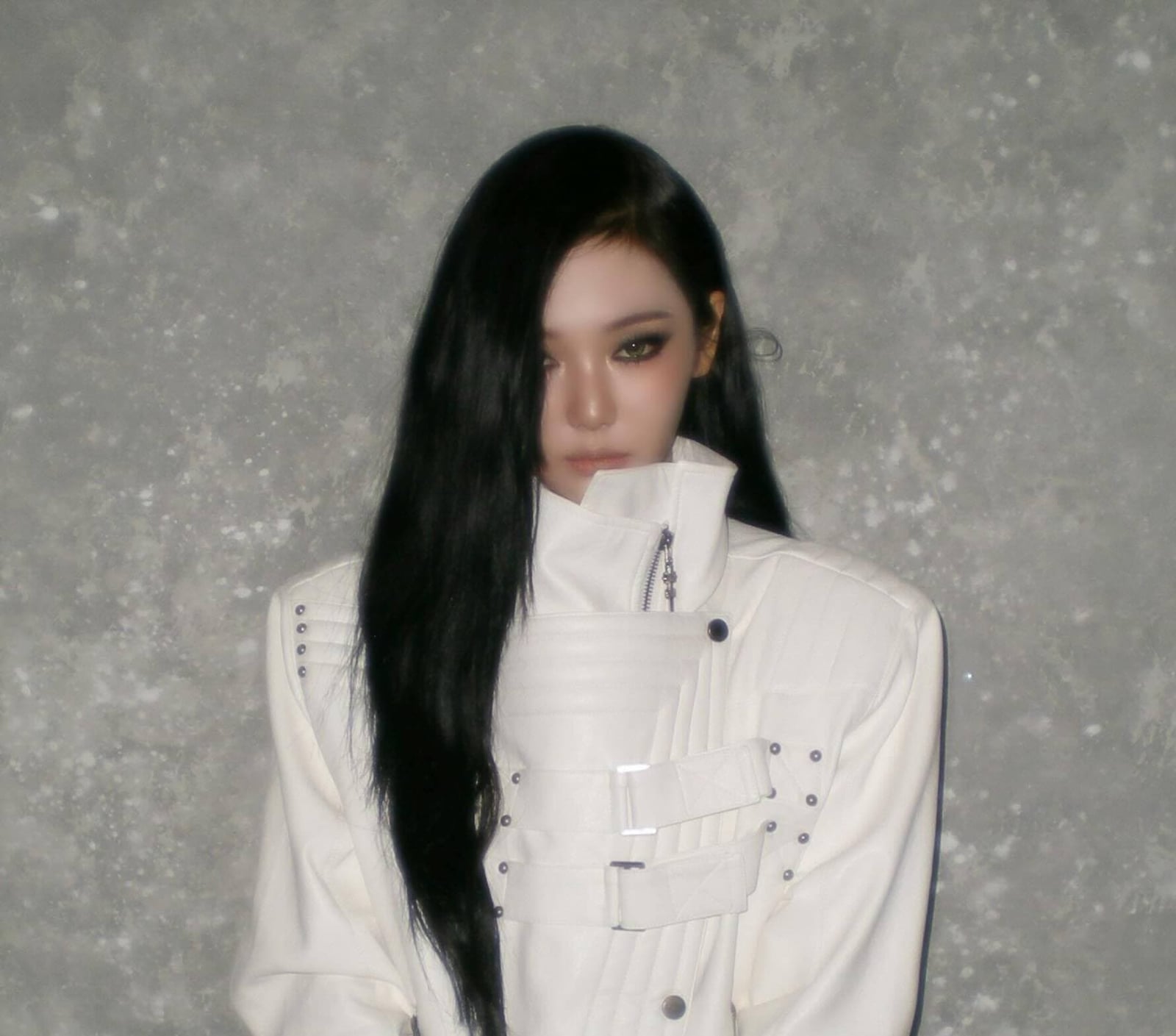
Source: hashtaglegend.com
There’s a quiet drama to a long bob that’s cut to the collarbone and worn straight, especially when the side-swept bangs fall across the forehead. The fine texture here works in its favor: the hair lies flat and sleek, which gives the style a sharp, almost gothic edge. The length is forgiving, not so short that it demands daily styling, but short enough that it holds a clear shape.
Ask your stylist for: collarbone length long bob with side-swept bangs. This is a good fit for fine, straight hair, because the clean lines show off the texture without needing volume. The side part adds asymmetry, and the bangs soften the forehead without hiding it. To keep it sleek, a flat iron smooths the hair and the bangs, and a drop of smoothing serum on the ends prevents flyaways. A trim every eight weeks keeps the line sharp, since fine hair shows split ends quickly.
Chin Length Blunt Bob With Blunt Bangs

Worried a blunt bob will look like a helmet? Ask your stylist for: chin length blunt bob with blunt bangs, and keep the baseline sharp. A middle part and air-dried fine, straight hair in jet black give the cut its graphic edge, and blunt bangs make the front stand out. This is salon work: a razor or clipper line across the ends needs a pro hand. Trims every four to six weeks keep the line from going soft, and a texturizing spray adds grip without weight.
Short Textured Pixie Cut
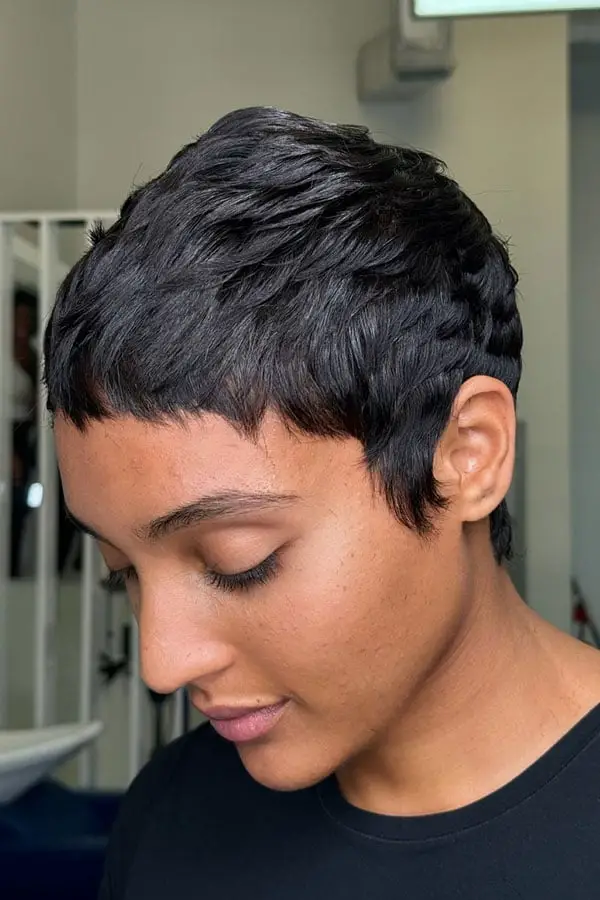
Courtesy of: fabmood.com
The drawback is the upkeep: four to six weeks between trims, or the silhouette grows out into a vague crop. Ask your stylist for: short textured pixie cut with cropped fringe. A wax or pomade does the styling, and a dry cut keeps the texture honest.
Black Herbal Hair Colour Powder
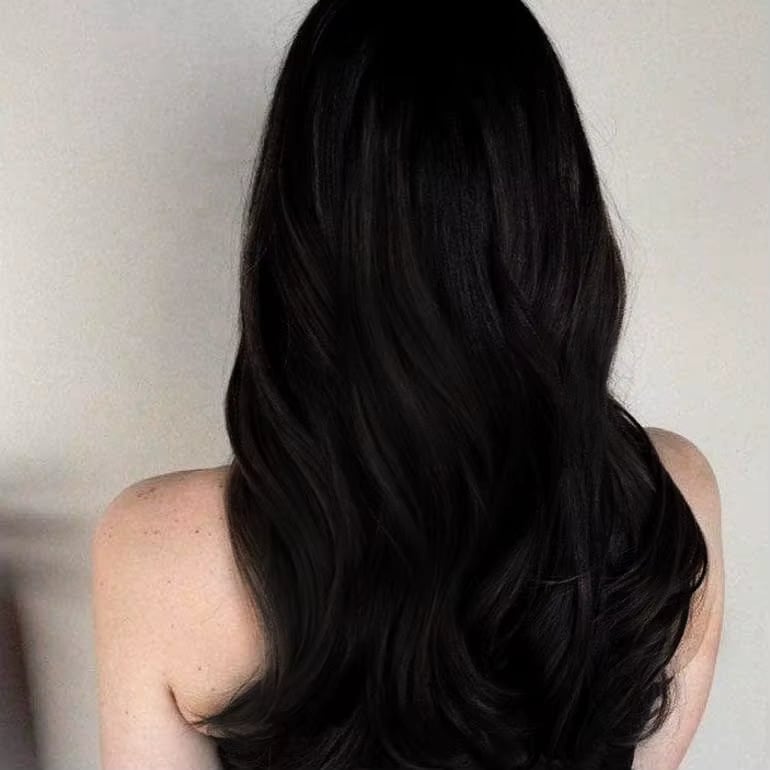
Photo credit: alibaba.co.uk
Herbal color powder works on a different clock than a cream dye: you mix the black powder with warm water into a paste, apply it section by section, and leave it on for around two hours. The tone lands soft and deep rather than flat, and the texture of the powder means it clings to strands instead of dripping. Ask your colorist for: natural black herbal hair color. A patch test 48 hours ahead is the one step worth keeping. Repeat every four to six weeks to hold the depth.
Final Thoughts
Fine hair benefits from a blunt baseline and minimal layering, while thick, coily textures need regular trims every eight weeks to keep shape without losing volume. For braided styles, scalp oiling prevents the dryness that creeps in around week three. Color-treated strands last longer with sulfate-free shampoos and a toning schedule that you actually stick to.
- Deep condition natural textures weekly to maintain moisture and elasticity.
- For braided styles, oil the scalp regularly to prevent dryness and breakage.
- Protect black hair from heat styling with a quality protectant spray.
- For color-treated black hair, use sulfate-free shampoos to preserve pigment.
- Regular trims every 8-12 weeks help maintain shape and prevent split ends.
Embrace the aesthetic that speaks to you.
Hairstyle
22 Curly Hair Natural Styles 2027 for Easy Chic
Curly Hair Natural Styles 2027, featuring 22 looks perfect for a short bob with bangs or fine curly hair. See the looks and save your favorite.
Curly Hair Natural Styles start with a cut that respects your pattern: shape, length, layers, and bangs chosen for texture, not against it. In 2027 the shift is toward soft face-framing layers and curtain bangs that let curls sit glossy and natural instead of scrunched stiff.
These 22 ideas run from short and low upkeep to long and salon-leaning, with a mix of defined curls, blown-out volume, and lived-in color. It is for round, square, and long faces, fine to thick density, and anyone tired of a fringe that will not sit or fine hair that falls flat.
Collarbone Shag With Honey Balayage And Curtain Bangs
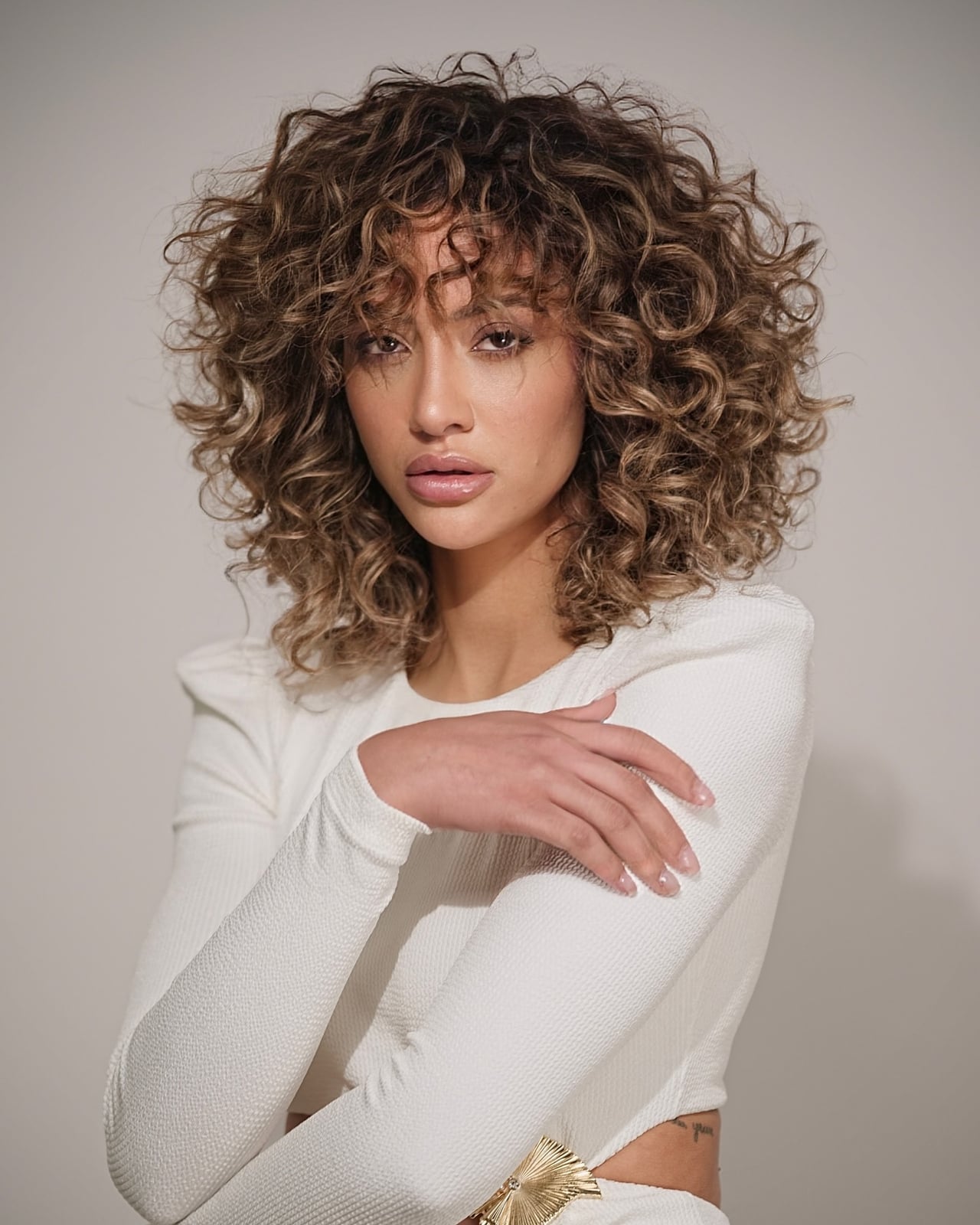
Courtesy of: fabbon.com
Can a shag actually work with natural curls without turning into a triangle? This one does, thanks to collarbone length and soft, face-framing curtain bangs that land light rather than heavy. The honey blonde balayage runs through medium-density curls, giving dimension without a harsh grow-out line. Ask your stylist for: collarbone shag with curtain bangs, honey balayage. The air-dried finish keeps the whole thing looking lived-in, not labored over.
Chin Length Bob With Blonde Balayage
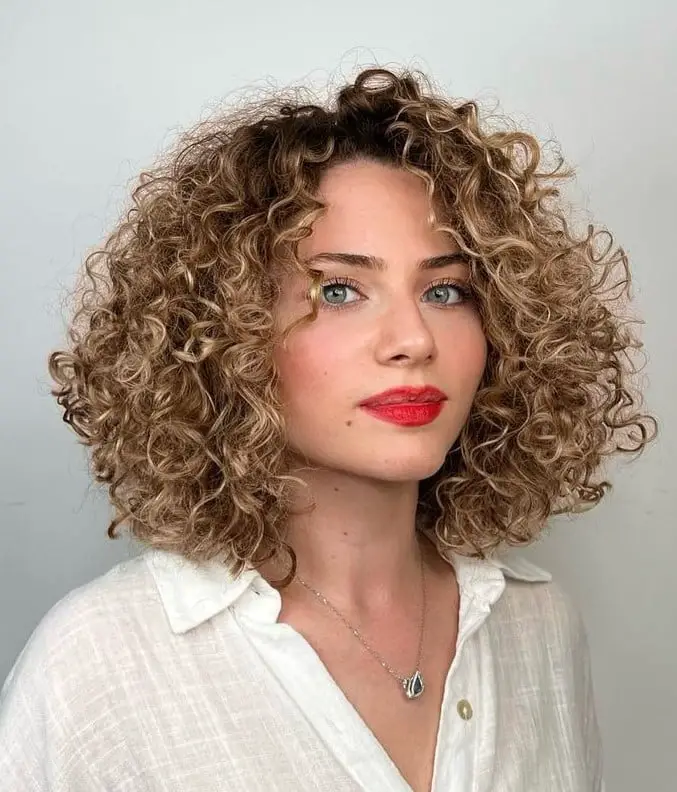
Photo credit: hadviser.com
A curly bob at chin length is a different animal from a lob. It sits closer to the face, so the shape stays compact and the blonde balayage lands where it can actually catch light. The middle parting and no-bangs approach elongate a round face, while the defined glossy curls keep the cut from reading as severe. Ask your stylist for: chin length bob, blonde balayage, no bangs.
Ear Length Bob With Short Curly Bangs
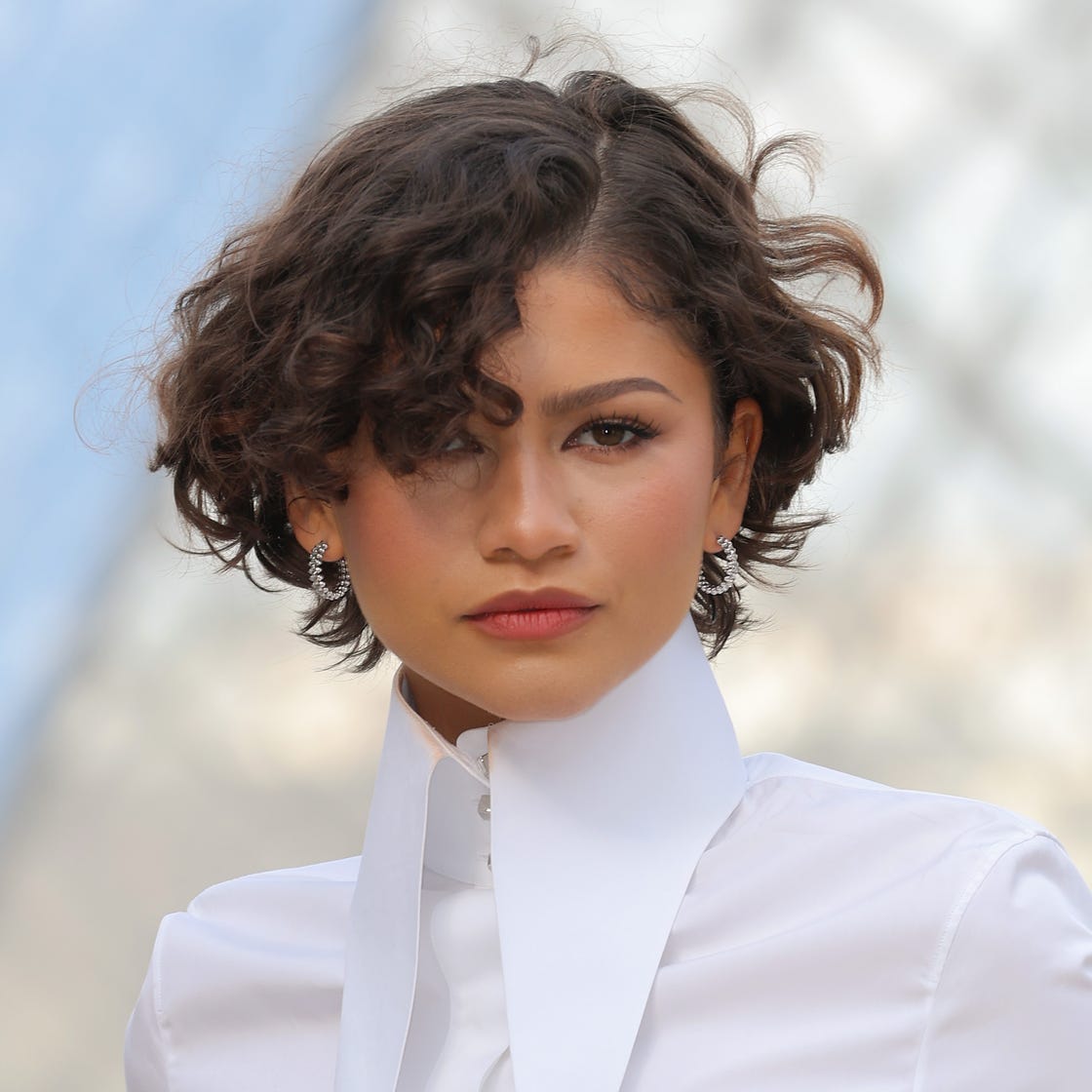
Image credit: elle.com
An ear-length bob built for fine curls. The short curly bangs add a focal point without weighing down the texture, and a side parting breaks up the roundness of the shape. Fine hair needs a cut that gives curls room to spring up rather than flatten, and this one removes enough length to do that. Ask your stylist for: ear length bob, short curly bangs, dark brown. Plan on a bang trim every four to six weeks to keep them landing where they should.
Short Cut With Defined Curls and Air Dried
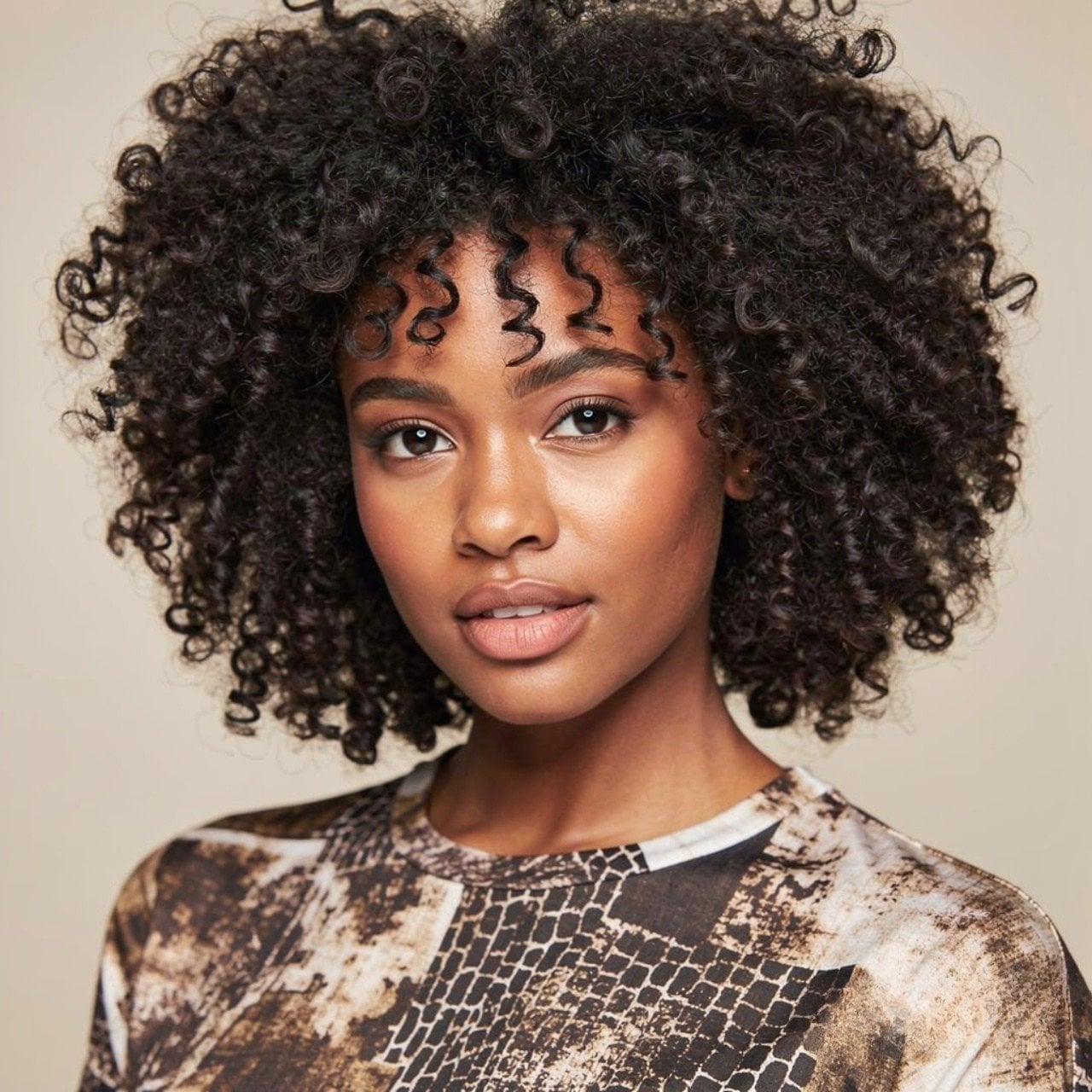
Source: hairsblooming.com
Ear-length curls on fine hair work because the cut removes enough length to let each coil spring without being dragged down by its own weight. The side part adds asymmetry, which keeps the shape from reading as a uniform helmet. Ask your stylist for: a short cut for fine curls with a side part. The one real drawback is the daily styling effort: fine curls lose definition fast, so you will need a curl cream and a few minutes of finger-coiling each morning. A trim every six to eight weeks is non-negotiable; the shape collapses fast without it.
Short Bob With Voluminous Curly Bangs
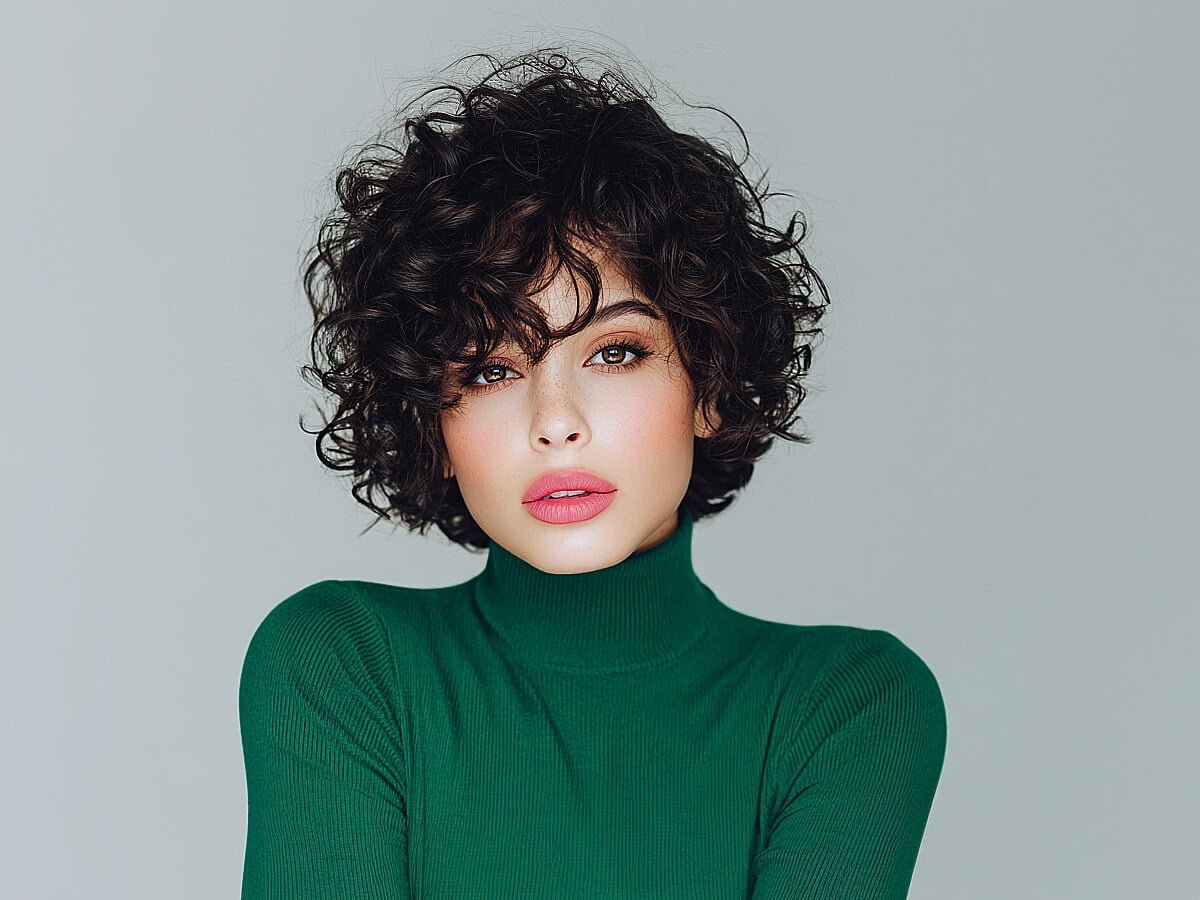
This short bob relies on internal layering to lift thick dark brown curls off the nape. The short curly bangs are cut short enough to sit forward and not disappear into the shape. Ask your stylist for: short bob with voluminous curly bangs, side part.
Pixie With Cropped Curly Sides
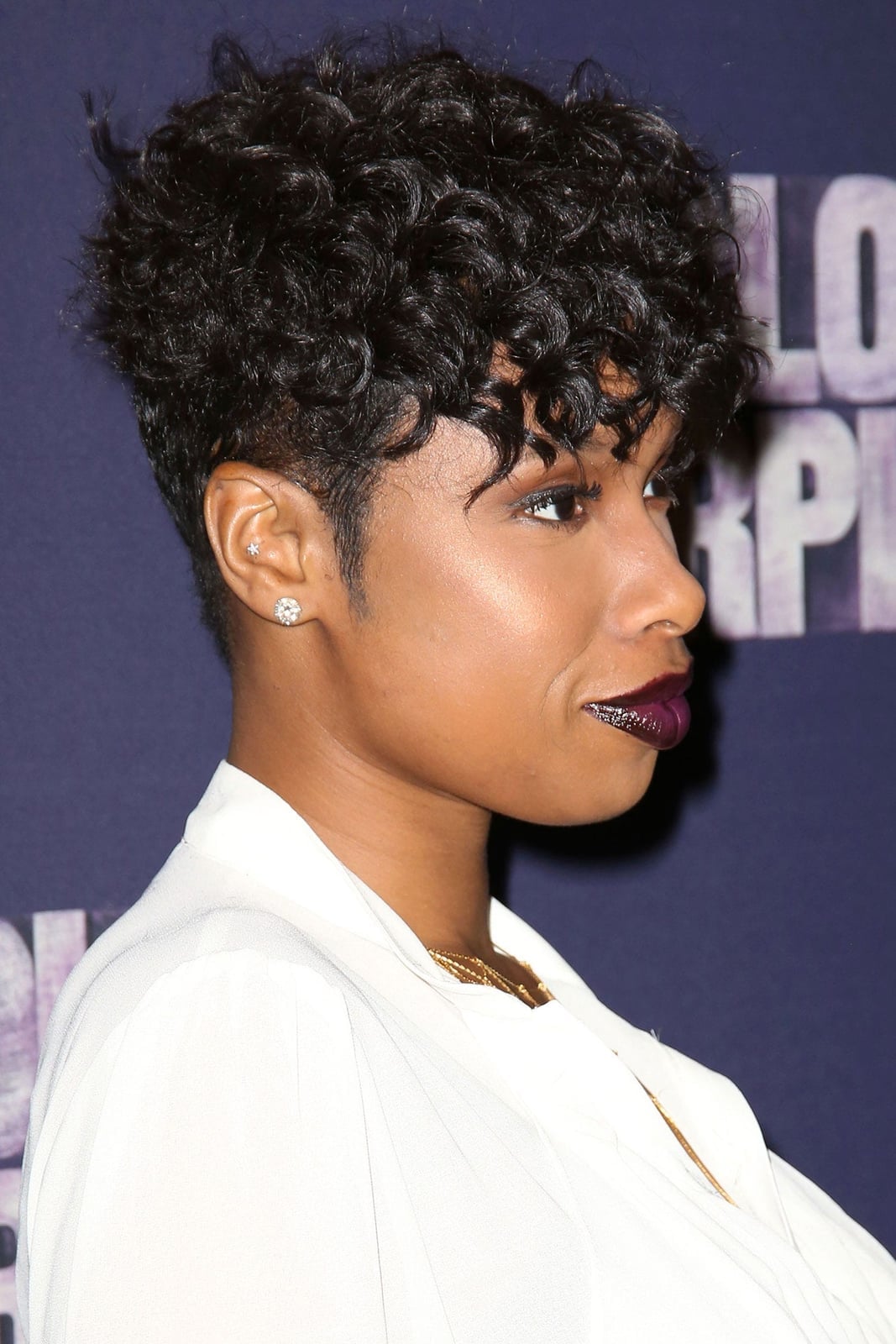
Courtesy of: harpersbazaar.com
A pixie cut is not a gentle suggestion. For thick, curly hair, this one means closely cropped sides with a dense cap of tight curls on top, which demands a real commitment to the stylist’s chair. Ask your stylist for a short curly pixie with cropped sides. The honest trade-off is that you lose the option to pull it back, and the shape needs a trim every three to four weeks to keep that sculpted edge from turning shaggy.
Reddish-Orange Curly Pixie
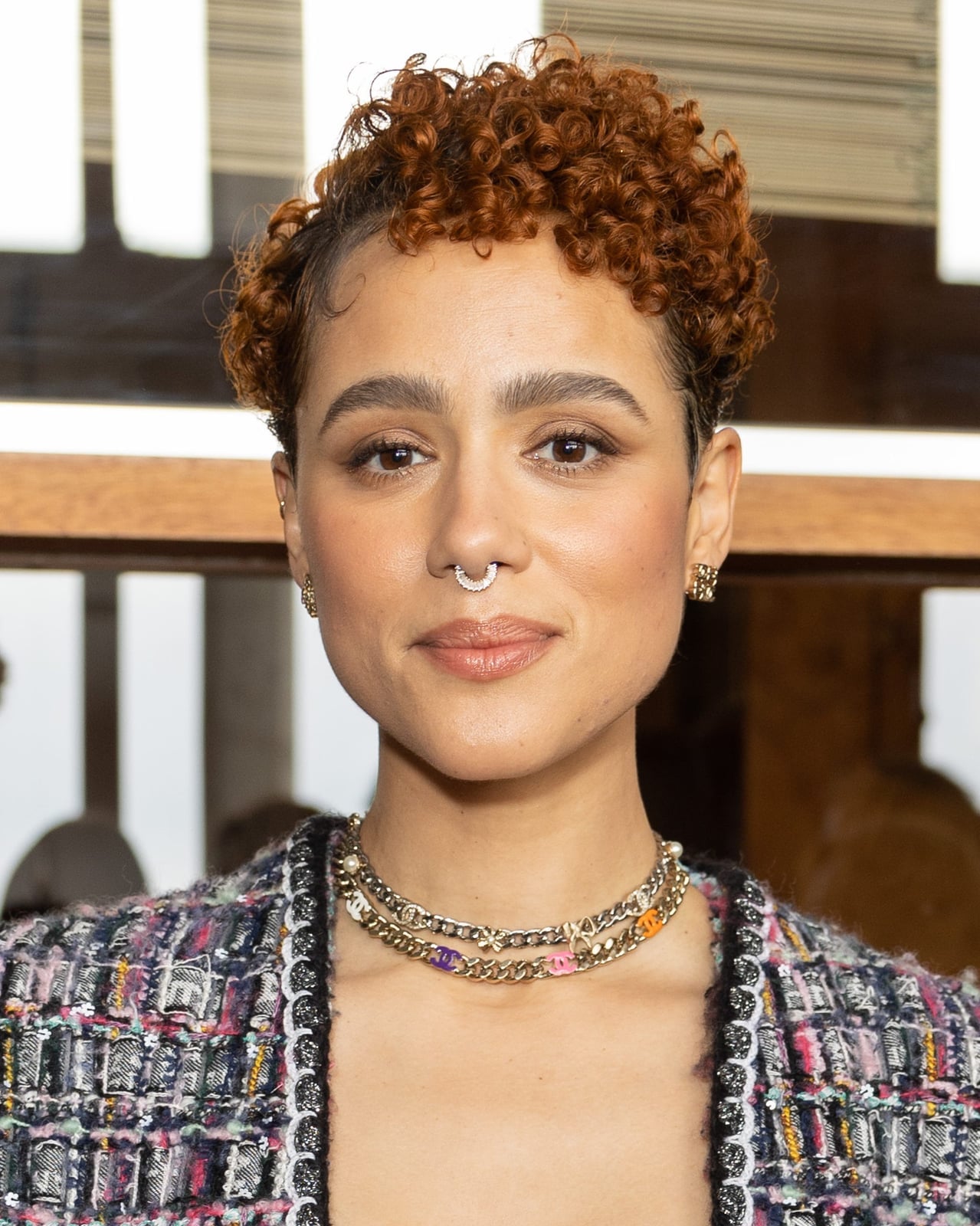
Photo credit: elle.com
Why would anyone put a color this bold on a short cut? Because the fine, tight curls hold a vivid reddish-orange shade that stands out against a gray sky. Ask your colorist for a vibrant reddish-orange pixie with a side part. This is a fall-through-spring color: it works best when the sun is low and the sky is gray, a small rebellion against the season. The shade needs a gloss or toner refresh around every four weeks to keep that copper edge from drifting orange.
Short Twisted Updo
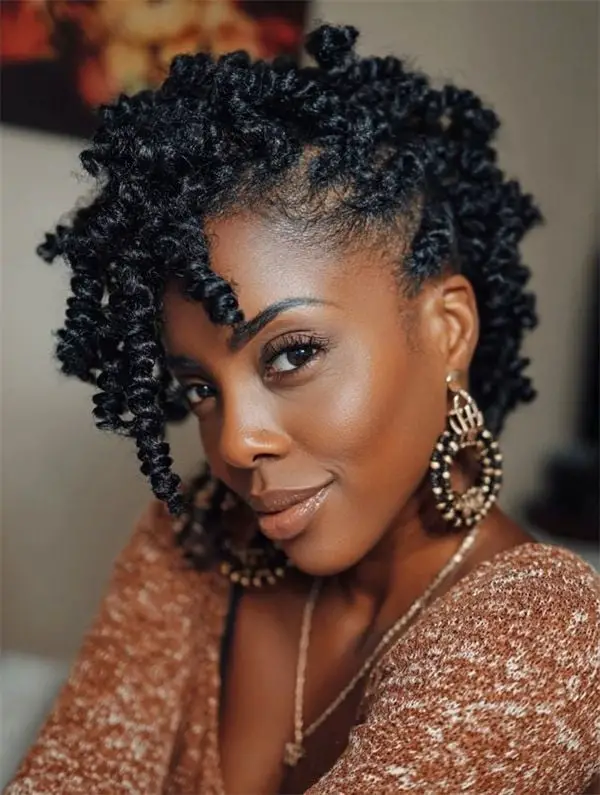
Image credit: curlsqueen.com
The technical trick here is that each twist has to be uniform in tension and direction, otherwise the pattern reads as messy rather than deliberate. On thick, coily hair at ear length, a side part anchors the design so the twists sit asymmetrically. Ask your stylist for a short cut with defined twists and a side part. This is a salon-leaning style: the precision of the twist sections is hard to replicate on your own crown, and the updo itself takes about forty minutes in the chair.
Shoulder Length Shag In Auburn
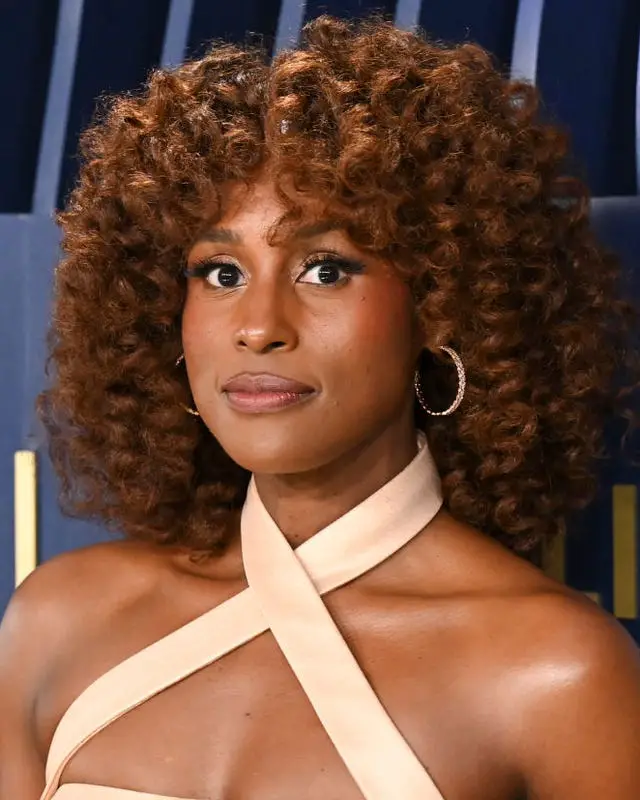
Source: goodhousekeeping.com
A shag cut on thick, curly hair works because the layers sit inside the curl instead of fighting it. The auburn base with lighter pieces adds dimension without needing a full color redo every six weeks.
Ask your colorist for a shoulder length shag in auburn with no bangs. Damp curls after washing encourage the movement that the cut is built for, and a trim every six to eight weeks keeps the shag shape defined. The glossy finish comes from a lightweight oil on the ends, not from product build-up.
Shoulder Length Afro-Like Volume
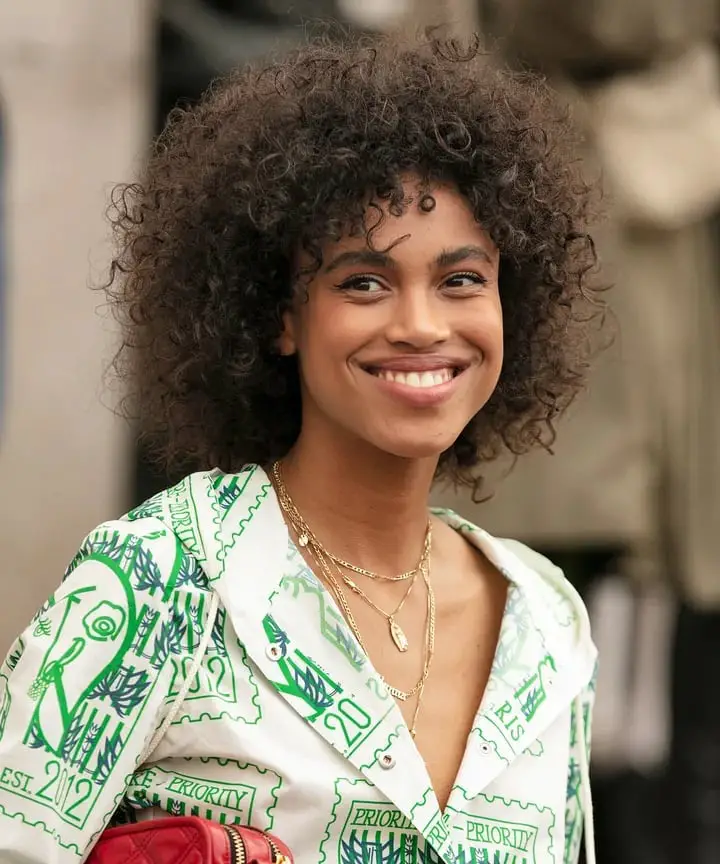
Source: refinery29.com
This is not a wash-and-wear shape: it is a deliberate volume play. For thick, curly hair at shoulder length, the afro-like fullness works because the middle part lets the hair fall evenly on both sides instead of stacking weight on one side. Ask your stylist for shoulder length layers with afro-like volume and a middle part. The cut needs a stylist who understands how to carve internal layers so the curl expands outward rather than dropping down. If your hair is fine or thin, the volume will look sparse rather than sculptural.
Shoulder Length Layers With Defined Curls
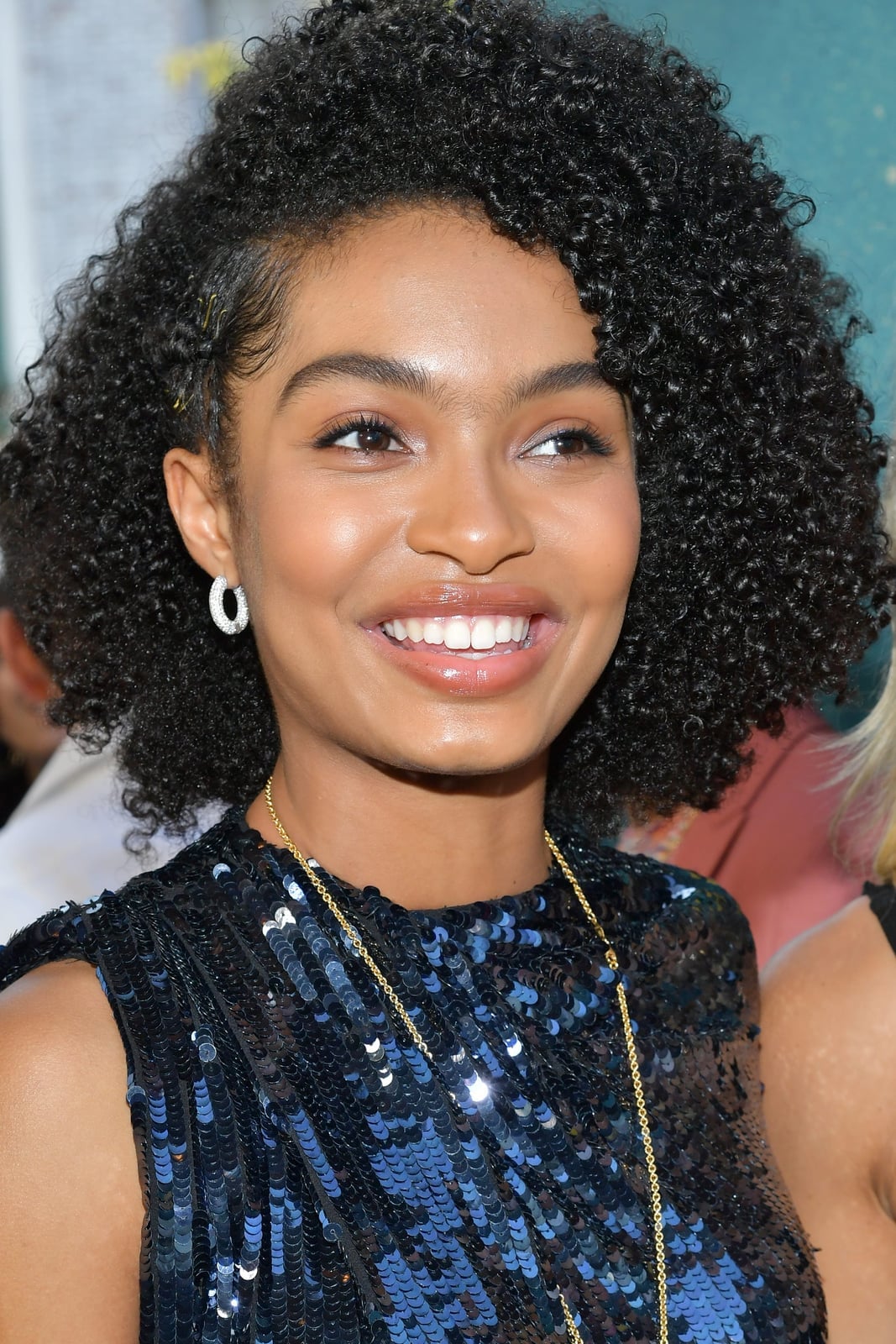
Via oprahdaily.com
Thick, naturally curly hair at the shoulders with a side part and subtle layers: that is the design, and its main advantage is that it asks very little of you. The layers add shape and remove some bulk, but the cut is built to work with your curl pattern. That means styling is genuinely DIY-friendly. Apply a curl defining cream to soaking-wet hair, then either air dry or diffuse on low. No round brush, no heat setting above medium, no twenty-minute blowout. The cut relies on your natural texture to look finished. If your curls tend to fall loose by midday, the shape can read as flat instead of layered. Ask your stylist for: shoulder length layered cut, side part, defined curls. A trim every eight weeks keeps the layers from blending back into one solid block.
Shoulder Length Layers With Blowout

Courtesy of: latest-hairstyles.com
Shoulder-length layers on wavy-curly hair with a middle part and a polished blowout: the result is smooth without being straight, which is a harder finish to maintain than you might think. The blowout relaxes the curl enough to create a uniform wave, but humidity and sleep will pull it back toward its natural texture within a day or two. You can stretch it to a second day with dry shampoo and careful pinning at night, but by day three the wave pattern is usually uneven. Ask your stylist for: shoulder length layered cut, blowout finish, middle part. The real drawback is that this is not a set-it-and-forget-it style. It requires a heat protectant, a round brush and about twenty minutes of drying time each wash day.
Collarbone Bob With Caramel Highlights
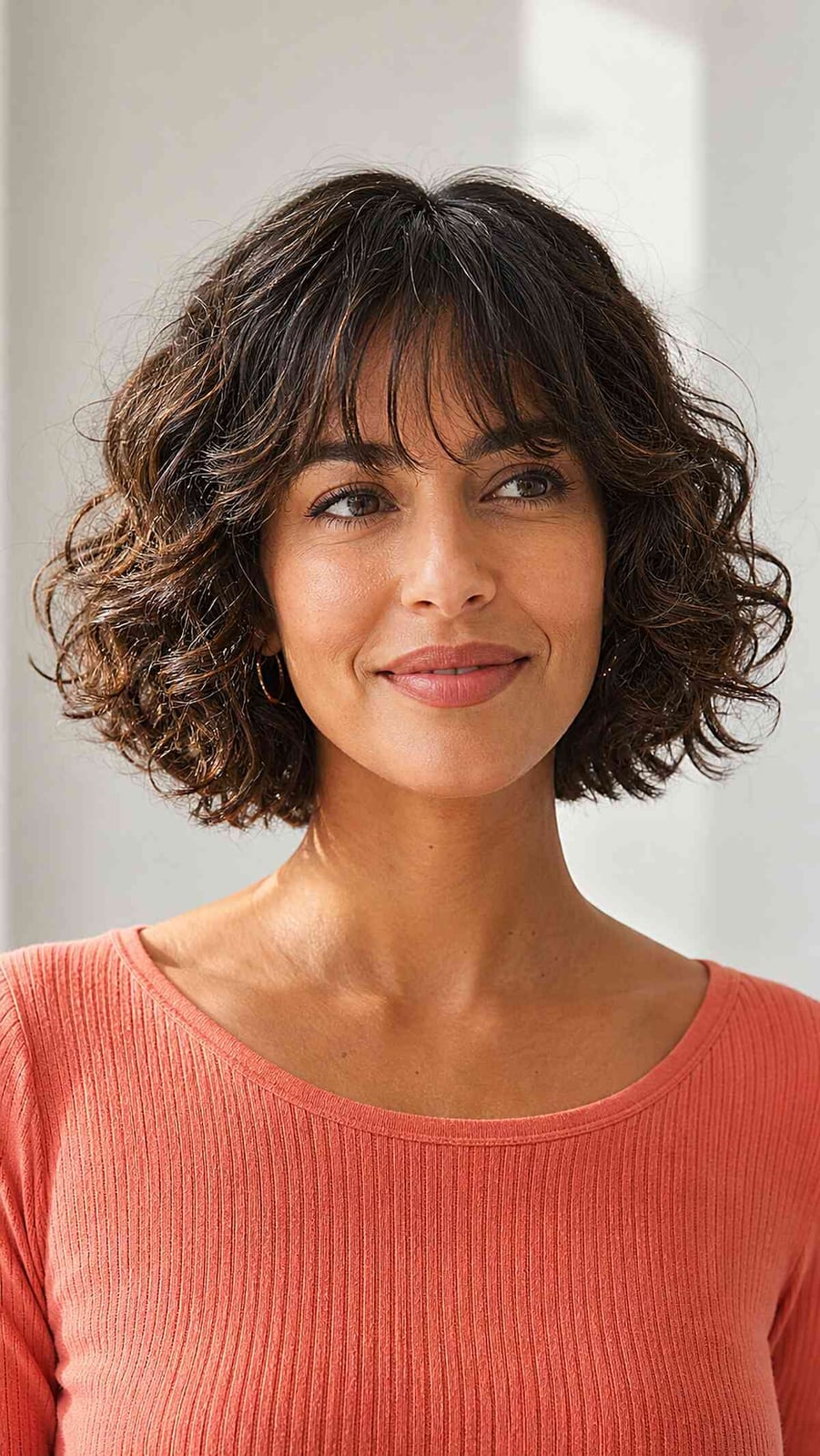
Photo credit: latest-hairstyles.com
Wondering how to describe that soft, dimensional bob with curtain bangs and caramel streaks to your stylist? Start with the shape: a collarbone-length bob with a middle part and subtle layers through the ends. The curtain bangs should be cut to graze the cheekbones, and the caramel highlights placed around the face and through the mid-lengths to add warmth against the dark brown base. Ask your colorist for: collarbone bob, curtain bangs, caramel highlights. The technique uses a hand-painted balayage for a soft, natural grow-out. A toning appointment every ten to twelve weeks keeps the caramel from turning brassy.
Layered Grey Bob With Curtain Bangs
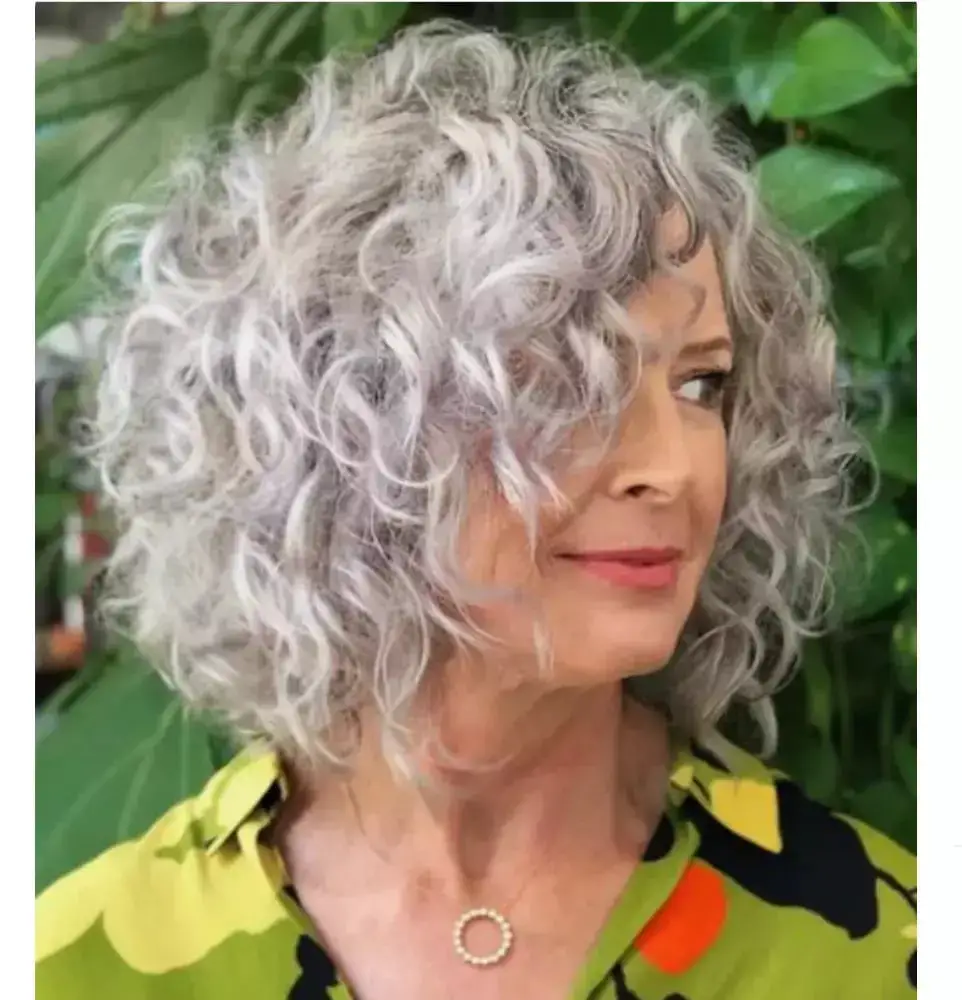
Image credit: fabbon.com
A layered grey bob with curtain bangs sits somewhere between a classic bob and a full-on shag. The difference is in the weight. A traditional bob can feel heavy on curly hair, pulling the shape downward. This version uses internal layers to lift the crown and soften the perimeter, so the grey curls have an airy, open look. The curtain bangs add movement at the front without committing to a full fringe. Ask your stylist for: collarbone layered bob, curtain bangs, grey color. Styling is straightforward: a root-lifting spray, a quick blow-dry with a diffuser, and the cut does the rest. A trim every six to eight weeks keeps the layers from growing past the collarbone and losing their lift.
Collarbone Layers With Blonde Highlights
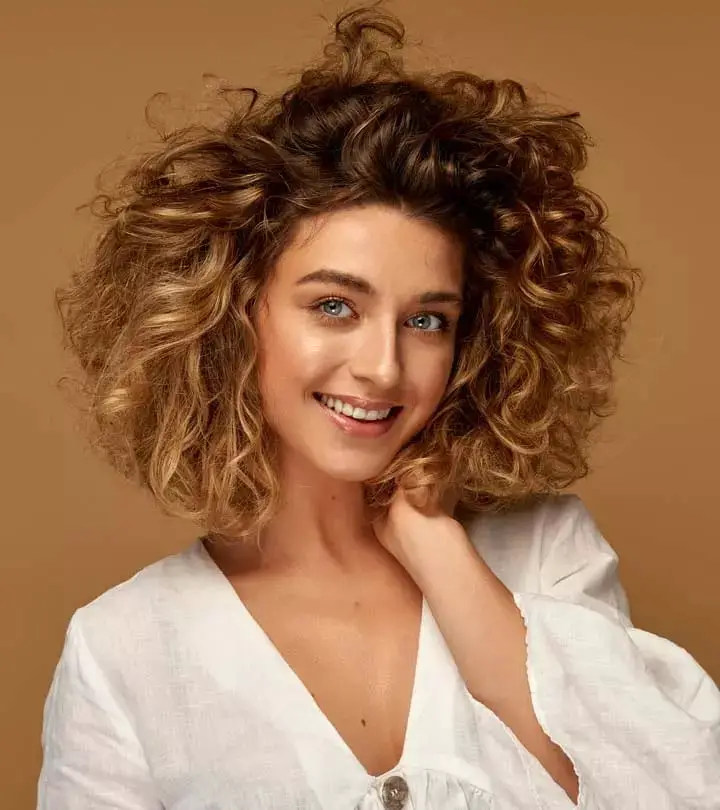
Source: stylecraze.com
Collarbone-length layers on curly hair with a side part and a voluminous blowout: the cut builds dimension through contrast. The blonde base is light enough to show shine, while the brown highlights sit deeper in the layers so the overall color does not read as flat or one-dimensional. The blowout stretches the curl into a soft wave, which makes the highlights more visible than they would be on a tighter curl pattern. Ask your colorist for: collarbone layers, blonde with brown highlights, blowout. The result is glossy and polished, but the blonde requires a purple shampoo once a week and a toning appointment every eight weeks to keep the warmth in check.
Collarbone Layers With Defined Curls
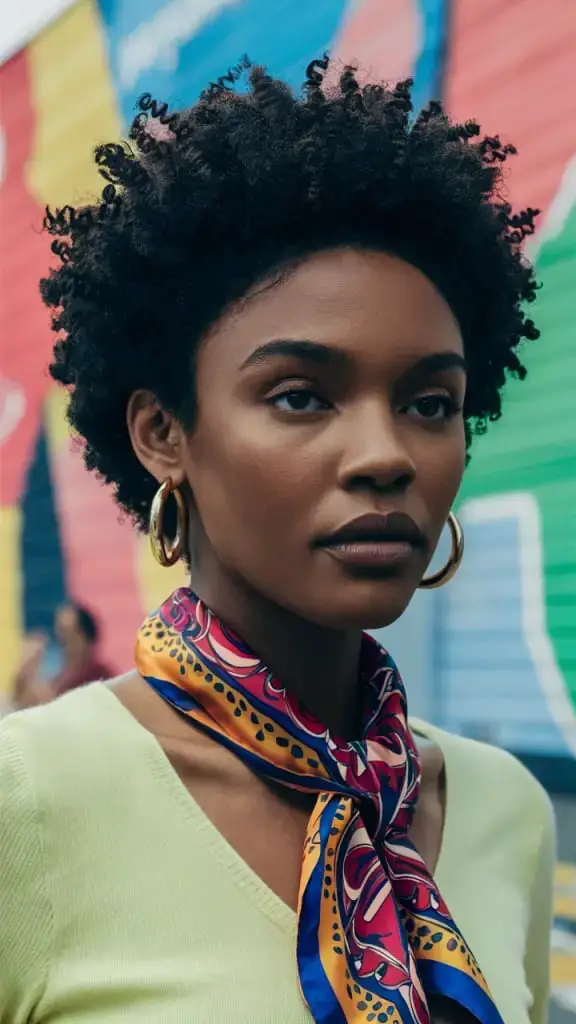
Layers give medium-density curls a defined shape. The lighter brown highlights make each coil visible against the dark brown base. This cut works best on hair that already reaches at least the collarbone; shorter textures won’t have enough length for the layers to register.
Ask your stylist for: collarbone layers, dark brown with highlights, defined curls. A middle parting keeps the shape symmetrical. The gloss comes from a product applied to damp hair, then air-dried or diffused on low. It is a straightforward, polished look that does not demand a round brush or a blowout.
Collarbone Layers With Glossy Curls, Dark Brown
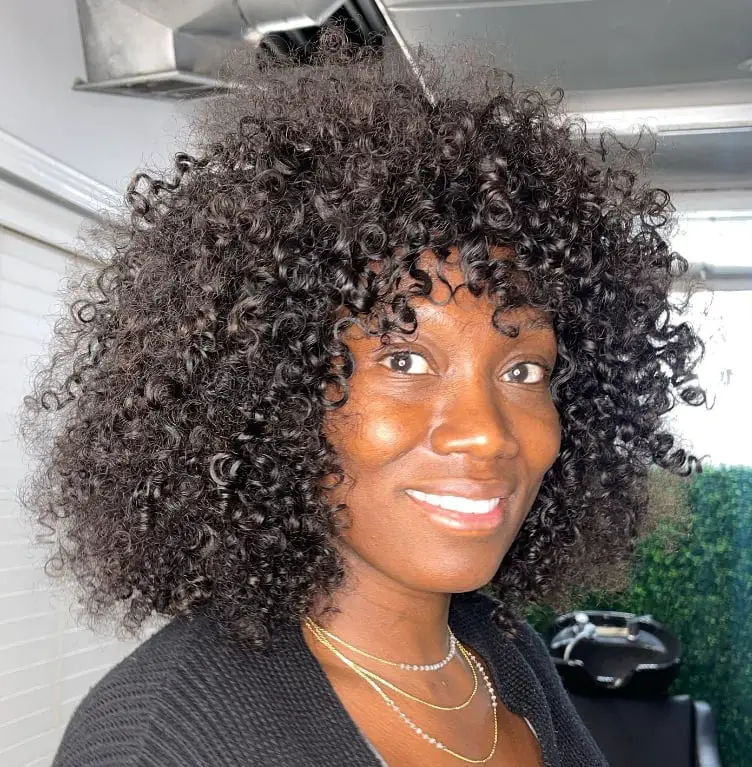
Courtesy of: styleseat.com
Thick, dark brown curls air-dry into a shape that can look impressive or unruly, and this cut tilts the odds toward impressive. The collarbone-length layers remove enough bulk to let each curl spring without fighting its neighbor. A middle parting keeps the weight distributed evenly.
The drawback is frizz. Thick hair holds onto moisture longer, and air-drying without a diffuser invites flyaways at the hairline. A satin pillowcase helps preserve the definition you get on wash day. Ask your stylist for: collarbone layers, thick dark brown hair, defined glossy curls. Trims every eight weeks prevent the layers from blending into one blunt shape. The gloss is real, but it requires a styling product with hold, not just oil.
Collarbone Layers With Volume Blowout
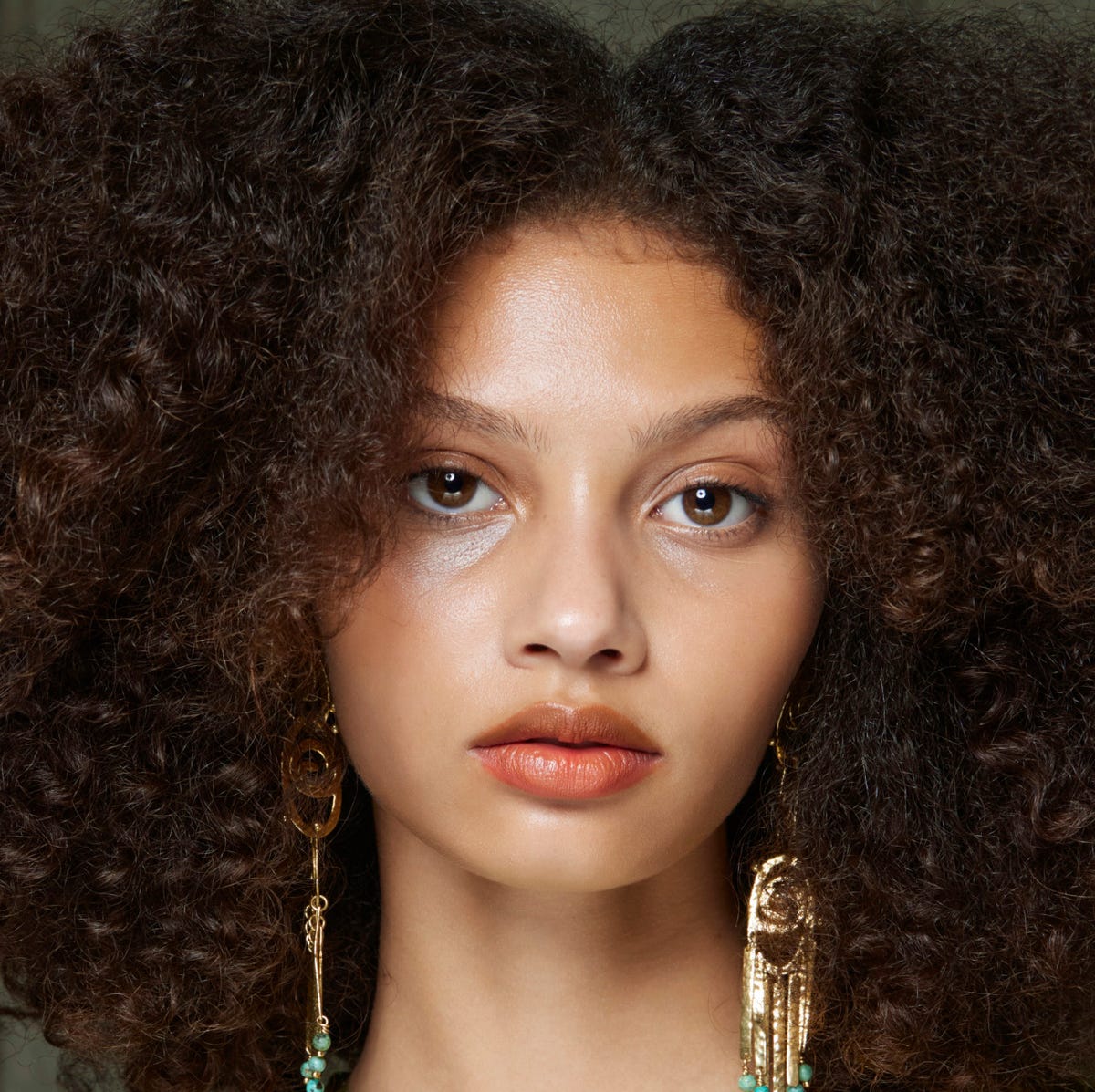
Photo credit: elle.com
How do you ask for a blowout that does not erase your curl pattern? Start with the words. Ask your stylist for: collarbone layers, curtain bangs, dark brown with blonde highlights, voluminous blowout. The curtain bangs are the key detail: they blend into the layers instead of stopping abruptly. Thick hair holds the volume well, and the blonde highlights add dimension so the shape reads clearly even when the hair is not moving. A large round brush at the roots and a cool shot at the end lock in the lift. Expect forty minutes with a blow-dryer if you do it at home.
Collarbone Shag With Honey Balayage
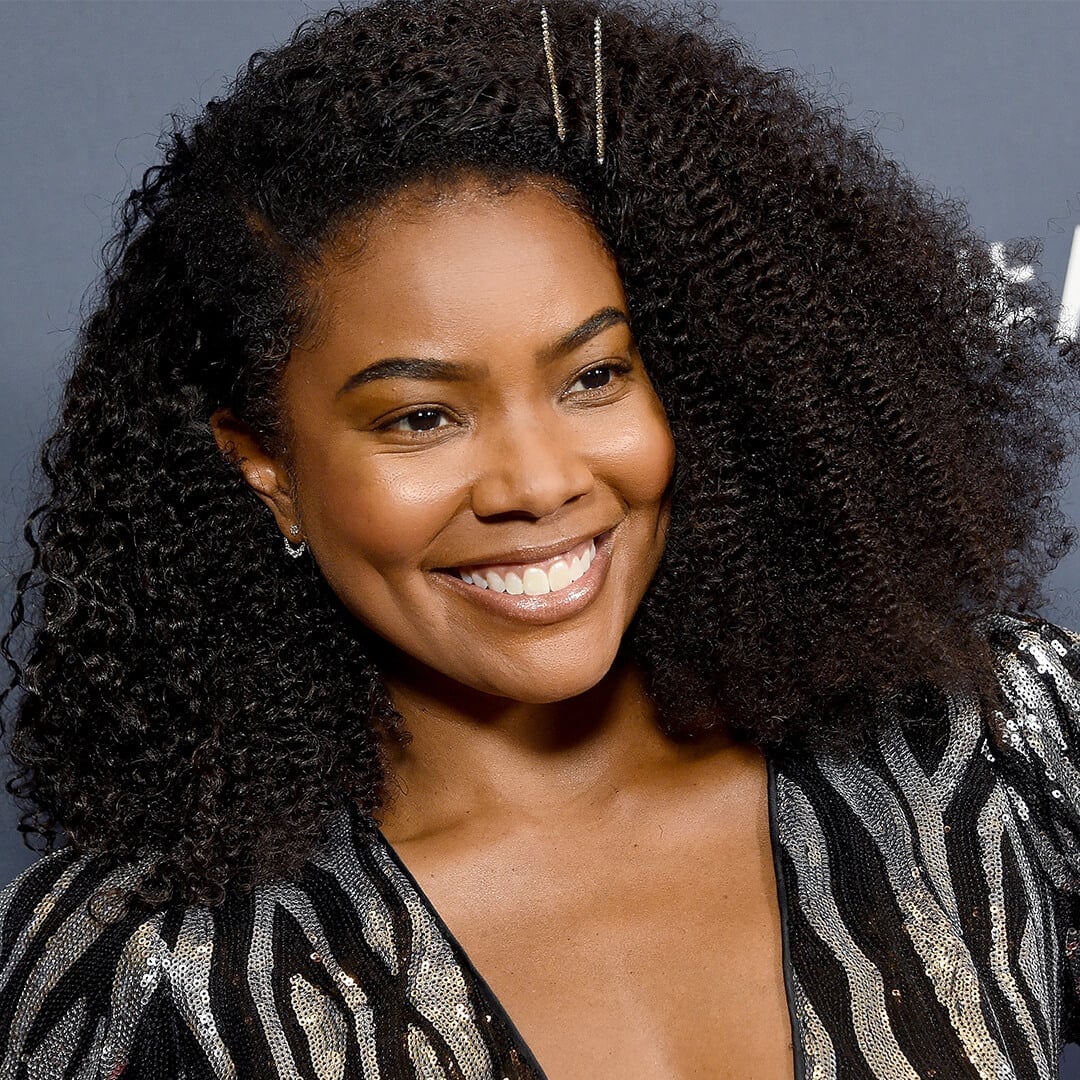
Image credit: ipsy.com
A collarbone shag with a honey balayage is a salon cut that air-dries like a DIY win. The shag’s short-to-long layers create the volume, and the balayage adds dimension so your hair looks deliberately shaded rather than flat. Medium-density curls hit the sweet spot: fine hair collapses in the shag’s stacked layers, while thick hair can look too wide.
Ask your stylist for: collarbone shag with curtain bangs, honey balayage. The bangs should graze the cheekbone, not the chin. At home, scrunch damp hair with a texture spray and air-dry. The grow-out is forgiving, but the bangs need a trim every four to six weeks to stay in the right place.
Mid-Back Layers With Volume
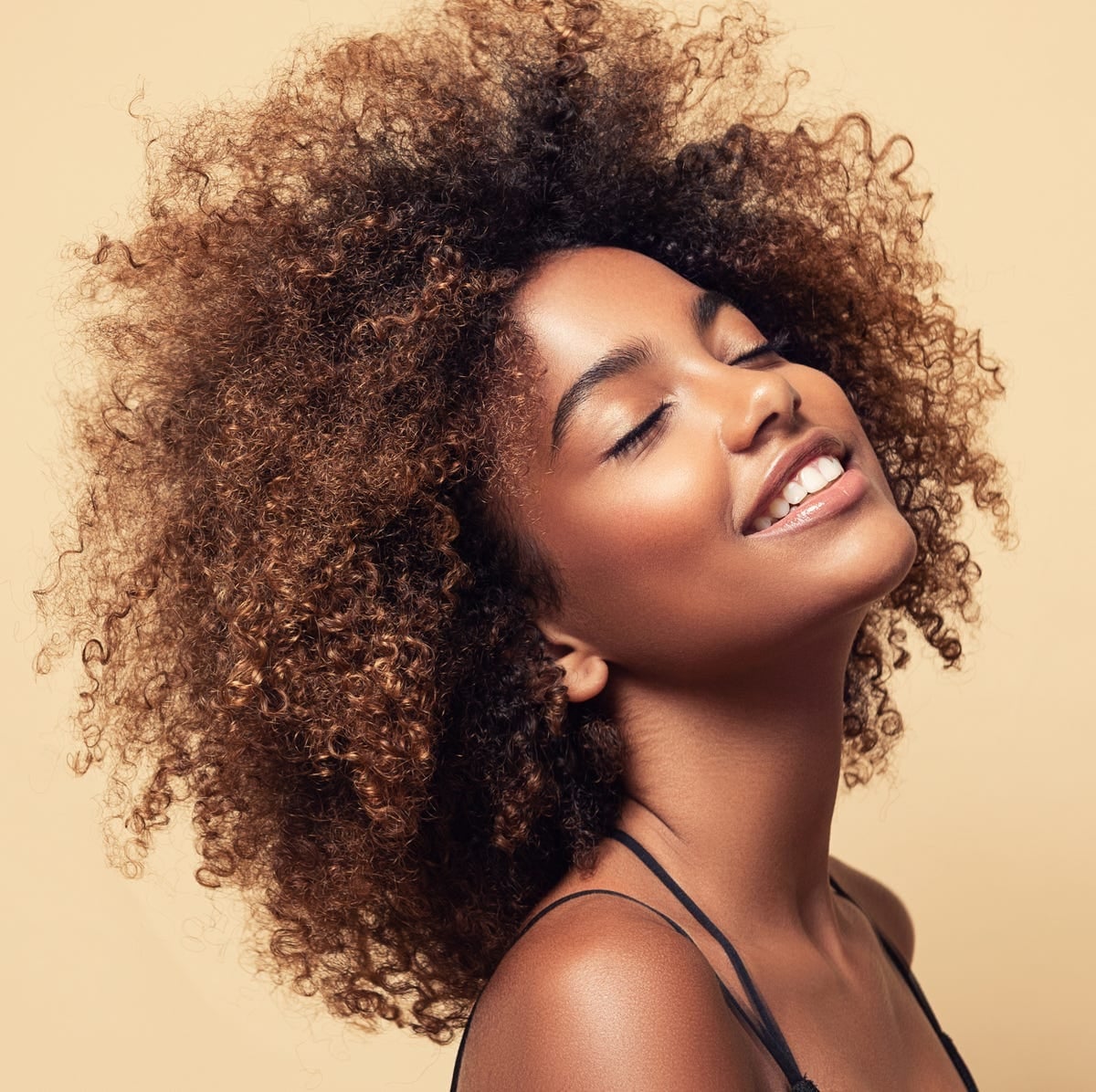
Via oprahdaily.com
Long curly hair has a weight problem: gravity pulls the top flat while the ends get heavy. Mid-back layers solve that by removing bulk from the interior, letting the crown lift. Thick, dark brown curls with blonde highlights create a dramatic look. The middle parting is practical, allowing you to pull sections forward for face-framing volume.
Shrinkage is a real trade-off. Curls at this length spring up an inch or two when air-dried, so the mid-back starting point becomes closer to shoulder length once the texture settles. Fine or low-density hair should skip this cut; it relies on thickness to hold the shape. Ask your stylist for: mid-back layers, dark brown with blonde highlights, no bangs. A wide-tooth comb on wet hair is all you need for detangling.
Mid-Back Layers With Highlighted Curls
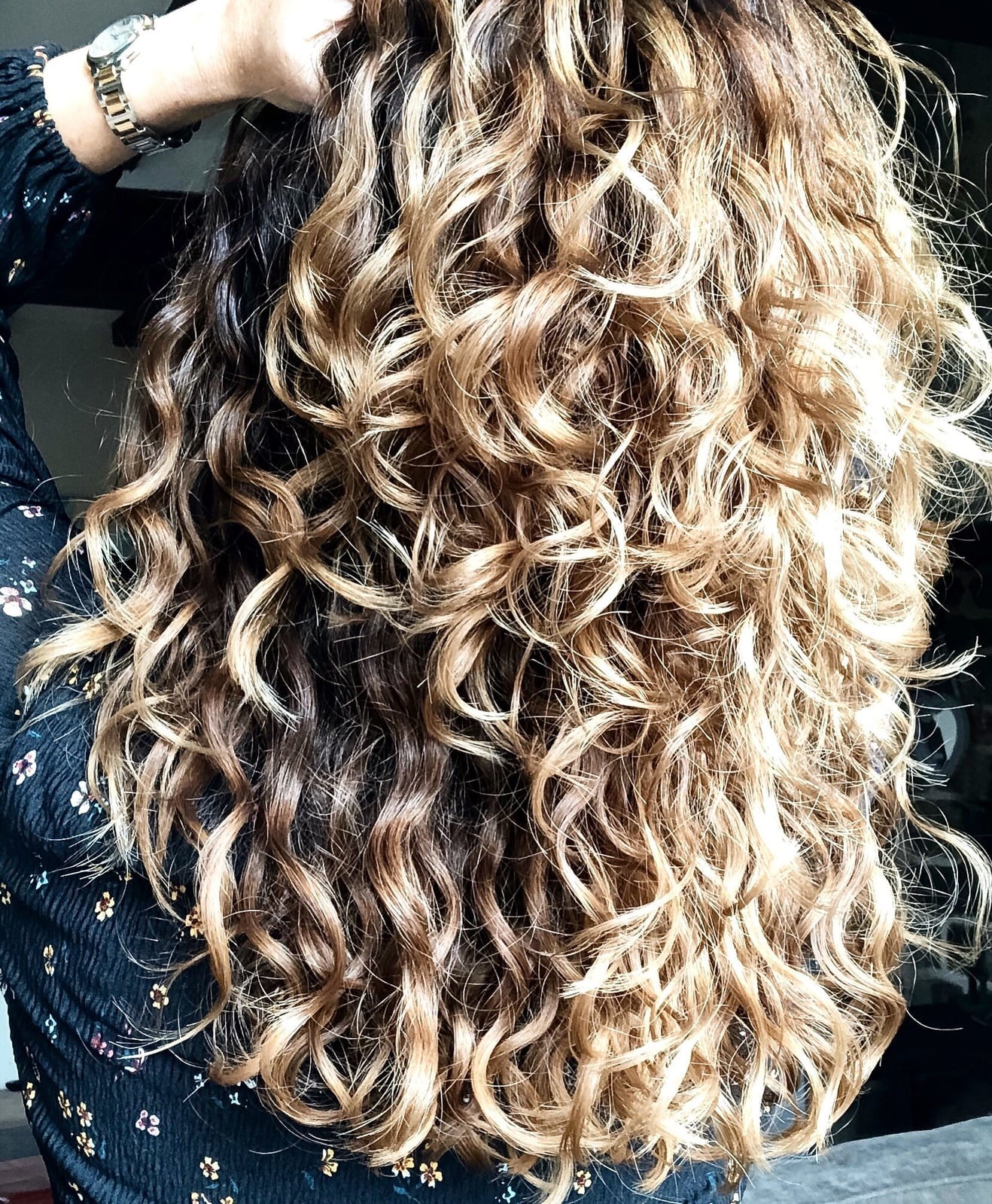
Courtesy of: likelovedo.com
The design here is a masterclass in dimension: dark brown curls with blonde highlights and balayage that catch the light without looking streaky. The mid-back length shows off the layers, which keep thick hair from turning into a triangle shape. This works best if your curls already have some weight to them, fine hair might get lost at this length.
Ask your colorist for: mid-back layers, dark brown with blonde balayage. A curl-defining serum is your friend for shine, and you will want a trim every eight to ten weeks to keep the ends healthy. The balayage technique means the grow-out is gentle, so you can stretch toning appointments to about twelve weeks.
Short Afro-Inspired Cut With Full Volume
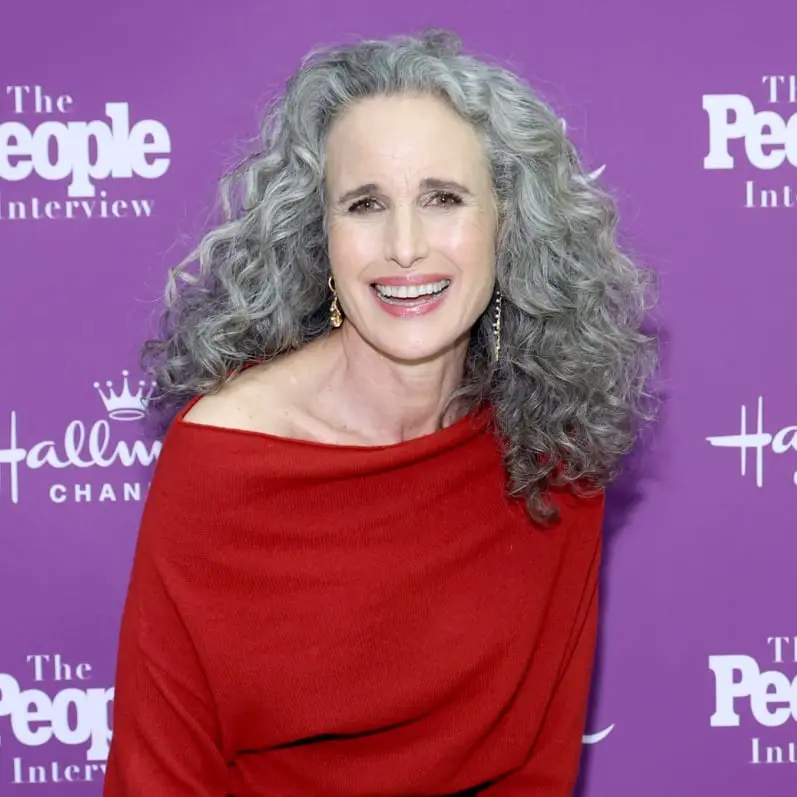
Photo credit: goodhousekeeping.com
A mid-back length with a middle parting and no bangs sounds straightforward, but the grey curly texture is what makes this cut for fine hair. The layers are cut to create a rounded shape, so the hair looks fuller than it actually is, a neat trick when your strands are on the wispy side.
Ask your stylist for: a layered afro-inspired cut with a middle part. You will want a moisturizing spray to keep that air-dried finish from getting fuzzy. This is a mostly DIY-friendly shape between trims, and it works best on curls that have some natural spring.
Final Thoughts
Fine curls: keep one blunt baseline and skip heavy layering, or the density disappears. Thick curls: go hard on layers, since they thin the bulk and let the pattern tighten. Round faces: let the length fall below the chin.
- Trim every six to ten weeks to hold the shape.
- Refresh with a leave-in or curl refresher at day three.
- Air dry or diffuse on low to keep frizz down.
- Deep condition weekly for moisture and elasticity.
Your natural curl is your best accessory. Find the cut that celebrates it.
Hairstyle
15 Trendy Side Part Hairstyles 2027
Trendy Side Part Hairstyles 2027 featuring bobs and layered cuts. Discover chin length bob side swept bangs and collarbone bob dark brown waves.
The side part is a styling move that changes the visual weight of any cut, shifting volume to one side and making layers fall a little differently. In 2027, the trend leans toward soft face-framing layers and curtain bangs, with lived-in color replacing hard line work.
Trendy Side Part Hairstyles covers 15 looks, from low-upkeep air-dried waves to a voluminous updo. It is for anyone who wants a fringe that actually sits, a fine hair style that holds lift, or a grown-out color that still looks intentional. Short bobs, mid-back lengths, and pixies are all here.
Mid-Back Layers With Face-Framing Bangs
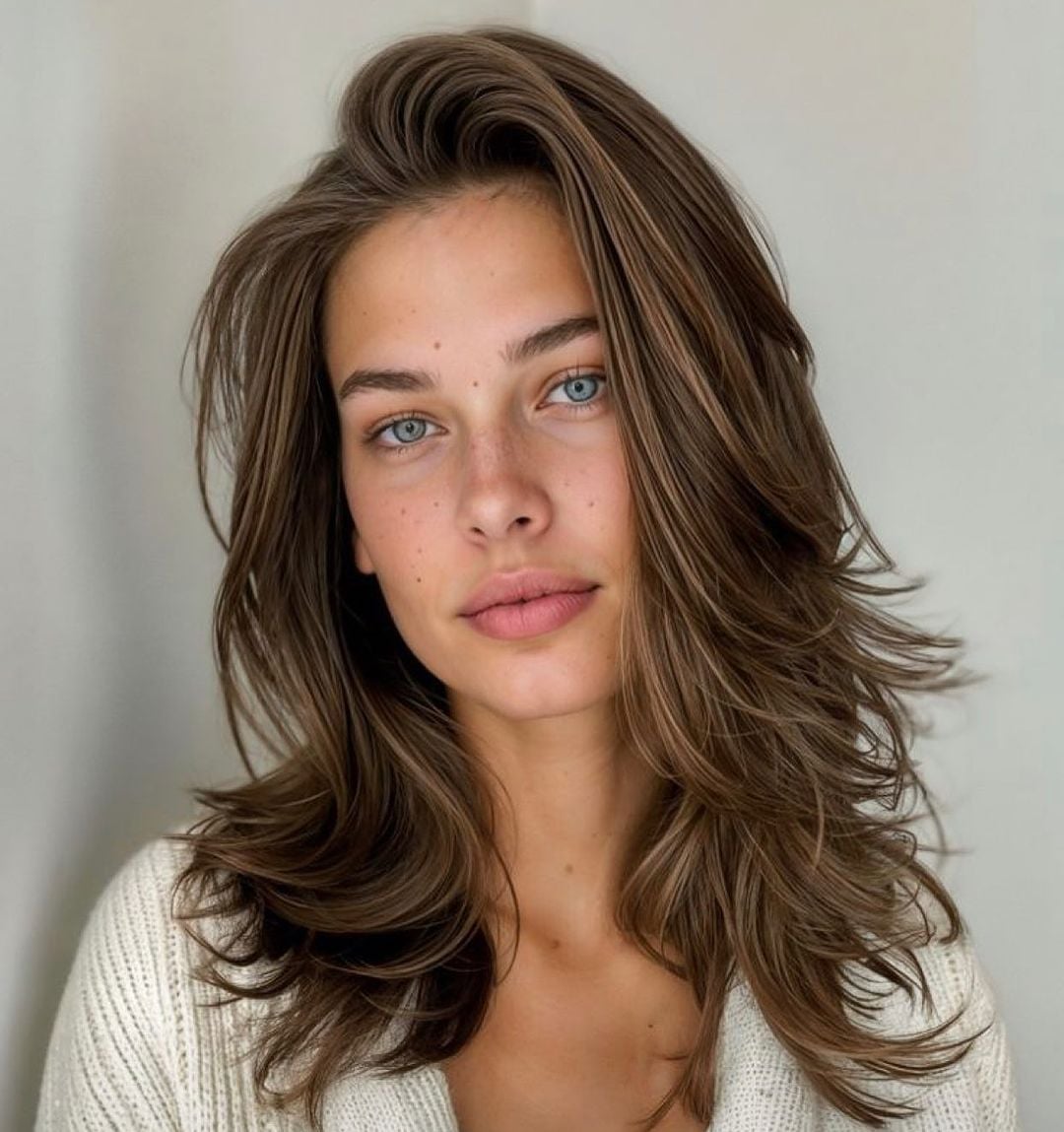
Courtesy of: therighthairstyles.com
A deep side part and face-framing bangs are the simplest way to give thick, wavy hair a sense of direction. The layers start around the cheekbone and blend into the mid-back length, so the weight stays low while the front softens the line around a square or round jaw. Ask your stylist for: mid-back layers with face-framing bangs, deep side part. A blowout with a round brush will push the roots up and curve the bangs, and a trim every eight to ten weeks keeps the layers from becoming a triangle.
This cut respects the texture instead of fighting it. The medium brown base with subtle highlights adds dimension without needing a full color refresh every month. If your hair is fine or shorter than the mid-back, the face-framing pieces can read as sparse rather than deliberate.
Chin Length Wavy Bob With Side Swept Bangs
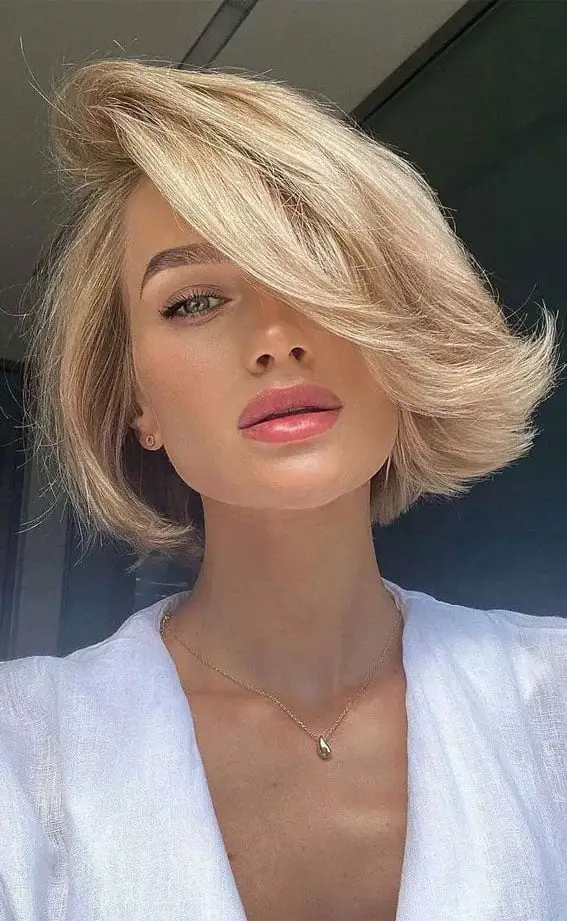
Photo credit: fabmood.com
How do you keep fine, wavy hair from looking flat at chin length? A side-swept bang and a deep side part. The bob is cut to hit right at the chin, and the bangs sweep across the forehead, so the eye moves diagonally, with a diagonal line across the face. Ask your stylist for: chin-length wavy bob, side-swept bangs, deep side part. The ash blonde color gives the fine texture a glossy, cool-toned finish, and a voluminous blowout with a small round brush under the bangs keeps them from parting into two pieces. A trim every six to eight weeks is standard here, because even half an inch of growth pulls the bob out of shape.
Mid-Back Layers With Deep Side Part
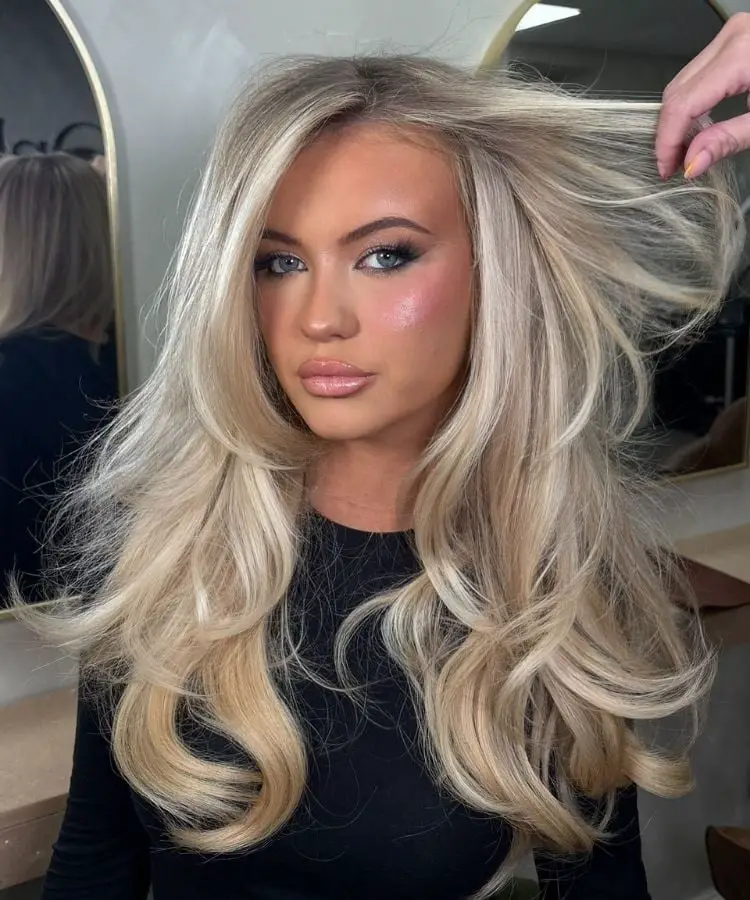
Image credit: theeverygirl.com
This is the voluminous alternative to a sleek, one-length cut. Where a blunt mid-back style relies on shine and precision, this version uses long layers and a deep side part to create movement from the roots down. The curtain bangs frame the face without committing to full fringe maintenance. Ask your stylist for: mid-back long layers, deep side part, curtain bangs. A voluminous blowout with loose waves adds fullness, and the ash blonde balayage lightens the ends so the layers read as depth rather than just bulk. Tone the balayage every six to eight weeks to keep the ash tone from warming up. Thick hair at mid-back length or longer will hold the shape best; hair that is fine or shorter tends to lose the separation between layers.
Collarbone Bob With Voluminous Waves

Source: fabmood.com
A collarbone bob with a deep side part and curtain bangs needs a blowout to land that lifted, face-framing wave. Without heat, thick wavy hair at this length tends to fall forward into a heavy curtain. The dark brown base with subtle highlights keeps the dimension visible even when the waves settle. Ask your stylist for: collarbone length bob, deep side part, face-framing waves. A round brush at the roots and a medium barrel iron on the mid-lengths will give you that rounded volume. Trim the blunt baseline every six to eight weeks, because the collarbone is an unforgiving place for split ends.
Collarbone Lob With Loose Waves
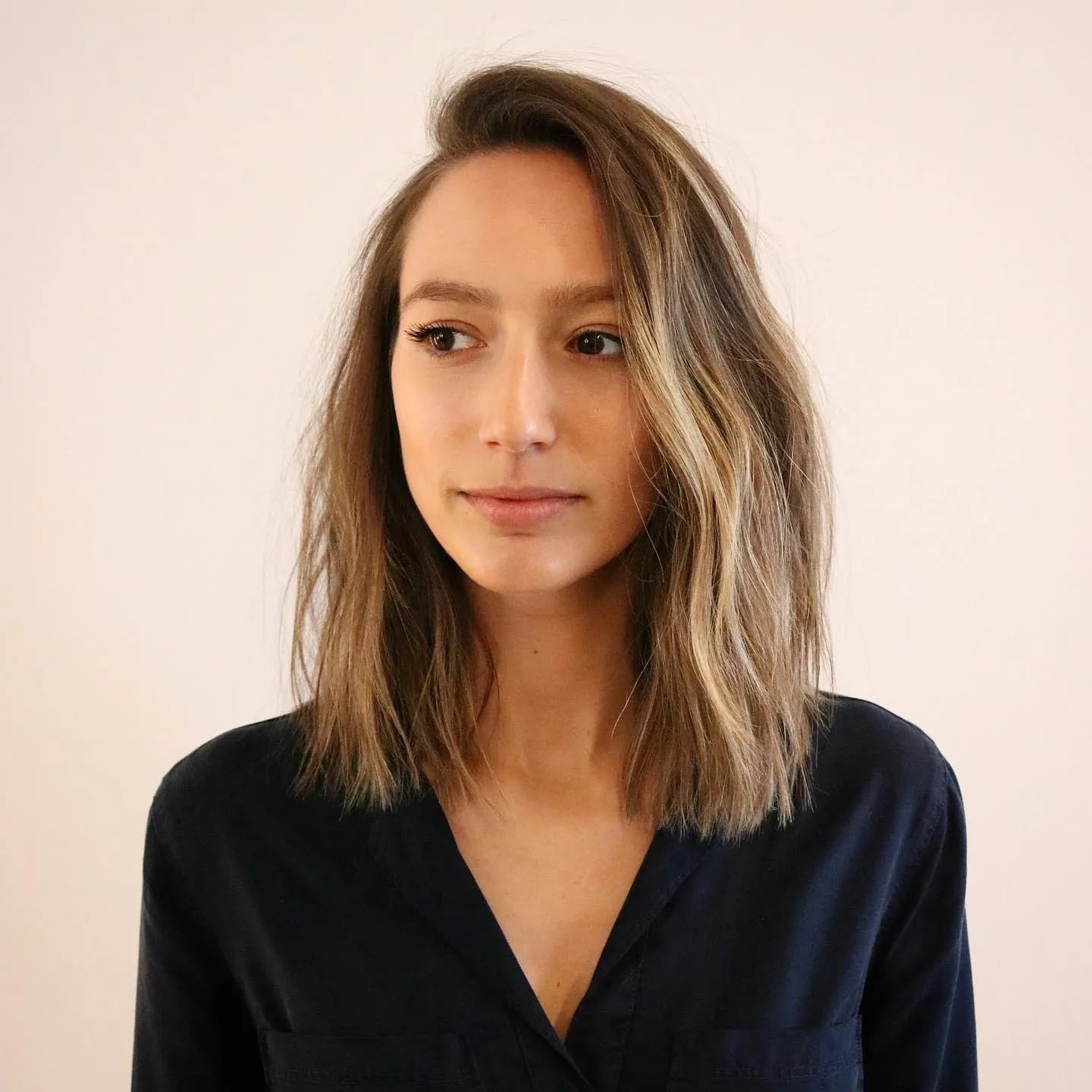
The mistake people make with a collarbone lob is asking for too many layers. On medium-density wavy hair, over-layering removes the weight that gives the wave its shape, and the outline can look thinner and frizzier than intended. This lob keeps the layers soft and concentrated around the face, so the body stays in the length. Ask your stylist for: collarbone lob, deep side part, loose waves. The medium brown base with blonde highlights adds contrast without the need for a full highlight schedule. Air-dry with a texture spray or use a diffuser on low heat to keep the wave pattern loose. A trim every eight to ten weeks preserves the collarbone line without sacrificing the lived-in feel.
Collarbone Layers With Face-Framing Accent
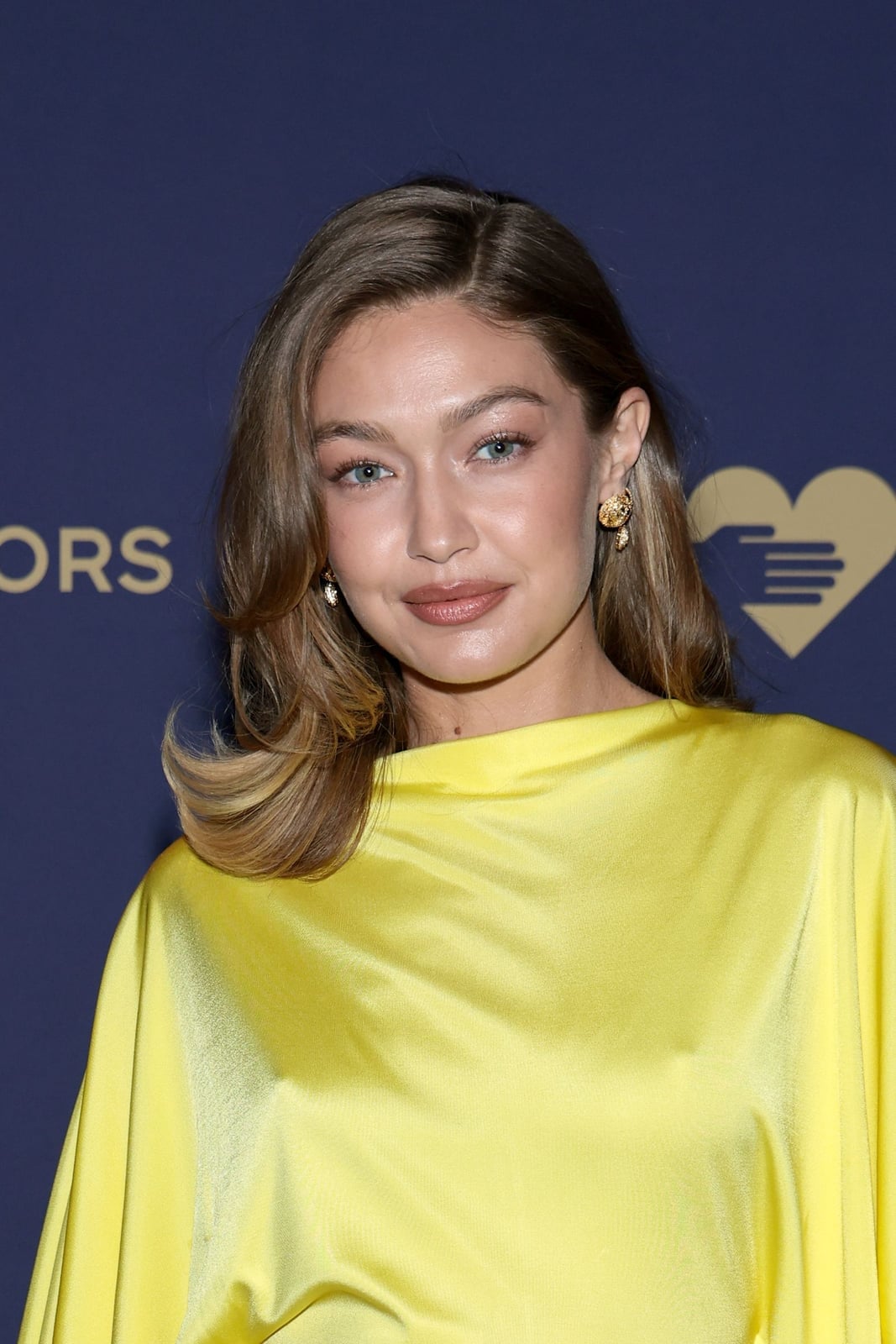
Courtesy of: vogue.com
How do you request a face-framing layer that softens rather than swallows your features? Ask your stylist for a collarbone-length cut with a deep side part and face-framing layers that graze the cheekbone, not the jaw. On thick, wavy hair, those lighter highlights near the face keep the front section from feeling heavy. The blowout adds a glossy finish and about an inch of lift at the roots. A trim every eight to ten weeks maintains the shape.
Collarbone Wavy Hair With Curtain Bangs

Photo credit: modexalook.com
The design logic here is simple: balayage highlights placed from the mid-lengths to the ends, paired with curtain bangs that open at the center and fall toward the temples. Ask your stylist for a collarbone-length cut with curtain bangs and a deep side part. On thick, wavy hair, the lighter pieces catch the wave crests and make the texture deliberate. The blowout smooths the canopy while leaving the bend intact. A toning appointment every six to eight weeks keeps the dark blonde from warming up.
Collarbone Wavy Dark Brown With Highlights
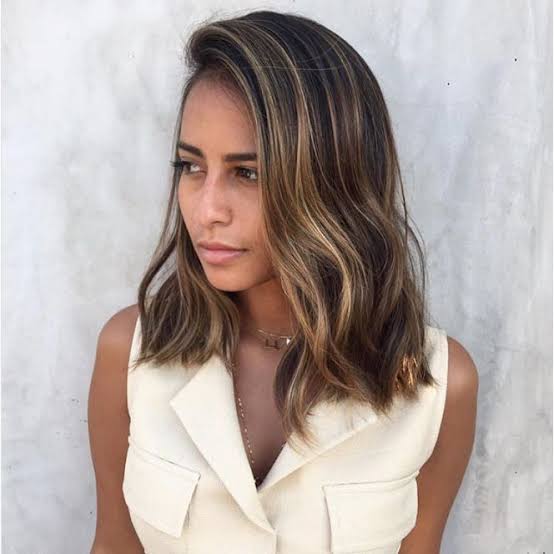
Image credit: southernliving.com
A wavy blowout on medium-density hair works from late September through early spring. The dark brown base with blonde highlights creates enough contrast for dimension without a full color overhaul. Ask your stylist for collarbone-length layers with curtain bangs and a side part. The waves hold their shape for most of the day because the cut removes weight without sacrificing density. Trim the baseline every six to eight weeks so the curtain bangs don’t turn into a full fringe.
Chin Length Bob With Deep Side Part
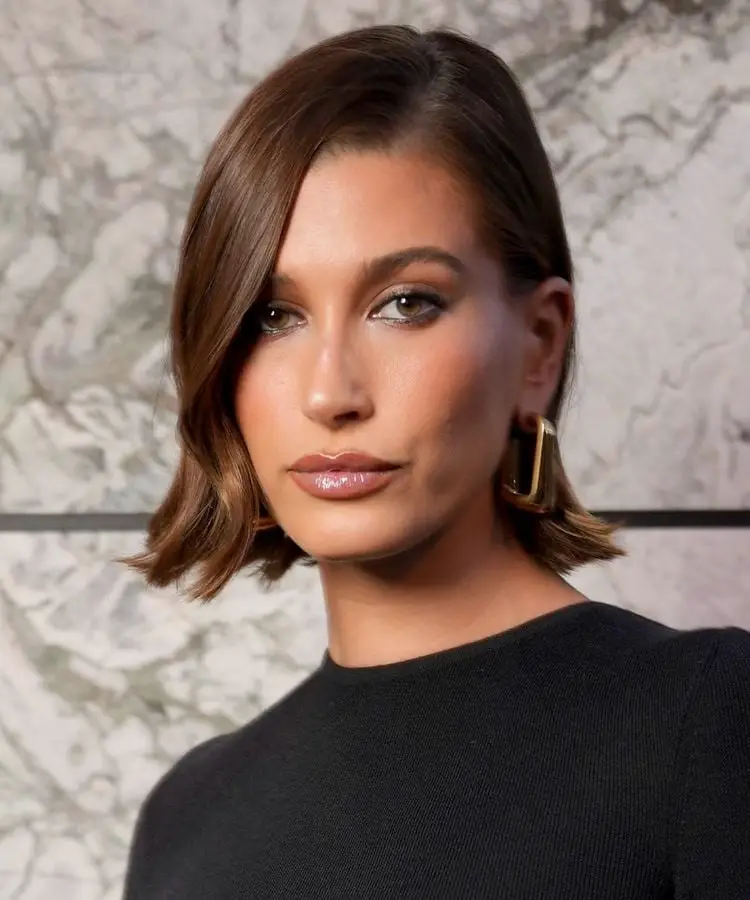
Source: theeverygirl.com
Can a chin-length bob work on medium-density hair without looking sparse? Yes, when the deep side part creates a volume bank on the bigger side and the soft waves add enough movement to disguise any thin spots. Ask your stylist for a chin-length bob with a deep side part and subtle highlights throughout. The dark brown shade keeps the base rich while the lighter pieces catch light along the wave curves. Blow-dry the larger side with a round brush for lift at the root. A trim every six to eight weeks preserves the blunt line.
Collarbone Lob With Lived-In Waves and Medium Brown With Balayage
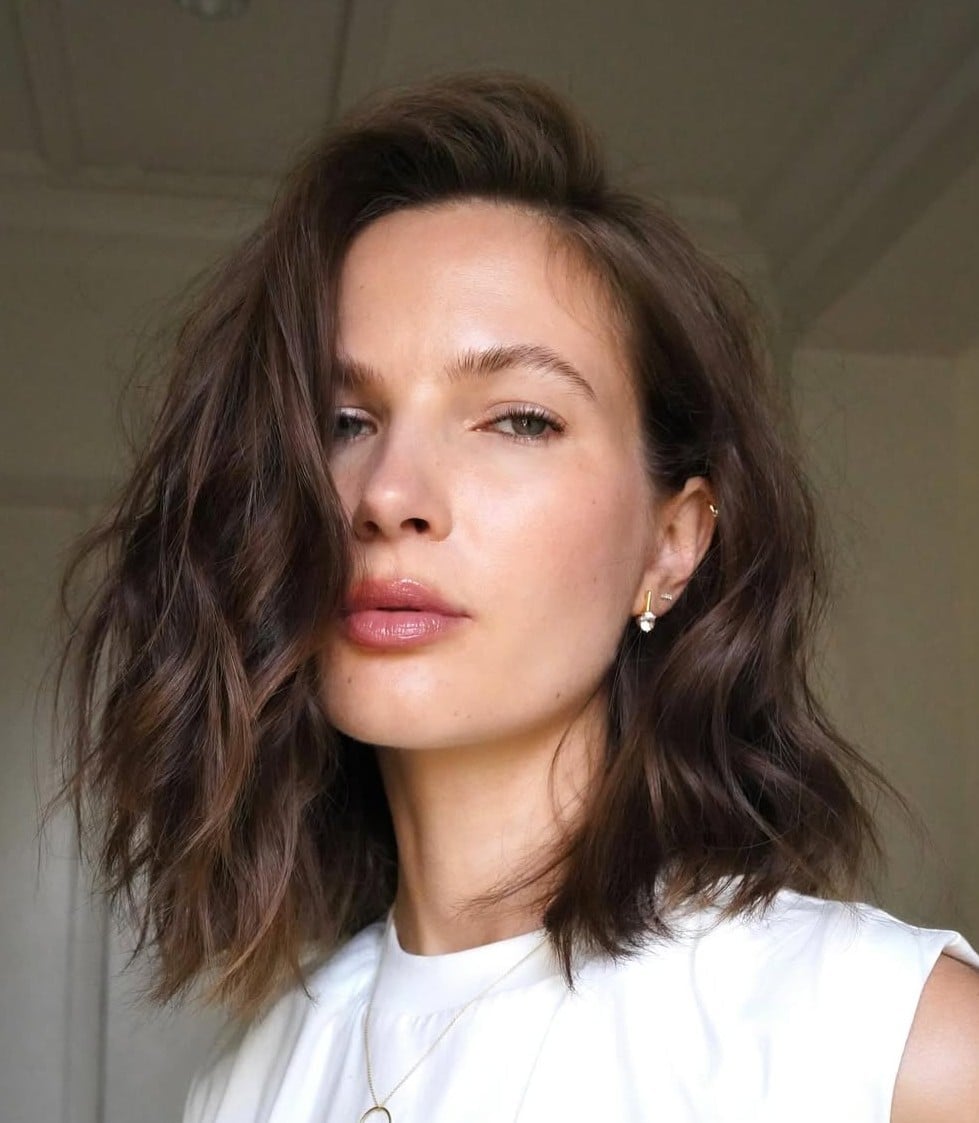
Source: therighthairstyles.com
This is the rare cut that looks better the morning after you air-dried it. The lived-in balayage grows out softly, so the color stays current for three to four months without a salon visit. Ask your stylist for a collarbone lob with a side part and a lived-in balayage. At home, apply a texturizing spray to damp hair and let it air-dry, then break up the waves with your fingers. The medium brown base hides regrowth well, making this a solid DIY option between appointments.
Mid-Back Straight Hair With Blowout
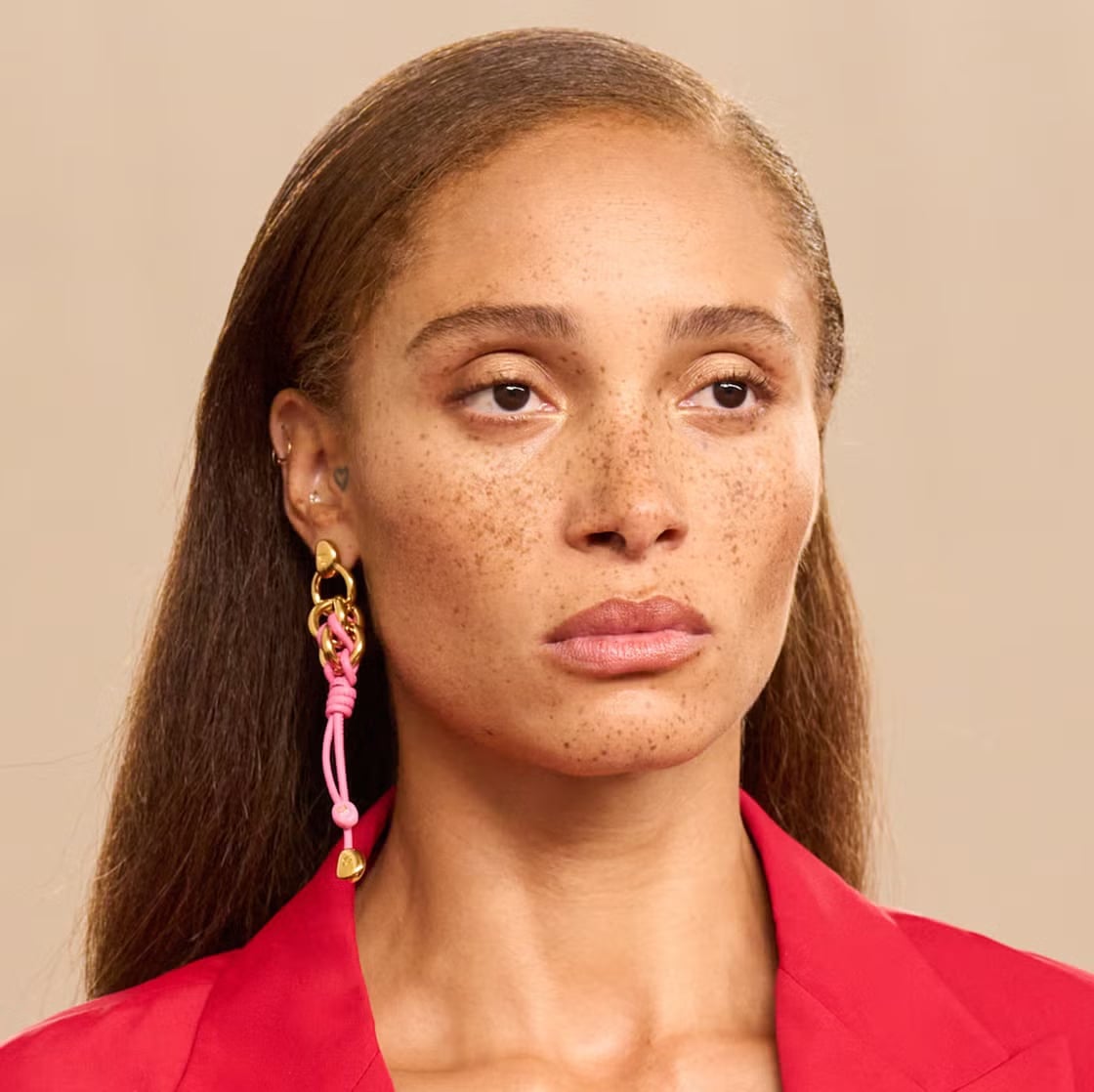
This blowout needs a round brush and a patient arm to get that glossy finish. The mid-back length, thick straight texture, and prominent side part set the shape. Ask your stylist for: mid-back long layers, prominent side part, blowout finish. A proper blowout on this hair type holds for about two days before the roots start to settle. Long layers add movement while keeping the smoothness, and a trim every eight to ten weeks keeps the ends from looking ragged. The subtle lighter highlights give the shine a visible glow.
Thick, straight hair at this length benefits from the volume a side part creates at the crown. It is a structured look, better for work or an evening out than a Saturday errand. The effort comes up front; once it is done, the hold is solid.
Collarbone Blunt Bob Jet Black
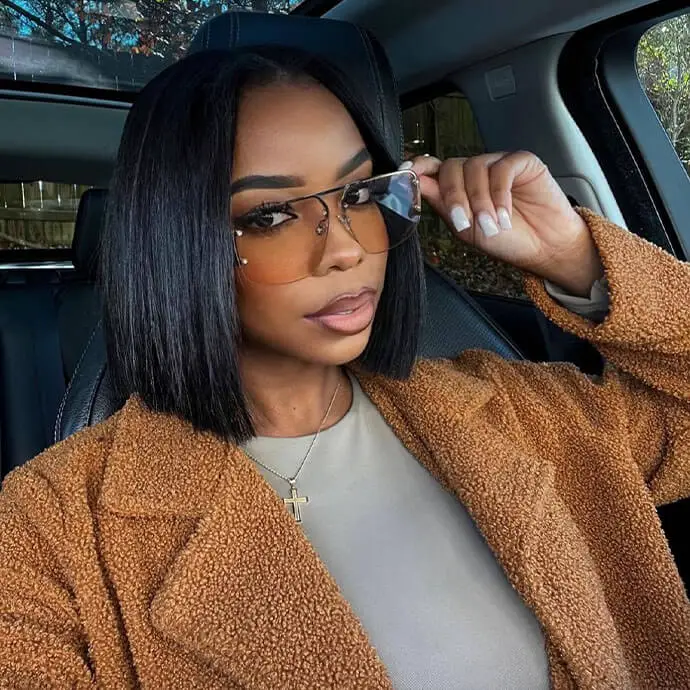
Courtesy of: ipsy.com
A collarbone blunt bob in jet black is a precision instrument, not a casual decision. The sharp side part and poker-straight finish highlight every millimeter of the cut, which is the point and the hazard. On fine, straight hair, a blunt baseline can look severe if the ends are not perfectly crisp. The trick is asking your stylist for a collarbone blunt bob, sharp side part, poker straight finish and committing to a trim every six to eight weeks. The gloss holds about a week before it needs a refresh. One real drawback: this cut shows every split end relentlessly.
Pixie Cut With Micro Bangs
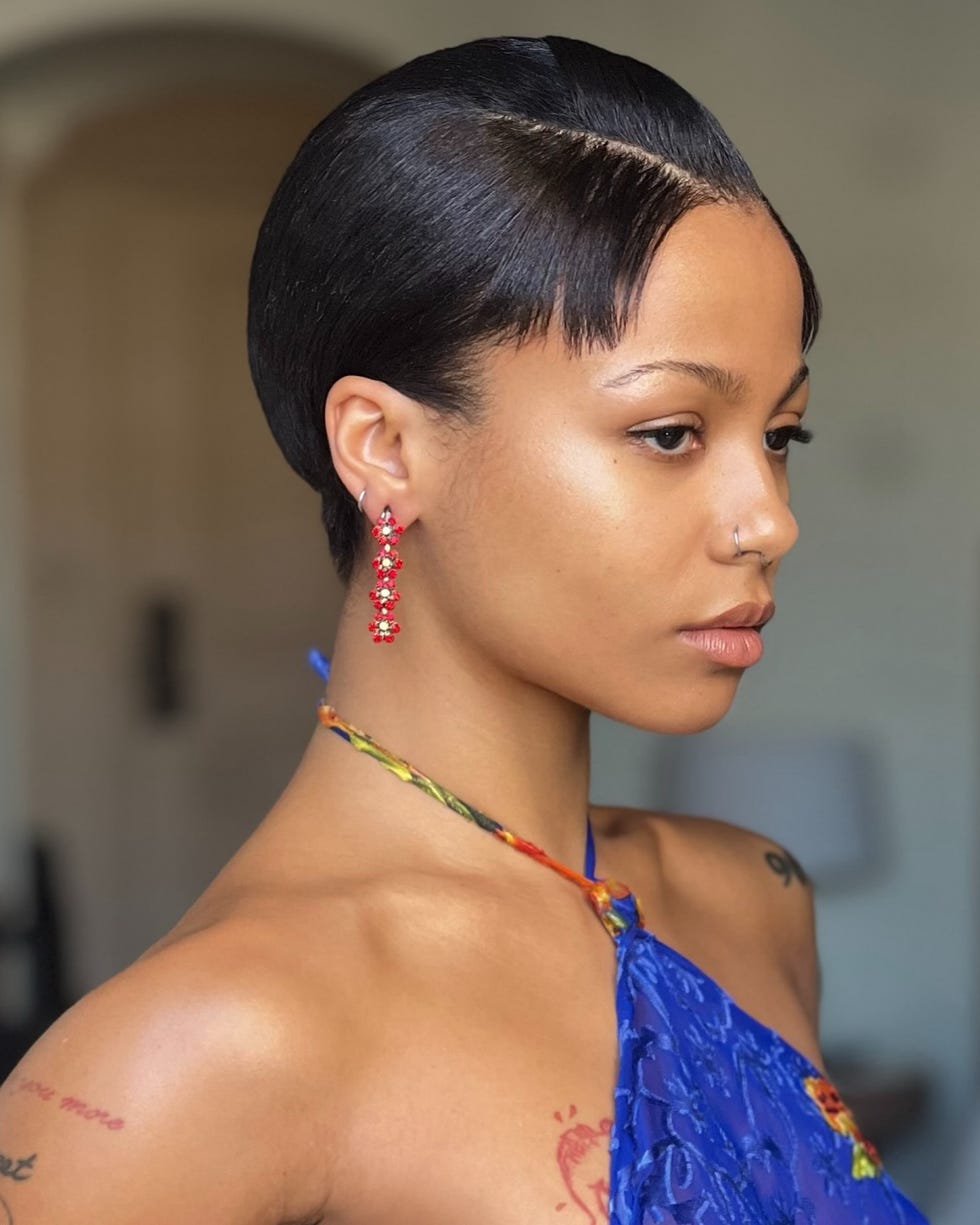
Photo credit: cosmopolitan.com
A pixie cut with micro bangs and a deep side part is built on contrast. The sides are slicked back with gel or pomade, while the micro bangs sit above the forehead, cut straight across. Ask your stylist for: short pixie cut, deep side part, slicked back sides. Fine, straight hair at ear length works best here because it stays flat against the head. The technique relies on a precise texturizing cut on top to keep the length from looking heavy. A trim every four to six weeks is non-negotiable; micro bangs do not wait.
Voluminous Dark Brown Updo

Image credit: fabmood.com
What do you do with thick, wavy hair when the humidity makes it impossible to wear down? This voluminous dark brown updo answers that question. Soft curls are pinned into a loose structure with face-framing pieces left out, and the deep side part gives the whole shape direction. Ask your stylist for: voluminous updo with soft curls, face-framing pieces. It requires mid-back length or longer to build the height at the crown. The hold is good for a full evening with enough hairspray, which means this is a special occasion style, wedding season or a formal dinner. The warm lighting in the photo catches the texture so the updo does not look flat.
Thick, wavy hair holds curl well in an updo, so the shape stays defined for hours. The face-framing pieces soften the front without pulling the whole style casual.
Mid-Back Air-Dried Waves
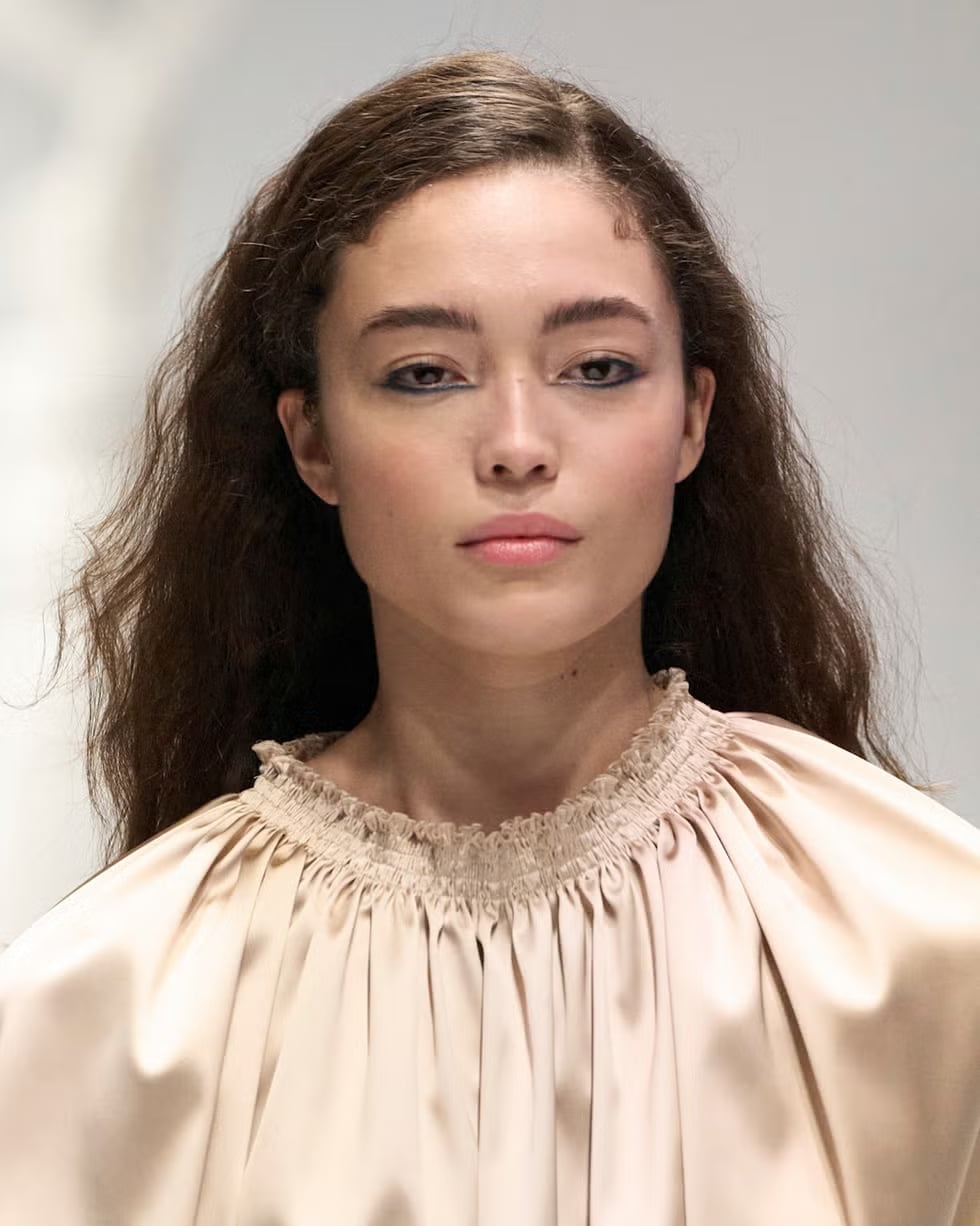
Source: elle.com
This style features mid-back long layers with a deep side part and wispy face-framing pieces, all air-dried to show the natural wave pattern. Fine density hair benefits from the deep side part, which creates lift at the crown without product. Ask your stylist for: mid-back long layers, deep side part, air-dried waves. Fine, wavy hair can fall flat by midday if the cut does not have enough internal layering. The subtle highlights add dimension so the wave pattern reads clearly. Trim the layers every eight to ten weeks to keep the shape balanced.
One real drawback: achieving consistent volume without buildup takes trial and error. A lightweight product on damp hair is enough; too much product and the waves collapse.
Final Thoughts
For fine hair, stick with a blunt bob or a collarbone lob with soft layers to keep the side part from sinking. Thicker hair can handle a deeper part and longer layers without losing shape. The side part works on any texture or length, so pick the styling approach that matches your time and tools.
- Schedule trims every 6-8 weeks for blunt cuts, and 8-10 weeks for layered styles to maintain shape.
- Tone blonde shades every 4-6 weeks to counteract brassiness and maintain coolness.
- Use a volumizing spray at the roots before blow-drying to enhance side-part fullness.
- Protect waves from heat with a spray before styling, and use a texturizing spray for definition.
Master the side part for endless styling possibilities.
Hairstyle
20 Balayage Hair Color Ideas 2027
Balayage Hair 2027 featuring subtle brunette with caramel blonde, dark blonde with light blonde, and ash brown with blonde. Find the one that fits your style.
Balayage is a freehand painting technique that sweeps lighter color through the mid-lengths and ends, leaving the root area soft and diffused. The look has drifted toward lived-in color and glossy natural texture, which means fewer, wider-painted sections and a blend that survives a few months of real life.
You get 20 takes on Balayage Hair, from mid-back blends that need a colorist’s hand to collarbone and shoulder lengths you can keep up with at home. Dark brunettes, ash blondes, warm caramels: there is a base here for fine hair that flattens by noon and for anyone tired of a hard grow-out line.
Mid-Back Brunette With Caramel And Blonde Balayage
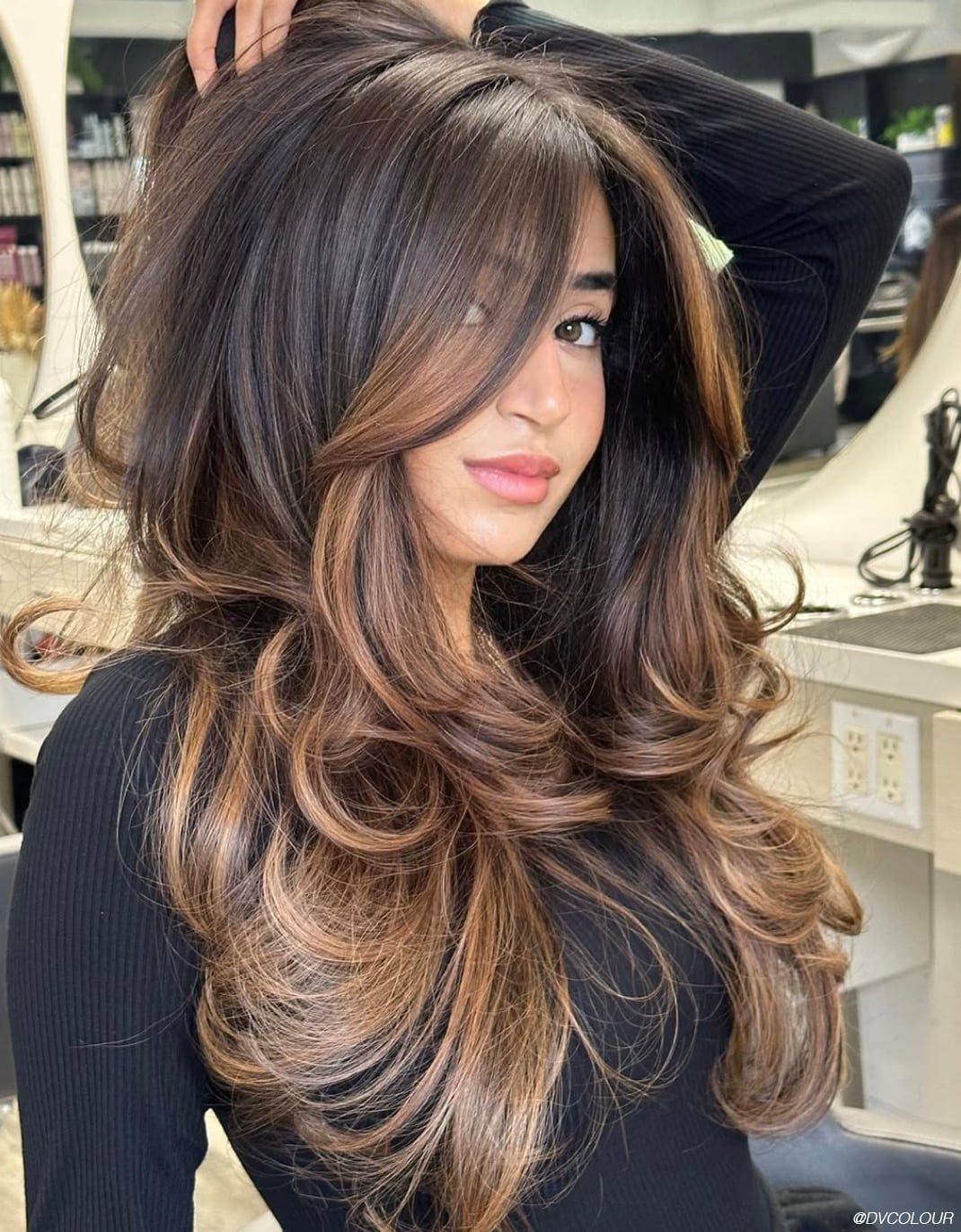
Courtesy of: bangstyle.com
What makes this one work is the precision of the face-framing pieces: the caramel and blonde balayage is concentrated around the front, where it reads as a deliberate glow. The curtain bangs draw the eye along those lighter strands, so the color stands out while the voluminous blowout keeps the thick, wavy texture looking polished. It is a classic brunette balayage with caramel blonde placement, and it suits oval and heart-shaped faces best, since the lighter pieces soften the angles around the cheekbones.
Ask your colorist for: mid-back balayage with caramel and blonde highlights, face-framing pieces. The good news for anyone with thick, wavy hair is that this is a low-maintenance proposition. Because the color is painted on rather than foiled from the root, the grow-out line stays soft, and you can stretch touch-ups to twelve weeks. A large barrel curling iron will recreate the soft curls in about twenty minutes, and a trim every eight to ten weeks keeps the shape honest.
Dark Blonde Mid-Back With Lighter Blonde Balayage
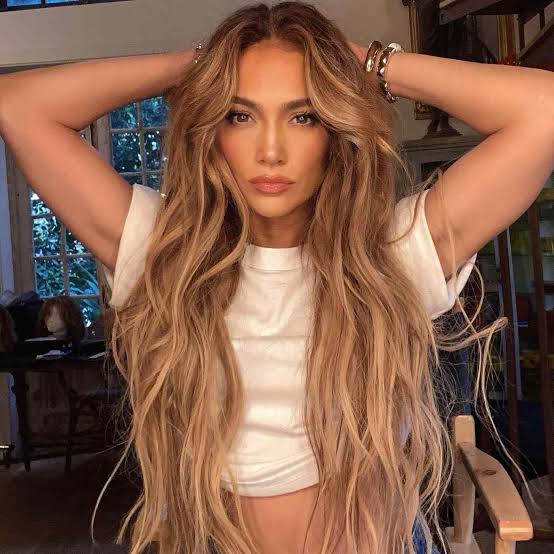
Photo credit: byrdie.com
The technique here is a study in restraint: the dark blonde base stays intact through the roots, and the lighter blonde balayage is painted on in sweeping strokes that land mostly toward the ends. That is what creates the sun-kissed effect, a soft brightening that never announces itself as a highlight appointment. The long layers and curtain bangs keep the movement going, so the loose waves catch the lighter pieces at different points along the length.
Ask your colorist for: mid-back balayage, dark blonde to light blonde contrast, curtain bangs. This one suits round and square faces, because the curtain bangs break up the width and the darker root area keeps the eye from landing too wide. The color is built to fade gently, but the lightest tones will start to go brassy around week seven, so toning every six to eight weeks keeps the blonde from drifting toward yellow.
Ash Brown Mid-Back With Blonde Balayage Highlights
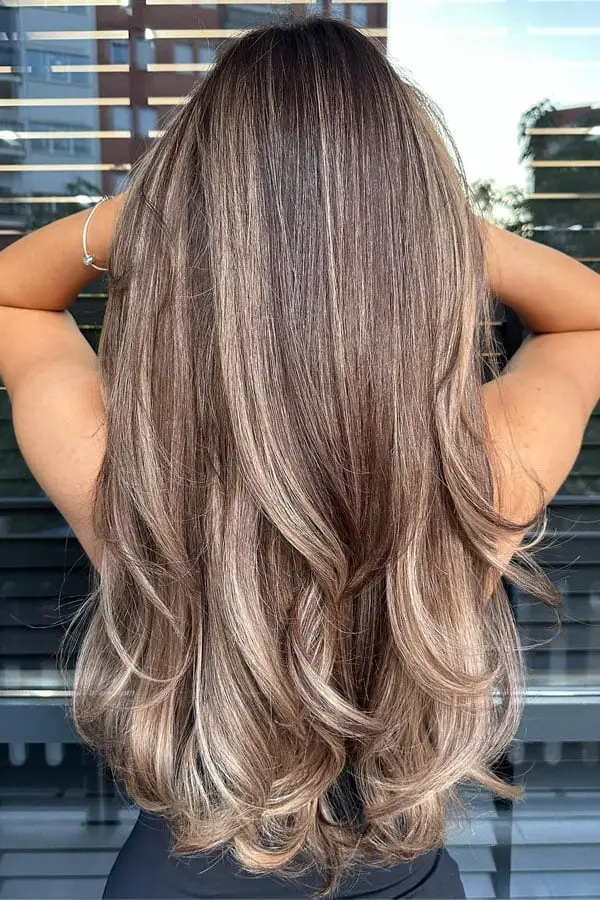
Image credit: fabmood.com
Wondering how to describe this to a colorist without getting a confused stare? The key words are ash brown base with blonde balayage, and you want the lighter pieces woven throughout, not concentrated at the ends. The back view shows the full picture: the loose waves carry the blonde from the mid-lengths down, and the ash tone keeps the brunette from going warm or muddy.
Ask your colorist for: mid-back ash brown hair with blonde balayage, soft layers. The ash pigment is the part that needs the most explanation, since it separates a cool, smoky brown from one that leans orange. For thick, wavy hair that grows out fast, the layers matter as much as the color, so ask for them to be cut in a way that moves with the wave pattern.
Bronde Mid-Back With Caramel Balayage Highlights
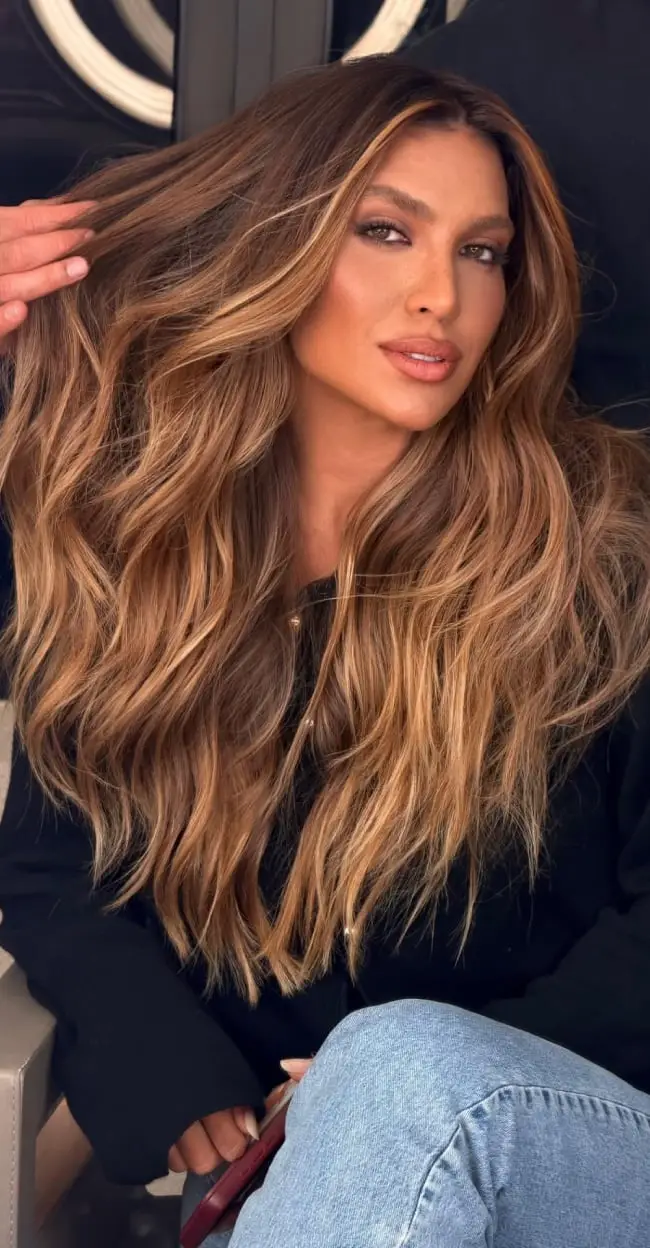
Source: fabmood.com
Set this against a solid bronde color and the difference is immediate: the caramel balayage adds depth and movement, so the hair reads as dimensional even when it is resting flat. The face-framing layers and middle parting give the soft waves somewhere to land, and the caramel pieces sit around the jawline. That placement is what makes this a smart pick for square or angular jawlines, since the lighter strands soften the hard lines without changing the cut.
Ask your colorist for: mid-back bronde balayage with caramel, face-framing layers. The upkeep is moderate: a smoothing serum keeps the shine noticeable between washes, and a toning appointment every eight to ten weeks will hold the bronde balance. Skip this one for a low-intervention color, because the caramel will need refreshing to stay distinct from the base.
Mid-Back Caramel Balayage With Subtle Layers
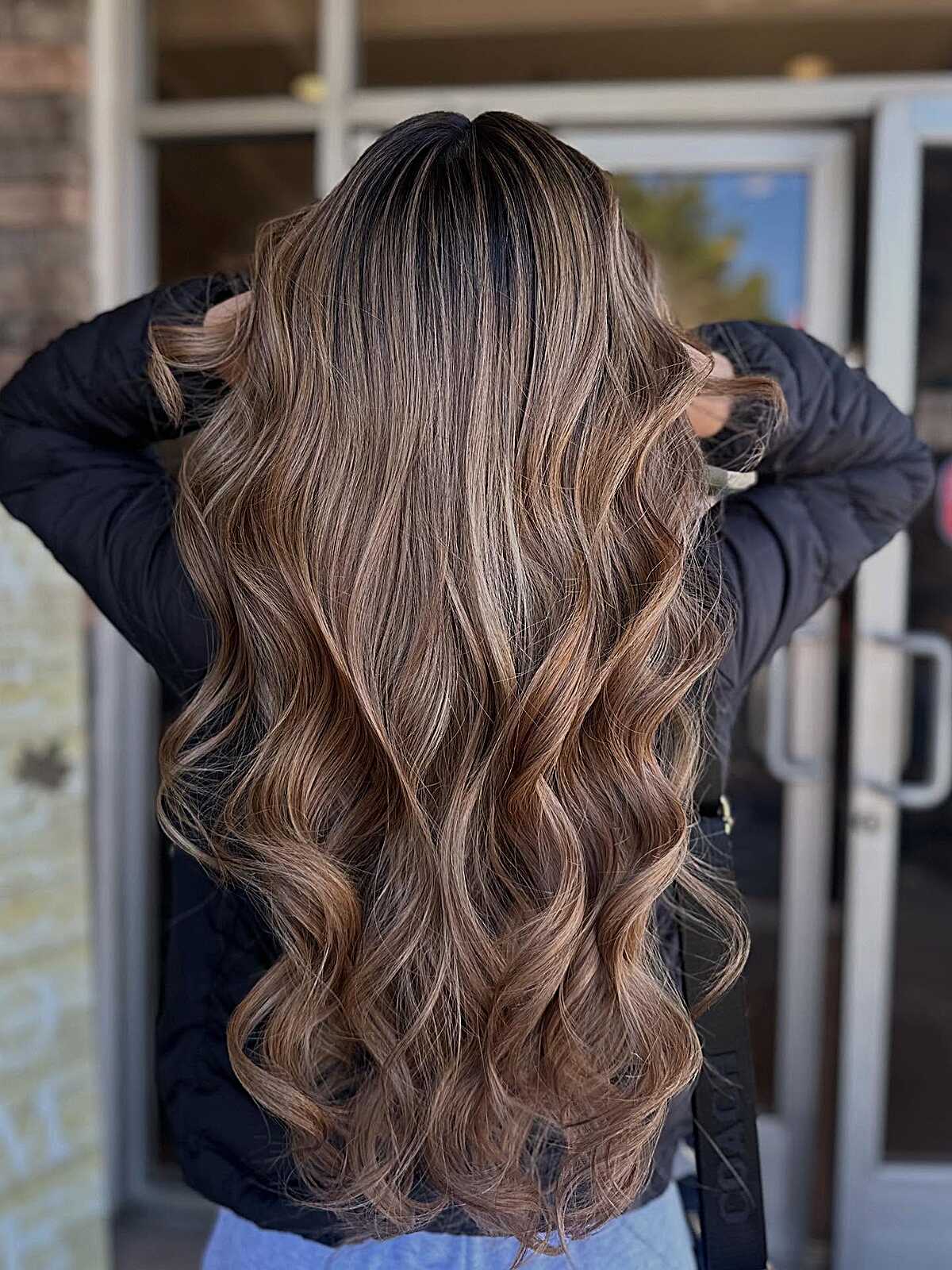
There is a quiet confidence in a caramel balayage that does not try to be anything but itself. The blend from the deeper roots into the caramel mid-lengths is smooth, and the subtle layers give the thick, wavy texture room to move without chopping away the length. A middle parting keeps the fall of the waves symmetrical, which matters when the color is this even.
Ask your colorist for: mid-back caramel balayage, subtle layers, loose waves. The honest downside is the daily styling: the loose waves are not a wash-and-go situation, at least not if you want them to look like this. A wide-tooth comb and a few minutes with a diffuser will get you close, but expect to spend the time. A trim every six to eight weeks is the other non-negotiable, since the subtle layers vanish without it.
Collarbone Ash Blonde Balayage With Darker Roots
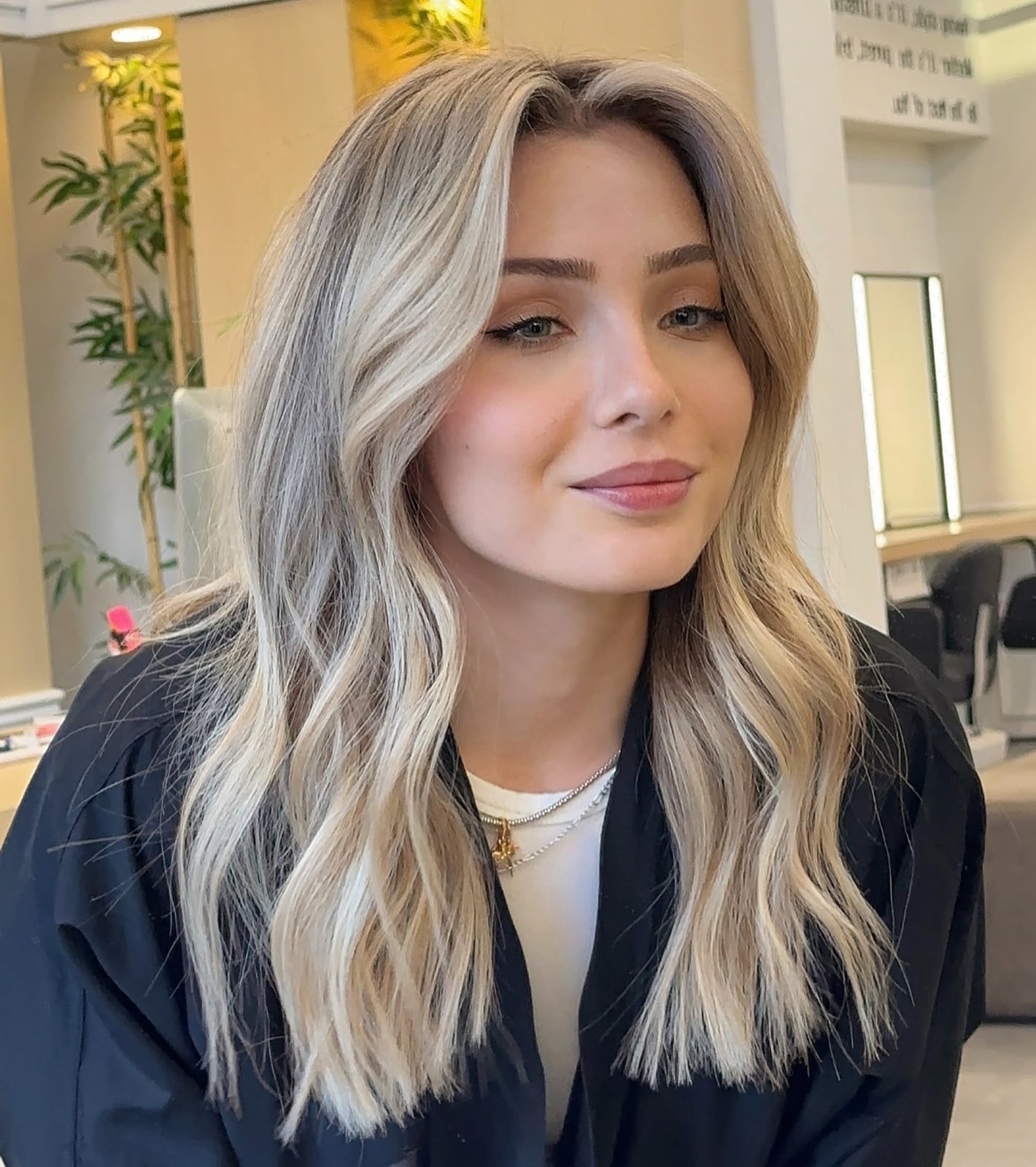
Courtesy of: fabbon.com
Is spring the right moment to go ash blonde? If winter left you with flat, dark regrowth, a collarbone cut with ash blonde balayage and darker roots is the transition color that buys you time. The darker roots keep the grow-out line soft for roughly six weeks, while the cooler tone lifts everything around the face. Ask your colorist for: collarbone length ash blonde balayage, darker roots, face-framing layers. Thick, wavy hair holds the soft blowout well, and curtain bangs suit round and oval faces. Blow-dry the fringe forward with a round brush and book a tone every four to six weeks.
Mid-Back Golden Wheat Balayage
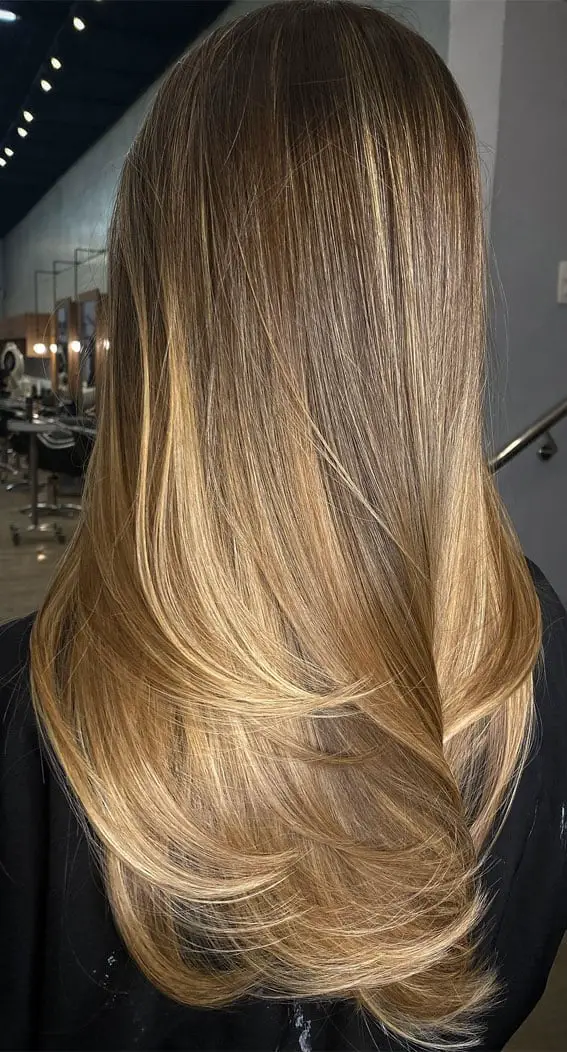
Photo credit: fabmood.com
Plan on a long appointment and a follow-up tone every eight to ten weeks to keep the wheat from drifting warm. At home, a diffuser on low heat preserves the loose curl without flattening the volume. The upside of the length is that trims can stretch to ten weeks if the layers stay shaped. The downside is that a grow-out at this length hides split ends until they travel upward.
Medium Brown Base With Blonde Balayage
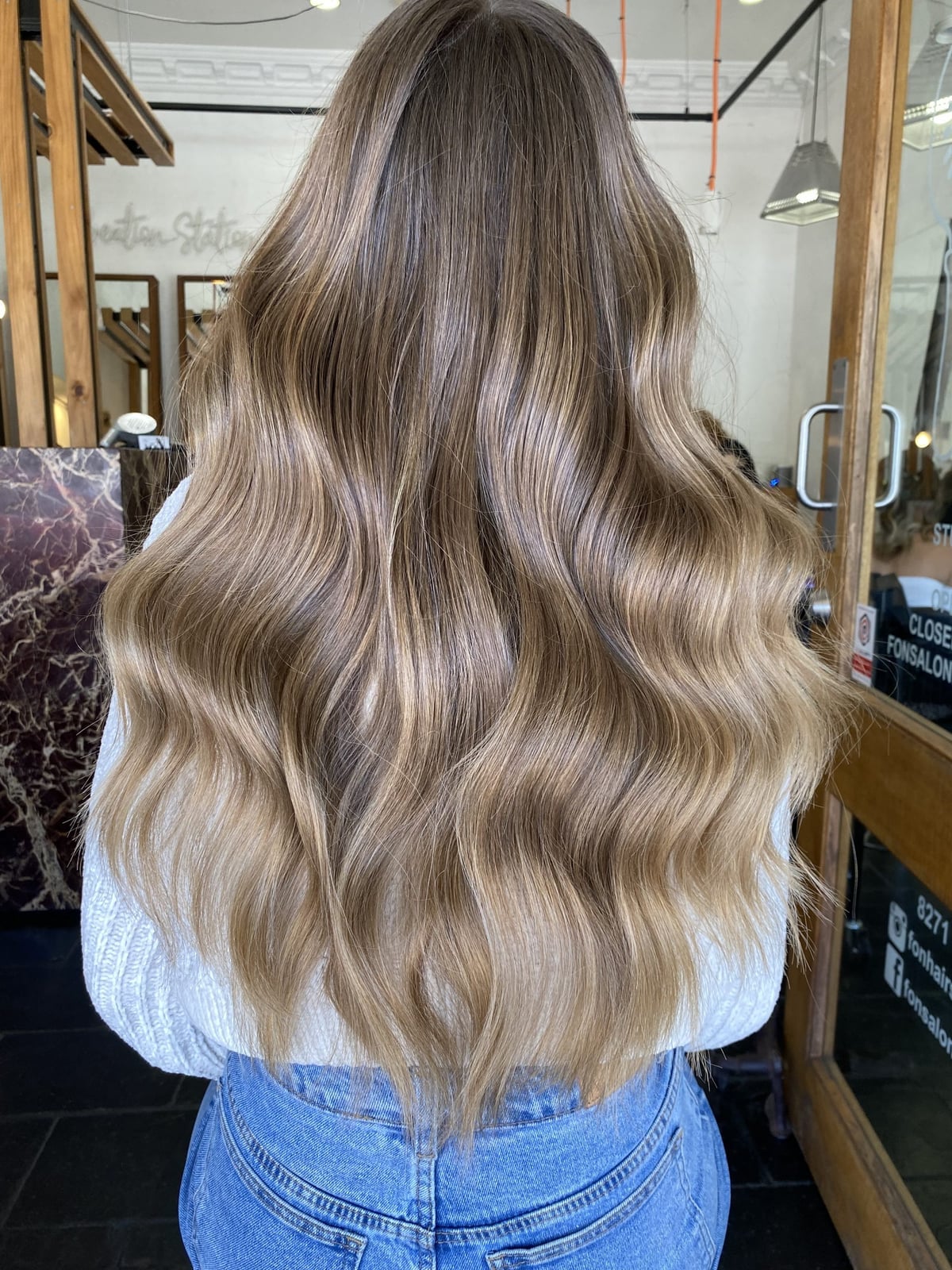
Image credit: fonsalon.com.au
The medium brown base holds its depth at the root while blonde balayage strands thread through to mid-back, and the contrast gives the loose waves a dimensional look instead of flat. On thick, wavy hair, the lighter pieces catch every bend of the blowout, which is why the back view looks sunlit even indoors. Ask your colorist for: mid-back medium brown with blonde balayage, loose waves. The catch is brassiness. Blonde over a medium brown base warms up faster than most people expect, often within six weeks, and once the tone shifts yellow the whole blend looks tired.
Budget for a toning appointment every six to eight weeks, plus a purple shampoo in rotation between visits. Skip this one if you want low-maintenance color or you rarely book follow-ups: the upkeep is the price of the contrast, not an optional extra. Oval and heart face shapes get the most from the soft layers.
Dark Brown Mid-Back With Caramel Honey Balayage
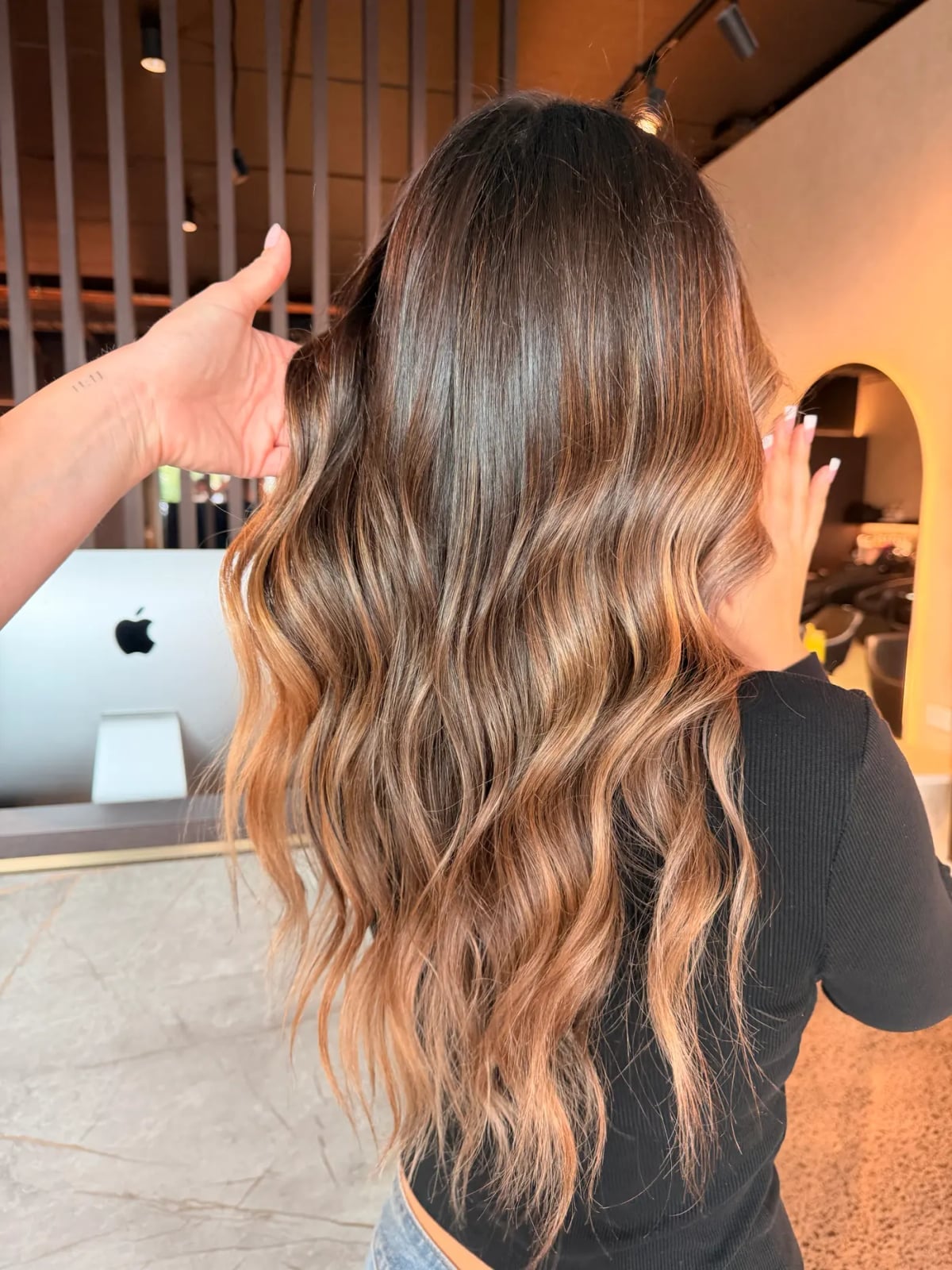
Source: jennaellenhair.com
Will caramel and honey balayage show up on a dark brown base? It will, and the warmth is the point. The lighter pieces sit close to the base tone, so the grow-out stays soft and the dimension looks natural, not painted on. Ask your colorist for: mid-back dark brown with caramel and honey balayage, loose waves. Thick, wavy hair of mid-back length carries it best, and a middle parting with soft waves elongates a round face while the side volume suits a square jaw. Refresh the tone every six to eight weeks.
Dark Brown Mid-Back With Caramel Blonde Balayage, Face-Framing
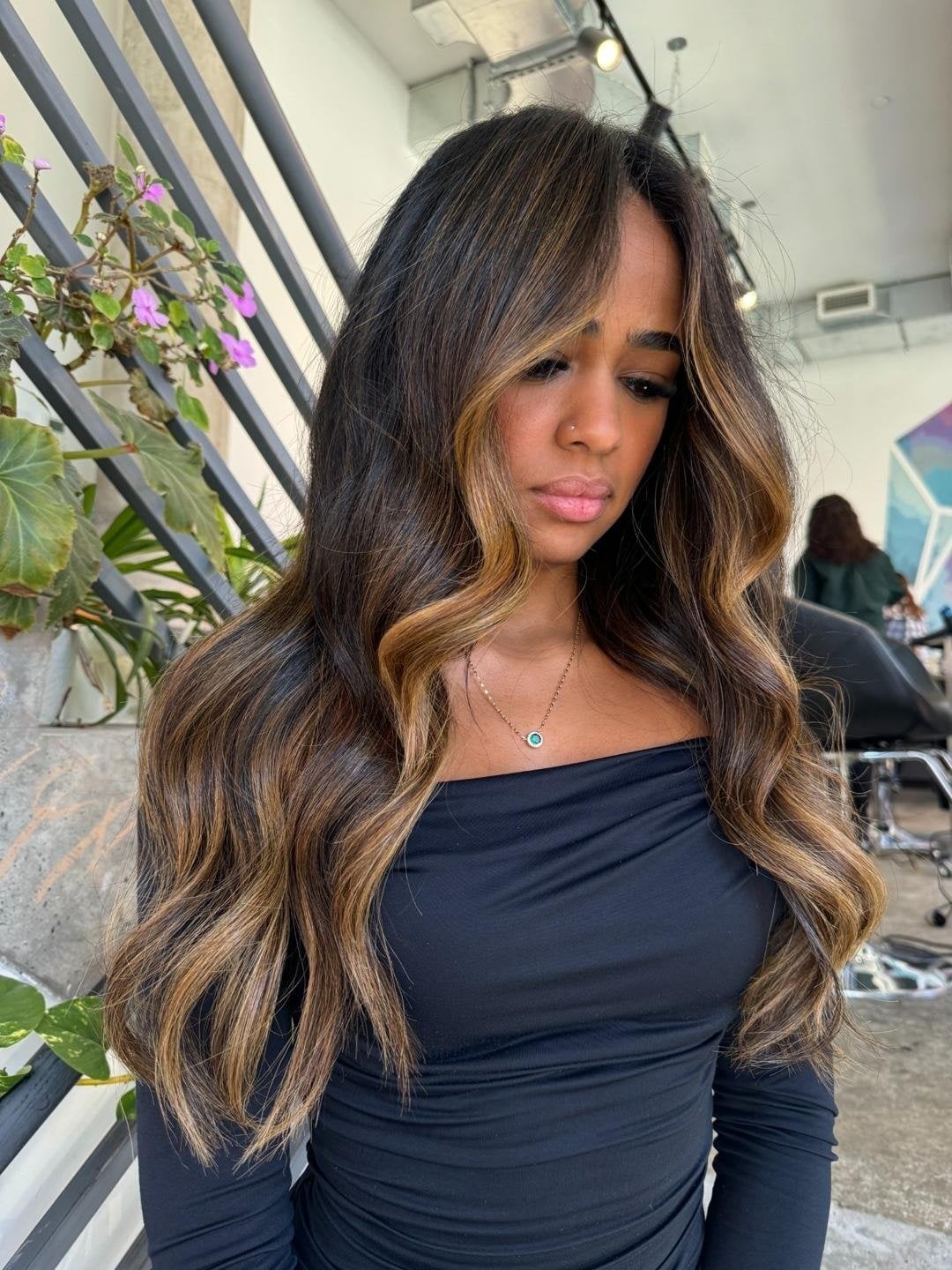
Source: gemhousesalon.com
The technique matters more here than the shade. Your colorist paints the face-framing pieces first, then works back through the layers, checking the blend in a front view before the toner goes on. That is why the front of the head gets the most chair time. For oval and heart face shapes, the result is a softer jawline without a single blunt line. Wavy texture holds the shape with a smoothing balm and a quick diffuse, and a tone every six to eight weeks keeps the caramel from turning copper.
Collarbone Dark Brown To Caramel Balayage
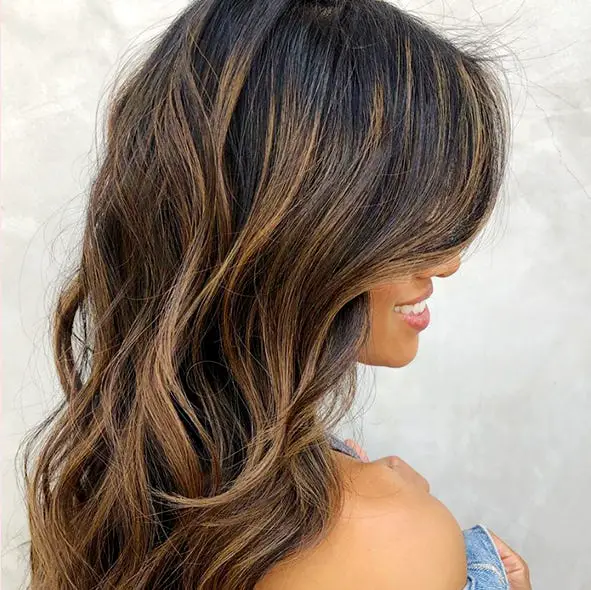
Via seventeen.com
Wondering how to get that dark-to-caramel transition without a harsh line? The key is asking your colorist for a seamless transition from dark brown to caramel, letting the balayage sweep through the face-framing layers so the color looks lived-in, not painted on. Start with thick, wavy hair at collarbone length, and the soft curtain bangs will blend right into the lighter pieces. Ask your colorist for: collarbone length dark brown to caramel balayage, curtain bangs. The result reads as natural, which is the whole point of this technique.
Mid-Back Smoked Praline With Golden Caramel Balayage
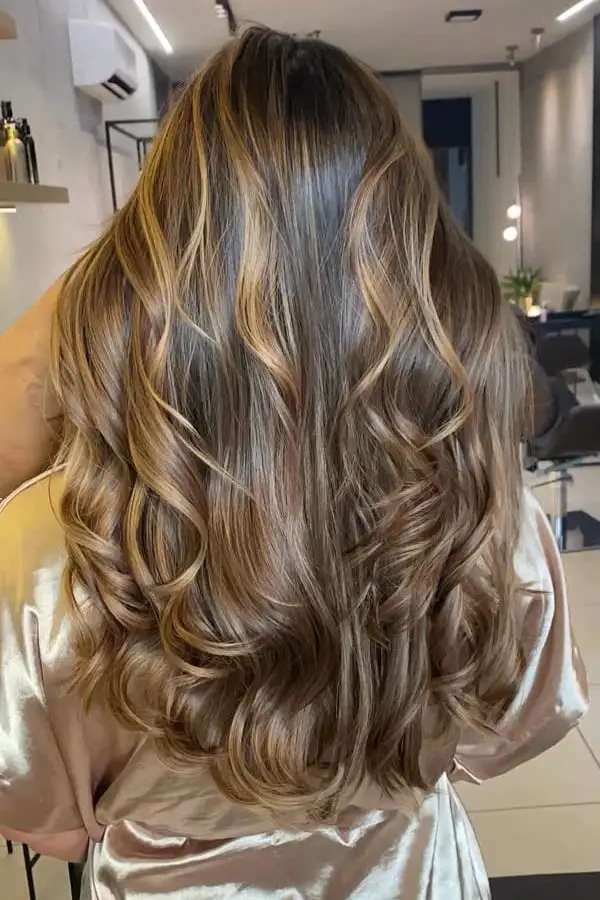
Courtesy of: itakeyou.co.uk
Solid brown is fine, but it lacks the depth that a smoked praline base with golden caramel balayage delivers. Here, thick wavy hair falls to mid-back with caramel ribbons woven through the middle lengths and ends, creating a multidimensional autumn look that a single flat color can’t touch. The warm lighting picks up the gloss in the loose waves, which is exactly what you want from a back view. Ask your colorist for: mid-back smoked praline with golden caramel balayage, loose waves. To keep the shine and prevent the caramel from muddying, apply a shine spray and book a trim every eight to ten weeks. If you prefer a low-maintenance root line, this darker base grows out gracefully, so you can stretch the toning visits.
Collarbone Brunette Lob With Curtain Bangs
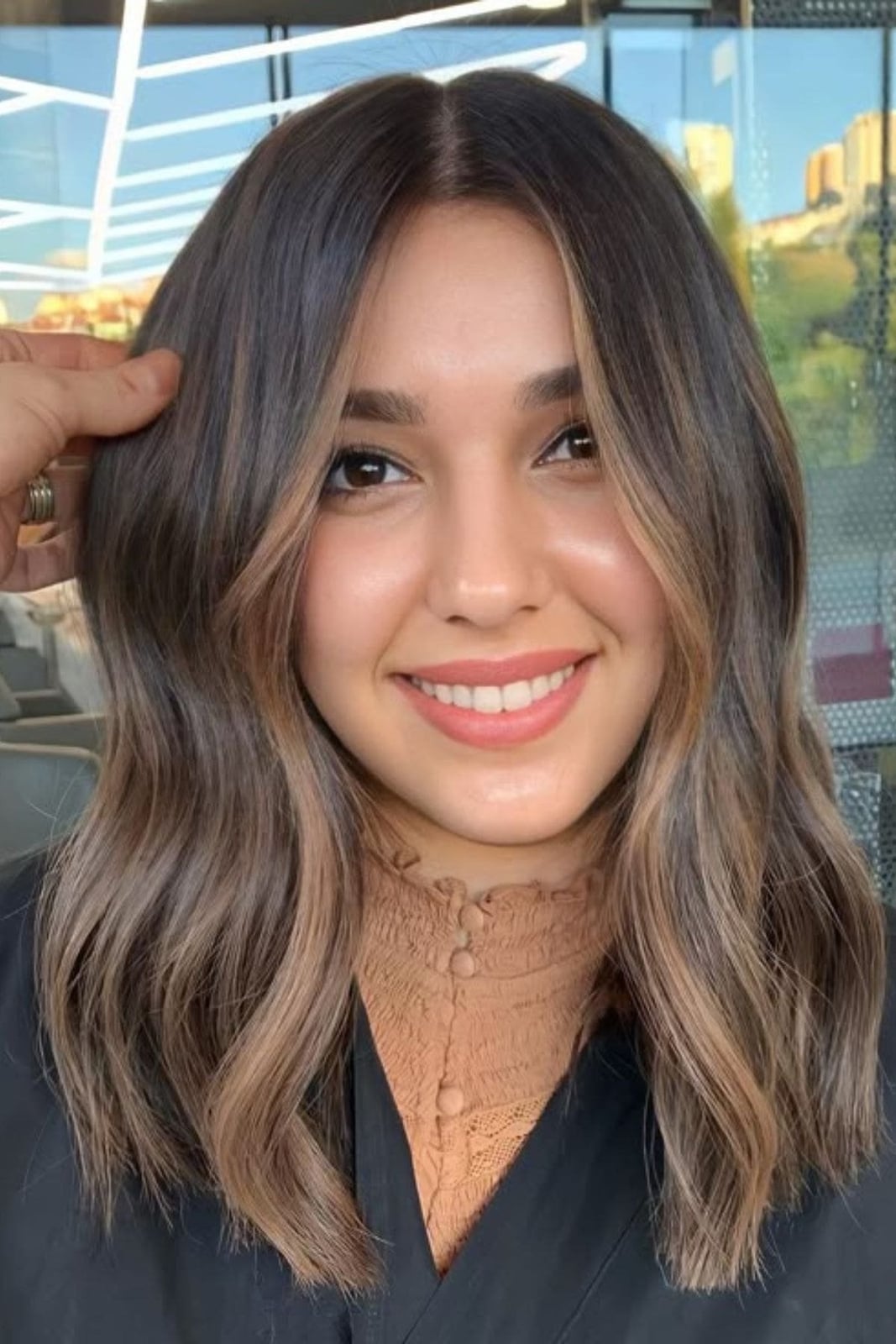
Photo credit: haiirology.com
The clever part of a collarbone lob with curtain bangs is how the face-framing pieces do the styling for you. Brunette balayage adds dimension through soft waves, and the middle parting lets the bangs feather outward, which suits round and oval faces nicely. Medium density wavy hair holds this shape without much effort. Ask your stylist for: collarbone brunette lob, curtain bangs, face-framing pieces. One drawback: the bangs need a trim every three to four weeks, or they start grazing your eyes and lose their curtain effect.
Mid-Back Dark Blonde With Lighter Blonde Balayage, Close-Up Take
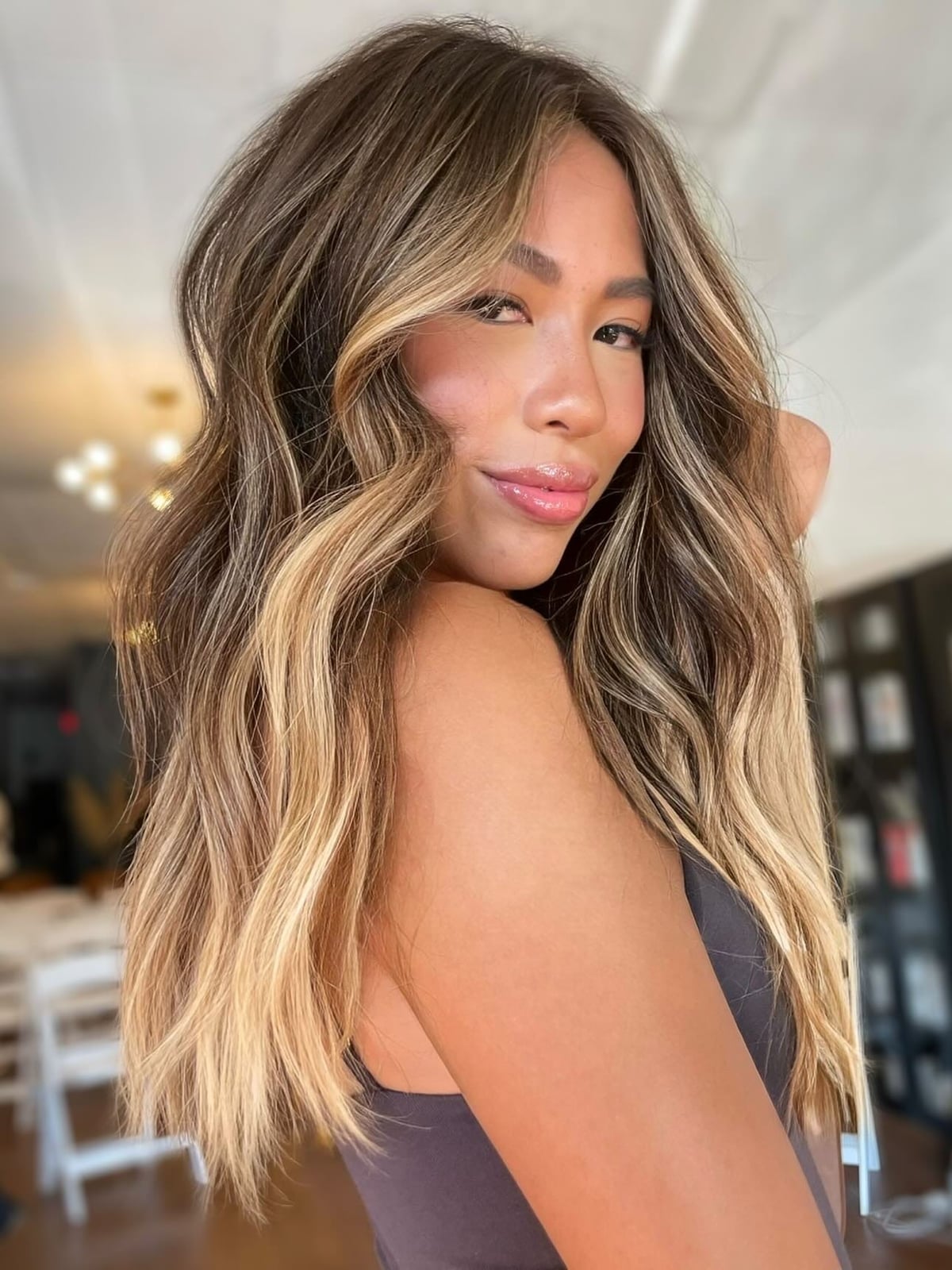
Image credit: elle.com
What makes this summer color work so well is the face-framing balayage that catches the light first. The dark blonde base keeps the roots low-maintenance, while lighter blonde pieces sweep through the mid-back length and around the face, giving thick wavy hair a natural, lived-in look. It’s the kind of color that transitions from a beach day to a dinner out without looking overdone. Ask your colorist for: mid-back dark blonde with lighter blonde balayage, face-framing. Since the lighter pieces sit close to your face, a purple shampoo once a week keeps brassiness at bay between toning visits, which usually land every six to eight weeks.
Collarbone Ash Blonde Balayage Lob
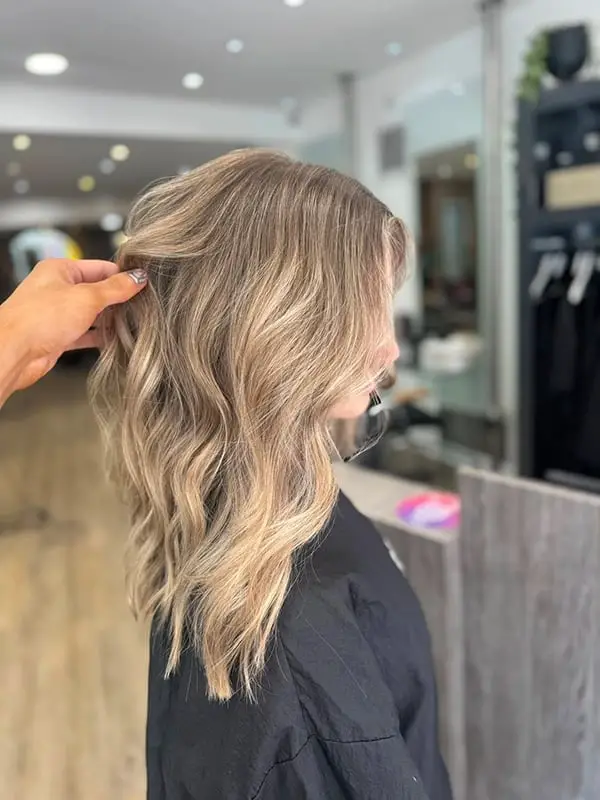
Source: khhair-derby-sadlergate.co.uk
An ash blonde balayage lob at collarbone length with a side part gives you a cool-toned alternative to warmer blondes, and the side view shows off the color transition nicely. The blowout styling adds soft waves that suit medium textured hair, and the side part helps balance round or heart face shapes. Ask your colorist for: collarbone ash blonde balayage lob, side part. Achieving this precise ash tone at home is a gamble, so it’s best left to the salon; the toner is what keeps the gray-green cast away, and that’s not something a box dye can replicate.
Mid-Back Dark Brown With Caramel Balayage and Sun-Kissed Strands
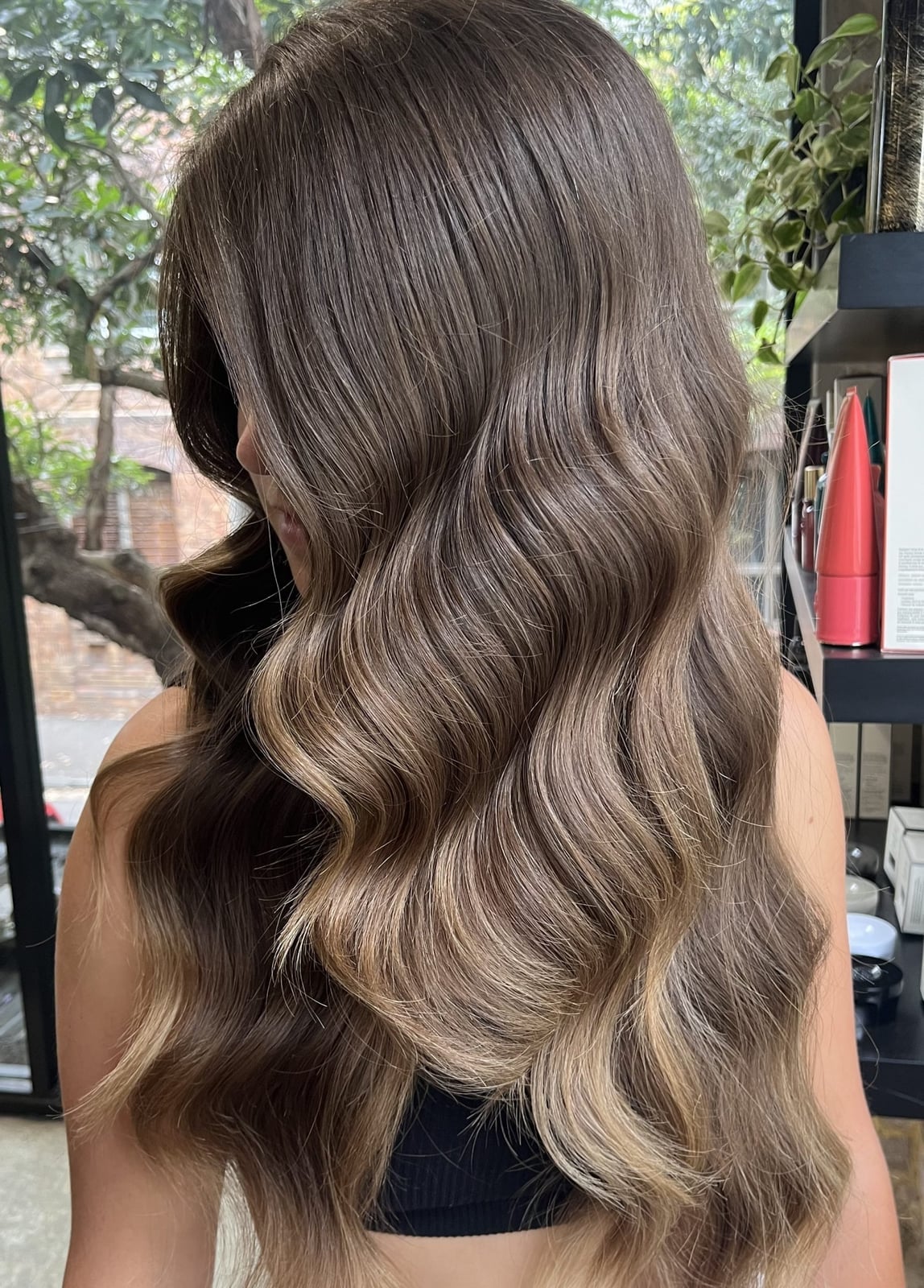
The design is deliberate: a dark brown base keeps the roots grounded, while caramel balayage lifts the ends into a warm, dimensional finish. This works best on thick, wavy hair of mid-back length, where the texture helps the sun-kissed strands look naturally scattered. Ask your colorist for a mid-back dark brown with caramel balayage and sun-kissed effect. The contrast between dark roots and caramel pieces demands a toning appointment every six to eight weeks, or the warmth drifts brassy. A thick hair type carries the transition well, but fine hair may not hold the separation the technique relies on.
Collarbone Ash Blonde Balayage With Face-Framing Layers
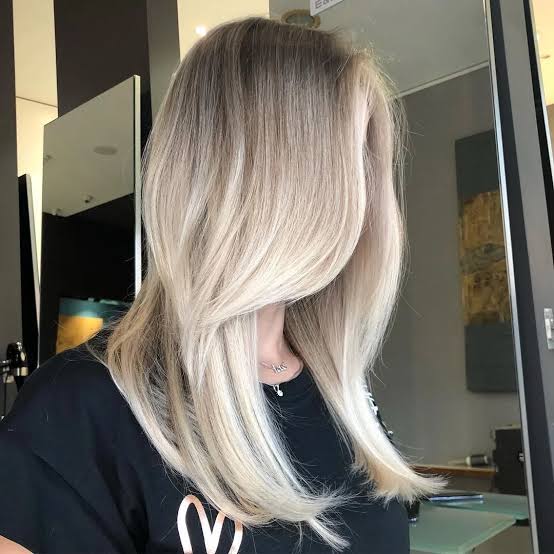
Courtesy of: pleijsalon.com
Wondering if a collarbone cut can still look dimensional? It can, when the ash blonde balayage starts darker at the roots and lightens toward the ends, and the face-framing layers pull that brightness forward. The style suits thick, straight hair of collarbone length, and the curtain bangs soften an oval or heart-shaped face. Ask your stylist for collarbone ash blonde balayage with face-framing layers and curtain bangs. A round brush and blowout keep the shape sleek, and a toning appointment every four to six weeks prevents the ash tone from turning muddy.
Mid-Back Dark Blonde To Light Blonde Balayage, Wavy
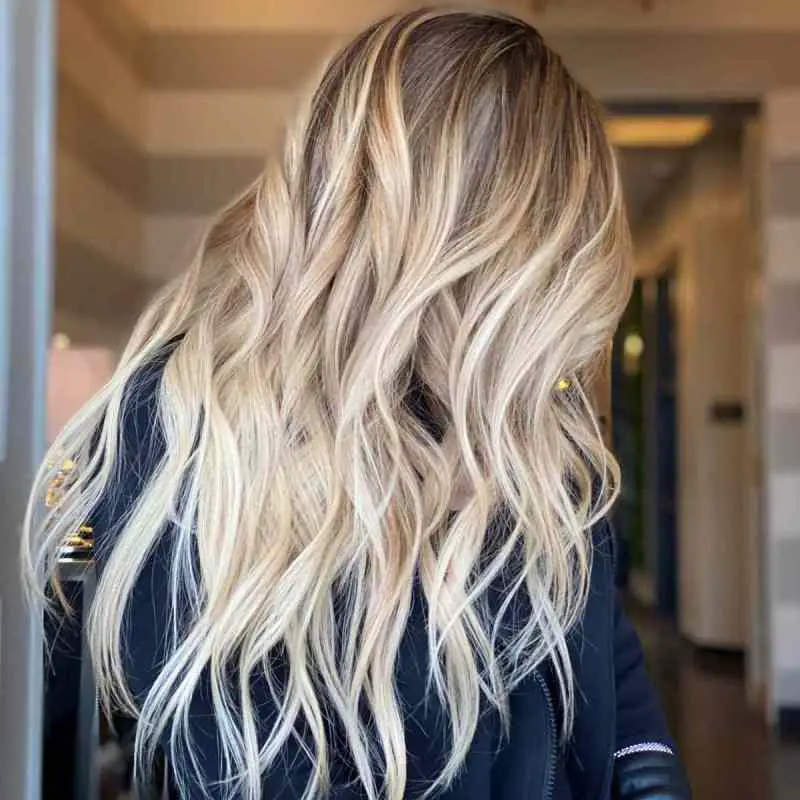
Photo credit: lush-hair-folk.com
The colorist applies the lightener freehand, painting each section so the dark blonde root melts into a lighter blonde end with no visible line. On thick, wavy hair of mid-back length, the seamless transition looks like gradual sun exposure. Ask your colorist for a mid-back dark blonde to light blonde balayage with a seamless blend. The middle parting and wavy layers let the color fall openly on both sides. A smoothing serum adds the gloss that makes the gradient look deliberate, and a trim every eight to ten weeks keeps the ends healthy enough to hold the lightness.
Shoulder Honey Blonde Balayage On Curly Hair
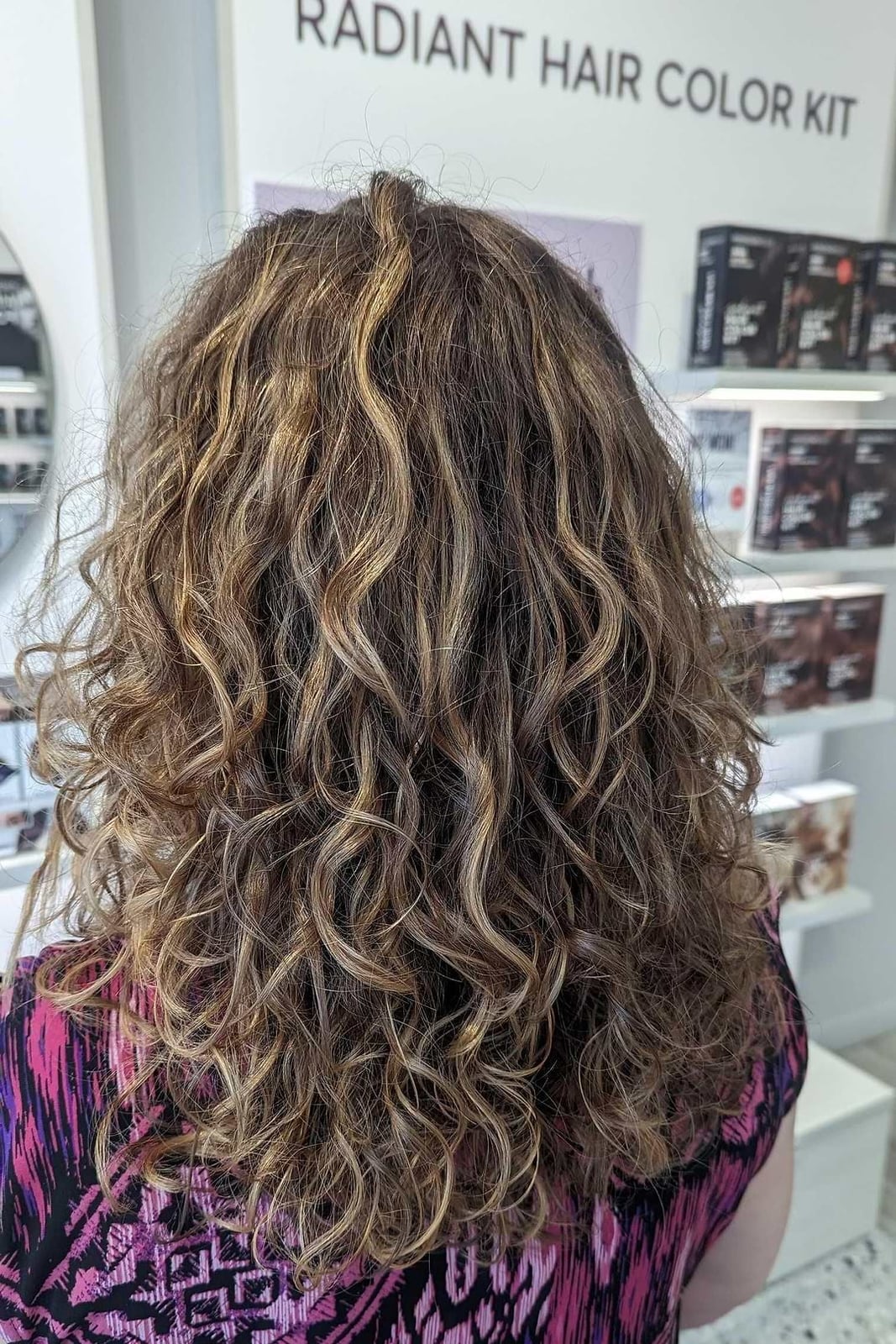
Image credit: madison-reed.com
How do you keep curly hair from looking flat with color? By placing the honey blonde balayage on the layers, so the lightness moves with the curl pattern rather than sitting on top. This works on thick, shoulder-length curly hair with a middle parting and no bangs. Ask your colorist for a shoulder-length honey blonde balayage on curly hair. To style, apply a curl cream to wet hair, then air dry or diffuse on low heat, letting the natural texture define the color placement. A trim every ten to twelve weeks prevents the ends from thinning out the curl.
Shoulder Ash Blonde Balayage With Waves
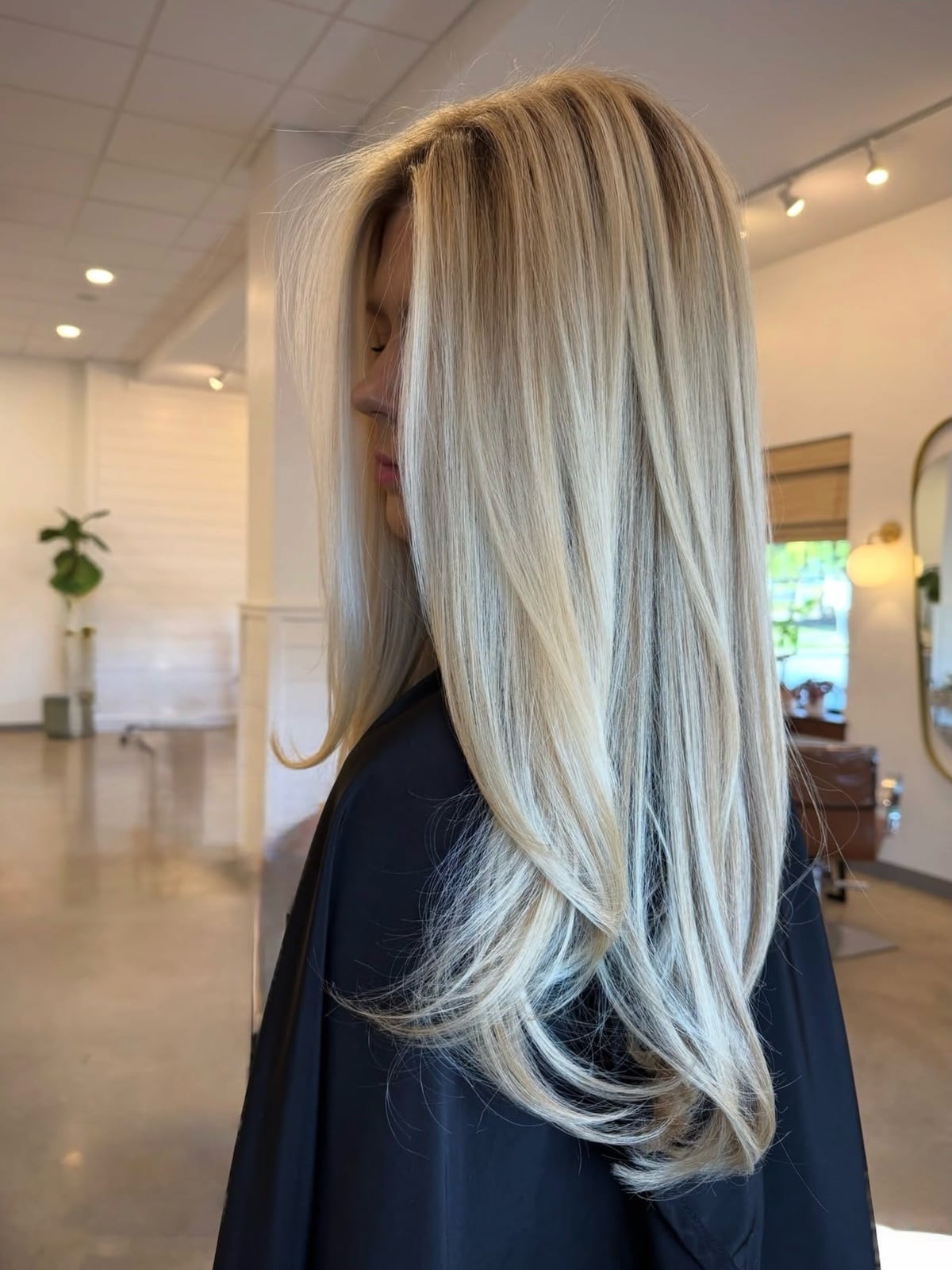
Warmer blonde tones get all the attention, but ash blonde balayage offers a cooler alternative that looks more restrained and office-appropriate. On shoulder-length hair with medium texture and soft waves, the ash tones sit between the darker root and the lighter ends without going brassy. Ask your colorist for a shoulder-length ash blonde balayage with soft waves. This suits oval and long face shapes, where the shoulder length adds width. A volumizing mousse at the roots lifts the style, and a toning appointment every four to six weeks keeps the ash tone from washing out to yellow.
Final Thoughts
For a softer blend and less upkeep, pick a warmer base with fewer, more diffused highlights. For more impact, go higher contrast with brighter blonde through the ends.
- Refresh the color every 10 to 16 weeks, depending on grow-out.
- Wash with color-safe shampoo and conditioner to hold the tone.
- Add a deep conditioning treatment once a week for shine.
- Ease off high heat to keep the color from fading early.
Balayage offers endless custom color possibilities.
-

 Makeup Trends2 years ago
29 Harley Quinn Makeup Ideas: Iconic Looks for Every Occasion
-

 Hairstyle2 years ago
Round Face Haircuts Ideas 2025: 29 Flattering Styles to Try
-

 Hairstyle2 years ago
25 90s Layered Hair Ideas to Inspire Your 2025 Look
-

 Fashion2 years ago
27 Every Day Spring Outfits Inspiration for 2025
-

 Hairstyle2 years ago
29 Long Layered Haircuts Ideas for 2025
-

 Hairstyle2 years ago
64 Fall Hair Color Trends to Elevate Your Style in 2024
-

 Hairstyle2 years ago
Choppy Bob Haircuts 2025: 29 Stylish Ideas
-

 Hairstyle2 years ago
27 Medium Length Haircut with Layers Ideas for 2025