
Hairstyle
32 Aesthetic Money Piece Hair Ideas 2027 with Bold Accents
Aesthetic Money Piece Hair 2027. See 32 ideas for burgundy money piece on dark brown hair, ash blonde on dark blonde, and golden on medium brown bobs.

You sit in the chair, fringe already sectioned, and your colorist asks how much lighter you want the front. That hesitation is the whole point. A money piece gives you the brightness of highlights without the full-head commitment, and the grow-out line stays soft enough to stretch your salon visits past the eight-week mark.
32 takes on this face-framing technique prove one thing: the right contrast changes everything. From subtle caramel on dark brown to bold blonde on copper, these are for anyone who wants a fresher look without starting over. Which is why Aesthetic Money Piece Hair 2027 fill so many saved boards. The hard part is choosing the shade, not selling the idea.
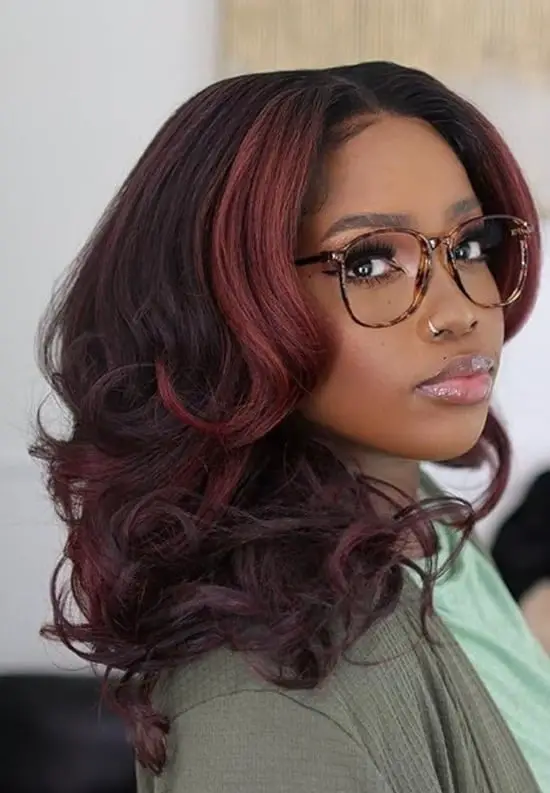
Burgundy highlights and a bold money piece on a dark brown base
Courtesy of: fashionpoliceng.com
A dark brown base gets its moment with burgundy highlights and a prominent money piece. The technique uses a soft blowout to show wavy, thick texture across layers. Two tones sit close together: the deep base and the wine-red face-framing strands. A middle part lets the lighter pieces do their work. Ask your colorist for: dark brown base with burgundy highlights and money piece. Thick, wavy hair at collarbone length or longer holds the contrast best. This color application requires section by section work rather than a single process.
Ash blonde money piece framing a dark blonde base
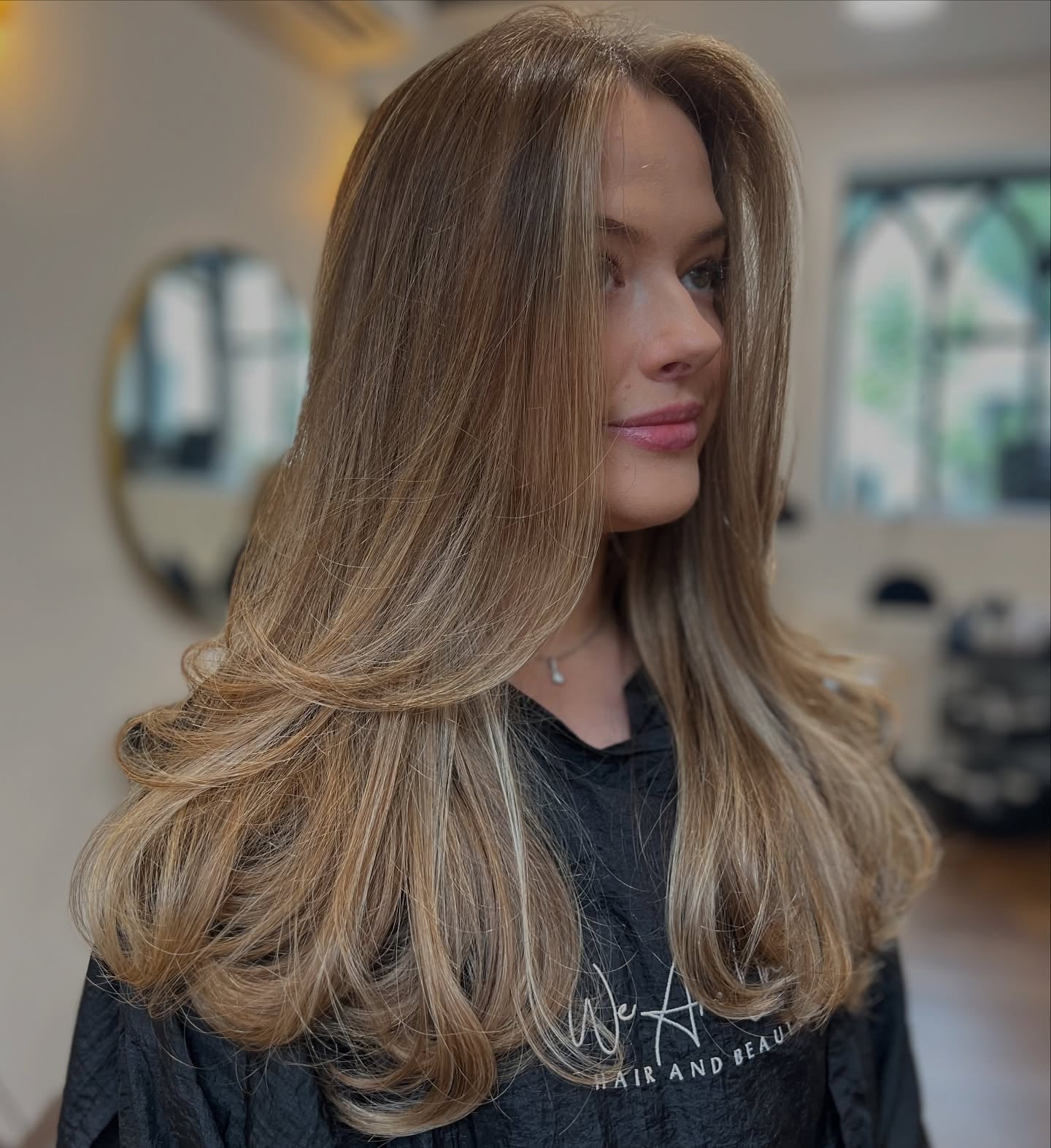
Photo credit: latest-hairstyles.com
Where a warm blonde money piece reads golden, this one goes cool. A dark blonde base keeps depth while ash blonde face-framing pieces pull the eye forward. Fine, wavy texture benefits from a side part that lets the lighter strands sit where they catch the light naturally. The soft layers hold a voluminous blowout without going flat by midday. Skip it if your current color leans warm. The ash tone needs a cool starting point to stay crisp.
Golden money piece on a medium brown bob
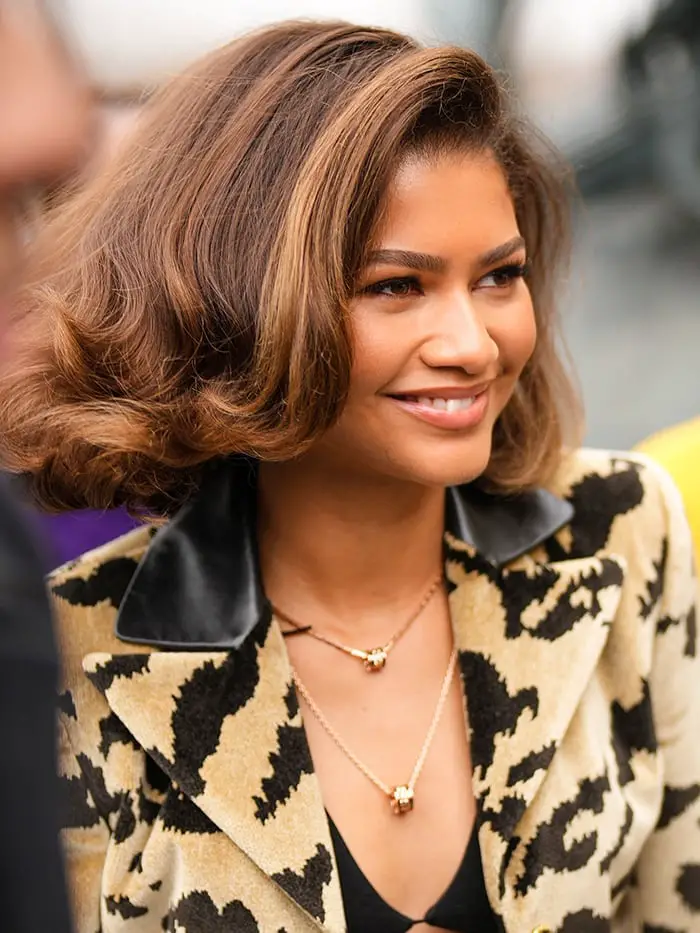
Image credit: whowhatwear.com
A medium brown bob meets a golden money piece that lands at the front sections only. The side view shows the lighter strands starting near the root and fading into the rest of the cut. Thick, wavy texture gives the bob body without extra styling effort. The catch: precise placement matters. If the golden pieces extend too far back, the money piece effect blurs into general highlights. Have your colorist do: medium brown bob with golden money piece.
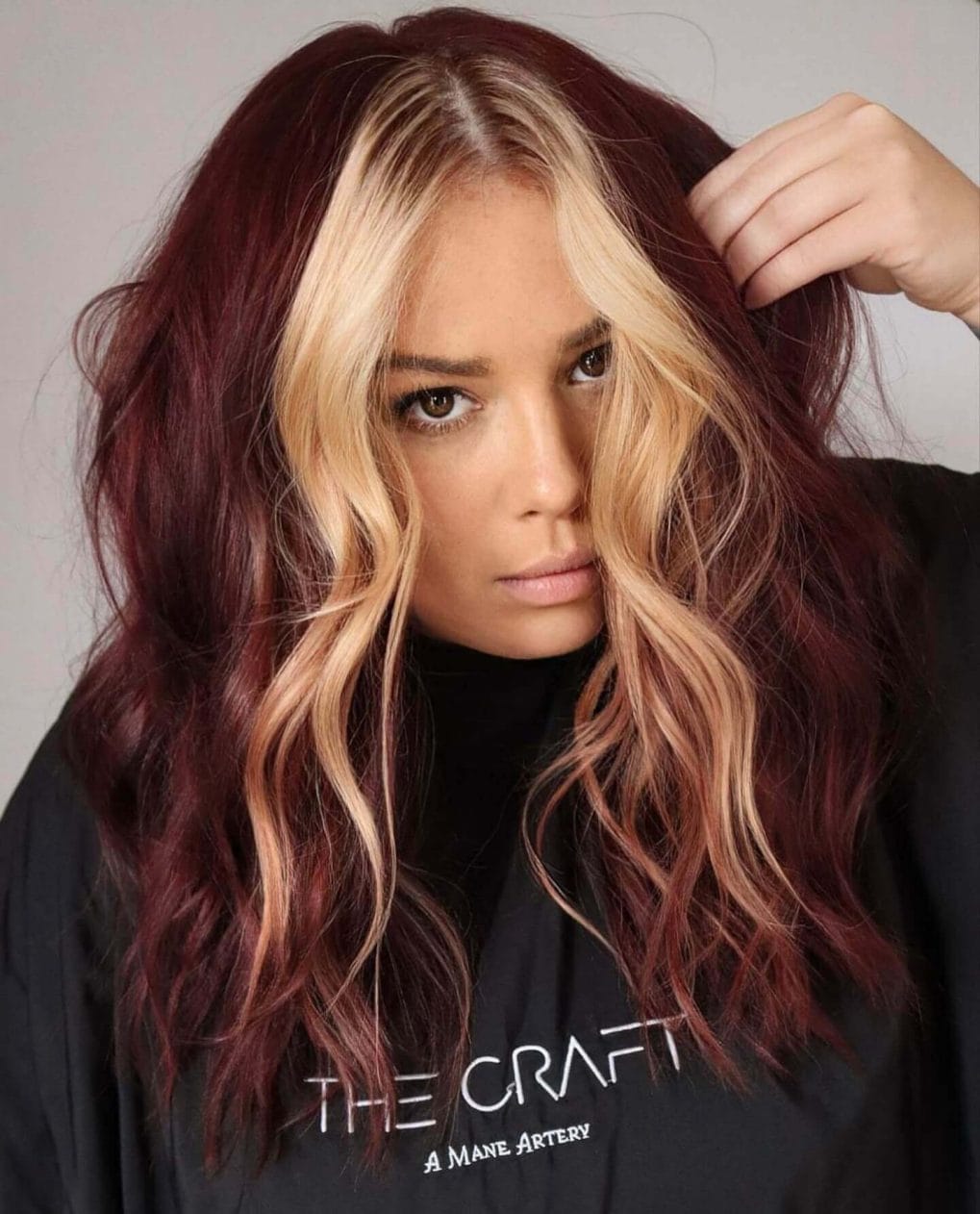
Bold blonde money piece for a dark red base
Source: snazzylair.com
Dark red acts as the backdrop for a blonde money piece that doesn’t whisper. The contrast sits high on the face, with loose waves carrying the lighter strands through the middle part. Thick, wavy texture at collarbone length or longer lets the two tones read clearly without blending into each other. This is a look for autumn when you want the warmth of red without going full copper. Request from your colorist: dark red base with bold blonde money piece. A toning appointment every six weeks keeps the blonde from pulling yellow against the red.
Ash blonde money piece with curtain bangs on dark brown
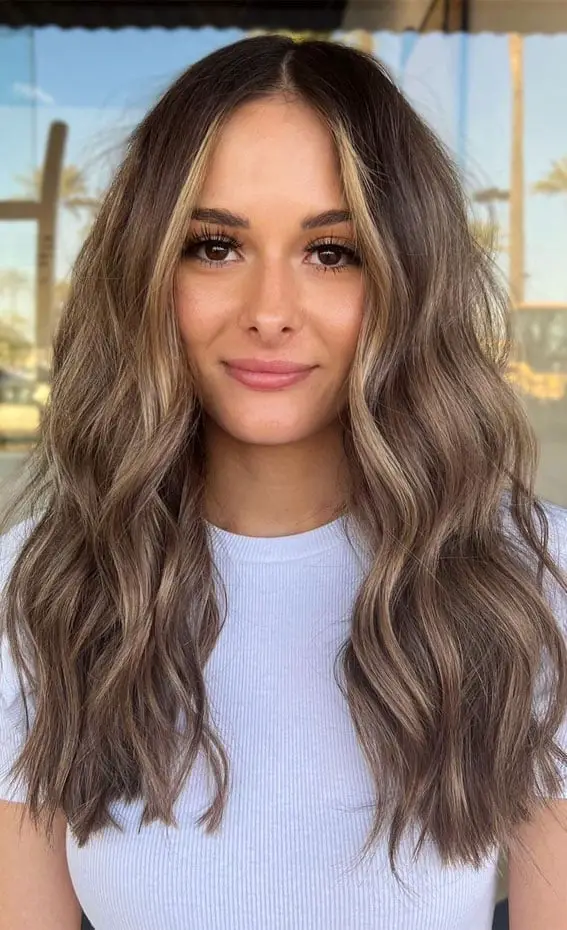
Via fabmood.com
Face-framing brightness without a full highlight schedule starts with a dark brown base. Add ash blonde to the front sections and cut curtain bangs that sweep the color across the cheekbones. The wavy blowout gives medium density hair enough volume to keep the bangs from sticking flat. A middle part lets the money piece sit symmetrically. Curtain bangs require a round brush for styling.
Caramel money piece for a soft contrast on a dark brown lob
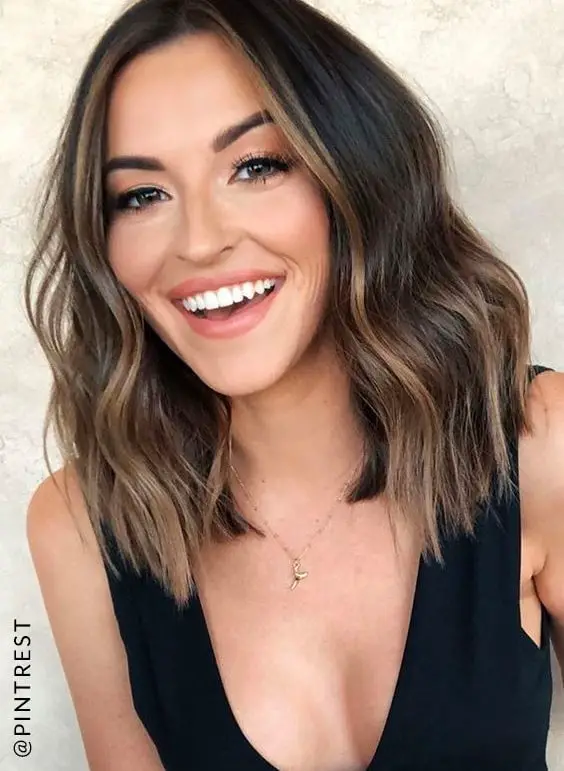
Courtesy of: chichiclothing.com
Caramel against dark brown looks intention, not accident. The money piece sits at the front, a few shades lighter than the base, and the caramel highlights blend through the rest of the lob. Fine, wavy texture lets the warmth show without looking heavy. A middle part keeps the framing even on both sides.
Grow-out is the real win here. The caramel fades gradually into the dark brown, so you skip the harsh root line that harsher contrasts bring. A trim every six to eight weeks keeps the lob shape clean. The wavy blowout takes about fifteen minutes with a large barrel. Skip it if you want a stark blonde pop. This is a soft step, not a leap.
Blonde money piece on a dark brown lob
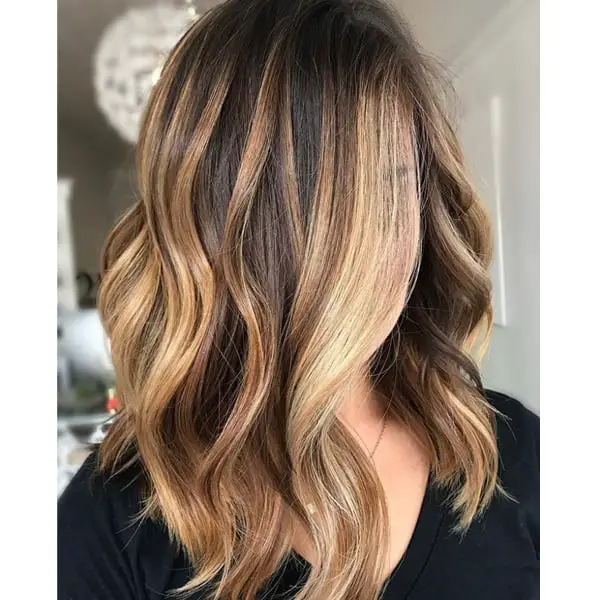
Photo credit: behindthechair.com
Dark brown base with a blonde money piece is a classic for a reason. The side part lets the lighter strands fall forward, framing the face on one side more than the other. Thick, wavy texture holds the lob shape and keeps the blonde from looking sparse.
The common mistake is trying this at home. A money piece needs precise placement, too wide and it looks an old highlight streak, too thin and it disappears in the wave. A salon handles the lift from dark brown to blonde in one session without banding. Book it as: dark brown lob with blonde money piece. The wavy blowout hides any minor asymmetry, but the base color needs professional hands.
When you want face framing without heavy color
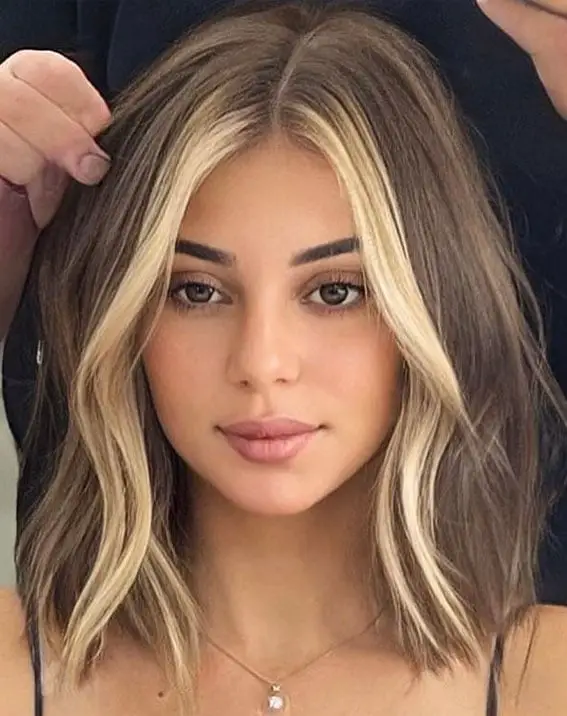
Image credit: itakeyou.co.uk
Two blonde pieces at the front, the rest dark brown. That is the whole design. Fine, wavy texture keeps the contrast sharp without needing a full highlight schedule. A middle part centers the lighter strands, so they frame both sides of the face equally.
The drawback: daily styling. The money piece only lands right when the waves fall forward in the same direction as the part. Air-drying leaves the pieces too random, and a quick brush-out pushes them back into the mass. A blowout with a round brush takes ten minutes. Pass when you prefer a wash-and-wear routine. This look demands a little effort each morning.
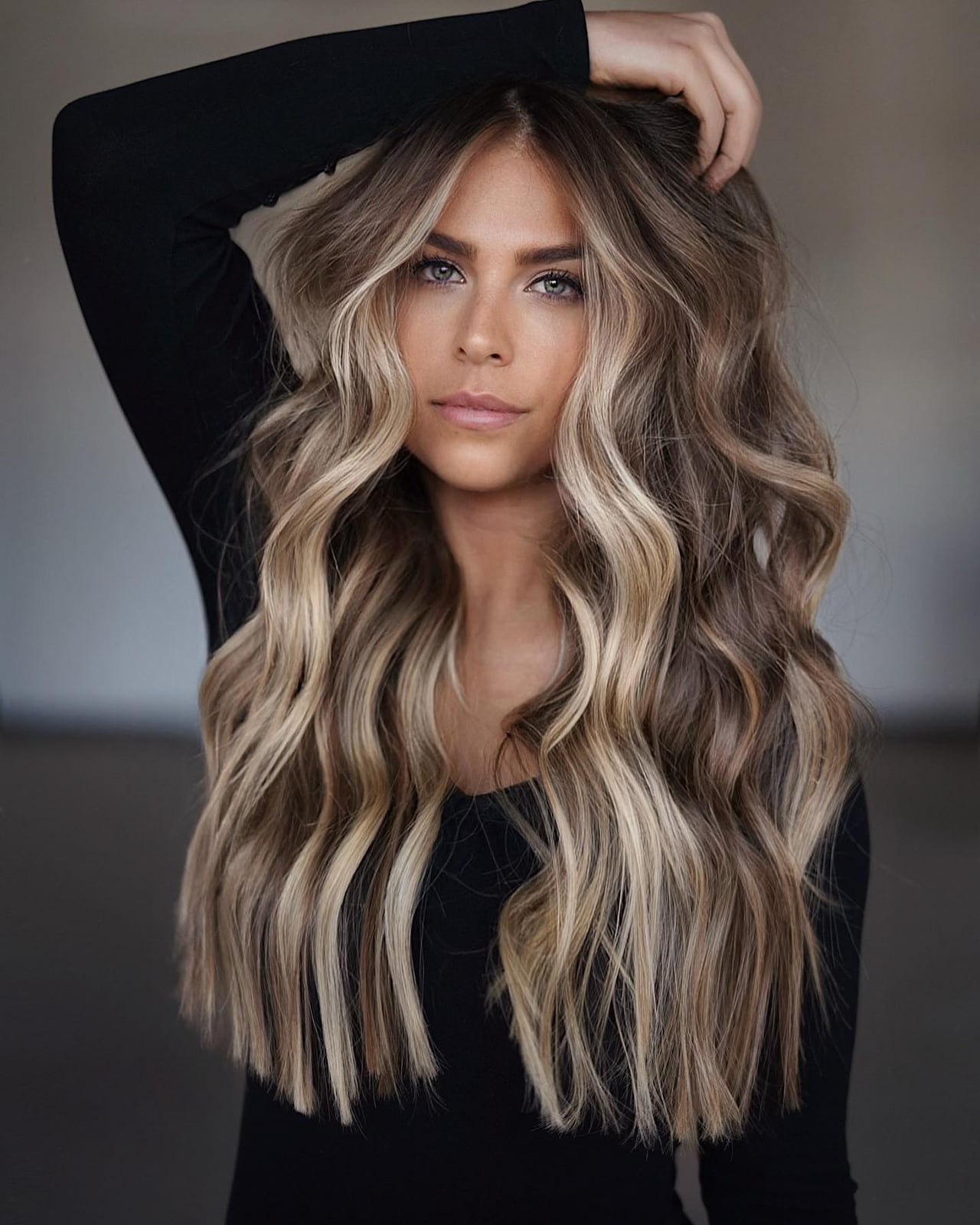
Blonde money piece on a dark blonde base with wavy layers
Source: hadviser.com
Dark blonde base with blended blonde highlights creates a gradient that starts lighter at the face and deepens toward the back. The money piece sits in the front layers, and the wavy texture spreads the lighter tones through the curves. Thick hair gives the layers enough weight to hold the wave without collapsing. A middle part keeps the framing symmetrical. The salon builds this by painting the money piece separately from the highlights, so the front looks deliberate, not accidental. No trimming needed for the first eight weeks, the layers grow out naturally.
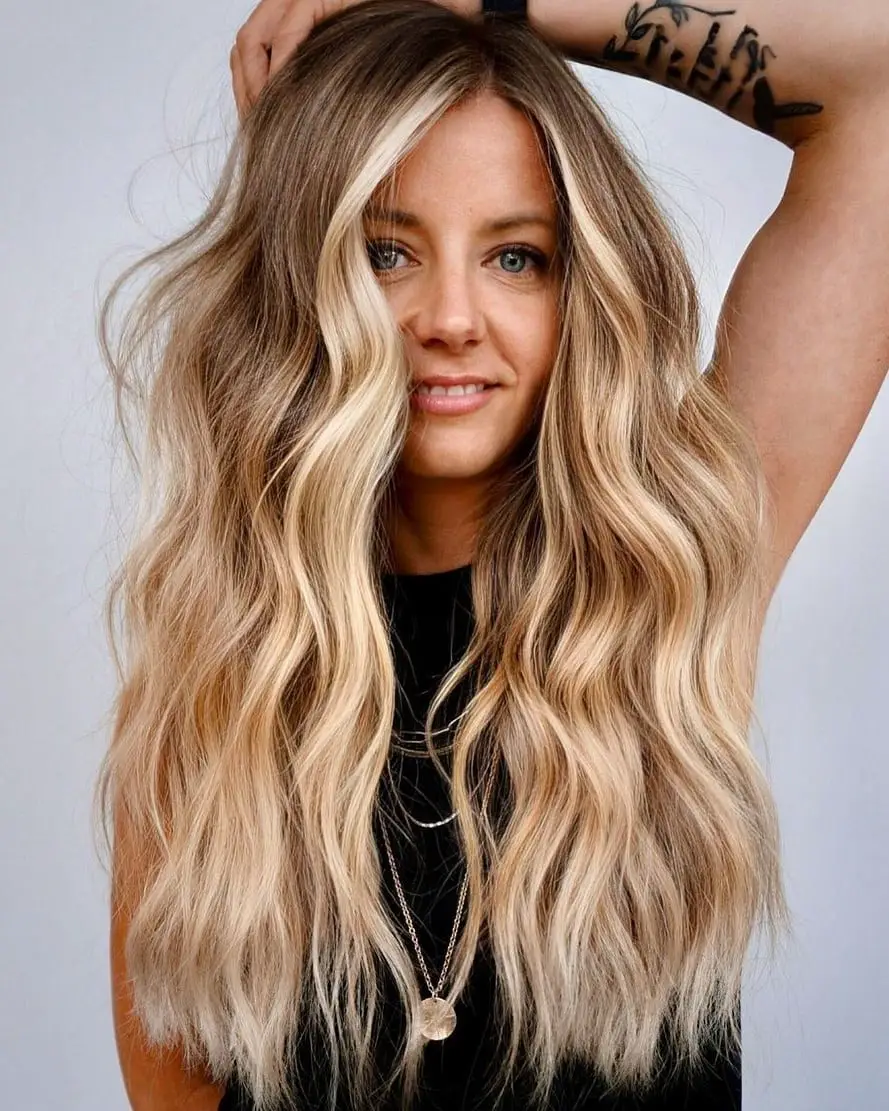
Bold blonde money piece on dark blonde long layers
Source: hadviser.com
Bold blonde against dark blonde relies on contrast. The money piece is painted in broad strokes at the front, and the long layers keep the lighter pieces from sitting in a single heavy block. Thick, wavy texture adds volume at the roots and makes the blonde visible across the curve of each wave. A middle part splits the money piece into two equal sections.
Technically, the colorist applies the blonde in a V-shape from the part line forward, feathering the edges so the tone blends into the dark blonde base. This creates face-framing that looks planned, not like a grow-out. Trim the long layers every eight to ten weeks to maintain the shape. The wavy blowout takes under twenty minutes.
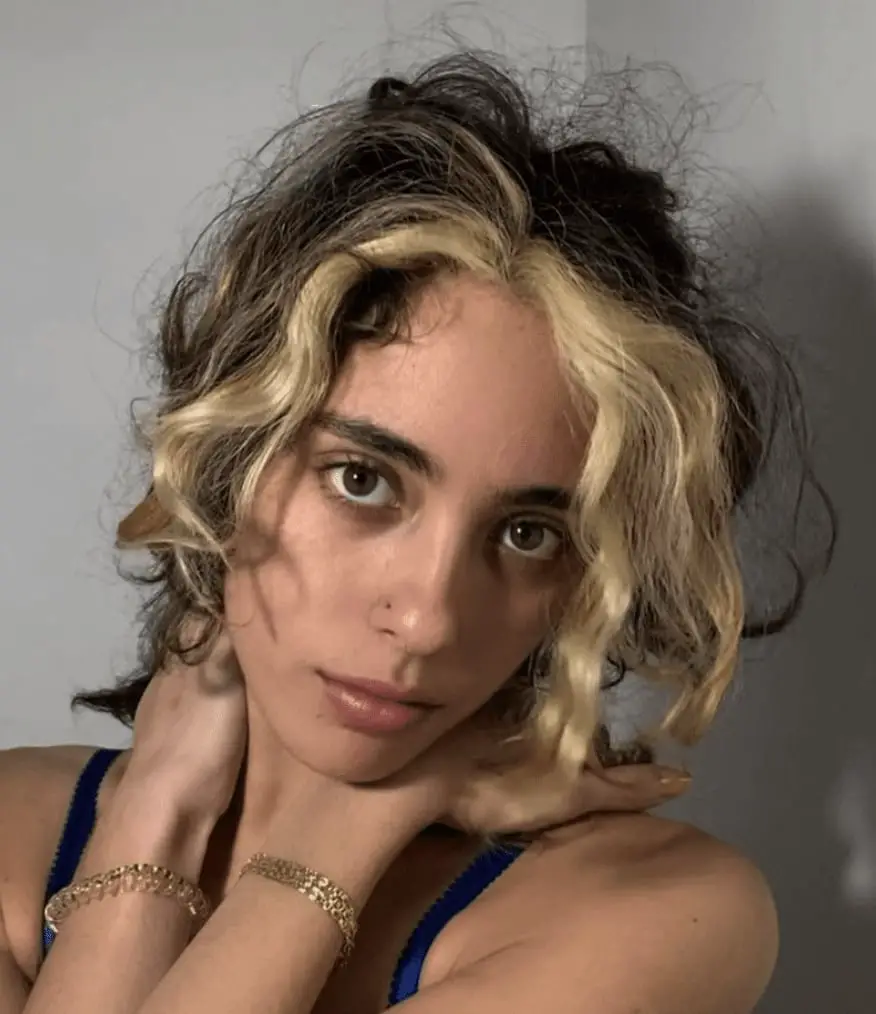
Air-dried waves with a bold blonde money piece
Via prose.com
Air-dried texture on a dark brown base with a blonde money piece sounds like a cheat code. The reality is more exacting. That bold blonde framing requires precise lightener placement, not a freehand sweep. The subtle layers help the wave pattern land naturally, but the color itself is a salon-only job. Fine, wavy hair holds this shape best; thick strands tend to fall flat or look heavy. A purple shampoo every second wash keeps the blonde from warming up. Skip it if your routine runs on dry shampoo and a quick bun.
Tell your colorist: dark brown base with blonde money piece, subtle layers.
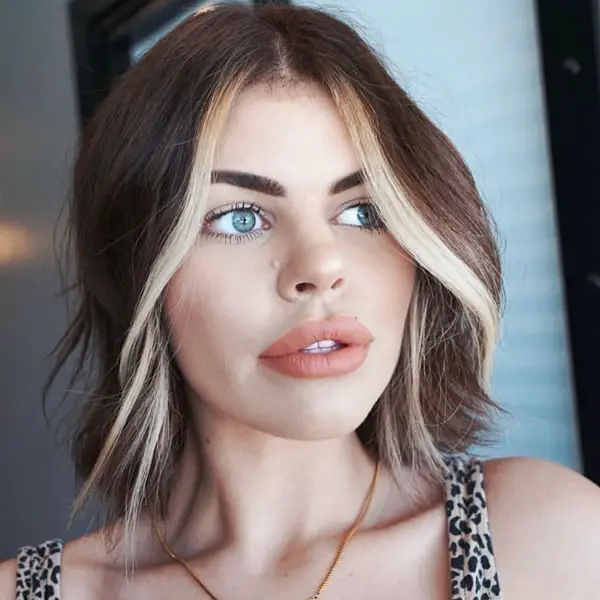
Natural texture with a bold blonde money piece
Courtesy of: behindthechair.com
Bold blonde pieces on a dark brown base work best when the base stays glossy. That contrast is the whole design. Fine, wavy hair reads the tone clearly; the lighter strands sit right at the front, catching the eye without needing heat. A center part keeps the framing even. Pass when your hair is thick and naturally unruly, the precision required for the blonde placement fights against a texture that wants to do its own thing. The finish is neat but not stiff, which is exactly the point.
Caramel money piece on dark brown with soft waves
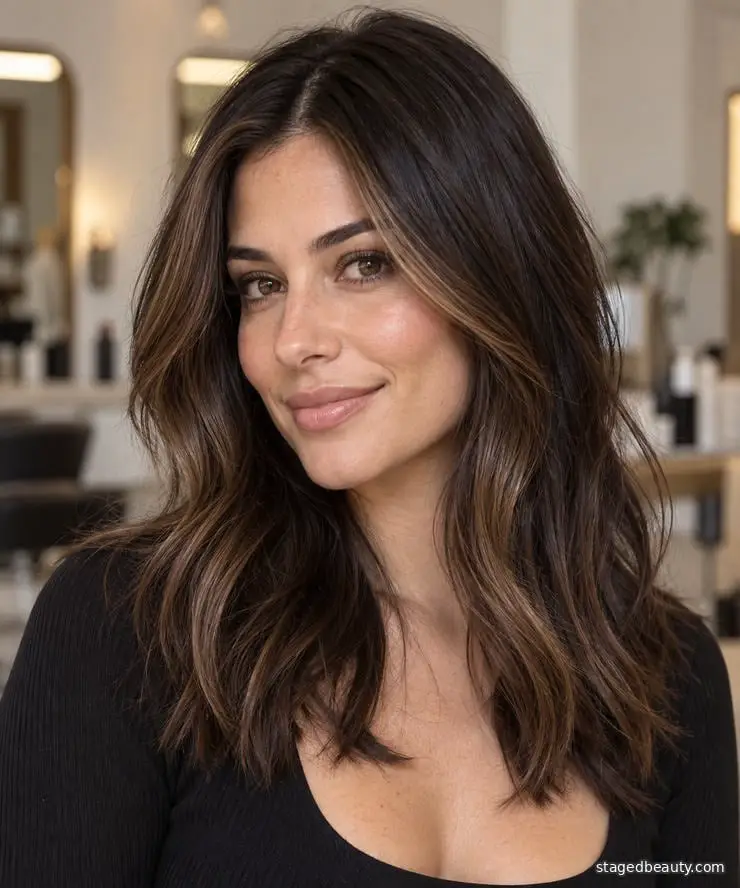
Photo credit: stagedbeauty.com
Caramel on dark brown is the lower-commitment sibling of a blonde money piece. The warmth looks sunlit rather than dramatic. Soft waves on fine hair create movement without needing hold products. The drawback: caramel can pull brassy after a few weeks if your water is heavy or you skip a blue shampoo. Fine textures hold the wave best with a medium-barrel iron. It suits golden tones by design.
Caramel money piece for dimensional waves on dark brown, wavy
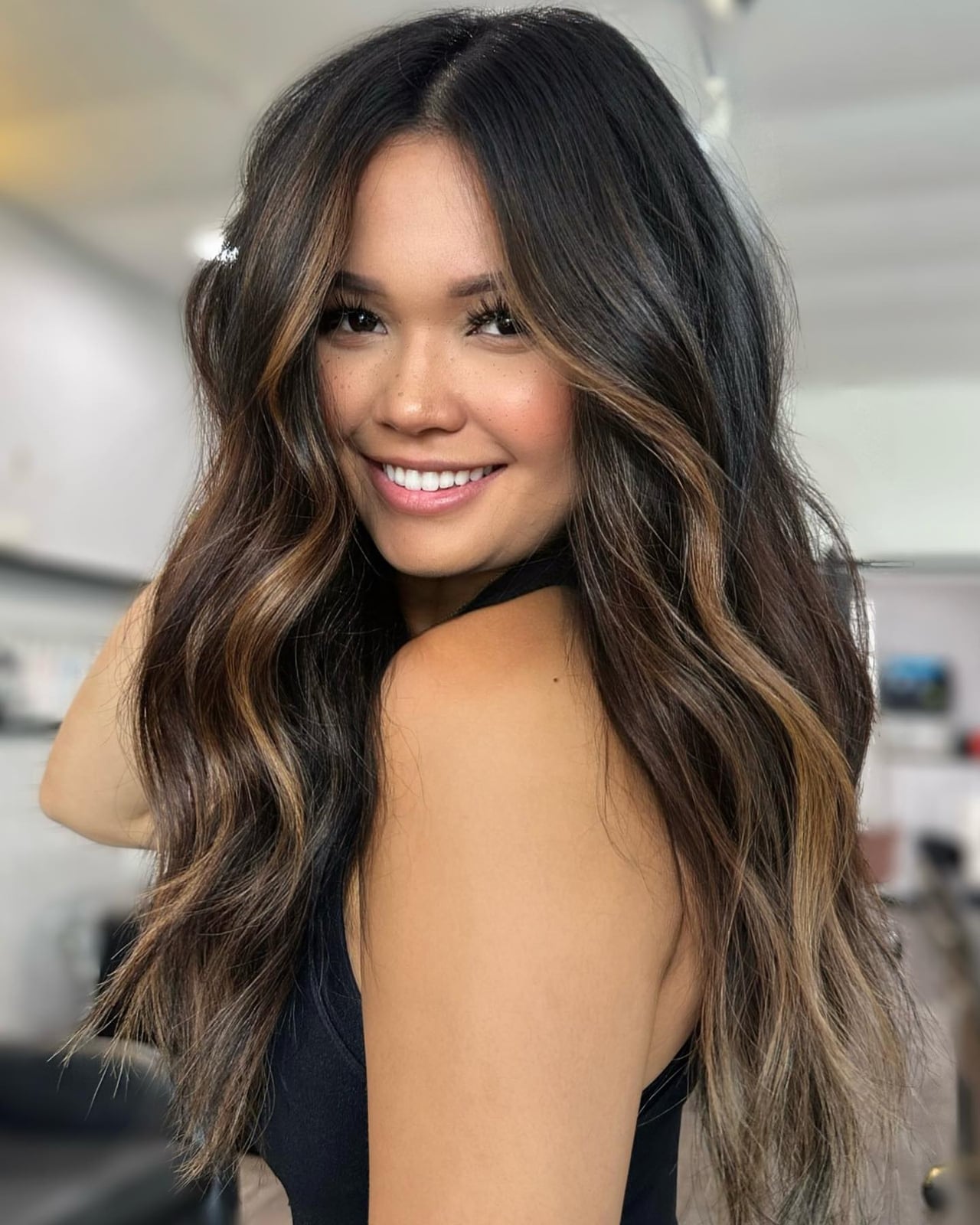
Image credit: hadviser.com
Two tones working the same job. The caramel money piece frames the face, and the caramel highlights through the rest add depth without turning into a full highlight. Thick, wavy hair benefits from this approach: the waves catch both shades, creating a dimensional effect that a single flat tone cannot match. The dark brown base stays intact, so grow-out feels less urgent. A toning gloss every six to eight weeks keeps the caramel from oxidizing into orange. Request from your colorist: dark brown base with caramel money piece and waves.
Blonde money piece on dark brown with loose waves
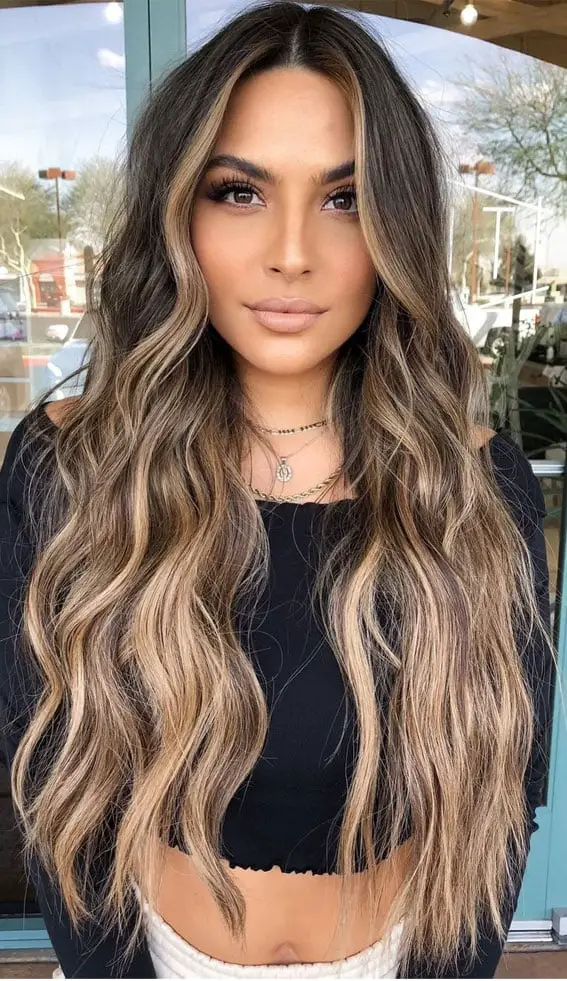
Source: fabmood.com
Blonde pieces against dark brown need maintenance. That is the trade-off for the contrast. Loose waves on thick, layered hair add volume, but the blonde at the front will need a toning appointment every six weeks to stay cool. Hard water or heat styling accelerates the brass. The layered cut helps the waves sit without looking weighed down. A heat protectant before any iron work is non-negotiable.
Blonde money piece highlights on warm copper base
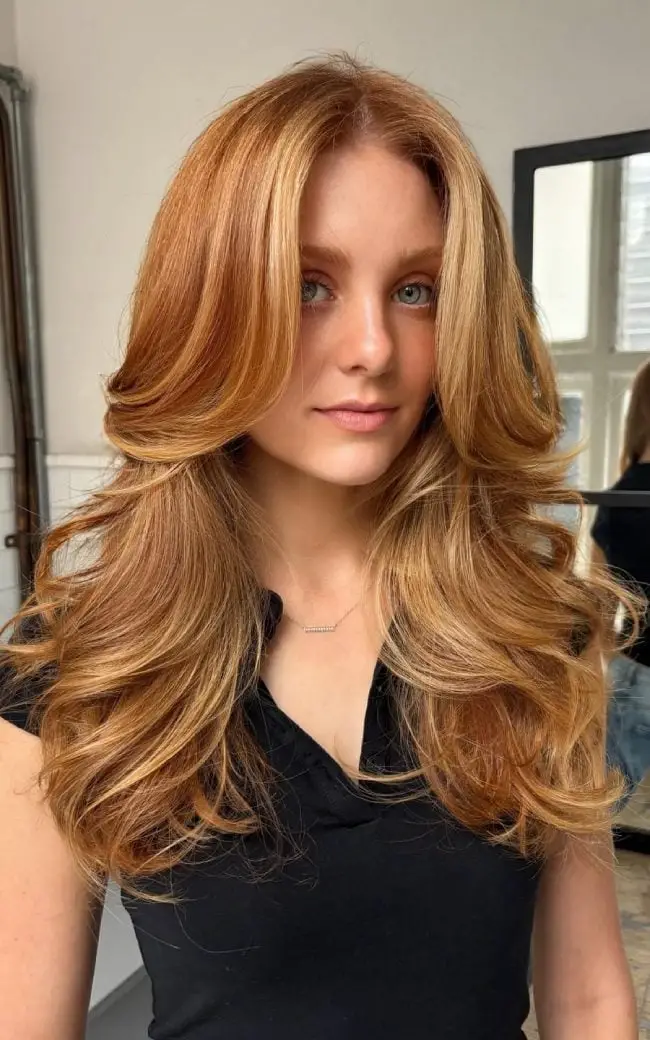
Via fabmood.com
A warm copper base and a cool blonde money piece create a deliberate tension. The technique places the lighter strands at the front, leaving the copper intact. Thick, wavy layers keep the two tones from blending into mud. The blonde picks up light at a different angle than the copper, which is the point of the design. Tell your colorist: warm copper base with blonde money piece highlights. A toner refresh every six weeks keeps the blonde from turning brassy against the copper. It works best for medium to thick hair; fine hair may not support the contrast without looking patchy.
Bold blonde money piece on dark brown layered hair
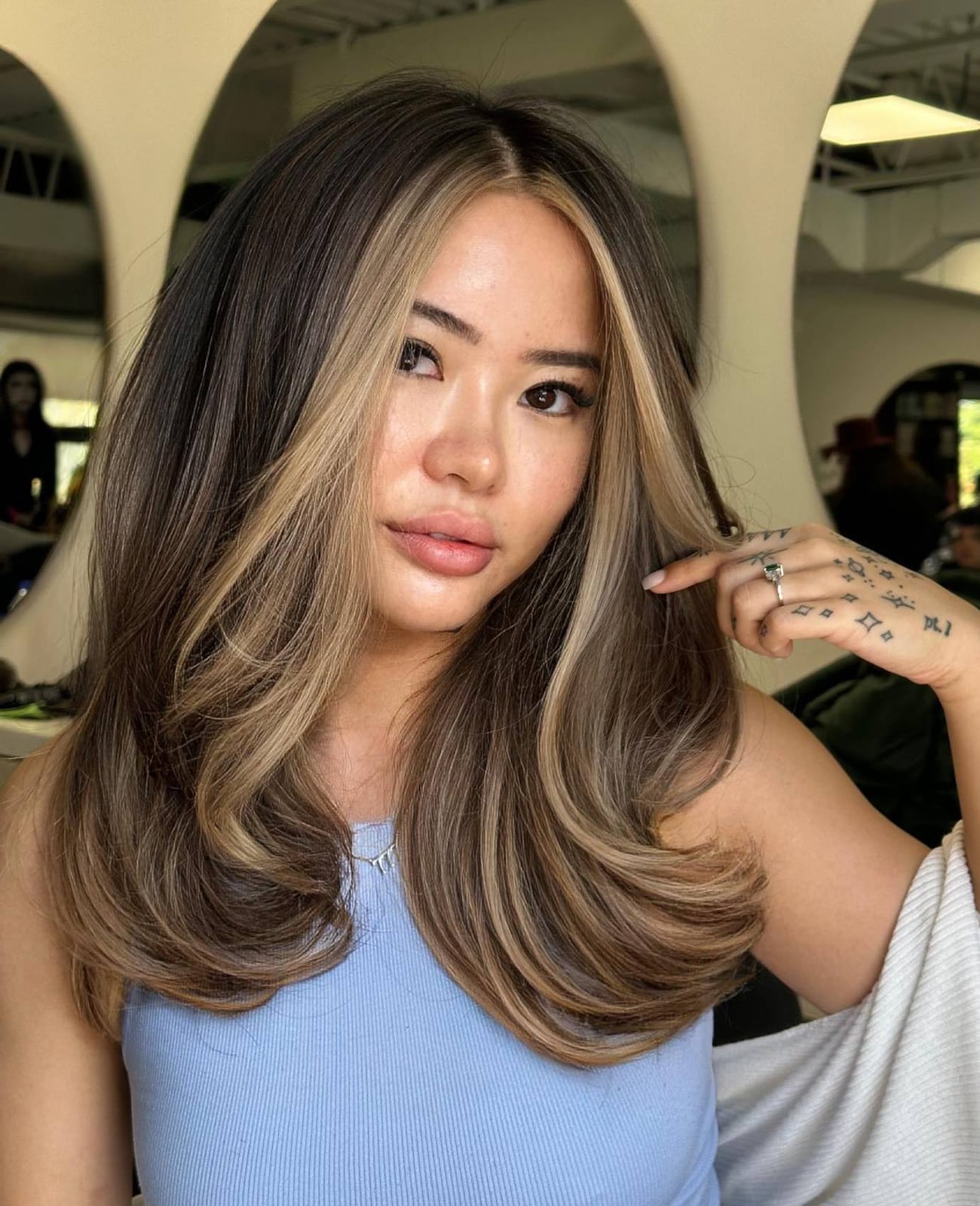
Courtesy of: therighthairstyles.com
What exactly do you say to get a money piece that is bold and starts at the root? The words matter. A dark brown base with a blonde money piece that starts at the root and stops at the cheekbone. The stylist paints the front sections in a thicker slice than standard highlights, then backcombs the hair for a soft shadow line at the part. Thick, wavy layers give the blonde enough surface area to register as a deliberate statement. A middle part splits the money piece evenly, which works well for oval and round face shapes.
Contrasting ash blonde money piece on dark brown, office-safe version
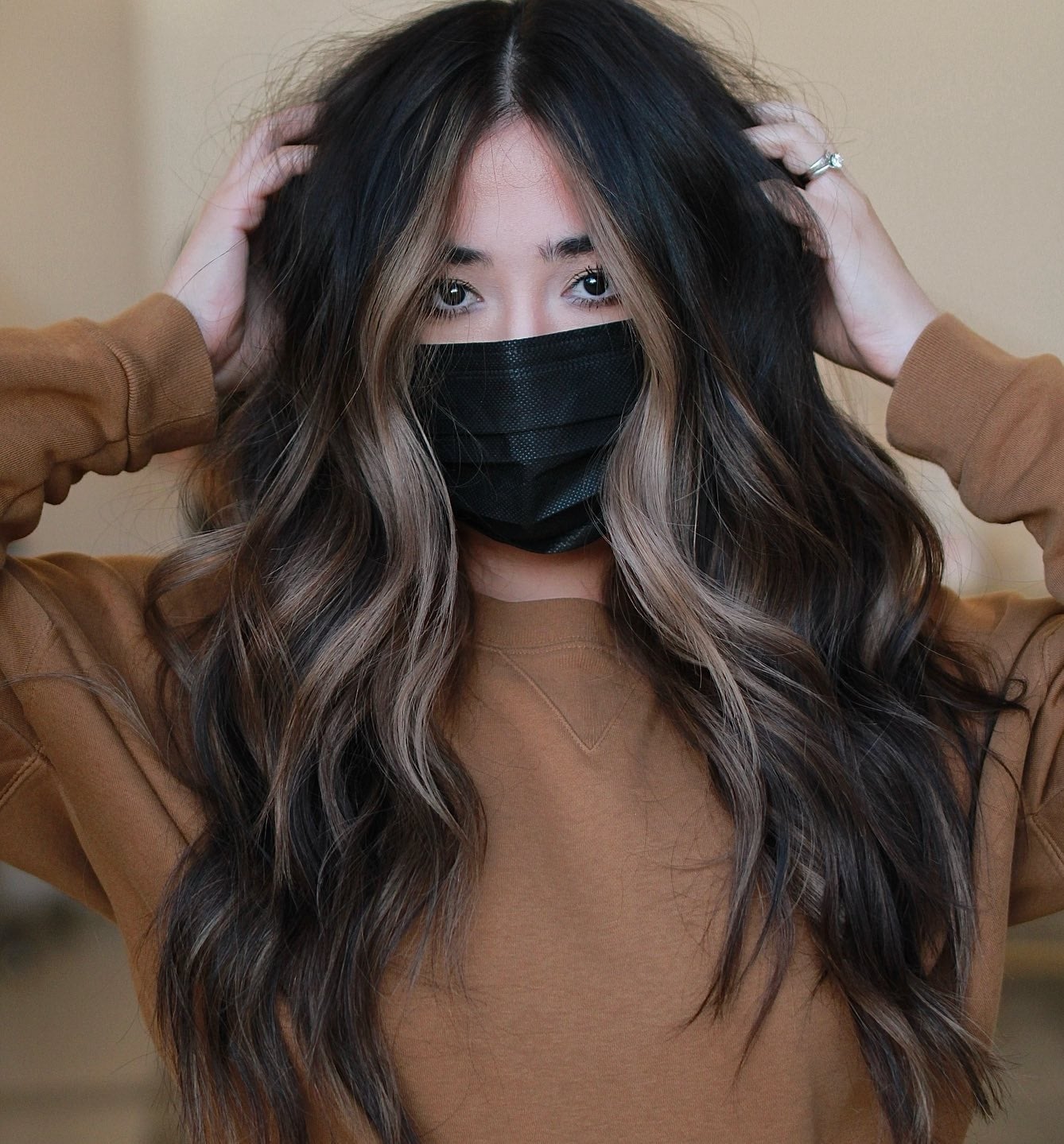
Photo credit: hadviser.com
Dark brown with an ash blonde money piece looks deliberate when the lightener lands evenly on the front sections. The middle part splits the bright strands cleanly, so both sides of the face get equal contrast. Thick, wavy hair with subtle layers carries the two tones without the blonde sinking into the darker base. The common mistake is assuming any stylist can freehand this. Uneven lightener application leaves patches that look orange against the ash tone. A professional colorist must section the front pieces separately and use a toner to neutralize warmth.
Blonde money piece framing face with curtain bangs
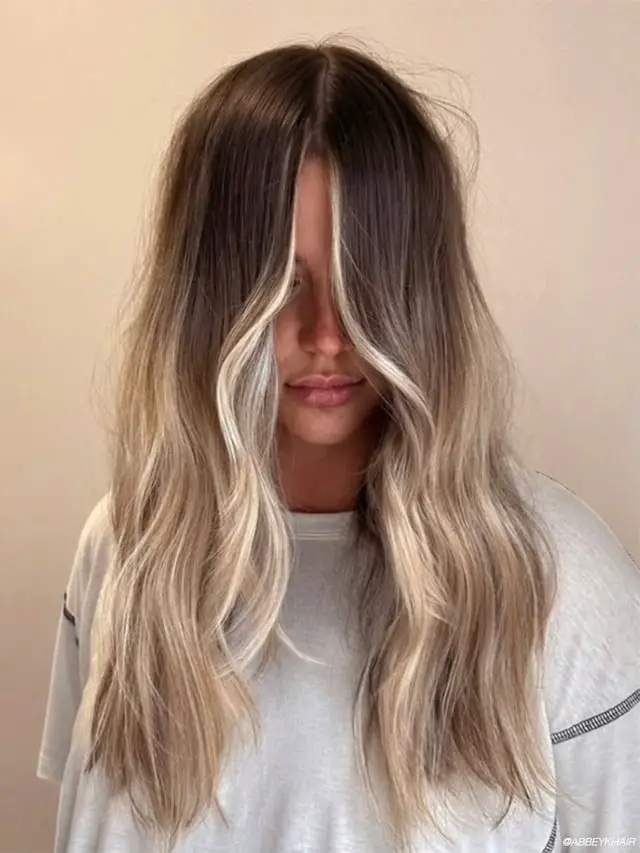
Image credit: bangstyle.com
Curtain bangs and a blonde money piece share the same job: framing the face. The two can coexist if the bangs are cut with enough weight to hold the lighter color. Fine, wavy hair works here because the lighter strands sit on the surface instead of sinking into the density. The money piece runs from the root through the bangs and into the first layer, creating a continuous bright frame. The trade-off: the blonde on the bangs requires more frequent toning than the rest of the hair, about every four weeks. It works best for a money piece that stays front-and-center.
Bold blonde money piece framing face on dark brown
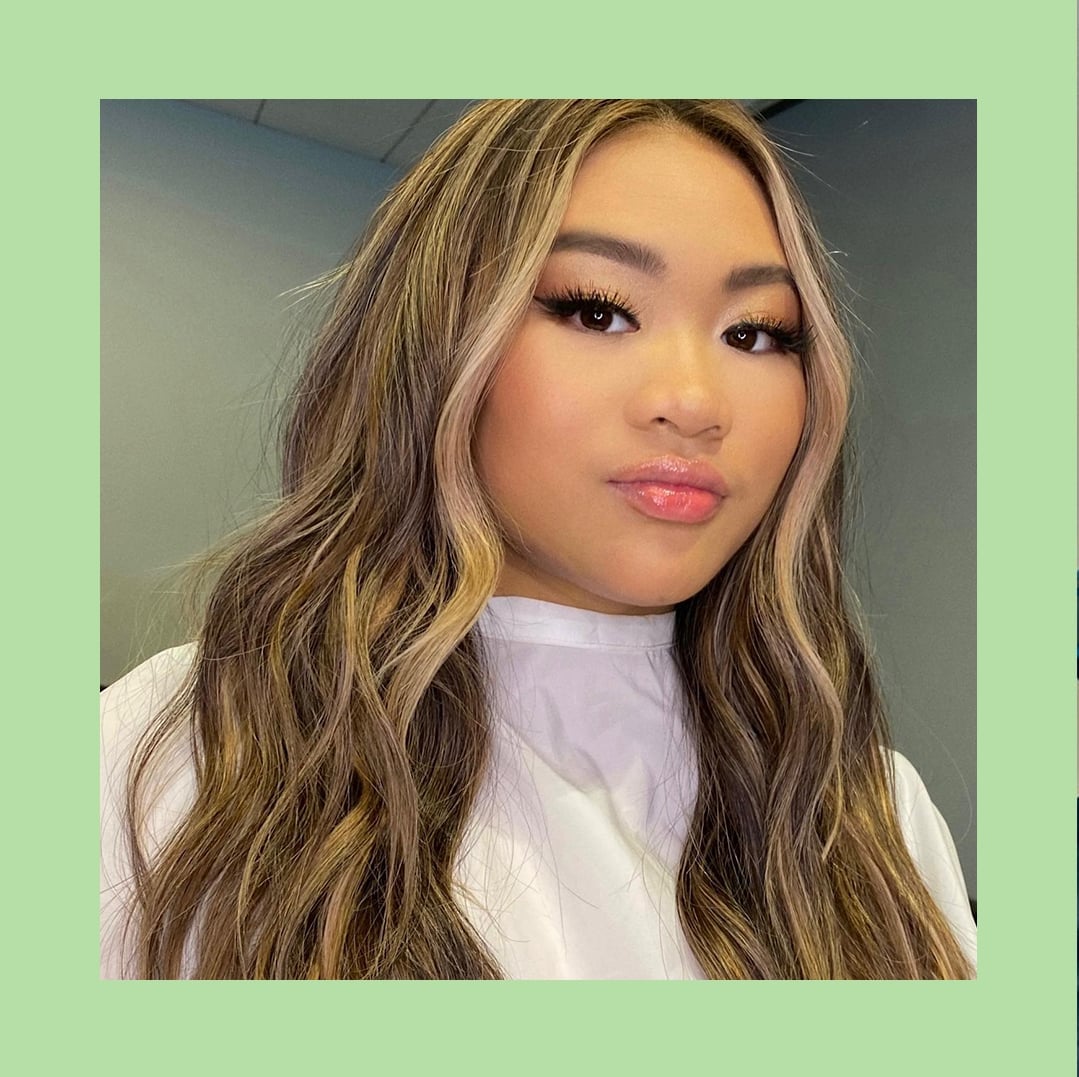
Via cosmopolitan.com
A side part shifts the weight of a bold blonde money piece to one side, which changes how the contrast reads. The lighter strands sit on the heavier side of the part, so the bright section covers more surface area than it would with a middle part. Thick, wavy layers keep the blonde from looking like a stripe; the waves break up the color into smaller sections of light and dark. The money piece is painted as a solid block from root to mid-length, which gives the contrast its drama. A gloss at the end seals the cuticle and knocks back any brassiness from the lightening process. The result is a single, intentional frame around the face.
Blonde money piece and highlights on dark brown lob, wavy
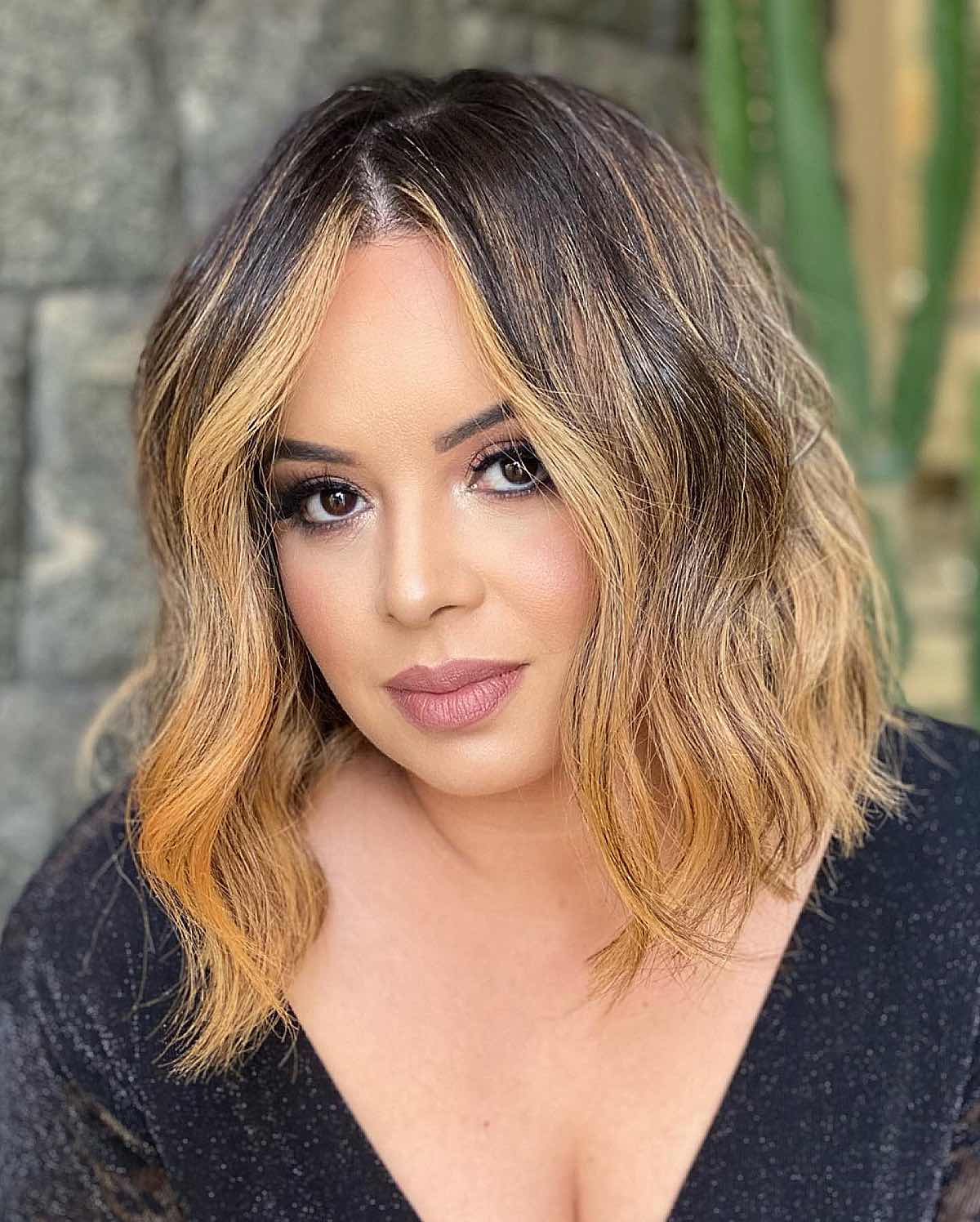
Courtesy of: latest-hairstyles.com
Dark brown with blonde money piece and highlights gives a different look than a full head of highlights. The lob keeps the color concentrated around the face, and thick, wavy texture gives it the volume to carry that contrast without looking sparse. Fine hair may not support this style, as the weight of the lob plus the light pieces can appear thin. Request from your colorist: dark brown base with blonde money piece and highlights.
Bold blonde money piece on dark blonde wavy layers, middle
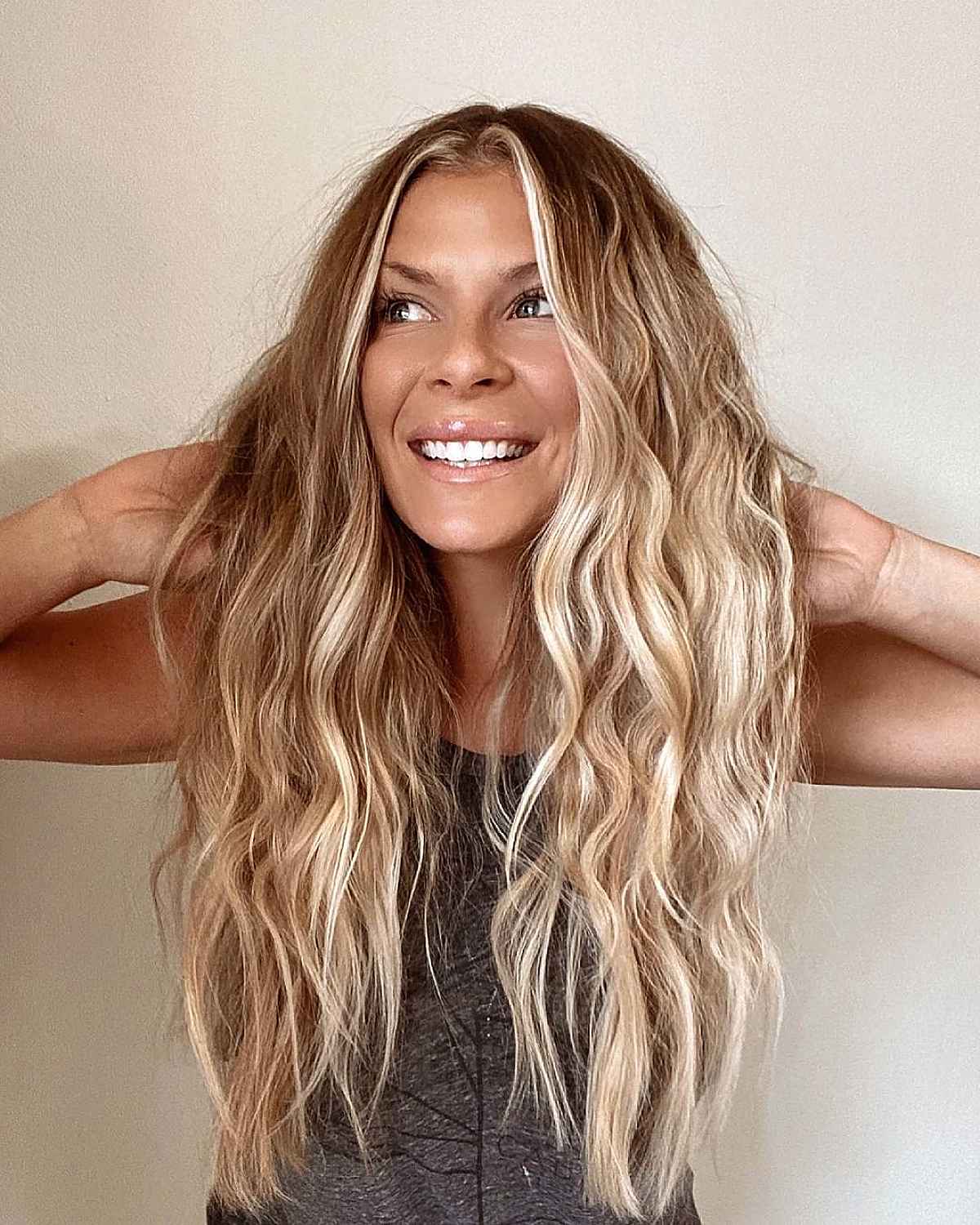
Photo credit: latest-hairstyles.com
The fine, wavy texture lets the light pieces sit softly against the darker lengths. The catch: on very fine hair, the money piece can blend into the base rather than pop, so the contrast may look subtle instead of bold.
Ash blonde money piece framing face on dark blonde with wavy fine
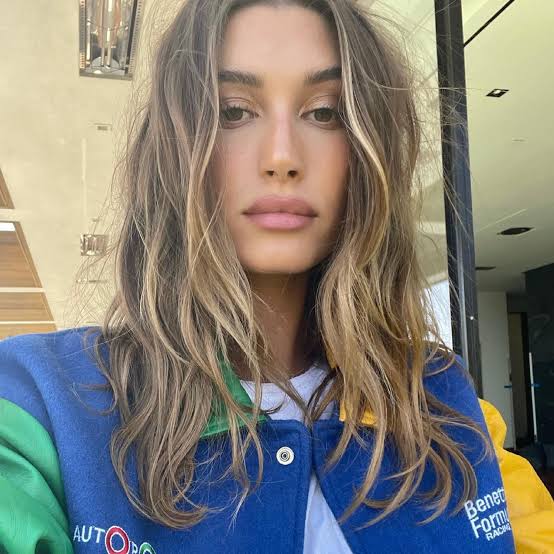
Image credit: byrdie.com
An ash blonde money piece on dark blonde fine wavy hair grows out better than most face-framing color because the blend is subtle from day one. The fine texture means the light pieces sit close to the scalp, so a toning appointment every ten weeks keeps the ash from warming into brass. Tell your colorist: dark blonde base with ash blonde money piece. A purple shampoo once a week preserves the cool tone without drying the ends.
Platinum money piece on ash blonde base with curtain bangs
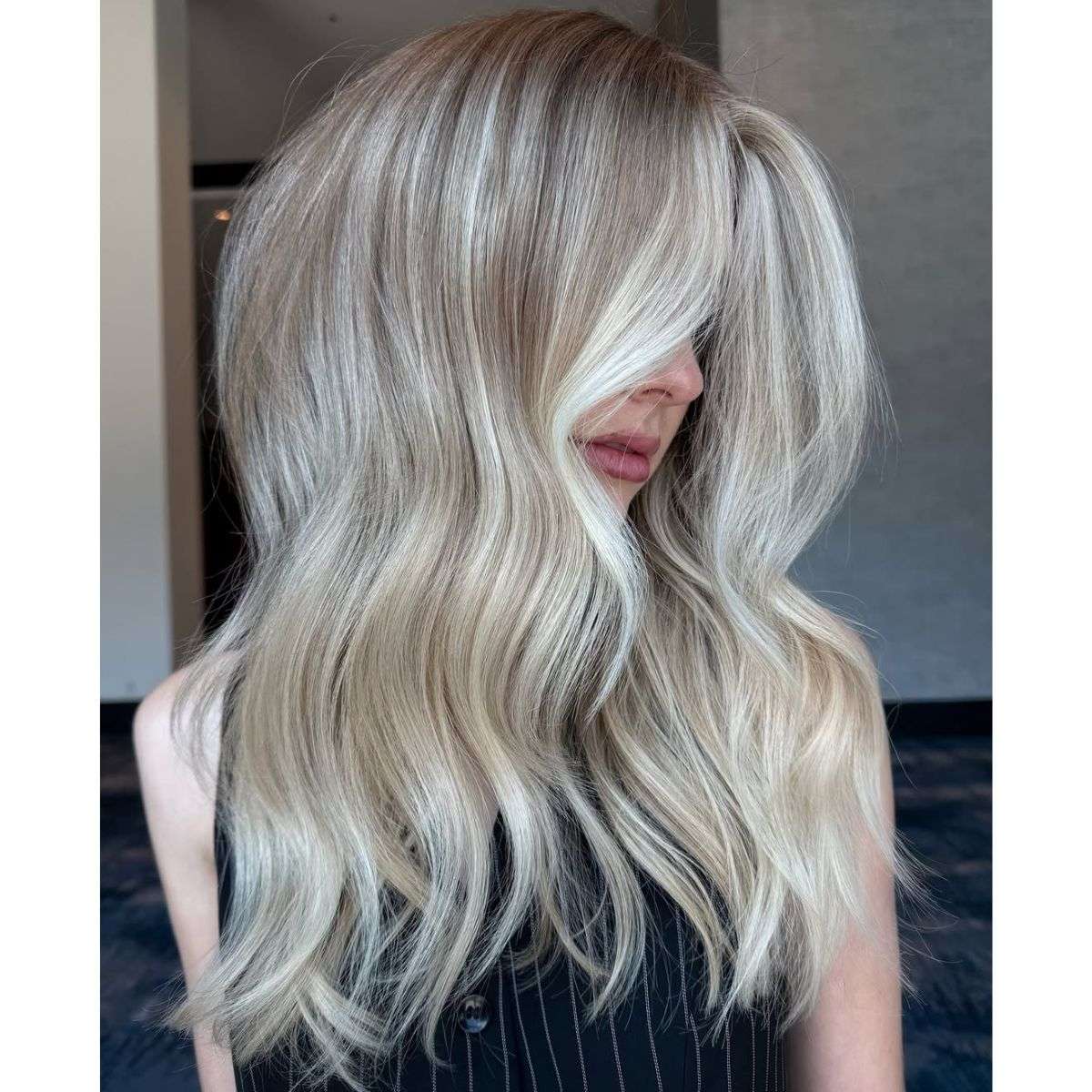
Source: behindthechair.com
Platinum money piece on an ash blonde base with curtain bangs is a high-contrast look that relies on precision placement. The platinum pieces are painted only on the front sections that fall with the bangs, so the color stays concentrated. Fine, wavy texture holds the light pieces without needing a thickening product.
Purple strands on a blonde base with bangs
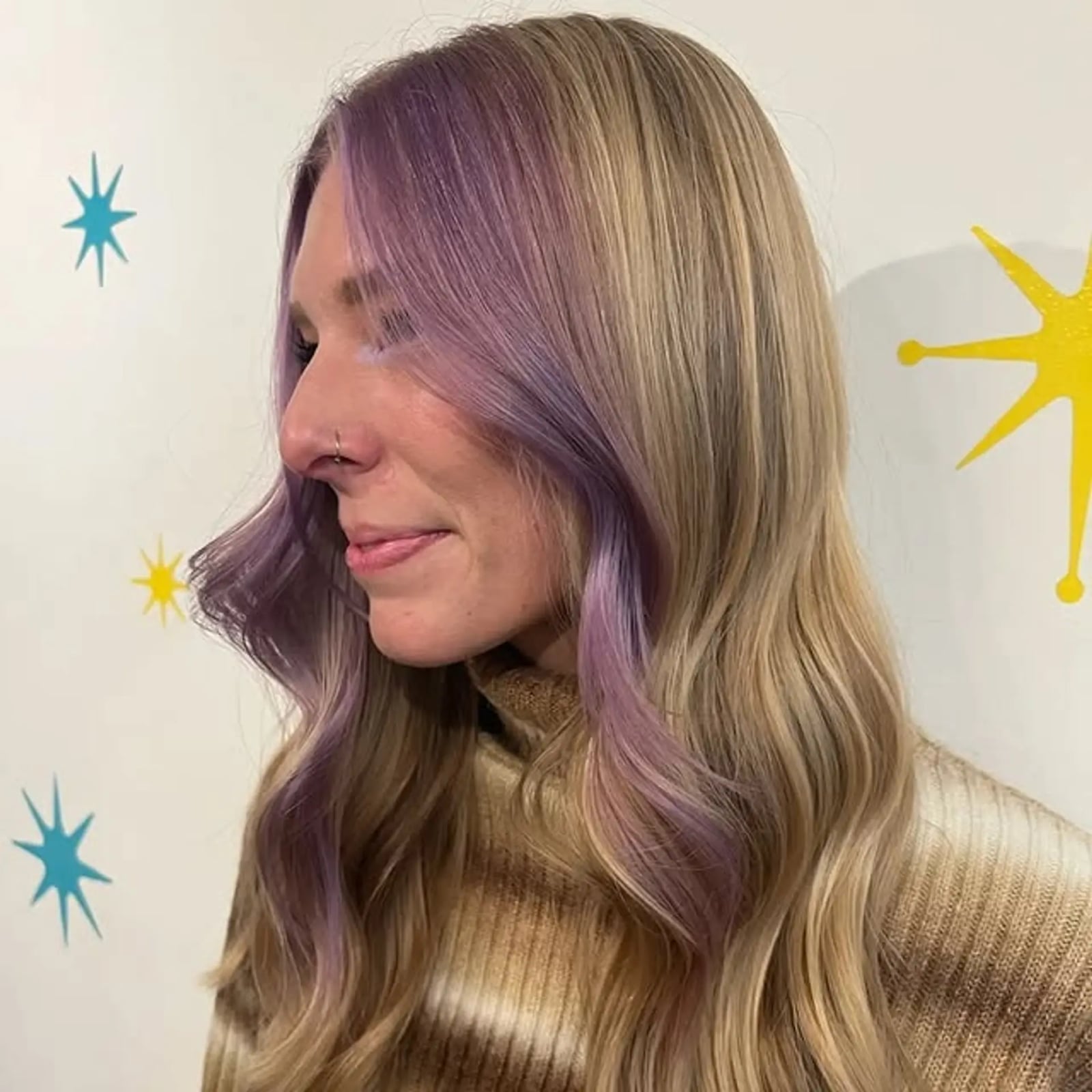
Via kiri-me.com
Purple strands on a blonde base with curtain bangs create a dimensional effect that changes with the wave pattern. The side part lets the color wrap around one side of the face more heavily, which works for anyone who wants asymmetry in their color without a full half-head. Tell your colorist: blonde base with purple money piece and curtain bangs. Fine wavy texture keeps the purple from pooling in one spot.
Bright blonde money piece with curtain bangs on dark blonde
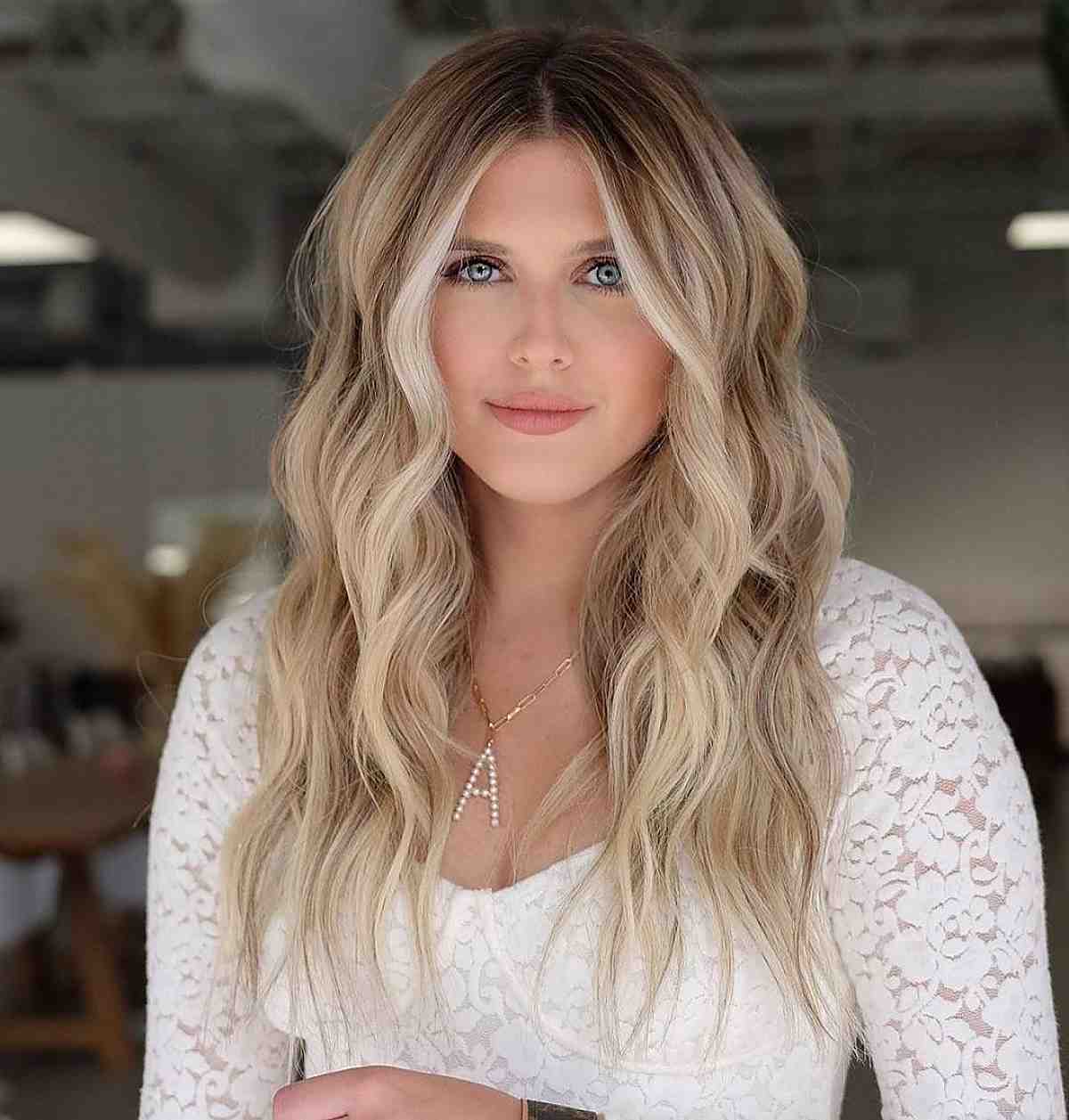
Courtesy of: latest-hairstyles.com
You want the volume without the weight of a full highlight. A dark blonde base keeps the roots low-maintenance while bright blonde strands at the front do the lifting. The cut uses face-framing layers and curtain bangs, so the lightest color lands exactly where light naturally hits. Thick, wavy hair holds this shape best; fine hair may not keep the curtain bangs from collapsing.
Book the trim sooner than you think. Curtain bangs need a refresh every four to six weeks, or they start veering into awkward side-swept territory. The rest of the cut holds longer, but that front section sets the whole tone.
Blonde money piece with curtain bangs on dark brown, close-up take
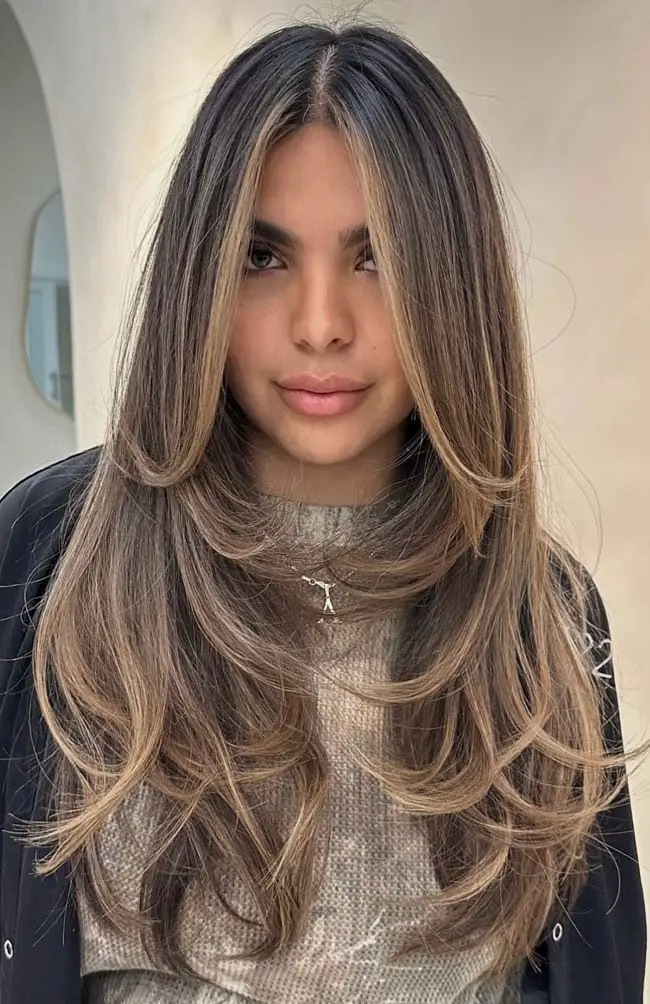
Photo credit: fabmood.com
Color placement matters more than the shade. A dark brown base with a blonde money piece looks sharp only when the blonde starts close enough to the root to look intentional. Pulled too far down, it looks grown-out highlights. Thick, wavy hair with curtain bangs carries the contrast well. The catch: if the colorist lifts the money piece too wide, it stops framing and starts overwhelming. Precise placement is the difference between a feature and a fix.
Blonde money piece highlights on dark brown bob
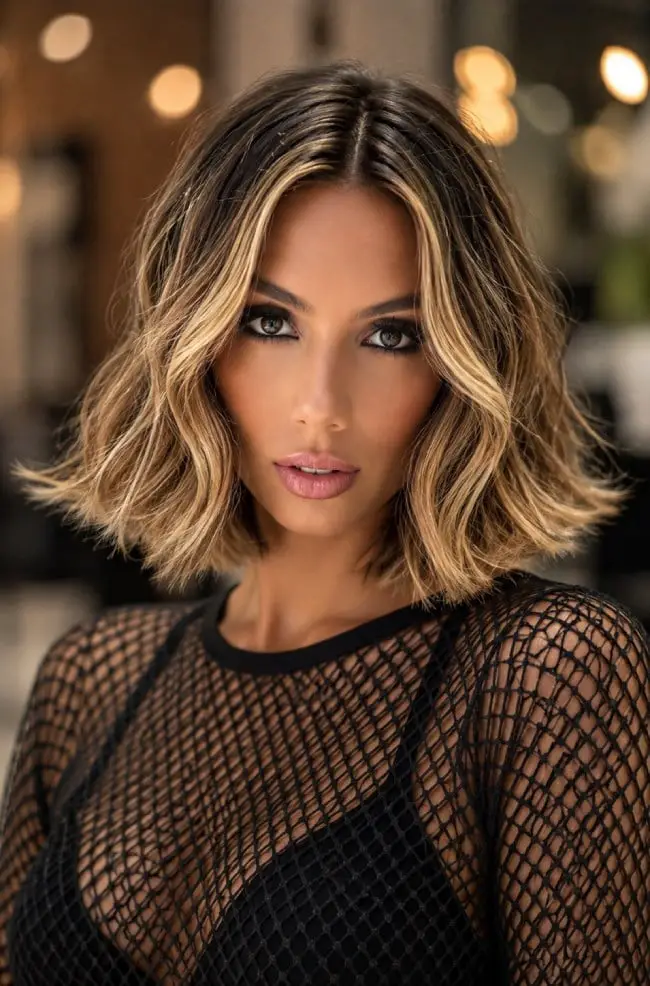
Image credit: fabmood.com
A bob and a bold money piece sound like a sure thing, but the payoff depends on texture. On a dark brown bob with fine, wavy hair, the blonde money piece creates a clean frame. The middle part and soft waves let the highlight sit evenly across both sides. Fine hair works here because it does not create bulk that swallows the contrast. Thick hair with a bob above the jaw can cause the color to crowd the cut.
Ash blonde money piece on dark blonde bob
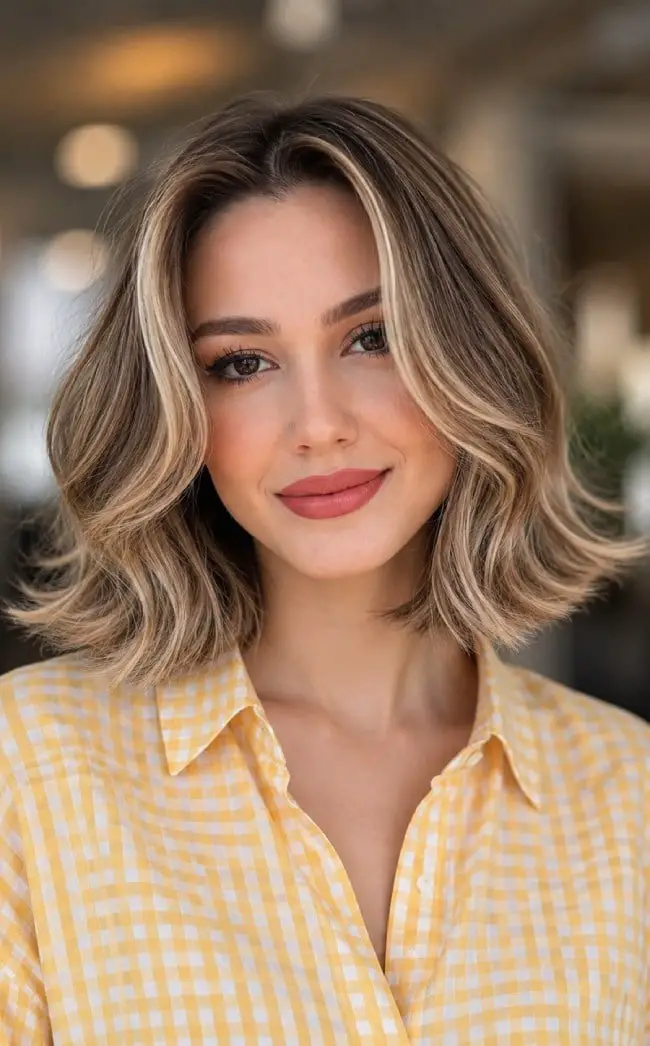
Source: fabmood.com
Two tones, one bob. A dark blonde base reads almost neutral until the ash blonde money piece pulls the focus forward. The centered parting splits the face-framing sections evenly, so the contrast works from both angles. Fine, wavy texture keeps the bob light enough that the color does not feel heavy. What makes this design work is the tonal gap: ash against dark blonde is cool enough to look intentional, not faded. A bob at this length holds that separation without the color bleeding into the base.
Ash blonde money piece on dark blonde bob with wavy blowout
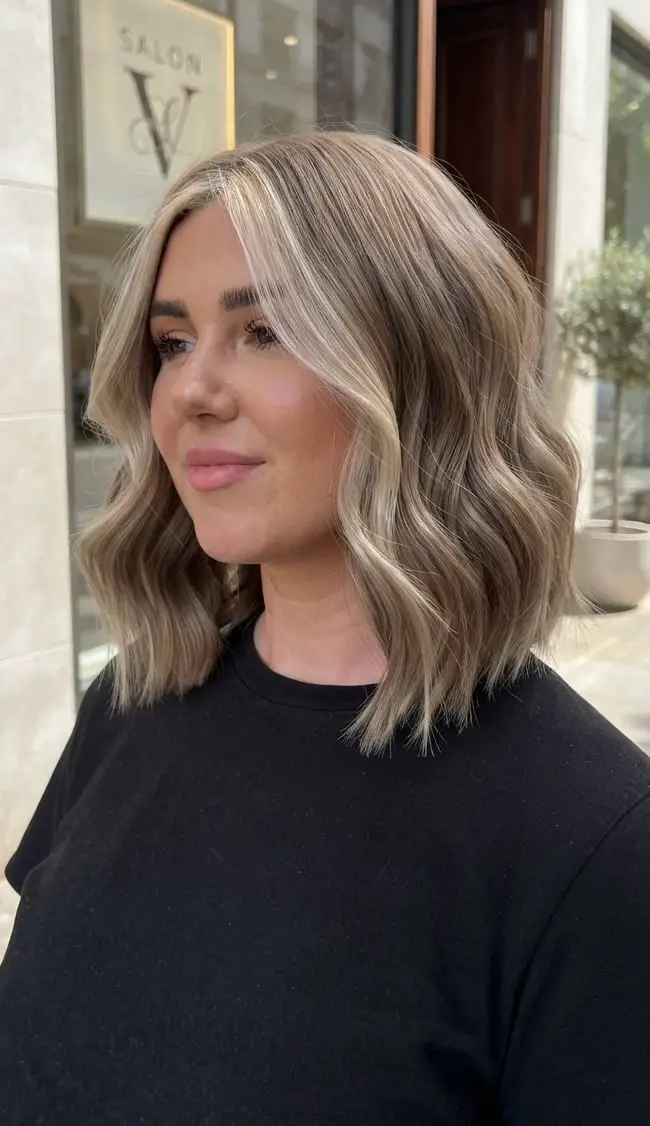
Courtesy of: itakeyou.co.uk
Thick hair needs a cut that does not fight its own volume. A dark blonde bob with an ash blonde money piece works because the color sits forward, not all over. The wavy blowout adds lift at the crown, which balances the density. Tell your colorist: dark blonde bob with ash blonde money piece. Not for anyone who prefers subtle dimension; this money piece is meant to be seen. A side part shifts the weight of the contrast, so request a middle part at the cut if you want the symmetry shown here.
Striking burgundy highlights and money piece on dark brown
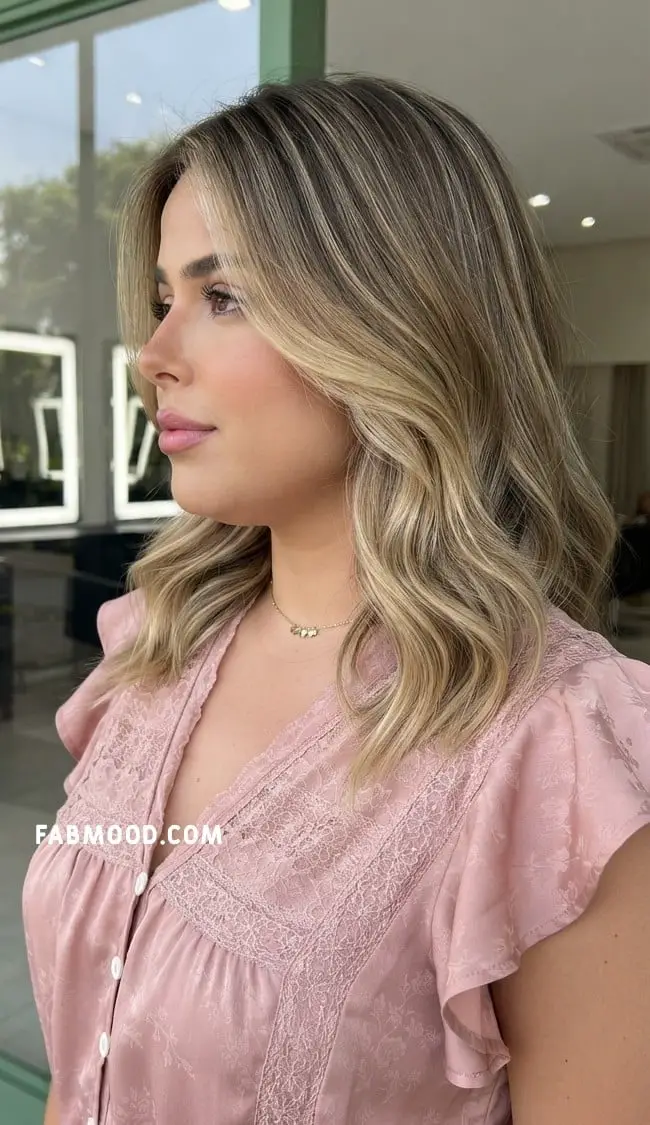
Photo credit: fabmood.com
Burgundy can look almost black in dim light. On a dark brown base, those striking highlights and the money piece need a bright setting to register. The lob cut and wavy fine texture catch the flash, so the red shows.
Set this against a true copper money piece: copper gives contrast from day one, while burgundy plays deeper and moodier. Skip it if your hair is very fine. The color sits close to the base and can look like a single shade indoors.
Ash blonde money piece on a dark brown shag, wavy
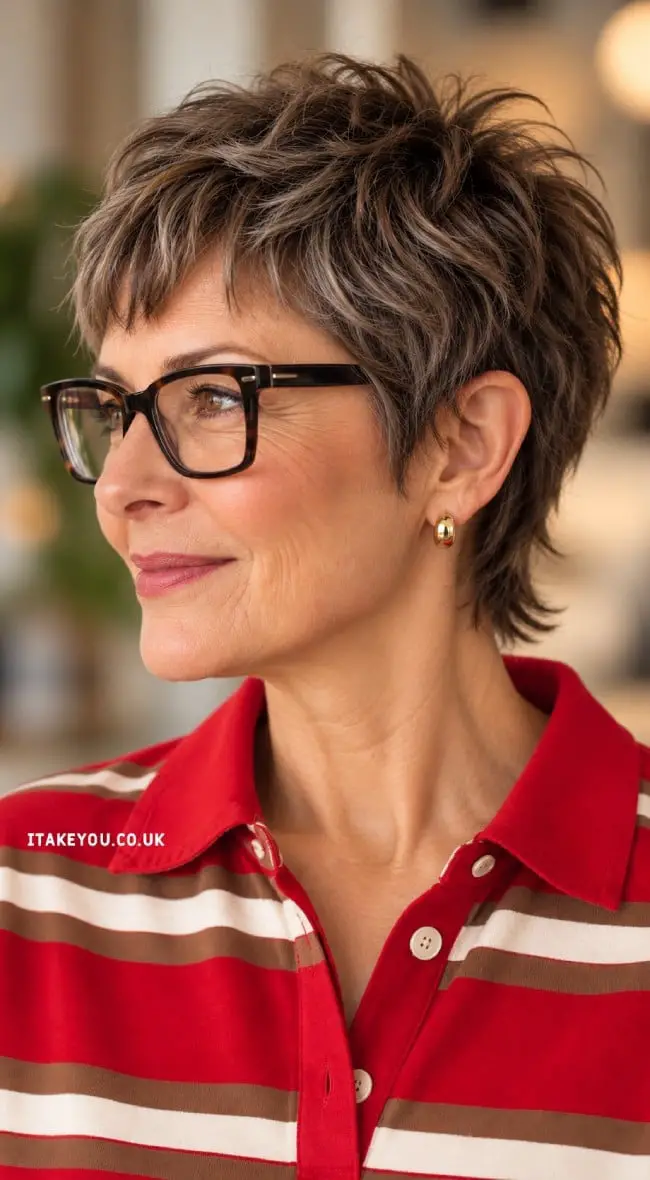
Image credit: itakeyou.co.uk
Ash tones need a clean canvas, so the dark brown base is fully glossed first. The money piece is painted on the front sections, leaving the shag dark. Wavy fine hair holds the lift well, but the ash shifts to silver over time. A toning appointment every twelve weeks keeps the cool tone from turning muddy. The side part lets the lighter pieces sit forward. Tell your colorist: dark brown shag with ash blonde money piece.
Final Thoughts
Choose based on your desired maintenance level and how much contrast you want.
- Low-contrast: caramel or soft ash on your base shade.
- High impact: bold blonde or platinum on a dark base.
- Fine hair: keep the money piece thin, no wider than the eye.
- Curly or wavy texture: let the money piece land on the first wave of each side.
A well-placed money piece can refresh your look without a full color commitment.
Hairstyle
29 Cute Twist Updo Hairstyles 2027 for Easy Chic
Cute Twist Updo 2027 features 29 styles from messy wispy knots to honey blonde twisted buns and black braided updos. See the looks and save your favorite.
You’re scrolling through saved photos at your desk, trying to decide what to show your stylist for the next appointment. A twist updo that holds through a full day, photographs well from every angle, and doesn’t require a full redo the next morning is worth the chair time right now.
Which is why Cute Twist Updo 2027 fills so many saved boards. This collection of 29 styles runs from neat sculpted buns to loose twisted knots, suited for straight, wavy, coily, and textured hair. The struggle is finding one that matches your length and your morning tolerance for bobby pins.
Messy twisted bun with loose wisps for dimension
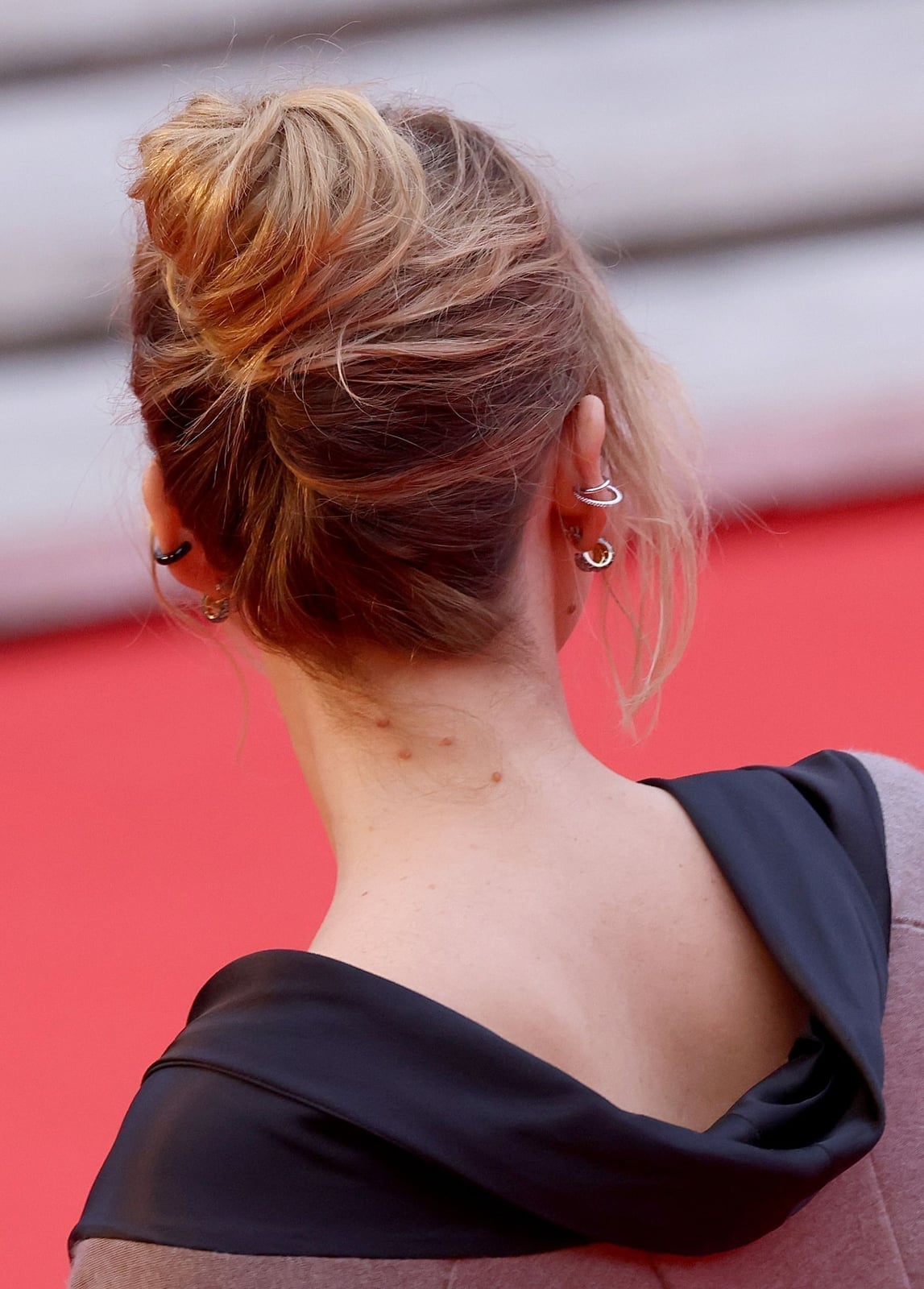
Courtesy of: allure.com
Dirty blonde with lighter highlights gives the bun something to catch, even from the back. Wavy, fine hair twists into a loose shape, wisps left around the crown and nape to soften the silhouette. The hold depends on how well those pieces are pinned. A few bobby pins at the base keep it from unravelling by dinner. This style looks intentionally undone, which means one or two loose strands look right, not like a mistake. Ask your stylist for: messy twisted bun with loose wisps around the crown and back. The whole thing takes about forty minutes in the chair.
Honey blonde with lighter highlights in small twisted knots
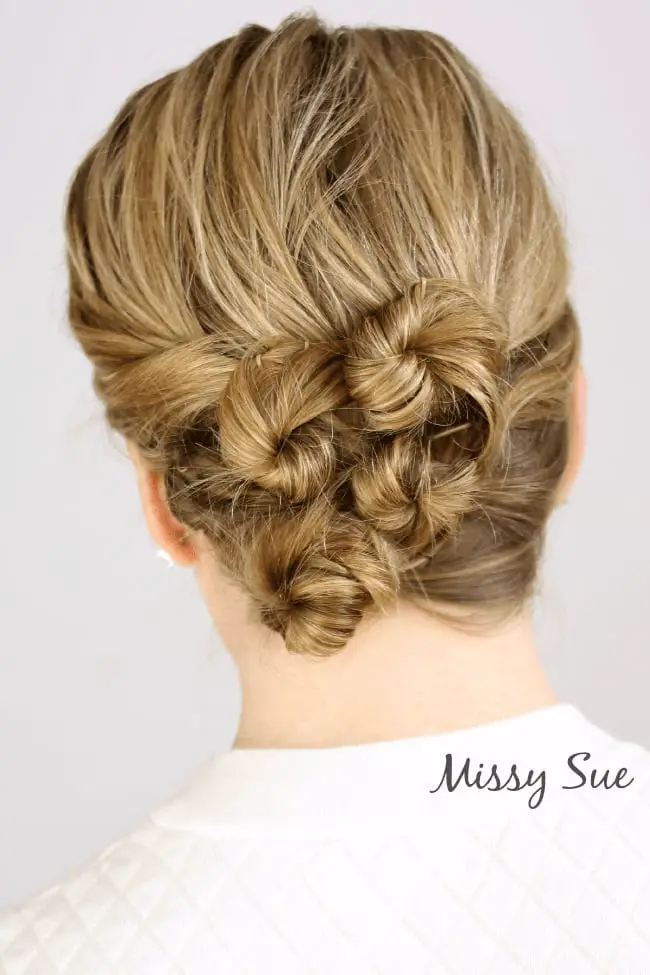
Photo credit: missysue.com
Where the first look relies on loose wisps, this one builds texture from many small, uniform knots. Honey blonde with lighter highlights looks dimensional rather than flat, the fine, wavy base holding each twist in place. The back view shows the pattern clearly. Each knot sits next to the next, no gaps. Skip it if you have very thick hair that may be difficult to secure into small knots. The design needs precision, so plan for an hour or more at the salon.
Black hair updo with braids and a top knot for a middle parting
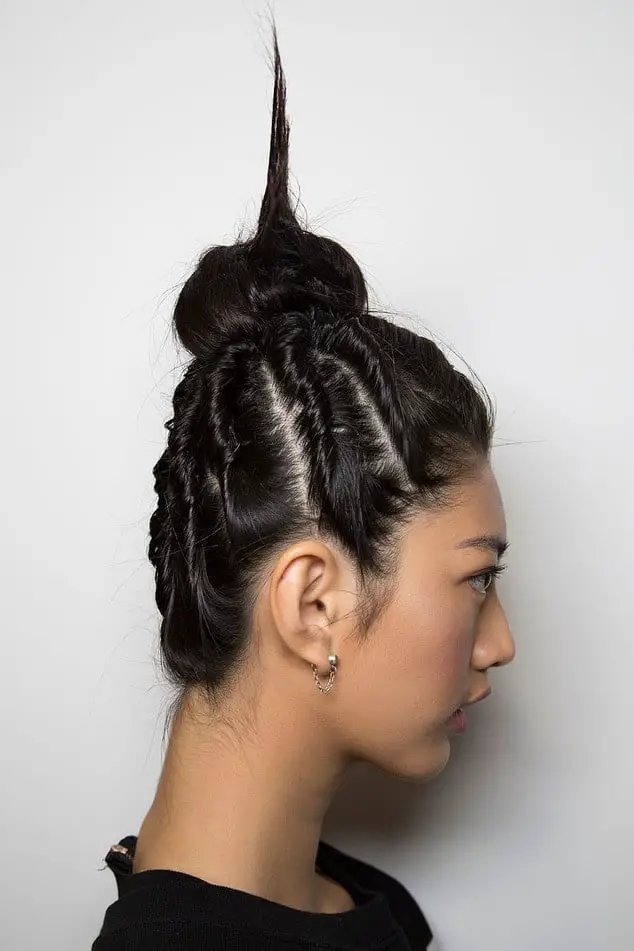
Image credit: eonline.com
Braids sweep from the hairline toward a high top knot, one single strand pulled up vertically from the center. The black, wavy, thick hair holds the shape well without extra product. A middle parting keeps the front clean, the braided sections adding grip for the knot above. Not for anyone who prefers a low bun or no braids. This look needs about an hour and a half of studio time. Upkeep is simple: a silk scarf at night preserves the braid pattern for a second day.
Blonde layered hair with an intricate twisted bun at the nape
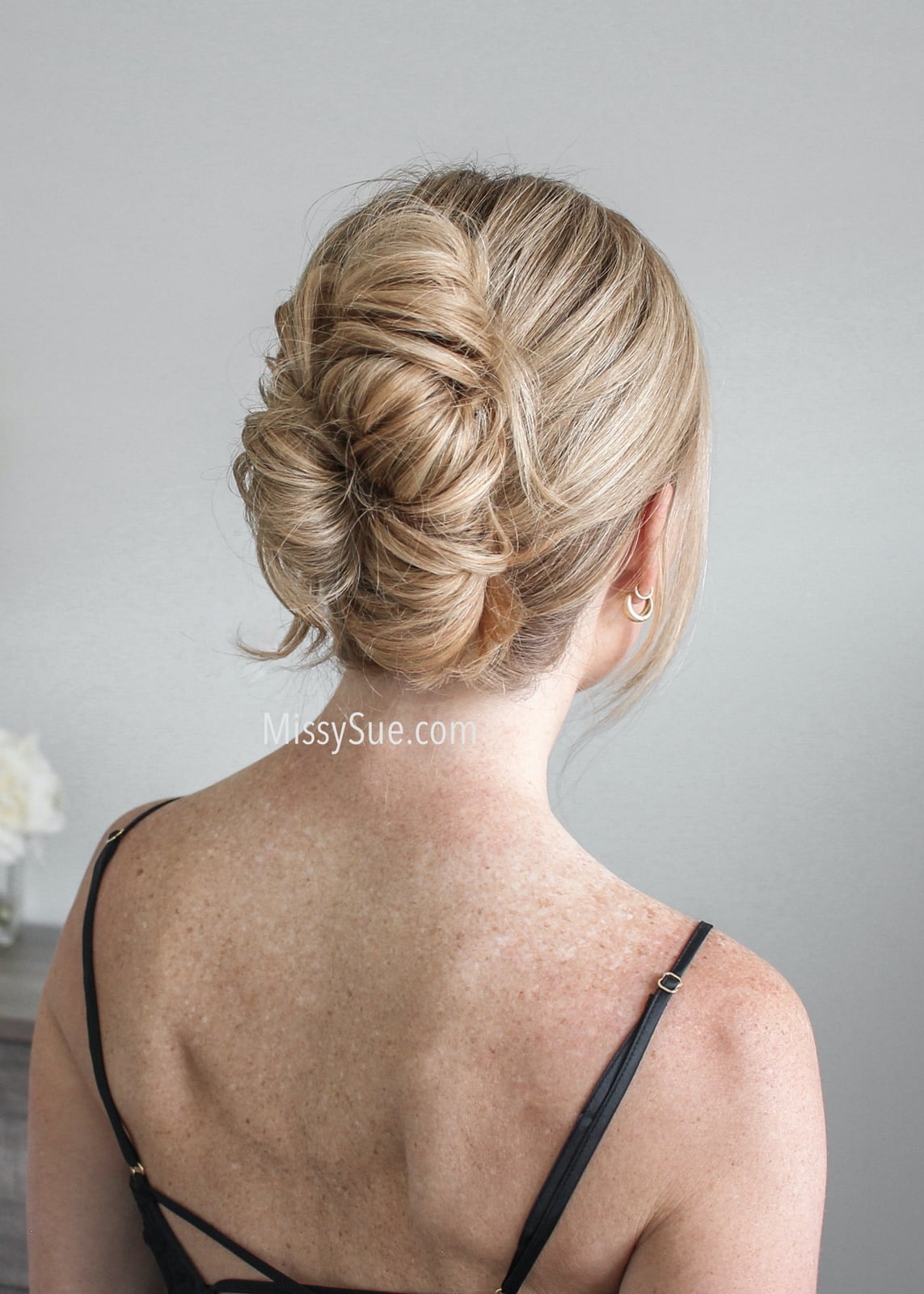
Source: missysue.com
How do you describe an updo that involves multiple twisted sections meeting at the nape? Tell your stylist: intricate twisted bun at nape, loose face-framing tendrils. The blonde with highlights shows the twists clearly, each one wrapping into the next. Layered, wavy hair gives the bun a textured surface rather than a smooth one. A middle parting keeps the front symmetrical. Works best for round and square face shapes, the loose tendrils softening the jawline. The style takes about an hour to build and stays neat through a full evening.
A neat take on twists with thick, coily black hair
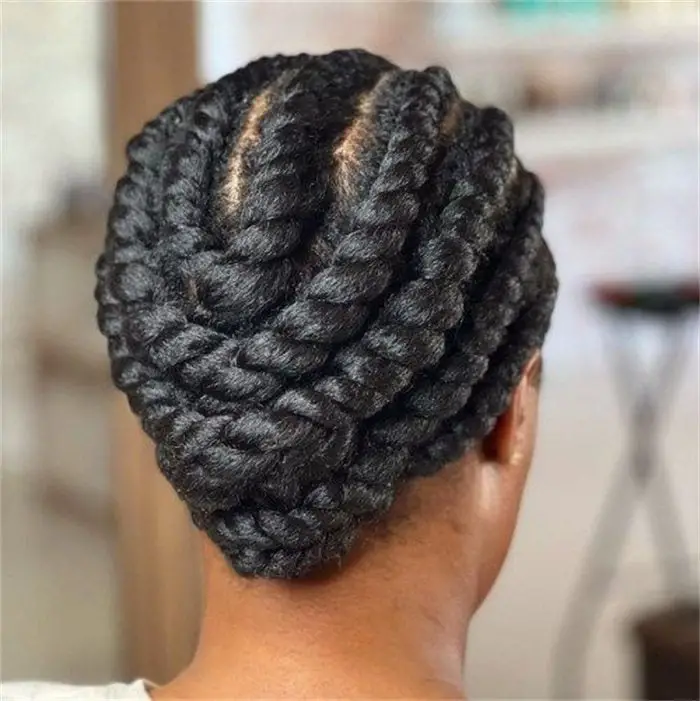
Via hotbraids.com
Neatly twisted coils wrap into a bun at the back, the thick, coily texture doing the work of holding each turn. Black hair with a middle parting, the twists sit close to the head before gathering into a rounded shape. This is a neat finish, no loose strands, no fraying edges. Pass when you have fine or straight hair, which lacks the grip to keep coils tight. Expect about two hours of careful sectioning and wrapping. The result holds for several days with minimal touch-ups.
Ash blonde updo with loose twists and face-framing tendrils
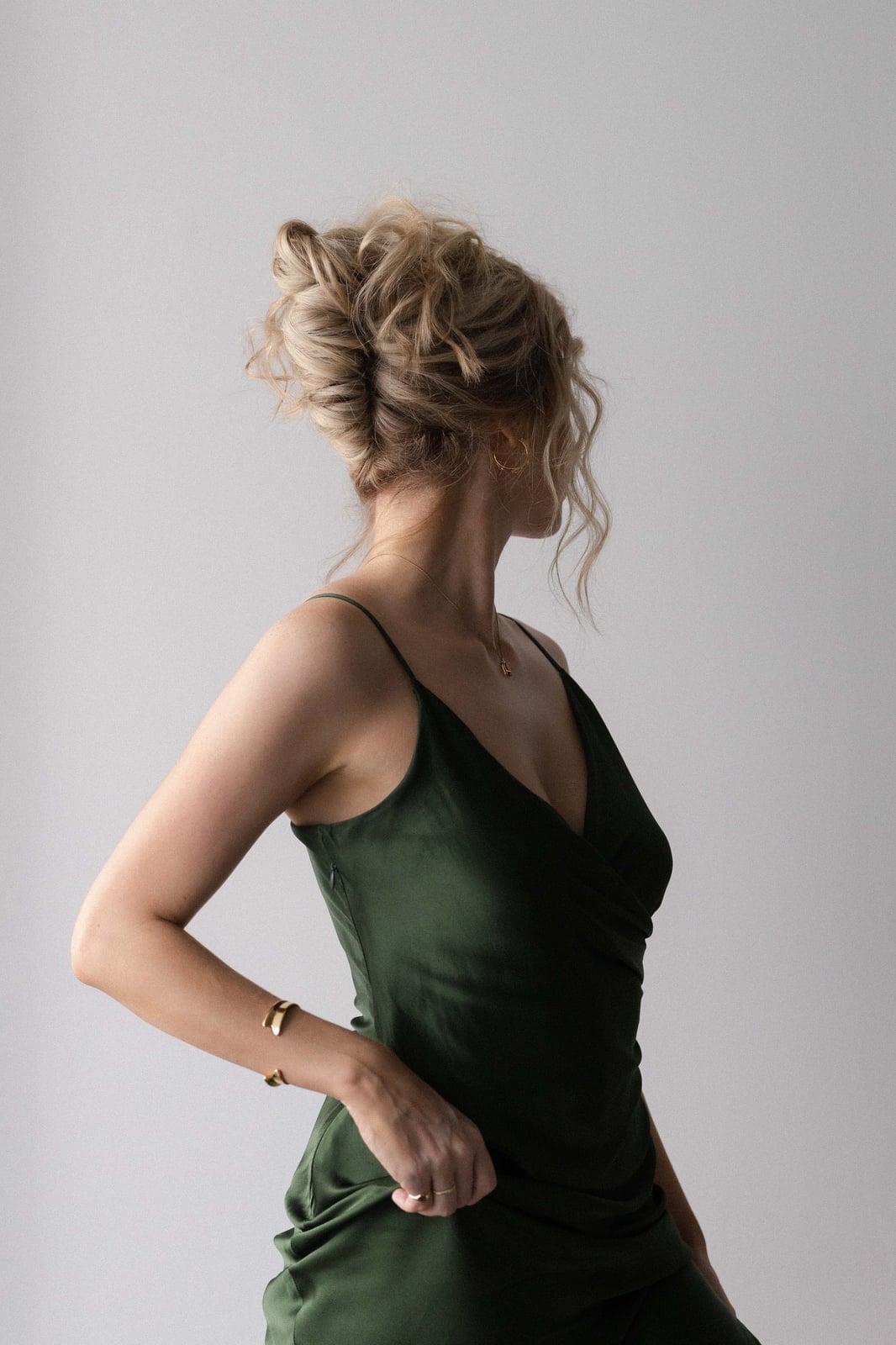
Courtesy of: alexgaboury.com
Where a sleek chignon feels too formal and a messy bun too casual, this sits in the middle. Loosely twisted sections of ash blonde with lighter highlights stack into a shape that is neat without looking stiff. Wavy, fine texture helps the twists stay soft and not rigid. The catch: those wavy tendrils need a visible wave to feel like part of the design, not like fallout. This style depends on them, so it is best for those who like loose pieces.
Dirty blonde chunky crown braid into a textured bun
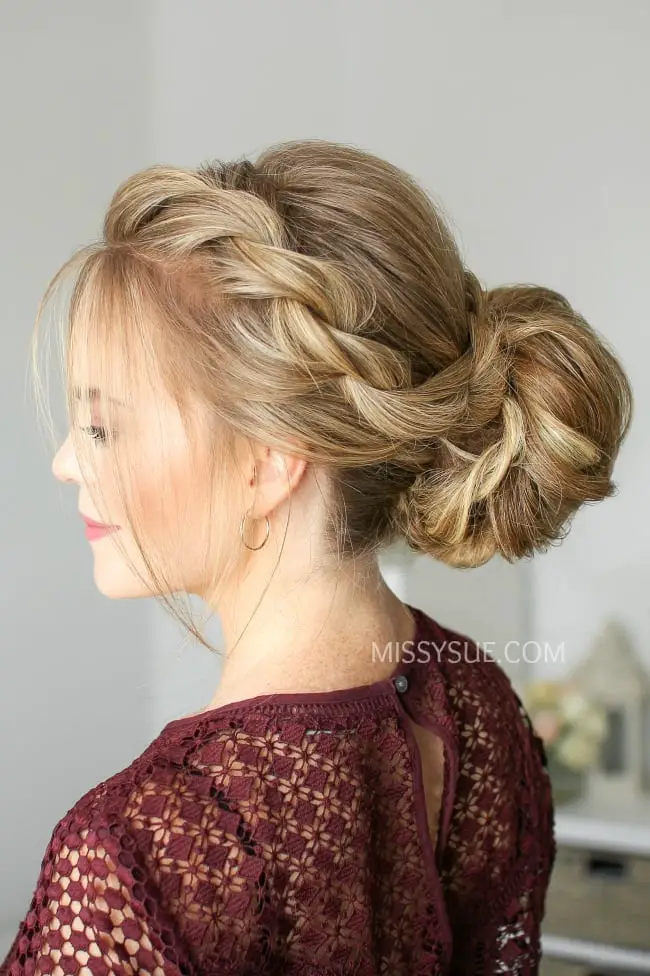
Photo credit: missysue.com
A chunky crown braid that sweeps into a textured bun gives this dirty blonde style a weight that suits the cooler months. The wavy, thick texture holds that braid without pinching, and the wispy side-swept bangs keep the front from feeling heavy. Subtle highlights catch the light as the braid curves back. It lands in wedding season for a reason. The structure stays intact through hours of dancing. The salon chair is where this gets built; the braid needs tension and the bun needs precision.
Ash blonde updo with volume and lighter highlights
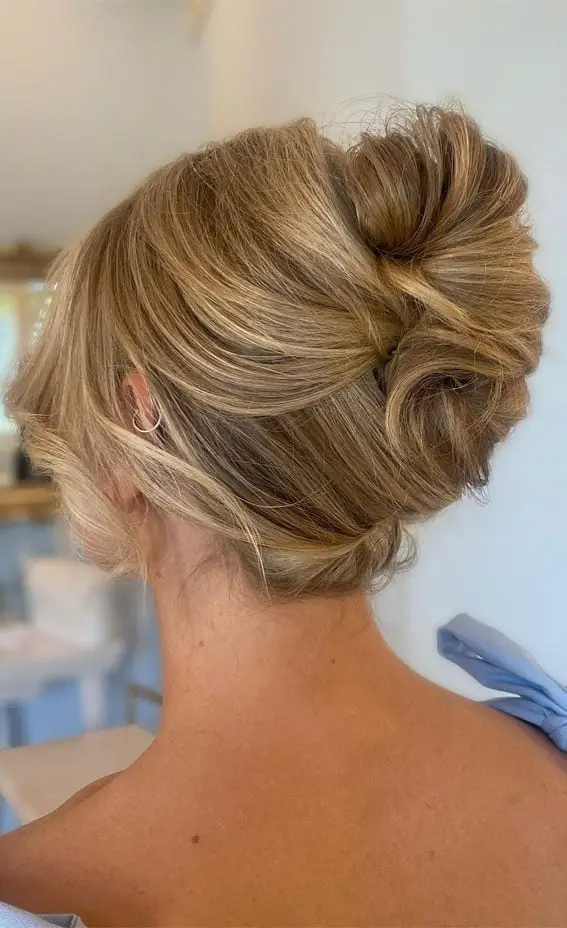
Image credit: fabmood.com
Two things make this voluminous twisted bun at the back work: the ash blonde base with lighter pieces and the fine, wavy texture that lets each twist stack without bulk. The volume sits high and round, which requires enough length to wrap around itself. The trade-off: that shape takes careful pinning, and it can feel heavy by the end of the evening. Skip it if you have very thick hair and want a less voluminous bun, the pile may overwhelm the silhouette.
Sculpted ash blonde twists create an elegant shape
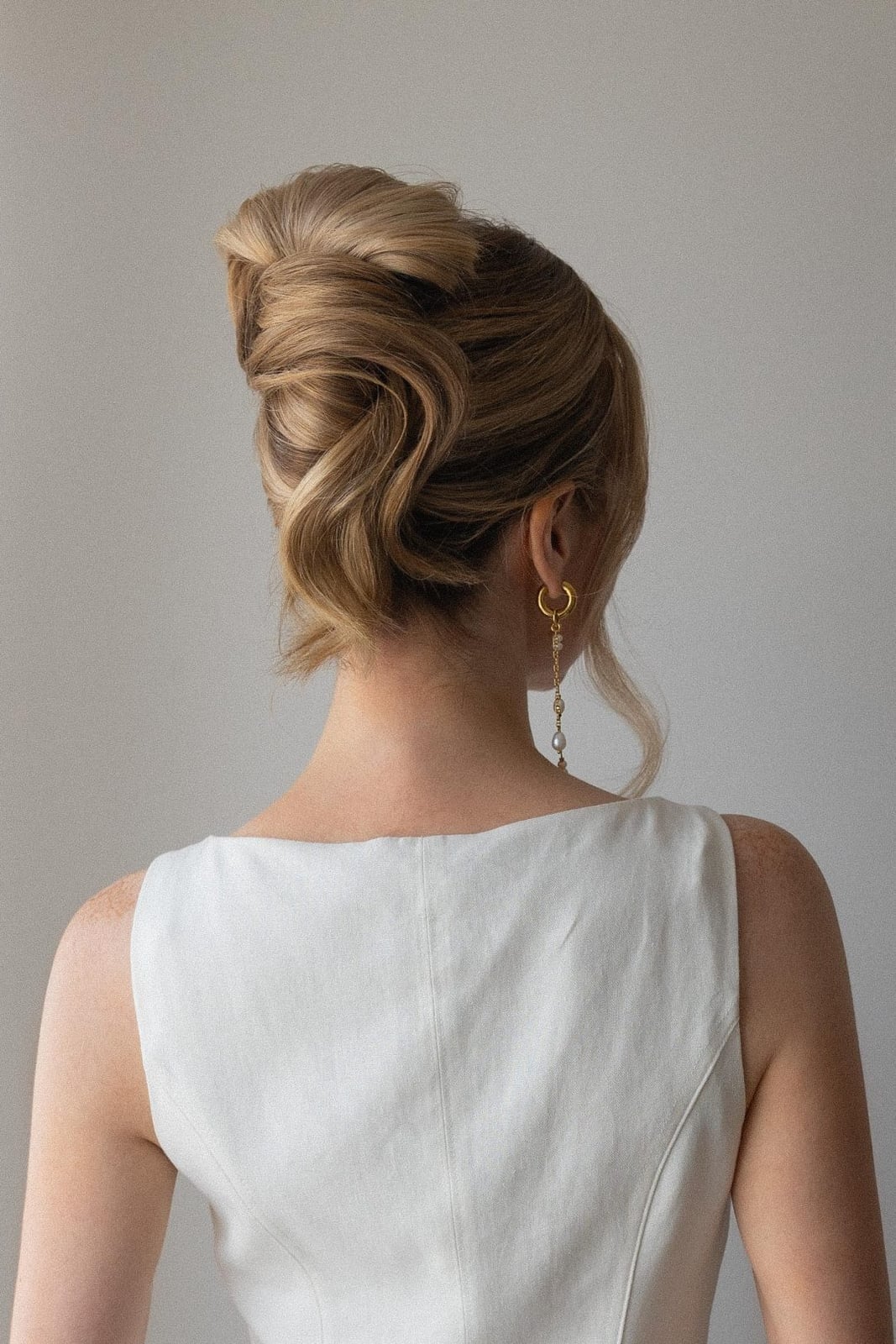
Source: alexgaboury.com
Instead of a crown braid that circles the head, these sculpted twists climb into a defined shape at the back. The ash blonde with lighter highlights appears as one piece because each twist follows the next without gaps. Wavy, fine texture keeps the lines clean without looking hard. This style is different from a messy twist updo. Every twist here is placed, not gathered. This updo announces its precision.
Dark blonde messy bun with wispy tendrils and middle parting
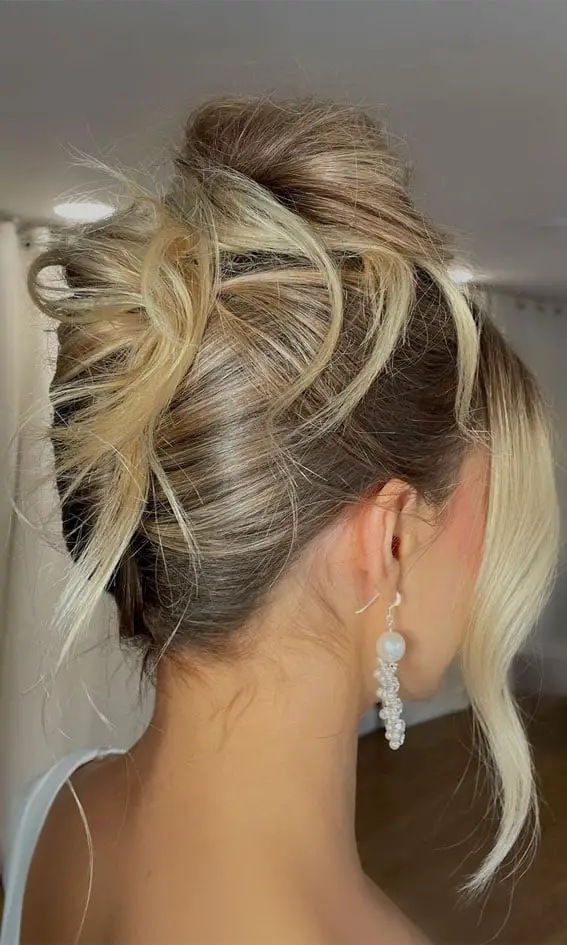
Source: fabmood.com
A middle parting splits the dark blonde base before it gathers into a messy shape, leaving loose wispy tendrils to break the line. The ash blonde highlights become visible where the hair twists, which keeps a single-tone bun from looking flat. Wavy, fine texture helps those tendrils curve rather than poke straight out.
This style is salon-leaning; allow an hour for the stylist to build the volume and place the tendrils so they frame without hiding the face. You need shoulder-length hair at minimum to get that wrap around the base.
Intricate twists and braids add softness and dimension
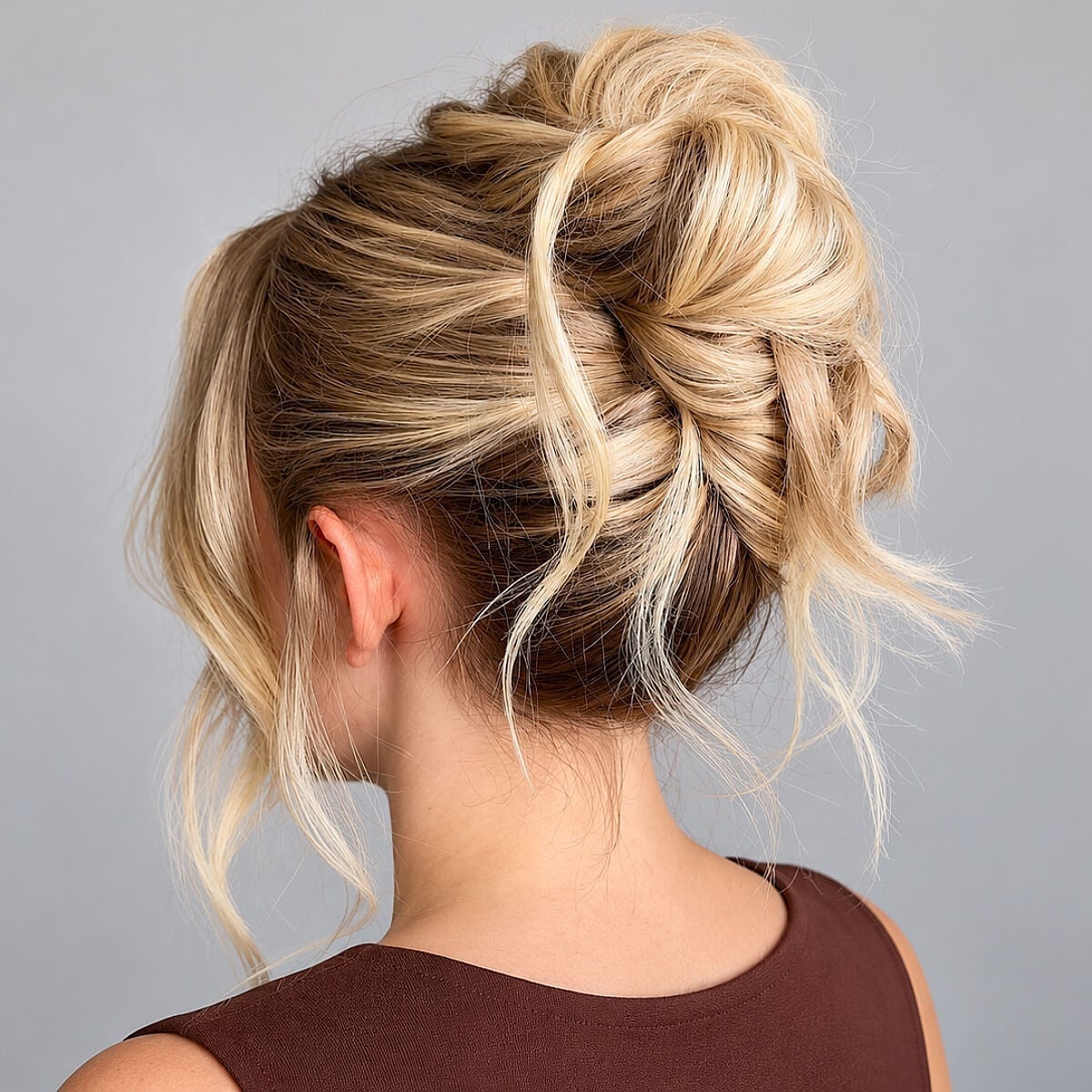
Between the braids and the twists, there is a lot going on here. The messy bun sits low enough that the loose, wispy tendrils around the face and neck keep it from feeling heavy. Ash blonde with lighter highlights means the weave catches the eye at every crossover. Wavy, fine texture is the sweet spot, thick hair would swallow the detail. The catch: this is not a twenty-minute updo. Plan for an hour in the chair to get the sections even and the tendrils placed right.
Warm auburn voluminous crown with loose wavy tendrils
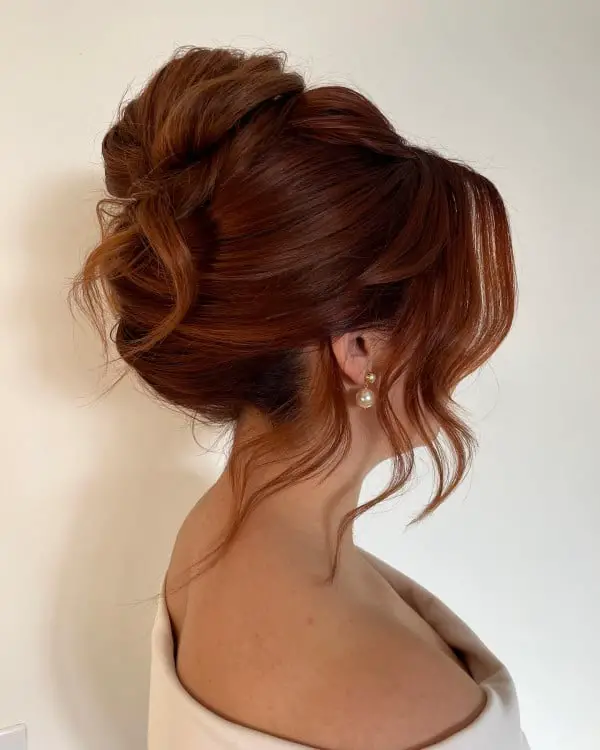
Courtesy of: fabmood.com
How does the crown get that height without pins sliding out? Twisted sections, layered close together, building volume from the root up. Warm auburn with subtle copper highlights adds a glow that a single shade cannot. Loose, wavy pieces around the face and neck soften the structure. Medium thickness and wavy texture hold the shape best. Skip it if you want a smooth, pulled-back silhouette. This one relies on texture to stay put. Book it as: voluminous crown with twisted sections, loose wavy tendrils.
Voluminous ash blonde bun with dark blonde highlights
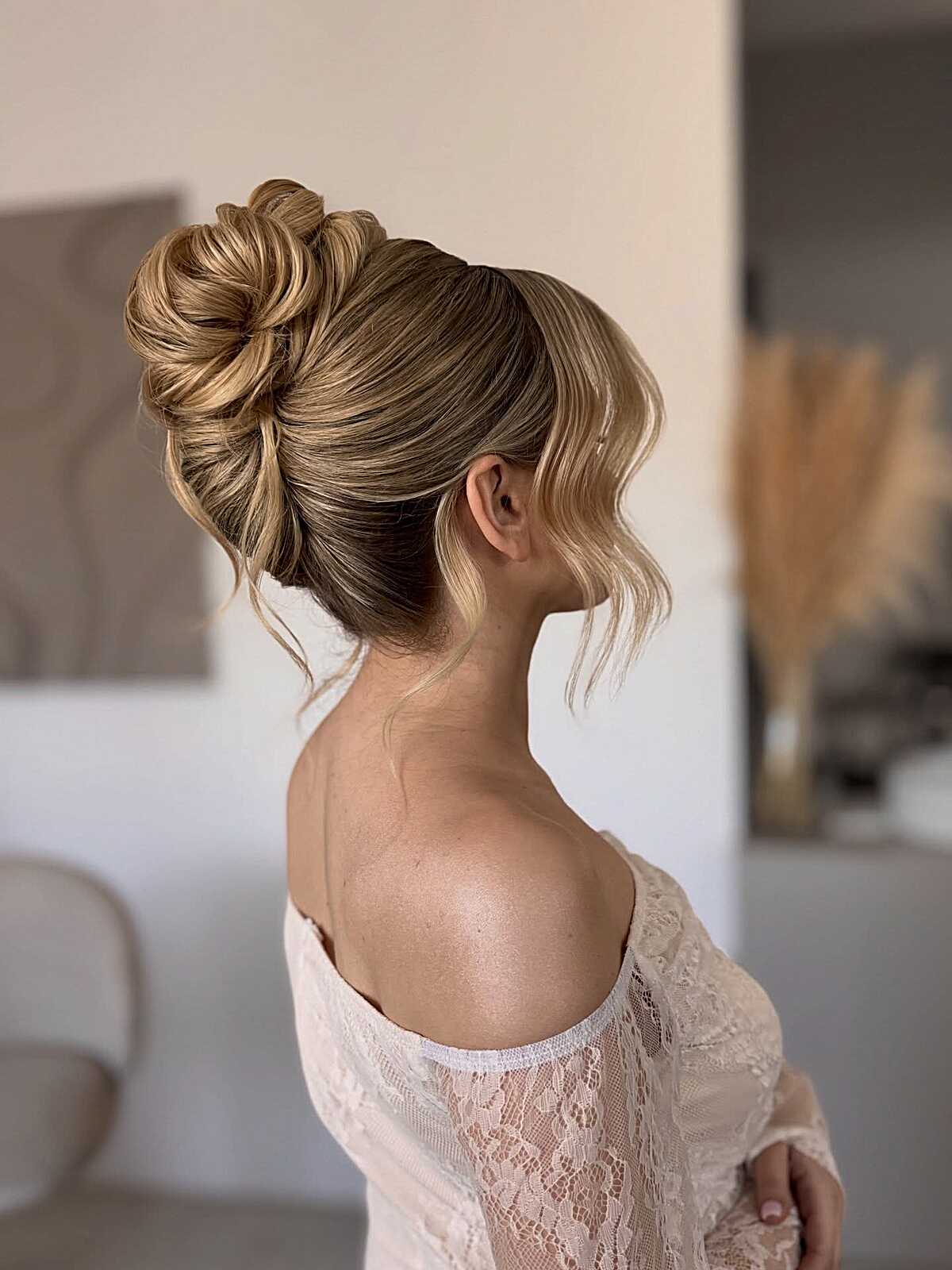
Photo credit: latest-hairstyles.com
A bun this big needs grip. Ash blonde with dark blonde highlights creates the illusion of depth, so the volume looks shape, not bulk. Loose, wavy tendrils around the face prevent the crown from looking top-heavy. Thick, wavy texture gives the stylist enough material to build the height without backcombing every section. This is a salon-only construction; the twist pattern and the tendril placement require a second pair of hands. Allow a full hour for the pin work alone.
Loose twisted bun with face-framing pieces on blonde hair
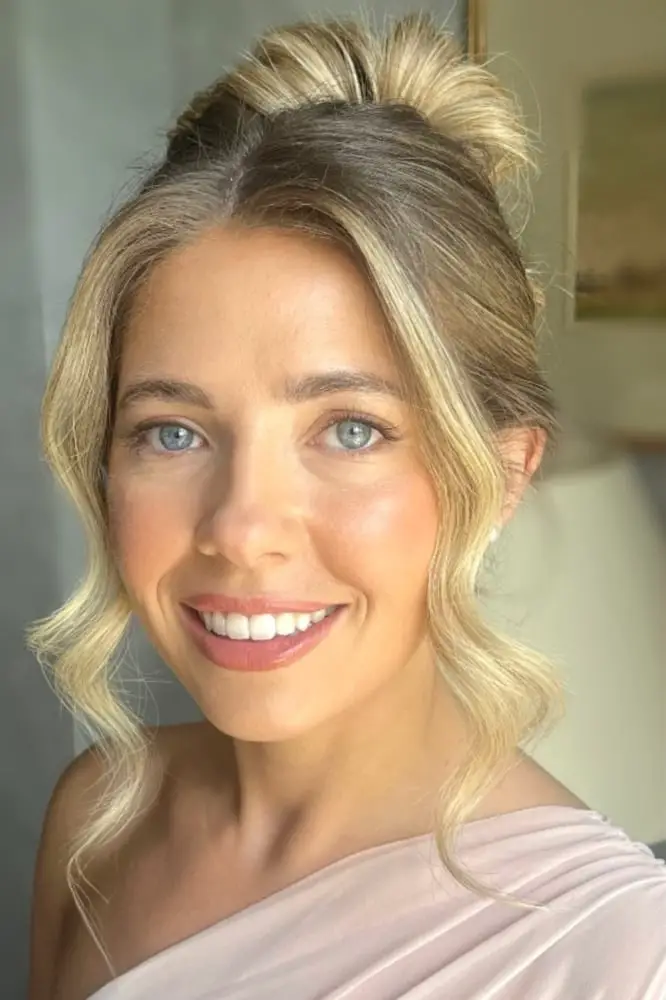
Image credit: fabbon.com
The mistake people make with a loose bun is pulling the face-framing pieces too thin. Here the middle parting and the twisted bun at the crown leave enough weight in the front sections to actually frame. Blonde with highlights keeps those pieces from looking like afterthoughts. Wavy, fine texture works because the bun stays soft rather than rigid. The loose structure means it will shift during the evening. That is the look, not a flaw. Tell your stylist: loose twisted bun at the crown, face-framing pieces.
Fabric flower accessory adds softness to an updo
Source: fabmood.com
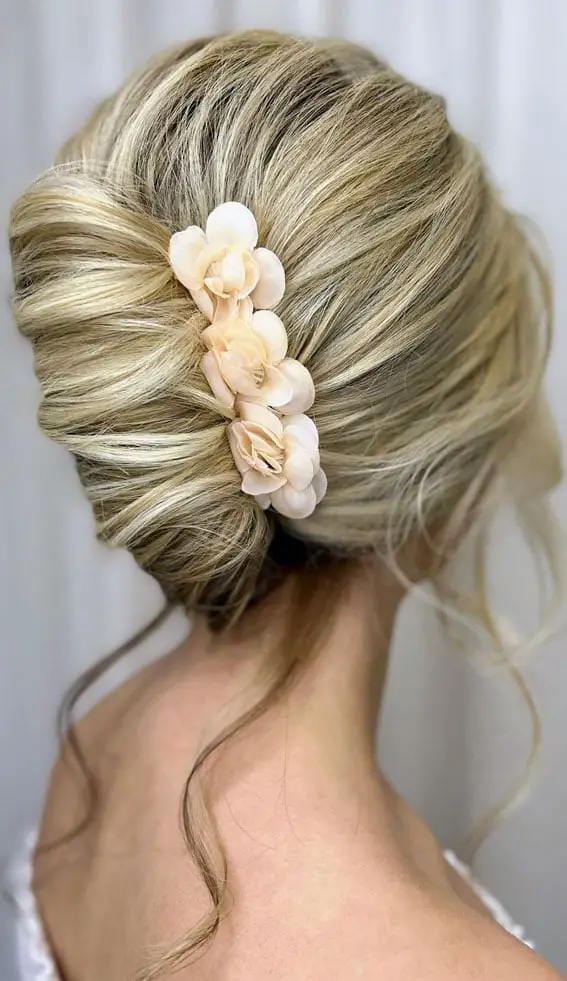
A metal clip can feel severe against ash blonde with lighter highlights. A fabric flower accessory does the opposite. It softens the line of the side-swept updo without competing with the color. Loose, wavy tendrils at the nape keep the neat silhouette from feeling stiff. Wavy, fine texture holds the twist pattern well under the accessory. This works best for spring and summer occasions where a floral detail feels natural. Skip it if you prefer no ornament at all.
Ornate jeweled accessory adorns warm blonde hair
Via fabmood.com
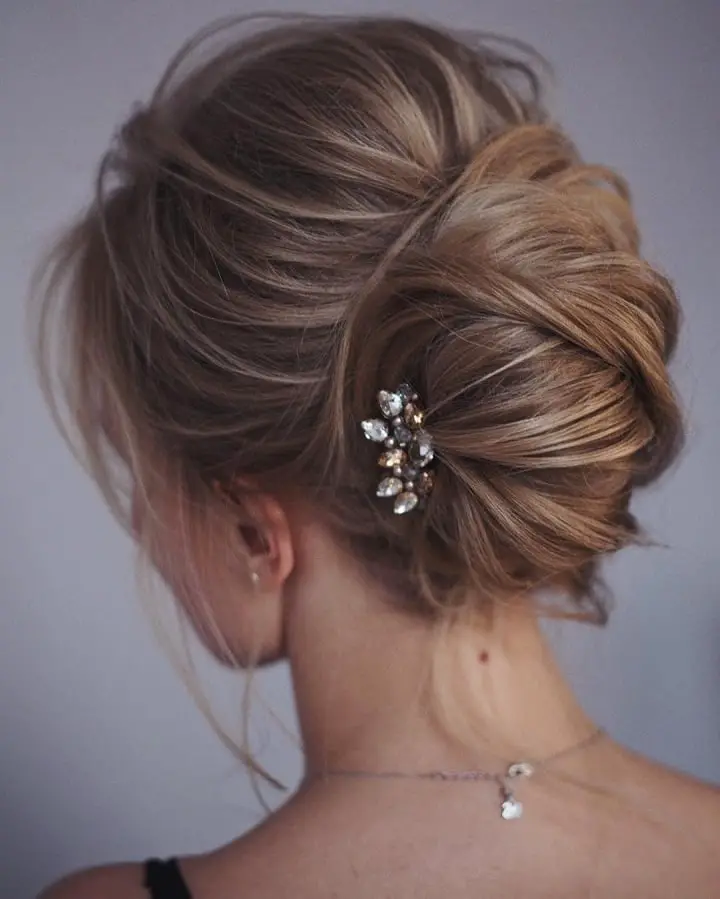
A jeweled accessory sits where the side-swept twist meets the crown, the metal catching light against warm blonde. Wavy, fine texture holds the shape without fighting it, the subtle highlights looking soft contrast. The catch: you are committing to the accessory as the focal point, which means the styling has to work around it, not the other way around. If you prefer your hair to be the only ornament, this is not for you. Tell your stylist: side-swept twisted updo, ornate jeweled accessory. Pinning takes time; plan for a full hour in the chair.
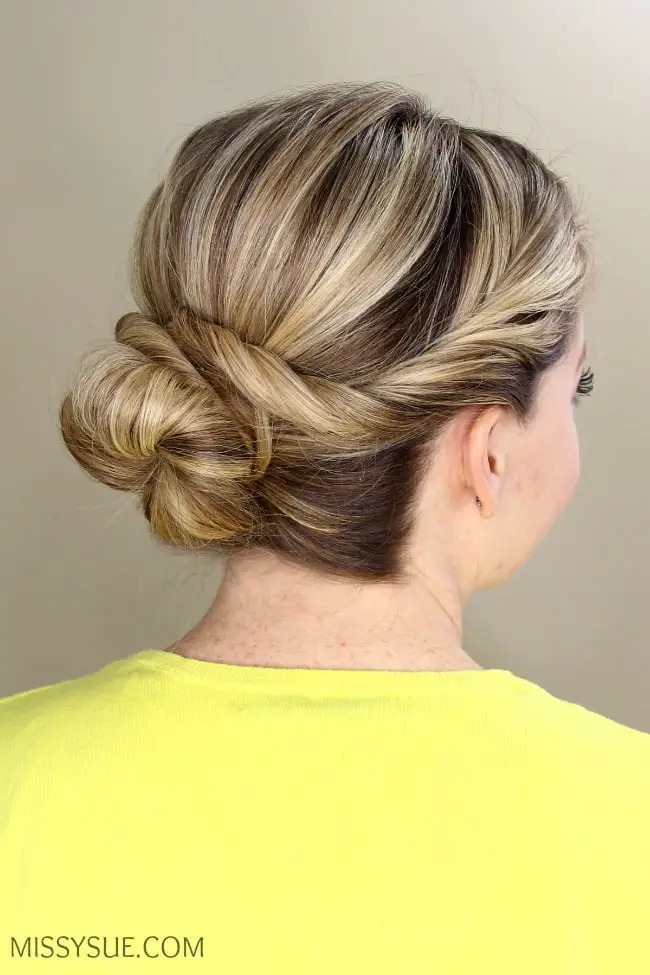
Dark blonde twisted low bun with blonde highlights
Courtesy of: missysue.com
The low bun is built section by section, each twist pinned flat against the next so the blonde highlights surface in bands. Thick, wavy texture gives the bun body without needing backcombing. A back view reveals the precision: no loose ends, no stray pins. The highlights look like part of the architecture. It suits those who want a high bun or a looser, messier finish. Salon expertise is required for the clean finish; budget an hour.
Black wavy hair braided updo with an intricate bun
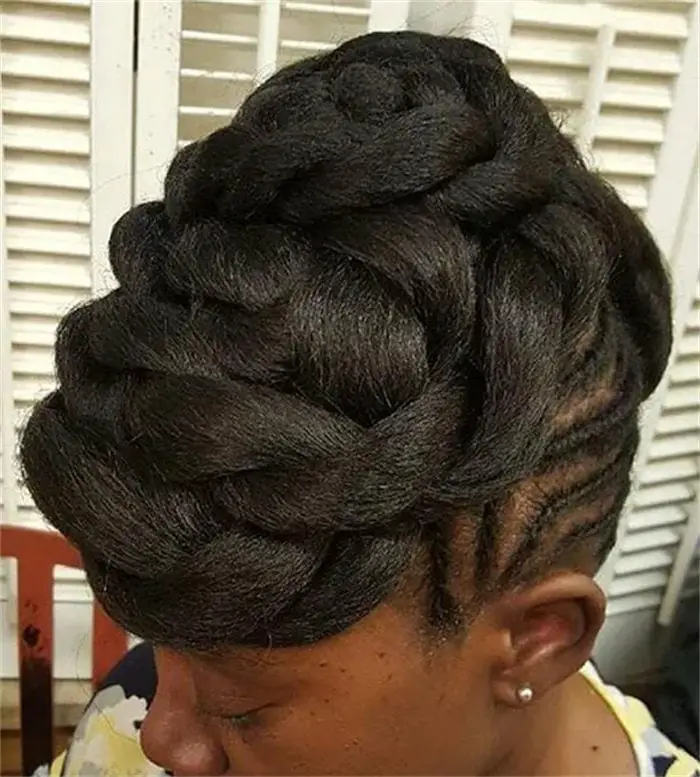
Photo credit: hotbraids.com
Cornrow braids run neat along the sides, then feed into a bun built from woven sections. Thick, wavy black hair gives the braids grip and the bun a solid weight that holds without pins fighting. It is a style that asks for length and patience. Pass when you prefer twists over braids. The bun needs a stylist who knows tension; two to three hours in the chair is standard. A trim every eight weeks keeps the ends clean for the braiding.
Woven braids frame the head in blonde updo
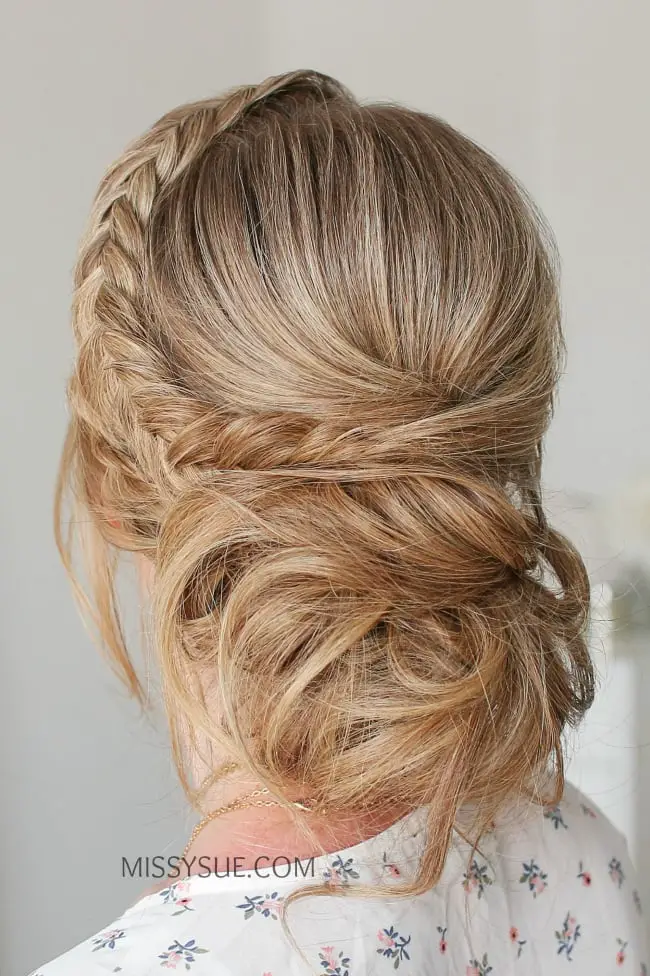
Image credit: missysue.com
Woven braids trace the hairline from temple to temple, the blonde with highlights catching light in the twists. Thick, wavy texture keeps the braids from looking flat against the scalp. The middle part splits the frame evenly, so the shape works for oval and round faces alike. Compare this to a style with a single crown braid: the woven version looks more deliberate, more ceremony. Skip it if you prefer a style without braids. Ask your stylist for: woven braids framing the head, updo with twists and braids. Plan for an hour to an hour and a half.
Strawberry blonde twisted updo with pearl pins
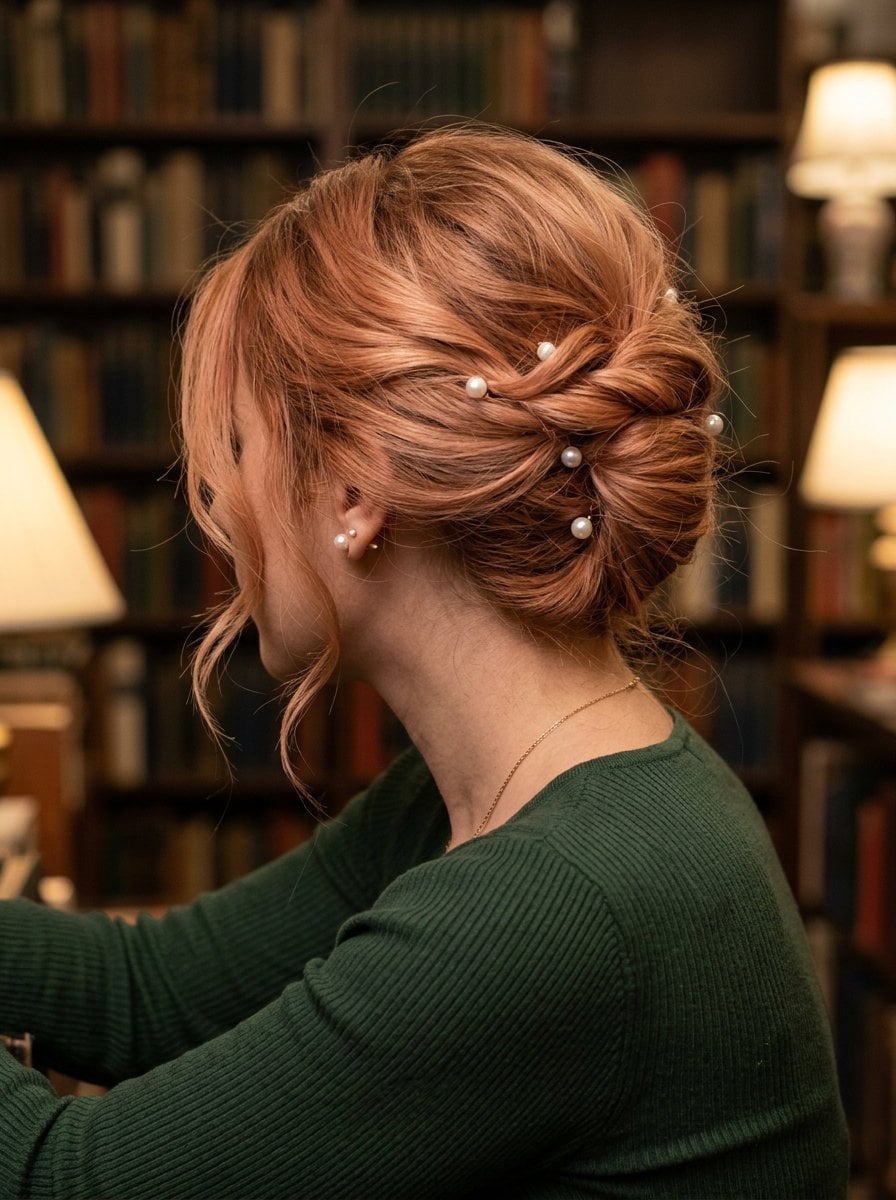
Pearl pins are the practical rule here: they secure the twisted sections while doubling as the only ornament. Strawberry blonde with subtle highlights appears warm and soft against the wavy texture, with loose face-framing waves keeping the updo from feeling severe. Medium thickness is enough to hide the pin insertion points. It works best if you enjoy accessories. The twisting requires a salon touch; allow an hour.
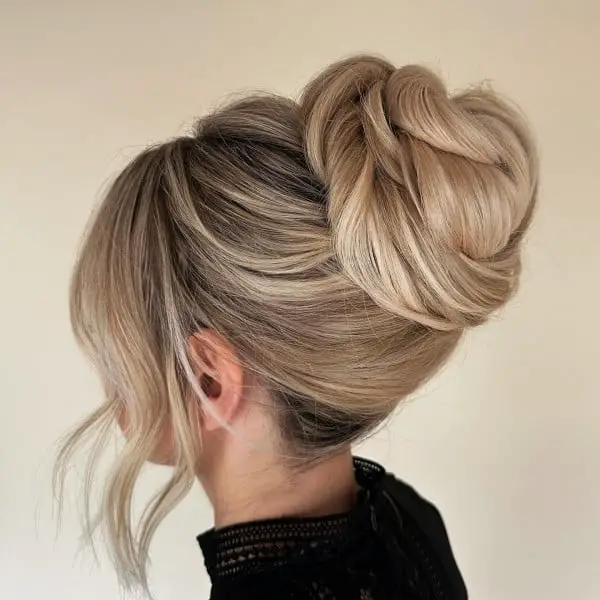
Ash blonde voluminous twisted bun with darker roots
Courtesy of: fabmood.com
A low bun is neat, but a large, textured twisted bun creates deliberate architecture. This side-swept version stacks the twist sections high, using the darker roots to create a shadow effect that keeps the ash blonde from washing out. Thick, wavy texture carries the volume naturally. It works best for those who want a textured, voluminous look rather than a smooth, sleek finish. Ask your stylist for: a voluminous twisted bun with wispy face-framing pieces. Styling time runs about an hour fifteen, with a heavy pin count.
Braided crown transitions into a low twisted bun
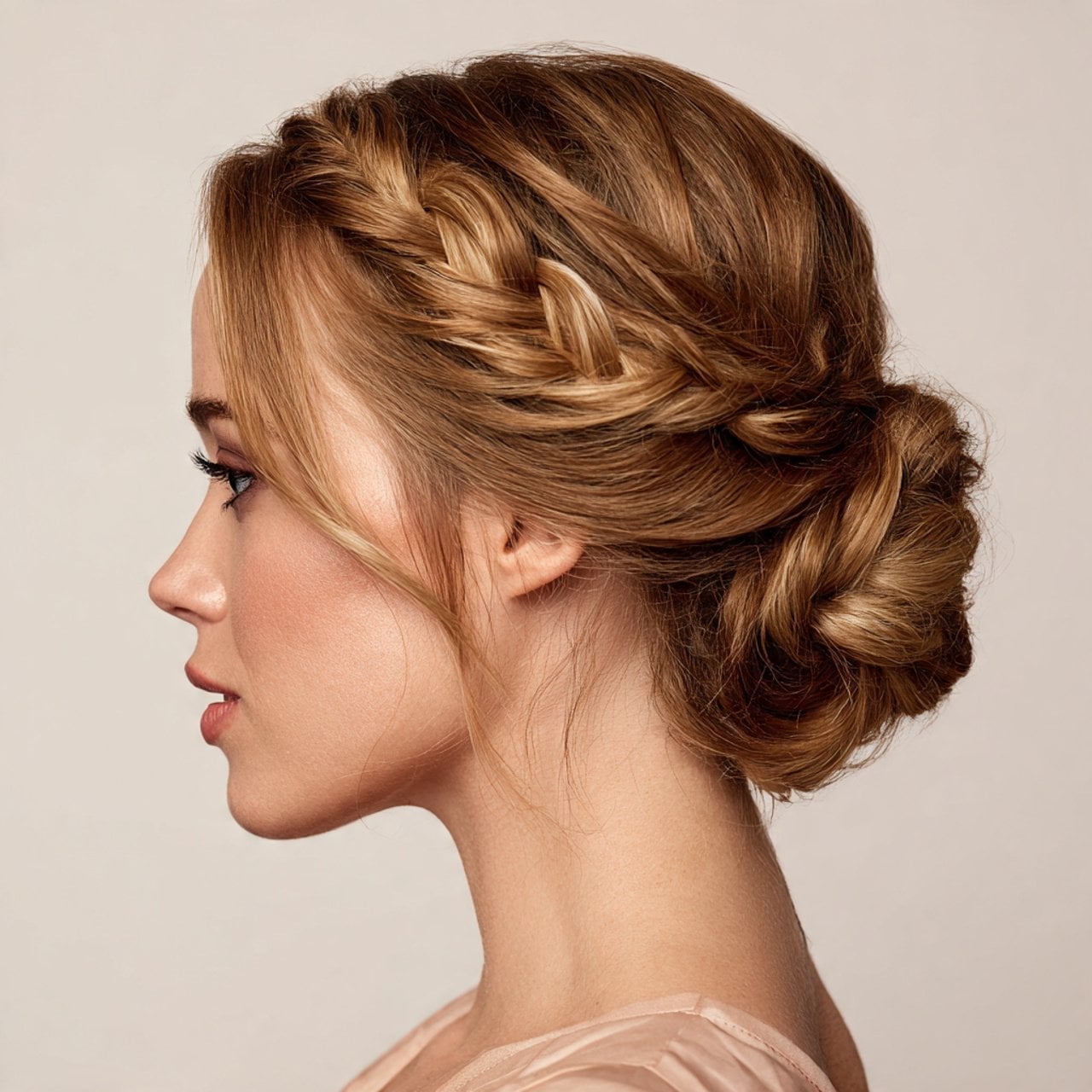
Photo credit: hairsblooming.com
Never let a braided crown sit as a separate ring. The trick is to let the braid feed directly into the twist at the nape, so the eye moves in one line. Warm brown with blonde highlights forms a cohesive color story. Wavy, medium thickness hair grips the braid well. It works best for a low bun with wispy side pieces, not a high bun. The catch: the braid requires a steady hand and sections that stay even. Sit for it when you have a full hour to spare.
Side-swept twisted updo with loose tendrils and warm blonde color
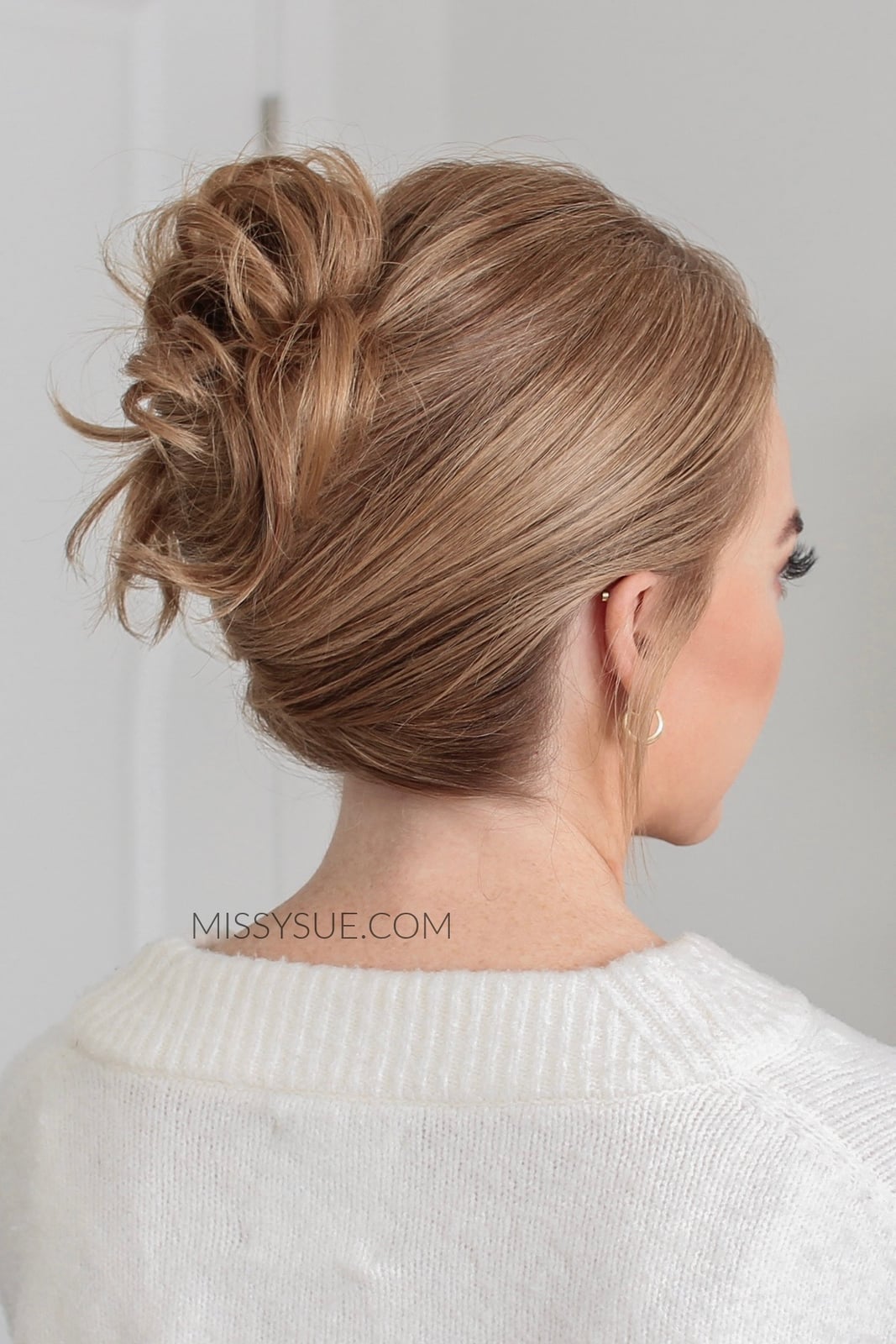
Image credit: missysue.com
A warm blonde updo lands best in the long evenings of late spring and early fall. This one sweeps everything to one side, building a loose bun from artfully placed twists. Fine to medium density hair benefits from the extra texture, and the subtle highlights catch the low sun without glare. Skip it if you need a symmetrical or tightly secured style that won’t shift during dancing. The loose tendrils are the whole point but they do need a re-pin by hour three.
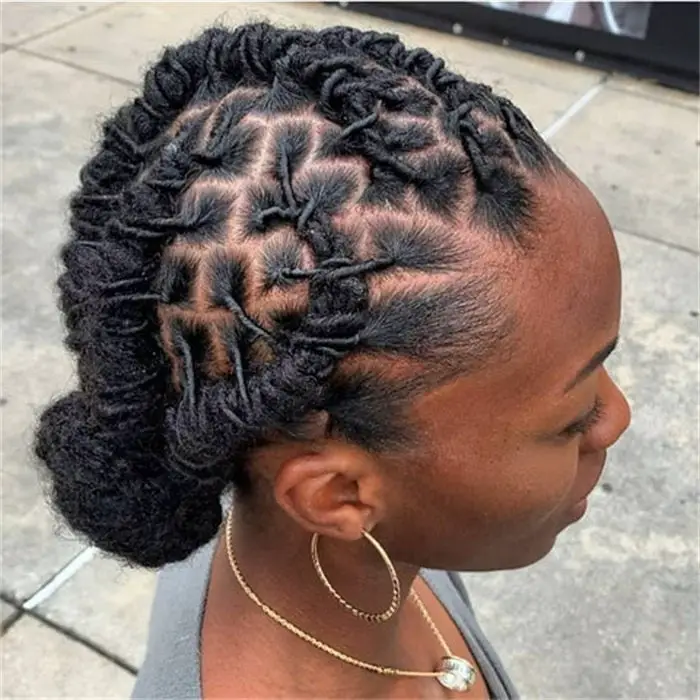
Locs styled into a mohawk and bun with geometric patterns
Source: hotbraids.com
Geometric loc styling demands precision: each section must align before the bun at the nape gets its final shape. The mohawk line works best when the sides are slicked tight, creating a clean contrast with the textured patterns. The honest trade-off is the time commitment, loc stylists need about two hours to set the angles. Pass when you have less than ninety minutes or when you want a style that moves freely. This one stays put all day.
Brown sculpted twisted bun with face-framing waves
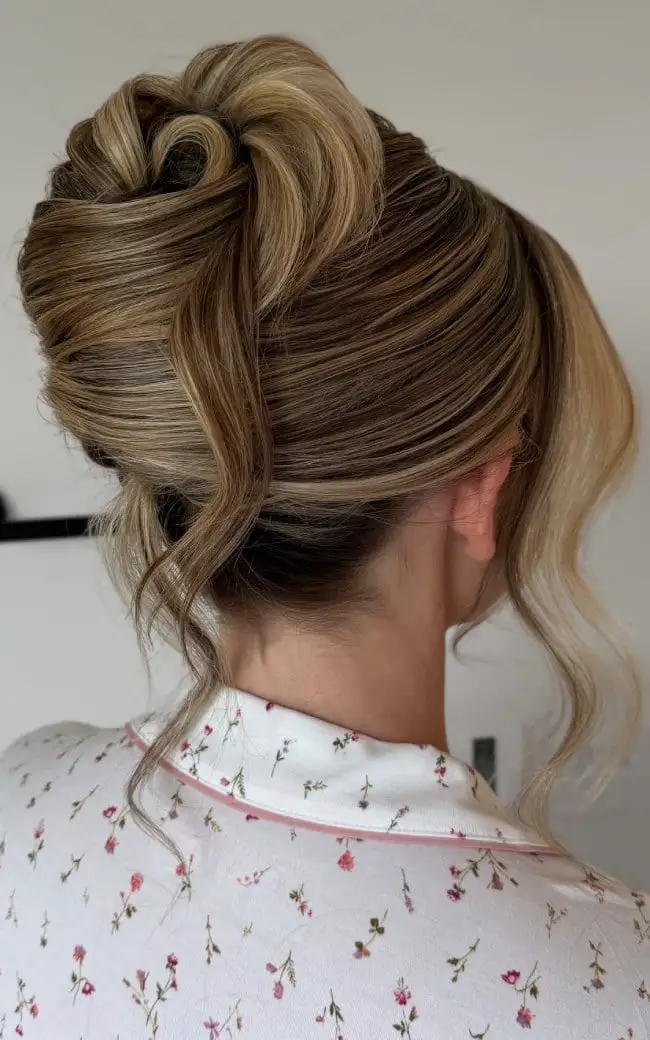
Via fabmood.com
A sculpted bun at the crown works because the base is built from individual twists that lock together, not a single rolled section. Brown with blonde highlights adds definition to each twist, so the shape reads clearly even from a distance. Thick, wavy texture holds the structure without extra product. It suits a structured, neat finish and a crown height bun. Ask your stylist for: a sculpted twisted bun at the crown with loose face-framing waves. Allow an hour for the pin work.
Sleek dark brown updo with an intricate twisted knot
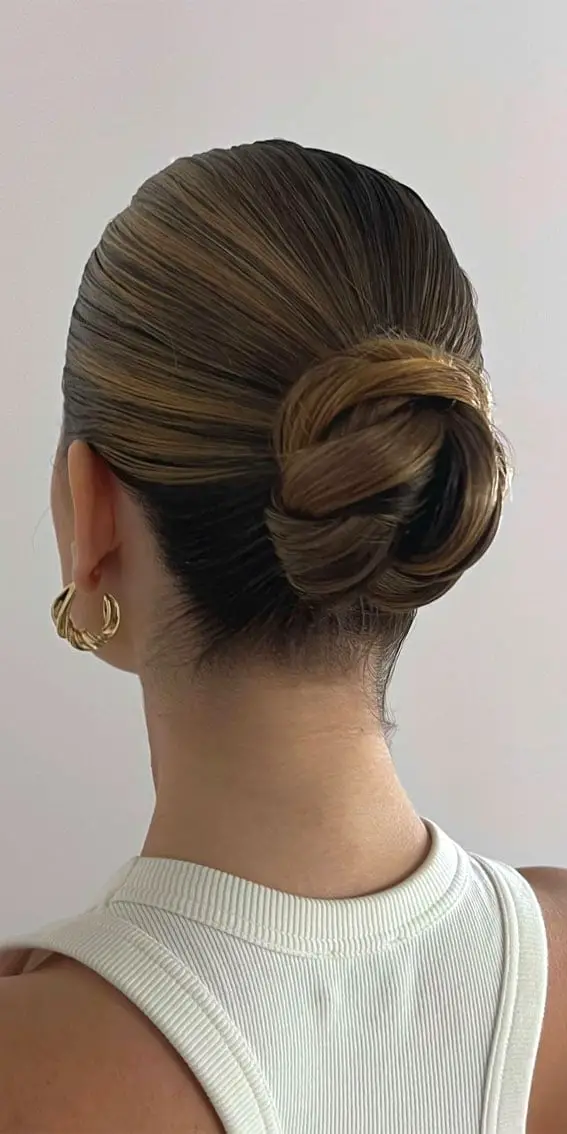
Courtesy of: itakeyou.co.uk
Fine, straight dark brown hair pulls off a sleek knot best. The smooth surface shows every twist, so the knot at the nape needs precision. Subtle blonde highlights add depth through the dark base without bulk. This style demands a flat canvas. The stylist will need time to section and pin each piece.
Neat enough for a formal event, the look holds all evening with a firm hold spray.
Dark brown intricately twisted sections into a low bun
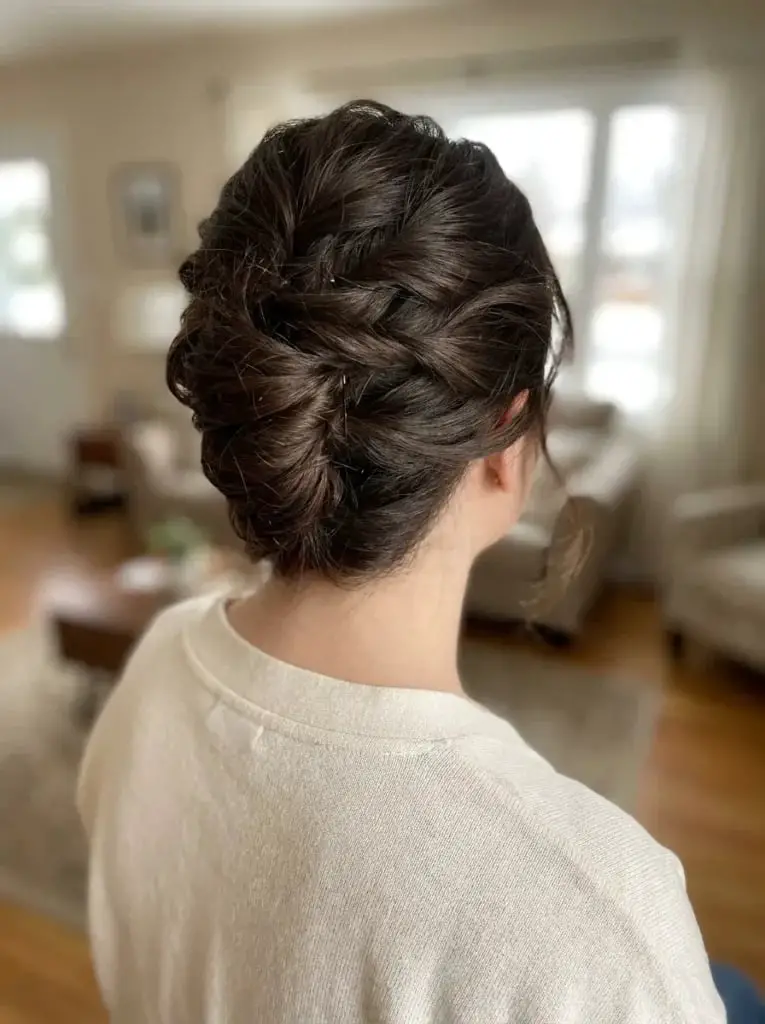
Photo credit: blushfizz.com
This version favors visible texture where the sleek knot hides it. Twisted sections of wavy, thick dark brown hair coil into a low shape, each piece distinct. The finish is matte and dimensional, not glossy. A high bun would pull out the waves; this low placement keeps them intact. Choose it when you want structure without a smooth surface. The catch: the twisted sections require dexterity. This is not a five-minute decision.
Black updo with braided sides and thick coily twists
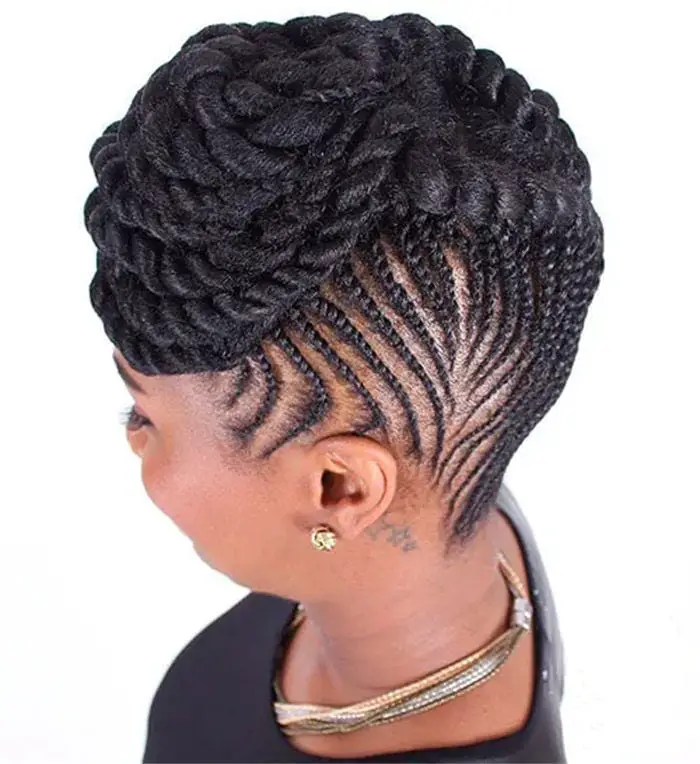
Image credit: hotbraids.com
Braided sides and thick coily twists on black hair need two techniques in one look. The side pattern feeds into the top twists, so the transition has to be clean. Ask your stylist for: braided sides transitioning into thick coily twists at the top. Fine or straight hair cannot hold the coils, skip it if yours lacks density. Allow an hour and a half for the sectioning and threading. The hold is firm; the shape lasts through a full day.
Slightly messy low twisted bun with wisps on blonde hair
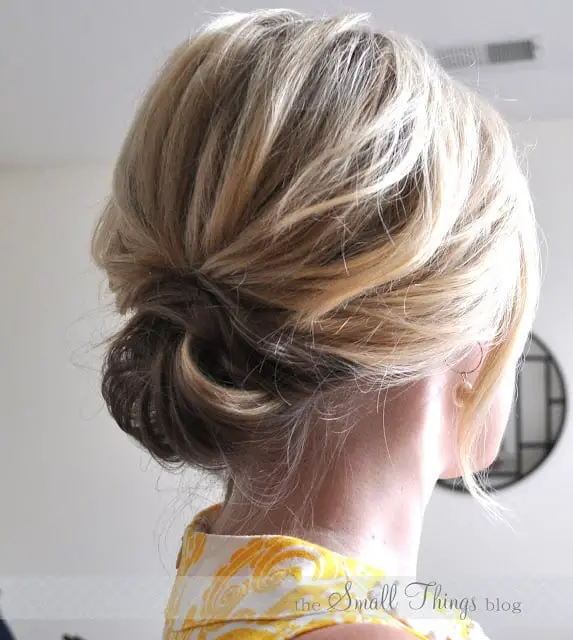
Source: thesmallthingsblog.com
Blonde with lighter highlights looks best when a few pieces escape. The low twisted bun sits at the nape, slightly messy, with wisps framing the back. Wavy, fine texture helps the bun stay loose without falling apart. You can do this at home in about thirty minutes, practice the twist-and-pin sequence once. It holds for a full evening if you work with dry hair. A sleek, tightly secured bun is the alternative; skip this if you want zero movement.
Final Thoughts
Choose the updo that best matches your hair’s natural texture and the time you have for styling or salon visits.
- Fine or thin hair: opt for a tighter twisted bun with texture spray for grip.
- Thick or coily hair: a sculpted twist with defined sections holds longest.
- Ten minutes in the morning: a low twisted bun with face-framing wisps.
- Salon visit every 4-6 weeks: intricate braided or twisted styles need upkeep.
Find your perfect cute twist updo for 2027.
Hairstyle
29 Cute Ombre Hair Color Ideas for 2027
Cute Ombre Hair 2027 featuring 29 styles, from brown to blonde waves to caramel layered looks. See the latest hair color ideas for your next salon visit.
You have a photo of ombre hair saved, but the grow-out line in your mind looks different. A soft transition keeps the ends light without a harsh stripe, which is why Cute Ombre Hair 2027 fill so many saved boards. This collection solves the indecision between a dramatic shift and something you can let grow.
Here are 29 variations, from chin-length bobs to long layers, natural brown-to-blonde blends to vivid blue and purple ends. Some need a gloss every six weeks; others just a trim. They work for straight, wavy, or curly hair, fine or thick. Pick the one that matches your texture and your tolerance for upkeep.
Blunt cut lob with dark brown to blonde Ombre
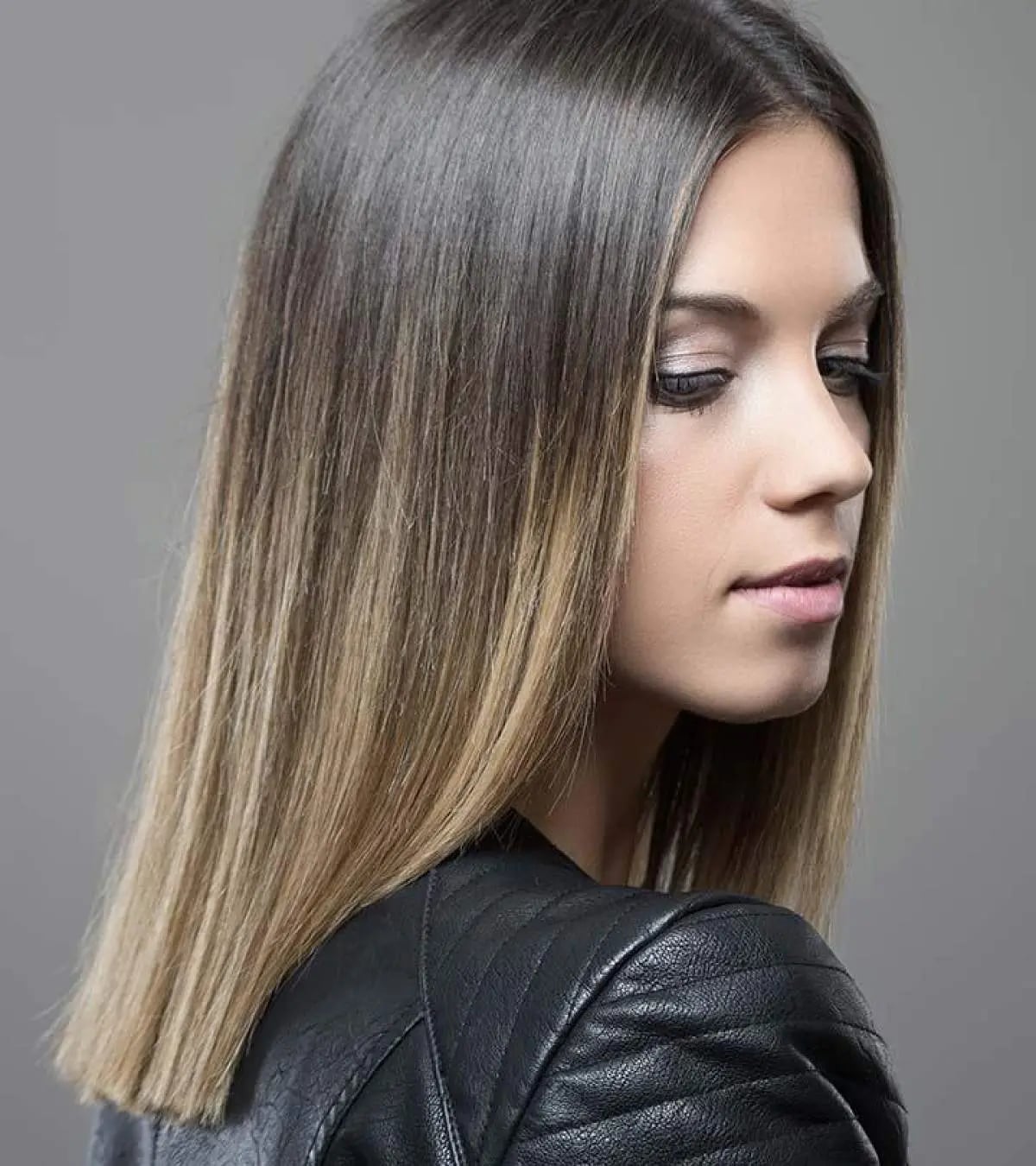
Courtesy of: stylecraze.com
A blunt cut lob with a middle part and straight blowout relies on precision rather than texture. The dark brown root transitions to blonde ends, which means the ombre line stays visible without waves to blur it. It suits fine, straight hair with a clean baseline. It works best for those who prefer a straight style. Tell your stylist: blunt cut lob, dark brown to blonde ombre, straight blowout finish. A trim every six to eight weeks keeps that sharp edge intact.
Soft waves on long layered hair with dark brown to blonde Ombre
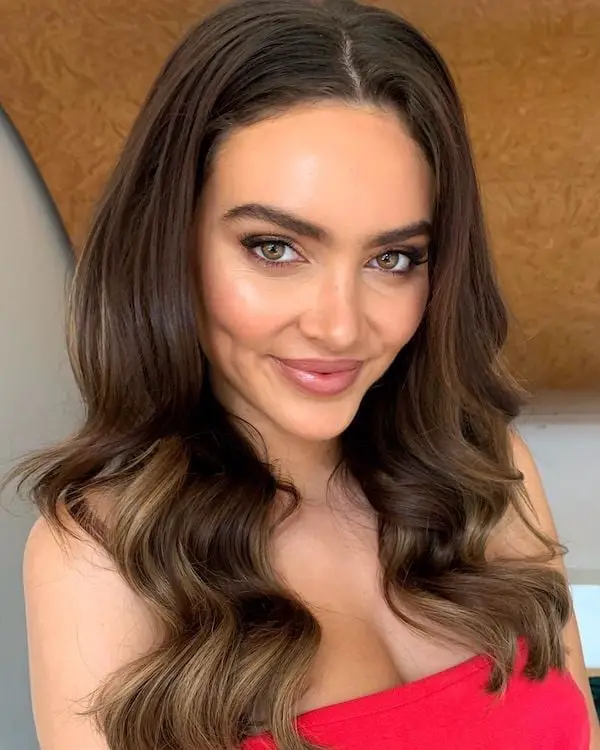
Photo credit: sittingprettyhalohair.com
Thick hair holds this shape best. The catch: fine hair struggles to keep the wave past midday. A texturizing spray applied to damp hair before air-drying or diffusing gives the hold you need.
Voluminous waves on mid-back brown to blonde Ombre
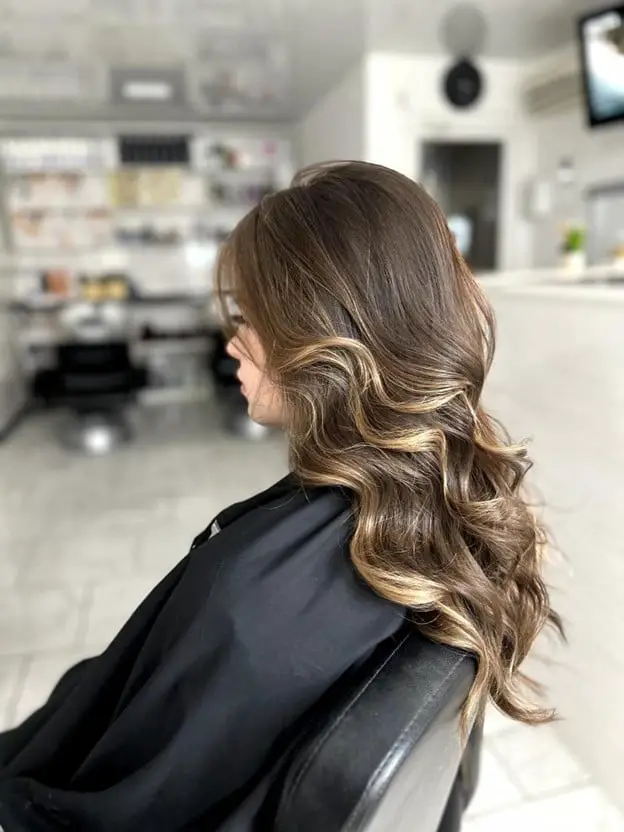
Image credit: cosmetologyandspaacademy.edu
The side part does the heavy lifting here. A deep side part shifts the volume to one side, which makes the brown to blonde ombre look intentional rather than accidental. Long layers carry the wave from mid-back upward, so the blonde ends catch light at every turn.
Book it as: long layers, mid-back length, brown to blonde ombre, voluminous waves. Thick hair with natural wave takes to this finish easily. Oval and heart-shaped faces benefit from the asymmetry. A large barrel curling iron or rollers creates the wave pattern; a trim every eight to ten weeks preserves the length.
Red to blonde Ombre lob for a modern update
Source: fabmood.com
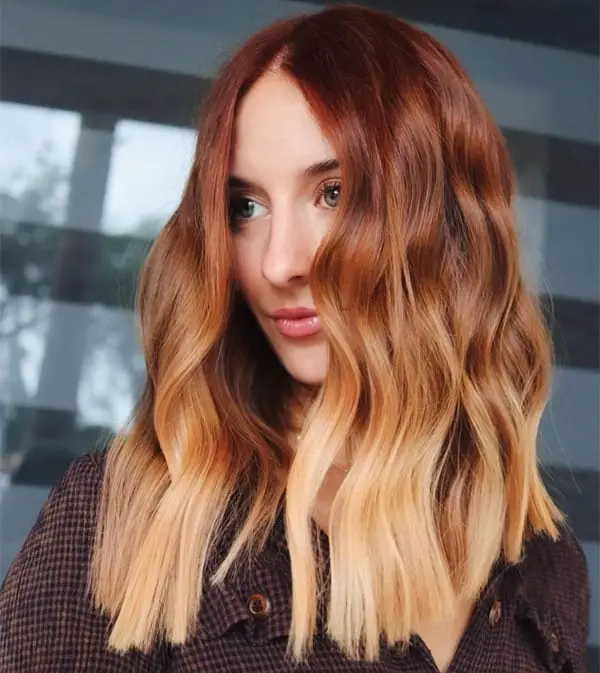
Where a brown to blonde ombre fades, this one contrasts. The red root meets blonde ends at a visible seam, which makes the color change part of the cut. A lob with a middle parting and soft waves keeps the look modern. Fine to medium hair holds the wave shape without weighing down. It suits those who want a visible color transition and soft waves. Tell your stylist: lob, red to blonde ombre, soft waves. A sea salt spray enhances wave texture between washes.
Voluminous waves on long layered dark brown to blonde, close-up take
Via bangstyle.com
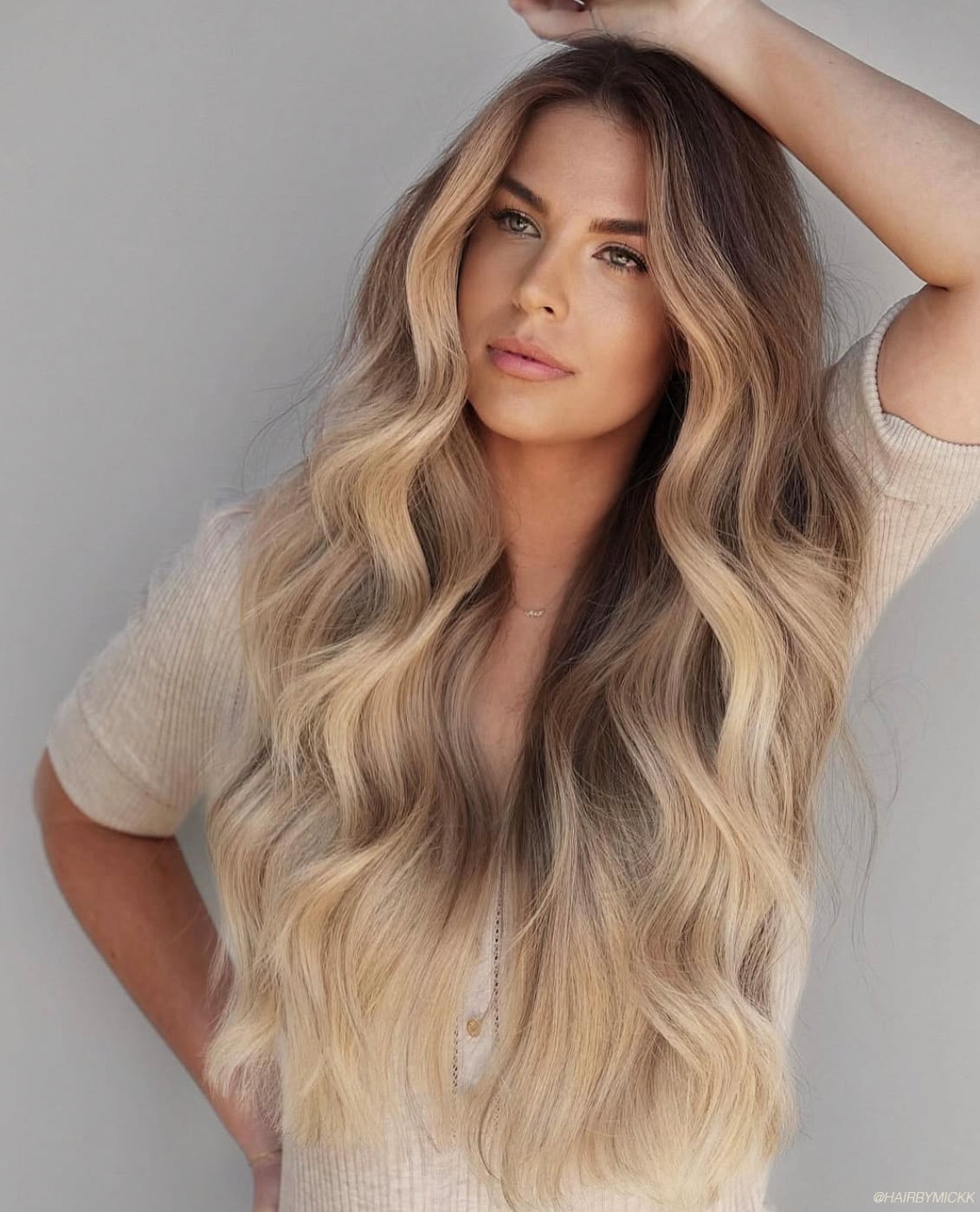
Long layers and a middle part create symmetry, but the volume makes the difference. The dark brown root sits close to the scalp while the blonde ends lift outward, which gives the ombre a graduated effect. Thick hair holds this shape through a full day.
The upkeep involves a volumizing mousse applied before blow-drying and a large barrel curling iron. This style requires regular styling maintenance.
Caramel Ombre on long layers styled in loose waves
Courtesy of: glaminati.com
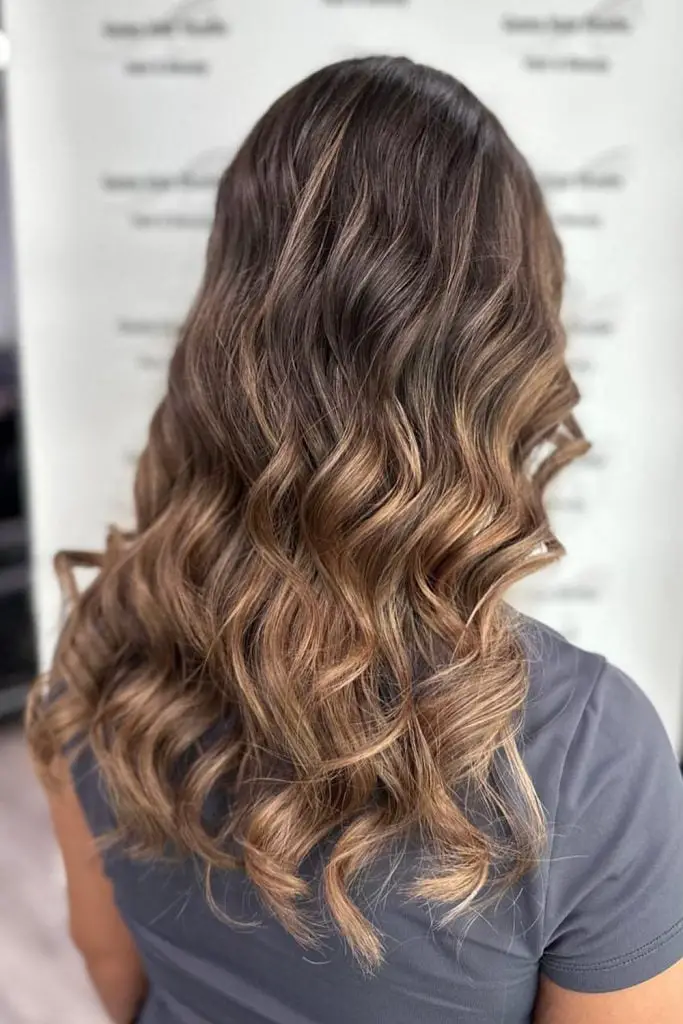
Dark brown at the root, caramel at the ends, the transition demands a salon chair, not a box dye. Long layers cut through thick, wavy hair so the loose waves have structure rather than just weight. No bangs here, which keeps the grow-out simple: the ombre does the work, and the back view shows a smooth blend that takes a practiced hand. Skip it if you have fine hair that won’t hold waves or prefer a blunt cut. Ask your colorist for: long layers, dark brown to caramel ombre, loose waves.
The catch is the application. A complex caramel ombre on thick, wavy hair runs about three hours in the chair. A DIY version tends to land muddy at the midsection.
Soft caramel Ombre on long layers with thick waves
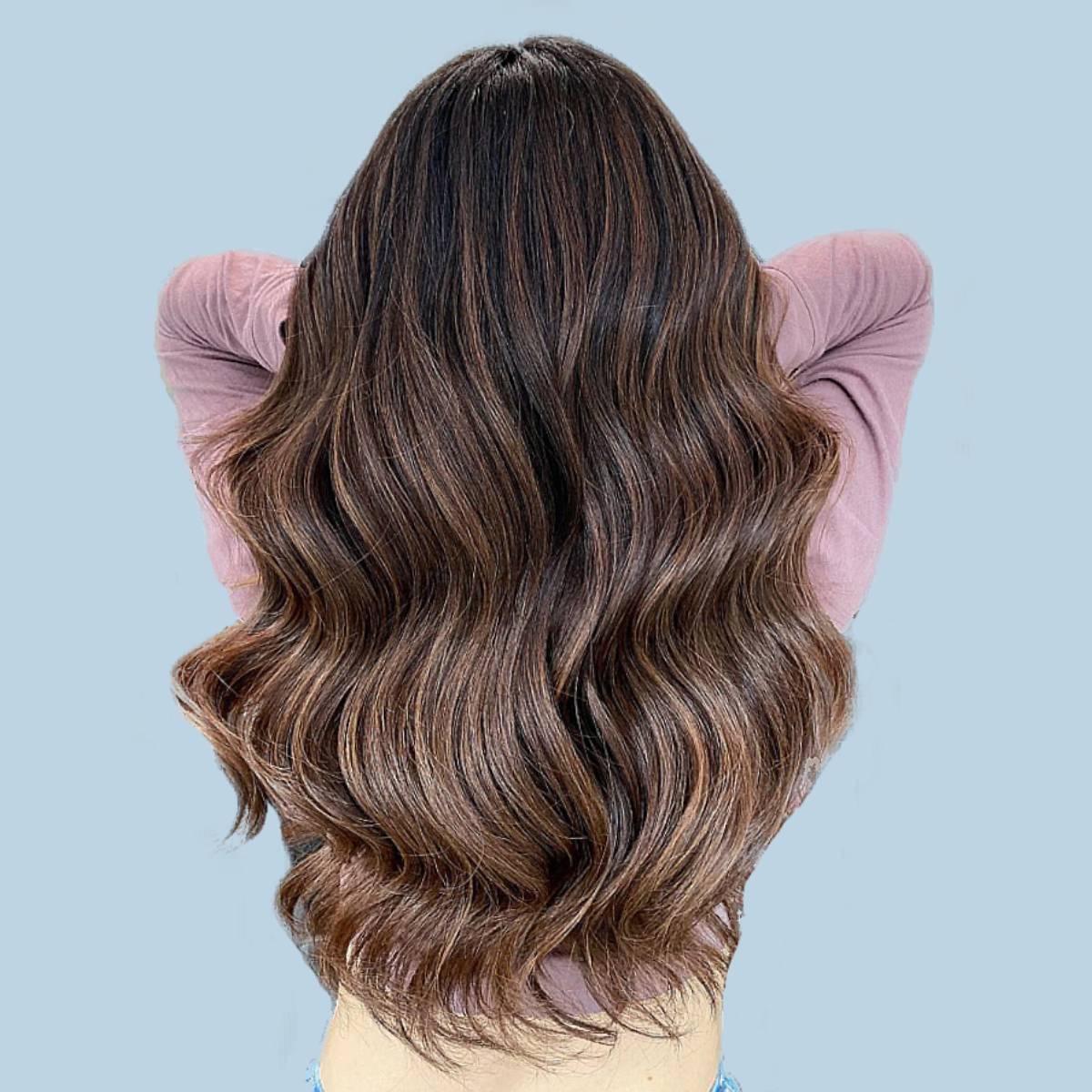
Photo credit: latest-hairstyles.com
Two tones here, but the soft caramel ombre sits close enough to the dark brown base that the transition feels gradual, not abrupt. Long layers give the thick, wavy texture room to expand without turning into a triangle shape. The middle part keeps the weight balanced, and the loose waves catch the caramel at the ends while the roots stay rich. No bangs, so the face gets a clean frame. This cut and color suit most face shapes, especially if you have thick hair that can achieve those full, loose waves. Not for anyone who prefers short hair or a very sleek, flat finish.
Striking blonde Ombre on layered hair with wavy blowout
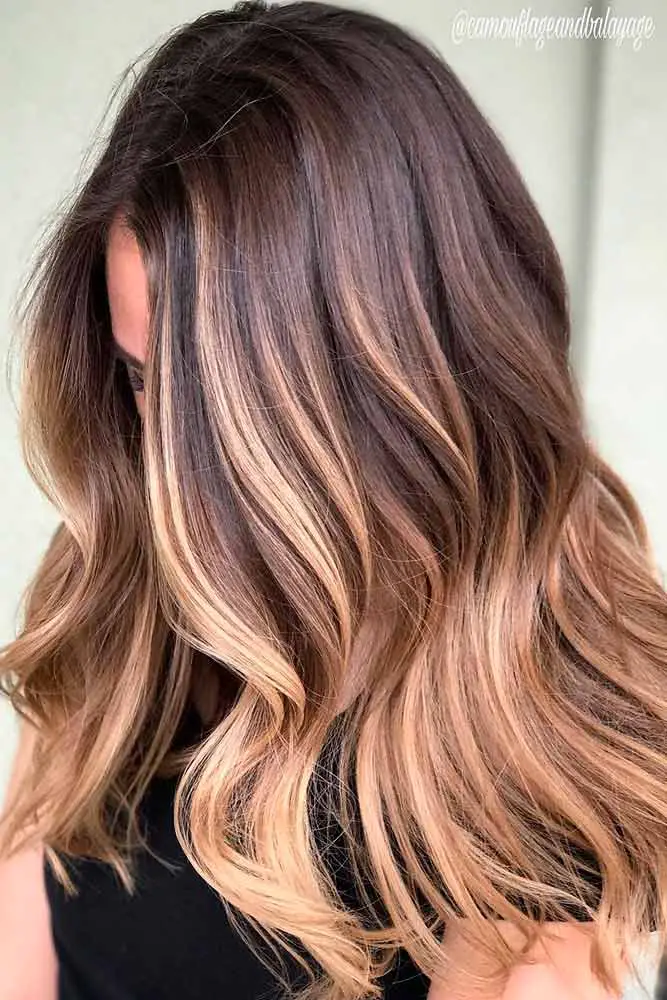
Image credit: glaminati.com
To get a sharp dark-to-light shift without a harsh line, ask for a wavy blowout with layers and a dark brown to bright blonde ombre. The middle part shows the contrast cleanly: the root stays deeply brunette, and the ends lift to a true blonde. Thick, wavy texture holds the volume of the blowout, so the ombre blends smoothly from dark to light. No bangs, just a smooth transition through the mid-lengths. It works best for those who prefer volume and wave. Straight styles or fine hair that struggles with volume may not achieve the same effect. Ask your colorist for: layers, dark brown to bright blonde ombre, wavy blowout.
Ask your colorist for: “blonde ombre, not highlights” to avoid a striped effect. A good colorist will hand-paint the lightener through the mid-lengths and ends, keeping the root untouched. The wavy blowout is a styling finish, not the cut itself. You can wear it straight, but the ombre shows more dimension with wave.
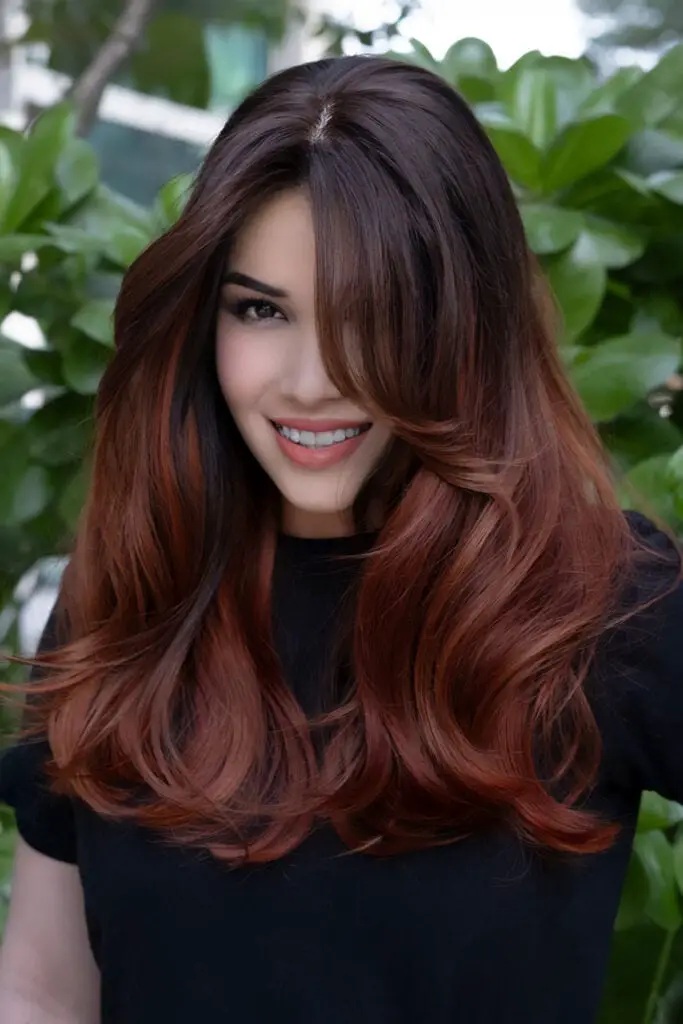
Copper Ombre on long layers with side-swept bangs
Source: glaminati.com
Side-swept bangs change the math on an ombre. They catch the copper transition at the front, so the color feels face-framing even from the middle part. Long layers keep the thick, wavy texture from getting bulky, and the soft waves let the copper settle into the ends without looking brassy. The dark brown root stays natural, while the vibrant copper emerges through the mid-lengths. It works best with bangs and wavy, layered cuts that show the color shift.
Building this tone takes two steps: a copper gloss over the pre-lightened ends and a root shadow at the top to keep the transition soft. Style the bangs with a round brush for a soft curve, and let the rest air-dry into the wave.
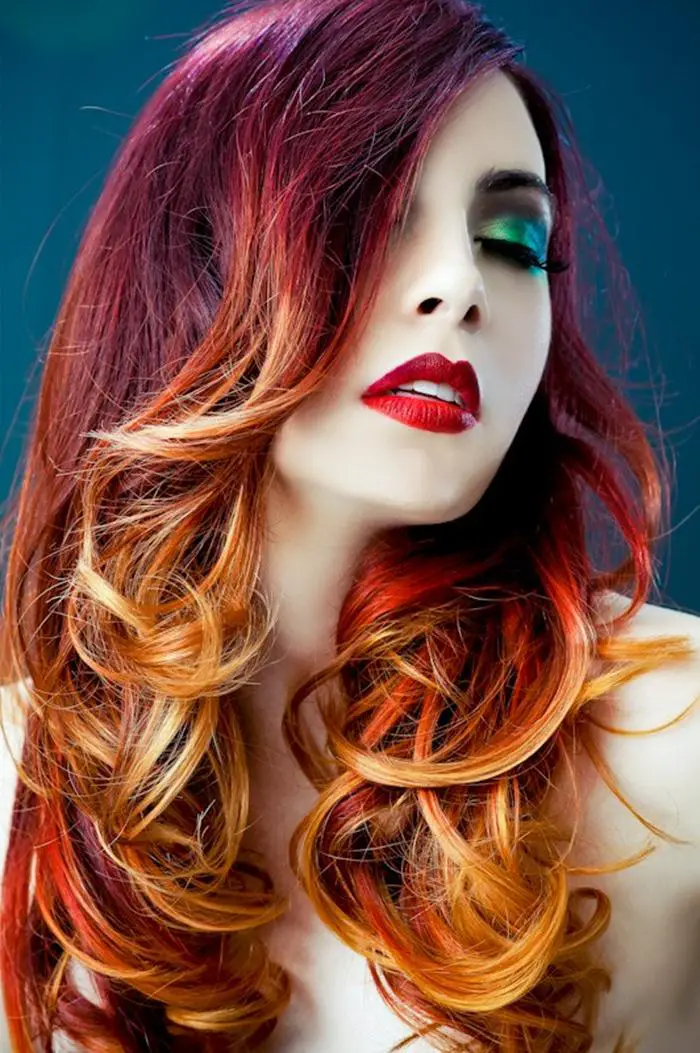
Burgundy to orange Ombre on layered hair with side-swept bangs
Source: redombrehaircare.wordpress.com
Burgundy to orange is a different animal from the caramel or copper ombre nearby. Where those stay in the warm brown family, this one jumps from a deep wine at the root to a bright, almost citrus orange at the ends. Layered hair with a side-swept bang gives the color a frame, and loose waves let the two tones mix at the transition point. The texture here is wavy and fine, so the layers add movement without weighing down the fine strands. Skip it if you prefer natural hair colors or very short styles that won’t show the full gradient. Ask your colorist for: layered haircut, burgundy to orange ombre, loose waves, side-swept bang.
Vibrant blue Ombre on layered thick wavy hair
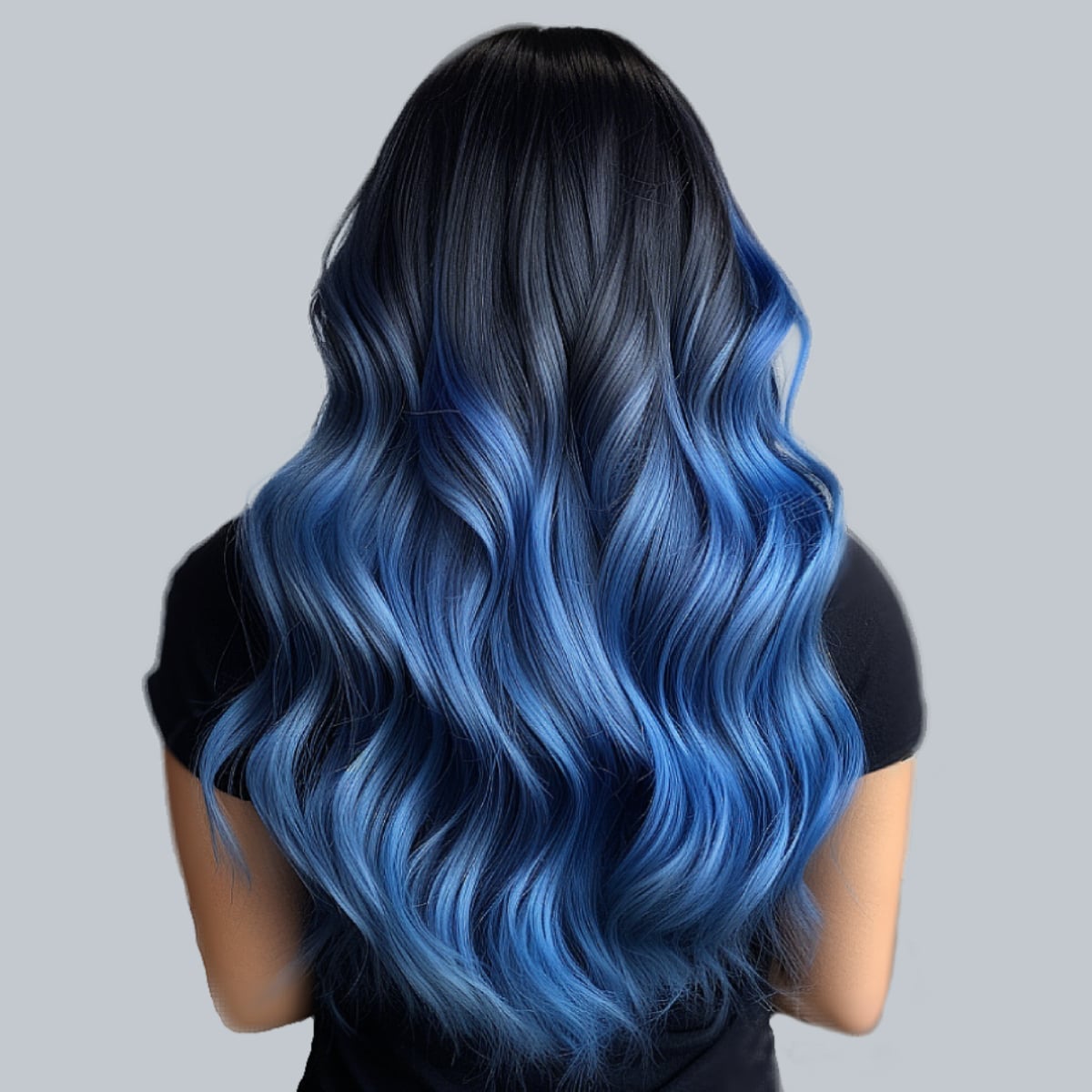
Black to blue ombre on thick, wavy hair hits differently from the back. The layers let the color show in sections rather than one flat stripe. You get movement without losing density. A wavy blowout gives the blue ends somewhere to land.
Skip it if your hair is fine. The contrast is stark and the lift required can leave strands brittle. Vibrant blue needs a color-safe shampoo and cooler water. Plan a gloss every four weeks to keep it from fading to green.
Dark gray to blue Ombre with a soft blowout
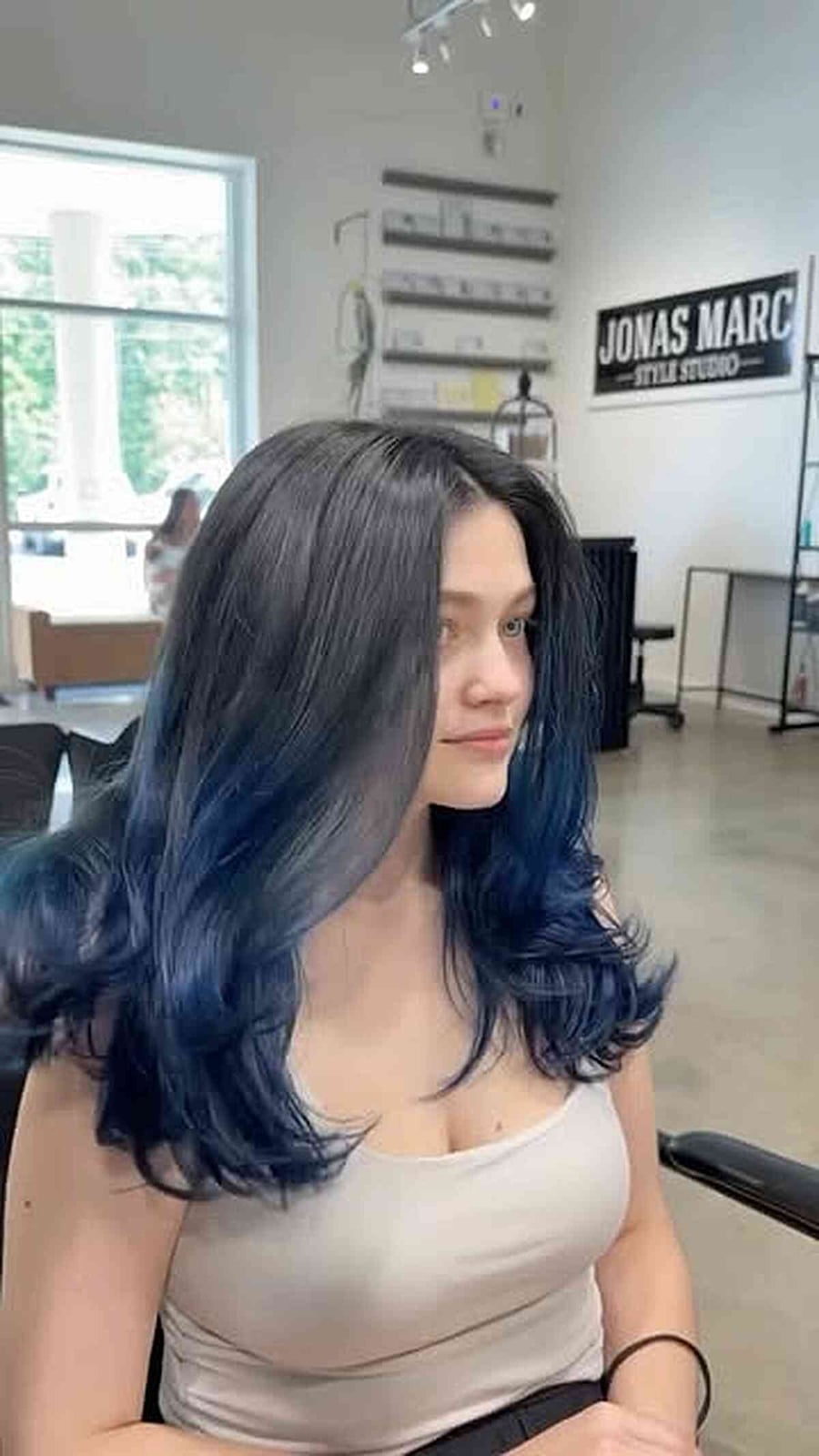
Courtesy of: latest-hairstyles.com
Two cool tones in one head. The dark gray root blends into a blue ombre through subtle layers, and the soft blowout keeps the finish neat. Middle part lets the color fall evenly on both sides.
The catch: gray and blue both fade fast. You need a toning appointment every three weeks minimum. Pass when you want a low-maintenance color. This one demands attention. A purple shampoo helps, but it is not a cure. The look works best on thick hair that can hold a smooth blowout.
Purple Ombre ends on layered hair with air-dried waves
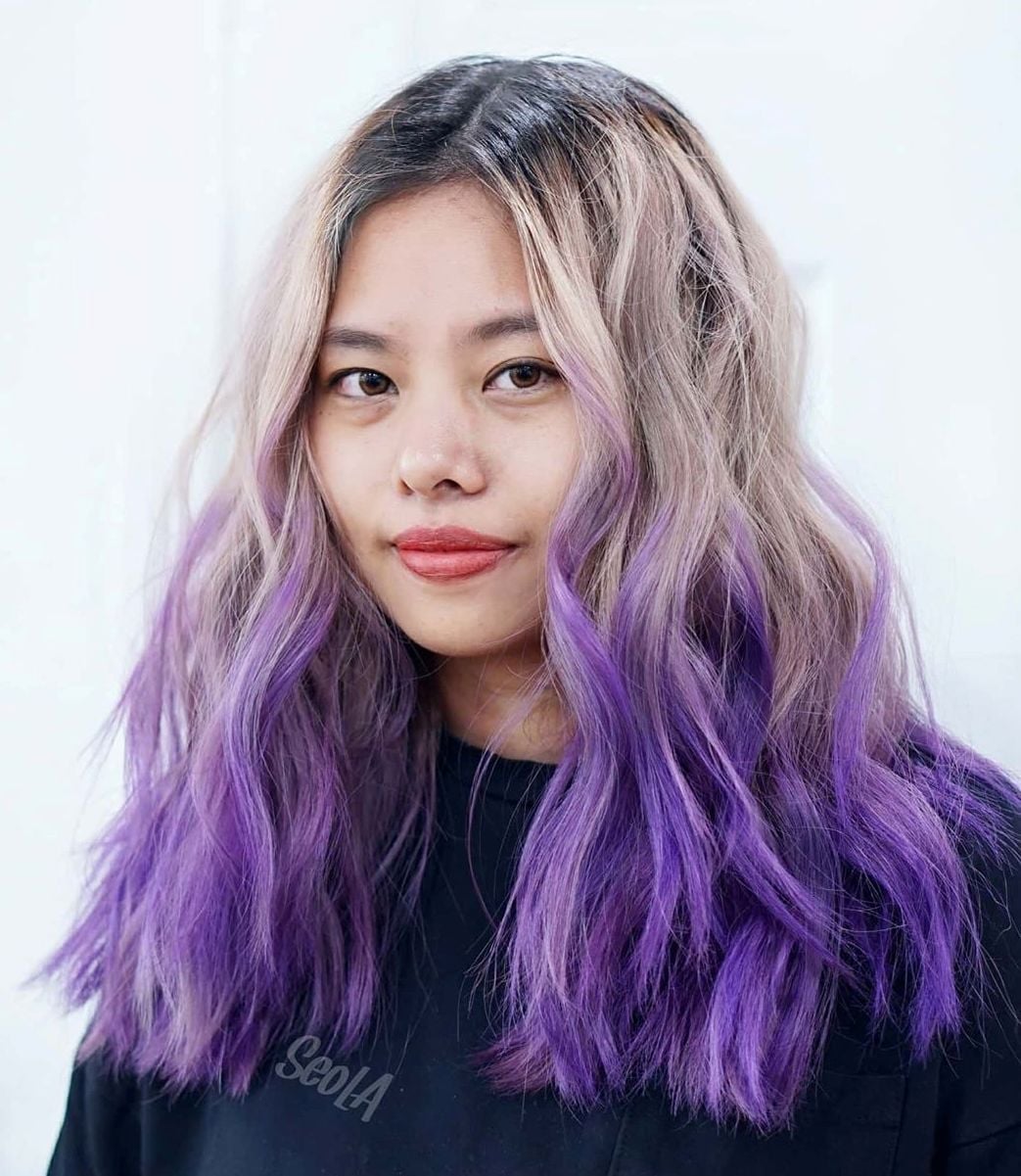
Photo credit: hadviser.com
Three stages of color in one head: dark root, blonde middle, purple ends. The layers let each tone sit at a different level, and the air-dried wave pattern keeps it from looking overworked. Fine hair that air-dries well is the ideal candidate. Skip it if you prefer all-over color or a sleek finish, the ombre relies on the texture to blend the purple ends into the blonde. A middle part shows the transition clearly. This is a salon-leaning look that asks for a skilled hand.
Bright yellow Ombre on layered hair with wavy blowout
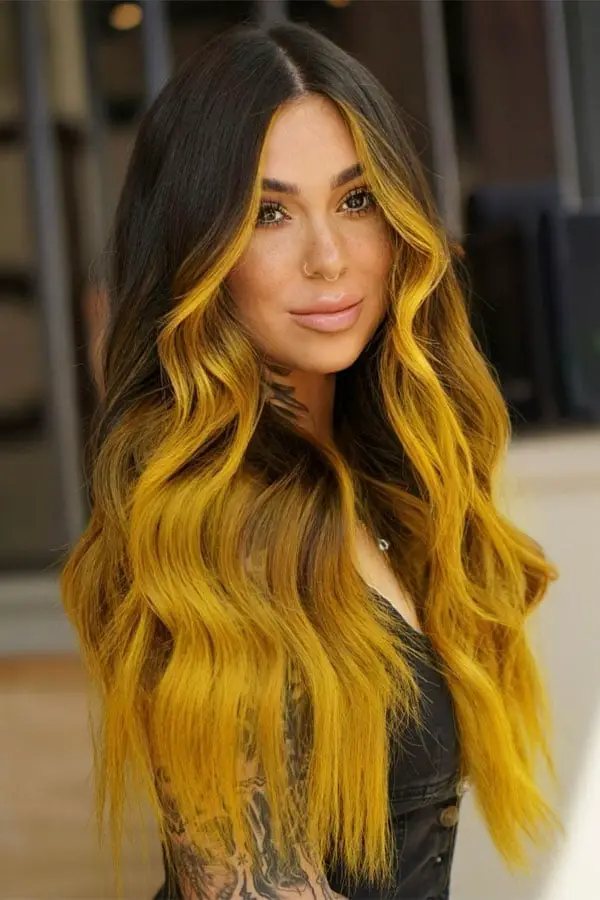
Image credit: itakeyou.co.uk
Here is the rule: yellow ends need a clean blonde base underneath. The dark brown root keeps it grounded; the layers break up the yellow so it does not look a single block. Book it as: layers, dark brown to bright yellow ombre, loose waves. The wavy blowout adds volume and softens the contrast. Fine hair works well here because the waves hold without extra product. A middle part keeps the color distribution even. One round of toner at week four keeps the yellow from turning brassy.
Ash blonde Ombre on layered hair with loose waves
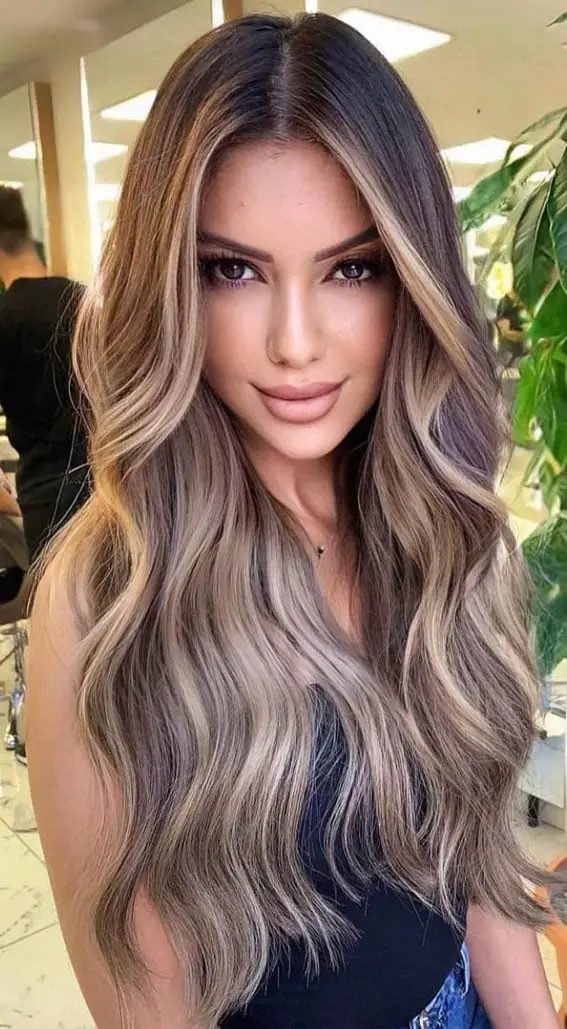
Source: fabmood.com
Dark brown roots melting into ash blonde ends through soft layers. The trick is the blending. The stylist lifts the mid-lengths just enough to create a gradient, not a line. Thick wavy hair holds the loose waves without losing the ash tone to warmth. A purple shampoo used once a week keeps the blonde from going brassy. The layers move with the waves instead of fighting them. Most face shapes can wear this, as the color placement draws the eye downward.
Dimensional blonde balayage on layered wavy hair
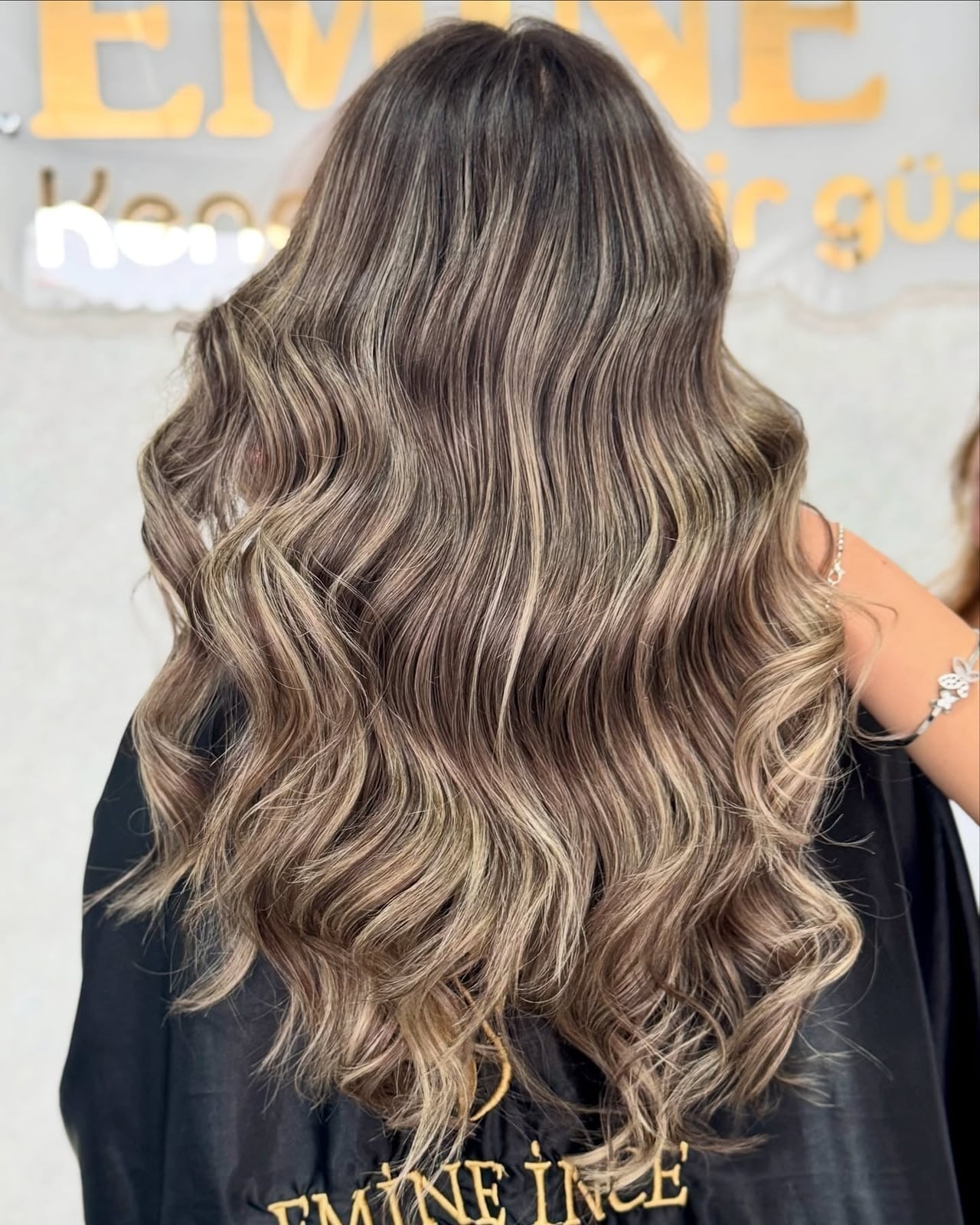
Balayage and ombre get confused at the shampoo bowl. Ombre announces the transition; balayage lets it breathe. This version starts dark brown at the roots and fades into a lighter blonde through thick, wavy layers. No harsh line, just a soft gradient that moves with the wave pattern. The back view shows the real work: the color is painted in a way that wraps around the shape, not just sitting on the ends. A defined color line or a blunt cut is a different look. Ask your stylist for: layers, dark brown to blonde balayage, waves. The texture needs a wavy blowout to show the dimension, so plan on styling time.
Air-dried layers with dark brown to blonde Ombre
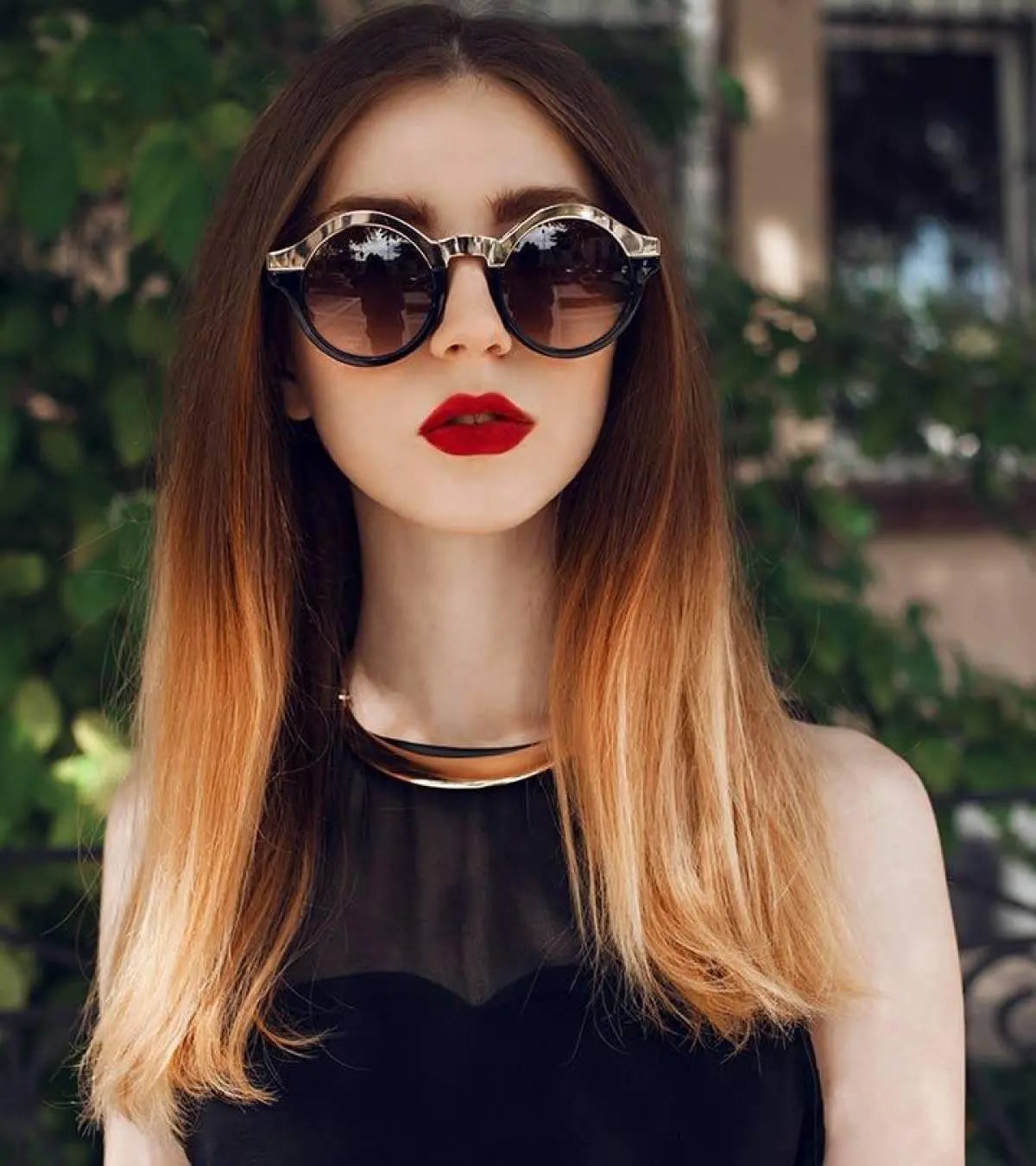
Courtesy of: stylecraze.com
Fine, straight hair and an air-dried finish sound like a low-stakes combination. The ombre here moves from dark brown roots to a blonde that lands mostly on the ends, so the color takes the visual weight where the texture won’t. The middle part keeps the shape tidy, and the layers stop the ombre from looking like a single block of color. Stick to a smoothing serum at the ends to keep the line clean.
The catch: this look needs regular toning. The blonde ends on fine hair pick up warmth fast, and brassiness ruins the whole casual effect. Skip it if you want zero maintenance between salon visits.
Layered hair styled in air-dried waves
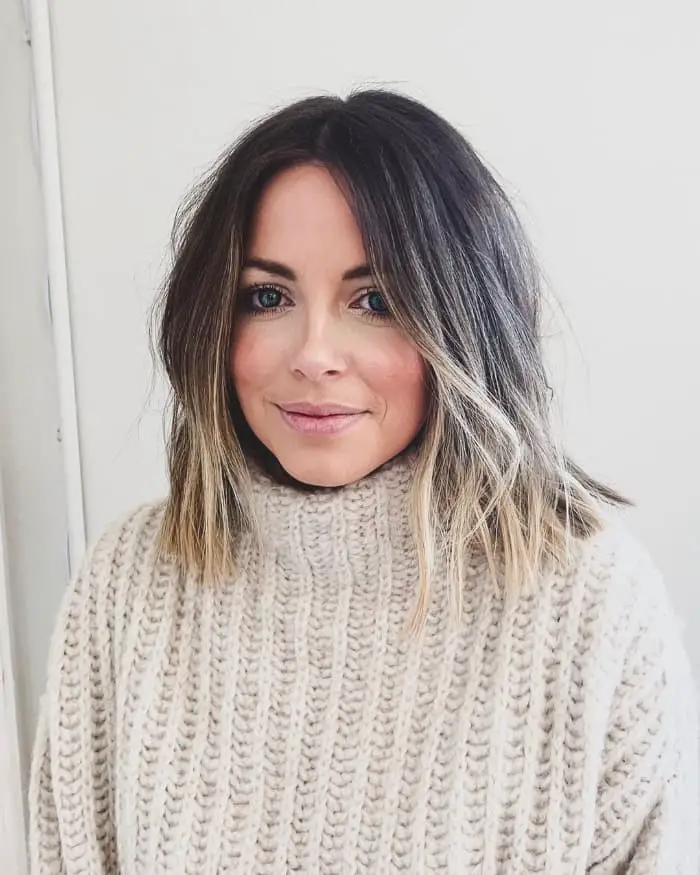
Photo credit: hairstyleonpoint.com
Air-dried waves on fine hair come with a trade-off: they look natural until they don’t. The layers here are cut to encourage a wave pattern, and the dark brown to blonde ombre adds contrast that makes the texture look deliberate. The middle part helps the waves fall evenly on both sides. One real drawback: the fine texture can’t hold the wave shape past mid-afternoon without a product assist. A sea salt spray on damp hair gives the grip, but the volume will settle.
It works best for someone who doesn’t mind refreshing the wave shape during the day. Ask your stylist for: layers, dark brown to blonde ombre, air-dried waves. The layers need a refresh every eight weeks or the shape goes flat.
Smooth dark blonde to light blonde Ombre with subtle layers
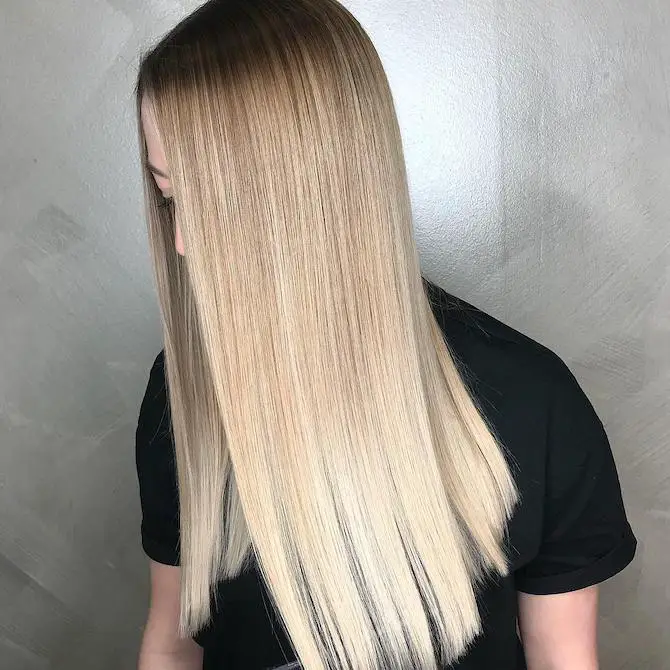
Image credit: au.wella.professionalstore.com
Fine hair that lies straight benefits from a color transition that follows the same clean line. This ombre moves from dark blonde at the roots to a light blonde at the ends, and the subtle layers are cut to keep the shape smooth. The side view shows how the color graduation works without a heavy root line. Straight styles make the ombre more obvious, so the transition needs to be blended carefully.
This straight finish requires a commitment to flat ironing. If your hair has natural wave, you will need to heat style every morning to maintain the look.
Wavy bob with face-framing blonde pieces and Ombre
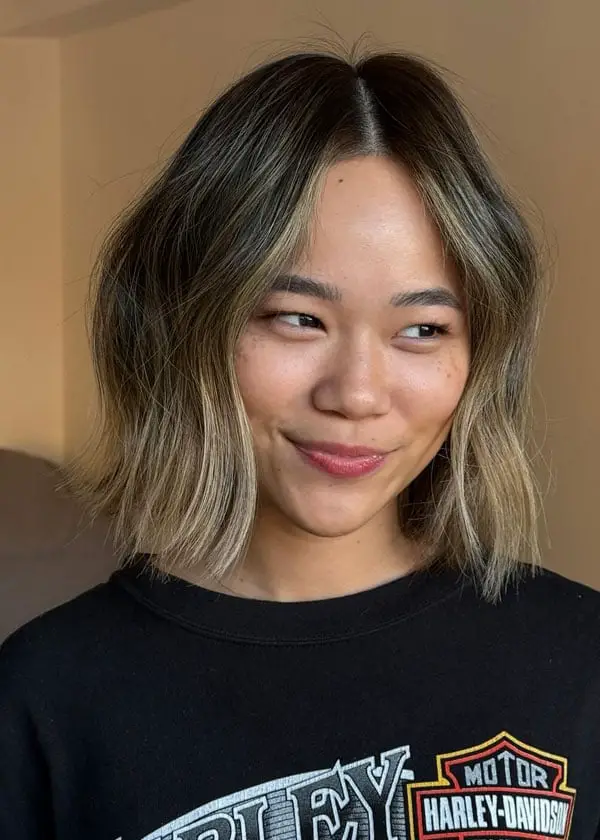
Via fabmood.com
A bob with ombre is a common request, but the face-framing pieces change the math. The color moves from dark brown roots to a bright blonde at the ends, and the pieces around the face are lightened to stand out. The middle part lets those pieces sit where they show most. This works best on fine hair that holds a soft wave without a curling iron. Ask your colorist for: bob, dark brown to bright blonde ombre, face-framing pieces.
This look is best for someone who wants a noticeable blonde shift. The face-framing sections need their own foiling time, and the ombre ends require a toning appointment every six weeks.
Angled bob with smooth dark brown to blonde Ombre
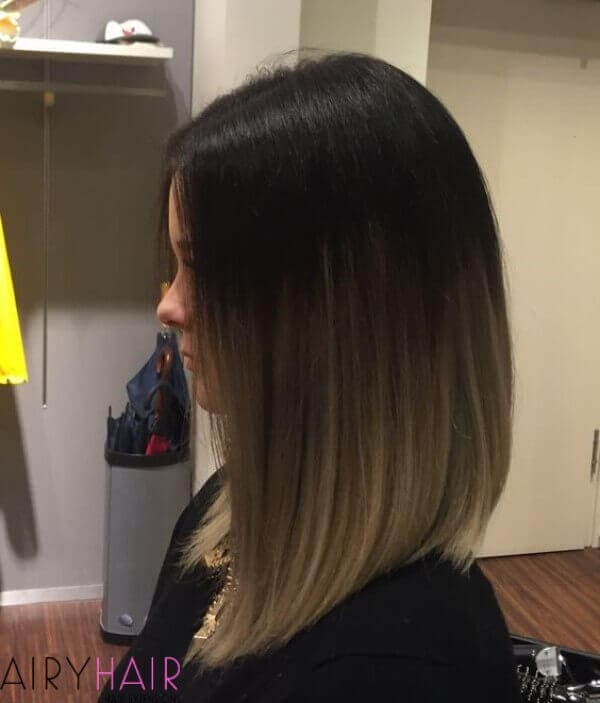
Courtesy of: airyhair.com
An angled bob relies on one hard rule: the front should be long enough to graze the jaw, the back short enough to stay off the neck. Fine, straight hair air-dries into that precise shape without fighting it. A middle part keeps the line clean and lets the dark brown to blonde ombre appear as a single gradient. No bangs here. The angle already does the framing. It works best for fine, straight hair, not thick hair or waves.
Bob with dark brown to bright blonde Ombre
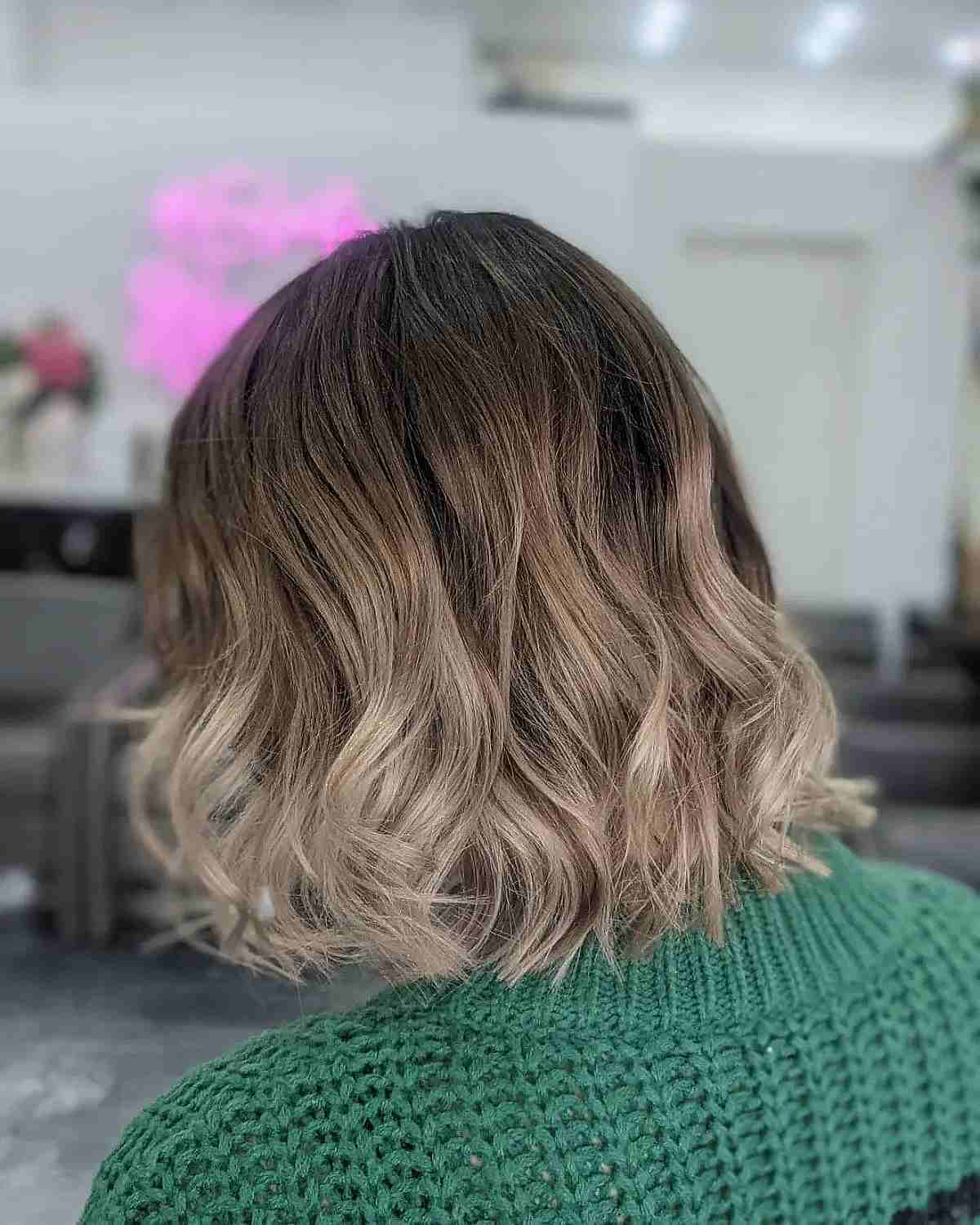
Photo credit: latest-hairstyles.com
A blunt bob lands with a solid wall of color, while a soft-waved bob lets the dark brown to bright blonde ombre breathe. That is the difference. This version uses a centered parting and fine, wavy texture to break the transition into smaller shifts of light. The bob itself is classic, chin-length, no bangs, but the waves keep it from looking severe. Suits most face shapes, though thicker hair may need texturizing to keep the wave from turning into a puff. A texturizing spray on damp hair, then a quick diffuser pass, and you are done.
Blunt bob with face-framing blonde pieces and Ombre and air dried
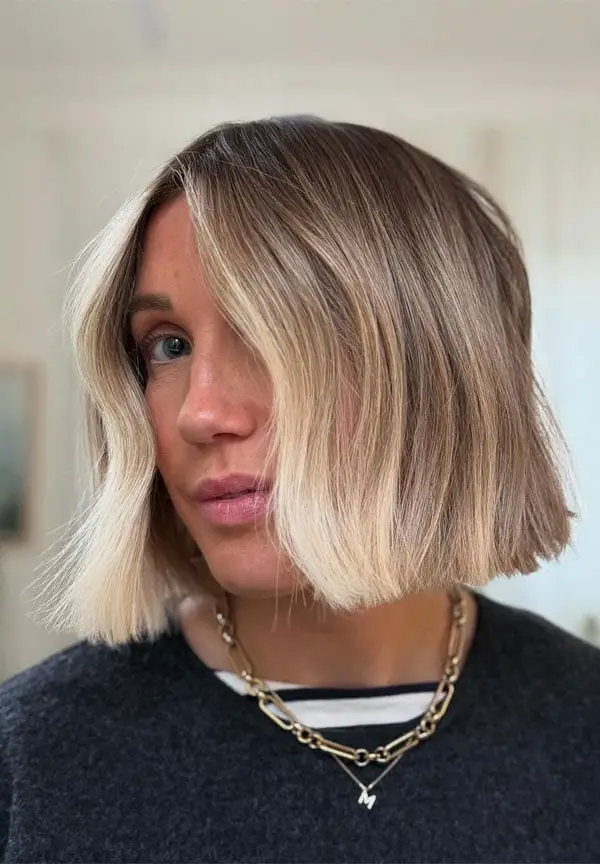
Image credit: fabmood.com
An air-dried blunt bob is a commitment to the line. With face-framing blonde pieces that lighten toward the ends and a middle part, the cut relies on precision rather than volume. Fine, wavy hair settles into this shape with minimal effort. A smoothing serum on damp strands keeps the dark blonde to light blonde ombre looking intentional rather than faded.
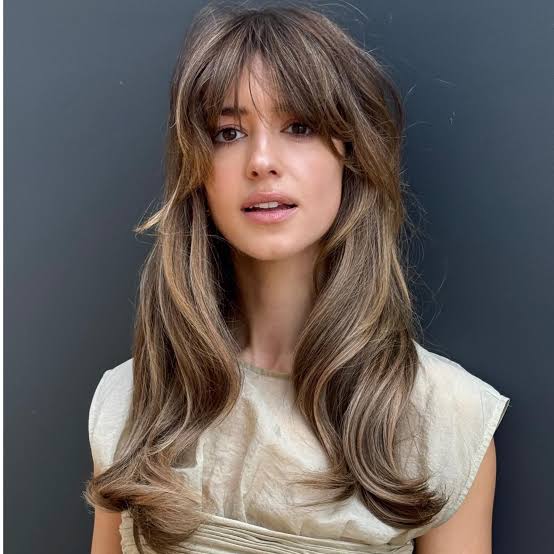
Curtain bangs and face-framing layers with dark blonde balayage
Source: byrdie.com
Curtain bangs ask for one thing: patience. They need to be long enough to sweep to the sides, which means a few weeks of awkward in-between before they behave. Thick, wavy hair is the ideal partner here. The weight holds the curtain shape and the texture keeps the dark blonde balayage from looking flat. Long layers through the rest of the hair let the waves stack naturally. The middle part and air-dried finish keep the whole thing low-key. Not for anyone who wants a blunt, uniform line or cannot tolerate hair touching their forehead.
Tell your colorist: long layers, curtain bangs, dark blonde balayage.
Wavy thick hair with dark blonde to light blonde Ombre
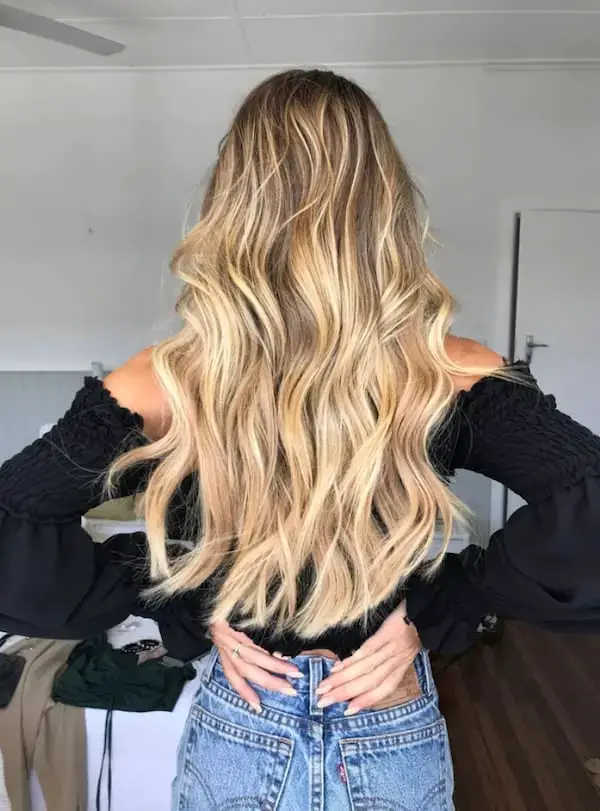
Thick, wavy hair takes the dark blonde to light blonde ombre and gives it volume by default. The layers here are subtle, enough to remove bulk, not enough to disrupt the wave pattern. A centered parting and air-dried styling keep the texture natural. This length works for most face shapes because the waves add width at the sides, balancing a longer face. The color transition sits in the lower half, so the roots stay low-maintenance. Skip it if you prefer a blunt, one-length cut or have fine hair that may not hold the wave shape.
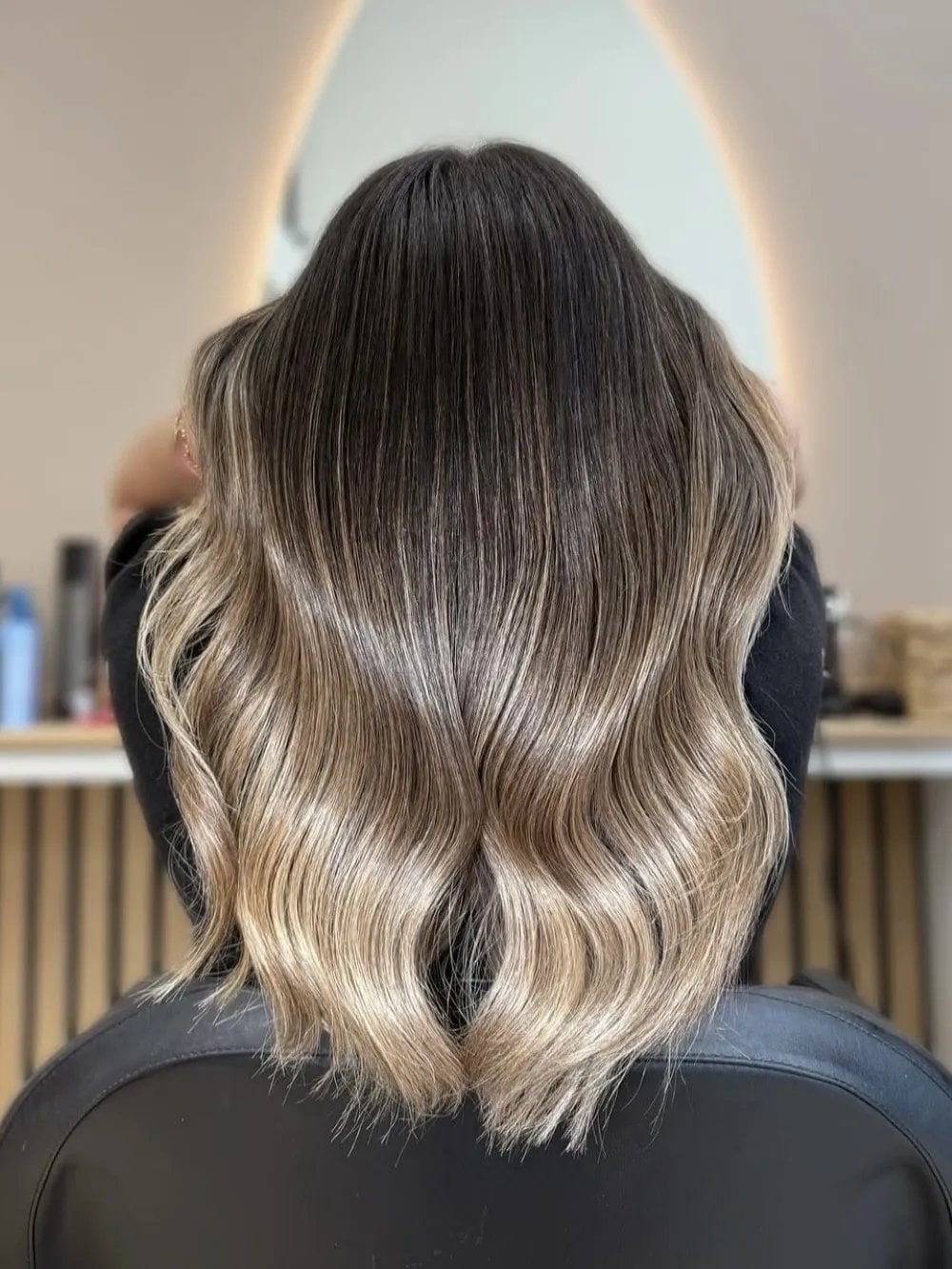
Long layered hair with dark brown to blonde Ombre, office-safe version
Courtesy of: wella.com
Office-safe ombre means the root stays dark and the light hits below the shoulder. This long layered cut keeps the dark brown base intact through most of the length. The blonde comes in gradually, so the transition looks a natural lightening rather than a dramatic dip. Thick wavy hair works best here. The blowout needs density to hold flowing waves without collapsing. No bangs, which keeps the face-framing clean and professional. Ask your stylist for: long layers, dark brown to blonde ombre, soft blowout. A large barrel curling iron sets the ends into flowing waves that last through a workday. Layers need trimming every eight to ten weeks to keep the ombre line moving naturally.
Blonde to black Ombre on long layered wavy hair
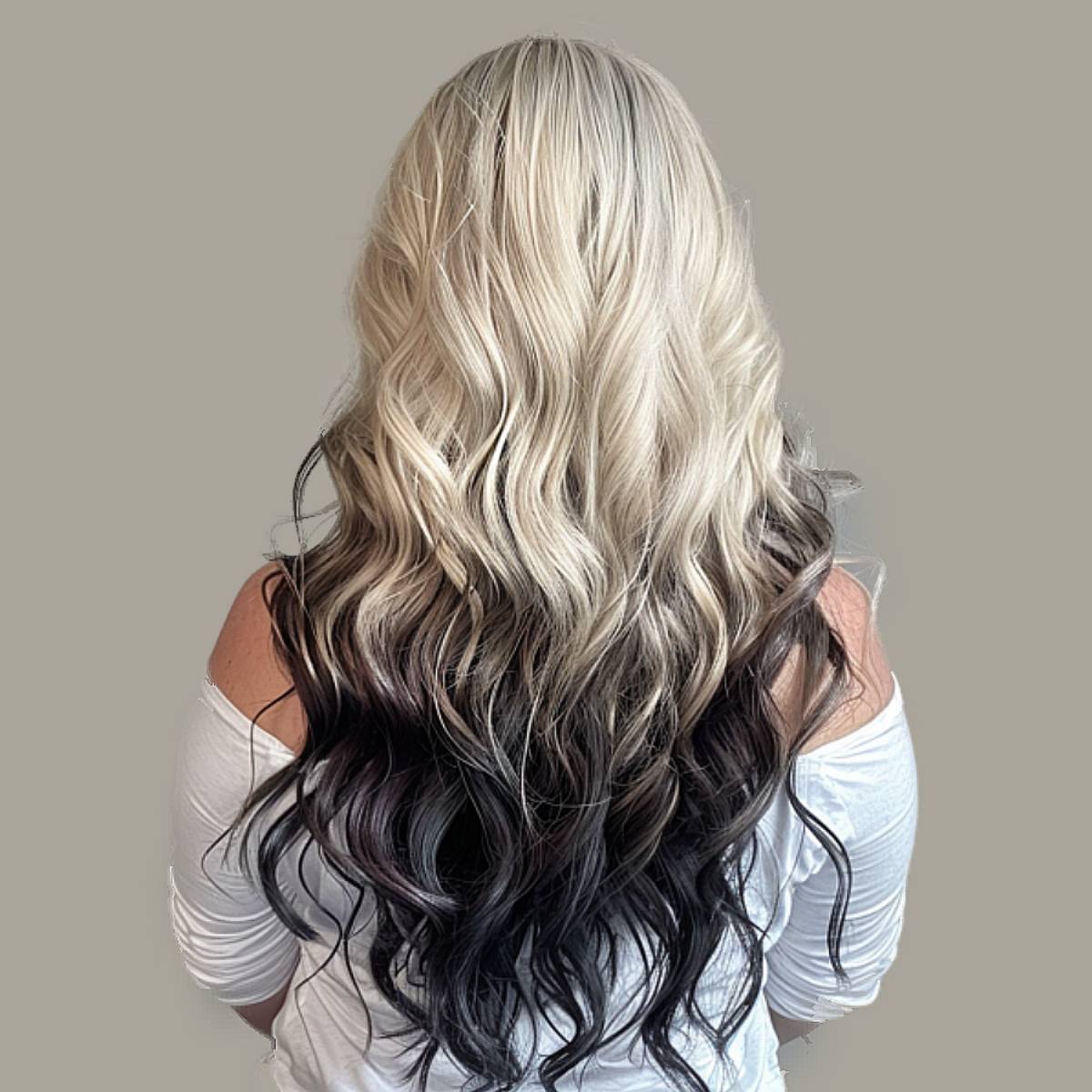
Photo credit: latest-hairstyles.com
This is a full reversal of the usual ombre formula. The top starts bright blonde, and the color deepens to black at the ends. Long layers cut into thick wavy hair give the transition room to breathe. The middle part splits the blonde evenly, so the dark ends frame both sides. No bangs, the length and the parting do the work. The technique requires a precise hand at the mid-lengths to avoid a muddy band. A wavy blowout with a medium barrel keeps the contrast sharp. The result is dramatic but the upkeep is straightforward: touch up the blonde root every six weeks.
Black to silver Ombre waves for a voluminous look
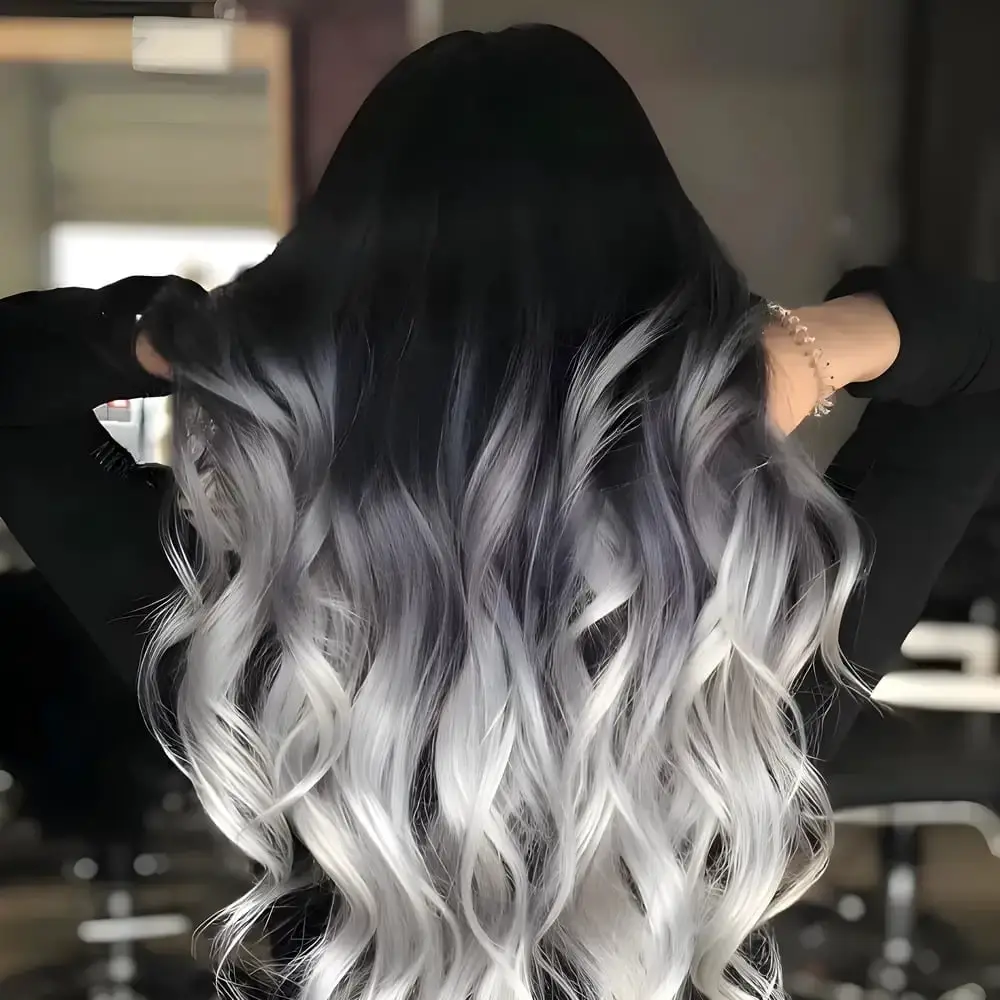
Image credit: larisasalon.com
Silver ombre versus vibrant tones is a question of commitment. Vivid colors fade fast and stain everything. Silver fades cooler and blends with regrowth. This version starts black and graduates to silver through the layers. Thick wavy hair holds the voluminous shape without extra product. The layers are cut to stack volume at the mid-lengths, not just the ends. No bangs, the wave pattern needs uninterrupted length to look full. Ask your stylist for: black to silver ombre, layers, voluminous waves. The catch: silver needs toning every four weeks to stay cool. Skip it if you prefer warm tones or a wash-and-go routine that skips the blow dryer. The volume comes from the cut and a round brush, not from heat alone.
Teal to black Ombre lob with loose curls
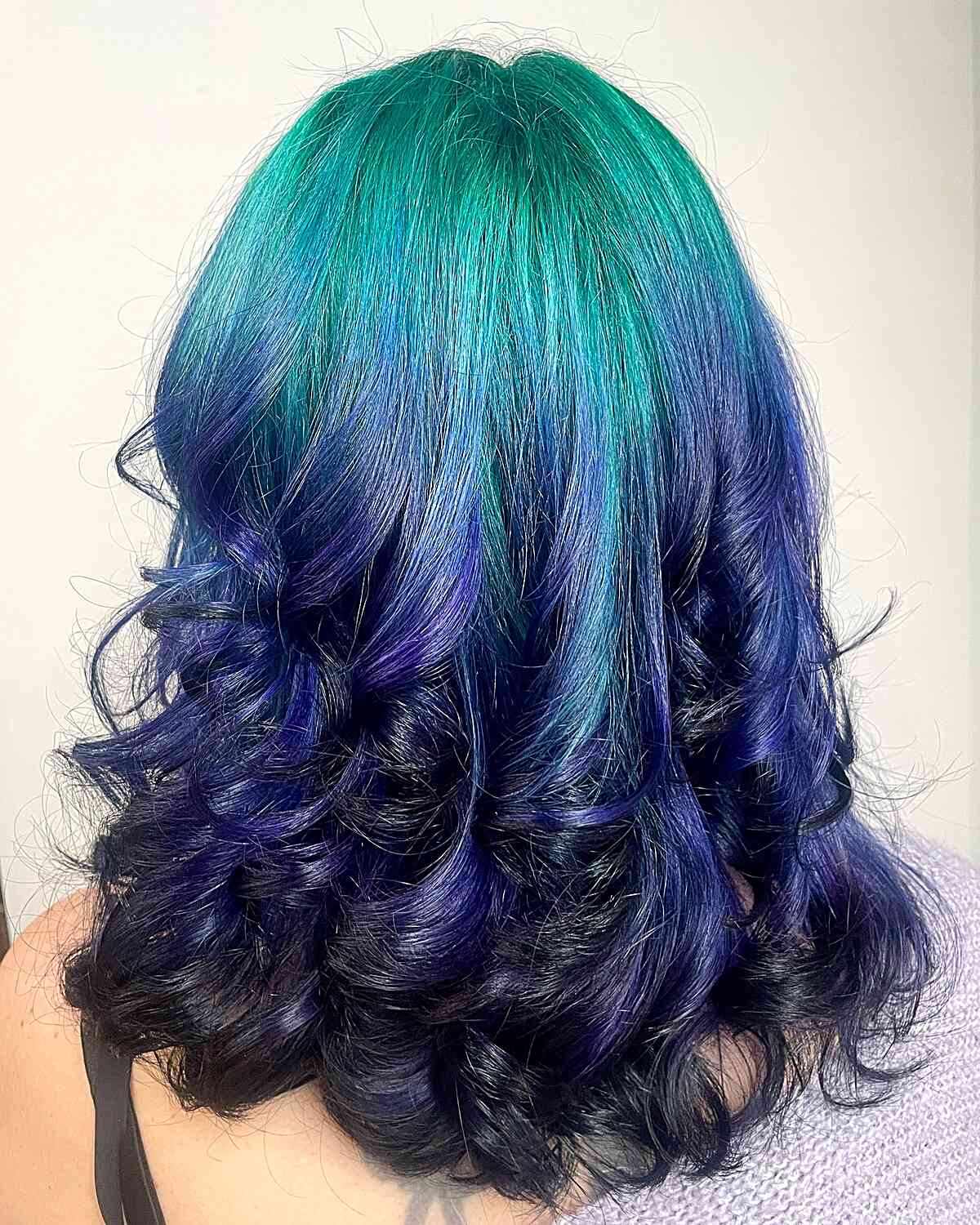
Source: latest-hairstyles.com
A lob with a multi-tonal ombre is a bold choice that asks for regular attention. This one runs teal at the roots through blue and purple into black at the ends. The centered part shows off every shift. Loose curls on thick wavy hair keep the color bands from looking striped. No bangs means the color gradient reads uninterrupted from root to tip. A curl-defining cream and a diffuser set the shape without frizz. The lob needs trimming every six to eight weeks to keep the ends blunt. The color holds about four to six weeks before the teal starts to wash out, a color-depositing conditioner stretches the time between salon visits.
Final Thoughts
Your ombre choice comes down to how your hair lives day to day, not how it photographs at the salon mirror.
- Fine or thin hair: a subtle ombre on a blunt cut keeps ends looking dense.
- Thick or coarse hair: longer layers let the color gradient breathe without bulk.
- Low-maintenance plan: a soft root melt buys you eight to ten weeks between touch-ups.
- Cool base that pulls brassy: a toner every eight weeks keeps the ends from turning yellow.
Find the perfect ombre to complement your style.
Hairstyle
25 Pretty Jellyfish Haircut 2027 Ideas for a Bold Look
Pretty Jellyfish Haircut 2027 offers 25 unique takes, blending a blunt top with shag or layered styles. See the looks and save your favorite.
You know the moment: the grow-out line at your nape is past awkward, and that saved photo of a stacked bob with a blunt fringe keeps looking better. The jellyfish cut solves exactly that, a sharp top layer that hides the transition and a longer bottom that moves like you just left the chair.
Pretty Jellyfish Haircut 2027 fills so many saved boards because it works on everything from fine, straight strands to thick, wavy texture. 25 versions run the gamut from air-dried shags to precision mullets, so you can pick the shape that matches your morning routine. No two look the same, which is the point.
Dark brown wavy shag with curtain bangs and distinct layers
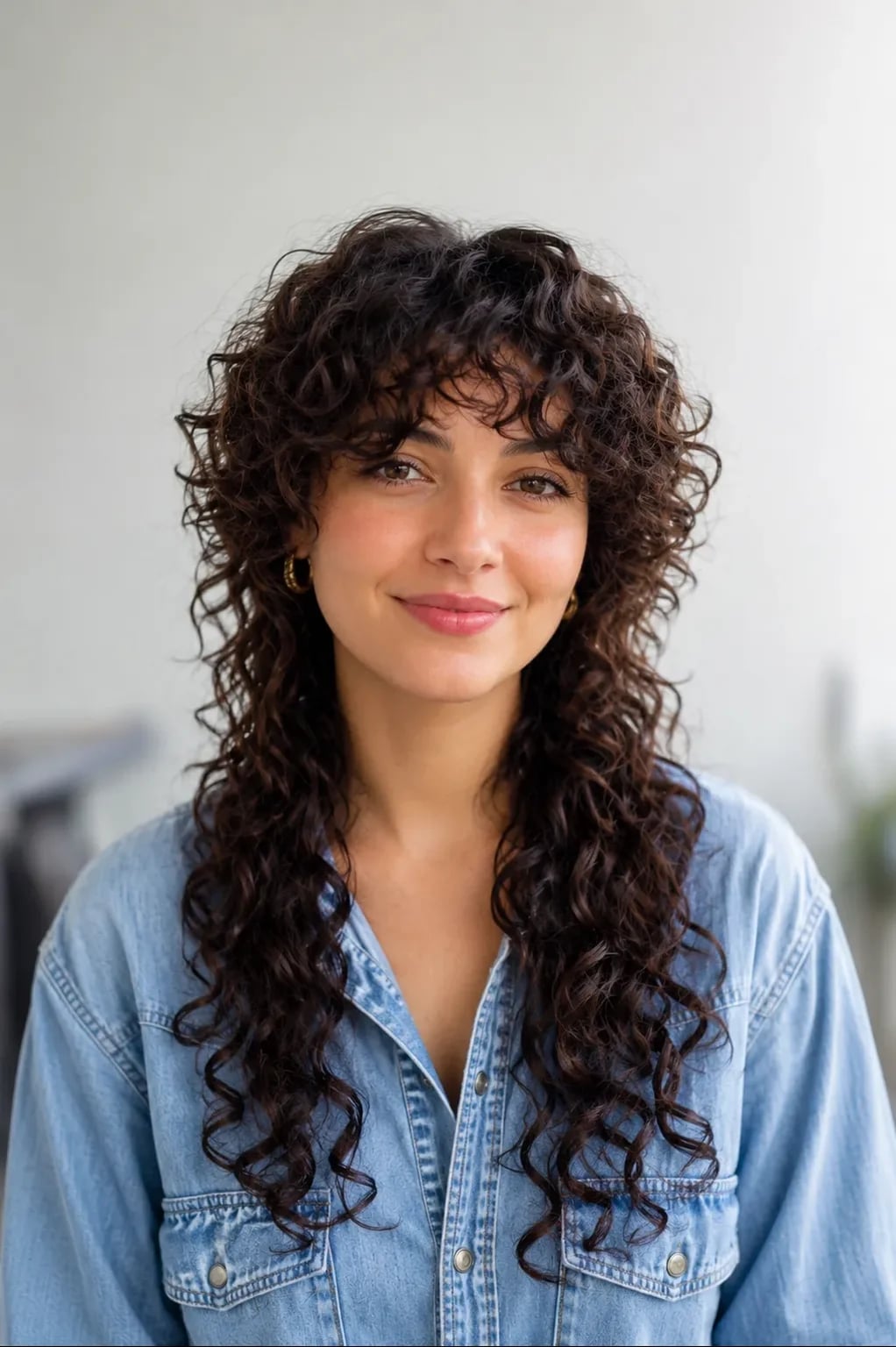
Courtesy of: dailyhairinspo.com
This shag cut carves distinct layers that sit short on top while the bottom section drops longer, and the thick, wavy texture keeps each tier visible rather than blending into one. Curtain bangs open around the face, which softens round and heart shapes without hiding the cut. This shape needs volume to hold its structure. Ask your tech for: a shag cut with distinct layers and curtain bangs finished air dried. A trim every six to eight weeks keeps the contrast sharp.
Rounded mushroom cap top layer on straight fine hair
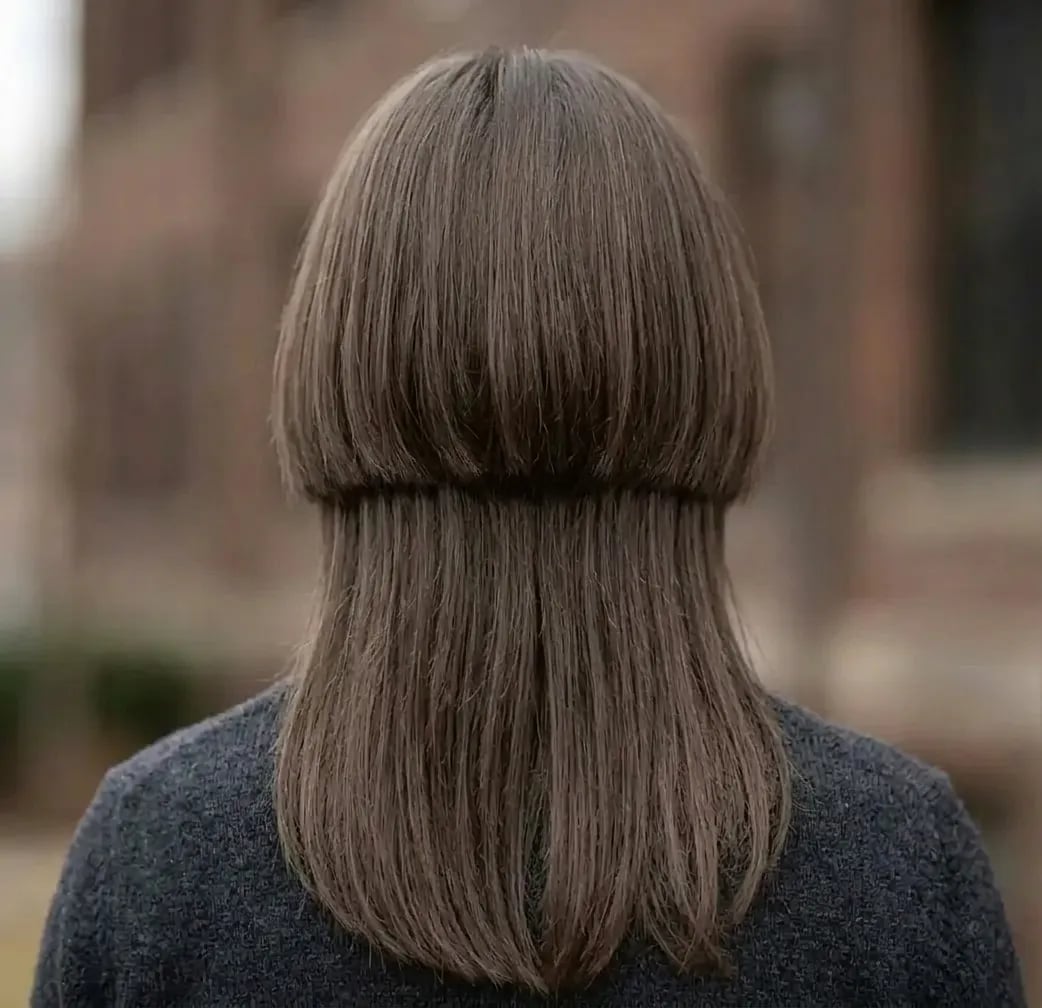
Photo credit: cutgen.ai
Where the shag relies on separation, this one works because of the opposite effect. A rounded, blunt top layer sits like a cap over longer straight hair underneath, and the two distinct halves stay separate instead of blending. No bangs here, which lets the mushroom shape read clearly from the back. The catch: fine, straight hair holds this contrast best, while thick or coily textures fight the smooth line. Trim the blunt ends every six weeks to keep the line from feathering.
Choppy micro bangs and wet look on a straight fine mullet
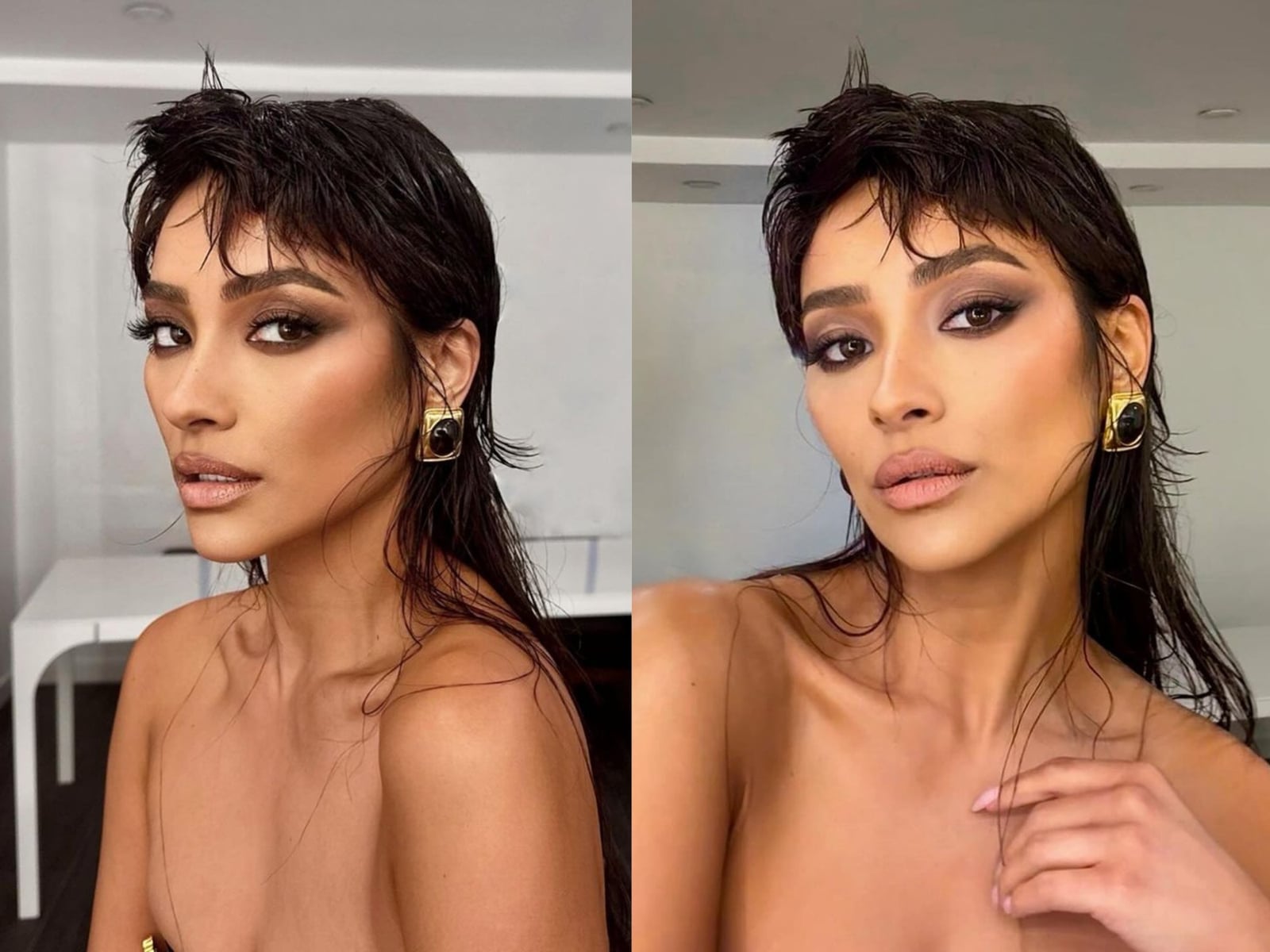
Image credit: marieclaire.com
To get a shape this precise without losing the edge, choppy micro bangs cut straight across sit above the brow, and the mullet layers stack shorter at the crown before dropping longer behind. The wet-look styling holds every cut line visible. Nothing hides. Fine, straight hair takes the texture well. This cut needs maintenance because it does not blend or grow out gracefully. Ask your stylist for a mullet cut with choppy micro bangs and a wet-look finish.
Soft ethereal silhouette with blunt bangs and ash blonde highlights
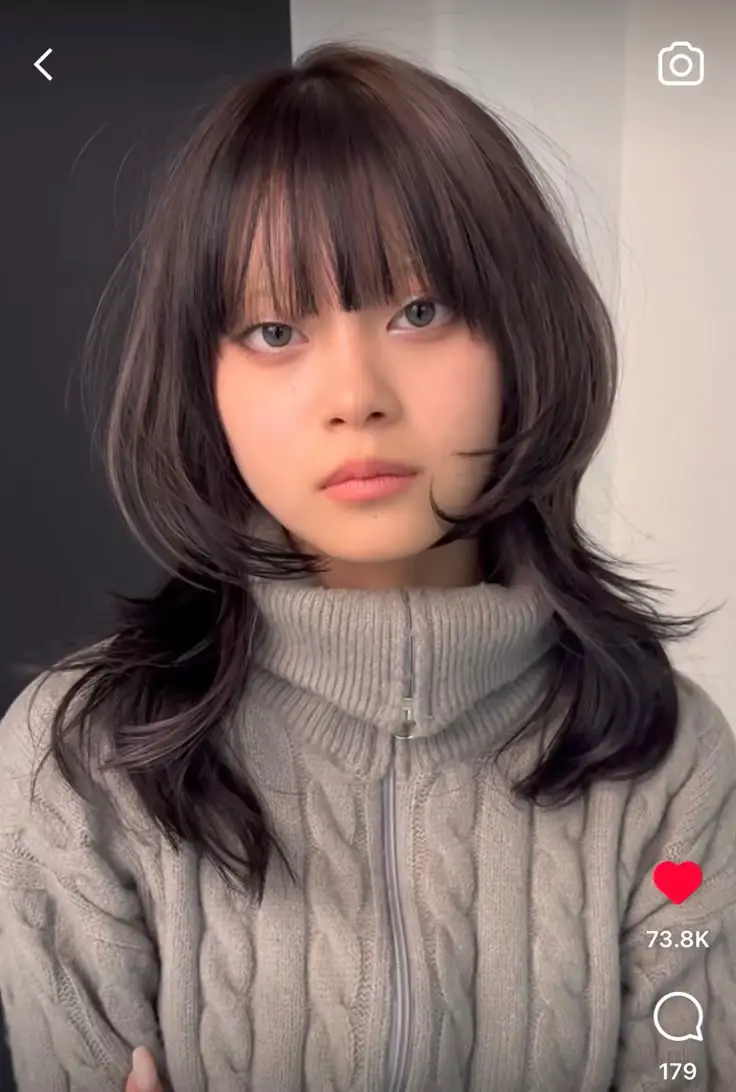
Source: hairzeno.com
Fine, wavy hair gets a softer take on the jellyfish shape here. The shag cut keeps the top shorter and the bottom longer, but the layered wispy ends blur the transition rather than making it abrupt. Blunt bangs hit just below the brow, and subtle ash blonde highlights lift the dark brown base without full commitment. Fine hair actually holds this wispy texture better than thick hair would. Pass when you prefer solid color or very straight ends, because the wispy layers need wave to land right.
Bold futuristic element with blunt micro bangs and sleek straight
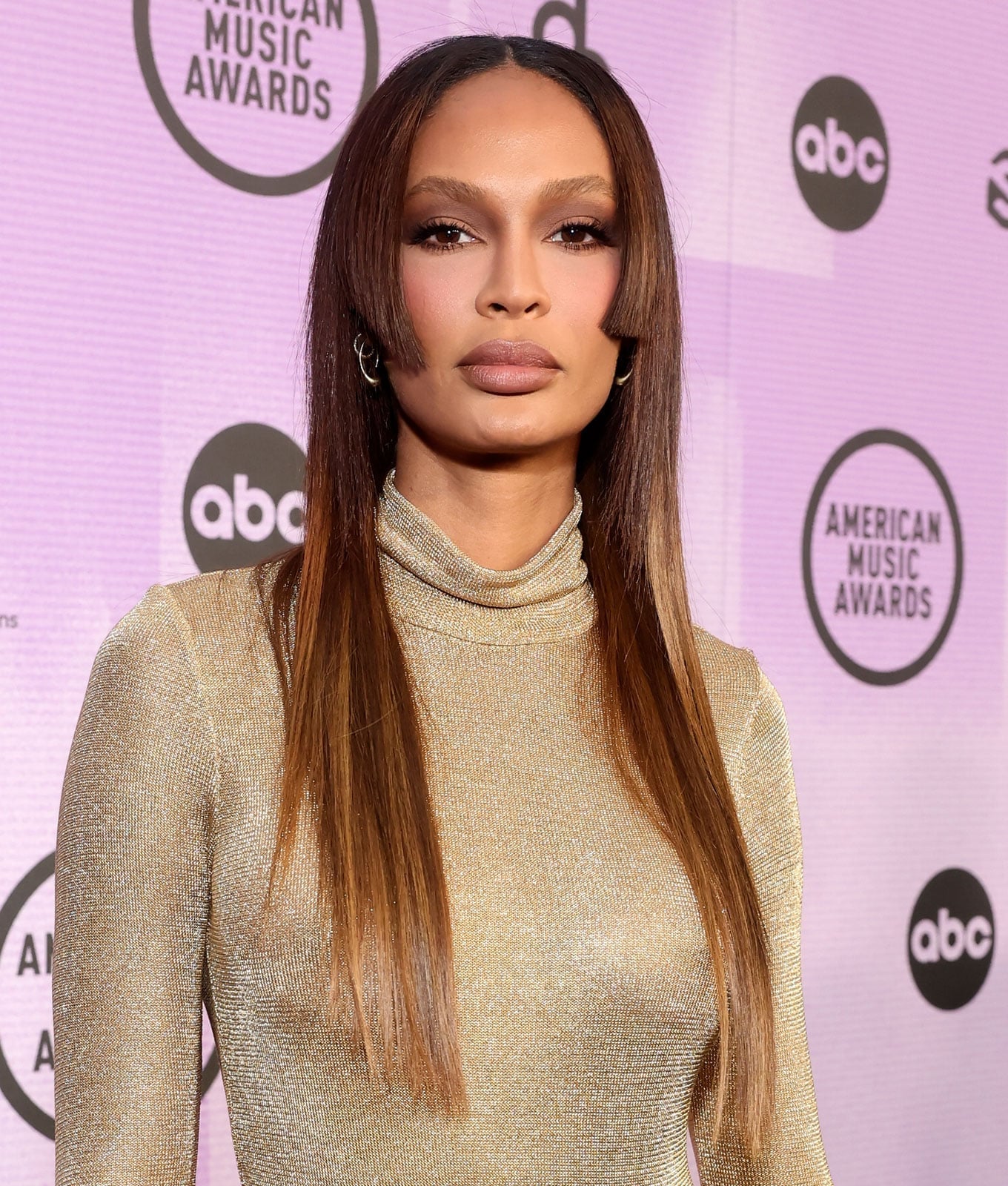
Via purewow.com
Blunt micro bangs cut above the brow change the whole proportion of long layers. The middle part pulls the eye straight down, and the sleek, straight finish on fine hair makes the auburn highlights look a subtle shift rather than a stripe. Long layers keep movement through the length without breaking the smooth surface. Oval and heart face shapes take the micro bangs best. Not for anyone with strong natural curl or a preference for air-dried texture, because this shape relies on a flat, neat line. Tell your stylist to cut long straight layers with blunt micro bangs and a sleek finish.
Honey blonde voluminous blowout with face-framing layers
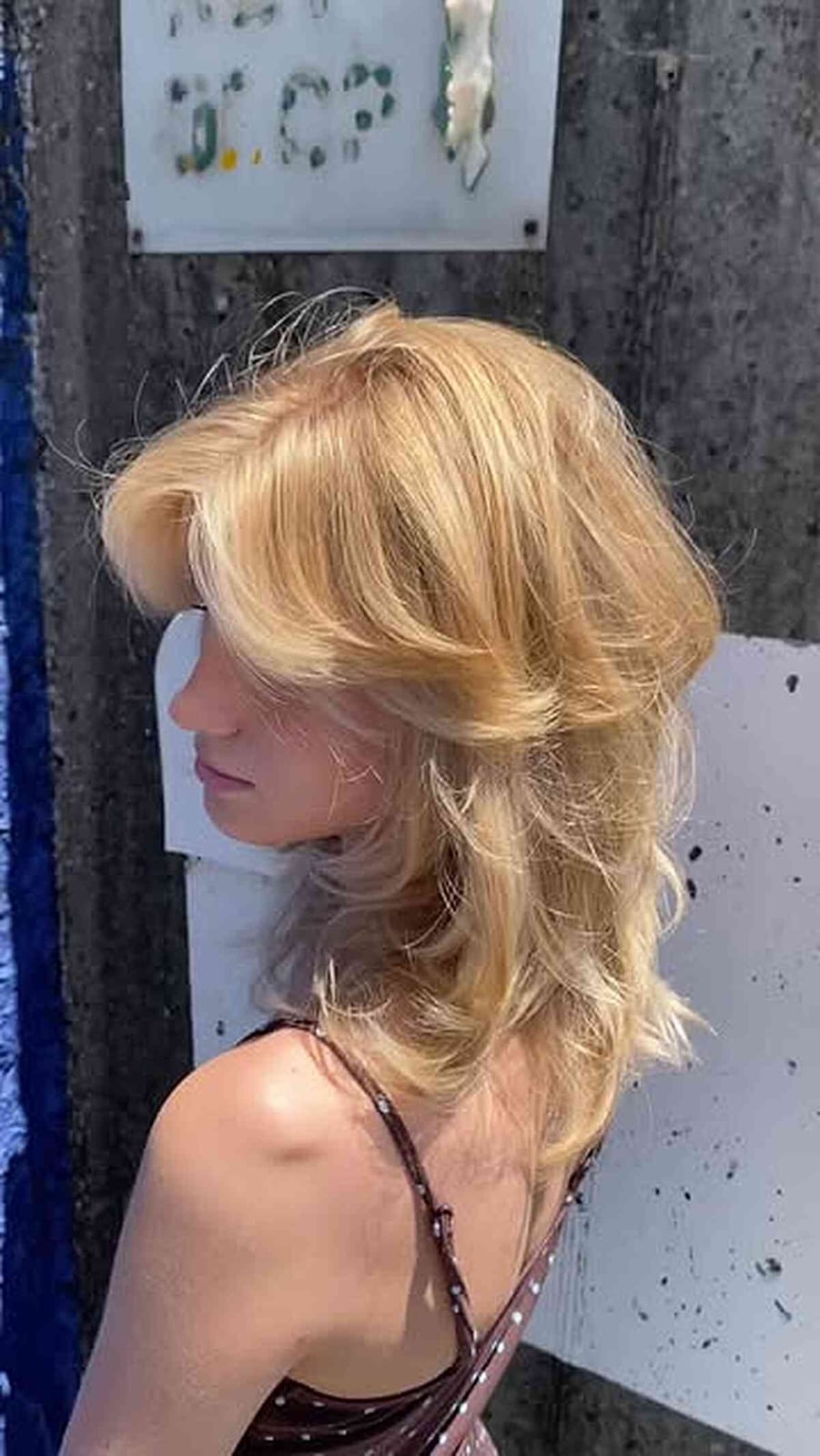
Courtesy of: latest-hairstyles.com
Honey blonde is the base, and a voluminous blowout is the finish. The jellyfish haircut here relies on distinct layers cut to stack and separate, not blend. Curtain bangs frame the face from a middle part, softening the transition between the short top and the longer bottom section. Wavy, fine texture gives the blowout lift without weight. The face-framing layers are the standout element, shorter pieces at the cheekbones that catch the round of the blow-dryer brush. Four passes per section: rough dry, round brush the roots, cool shot to set, then a light brush-through with fingers.
Easy dark brown shag with face-framing curtain bangs
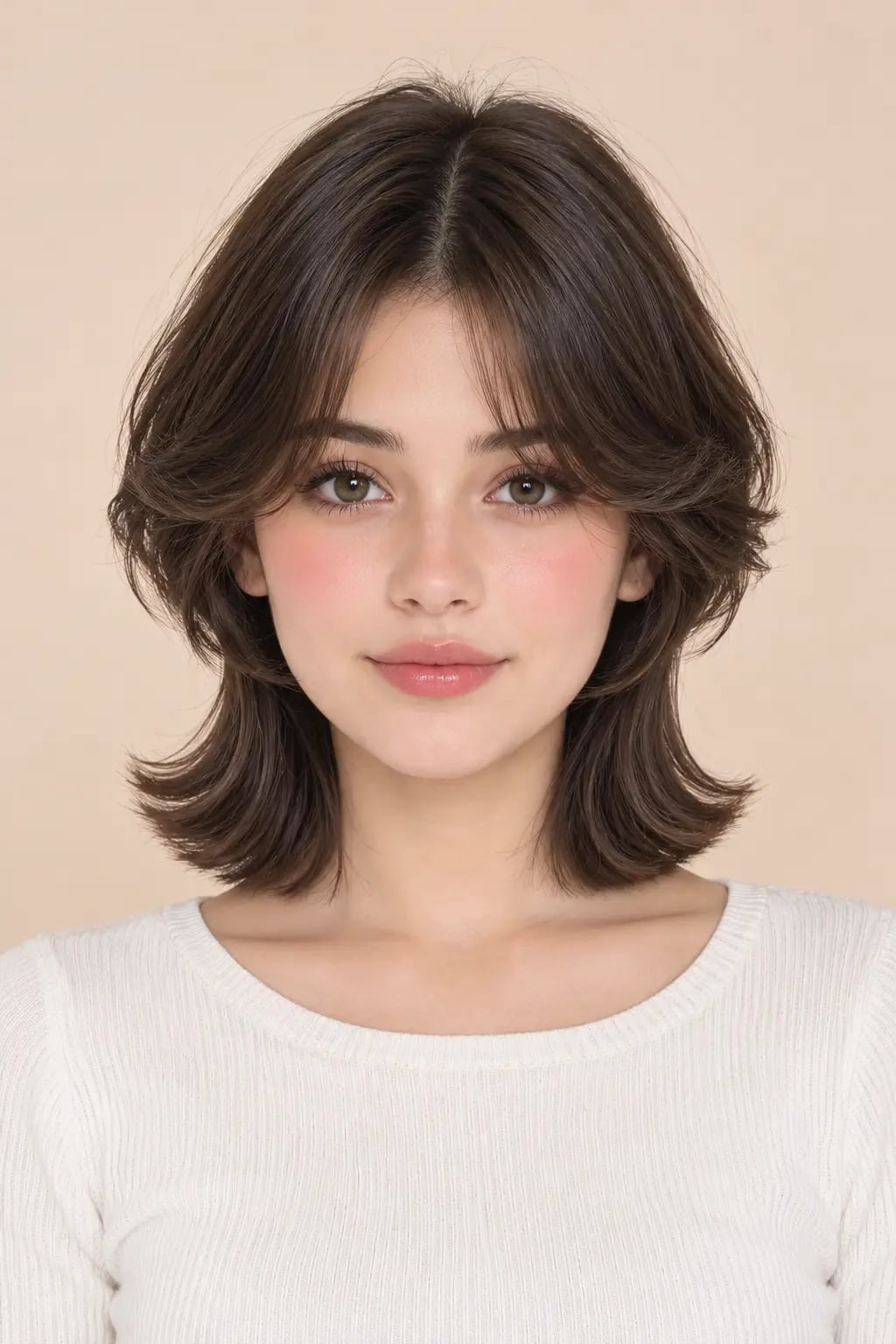
Photo credit: yourgirlstyle.com
A standard shag feels loose. This one is a shag with layers cut to hold a soft blowout, not fall flat by noon. Dark brown color keeps the shape graphic rather than washed out. The curtain bangs meet at a middle part, then sweep toward the cheekbones, face-framing layers that land shorter than the rest. Straight, fine texture responds to a round brush and low heat. The result is a neat look that still lets the layers move.
Black with silver and lavender highlights and contrasting ends
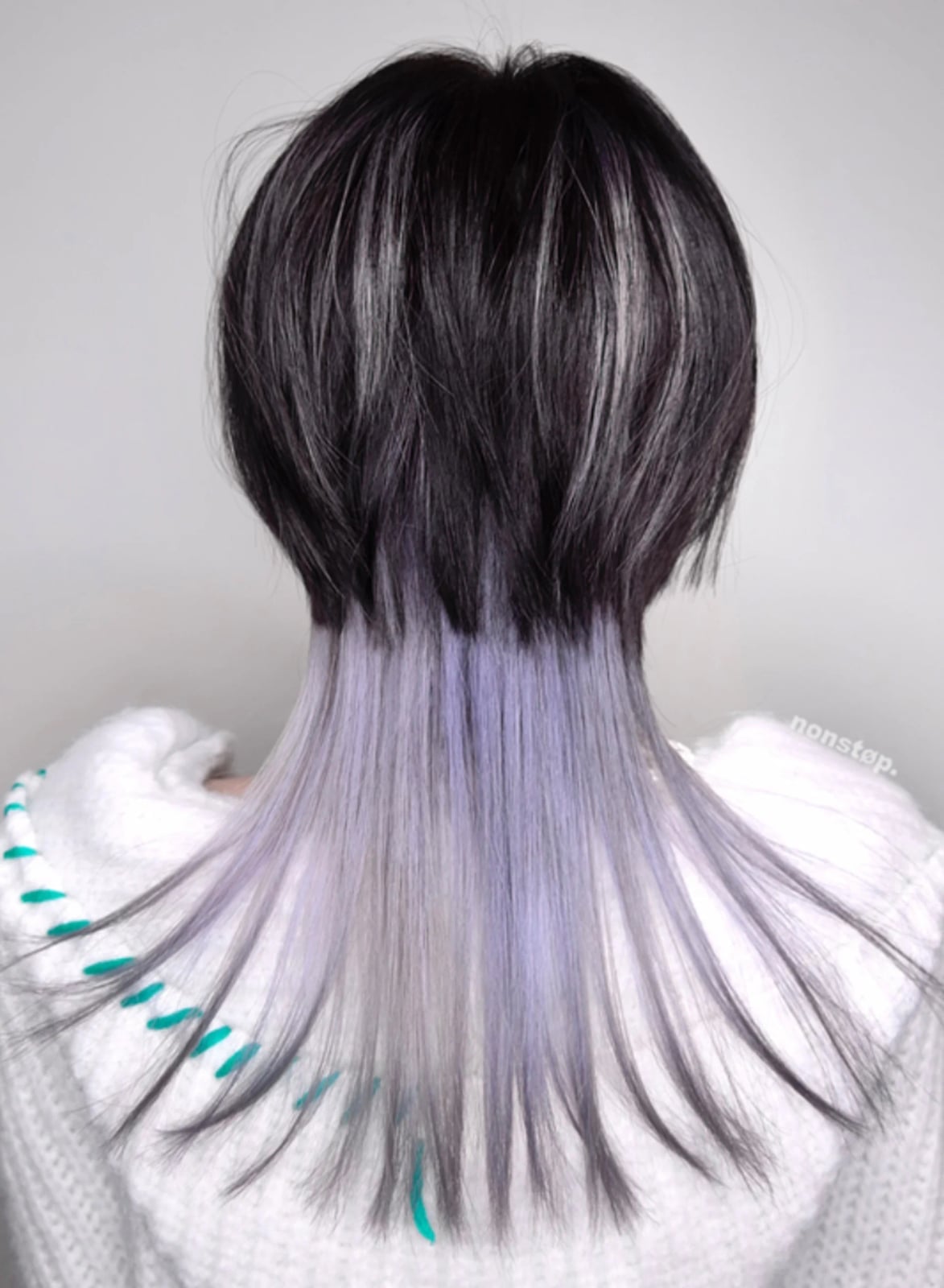
Image credit: kiri-me.com
Black hair turns two-tone at the ends. The layered cut keeps the top dense, then releases into contrasting lavender ends that drop straight from the silver-and-lavender highlights. Air-dried and straight, fine texture shows every shift between dark base and pastel tip. No bangs here. The color contrast does the work of framing the face. The back view is the best angle: a solid black cap that melts into lavender strands.
This design looks deliberate, not accidental. The precision color application separates the top layer from the bottom, creating the jellyfish silhouette without a blunt cut line. Straight, fine hair holds the shape without frizz.
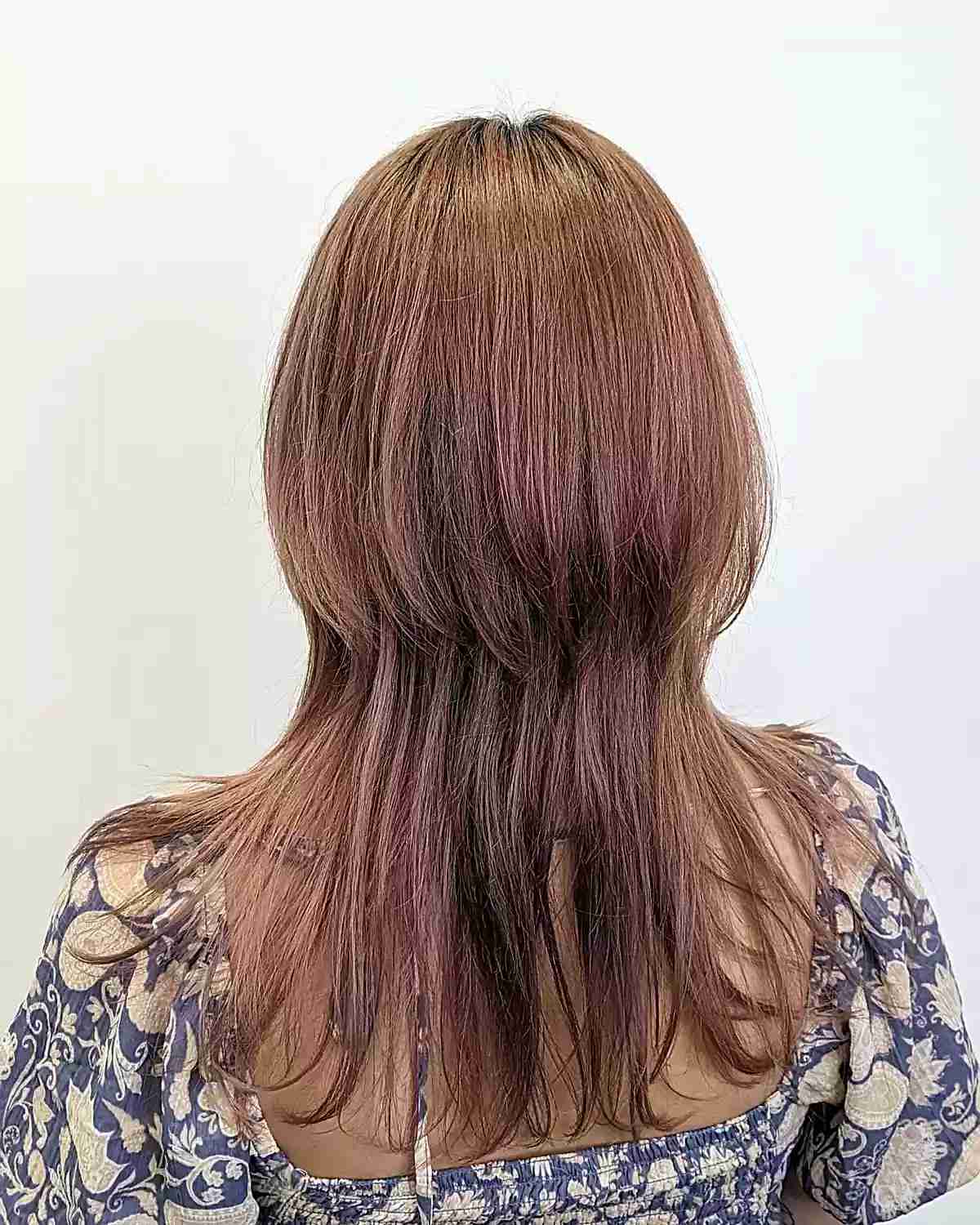
Distinct layers on a brown base with subtle pink highlights
Source: latest-hairstyles.com
Do you book a layered shag and hope the layers show? The jellyfish cut here solves that. The brown base is the backdrop; subtle pink highlights run through the mid-shaft and ends. Air-dried and straight, fine texture lets each layer sit flat and separate. No bangs keeps the focus on the visible steps that descend from crown to hem. The mistake is asking for soft blending. This cut wants visible steps. Say to your stylist: a layered shag cut with pink highlights, then air-dry without product.
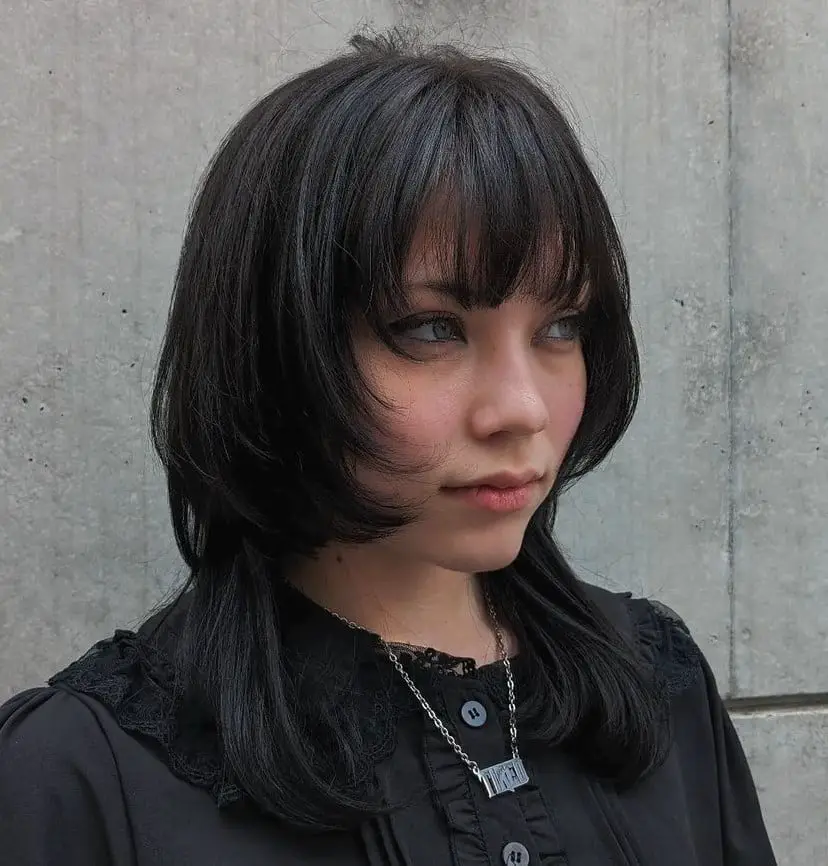
Black layered shag with distinct face-framing layers
Source: therighthairstyles.com
Fine, straight hair gets a bad reputation for falling flat. A black layered shag with curtain bangs and distinct face-framing layers fixes that. The layers are cut to create a rounded top that sits close to the head, then longer pieces drop toward the collarbone. Air-dried, fine texture holds the shape without weight pulling it down. Curtain bangs part in the middle and brush toward the cheekbones, softening the transition. The precision layering gets lost in thick, dense hair.
Face-framing layers here land just below the chin, creating a visual break between the short top and the longer bottom. The middle part keeps the symmetry intact.
Face-framing layers soften dark brown with auburn
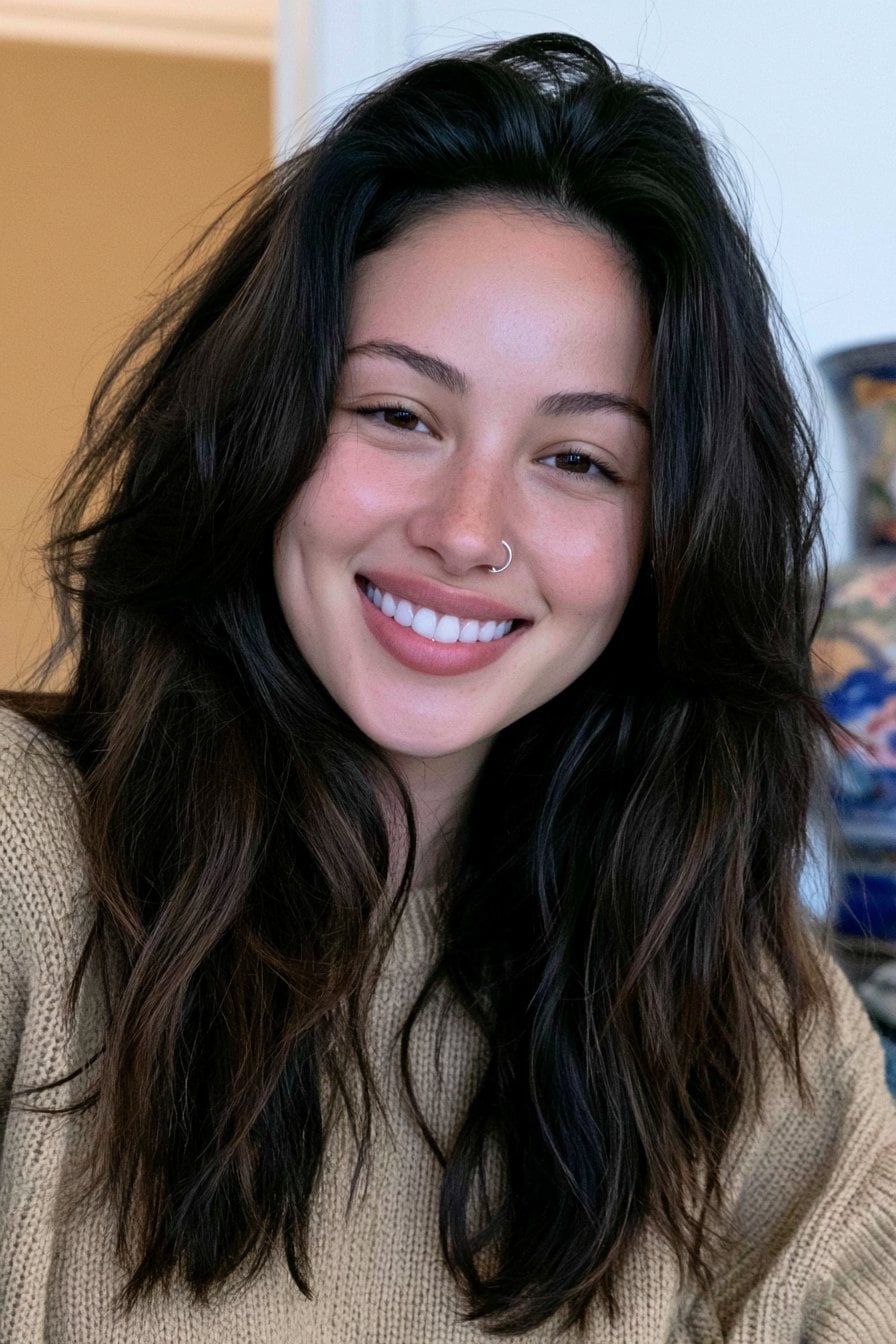
Via elsaclaire.com
Unlike a classic jellyfish cut, this version skips the stark top layer entirely. Soft, face-framing layers start around the collarbone and blend into the length. The dark brown base gets subtle auburn highlights placed to catch light. Fine, wavy texture holds the air-dried wave well; very straight hair might need a quick curl. A middle part keeps the framing even. Request from your stylist: soft face-framing layers, collarbone length, subtle auburn highlights.
Jellyfish-like appearance with distinct layers and curtain bangs
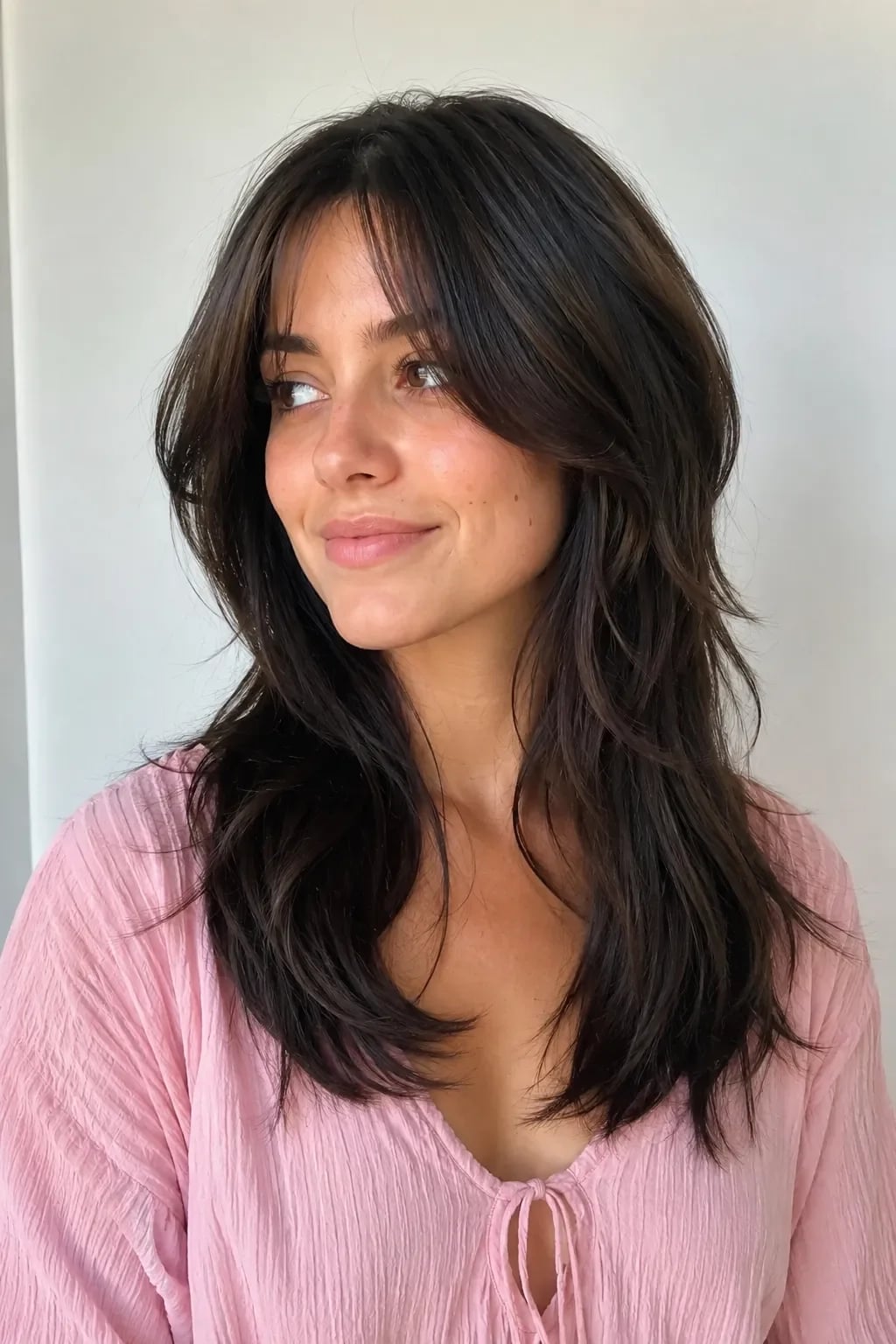
Courtesy of: dailyhairinspo.com
What makes this a jellyfish cut is the distinct separation between the top and bottom sections. The shag has face-framing curtain bangs that blend into the first layer, creating that cap-like volume on top. Dark brown, wavy, and fine, the texture here does the work: air-dried, it keeps the waves defined and the layers visible. Curtain bangs soften round and heart faces. This style requires regular upkeep for wavy texture. Have your stylist cut a shag with face-framing curtain bangs and wavy texture.
Layered bob with multicolor streaks and blunt bangs
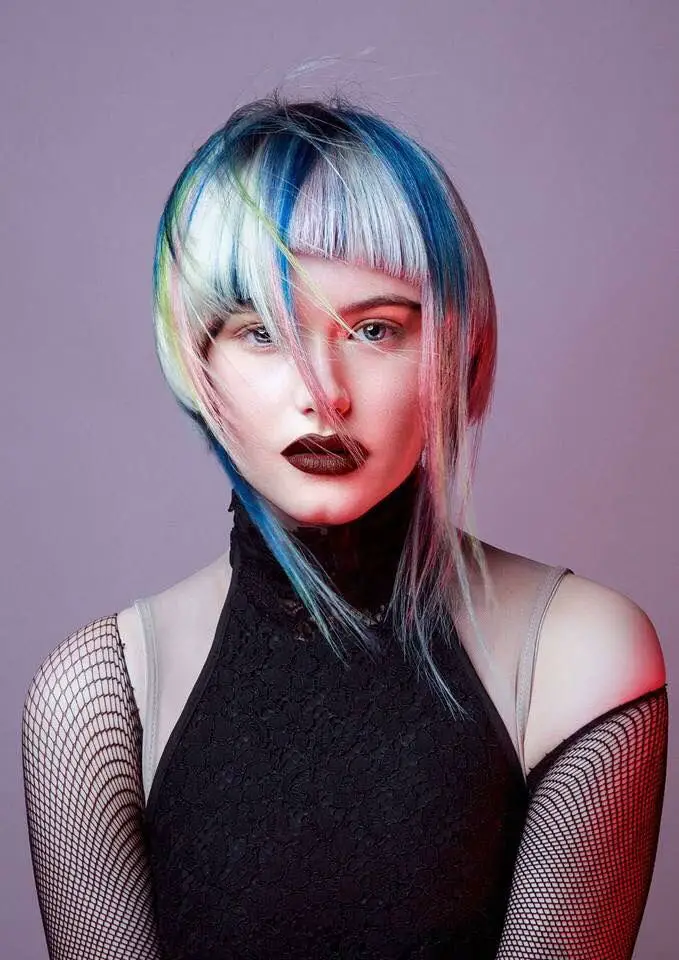
Photo credit: womenhair.style
Precision coloring builds this look. A layered bob sits at a classic chin length, with blunt bangs cutting straight across. What grabs attention is the mix of blue, pink, green, and white streaks running through the straight, fine hair. The streaks are placed throughout, not just on top, so the color has a deliberate effect. Blunt bangs suit oval and longer face shapes. It works best for those who want bold color and have fine to medium hair. Request a layered bob, blunt bangs, multicolor streaks from your stylist.
Platinum blonde bob with pink dip-dyed ends and blunt bangs
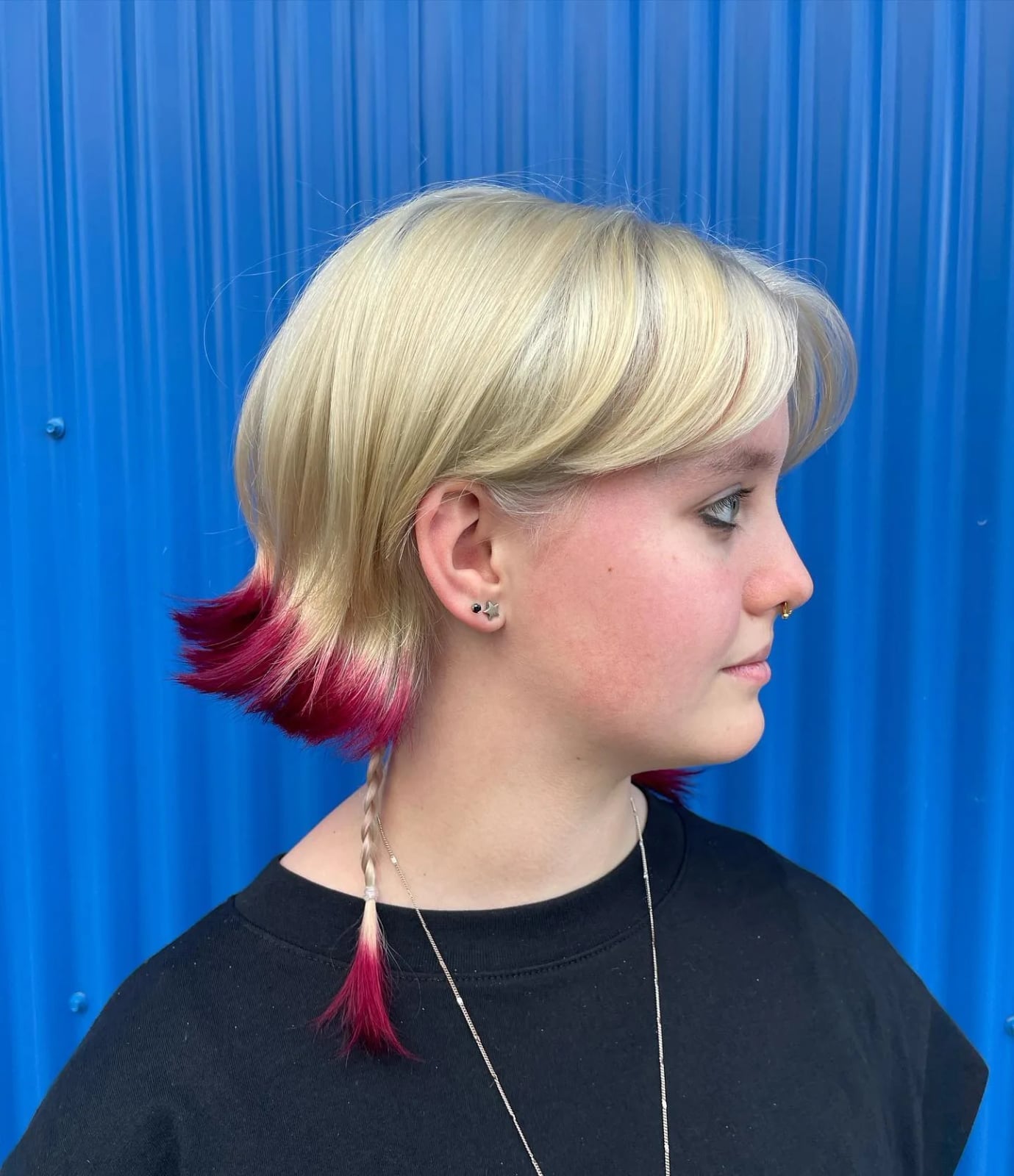
Image credit: shewhatwear.com
Where a full bob feels too serious, this version adds a dip-dyed pink end. The cut itself is a bob with subtle layers and blunt bangs, all in platinum blonde. The pink starts at the ends, giving a playful contrast without committing to an all-over color. Fine, wavy texture air-dries into a natural bend. Blunt bangs suit oval and longer face shapes. Skip it if you dislike high-contrast colors or have hair that struggles to hold vibrant tones. Say to your colorist: bob with subtle layers, blunt bangs, platinum blonde with pink ends.
Layered bob with loose waves and subtle highlights
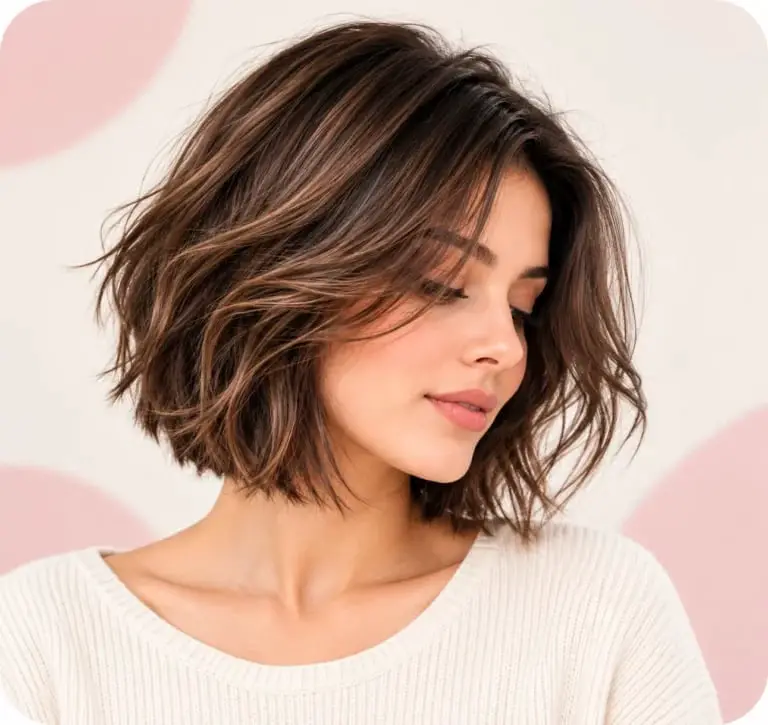
Source: hairellestyle.com
A layered bob at chin length, this one relies on loose waves for its movement. Curtain bangs frame the face, blending into the layers. The dark brown base gets subtle highlights, adding a little dimension without a full color commitment. Medium density, wavy hair works best here; the waves give the bob body. Curtain bangs soften round and heart faces. Very straight hair or low styling maintenance does not suit this cut. Request a layered bob, curtain bangs, loose waves, subtle highlights from your stylist.
Voluminous crown with stacked layers and pink tips
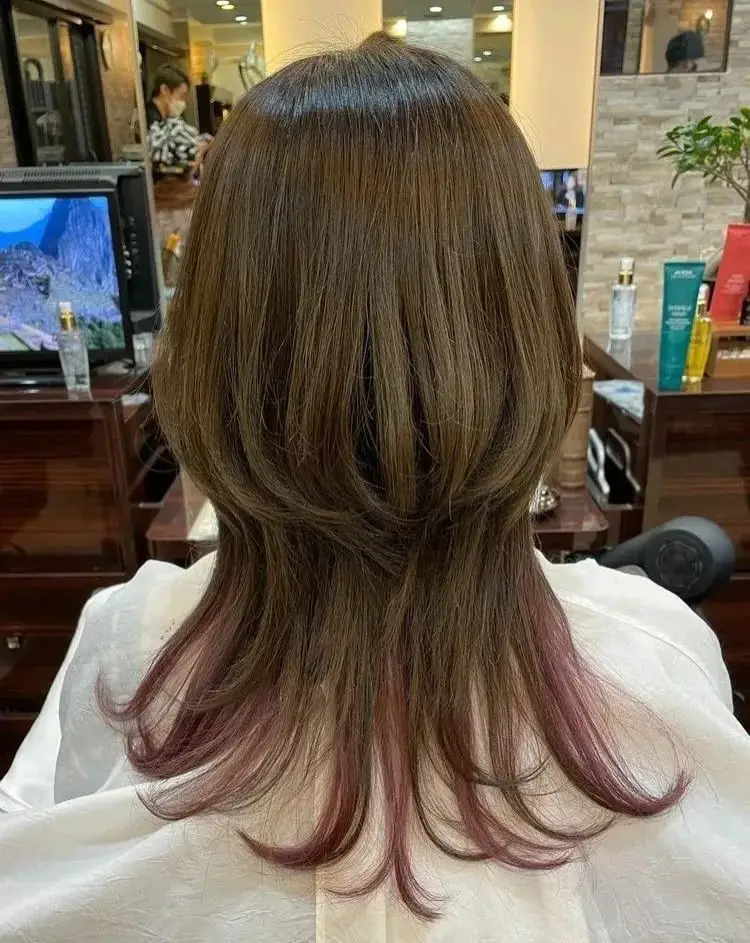
Via shewhatwear.com
Not a standard bob, but one that delivers volume exactly where fine hair needs it. The layered bob shape relies on stacked, rounded layers to build crown height, with straight texture keeping the silhouette clean. Subtle pink highlights land only at the tips, so the color feels playful and purposeful. A single process or a low maintenance bob is a different commitment. Have your stylist cut a layered bob with stacked layers, pink tips.
Pink to purple gradient mullet with blunt bangs
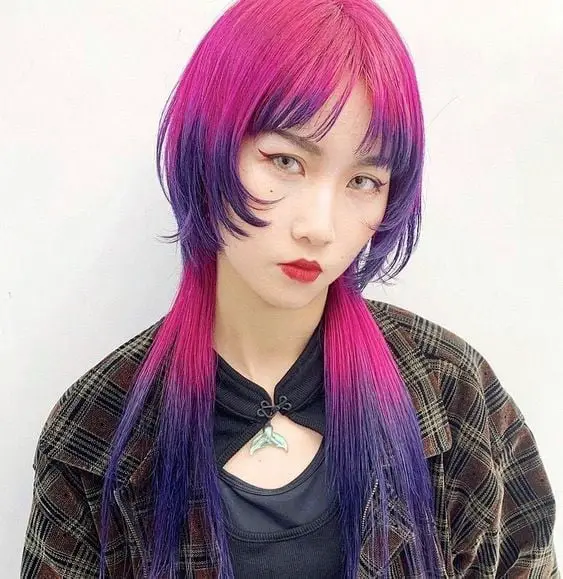
Courtesy of: hnahair.com
The blunt fringe and layered sections around the face are the giveaway: this is a mullet with discipline. Longer, wispy strands drop behind, while the front stays sharp. The gradient moves from vibrant pink at the roots to deep purple at the ends, a color arc that works best on fine, straight hair where the shift reads clearly. Blunt bangs suit oval and longer face shapes. This demands a full commitment. The wispy strands need trimming every four to six weeks to keep that precise transition.
Braided fine hair with blue and white highlights and curly ends
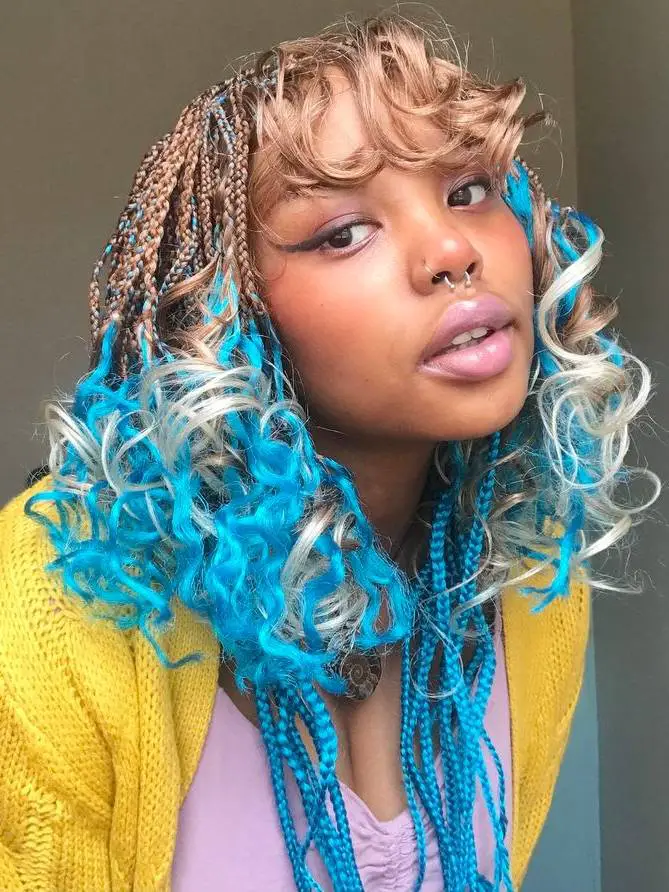
Photo credit: wowangel.com
Fine hair has a reputation for being hard to work with, but this design turns it into an asset. Two braids start from a middle parting, with wispy bangs left loose at the front. The blonde base carries vibrant blue and white highlights, and the ends curl outward for contrast. The braiding handles the structure; the color handles the statement. Pass when you prefer a wash-and-go routine or dislike the time braids demand. Have your colorist apply a blonde base with blue and white highlights, curly ends.
Braids highlight dark blue with bright blue streaks
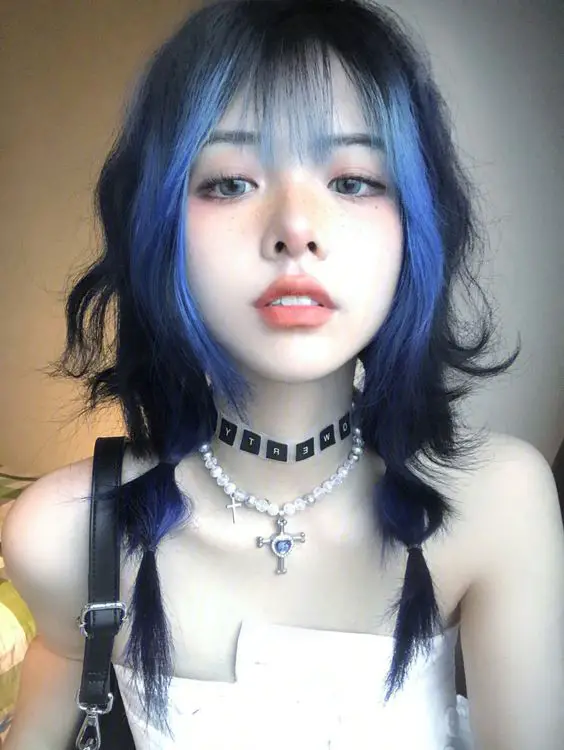
Image credit: hnahair.com
Two braids pull the shag cut into a wearable shape, with blunt bangs keeping the edge. Dark blue is the base, but the bright blue face-framing highlights do the real work. They pull the eye forward and make the layers read clearly. The wavy, fine texture holds the braids without slipping. It works best for a single tone and two braids. Request from your stylist: shag cut, blunt bangs, dark blue with bright blue highlights, styled into braids. The shag layers need trimming every six weeks to keep the shape defined.
Blunt bob cut with silver highlights and blunt bangs
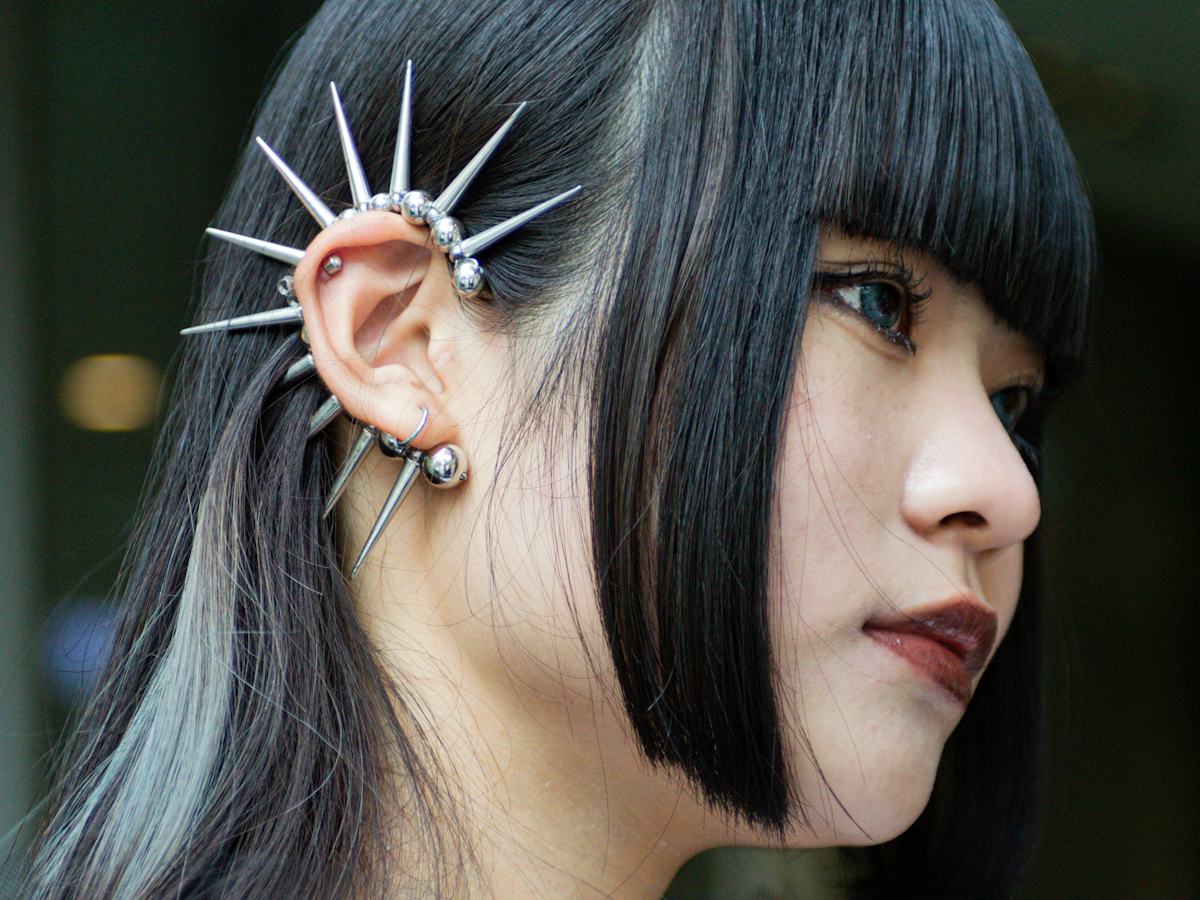
Via thezoereport.com
A blunt bob with blunt bangs sounds simple until you factor in the silver highlights against the black base. The straight, fine texture makes the sharp ends read clearly, and the air-dried finish keeps it from looking overstyled. The contrast is the whole point. Not for anyone who prefers softer lines or has thick hair that resists a blunt finish. Have your colorist apply a blunt bob cut, blunt bangs, silver highlights.
Feathered layers on a medium brown wavy shag
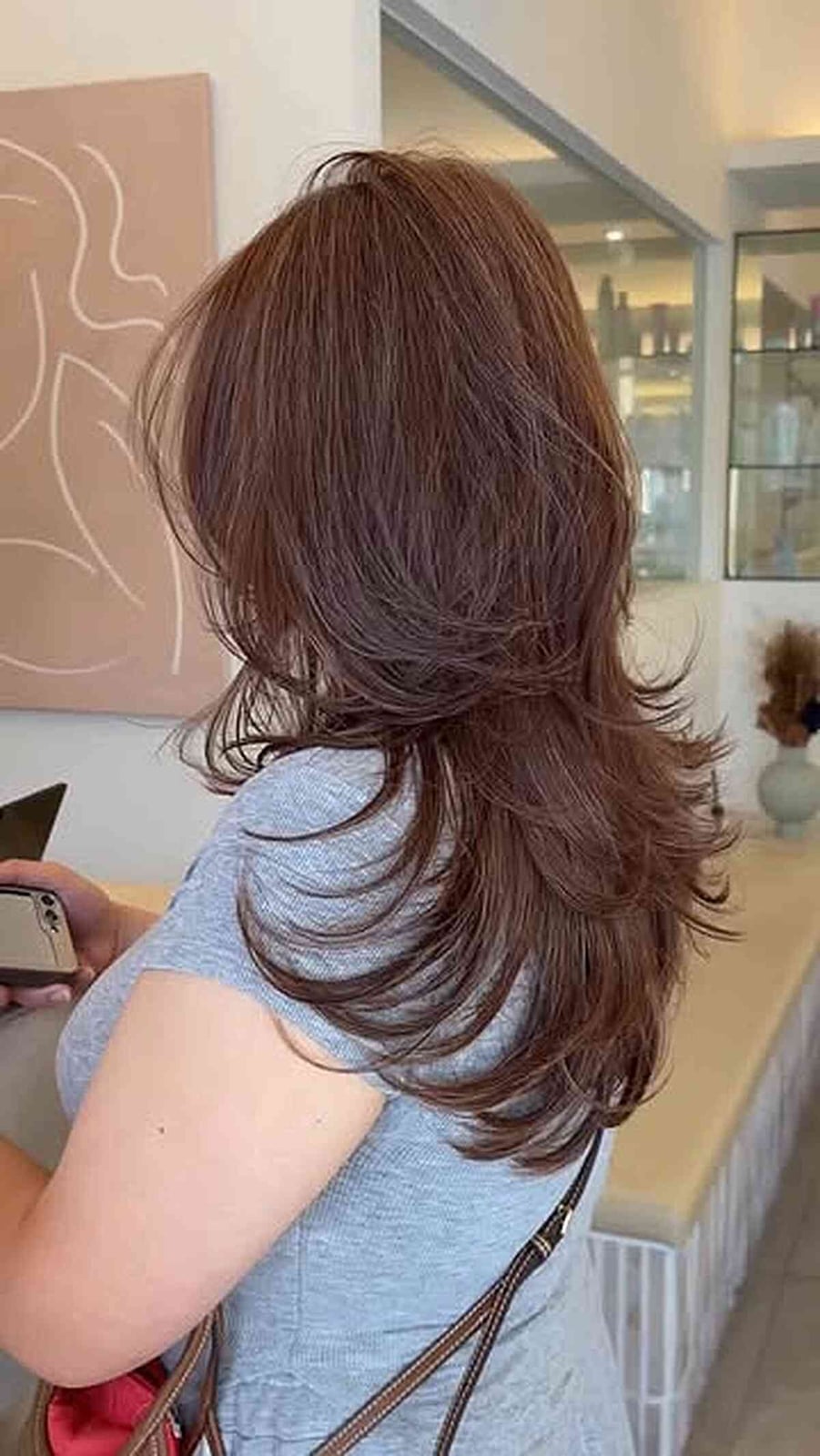
Courtesy of: latest-hairstyles.com
Fine hair needs volume, and a layered shag with feathered layers delivers exactly that. The cut creates lift around the crown, then tapers toward the ends in a medium brown shade. No bangs keeps the shape open and easy. Skip it if you prefer blunt cuts or have very straight hair. The feathered effect relies on natural wave to do its work. Request a layered shag cut with feathered layers from your stylist.
Air-dried wavy shag with bright green face-framing highlights
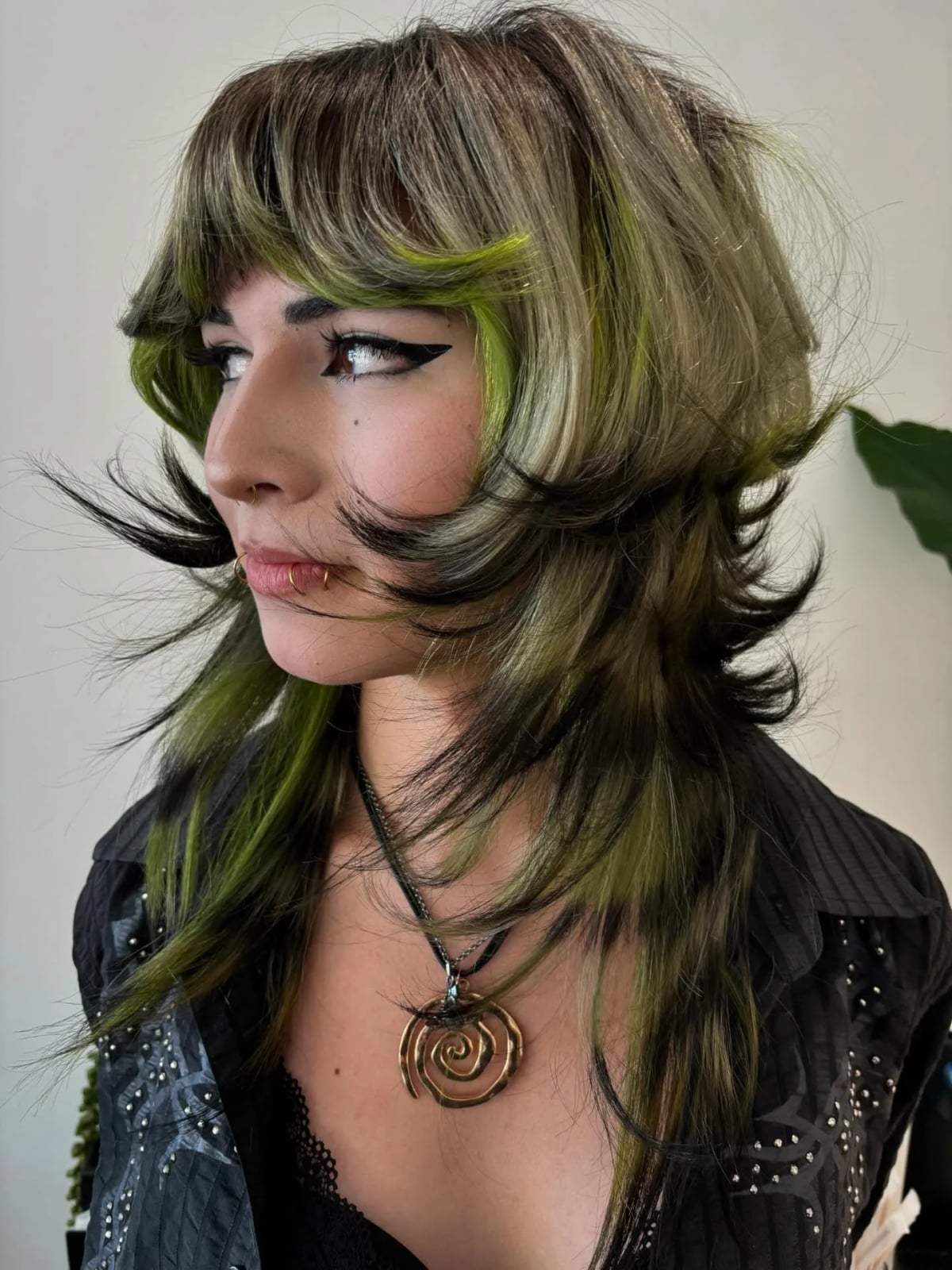
Photo credit: shewhatwear.com
Curtain bangs and distinct layers make this shag a natural fit for fine, wavy hair. The dark brown base gets a jolt from vibrant green highlights that frame the face, a deliberate contrast. Not for anyone who prefers natural hair colors or has very straight hair; the waves give the cut its shape. Have your stylist cut a shag with distinct layers, curtain bangs, dark brown with green highlights.
Mullet shape with blunt bangs and precise layering
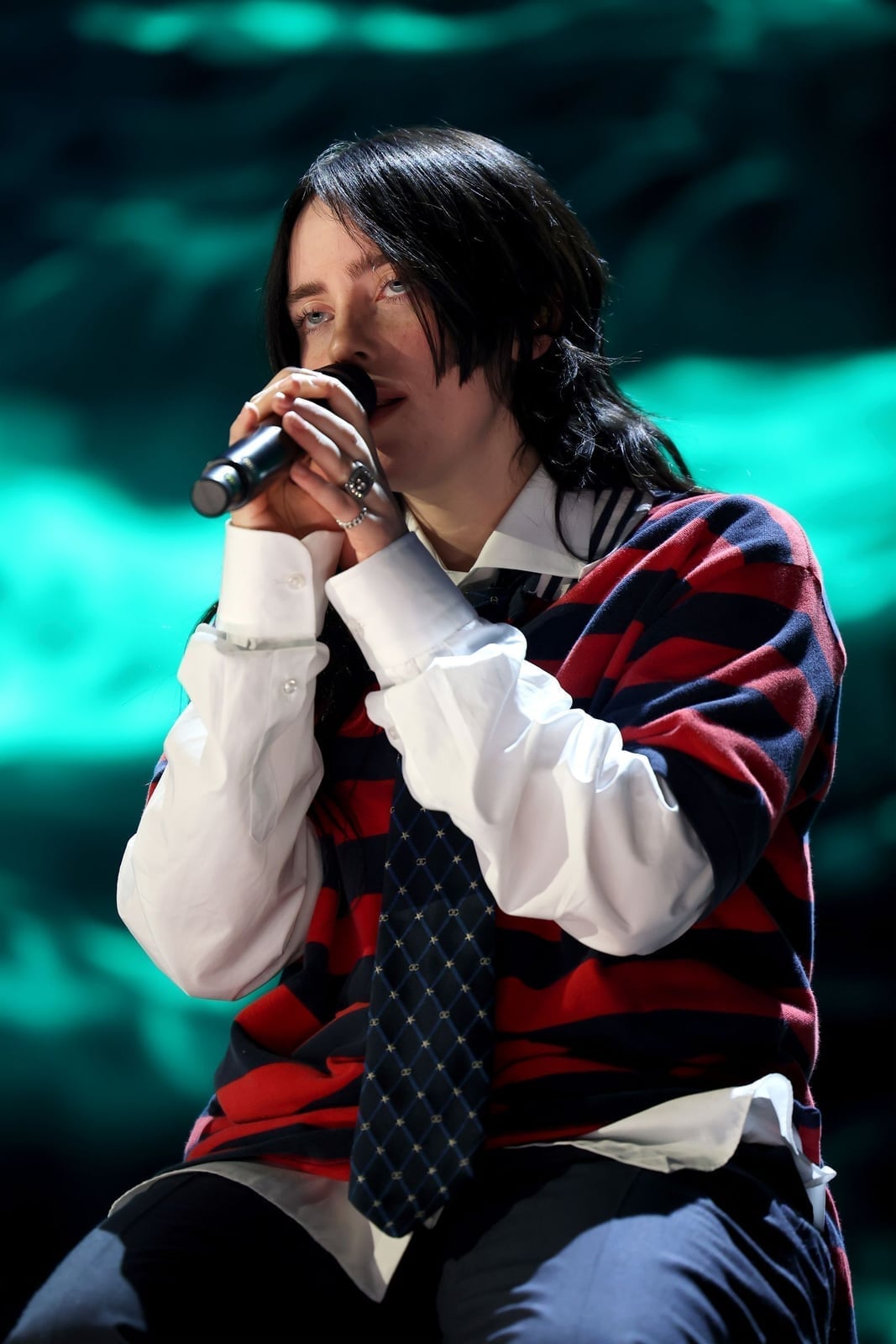
Image credit: teenvogue.com
The mullet shape with blunt bangs is a study in contrast. Precise layering keeps the shorter top sections distinct from the longer bottom, all on fine, straight black hair. Pass when you dislike blunt bangs or have very curly hair, the cut depends on straight texture to read clearly. Have your stylist cut a mullet shape with blunt bangs, precise layering.
Blue streaks accent mullet shape in wavy curly layers
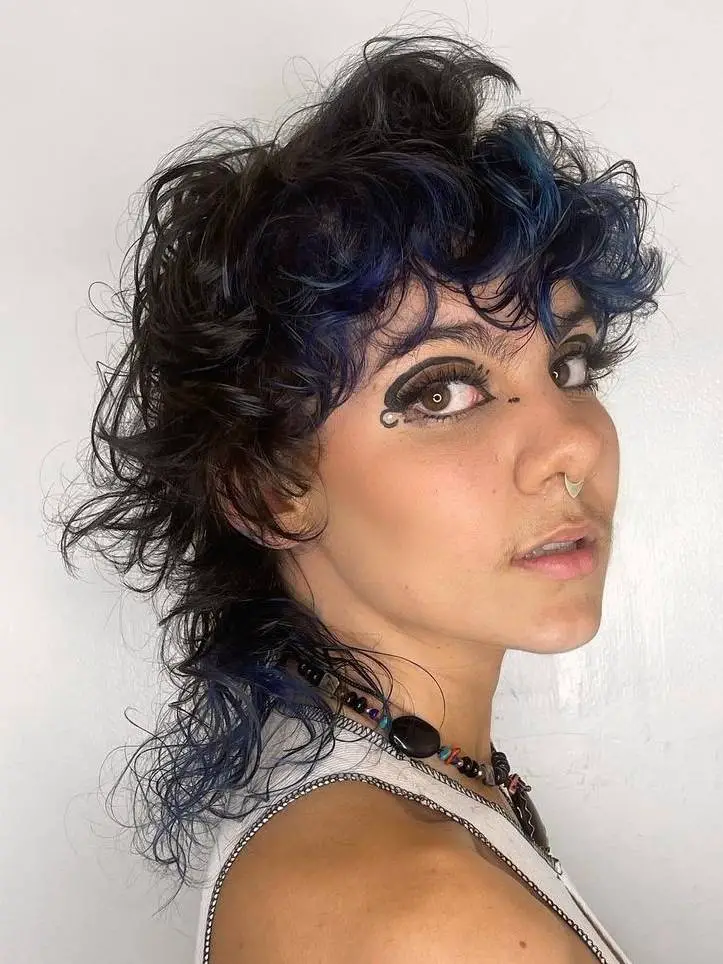
Source: wowangel.com
The mistake here is thinking any blue will do. This mullet shape layers wavy and curly texture on a fine-density base, with striking blue highlights woven through for contrast. Wispy bangs keep the front light. Straight hair does not suit this cut, and the color vibrancy needs maintenance. Air-dry to let the natural curl define the shape. Request a mullet shape with wispy bangs, dark base with blue highlights, wavy curly texture from your stylist.
Unique jellyfish silhouette with blunt short side pieces
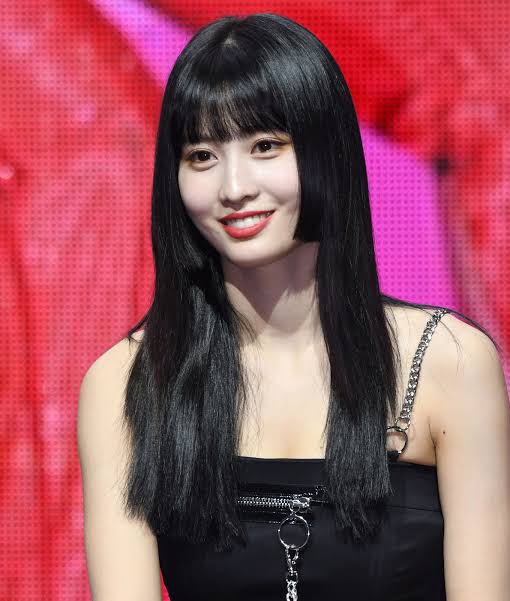
Via purewow.com
Blunt bangs and a centered parting set the stage here. The jellyfish cut uses blunt, short side pieces that contrast sharply with the longer hair, all on fine, straight black. The silhouette is modern and geometric.
The catch: this cut does not blend. Those side pieces sit apart from the length, so it creates two distinct shapes. Blunt bangs and a disconnected style require a willingness to maintain the contrast. Have your stylist cut a jellyfish cut with blunt bangs, short side pieces.
Final Thoughts
Pick the version that matches your morning routine and your natural texture.
- Fine hair: stick with blunt top layers and a round brush.
- Ten minutes to style: choose a wavy shag with curtain bangs.
- Cool base that pulls brassy: silver or lavender ends keep it intentional.
- Low upkeep: a single-tone brown shag needs a trim every eight weeks.
Find the jellyfish cut that speaks to your style.
-

 Makeup Trends2 years ago
29 Harley Quinn Makeup Ideas: Iconic Looks for Every Occasion
-

 Hairstyle2 years ago
Round Face Haircuts Ideas 2025: 29 Flattering Styles to Try
-

 Hairstyle2 years ago
25 90s Layered Hair Ideas to Inspire Your 2025 Look
-

 Fashion2 years ago
27 Every Day Spring Outfits Inspiration for 2025
-

 Hairstyle2 years ago
29 Long Layered Haircuts Ideas for 2025
-

 Hairstyle2 years ago
64 Fall Hair Color Trends to Elevate Your Style in 2024
-

 Hairstyle2 years ago
Choppy Bob Haircuts 2025: 29 Stylish Ideas
-

 Hairstyle2 years ago
27 Medium Length Haircut with Layers Ideas for 2025