
Hairstyle
20 Champagne Blonde Hair Color Ideas 2027
Champagne Blonde 2027 hair color ideas: try bright babylights or balayage on long hair for a warm, flattering glow. See 20 looks.

Champagne blonde splits the difference between warm honey and cool ash, landing somewhere luminous and deliberately understated. For 2027, the shift is away from flat, single-process blonde toward soft, face-framing layers and lived-in color that grows out gracefully rather than announcing itself at week four.
This collection of 20 champagne blonde ideas covers the full spectrum: high-impact babylights for a bright, polished finish and subtle balayage for those who prefer a lower-maintenance rhythm. Whether your hair is fine and needs a blunt baseline to hold shape or thick and wants soft dimension without a heavy grow-out line, these looks solve the specific problem of keeping blonde fresh without constant salon visits.
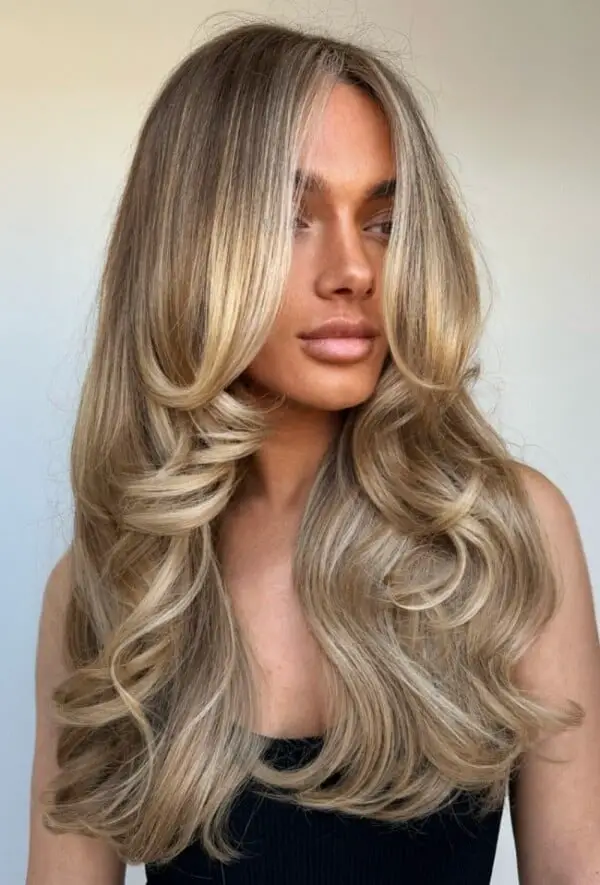
Long Layered Hair With Champagne Balayage
Courtesy of: itakeyou.co.uk
The champagne balayage here is painted with intent, sweeping brighter butter blonde pieces around the face while the length stays a softer, deeper champagne. That contrast gives the color its dimension. The face-framing highlights are visible first, then the eye travels down the long, loose waves. The middle parting keeps the layers open and the whole effect reads as lived-in rather than freshly salon-bright.
This cut suits medium to thick wavy hair starting at the shoulders, since the layers need some weight to move properly. The face-framing pieces soften square and oval face shapes. Ask your colorist for: long layers, champagne balayage with face-framing butter blonde highlights. The balayage technique means the color grows out with a softer line, so you can stretch touch-ups to every 10 to 12 weeks instead of the usual eight.
Mid-Back Length Champagne Blonde With Babylights
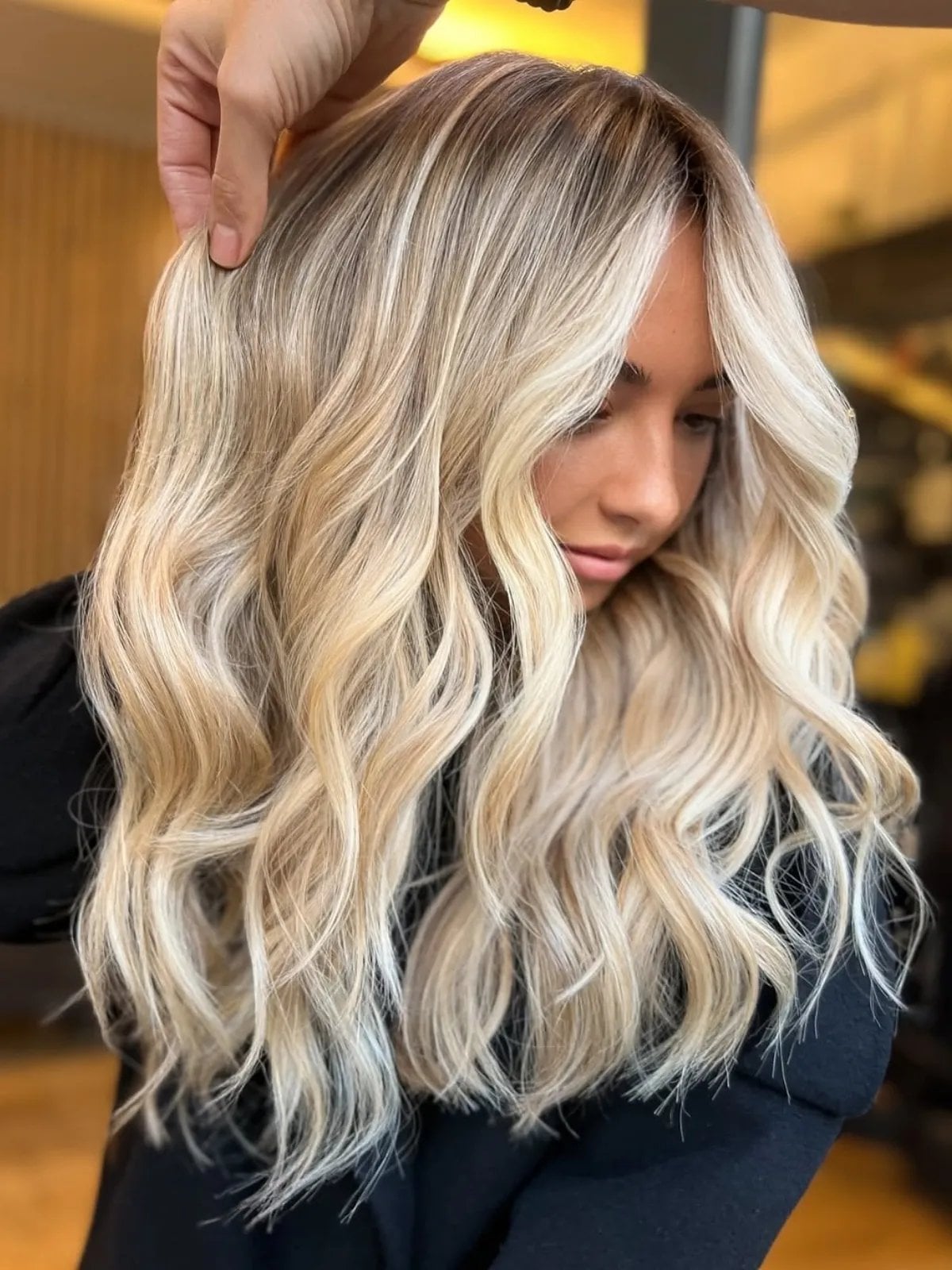
Photo credit: wella.com
What makes babylights different from regular highlights? They are woven much finer, closer to the width of a baby hair strand, which gives a bright champagne blonde base a subtle, all-over shimmer rather than obvious stripes. Here the mid-back length is styled in loose waves with a middle parting and soft curtain bangs, and the babylights add a gentle lift that keeps thick hair from looking heavy.
This works best on thick hair that reaches mid-back or longer; the density gives the fine highlights something to play against. Curtain bangs are flattering on round, oval, and heart-shaped faces. Ask your colorist for: mid-back length, bright champagne blonde with babylights, curtain bangs. Use a round brush during blow-drying to enhance the natural wave and volume. Plan for a touch-up every 8 to 10 weeks, since the fine weave fades faster than chunkier highlights.
Collarbone Length Champagne Blonde With Curtain Bangs
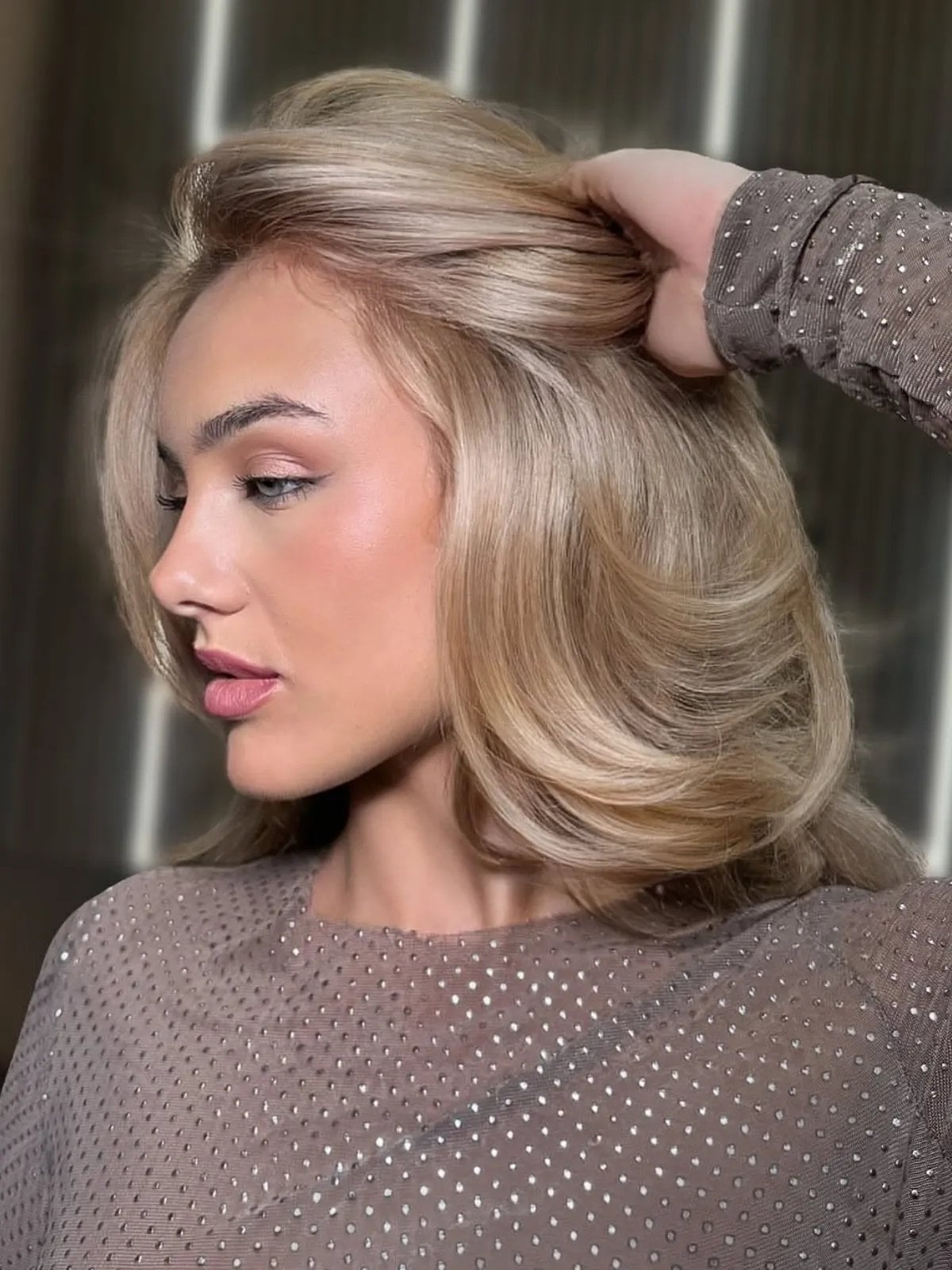
Image credit: wella.com
Fine, wavy hair at collarbone length is exactly where a champagne blonde blowout earns its keep, because the color adds the illusion of density without weighing the strands down. The curtain bangs are cut to sweep to the sides, and on this texture they land with a soft, airy movement. The middle parting and face-framing layers work together to open up the front, which suits square and angular face shapes by softening the jawline. Ask your colorist for: collarbone length, champagne blonde, curtain bangs, soft blowout. A root boosting product applied before drying keeps the shape from collapsing, and the bangs will need a trim every few weeks to hold their curve.
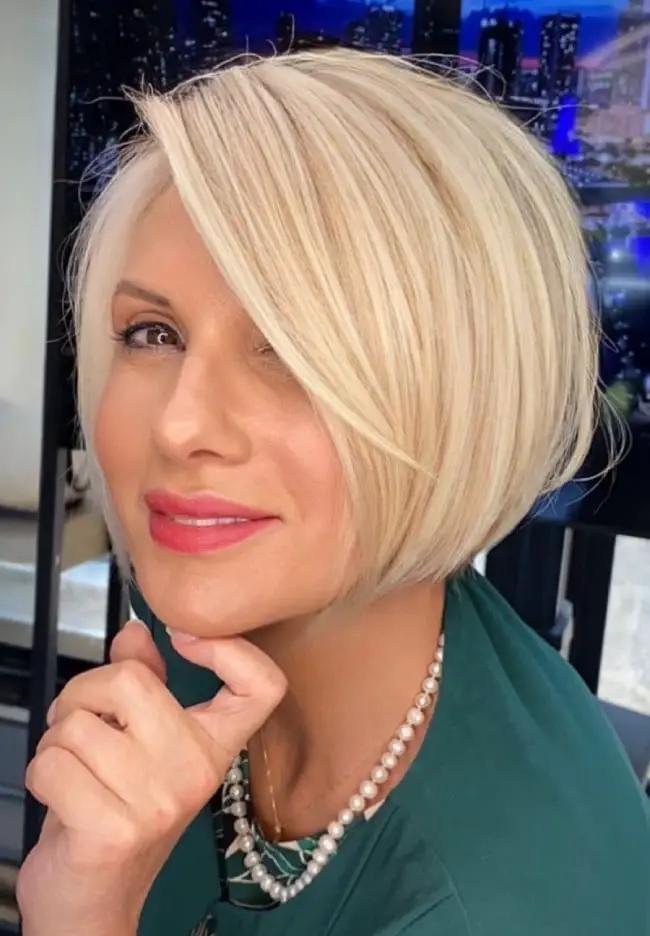
Chin Length Ash Blonde Bob With Side Swept Bangs
Source: fabmood.com
If champagne blonde leans warm, this chin-length bob is its cooler cousin: an ash blonde base with subtle lighter highlights woven through, finished with side-swept bangs. The cool tone is a natural fit for fall and winter, when the light is softer and the ashy notes look crisp. The bob is cut to sit right at the chin with a slight inward curve at the ends, which gives fine, straight hair shape without needing much styling. Ask your colorist for: chin length bob, side parting, side-swept bangs, ash blonde. It is a solid work-to-evening cut, and the straight texture means a quick blow-dry with a paddle brush is all it takes to maintain the line.
Mid-Back Ash Blonde With Natural Highlights
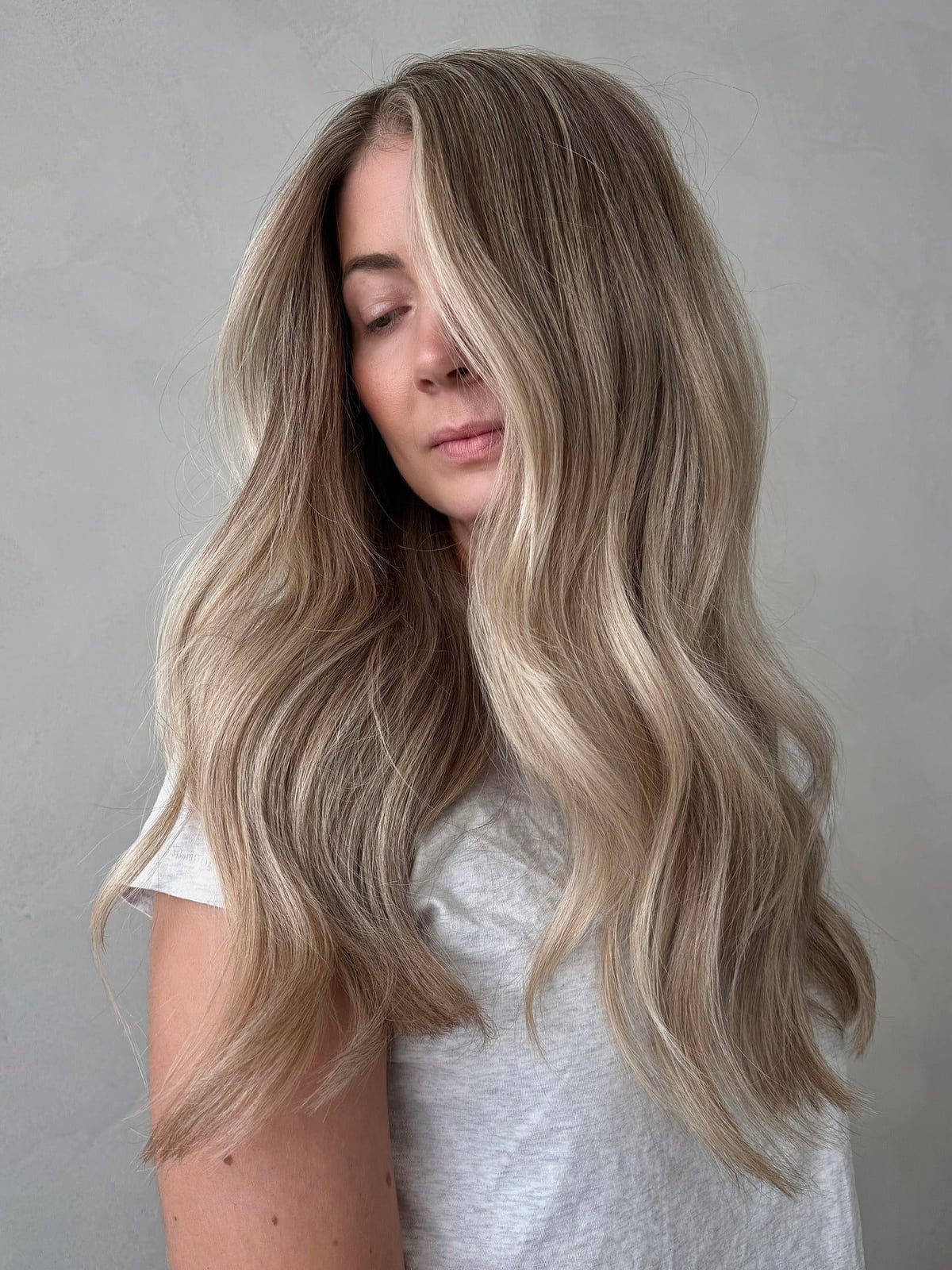
The trick to natural-looking highlights on an ash blonde base is asking for them to be painted in soft, uneven sections so they blend into the color the way sun-lightened hair does. Here the mid-back length is styled with an air-dried texture and the highlights are subtle enough that you notice the dimension before you notice the individual pieces. This suits thick wavy hair that can carry the weight of the length without going flat. Ask your colorist for: mid-back length, ash blonde with natural highlights, air-dried texture. To keep that just-rolled-out-of-bed finish, work a sea salt spray through damp hair and let it dry without touching it. Natural highlights need a touch-up every 10 to 12 weeks, and the grow-out line can look a little muddy if you let it go longer.
Collarbone Length Champagne Blonde With Subtle Highlights
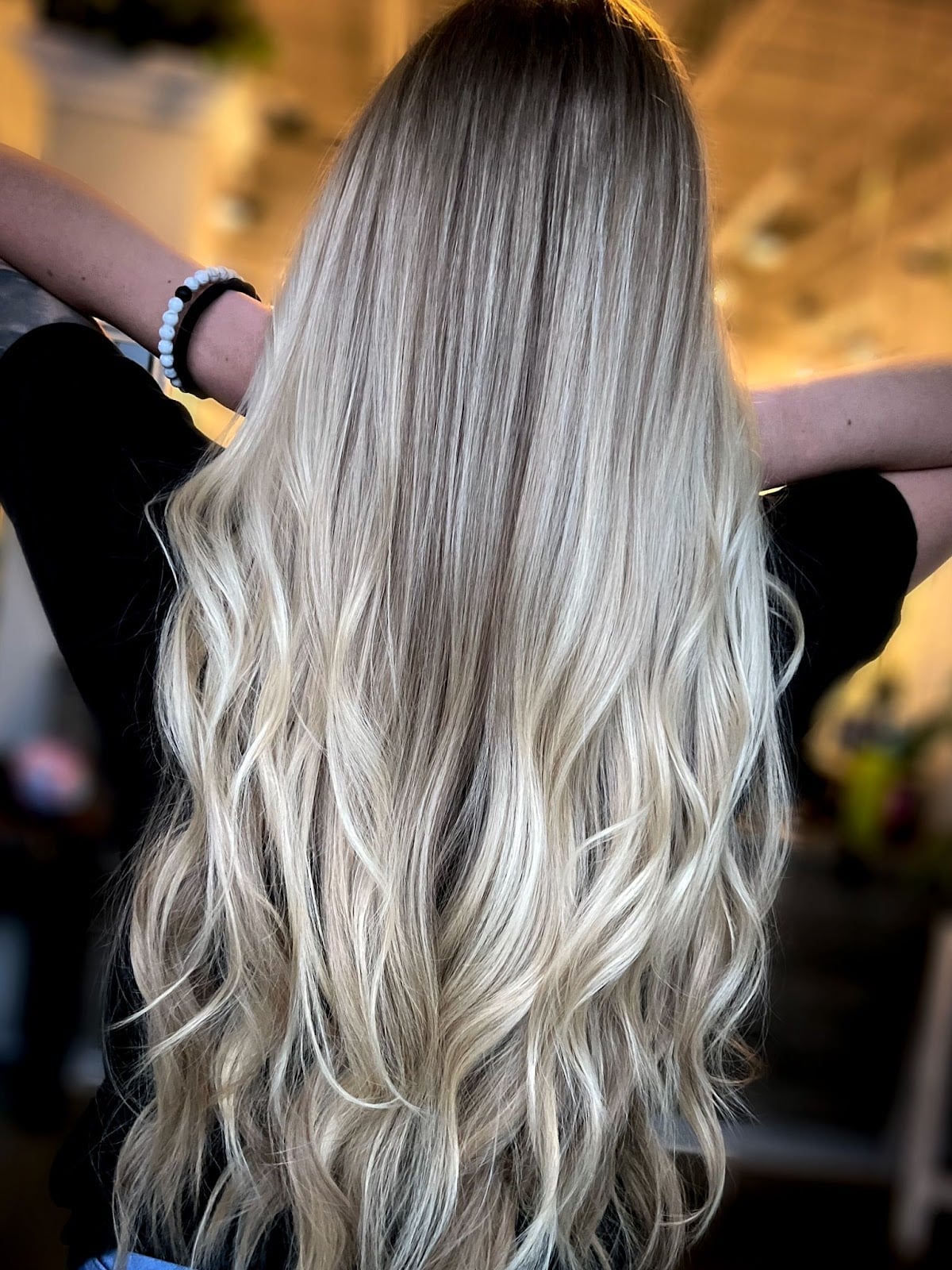
Courtesy of: hair.com
Wondering if subtle highlights actually register as champagne blonde or just fade into a beige blur? On a collarbone-length cut with soft waves, they do the quiet work: a few lighter pieces provide dimension without turning the whole head into a stripe show. Medium-density wavy hair holds the dimension best, and the middle part helps elongate round faces. Ask your colorist for: collarbone length, champagne blonde with subtle highlights, soft waves. A texturizing spray keeps the waves lived-in, and you can stretch refresh visits to every 10 to 12 weeks since the contrast is gentle.
Mid-Back Pale Champagne Blonde Blowout
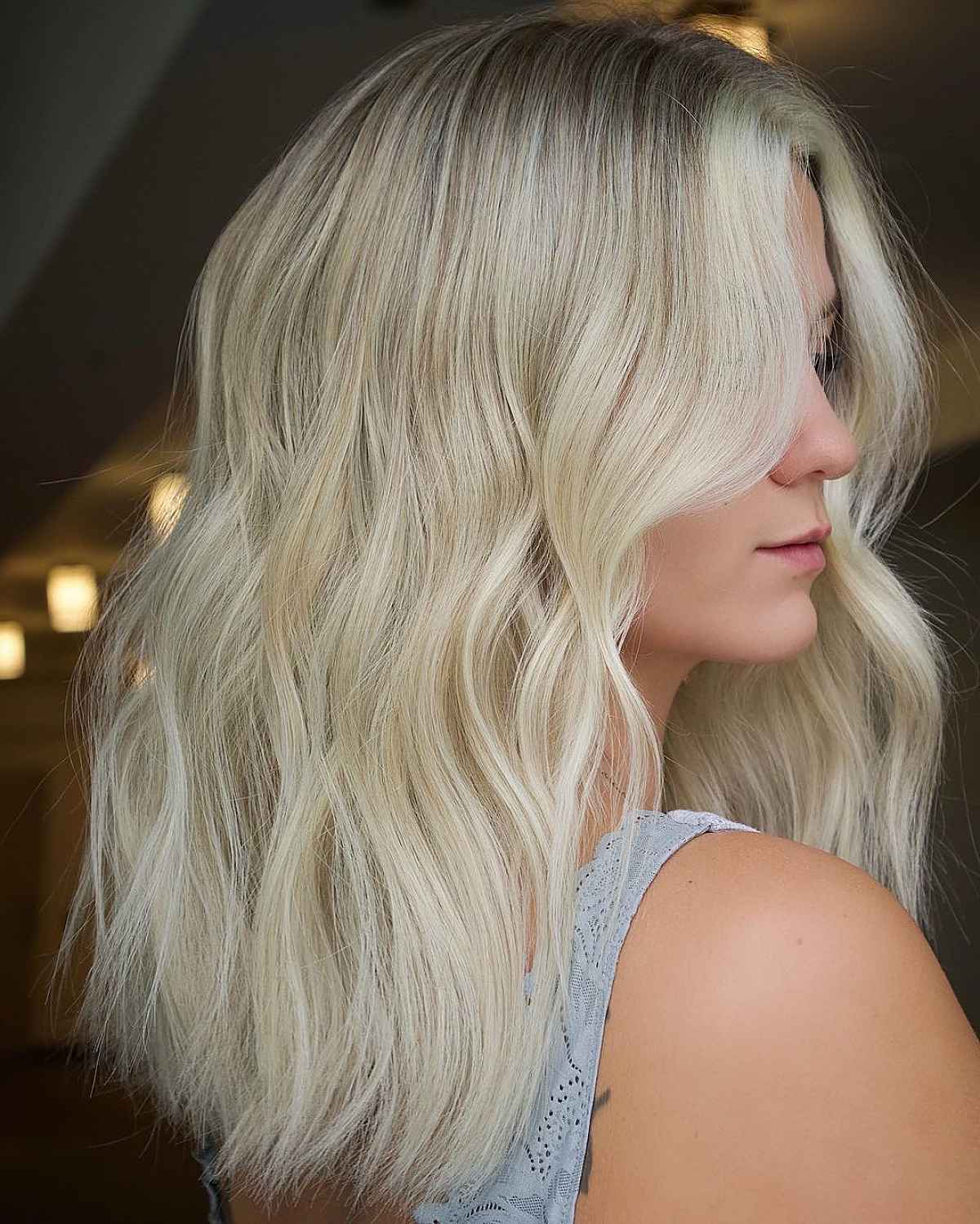
Photo credit: latest-hairstyles.com
A uniform pale champagne blonde is a colorist’s patience test, not a one-session miracle. Getting from your natural base to that even, glossy tone usually takes multiple lightening appointments, each one lifting the hair a shade or two so the cuticle stays intact. The back view here shows why the layers matter: on thick wavy hair, they stop the length from feeling like one heavy curtain.
Ask your colorist for: mid-back length, pale champagne blonde, smooth blowout. The salon time is the real investment, but if you want the polished result at home, a boar bristle brush pulls the wave straight as you dry. Pale roots show fast, so plan a touch-up every 6 to 8 weeks to keep the uniform look from going brassy at the base.
Collarbone Light Champagne Blonde Balayage
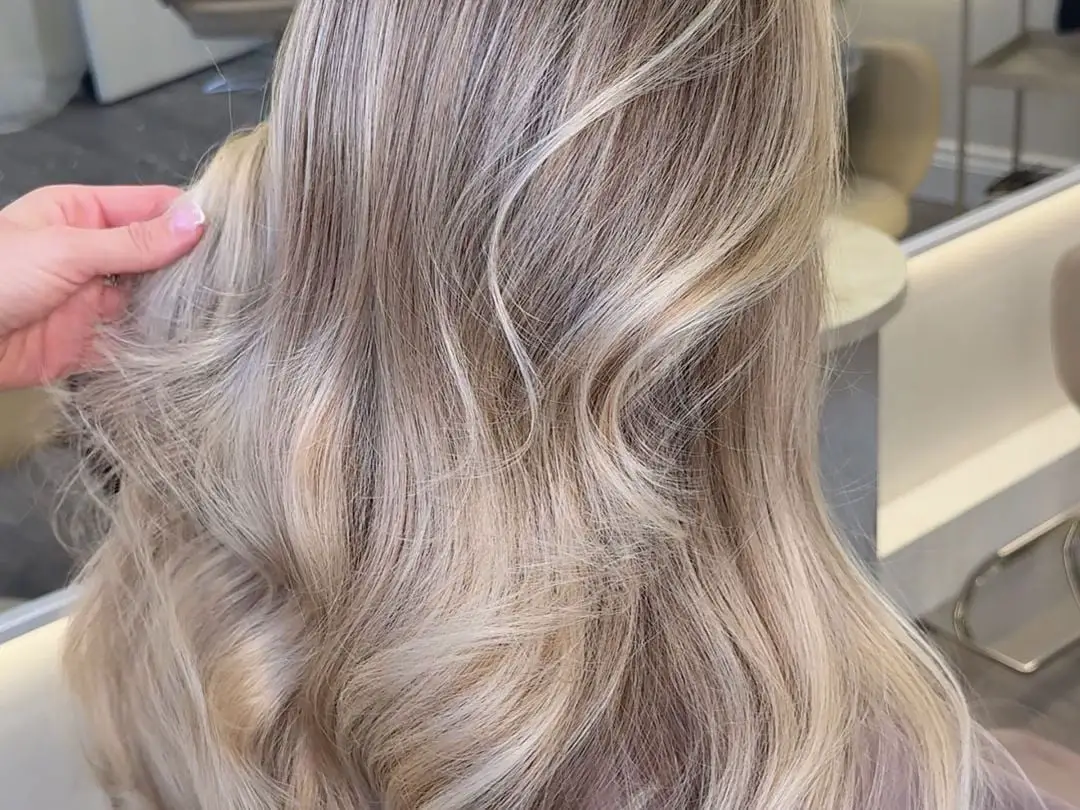
Image credit: glamour.com
Light champagne blonde sits in a different lane than the deeper, honeyed versions of the trend. Where a richer tone warms everything up, this lighter shade stays bright and airy, which makes it a sharper contrast against darker roots. The balayage technique keeps the transition soft, so the grow-out won’t slap you in the face at week six. Medium-density wavy hair at collarbone length takes the loose waves without looking thin, and a middle parting plays up facial symmetry. Ask your colorist for: collarbone length, light champagne blonde balayage, loose waves. The honest drawback: lighter bases drift toward brassiness faster, so a purple shampoo is your maintenance friend, and a refresh every 10 to 12 weeks keeps the tone from going orange.
Collarbone Champagne Blonde With Face Framing Bangs
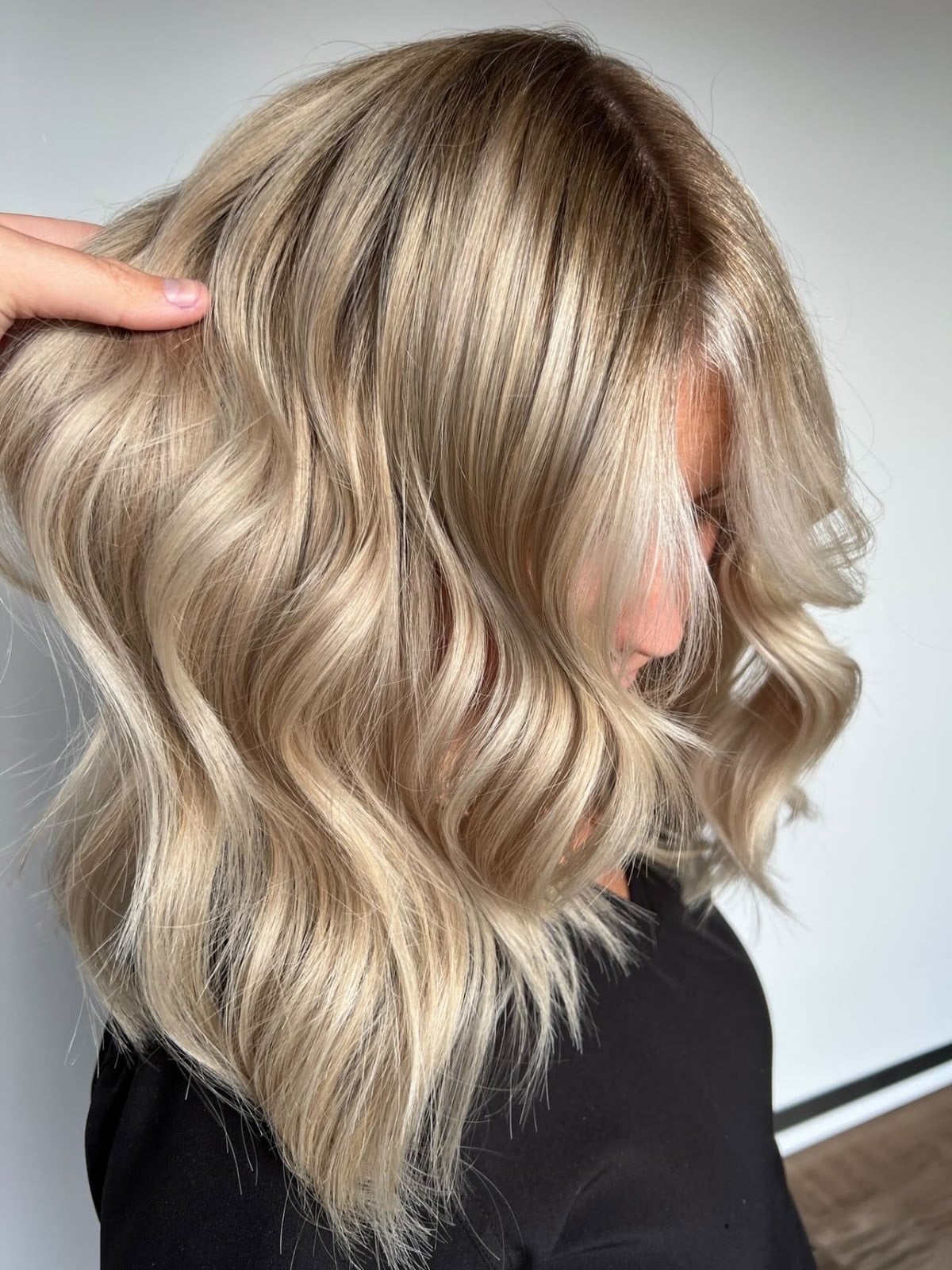
Source: hair.com
Who actually benefits from face-framing bangs on a collarbone-length champagne blonde? Anyone with an angular jawline, because those shorter pieces curve around the cheekbones and soften the hard lines. The middle parting keeps the bangs from feeling like a separate entity, blending them into the rest of the blowout. Medium-density wavy hair gives the volume enough body to hold the shape, and the collarbone length keeps everything from dragging down. Ask your colorist for: collarbone length, champagne blonde, voluminous blowout, face-framing bangs. A large barrel round brush is the tool for that bounce, and because the bangs are the first thing to grow out, plan a trim every 4 to 6 weeks to keep them in their lane.
Shoulder Length Champagne Blonde Defined Curls
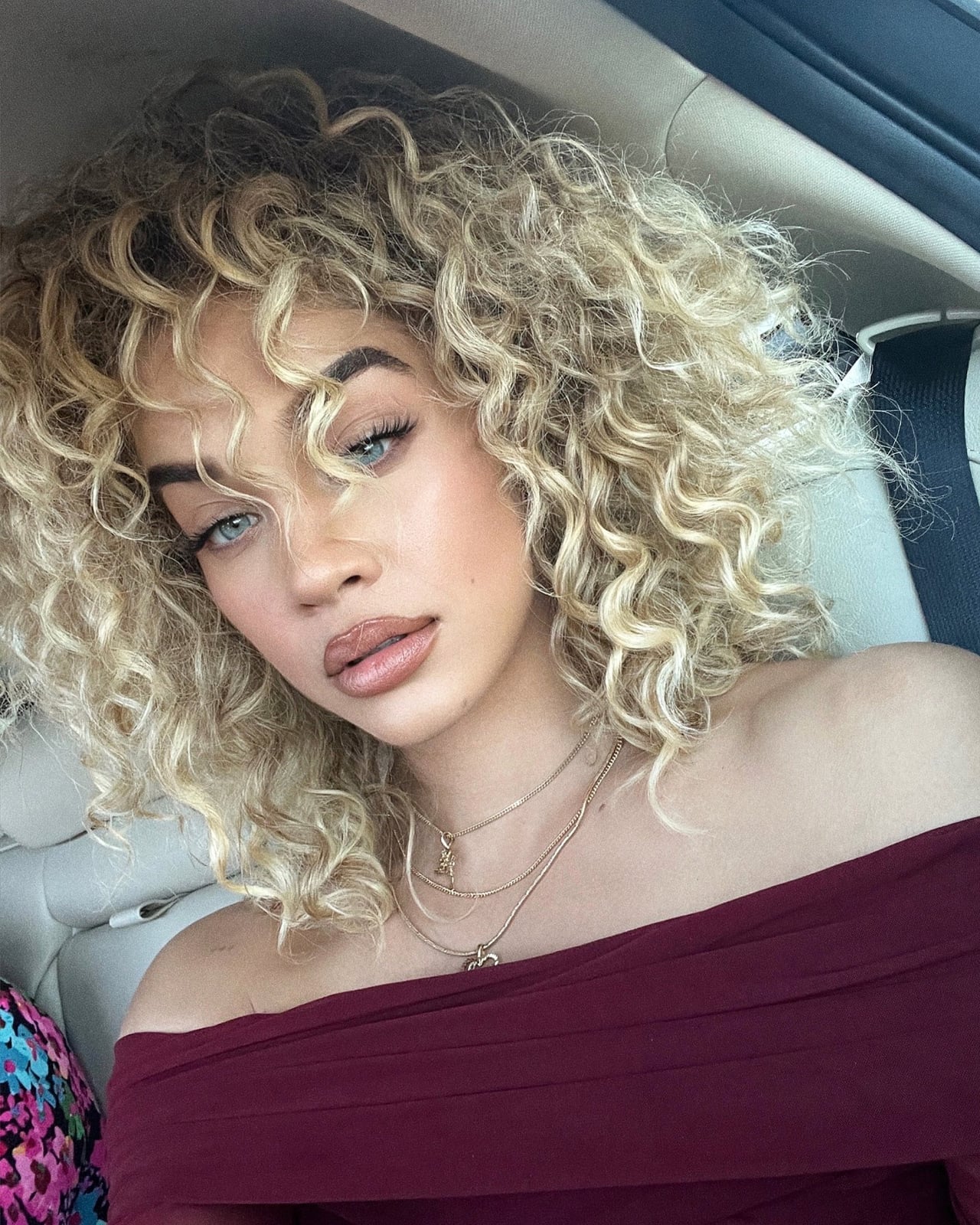
Source: whowhatwear.com
Champagne blonde on defined curls is a warm-weather move that actually earns its keep. The bright tone adds a glossy shimmer to thick, curly hair, and the shoulder length lets the curls spring up without feeling weighed down. A middle parting balances wider faces, and the layers give each curl its own shape instead of one dense mass. Ask your colorist for: shoulder length, champagne blonde, defined curls. A curl-defining cream and a diffuser are all you need to set the pattern, and since the color sits close to the roots, a refresh every 8 to 10 weeks keeps the brightness from dulling over festival season.
Mid-Back Blunt Cut In Champagne Blonde
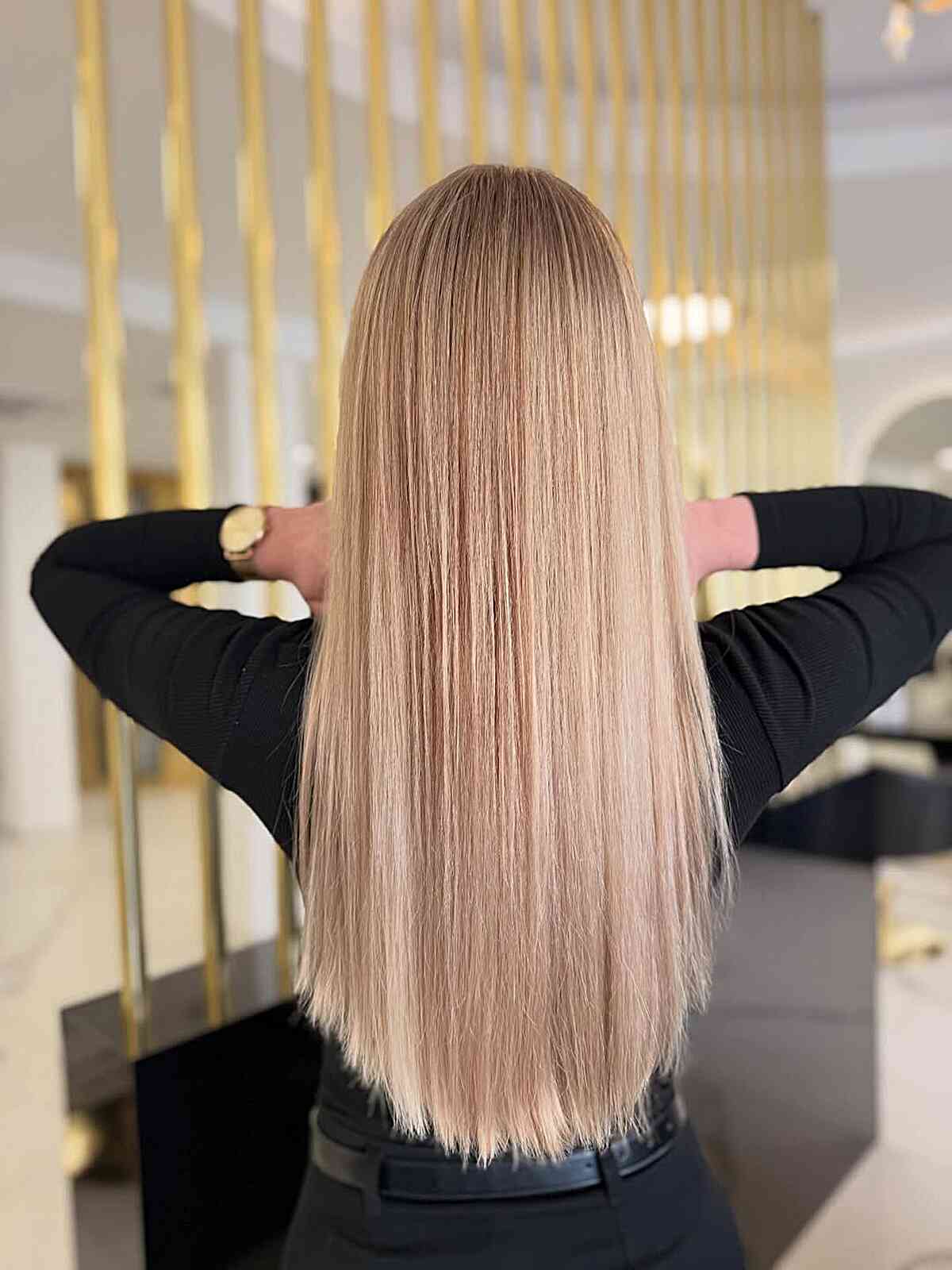
To keep that sharp edge looking sharp, you will need a trim every eight to ten weeks, since any split ends will show up as a ragged fringe. The straight texture does the heavy lifting here, but a flat iron with a heat protectant will keep the finish glassy between appointments. The one real drawback: there is nowhere to hide. If you skip the trim, the line softens fast, and the whole cut loses its architectural appeal.
Mid-Back Beige Blonde With Balayage
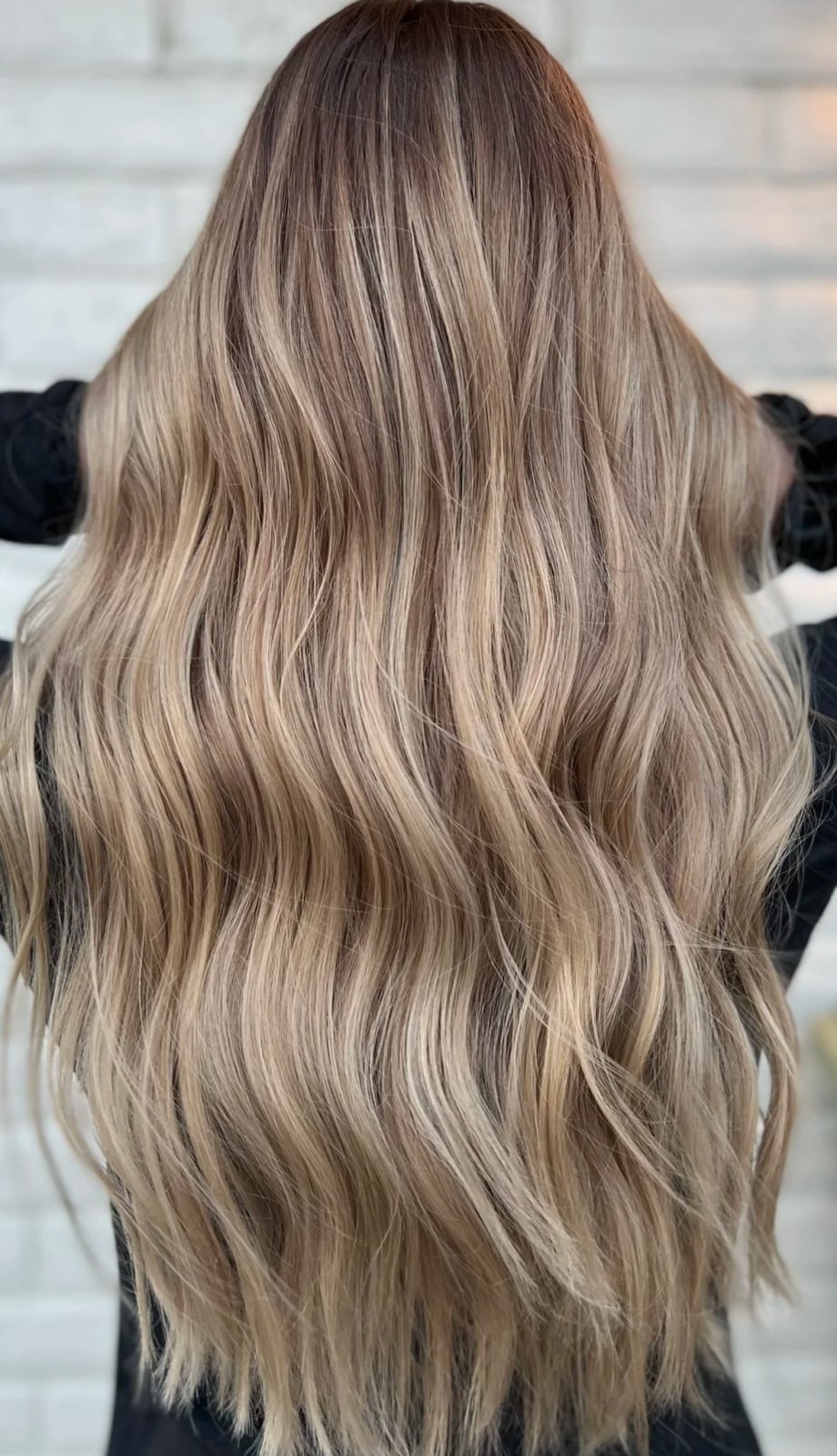
Courtesy of: sway.salon
Ever wonder how some blondes look like they woke up with dimension while others look painted from a single bottle? The answer is balayage. Here, the beige blonde base is hand-painted with lighter strands throughout, so the color graduates from root to tip instead of sitting as one flat shade. On thick, wavy mid-back hair, the loose waves catch those lighter pieces and show off the blend from every angle.
Ask your colorist for: mid-back length, beige blonde with balayage, loose waves. Because the technique is painted, not foiled, the grow-out is naturally softer than a uniform application. A texturizing spray will give the waves grip and keep the ends from looking stringy. To maintain the brightness, plan a refresh every ten to twelve weeks, though the lived-in effect means you can stretch it if you like.
Mid-Back Champagne Blonde With Lowlights and Highlights
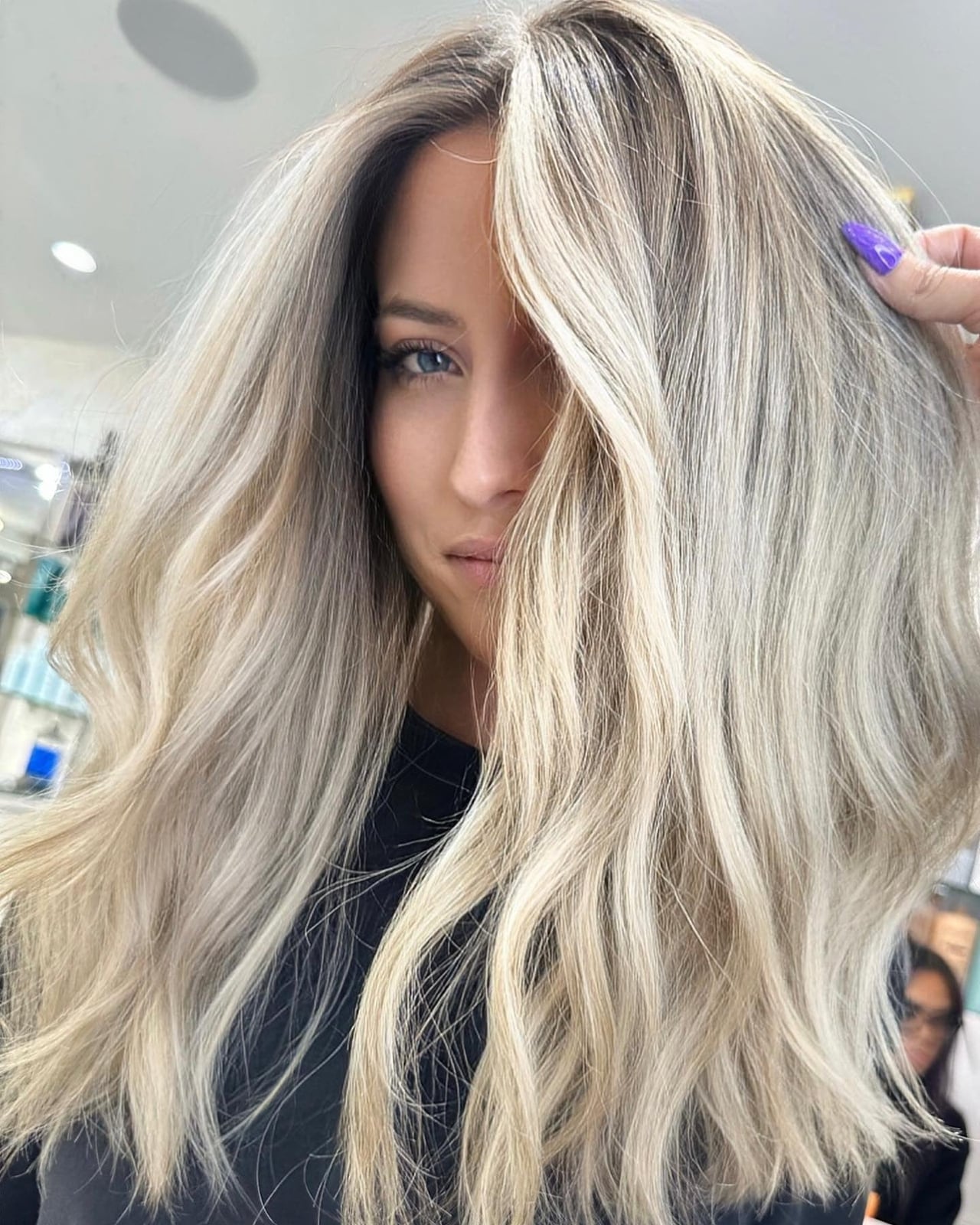
Photo credit: creativebooster.net
Notice how this champagne blonde has depth, not just lightness? That is the work of blended beige lowlights woven under butter blonde face-framing highlights. The lowlights sink the base, while the highlights pull the eye toward the curtain bangs and the layers. On thick, wavy mid-back hair, the mix creates a dimensional color that moves with you.
Ask your colorist for: mid-back length, champagne blonde with beige lowlights and butter blonde highlights, curtain bangs. For oval and heart-shaped faces, the curtain bangs soften the forehead and cheekbones. A round brush blowout will give the waves volume and let the highlights catch the light. Curtain bangs need a trim every four to six weeks to keep their shape, and the dimensional color can go ten to twelve weeks between toning visits.
Collarbone Lob With Soft Waves and Highlights
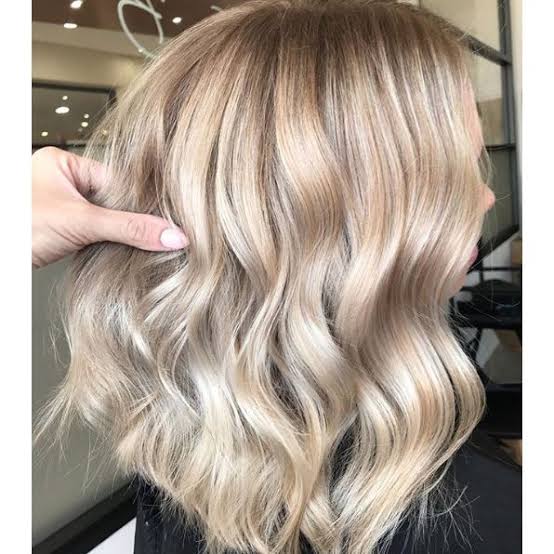
Image credit: southernliving.com
A collarbone-length lob with soft waves is a low-commitment blonde option that still looks polished. The champagne blonde base carries subtle, lighter highlights woven through, which gives the medium-density wavy hair a multi-dimensional finish without looking stripey. The middle part keeps it modern, and the length lands right at the collarbone, a forgiving spot for most face shapes.
Ask your colorist for: collarbone length lob, soft waves, champagne blonde with subtle highlights. This tone requires salon time, since the subtle highlights need a steady hand to avoid over-brightening. At home, use a scrunching motion or a diffuser to keep the waves soft. The trade-off: if you skip the salon for too long, the highlights can fade into a brassy wash, so plan a refresh every ten to twelve weeks.
Long Layered Beige Champagne Blonde With Face Framing
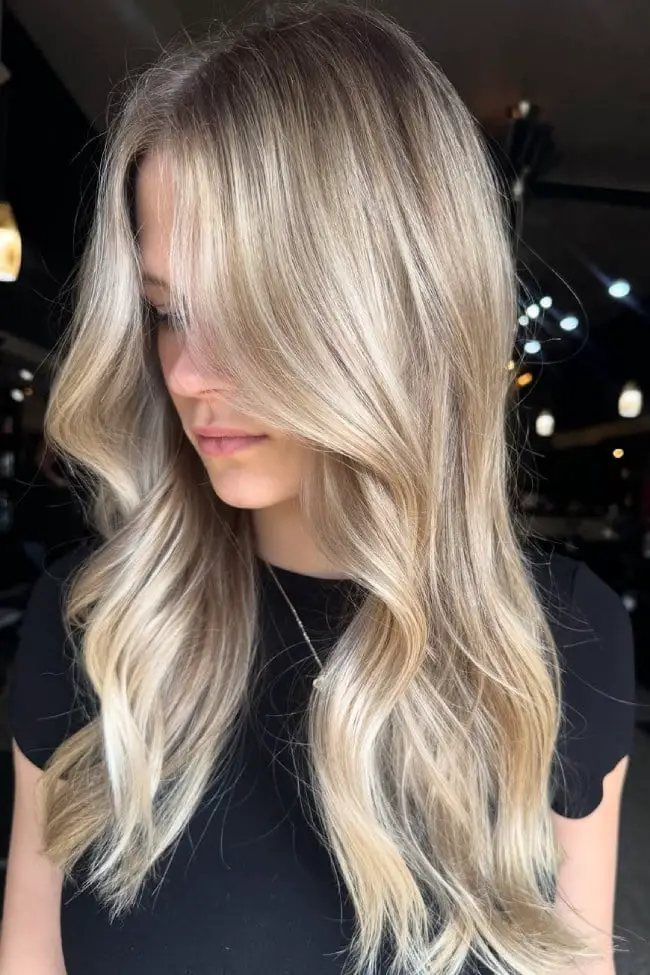
Source: itakeyou.co.uk
Who does a long layered cut with face-framing highlights actually suit? Anyone with medium-thick wavy hair and a face that wants a little softening. The butter blonde highlights sit right around the jaw and cheekbones, which works to draw the eye outward and balance angular features. On long, loose waves with a middle part, the effect is a gentle frame, not a hard line.
Ask your colorist for: long layered haircut, soft beige champagne blonde with butter blonde face-framing highlights. The layers give the waves movement, so they do not fall flat, and the face-framing pieces are cut to blend into the length. A large barrel curling iron will enhance the wave pattern, and a trim every eight to ten weeks keeps the layers from getting heavy. If your hair is fine, the highlights can look sparse, so this one leans toward those with more density to work with.
Shoulder Length Warm Champagne Blonde With Babylights

Via stylist.co.uk
The warm champagne blonde here gets its glow from fine babylights, which create a subtle shimmer without obvious streaks. Loose waves keep the shoulder-length cut soft, and the wispy bangs frame the face without demanding much styling. Medium-density wavy hair holds this shape well, and the babylights blend into the base so grow-out stays forgiving. Ask your colorist for: shoulder length, warm champagne blonde with babylights, wispy bangs. The wave pattern has a lived-in feel, and the babylights need refreshing every 8 to 10 weeks to keep that luminous tone from turning flat.
Mid-Back Dimensional Champagne Blonde
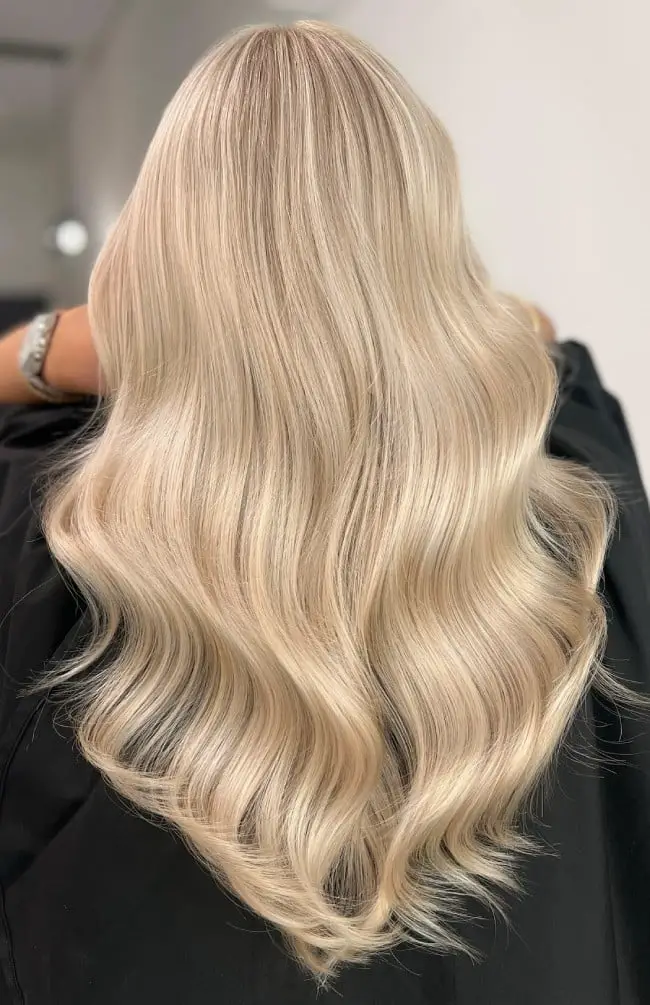
Courtesy of: fabmood.com
Dimensional champagne blonde works because lighter strands are woven through the mid-back length in soft, blended pieces, so the color moves when the hair does. Thick wavy hair takes the loose flowing waves especially well, and the layers give dense hair a lighter feel without sacrificing length. Ask your colorist for: mid-back length, dimensional champagne blonde with lighter strands. To keep the dimension visible, a shine serum on the lengths helps the lighter pieces catch light, and a color touch-up every 8 to 10 weeks prevents the highlights from fading into a single flat shade. The honest drawback is that skipping that toning appointment lets the champagne tone shift brassy, so the upkeep is steady but not demanding.
Mid-Back Champagne Blonde With Soft Curtain Bangs
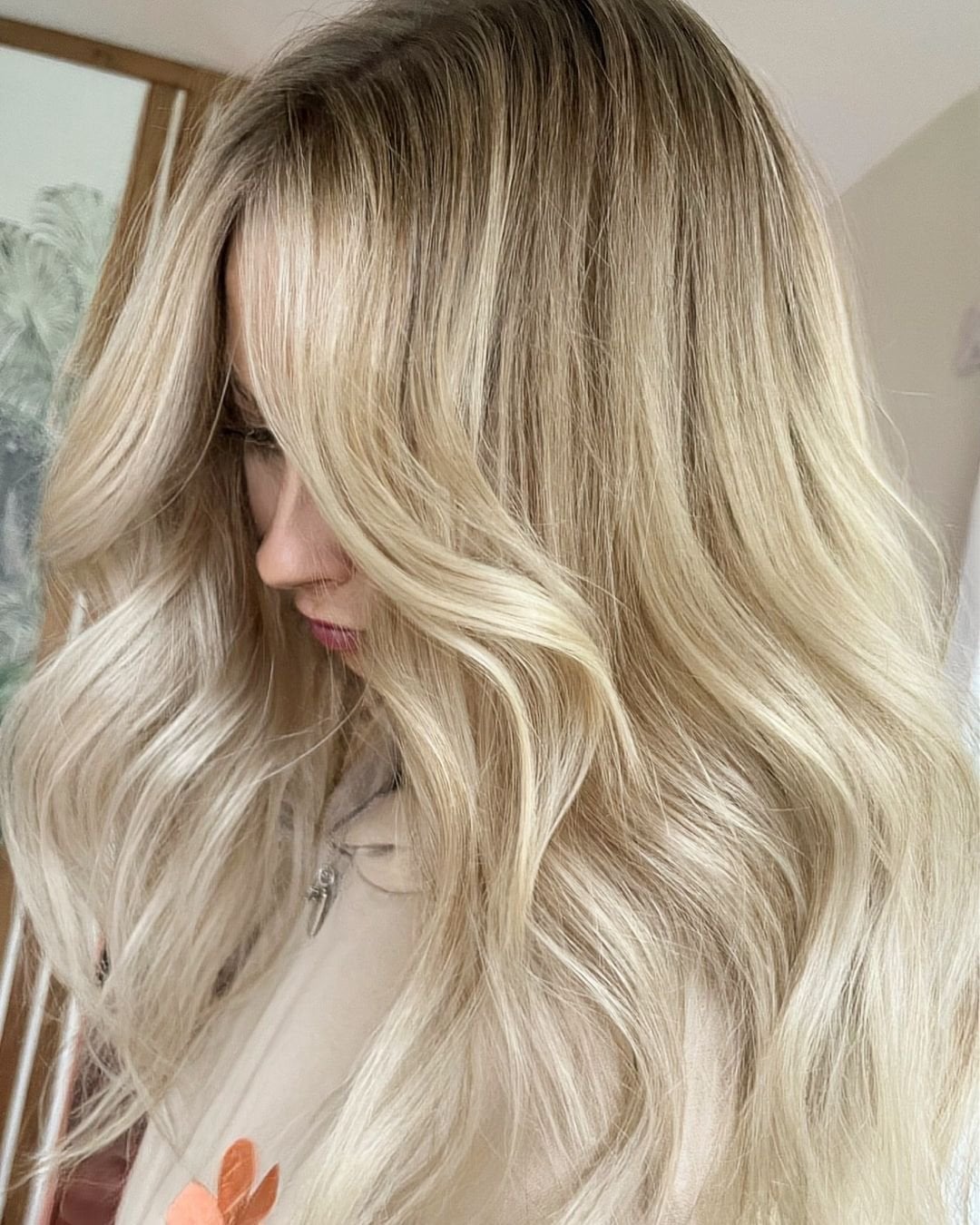
Photo credit: redkenpro.com
How does a champagne blonde finish look this glossy? It starts with a toning step that neutralizes any yellow or brassy cast, leaving the mid-back length with a soft, polished sheen. The technique pairs a middle part with soft curtain bangs, which blend into the thick wavy texture and frame the face without a blunt line. Ask your colorist for: mid-back length, champagne blonde with subtle highlights, soft curtain bangs. A volumizing spray at the roots and a round brush during the blowout lift the hair at the crown, and the curtain bangs need a trim every 6 to 8 weeks to hold their shape. The subtle highlights keep the color dimensional so the glossy finish never looks flat.
Mid-Back Rich Champagne Blonde With Balayage, Wavy
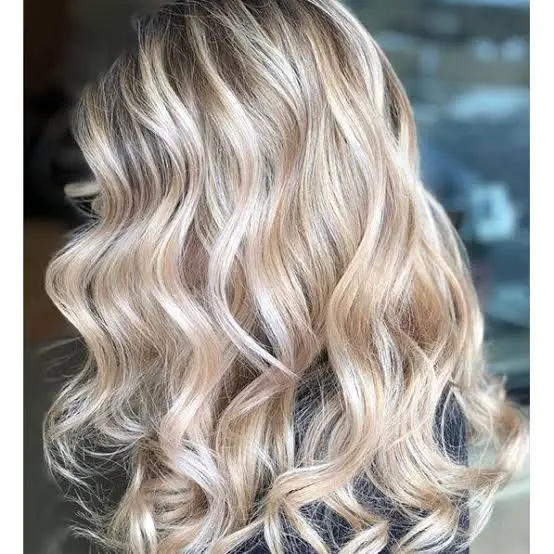
Image credit: southernliving.com
The rich champagne blonde base here is deepened by balayage highlights that sweep brighter toward the ends, giving the mid-back length significant dimension. Long layers and loose waves with a middle part let the color move in sections, and thick wavy hair carries that brightness without looking overdone. Ask your colorist for: mid-back length, long layers, rich champagne blonde with balayage highlights. The balayage technique keeps the grow-out line soft, so the roots stay low-maintenance, but the bright ends will need a toner every 10 to 12 weeks to hold that cool champagne tone. A texturizing spray adds grip to the waves and separates the lighter pieces for a natural, sun-lit finish.
Collarbone Lob With Wispy Bangs And Root Shadow
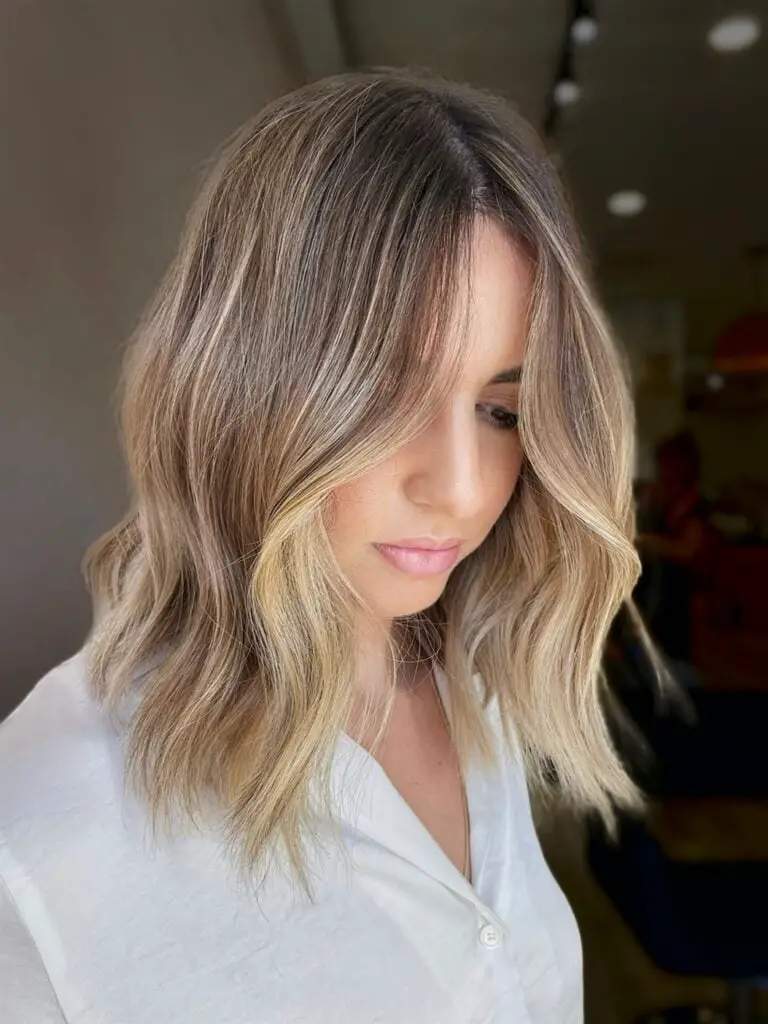
A root shadow grounds the beige blonde into a darker base and lets the lighter ends stand out on this collarbone lob. The wispy bangs and middle parting keep the cut soft on medium wavy hair, and the root shadow extends the grow-out window so the color line never looks harsh. Ask your colorist for: collarbone length lob, wispy bangs, beige blonde with root shadow. This is a salon-leaning process: the root shadow takes about an hour, and the beige blonde ends need a toner every 8 weeks to prevent brassiness. The root shadow can look overgrown if you skip those touch-ups, so it asks for a steady rhythm instead of a one-and-done color.
Final Thoughts
For a brighter, more impactful champagne blonde, opt for babylights or face-framing highlights. For a softer, low-maintenance look, choose balayage with a subtle root shadow.
- Use a purple or violet toning shampoo and conditioner every 2-3 washes.
- Use a color-safe shampoo and conditioner to preserve vibrancy and prevent fading.
- Deep condition weekly to keep blonde hair hydrated and prevent dryness.
- Trim ends every 6-10 weeks to maintain the cut’s shape and health.
- Minimize heat styling and always use a heat protectant spray.
Champagne blonde offers a spectrum of luminous, sophisticated blonde shades.
Hairstyle
19 Trendy Retwist Locs Hairstyles 2027 with Geometric Parting
Trendy Retwist Locs 2027 hairstyles featuring sharp geometric parting and precise retwists for a clean look. See 19 loc styles and save your favorite.
A retwist is the reset button for locs, tightening the roots and giving each strand a uniform, polished shape. This season, the trend leans hard into precision: think sharp geometric parts and clean lines that make the pattern part of the style.
These 19 Trendy Retwist Locs ideas cover the full spectrum, from a quick shoulder-length refresh to an elaborate updo with gold cuffs. Whether your locs are fine and need volume at the roots or thick and crave a structured part, you will find a look that holds. No more wrestling with a part that wanders off by lunch.
Shoulder Length Locs With Geometric Parting
Courtesy of: coilsandglory.com
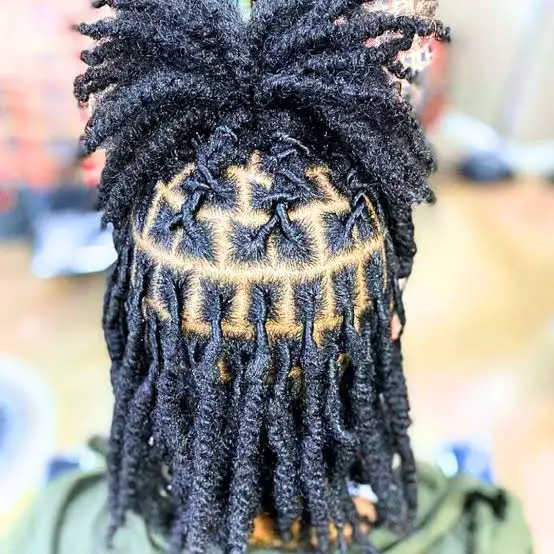
The geometric parting here is the kind of detail that demands a steady hand and a clear plan before the first section is even mapped. These shoulder length locs, dark black and coily, are retwisted so the scalp pattern reads as a deliberate design rather than a happy accident. A fresh retwist holds the lines in place, so the parting stays crisp for weeks. Ask your stylist for: shoulder length locs with sharp geometric scalp parting. This works best on medium density hair, where the pattern has enough room to show without getting lost. Plan on a retwist every four to six weeks to keep the geometry from softening into something more organic.
Precise Geometric Locs Retwist, Shoulder
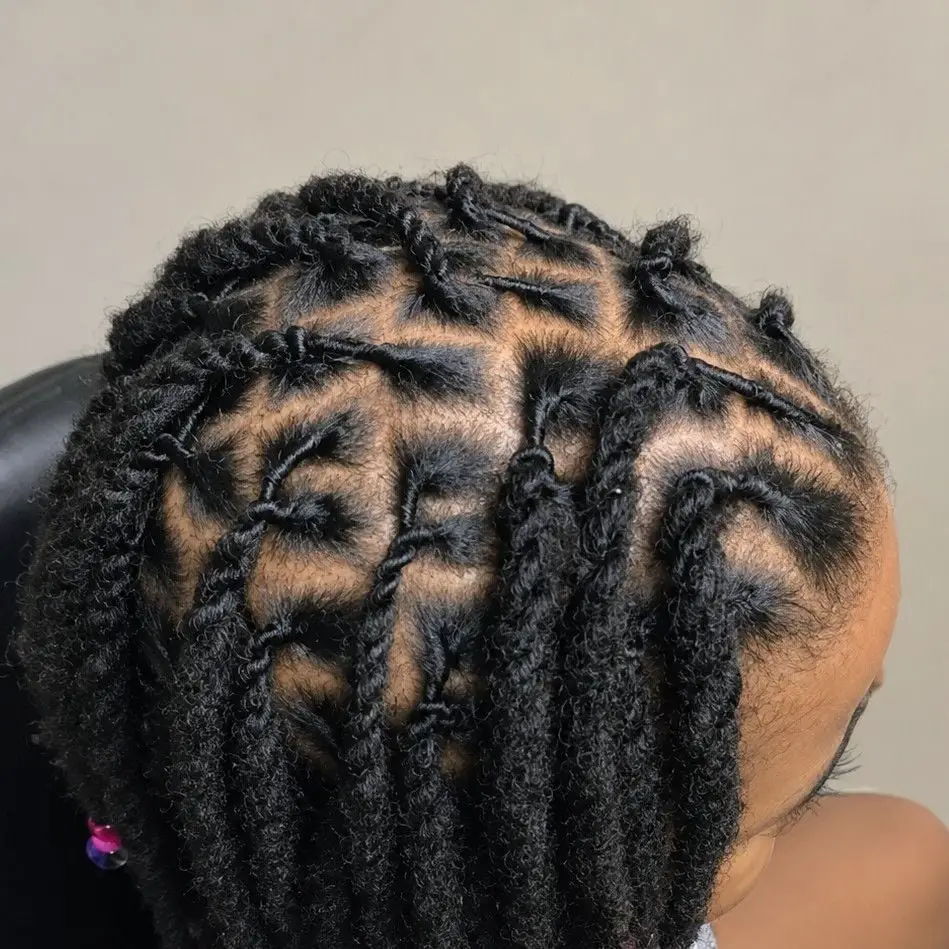
Photo credit: booksy.com
Does a geometric parting actually look as sharp in three dimensions as it does in the planning photo, or does it soften the second you move your head? On shoulder-length black locs with coily texture and medium density, the answer depends on the retwist: each loc needs to be twisted from the root with consistent tension so the parting lines stay clean from morning to evening. The top view here shows a pattern that works because the locs are thick enough to hold their shape but fine enough that the scalp geometry reads clearly. Ask your stylist for: geometric retwist with sharp, defined sections. A fine-tooth comb run along the part lines after each twist keeps the edges from blurring, and the hold lasts a solid week before the roots begin to soften.
Sharp Geometric Parting On Black Locs
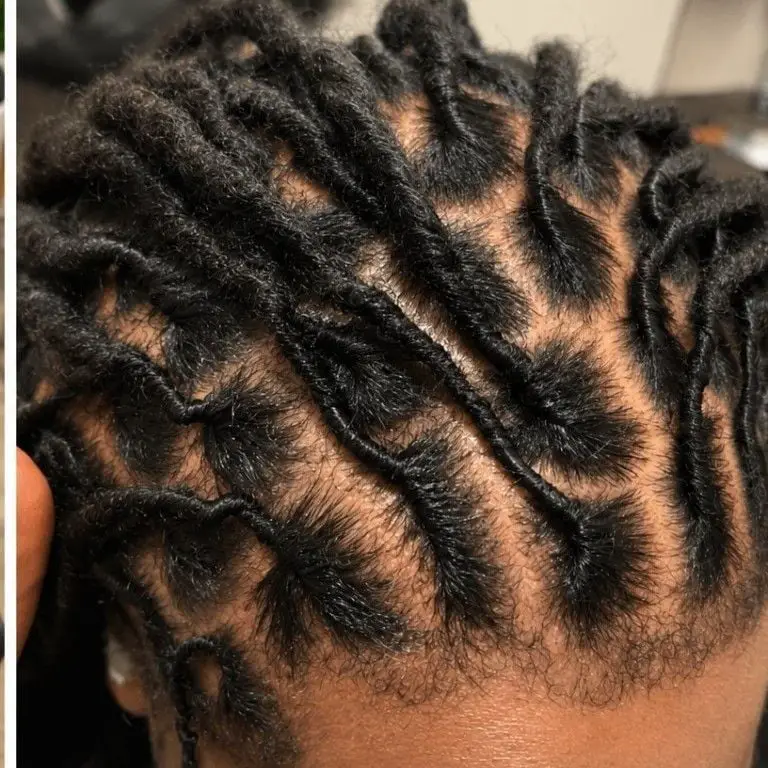
Image credit: booksy.com
Freehand parting has its charm, but this sharp geometric parting on black locs is a different animal entirely. Where freehand lets the scalp pattern wander, this keeps every line exact, each section a clean rectangle or triangle. The coily texture and medium density hold the shape well, so the design stays visible rather than sinking into the hair. Ask your stylist for: geometric parting with defined loc sections. The design requires commitment: a retwist every four to six weeks keeps the lines crisp. Skip a session and you are back to a softer, less graphic look.
Mid-Back Locs Ponytail With Geometric Parting
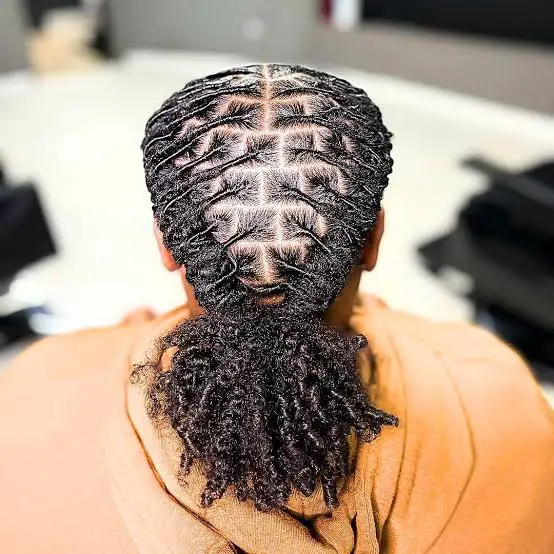
Source: coilsandglory.com
Pulling mid-back length locs into a ponytail is practical, but the geometric parting at the scalp is what makes it feel intentional. The black, coily locs sweep back from the defined sections, so the style reads as much from the front as from the back. This is a daily-wear option for anyone who wants their hair out of the way without losing scalp definition. Ask your stylist for: mid-back locs in a ponytail with geometric scalp parting. Secure the ponytail with a fabric-covered band to avoid snagging the locs. The parting holds best when the retwist is fresh, so plan for a salon visit every four to six weeks to keep the pattern sharp.
Thick Shoulder Length Locs With Geometric Parting, Black
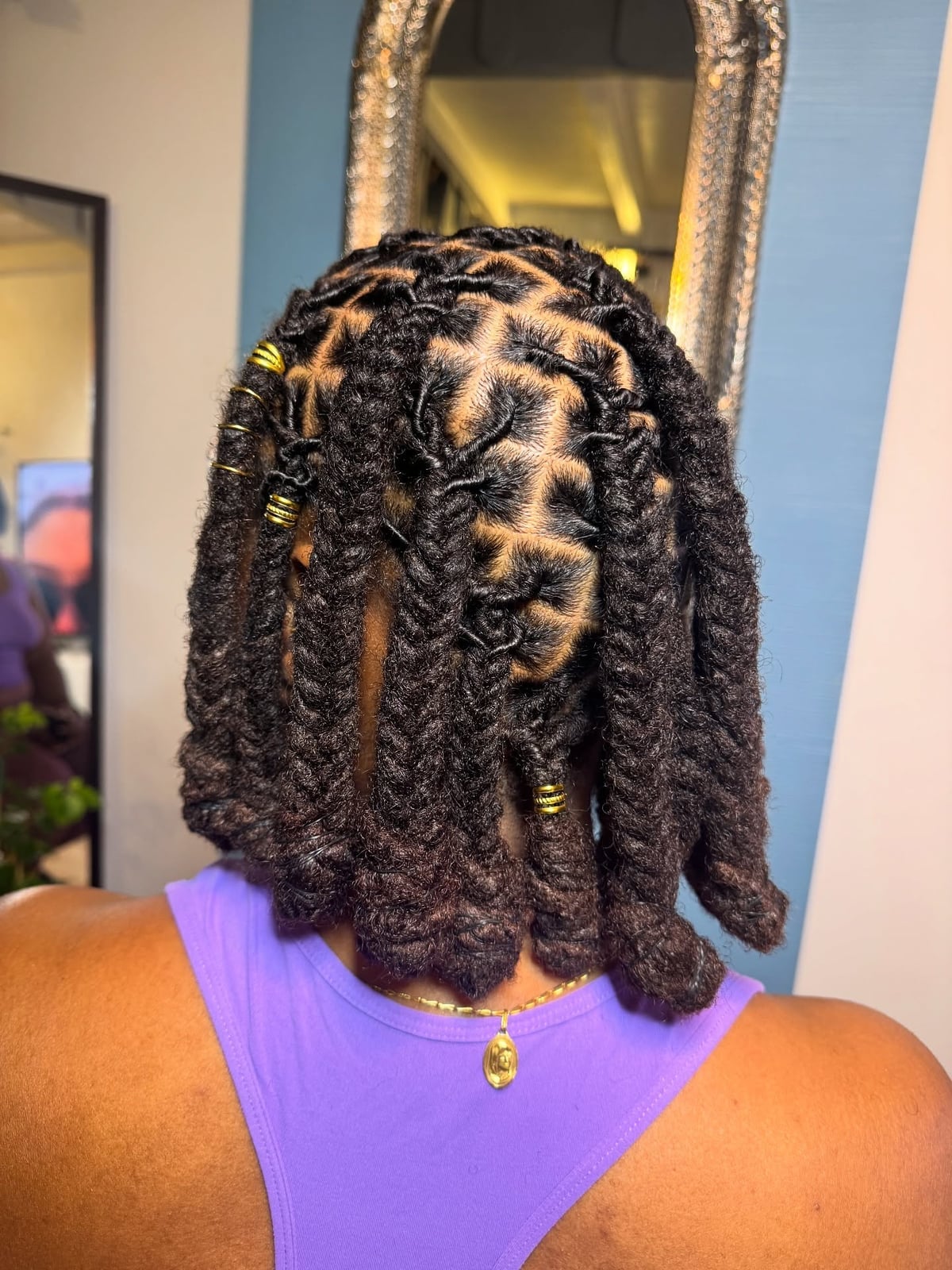
Thick locs have a presence that finer locs do not, and this shoulder length set uses a geometric parting to add structure without losing weight. The black locs are twisted into defined sections, with the parting visible and the rest falling freely. When you ask for this, be specific: you want the parting to start and the sections to be twisted, not just retwisted. Ask your stylist for: shoulder length thick locs with geometric parting. A small amount of styling cream keeps the twisted sections from unraveling. This is a salon-built style, so bring reference photos and expect the session to take a while.
Thick Locs In Double Buns With Geometric Parting
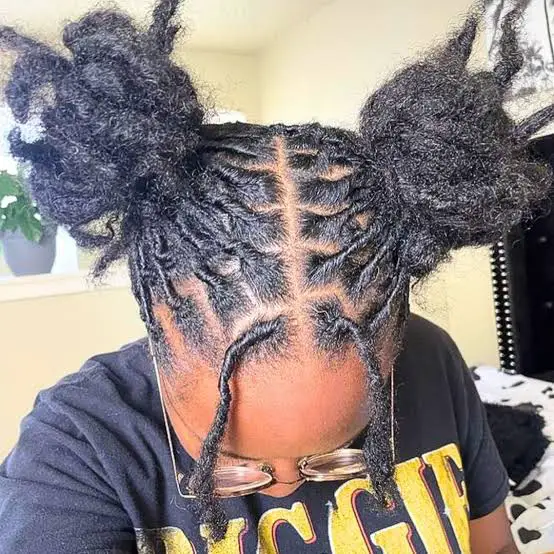
Courtesy of: coilsandglory.com
The design hinges on the braiding: each thick, coily loc is braided from the root to secure it before being wrapped into a high bun, which keeps the style anchored for hours. The two buns sit symmetrically on either side of a middle geometric parting, and the loose strands that fall around the face soften the structure. This works best on thick, coily locs that reach mid-back, since the length gives you enough to wrap without straining the roots.
Ask your stylist for: mid-back locs in two high buns with a middle geometric parting. The parting pattern needs a fresh retwist to read clearly, so book this within a week of your retwist. Bobby pins are the quiet heroes here; they tuck flyaways and keep the buns from migrating. The hold is solid for a full day, and the style survives a commute, a workday, and most of an evening out.
Micro Locs Half Updo With Intricate Parting
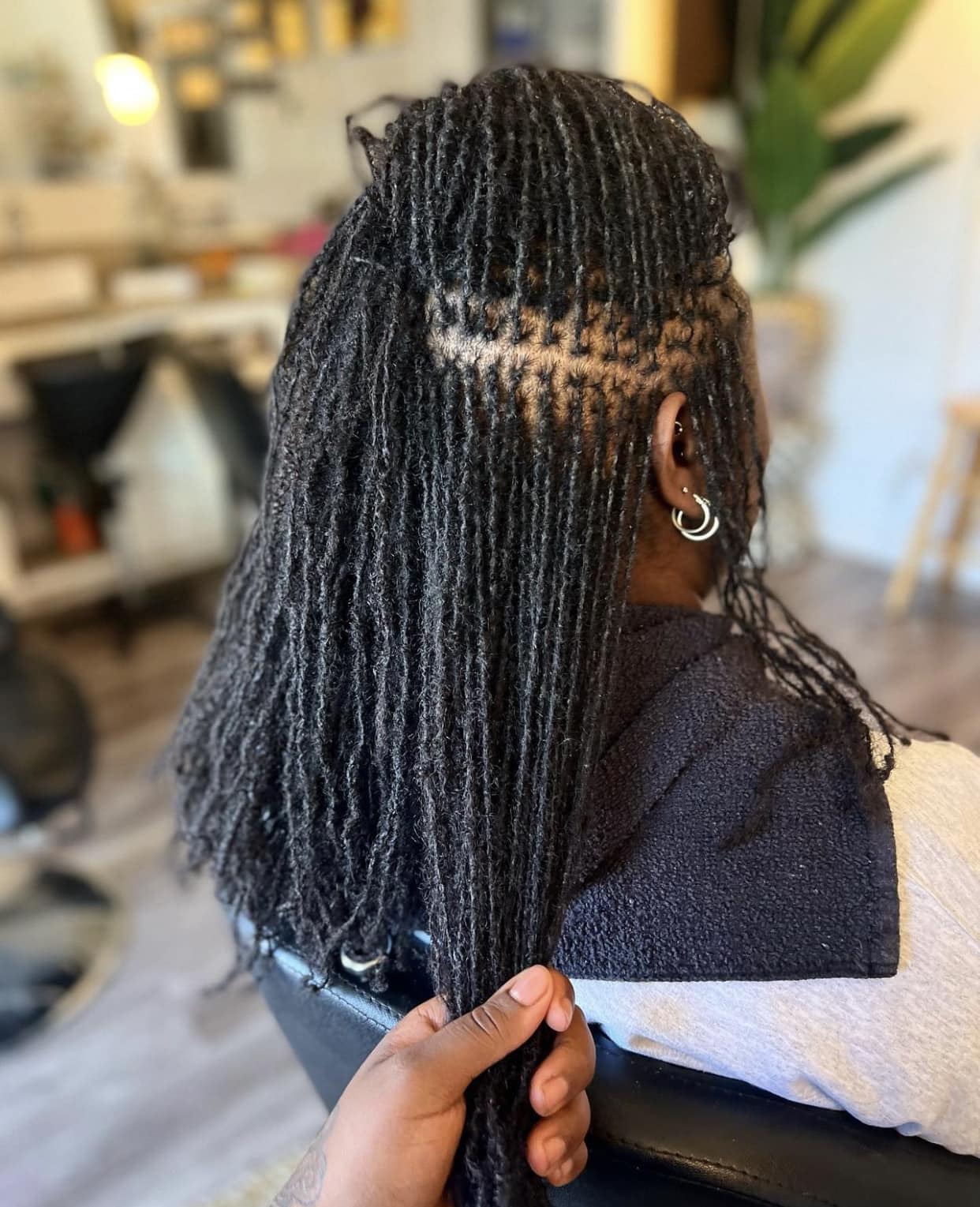
Photo credit: naturalsisters.co.za
How often does an intricate parting pattern stay visible once your hair is up? With micro locs, the answer is: long enough to make the effort worth it. The top section is gathered and pinned, leaving the rest to cascade to mid-back, and the scalp pattern remains crisp because the locs are fine enough to expose every line. This suits micro locs of mid-back length, where the density and uniformity let the design show.
Ask your stylist for: micro locs half updo with an intricate scalp parting. The parting is the star, so schedule this right after a retwist and keep it that way with a satin scarf at night. Hair pins secure the top section, and a light oil on the scalp stops the pattern from looking dry. The hold is dependable for a long day, and the style carries from a professional setting into an evening without a redo.
Collarbone Locs With Dark Brown Highlights
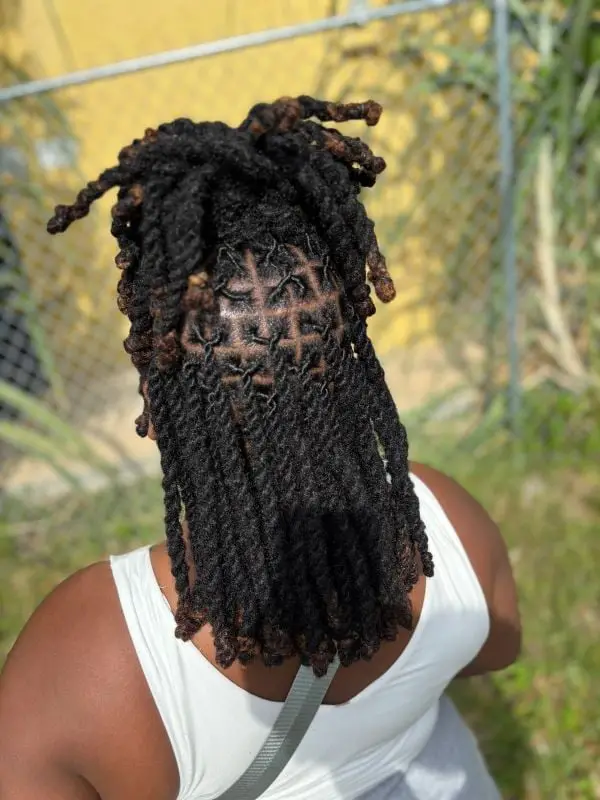
Image credit: qhbraiding.com
The geometric scalp pattern is the detail that makes this retwist stand out, even from behind, where the collarbone length of thick locs shows off the middle parting and the dark brown base that fades to lighter tips. This suits thick locs of collarbone length with a natural brown hue, because the dimension at the ends gives the style depth without a full color commitment. Ask your colorist for: collarbone locs with dark brown to lighter tips. The daily styling effort requires a fresh retwist to keep the scalp pattern sharp, which means a salon visit every four to six weeks, and the lighter tips can look dull without a bit of serum. For a set-and-forget style, this one asks for upkeep.
Neat Retwist On Shoulder Length Black Locs
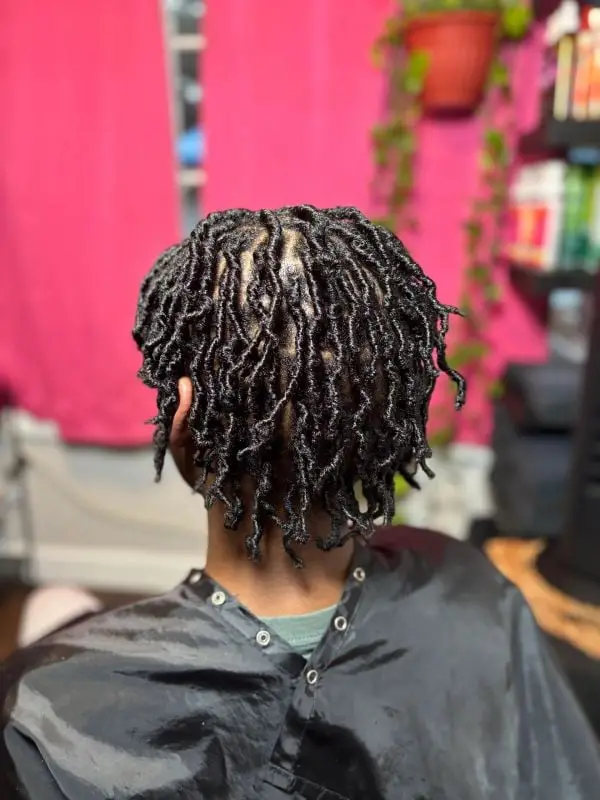
Source: qhbraiding.com
A neat retwist on shoulder-length black locs is built on precision at the root: each loc is twisted from the scalp with a consistent tension, and the middle parting keeps the pattern symmetrical from the back. The medium density means the retwist holds its definition without looking sparse, and the black color makes the scalp pattern pop. Ask your stylist for: shoulder length black locs with a neat retwist. This is a maintenance style, so the retwist needs repeating every four to six weeks to keep the neatness, and a satin bonnet at night preserves the definition between visits. The hold is clean and professional, which is why it works for everyday wear and office settings alike.
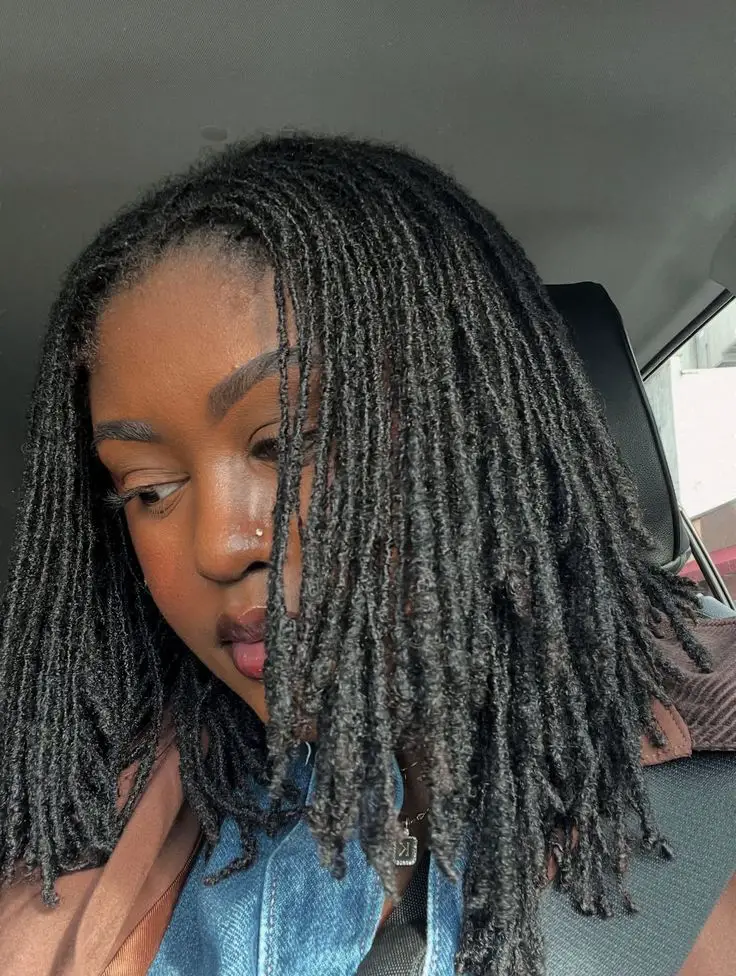
Collarbone Locs With Side Parting
Source: ohyealocs.com
It depends on your face shape: a side part adds volume at the crown, which suits rounder faces, while a center part elongates a longer face. For collarbone-length, coily locs with medium density, the side parting gives a relaxed, loose fall that frames the face without the structure of a middle part. Ask your stylist for: collarbone black locs with a side parting and loose style. The retwist at the roots keeps the parting clean, but the style holds best with a light finishing spray to tame flyaways. It’s an everyday casual look that takes minutes to refresh, and the loose locs move naturally with your head.
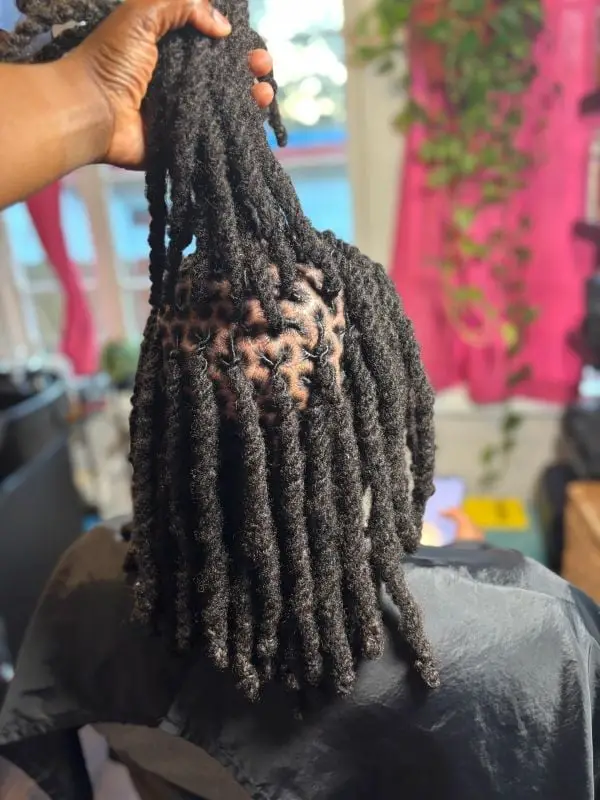
Chin Length Fine Locs With Side Part
Via qhbraiding.com
A side part on chin length fine locs lives or dies by the retwist, because fine density shows every fuzzy root and every stray scalp line. The parting here is crisp, and the black locs carry a faint brown undertone that keeps the color from reading flat. Ask your stylist for: chin length fine locs, side part, defined retwist. Fine locs need a lighter touch with product and a gentler wash routine, since heavy creams sit on the scalp and dull the definition you just paid for. Expect a retwist every four to six weeks to keep the parting sharp.
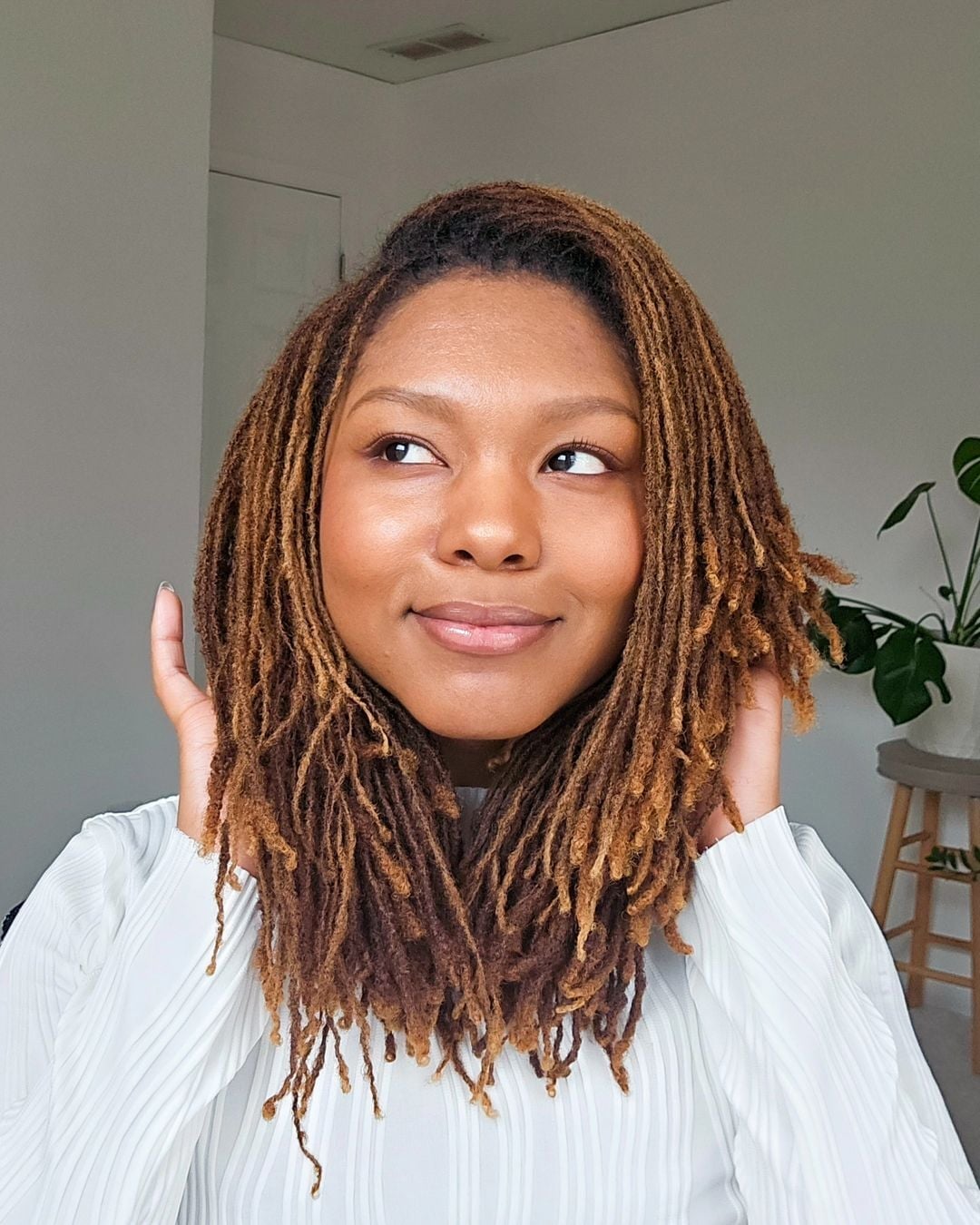
Collarbone Wavy Locs With Dimensional Color
Courtesy of: beautycon.com
- Start on damp, freshly retwisted locs so the pattern sets cleanly.
- Mist with a light texturizing spray, then scrunch the mid-lengths and ends.
- Let them dry flat or in a loose pile, and keep hands off until fully dry.
The color is the part that needs a salon: highlights on a brown base take a couple of hours and a follow-up gloss to keep the blonde from going brassy. Save this one for spring and summer, when air drying is actually pleasant. To keep the tone bright, plan a toning appointment every six to eight weeks.
Faux Locs Straight With Sharp Middle Part
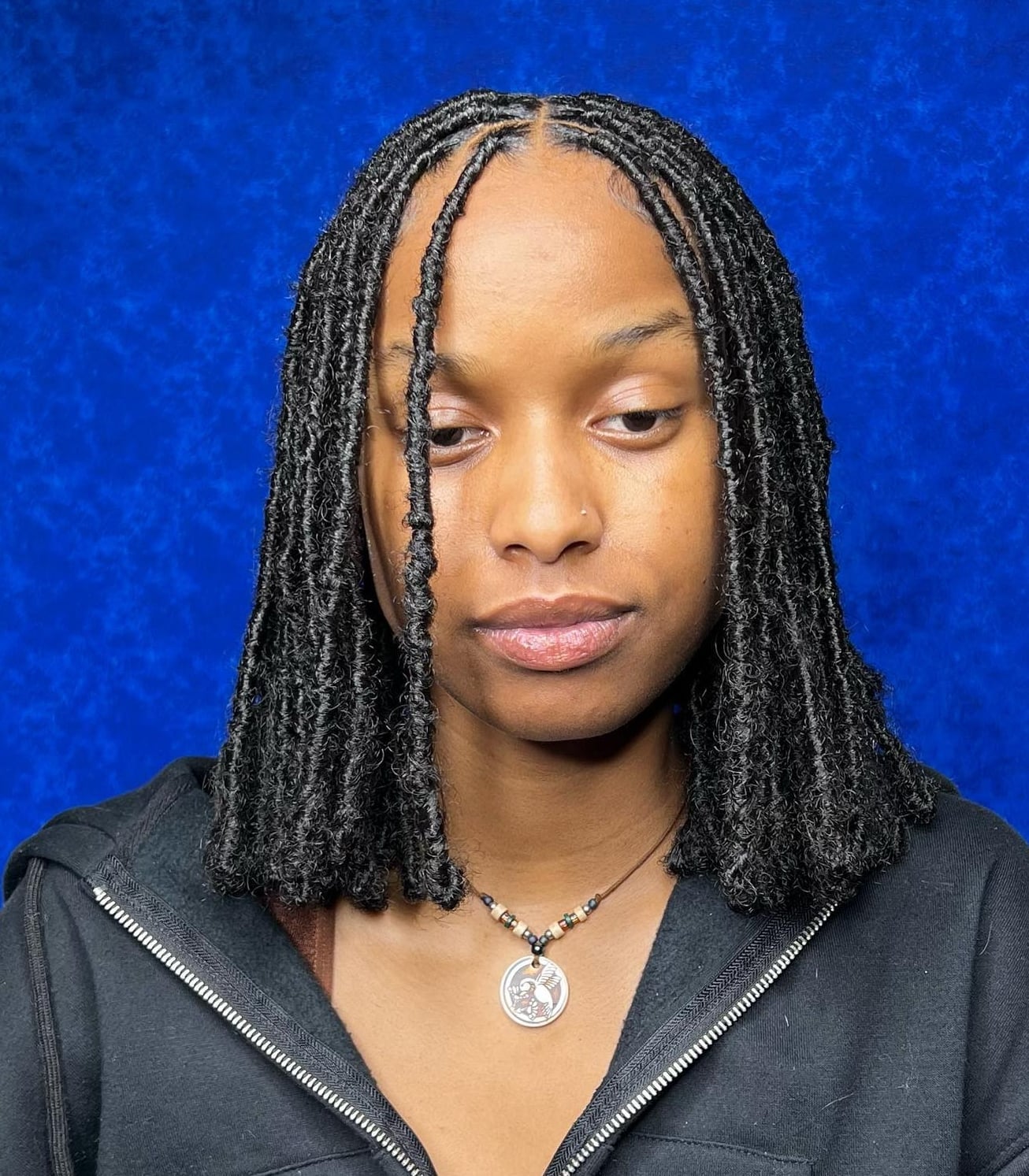
Photo credit: hadviser.com
The parting is cut clean at the front and the black locs fall evenly to collarbone length on both sides. Ask your stylist for: collarbone straight faux locs, sharp middle part. The technique starts with the braid-down: the parting is mapped and set before a single loc is attached, because faux locs follow the base you give them. From there each loc is wrapped or crocheted close to the scalp so the front edge stays flat, and the ends are finished straight for a uniform line. Expect two to four hours in the chair depending on density. A satin scarf at night keeps the parting smooth between appointments.
Faux Locs High Ponytail With Curly Ends
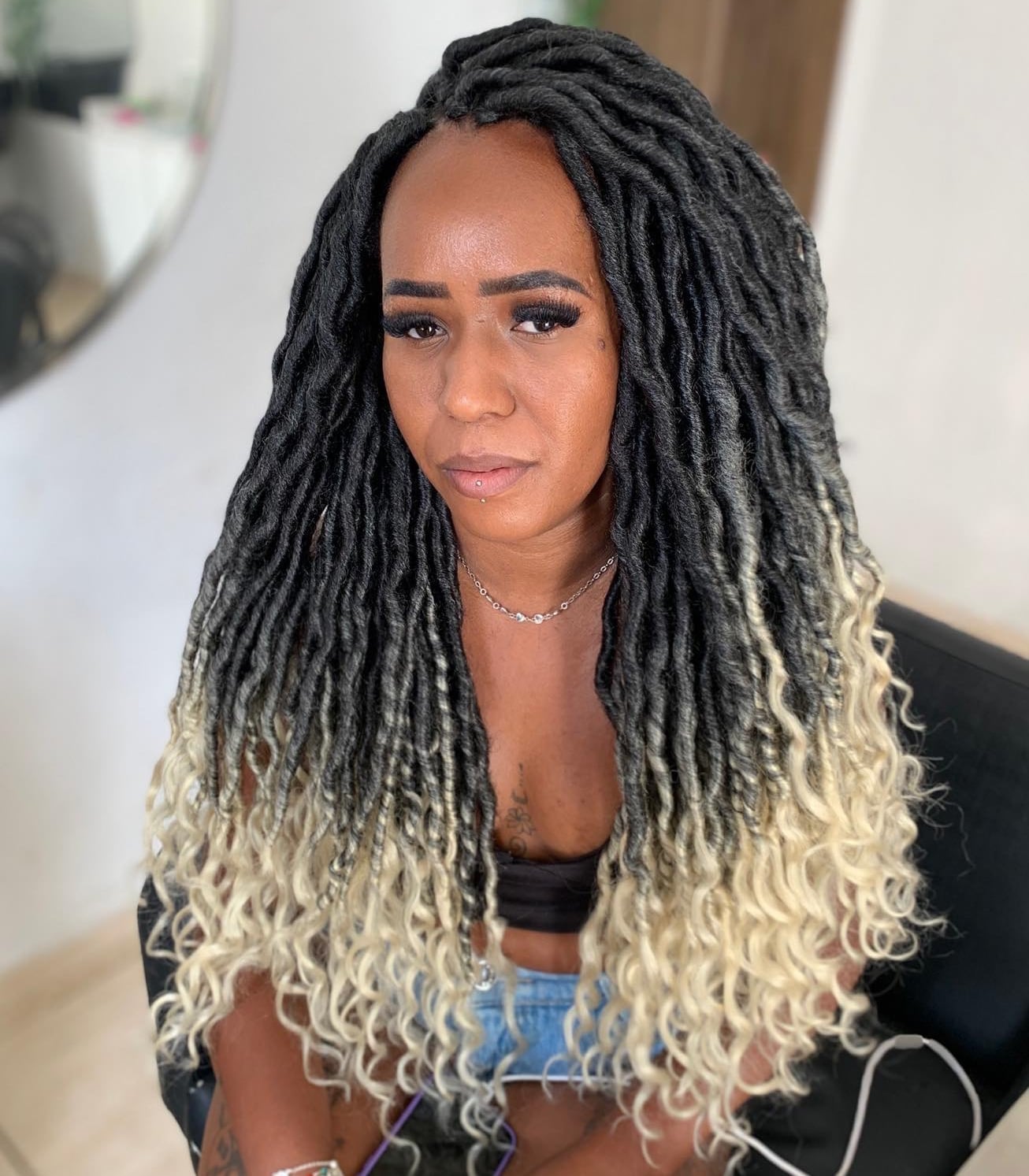
Image credit: hadviser.com
Volume comes from how the ponytail is anchored. A wrap or two of the locs around the base hides the elastic and keeps the height from sagging by mid-afternoon. A strong-hold spray or a light gel on the loose front strands keeps them where you placed them, and the wavy texture means the ponytail holds its shape without much coaxing. For an event it reads polished; for a casual day, leave the front strands a little looser. Book the install with enough lead time, since the curly ends and the beads both add time in the chair.
Braided Loc Updo With Pearls and Gold Cuffs
Source: refinery29.com
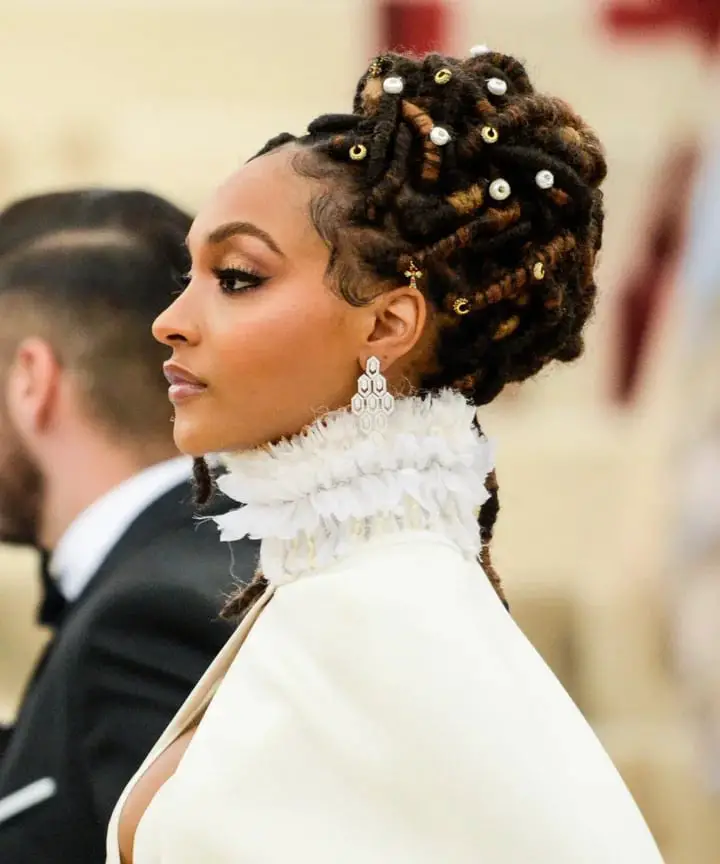
Pearls and gold cuffs turn a braided loc updo into the kind of style that does the work of an accessory without one. Long, coily locs in dark brown with blonde highlights are swept back into braided sections, with pearls and gold cuffs placed along the length for depth. Ask your stylist for: long braided loc updo, pearls, gold cuffs. The highlights catch the light in the braided sections, which is why the color reads richer pulled back than worn loose.
This is a wedding and formal-event style, and it earns the fuss. The updo is built to stay put through a long day: strong pins anchor the braids, and a flexible-hold spray keeps flyaways down without stiffening the coils. Coily texture gives the braids grip, so the shape holds better than it would on finer locs. Book it close to the event so the retwist is fresh, and plan on a couple of hours in the chair for the braiding and the adornments. Ask about how the pearls and cuffs are secured so you know what to expect when they come out.
Mid-Back Locs Half Updo With Two-Tone Color
Via luxe.digital
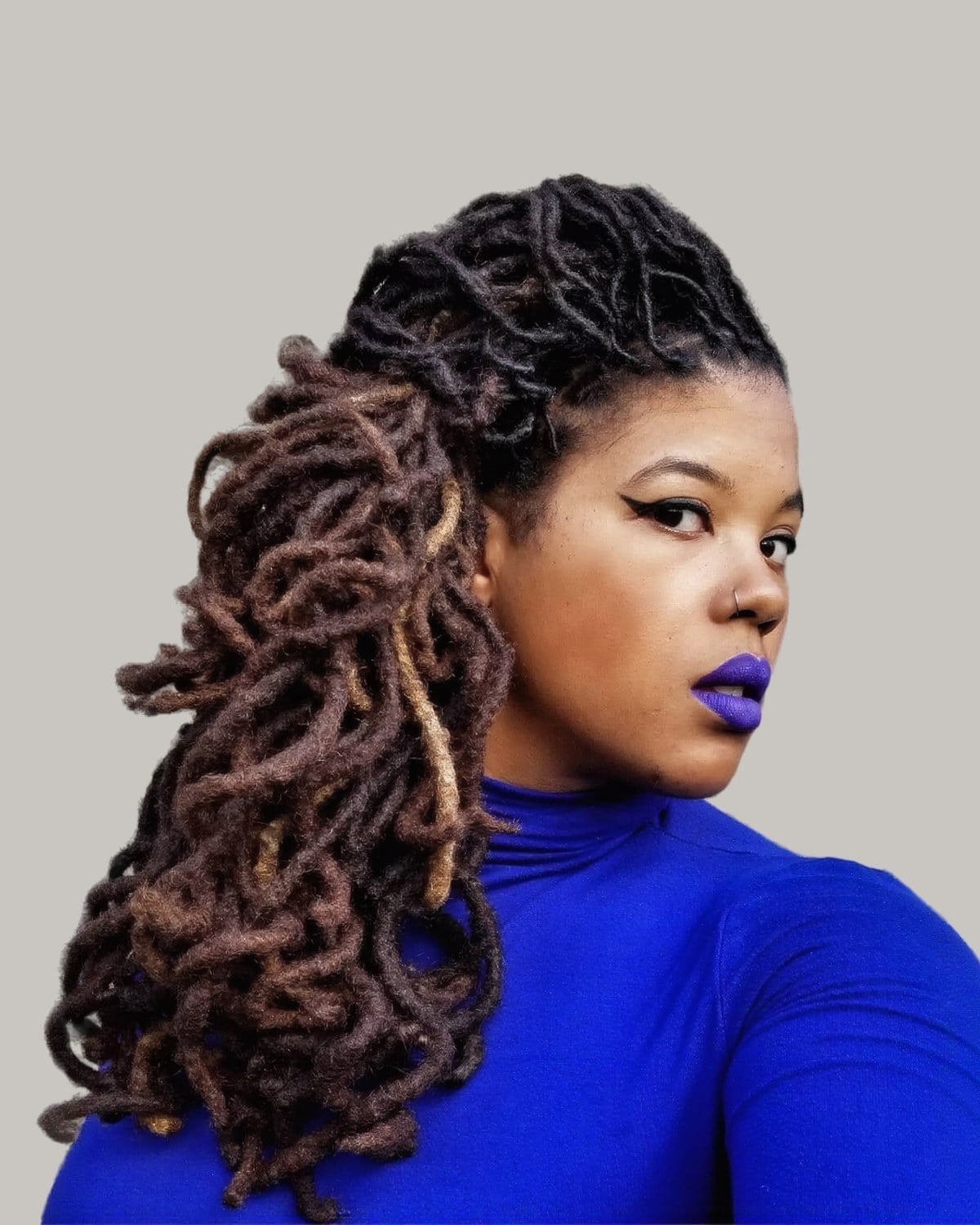
Wondering if you should commit to two-tone color or stick with solid? The half-up, half-down locs at mid-back length split the difference: dark brown at the roots, blonde highlights running through the sections that fall loose. The middle parting keeps the geometry clean, and the top half pulled back means the lighter pieces catch the eye without overwhelming. Thick, textured locs hold the shape well, and the two-tone effect works because the blonde is placed as highlights instead of a full shift. Ask your stylist for: mid-back locs half updo with dark brown and blonde highlights. A texturizing mist on the loose sections adds volume that keeps the silhouette from looking flat.
Mid-Back Locs With Ombre Color Retwist
Courtesy of: un-ruly.com
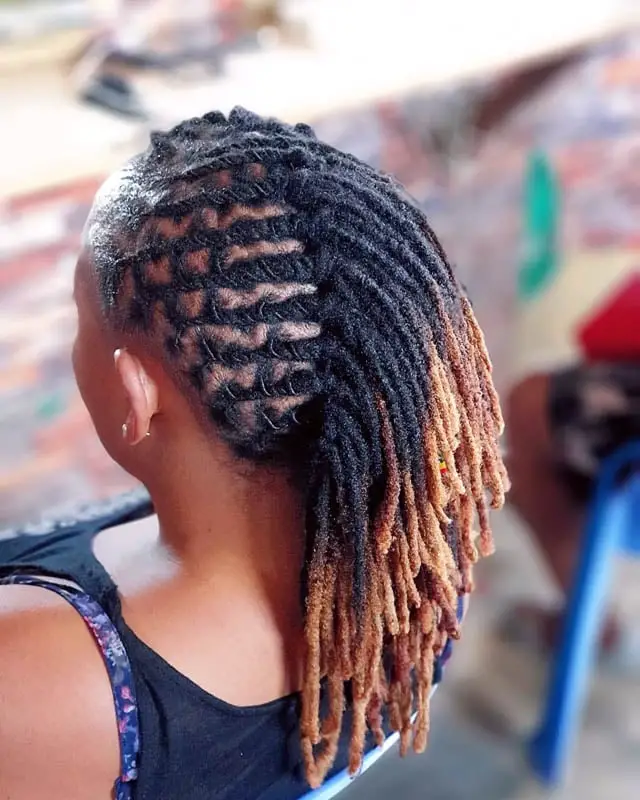
The ombre on these mid-back locs starts dark brown at the roots and shifts to blonde around the middle, then stays blonde to the ends. That gradient means the retwist pattern at the scalp stays sharp and visible, because the darker root base provides contrast against the lighter mids and ends. Thick locs carry the transition smoothly, and the middle parting from the back view shows the color graduation on both sides equally.
Upkeep is the honest part: the blonde ends need a color-depositing conditioner every third wash to keep brassiness from creeping in. A toning appointment every six to eight weeks keeps the blonde from turning murky, and the root shadow hides the grow-out line for about the same window. Ask your stylist for: mid-back thick locs with dark brown to blonde ombre. The retwist itself holds for three to four weeks before the roots need freshening.
Long Loose Black Locs With Natural Sheen
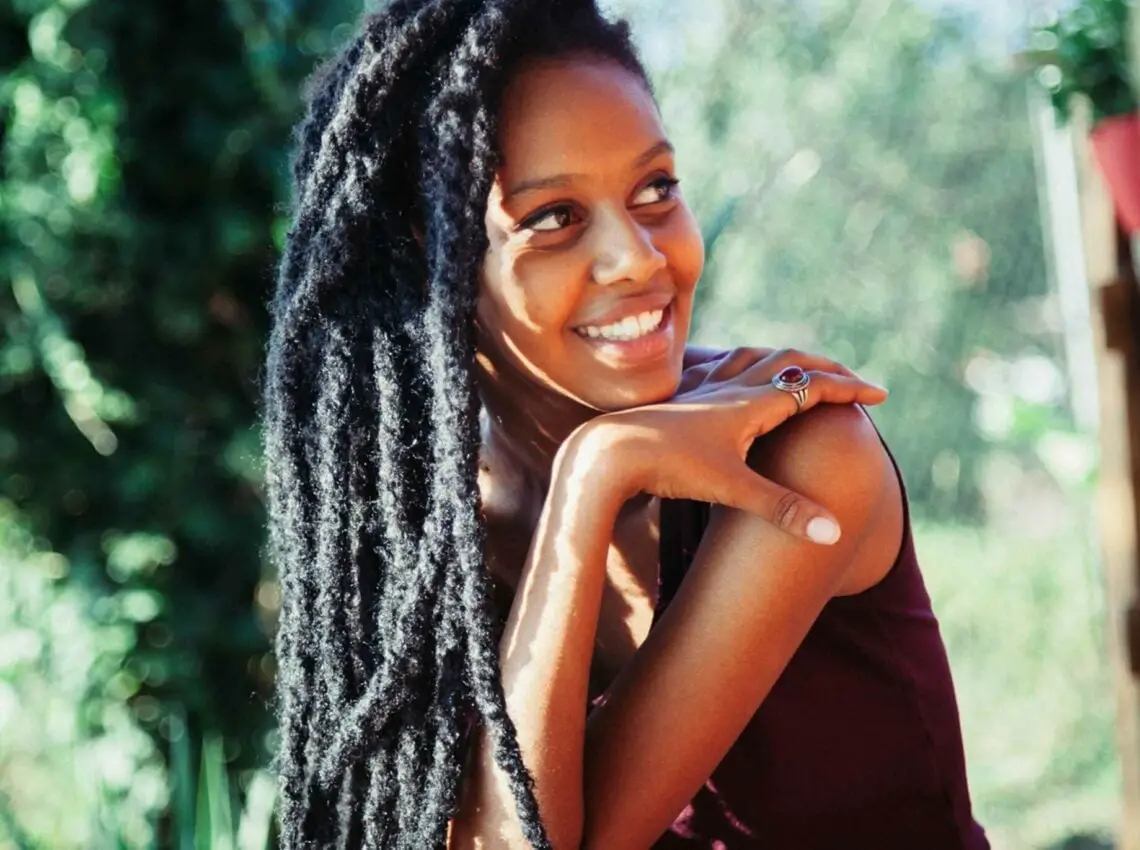
Photo credit: styleseat.com
Long, thick, coily black locs past mid-back, worn loose with no styling product visible: that natural sheen is the result of the hair’s own cuticle alignment, not a gloss treatment. The visible retwist at the roots keeps the part lines crisp while the locs themselves fall freely. Thick, coily texture gives each loc its own memory, so the style holds its shape for a week without re-pinning.
Achieving that polished loose look at home takes about 45 minutes for a thorough retwist and separation, and skipping a session means the roots start to mat. A natural oil or serum rubbed between palms and patted on seals the sheen without weighing the locs down. This is a salon look for the retwist, but the daily styling is purely hands and patience. Who should skip it: anyone who prefers their locs in a protective style six days out of seven.
Long Wavy Brown Locs With Beaded Details
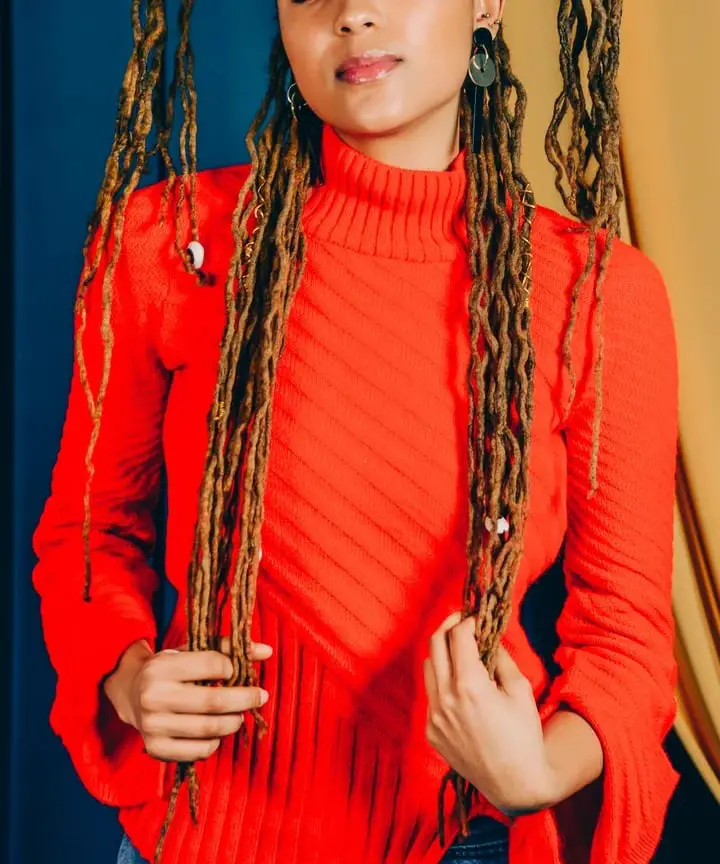
Image credit: refinery29.com
Long wavy brown locs loose with a middle parting, and several locs threaded with small decorative beads and chains. The beads add weight, which pulls the wavy texture into a soft, gentle bend. The brown shade is a single tone, so the accessories are the focal point, not competing color. Ask your stylist for: long wavy brown locs with decorative beads. Slide each bead onto a loc close to the end, then crimp it gently with pliers so it stays put. The beads hold without slipping if the loc is palm-rolled first. Wavy texture grips the metal better than straight locs, so the chains don’t slide down by midday.
Final Thoughts
For a style that stays sharp past day one, prioritize clean parts and a firm hold at the roots. If your schedule is tight, a loose, natural finish with minimal adornments keeps the focus on healthy locs and a defined retwist.
- Schedule retwists every 4-8 weeks, depending on hair growth and desired neatness.
- Use a light-hold gel or mousse for styling to avoid buildup.
- Protect locs from excessive heat and harsh elements.
- Deep condition locs monthly, focusing on scalp health.
Retwisted locs offer a foundation for personal expression.
Hairstyle
19 Highlighting Hair Ideas 2027 with Ash Blonde Tones
Highlighting Hair Ideas 2027: 19 looks featuring ash blonde with lighter blonde highlights and medium brown blonde balayage. Get the details for each look.
Highlights are the quiet workhorses of hair color, adding depth and movement without a full commitment to a new shade. The current mood leans toward lived-in color, with soft face-framing layers and curtain bangs taking the edge off grow-out lines.
In this collection of 19 Highlighting Hair Ideas, you’ll find everything from low-upkeep balayage to high-contrast silver streaks, across cuts from pixie to mid-back. Whether your hair is fine, thick, curly, or straight, there’s a placement that works with your texture and your schedule. If your highlights tend to fall flat by week three or your fringe won’t sit, these looks offer a fix. Expect concrete advice on what to ask for and how to keep it honest.
Collarbone Lob With Silver And White Highlights
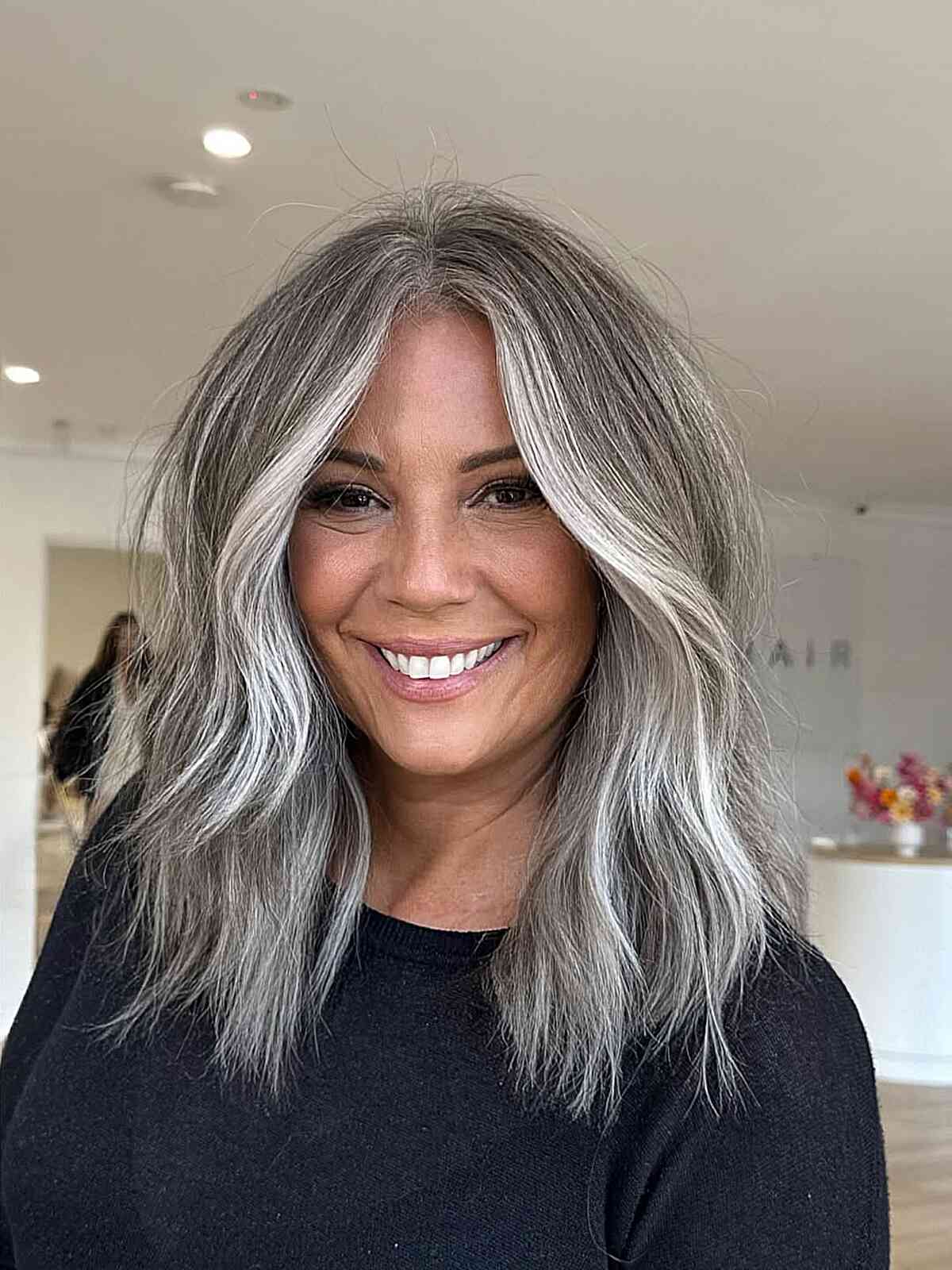
Courtesy of: latest-hairstyles.com
Silver and white highlights against a gray base create a contrast that looks planned. The lob length and curtain bangs soften a square jawline, while the middle parting keeps the weight forward. Ask your colorist for: collarbone lob, gray base with silver and white highlights, wavy texture. Apply texturizing spray to damp hair and scrunch for that lived-in wave. A trim every six to eight weeks keeps the curtain bangs manageable.
Shoulder Length Cut Golden Blonde Balayage
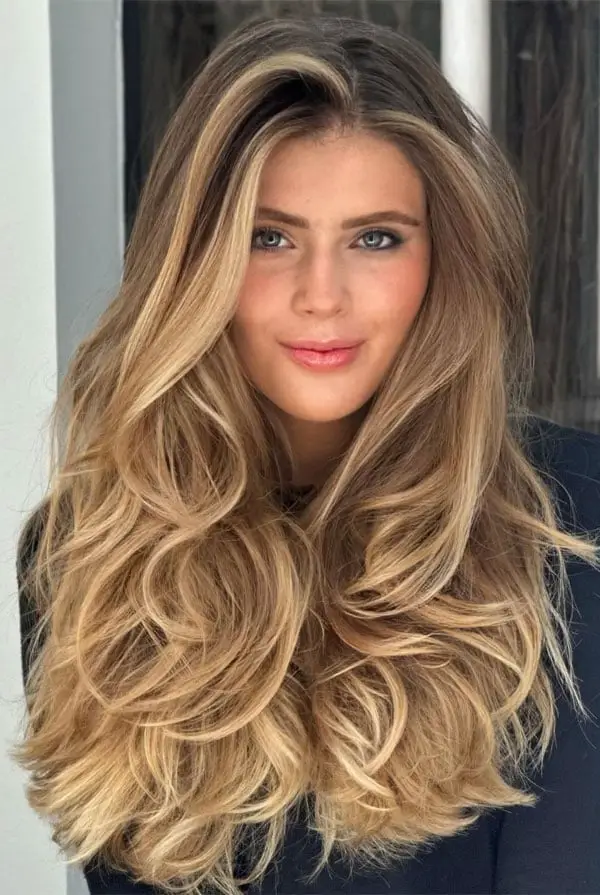
Photo credit: fabmood.com
The golden blonde balayage on this shoulder-length cut is painted freehand, so the lighter pieces hit around the face and ends while the root stays darker. Layers add volume through the mid-lengths, which works well for thick, wavy hair. Ask your stylist for: shoulder length layered cut, golden blonde balayage, voluminous waves. Use a large barrel curling iron to enhance the waves and a root lift spray at the crown. A trim every eight to ten weeks keeps the shape from collapsing.
Collarbone Layers Ash Blonde With Lighter Blonde
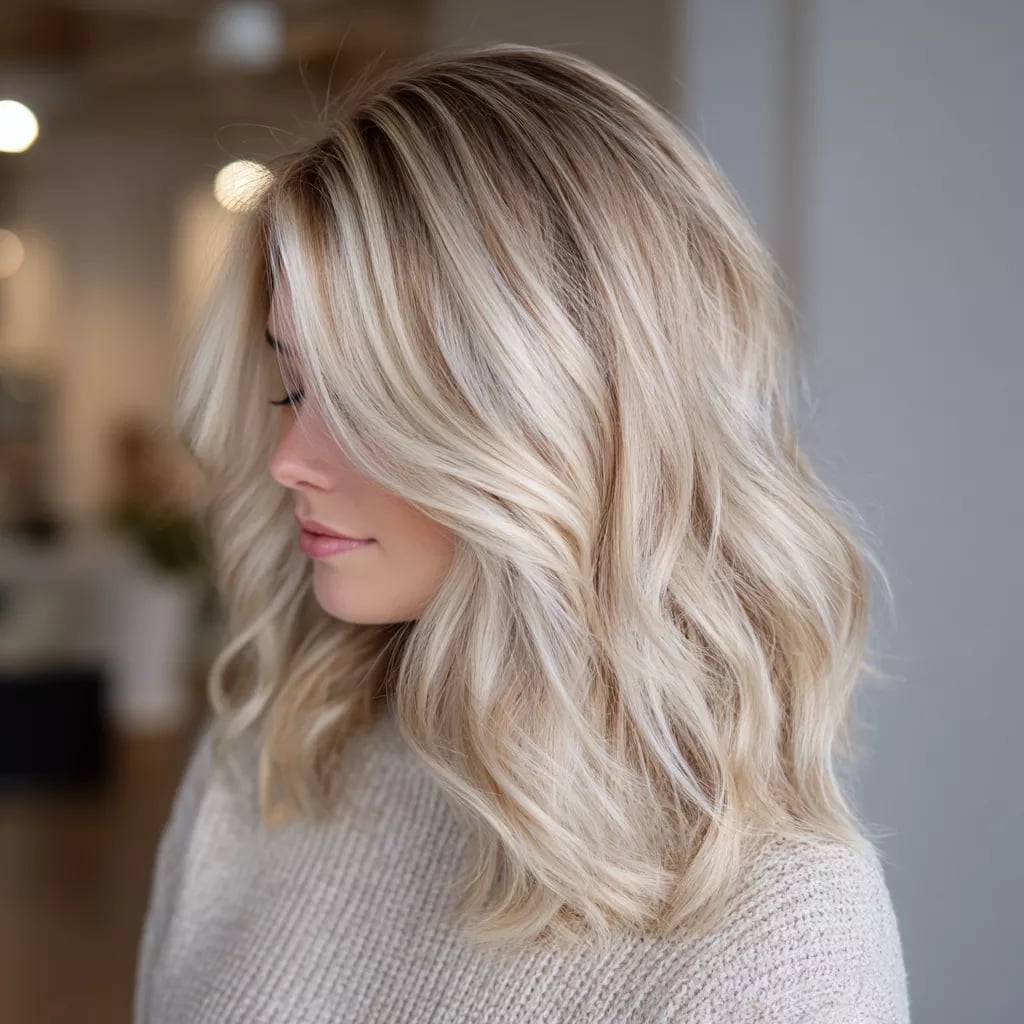
Image credit: herbloomly.com
How do you describe ash blonde with lighter blonde highlights without sounding like a paint swatch? Ask for an ash blonde base at the roots that melts into lighter blonde pieces through the mid-lengths, then add curtain bangs that graze the cheekbones. The fine, wavy texture holds the soft waves without extra product. Ask your stylist for: collarbone length layered cut, ash blonde with lighter blonde highlights, curtain bangs. Regular toning every four to six weeks prevents the ash from pulling beige.
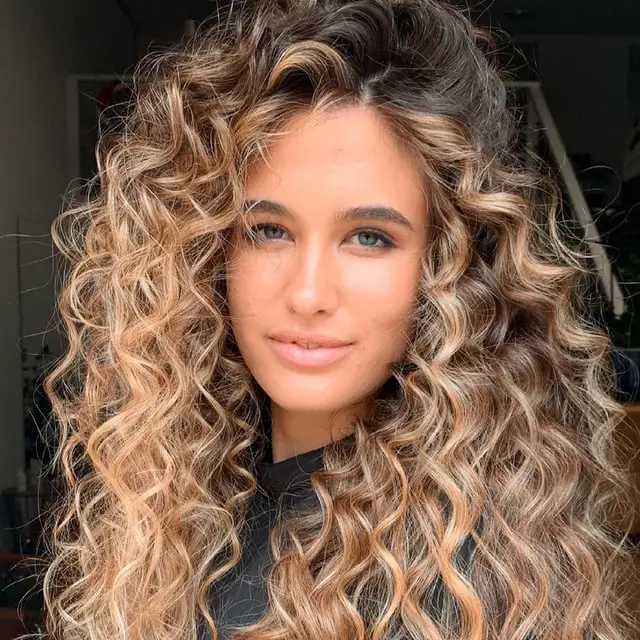
Long Curly Dark Brown With Blonde Highlights
Source: cosmopolitan.com
The dark brown base here does the heavy lifting: the blonde highlights pop because they sit against a deep, rich canvas. A root shadow at the scalp means the grow-out line stays invisible for about eight weeks, which matters when you have thick, curly hair that takes its time at the salon. Apply curl cream to wet hair and air dry or diffuse for definition. Ask your colorist for: long curly cut, dark brown base with blonde highlights, defined curls. A trim every ten to twelve weeks keeps the shape from tangling at the ends.
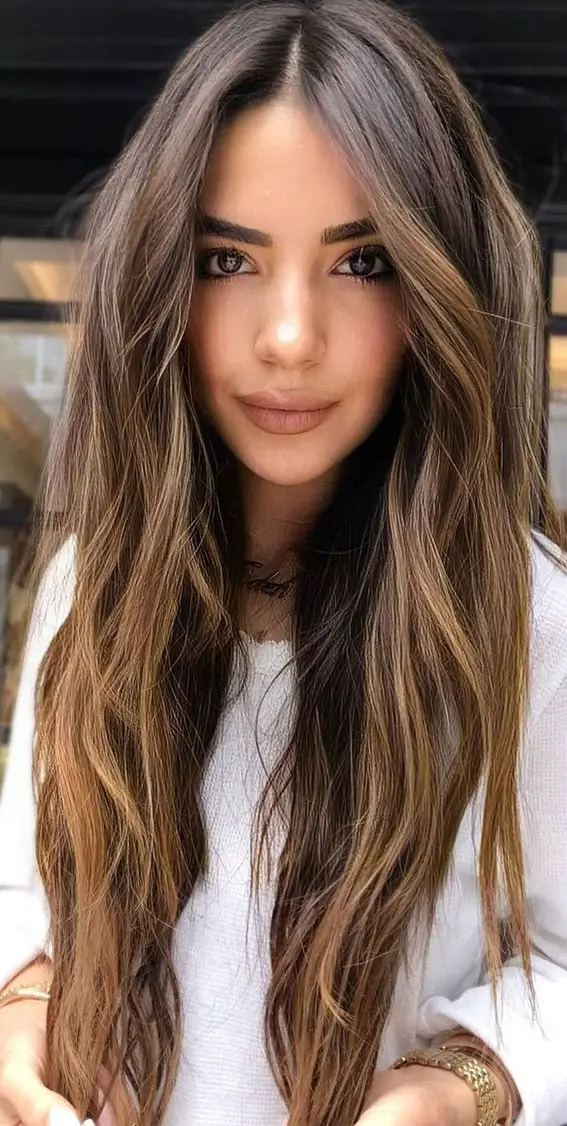
Mid-Back Layers Medium Brown With Blonde Balayage
Via fabmood.com
Unlike a one-length cut, which can look heavy past the shoulders, the subtle layers here let the blonde balayage travel through the hair rather than sit in a single stripe. The medium brown base keeps the overall tone warm, while the lighter pieces catch light at the ends. Ask your colorist for: mid-back length subtle layers, medium brown with blonde balayage. Embrace natural waves by air drying with a sea salt spray. Tone the balayage every eight to ten weeks to keep the blonde from warming into brass.
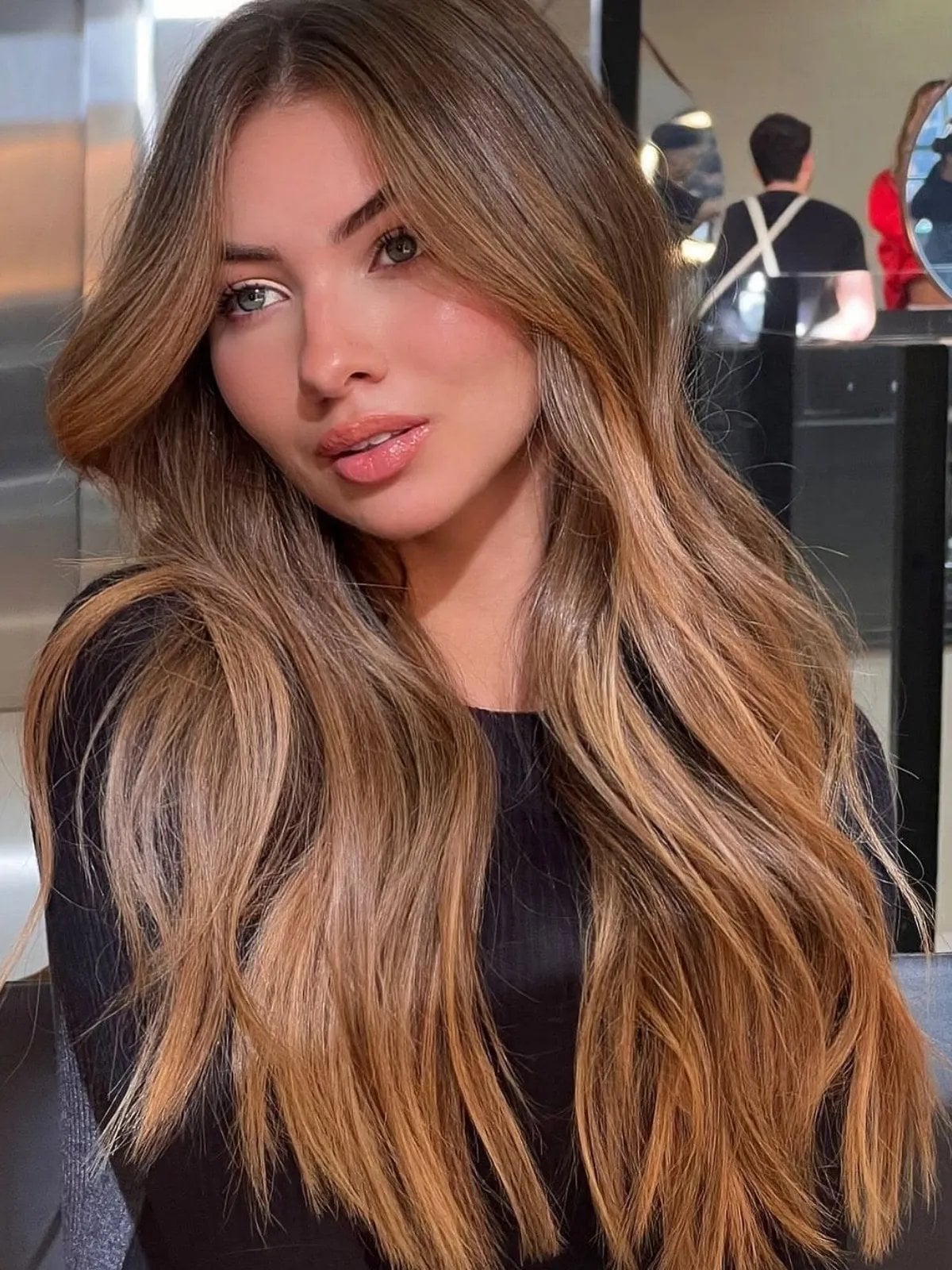
Mid-Back Dark Blonde Balayage On Medium Brown With Curtain Bangs
Courtesy of: wella.com
The face-framing balayage is doing the heavy lifting here, drawing attention outward from a side part before melting into the mid-back lengths. Thick, wavy hair that starts past the shoulders can carry this kind of graduated lightness without looking bottom-heavy. Ask your colorist for: mid-back length, medium brown with dark blonde balayage, curtain bangs. The curtain bangs soften a square jaw, and the darker base keeps the transition from summer to autumn from feeling jarring. A round brush on the bangs and a smoothing blowout are all the styling it asks for.
Mid-Back Platinum With Ash Blonde Highlights
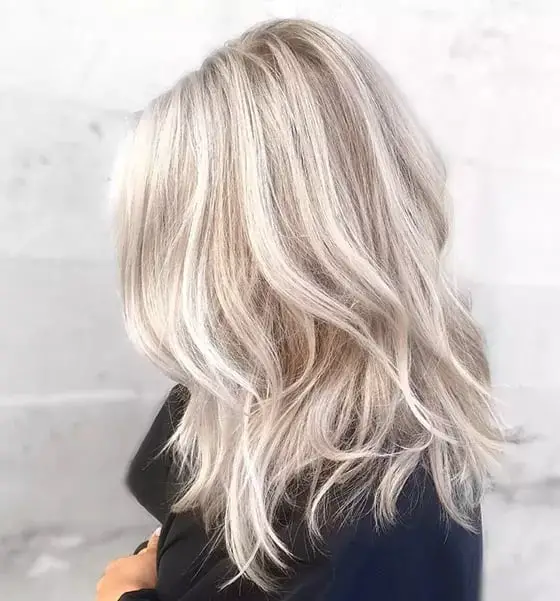
Photo credit: stylecraze.com
Platinum at this length is a multi-session commitment, not a single afternoon. The ash blonde highlights break up the solid white so the color has dimension. Every highlight needs a bleach step underneath. Ask your colorist for: mid-back length layered cut, platinum blonde with ash blonde highlights. Medium-density, wavy hair starting past the shoulders can handle the processing, but fine hair may find the repeated lifting too much. A purple shampoo helps maintain the tone between salon visits, and this is strictly a salon job. The root touch-ups alone require professional placement.
Who should skip it? Anyone who needs a low-maintenance color. The grow-out line on dark regrowth shows within three weeks, and the ash tones shift brassy faster than warm blondes do. Plan for a toning appointment every four to six weeks and a trim every eight to ten to keep the ends from splitting under the accumulated lightening.
Mid-Back One Length Espresso With Honey Highlights
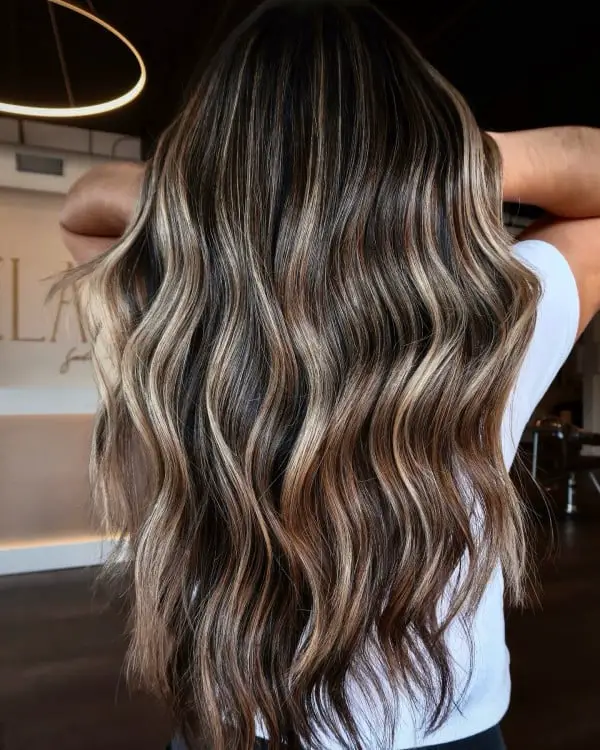
Image credit: fabmood.com
One length works best when the color has somewhere to go, and the honey highlights here provide that journey. Straight, medium-density hair starting past the shoulders lets the warm ribbons fall uninterrupted, creating a glossy column of contrast. Ask your colorist for: mid-back length one length cut, espresso brown with honey highlights. The sleek texture is the point, so a smoothing serum before flat-ironing is the daily move. Toning every ten to twelve weeks keeps the honey from turning brassy on the espresso base. The darker the canvas, the faster warmth turns orange instead of gold.
Fine hair can wear this cut because the one-length line adds the illusion of weight, but very thick hair may feel heavy without internal layering. Stick with medium density for the cleanest silhouette.
Chin Length Layered Bob Blonde With Lighter Blonde
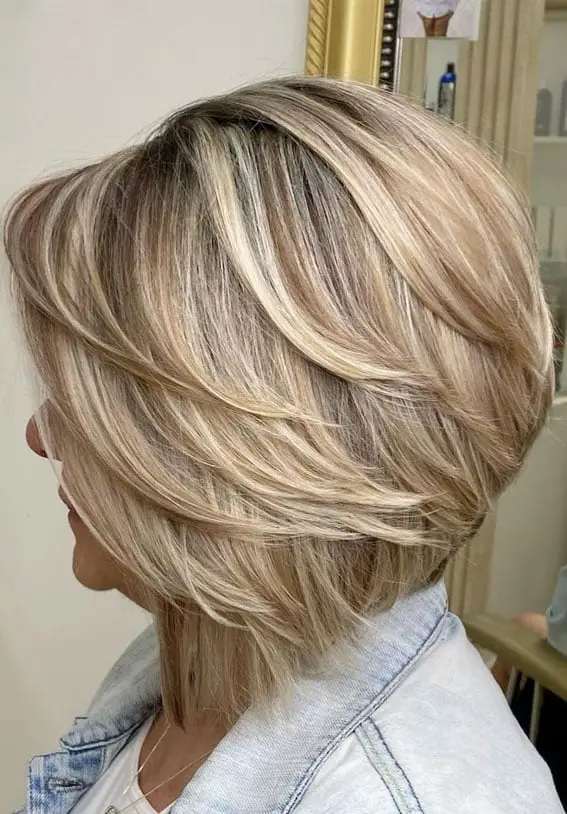
Source: fabmood.com
Ever wonder why your bob looks like a helmet an hour after styling? The layers here are the fix, and the lighter blonde highlights add the visual texture that the cut alone cannot fake. Fine to medium-density hair starting at chin length benefits from the internal movement, but the real trick is root volume. Ask your colorist for: chin length layered bob, blonde with lighter blonde highlights. Without a volumizing mousse at the roots, the layers can collapse and look choppy instead of purposeful. The drawback: a blunt bob hides split ends better, but a layered one shows every uneven snip, so a trim every six to eight weeks is required.
Collarbone Lob Ash Blonde Balayage On Dark Brown
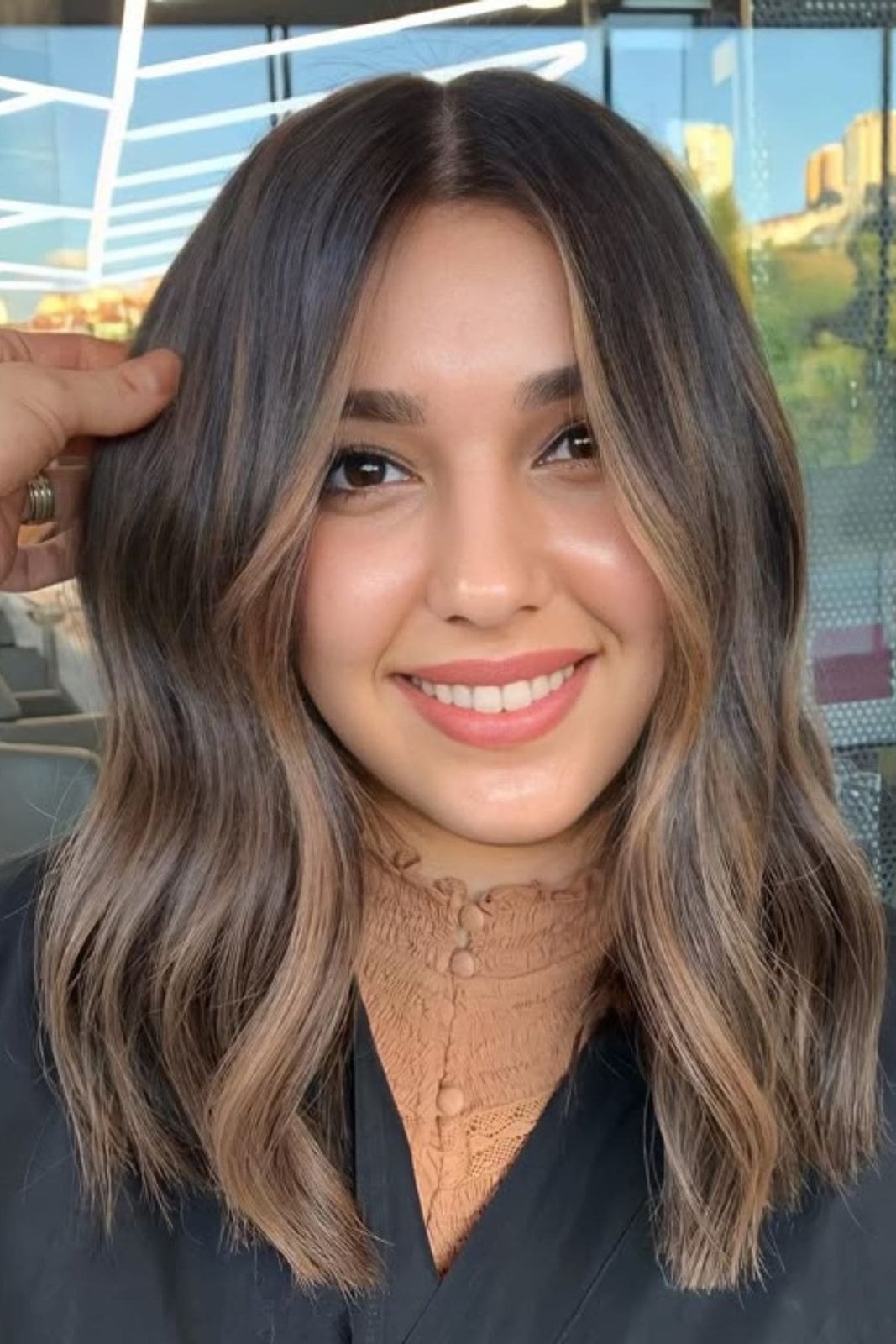
Source: haiirology.com
The ash blonde balayage sits just inside the dark brown base, so the lightness never overpowers the depth. It shows up around the face and through the mid-lengths. Medium-density, wavy hair starting at collarbone length lets the face-framing pieces land right at the jawline, which softens a rounder face shape. Ask your colorist for: collarbone length lob, dark brown with ash blonde balayage, face-framing pieces. The balayage is painted freehand, so the grow-out is softer than foil highlights, but the ash tone still needs a toning appointment every six to eight weeks to stay cool. A texturizing spray on the waves finishes the look in under ten minutes.
Collarbone Layers Brown With Blonde Highlights
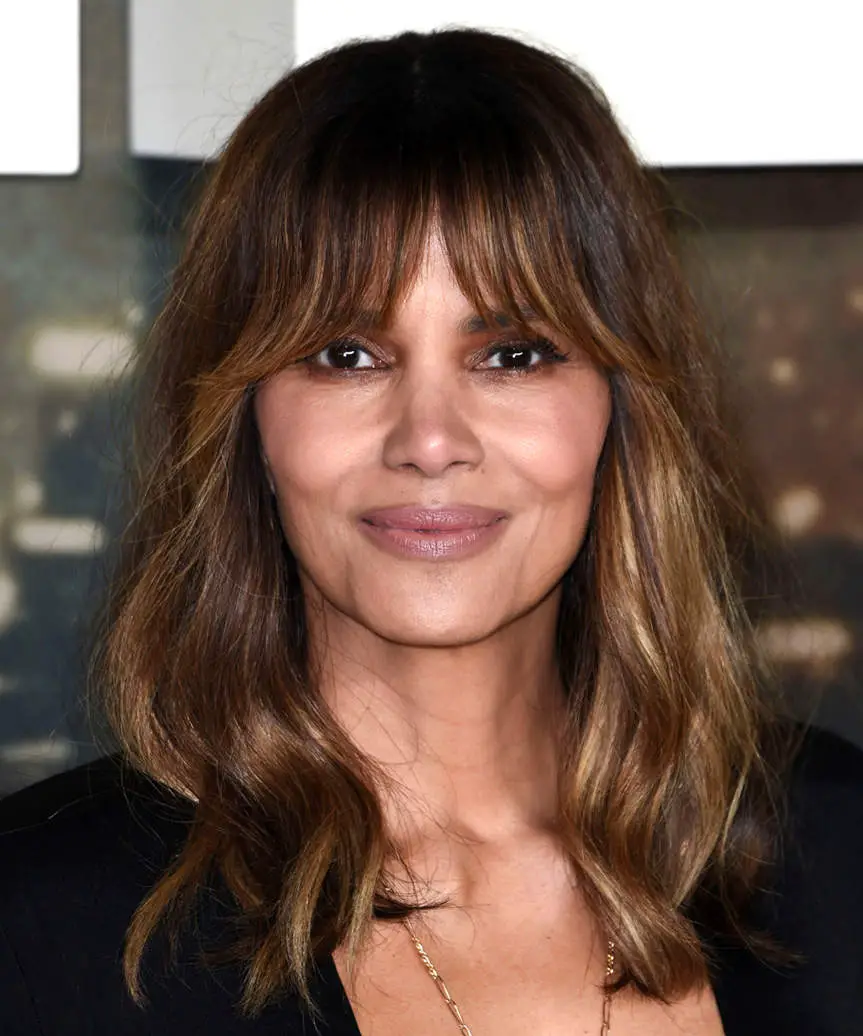
It suits medium-density wavy hair that already reaches the collarbone, and the curtain bangs soften an angular face. Ask your stylist for: collarbone length layered cut, brown with blonde highlights, curtain bangs. Here is the trade-off nobody puts on the mood board: blending highlights through a collarbone cut takes a trained eye, and precise curtain bangs are not a bathroom-mirror job. Attempt the color at home and you get patches; attempt the bangs and you get a month of pins. Budget a salon visit and a trim every six to eight weeks. The shape rewards the investment, but only if you keep it up.
Mid-Back Blonde With Lighter Blonde Highlights
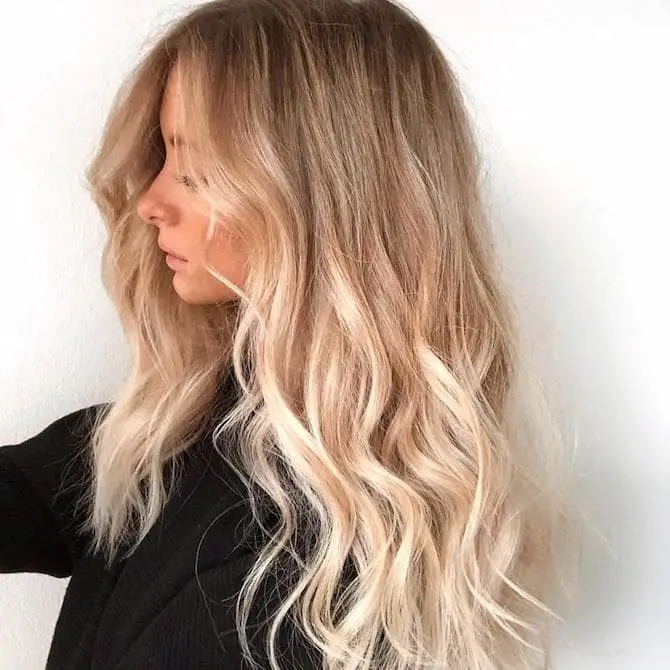
Courtesy of: uk.wella.professionalstore.com
Lighter blonde highlights through a blonde base create a two-tone effect that shows most in motion, which is why this mid-back cut is styled in soft waves: the bend in each section catches the lighter pieces and the straight sections go quiet. Medium-density wavy hair past the shoulders carries it well. Ask your stylist for: mid-back length layered cut, blonde base with lighter blonde highlights. No bangs here, so the length does the work.
Wear and upkeep are where this one asks for patience. Bright blonde lifts the cuticle, and mid-back hair has more of it to dry out, so a leave-in conditioner after washing is standard, not optional. Apply a heat protectant before any blow-dryer or iron. The tone is the bigger commitment: plan on toning every four to six weeks to keep the lighter pieces from going brassy, and a root touch-up on a similar rhythm if you want the base to stay even. Skip a toning appointment and the contrast dulls first, usually around week five.
Chin Length Layered Bob Dark Brown With Blonde and Side Swept
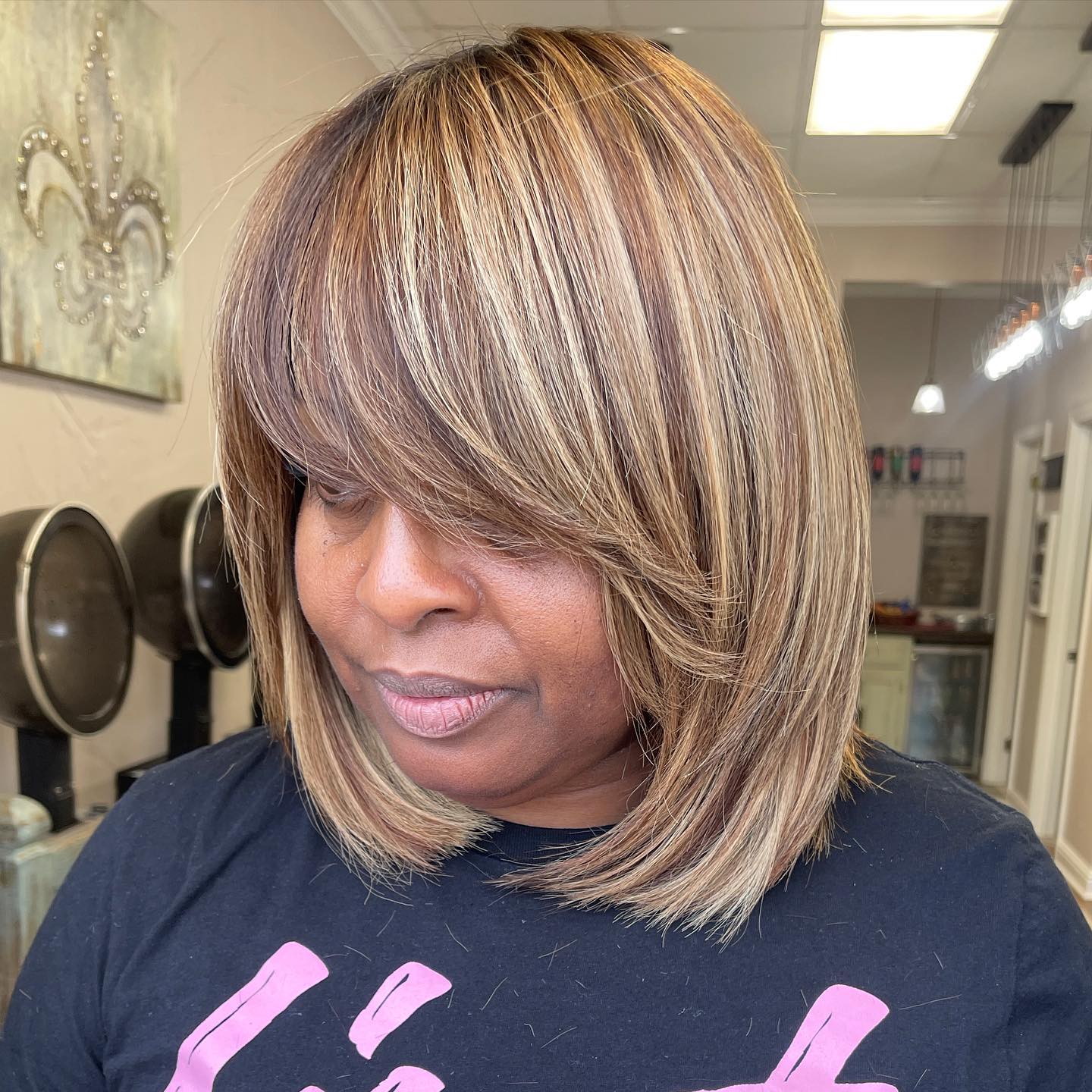
Photo credit: therighthairstyles.com
Wondering if a chin-length cut can carry highlights without looking busy? Layering is the answer. A layered bob ending at the chin, a dark brown base, blonde highlights woven through the layers, and side-swept bangs: that combination gives the eye somewhere to travel, and the side sweep keeps the front from going blunt. It suits medium-density wavy hair that starts at chin length, and it works for a workweek and a weekend alike. Ask your stylist for: chin length layered bob, dark brown with blonde highlights, side-swept bangs. A blowout with soft waves keeps the polish, and a trim every six to eight weeks keeps the shape from collapsing into a helmet.
Mid-Back Long Layers Ash Blonde Highlights, Wavy
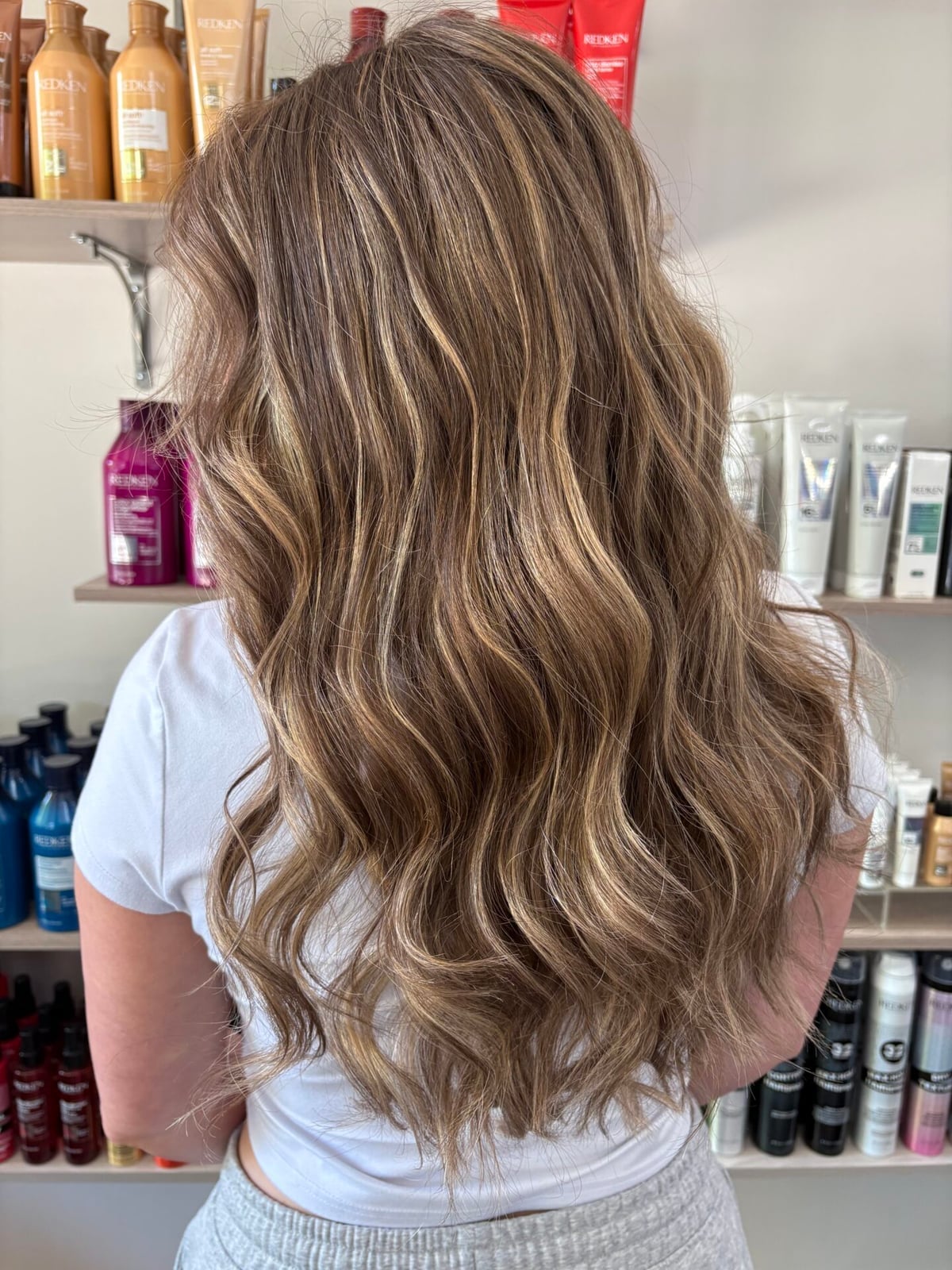
Image credit: salonpiperglen.com
Full head highlights are a volume decision as much as a color one, and this mid-back cut shows why: long layers through thick wavy hair, a medium brown base, and ash blonde highlights distributed throughout the head. The result is overall lightness with depth underneath. It works for thick, wavy hair past the shoulders, and the ash tone keeps the blonde on the cool side instead of warm. Ask your stylist for: mid-back length long layers, medium brown with ash blonde highlights. No bangs, so the length and the layers carry the shape.
The drawback is maintenance, and it is worth naming plainly. Ash blonde on a medium brown base is a high-contrast lift, and cool tones fade toward brass fastest, so plan on toning every six to eight weeks and a root touch-up on a similar schedule. Thick hair with full head highlights also drinks moisture, so a leave-in conditioner is part of the routine, not a bonus. If your calendar cannot hold a standing appointment every couple of months, this is the cut to pass on. If it can, the dimension holds through the grow-out.
Chin Length Bob Brown With Blonde Highlights
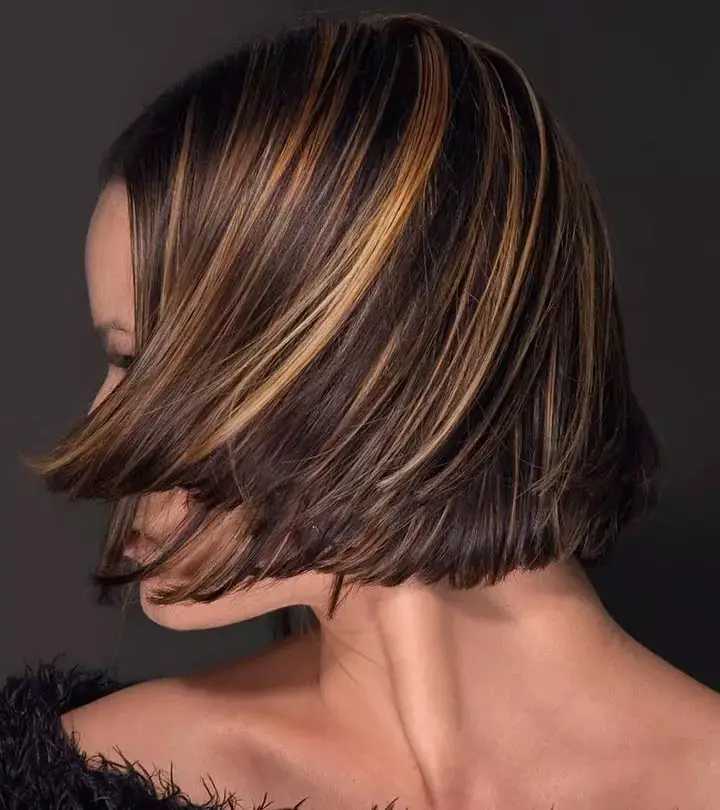
Source: stylecraze.com
A blunt line at the chin, a side part, and blonde highlights placed where the light hits: this bob is built for fine to medium straight hair that needs the illusion of more. The cut adds weight at the perimeter, and the highlights break up a solid block of brown so the shape stays visible. It suits straight hair starting at chin length, and it is a pass for anyone who wants to skip styling, since a sleek finish is what makes the line read. Ask your stylist for: chin length bob, brown base with blonde highlights. Run a flat iron and a shine serum through it, and book a trim every six to eight weeks.
Mid-Back Thick Wavy Dark Gray With Silver
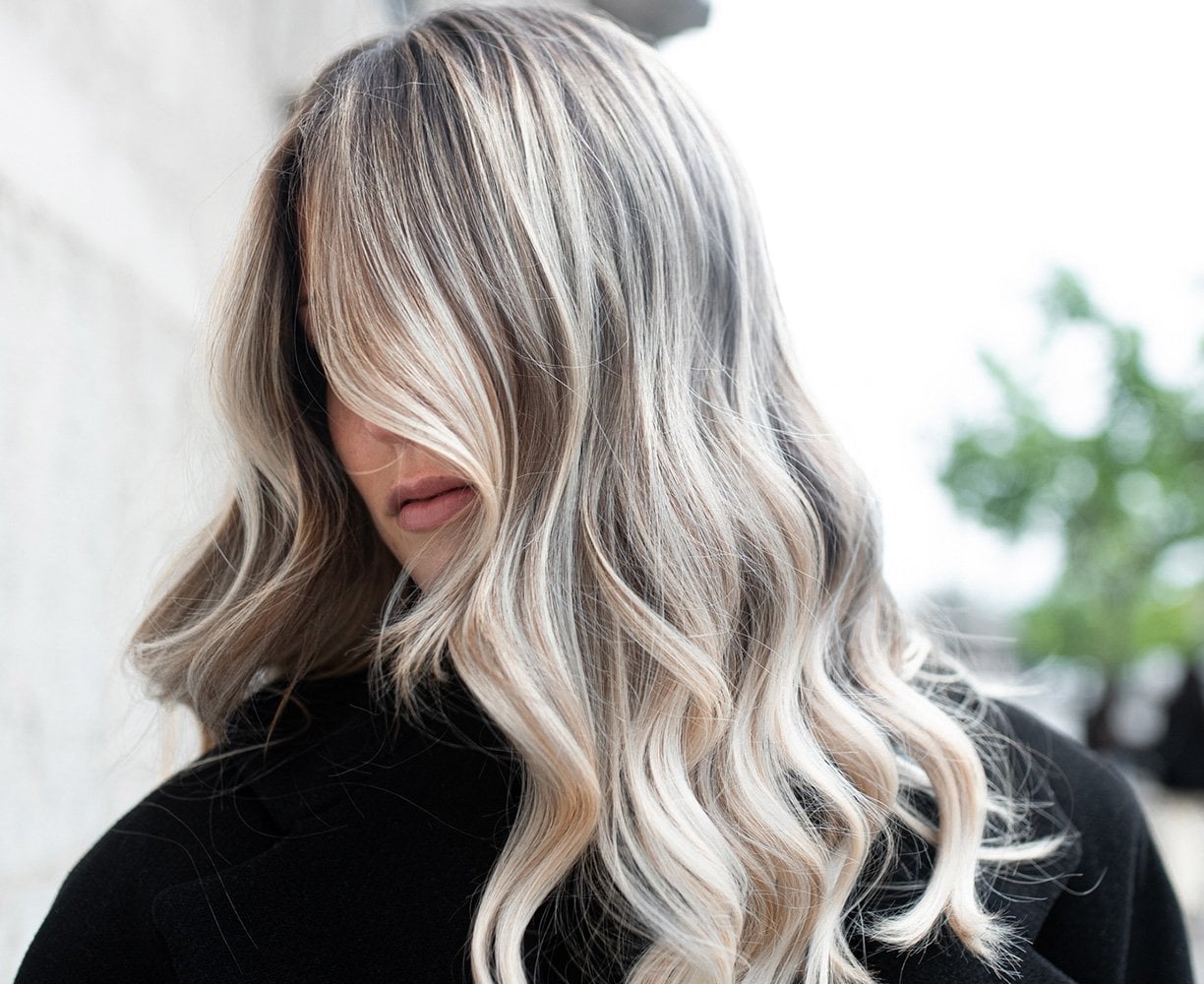
Via garnierusa.com
If you think silver highlights belong only on soft, muted gray hair, this dark gray base with striking silver and blonde highlights will change your mind. The contrast is bold, almost metallic, and it lands far more avant-garde than a gentle salt-and-pepper effect. The mid-back length gives the loose waves room to move, and the thick texture carries the brightness without the color looking washed out. A middle part keeps the drama symmetrical, which suits oval and heart-shaped faces best. Ask your stylist for: mid-back length layered cut, dark gray base with silver and blonde highlights.
The silver and blonde pieces are woven through the layers, so they catch light as the hair moves rather than sitting flat. This is a statement color, not a subtle one, so it pairs best with a wardrobe that can handle a little edge. To keep the gray from turning brassy, use a color-depositing conditioner once a week. The cut itself needs a trim every eight to ten weeks to keep the layers from growing out into a shapeless mass.
Mid-Back One Length Brunette With Caramel
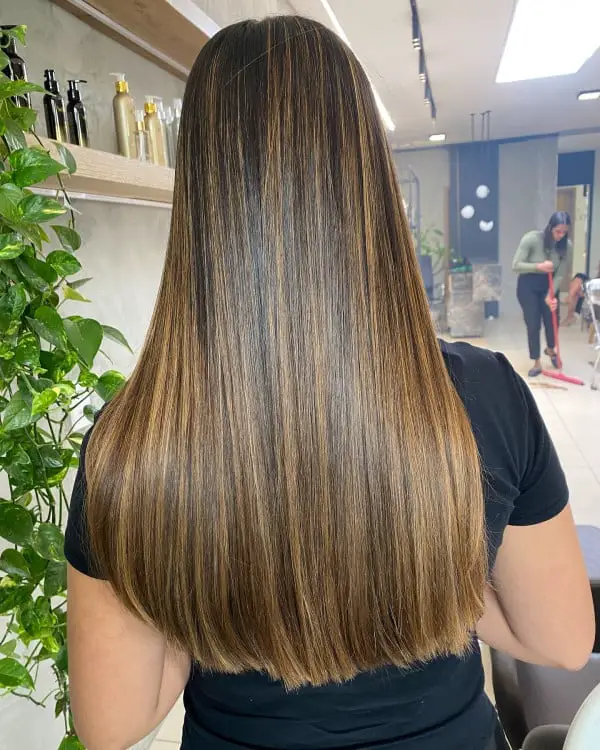
Courtesy of: fabmood.com
A one-length cut is the quiet workhorse of haircuts, and here it lets the color do the talking. The brunette base runs from root to tip without interruption, so the subtle caramel highlights add dimension without distraction. The mid-back length keeps the line clean, and the straight texture means every highlight sits exactly where it was painted. This works best on medium-density hair that falls smoothly, and the lack of layers means it suits round and square faces by elongating the silhouette. Ask your colorist for: mid-back length one length cut, brunette with subtle caramel highlights.
The technique is a classic foil or balayage placement, with the caramel concentrated through the mid-lengths to catch light naturally. Because the highlights are subtle, they grow out gracefully, and you can stretch the time between appointments. A shine serum on the ends will keep the straight style looking polished, and a gloss every ten to twelve weeks keeps the caramel warm instead of dull. This is the kind of color that looks deliberate without ever announcing itself.
Textured Pixie Cut Dark Brown With Lighter Brown
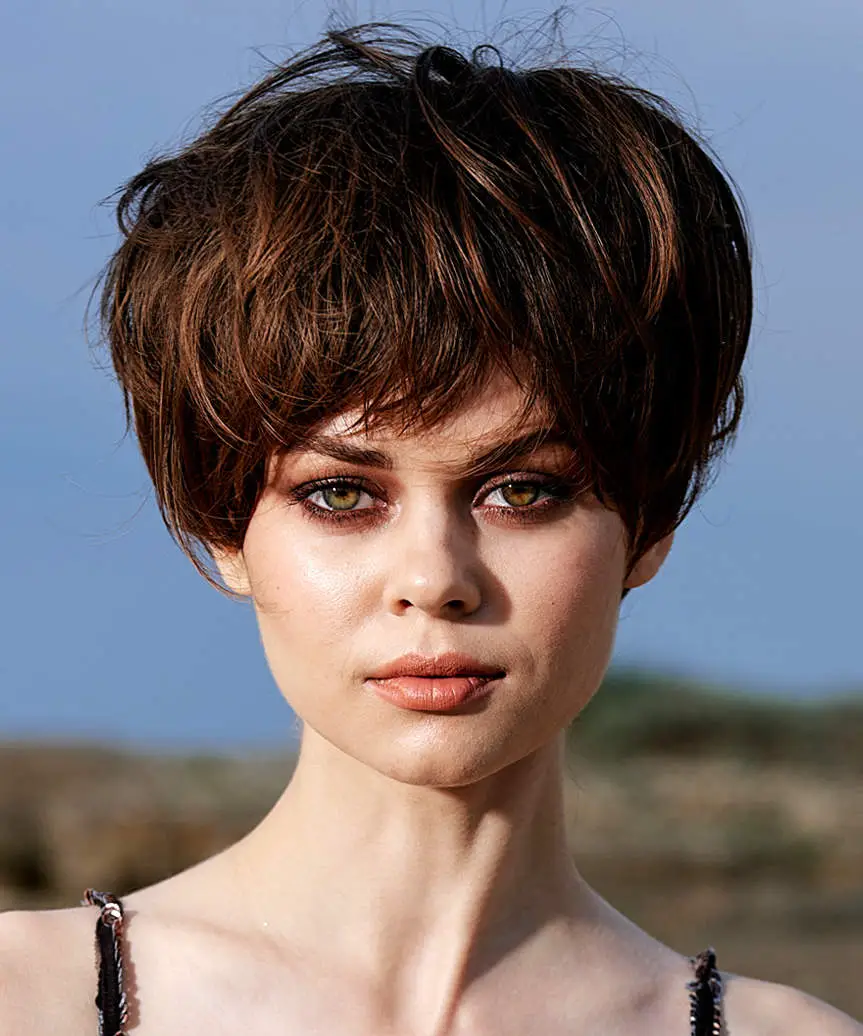
Photo credit: thehairstyler.com
Wondering how to get that lived-in pixie texture without looking like you just rolled out of bed? The trick is in the layers and the wispy bangs, which are cut short enough to frame the eyes but soft enough to sweep aside. The dark brown base gets subtle lighter brown highlights woven through the top and crown, adding depth so the texture looks deliberate, not messy. This suits fine hair especially well, since the layers create the illusion of fullness. Ask your stylist for: textured pixie cut, dark brown with subtle lighter brown highlights, wispy bangs.
You can try this at home with a texturizing paste or wax, but the initial cut is definitely a salon job, since the length and layering have to be precise. The highlights are low-maintenance, but the cut is not: it needs a trim every four to six weeks to keep the shape sharp. If you let it grow out, the pixie turns into a shag, which is fine if that’s the look you are after, but it won’t have the same crispness.
Braided Updo Brown With Blonde Highlights
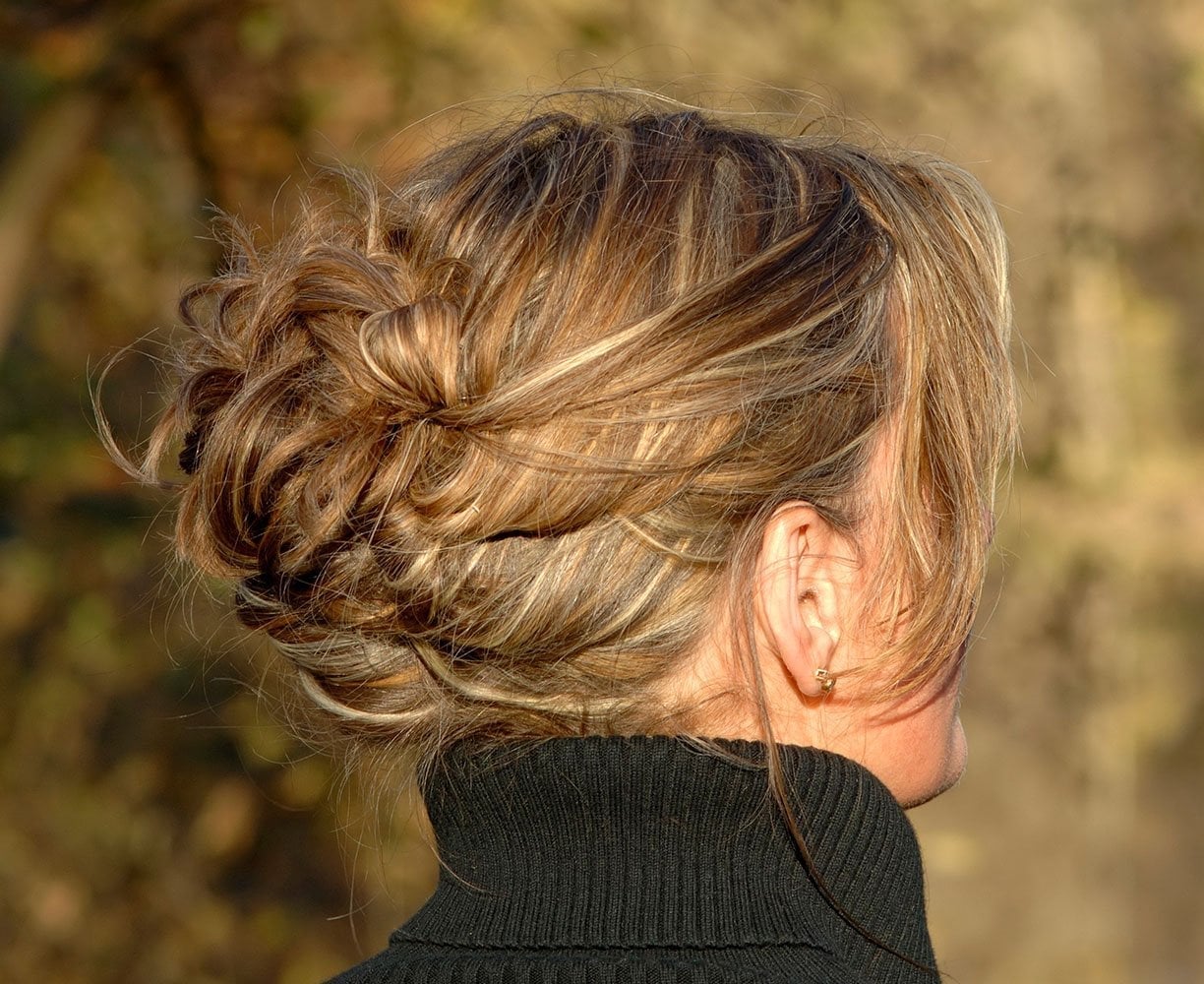
Image credit: garnierusa.com
A braided updo is a study in contrast: the brown base grounds it, while the blonde highlights trace every twist and turn of the braid, turning an ordinary style into something dimensional. The long wavy texture gives the updo natural grip, so the braid holds its shape without needing a pound of pins. Wispy bangs keep the front soft, which balances the structure at the back and suits most face shapes. Ask your stylist for: braided updo, brown base with blonde highlights, wispy bangs.
Building this style takes patience. Start with a texturizing spray to give the hair hold, then braid loosely before pinning the ends into a low bun. The highlights are what make it special, so don’t hide them; leave a few strands loose at the crown. This is a special-occasion style, the kind you book a salon appointment for, because getting the braid even and the pins hidden is genuinely fiddly. The payoff is a look that photographs well from every angle, and the highlights ensure the braid never looks flat.
Final Thoughts
When choosing your highlight plan, weigh the upkeep against the payoff. For low-maintenance, ask for balayage or a root shadow so regrowth stays soft. If you want that bright, just-left-the-salon contrast, budget for a toner every six to eight weeks.
- Refresh highlights with a toner every 6-8 weeks to maintain desired tone.
- Use color-safe shampoos and conditioners to prolong color vibrancy.
- Incorporate a deep conditioning treatment weekly to combat dryness.
- Protect hair from heat styling with a thermal protectant spray.
- Trim ends every 10-12 weeks to prevent split ends and maintain shape.
Find the highlight placement that speaks to your personal style.
Hairstyle
16 Hairstyles for Thinning Hair 2027 with Curtain Bangs
Thinning Hair 2027 offers 16 stylish hairstyles like collarbone layers and fine bob curtain bangs designed to add volume and texture.
A haircut that works with thinning hair starts with the right shape, not just a shorter length. Collarbone layers, curtain bangs, and lived-in color have replaced flat-ironed lengths and chunky highlights for good reason. They build density where you need it most.
These 16 cuts range from a quick pixie to a mid-back length, so you can match your comfort level with your hair’s reality. Thinning Hair that falls flat, shows scalp, or loses shape by midday benefits from strategic layers, blunt lines, or a well-placed fringe. Whether your hair is fine, coily, or wavy, each style is built to hold its shape without relying on heavy product or daily heat.
Collarbone Length Layers With Curtain Bangs

Courtesy of: latest-hairstyles.com
Soft layers that start around the cheekbone skim the jawline so the eye lands on your face rather than on sparse ends. The collarbone length keeps enough weight to avoid that stringy look, while the curtain bangs frame the forehead and soften round and oval faces. Ask your stylist for: collarbone length layers with curtain bangs, soft wavy style. The side part adds a little lift at the root, and the fine, wavy texture takes well to a round brush blowout. The blonde highlights create dimension that mimics density, which is the goal when thinning hair is a concern.
Fine Collarbone Bob With Curtain Bangs

Photo credit: allure.com
Wondering how to get more volume from fine hair without going shorter? A collarbone bob with curtain bangs is a solid answer. The middle part creates the illusion of width, which helps balance round faces, and the soft waves give the fine texture some body. Ask your stylist for: collarbone bob with curtain bangs, middle part, soft waves. The curtain bangs blend into the bob’s length so there’s no harsh line to call attention to thin spots. A texturizing spray on dry hair adds grit and grip, and the bob line needs a trim every six to eight weeks to hold its shape.
Platinum Pixie With Choppy Volume
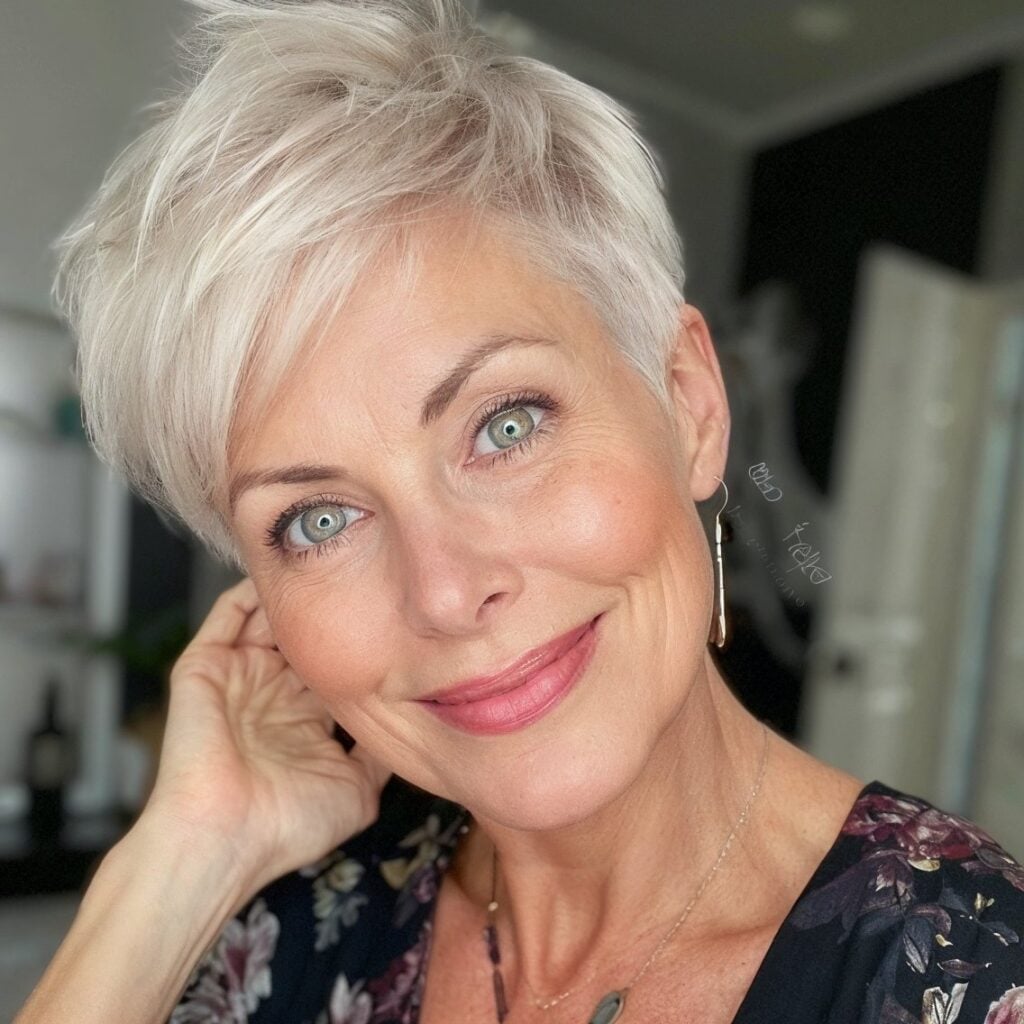
Image credit: fabulous50s.com
Choppy layers cut close to the scalp are what give this platinum pixie its height. The texturizing creates lift at the crown, which is where thinning hair usually shows first, so the eye goes up instead of across. Short, choppy bangs swept to the side keep the face open and add a bit of edge. Ask your stylist for: short choppy pixie, side swept bangs, volume at the crown. This is a modern, chic choice for fine, straight hair, and it works well for oval and square faces. It’s also a practical one for warmer months when you want less hair to deal with.
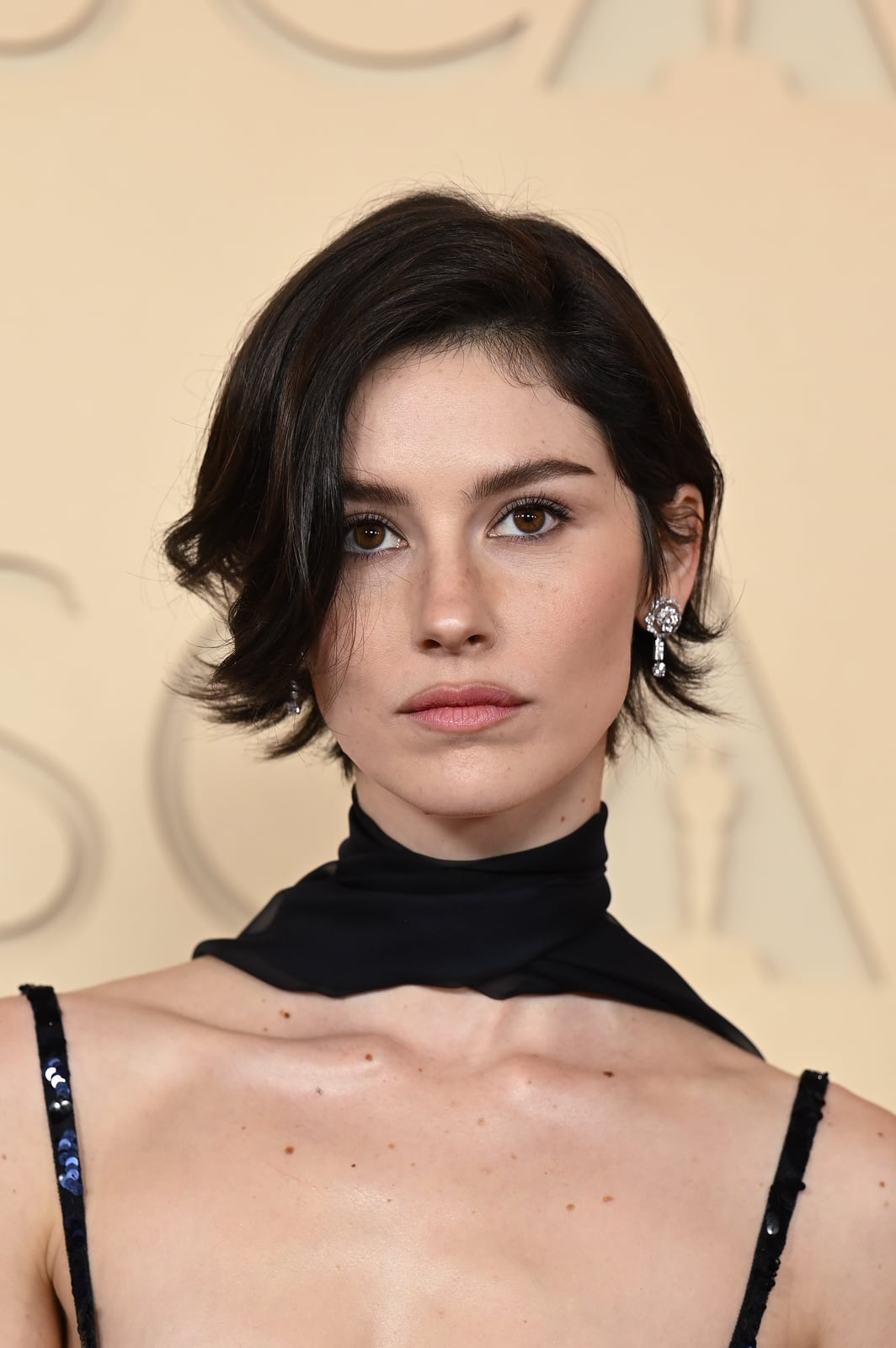
Ear Length Shag With Side Swept Bangs
Source: whowhatwear.com
An ear length shag is a low key way to fake volume because the choppy layers do the work while you sleep. The side swept bangs break up a round face, and the dark brown shade keeps the texture looking dense even when it is fine. Ask your stylist for: ear length shag, choppy layers, side swept bangs, air dried finish. A little sea salt spray adds grit, and the cut will still hold its shape. Trims every six to eight weeks keep the layers from growing out into a shapeless blob, which is the usual fate of a shag.
Shoulder Length Shag With Face Framing Layers
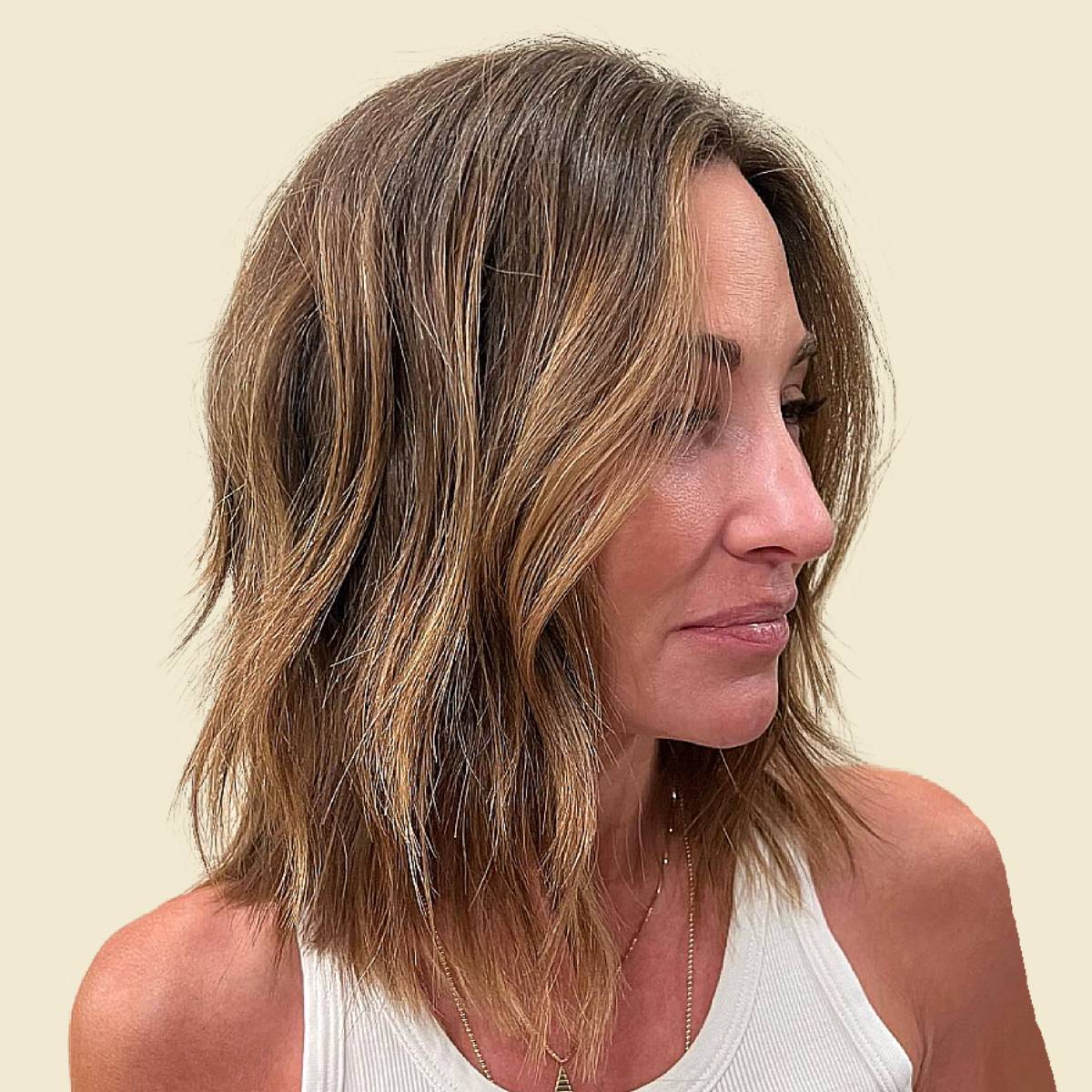
Set this against a plain one length cut and the difference is clear: the face framing layers give shape and movement, while a blunt line just hangs there. The shoulder length keeps enough weight for fine, wavy hair, and the curtain bangs add softness around the jaw for square and oval faces. Ask your stylist for: shoulder length shag, face framing layers, curtain bangs. This is a salon cut, not a DIY project, because the layers need precise placement to flatter. The blonde highlights add dimension that makes the hair read as fuller, and the wavy blowout creates a soft, textured finish.
Dark Brown Pixie With Volume Bangs
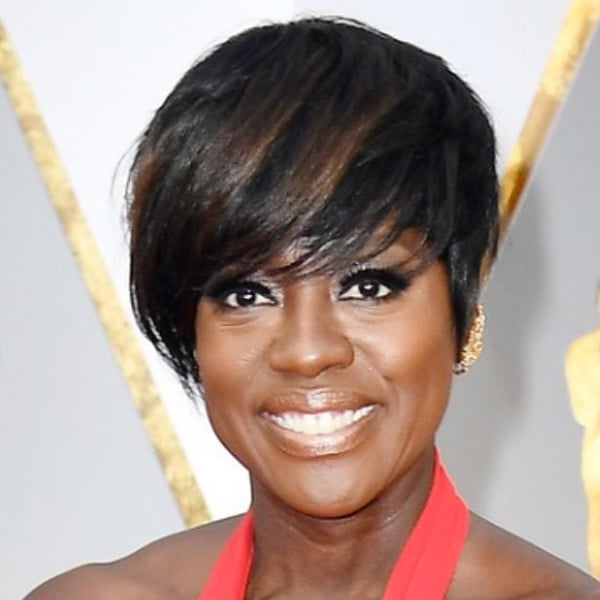
Courtesy of: 40plusstyle.com
A good rule for thinning hair: the shorter the cut, the less weight pulling at the roots. This ear-length pixie uses a side-swept fringe and subtle lighter brown highlights to create volume at the sides. Ask your stylist for: pixie cut with side swept volume fringe. The drawback is that a heavy fringe can make fine hair appear even thinner if not cut precisely, so the stylist keeps the bangs light and textured rather than solid. Volume at the crown suits long faces well.
Collarbone Lob With Caramel Balayage
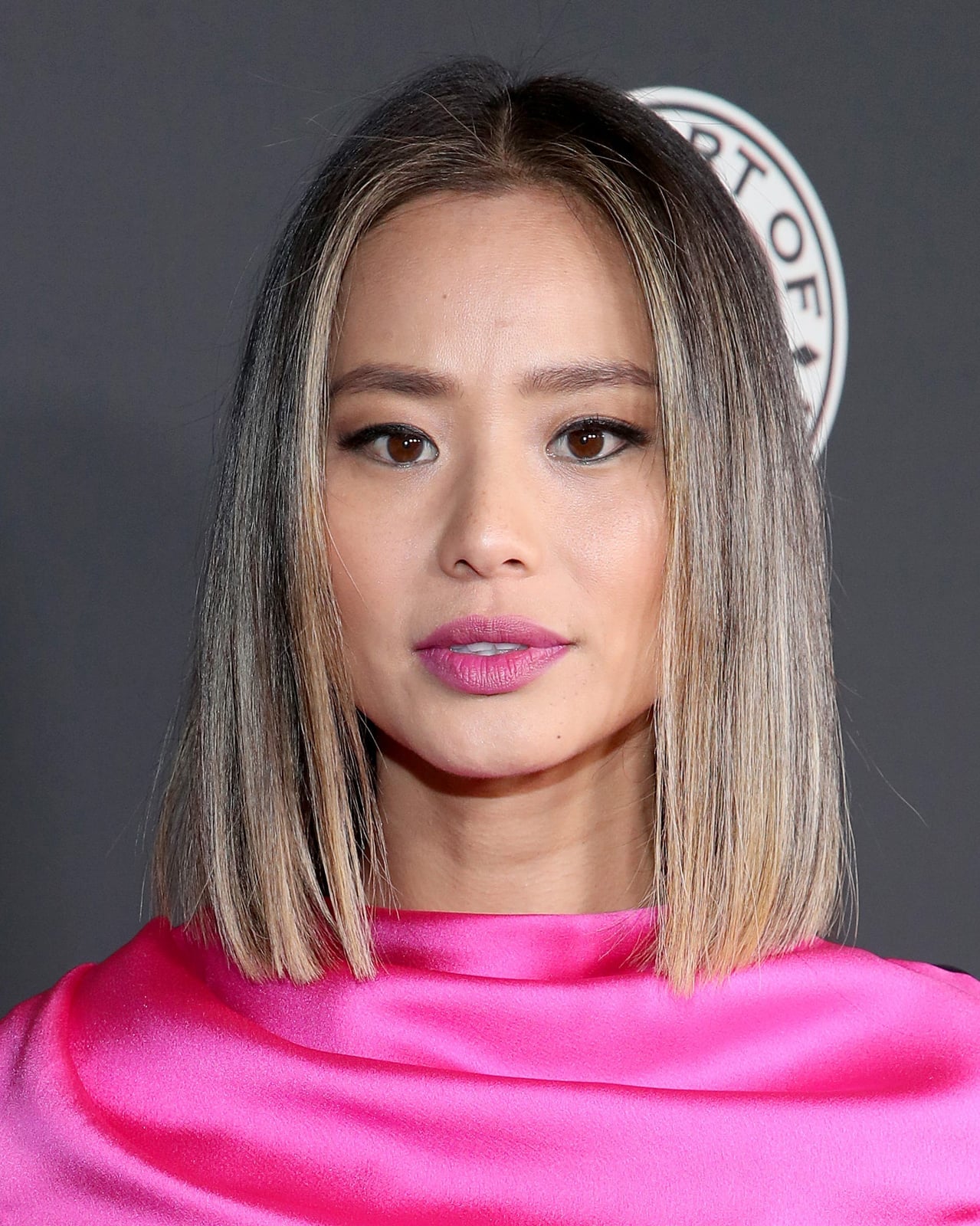
Photo credit: thepioneerwoman.com
Can a color choice actually make hair look thicker? Caramel balayage does exactly that by adding warmth and depth without a solid block of pigment. This collarbone-length lob has a medium brown base with caramel balayage swept through the wavy, air-dried texture. No bangs keep the line clean. Ask your colorist for: collarbone lob, no bangs, medium brown with caramel balayage. The balayage adds visual depth for oval faces. This is a strong choice for autumn and winter, when warmer tones feel natural and the low-contrast color hides new growth well for up to three months.
Collarbone Layers With Dark Blonde Balayage
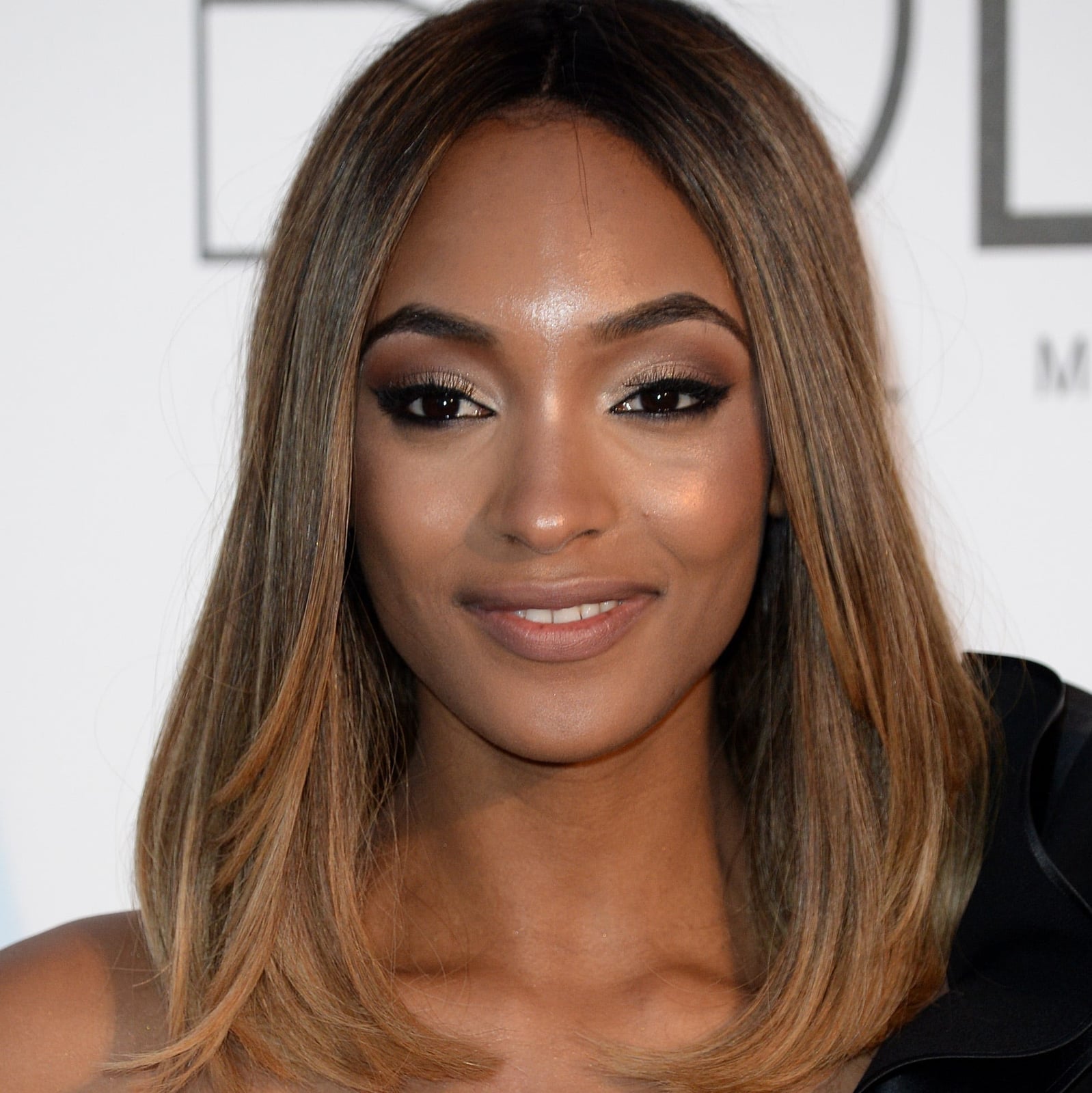
Image credit: goodhousekeeping.com
Styling steps are simple: a volumizing spray at the roots before blow-drying lifts the crown, and the curtain bangs are dried back with a round brush. The medium-density wavy texture holds the shape. Face-framing layers suit round faces. Trim every 8-10 weeks.
Ear Length Bob With Blunt Cut
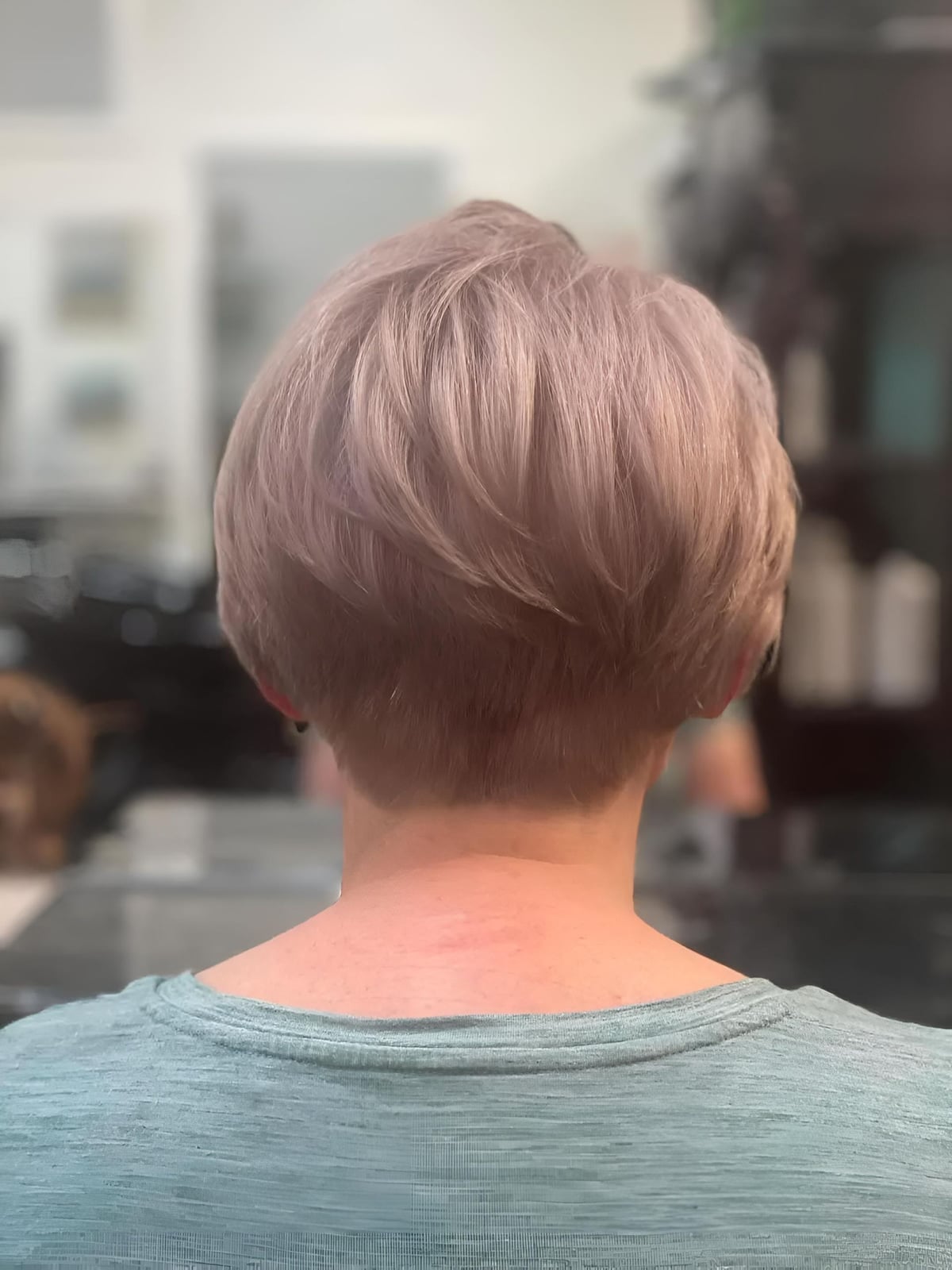
Source: southsidehair.com.au
A blunt cut creates a solid line of pigment at the ends, which tricks the eye into seeing more density than exists. This ear-length bob has no bangs, a side parting and a smooth blowout on fine straight hair. The blonde color with darker roots adds dimension without breaking the clean silhouette. Ask your stylist for: ear length blunt bob, no bangs, side part. A blunt cut adds the appearance of thickness for oval faces. Any unevenness in the hemline is immediately visible, so the baseline must be precise.
Shoulder Length Coily Layers With Visible Scalp
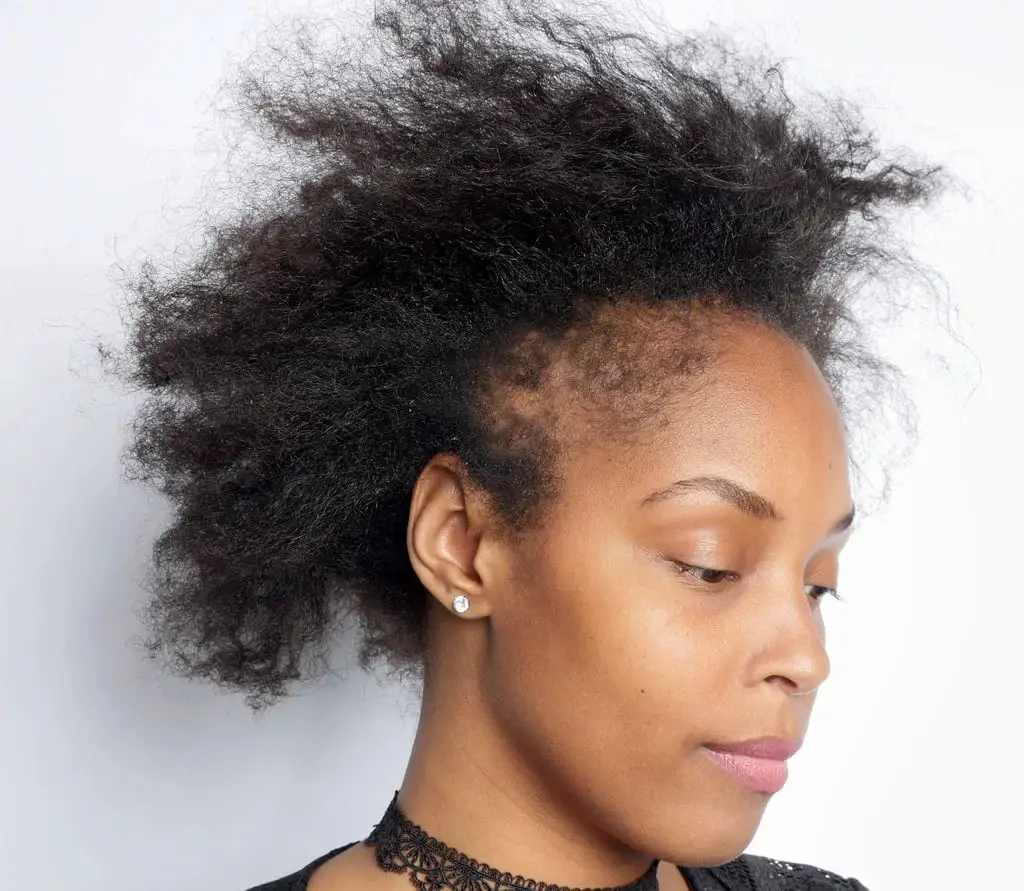
Source: tresseslagos.com
When the scalp is visible through the hair, the instinct is to hide it with more product, but that often weighs the coils down. This shoulder-length cut uses layers to let the fine coily texture expand naturally, creating volume that masks some of the visibility. The side view shows the black hair styled voluminously with a middle parting. Ask your stylist for: shoulder length layered cut for coily hair, natural volume. A DIY approach works: a wide-tooth comb on damp hair and a curl cream for definition. The real drawback is that styling natural coily hair to disguise scalp visibility requires effort and specific products, and the result varies day to day.
Shoulder Length Layers With Visible Thinning
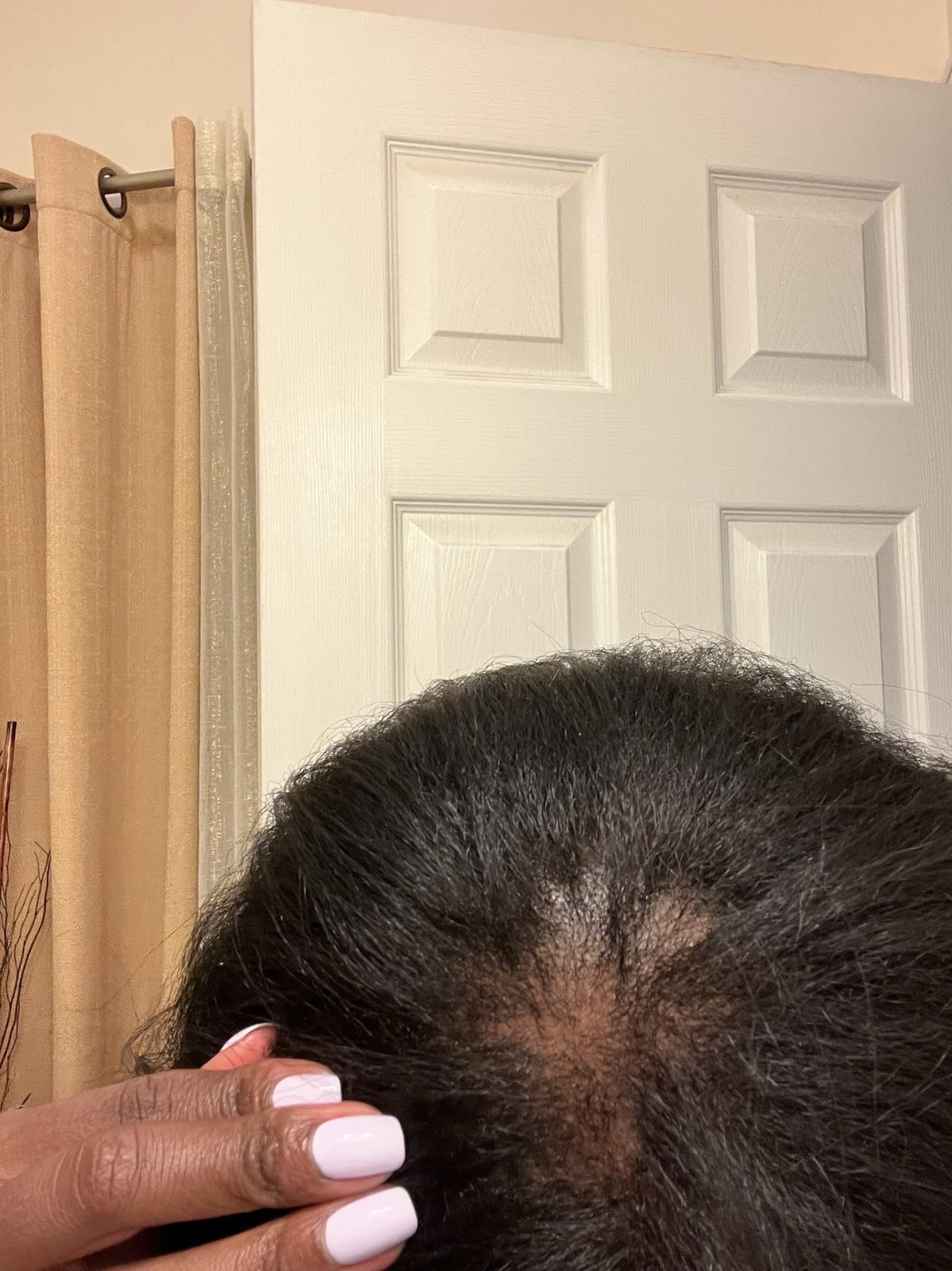
Via essence.com
What goes wrong when thick, wavy hair starts thinning at the crown? Too many layers, cut too short. A shoulder-length cut with subtle layers and a middle part keeps the density you have, but heavy layering up top strips weight from the exact spot that needs it and puts the scalp on display. Ask your stylist for: shoulder length hair with subtle layers, middle part. The wave does the volume work on its own once the length stays below the shoulders. Air drying protects that texture. Set the part where you plan to wear it, since a middle part shows the crown line without apology. Book a trim every six to eight weeks, and keep root-concealing powder within reach for the mornings the part line looks wider than it should.
Shoulder Length Straight Hair With Scalp Visibility
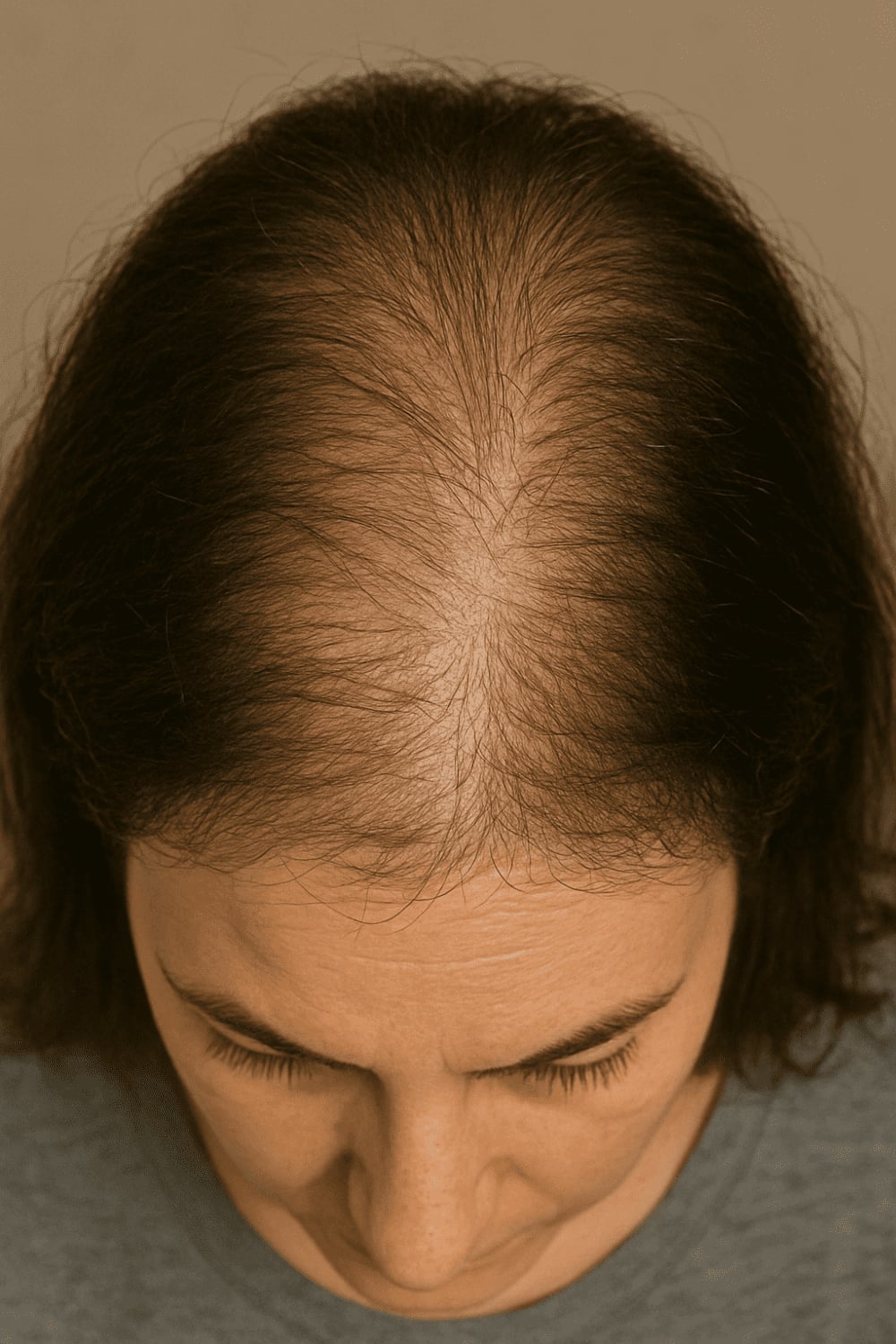
Courtesy of: foxhalldermatology.net
Ask your stylist for: shoulder length straight hair, middle part. The cut itself is simple to maintain, so the real work is styling. A salon can add invisible interior layers that lift the top without changing the outline; at home, rough-drying upside down buys a few hours of fullness before it settles.
Collarbone Layers With Visible Scalp
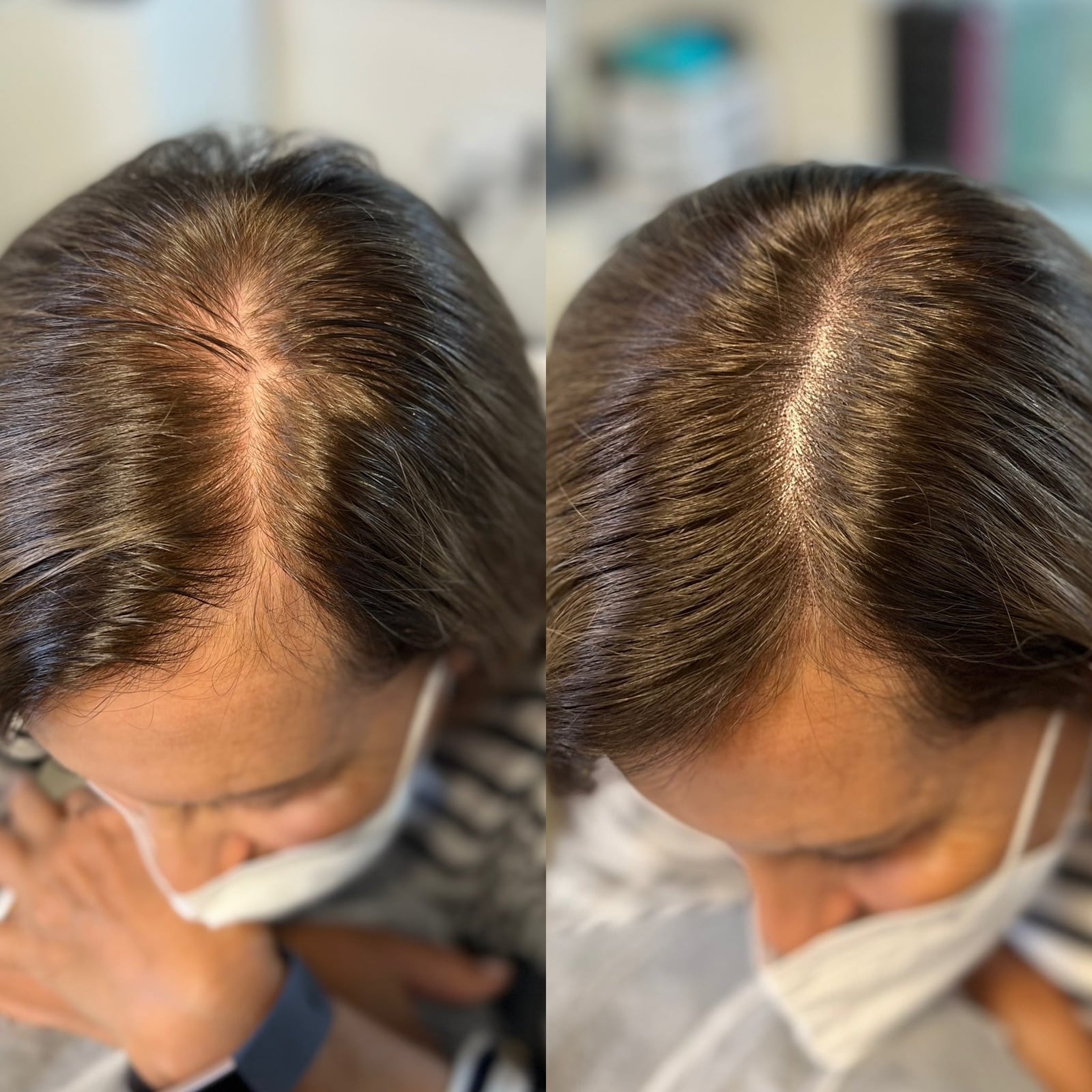
Photo credit: edgescalpink.com
Collarbone-length layers in dark brown, air dried and parted down the middle, will show scalp at the top, and that is the finish to plan for rather than fight. Fine, straight hair falls flat against the head, so the layers add swing at the ends while the crown stays honest. Ask your stylist for: collarbone length layers to disguise scalp. Expect the cut to wear soft and piecey for the first two weeks, then settle as it grows out. Root spray in a matching dark brown camouflages the part line between washes, and a round brush at the roots keeps the top from collapsing. Book a trim every eight to ten weeks; past ten, the layers drag the length down and the top looks sparser than it is.
Mid-Back Long Layers With Ash Blonde Balayage
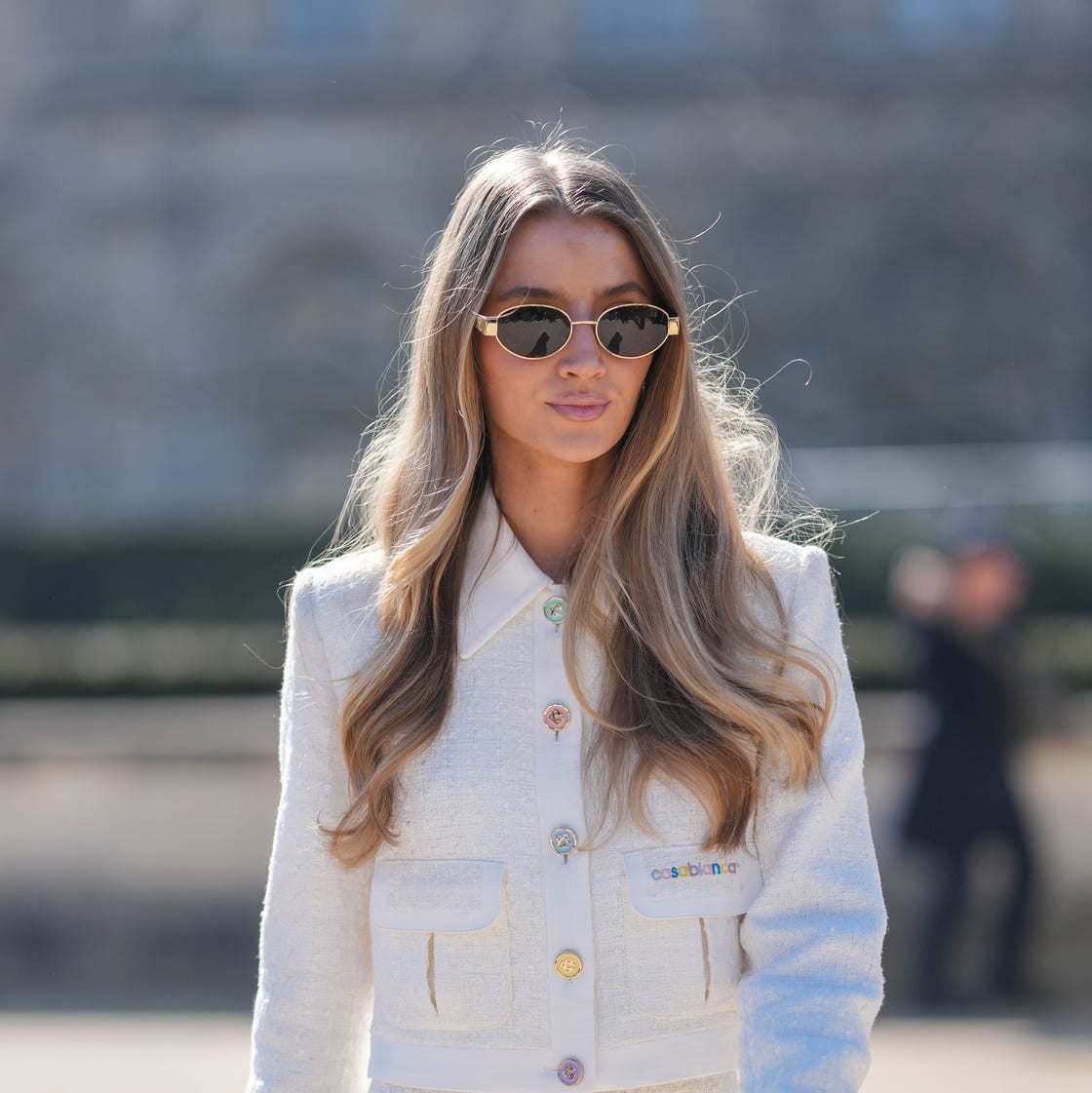
Image credit: cosmopolitan.com
Long hair reads fuller when the color does some of the work, which is why this mid-back cut pairs long, subtle layers with ash blonde balayage. The technique matters: balayage is painted on freehand, so the lighter pieces sit where the hair moves and the darker base stays near the root, giving depth without a hard grow-out line. Loose waves through fine hair separate those tones, and a side part pushes volume across the top instead of splitting it down the middle. Ask your stylist for: mid-back length with long subtle layers, ash blonde balayage.
The length keeps the weight low, so the layers can move without collapsing the crown. This is a good cut for spring and summer, when hair is worn loose and the lighter ends catch the light in a way a solid dark shade never will. Upkeep runs on two clocks: a trim every ten to twelve weeks to keep the ends from thinning out, and a gloss or toner every six to eight weeks to keep the ash from drifting warm. Skip the toner and the blonde turns brassy, which flattens the dimension you paid for.
Collarbone Wet Look With Platinum Blonde
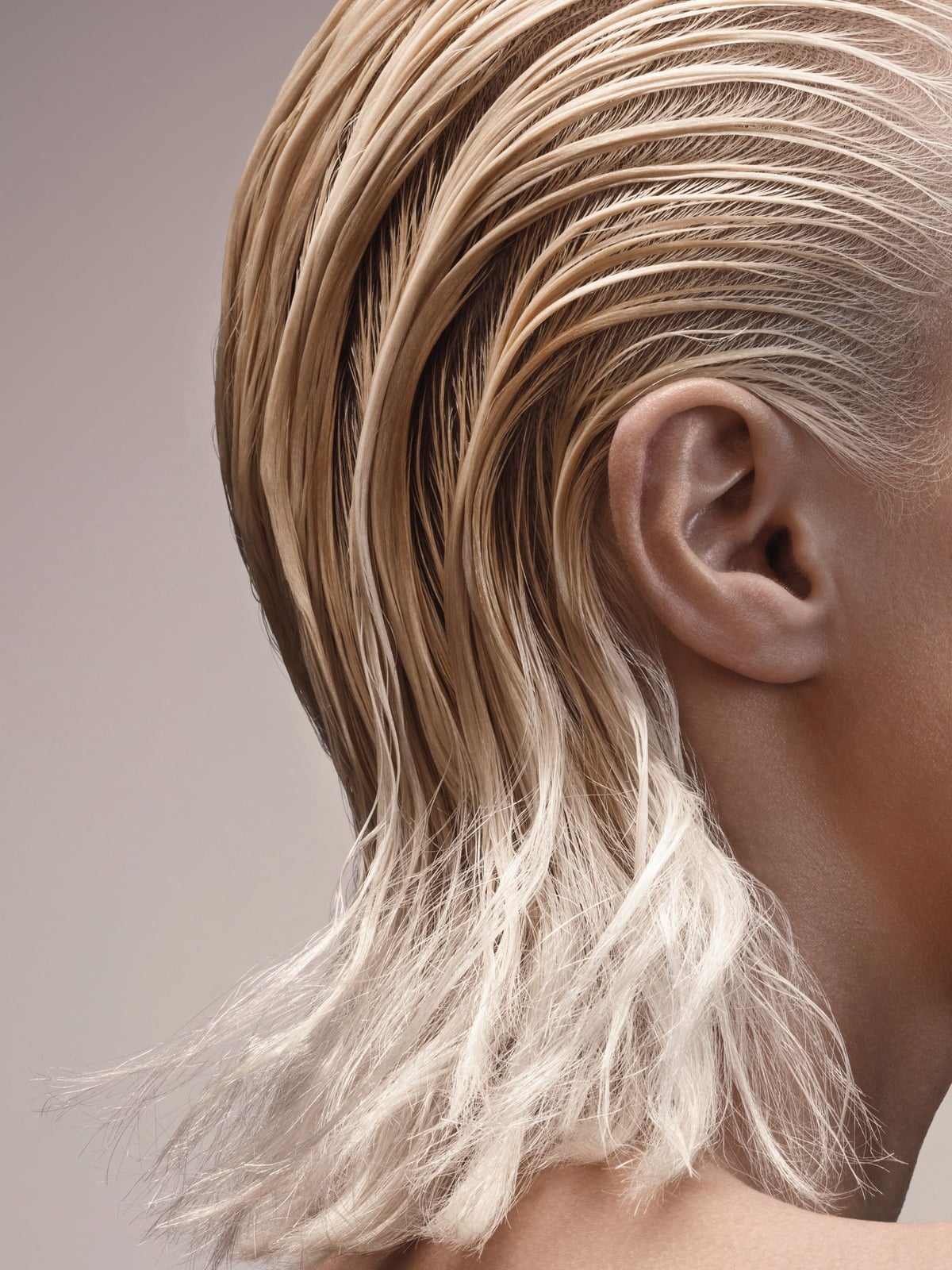
Source: vogue.com
Can a wet look work on fine, thinning hair, or does it just advertise the scalp? Done right, it does the opposite: slicked strands clump together and read denser than they are, and the high-shine finish pulls the eye to the color instead of the part. This collarbone cut, layered and side-parted, wears best on fine, wavy hair that holds a set. Ask your stylist for: collarbone length, wet look style, platinum blonde with dark roots. The darker roots give the platinum something to sit against, so regrowth looks deliberate. One real drawback: the style is temporary and needs restyling after every wash, and if the gel goes on too heavy at the crown, the clumping exposes the scalp instead of covering it. Keep the product at the mid-lengths and ends.
Mid-Back Wavy Hair With Visible Scalp

This style lets the hair do its own thing, and that is exactly the point. The mid-back length wavy hair falls in soft, long layers, parted to the side, with a medium brown shade that reads as completely natural. The fine texture is air-dried, which means the wave pattern is loose and slightly unpredictable, and the visible scalp through the strands is part of the honest, lived-in look.
For thinning hair, this cut works because it does not try to hide anything. The long layers give the hair movement without weighing it down, so the natural volume at the roots has a chance to show up. Ask your stylist for: mid-back length wavy hair, natural air-dried style. If you want to get close to this at home, skip the heavy products and let the air do the work. A diffuser on low can help encourage the wave without flattening it. This is a DIY-friendly style, but a salon cut with long layers will give the shape more structure than a home trim ever will.
Final Thoughts
For thinning hair, stick to one rule: create visual density with blunt ends or strategic layers, never heavy one-length cuts that flatten. A good haircut is the fastest way to fake fullness.
- Trim every 6 to 10 weeks to keep the shape sharp.
- Use a volumizing shampoo and conditioner made for fine hair.
- Apply a root-lifting spray to damp roots before blow-drying.
- Lower your heat setting and always use a heat protectant.
- A glossing treatment adds shine and makes hair look thicker.
The right cut can dramatically change how your hair looks and feels.
-

 Makeup Trends2 years ago
29 Harley Quinn Makeup Ideas: Iconic Looks for Every Occasion
-

 Hairstyle2 years ago
Round Face Haircuts Ideas 2025: 29 Flattering Styles to Try
-

 Hairstyle2 years ago
25 90s Layered Hair Ideas to Inspire Your 2025 Look
-

 Fashion2 years ago
27 Every Day Spring Outfits Inspiration for 2025
-

 Hairstyle2 years ago
29 Long Layered Haircuts Ideas for 2025
-

 Hairstyle2 years ago
64 Fall Hair Color Trends to Elevate Your Style in 2024
-

 Hairstyle2 years ago
Choppy Bob Haircuts 2025: 29 Stylish Ideas
-

 Hairstyle2 years ago
27 Medium Length Haircut with Layers Ideas for 2025