
Hairstyle
23 Chic Purple Hair Ideas 2027 with Dark Accents
Chic Purple Hair Ideas 2027 include dark purple with lighter purple highlights and black to purple ombre hair looks for a bold statement. See all 23 styles.

You are scrolling past another purple hair idea that looks expensive and complicated, and you are wondering how it would actually grow out. That is the gap this collection closes, real cuts and colors that work with your texture, your schedule, and the fact that you do not want to live in the salon.
Sharp Purple Hair Ideas 2027 fill so many saved boards for a reason: 23 looks that span subtle highlights to full-on violet, lobs to long layers, and ten-minute styling to a proper blowout. The struggle this solves is the gap between what you want and what your hair can actually do, and the growth you will live with afterward.
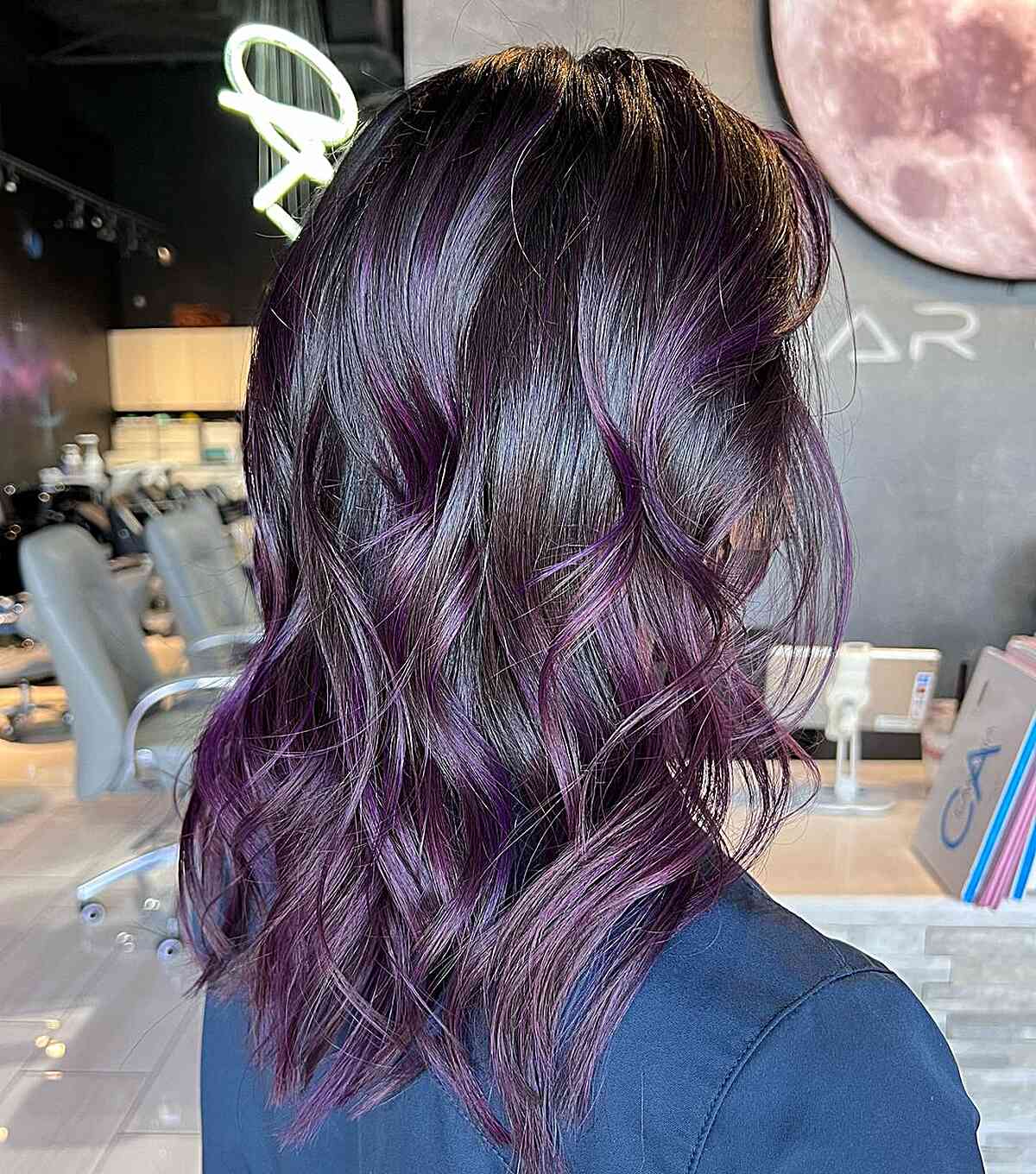
Vibrant purple highlights on a dark brown base with subtle layers
Courtesy of: latest-hairstyles.com
Dark brown base, purple highlights, and subtle layers add up to a design that lets the color take center stage. The middle part and soft wavy texture keep it from looking costume. This is purple that lives in your real life. Fine hair works well here; the highlights create the illusion of density, and the layers add movement without sacrificing weight. This style is best for those who want sectioned contrast rather than a solid color all over. Ask your stylist for: subtle layers with vibrant purple highlights. A wavy blowout takes about twenty minutes; plan a trim every six to eight weeks.
Full texture from vibrant purple highlights on long layered hair
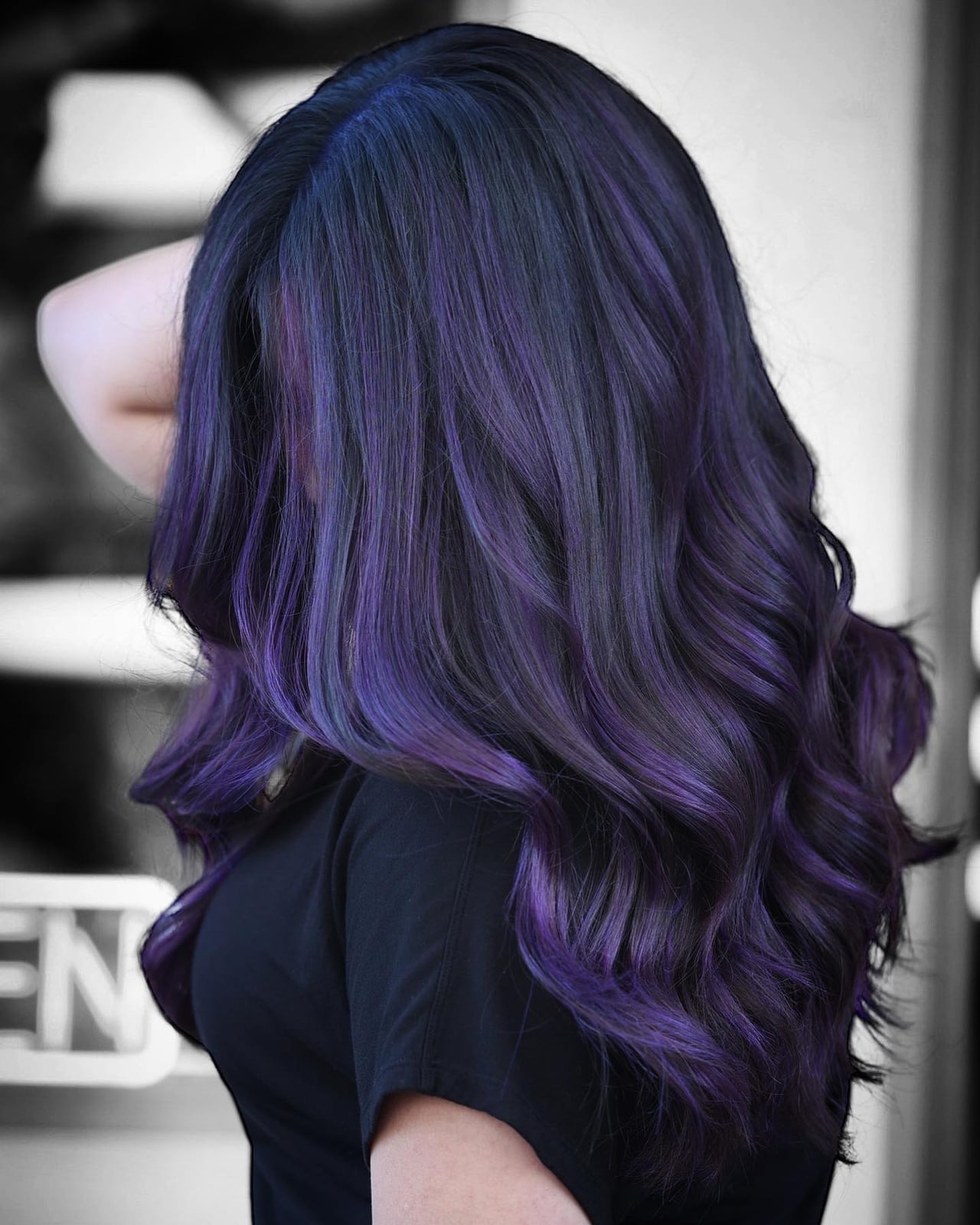
Photo credit: momooze.com
Straight, unlayered hair can feel heavy with highlights. The color sits on top and never integrates. Long layers change that. The cut lets the purple highlights travel through the surface, so the color looks part of the hair, not a stripe painted on. Thick textures benefit most here.
The loose waves spread the highlights across the width, making the shade visible from every angle. Fine hair may struggle to hold the volume needed for this effect, and the contrast can feel sparse if density is low. The layers need a trim every eight to ten weeks; a large barrel curling iron builds the wave in about fifteen minutes.
Dark purple with lighter purple highlights and a side parting
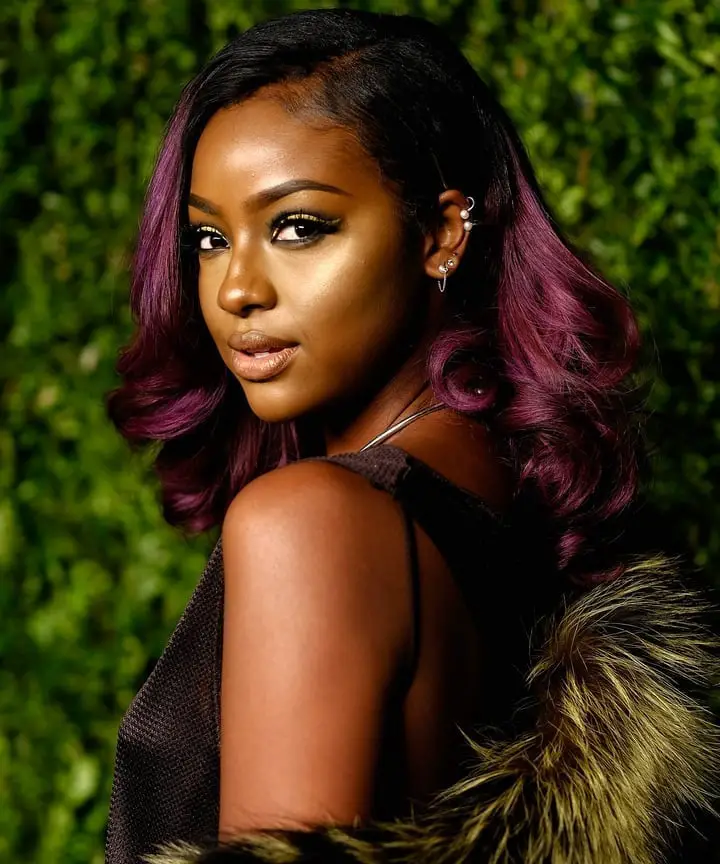
Image credit: refinery29.com
How do you get a dark purple that still catches the eye instead of looking black? Lighter purple highlights are the answer. The side parting does two things: it lifts the crown so the top layer gets light, and it creates a diagonal fall for the highlights to follow. Thick, wavy hair holds the shape through the day, no flat roots by lunch. The effect works because the base is deep enough to ground the look while the lighter strands supply the dimension. Request from your colorist: dark purple base with lighter purple highlights, layered cut. Maintain the contrast with a purple-toned shampoo at the sink, not the chair.
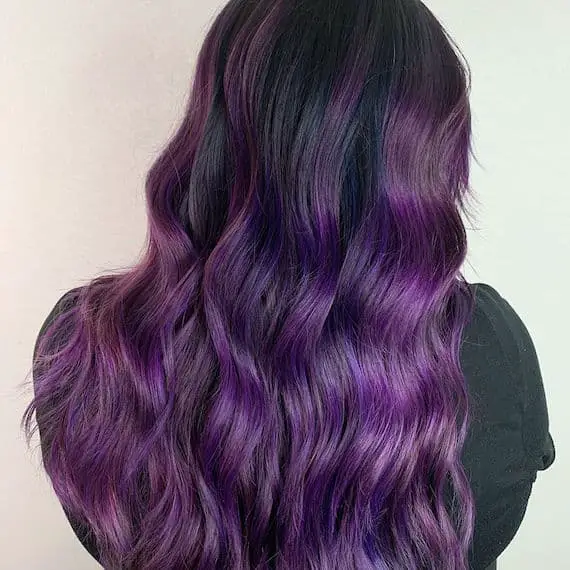
Dramatic Ombre from black to vibrant multi-tonal purple
Source: nz.wella.professionalstore.com
An ombre transition from black to multi-tonal purple requires precision at the root line. The dark base stays untouched, so grow-out is gradual, no harsh line to chase every four weeks. Long, thick layers give the waves room to show the shift in color as the hair falls. The technique works by painting the lower sections in stages, building from deep violet to brighter tones. Not for anyone who wants a uniform shade from root to end.
Purple highlights on dark brown wavy hair
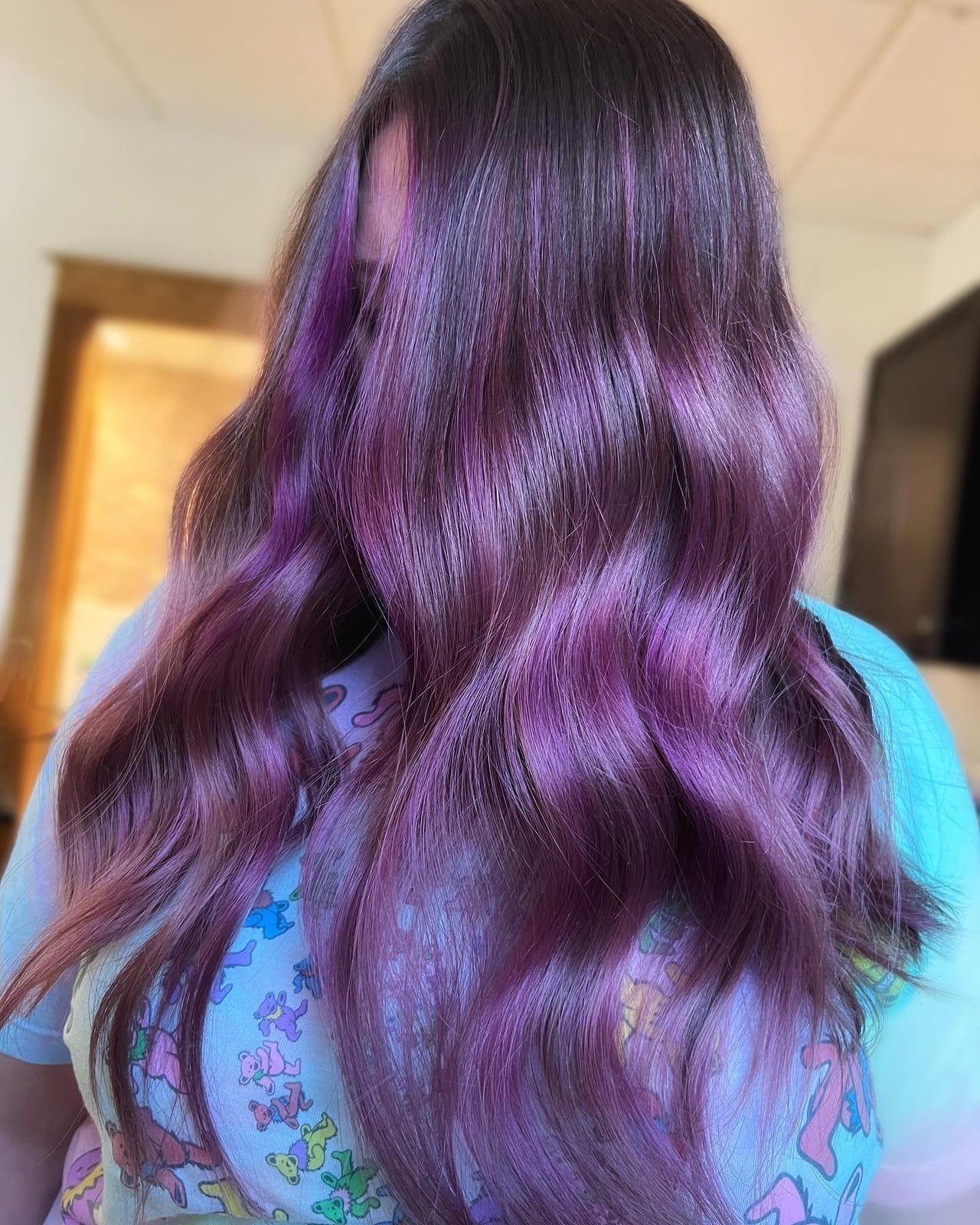
Via hadviser.com
Woven highlights on wavy dark brown hair create a surface that changes as the waves turn. The middle parting exposes the layers on both sides, so the color has a deliberate look. Thick, long hair starting at the collarbone has enough surface area for the highlights to spread without looking sparse. Ask your colorist for: dark brown base with woven vibrant purple highlights. Woven highlights require precision at application and a schedule to stay fresh.
Distinct purple streaks add bold color
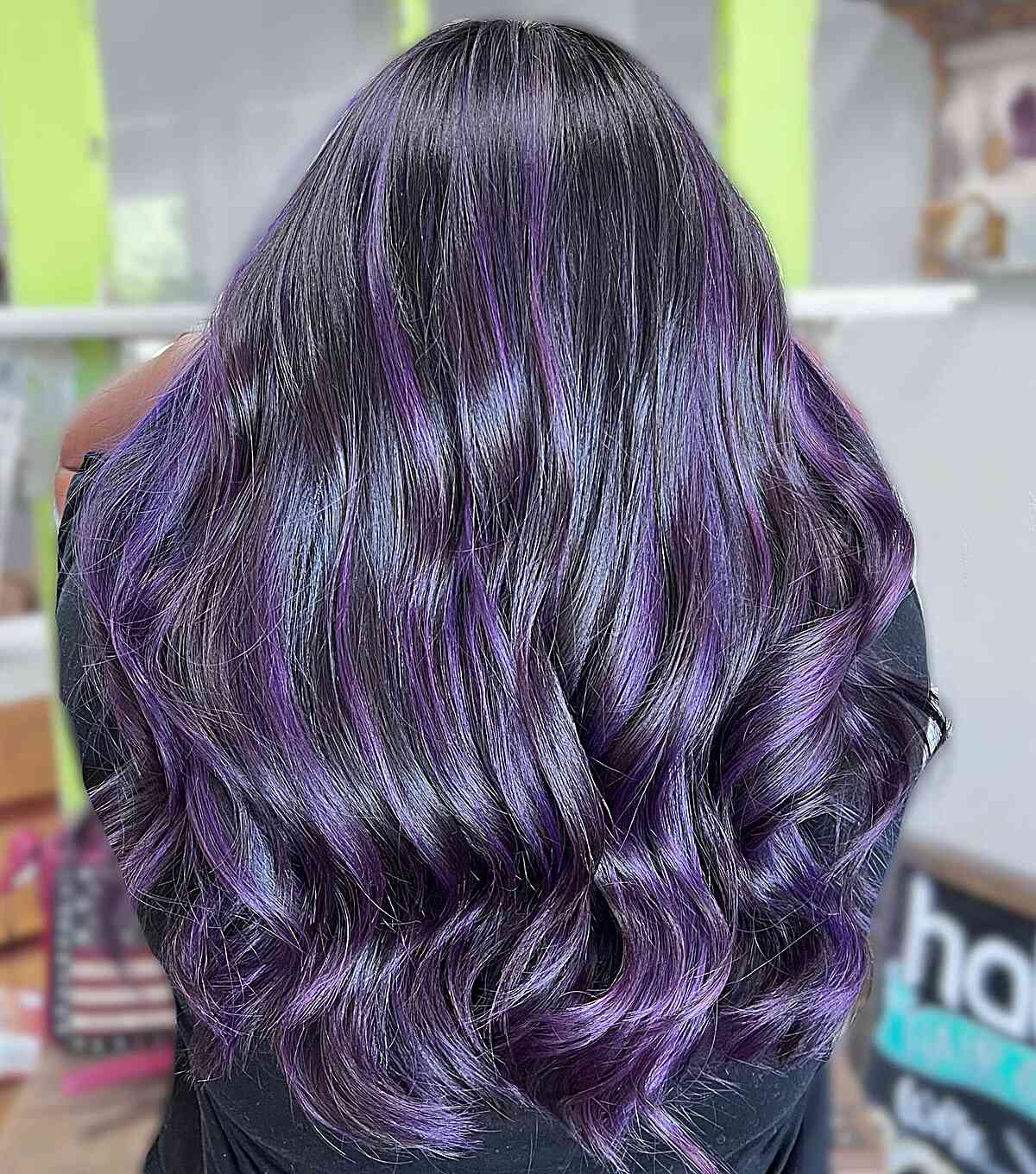
Courtesy of: latest-hairstyles.com
Streaks are not highlights, and this cut makes that difference clear. Long layers keep the dark base visible between each vibrant purple stripe, so the color stands out as a bold statement. The thick, wavy texture helps the streaks sit naturally instead of looking painted on. A fair warning: these streaks need precision placement, so the chair time is longer than a standard highlight session. This color announces itself.
Dark purple base with violet highlights in layered waves
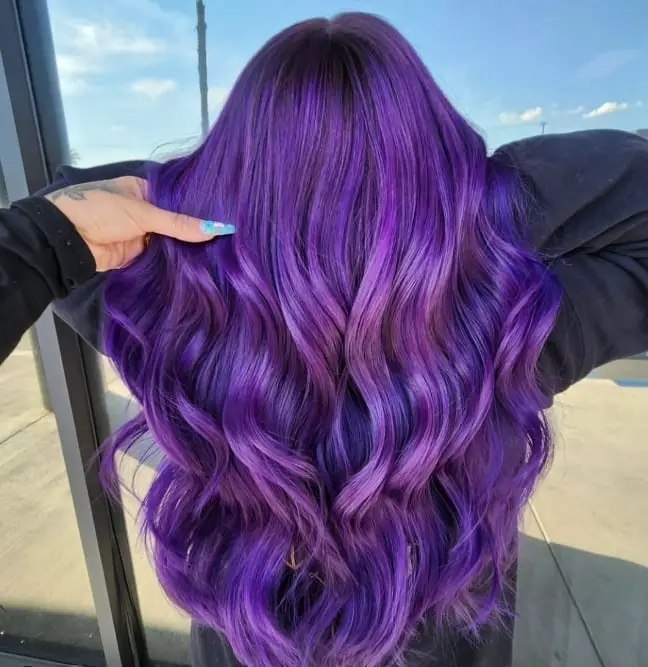
Photo credit: amr.com.au
Winter is the season that lets a dark purple base with violet highlights actually read. The deep shade anchors the color while the lighter violet pieces catch indoor light. Layered waves on thick hair give the violet strands room to separate, so the dimension shows even when the hair is down. No bangs here. The color is the focal point. This design relies on the contrast between the two purples.
Deep plum to vibrant purple balayage on thick wavy hair
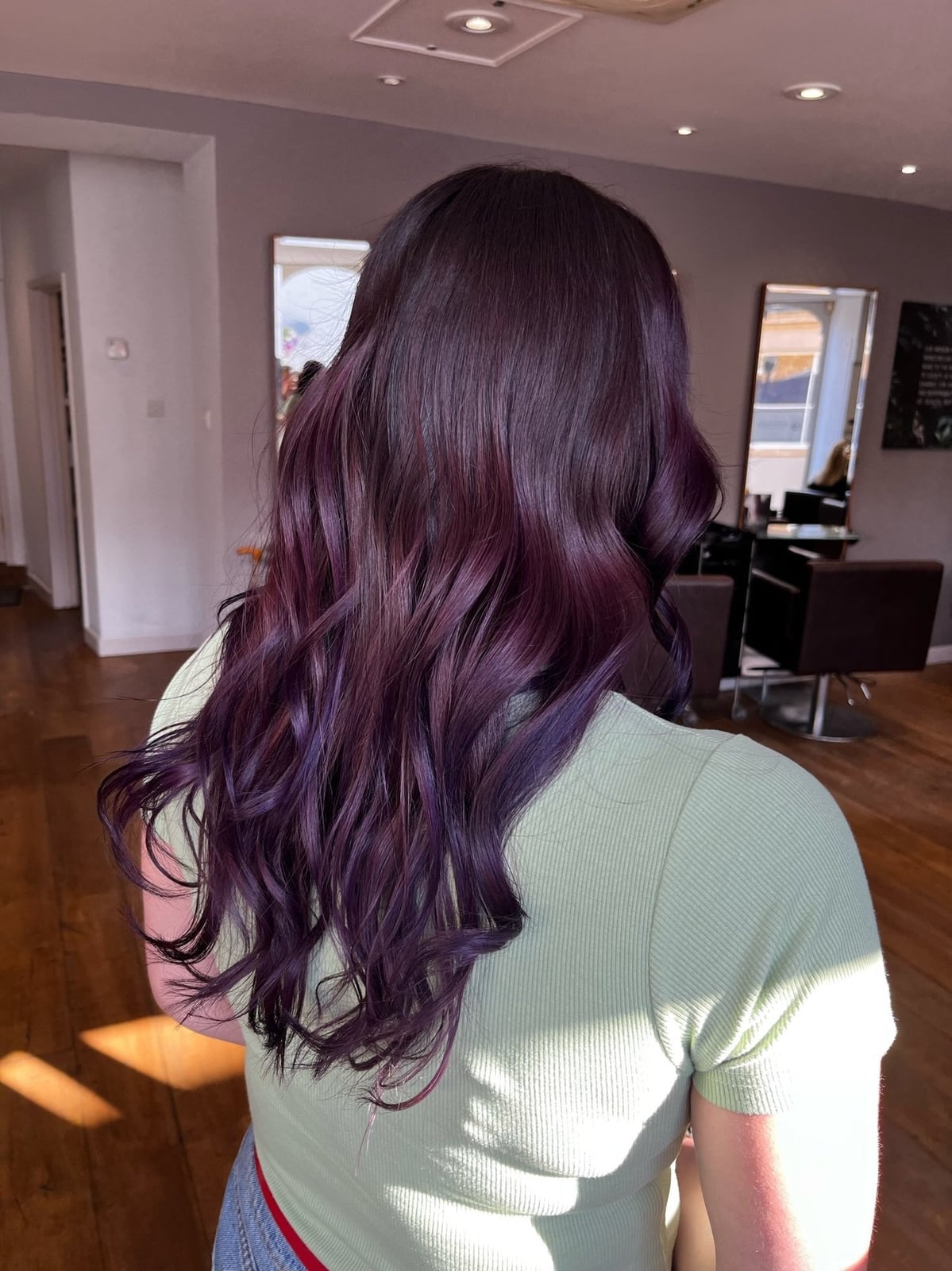
Image credit: karenchristensen.co.uk
Does a balayage work on thick, wavy hair, or does it disappear into the texture? It works when the base is deep plum and the transition lands on vibrant purple. The layers in this cut let the color gradation show from the back view, where the wave pattern naturally breaks up the line. Thick wavy hair holds the shape without product, so the balayage appears as movement. This is a soft blend, not a hard line. Skip this for a dramatic root-to-tip color change.
Lavender purple color with soft waves
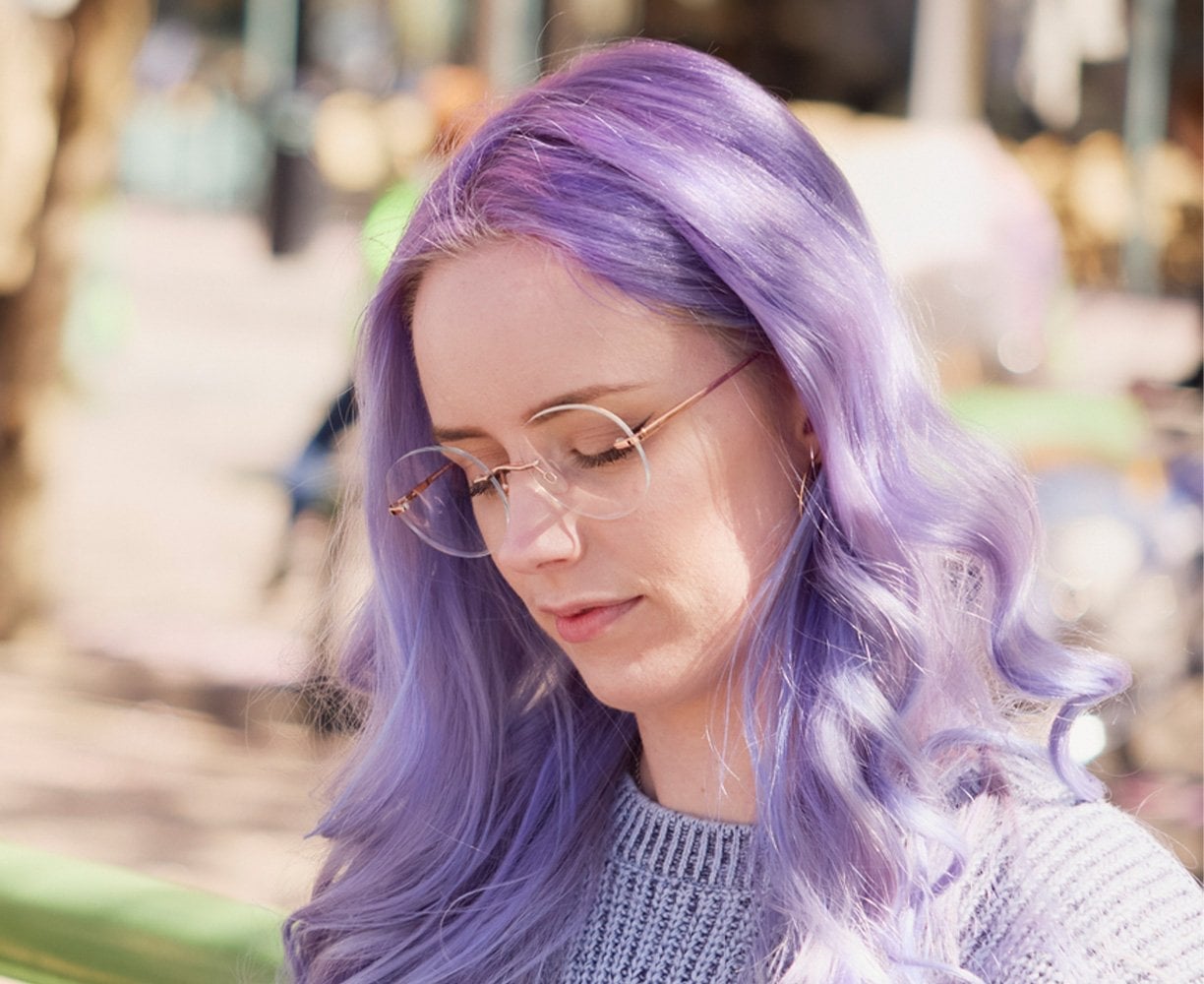
Source: garnierusa.com
A middle part and soft waves keep the lavender purple color from looking artificial. The fine, wavy texture helps the pastel shade sit softly. Getting to this lavender requires bleaching, so the salon process is not a quick one. Maintenance involves color-safe products and a toner every three to four weeks, as lavender fades faster than deeper purples. Ask your colorist for: all-over vibrant lavender purple color, soft layers.
Brown to lavender Ombre on a sharp lob with waves
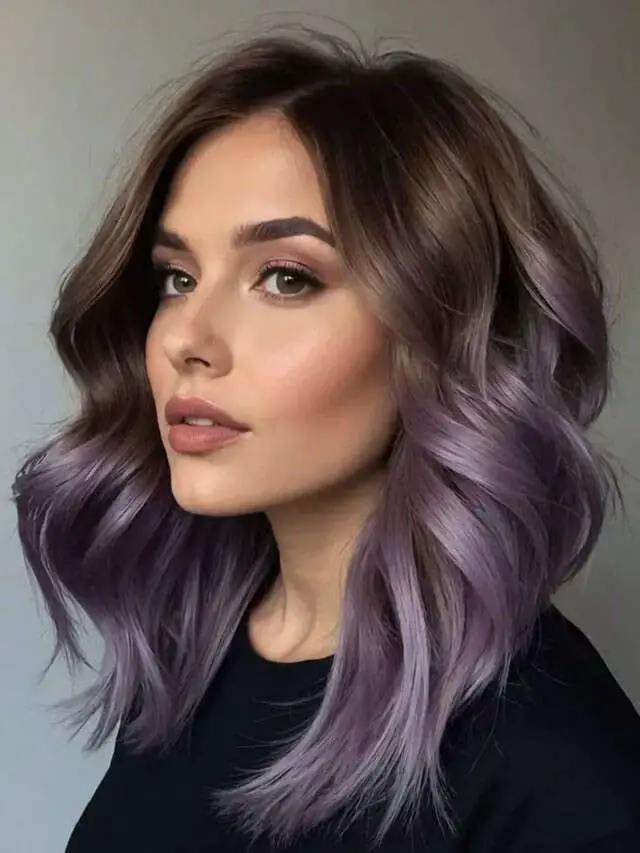
Source: femina.in
A lob with a middle part and waves makes the brown-to-lavender ombre feel like a deliberate design choice. The rich brown roots ground the look, while the lavender ends show in a wavy blowout. The fine, wavy texture here keeps the ombre from looking heavy. Ombre maintenance is straightforward: tone the ends every six to eight weeks and trim the lob on the same schedule.
Vibrant purple all-over color on long thick layered hair
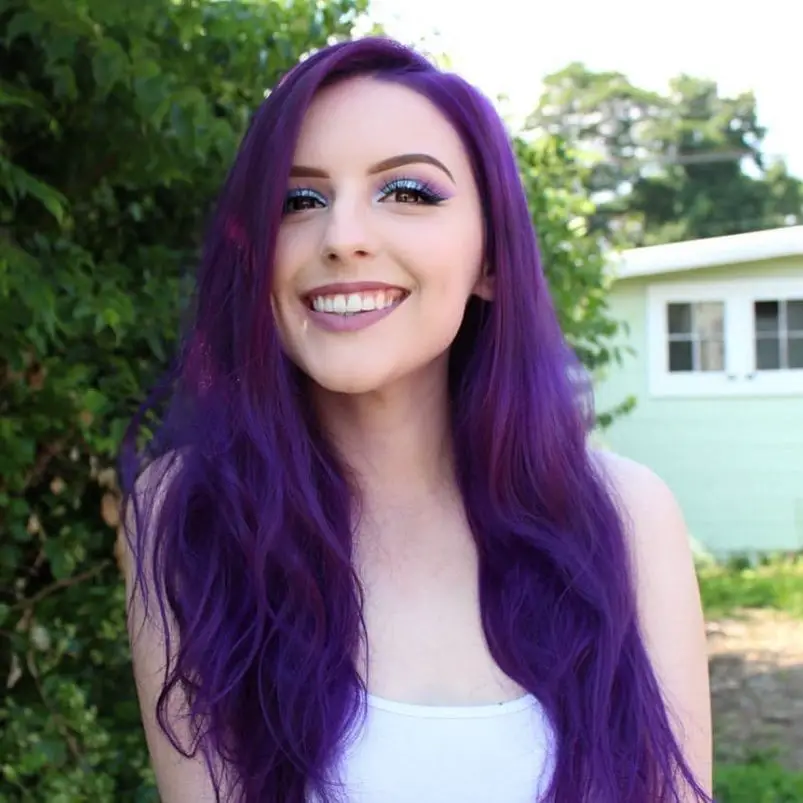
Via punky.com
Vibrant all-over purple requires a commitment. Long layers keep the thick, wavy texture balanced, while the middle part lets the color sit evenly on both sides. No bangs here, so the focus stays on the shade.
Fine hair may not handle the bleach lift as well as thick hair. Request from your colorist: all-over vibrant purple on long layers. A color-depositing conditioner every few washes stops the tone from shifting brassier than you want.
Deep purple lob with magenta highlights and root shadow
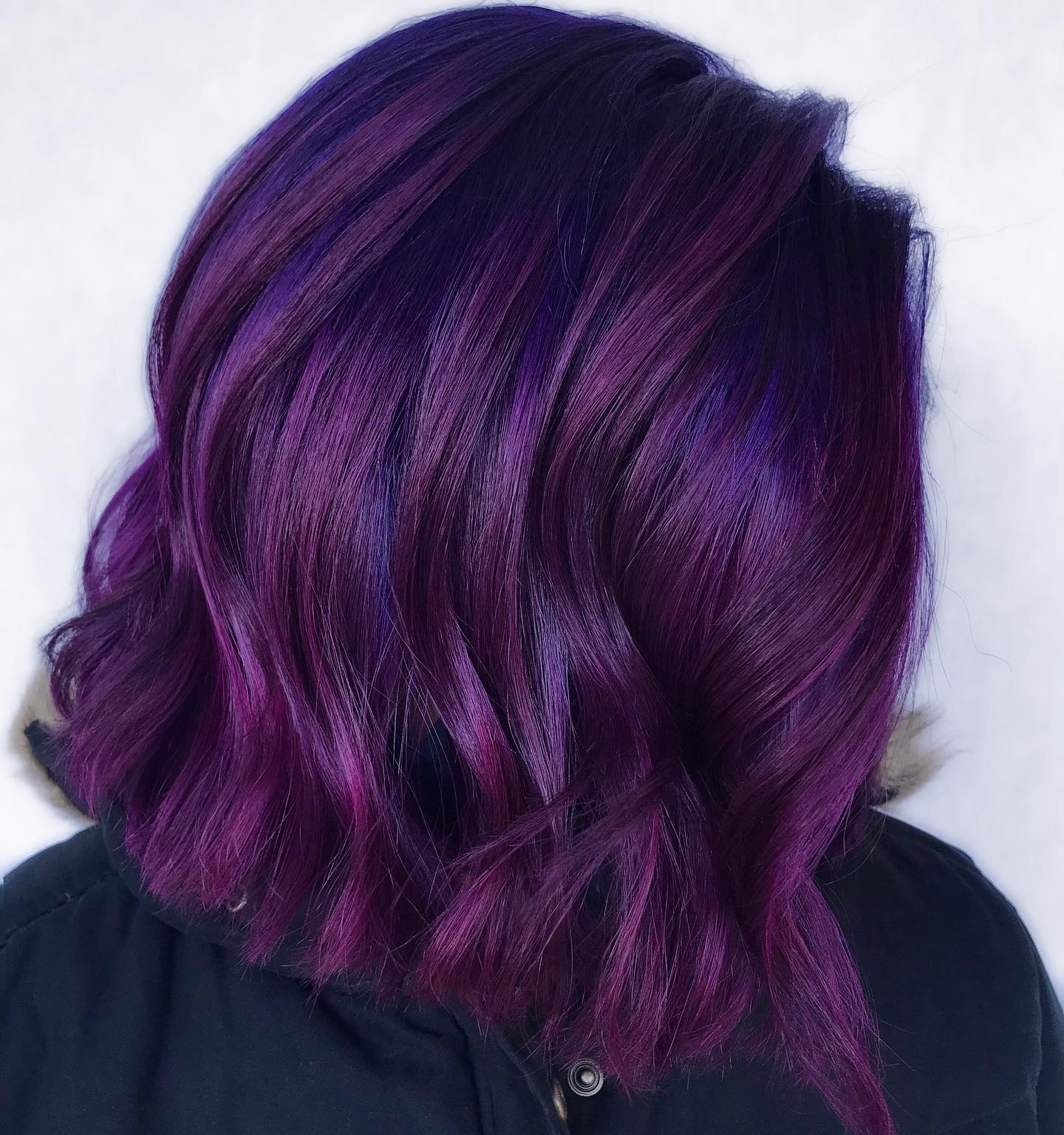
Courtesy of: hadviser.com
A lob with a root shadow looks lived-in from day one. The mistake is treating the magenta highlights as an afterthought. They need placement, not just a few random streaks. Thick wavy texture carries the dark purple base well, and the middle part shows off the side-to-side variation. No bangs means the cut reads clean.
Dark purple to lavender Ombre on long thick layered hair
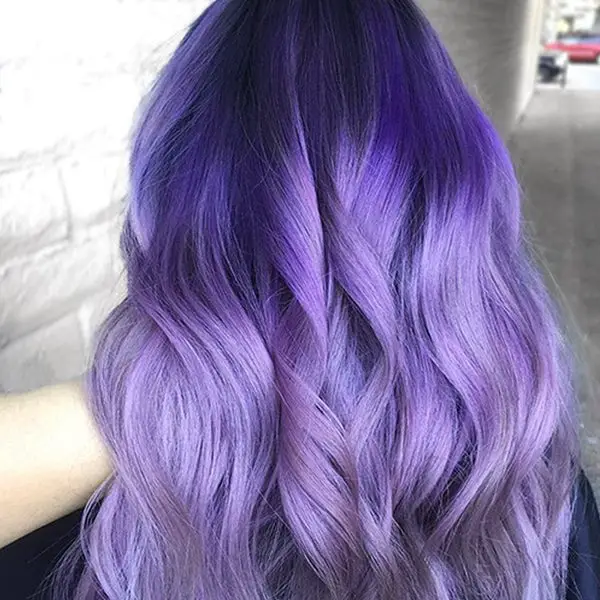
Photo credit: evilhair.com
Two colors on one head: dark purple at the roots, lavender at the ends. The ombre is built by painting the mid-lengths and ends separately, so the transition looks soft rather than blocked. Long layers give the thick, wavy texture room to move without the color stacking too heavy at the hemline. No bangs. Request from your colorist: dark purple roots blending to soft lavender ends on long layers. A color-depositing conditioner on the lavender sections once a week.
The grow-out is forgiving because the dark root blends into the ombre. You can stretch to ten weeks between touch-ups. Fine hair may find the lighter ends feel too thin, thick hair holds the shape better.
Dark brown to purple Ombré on thick layered hair
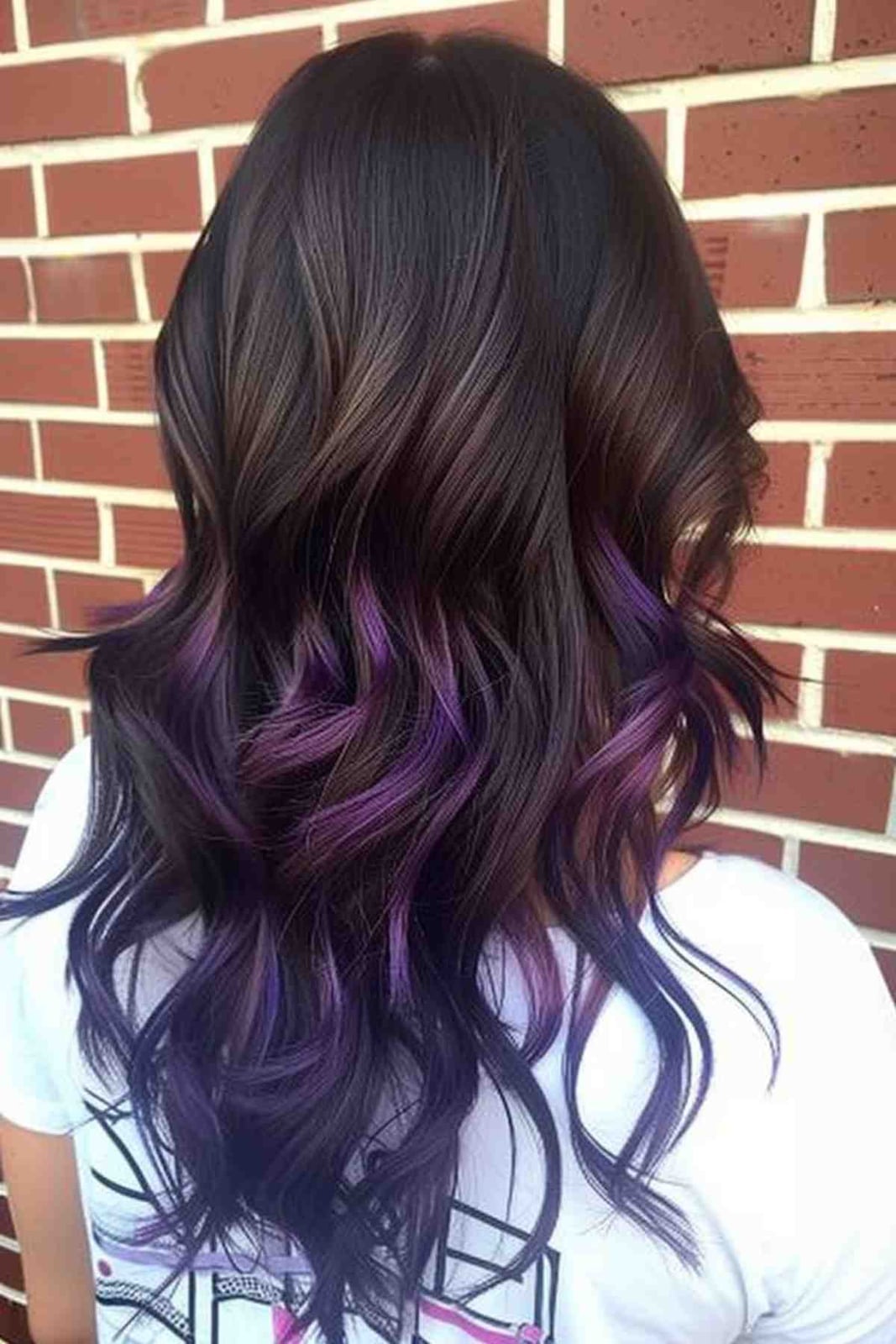
Image credit: latest-hairstyles.com
Dark brown to purple ombré sits one step subtler than a full lavender gradient. The dark brown base keeps the root natural, while the vibrant purple at the ends adds the pop. Thick layered hair gives the ombre enough surface area to read clearly, and the middle part shows both sides. No bangs. Skip it if you want a single, even color. The contrast here is the point. A toner refresh every eight weeks keeps the purple from fading into a muddy brown.
Purple and blue highlights in a half-up knot style
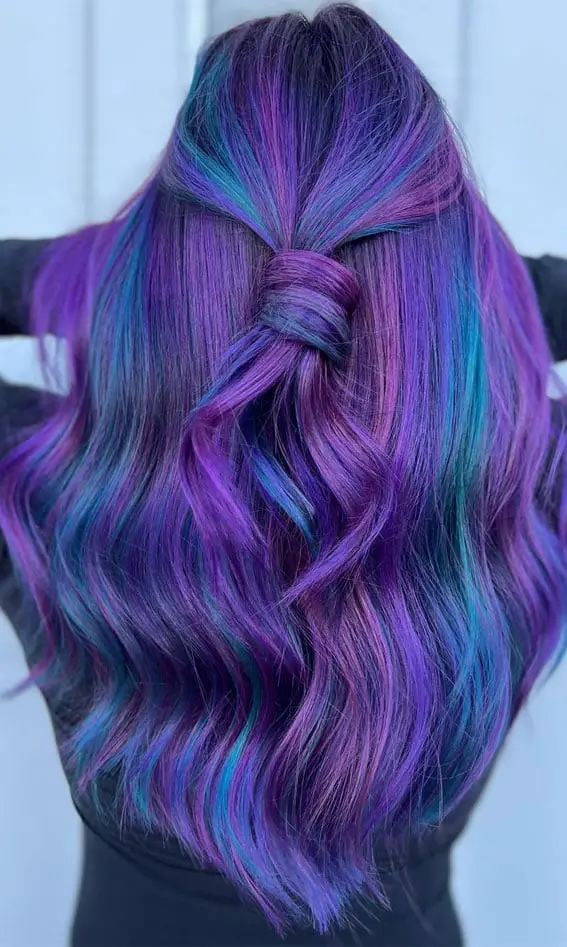
Source: itakeyou.co.uk
Two cool tones in one head: rich purple and striking blue highlights on a layered cut. The half-up knot pulls the front sections back, so the color shows at the ends and the knot itself. Fine, wavy texture works well here because the layers peek out without overwhelming the shape. No bangs. It suits those who want a two-tone look rather than a solid color. Request from your colorist: purple and blue highlights on long layers. The style holds best on second-day hair, no fresh wash needed.
Purple bob with gray highlights and a side-swept bang
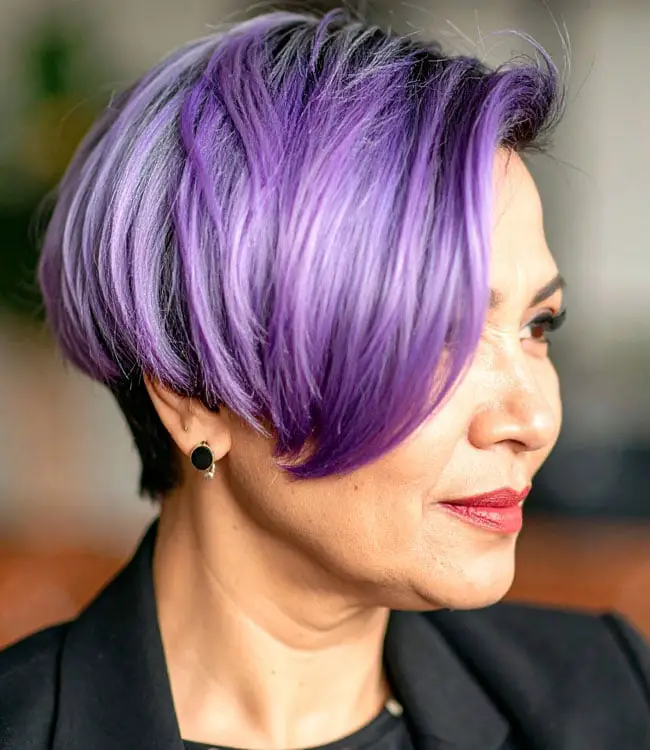
Via itakeyou.co.uk
Side view is the only view for this one. A bob cut to ear length with a side-swept bang that lands right at the brow, all in a straight, fine texture. The gray highlights weave through a vibrant purple base without going chunky. Skip it if you dislike bangs or want to grow past your jaw.
Layered bob with blunt bangs and purple and blue color
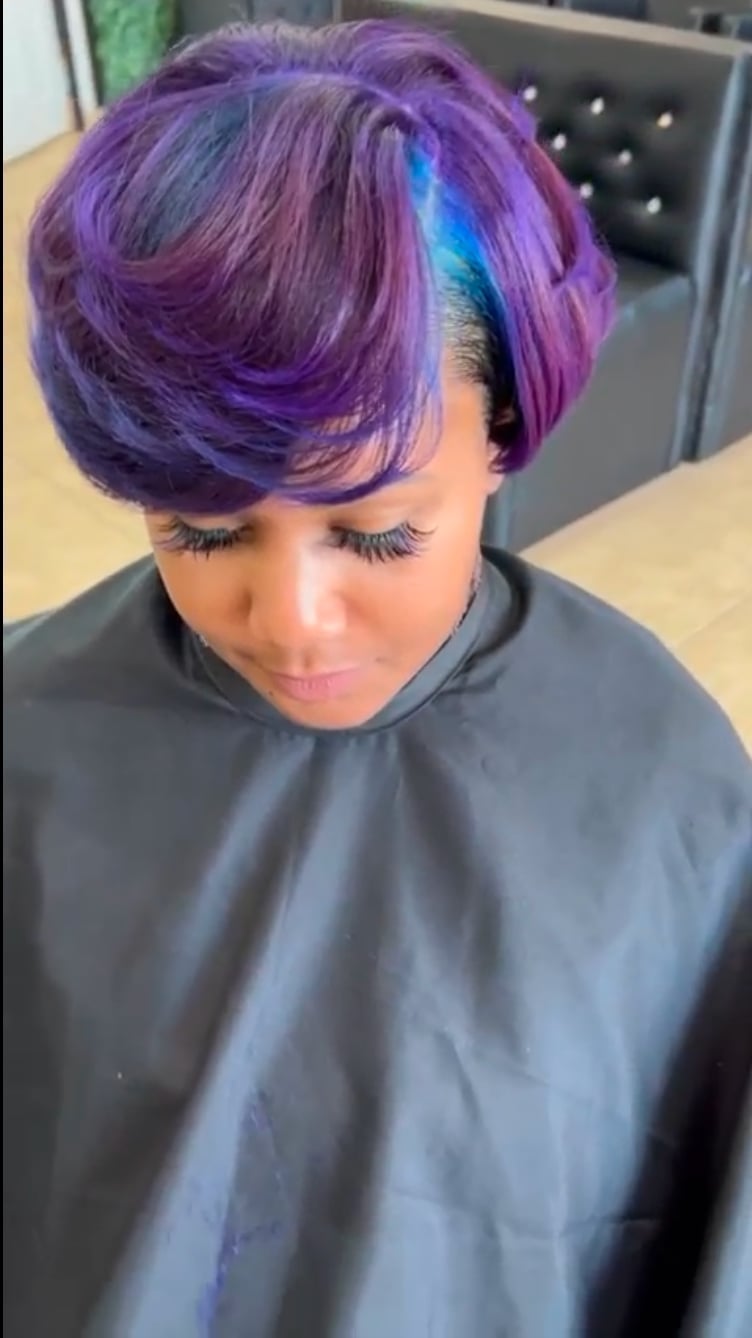
Courtesy of: blackhairinformation.com
Not a soft, feathered bob. This one is a layered bob with a blunt bang that hits straight across. The purple base gets blue highlights placed to look modern, not costume. The catch: blunt bangs need precise cutting every three weeks, and the two-tone color means a salon visit for the root touch-up. A DIY root fix here turns muddy fast. Fine, straight texture keeps the shape clean, but the styling is a blowout every time.
Two-tone purple and pink color
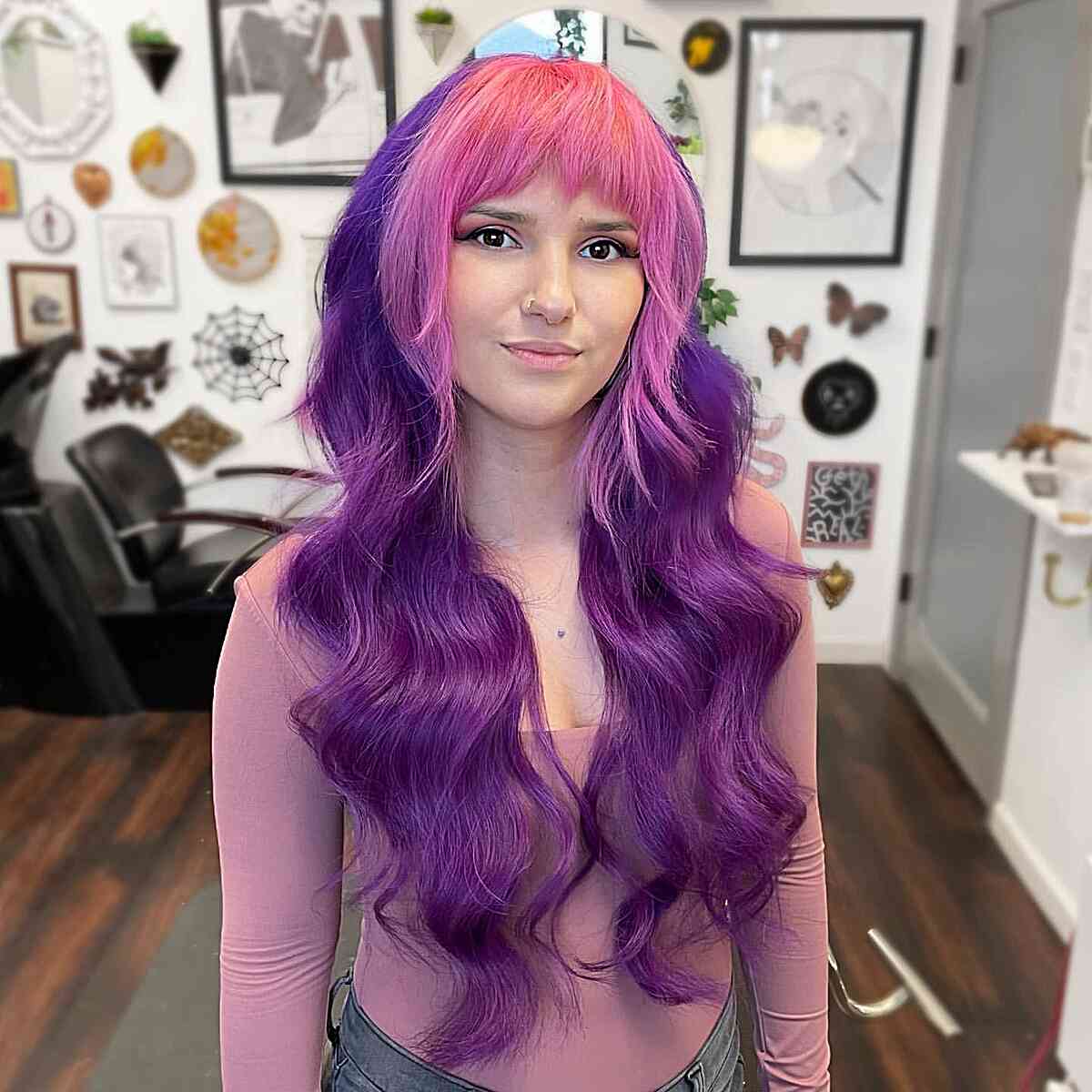
Photo credit: latest-hairstyles.com
Two colors, one head, no halfway measures. Long, wavy hair with subtle layers and blunt bangs carries a deep purple base that shifts into vibrant pink toward the ends. Thick texture keeps the two tones from blending into a wash. The middle part lets each side look its own section. Request from your stylist: subtle layers, blunt bangs, purple and pink two-tone color. The blunt bang stays precise for about three weeks before it needs a refresh.
Dark to bright purple Ombre on long layered wavy hair
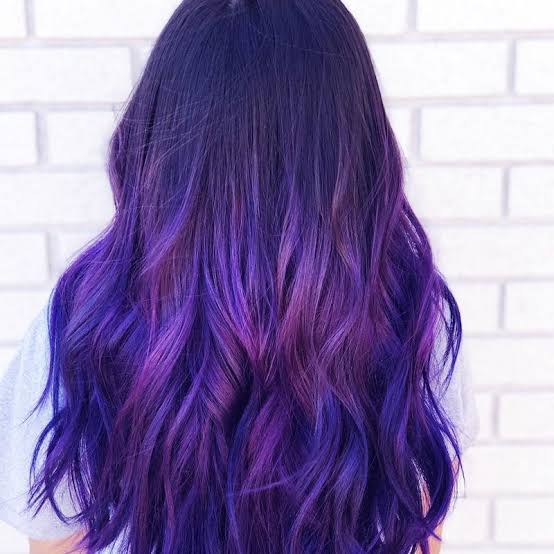
Image credit: byrdie.com
Long, layered wavy hair works best when the color gradient follows the texture. This ombre starts a deep, dark purple at the roots and shifts to an electric purple at the ends, no harsh line, just a fade. Thick, wavy hair holds the gradient without the ends looking thin.
Fall and winter are the natural seasons for this one. The dark root looks grown-in from day one, so the grow-out is forgiving. A toner refresh every ten to twelve weeks keeps the brightness alive.
Angled purple highlights on bob
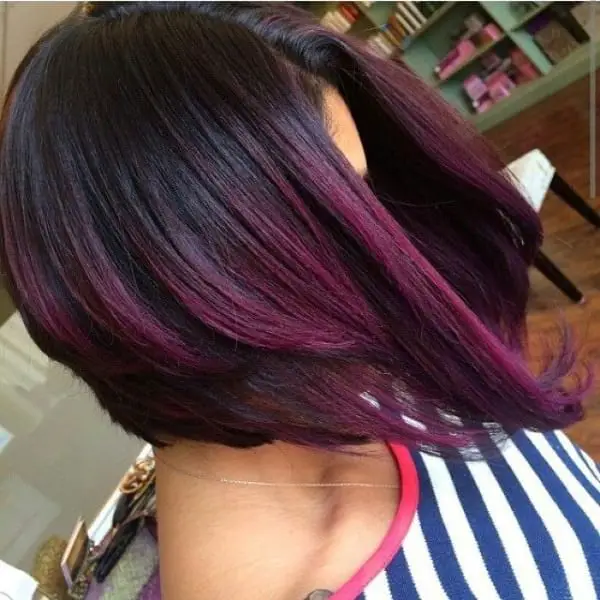
An angled bob that drops shorter in the back and longer toward the front, cut on straight, fine hair. A dark brown base carries striking purple highlights that follow the angle of the cut. The side part keeps the face-framing piece visible. Not for anyone who wants a rounded bob or prefers to air-dry. This one needs a blowout to land clean.
Bold purple color with wispy bangs
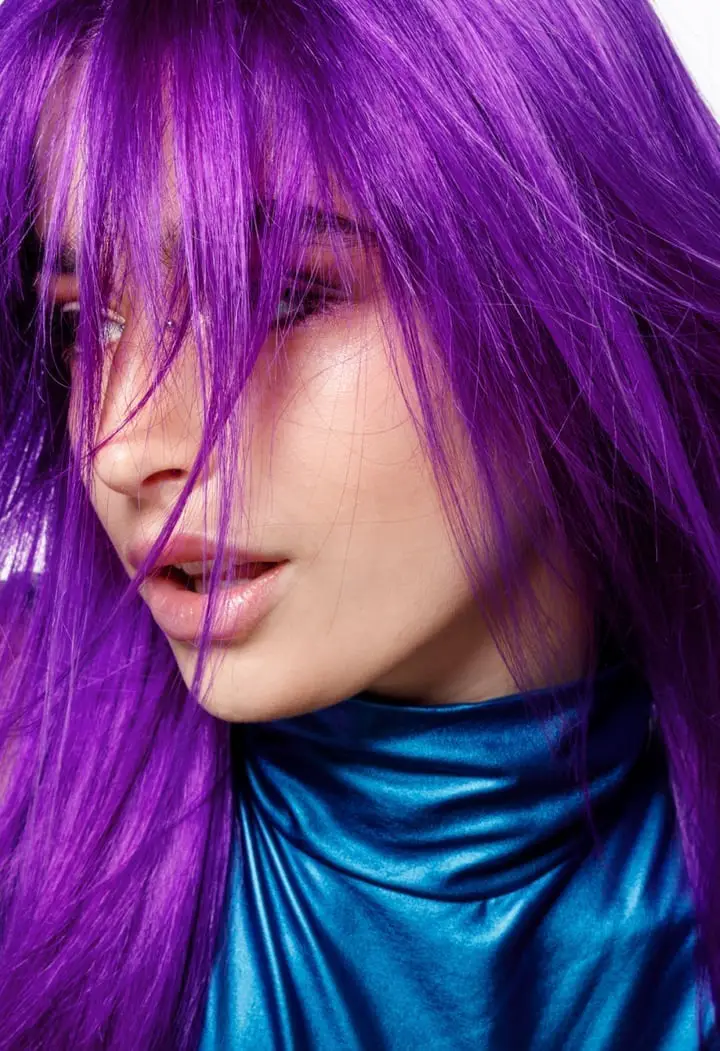
Courtesy of: xmondohair.com
Fine, straight texture supports wispy bangs best. Wispy bangs fall across the forehead, blending into the layers beneath without a heavy line. The vibrant purple color makes the fringe the focal point, so the cut needs to hold its shape air-dried. A texturizing paste keeps the bangs from parting into separate strips. Bold purple this saturated requires a bleach lift first, then a direct dye on top. Tell your stylist: vibrant purple color with wispy bangs.
Deep purple color with darker roots in loose waves
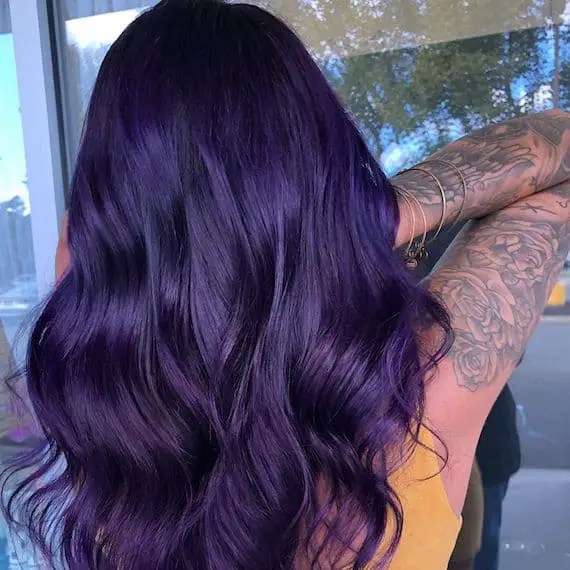
Photo credit: nz.wella.professionalstore.com
Long layers and a side view show the trick. Darker roots anchor the deep purple, so the color looks dimensional rather than flat. Loose waves catch the transition from root to vibrant hue, which is where most versions go wrong. The mistake: letting the darker roots climb too far down the strand, creating a band instead of a shadow. You want the depth concentrated at the scalp, then a smooth shift to rich purple.
Vibrant purple streaks on long straight dark hair
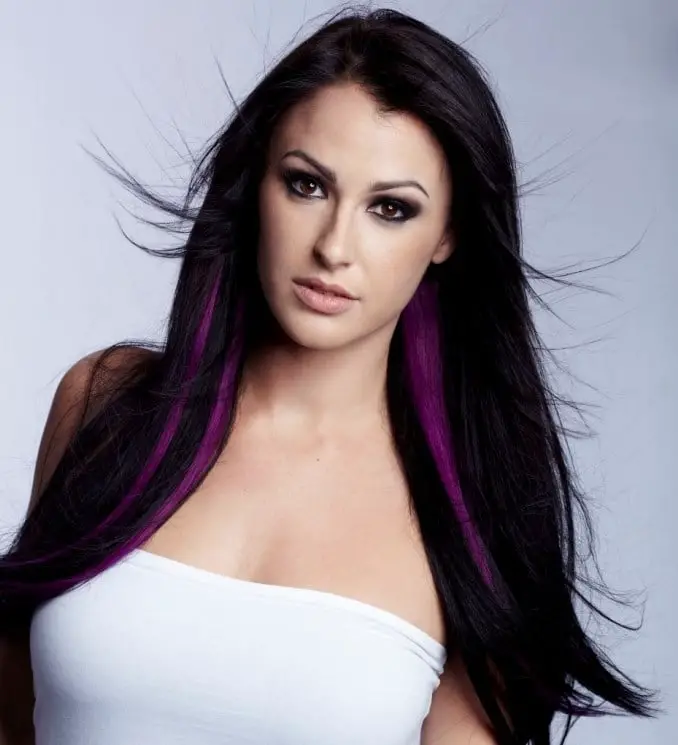
Image credit: undercover-glamour.com
Long layers and a middle part keep the streaks clean and defined. Vibrant purple streaks on dark hair in a straight, air-dried finish ensure each stripe stays visible. The streaks are spaced far enough apart that the black base looks planned. A DIY approach risks uneven placement or muddy color. The salon controls the width and saturation, which is why this look holds its contrast. Request from your colorist: long layers with vibrant purple streaks on dark hair.
Straight texture keeps the streaks defined. No waves, no volume at the root. The color does the work.
Final Thoughts
Pick your shade and your commitment level, then hand the phone to your stylist.
- Fine hair: lighter purple tones and face-framing layers add volume without bulk.
- Thick or coarse hair: a deeper purple base with bold highlights keeps the color readable.
- Fast grower: root shadow or ombre stretches time between touch-ups.
- Lazy styler: wavy texture hides grow-out lines and needs no heat.
Find your perfect shade of purple, from subtle to striking.
Hairstyle
25 Cute Pink Hair Ideas 2027 for a Fresh Look
Cute Pink Hair Ideas 2027 showcasing 25 styles from dusty rose waves to hot pink purple highlights and pink bob cuts. Save your fave.
Your stylist nods at the dusty rose swatch you’ve been holding for ten minutes. Pink hair in 2027 is less about a single shade and more about the cut carrying it, a bob that lands sharp, a shag that moves, waves that air-dry without a fight.
Which is why Cute Pink Hair Ideas 2027 fill so many saved boards: 25 options that span blunt bobs, curly shags, pixie crops, and long layers. Low upkeep to salon commitment, straight to curly. This collection solves the moment you scroll past forty photos and still can’t decide.
Soft waves that enhance a dusty rose pink hue
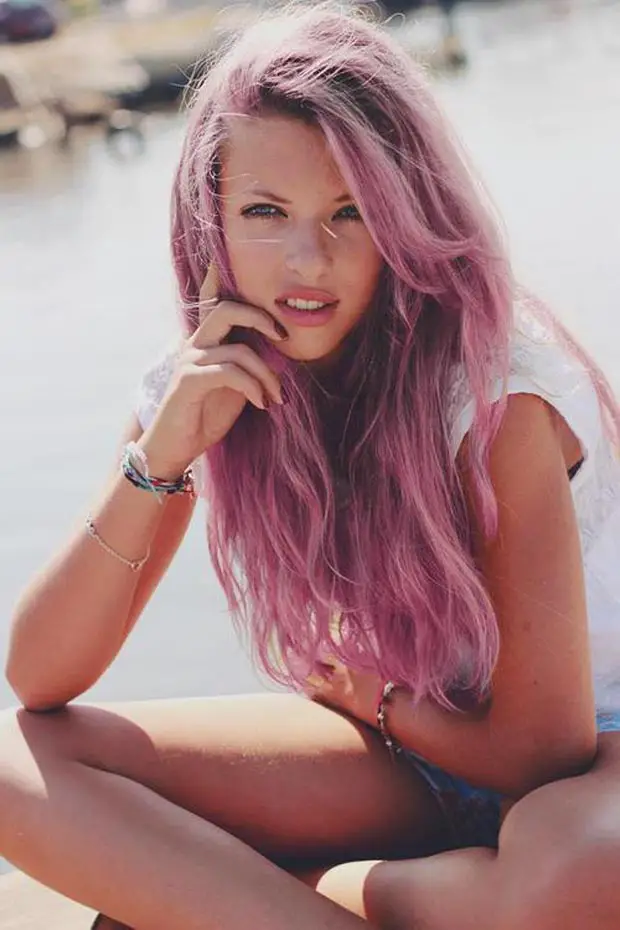
Courtesy of: stylefrizz.com
Dusty rose pink reads softer than bubblegum, and on fine, wavy hair the effect is barely-there romance. Long layers keep the weight off the ends so the wave pattern stays visible rather than pulling straight. The middle part works with most face shapes, especially round and oval. A trim every eight to ten weeks keeps the ends clean without losing the airy shape. It suits those who prefer a soft, airy finish. Tell your stylist: long layers, dusty rose pink color, natural air-dried finish.
Air drying with a texturizing spray gives the wave pattern more lift than a diffuser does. The color fades to a softer rosy beige around week five, so a toning shampoo every third wash extends the dusty tone.
Sharp bob with blunt bangs in vibrant pink
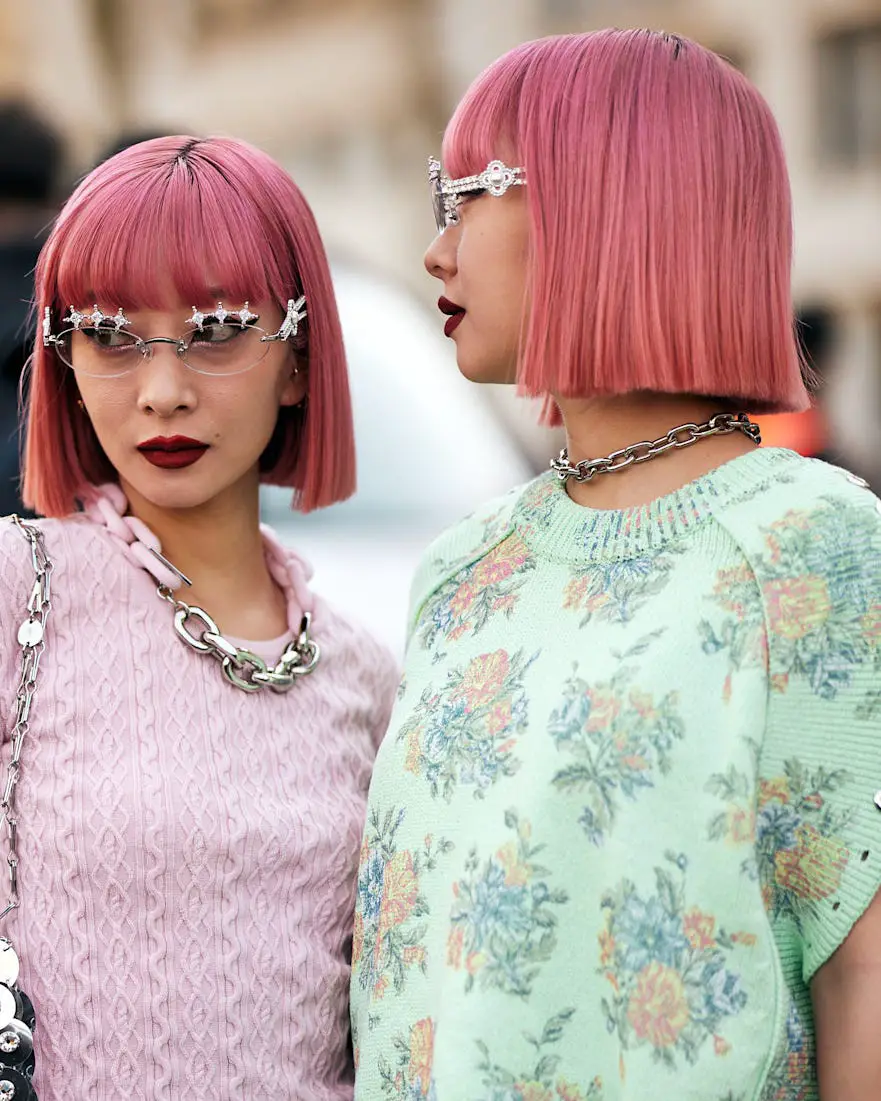
Photo credit: elle.com
This one asks for fine, straight hair that holds a clean line without frizzing at the ends. The middle part keeps the graphic symmetry intact. Book it as: sharp bob, blunt bangs, sleek straight styling. A flat iron finishes the look, but the cut does the heavy work. The catch: coarse or very thick hair resists this kind of precision and tends to flip outward at the hem.
Loose waves and side-swept bangs in pastel pink
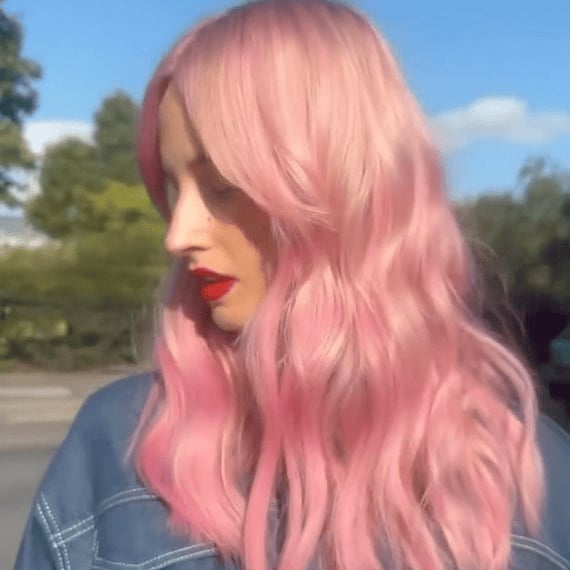
Image credit: wella.com
Side-swept bangs soften a pastel pink that might otherwise look costume. The subtle layers are cut to let the wave pattern fall in the same direction, which keeps the shape intentional rather than messy. You need hair that holds a soft bend, very straight hair would drop these waves by noon. Ask your stylist for: subtle layers, side-swept bang, soft loose waves. A large barrel curling iron set on low heat creates the bend without crushing the fine texture.
Dark root to bright pink Ombre with textured waves
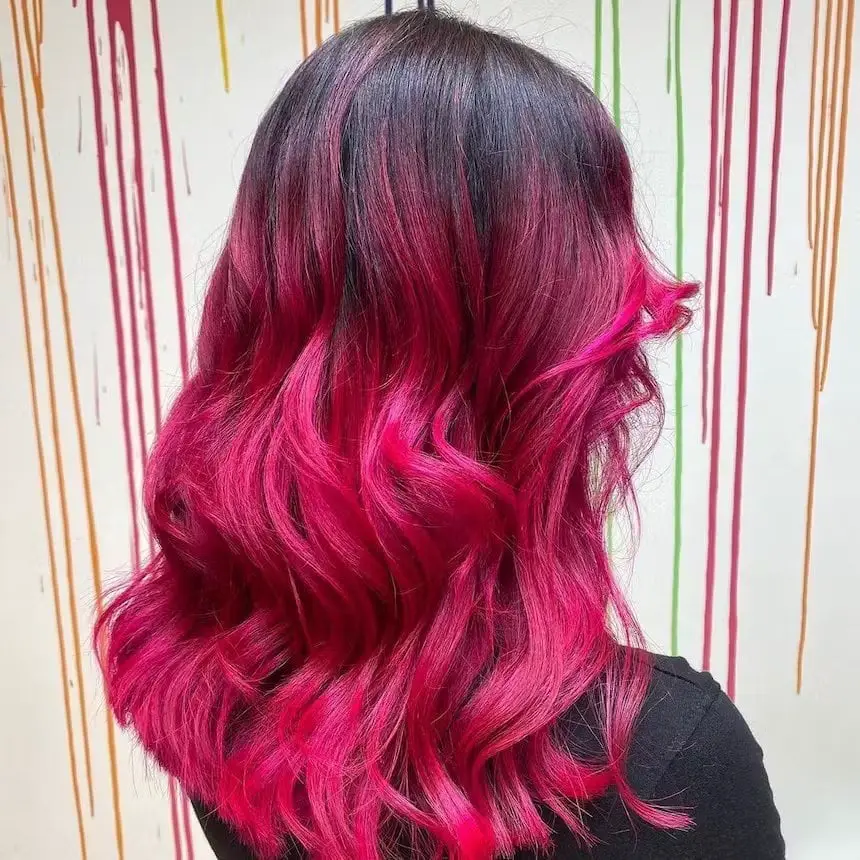
Source: crazycolor.co.uk
A dark root against bright pink ombre buys you grow-out time, the natural base blends rather than clashes. The layers are cut to stack the wave pattern through the mid-lengths, so the color transition looks movement, not a hard line. Thick, wavy hair carries this best; the density gives the ombre something to fade through. Pass when you want an all-over solid color.
The ombre needs a touch-up every ten to twelve weeks, but the root never demands a full redo. A texture spray at the ends keeps the wave pattern defined without weighing the pink down.
Hot pink with purple highlights and wavy texture
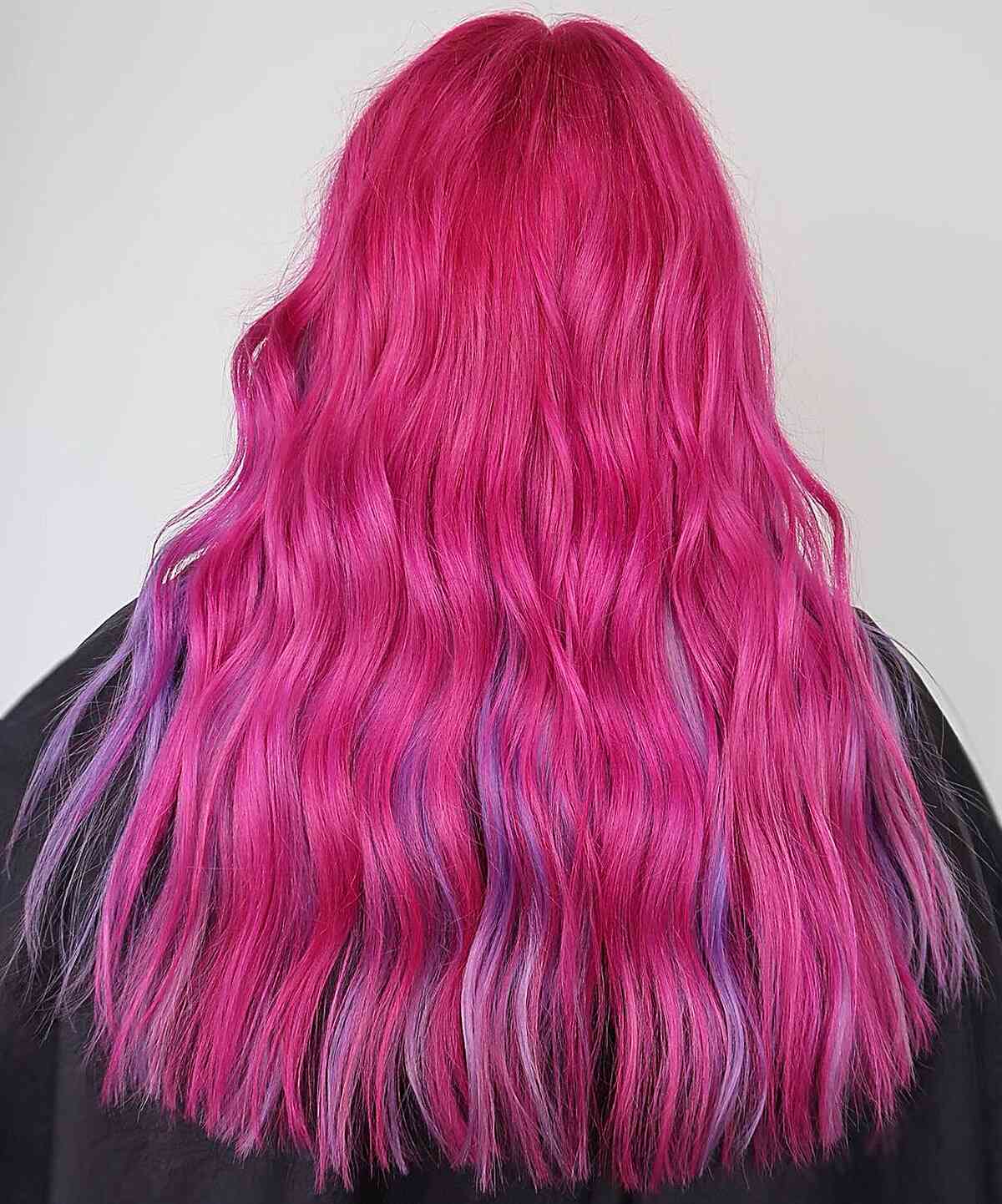
Hot pink with purple highlights looks like one color from across the room and two tones up close. The highlights are woven through the mid-lengths and ends only, so the root stays solid hot pink. This works best on thick hair that can hide the highlight placement in the density. The drawback: fine hair shows every highlight seam and the contrast looks stripey instead of blended. Ask your colorist for: hot pink base, subtle purple highlights, wavy styling. A wide-tooth comb keeps the wave pattern intact when the highlights start to grab.
Shaggy cut with natural curls in pink with purple undertones
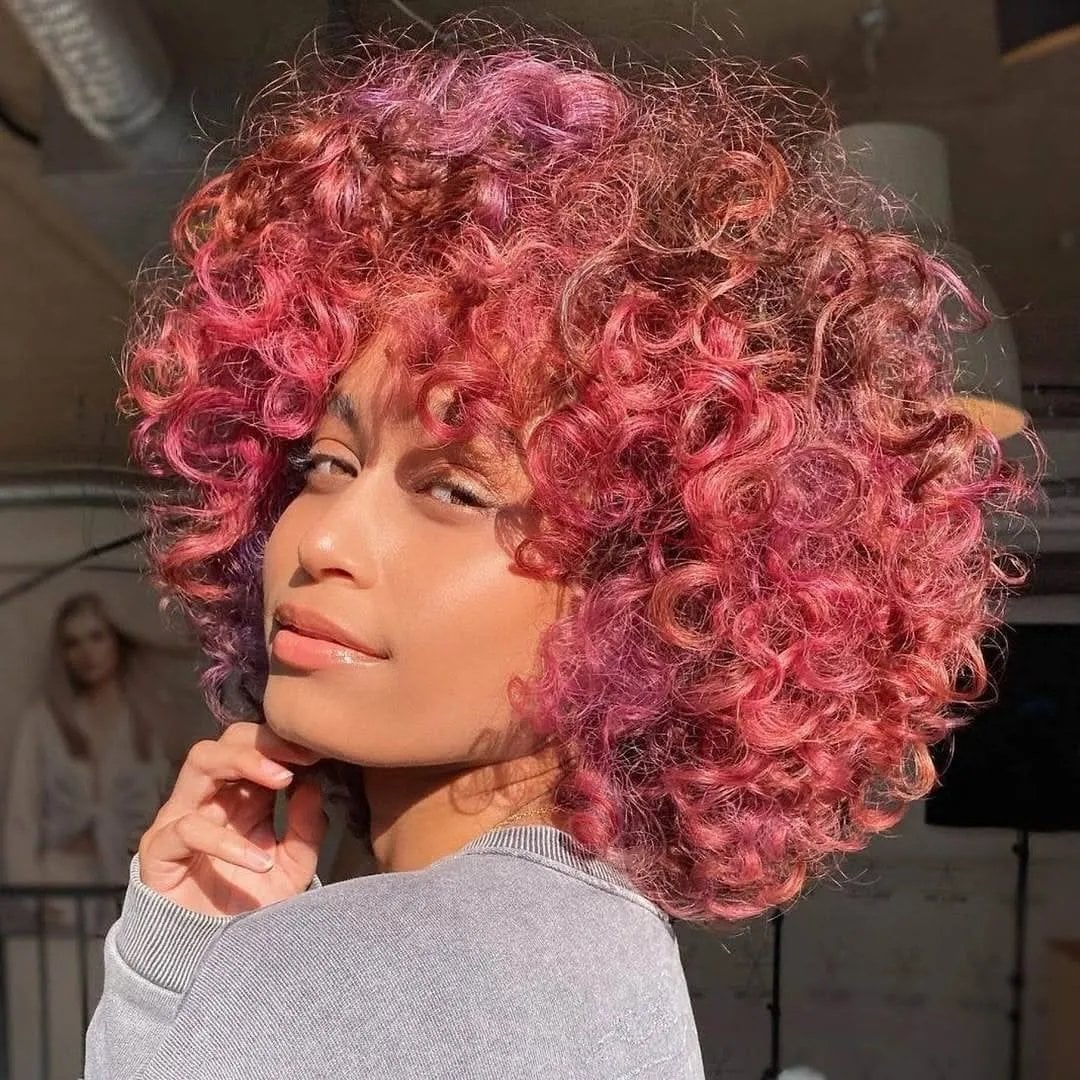
Courtesy of: wella.com
Before you default to loose waves on a shag, consider what your natural curl pattern can actually do. This version commits to the texture: thick, curly hair cut into a shag that ends around the ear, with pink that leans into purple undertones. The cut is shorter on the sides, which lets the curls stack up instead of flattening out.
A shag shape needs density to hold its form. A trim every six weeks keeps the shape balanced.
When you want a dark root shadow with vibrant pink
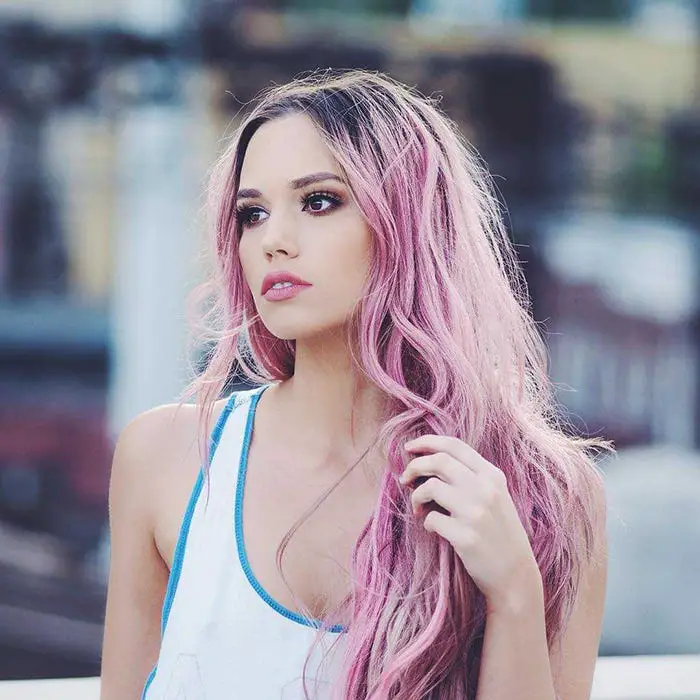
Photo credit: redbookmag.com
Dark root shadow paired with vibrant pink creates a clear contrast, not a grow-out in progress. The transition happens over long, fine hair cut with subtle layers throughout, styled in loose waves. A middle part keeps the root shadow visible at the hairline, making the two tone effect a central feature.
The dark base saves you from toning every three weeks, but you trade that for a two tone look that needs regular root upkeep. Ask your colorist for a dark root shadow blending into vibrant pink. Allow waves to air dry with a texturizing product to keep the layers from falling flat.
Dark brown to pink Ombré on thick wavy hair
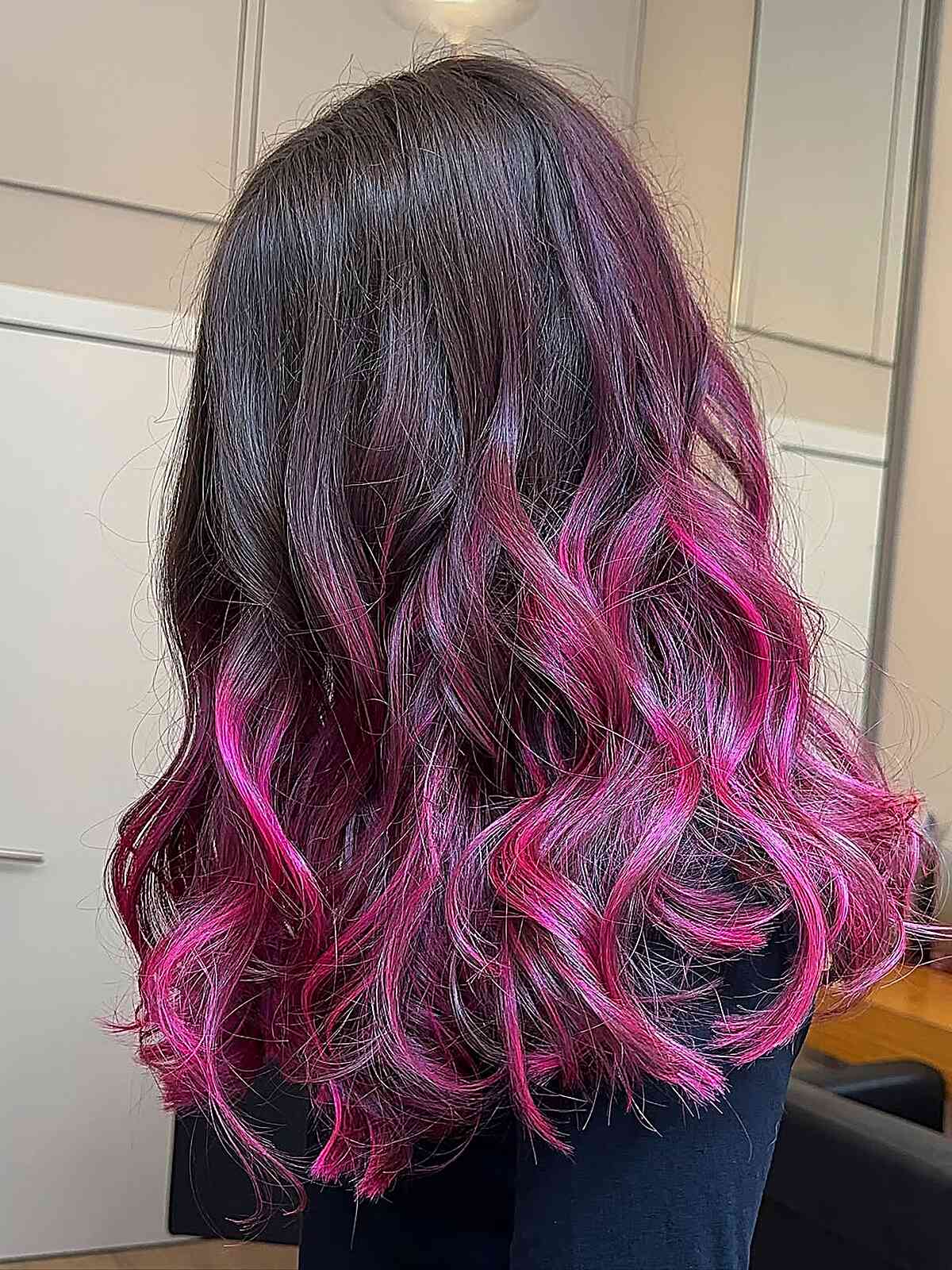
Image credit: latest-hairstyles.com
Ombré relies on contrast, and dark brown to vibrant pink delivers it clearly. The cut features subtle layers throughout thick, wavy hair, with the pink concentrated at the ends. A DIY version risks muddy bands where the colors meet, so this one is best left to a colorist who can place the transition line where it lifts rather than drags. The back view here shows the full gradient, which is the point of the technique.
Vibrant pink bob with a sharp, blunt cut, straight
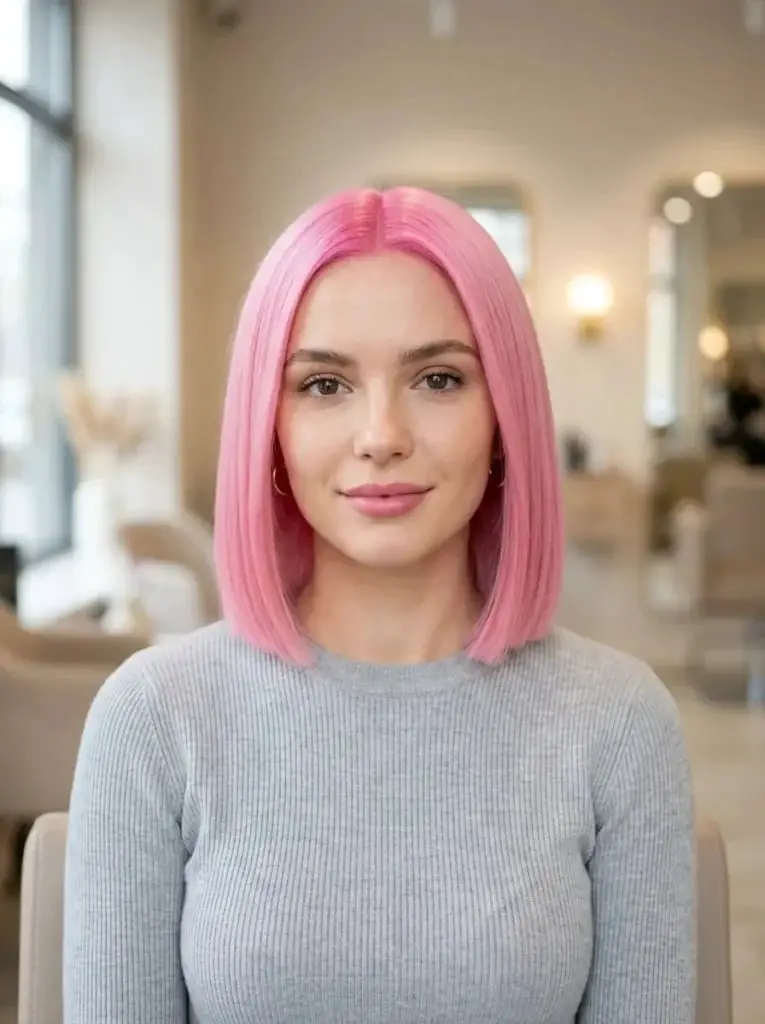
Source: crowncurlss.com
A blunt bob shows every uneven line, and this one has none. The cut is clean across the bottom with no layers, styled straight on fine hair that can hold the shape. Vibrant pink at this saturation requires pre-lightening to a pale blonde, which means some damage is part of the deal. Ask your stylist for a sharp blunt bob cut with a middle part. The sleek finish demands a flat iron and a smoothing serum every time you wash it.
Shag with curtain bangs and pink face-framing highlights
Source: latest-hairstyles.com
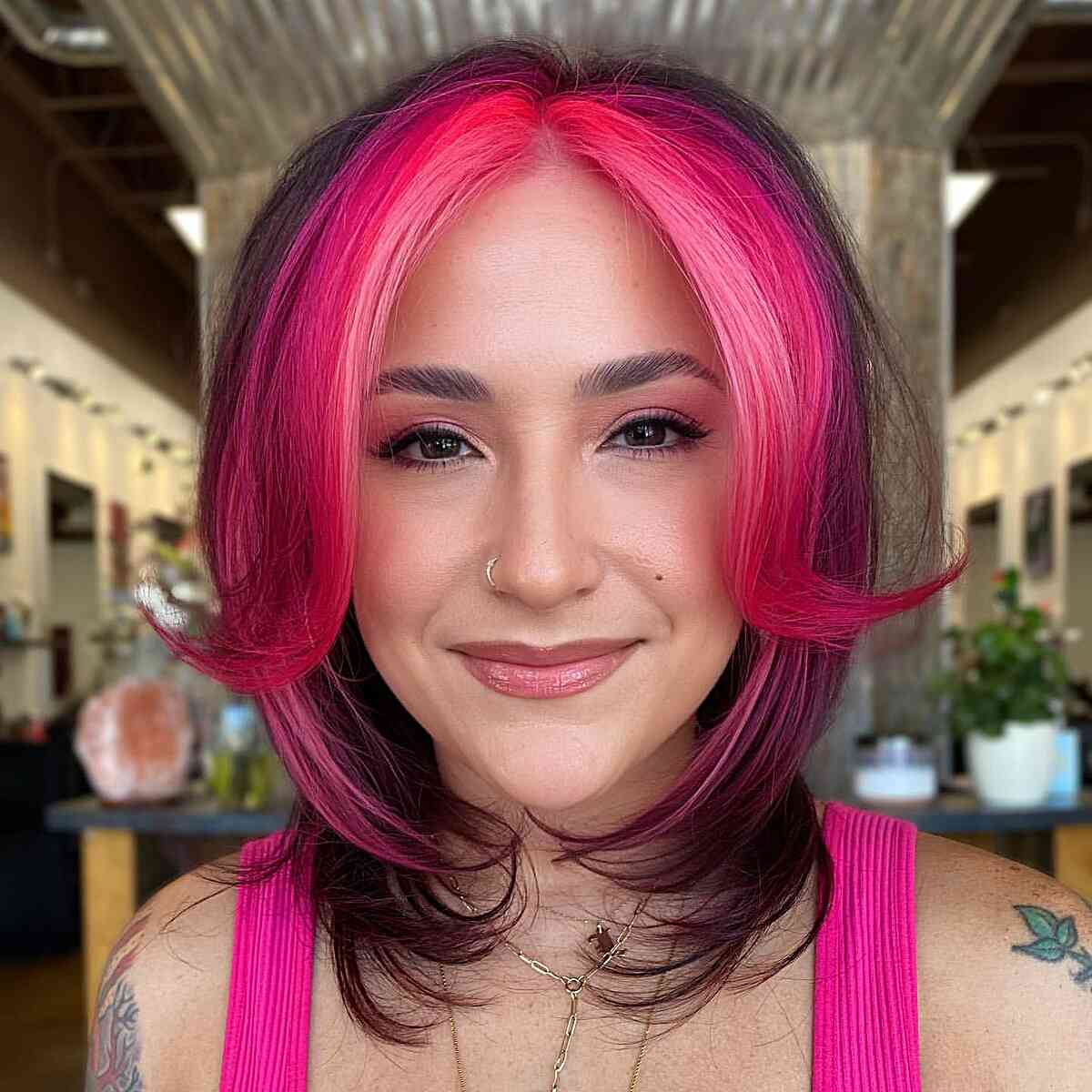
How do you add pink without committing to all-over color? Face-framing highlights. This shag cut keeps a dark base and places bright pink highlights around the face, with curtain bangs that sweep to each side. The middle part and wavy blowout make the pink pieces visible from the front without looking stripey.
Not for anyone who dislikes bangs or wants a uniform color from root to end. The highlights need toning every six to eight weeks to stay bright against the dark base. Blow-dry the bangs forward to shape them, then let them fall to the sides.
Pastel pink shag with choppy layers and side-swept bangs
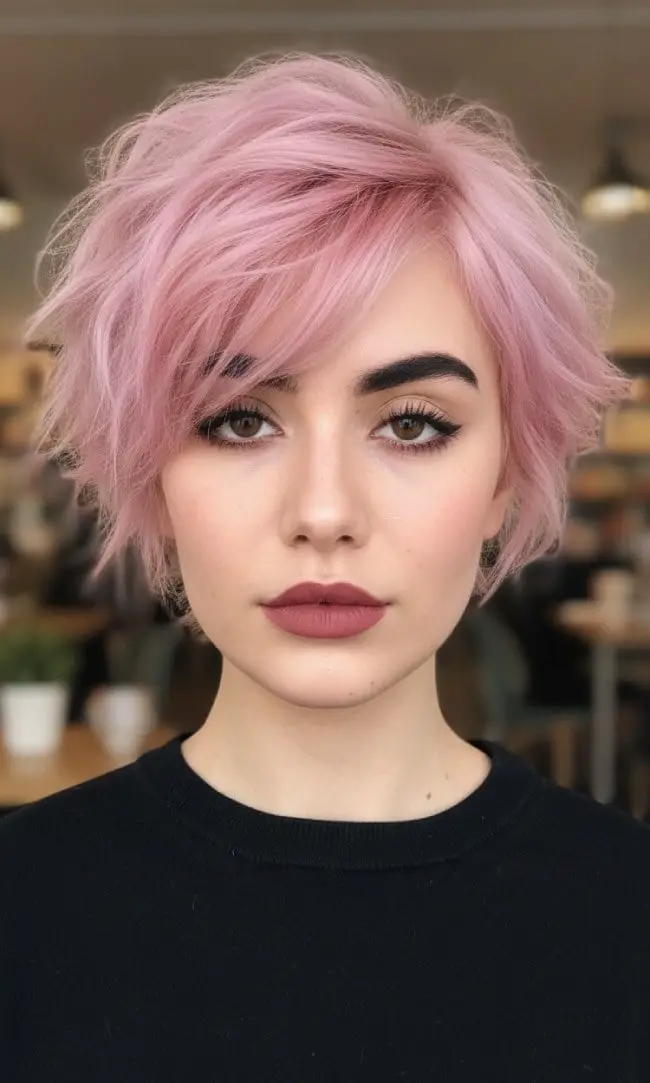
Via fabmood.com
Choppy layers in a shag cut do their best work on fine, wavy hair. The pastel pink color is soft, but the cut itself is anything but, those uneven ends and side-swept bangs create a deliberately undone shape that holds its texture through the day. A texturizing paste defines the layers without weighing them down.
Rose gold waves with blonde highlights and gentle layers
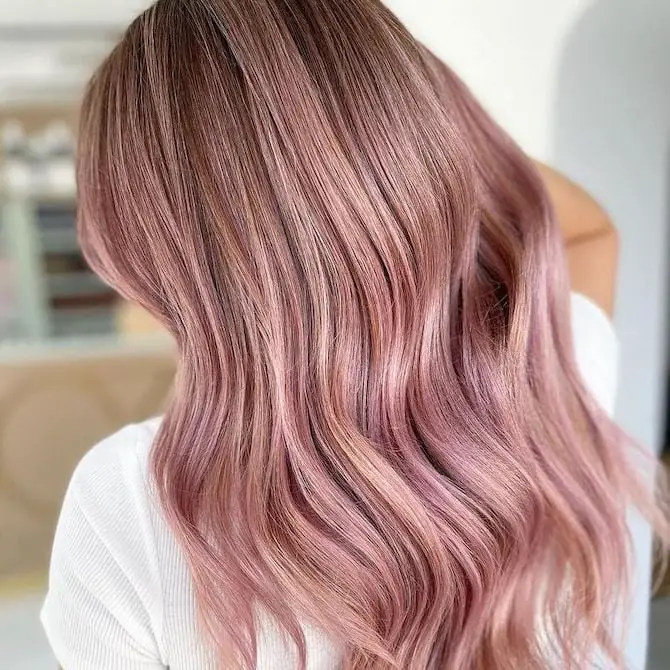
Courtesy of: au.wella.professionalstore.com
Two tones on fine, wavy hair: rose gold as the base and subtle blonde highlights woven through. The gentle layers keep the shape airy while the highlights add the depth that finer hair usually lacks. This is a salon finish. The blonde pieces need a careful hand to sit naturally within the pink. DIY versions tend to land muddy or patchy. The middle part and soft waves suit most faces, though the rose gold reads warmer on cooler base colors. This style works for those who want a bold, solid shade with no variation.
Pastel pink lob with natural air-dried waves
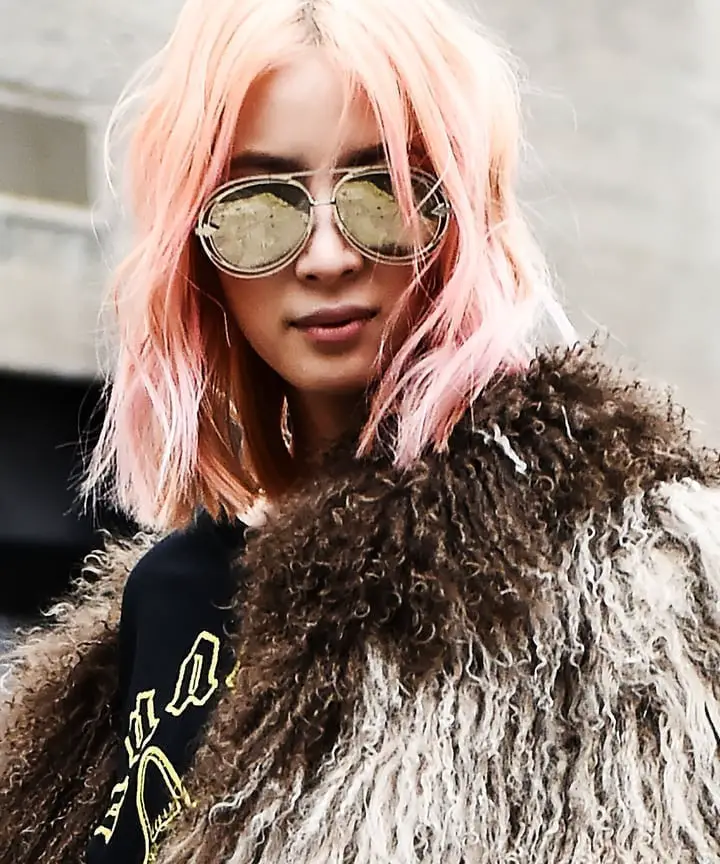
Photo credit: refinery29.com
Air-dried texture on a pastel pink lob is a look that works best when you accept its limitations. The middle part and subtle waves create a soft, casual shape that fine hair handles well. The catch: pastel pink fades fast, especially on air-dried strands that see more friction than blow-dried hair. You will notice the tone shifting toward peach or silver by week four. A color-depositing conditioner every other wash keeps the pink alive between toning appointments. The lob itself is low-maintenance.
Rose pink with darker roots and casual waves
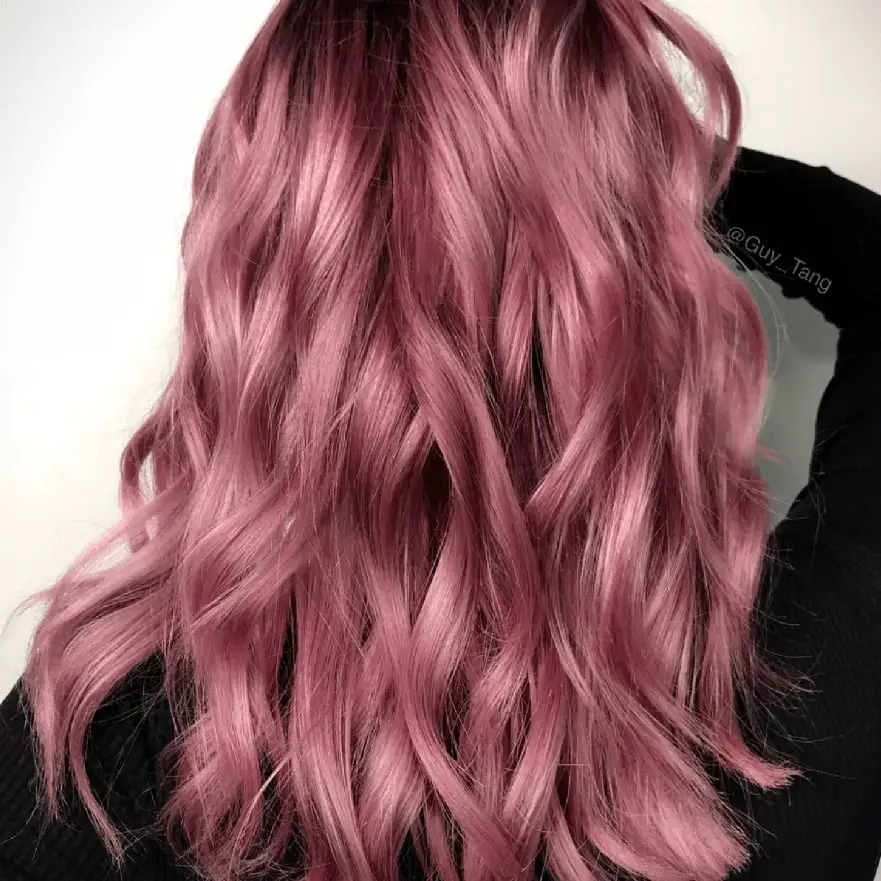
Image credit: allure.com
Darker roots on rose pink create depth without a hard grow-out line. The technique uses a shadow root that blends into the pink, so the color looks lived-in from day one. Fine, wavy layers keep the shape relaxed. A texturizing spray at the mid-lengths is all the styling this needs. The back view shows the wave pattern clearly: loose, casual, not set in place. Pass when you want a bright, solid pink with no root depth.
Vibrant pink with air-dried wavy texture
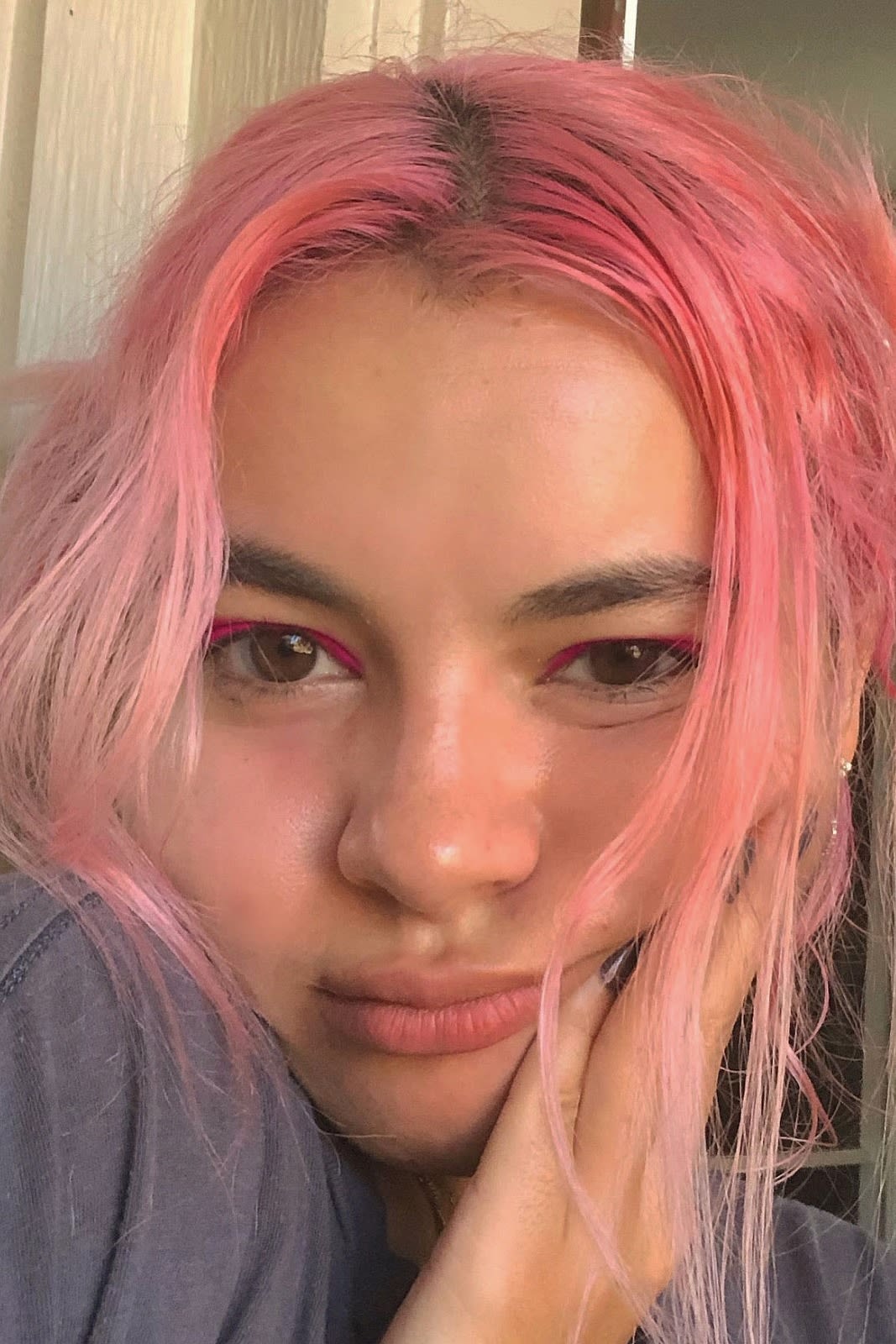
Source: intothegloss.com
The request needs to be specific because the stylist will choose the pink intensity based on your starting level. Soft layers keep the fine, wavy texture from falling flat at the ends. A middle part and air-dried waves make this a wash-and-go color, no blow-dryer required. The vibrant pink does require a pre-lightened base to read cleanly. A color-safe shampoo and cool water extend the life of the shade.
Spiky pixie cut in a vibrant pink hue
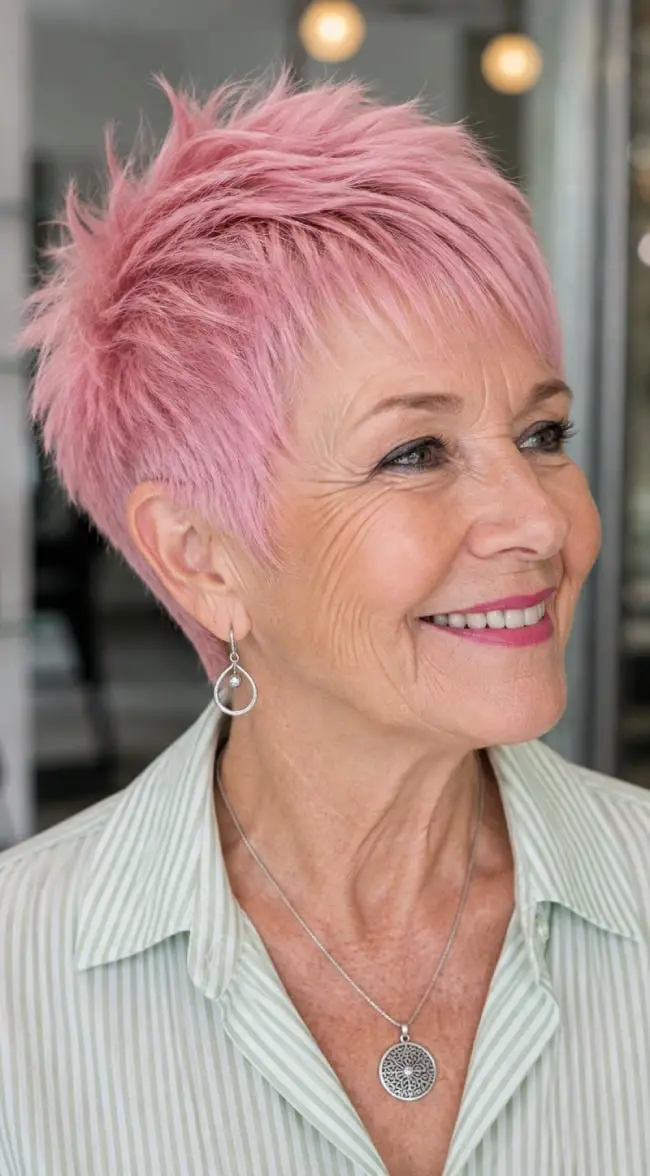
Via itakeyou.co.uk
Pink on a pixie is a bold choice. This short cut relies on fine, straight hair that holds a spiky texture without needing a whole jar of wax. A side profile shows the shape cleanly, making the color stand out.
Rose gold bob with darker roots and soft waves
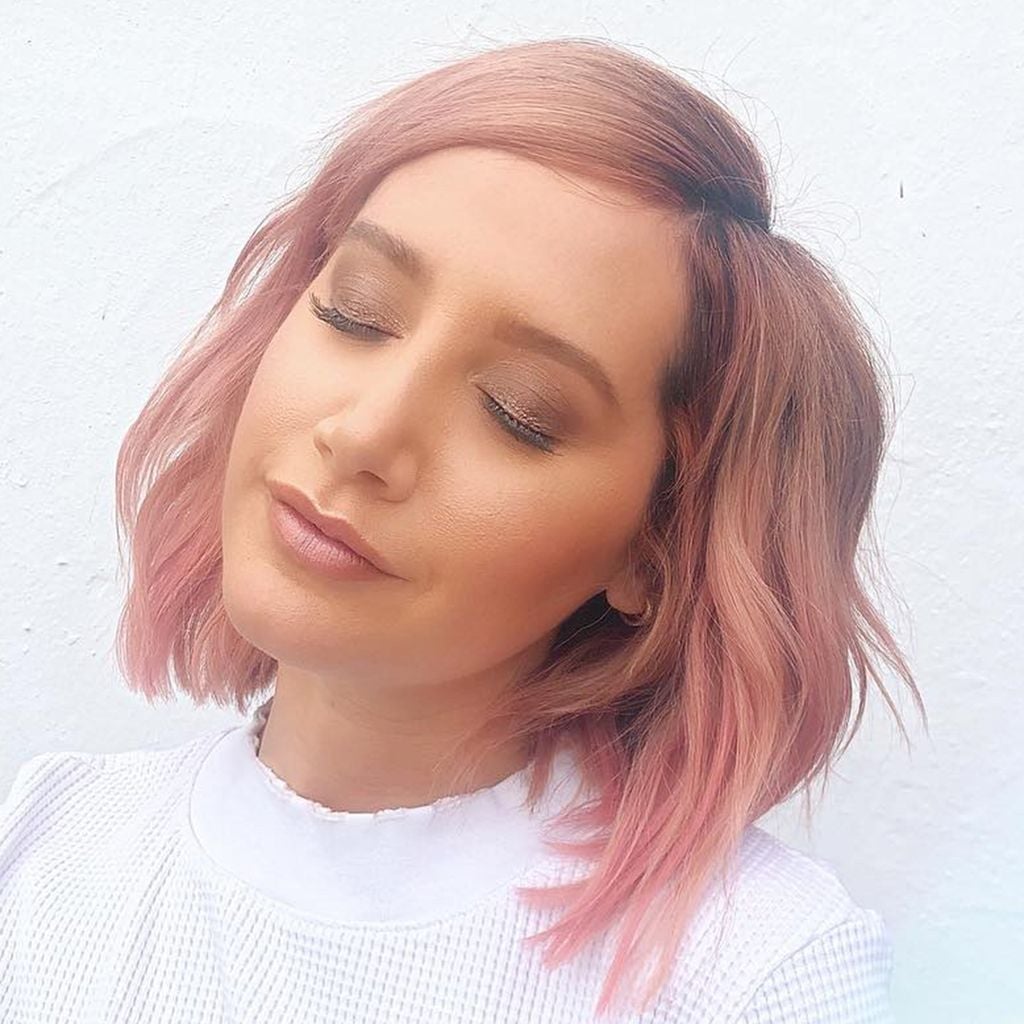
Courtesy of: allure.com
A rose gold bob with a darker root shadow blends a grown-out look with a neat finish. Fine, wavy hair takes the soft waves well, and a side part keeps the weight falling forward. It suits a relaxed, not sharp, blunt bob. Ask your colorist for rose gold with darker roots and soft waves. The catch: the root shadow needs a gloss every eight weeks to stay soft without turning brassy.
Sharp bob with layers and a side parting in pink
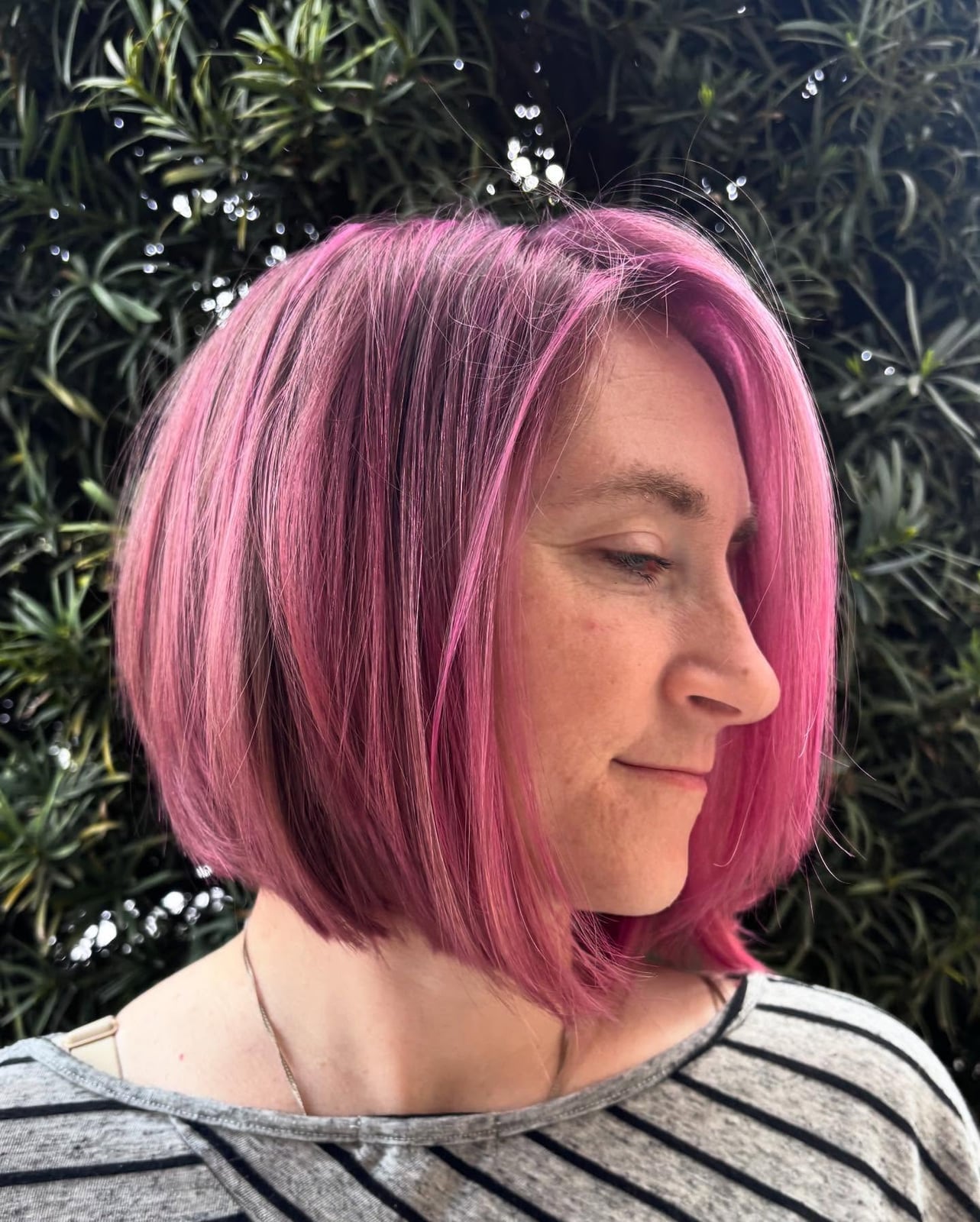
Photo credit: latest-hairstyles.com
This bob does its job with minimal effort. Layers add movement to fine, straight texture, and a side parting breaks up a solid pink block. Air drying with a smoothing cream gives a natural finish, no round brush required.
Ombre transitions from dark brown to pink and purple
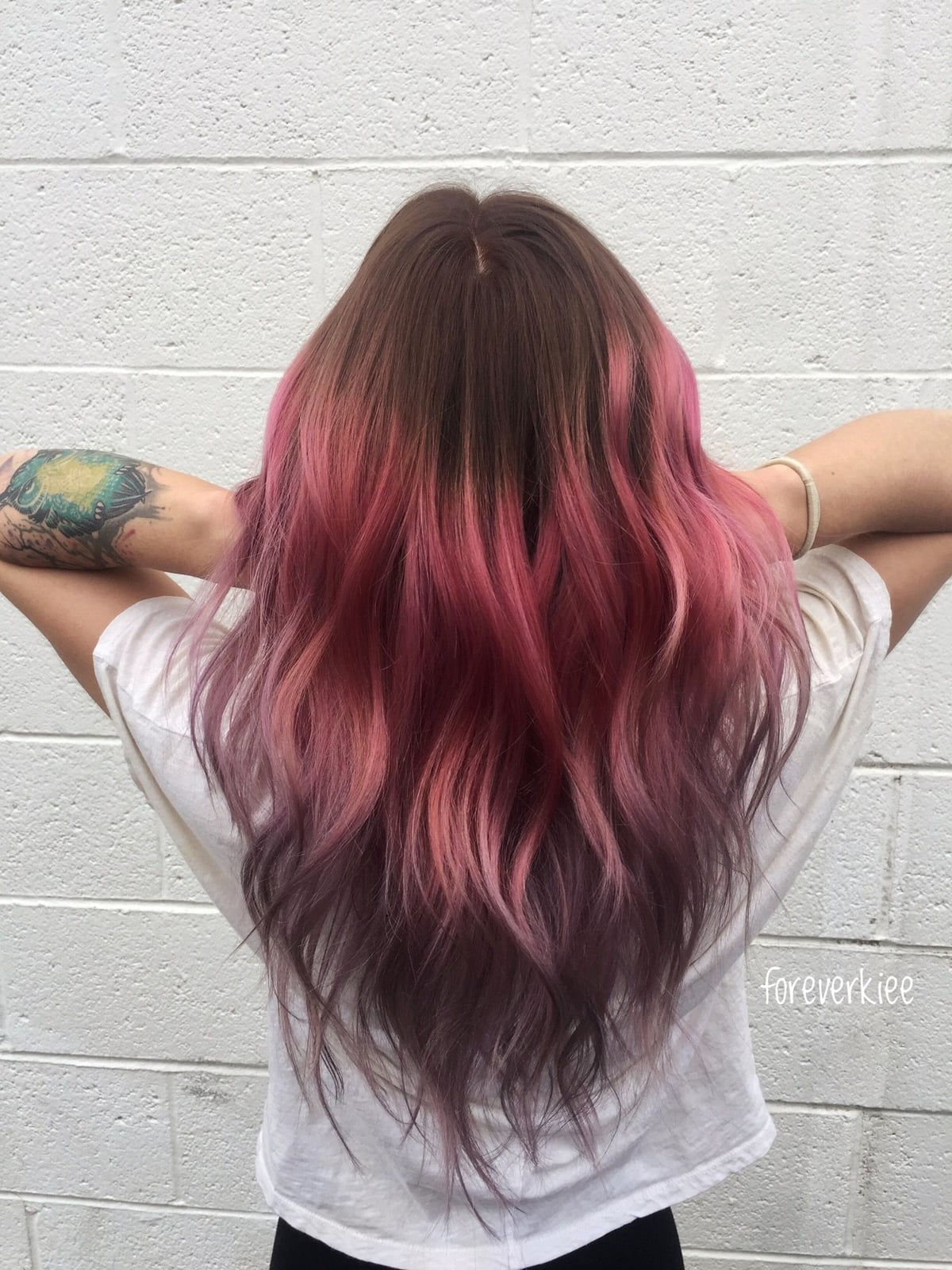
Image credit: allure.com
Three colors in one head means the ombre has to earn its keep. Dark brown at the roots transitions into vibrant pink and then a soft purple toward the ends. Thick, wavy hair carries the gradient well, and subtle layers keep the weight manageable. A solid color or very short hair is a different look. Ask your colorist for subtle layers and a dark brown to pink and purple ombre with loose waves. Achieving an even gradient requires a skilled hand and about three hours in the chair.
Long wavy hair with vibrant pink and lighter pink
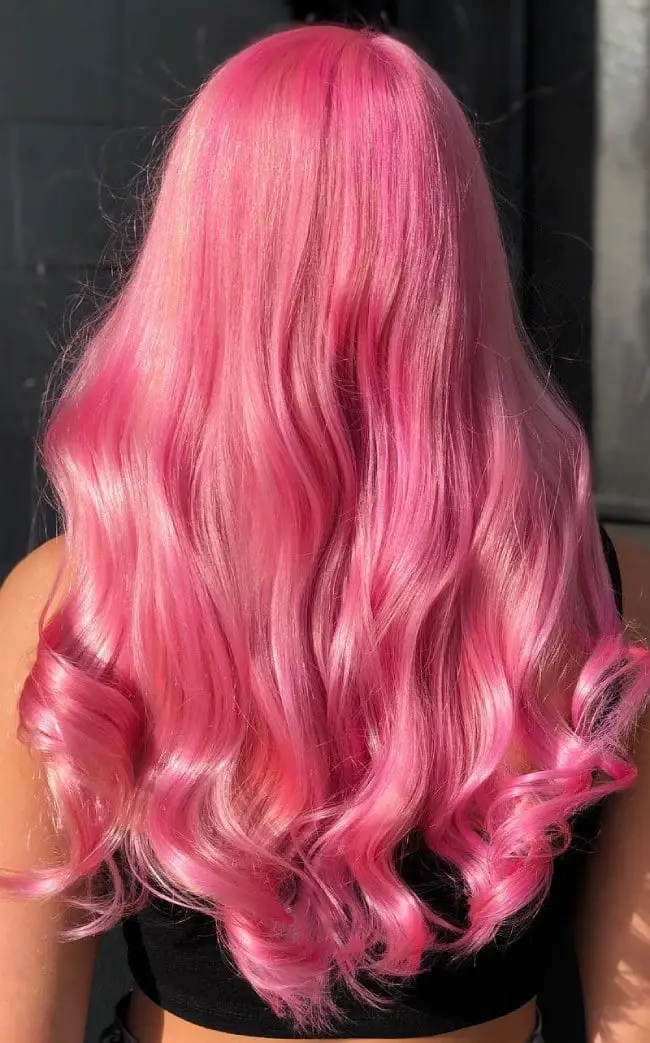
Via fabmood.com
Vibrant pink on long hair needs contrast to avoid a flat look. Here, lighter pink highlights break up the solid color and add depth to thick, wavy texture. Loose waves keep the look balanced. Achieving even vibrant pink requires professional skill. Pastel or neon, the base needs to be lifted cleanly first.
Pastel pink long layers with loose waves
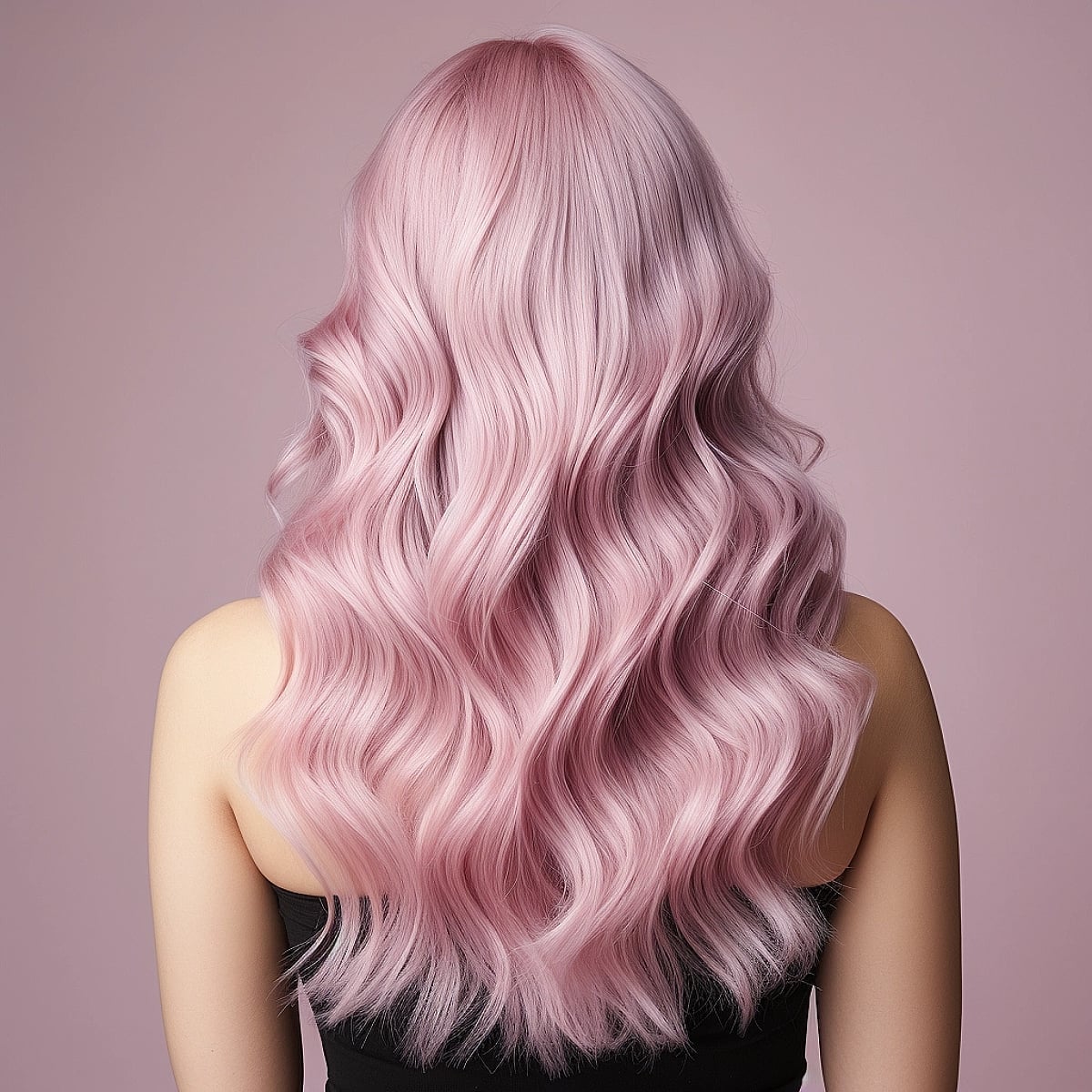
Courtesy of: latest-hairstyles.com
Long, fine hair earns its keep when pastel pink runs through loose waves. The long layers create volume without losing length, and the soft color stays delicate. A volumizing mousse before air drying sets the wave pattern for the day. Skip it if you prefer short or medium lengths. The proportion works best when the hair has room to fall.
Pink shag with dark roots and wavy texture
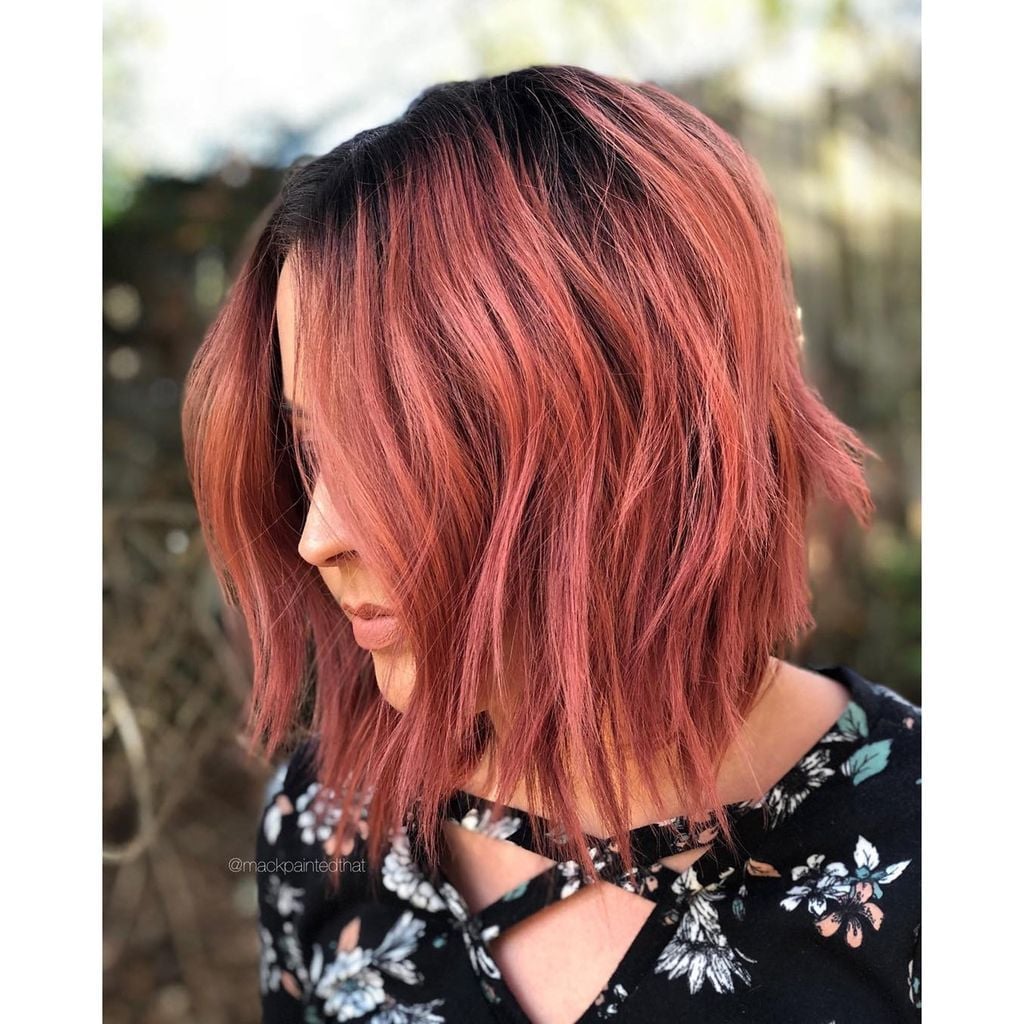
Photo credit: allure.com
A shag reads bolder than a lob, and the choppy layers here prove it. The dark root shadow grounds the vibrant pink so the color feels lived-in. This cut works for those who want a textured, layered look, not a smooth, blunt line.
Short textured crop with pink hue and blonde roots
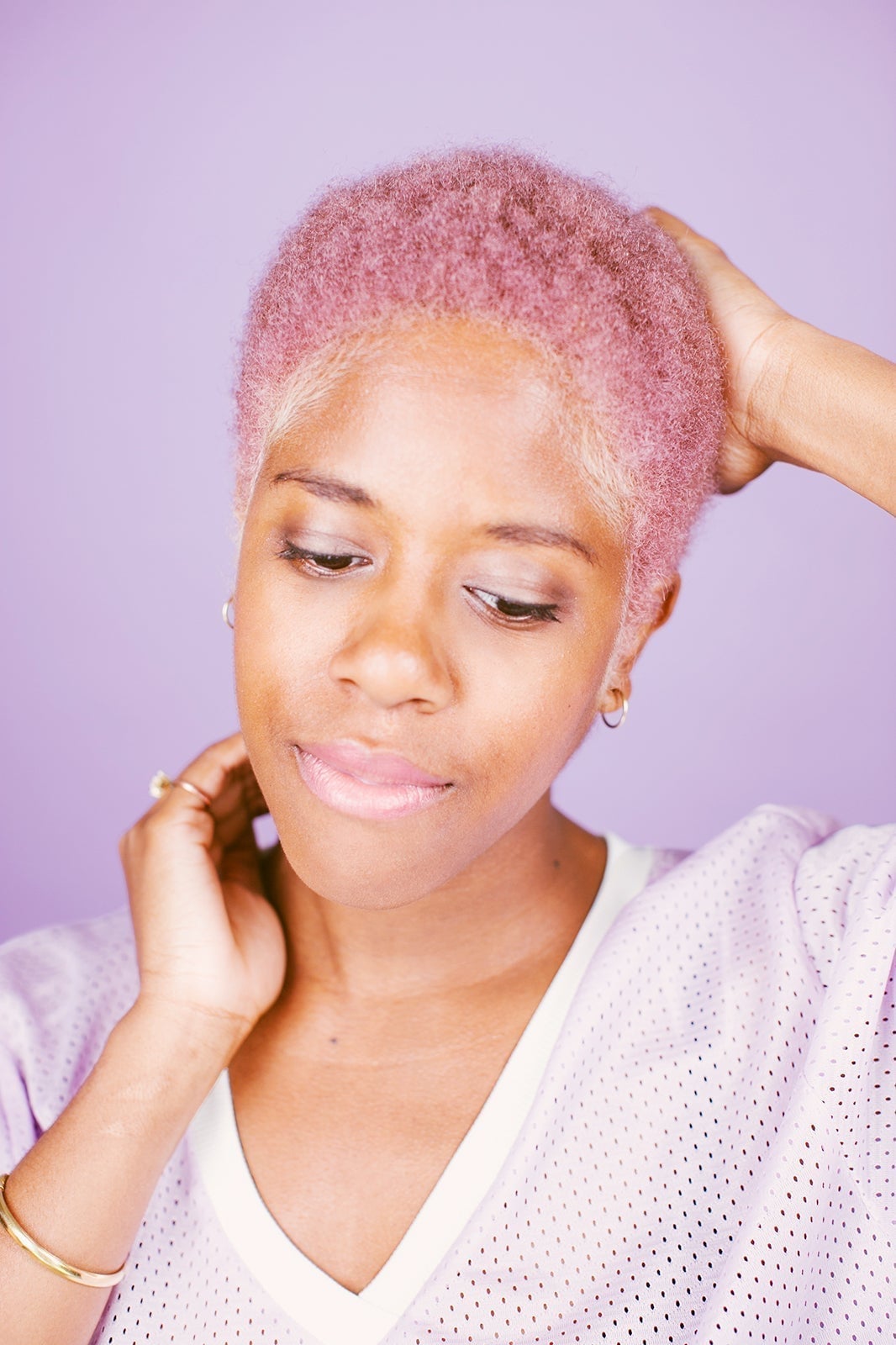
Image credit: refinery29.com
A short crop that works. The blonde roots meet a playful pink hue, and the natural wave keeps fine hair from falling flat. The texture is the point here. A texturizing product lifts the crown and keeps the crop from looking too neat. This one is a salon finish: the root color needs precision that a box dye cannot deliver.
Pixie cut with textured styling in pastel pink
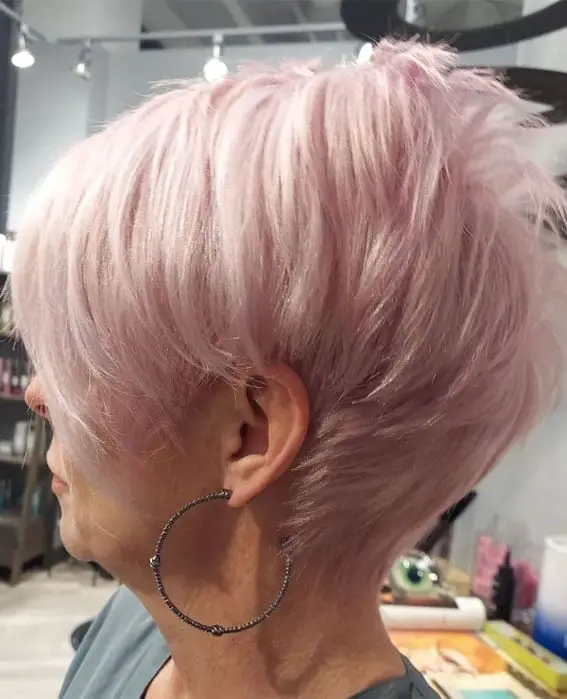
Source: fabmood.com
Pastel pink on a pixie is a deliberate combination. The cut hits ear length with no bangs, and the textured styling adds volume to fine, straight strands. A light hold pomade works the texture without weighing the hair down. The drawback: the pastel fades faster than deeper pinks, so plan for a toning visit at week four.
Hot pink bob with blunt bangs and black roots
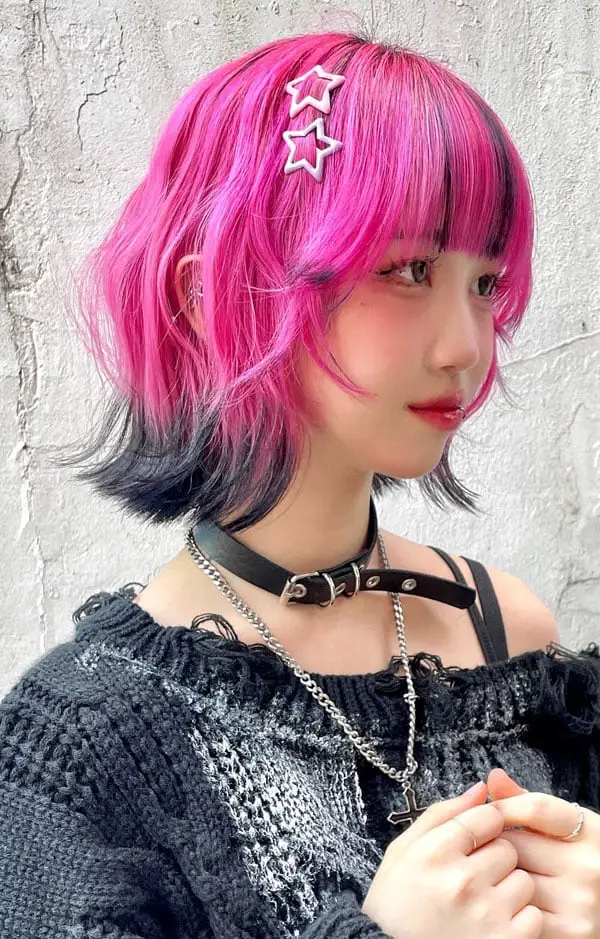
Via fabmood.com
A bob with blunt bangs and a black root shadow versus a smooth pink. They serve different moods. This one leans playful, with the hot pink hitting the ends and the air-dried wave keeping it casual. Tell your stylist: bob cut, blunt bangs, hot pink color, black root shadow.
Final Thoughts
Pick by the part of pink you want to live with.
- Low upkeep: a dark root shadow or an ombre that grows out soft.
- Short styling time: a blunt bob or a textured crop that air-dries.
- Fine hair: a single-process pastel on a one-length cut.
- Thick, wavy hair: a shag with layers that let the shade move.
Find the pink that suits your life and style.
Hairstyle
16 Chic Kids Hairstyles 2027 for School and Play
Chic Kids Hairstyles 2027 featuring braided mohawks with gold cuffs and blonde french braids into one. See the looks and save your favorite.
Mornings are a negotiation. You need a style that survives breakfast, recess, and the walk home, and that still looks like something at pickup. Sharp Kids Hairstyles 2027 fill so many saved boards for exactly that reason: they balance play with polish, and most of them hold long enough to let you both forget about it.
16 real styles, from ten-minute buns to protective braids that buy you weeks of easy mornings. Every texture and length gets a look here, and every one of them was chosen because it actually works for real kids, not just for a photo.
Two messy top buns with braided sections in light brown
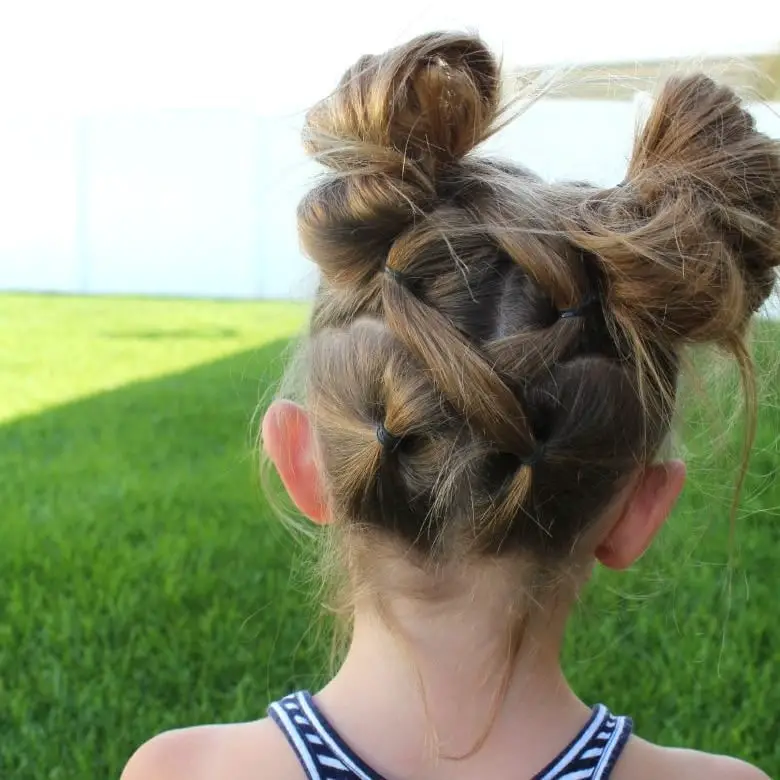
Courtesy of: countryliving.com
Two messy top buns sit high, with braided sections wrapping underneath in light brown waves. Thick texture holds the shape without fighting gravity. Ask your stylist for: two messy top buns, intricate braided sections. It works best on hair long enough to section and twist. Skip it if hair is very fine or extremely short. Let natural waves dry for grip, then pin each bun securely at the base and crown. The back view highlights the braid work.
Neat box braids with defined curly ends in black
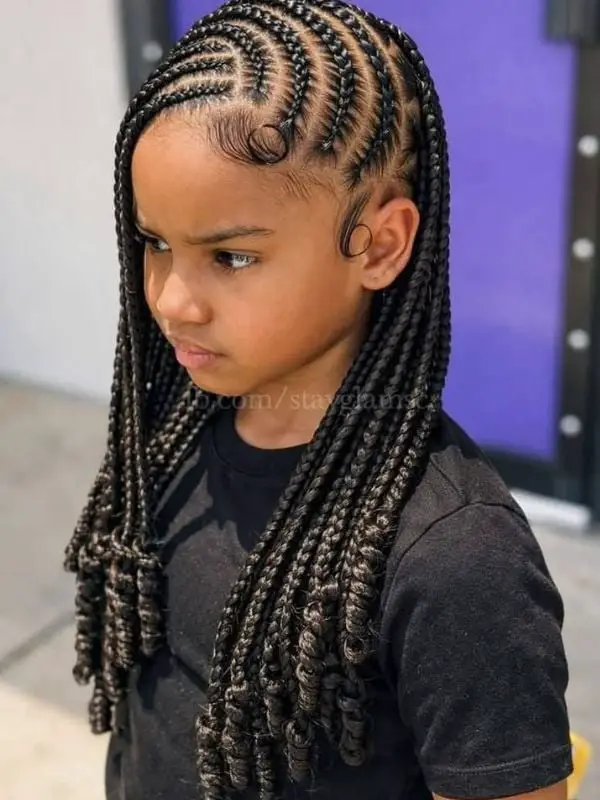
Photo credit: exquisitewomanlife.com
Straight box braids end in soft, defined curls rather than the usual blunt seal. The middle parting keeps everything symmetrical. This version suits kids who need a protective style that still looks playful. This style requires braiding and regular upkeep. Moisturize the scalp regularly and apply a light oil to the curl ends to keep them defined. The braids hold for two to three weeks with proper care. Straight shafts, curly tips, two textures in one style.
A close alternative is the knotless braid with a dipped end, which lies flatter at the root. That option works better for finer hair. The defined curl end here adds more visual weight and movement at the bottom.
Mohawk with braids and gold cuffs in dark brown
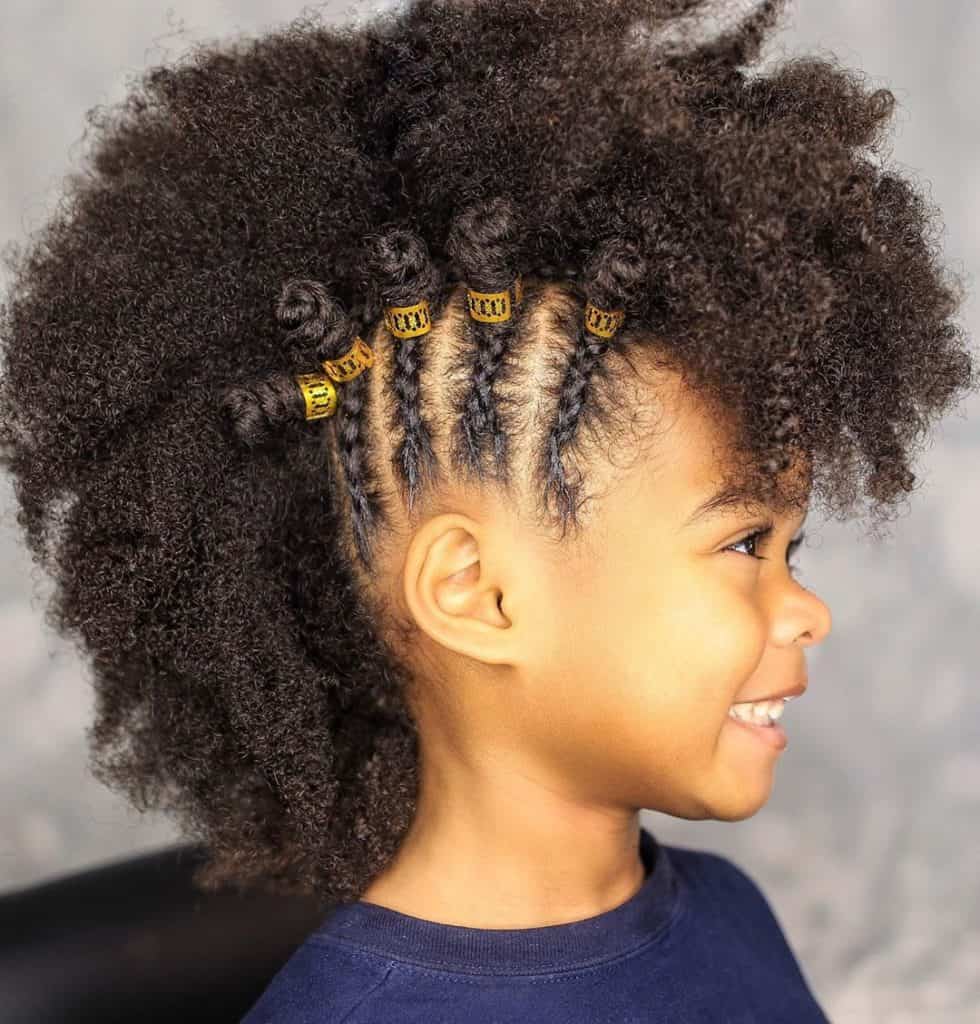
Image credit: blackbeautybombshells.com
Does your kid want a style that gets noticed at the school gate? A mohawk shape with braided sides and a voluminous afro on top delivers exactly that. Gold cuffs spaced along the braids add shine. Tell your stylist: mohawk with braids, gold cuffs, voluminous afro. It works best on coily, thick hair that can hold the vertical shape. Choose this style if you want a dramatic look. Use a light hold gel to keep the side braids neat and refresh the afro volume with a pick each morning. The contrast between tight braids and loose afro is the whole appeal.
Two French braids into one thick braid in blonde
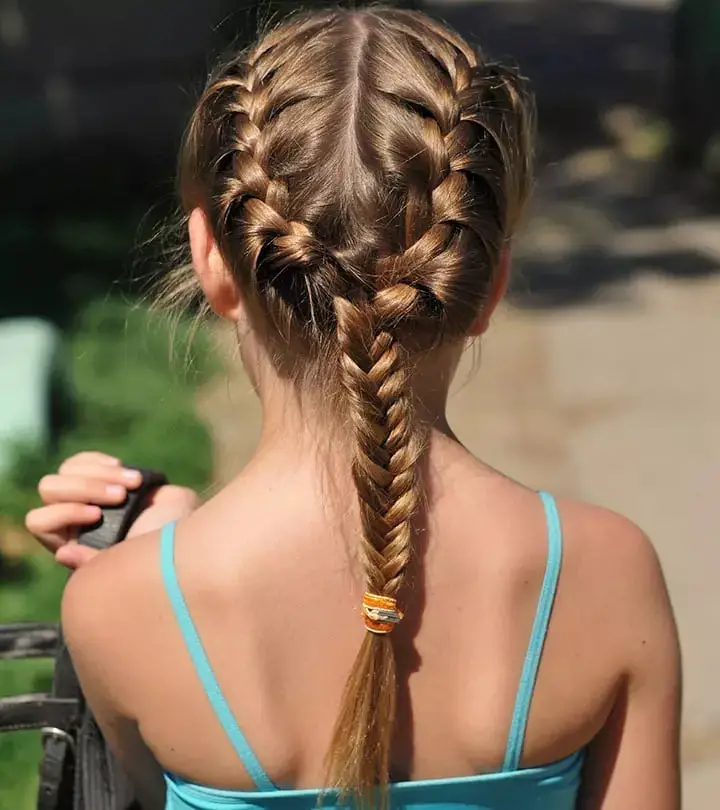
Source: momjunction.com
A middle parting starts two French braids that travel back and merge into a single thick braid. Blonde hair with subtle lighter highlights gives the braid depth without looking busy. The technique requires a second set of hands. This is not a morning rush job. Start with damp, detangled hair and braid firmly to the nape before combining. Wavy texture helps the braid hold its shape without slipping. The single thick braid at the back stays tidy through a full school day. Colorful elastic bands at the end add a small, intentional detail.
A strong elastic at the final seal prevents unraveling.
Thick curly pigtails with a star parting
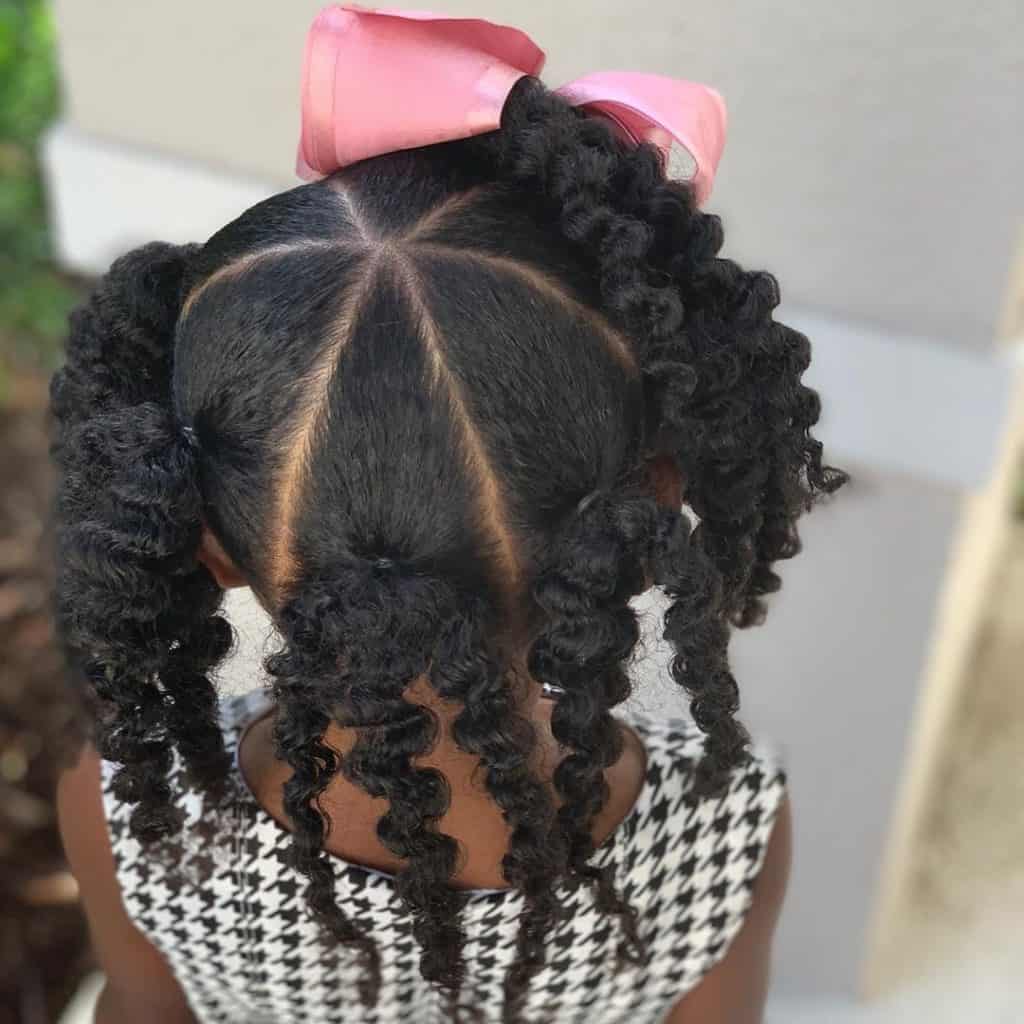
A star-shaped parting on the crown splits thick black curls into two pigtails. The geometry is the draw. The star pattern needs a steady hand and a fine-tail comb. Ask your stylist for: two pigtails, star-shaped parting. This is a salon-leaning style; recreating the star at home takes patience and good lighting. Curly texture is ideal because the coils hide any minor part-line unevenness. A large pink bow at the base of each pigtail adds a playful finish. Not for very fine or straight hair; the parting lines will show every wobble.
Voluminous natural afros in black and auburn
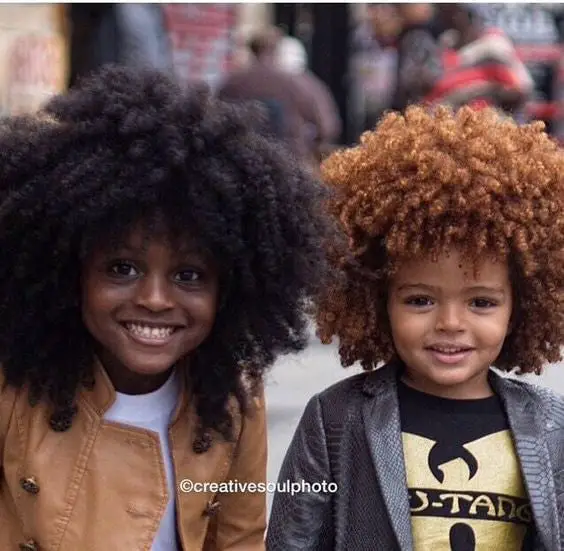
Courtesy of: perfectlocks.com
Straight hair gets a blowout for volume. Coily hair already has it. The trick is keeping the shape healthy and the ends from tangling. Two kids here show the range: one with jet black coils, the other with auburn curls. Both are air-dried, which is the point. A wide-tooth comb or pick maintains the afro silhouette without crushing the curl pattern. Not for straight or very fine hair. This look relies on natural density and texture. You need a leave-in conditioner and patience. The hold is in the moisture, not a spray.
No bangs, no parting lines to fuss with. Just volume that stands on its own. The upkeep is about hydration and a trim every eight weeks. That’s it.
Twisted knot ponytail transitions to a long braid
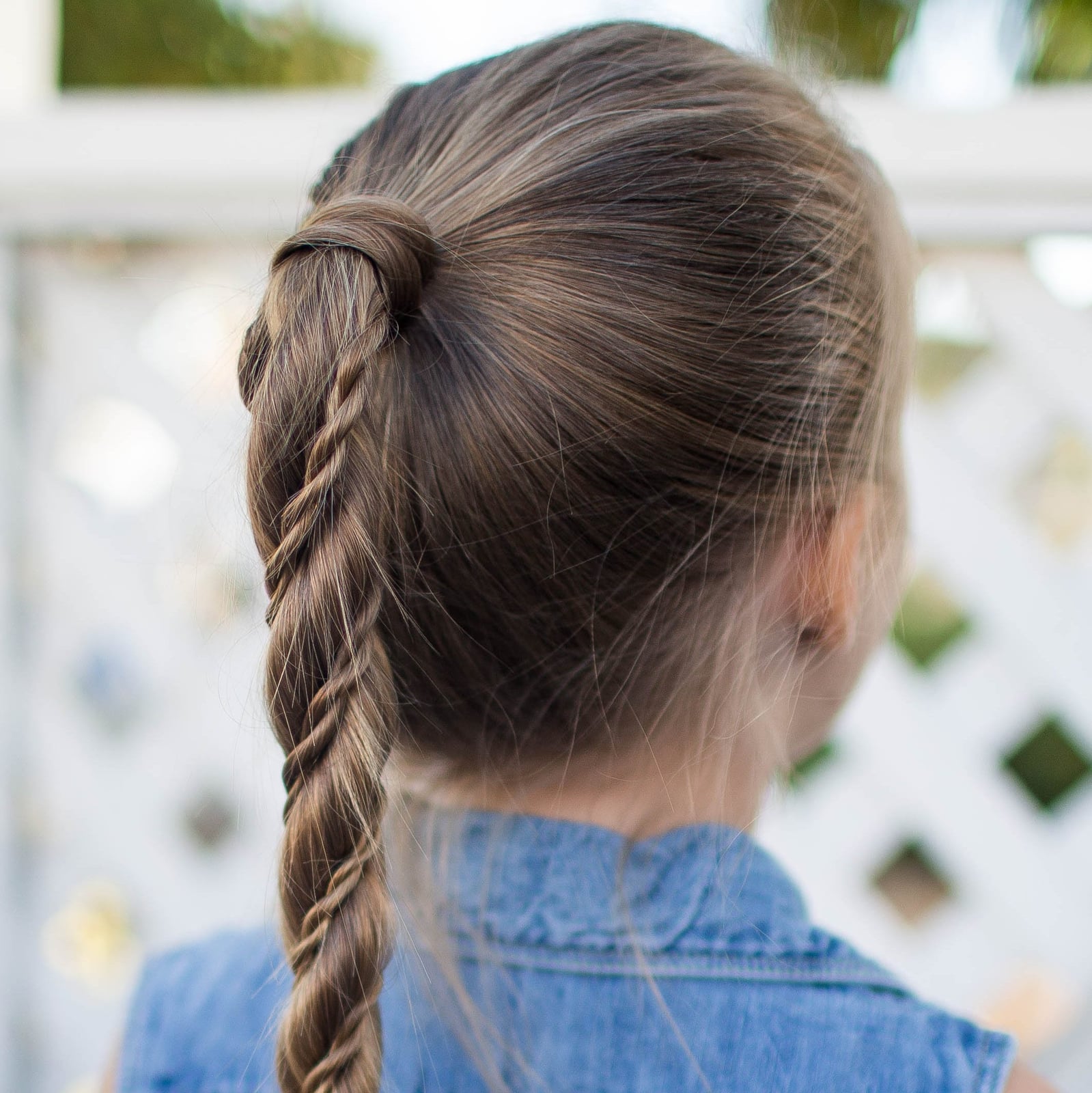
Photo credit: countryliving.com
The design is simple: pull hair into a ponytail, twist the base into a knot, then braid the length. Dark blonde hair with subtle lighter highlights runs through the fine strands here. No sections to part, no clips to hide. The catch is the knot itself. It needs to sit tight enough to stay but not so tight it pulls. Straight, fine hair is ideal because it bends without bulk. A trim on the braid end every six weeks keeps the tail from looking ragged.
Bring this to your tech: ponytail with twisted knot braid. The hold is light; a texture spray helps it last the school day.
Defined spiral curls air-dried in thick black hair
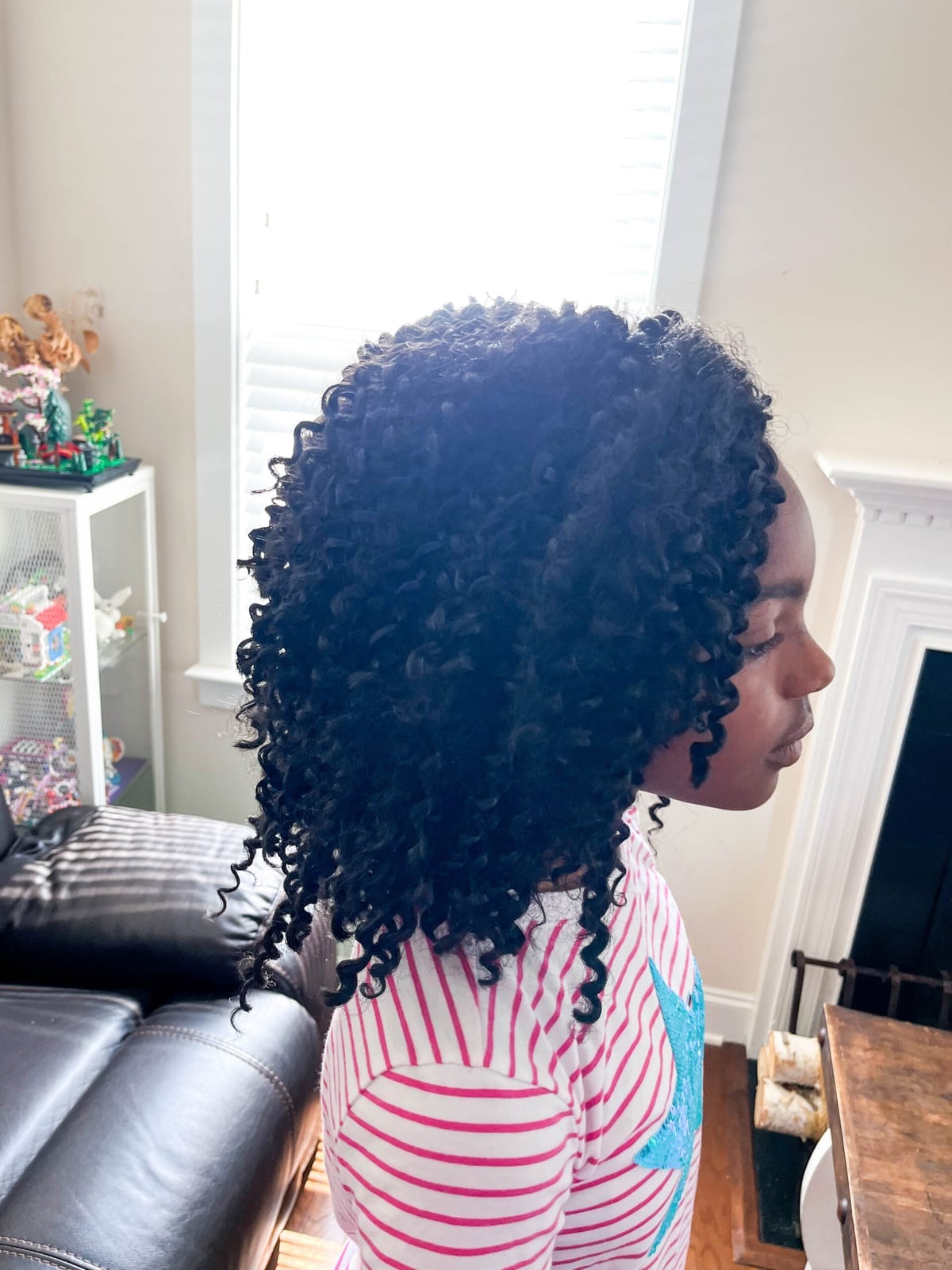
Image credit: athomewithzan.com
Thick, curly black hair shapes into defined spiral curls here, air-dried from a side profile. No heat, no rush. The spiral pattern holds because the curl starts at the root and stays uniform down the strand. A curl-defining cream and a diffuser on low heat encourage the shape, but the real trick is not brushing when dry. Spring and fall are the seasons for this style, humidity helps the curl hold without frizz. The texture has enough weight to keep the spirals from dropping flat by noon.
High ponytail with a unique looped braid pattern
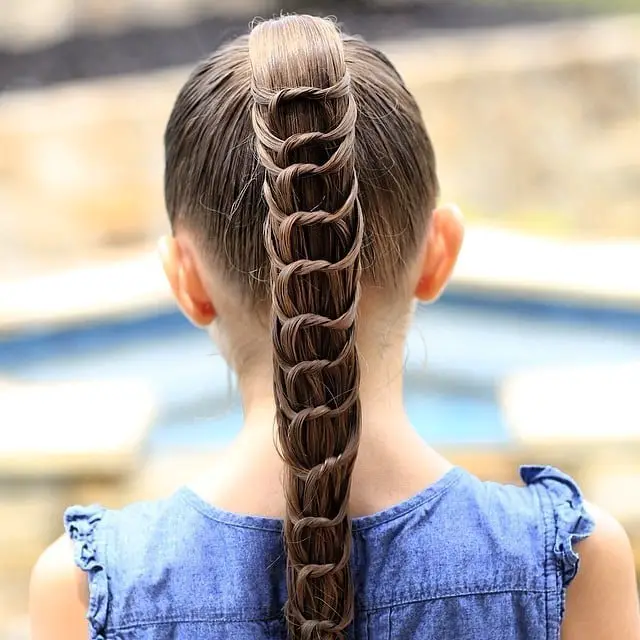
Source: popsugar.com
How do you get a braid pattern that looks woven rather than twisted? The answer is in the loop. Medium brown hair here goes into a high ponytail first, then the braid builds from the base with sections that loop back on themselves. Thick, straight hair is the starting point. It shows the pattern clearly without gaps. The common mistake is pulling the sections too loose, which makes the loops blur into one another. A strong hold spray keeps each loop distinct. This is a salon-leaning style for parties or recitals; plan thirty minutes in the chair.
Tell your stylist: high ponytail with looped braid. No bangs needed.
Long straight dark brown hair with pink streaks

Source: redbookmag.com
Dark brown hair with a fine, straight texture gets a middle part and an air-dried finish. The standout is the pink streaks woven through, not a full dye job, just a few lighter pieces. Layers in the cut keep the length from looking heavy. The upkeep is simple: a color-safe shampoo and conditioner to stop the pink from washing out too fast. The contrast is most effective when the base is smooth. A gloss treatment every six weeks keeps the brown rich and the pink from turning brassy.
Blunt cut black hair with blunt bangs and pigtails
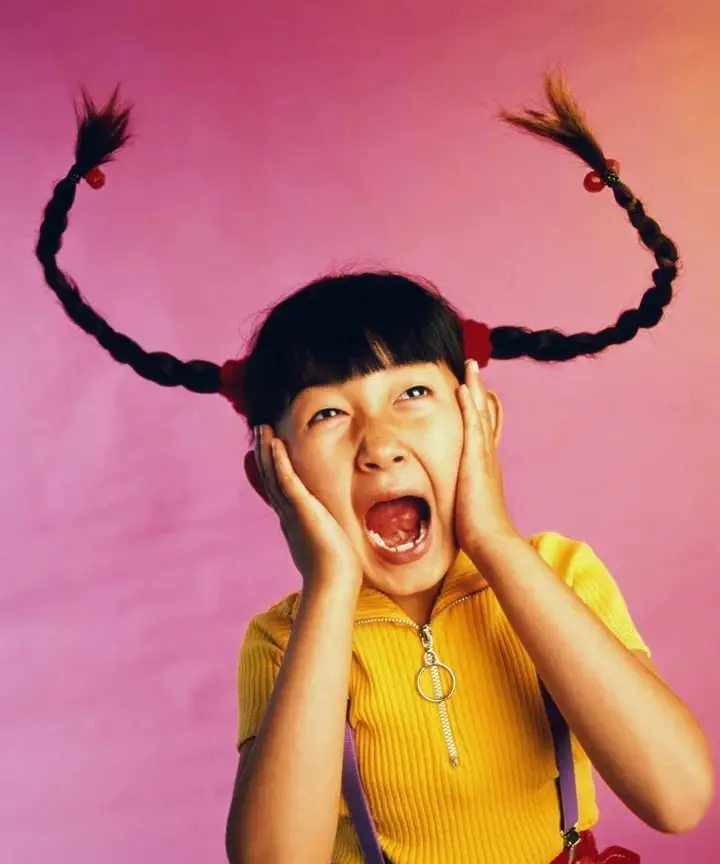
Via refinery29.com
Blunt bangs and a blunt cut make the red ties the only curve in this look. Straight black hair is sectioned into two braids that point straight up, held stiff by a strong-hold spray. The middle part keeps the geometry clean. Good news: this is a DIY job, no salon booking required. Straight hair of medium density is ideal. The catch: very curly or fine hair won’t hold the upright shape past lunch. Ask your stylist for: blunt cut, blunt bangs, high pigtails.
Braids with bantu knots and blue beads in coily hair
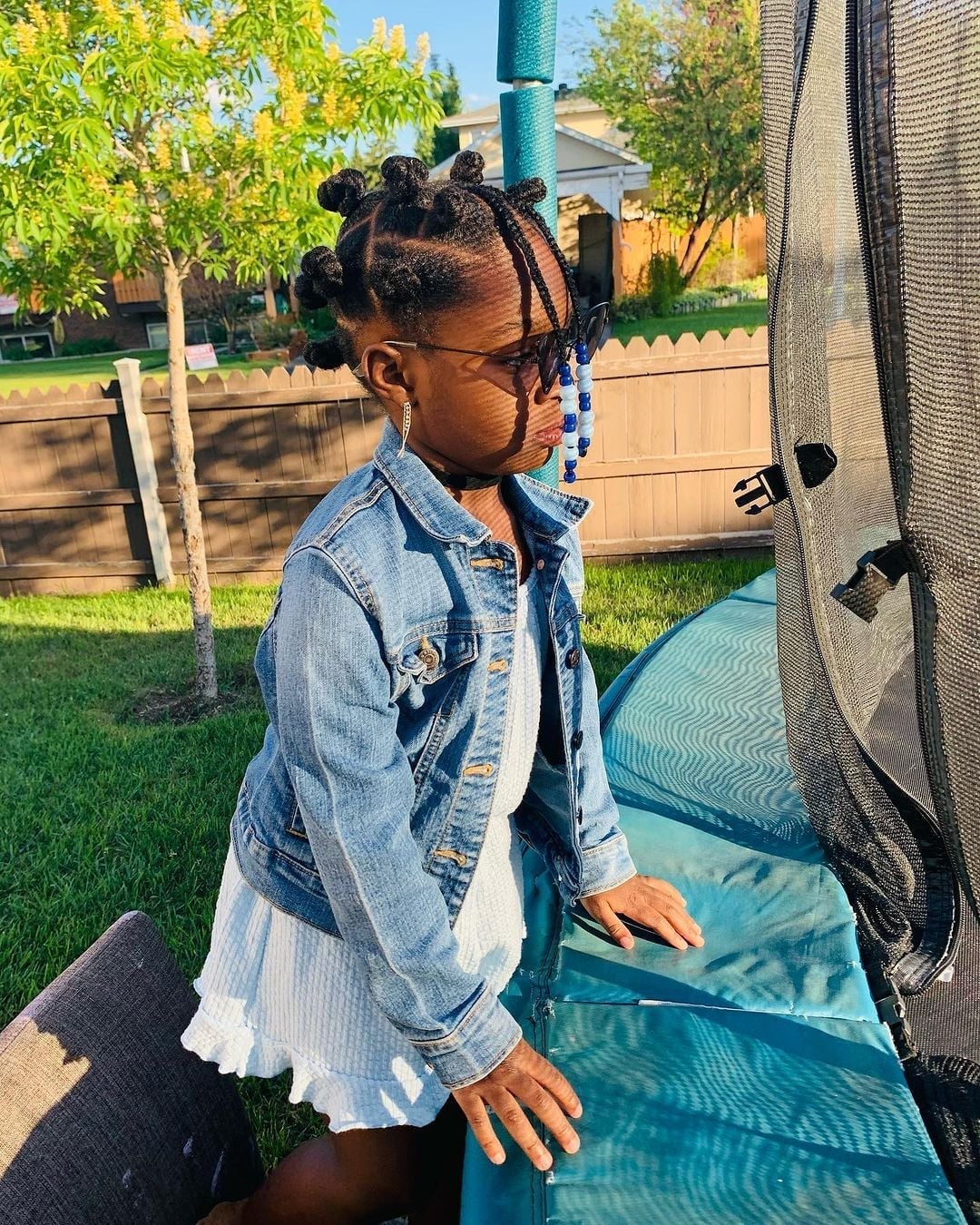
Courtesy of: beautycon.com
Blue beads land at the end of each braid while the bantu knots sit higher up, with a clear spacing that looks planned, not scattered. The middle part divides coily thick hair into two even halves before the braiding begins. Each knot is wound tight enough to stay put for days. A salon booking is wise. The knot tension and bead threading need a practiced hand. Not for straight or fine hair; the knots need density to grip.
Two high pigtails with pink balls and baby hairs
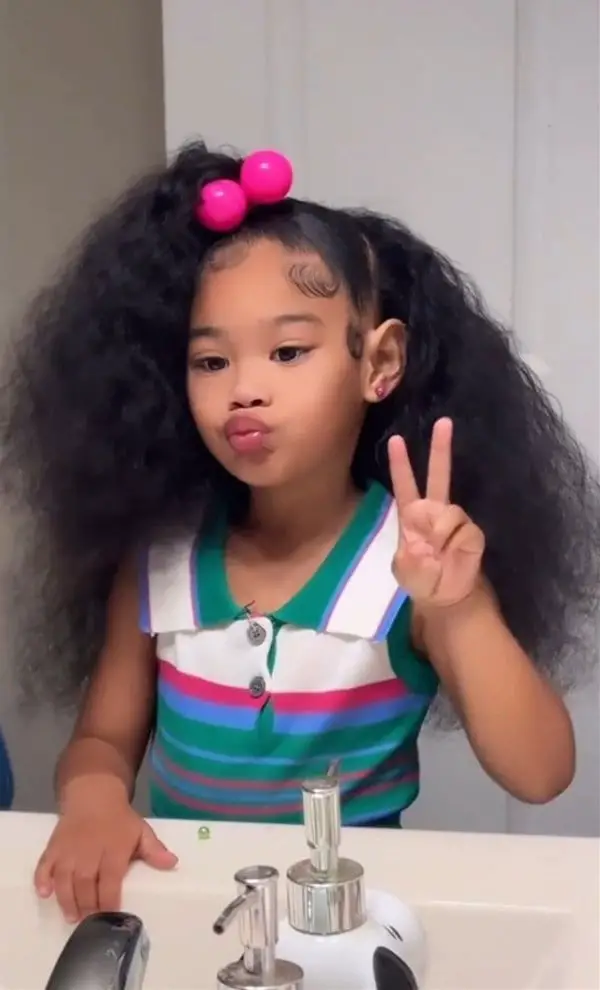
Photo credit: curlsqueen.com
Two high pigtails sit near the crown, secured with pink decorative balls that do the heavy lifting for the silhouette. Thick wavy black hair provides enough texture for the pigtails to hold shape without slipping. The baby hairs along the hairline are swept into soft curves using a fine-tooth comb and light-hold gel, that takes practice. A salon visit is safer for the baby hair part. Tell your stylist: two high pigtails, pink decorative balls, styled baby hairs. The drawback: it is not a five-minute morning style.
A softer take on highlights with a flower clip
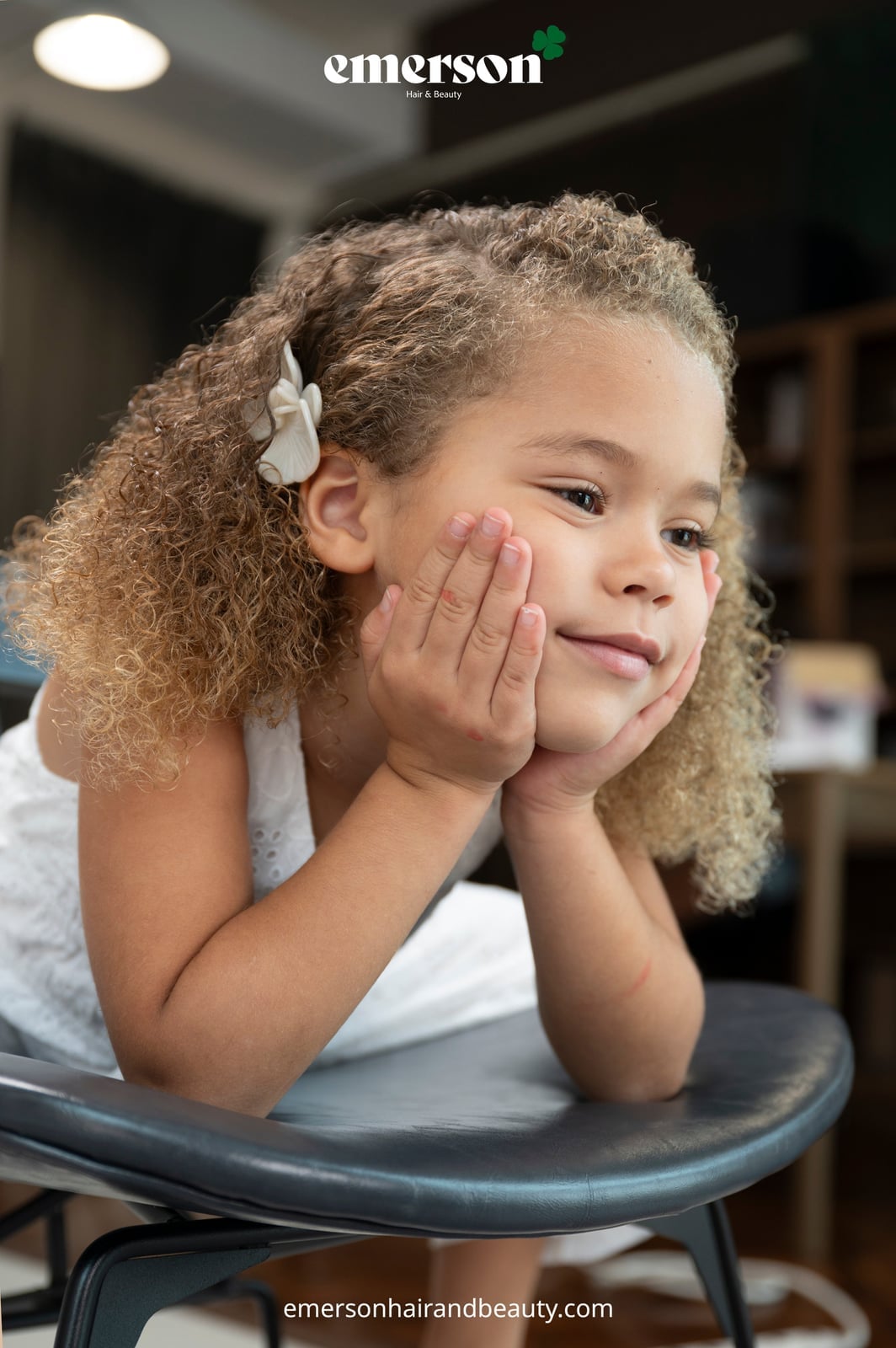
Image credit: emersonhairandbeauty.com
Lighter blonde highlights on a dark blonde base create a lived-in dimension that looks grown rather than painted on. The natural waves and curls add texture that makes the color shifts visible without direct sun. A flower clip at the side adds a practical anchor for the layers. Thick wavy or curly hair holds the curl pattern longest. Apply a curl-enhancing spray after washing, then air-dry. The style holds until the next wash day.
Bubble ponytail with multiple sections and waves
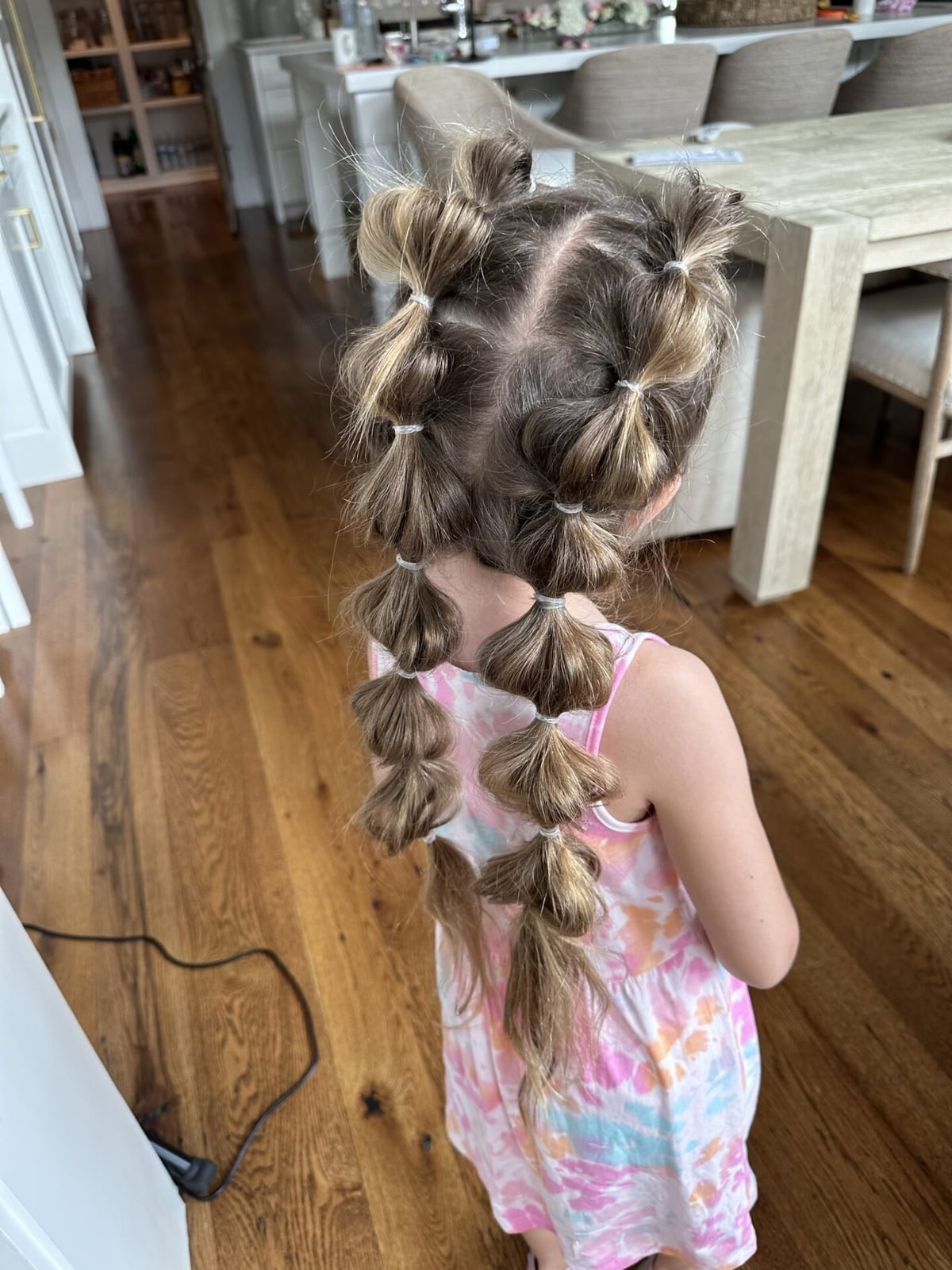
Source: angelalanter.com
You need at least collarbone length to get the bubble effect to read clearly. Thick wavy hair is pulled into a middle-parted ponytail, then sectioned with elastics at even intervals, each bubble gently tugged wider. The dark blonde base with lighter highlights shows at each elastic point, so the color work is visible. The waves have grip from texturizing spray on the ends before sectioning. The whole thing takes under ten minutes with a brush and five elastics. No salon needed.
Large voluminous bun with geometric braided sections
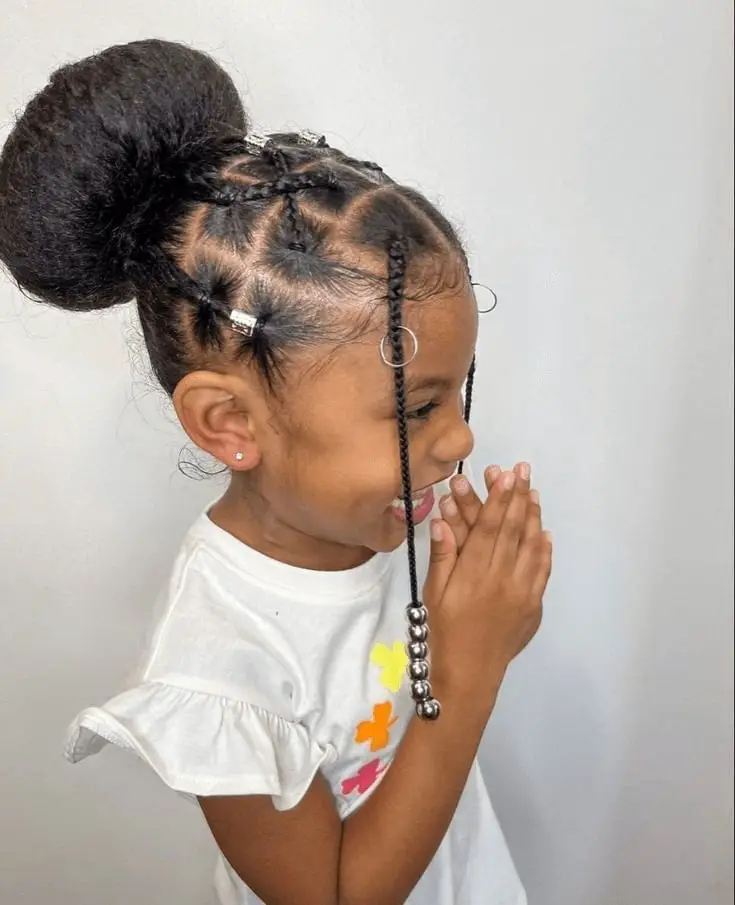
Via hotbraids.com
One bun, but the whole head works for it. Black coily hair sections into geometric braids, each one threaded with silver beads and rings, then gathered into a voluminous top shape. A few loose braids fall with larger beads, a detail that keeps the geometric braided bun from feeling too strict. Not for fine or straight hair; the structure needs density to hold the pattern without drooping. Tell your stylist: large top bun, geometric braided sections, silver beads. Every braid tucks into the bun, so nothing unravels by the end of a long day.
Final Thoughts
Pick the style that matches the morning you have.
- Fine hair: stick with braided styles that add grip and volume.
- Ten minutes in the morning: two top buns or a bubble ponytail.
- Natural texture: let it air-dry and add a flower clip.
- Braided styles need touch-ups every 2-3 weeks depending on growth.
Find the perfect sharp style for your little one.
Hairstyle
30 Elegant Curls Braids Hairstyles 2027 for Special Occasions
Elegant Curls Braids 2027: Discover 30 braided hairstyles featuring deep red, honey blonde, and coily curls. Perfect for elegant updos, see the latest looks.
You are scrolling saved photos on your phone, trying to land on one look that feels special enough for the appointment. A braided crown with loose curls takes the same chair time as a full set of box braids but photographs like twice the work, which is why Elegant Curls Braids 2027 fill so many saved boards.
This collection gives you 30 ways to combine the two textures, from high-gloss salon finishes to styles you can refresh at the sink. Fine hair gets volume from the braided sections; coily textures lean into definition. The struggle is picking one, not finding one that works.
Deep red box braids with loose curly tendrils
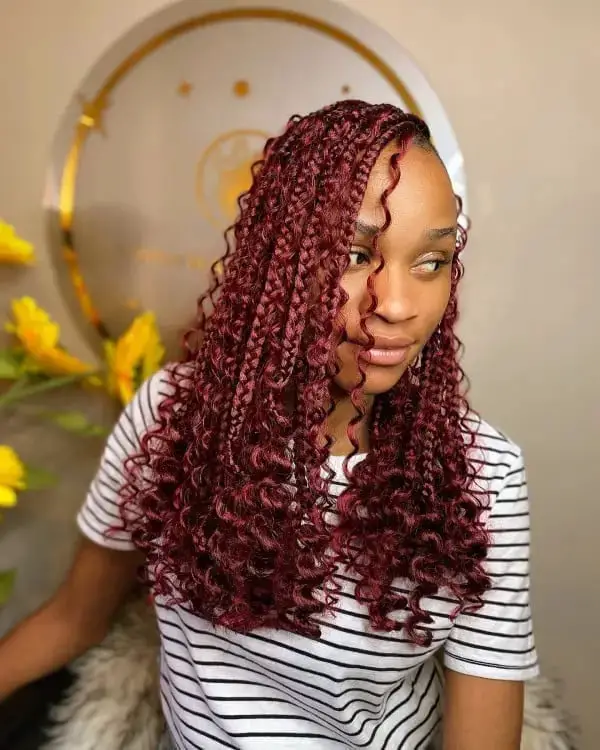
Courtesy of: itakeyou.co.uk
Box braids in a deep red hue use a side parting to let loose curly tendrils break the pattern. The braids run clean and uniform; the ends shift into something softer. You need thick hair starting at shoulder length to support the weight, and a salon chair for the install. This is not a weekend DIY. Ask your stylist for deep red box braids with loose curly ends. The structured braid and the free curl are the point, and it holds well for weeks if you seal the ends with a lightweight oil. Fine hair may not support the weight, and this style requires upkeep after the appointment.
Two textures: crown braids and mid-back curls
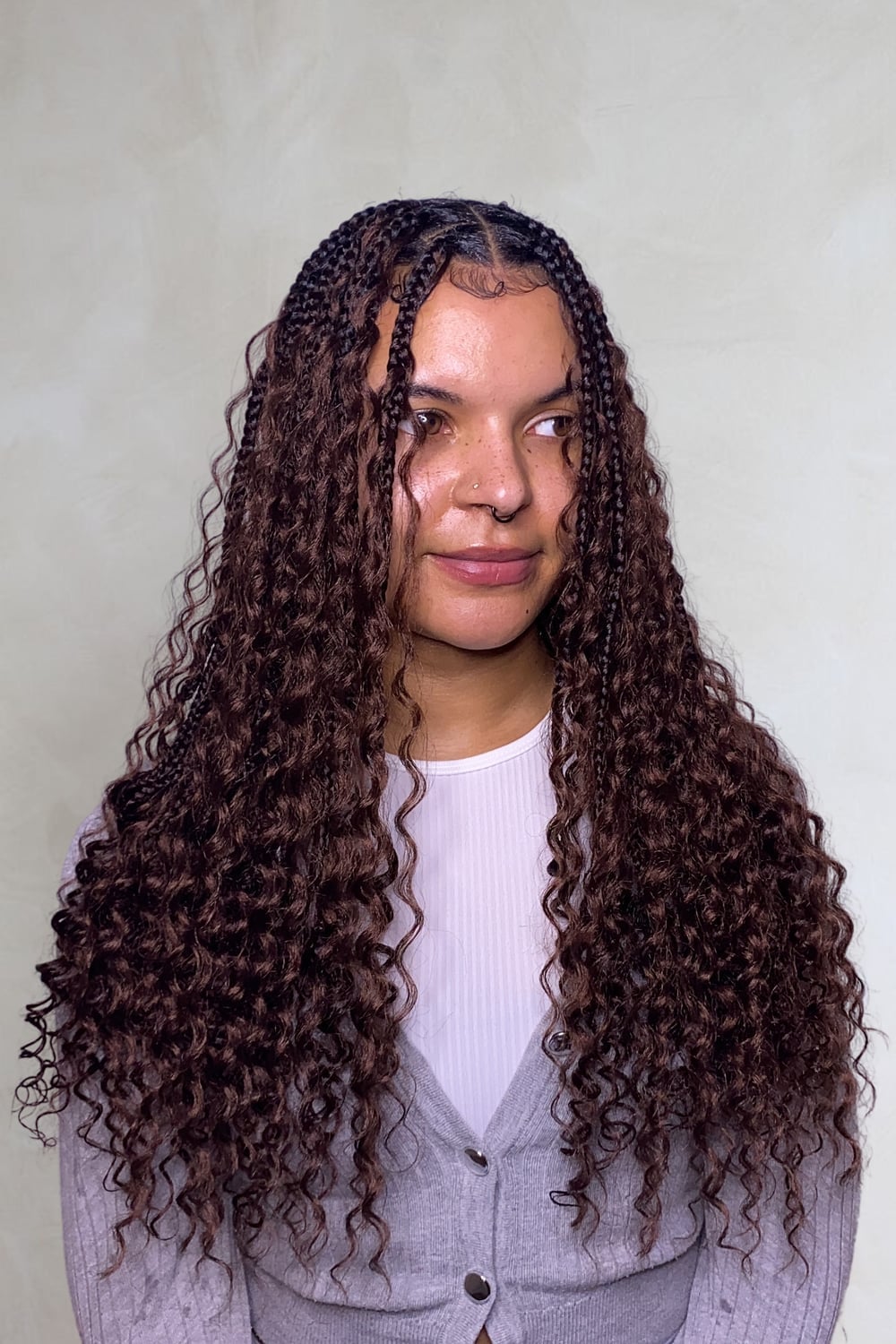
Photo credit: fabxtensions.com
Compare this to a style that braids the whole length. The difference is the release. Intricate braids at the crown give way to voluminous loose curls that fall to mid-back, with a neat middle parting keeping the two zones distinct. The dark brown base looks one piece, not two separate ideas. It suits mid-back length hair of any texture that can hold a braid, especially if you want drama without committing to all-over braids. Not for very short hair or anyone who wants to wash and go. A silk scarf at night protects both textures from frizz.
Dark brown braids with honey blonde highlight curls
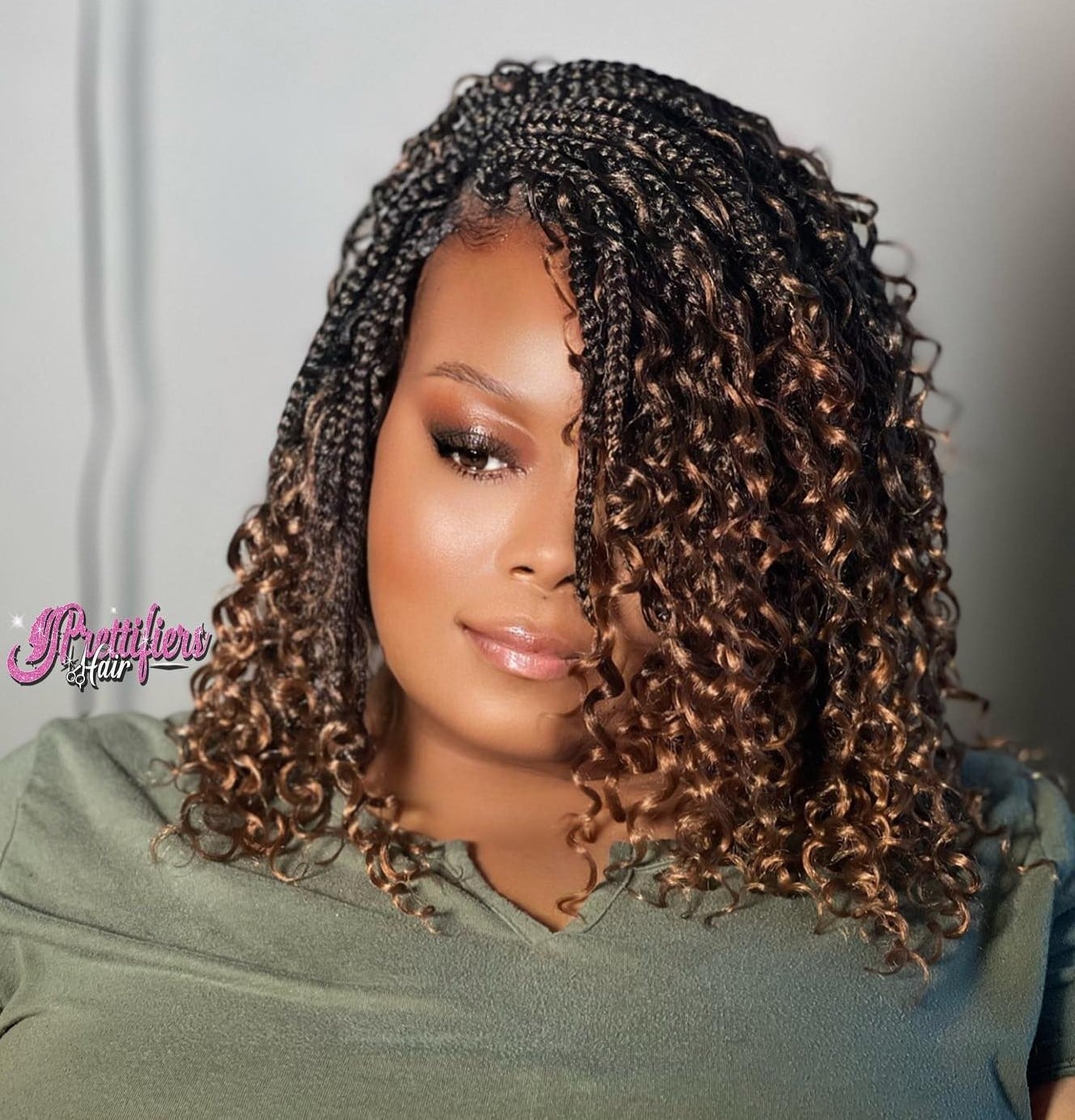
Image credit: hadviser.com
Two things happen here. The dark brown base gives depth; the honey blonde highlights catch the light only on the loose, bouncy curls at the ends. The braids stay uniform in color, so the payoff arrives where the texture changes. Ask your stylist for dark brown braids with honey blonde highlight curls. This contrast works best on thick hair at collarbone length or longer, adding warmth without a full color commitment. A curl-defining cream on the ends keeps the honey tones visible and the bounce intact. Pass if your hair is too fine for the braids to hold their shape.
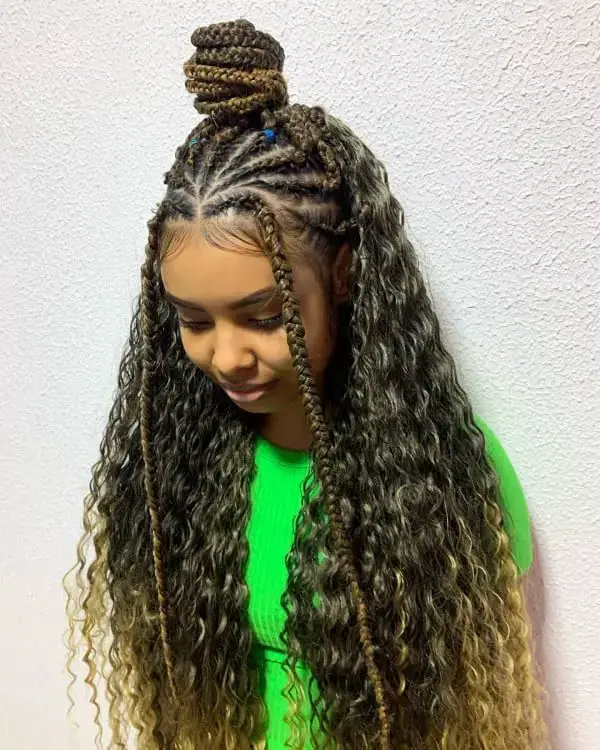
Braided top knot with wavy and curly tendrils
Source: fabmood.com
A braided top knot sits at the crown while loose braids and wavy, curly tendrils frame the face. The dark brown base gets blonde highlights that surface in the knot and the loose sections alike. It looks elaborate, and it is. The trade-off: the top knot needs firm pinning and a strong-hold hairspray to stay put through a long day, and the loose tendrils require re-curling after sleep. Medium to long hair that can gather into a bun is the starting point. Short hair or a preference for wearing everything down makes this a hard pass.
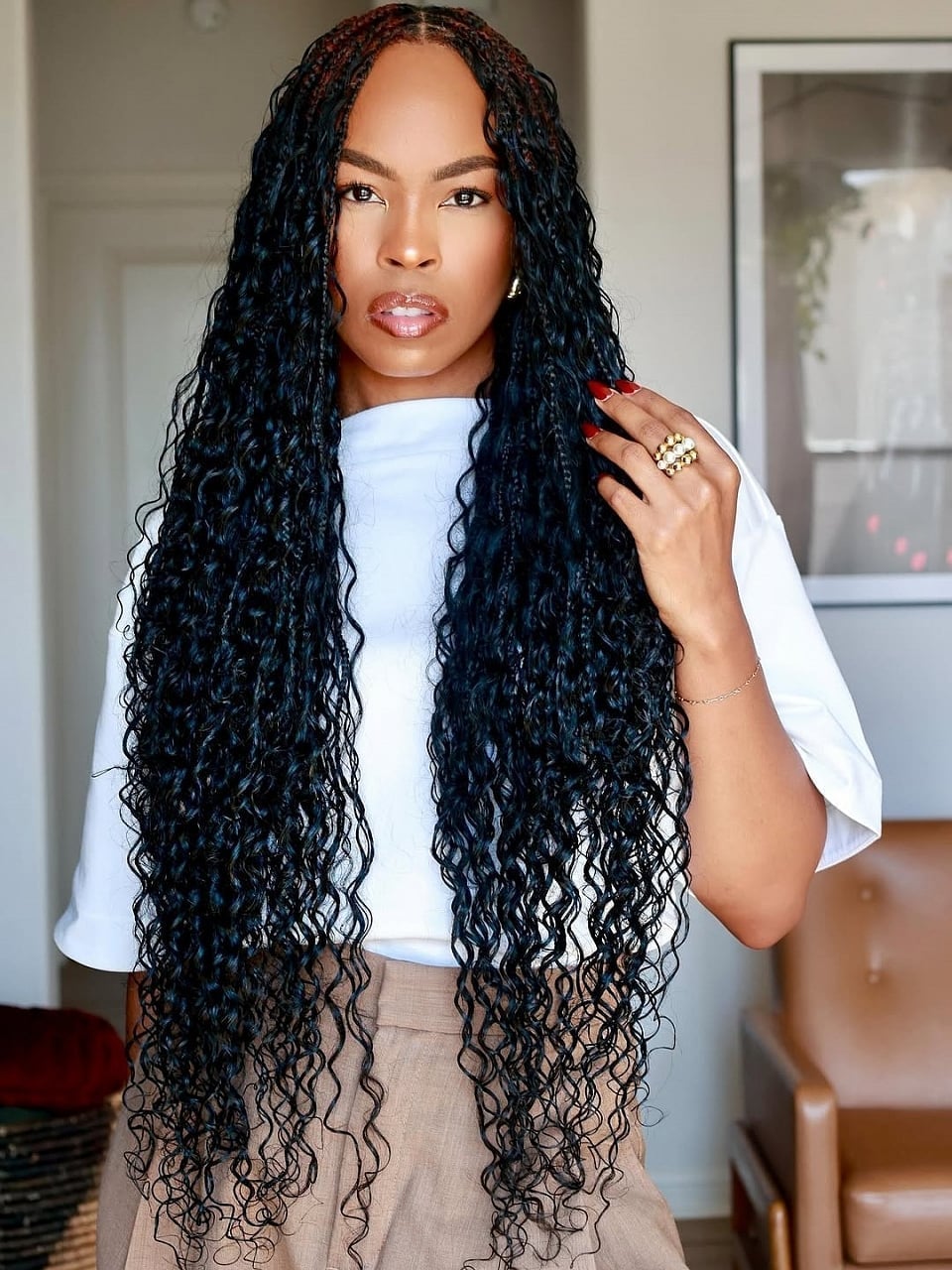
Black braids with subtle red undertones and coily curls
Via hotbraids.com
Intricate braids in black reveal subtle red undertones at the roots before transitioning into loose, coily curls. The middle part keeps the symmetry clean, letting the texture do the work. Thick, coily hair at mid-back length or longer shows the definition best. Ask your stylist for black braids with subtle red undertones and coily curls. Upkeep means a satin bonnet overnight and a water or curl mist in the morning to refresh the coils. The red undertones fade gradually; a gloss service every eight weeks keeps them visible.
Half-up, half-down with an ash blonde braided crown
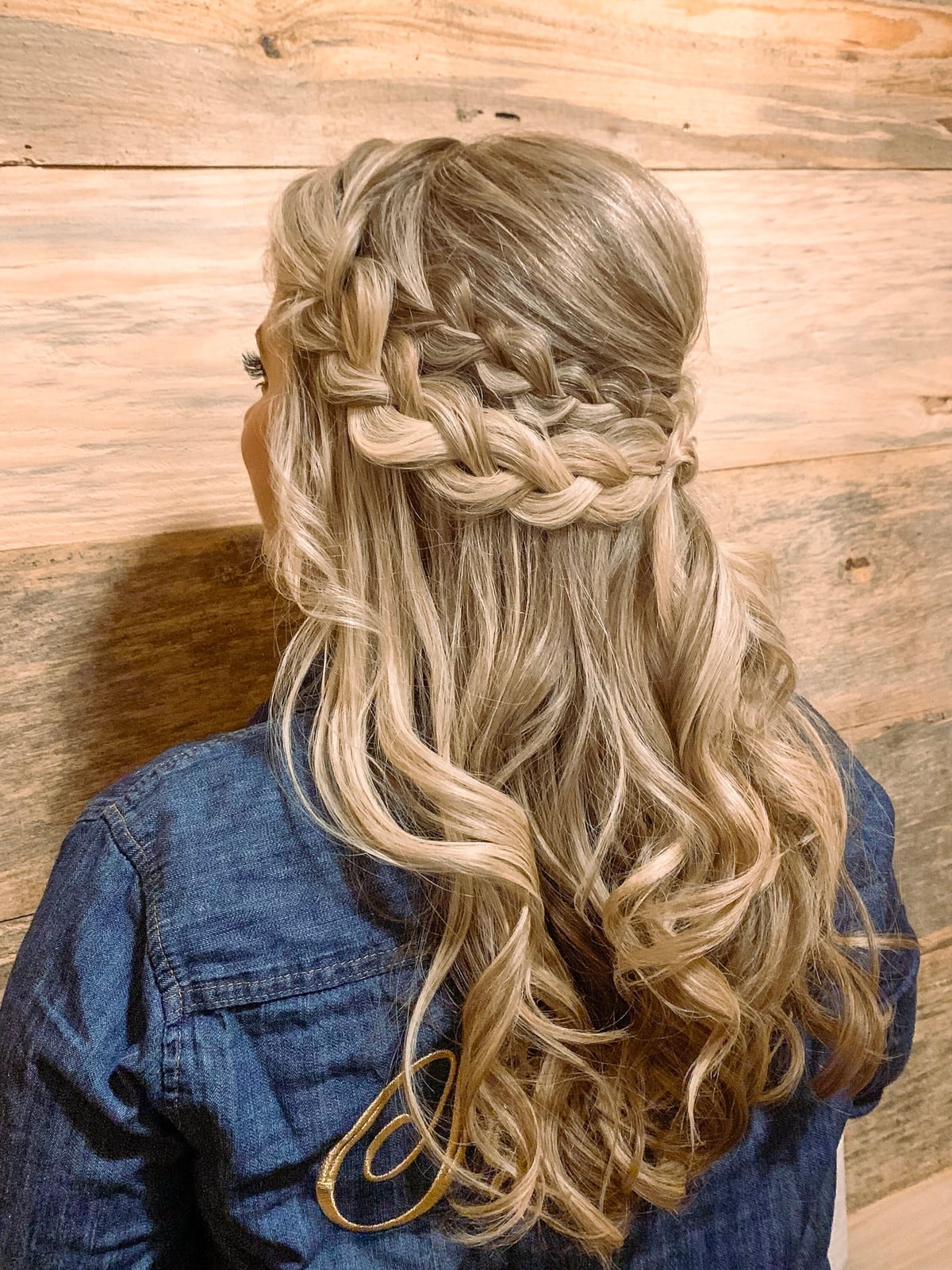
Courtesy of: beautyintervention.com
Can you get that braided crown to hold all day without it looking like a practice run by noon? The ash blonde half up half down with braided crown and waves relies on clean sectioning and firm pinning, not hope. Thick, wavy hair at collarbone length or longer gives the braid enough weight to sit flat. The middle part keeps the crown centered. Skip it if you plan to dance hard or sleep in it, the structure needs resetting. A light-hold hairspray after pinning buys you the evening, but do not expect a second day without re-pinning.
Two tones of dark brown and blonde braids with curls
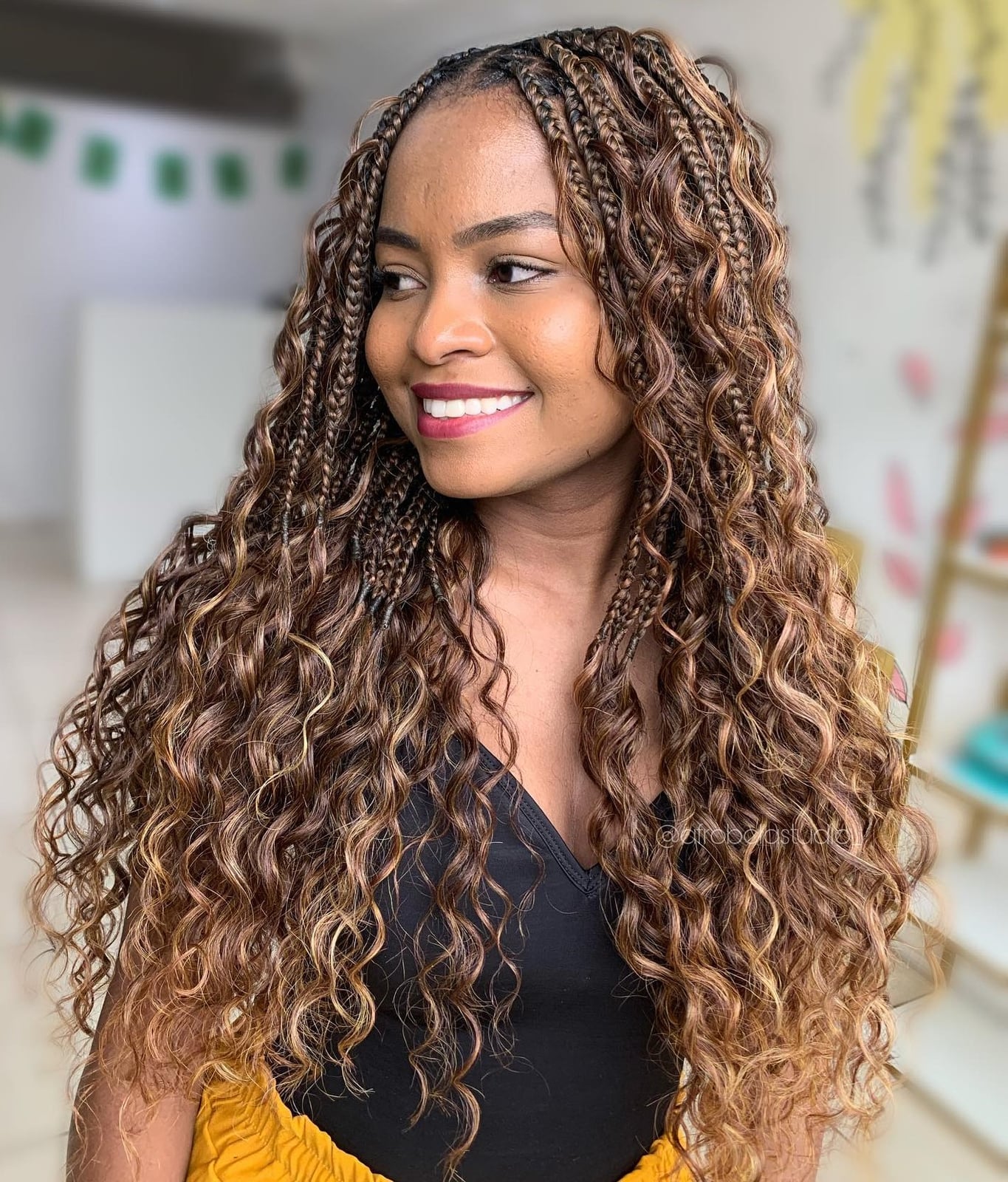
Photo credit: hadviser.com
Two tones of dark brown and blonde braids with curls use color contrast for visual interest. The blonde highlights running through the dark brown base create a dimension that reads clearly from across a room. Thick, curly hair at collarbone length or longer holds both the intricate braiding and the loose curl pattern. Fine hair may not support the braided sections. Tell your stylist: dark brown and blonde braids with loose curls. A wide-tooth comb on the curly ends keeps tangles at bay.
Striking braids transitioning to voluminous wavy curls
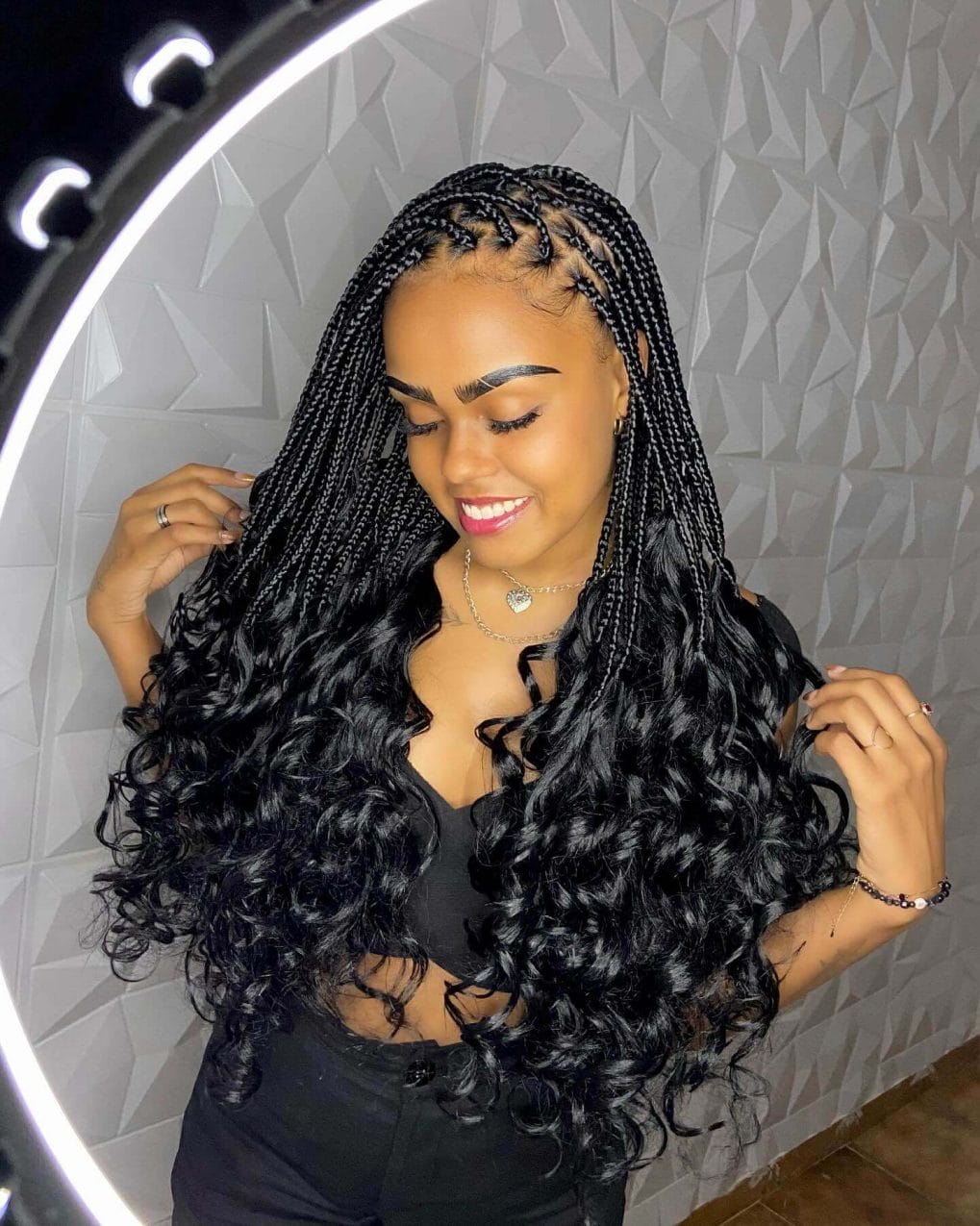
Image credit: snazzylair.com
Box braids that end in loose, wavy curls rely on a specific technique: the braid is tight from the scalp to mid-length, then the remaining hair is left free and curled. The transition point needs to sit at a consistent level so the volume does not look accidental. Thick, wavy hair at shoulder length or longer gives the loose ends enough weight to curl without springing up.
The catch is that the braided section can loosen faster than the curls, especially near the nape. You will need a touch-up on the braided roots around week three. A curl-enhancing mousse on the wavy ends helps maintain definition without weighing the braids down.
Dark brown curls with auburn highlights and side braids
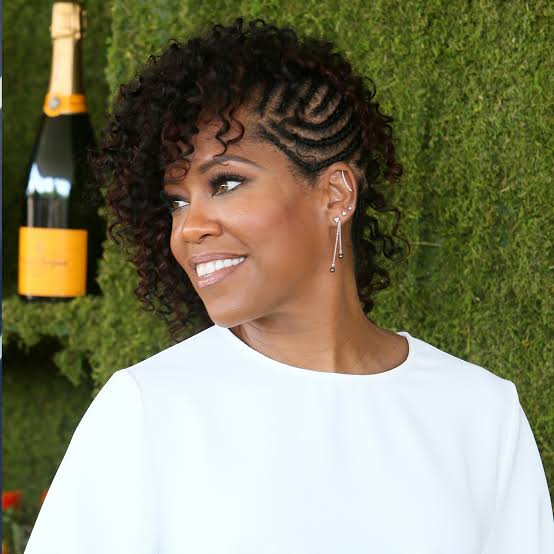
Source: byrdie.com
One side braided tight, the other left to fall in dark brown curls with subtle auburn highlights. The asymmetry is the point. Thick, curly hair at collarbone length or longer supports the contrast. The auburn highlights catch light on the curly side while the braided side stays matte, which keeps the eye moving. Not for anyone who wants a balanced look or has very fine hair that slides out of a side braid. Use a satin scarf at night to protect the curly side from frizz; the braids hold fine on their own for three to four days.
Blonde base with darker roots and lighter highlights, braided
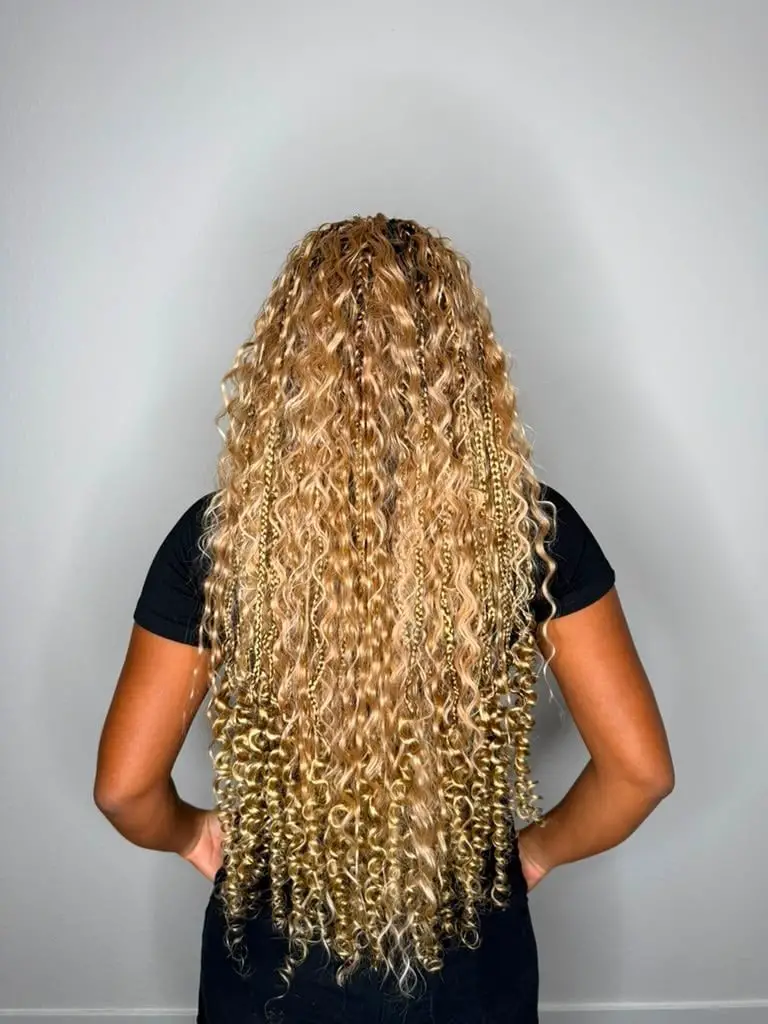
Source: beautybyyulis.com
A blonde base with darker roots and lighter highlights woven through braids and loose curls has a grown-in effect. The darker roots at the scalp keep the braids looking full, while the lighter strands add movement in the curls. Thick hair at collarbone length or longer holds the intricate braiding without the roots pulling. It works best for those who want a solid blonde or have fine hair that may not support braids. Tell your colorist: blonde braids with darker roots and loose curls. A purple shampoo every second wash keeps the lighter strands from turning brassy.
Black and brown braids with subtle highlights and curls
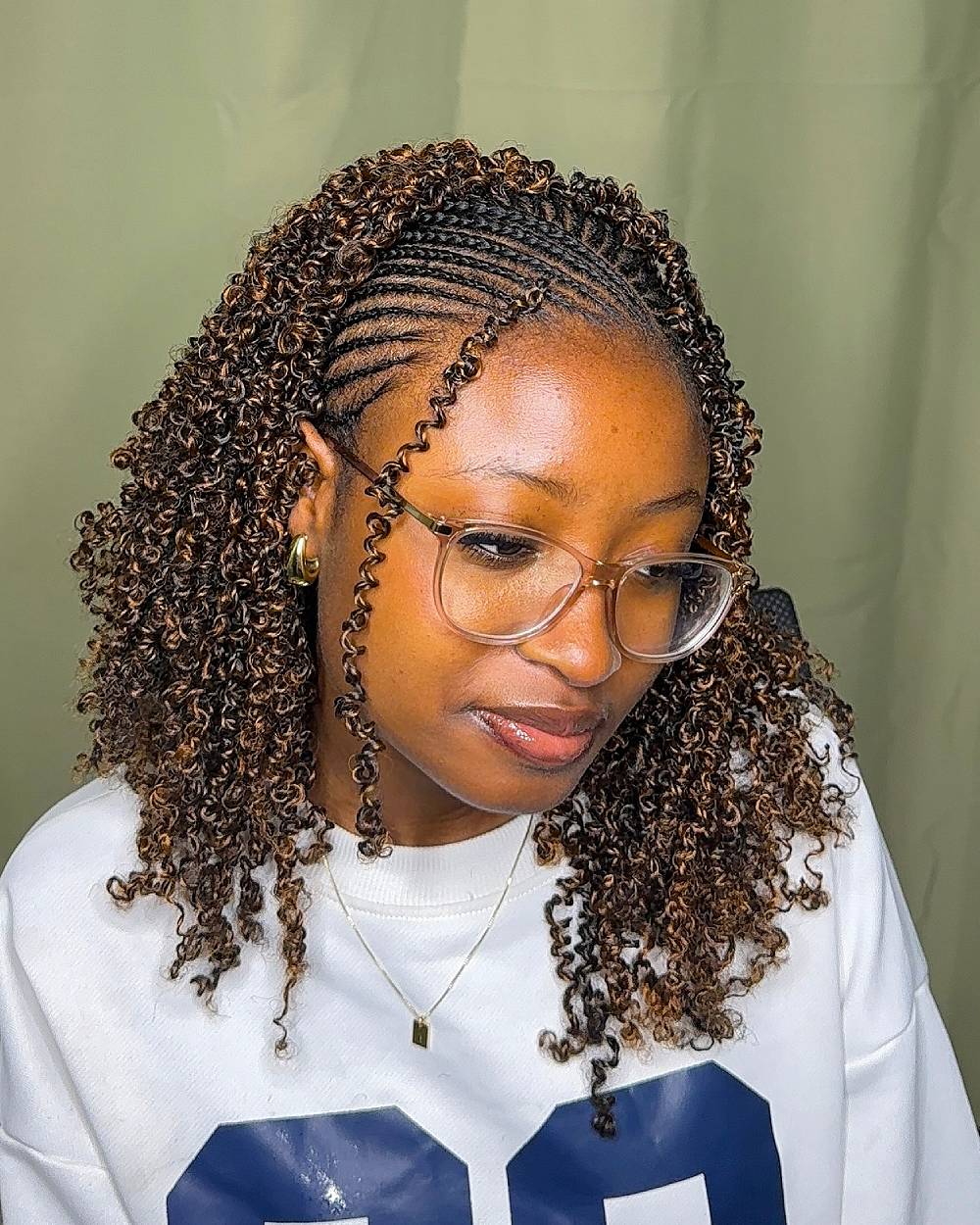
Side part is the first decision here. It changes the balance of the braids against the curls, and a home mirror lets you see both sides without a second chair. You start with thick hair at collarbone length or longer. The braids need density to hold the black and brown tones, and the subtle highlights need room to read. Section off the crown area first. Braid the sides in vertical rows, leaving the back portion loose for the voluminous curls. A one-inch curling iron on medium heat wraps each loose section, then you finger-comb them apart. The hold lasts two days if you pin the curls up at night.
A lighter color palette changes the whole effect. The richness of black with brown highlights is the point, so a full blonde or pastel base shifts the look.
Ombre braids transitioning to fine, curly ends
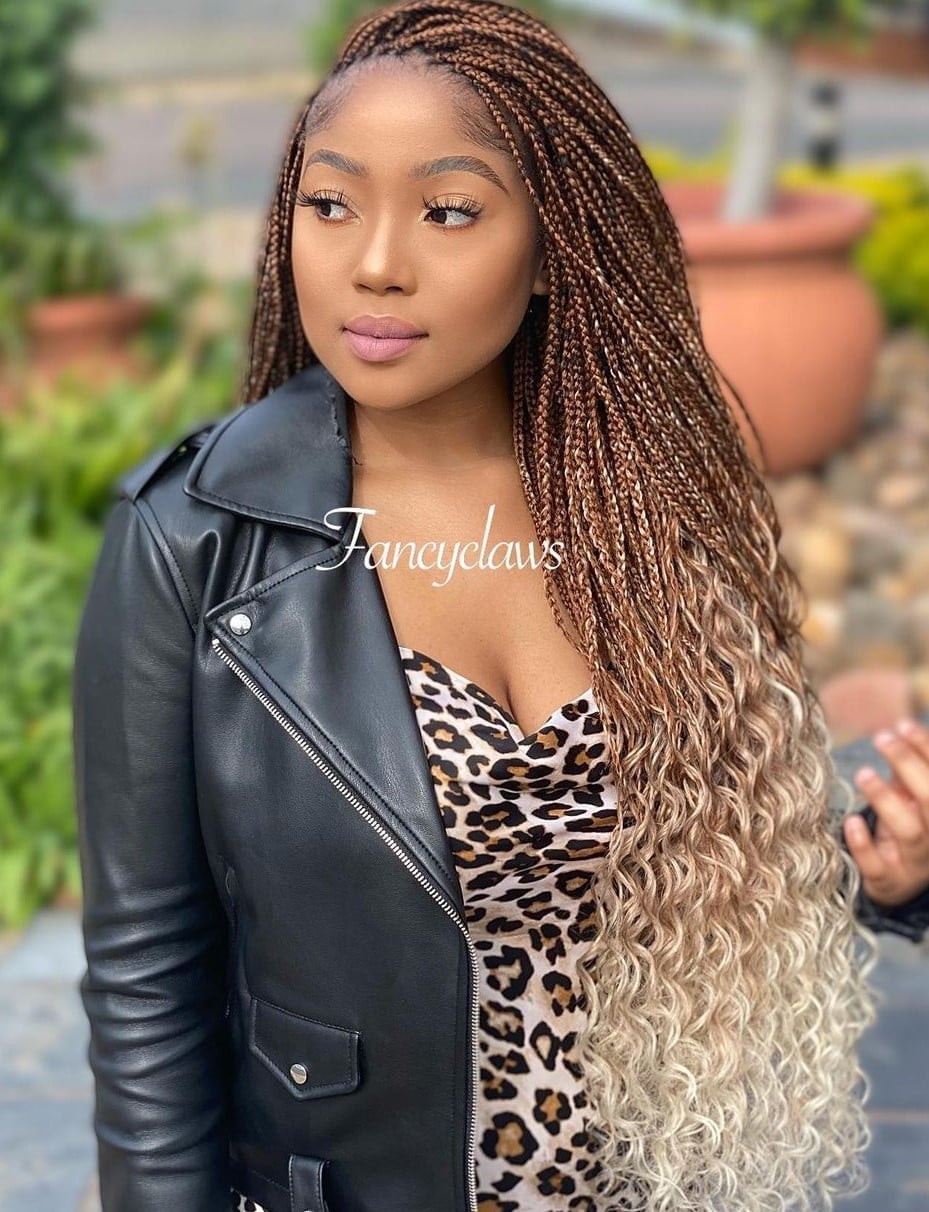
Courtesy of: therighthairstyles.com
A centered parting keeps the graduation symmetrical, which matters when the color shift is this deliberate. The design suits fine hair that can support intricate braiding, starting at shoulder length or longer. The catch: the blonde ends require more maintenance than a single-process braid. Toning every four to six weeks keeps the blonde from pulling brassy against the brown. This look is best for those who want a deliberate color contrast and have fine to medium hair. Very thick hair may make the fine braid detail appear bulky rather than delicate.
Micro braids with defined curls side part
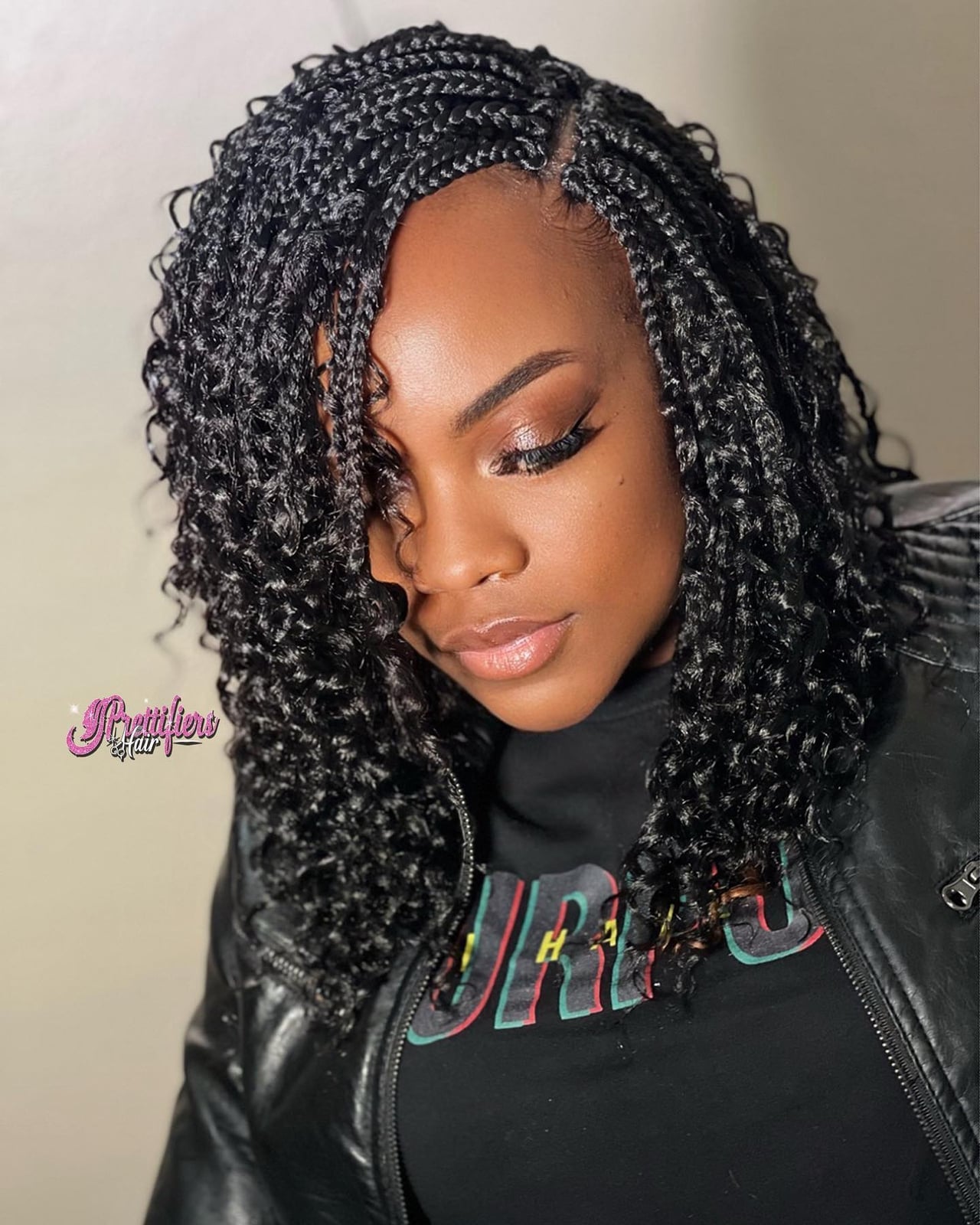
Photo credit: hadviser.com
Densely packed micro braids create a uniform base, then the ends switch to loose, defined curls. The side part breaks the symmetry and lets the curly transition fall more naturally on one side. Thick hair from shoulder length or longer holds the micro braid pattern without gaps. Tell your stylist: micro braids with defined curly ends. A light styling cream on the ends each morning refreshes the curl shape and cuts down on frizz. The hold is solid for three days if you sleep in a silk scarf.
Long black box braids with elegant curly ends
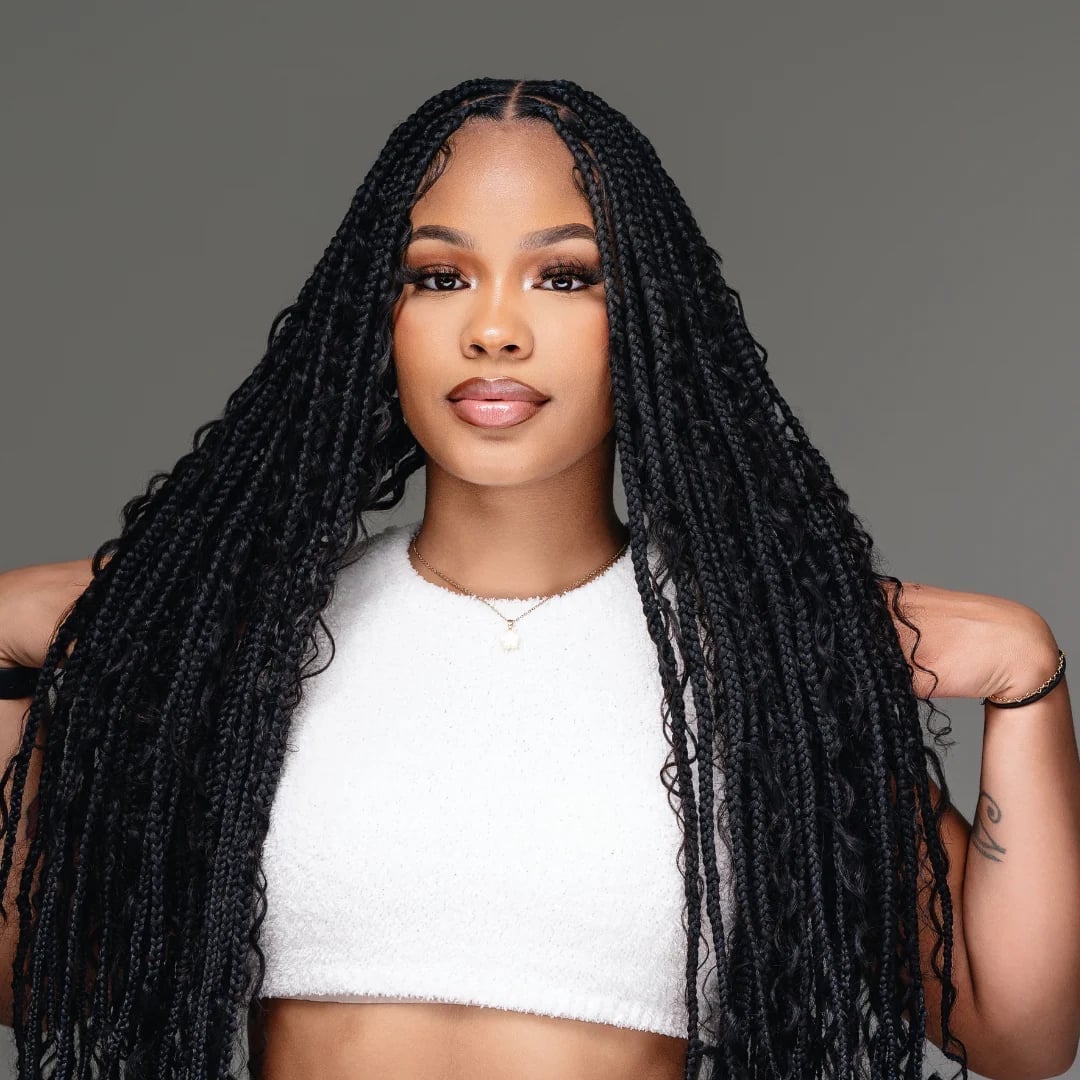
Image credit: loxxofhair.com
A salon is the practical choice here. The braids need consistent tension from root to tip, and the middle part has to be dead straight for the symmetry to work. The alternative is a home kit with pre-stretched hair, but you lose the precision in the parting. Thick hair at mid-back length or longer supports the weight without strain. The curly ends add movement that a blunt braid finish lacks. A dry shampoo at the roots on day three extends the clean look without a full wash.
Dark brown braids flowing into thick, loose curls
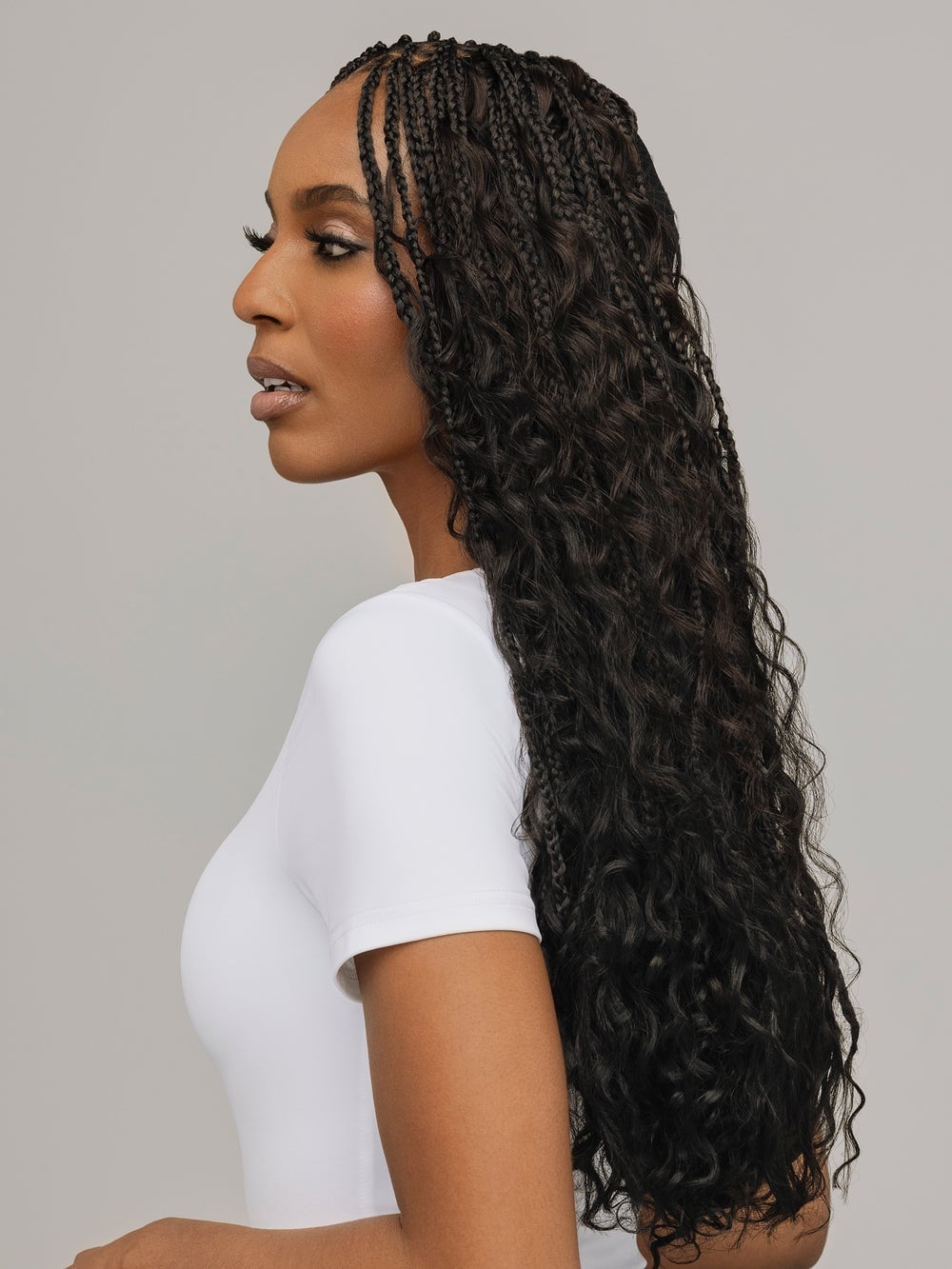
Source: indiquehair.com
Dark brown braids and loose, thick curls meet at a middle part, and the volume is substantial. You need thick hair starting at collarbone length to achieve the fullness this style demands. The trade-off: the transition point between braid and curl can look abrupt if the braid tension is too tight. A slightly looser braid at the ends lets the curl blend in. This style has movement and a fair amount of it. A satin pillowcase helps the curls stay defined and the braids stay smooth overnight.
When you want elegant twists framing face
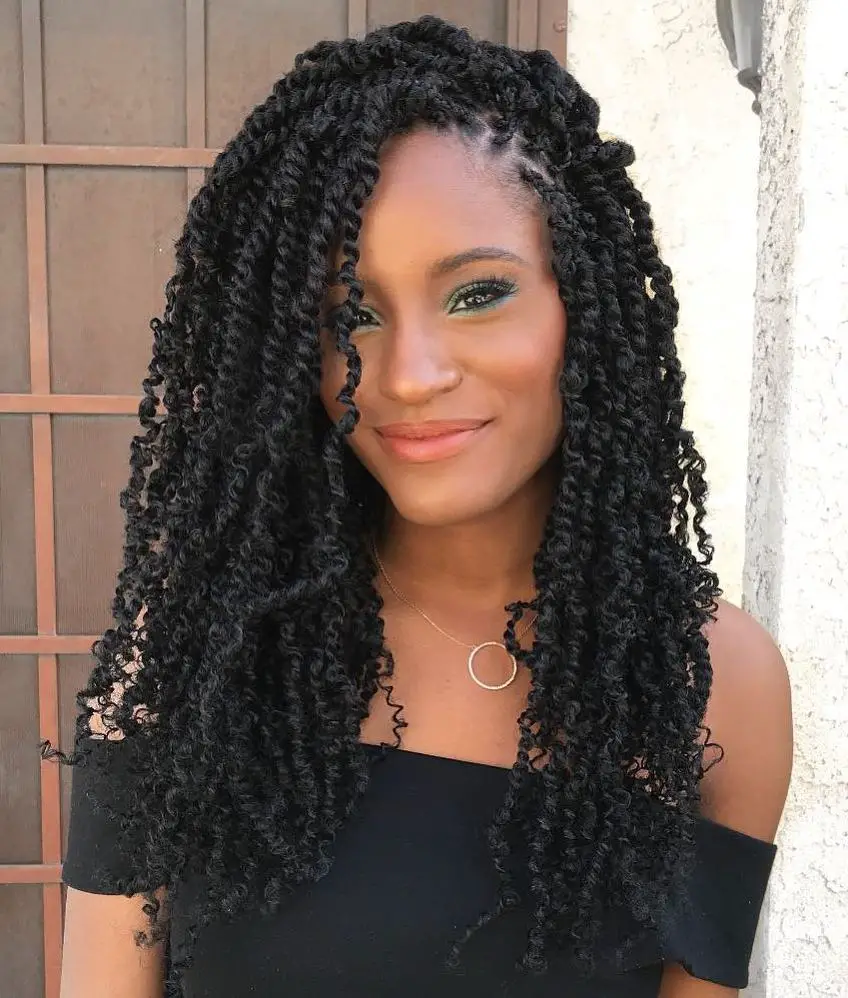
Define is the word you hand your stylist. Where loose curls drift, these thick black twists hold their shape from root to tip. The side parting lets the weight fall forward, framing the face with deliberate structure. You need shoulder-length or longer hair with enough density to keep each twist distinct. Fine hair risks the definition softening into a wave by midday.
This style offers a neat hold because the braiding technique itself creates the structure, not a product. A moisturizing balm worked through the twists prevents the dryness that can creep in after a few days. This is a salon-leaning style that requires an intricate braiding technique.
Braids in a high ponytail with auburn curls
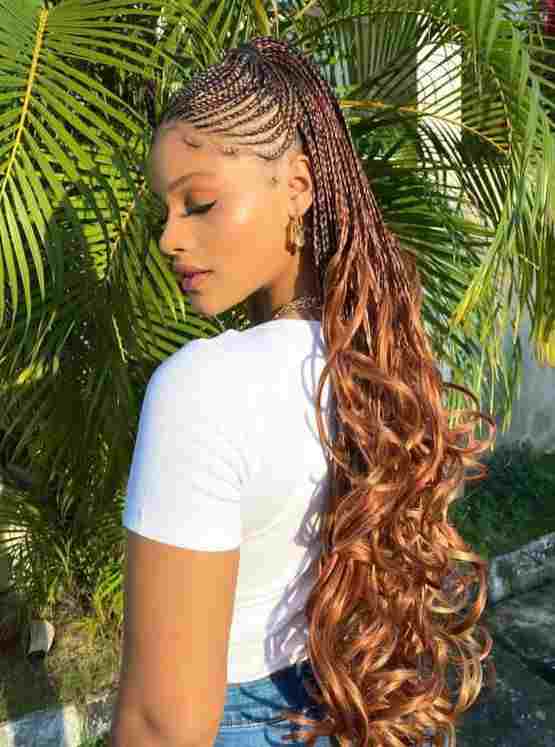
Courtesy of: claraitosblog.com
A high ponytail changes the whole silhouette. The braids pull tight from the crown, then release into long auburn curls that cascade past the shoulders. Mid-back length gives the curls room to fall fully. A middle parting keeps the top clean. For maximum volume, thick hair is your advantage. Use a strong hair tie and a few pins to anchor the ponytail; the weight of the curls can pull otherwise. The contrast between the structured braids and the flowing curls is the whole point.
Medium brown box braids with defined loose curls
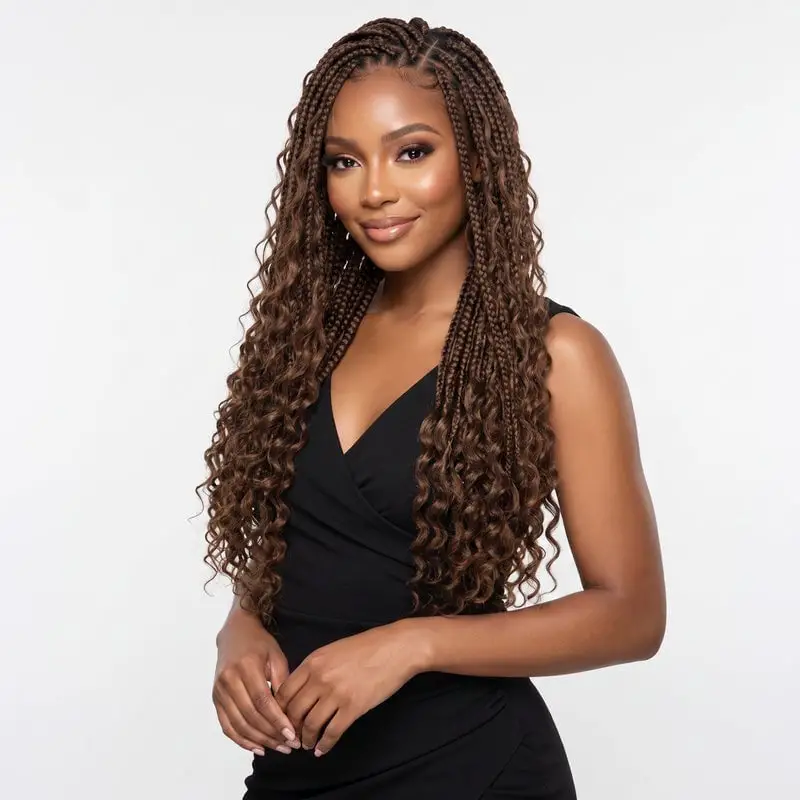
Photo credit: privatelabelextensions.com
Box braids with defined ends offer a clean, neat line. Medium brown keeps the look warm without going dark. The centered parting adds symmetry, making the style suitable for professional settings. Shoulder-length or longer hair works best; the definition of each curl shows more clearly with length. A salon install is the route here; the parting and the evenness of the braids require a steady hand. Apply a braid balm to the scalp to soothe any tightness during the first week.
Half up half down with delicate face-framing braids
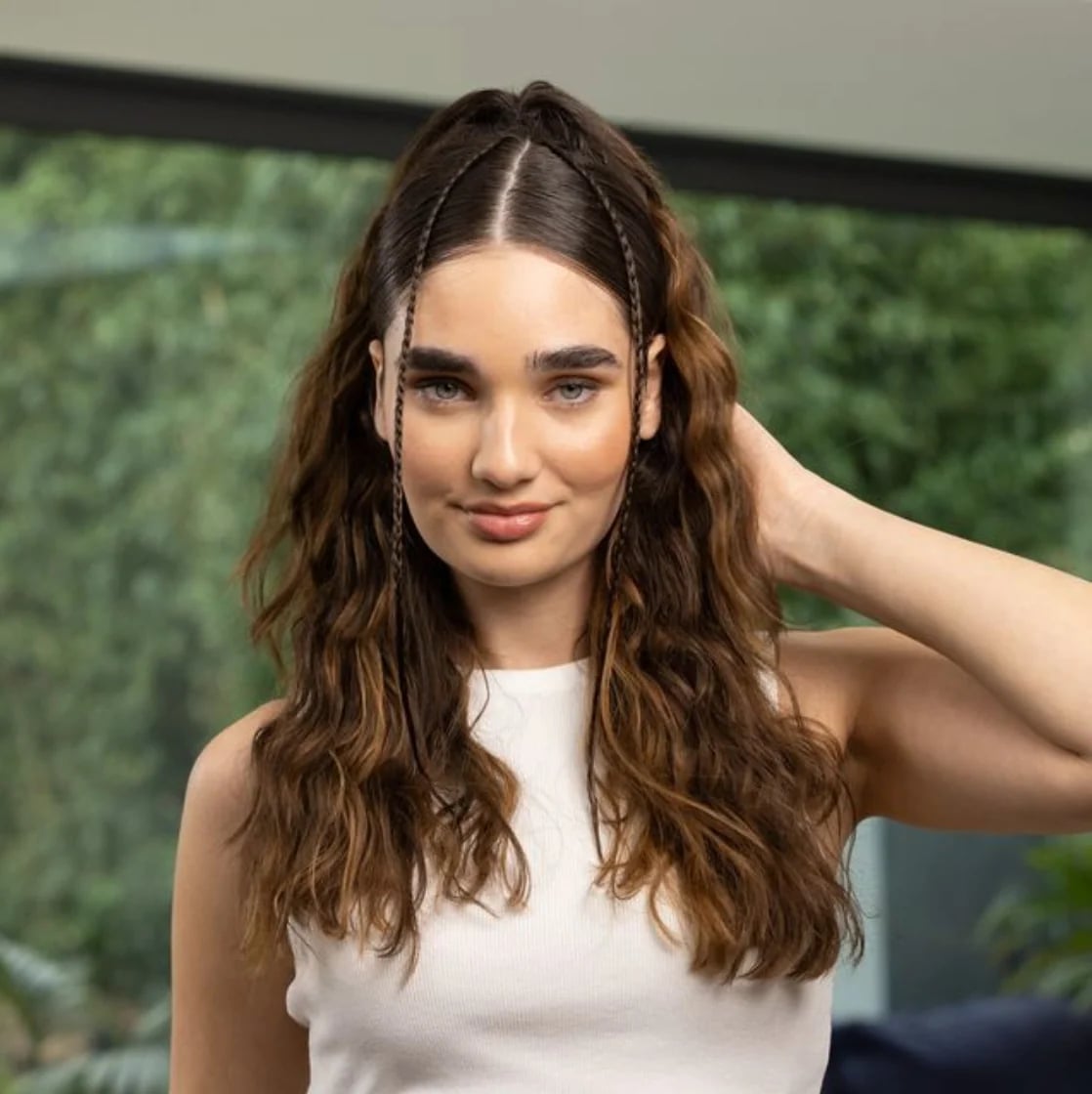
Image credit: curlsmith.com
How do you add detail without committing to a full braid style? Two delicate face-framing braids, pulled back into a half-up, half-down shape. The rest of the hair falls in thick dark brown waves with subtle lighter brown highlights. A middle parting keeps the look balanced. Wavy or curly texture helps the braids blend naturally. Leave the braids loose enough to soften the line around the jaw. This is a DIY-friendly style; a few clear elastics and five minutes are all it takes.
Thick wavy black braids transitioning to loose curls
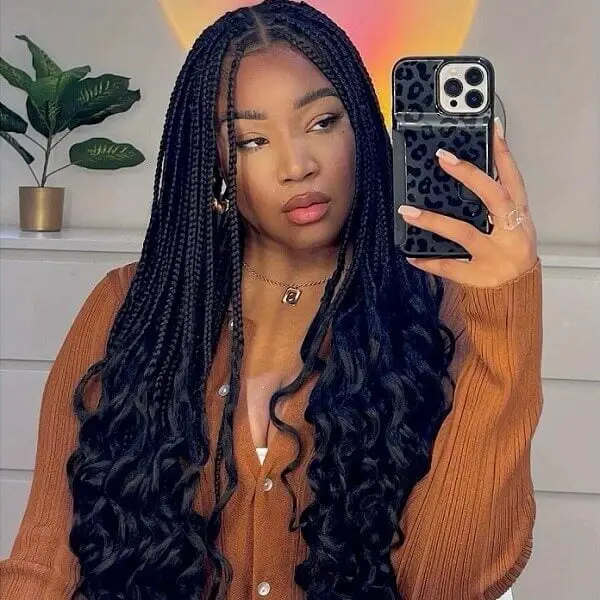
Via mybraidedwig.com
A practical rule: the tighter the braid at the scalp, the more contrast the loose ends will have. Here, deep black box braids shift from a thick, wavy texture near the roots to flowing curls at the tips. The middle parting divides the weight evenly. Shoulder-length or longer hair allows the transition to read clearly. The drawback is the time in the chair; the braid-to-curl technique requires precision at the transition point. A lightweight serum on the curly ends controls any flyaways and adds shine.
Neat box braids with curly ends and square parting
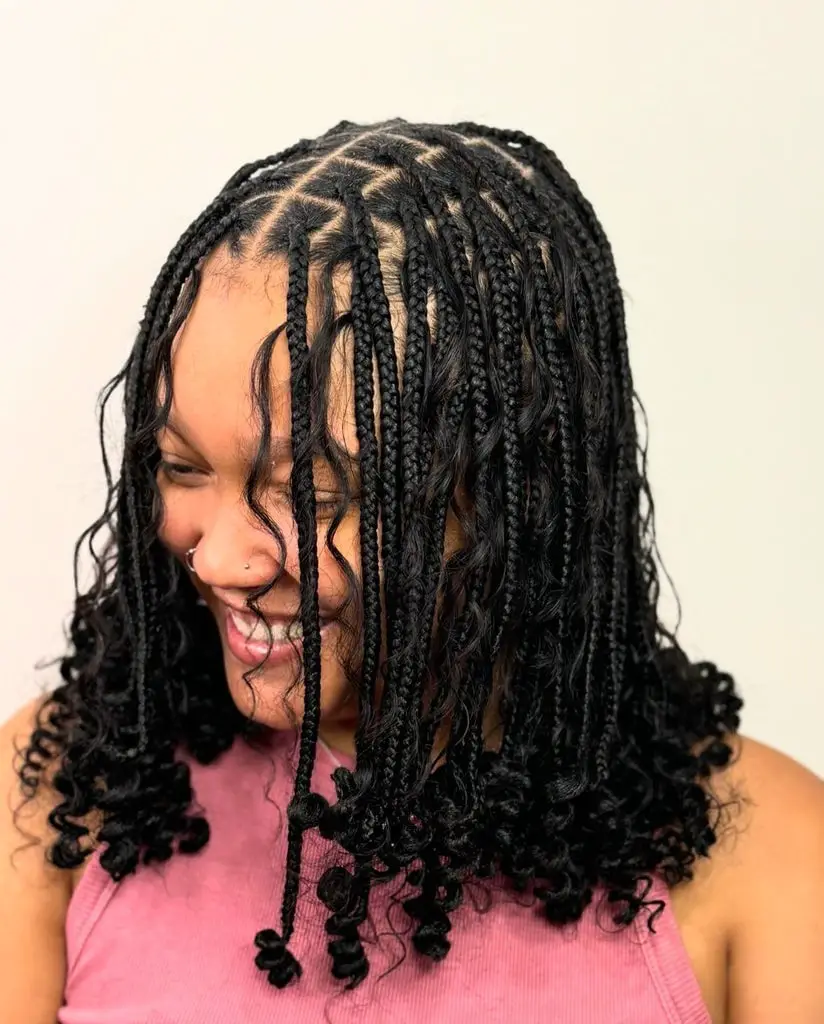
Courtesy of: jaliza.com
Square parting at the scalp is the detail that separates these from standard box braids. The neat sections create a geometric grid that stays visible even as the rest of the hair moves. Black braids with thick, curly ends hit that balance between structure and softness. Ask your stylist for: neat box braids with curly ends and square parting. The hold comes from the tight braiding technique; curly ends need a lightweight oil to stay defined without frizzing. A rounded, organic part line is not the goal here. The square shape demands precision and shows every stray section.
Two textures: long dark brown braids with defined curls
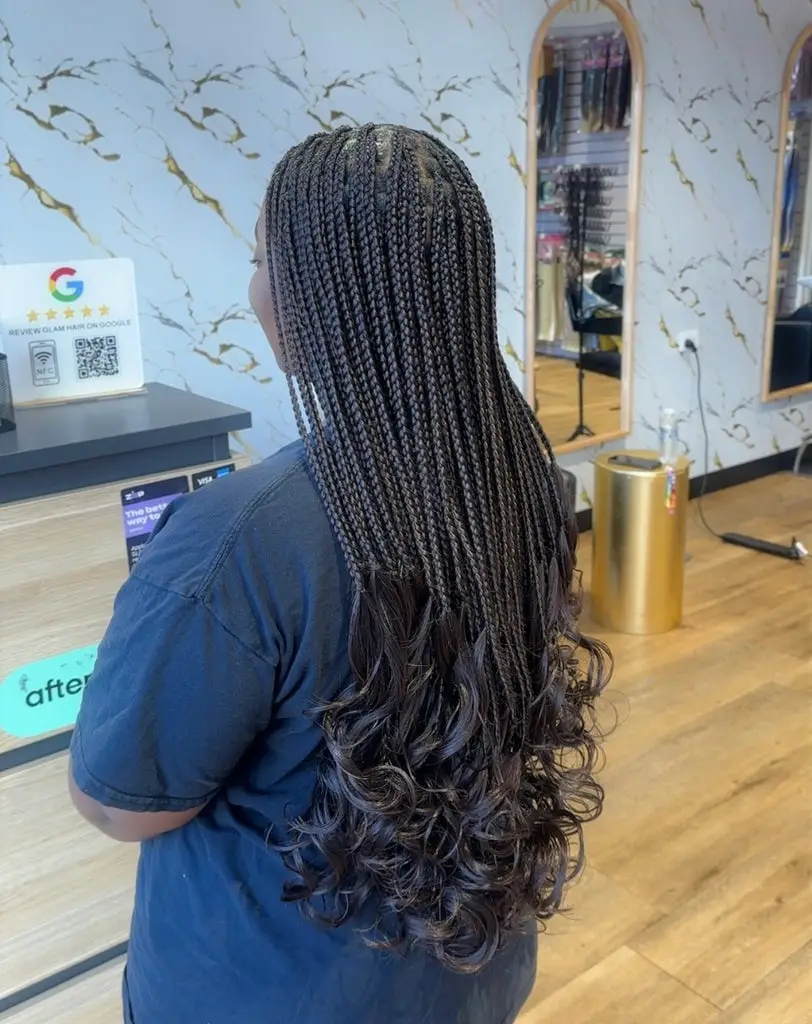
Photo credit: glamhair.com.au
Long braids must end somewhere, and here they end in loose, defined curls. The centered parting keeps the weight balanced on both sides. Thick dark brown braids hold their shape well; the curls at the ends add movement without pulling the braids loose. The catch: each curl needs to be set individually with a curling rod or flexi-rod to get that consistent S-pattern. The mixed textures mean two different maintenance routines for one head of hair.
Thick hair handles this well because the braids stay compact and the curls have enough density to hold. Fine hair tends to show scalp between the braid sections, and the curls may not hold their definition past day two. A silk scarf at night preserves both textures without crushing the curls flat. The trade-off is worth it for movement without losing the braided structure.
Braids in a high ponytail with blonde highlight curls
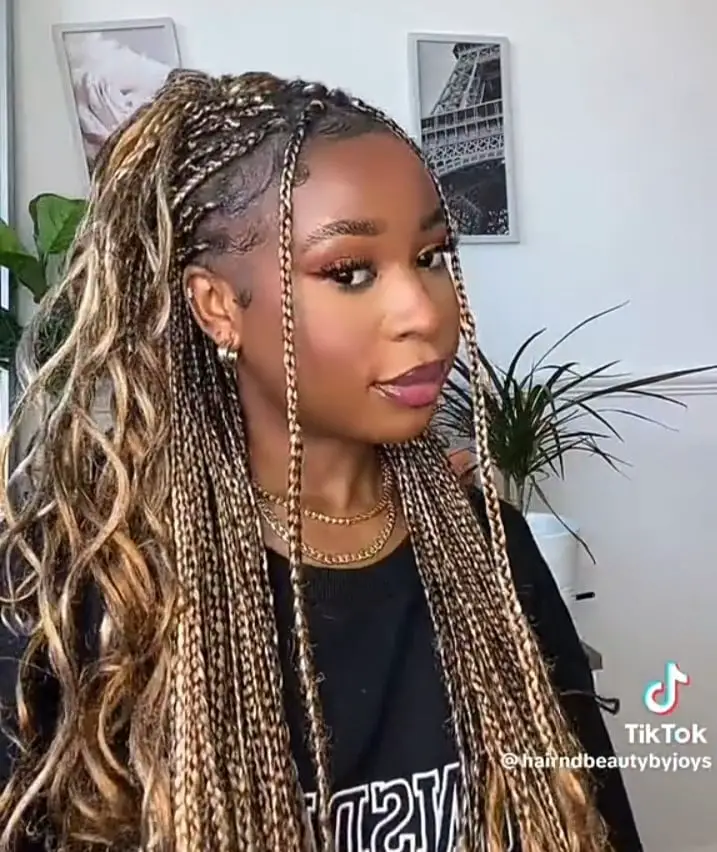
Image credit: therighthairstyles.com
Small braids pulled into a high ponytail let the curly ends fan out like a fringe. The dark brown base with blonde highlights shows most clearly where the braids transition into loose curls. A salon build is necessary for this one. The braiding needs to be consistent from scalp to mid-length, and the ponytail placement must sit high enough to clear the shoulders. Ask your stylist for: small braids in a high ponytail with blonde highlight curls. The hold is strong: a firm elastic at the base and a few pins keep the ponytail from drooping. Face-framing tendrils soften the pulled-back look without compromising the structure.
Dark brown base with honey highlights, braided and curled
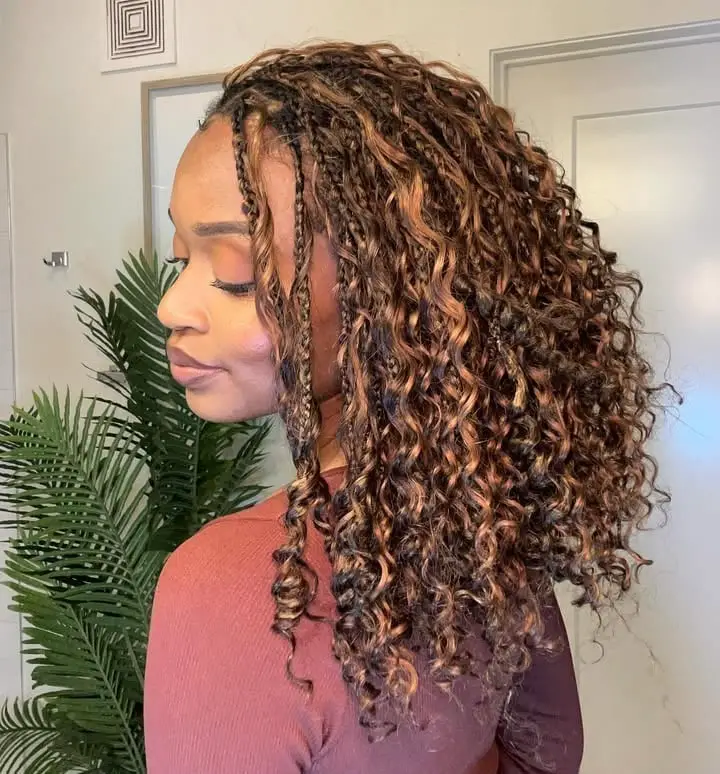
Source: eayonhair.com
Dark brown with honey highlights is a warm, rich combination. The braids run close to the scalp for the first few inches, then release into loose, cascading curls. Thick curly texture is the ideal canvas here. The braids have enough grip to stay tight, and the curls add volume where the braids end. Compared to all-over braids, this style lets the highlights show more because the curls create varied reflections that flat braid sections do not. The honey warmth is distinctly warm and will clash with ash or platinum preferences.
Ash blonde half up half down with a crown braid, close-up take
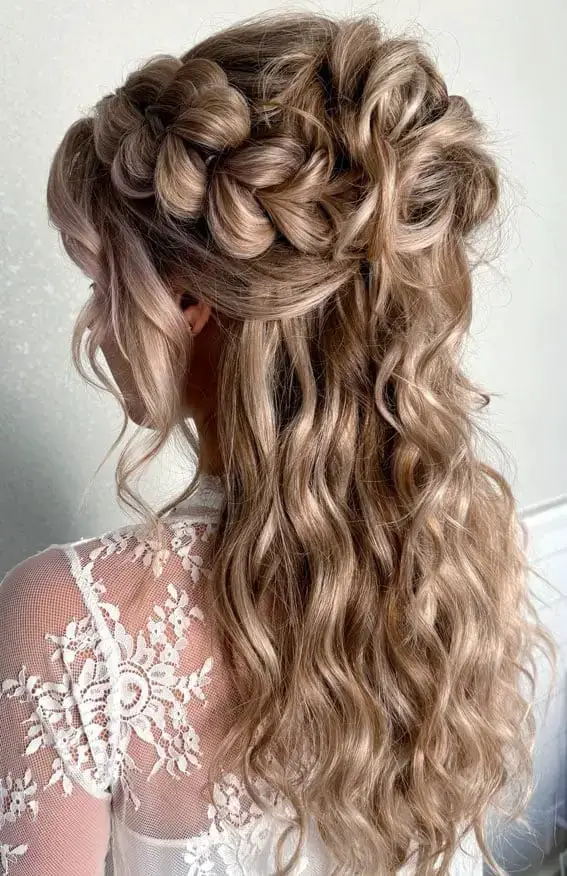
Via fabmood.com
A half-up, half-down style with a thick crown braid requires strategic sectioning. The braid sits like a headband, pulling hair back from the face while the rest falls in loose, wavy curls. Ash blonde with lighter highlights adds dimension to the braid itself. Each twist shows a slightly different tone. Ask your stylist for: ash blonde half up half down with a thick crown braid. The flower-like detail at the braid’s end is not a separate accessory; it is the braid tail tucked and pinned into a rosette. The hold here depends on pins, not product. One real drawback: the braid needs to be tight enough to stay put but not so tight that it pulls at the temples. Fine hair may need a texturizing spray before braiding to keep the strands from sliding apart.
Thick wavy hair holds the crown braid naturally because each strand has enough weight to stay in place. The loose curls below need a curl cream or mousse to hold their shape against the weight of the braid above. This is a salon-leaning style for the braiding technique alone; the pin work for the rosette detail takes practice to get symmetrical.
Blonde hair with pinkish undertones and a crown braid
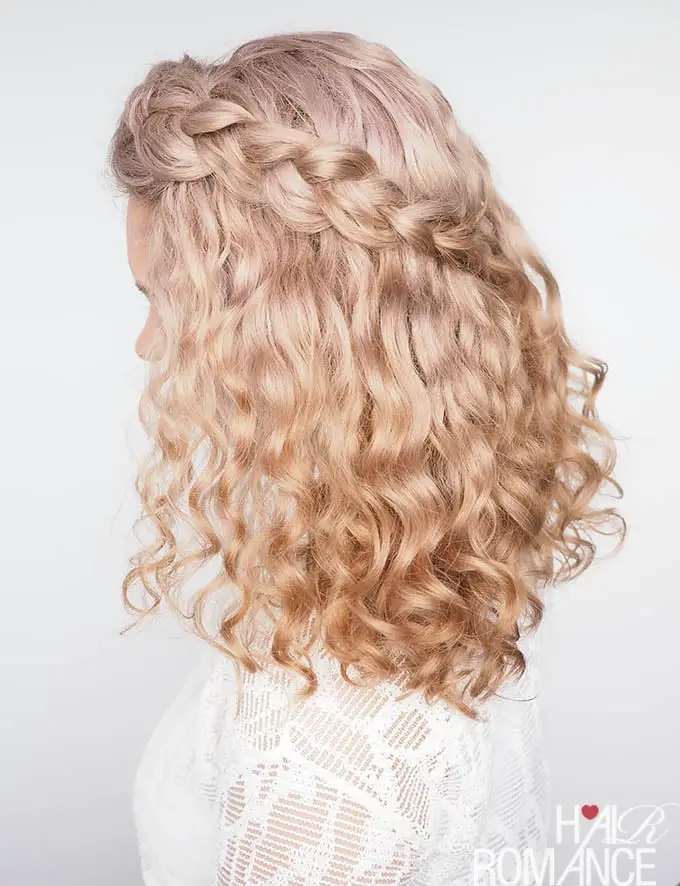
Courtesy of: hairromance.com
Medium to long wavy or curly hair is the starting point for this one. Thick texture helps the crown braid sit visibly across the middle parting without disappearing. Blonde with pinkish undertones and lighter ends requires a toning appointment every four to six weeks to keep the cooler note from fading warm. A single short sentence: the braid wraps from ear to ear.
This color requires commitment. The pinkish undertone needs a color-safe shampoo and cooler water to stay distinct. Very straight hair may not hold the braid structure well. About an hour of styling time in the chair for the braid and the layered curl finish.
Two tones of dark brown and lighter brown braids with curls, middle
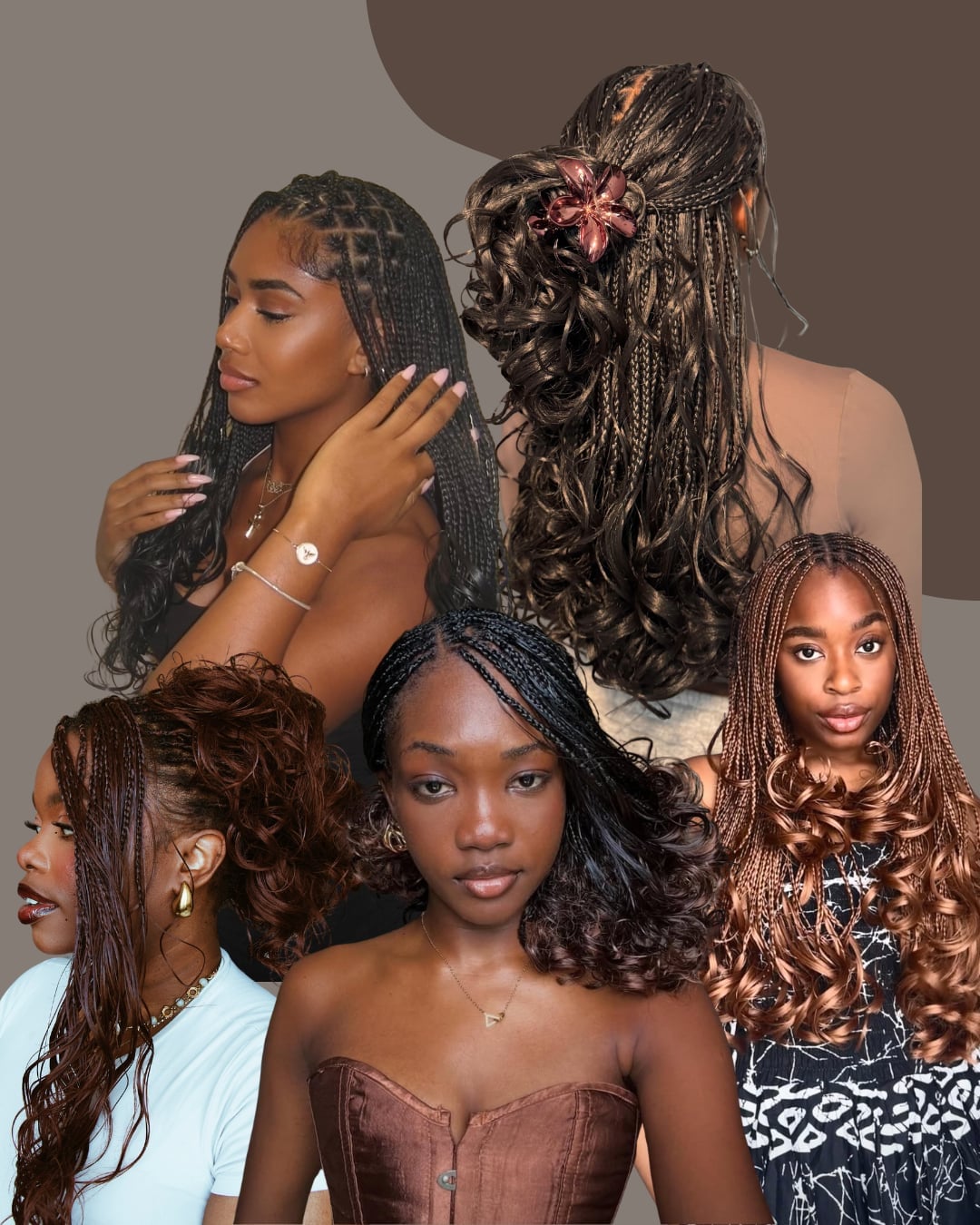
Photo credit: spellmagazine.co.uk
Long, intricate braids with voluminous curly ends work best on hair that reaches at least shoulder length. The dark brown base with subtle lighter brown highlights shows the braid pattern clearly without high contrast. A middle part keeps the weight balanced. This is a salon-only build, the fine braiding and the curl finish at the ends take time to get right. You need thick hair to support the volume at the bottom without the braids looking sparse above.
Thick coily black braids framing the face
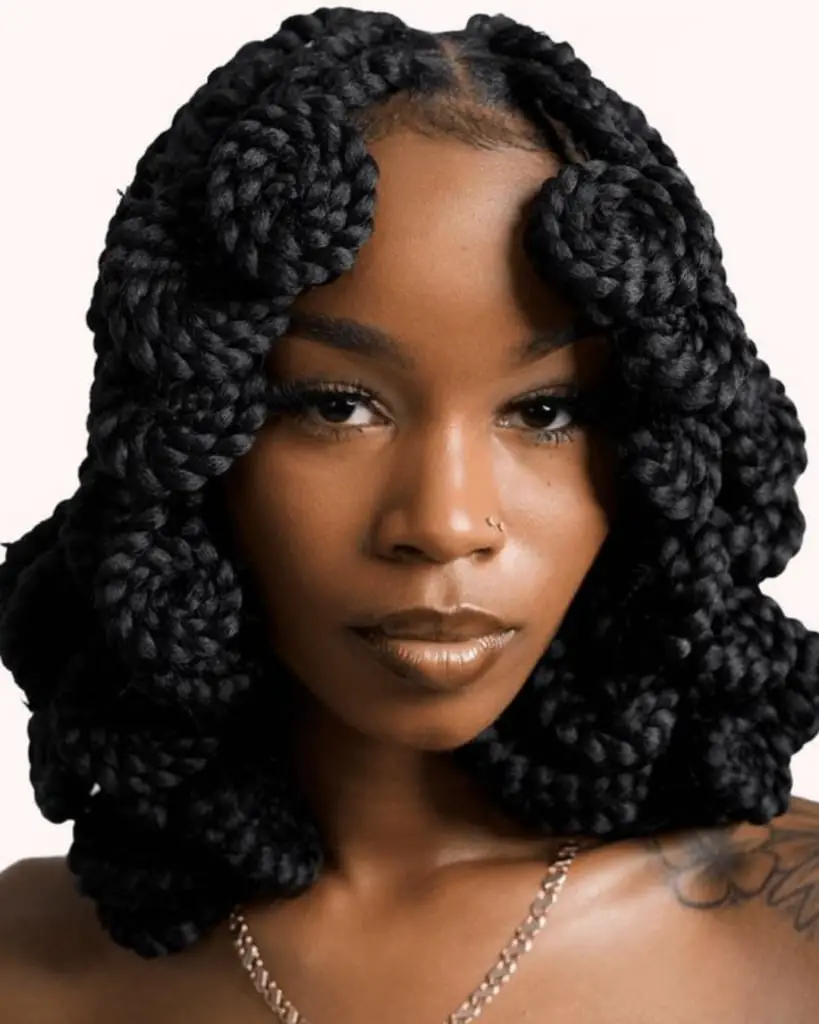
Image credit: zikoko.com
Thick, coily hair of shoulder length or longer can carry the weight of large, coiled sections. The advantage: the volume stays without extra product. The catch: the coils shorten the visible length by several inches, so start longer than you want the final look. Black color keeps the focus on the texture and the face-framing shape. A middle part adds symmetry. Straight braids are easier to refresh, coily ones need a satin bonnet every night to keep the definition from collapsing.
Brown rope twists with blonde highlights and curly ends
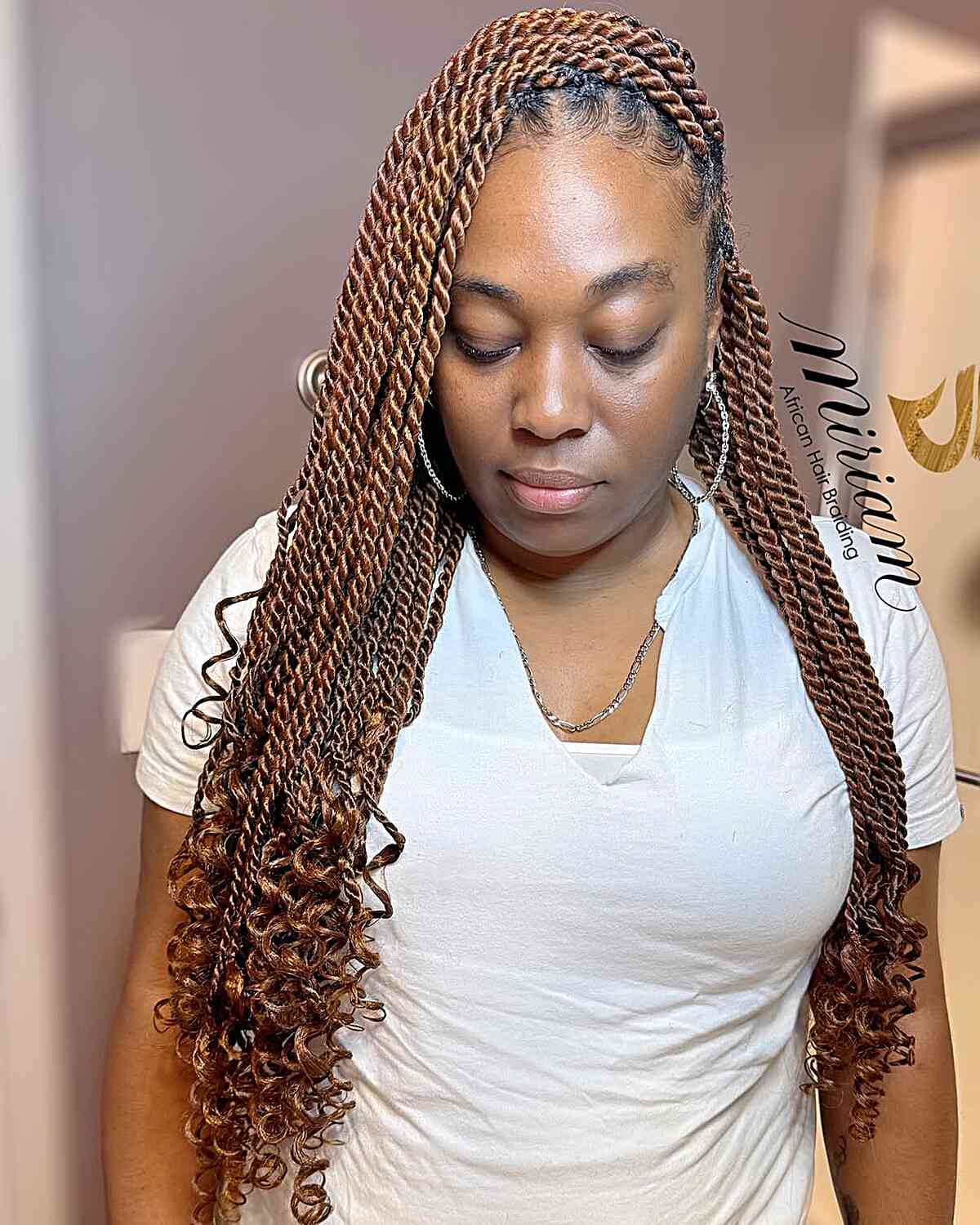
Source: latest-hairstyles.com
Medium brown rope twists with subtle blonde highlights read best on thick, wavy hair that reaches past the collarbone. The side parting lets the highlights catch light on one side while the other side stays deeper in tone. Rope twists hold their shape longer than standard three-strand braids. The twist tension keeps the pattern visible for days. Loose, defined curls at the ends soften the finish. A light finishing spray tames the flyaways that come with the twist technique.
Red base with blonde highlights and a braided crown ponytail
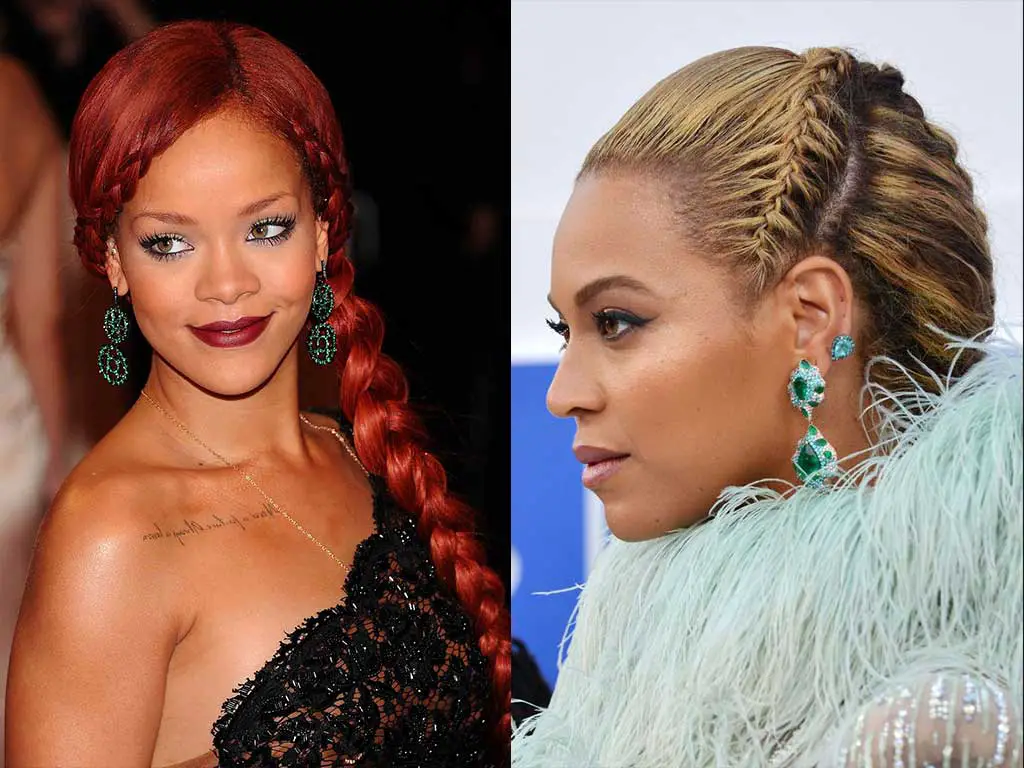
Courtesy of: perfectlocks.com
Medium to long hair that can gather into a high ponytail is the requirement. Thick texture gives the wavy ponytail enough body to balance the tightly braided crown. Red base with blonde highlights creates contrast. The braid looks a separate piece even though it is grown from the same scalp. A strong hair tie and several pins keep the ponytail from pulling the braid loose during the day. The style holds for a full evening if the crown section is tension-braided, not loose. Ask your stylist for: red braided crown ponytail with blonde highlights.
Final Thoughts
You now have thirty ways to let braids and curls share the same head. Pick by what your hair needs today.
- Fine strands: a braided crown adds instant structure.
- Ten minutes in the morning: a high ponytail with curly ends.
- Root shadow growing out: ombre braids hide the line.
- Coily texture: thick braids framed around the face.
Find the combination that feels like your own.
-

 Makeup Trends2 years ago
29 Harley Quinn Makeup Ideas: Iconic Looks for Every Occasion
-

 Hairstyle2 years ago
Round Face Haircuts Ideas 2025: 29 Flattering Styles to Try
-

 Hairstyle2 years ago
25 90s Layered Hair Ideas to Inspire Your 2025 Look
-

 Fashion2 years ago
27 Every Day Spring Outfits Inspiration for 2025
-

 Hairstyle2 years ago
29 Long Layered Haircuts Ideas for 2025
-

 Hairstyle2 years ago
64 Fall Hair Color Trends to Elevate Your Style in 2024
-

 Hairstyle2 years ago
Choppy Bob Haircuts 2025: 29 Stylish Ideas
-

 Hairstyle2 years ago
27 Medium Length Haircut with Layers Ideas for 2025