
Hairstyle
20 Purple Hair Dye Ideas for 2027
Purple Hair Dye 2027: See 20 looks with deep plum lob, vivid purple shoulder length, and purple ombré long hair styles. Save your favorite shades for 2027.

Purple hair dye has moved past the punk phase and into the mainstream, with soft, lived-in shades and face-framing layers replacing the flat, all-over color of a few years ago. The current mood favors curtain bangs and glossy natural texture over poker-straight lengths.
This collection of 20 Purple Hair Dye ideas runs the full spectrum, from low-maintenance dark bases to high-impact pastels, and covers every length from chin-grazing bobs to mid-back waves. Whether your hair is fine, thick, curly, or straight, there’s a shade and technique that fits your routine. If you’ve struggled with visible roots or a color that fades fast, these looks show how to keep purple vibrant longer.
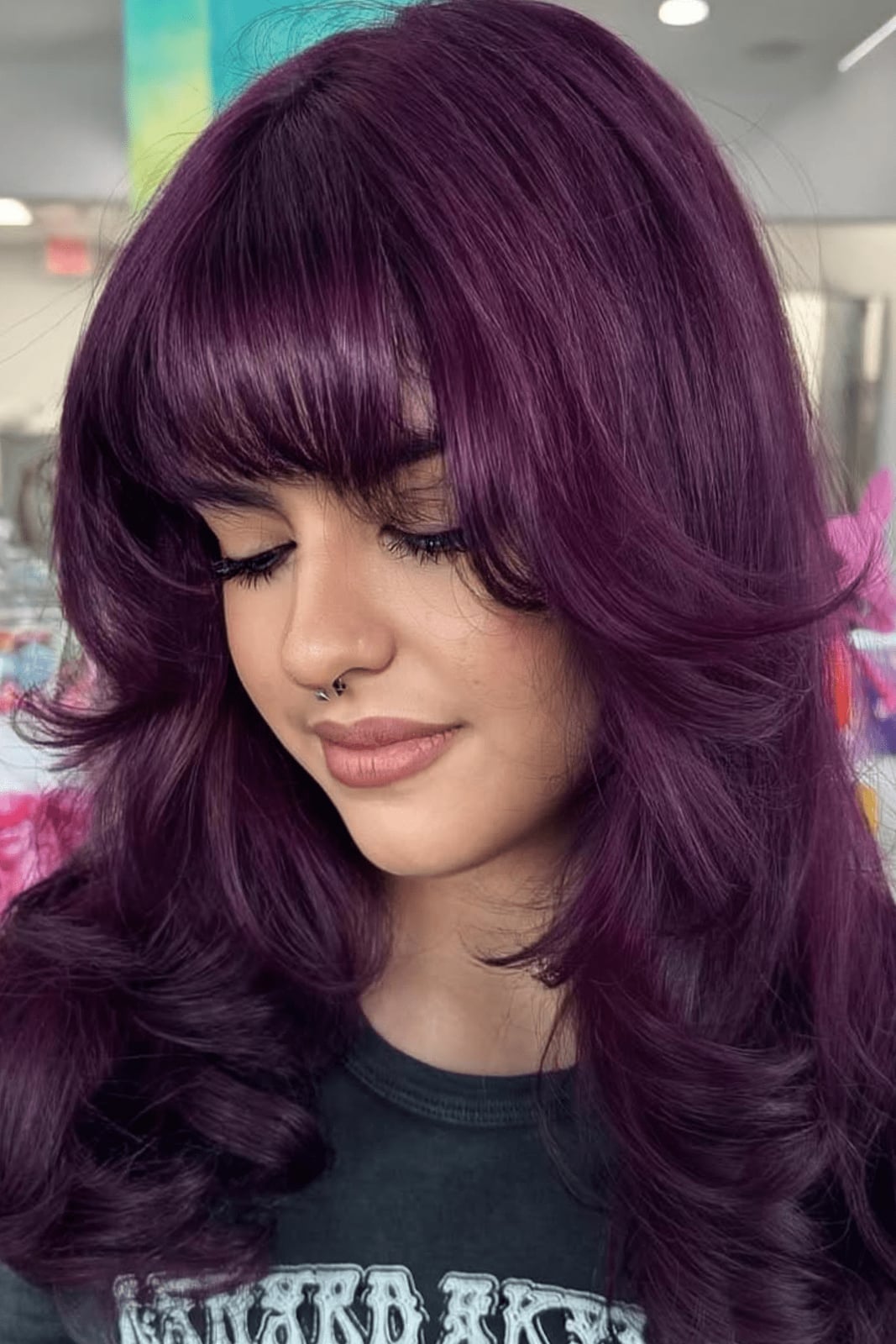
Deep Plum Collarbone Lob With Curtain Bangs
Courtesy of: haiirology.com
This cut uses long layers to keep the collarbone length from falling flat, giving thick, wavy hair room to move without losing shape. The deep plum base with violet undertones reads as brown in low light and purple in the sun, which makes it a practical entry point into the color family. Curtain bangs and a middle part work best on oval and heart-shaped faces, where they soften the hairline without shortening the face visually. Ask your colorist for: collarbone lob with soft layers and curtain bangs in deep plum. Blow-dry the bangs with a round brush for shape, and plan a color-depth touch-up every six to eight weeks.
Mid-Back Length Waves With Purple Highlights
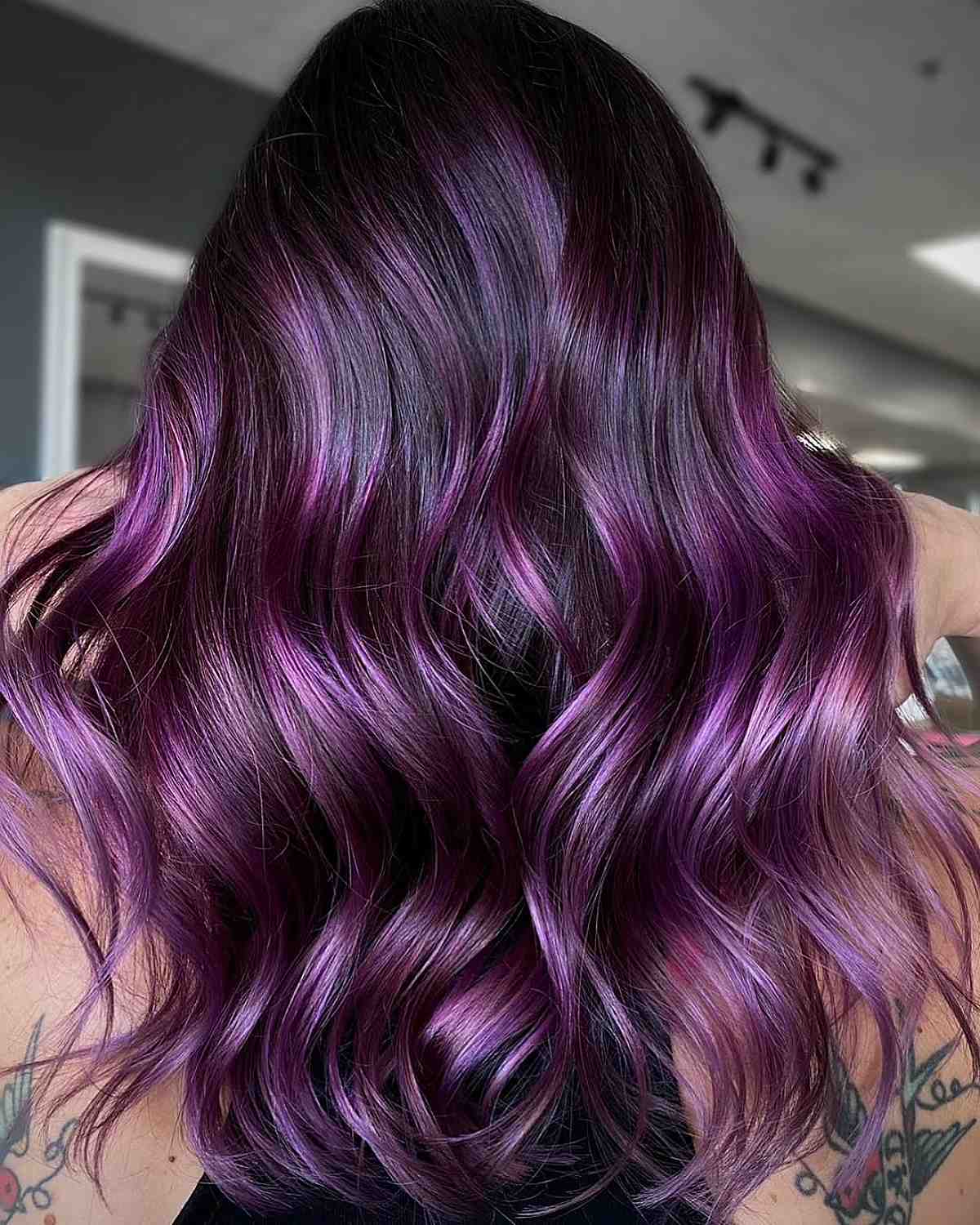
Photo credit: latest-hairstyles.com
The back view here tells the story. A dark base keeps the roots low-maintenance while vibrant purple highlights and balayage add dimension from the mid-lengths down. The technique paints the color freehand onto sections, so the transition is soft. This approach suits thick, wavy hair that can show off the dark base and the lighter pieces.
Ask your colorist for: mid-back length with a dark base and purple balayage highlights. To refresh the waves, apply a texturizing spray to damp hair and scrunch. The color will need a refresh appointment every eight to ten weeks, depending on how often you wash.
Shoulder Length Deep Purple Curls
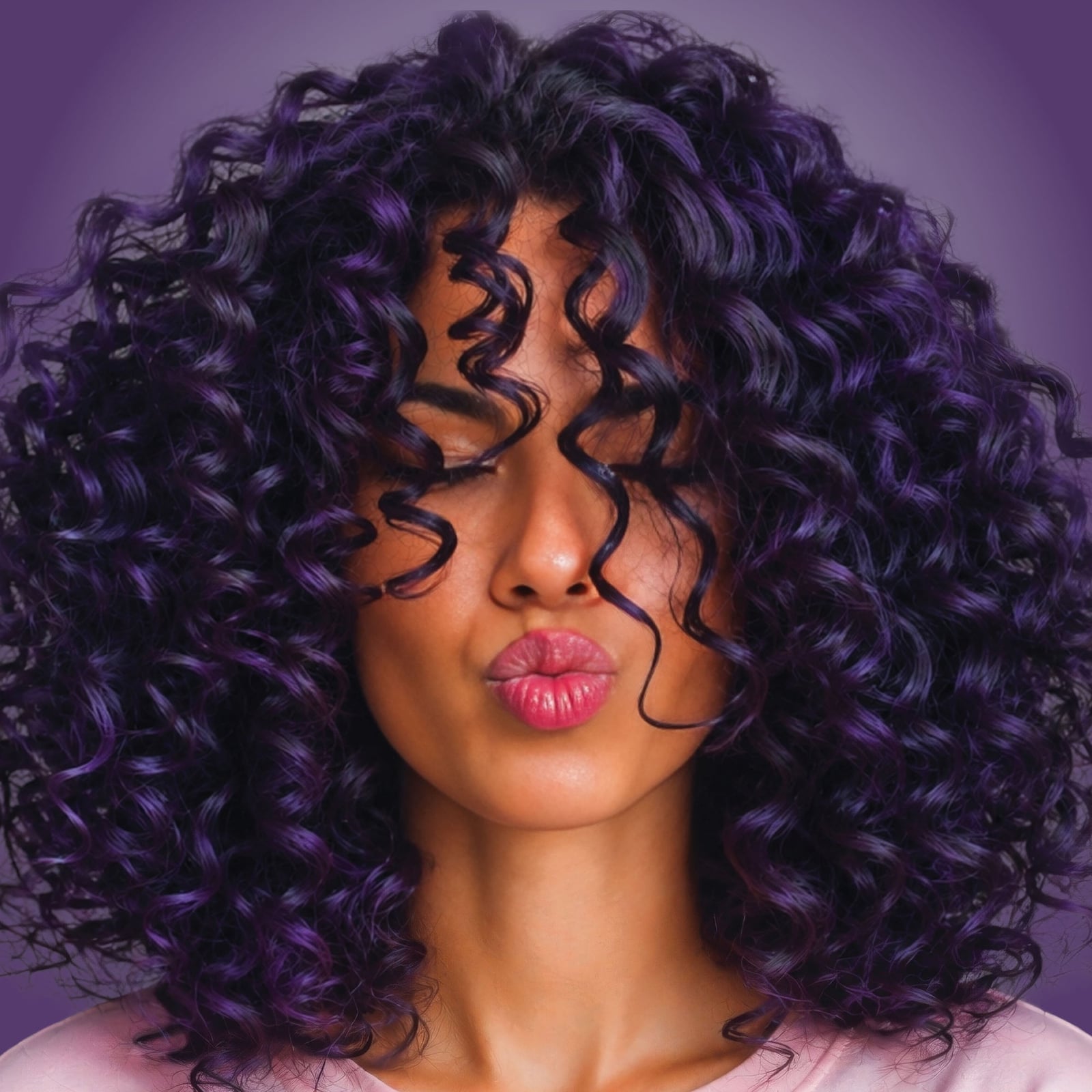
Image credit: splathaircolor.com
A uniform deep purple on naturally curly hair is harder to achieve than it looks. The cut is shoulder-length with layers that let the curls spring up without getting too heavy, but the thick texture means the color can grab unevenly if the stylist does not section carefully. It is not a shade that fades gracefully: dark purple on curls tends to wash out to a dull mauve rather than a pastel. Ask your colorist for: shoulder length curly cut in deep dark purple. The honest trade-off is that rich saturation requires a high-maintenance base lift, and root regrowth shows faster on curly hair.
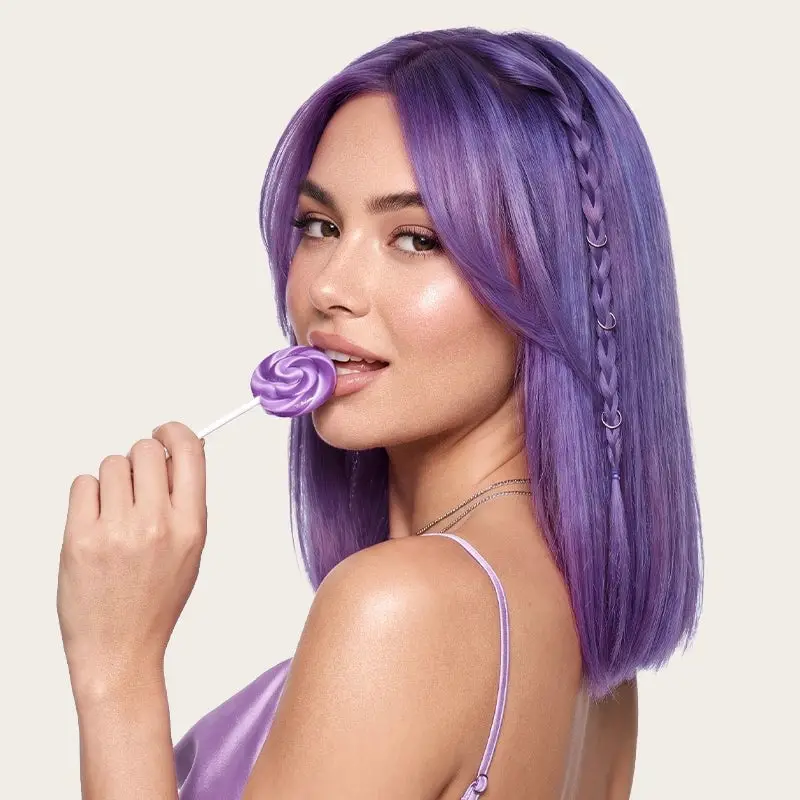
Vivid Purple Shoulder Length With Curtain Bangs
Source: moehair.com
What makes a vivid purple look flat? One solid shade can do that. The fix is asking for lighter lavender tones blended through the midsection. This shoulder-length cut uses soft layers and curtain bangs to break up the color, which creates the look of movement even when the hair is still. Fine to medium density hair works best here, since the lighter pieces add depth that thicker hair would naturally have. A salon application is the safer bet for this tone. Ask your colorist for: shoulder length layered cut with curtain bangs in vivid purple. You can maintain the bangs yourself between trims, but the color base is not a kitchen-sink project.
Long Layered Hair With Purple Ombré
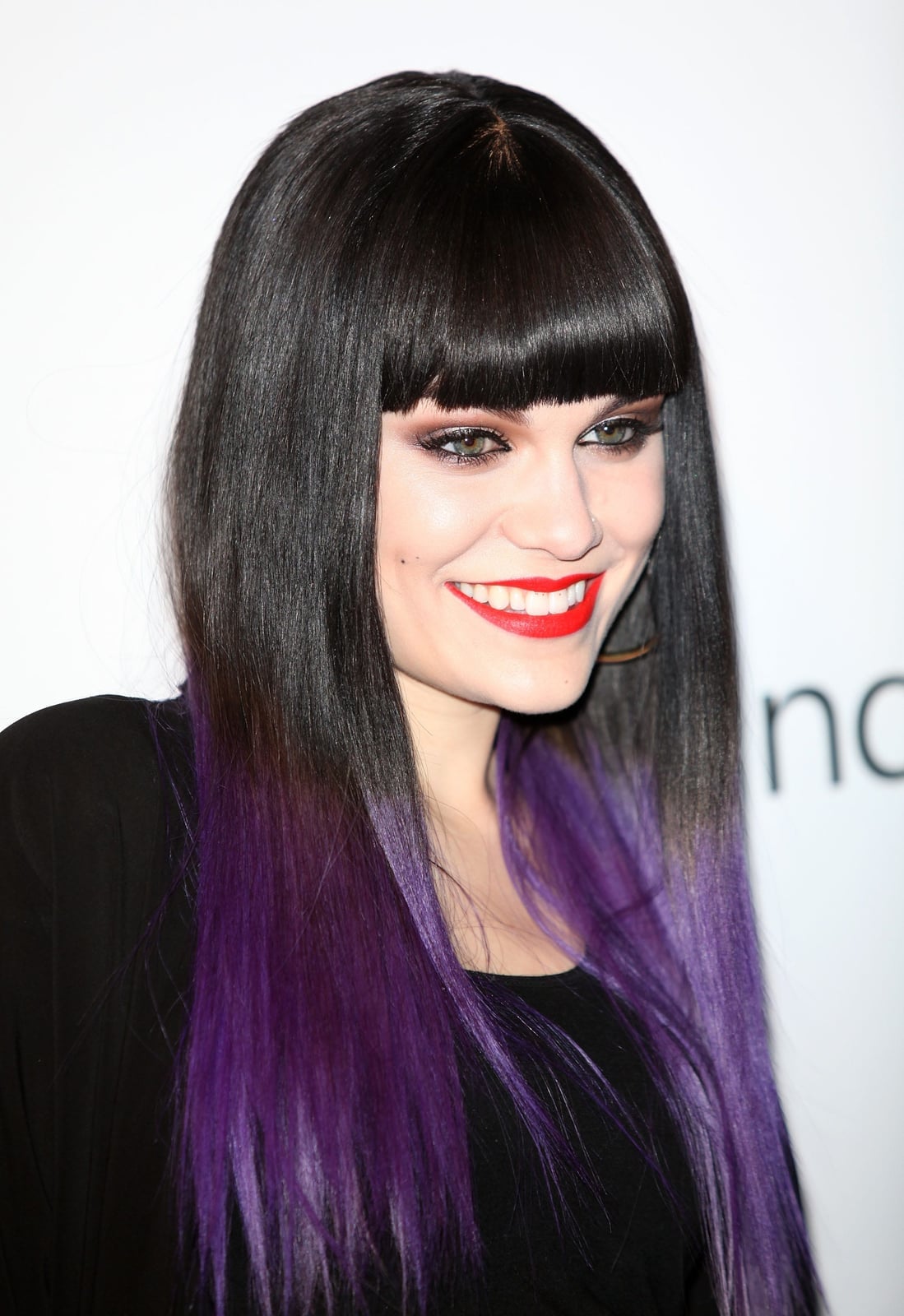
Via elle.com
The blunt bangs here do the structural work. They anchor a long, layered cut that could otherwise feel heavy, especially on straight, thick hair. The color transitions from a dark base at the roots to a vibrant purple ombré at the ends, which means the grow-out line is deliberately soft. No urgent root touch-ups, just a color refresh every ten to twelve weeks when the ombré starts to look less deliberate.
Ask your stylist for: long layered cut with blunt bangs and purple ombré. Blunt bangs need a trim every three to four weeks to stay sharp, and a smoothing serum keeps the straight texture from looking frizzy. The ombré placement means you can let the length grow without losing the design.
Glossy Mid-Back Deep Purple
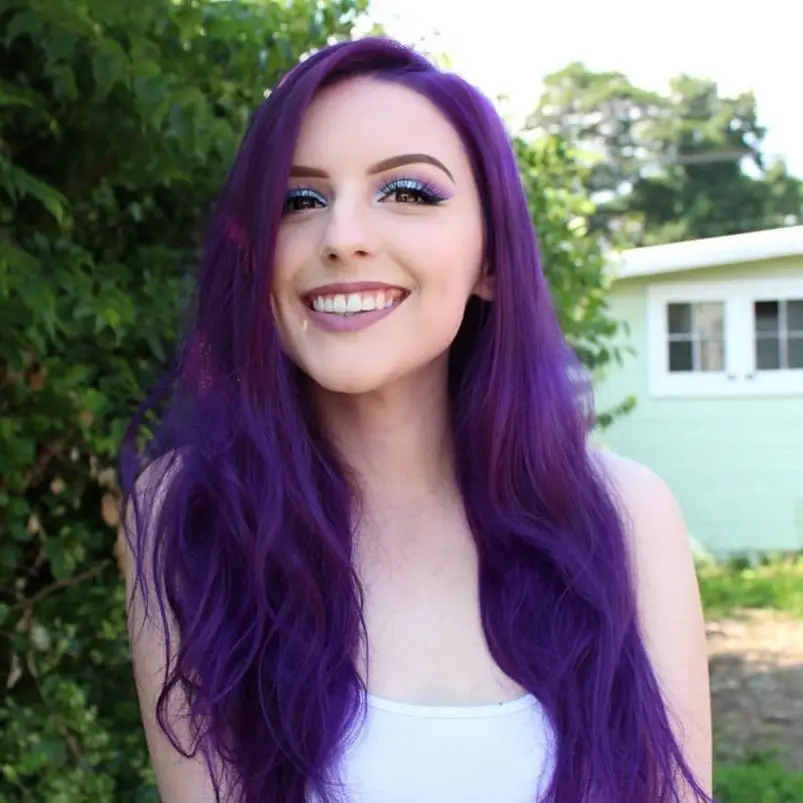
Courtesy of: punky.com
If you are torn between a dramatic color shift and something you can wear to the office without fielding questions, this deep purple sits neatly in between. The mid-back length with long layers keeps the focus on the saturated, glossy color, and the loose waves give the thickness somewhere to move. The shade looks almost black in low light, then announces itself fully in the sun, which makes it a natural fit for the transition from late summer into fall.
The middle part and the lack of bangs keep the style clean, so the color does the talking. Ask your colorist for: mid-back length, deep purple, styled in loose waves. This works best on thick, wavy hair that can carry the weight of a uniform, rich tone without looking flat. A glossing spray adds the shine you see here, and plan on a color touch-up every six to eight weeks to keep the depth from drifting toward a duller violet.
Shaggy Collarbone With Full Bangs In Lavender
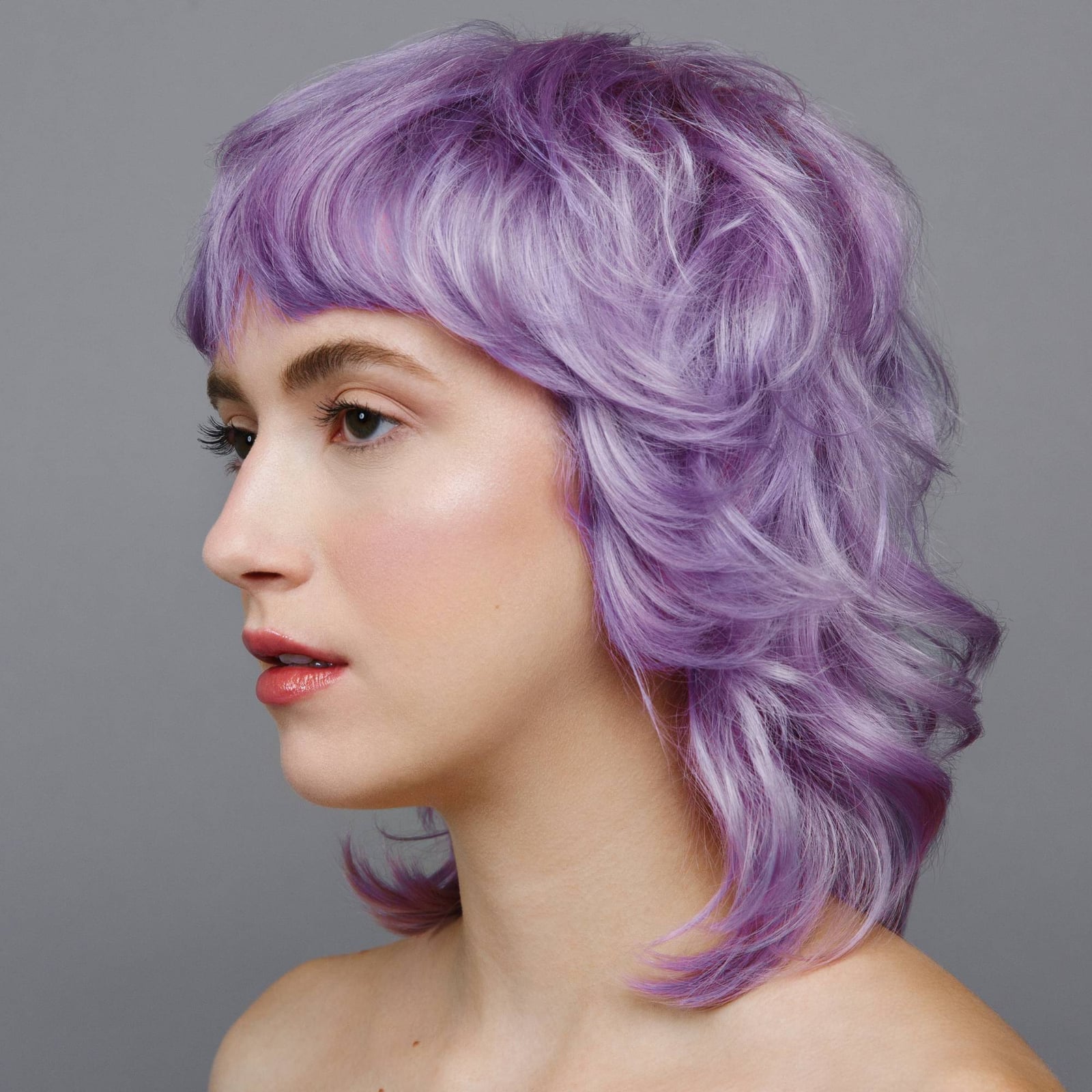
Photo credit: gooddyeyoung.com
Wondering whether lavender is worth the upkeep on fine hair? This shaggy collarbone cut with full bangs is the argument for trying it, provided you understand the trade-off. The lavender base with white highlights gives fine, wavy texture a soft dimensionality that a solid pastel can’t, because the lighter pieces reflect light and keep the hair from reading as one flat wash of color. The full bangs, cut to sit at the brow, balance a longer face shape by shortening the visual length. Ask your stylist for: shaggy collarbone cut with full bangs in lavender. A texturizing paste worked through the layers keeps the shag shape defined, and the bangs need a trim every four to six weeks. The white highlights will need more frequent toning than the lavender, so budget for that appointment.
Vibrant Purple Mid-Back Blowout
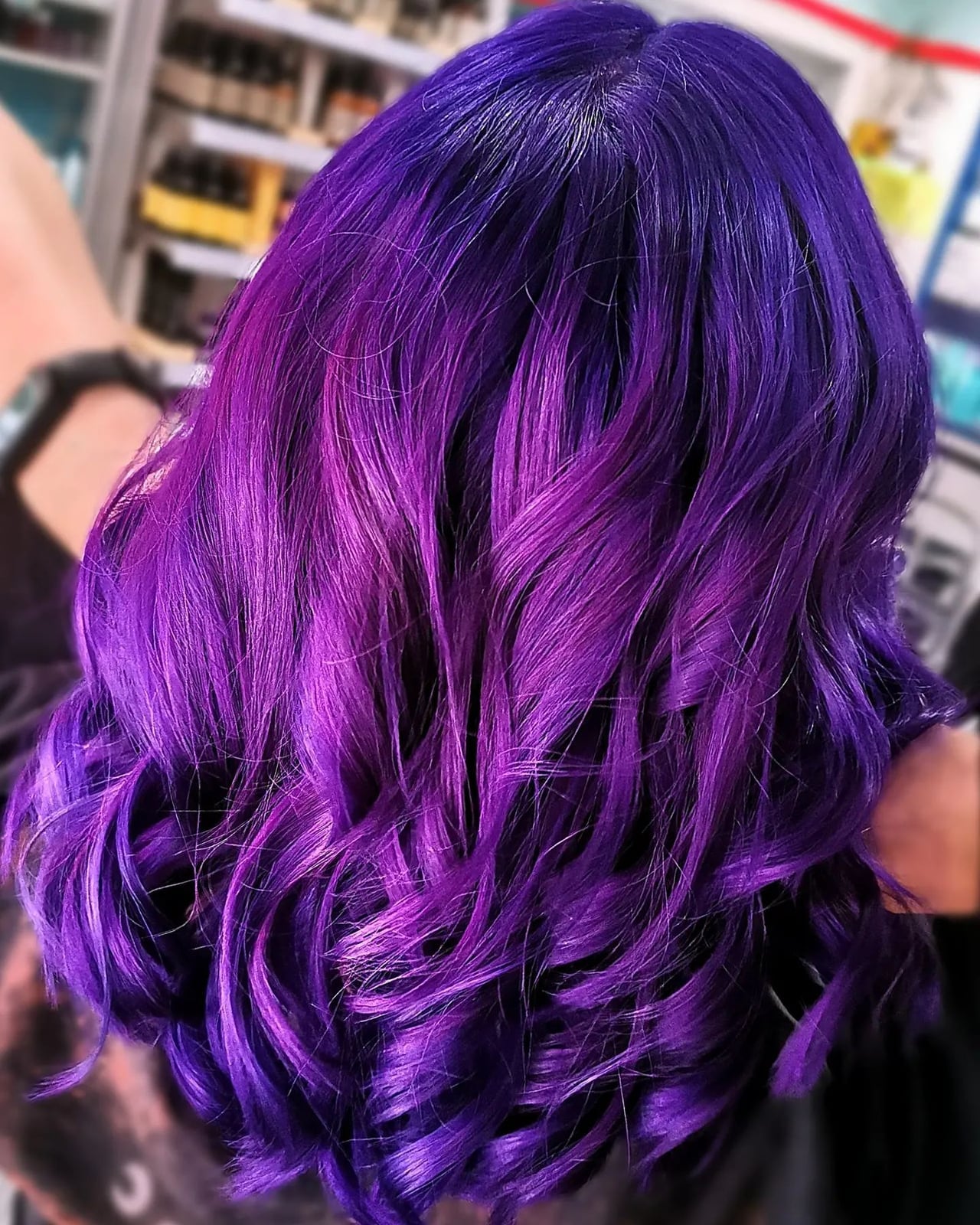
Image credit: manicpanic.com
The intensity of this vibrant purple comes from a fully saturated application, not from highlights or dimension. Getting a uniform tone like this requires lifting the hair to a very pale blonde first, then applying the purple in a single, thorough pass so there are no patchy spots or darker sections at the root. The lighter purple undertones are the result of light hitting the waves, not a separate technique, which is why the blowout matters here.
The voluminous, wavy blowout with a middle part shows off the color’s depth from every angle, and the thick, mid-back length gives the waves enough weight to hold their shape. Ask your colorist for: mid-back length, vibrant uniform purple, styled in a wavy blowout. This color works best on thick, wavy hair and requires a color refresh every six to eight weeks. A volumizing mousse at the roots keeps the blowout from falling flat.
Dark Base With Purple Balayage Ends
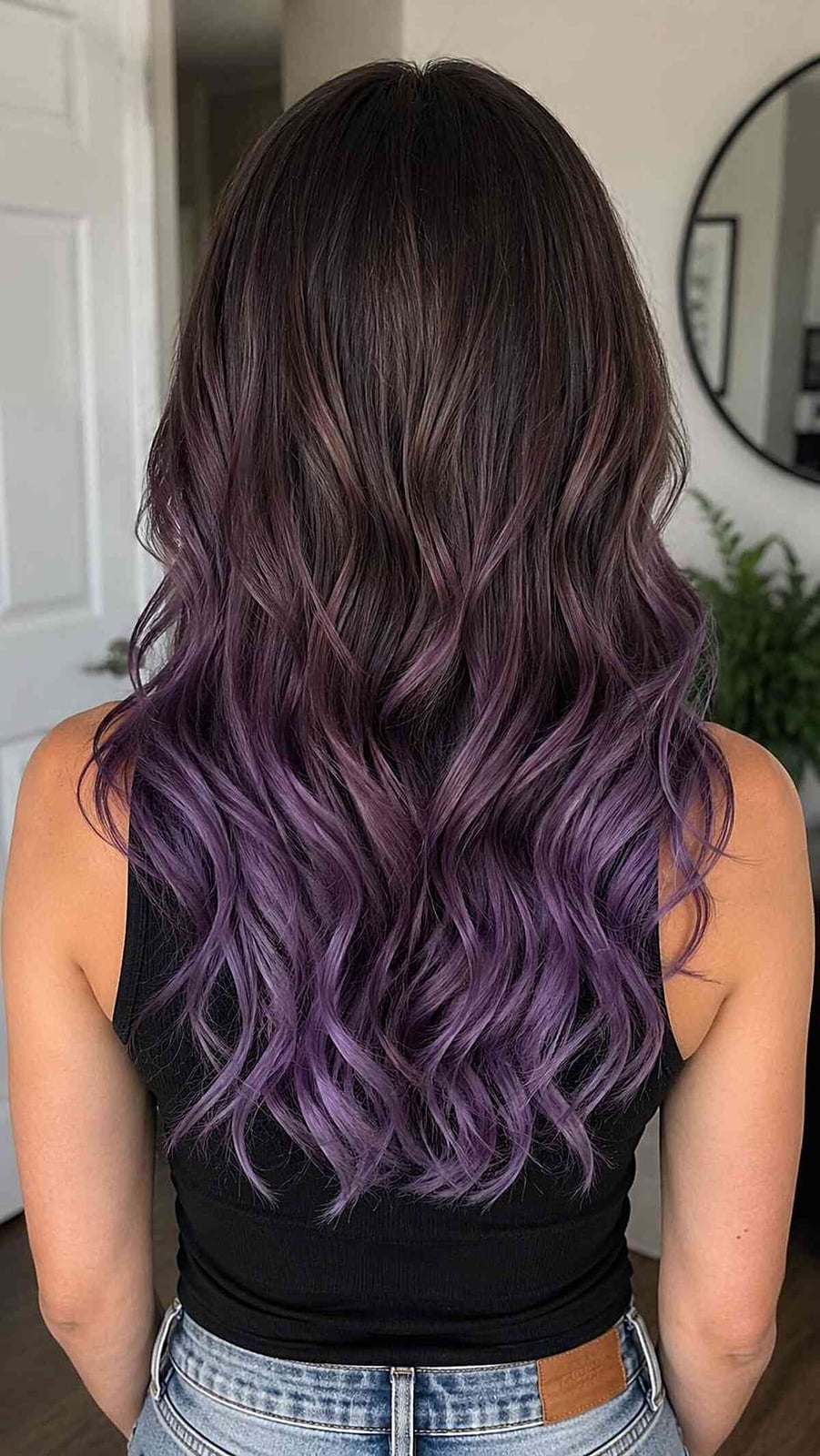
Source: latest-hairstyles.com
The genius of this color is that it doesn’t ask you to commit to purple from the root down. The dark brown base stays intact, and the purple balayage is painted onto the mid-lengths and ends, so the transition looks lived-in rather than freshly done. That makes it a genuinely low-maintenance option for thick, wavy hair at mid-back length, because the dark root means you’re not chasing a grow-out line every few weeks.
The loose waves and long layers let the balayage show its gradient, with the purple intensifying toward the ends. Ask your colorist for: mid-back length, dark brown base with purple balayage on ends. This suits anyone who wants color without the upkeep of a full bleach and tone, and it works especially well on wavy texture that can carry the dimension. The balayage blend only needs a refresh every ten to twelve weeks, which is about as low-maintenance as purple gets.
Shoulder Length Purple And Pink Blend
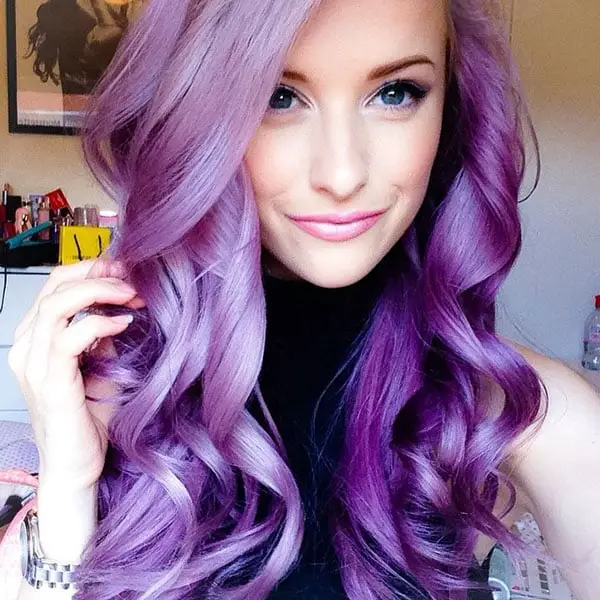
Source: hairromance.com
A shoulder-length cut with layers and curtain bangs blends a vibrant purple and pink base with lighter lilac highlights woven through the loose waves, so the two colors shift depending on how the hair falls. The middle part and the curtain bangs frame the face without committing to a heavy fringe.
Ask your colorist for: shoulder length layered cut with curtain bangs, purple and pink blend. The key is specifying that you want the colors blended, not sectioned, and that the lilac highlights should be fine enough to read as dimension. This suits medium-density, wavy hair that can hold the loose wave pattern. A color-safe dry shampoo between washes will help the blend stay fresh, though expect the pink to fade toward lilac faster than the purple.
Rich Purple Mid-Back Air Dried
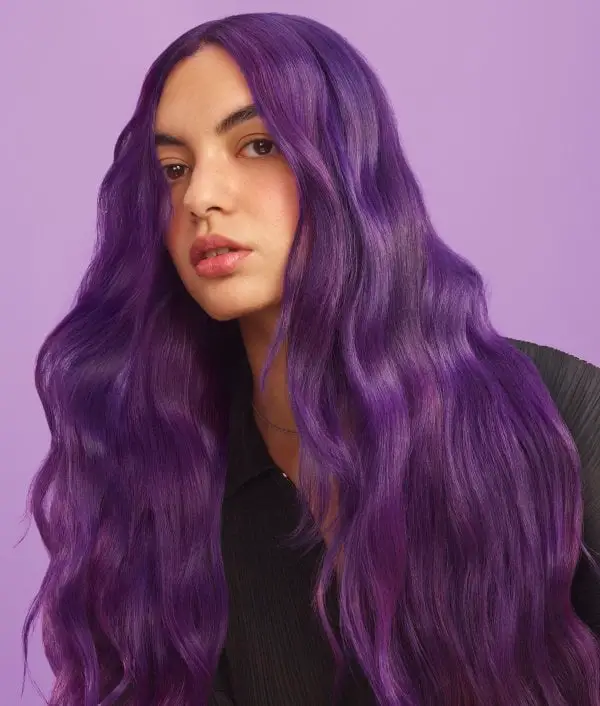
Via bleachlondon.com
The design works because the color is uniform and deep, which makes air-dried texture look deliberate. This is thick, wavy hair at mid-back length with a middle part and no bangs. It suits those with similar density who want a low-effort routine. Ask your colorist for: mid-back length, rich uniform purple. Apply a leave-in conditioner to encourage the wave pattern, then do not touch it. The color refresh lands around every six to eight weeks, but the grow-out is soft because the shade is dark enough to blend with natural roots for a while.
Vivid Magenta-Purple Mid-Back Waves
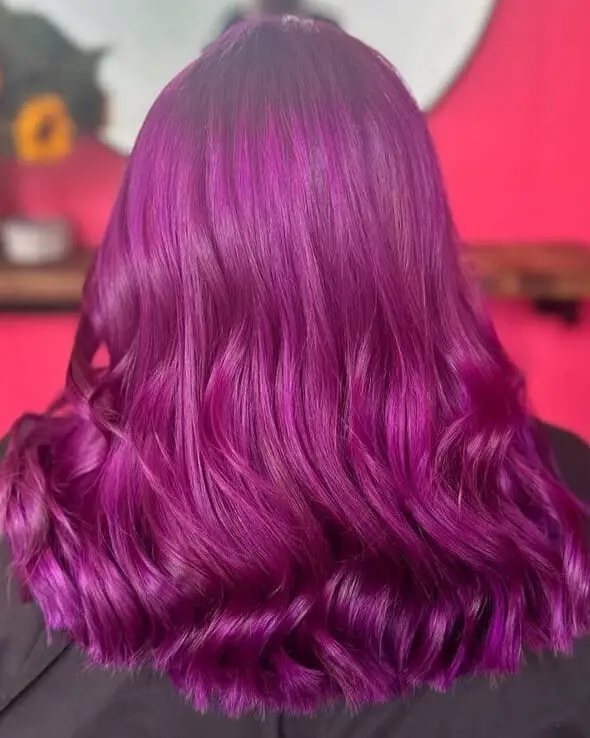
Courtesy of: directionshair.com
Set this against a deeper plum and the difference is immediate. The vivid magenta-purple sits on thick, wavy hair at mid-back length with a middle part and no bangs. It works for anyone ready for a high-impact color that does not rely on styling. Ask your colorist for: mid-back length, vivid magenta-purple. Vivid shades fade faster than muted ones. A color-safe dry shampoo helps extend the time between washes, and a salon toning refresh every four to six weeks keeps the intensity up. This is not the set-it-and-forget-it option.
Collarbone Lob With Vivid Purple Highlights
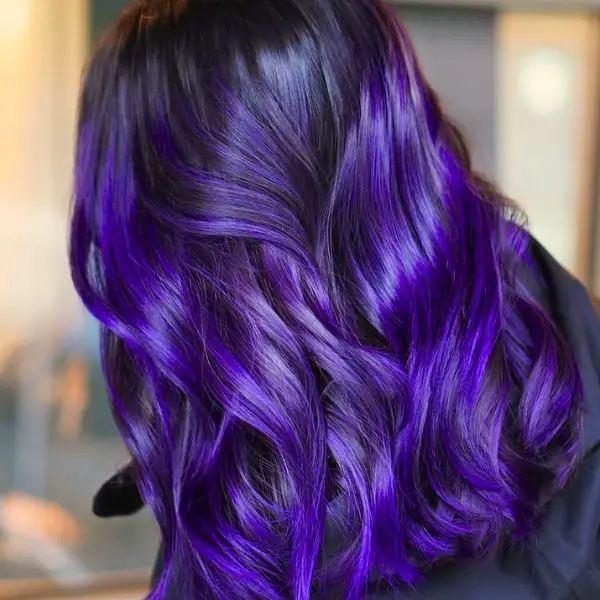
Photo credit: evilhair.com
The collarbone lob here carries a dark base with vivid purple highlights concentrated toward the ends. The middle part and loose waves let the color peek through without overwhelming the shape. This is a salon technique, not a box-dye situation. Ask your colorist for: collarbone lob, dark base, vivid purple highlights. The highlights require lifting the dark base first, which adds about an hour to the appointment. DIY is not realistic here unless you are experienced with foils.
Mid-Back With Subtle Purple Lowlights
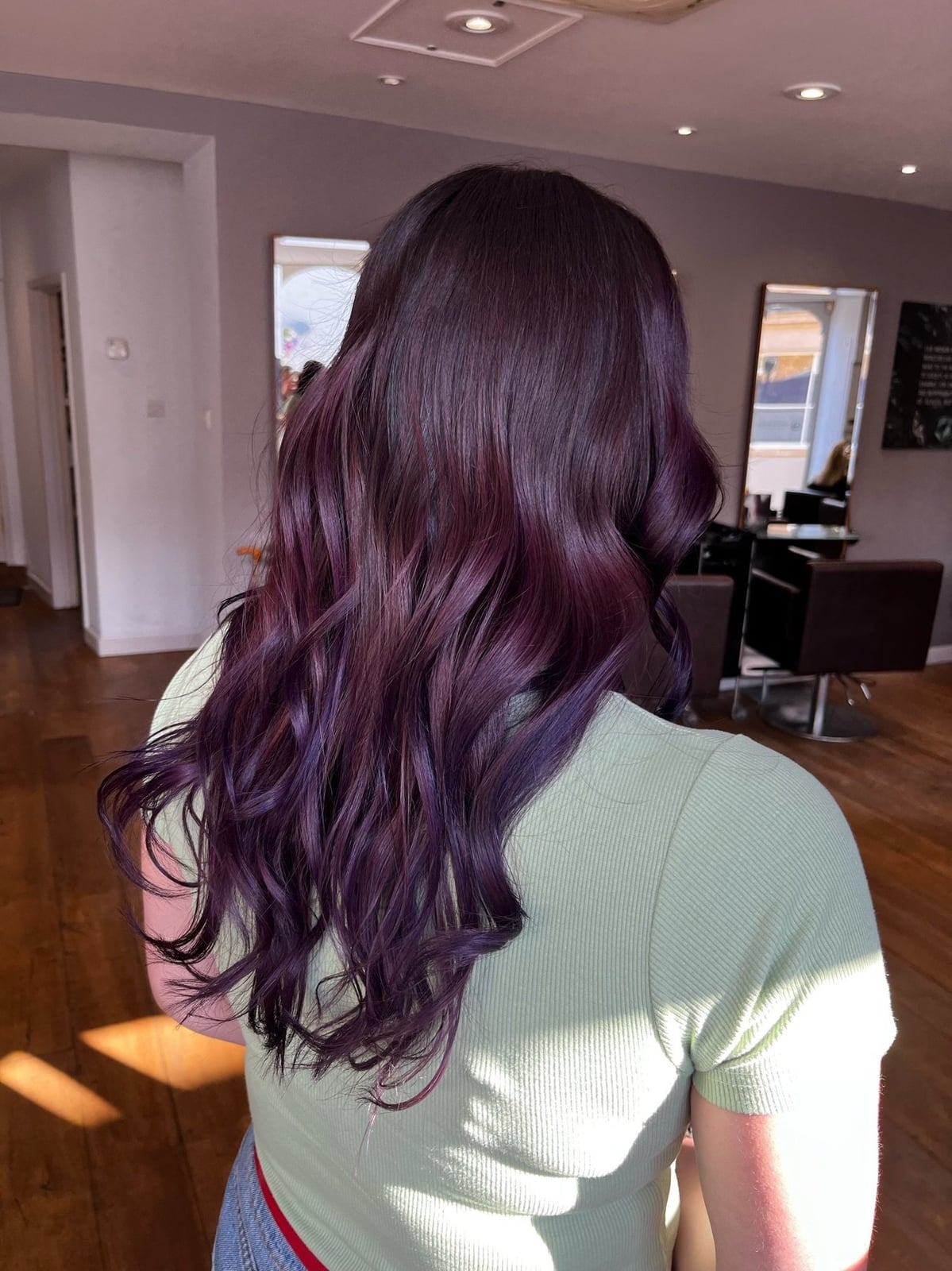
Image credit: karenchristensen.co.uk
This is for people who want purple without the commitment. The dark base is punctuated by subtle purple lowlights on mid-back length hair with loose waves and a middle part. The muted effect means it does not scream for attention. Ask your colorist for: mid-back length, dark base, subtle purple lowlights. It genuinely flatters medium-density wavy hair because the lowlights add depth without bulk. Those with very fine or thin hair should pass. The lowlights fade gradually, so a refresh is only needed every ten to twelve weeks.
Collarbone Medium Purple With Curtain Bangs
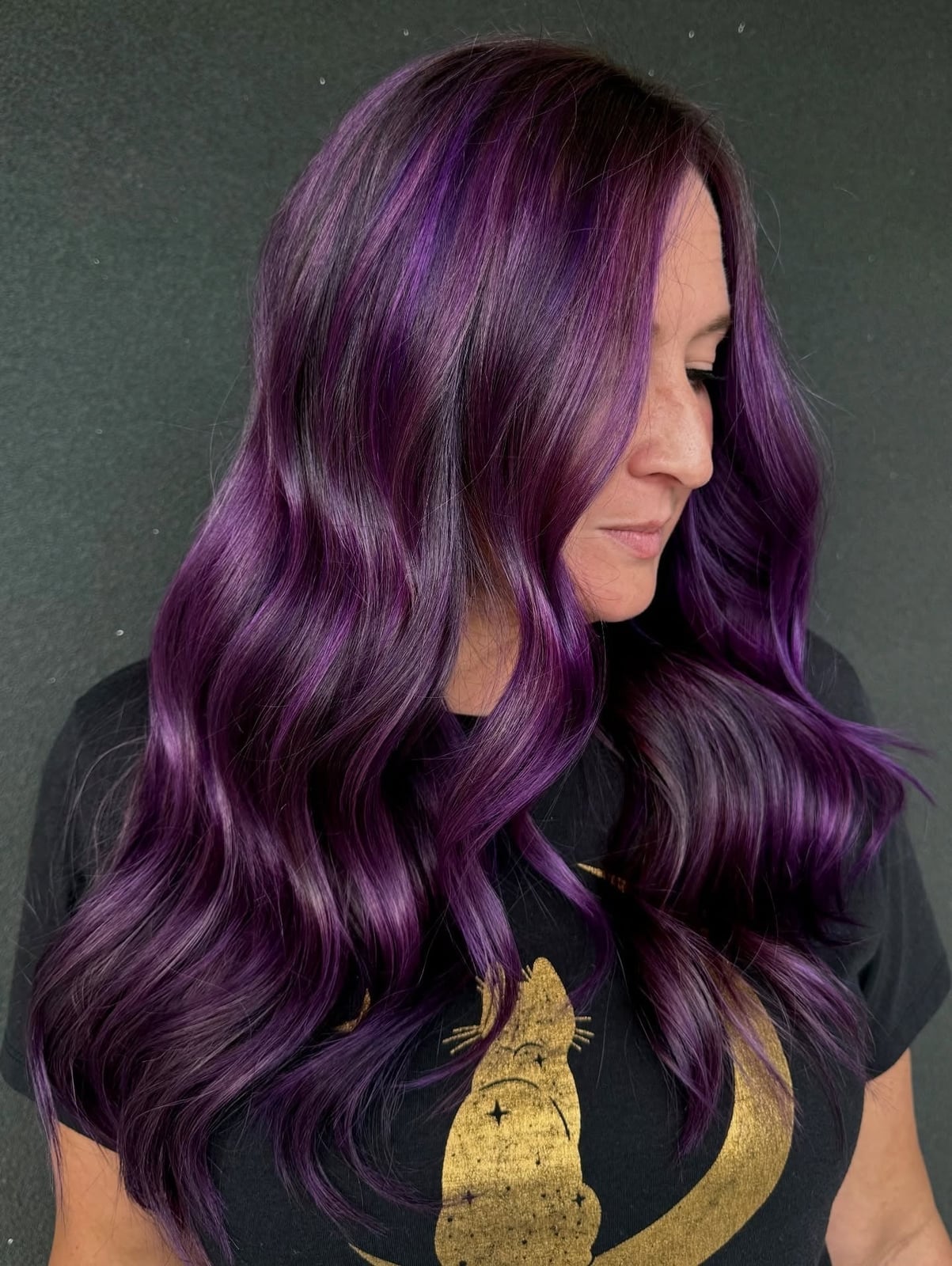
Source: creativebooster.net
The medium purple shade sits on collarbone length hair with curtain bangs and a middle part. The darker roots create a lived-in grow-out that does not demand immediate touch-ups. Ask your colorist for: collarbone length, curtain bangs, medium purple. Blow-dry the bangs with a round brush to keep the sweep soft. Expect to book a color refresh every six to eight weeks, though the roots buy you a week or two of grace if the shade is close to your natural level.
Collarbone Bob Pink And Lavender Balayage
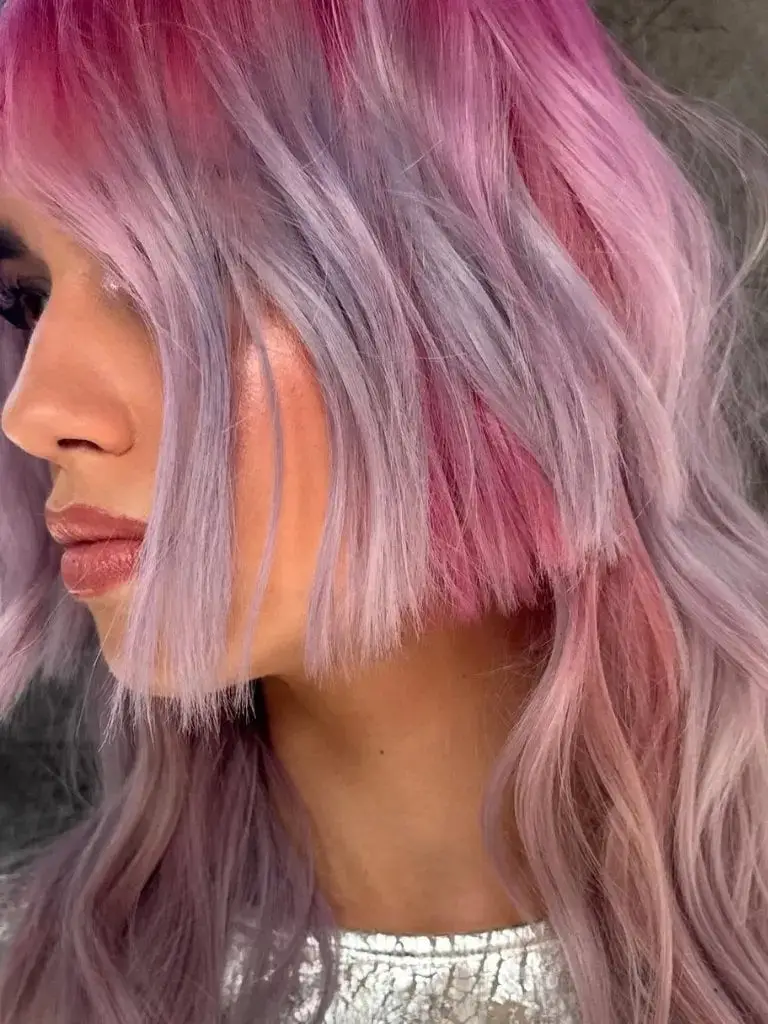
Via wella.com
This is a bob, but it does not read as short. The collarbone length and curtain bangs give it enough movement to pass for a grown-out lob, while the pink and lavender balayage adds a seasonal lift that works for spring garden parties or summer evenings. Ask your colorist for: collarbone bob with curtain bangs in pink and lavender balayage. Medium density, wavy hair holds the blowout shape best, and the bob flatters most face shapes. A color-safe mousse helps define the waves without weighing them down. Expect a balayage refresh every 8 to 10 weeks to keep the tones separate.
Shoulder Length Two-Tone Purple And Pink
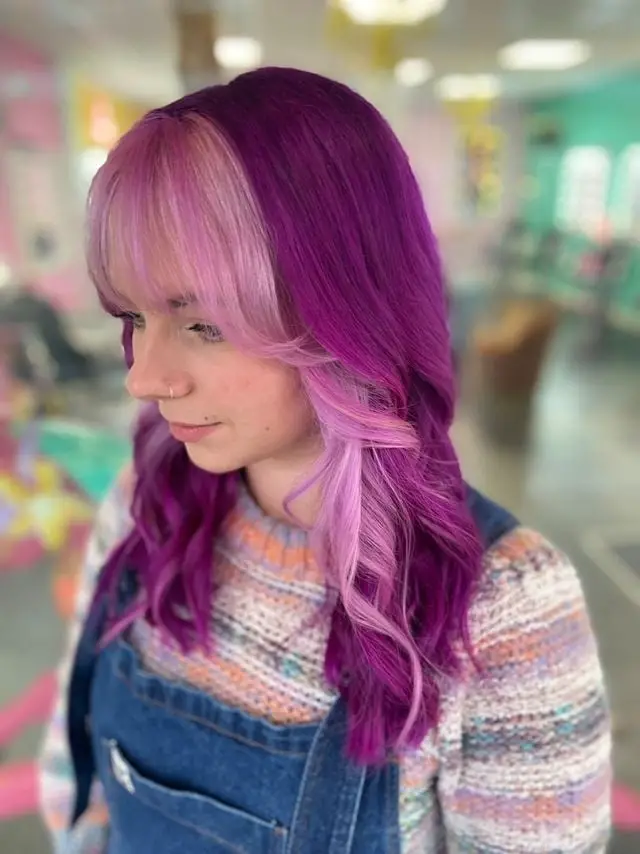
Courtesy of: bluebanana.com
How do you ask for two distinct colors that do not blend into a muddy middle? The answer is semi-permanent dye applied as a clear section: purple on one side, pink on the other, with the middle part doing the hard work of keeping them apart. Ask your colorist for: shoulder length layered cut with curtain bangs in two-tone purple and pink. This is a salon-only job, partly because the sections need to be foiled separately and partly because the semi-permanent formula has a short window before it grabs. For the DIY crowd, the same effect is possible at home with two bowls and a steady hand, but the prep takes longer than the actual application.
- Bring a reference photo showing the exact part line.
- Confirm the pink is applied to the side you part away from.
- Expect the dye to fade noticeably after six washes.
Chin Length Bob Vivid Purple And Hot Pink
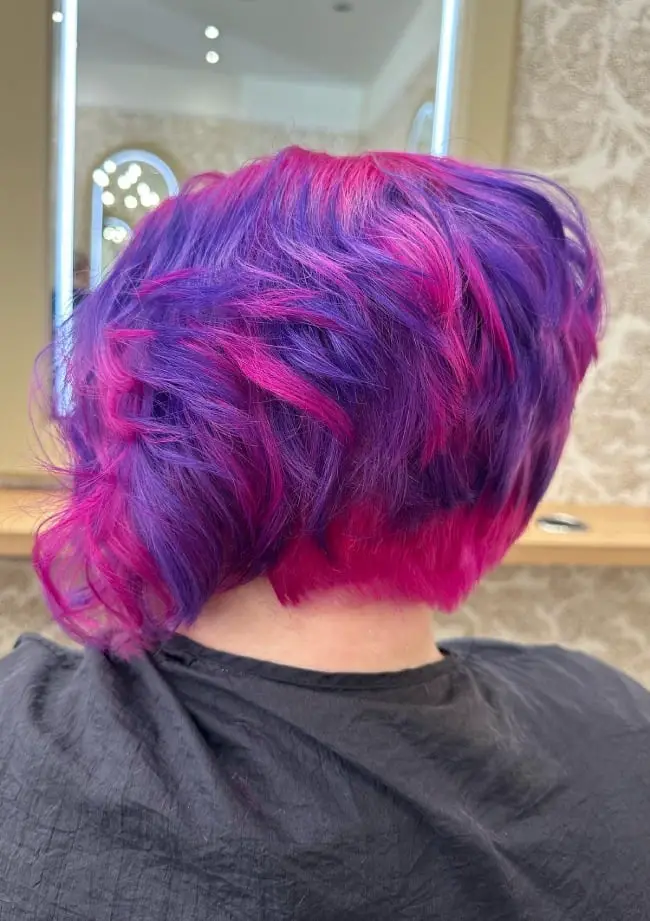
Photo credit: fabmood.com
The back view shows the color blocking as a clean divide between vivid purple and hot pink, with no soft fade to blur the line. The chin length and middle part keep the two blocks symmetrical. Ask your colorist for: chin length bob in vivid purple and hot pink color blocking. Medium density, wavy hair holds the shape without extra product. The grow-out is the main consideration. Color blocking does not fade gracefully. Every new inch of root throws off the balance, and the blocks need a full re-section to stay crisp. Skip this if you trim less often than every six weeks.
Shoulder Length Vivid Purple With Highlights
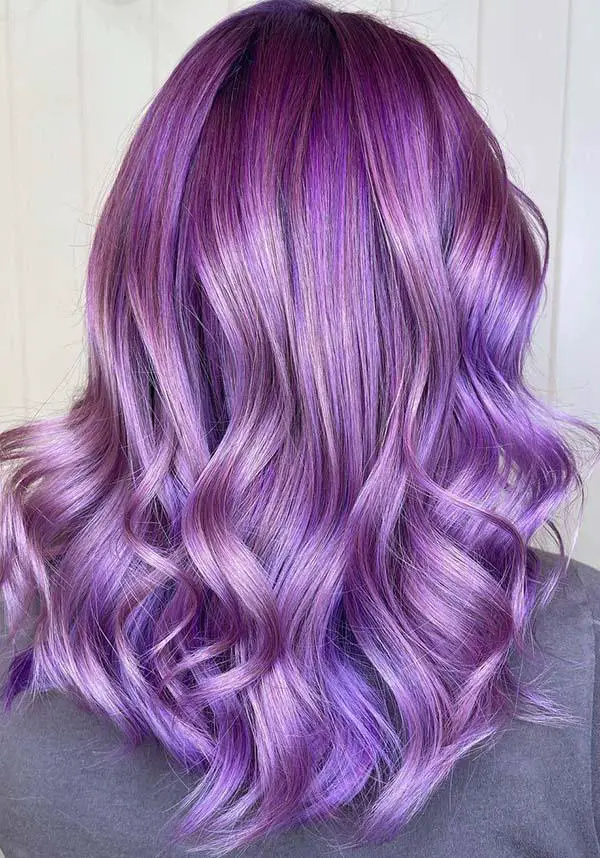
Image credit: beserk.com.au
The base is a saturated vivid purple, and the lighter purple highlights are woven through the layers, not painted on top. That means the color has dimension even when the hair is still. Ask your colorist for: shoulder length layered cut with vivid purple base and lighter highlights. The technique works because the highlights sit on the same tonal family, so there is no brass risk. Medium density, wavy hair benefits from the layers, which stop the waves from turning into a solid block. A glossing serum adds shine without darkening the lighter pieces. The color needs a refresh every 6 to 8 weeks to maintain the contrast.
For everyday wear, the vivid purple base hides fading better than pastels do. The lighter highlights will soften first, which looks like a natural fade for a few weeks.
Mid-Length Pastel Lavender With Pink
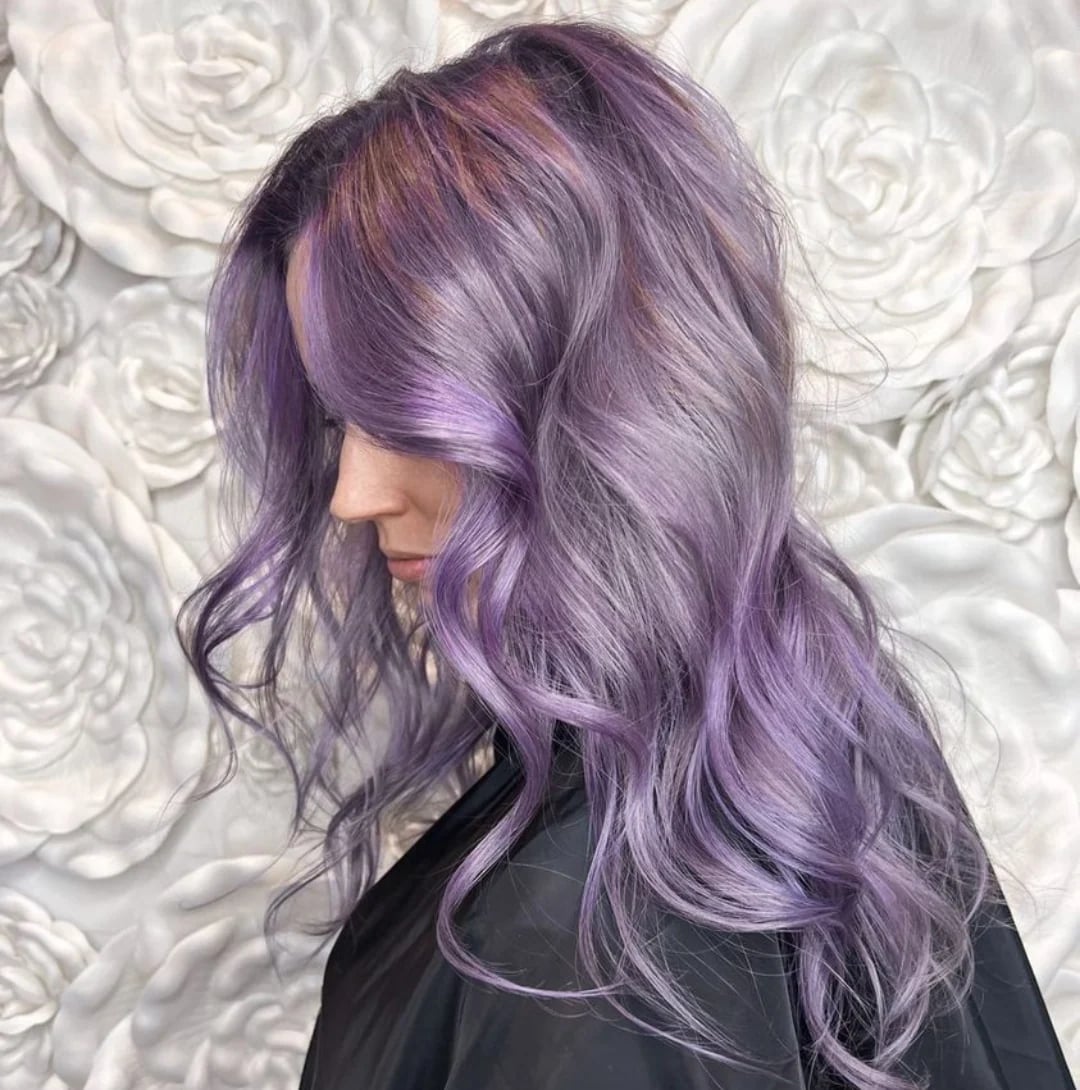
Via crazycolor.co.uk
Pastel lavender with pink undertones is a low-contrast color, so it needs a cut with movement to stay interesting. The subtle layers and side-swept bangs do exactly that, breaking up the solid tone without adding bulk. Ask your colorist for: medium length layered cut with side-swept bangs in pastel lavender and pink. Fine, wavy hair is the ideal canvas here. The pastel formula deposits enough color to read as lavender but does not weigh fine strands down the way a saturated dye can. The side-swept bangs soften square and round face shapes by breaking the horizontal line. A color-depositing conditioner every second wash keeps the pastel from shifting toward silver. Trim every 6 to 8 weeks to keep the layers visible.
Final Thoughts
For bold, all-over purple, your base needs to be lightened to an even canvas. If you’re after subtle tones or highlights, keep a darker base to stretch time between touch-ups.
- Wash with cool water and sulfate-free shampoo to preserve color.
- Use color-depositing conditioner weekly to maintain depth.
- Schedule salon toning every 6-8 weeks for upkeep.
- Minimize heat styling to prevent fade and damage.
Embrace the power of purple for a truly unique look.
Hairstyle
20 Korean Haircuts 2027 with Sleek Chin Bobs
Korean Haircuts 2027 feature 20 looks from sleek chin bobs to blunt cuts with fringe. Discover fresh styles perfect for updating your look this year.
Korean haircuts have carved out a niche for their clean lines, soft textures, and face-flattering bangs. The current wave moves away from poker-straight flatness toward glossy, natural-looking movement, with curtain bangs and face-framing layers leading the charge.
Here are 20 Korean Haircuts that range from sharp, low-maintenance bobs to longer, layered styles that need a bit more styling time. Whether your hair is fine and tends to fall flat, or thick and needs weight removed, you will find a cut that suits your texture, face shape, and daily routine. From blunt lines to wispy fringes, these ideas cover the spectrum.
Chin Length Bob With Curtain Bangs
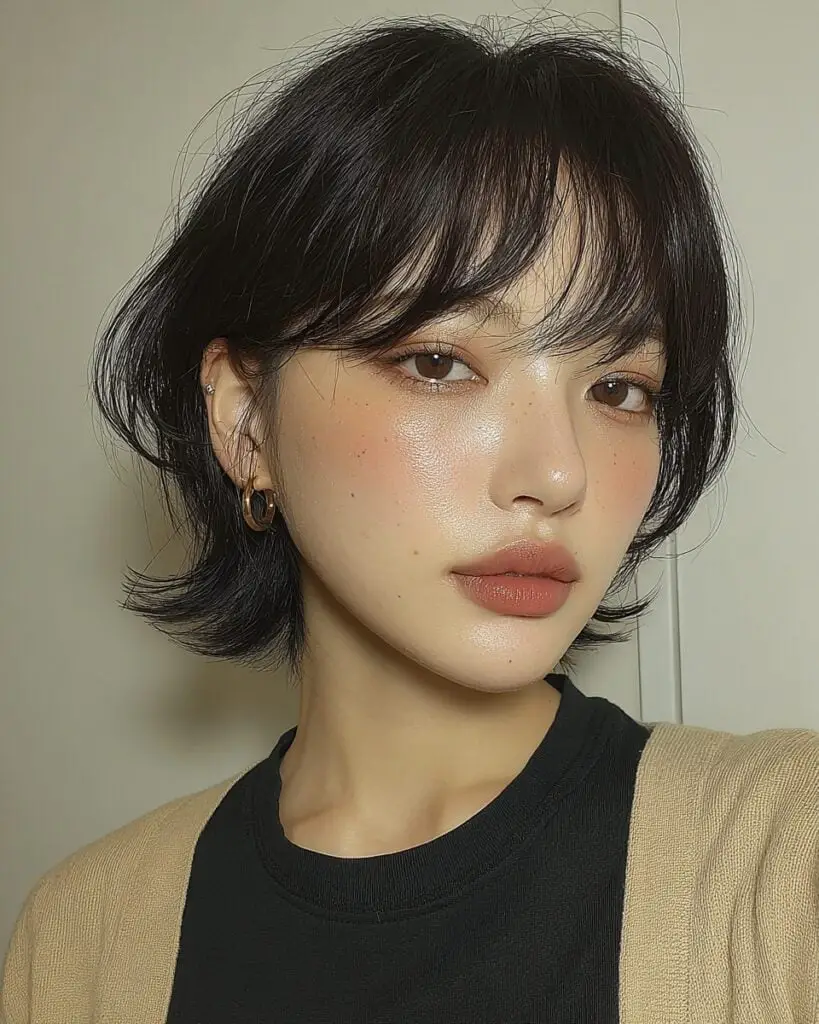
Courtesy of: seoulhairsalon.com
What do you actually say at the salon if you want this bob? Start with the shape and work outward. Ask your stylist for: chin length bob with curtain bangs, side part. That gets you the black bob ending at the jaw and the soft curtain bangs sweeping away from a side parting. Fine hair holds the wavy, glossy finish well when it starts at chin length or longer. The bangs do the softening, so round and square face shapes get a frame instead of a hard edge.
- Chin length, cut to sit at the jawline
- Curtain bangs, side parted and face framing
- Soft waves for volume, not a flat finish
Layered Chin Bob With Curtain Bangs, Dark Brown

Photo credit: womensweekly.com.sg
The layers here are internal, cut so the chin-length bob moves instead of sitting like a helmet, and the curtain bangs are wispy enough to read as air dried. Dark brown, medium density hair takes the slightly wavy finish without much coaxing. Ask your stylist for: layered chin bob, wispy curtain bangs, side part. Plan on a trim every six to eight weeks to keep the baseline from creeping past the jaw. In between, a few minutes of air drying get you close to this look.
Sleek Chin Bob No Bangs

Image credit: kbeautyaddiction.com
Against the wavy, curtain-bang bobs, this one is the opposite bet: a sharp line and no bangs at all. The sleek black chin bob is blow-dried straight with a side parting, and the blunt baseline does the talking. Fine, straight hair suits it best, since the cut has nowhere to hide. Oval and long face shapes carry the no-bangs line well. Ask your stylist for: sleek chin length bob, no bangs, side part. If you want texture and softness, pick the wavy version instead; this one rewards a smooth finish.
Chin Length Blunt Bob With Blunt Bangs, Straight

Source: miinhair.com
The smooth, straight finish on fine dark brown hair keeps the line crisp. It suits oval and heart-shaped faces, where the blunt bangs cover the forehead without swallowing the features. Ask your stylist for: chin length blunt bob, blunt bangs to brows, middle part. Round faces can find the straight-across fringe and jaw-length line a lot of horizontal, so pass if you want softness. Straight hair wears it easily; a wave in the bangs will fight the blunt edge.
Blunt Bob With Thick Fringe
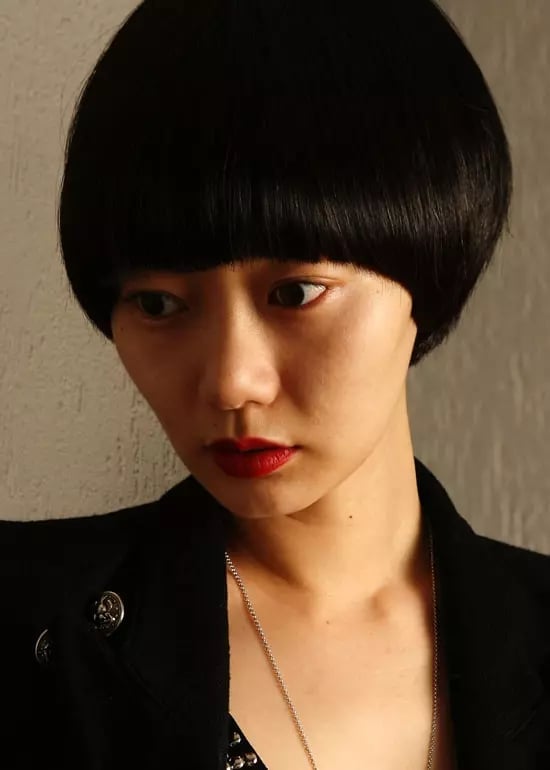
Via stylecraze.com
A glossy black bob cut blunt at the chin, with a thick fringe covering the forehead and a middle parting splitting it. Fine, straight hair keeps the shape sharp, and the blunt fringe and bob line together do the work. Long and oval faces balance the heavy fringe best. Ask your stylist for: blunt bob, thick blunt fringe, middle part.
Upkeep is the main consideration. A thick blunt fringe shows every bit of growth, so it needs a trim every three weeks to stay above the brows, and the bob baseline wants six weeks. Straight, fine hair also means the fringe lies flat without much help, which is the easy part. Skip this if you want to stretch trims or wear your hair wavy most days.
Sleek Black Blunt Bob Profile
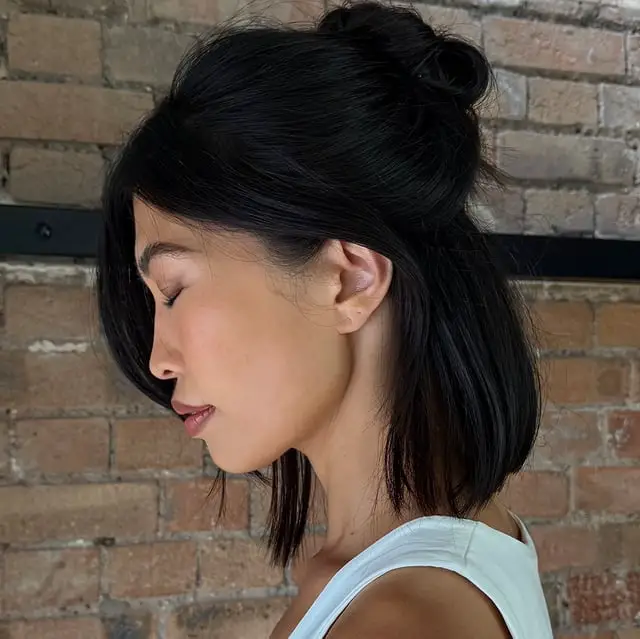
Courtesy of: cosmopolitan.com
A blunt bob is cut with zero point-cutting and zero texturizing, and the profile view makes that refusal visible: one clean horizontal line at the chin, black hair falling straight past the jaw with no bangs to break it. Fine, straight hair holds that line best, since it lies flat without a fight, and a side parting keeps the front edge sharp. Oval and angular faces take to it easily. Ask your stylist for: sleek blunt bob, no bangs, side part. Smoothing cream and a blow-dry nozzle keep the finish flat, and the line needs a trim every six weeks before it softens.
Collarbone Bob With Wispy Bangs

Photo credit: itakeyou.co.uk
Collarbone length earns its keep in the warm months: enough hair to pull back, not enough to trap heat on your neck. Here the bob is blown out smooth, and the soft waves at the ends come from a round brush rather than an iron. Wispy bangs sit light across the forehead, and the dark brown base carries subtle lighter tones through the lengths. Fine to medium hair starting at collarbone length works; the wispy bangs soften most face shapes. Ask your stylist for: collarbone bob, wispy bangs, middle part. Keep the shape with a trim every six to eight weeks.
Chin Bob Soft Waves Wispy Bangs
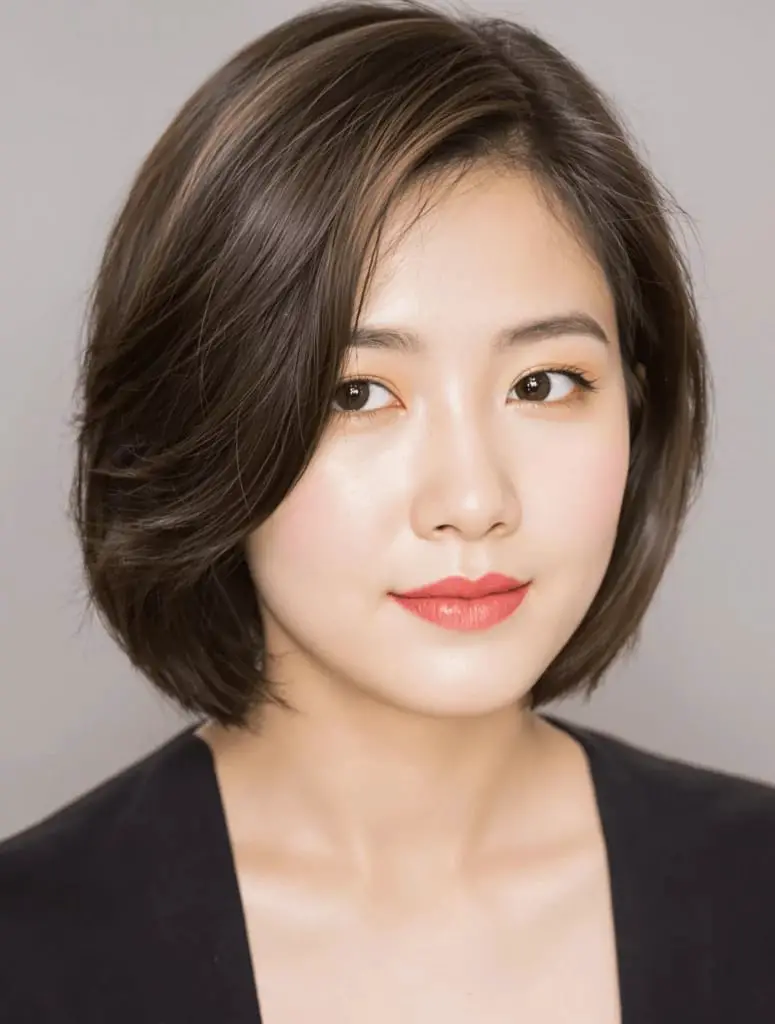
Image credit: thechicsavvy.com
Can you cut wispy bangs yourself? You can try, and then you will spend three months growing out the evidence. Wispy bangs are graded by eye, strand by strand, so the fringe sits light and moves without gaps, and that precision is why this one belongs in a salon. The chin-length bob is blown out into soft waves, dark brown with subtle highlights through the bends. Fine, wavy hair takes the shape readily. Ask your stylist for: chin length bob, wispy bangs, side part. A smoothing serum and a gentle blow-dry hold it, with a trim every six weeks.
Collarbone Lob With Wispy Bangs, Dark Brown
Source: seomyeonhairsalon.com
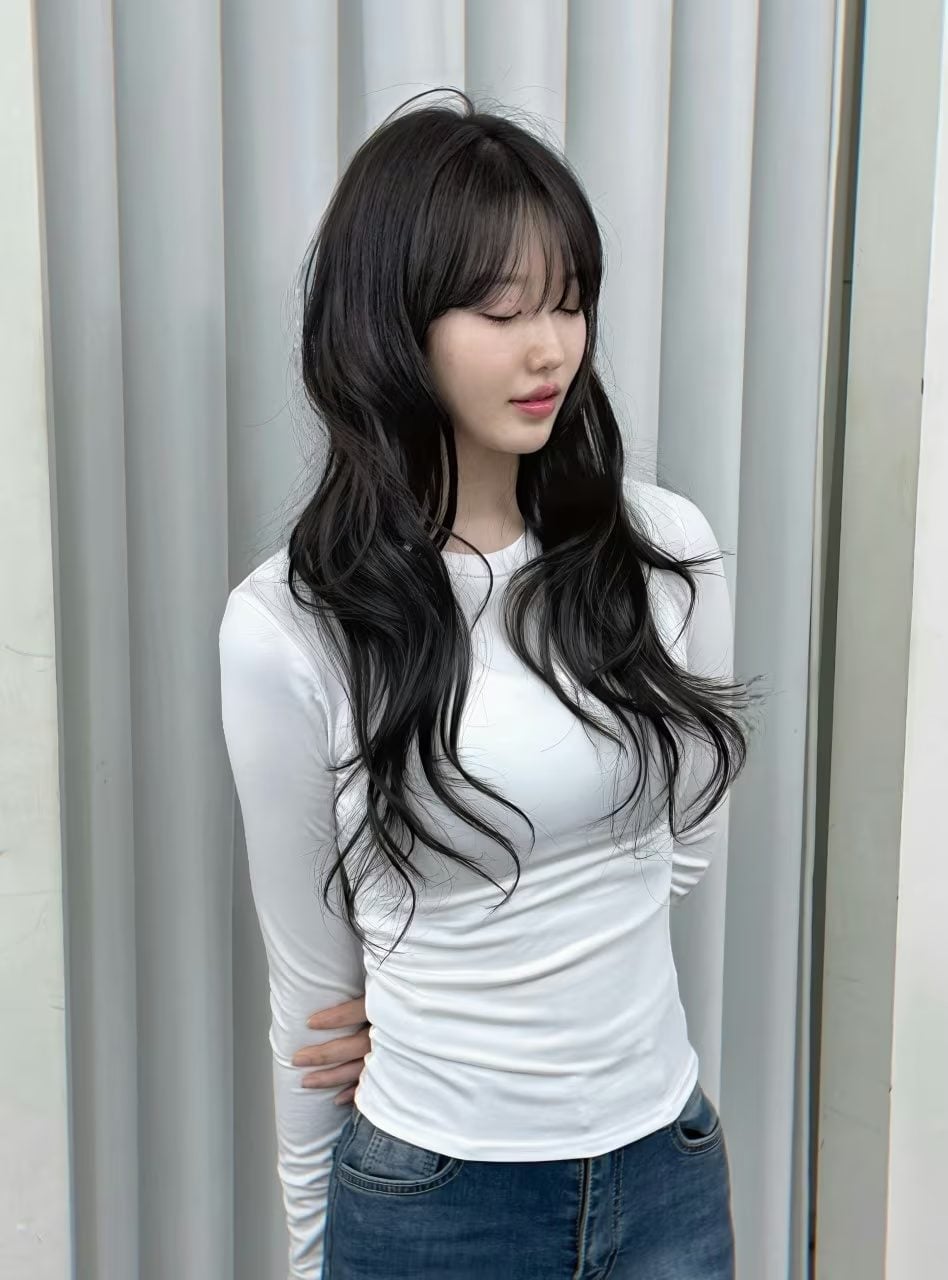
A collarbone lob with a side part and wispy bangs looks polished without asking much of you. Fine, wavy hair is the honest variable here: at collarbone length the wave has room to bend, so a round-brush blowout gives the smooth finish shown, and the dark brown base keeps it glossy. Without that pass with a brush, fine waves tend to fall flat toward the ends by afternoon. Ask your stylist for: collarbone lob, wispy bangs, side part. Book a trim every six to eight weeks to hold the baseline.
Blunt Cut Lob With Wispy Curtain Bangs

Source: zula.sg
How do you ask for curtain bangs without walking out with a heavy slab across your forehead? Lead with the word wispy and point at where you want the shortest piece to land. This lob runs blunt across the baseline at collarbone length, with subtle layers cut in so the ends keep a slight bend, and the wispy curtain bangs part to the side. Straight, fine hair air-dries into that shape with a texturizing cream. Ask your stylist for:
- blunt cut lob at collarbone length
- subtle layers through the ends
- wispy curtain bangs, side part
Then let it dry on its own and keep the baseline trimmed every eight weeks.
Collarbone Cut With Face-Framing Layers
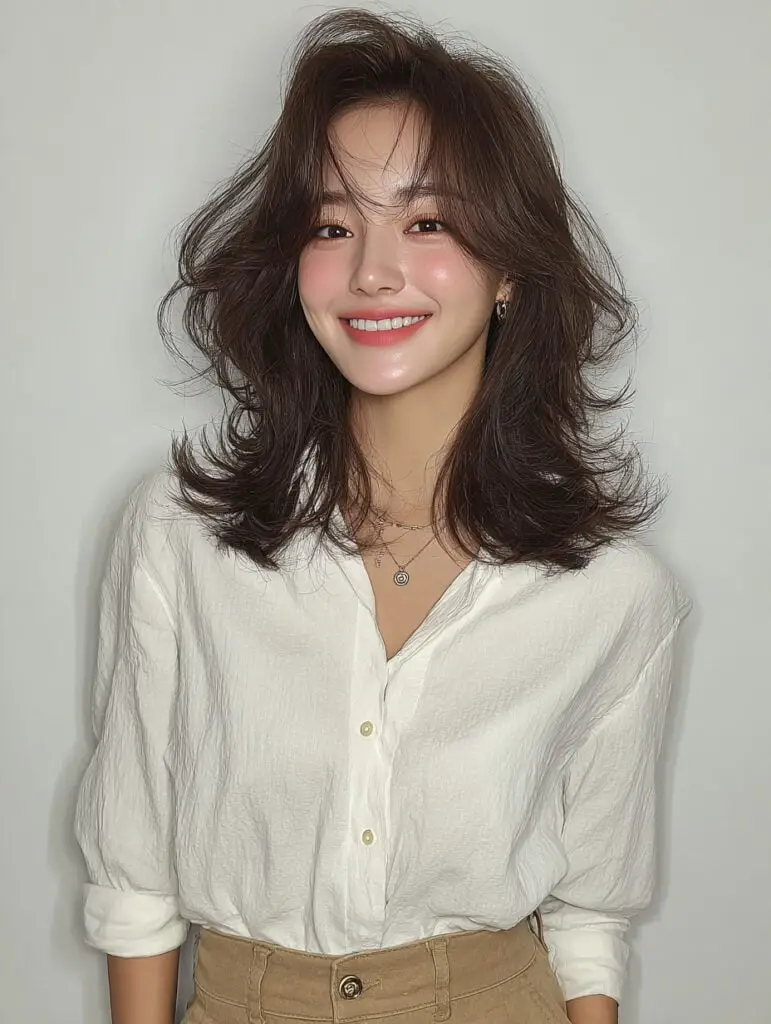
Face-framing layers carve shape around the jaw while the hair falls in a wavy, medium brown curtain to the collarbone. Thick hair suits this cut well, since the weight keeps the layers from collapsing into a shapeless heap. The side part adds asymmetry that softens round and square jawlines. Ask your stylist for: collarbone length cut, face-framing layers, side part, soft waves. A sea salt spray encourages the natural wave pattern, and the layers need a trim every ten to twelve weeks to hold their shape.
Collarbone Hush Cut With Wispy Bangs
Courtesy of: fashionjournal.com.au
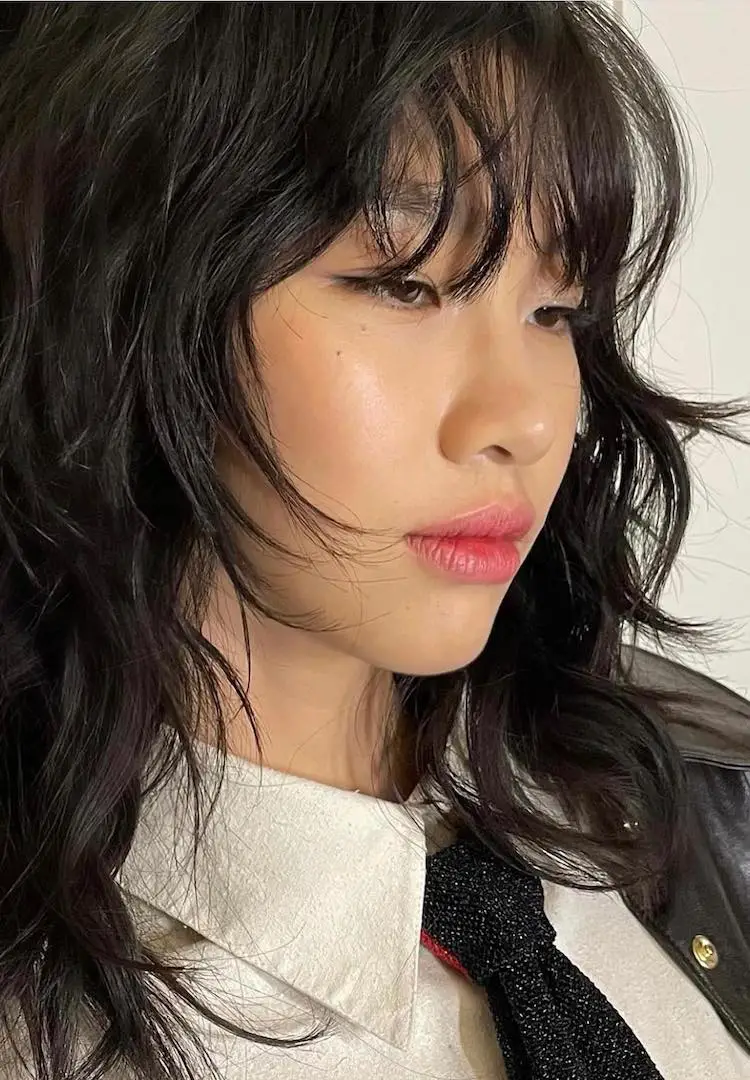
The hush cut earns its name from the whisper-soft blending of its layers, a technique that removes bulk without ever showing a hard line. On dark brown, wavy hair that falls to the collarbone, the effect is a feathered, air-dried finish that looks deliberately undone. The wispy bangs, parted down the middle, break up the forehead without demanding constant styling. Ask your stylist for: collarbone hush cut, soft layers, wispy bangs, middle part. A texturizing paste helps define the ends, and both the bangs and the layers benefit from a trim every eight to ten weeks.
Collarbone Shag With Curtain Bangs
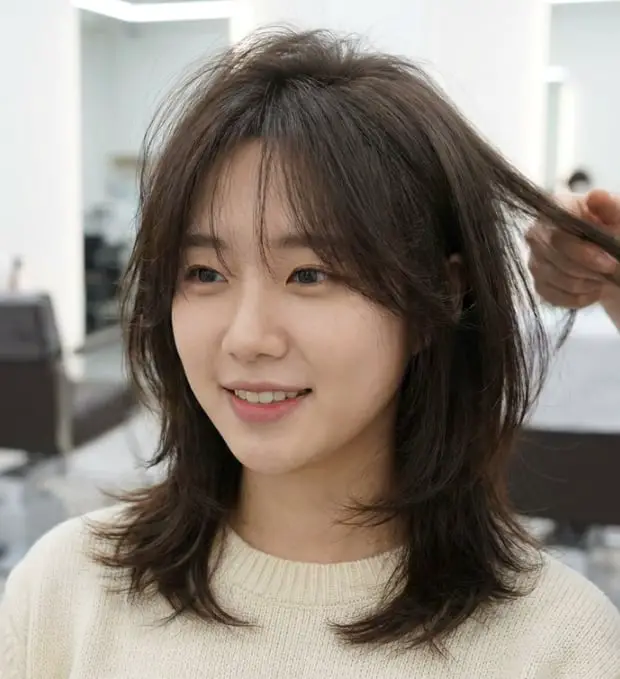
Photo credit: honesthairfactory.com
A shag lives or dies by its lived-in texture, and this collarbone-length version leans into that reality with wavy, medium-thick dark brown hair and subtle lighter pieces woven through. The curtain bangs and face-framing layers create the movement that makes the cut look like it happened naturally rather than in a salon chair.
To keep that worn-in feel, scrunch a texturizing spray through damp hair and let it do its thing. The trade-off for the finish is maintenance: the shag needs a trim every eight to ten weeks, or the layers start to look shaggy in the wrong way. Ask your stylist for: collarbone shag, curtain bangs, face-framing layers, middle part.
Short Pixie With Textured Bangs
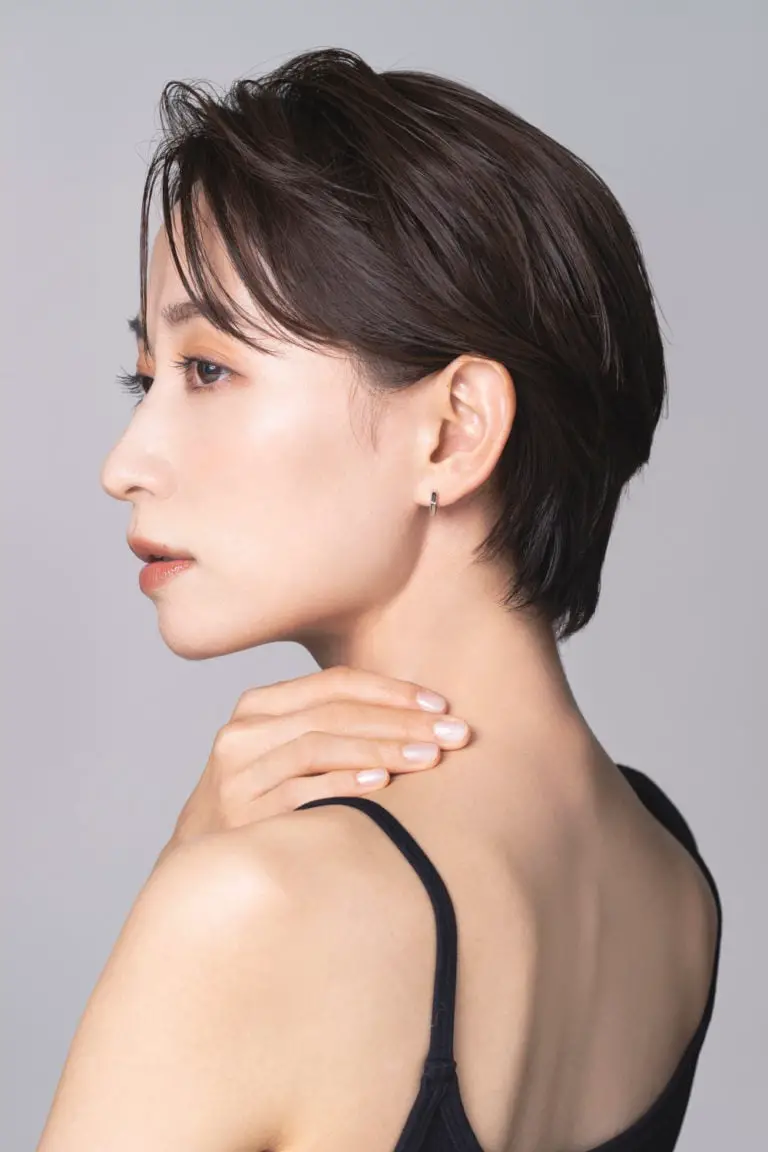
Image credit: countryandtownhouse.com
The textured layers and short, wispy bangs keep it from reading as severe, especially with a slightly messy finish that adds a modern edge. It suits fine hair that can handle being cut short, and the bangs work with most face shapes. Ask your stylist for: short pixie cut, textured bangs, side part. A matte wax defines the texture, but plan on frequent trims every four to six weeks to keep the shape intact.
Short Bob With Blunt Bangs
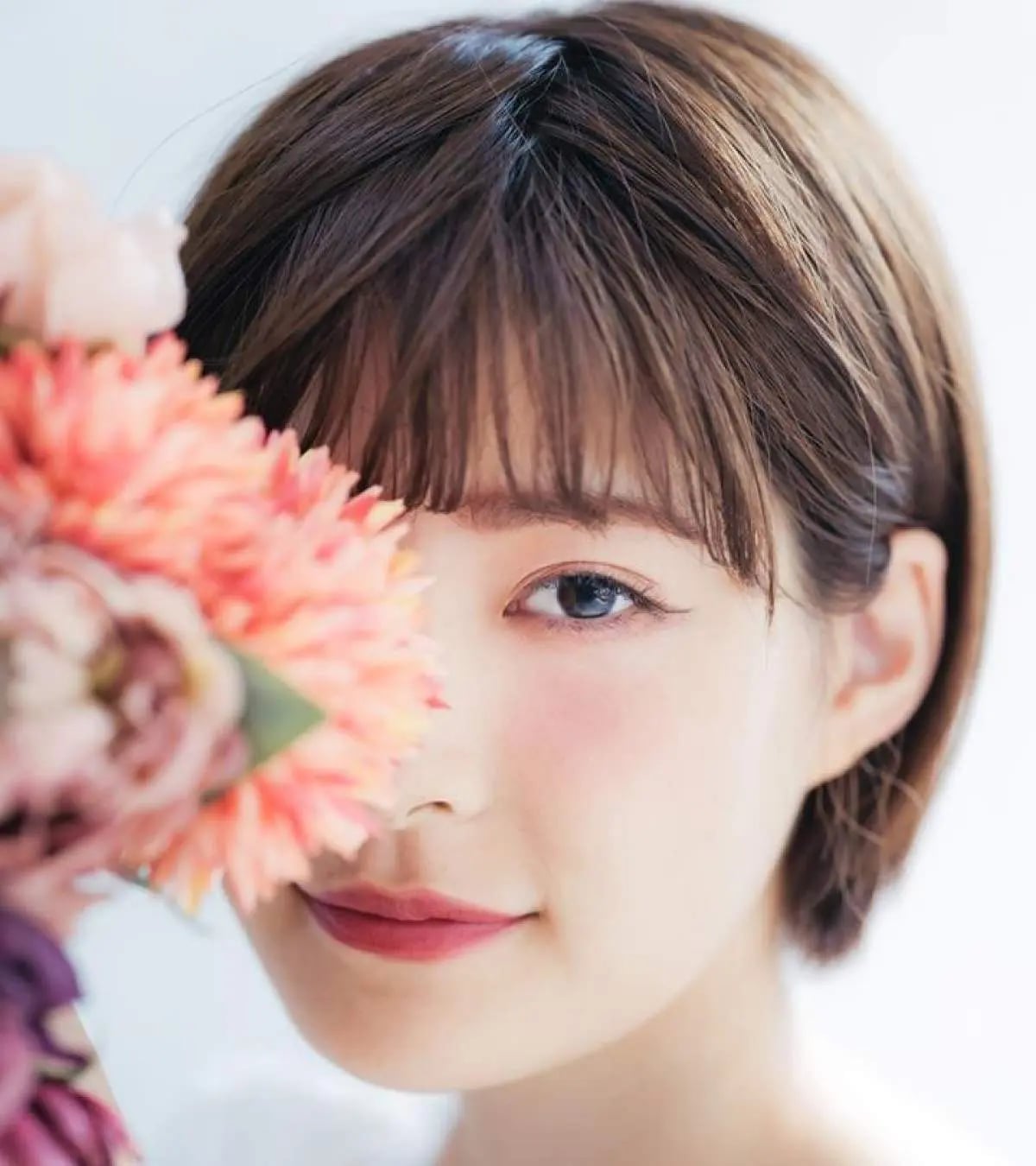
Source: stylecraze.com
Blunt bangs demand precision, and this short bob cut just above the ears is no exception, with straight, fine dark brown hair falling in a clean line that frames the forehead. The middle part keeps the geometry honest. This is a salon-leaning cut, since the bluntness requires a steady hand and a sharp eye, and the bangs will grow out unevenly if you skip appointments. Ask your stylist for: short blunt bob, blunt bangs to brows, middle part. The bangs need a trim every three weeks, while the bob itself can stretch to six. It suits fine, straight hair that can commit to ear length and balances long or oval faces.
Mid-Back Layers With Curtain Bangs
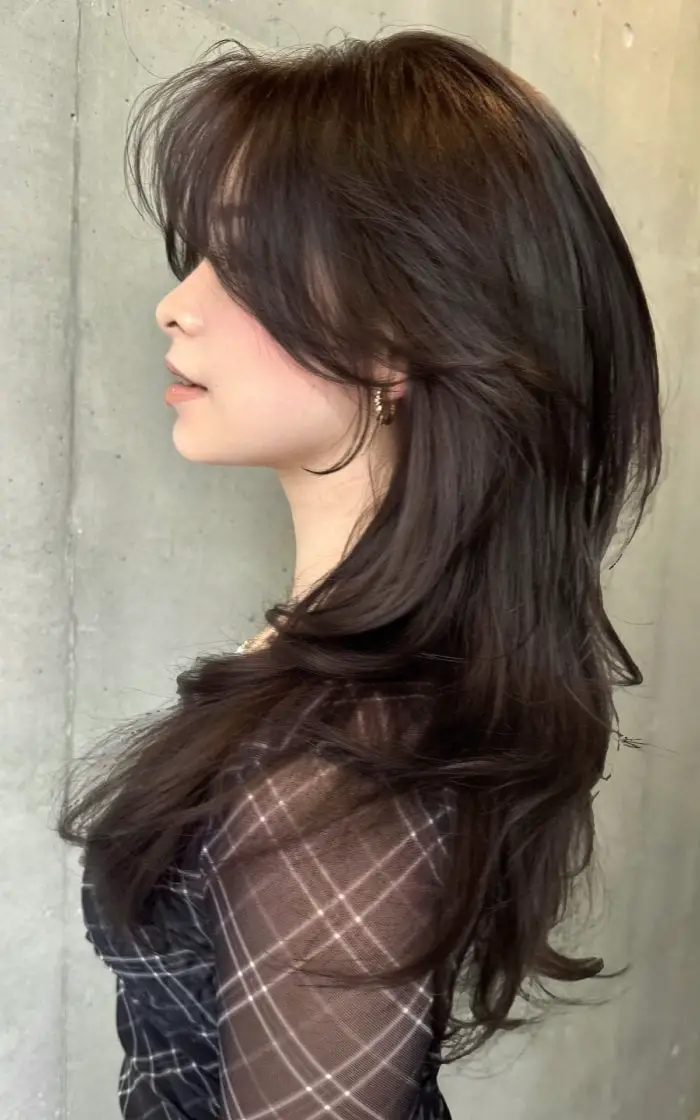
Via fabmood.com
A mid-back haircut with long, soft layers and curtain bangs works for any season because it gives you options. In summer, let it air-dry into soft waves and pull it back. In winter, the layers add movement without getting lost in a heavy coat collar. Medium to thick hair holds the shape best, and the curtain bangs soften square and round faces without committing to a full fringe. Ask your stylist for: mid-back length with long layers, curtain bangs, side part. A large barrel curling iron speeds up the waves, or skip it entirely and let texture do the work. Trim the layers every ten to twelve weeks to keep the face-framing pieces from growing past their point.
Mid-Back Layers With Curtain Bangs Blowout and Loose Waves
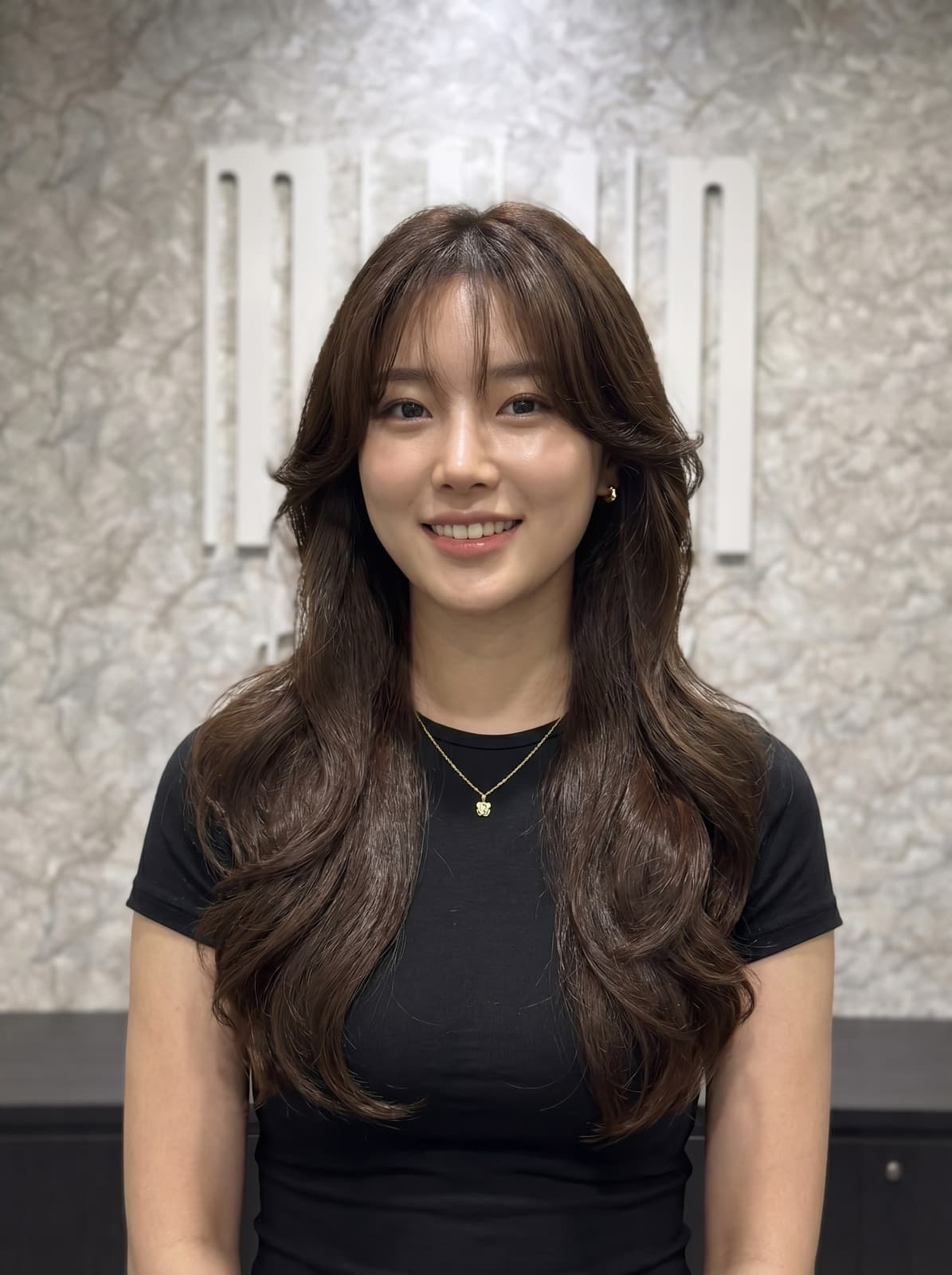
Courtesy of: miinhair.com
Long layers create volume at the crown, and the curtain bangs are cut long enough to tuck behind your ears or sweep to the side. This cut works best on thick hair that holds a round-brush shape, and the subtle lighter pieces add dimension without needing a full highlight appointment. Ask your stylist for: mid-back length with long layers, curtain bangs, middle part, voluminous blowout. The blowout takes about fifteen minutes with a large round brush and a heat protectant. Keep the layers trimmed every ten to twelve weeks so the bangs don’t go rogue.
Long Layers With Curtain Bangs Blowout
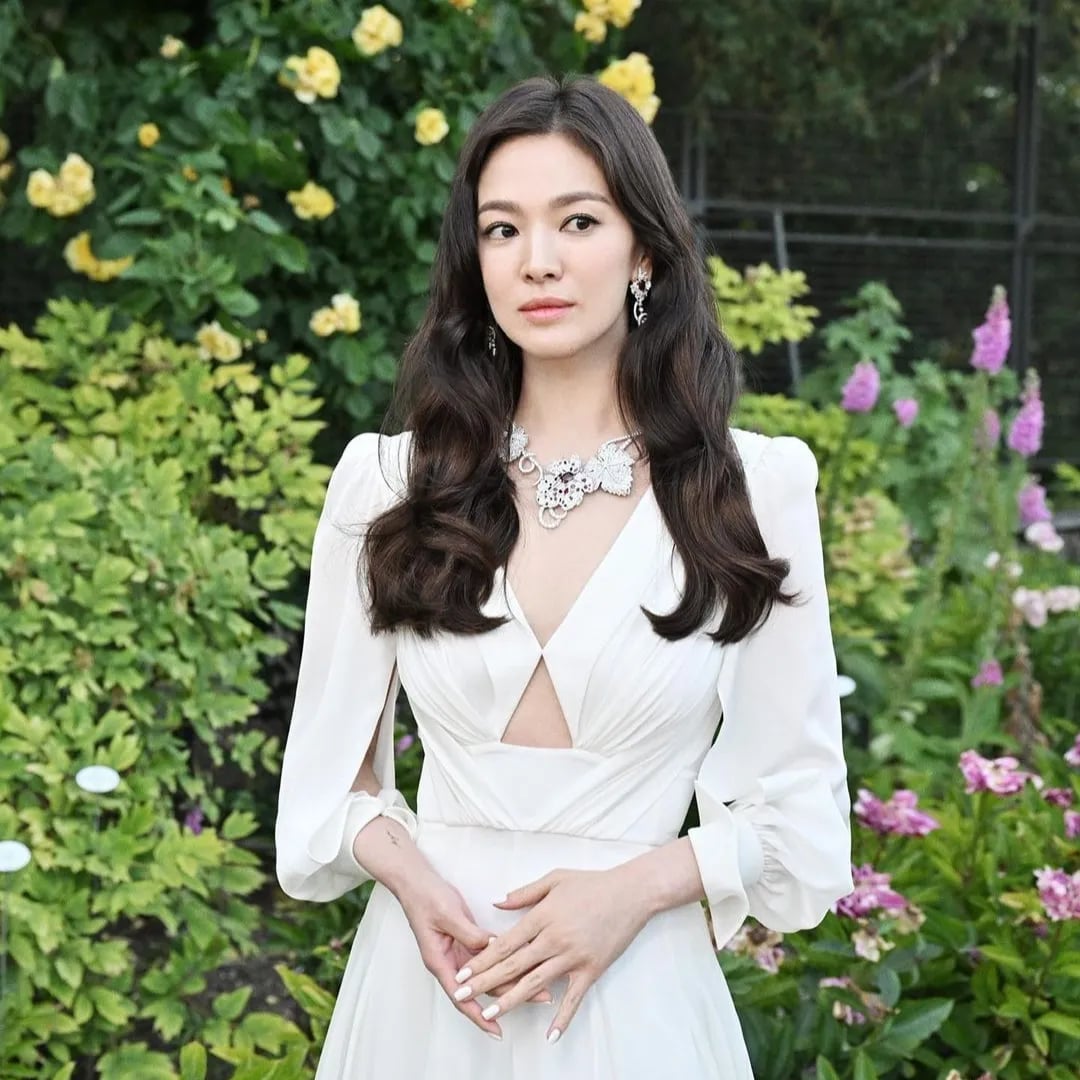
Photo credit: lifestyleasia.com
Thick, wavy hair is the natural partner for long layers and a blowout. The layers remove enough weight to let the hair move freely, while the curtain bangs frame the face without adding bulk. A side parting gives the volume somewhere to land, and the subtle highlights add dimension to the texture. Ask your stylist for: long layers, mid-back length, curtain bangs, side part, smooth blowout. Thick hair holds the shape without much coaxing; just a round brush and a few minutes of blow-drying do the job.
Mid-Back Layers With Wispy Bangs and Rose Brown With Subtle Highlights
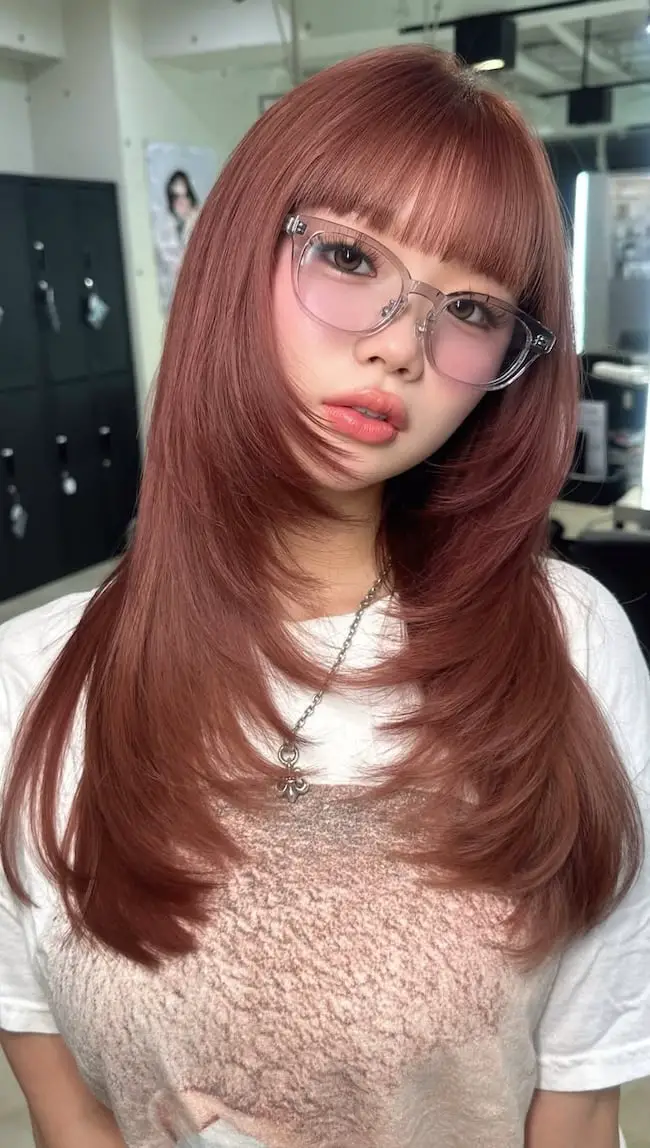
Image credit: fabmood.com
A mid-back cut with long layers and wispy bangs does something useful for fine hair: it adds volume without sacrificing length. The layers start around the collarbone, so the hair keeps its weight near the ends while the roots get lift from a blowout. A middle parting keeps the face open, and the rose brown base with subtle highlights creates depth that fine hair often lacks. Ask your stylist for: mid-back length with long layers, wispy bangs, middle part, voluminous blowout. Use a volumizing spray at the roots and a round brush to shape the waves. Trim the layers every ten to twelve weeks, because wispy bangs grow out fast and lose their point.
Mid-Back Layers No Bangs Deep Color

Via preview.ph
A deep blue-black shade with teal undertones turns a mid-back layered cut into a statement. The color is glossy and dense, so it needs thick hair to show off the shift in tone. Long layers keep the hair from looking solid, and the loose waves let the teal catch the light at different angles. A middle parting keeps the symmetry clean and the color uninterrupted. Ask your stylist for: mid-back length with long layers, no bangs, deep blue-black color, loose waves. Because this shade is not natural, maintain it with a color-depositing conditioner every few washes. Trim the layers every ten to twelve weeks to keep the ends from looking thin against the dark color.
Final Thoughts
Choosing a Korean haircut comes down to your hair’s texture and how much time you want to spend styling. Fine hair holds a blunt cut better, so skip heavy layers to keep density. Thick hair benefits from layers that reduce bulk and add movement, while a round face looks best with length falling below the chin.
- Trim blunt bobs every 6-8 weeks to maintain the sharp line.
- Layered cuts and shags require trims every 8-12 weeks for shape.
- Fringe trims may be needed every 2-4 weeks, depending on growth.
- Use a heat protectant spray before any heat styling.
- Toning for subtle highlights can be refreshed every 6-10 weeks.
Find the Korean haircut that suits your life and style.
Hairstyle
20 Slick Back Hairstyles 2027 for a Polished Look
Slick Back Hairstyles 2027 feature the slicked back pixie wet look and sharp slicked back bobs for a sleek, modern finish. See 20 polished hairstyles to try.
Slick back hairstyles trade loose movement for a controlled, glossy finish, and the 2027 version leans into soft face-framing layers and lived-in color rather than stiff, helmet-like polish. The shift is toward texture you can see, even when every strand is pinned or gelled into place.
This collection of 20 Slick Back Hairstyles runs from a five-minute wet-look pixie to an intricate low bun that needs a steady hand and a few extra pins. You will find options for fine hair that flattens by noon, thick hair that fights the gel, and every density in between, plus the exact ask for your stylist and the upkeep rhythm that keeps the shine honest.
Slicked Back Pixie Cut Wet Look
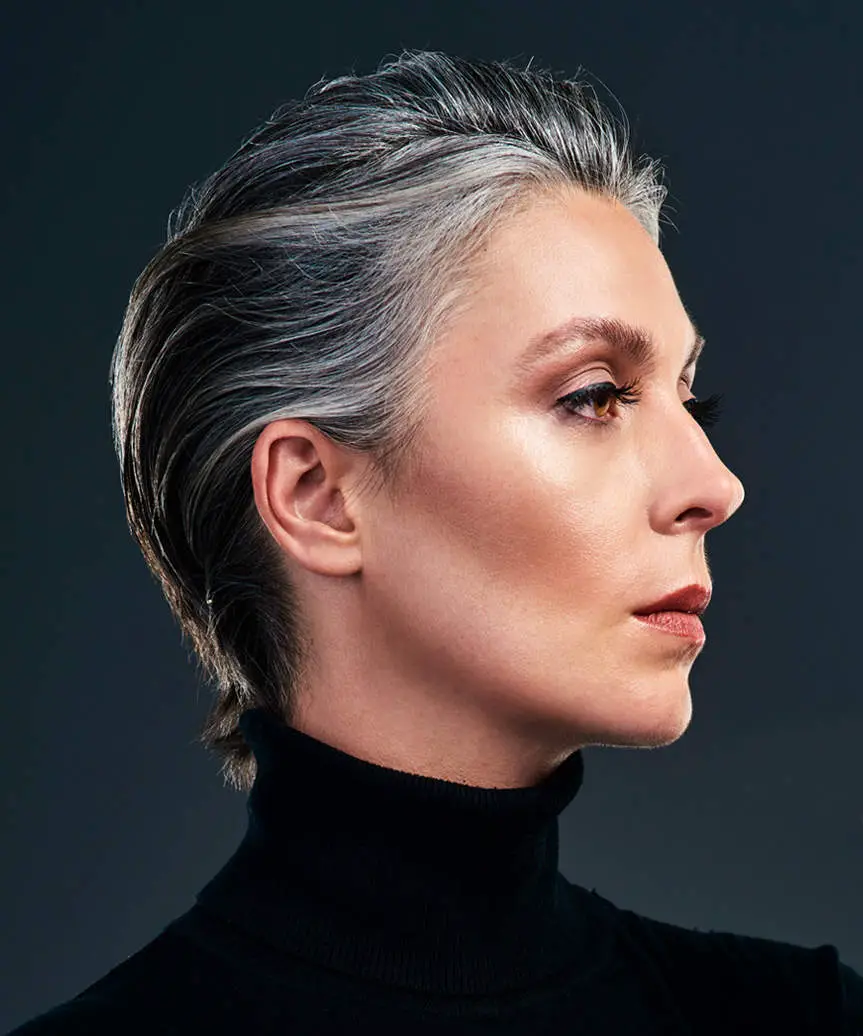
Courtesy of: thehairstyler.com
The design here is a study in controlled shine: fine, straight gray hair is slicked back from a side parting to ear length, and the wet-look finish is the entire point. This works best on fine, straight hair with at least ear length, and it suits oval and square face shapes equally. Ask your stylist for a slicked back pixie with wet look finish. Apply a strong-hold gel or pomade to damp hair, then comb it back in clean strokes. No bangs, no texture, just gloss and direction.
Sleek Low Ponytail Shoulder Length
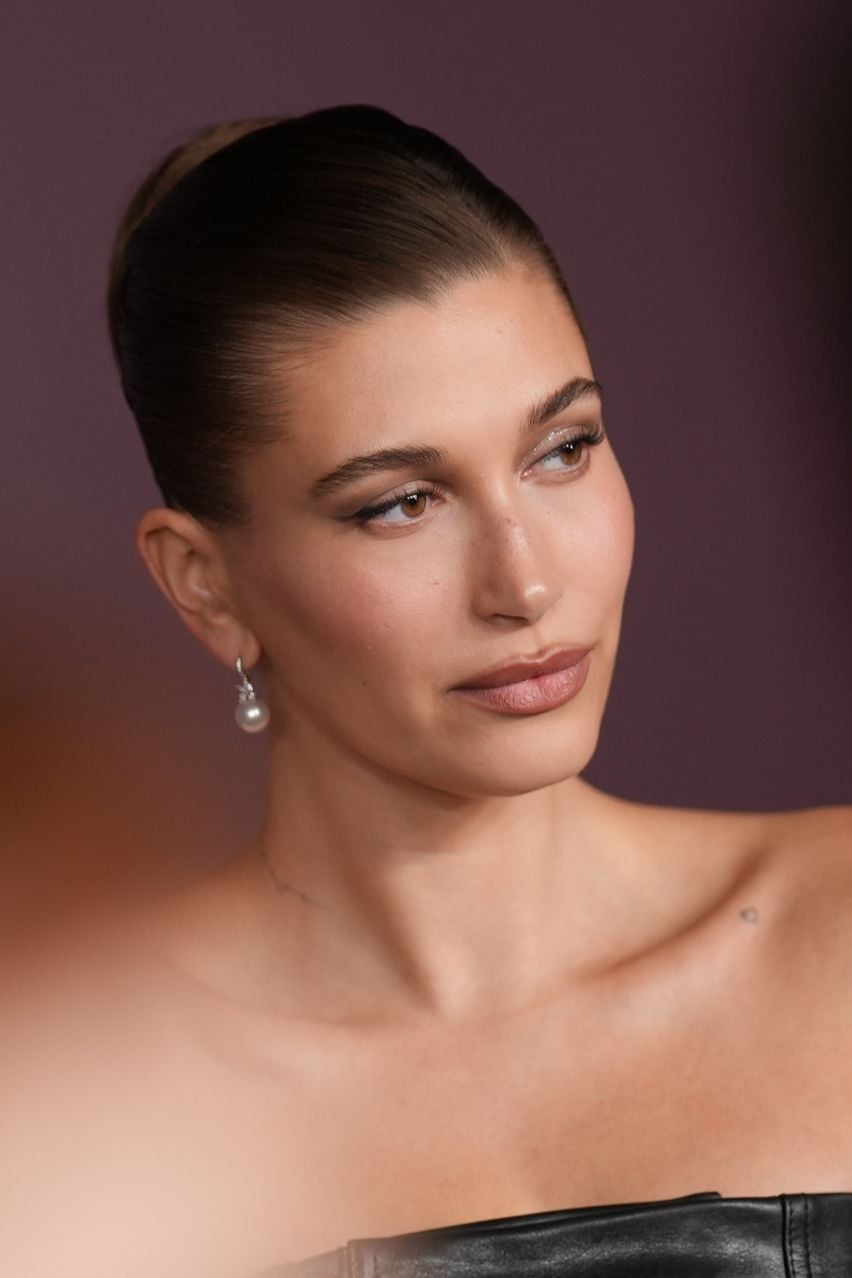
Photo credit: glamourmagazine.co.uk
Can fine, straight hair pull off a slicked back ponytail without looking greasy? Yes, when the technique is correct. This style smooths the blonde hair from crown to nape, where it gathers into a low ponytail at shoulder length. The look elongates round faces, which is its primary advantage. Ask your stylist for a sleek low ponytail, middle part. Use a boar bristle brush to distribute natural oils evenly, then secure with a clear elastic for a seamless finish.
Sharp Chin Length Bob Slicked Back
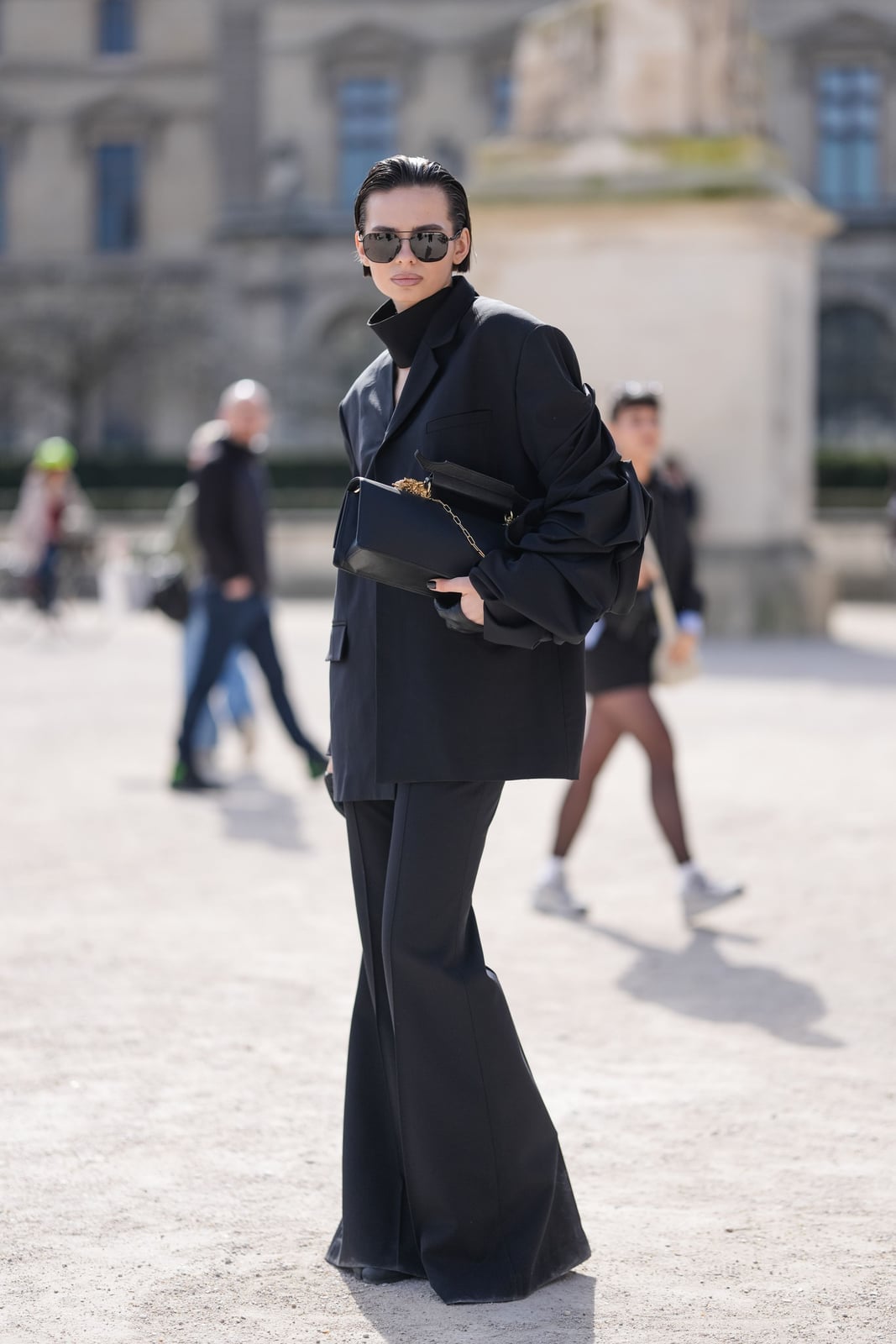
Image credit: vogue.co.uk
A soft, layered bob tends to float around the jaw. This is the opposite: fine, straight dark brown hair is pulled back from a middle parting into a chin-length line cut so sharp it looks measured. The severity is the appeal, and it suits oval and heart-shaped faces best. Ask your stylist for a chin length slicked back bob, sharp line. Apply a smoothing serum to the ends for that deliberate polish, and plan on a trim every six weeks to keep the geometry intact.
Thick Wavy Blonde Bob With Curtain Bangs
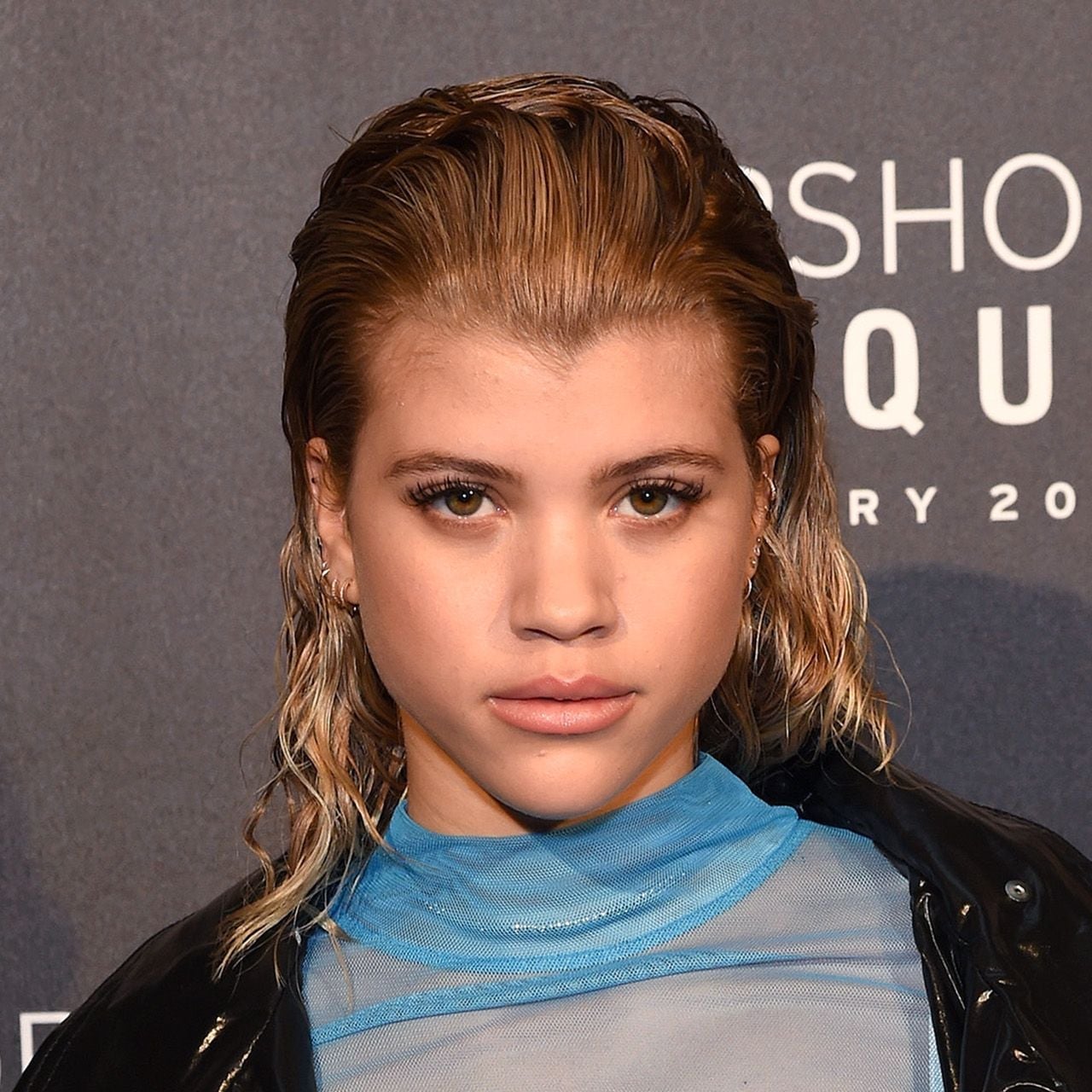
Source: glamourmagazine.co.uk
Thick, wavy hair does not naturally want to be slicked flat, so the process matters. This collarbone-length bob in blonde with darker roots uses curtain bangs to soften the transition from wet-look finish to the face. The steps are specific:
- Apply a texturizing spray to damp hair to encourage wave definition without frizz.
- Blow-dry the curtain bangs with a round brush to set their shape before slicking the hair back.
Ask your stylist for a collarbone bob, slicked back with wet look, curtain bangs. The curtain bangs soften square and round faces, which is helpful when the style is so polished.
Glossy Slicked Back Black Pixie
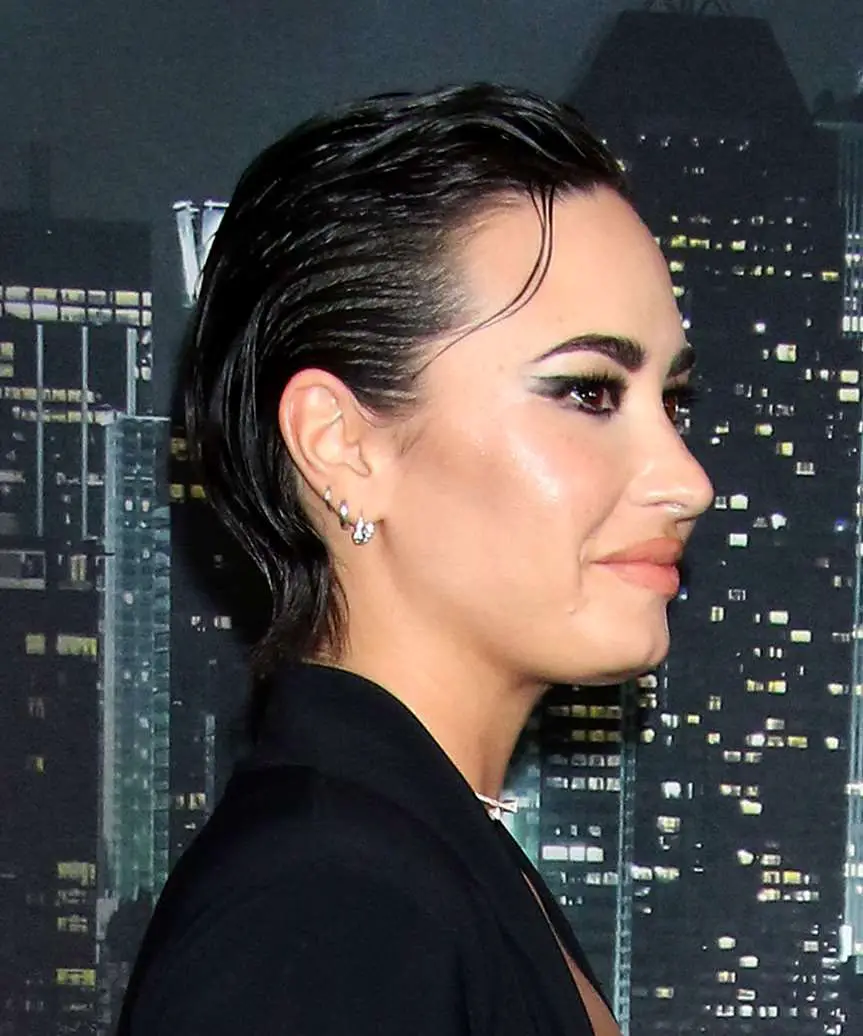
The geometry is simple: short black hair at chin length, slicked back with a finish so glossy it looks wet. This is not a style you can achieve in five minutes at home. Ask your stylist for a chin length slicked back with wet look. The salon work is in the cut itself, but the daily styling is straightforward: apply a high-shine pomade to dry hair and rake it back. It suits all face shapes, which is rare for a cut this precise.
Platinum Blonde Pixie Bob Slicked Back
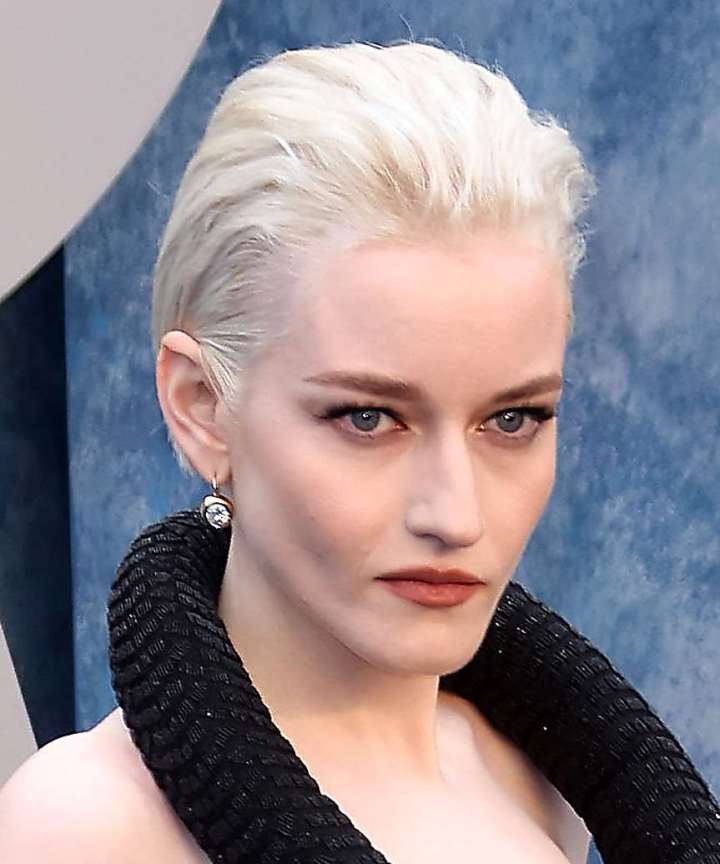
Courtesy of: zalora.com.my
What’s the one mistake that turns a slicked-back pixie bob from sharp to severe? Skipping the smoothing cream. With straight, thick texture, every strand wants to go its own way, and flyaways will ruin the clean line. Ask your stylist for: ear length pixie bob, slicked back, platinum blonde. The style suits oval and diamond face shapes best, with the side parting keeping the ears visible. Expect to book a toning appointment every four to six weeks to keep that platinum from drifting yellow.
Textured Blonde Pixie Bob With Face Framing Strands
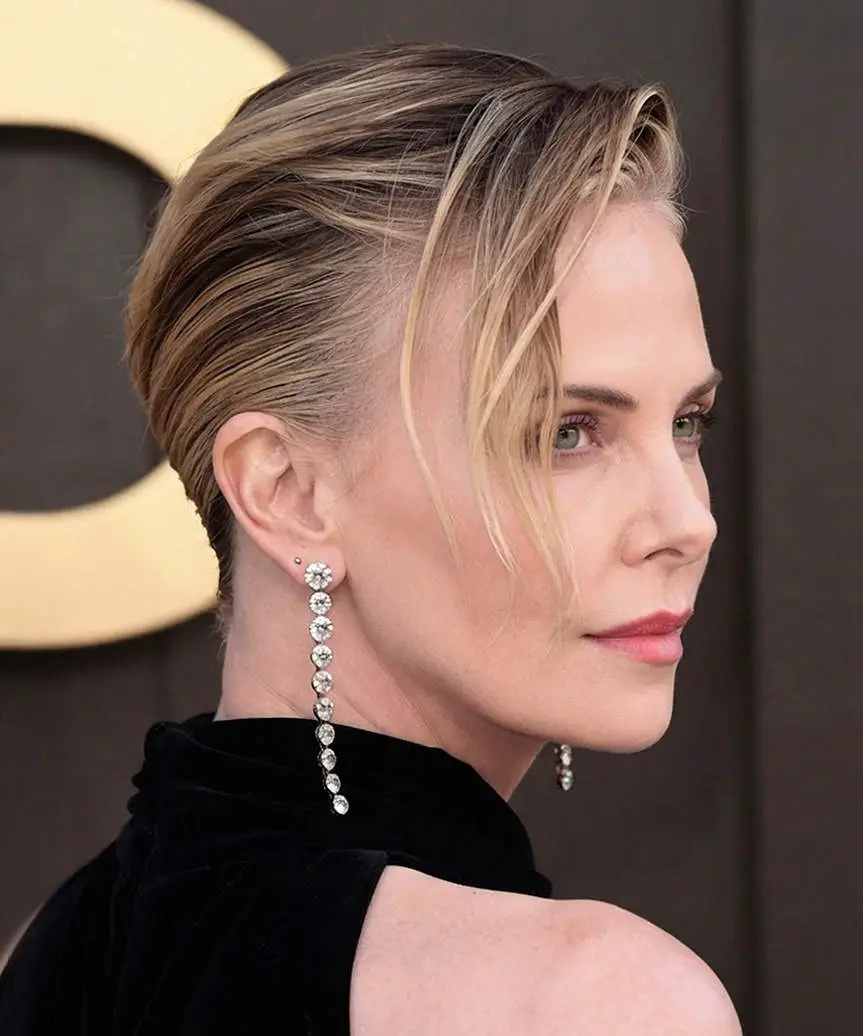
Photo credit: thehairstyler.com
The textured strands are what separate this from every other slicked-back pixie bob. Instead of one uniform sweep, the ear length cut leaves face-framing pieces that catch the light and soften an angular jawline. It’s a warm-weather style in the truest sense: the slicked-back base keeps hair off your neck, while the texture adds movement that reads as casual rather than formal. Ask your stylist for: ear length pixie bob, textured face-framing strands, slicked back. Work a texturizing paste through dry hair to define those strands, and plan on a trim every six to eight weeks.
Fine Wavy Blonde Collarbone Lob Wet Look, Office-Safe Version
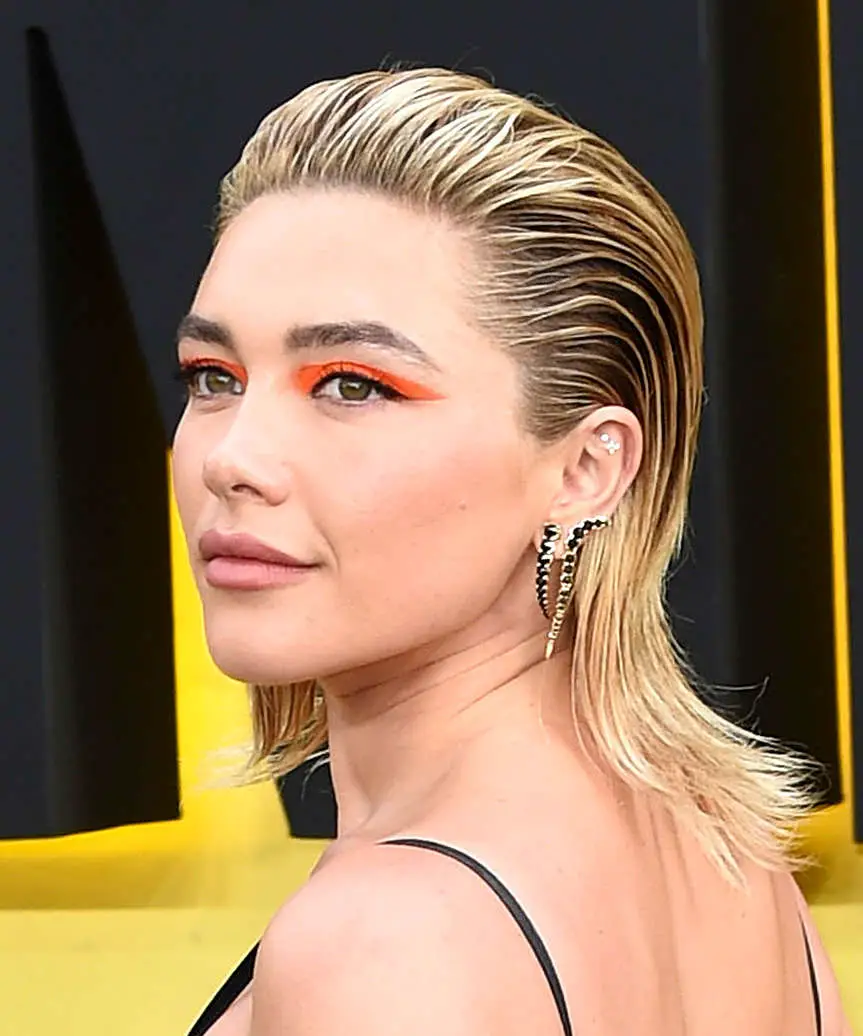
Image credit: thehairstyler.com
A wet-look finish on fine, wavy hair is a negotiation between style and reality. The layers here are slicked back from a middle parting to shoulder length, and the glossy surface emphasizes every wave rather than flattening it out. Fine hair in particular can look stringy when wet, so the result depends on even product distribution. This collarbone lob suits oval and heart-shaped faces, where the side volume from the waves balances a narrower chin. Ask your stylist for: collarbone lob, slicked back wet look, middle part. A gel applied to damp hair and combed back will hold the shape, but the wet effect fades as the hair dries, so expect to refresh the product by midday.
Glossy Dark Brown Mullet Slicked Back
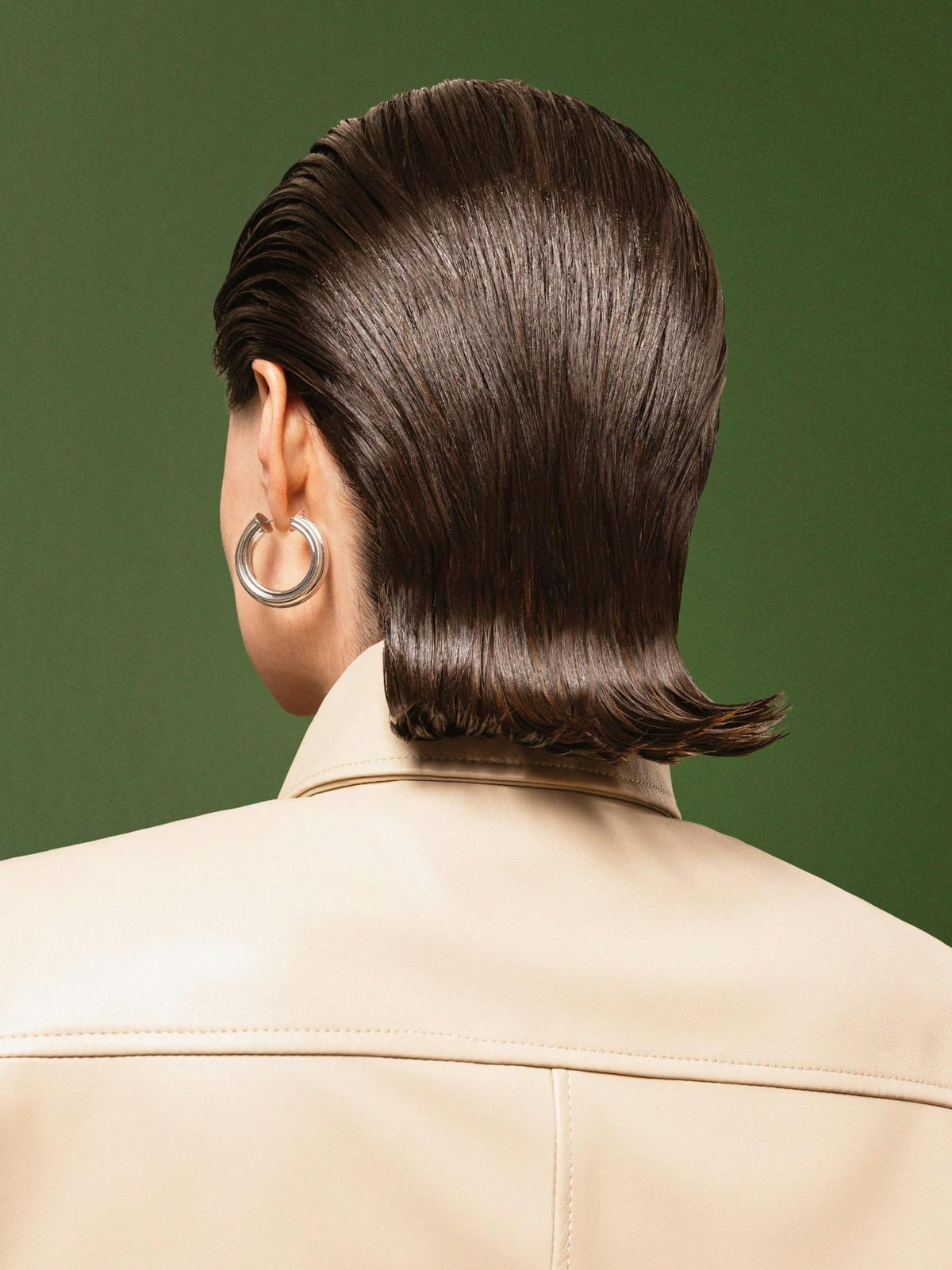
Source: desenio.com
Slicking back a mullet is a controlled demolition: you keep the shape but remove the chaos. The collarbone length cut is worked from the crown and sides, leaving the back length intact while the front is smoothed flat. The middle parting keeps the look symmetrical, and the glossy finish is what sells it, turning what could read as messy into deliberate. Ask your stylist for: collarbone length mullet, slicked back with glossy finish. A high-shine pomade on dry hair gives that reflective surface without weighing down the thick, straight texture. This one suits round and oval faces, and the shape needs consistent trims to hold its lines.
Thick Wavy Dark Brown With Volume
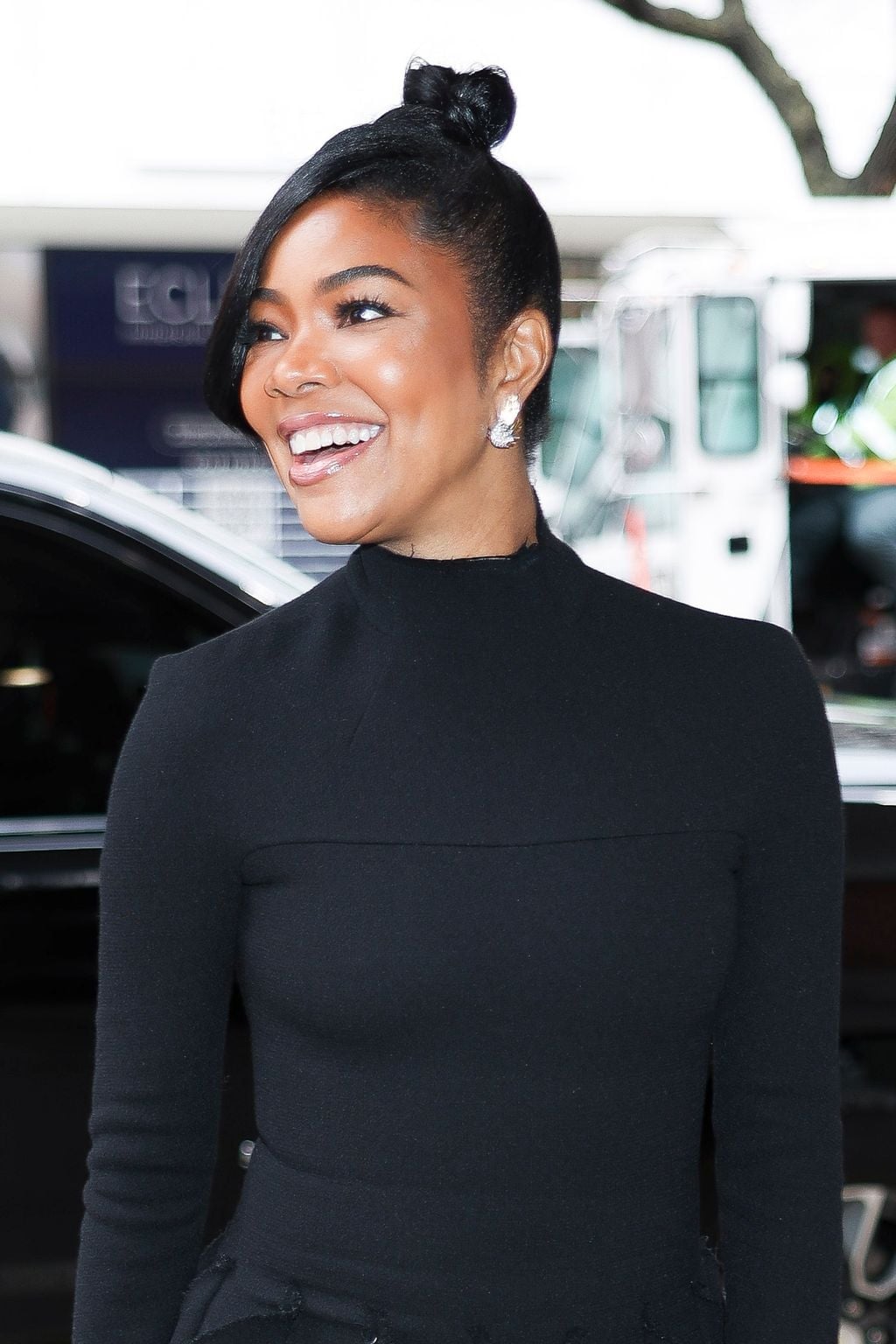
Source: glamour.com
Can thick, wavy hair pull off a slicked-back style without looking plastered down? Yes, if you keep the volume on top. The chin length cut with a side-swept fringe is combed back from a side parting, but the crown stays lifted, which balances a longer face shape. The waves add a softness that a straight slick-back lacks. Ask your stylist for: chin length slicked back with volume, side-swept fringe. Apply a volumizing mousse to the roots before drying, then use a round brush to build that crown height. The hold lasts longest when you let the waves set completely before touching them.
Fine Wavy Dark Blonde Bob Wet Look
Via thezoereport.com
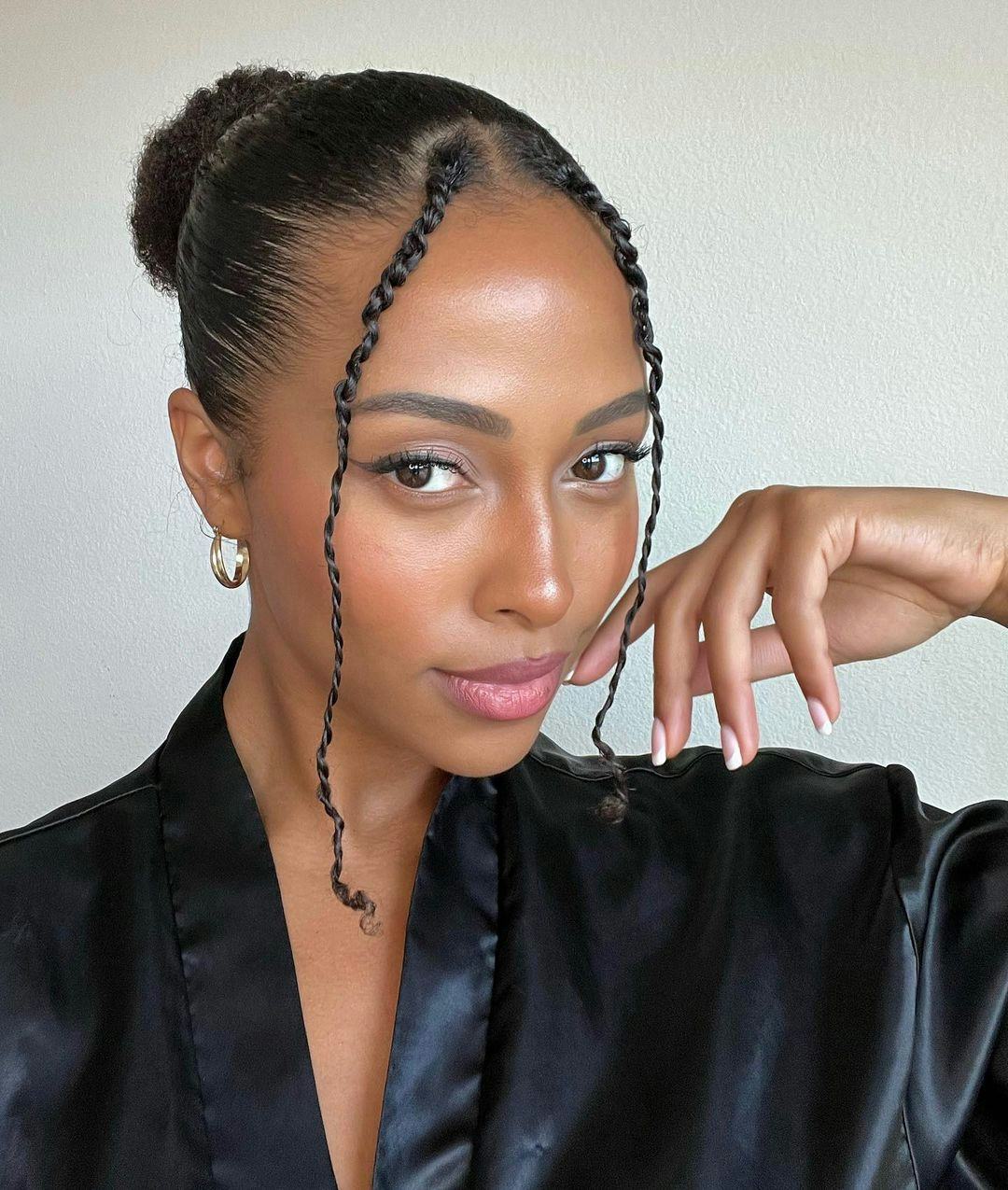
A wet-look finish on a chin-length bob is a commitment to maintenance, especially when your hair is fine and wavy. The middle part and slicked-back styling emphasize the natural wave pattern, but they also trap product against the scalp, so buildup becomes the real enemy. You can extend the wear by using a gel or wax with a high-shine finish and letting the hair air dry, which locks in the damp appearance without heat. A trim every six to eight weeks keeps the blunt ends from looking straggly, and a clarifying shampoo once a week will prevent that heavy, greasy feeling.
Ask your stylist for: chin length bob, slicked back wet look, middle part. This fine wavy bob wet look holds its shape best on the day you create it; by the next morning, the waves will have their say. If you want the glossy, just-finished effect to last, plan on refreshing the front sections with a dab of product and a quick finger comb. The style suits fine textures because the slicking adds the appearance of density, but it demands a tolerance for that damp, product-laden sensation all day.
Sleek Dark Brown Ponytail Shoulder Length
Courtesy of: ipsy.com
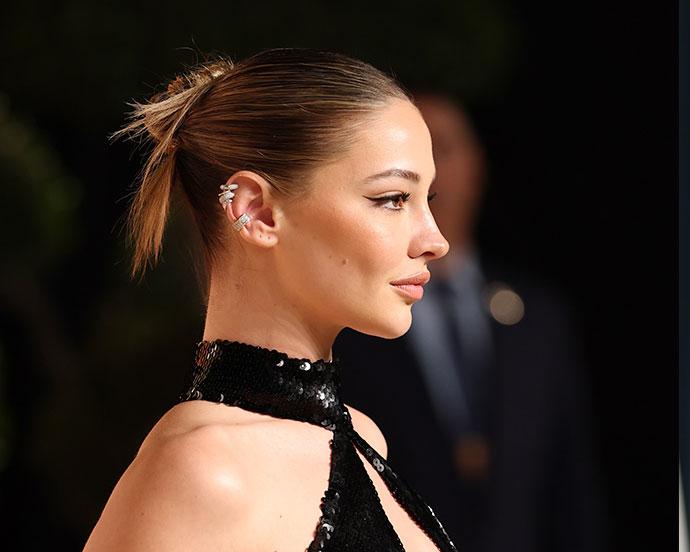
This sleek dark brown ponytail sits at the nape, a polished counterpoint to the loose, textured ponytails that have dominated recent seasons. The difference is in the finish: every strand is pulled tight and smooth, which works best on fine, straight hair that can lie flat without a fight. A high, sleek ponytail elongates the neck and suits those with shoulder-length hair who want a clean line, while a lower, looser version softens the effect for rounder face shapes. Brush the hair thoroughly before gathering it, then secure with a snag-free band and finish with a light hairspray to tame flyaways. Ask your stylist for: shoulder length sleek high ponytail. The hold is solid for a full workday, though you may need to smooth the crown if you have any natural bend at the roots.
Fine Brown With Blonde Highlights Wet Look Pixie
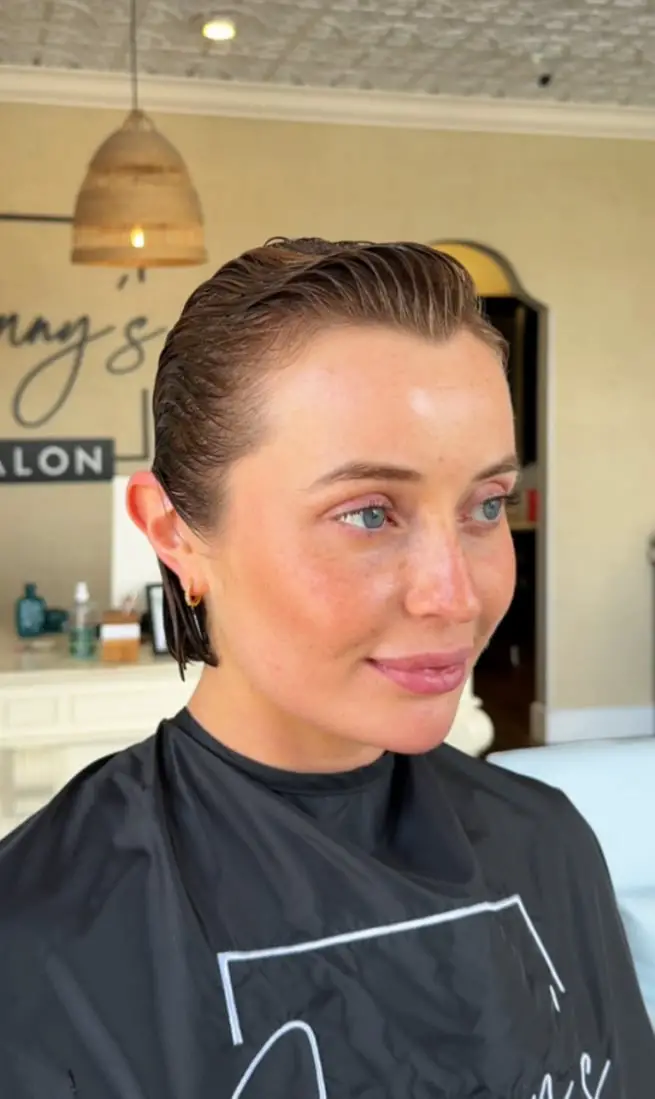
Photo credit: jennys.salon
The side parting gives this wet look pixie a deliberate finish, and the blonde highlights add dimension to the fine brown base. To get this exact look, ask your stylist for an ear length pixie with a slicked back wet look, keeping the brown base and adding blonde highlights for contrast. This is a salon only style, both for the cut and the initial color work, so bring a reference photo and be explicit about wanting the gloss serum applied last. The wet look itself is a DIY refresh: on damp hair, work a shine serum through with your fingers and comb it back from the face. Plan on a trim every six to eight weeks, since the shape loses its precision quickly. The highlights will need a toner refresh around the same interval to keep them bright and avoid brassiness.
Blonde Mid-Back Ponytail Smooth Polish
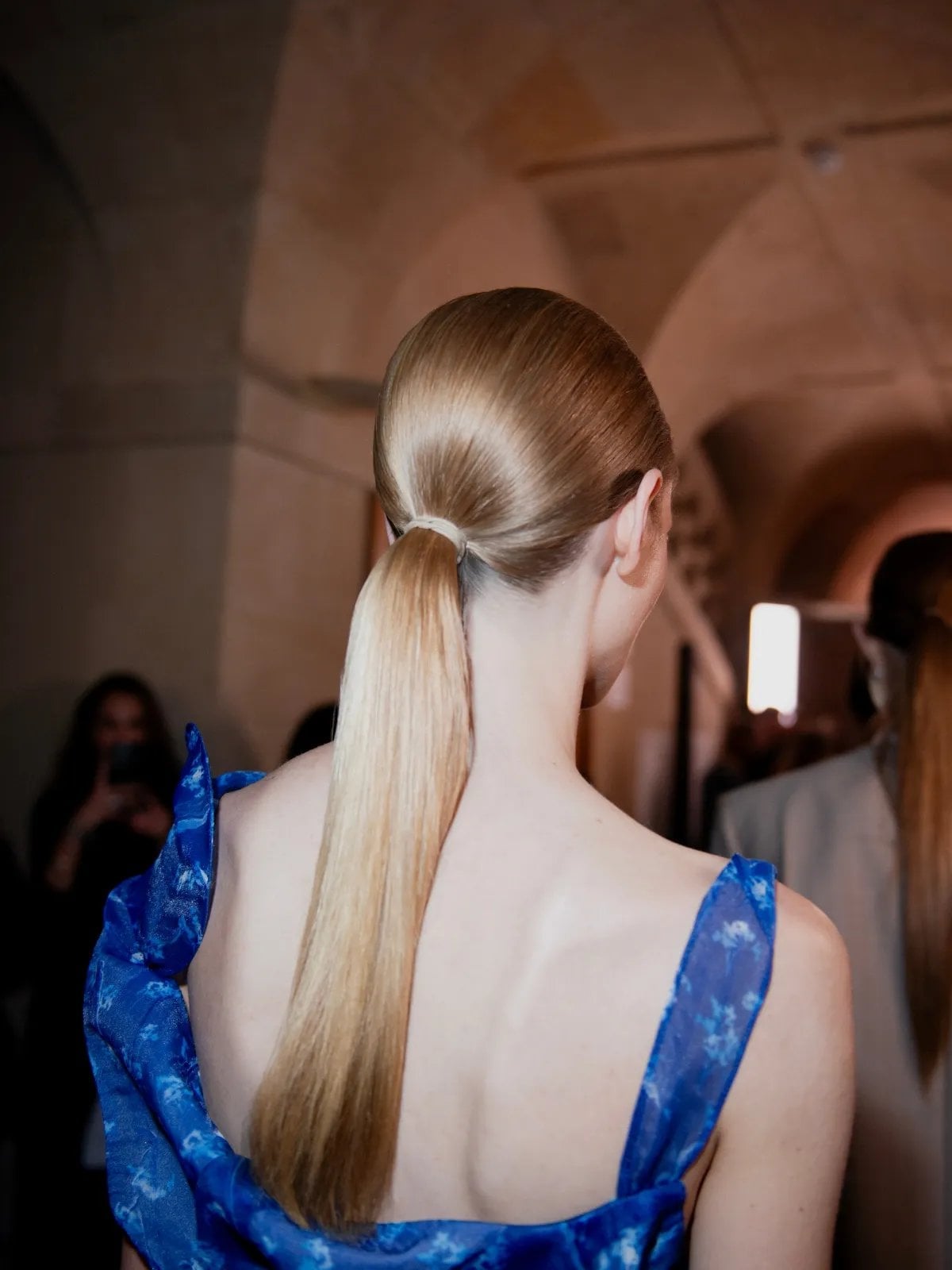
Image credit: wella.com
To keep a ponytail smooth from crown to tip without bumps, start with damp hair and a smoothing balm, then brush through in sections, pulling everything back from a middle part. The key is tension: hold the hair taut at the nape before securing, which prevents sagging that ruins a sleek line. Ask your stylist for: mid-back sleek ponytail, middle part. For fine, straight blonde hair, this style adds polish without weighing the roots down, and the mid-back length gives it a clean, minimalist feel. A snag-free elastic is essential, and a light mist of hairspray over the finished ponytail will keep flyaways in check. The hold lasts through a long event, but you will want to re-smooth the crown if you spend time in humidity.
Dark Brown Low Bun With Soft Tendrils
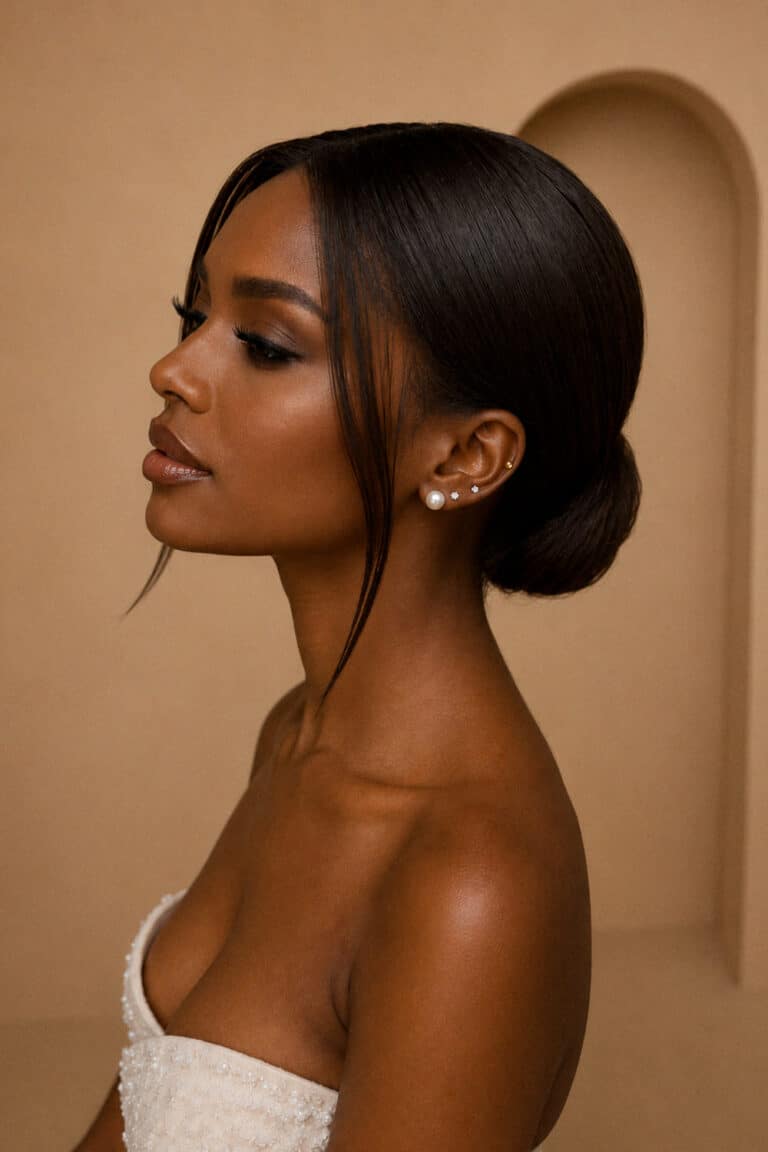
Source: stylemeglam.com
A slicked-back low bun with soft tendrils is the transitional-season answer to formal events, when you want the structure of an updo without the severity of a ballerina bun. The side part and face-framing pieces soften the look, making it work for thick, straight hair that can hold a smooth pull-back without slipping. Ask your stylist for: mid-back low bun, slicked back with soft face-framing tendrils. Leave the tendrils out before securing the bun, then mist with a light hairspray to keep them in place without stiffening them. This style suits evening occasions and weddings, where the polished front and relaxed back strike the right balance. The dark brown color reads glossy when the hair is pulled tight, and the bun itself holds its shape for hours, though the tendrils may need a re-twist if you dance too enthusiastically.
Light Blonde Sleek Low Bun
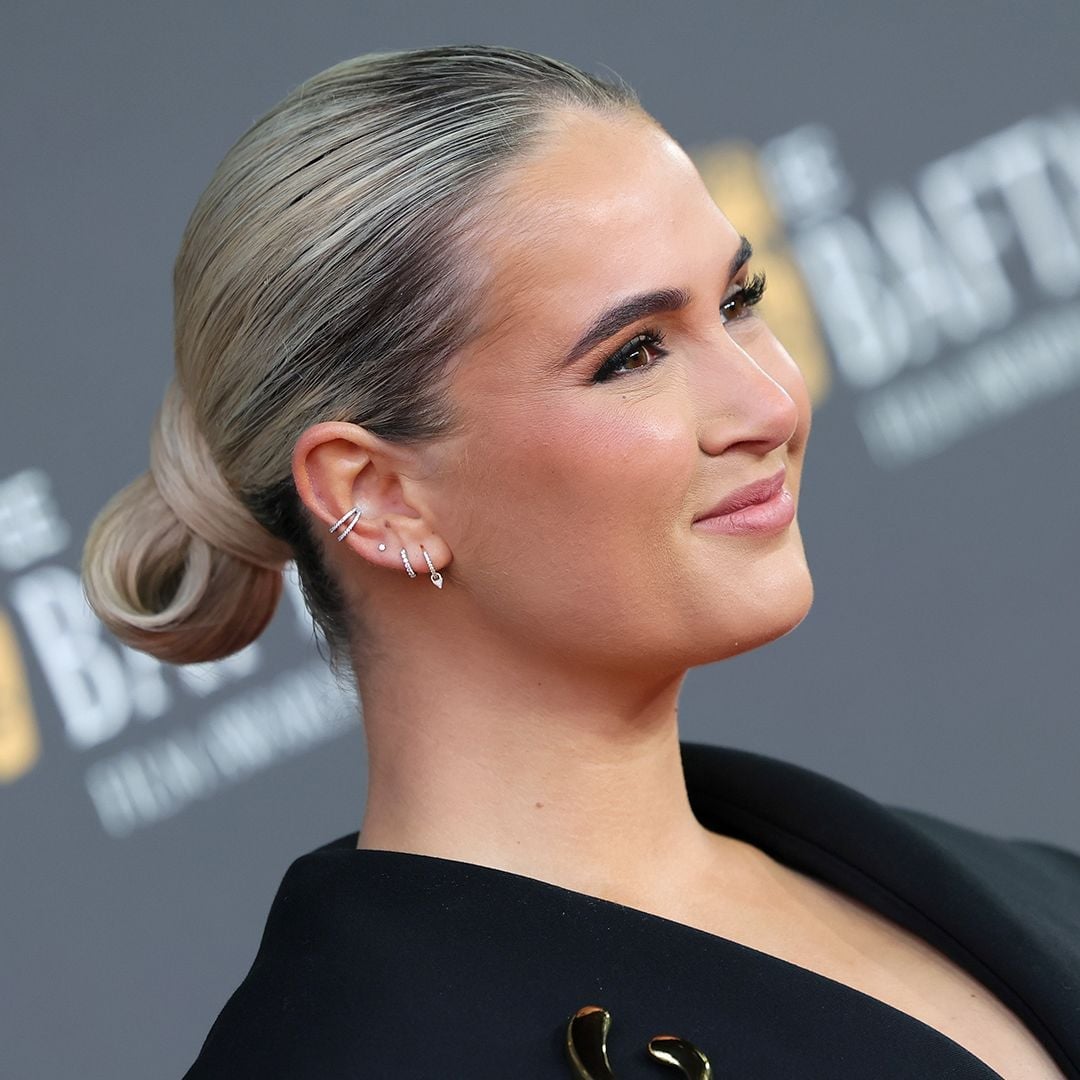
A shape this controlled can look severe on round or square faces, where it emphasizes width at the jaw instead of balancing it. Dense, straight hair from nape length handles the smooth finish best. Ask your stylist for: sleek low bun, light blonde, middle part. A smoothing serum on damp lengths before gathering reduces flyaways, and the bun holds firmly with pins and a light hairspray.
Blonde Mid-Back Updo Intricate Bun
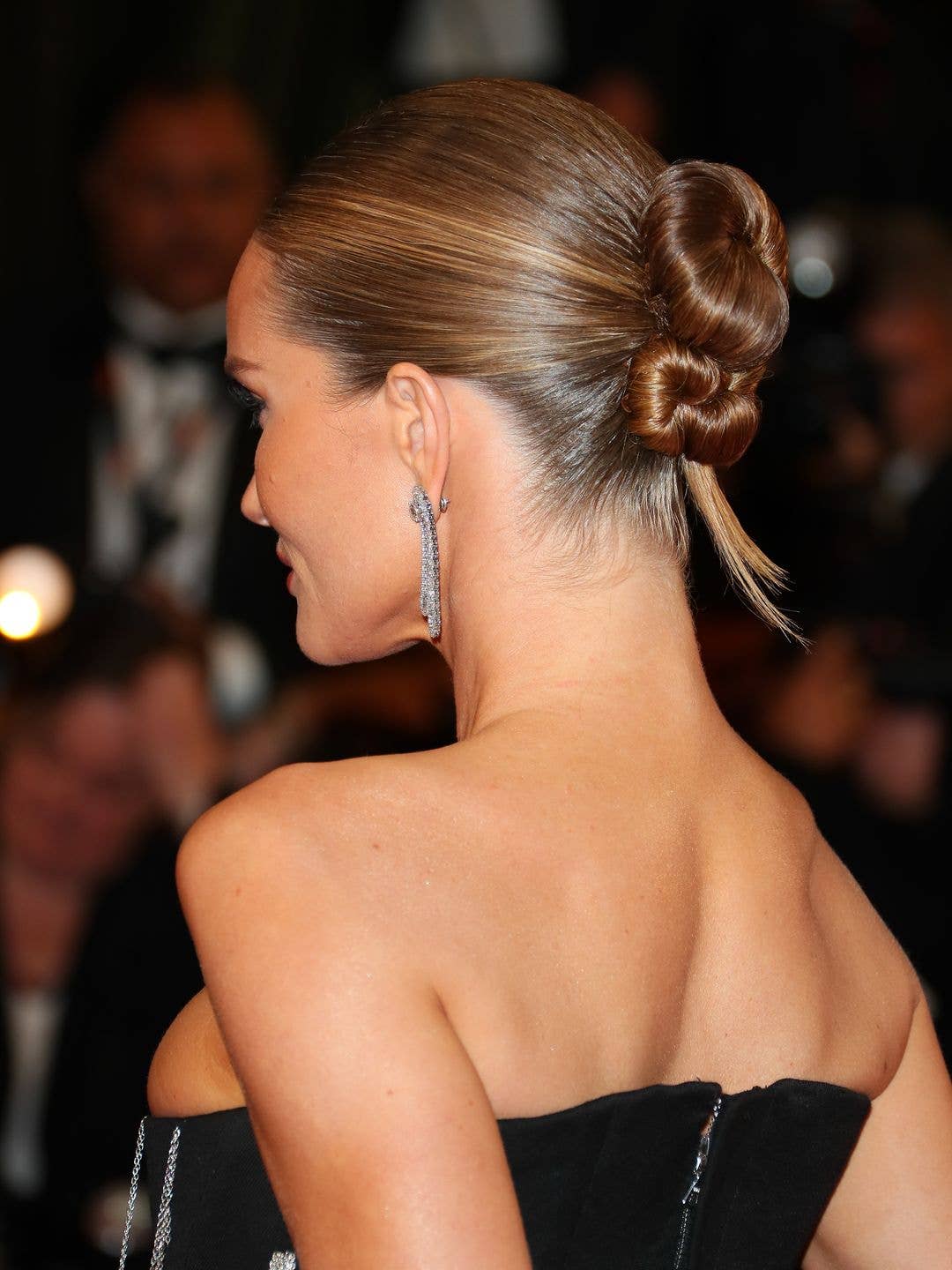
Courtesy of: hellomagazine.com
Can a slicked-back bun also feel intricate? Yes, when the hair is woven into a structured shape at the nape instead of twisted into a simple coil. The middle parting keeps the front clean, while the bun itself becomes the focal point, a gathered form with visible sections and depth. This works best on medium-textured, straight hair from mid-back length, since fine strands can lose the definition of the weave. Oval faces get the most balanced proportion from the centered part and gathered weight. Ask your stylist for: mid-back blonde updo, intricate bun.
Texture is the difference between a bun that stays and one that slips. Dry shampoo applied to the roots adds grip, and bobby pins crossed in an X pattern keep the shape secure through an evening. A strong-hold hairspray set at arm’s length finishes it without stiffness.
Thick Dark Brown Layers Slicked Back Mid-Back
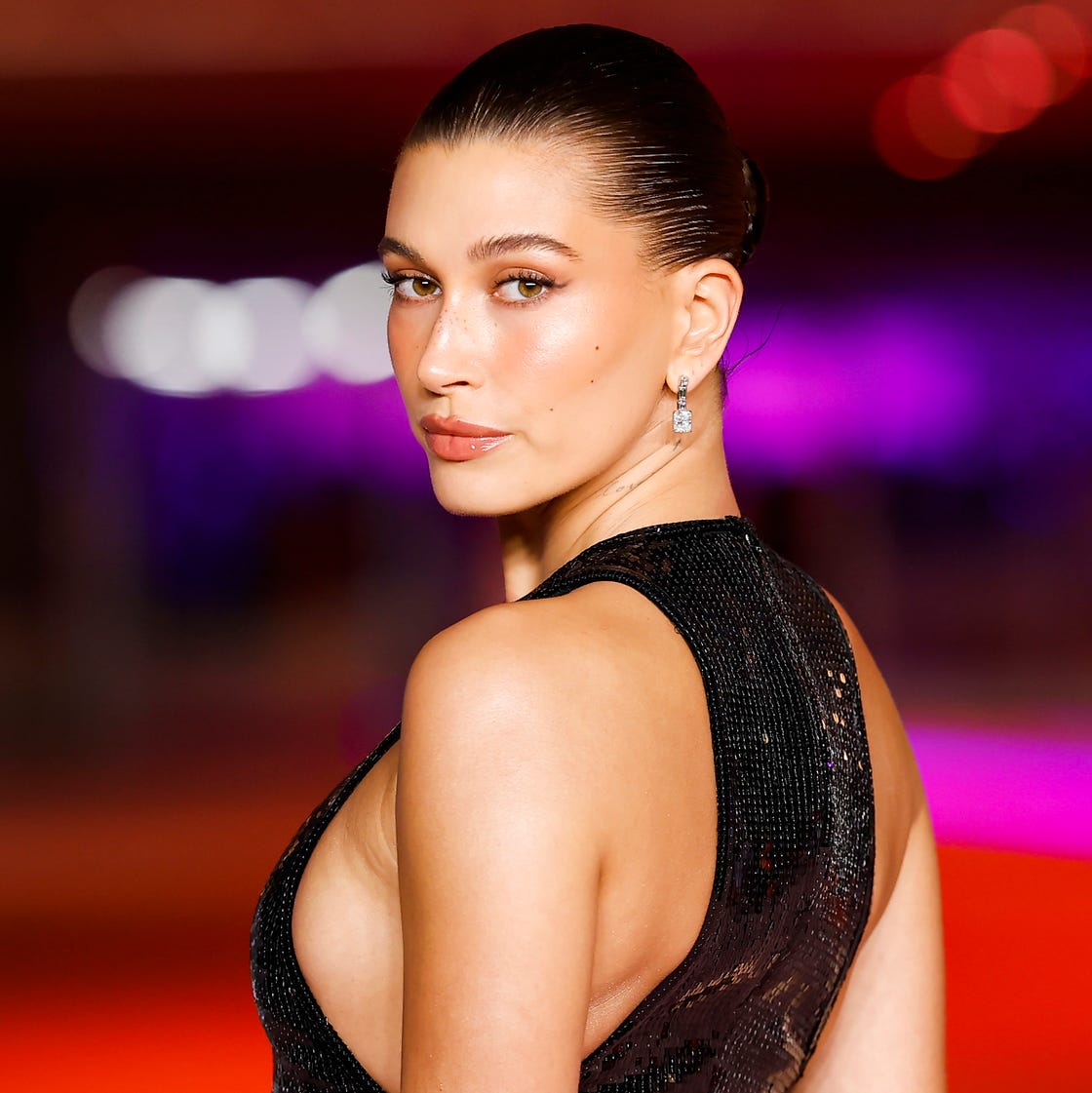
Photo credit: elle.com
A middle parting with layers slicked back to mid-back combines two demands: the polished surface of a slicked-back style and the movement that layers provide. The front view shows the clean lines pulling away from the face, while the layers prevent the weight from sitting as one solid block. Thick, straight hair carries this finish naturally, but the layers mean a flat iron is part of the routine. Each section needs a pass to match the rest. Ask your stylist for: mid-back slicked back with layers, middle part.
Upkeep involves more than a quick brush. A smoothing cream applied to damp hair before blow-drying controls the surface, and the layers will need a trim every eight to ten weeks to keep the ends from fanning out. The sleek finish holds for a full workday if a light hairspray is used after styling.
Black High Ponytail With Baby Hairs
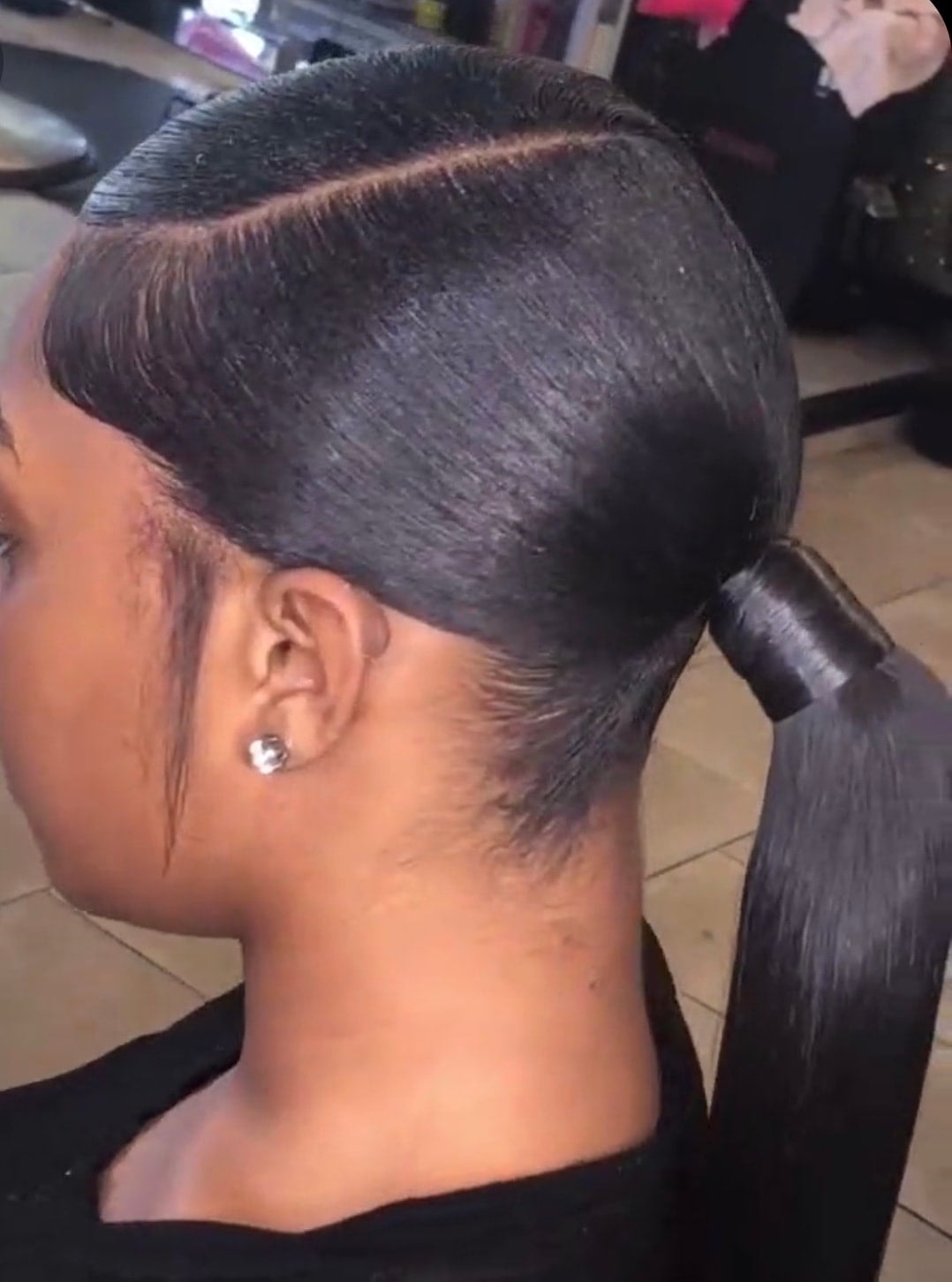
Image credit: mstyles.ueniweb.com
The mistake people make with baby hairs is treating them as an afterthought. A few wispy strands left to do what they want. That is not the look. The side-part high ponytail here is strict and smooth, and the baby hairs are shaped with intention: curved along the hairline, fixed with gel, each one placed. Thick, straight black hair from mid-back length provides the weight a high ponytail needs to stay lifted. Ask your stylist for: mid-back high ponytail, slicked back with styled baby hairs. The drawback is that this is not a five-minute style; shaping the baby hairs with a toothbrush and gel takes patience, and the ponytail needs a tight elastic to avoid sagging within a few hours. A DIY attempt without practice often ends with uneven edges.
Thick Dark Brown Mid-Back Bun
Via glamour.com
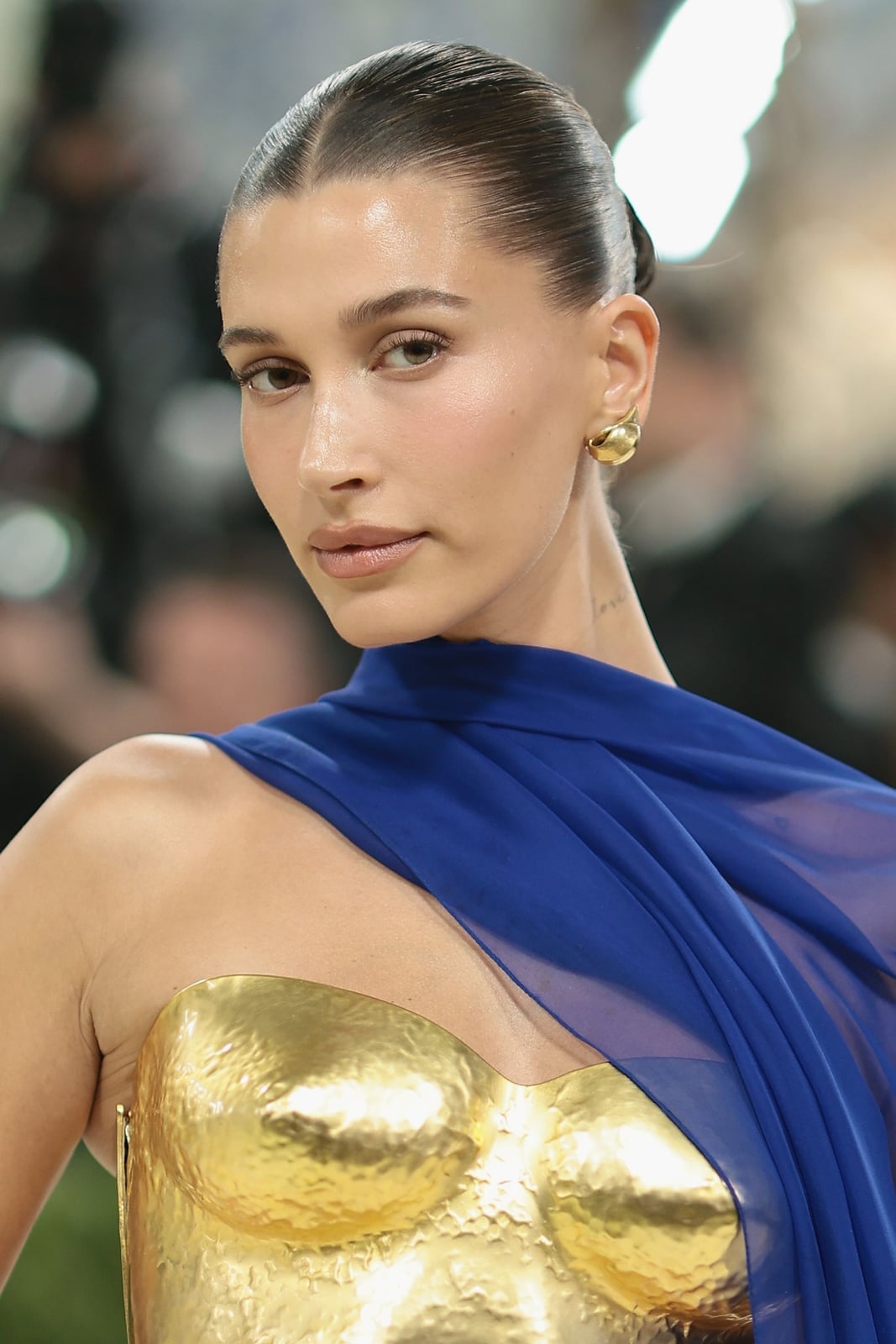
A high bun vs. a low bun is not a matter of preference. It is a matter of proportion. The high bun, gathered at the crown and slicked back, lifts the visual weight upward, which suits oval and long faces by adding height without widening the sides. The low bun, by contrast, sits at the nape and can shorten the neck. Thick, straight dark brown hair from mid-back length gives the density needed for a bun that does not look sparse. Ask your stylist for: mid-back slicked back bun, middle part. A smoothing cream on damp lengths before blow-drying creates the glossy surface, and the bun stays secure with pins inserted vertically into the base. The front view is clean, the crown is smooth, and the shape holds for hours without touch-ups.
Final Thoughts
Pick your slicked-back style by density. Fine hair holds a sleek low ponytail or a tight bun best, with a texturizing spray for grip. Thick hair can take the sharper, wet-look finishes without the shape collapsing. For round faces, let the length fall below the chin; for long faces, add volume at the sides.
- Trim blunt styles every six to eight weeks.
- Refresh wet-look shine with a light serum between washes.
- Use a strong-hold gel or pomade for all-day control.
- Always apply a thermal protectant before heat styling.
Master the art of the slicked-back look for everyday polish.
Hairstyle
20 Trendy Chocolate Highlights 2027 for Rich, Warm Tones
Trendy Chocolate Highlights 2027 for hair. See 20 rich chocolate brown and caramel ideas, from subtle to deep warm tones. Perfect for shoulder length hair.
Chocolate highlights are ribbons of warm brown painted through a deeper base, and they read softer than the old chunky stripes. The current version is lived-in color: a root shadow, hand-painted pieces, and a glossy finish, with soft face-framing layers and curtain bangs doing the shaping.
This collection gathers 20 chocolate highlight ideas, from subtle low-contrast blends to bold caramel and copper ribbons, across collarbone, shoulder and mid-back lengths. It solves the fine-hair problem of a color that falls flat and the grow-out line that shows up too fast. Trendy Chocolate Highlights work on straight, wavy and coily textures alike, and each option earns its keep in time and upkeep.
Dark Chocolate Base With Caramel Highlights
Courtesy of: crowncurlss.com
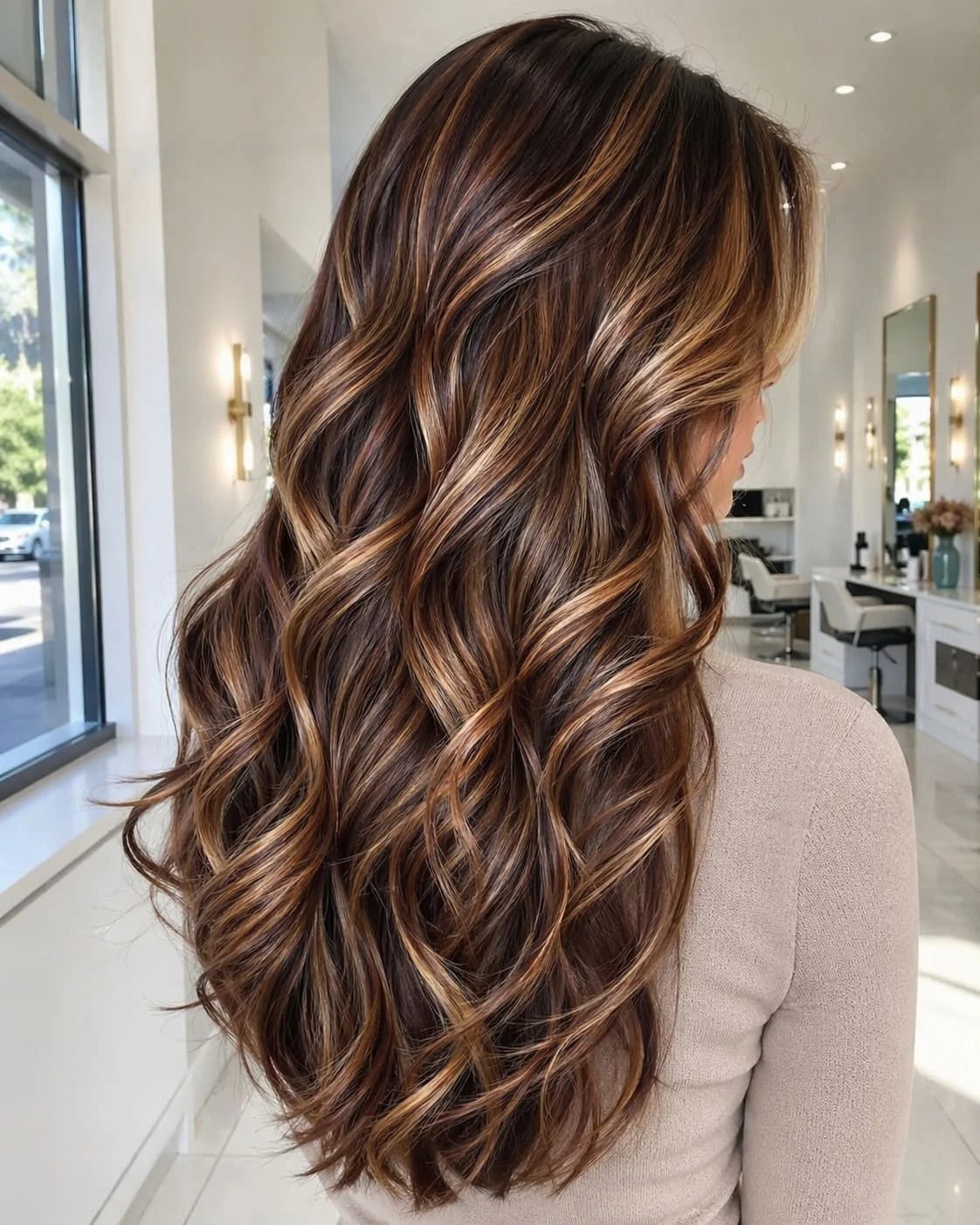
A side view of mid-back hair in loose waves shows how placement, not quantity, builds dimension: the caramel pieces sit where light would naturally hit, and the dark chocolate base between them stays deep. That is the whole trick behind dark chocolate caramel highlights. Your colorist weaves the lighter tone through the ends, keeps the root area close to the base, and lets the long layers do the separating. A side part helps, because it drops a wave over one shoulder and exposes the contrast underneath.
Ask your colorist for: dark chocolate base with subtle caramel highlights, long layers. Thick, wavy hair carries this amount of depth best, and mid-back length gives the highlights room to fade out gradually. Most face shapes suit it once the layers start below the chin. Plan on a trim every eight to ten weeks to keep the wave pattern clean.
Rich Chocolate Brown With Lighter Caramel
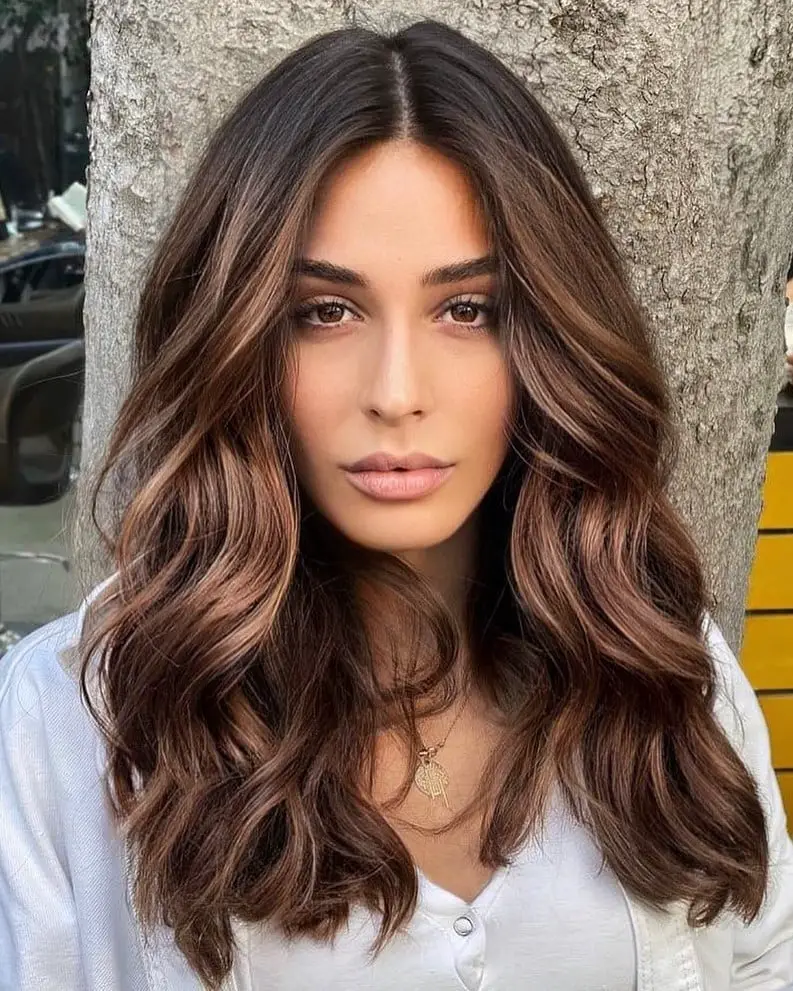
Photo credit: hadviser.com
Wondering whether this much warmth will overwhelm your face? It usually depends on the part, not the color. A middle part splits the lighter caramel evenly on both sides, which balances oval and long faces by adding width where it helps. Round and square faces get more from a slight side sweep, since one deeper panel breaks up the horizontal line.
Ask your colorist for: rich chocolate brown with lighter caramel highlights, smooth blowout. Thick, wavy hair at mid-back has enough body to hold the blowout, and the lighter pieces stay visible because the base is rich rather than flat. Fine hair can take the same shade with fewer, finer strands. Keep the shape with a trim every eight weeks and a gloss every six to eight to stop the caramel drifting brassy.
Shoulder Length Layers With Chocolate Highlights and Curtain Bangs
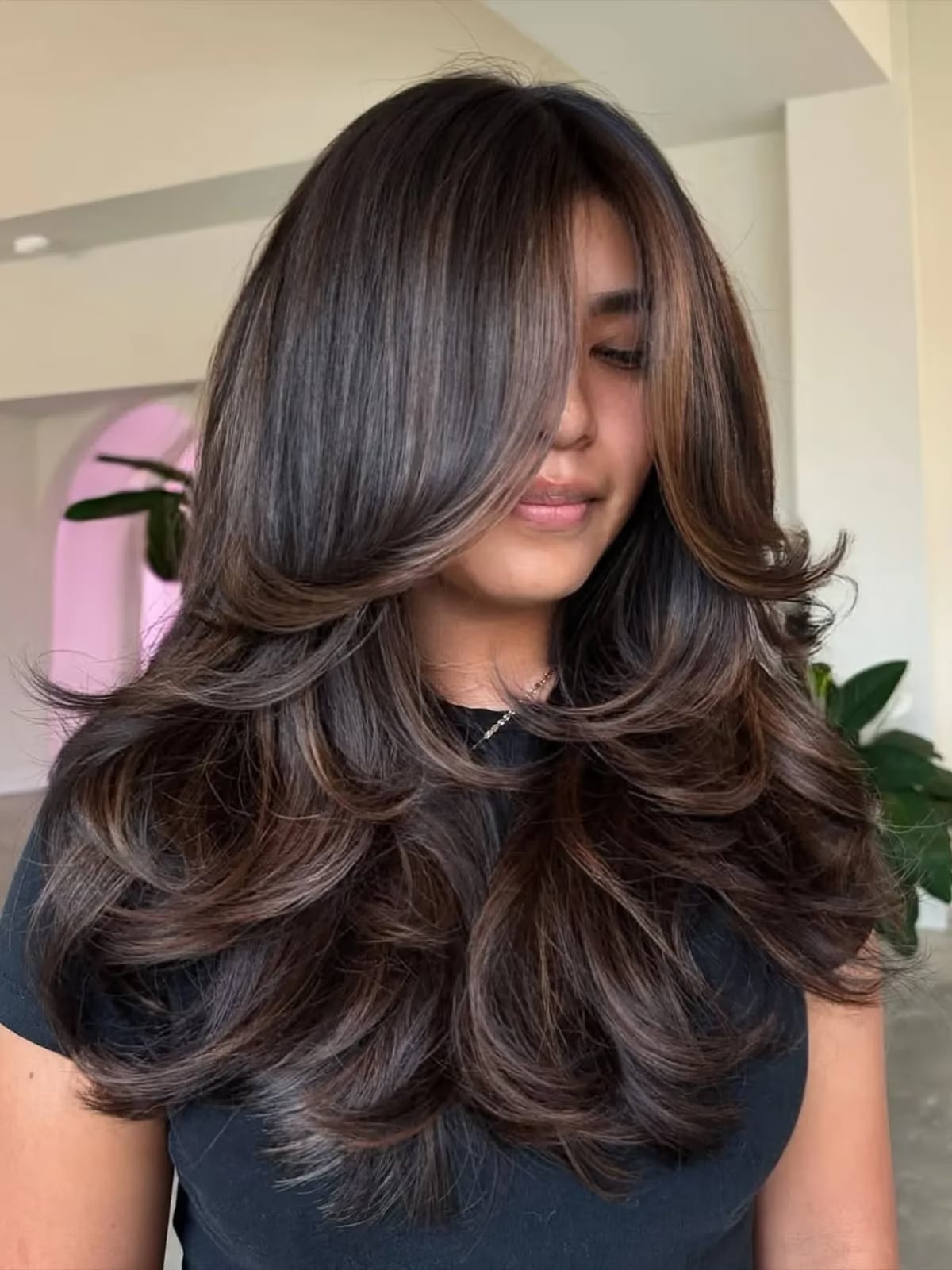
Image credit: wella.com
The voluminous blowout is doing most of the talking here, and it starts with the cut: shoulder length layers that stack movement through thick, wavy hair, with curtain bangs that sweep outward from a middle part. The dark brown base carries lighter chocolate highlights through the layers, so the color moves with the shape instead of sitting flat on top. Ask your stylist for: shoulder length cut with layers, dark brown base, lighter chocolate highlights, curtain bangs. For the volume, blow-dry the roots with a round brush, then direct the bangs to each side to keep that lifted curve.
Chocolate Brown With Subtle Brown Highlights
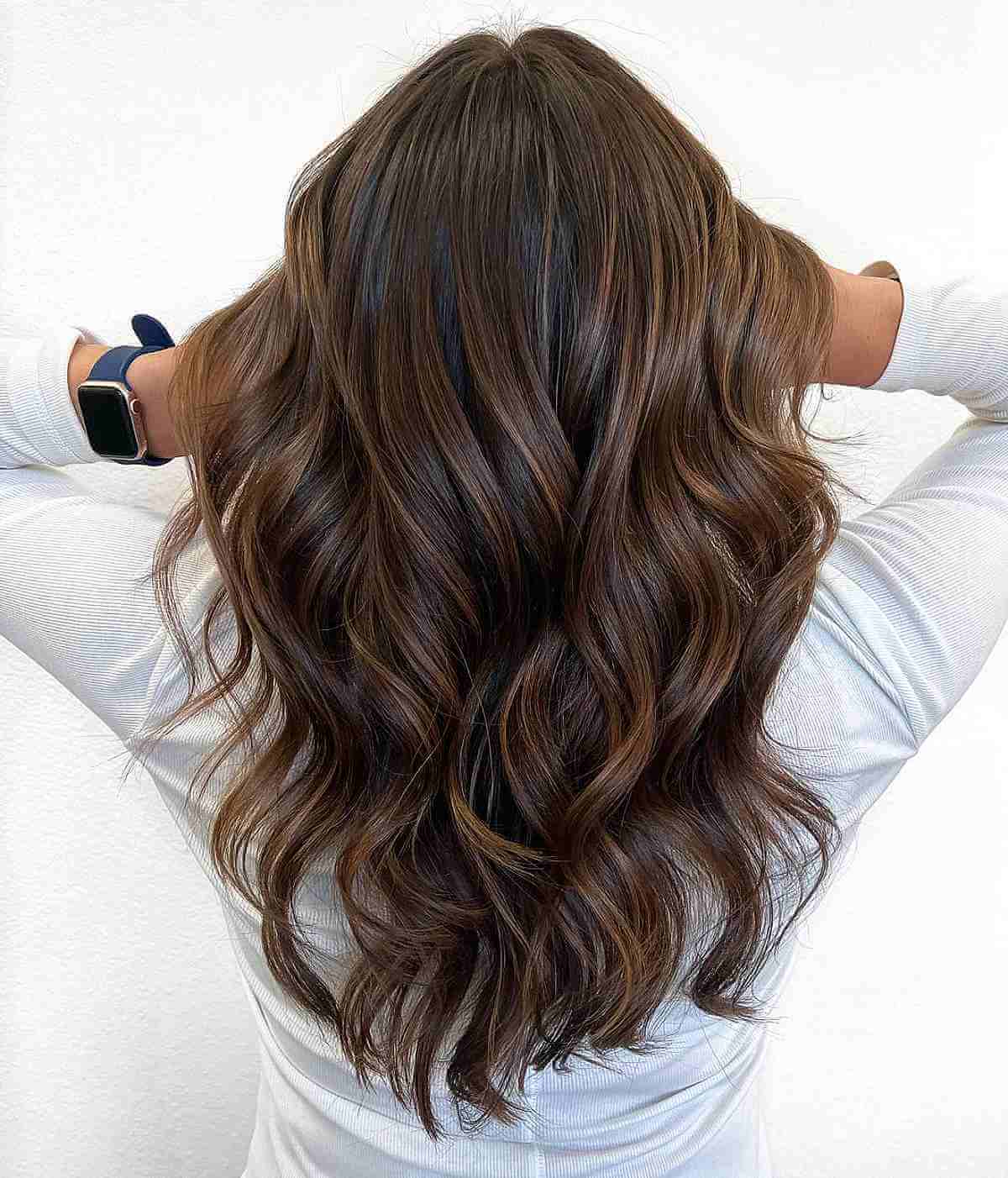
Source: latest-hairstyles.com
Subtle does not mean invisible. On a chocolate brown base, lighter brown pieces placed a shade or two up read as depth and movement from the back, which is exactly where most highlights get judged. The loose waves here do the rest, separating the strands so the tonal shift shows without a hard line anywhere.
Ask your colorist for: chocolate brown base with subtle lighter brown highlights, loose waves. Thick, wavy hair at mid-back wears this well because the natural pattern hides the grow-out; a middle part keeps it even. This is the low-maintenance end of the spectrum: roots stay blended for months, so a gloss every eight to ten weeks is enough between trims. Refresh the layers every eight to ten weeks as well. A texture spray on dry hair brings the wave back on day two.
Deep Chocolate With Warm Caramel Contrast
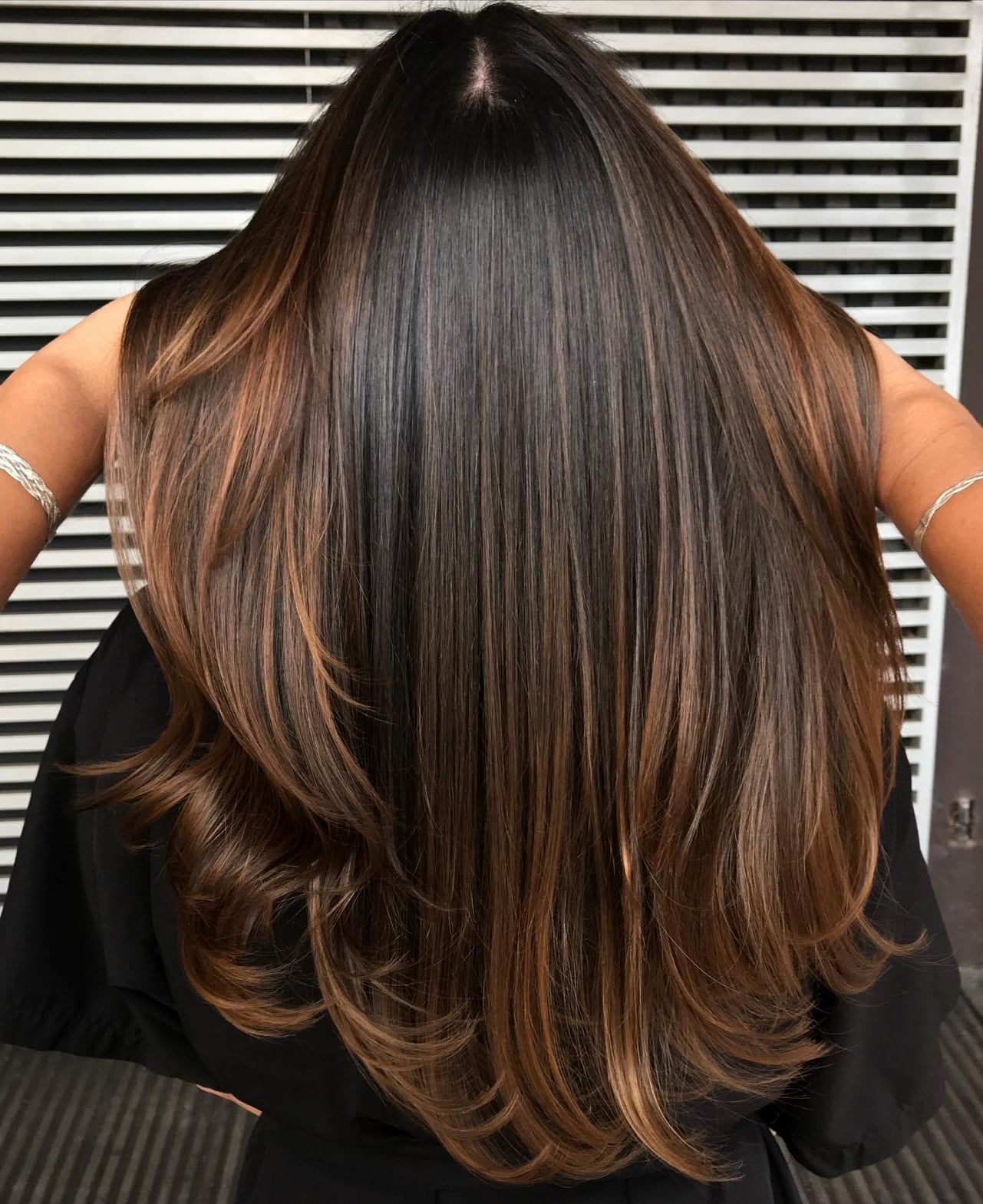
Via hadviser.com
Set this next to a soft, single-tone chocolate and the contrast is clear: warm caramel against a deep chocolate base jumps further than a subtle lighter brown ever will. Choose the contrast so the highlights register from across a room. Choose the subtle version to keep the color as one rich shade with movement.
Ask your colorist for: deep chocolate brown base, warm caramel highlights, smooth wavy blowout. Thick, wavy hair at mid-back holds the blowout that keeps the caramel pieces smooth and reflective. Oval and heart-shaped faces carry the middle part well, since the length below the chin does the elongating on its own. Warm tones drift brassy faster than cool ones, so book a toning gloss every six weeks and a trim every eight to ten.
Collarbone Length With Warm Chocolate Highlights
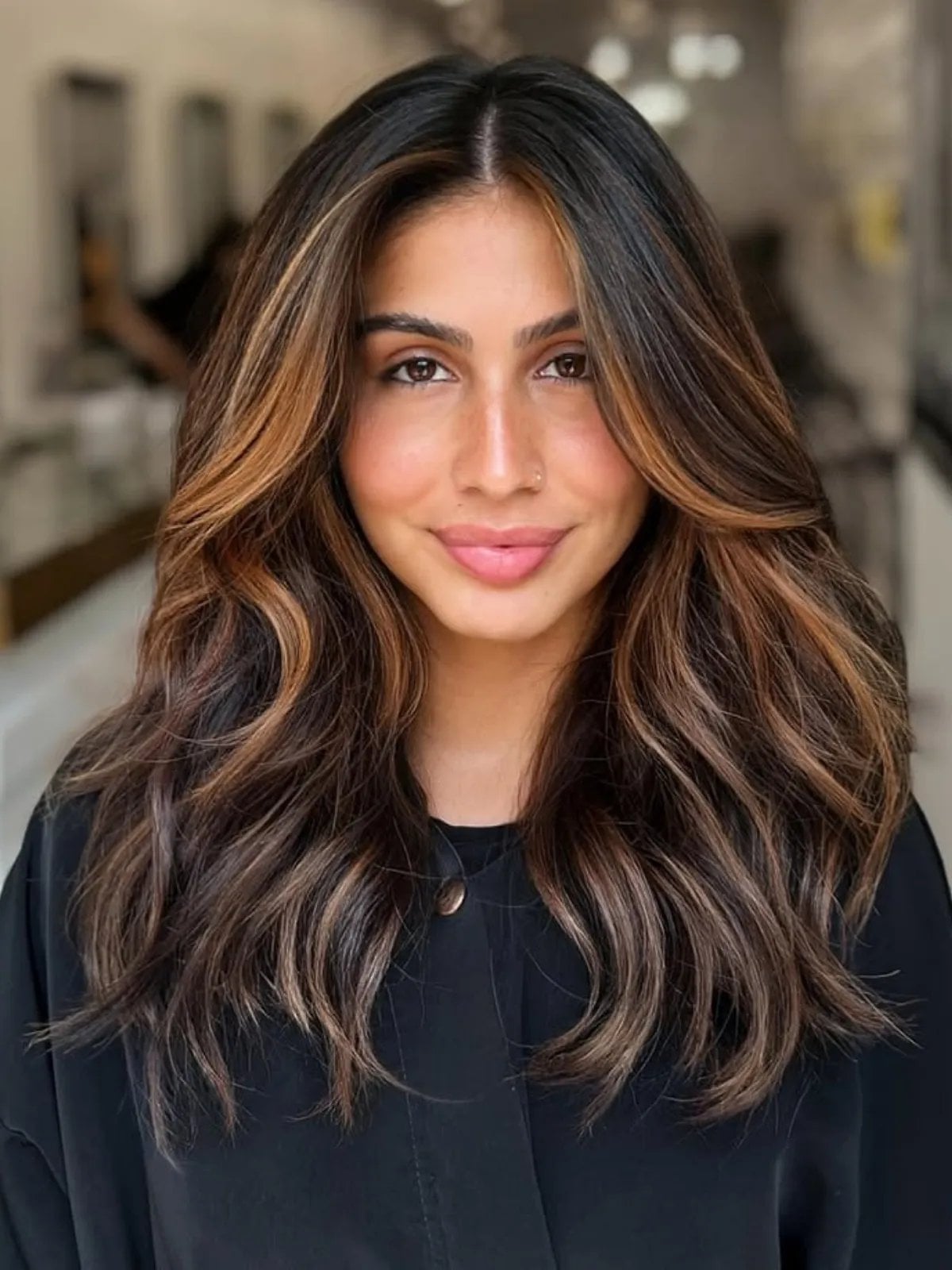
Courtesy of: wella.com
Wondering if warm chocolate highlights work for cooler weather? A rich dark brown base with warm chocolate strands woven through creates a lived-in effect that pairs well with sweaters and scarves. Thick, wavy hair at collarbone length gets an extra layer of depth, while curtain bangs soften the lines of a square or round face. Ask your colorist for: dark brown base, warm chocolate highlights, curtain bangs. Gently tousle the hair dry with fingers or a texture spray to keep that undone feel; plan on a trim every six to eight weeks to maintain the shape.
Mid-Back With Subtle Chocolate Highlights
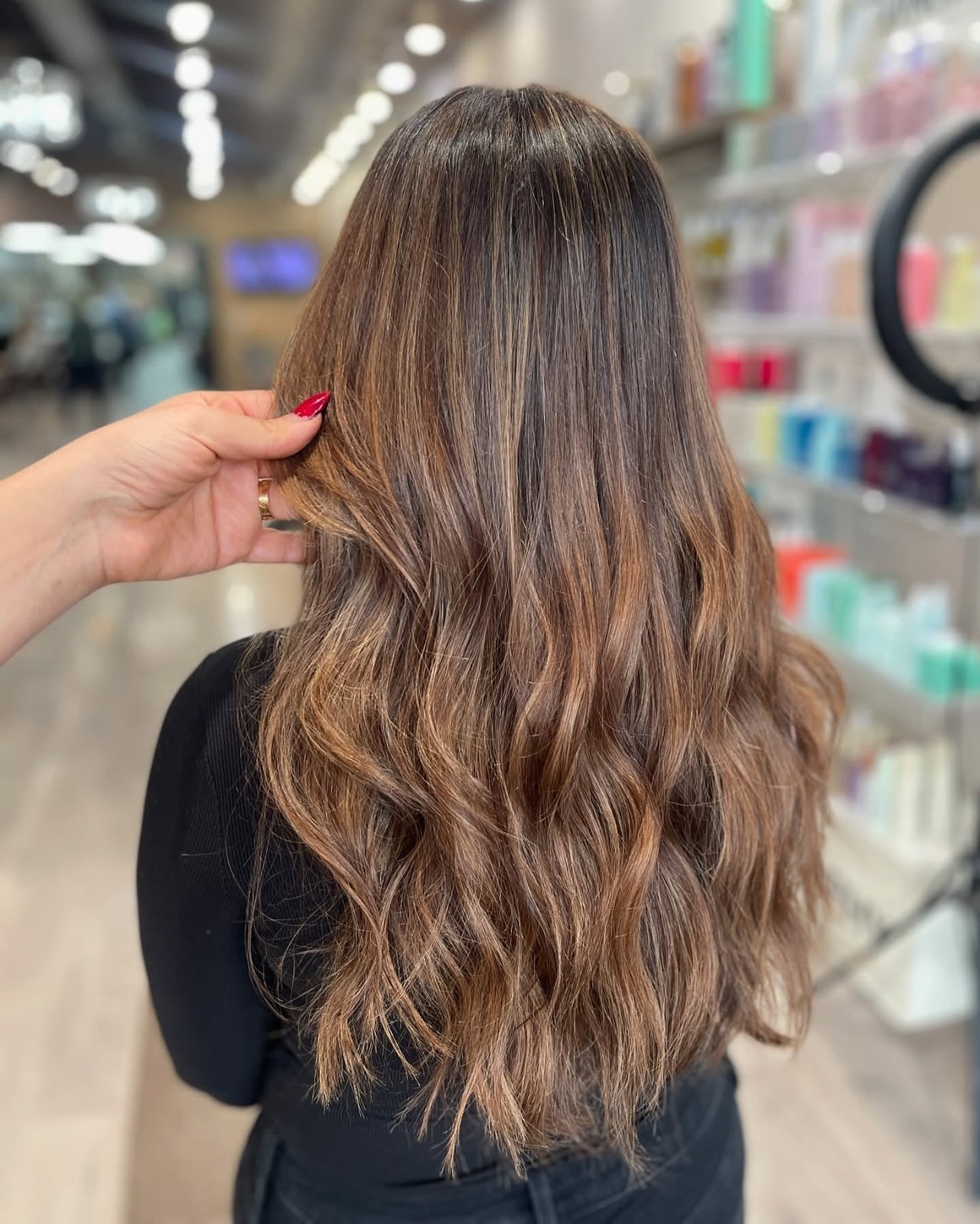
Photo credit: creativebooster.net
The appeal of subtle chocolate highlights is that they add dimension without drawing too much attention. A dark brown base with fine, delicate lighter strands throughout creates a blended effect that looks natural from any angle, especially on mid-back length, thick, wavy hair styled in loose waves with a middle part. Ask your colorist for: dark brown base, subtle chocolate highlights. This is a salon-only job: the highlights need to be painted close to the root to avoid a stripe effect. The grow-out line is softer than with chunkier highlights, so you can stretch a toning appointment to every ten or twelve weeks.
Dark Brown With Copper Highlights
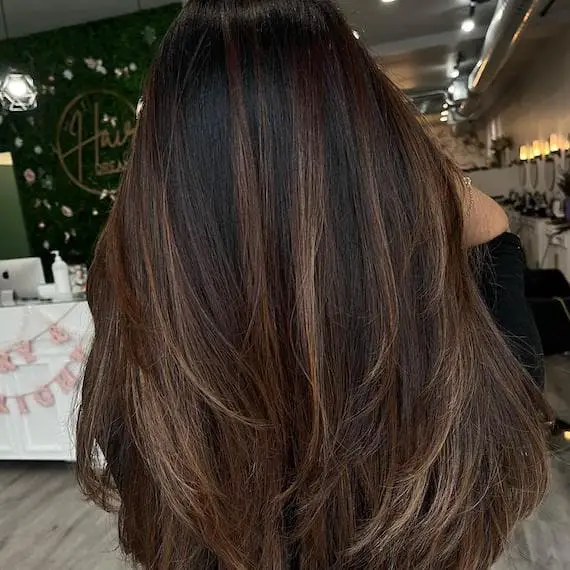
Image credit: us.wella.professionalstore.com
Copper highlights on a dark brown base work because of the contrast. The warm, reddish tones sit against the cool dark background, making each strand visible without looking brassy. On thick, straight, mid-back length hair with long layers, the highlights travel from mid-lengths to ends, catching light when the hair moves. Ask your colorist for: dark brown base, copper highlights, long layers. The trick is placement: the colorist sections the hair finely and applies the copper to thin wefts, so the effect is dimensional rather than solid. A flat iron smooths everything out; a heat protectant and shine serum keep the strands glossy and the copper tone from oxidizing too fast.
Deep Chocolate With Lighter Highlights
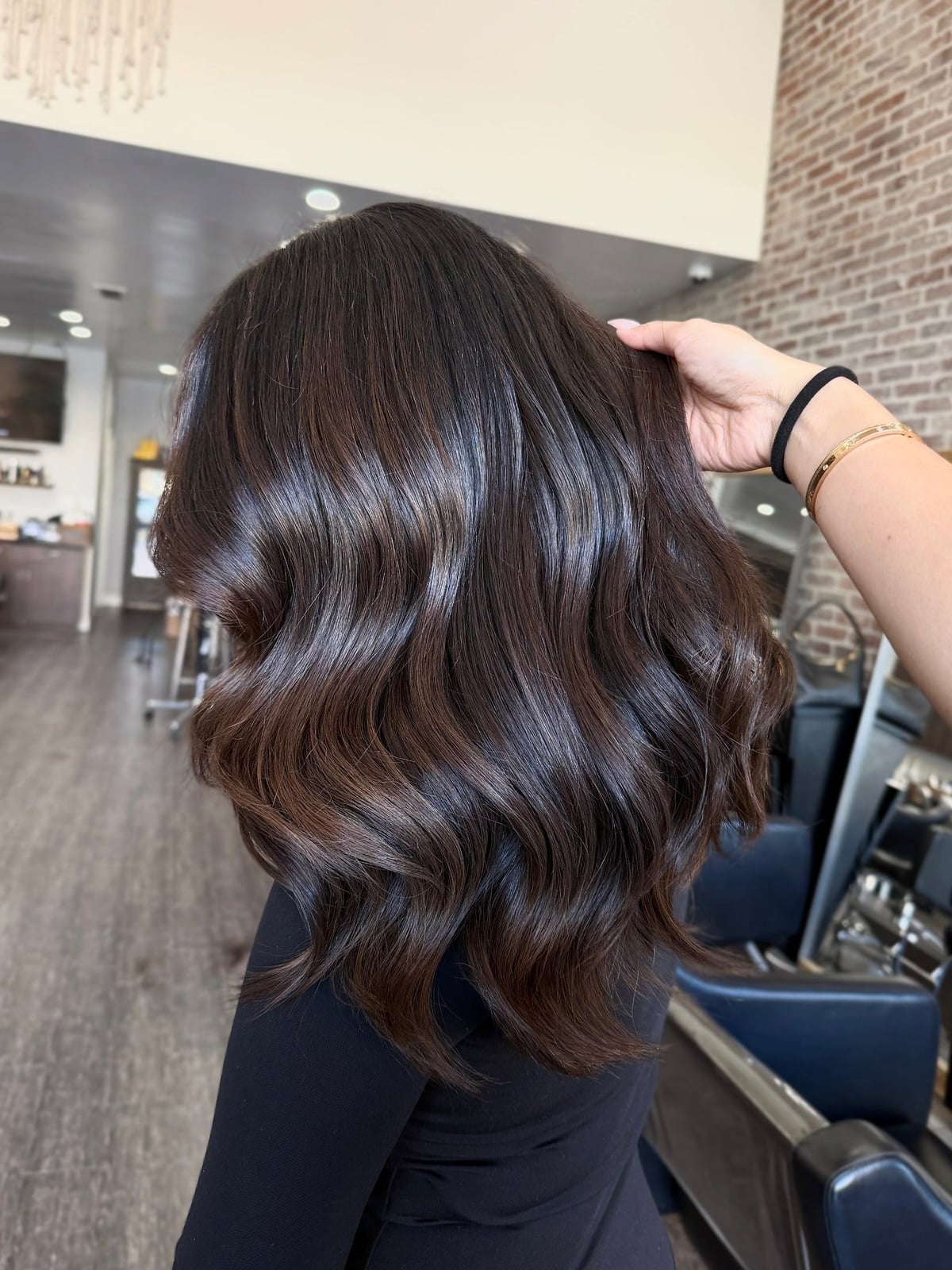
Source: creativebooster.net
A deep chocolate brown base with lighter chocolate highlights sounds subtle, but the difference shows in the shine. On thick, wavy hair styled in polished waves down to mid-back, the lighter pieces catch the light and create a soft, glossy finish that moves with the head. Ask your colorist for: deep chocolate brown base, lighter chocolate highlights, polished waves. The upkeep is straightforward: a toning gloss at the salon every eight weeks keeps the deep base rich and the highlights from turning muddy. Between visits, a medium barrel curling iron and a light hold hairspray maintain the uniform wave pattern.
Collarbone Length Chocolate With Soft Highlights
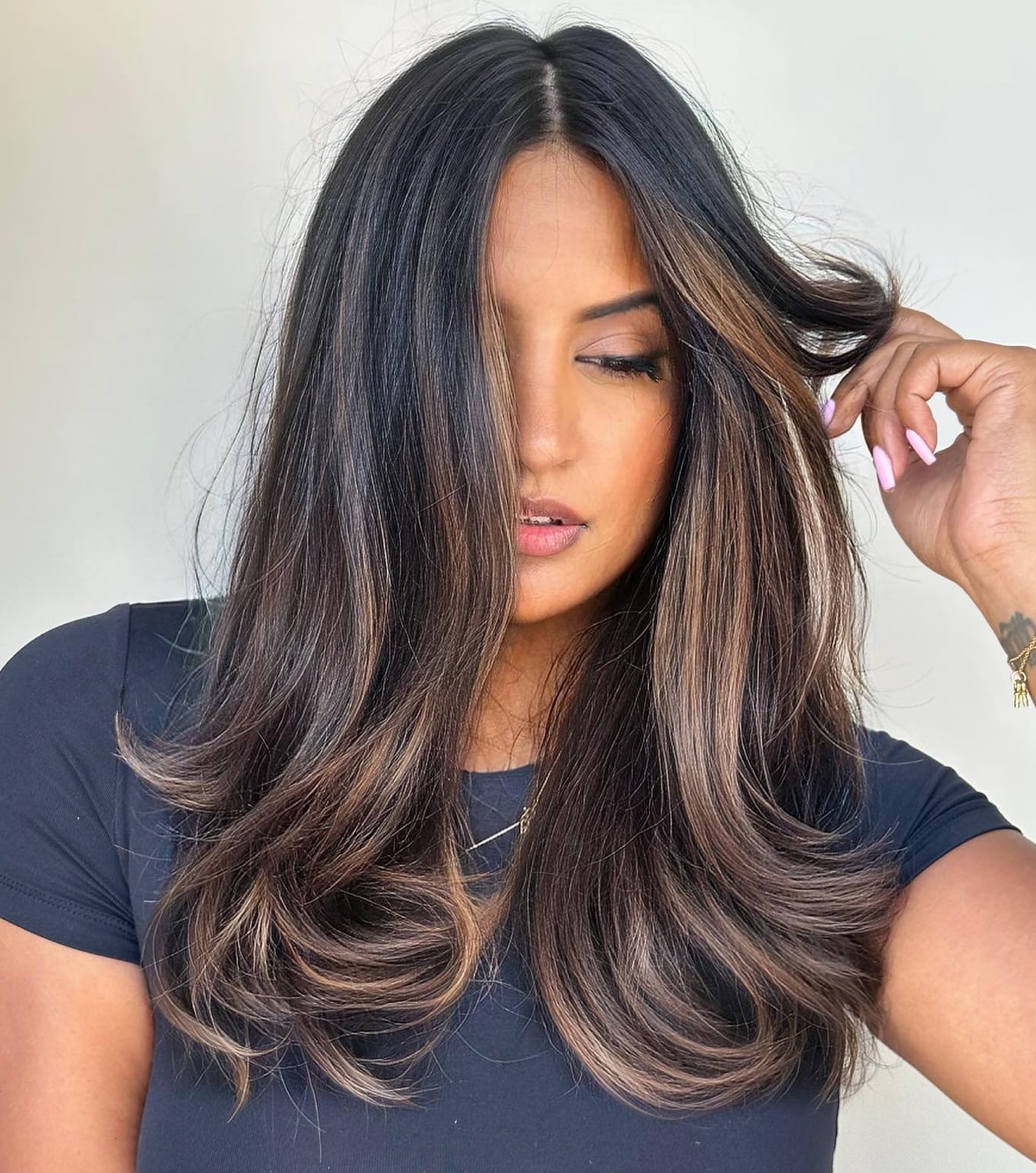
Source: hadviser.com
Collarbone length hair with soft chocolate highlights suits medium to thick textures best. The chocolate brown base acts as a neutral backdrop, and the subtle lighter brown strands add movement without calling for a full highlight schedule. A middle part elongates a round face, and the collarbone length keeps the weight from pulling the hair flat. Ask your colorist for: collarbone length, chocolate brown base, subtle lighter brown highlights, soft waves. A round brush and a hairdryer create the smooth blowout with soft ends; the cut needs a trim every six to eight weeks to prevent the ends from looking straggly.
Long Hair With Fine Brown Highlights
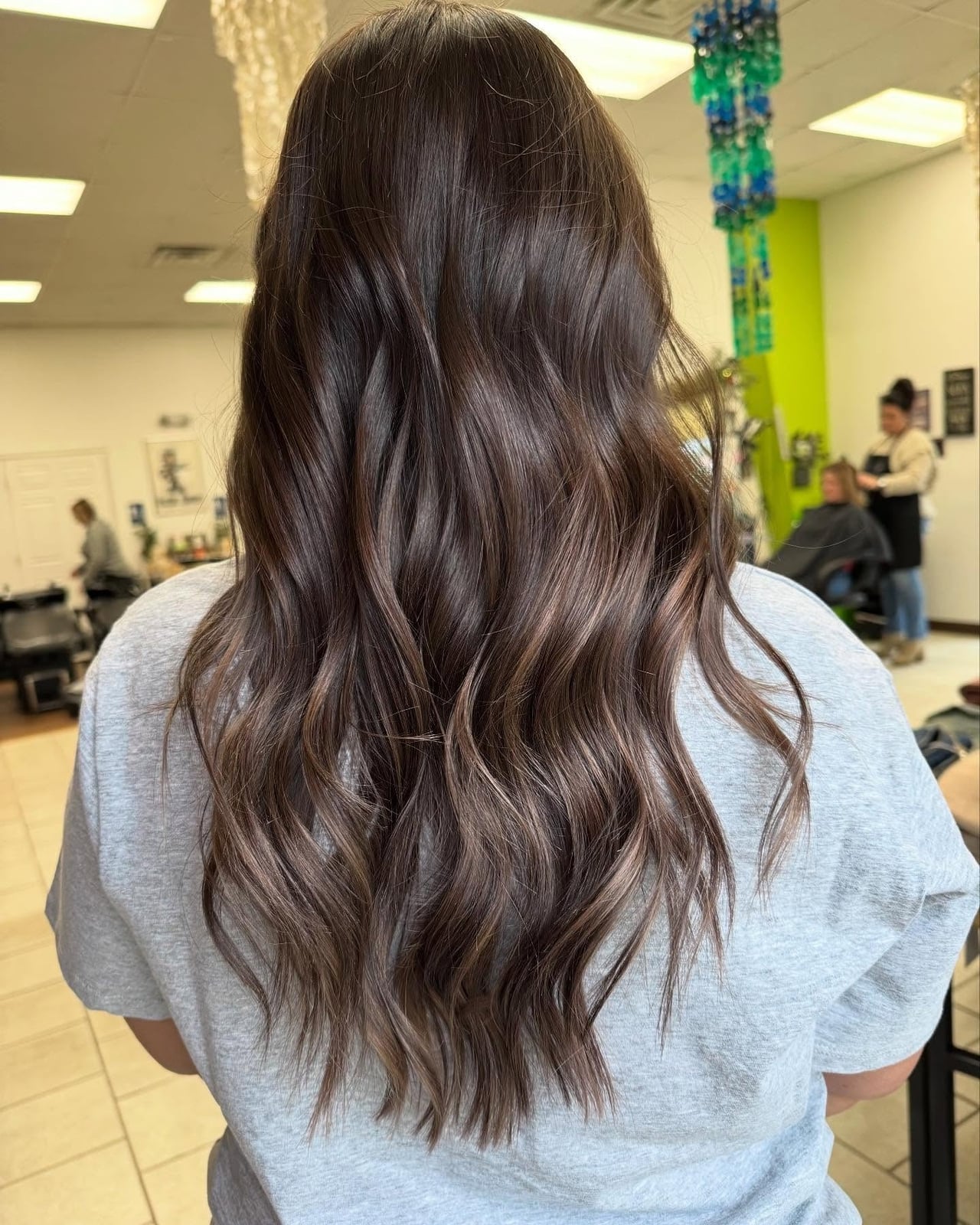
Fine, scattered lighter brown highlights through a chocolate brown base give the effect of sunlight on hair, not a color appointment. That is the whole trick with fine brown highlights on long hair: many small woven pieces, no chunk, no stripe. At home, the closest honest approximation is a temporary color-depositing foam or a root touch-up powder brushed through the hair, and neither lifts dark hair. Real lightening needs a salon, about three hours for mid-back length, and a patch test first if you are mixing anything.
Ask your colorist for: chocolate brown base, fine scattered highlights. If you want to try it yourself, strand-test on a hidden section, keep the lightener off the roots, and accept that a box kit cannot tell fine from chunky. Thick, wavy hair at mid-back holds loose natural waves best with a texture spray on damp hair and a scrunch, no brush. Skip the DIY and the salon keeps the tone even from root to end.
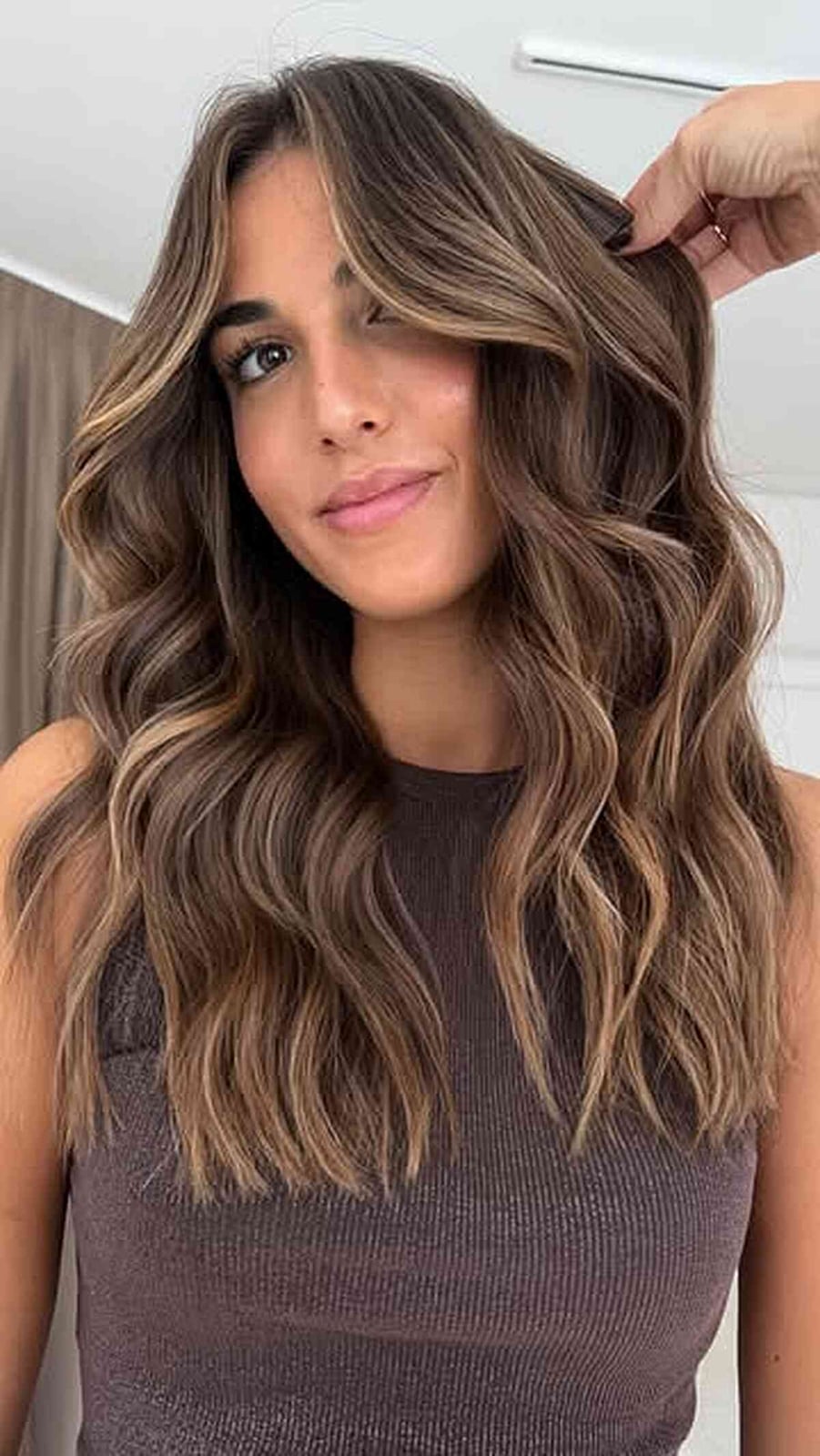
Dark Brown With Blonde Highlights
Courtesy of: latest-hairstyles.com
Blonde highlights on a dark brown base are the louder cousin of chocolate-on-chocolate: the contrast is wider, so every highlight shows. On collarbone-length thick waves with curtain bangs, blonde placed around the face does more work than blonde scattered through the back. Square and heart faces get softness from those face-framing pieces, while a round face does better with the lightest pieces kept below the chin. Ask your colorist for: dark brown base, prominent blonde highlights, curtain bangs. If subtle dimension is the goal, chocolate tones stay quieter; blonde is the version people notice across a room.
Rich Chocolate With Glossy Finish
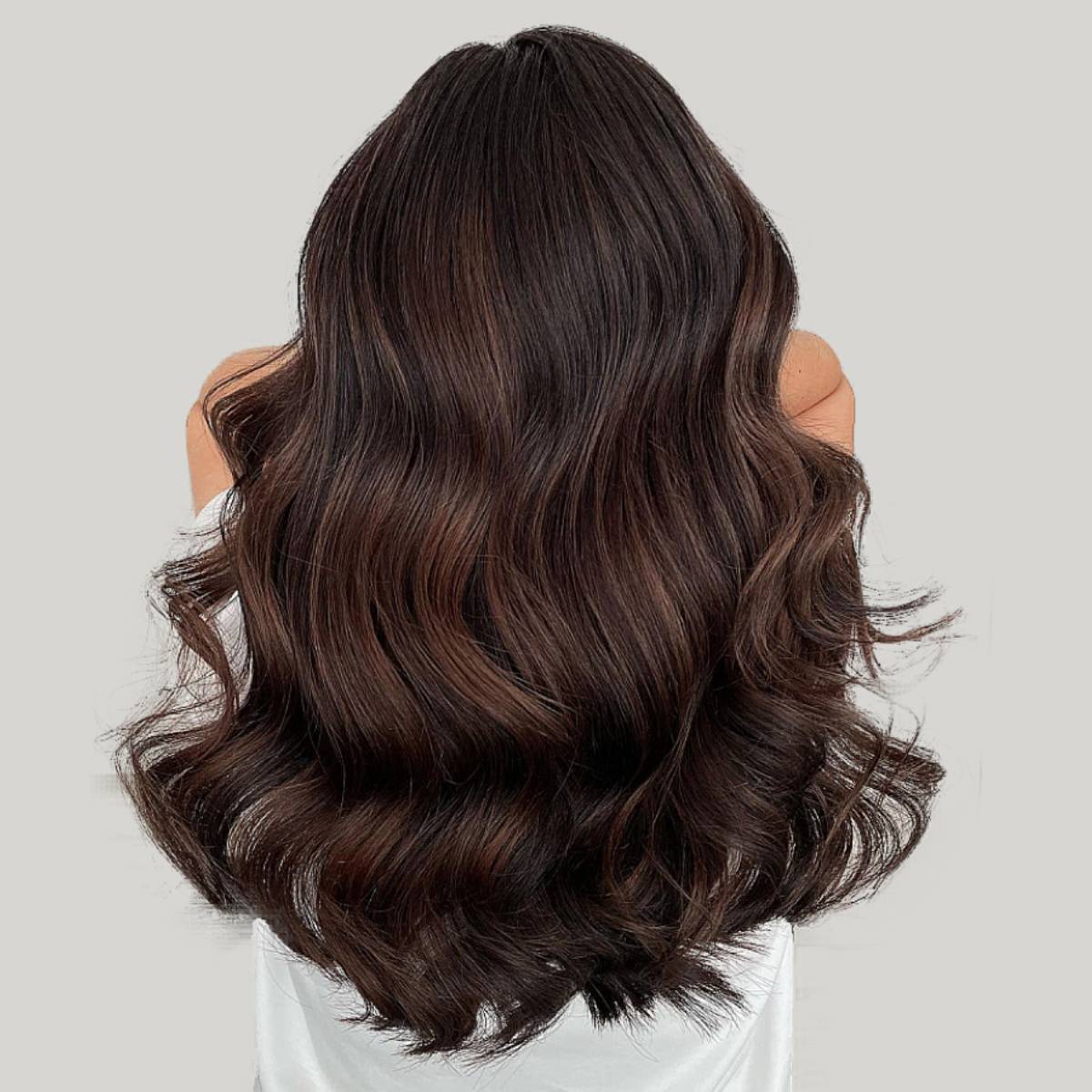
Photo credit: latest-hairstyles.com
Subtle lighter brown highlights through a rich chocolate base give dimension you notice in motion, not in a mirror check. The gloss does the rest: mid-back waves catch light along each bend, and the color looks deeper than it is. This is the low-contrast end of the chocolate spectrum, and the honest trade-off is upkeep. Chocolate brown is warm, and warm fades toward brass, especially on the mid-lengths where the light hits. A gloss or toning appointment every six to eight weeks keeps the shine and pulls the tone back in line.
Ask your colorist for: rich chocolate brown base, subtle lighter brown highlights, glossy finish. Thick, wavy hair at mid-back carries the shine without looking flat, and a middle part keeps the light moving evenly. Skip this one if you want a color you can ignore for three months: the upkeep is the price of the gloss. Style with a shine serum on dry lengths, trim every eight to ten weeks, and the finish stays sharp between appointments.
Chocolate With Caramel Highlights And Money Piece
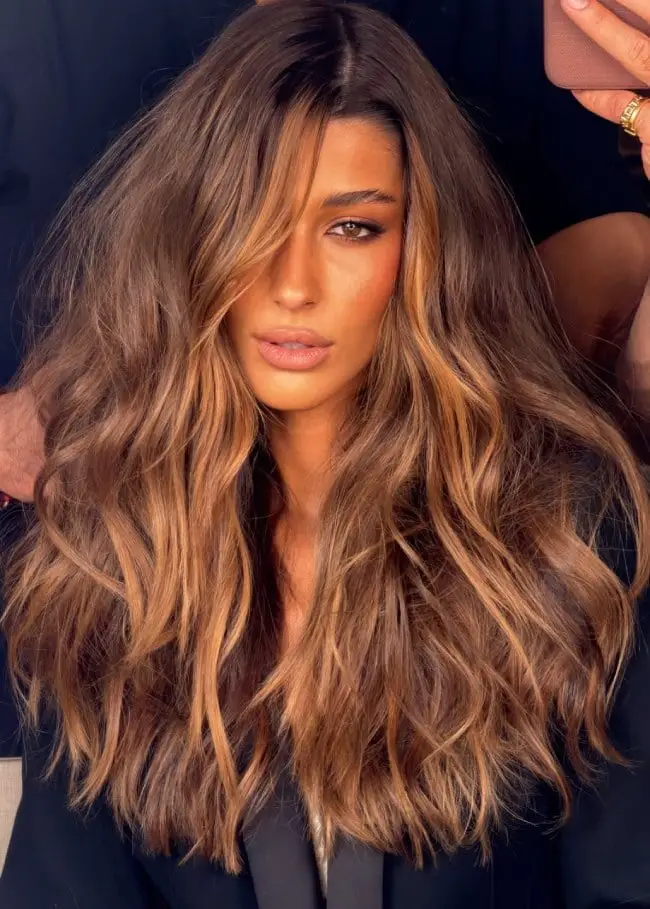
Image credit: itakeyou.co.uk
A money piece is the one highlight you can point to: a brighter caramel section right at the face, set against a chocolate brown base. On long, thick waves it does the work of a face frame without a fringe, which is why round and square faces tend to like it. The other highlights stay caramel but softer, so the front is the plan and the back is the support.
Ask your colorist for: chocolate brown base, caramel highlights, money piece, long layers. Bring the words in this order, because the money piece placement is the part that goes wrong: it should start at the parting and follow the hairline, not sit in a block. A short list to repeat back: caramel, not blonde; money piece at the face; long layers for movement; tone matched to the base. Long hair means a longer appointment, so plan on the afternoon.
Deep Chocolate With Subtle Highlights
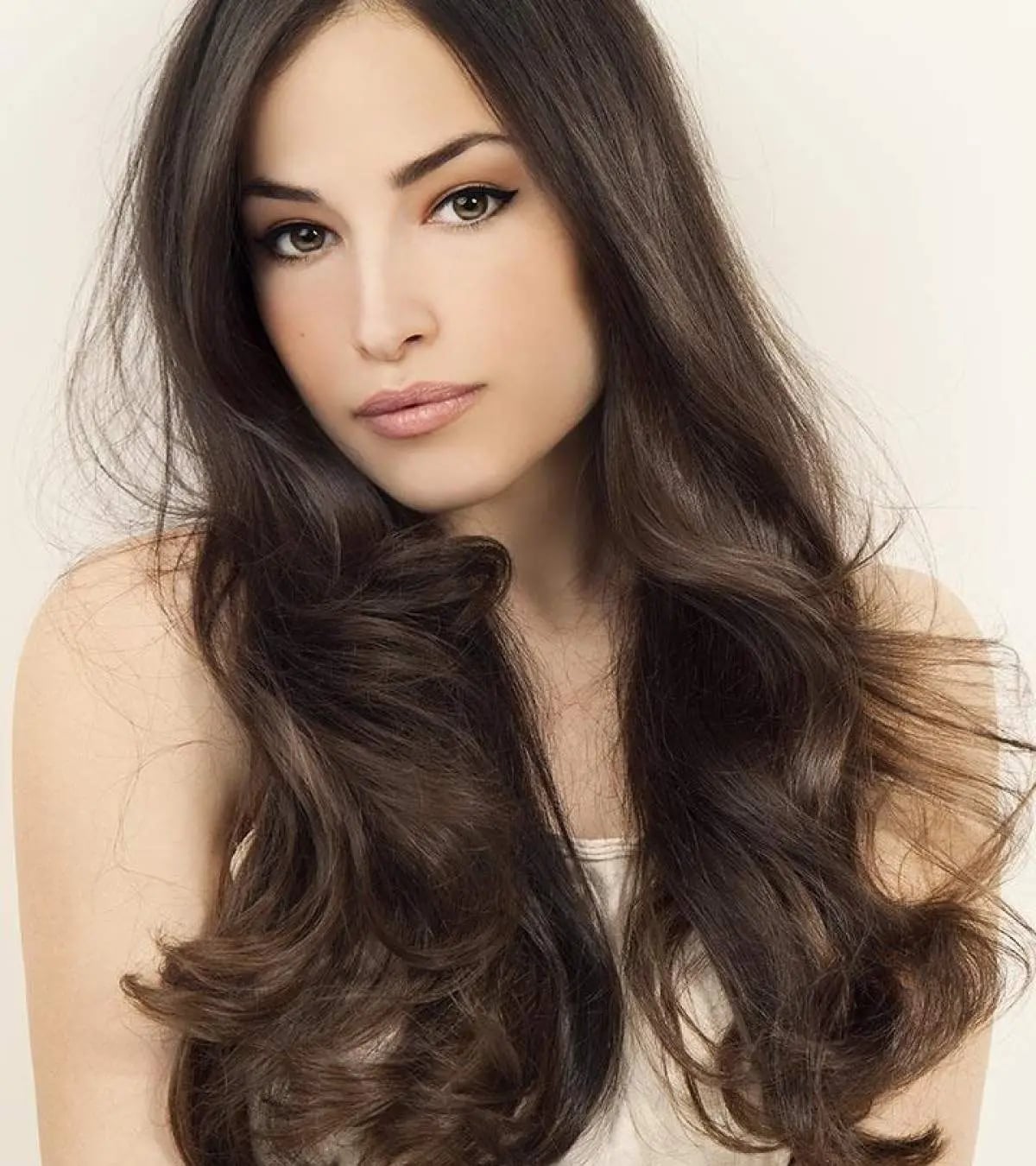
Source: stylecraze.com
Deep chocolate with finely woven lighter pieces is a natural looking color, which is also why it demands a schedule. The gloss fades first, usually within three or four weeks, and the subtle highlights start to look flat before the base does. Plan on a gloss or toning appointment every six to eight weeks and a trim every eight to ten. Ask your colorist for: deep chocolate brown base, subtle finely woven highlights, high-gloss finish. Thick waves at mid-back with face-framing pieces hold the shine longest when you use a smoothing cream and a boar bristle brush.
Chocolate Base With Soft Layers And Bangs
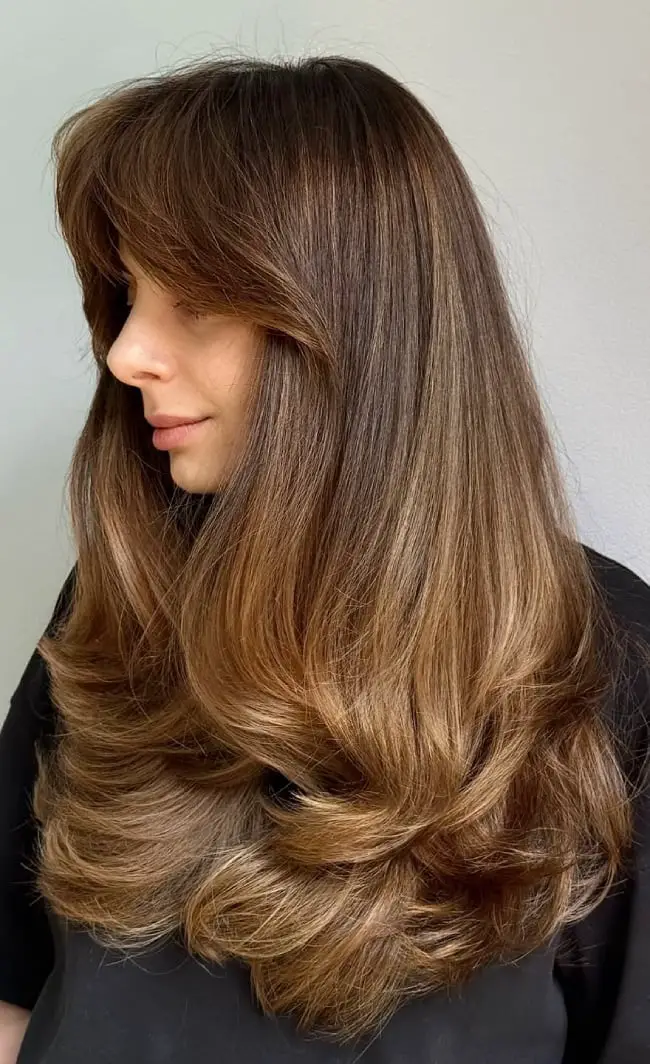
Via fabmood.com
Balayage is the technique that keeps a chocolate base intact while lighter brown highlights travel through mid-back layers and curtain bangs, because the lightener is painted freehand instead of wrapped in foil. That freehand placement is why the highlights sit where the soft layers fall, not in uniform stripes. Thick, wavy hair carries the dimension best, and the glossy finish comes from a toner applied over the whole head at the end. Curtain bangs soften a square or round face by breaking the forehead line without cutting a hard fringe.
Ask your stylist for: chocolate brown base, lighter brown highlights, curtain bangs, soft waves. The cut matters as much as the color here: soft layers through mid-back length let the lighter pieces show as the waves move. Plan on a trim every eight weeks to keep the layers from collapsing into one weight line, and a gloss every six to eight weeks to hold the shine. Styling means a round brush on the bangs, directed to each side, then a blowout with soft waves through the rest.
Chocolate Brown With Caramel Highlights And Curtain Bangs
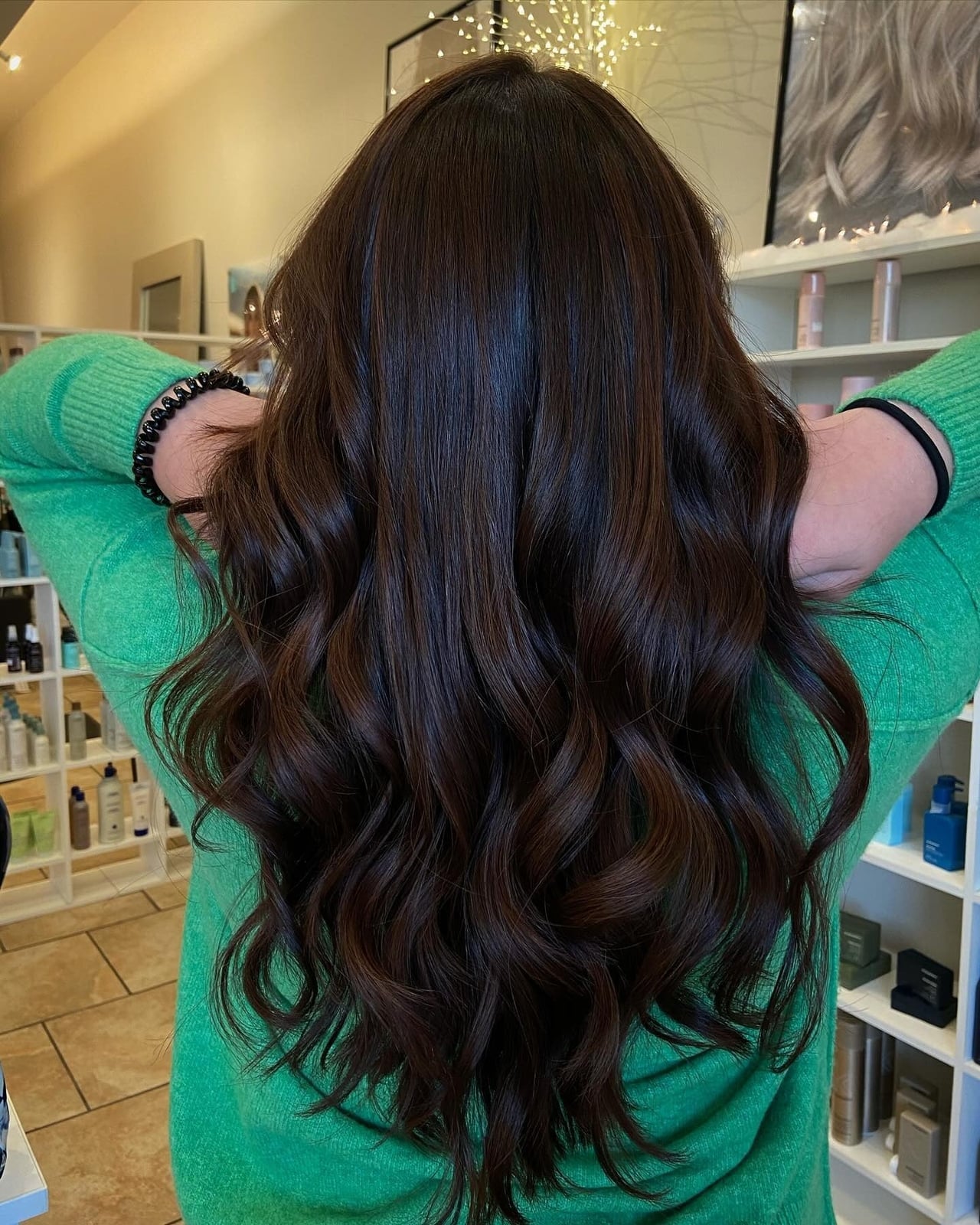
Courtesy of: creativebooster.net
Wondering whether face-framing layers will work on your face shape? With a chocolate brown base and caramel highlights, the answer usually depends on the bangs, not the color. Curtain bangs that fall below the brow soften a square jaw and round cheeks, while a long face does better with a little less volume right at the temples. Thick, wavy hair at mid-back length gives the blowout something to hold onto; fine hair will read flatter through the same cut.
Ask your stylist for: chocolate brown base, caramel highlights, curtain bangs, voluminous blowout. Caramel against chocolate is a warm contrast, so the face-framing pieces need to be placed deliberately rather than scattered. Skip it if you wear your hair up most days, since curtain bangs need styling to sit right. Otherwise, roots get a volumizing spray before drying and the bangs get a round brush. A trim every six to eight weeks keeps the shape sharp.
Deep Chocolate With Subtle Caramel Highlights
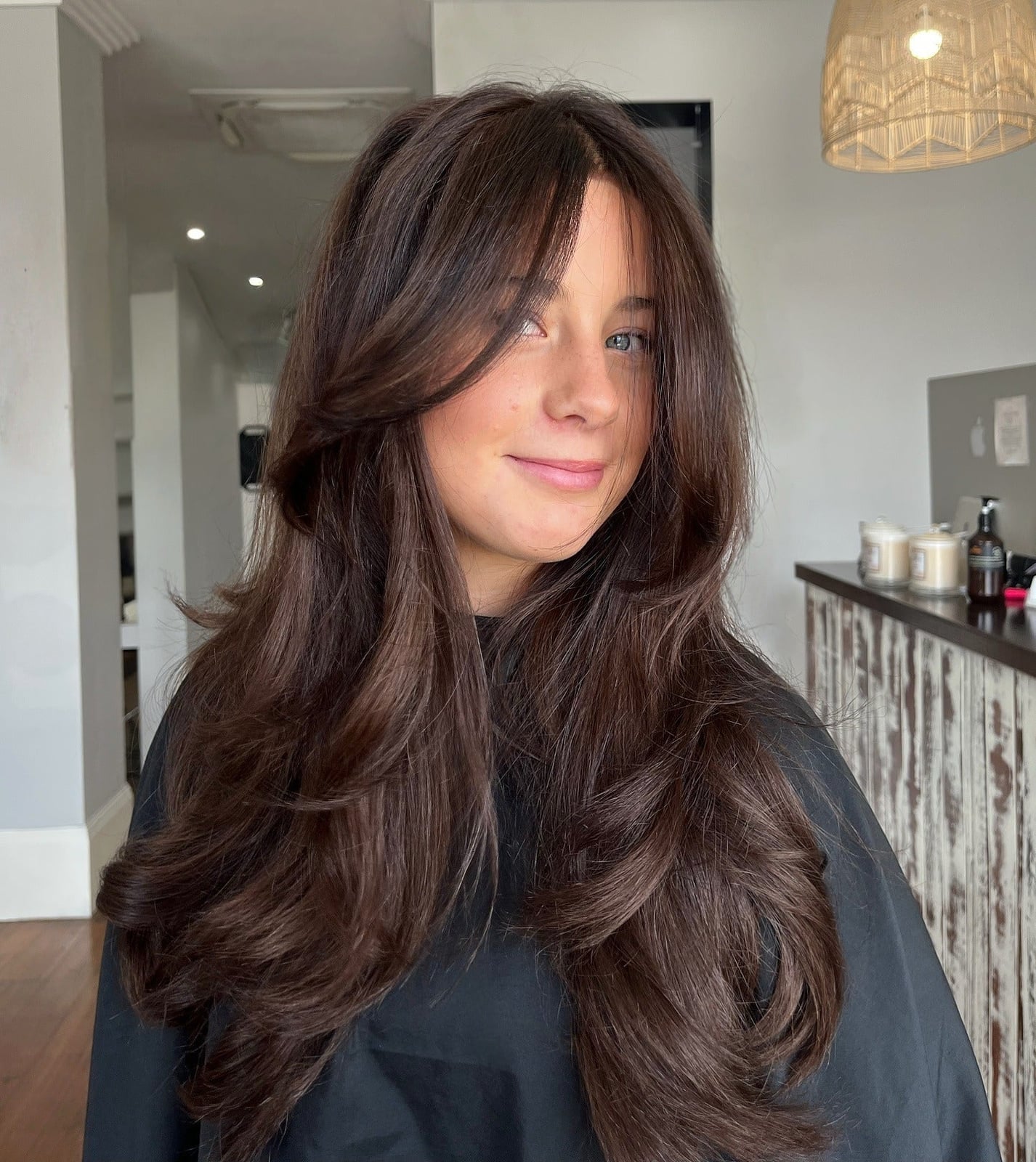
Photo credit: creativebooster.net
Deep chocolate with subtle caramel highlights is the color that makes most sense from October through February, when a warmer base reads richer under low light. The caramel sits close enough to the base that regrowth stays quiet, and soft waves through mid-back layers keep the whole thing from looking flat. Curtain bangs and a middle part finish it. Ask your colorist for: deep chocolate base, subtle caramel highlights, curtain bangs, soft waves. Thick, wavy hair holds the tone best, and a gloss every eight weeks keeps the depth intact.
Rich Chocolate Brown With Glossy Shine
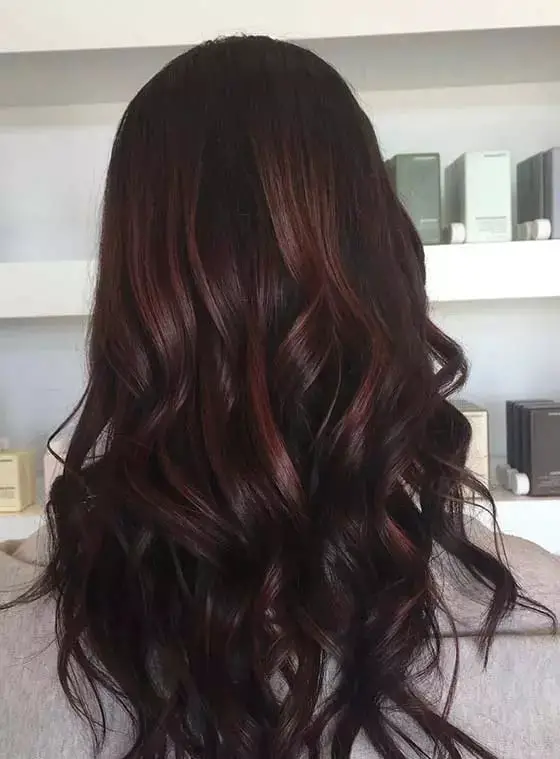
Image credit: stylecraze.com
A rich chocolate brown base with subtle lighter highlights gets its shine from the toner, not the cut, which is why the at-home version rarely matches a salon result. Drugstore glosses sit on the surface and wash out in about two weeks, while a professional gloss is formulated for your starting depth and lasts closer to six. The highlights themselves are the harder part: painting lighter pieces through mid-back length without banding takes practice, and a box kit cannot tell where your layers fall.
Ask your colorist for: rich chocolate brown base, subtle lighter highlights, soft waves, glossy shine. If you want to stretch time between appointments, a color-depositing mask once a week keeps the chocolate from going flat, and a finishing serum on dry hair smooths the surface. Thick, wavy hair shows gloss better than fine hair because the cuticle reflects more light. Book a gloss every six to eight weeks and a trim every eight.
Dark Brown With Reddish-Copper Highlights, Mid-Back
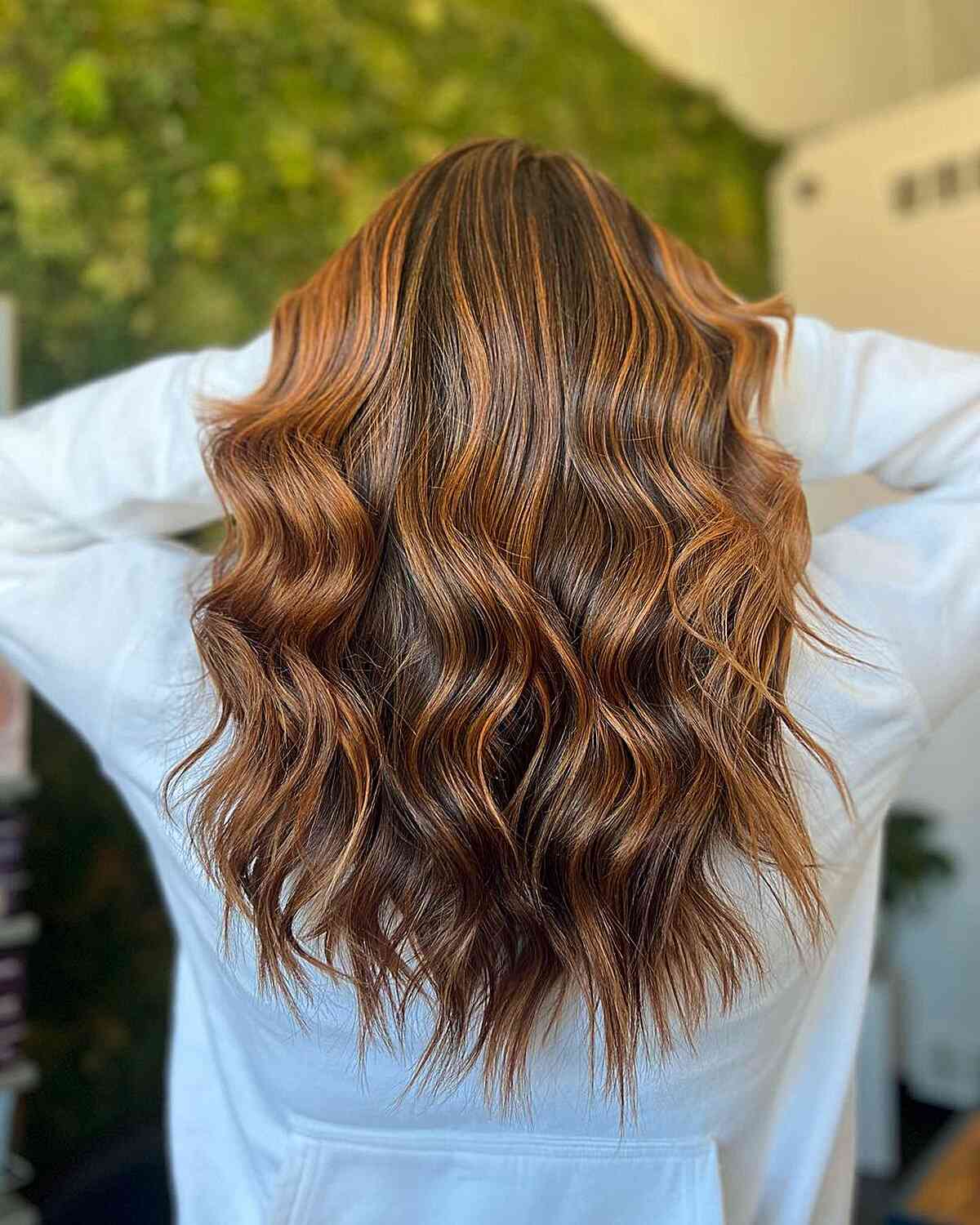
Reddish-copper highlights on a dark brown base are the most high-maintenance combination in this list, and the contrast is exactly why. Copper molecules are small and leave the cuticle faster than brown ones, so vibrant pieces through mid-back length start shifting within four to six weeks. Loose waves show the dimension beautifully, but every wash pulls the red slightly warmer. If you want a color you can ignore for three months, this is not it.
Ask your colorist for: dark brown base, vibrant reddish-copper highlights, loose waves. Thick, wavy hair handles the contrast well because the highlights sit in the movement of the cut, and no bangs keeps the focus on the color itself. Color-safe shampoo and a cooler water temperature slow the fade, and a toner refresh every six weeks keeps the copper from turning brassy. Plan on a trim every eight to ten weeks to keep the ends looking fresh against the depth.
Final Thoughts
For a lived-in look, ask for subtle, hand-painted highlights. For more contrast, request bolder ribbons, especially around the face. Round faces: keep the length below the chin. Fine hair: skip heavy layering and let the color do the work.
- Wash with sulfate-free shampoo for colored hair.
- Run a color-depositing conditioner every two weeks.
- Book a salon toning session every six to eight weeks.
- Spray a thermal protectant before any heat styling.
Chocolate highlights offer endless possibilities for depth and dimension.
-

 Makeup Trends2 years ago
29 Harley Quinn Makeup Ideas: Iconic Looks for Every Occasion
-

 Hairstyle2 years ago
Round Face Haircuts Ideas 2025: 29 Flattering Styles to Try
-

 Hairstyle2 years ago
25 90s Layered Hair Ideas to Inspire Your 2025 Look
-

 Fashion2 years ago
27 Every Day Spring Outfits Inspiration for 2025
-

 Hairstyle2 years ago
29 Long Layered Haircuts Ideas for 2025
-

 Hairstyle2 years ago
64 Fall Hair Color Trends to Elevate Your Style in 2024
-

 Hairstyle2 years ago
Choppy Bob Haircuts 2025: 29 Stylish Ideas
-

 Hairstyle2 years ago
27 Medium Length Haircut with Layers Ideas for 2025