
Hairstyle
20 Trendy Icy Blonde Hair Color Ideas 2027 for a Cool Look
Trendy Icy Blonde 2027 offers 20 hair color ideas, from icy silver blonde shags to chin-length bobs and long layered looks, giving you a radiant finish.

Icy blonde is having a moment, and not just as one flat shade. The trend now is a spectrum of cool, bright tones, from soft silver to high-impact platinum, each customized to your cut and texture. Soft face-framing layers and lived-in color are replacing the old uniform bleach-outs, giving icy blonde a more modern, polished feel.
This collection brings you 20 ways to wear the Trendy Icy Blonde trend, from long, wavy styles to sharp bobs and low-maintenance root shadows. Whether your hair is fine and falls flat, you’re dealing with a visible grow-out line, or you want a fringe that actually behaves, there’s an option here for your texture, length, and lifestyle.
Long Icy Blonde With Face-Framing Layers

Courtesy of: palettehunt.com
Face-framing layers start at the cheekbone and taper toward the chin, so the shape reads as a soft outline rather than a hard line. This long icy blonde sits on a cool base with subtle highlights woven through, which adds depth to a shade that can otherwise look flat. On oval and heart-shaped faces, the layers break up the forehead and chin without pulling attention sideways. Fine hair benefits most from the subtle highlights: they give the eye something to follow through the length, so the hair reads fuller than it is.
Ask your stylist for: long icy blonde with face-framing layers, loose waves. Medium-density hair holds that loose wave without extra product; very fine hair needs a round brush and a light setting spray to keep the bend. A large barrel curling iron does the work in sections, and the layers need a trim every eight to ten weeks to stay sharp. Skip this one if your hair is already thin at the ends, since face-framing layers remove weight right where you want it.
Shoulder-Length Platinum Ice Blonde Hollywood Waves
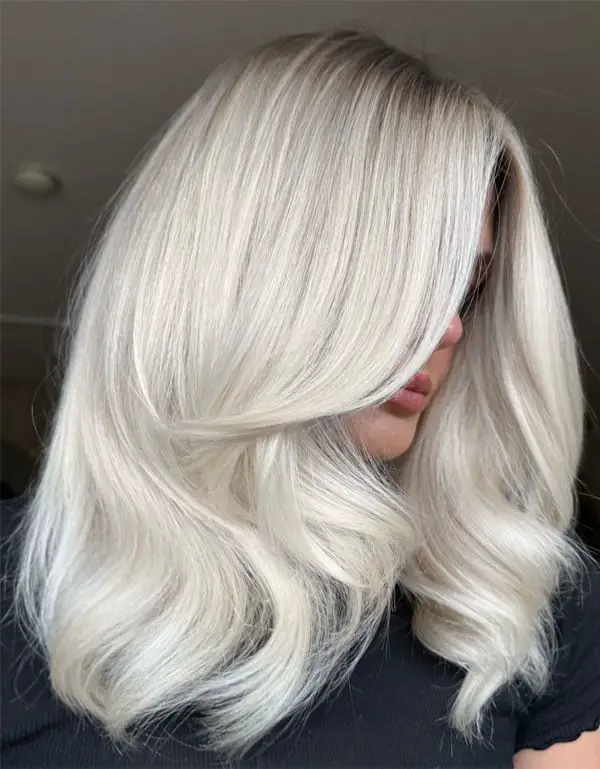
Photo credit: itakeyou.co.uk
Platinum ice blonde at this level is a two-appointment job: the lightening happens first, and the toning comes after, once the hair has settled. A side part and long layers give Hollywood waves somewhere to fall, and thick hair holds the S-shape through an evening without collapsing. Book this for a formal event or a season of them, since the tone needs refreshing every four to six weeks to stay cool instead of yellow. Ask your colorist for: shoulder-length platinum ice blonde, cool toner. Ask your stylist for: long layers, side part. The wave itself is set with a large iron and a firm-hold spray, and the gloss you see comes from the toner, not from styling.
Shoulder-Length Icy Silver Blonde Shag

Image credit: vogue.com
Where a warm honey blonde softens and blends, icy silver blonde goes the other way: it is cool, almost metallic, and it makes the shag cut look sharper than the same cut in a golden tone. A middle part with wispy bangs keeps the shape from reading heavy, and textured lived-in waves do the rest. Fine to medium hair gets the most movement from this, and the shag’s choppy layers add volume where density is low. Angular faces get softness from the wispy bangs falling around the jaw.
Ask your colorist for: shoulder-length icy silver shag, cool silver toner. Ask your stylist for: shag cut, wispy bangs. A sea salt spray scrunched into damp hair builds the texture without weighing it down, and the bangs need a trim every three to four weeks to stay wispy instead of curtain-length. Silver fades faster than platinum, so plan a toning appointment every four weeks if you want the metallic edge to hold.
Mid-Back Platinum Icy Blonde Wavy Blowout
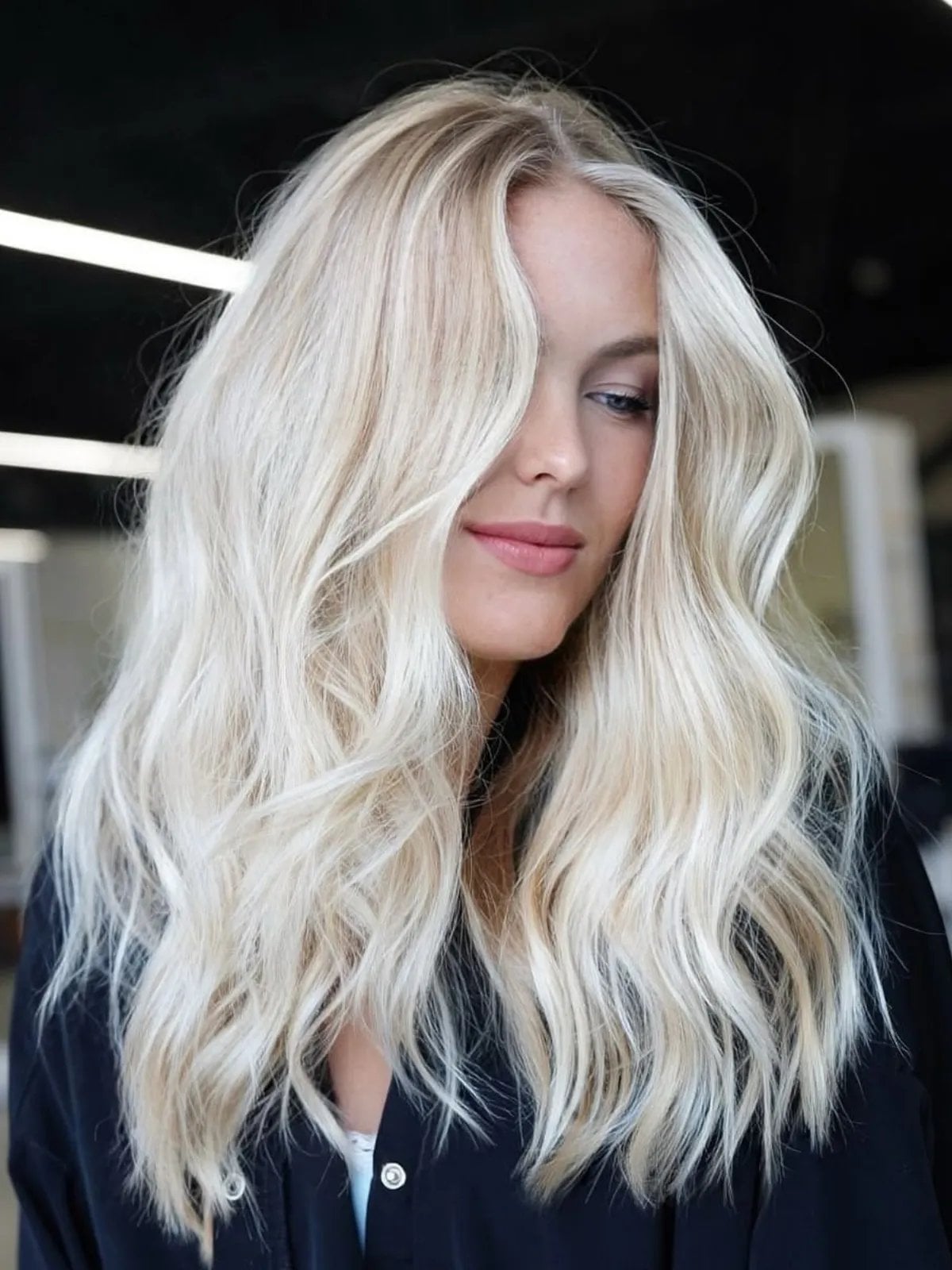
Source: wella.com
Mid-back length plus platinum icy blonde is the most demanding combination in this list, and it looks like it isn’t. The blowout keeps the waves loose and flowing from a middle part, and layers through the length keep thick hair from forming a triangle shape. That volume is the point: a platinum tone this bright shows every uneven patch, so the cut has to distribute weight evenly from root to mid-back.
Ask your colorist for: mid-back platinum icy blonde, even lift. Ask your stylist for: long layers, wavy blowout. The drawback is upkeep: roots show at about four weeks on a lift this light, and a toner refresh every three to four weeks keeps the cool tone from drifting warm. A purple shampoo once a week manages brassiness between appointments. Apply a root-lifting mousse before drying to give the blowout its base, and split ends need a trim every ten to twelve weeks to keep the ends looking as bright as the mid-lengths.
Chin-Length Icy Blonde Bob With Side Swept Bangs

Bring the words, not just a photo: chin-length means the cut line sits at the jaw, and side swept means the bangs part off-center and fall to one side. Ask your colorist for: bright icy blonde, all-over tone. Fine, straight hair holds this smooth blowout best, and the side-swept bangs soften a square jawline. The bob line needs a trim every six to eight weeks to stay crisp.
Shaggy Bob With Curtain Bangs Ash Blonde Root Shadow

Courtesy of: itakeyou.co.uk
A chin-length shaggy bob with curtain bangs and a middle parting gets a wavy blowout that plays up the shag layers. The ash blonde base with a root shadow gives it that lived-in look, but on fine hair the root shadow can read as less blended if you skip the blow-dry. Ask your colorist for: ash blonde root shadow, shaggy bob, curtain bangs. Curtain bangs frame the face without demanding a full fringe commitment, though they need a trim every four to six weeks to keep their shape.
Mid-Back Icy Blonde Layers With Root Shadow
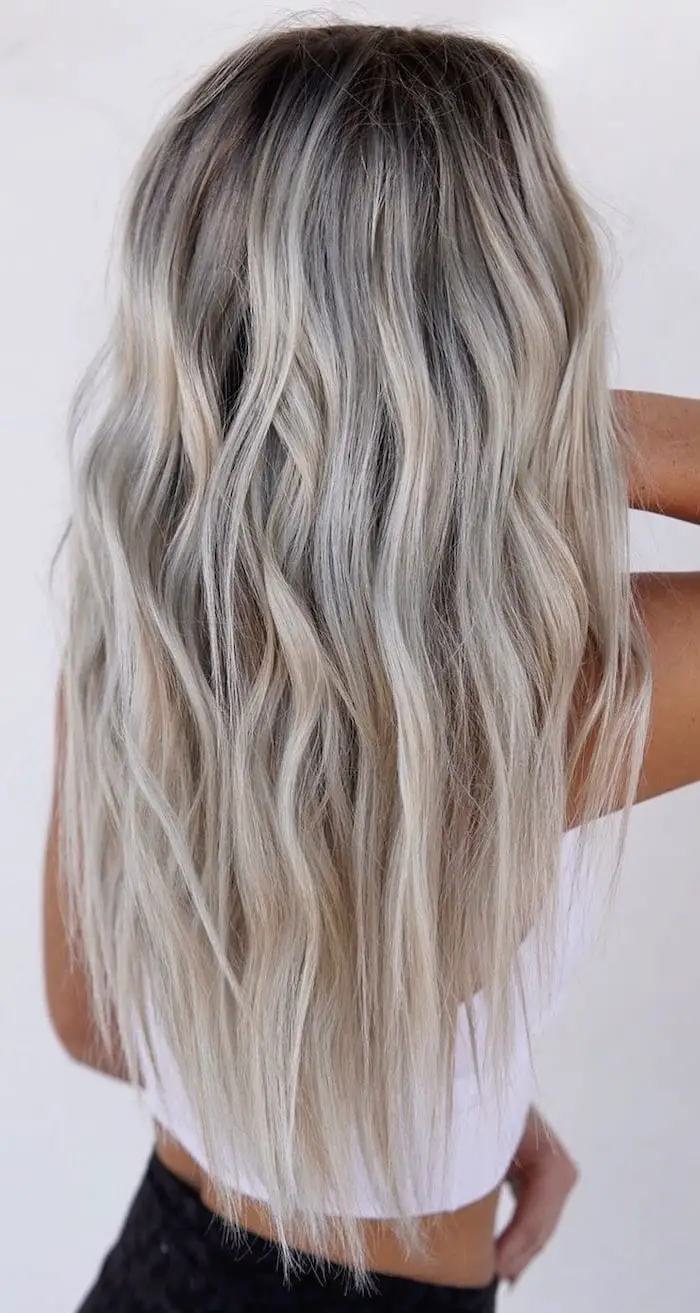
Photo credit: fabmood.com
Long layers running to mid-back sit on thick, wavy hair styled with an air-dried texture and a middle parting. The icy blonde shade gets depth from a root shadow and subtle highlights woven through the lengths. It is a low-heat finish: a scrunch is enough to let the natural wave do the work. Ask your colorist for: mid-back icy blonde with root shadow and highlights. The root shadow softens the grow-out line by about six weeks, and a trim every ten to twelve weeks keeps the layers from looking too heavy.
The technique here is a two-step process: a darker base stain at the roots, then lighter pieces painted through the ends. That contrast stops the icy blonde from washing out the texture, especially on thicker hair that can hold more pigment. Air drying preserves the wave pattern and keeps the gloss visible, so no hot tools are required for the daily shape.
Mid-Back Extreme Icy Platinum Blonde Blowout With Soft Fringe
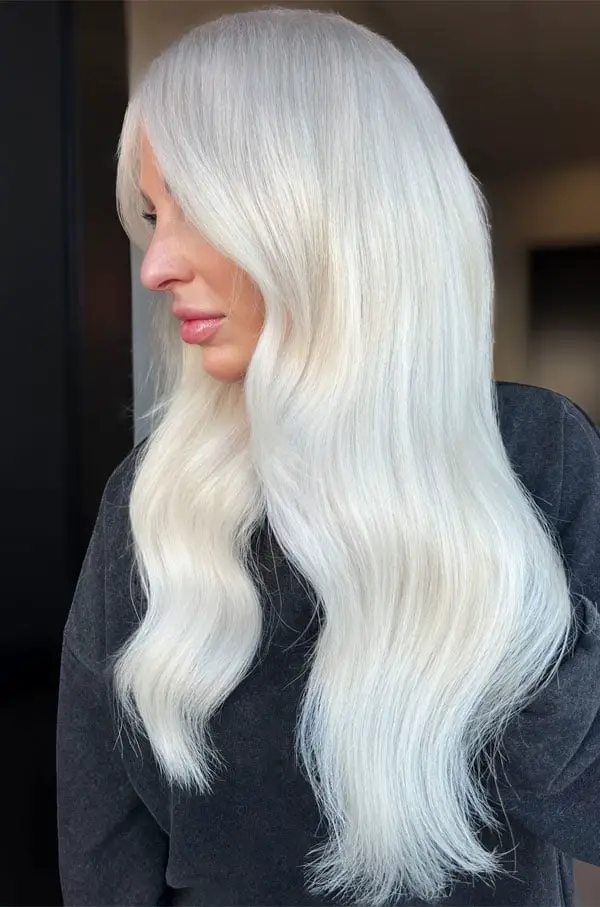
Image credit: itakeyou.co.uk
Is a high-lift blonde worth the appointment time? This extreme icy platinum blonde sits on thick, wavy hair cut to mid-back with a soft fringe, styled into a voluminous blowout. The bright, cool tone works best on hair that can handle multiple lightening sessions without turning brittle. Ask your colorist for: mid-back icy platinum blonde blowout, soft fringe. Thick hair has the density to support the high contrast, and the fringe softens the overall effect. Oval and long faces benefit from the width the blowout adds at the sides.
This shade requires a salon process: a pre-lightener, then a toner to pull out any yellow undertones. The finished gloss comes from a smoothing serum applied during the blow-dry, not from a glaze. If your hair is fine or damaged, the required lift may compromise the length, so a single-process platinum is worth discussing as an alternative.
Mid-Back Ash Blonde With Root Shadow Highlights
Source: itakeyou.co.uk
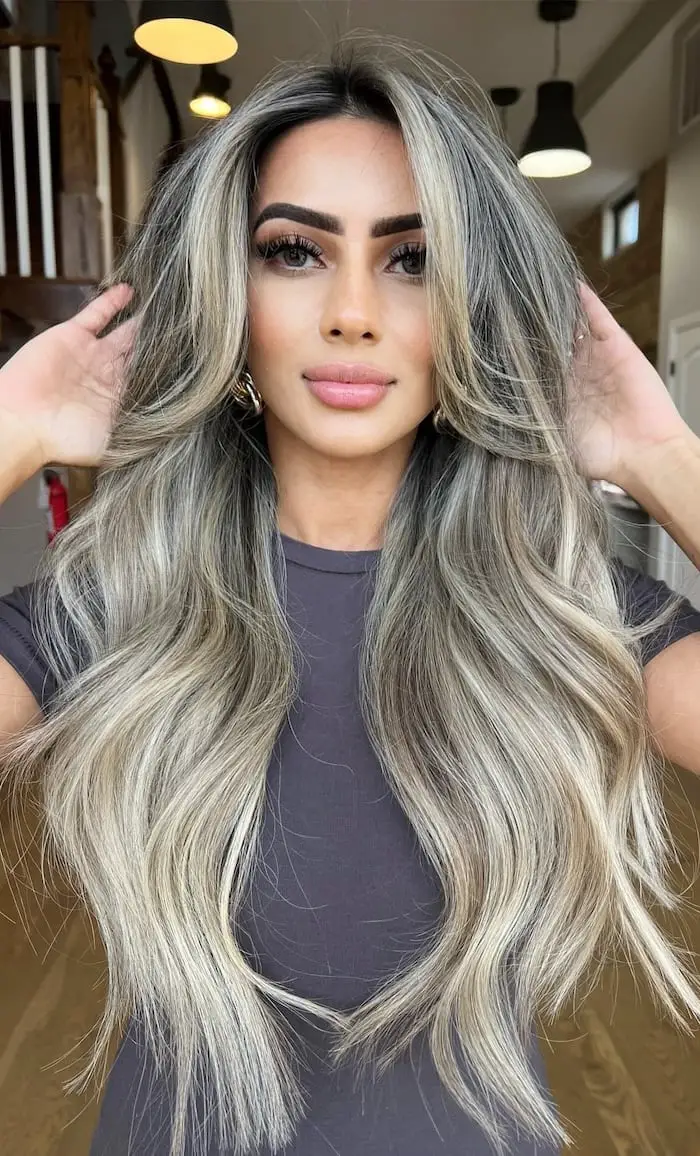
Thick, wavy hair cut to mid-back with face-framing layers and a middle parting gets a blowout that lets the ash blonde base and root shadow read clearly. The lighter highlights woven through the lengths create a lived-in effect that softens as the color grows out. Ask your colorist for: mid-back ash blonde with root shadow, face-framing layers. Towel drying and a texturizing spray are enough to maintain the natural wave, and a trim every ten to twelve weeks keeps the face-framing pieces from dropping past collarbone. The root shadow means the grow-out phase is gentler than a solid platinum, so the contrast fades gradually rather than in a hard line.
Short Icy Platinum Bixie With Layered Fringe

Source: itakeyou.co.uk
A short bixie cut ending around the ear uses a layered fringe to add texture to fine, wavy hair. The icy platinum blonde shade with subtle darker roots visible at the base keeps the color from looking flat. Ask your colorist for: short icy platinum bixie, textured layered fringe. This is a salon-only process: the bleach lift required for that bright platinum needs professional control to avoid overlap and damage on short hair. A matte paste applied to dry hair defines the layers, but the cut itself demands frequent trims every four to six weeks to hold the bixie silhouette.
Mid-Back Straight Icy Platinum Blonde
Via fabmood.com
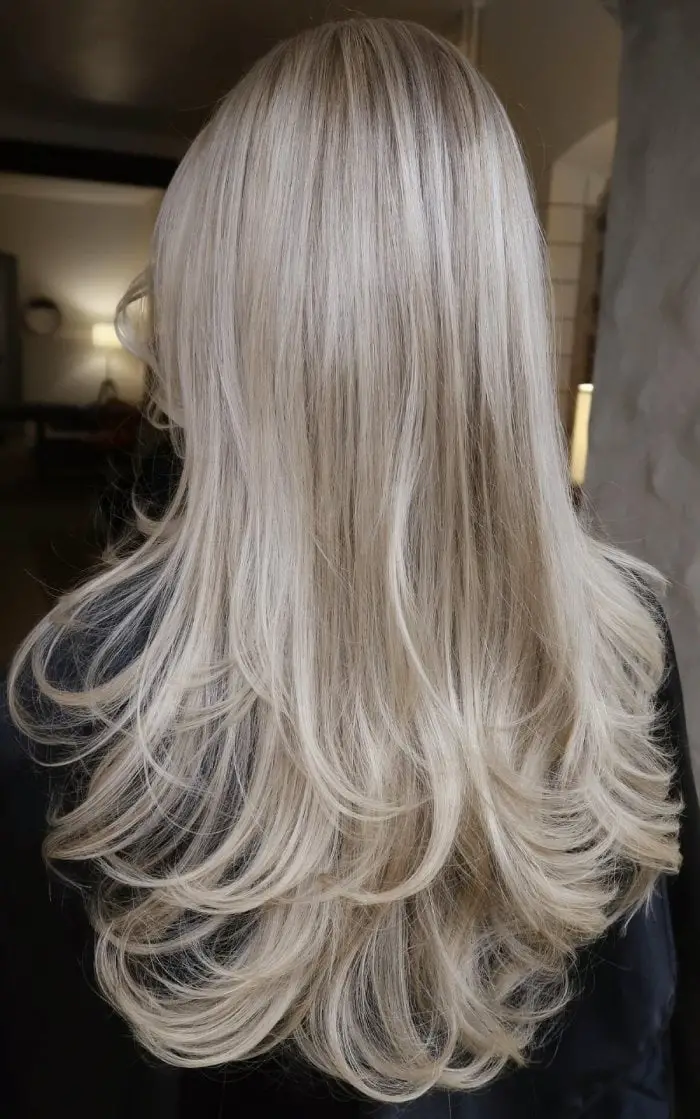
Before you ask for a straight icy platinum blonde, know the difference between this and a rooted style: a uniform shade gives one solid block of cool tone, while a root shadow or balayage builds depth at the scalp. The layered blowout here keeps that solid color from feeling flat, with outward-curling ends that give the mid-back length some swing. Thick, straight hair takes this best, since it holds the smooth finish without frizzing.
Ask your colorist for: mid-back icy platinum blonde, layered blowout with curled ends. A ceramic flat iron seals the ends fast, and you will want a trim every 10 to 12 weeks to keep the lengths healthy. Skip this one if you prefer dimension at the roots, because the grow-out line shows early.
Collarbone Icy Blonde Bob With Subtle Root Shadow
Courtesy of: byrdie.com
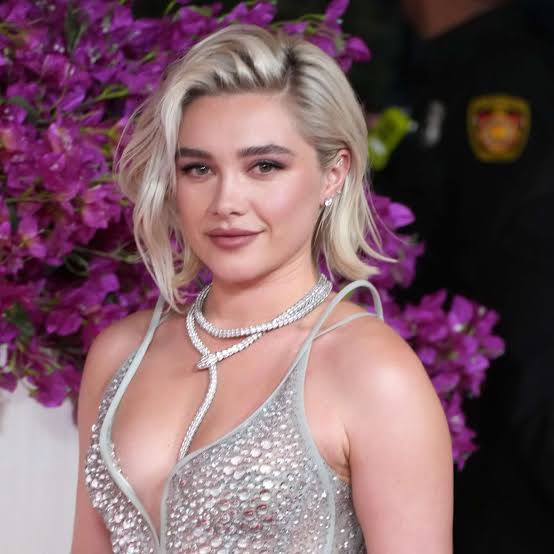
The collarbone bob with a side parting balances the icy blonde shade at the ends with a subtle root shadow that softens the grow-out line, so you do not need a colorist visit every month. The wavy, fine texture gives the bob movement, and the face-framing layers soften the jawline without shortening the shape. This works well for many face shapes, especially fine hair that can look weighed down by a blunter cut.
Ask your colorist for: collarbone icy blonde bob, subtle root shadow, face-framing layers. A smoothing cream and rough drying keep the wave natural, and the bob line needs a trim every 6 to 8 weeks to hold its shape.
Mid-Back Icy Blonde With Root Shadow Blowout, Wavy
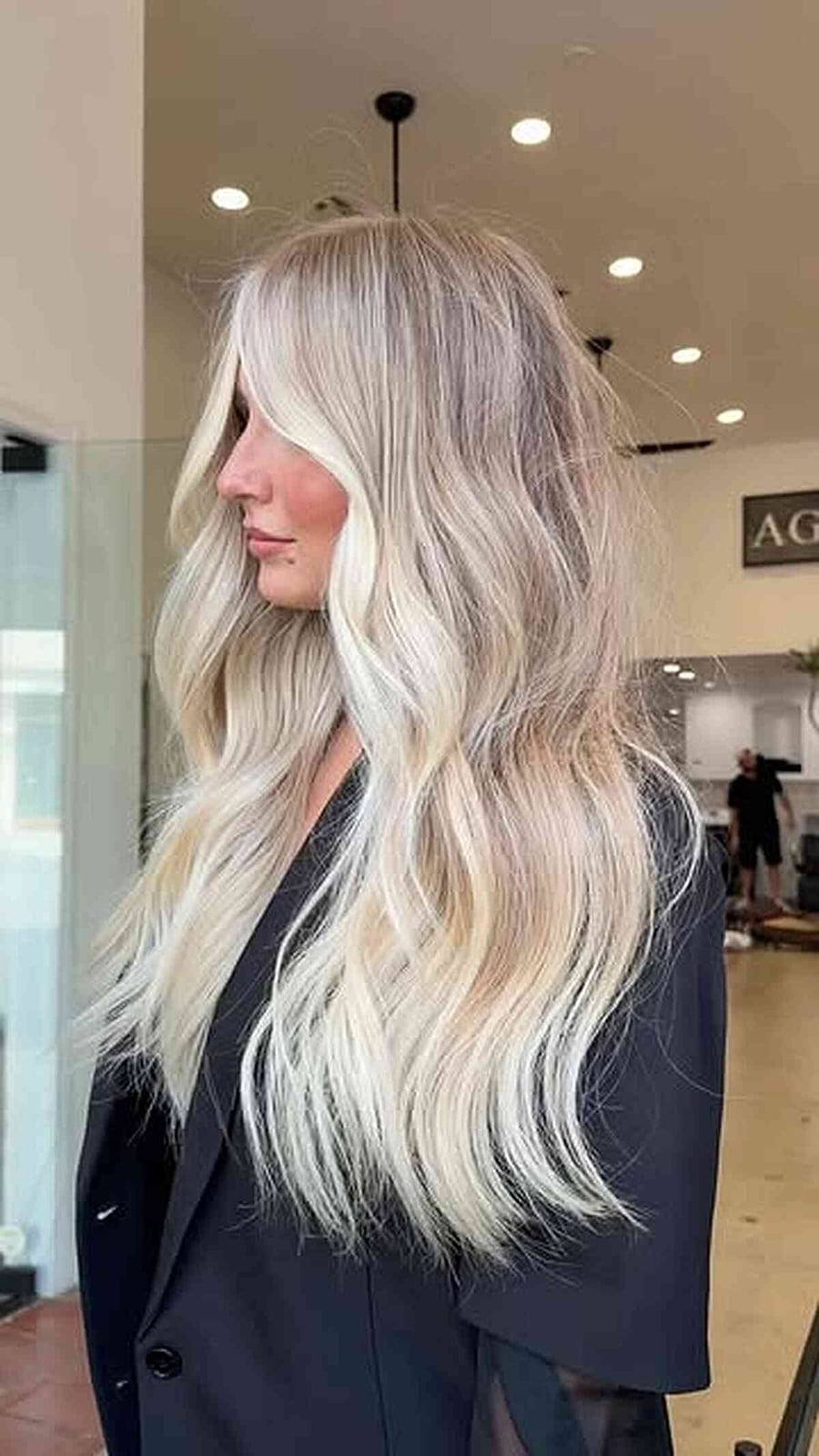
Photo credit: latest-hairstyles.com
How much time do you actually have to wave mid-back hair every morning? This look is honest about the answer: a lot. The loose waves and smooth blowout finish take styling effort, and the icy blonde with root shadow needs the wave set while the hair is still warm, or the texture falls flat by midday. The root shadow does buy you time on color, since it hides new growth for a few weeks.
Ask your colorist for: mid-back icy blonde with root shadow, loose waves blowout. A large round brush is the tool for the job, and the downside is that the wave pattern rarely survives a humid day without a touch-up. Trim every 10 to 12 weeks to keep the ends from splitting.
Short Pixie High Contrast Icy Blonde
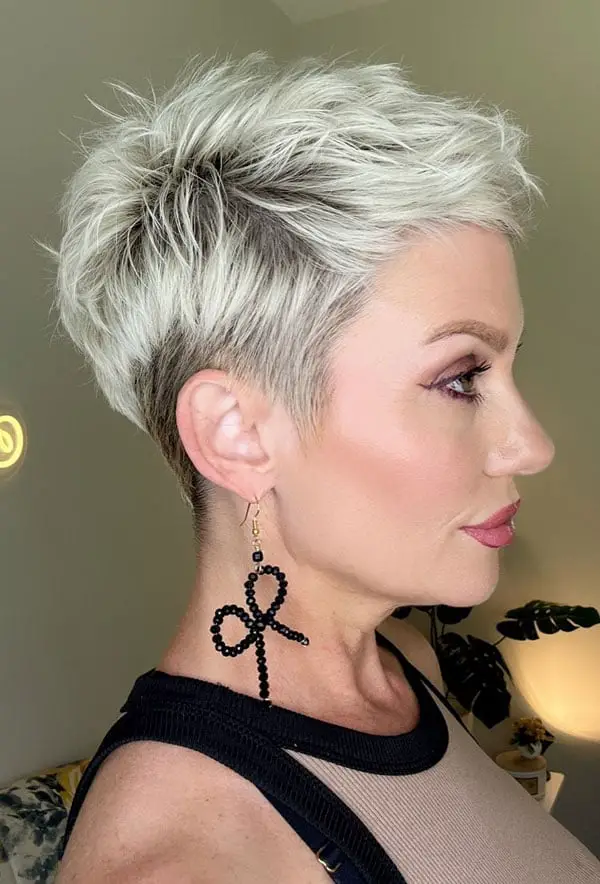
Image credit: fabmood.com
The technique here is strategic placement: the high contrast icy blonde sits on top while the dark underlayers stay visible at the nape and sides, so the pixie gains depth without losing the cool tone. The textured styling and side parting keep the short fringe from looking severe. Fine, straight hair handles this best, since the contrast reads clearly on a smooth surface.
Ask your colorist for: short pixie, high contrast icy blonde with dark underlayers, textured. A styling wax or pomade defines the pieces, and the cut needs a trim every 3 to 5 weeks to keep the ear-length shape sharp.
Collarbone Icy Blonde Bob With Curtain Bangs
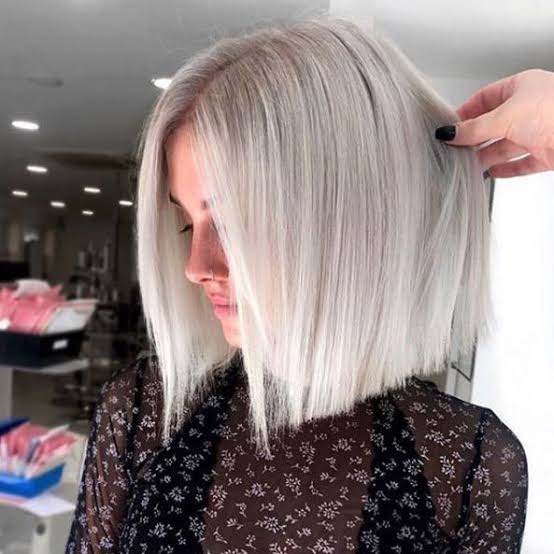
Source: southernliving.com
What do you say to get this exact collarbone bob with curtain bangs? Start with the cut: ask for a blunt-ish bob at collarbone length, not a graduated angle, so the straight fine texture stays smooth. Then specify the bangs, subtle curtain bangs that part at the middle and graze the cheekbones, not a full fringe. The icy blonde shade is the final piece, applied evenly for that glossy natural finish.
Ask your stylist for: collarbone icy blonde bob, subtle curtain bangs. Blow-dry with a round brush to set the bangs, and trim the bob line every 6 to 8 weeks so the curtain shape does not turn into a shag.
Collarbone Icy Blonde Layers With Root Shadow
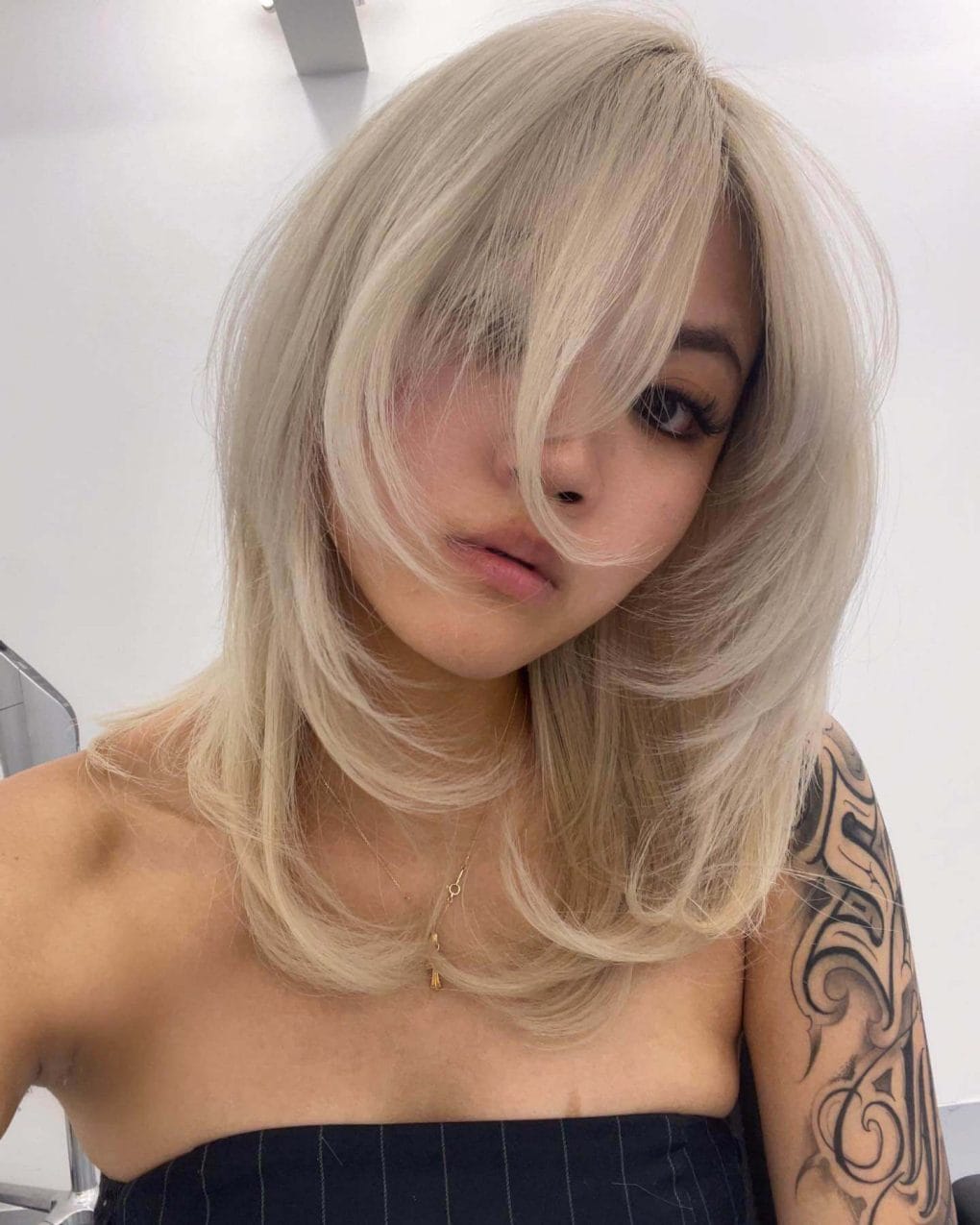
Via snazzylair.com
A root shadow on icy blonde lets the color grow out naturally. This collarbone length cut uses wavy thick texture and wispy curtain bangs to keep the overall shape soft. Ask your colorist for: collarbone icy blonde with root shadow, wispy curtain bangs. A texturizing spray applied after blow drying encourages the waves to hold their shape. Plan a trim every eight to ten weeks to keep the layers and bangs from losing their intent.
Mid-Back Straight Uniform Icy Blonde, Layers
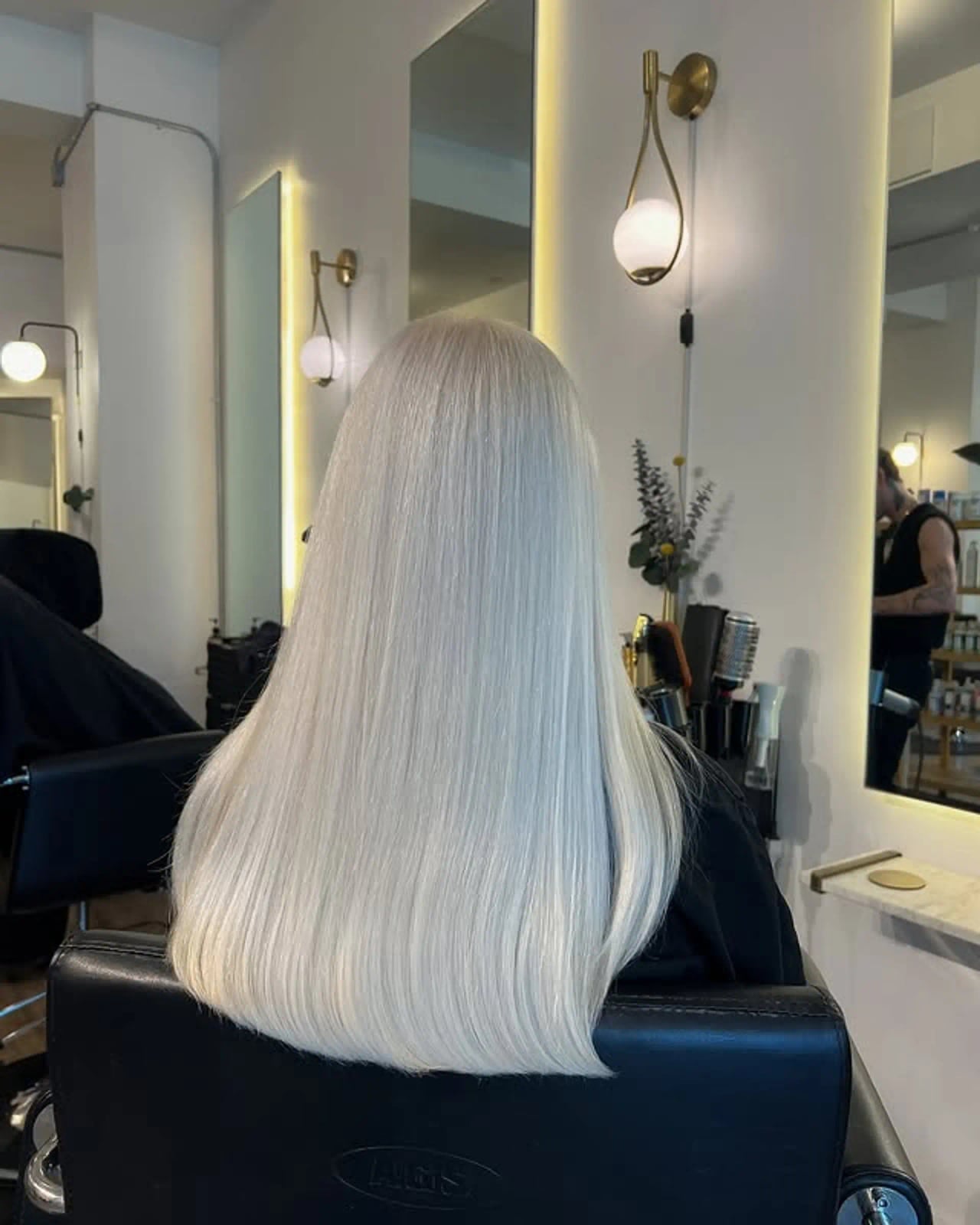
Courtesy of: kiri-me.com
A uniform icy blonde on thick straight hair looks deliberate when the application is seamless from root to tip. The back view here confirms what front views sometimes hide: every section matches the same cool tone. Ask your colorist for: mid-back uniform icy blonde, straight smooth style.
The main drawback is the maintenance. Brassiness shows faster on a single shade without a shadow or lowlight to distract, so expect a toning appointment every four to five weeks. A flat iron and a drop of shine serum keep the gloss consistent between visits.
Shoulder-Length Platinum Blonde With Root Shadow
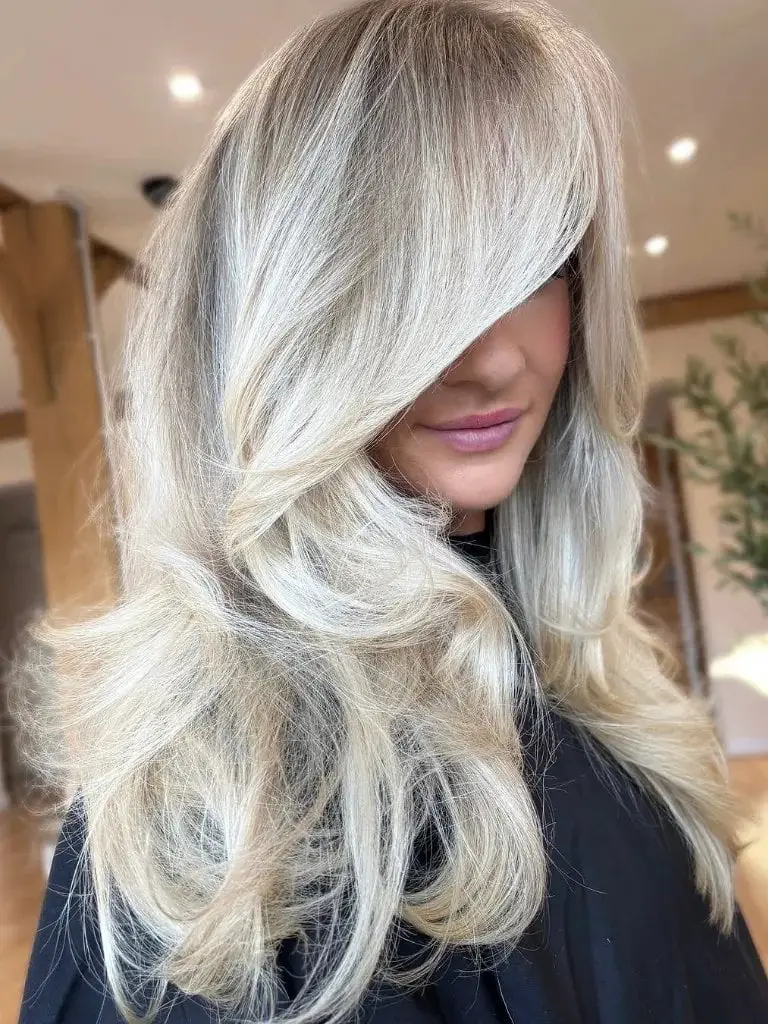
Photo credit: wella.com
Who actually benefits from a platinum blonde with a root shadow at shoulder length? Anyone with thick wavy hair who wants volume without the commitment of a full platinum grow-out. The long layers and face-framing bangs add movement, and the side parting pushes the wave pattern off-center for lift at the crown. Ask your colorist for: shoulder-length platinum blonde with root shadow, voluminous blowout, face-framing bangs. A root-lifting spray and a large round brush during drying create the shape. The bangs need a trim roughly every four weeks.
Chin-Length Blunt Bob Clean Icy Blonde
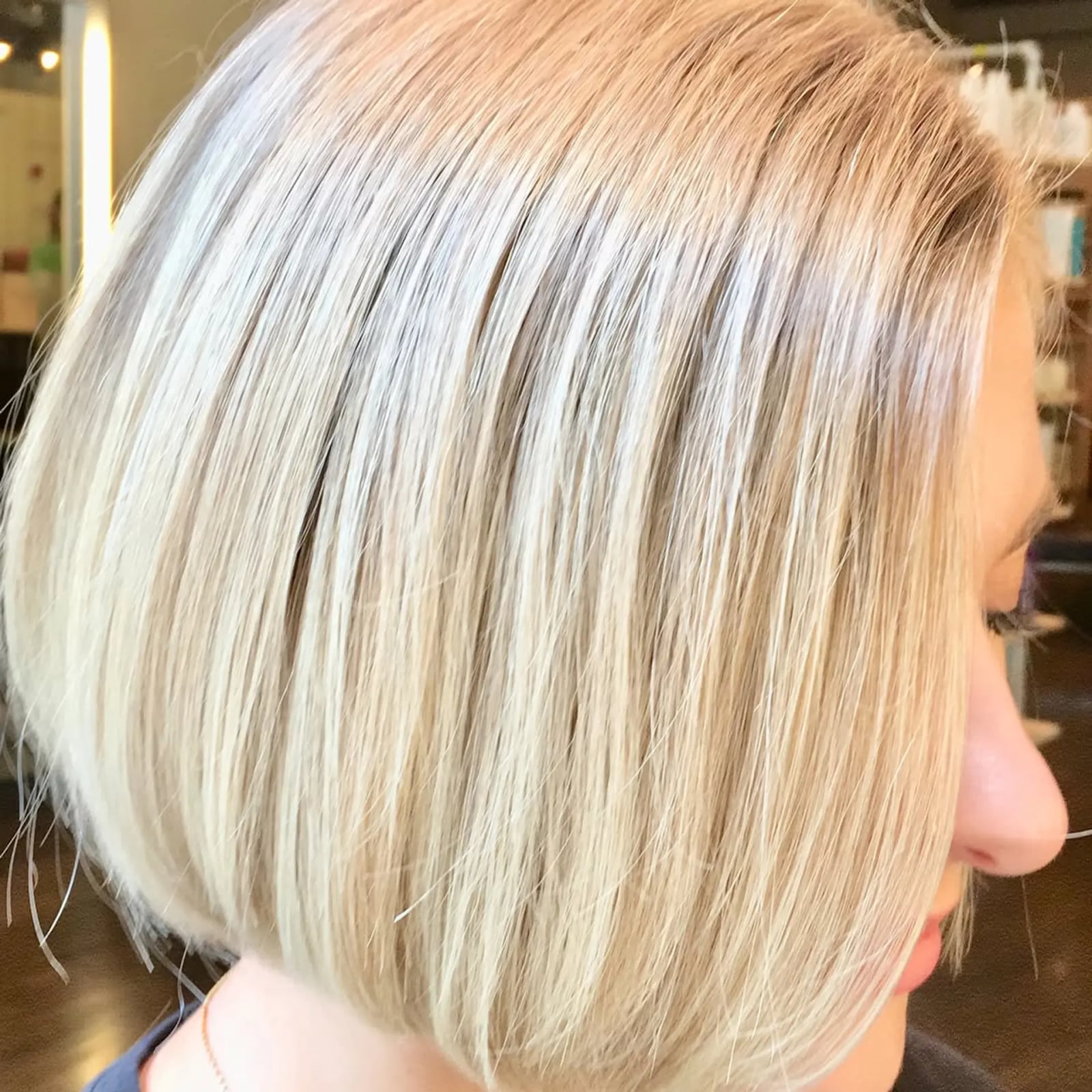
Image credit: kiri-me.com
A chin-length blunt bob in a clean icy blonde demands a precise cut because there is no layering to hide an uneven line. The side view here shows the baseline falling straight and sharp, which works best on fine straight hair that can hold a crisp edge. Ask your stylist for: chin-length blunt icy blonde bob, straight style. This is a salon job. A blunt bob on fine hair needs a steady hand and a fresh blade. A flat iron finishes the smoothness in under ten minutes.
Mid-Back Platinum Blonde Voluminous Blowout With Long Layers

Via thinkaloud.net
A voluminous blowout on mid-back length platinum blonde creates a polished finish that works for an event without looking stiff. The long layers and middle parting let the thick wavy texture expand, so the body comes from the hair itself. Ask your colorist for: mid-back platinum blonde, voluminous blowout, long layers. A volumizing spray at the roots before drying gives the shape a lasting base. This is a good choice for the holiday season or a wedding where you want the color to appear bright without being harsh.
Final Thoughts
For fine hair, keep a blunt baseline and skip heavy layers to hold density. Thick hair can carry long layers and texturizing to prevent a heavy block. Always book a professional for high-lift color services.
- Purple shampoo once a week; avoid over-toning.
- Root touch-ups every 4-6 weeks.
- Heat protectant before any styling.
- Cool water rinse preserves color.
- Deep condition weekly to fight dryness.
Embrace the cool, luminous appeal of icy blonde.
Hairstyle
21 Cutting Bangs 2027 for a Fresh New Look
Cutting Bangs 2027: Get 21 fresh haircuts with bangs, from blunt bobs to collarbone lobs with curtain or side-swept styles. See the latest looks.
Bangs are a haircut shortcut with serious return on investment: a few snips and the whole shape reads differently. Right now, the shift is toward soft, lived-in fringes that blend into the rest of the cut rather than sitting as a separate piece.
These 21 takes on Cutting Bangs run from blunt and graphic to wispy and blended, covering collarbone lobs, chin-length bobs, layered shags, and mid-back lengths. There is a fringe here for fine hair that needs volume without weight, thick hair that needs structure, and every grow-out stage in between. The struggle of a fringe that won’t sit or a bob that feels too severe? Solved on the next page.
Stylist Trimming Straight Across Bangs on Bob
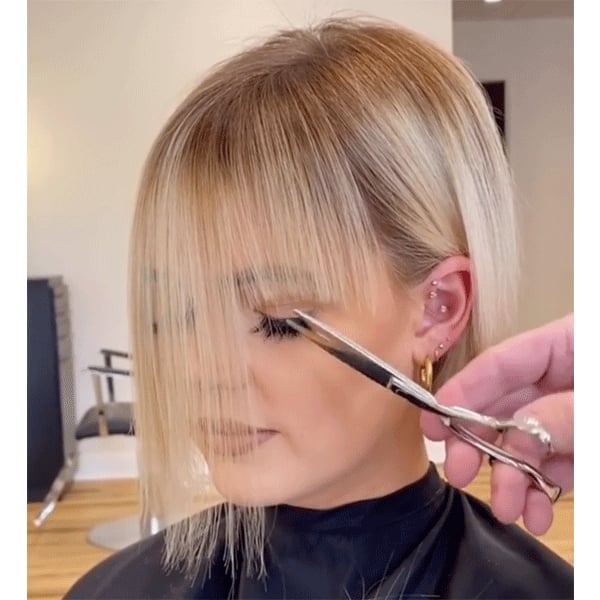
Courtesy of: arcscissors.com
This cut is a study in precision: a chin-length blunt bob, fine ash blonde hair, and a stylist’s scissors making a straight line across the bangs. It works best on fine, straight hair that holds a clean edge without much effort. Ask your stylist for a chin-length blunt bob with straight across bangs. The bluntness is the point, and it requires a trim every three to four weeks to keep that line sharp. A middle part keeps the geometry honest.
Collarbone Lob With Wispy Bangs

Photo credit: femina.in
Wondering how to get those soft, see-through bangs that don’t look like you tried too hard? This collarbone lob with layers and wispy bangs is the answer. On fine, wavy hair, the key is asking for pieces that feather out rather than cut a solid wall across your forehead. Ask your stylist for a collarbone lob with layers and wispy bangs. Emphasize that you want the bangs to blend into the layers, not sit as a separate section. A side parting helps the wispy pieces fall where they should, and the natural wave does the rest.
Sleek Black Bob With Blunt Bangs
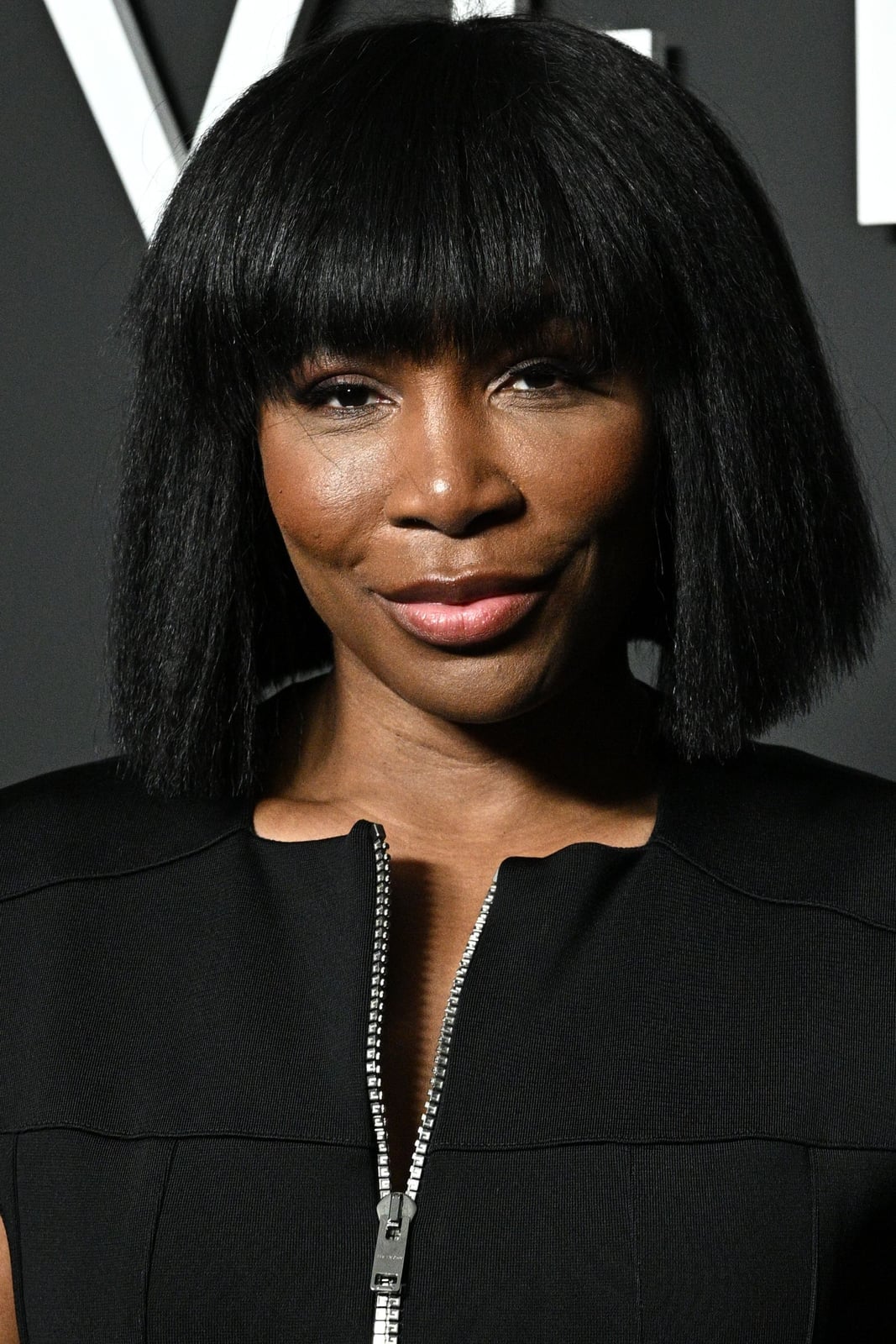
Image credit: allure.com
Thick, straight hair has a natural advantage with blunt bangs: the density holds the shape. This collarbone bob is cut with a single clean line, and the black color makes the precision impossible to miss.
The blowout technique matters here. A flat iron seals the cuticle and removes any bend, especially around the bangs. Ask your stylist for a collarbone length black bob with blunt bangs. Upkeep is straightforward: the bob baseline and the bangs both need a trim every four weeks to keep that sharp edge from softening into something accidental.
Collarbone Lob With Curtain Bangs

Source: femina.in
Compared to a blunt bang, curtain bangs ask for a little more daily work but give you more room to grow out. This collarbone lob uses long layers and curtain bangs that blend into the face-framing pieces, with a dark blonde base and ash blonde highlights adding dimension. The wavy, medium-density texture is forgiving, which is the upside. The drawback: you cannot just let curtain bangs air-dry and hope they part themselves. A round brush and a blow-dryer are the minimum for coaxing them into that soft swoop. Ask your stylist for a collarbone length lob with long layers and curtain bangs. It works best for casual occasions, not formal events where you need every strand pinned.
Collarbone Length With Side-Swept Bangs

Via crowncurlss.com
Can you cut side-swept bangs at home? Technically yes, but the mistake people make is cutting them while dry and straight, then finding they spring up an inch shorter once the wave settles. This collarbone-length cut with long layers and side-swept bangs works because the bangs are cut with the natural wave in mind.
If you attempt it yourself, cut the bangs longer than you think you need and let them rest for a day before trimming again. Ask your stylist for collarbone length with long layers and side-swept bangs if you want it done right the first time. A salon visit ensures the sweep follows your hair’s natural growth pattern rather than fighting it.
Chin Length Textured Bob With Blunt Bangs

Courtesy of: byrdie.com
A textured bob this short typically relies on weight to hold its shape, but here the blunt bangs and wavy finish keep things interesting. The cut lands at chin length with a side part, so the density stays on one side. Ask your stylist for: chin length textured bob with blunt bangs. This works best on thick hair that already has a wave; the texture paste you apply after air drying gives the bob its piecey separation. Expect to trim those bangs every three to four weeks, because the blunt line shows every millimeter of growth.
Short Copper Shag With Wispy Bangs

Photo credit: fabmood.com
Fine hair gets away with a shag when the layers stay soft and the bangs stay wispy. This copper version ends at the shoulder and uses a middle part to let the curtain-like pieces fall evenly. Ask your stylist for: shoulder length copper shag with wispy bangs. The color is the shortcut to looking expensive, so skip the box dye. A sea salt spray on damp hair, scrunched and air dried, is all the styling this cut needs. Anyone with coarse or very curly texture should pass. The fine layers won’t hold their own against too much weight.
Chin Length Bob With Sleek Blunt Bangs, Dark Brown
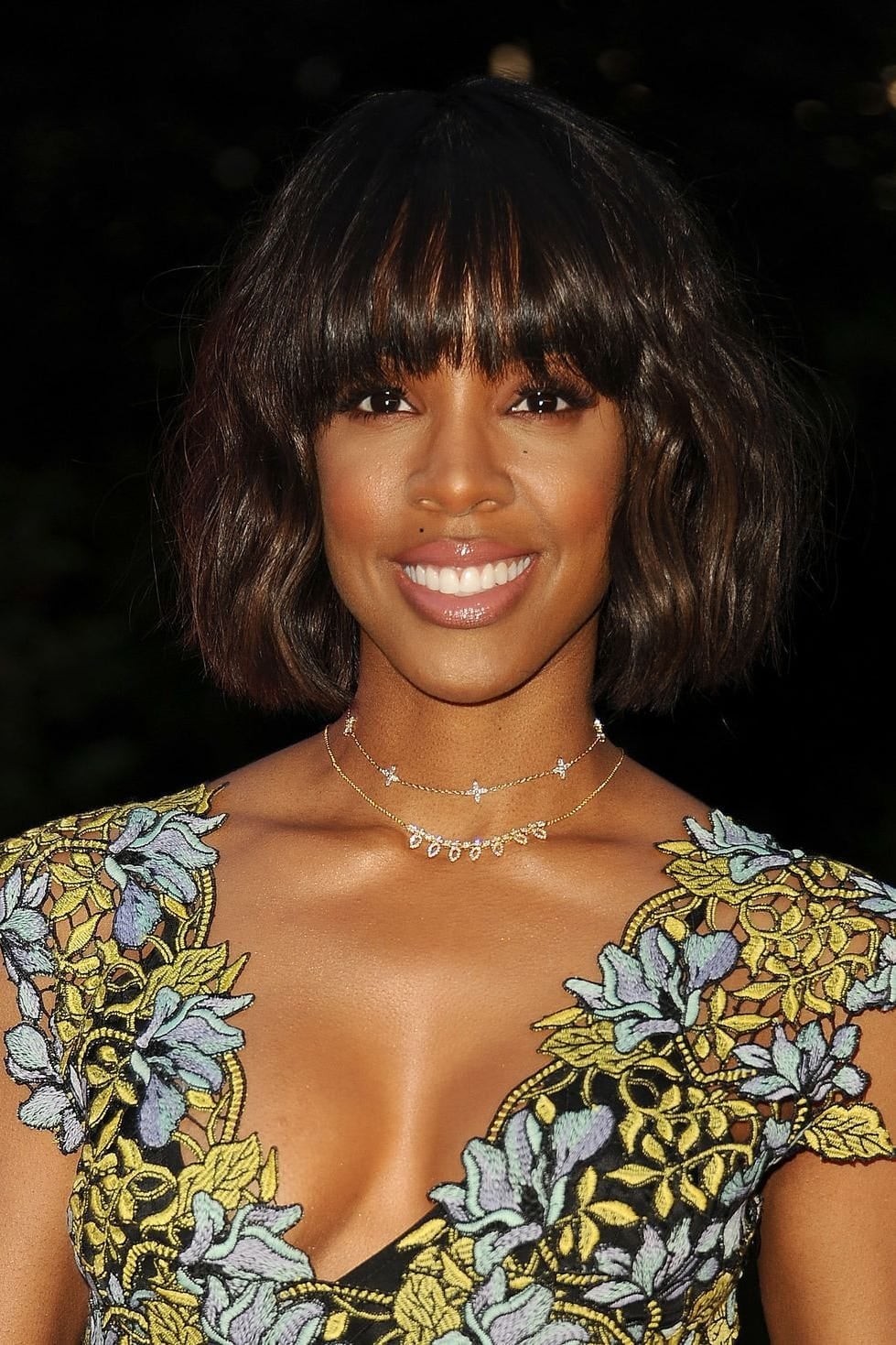
Image credit: oprahdaily.com
A blunt bob with matching blunt bangs is a geometry problem: every line has to meet at the right angle. The cut here is chin length, dark brown, with a middle part and a straight finish that shows zero texture. Ask your stylist for: chin length sleek bob with blunt bangs. This is a salon-only haircut; the fringe needs dry cutting to land precisely, and a flat iron is required for daily styling. The real drawback is the grow-out. Those bangs will hit your eyebrows in two weeks, and the bob loses its clean edge fast. If you can commit to a trim every three weeks, the graphic shape is worth the appointment.
Collarbone Layers With Wispy Curtain Bangs

Source: popsugar.com
The layers here are cut to skim the collarbone, with the shortest pieces blending into wispy curtain bangs that part at the side. The technique is all about graduation: the bangs get longer as they meet the layers, so there is no hard line where the fringe ends. Ask your stylist for: collarbone length layers with wispy curtain bangs. A round brush blowout, directing the bangs to the sides, is the standard styling move. This cut works well for spring and summer, when hair off the face helps in warm weather and a shorter cut is not the goal. Trim the bangs every four to six weeks to keep them from merging into the layers.
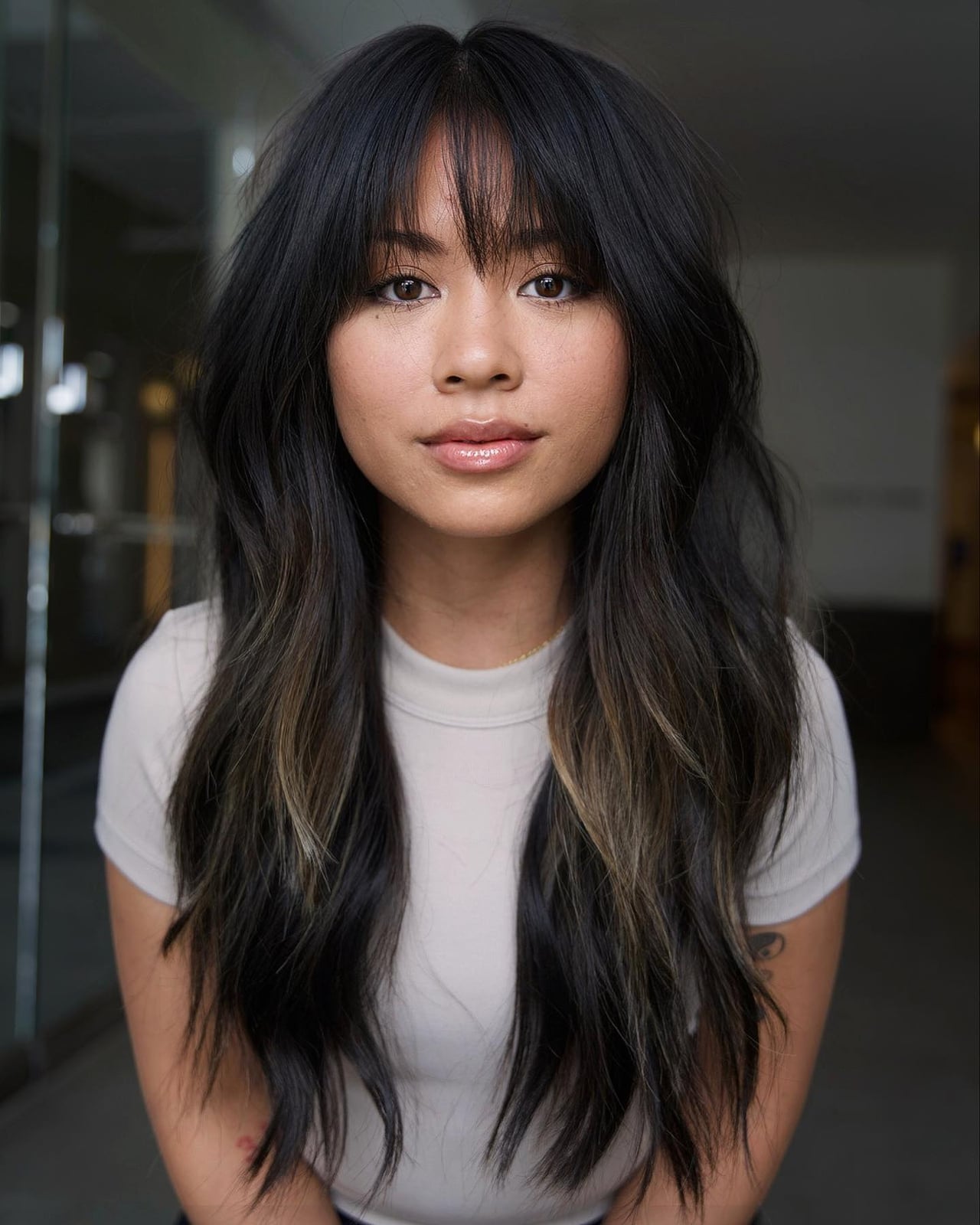
Mid-Back Shag With Curtain Bangs
Source: hadviser.com
To make a shag read as intentional on long hair, ask for distinct layers throughout the length and curtain bangs that start at the brow bone. This mid-back version uses a subtle blonde balayage to show off the layer movement, with a middle part and a wavy finish. Ask your stylist for: mid-back length shag with layers and curtain bangs. Be specific about the bang length. You want them grazing your cheekbones, not your chin. A diffuser on low heat encourages the natural wave pattern. The layers keep the length from falling flat, which is the usual complaint about long hair with a shag structure.
Collarbone Layered Shag With Wispy Bangs

Via us.davines.com
This collarbone-length layered shag with wispy bangs on fine, wavy hair has a deliberately undone look. The middle part and air-dried texture create a lived-in feel that a flat iron would ruin. Ask your stylist for: collarbone length layered shag with wispy bangs. A common mistake with wispy bangs on fine, wavy hair is trimming them too blunt at home, which makes them sit like a heavy curtain instead of feathered pieces. They need to be cut with the texture, not against it. The drawback is that wispy bangs on fine hair can disappear into the cut if the layers are too heavy, so keep the face-framing pieces distinct.
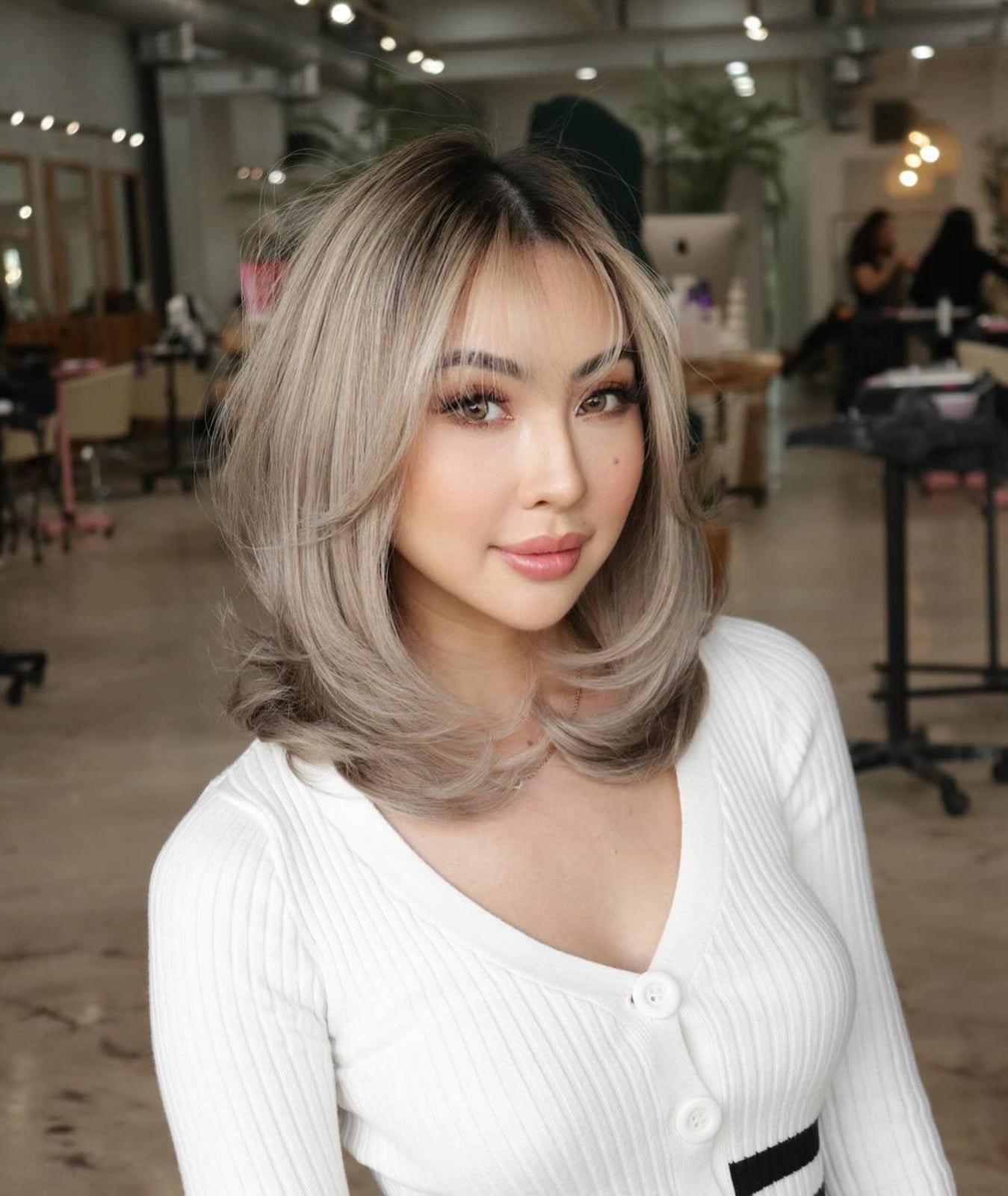
Collarbone Layers With Soft Curtain Bangs, Blonde
Courtesy of: therighthairstyles.com
The collarbone layers here are cut to move with the wave, and the soft curtain bangs open at the middle part instead of sitting straight across. That design makes the blonde read as lighter around the face without a heavy color block. Ask your stylist for: collarbone length layers with soft curtain bangs. If your hair is straighter, you will need a round brush to coax the bangs into their curve; if it is wavier, they will fall into place on their own. A blowout with a round brush shapes them best, and a trim every six to eight weeks keeps the curtain bangs from widening into a triangle.
Collarbone Ash Blonde Shag With Wispy Bangs

Photo credit: elle.com
Ash blonde on a shag is a match because the cool tone picks up the texture in the layers instead of flattening them. The collarbone length keeps the shag from feeling too cropped, and the wispy bangs soften the front without demanding daily styling. Ask your stylist for: collarbone length ash blonde shag with wispy bangs. This suits medium wavy hair that already has some bend; on stick-straight hair, the wispy bangs can look sparse. The side part adds volume at the root, which helps the shag’s movement. If your hair is very fine, skip the heavy texturizing products and let the cut do the work.
Collarbone Dark Brown Shag With Wispy Bangs

Image credit: glamourmagazine.co.uk
Can you air-dry a shag and still look put together? With the right cut, yes. This collarbone-length dark brown shag with wispy bangs is built for the air-dried finish, so the medium wavy texture is the star. Ask your stylist for: collarbone length dark brown shag with wispy bangs. The middle part and lived-in texture mean you can skip the heat most days, but the trade-off is that wispy bangs need a trim every three to four weeks or they start grazing your eyes. A salon visit is the safer route for the initial cut, since the shag’s layers and the bangs have to be balanced. The real drawback is that air-dried wavy hair can get fluffy if you touch it too much, so resist the urge to fuss.
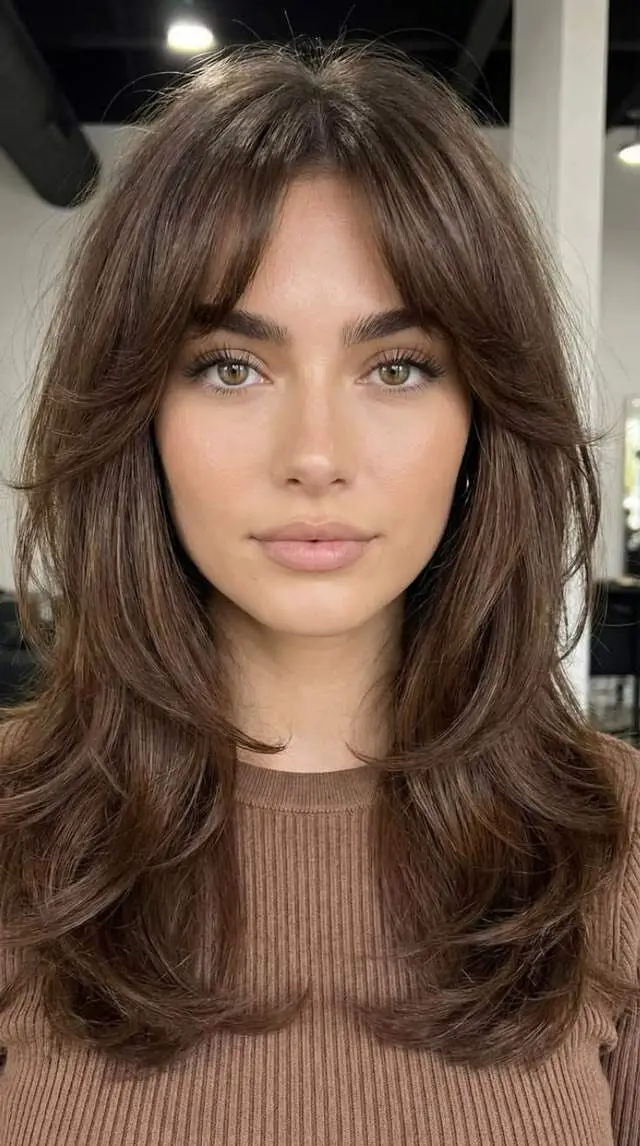
Mid-Back Length With Curtain Bangs, Wavy
Source: femina.in
The long layers in this mid-back length cut keep the waves from weighing the hair down, and the curtain bangs are cut to blend into those layers with no abrupt stop. The medium brown base with subtle highlights adds dimension that shows up in the movement. Ask your stylist for: mid-back length with long layers and curtain bangs. To re-create the soft waves, blow out with a round brush, wrapping each section back toward the crown and letting the bangs dry over the brush for a gentle curve. The middle part lets the curtain bangs frame the face on both sides. A trim every six to eight weeks keeps the ends fresh and the bangs from losing their shape.
Mid-Back Layers With Curtain Bangs and Ash Blonde With Highlights

Ash blonde with highlights shows best when the layers start early enough to create movement. Ask your stylist for: mid-back length layers with curtain bangs, and point to where you want the shortest layer to sit, ideally at the cheekbone so the curtain bangs blend instead of hanging like two separate panels. Medium-textured wavy hair holds that shape well; fine hair needs the layers kept long so they do not thin out the ends. The highlights should be placed through the layers, not just the top, so the movement is visible at mid-back. Ask your colorist for: ash blonde with highlights, and request a toner check every six to eight weeks. Blowout with a round brush, trim bangs every six to eight weeks.
Collarbone Layers With Face-Framing Curtain Bangs
Courtesy of: therighthairstyles.com
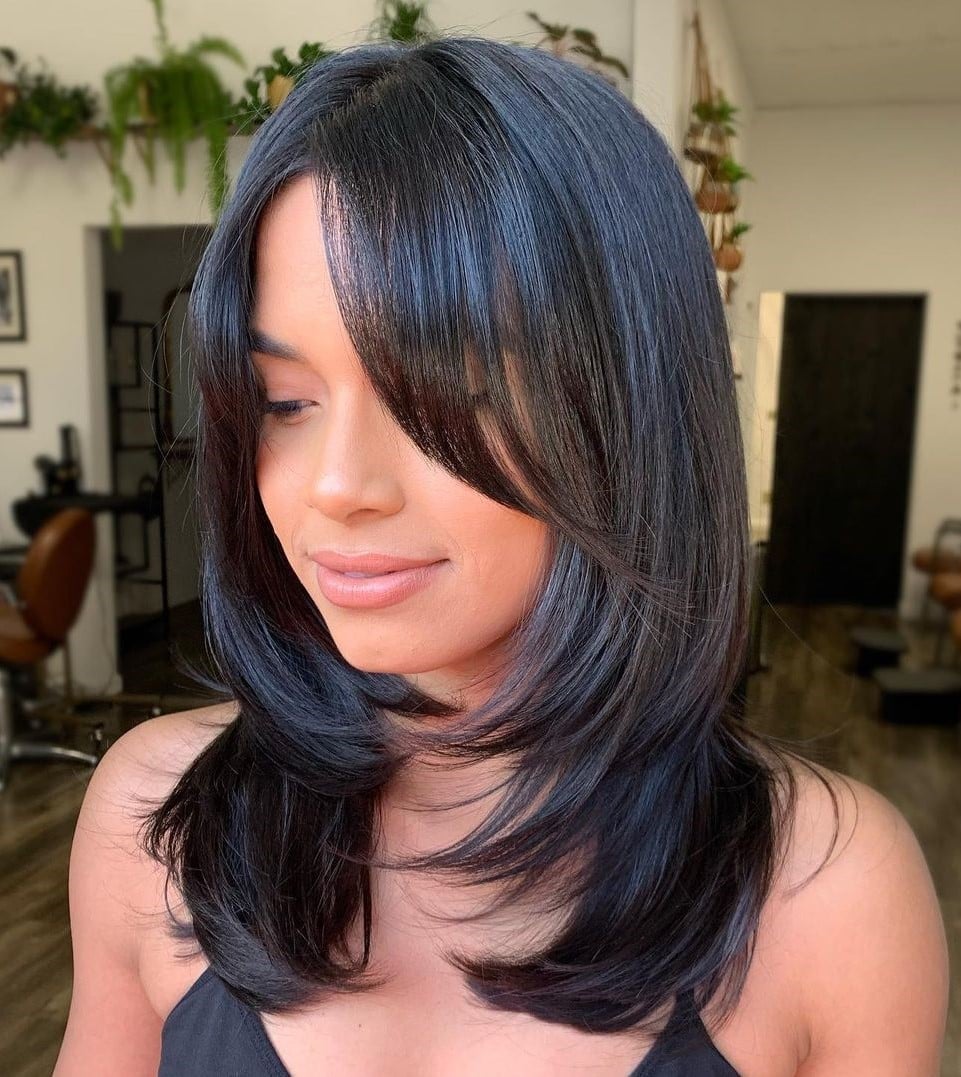
What is the mistake people make with face-framing curtain bangs on fine, straight hair? Cutting them too short and too wide. Curtain bangs need to start at the cheekbone and angle down, and on fine hair a DIY job usually takes out too much weight at the sides, leaving the bangs limp by lunch. The collarbone layers behind them should be cut dry so your stylist can see how the fine texture falls. Ask your stylist for: collarbone length layers with face-framing curtain bangs, and let them decide the shortest piece. The drawback: fine, straight hair needs a round brush blowout to keep the bangs from separating, and a trim every six to eight weeks.
Chin Length Bob With Choppy Bangs

Photo credit: cosmopolitan.com
Choppy bangs are cut point by point, so the line looks slightly uneven on purpose, and that is what separates them from a blunt fringe. On a chin-length bob in fine, wavy hair, the choppy texture keeps the air-dried finish from going flat. Compare that to a uniform blunt fringe, which needs a blowout to look right: this one suits anyone who wants to wash and go. Ask your stylist for: chin length bob with messy, choppy bangs. Use a texture spray on damp hair, then leave it. Bangs this short need a trim every three to four weeks.
Chin Length Blunt Bob With Wispy Bangs, Wavy
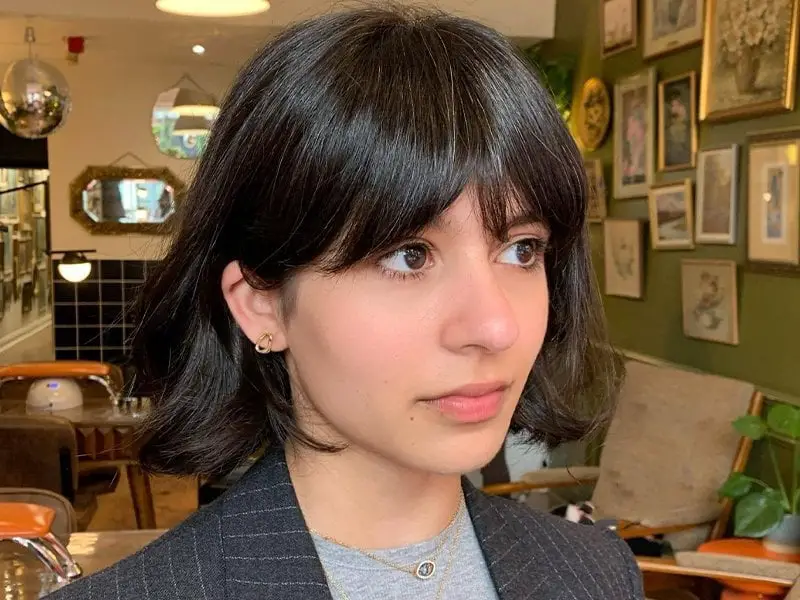
Image credit: makeup.com
If you want to try cutting bangs yourself, start with wispy ones on a chin-length blunt bob. The blunt baseline gives you a clear guide, and wispy bangs are forgiving because they are meant to look soft and slightly separated, not razor sharp. Fine, wavy hair is the right texture: the natural movement hides small mistakes. Ask your stylist for: chin length blunt bob with wispy bangs, then keep the fringe trimmed every three to four weeks. Skip this if your hair is thick and straight, where a blunt bob needs more precision than a home cut can deliver.
Collarbone Lob With Blunt Bangs
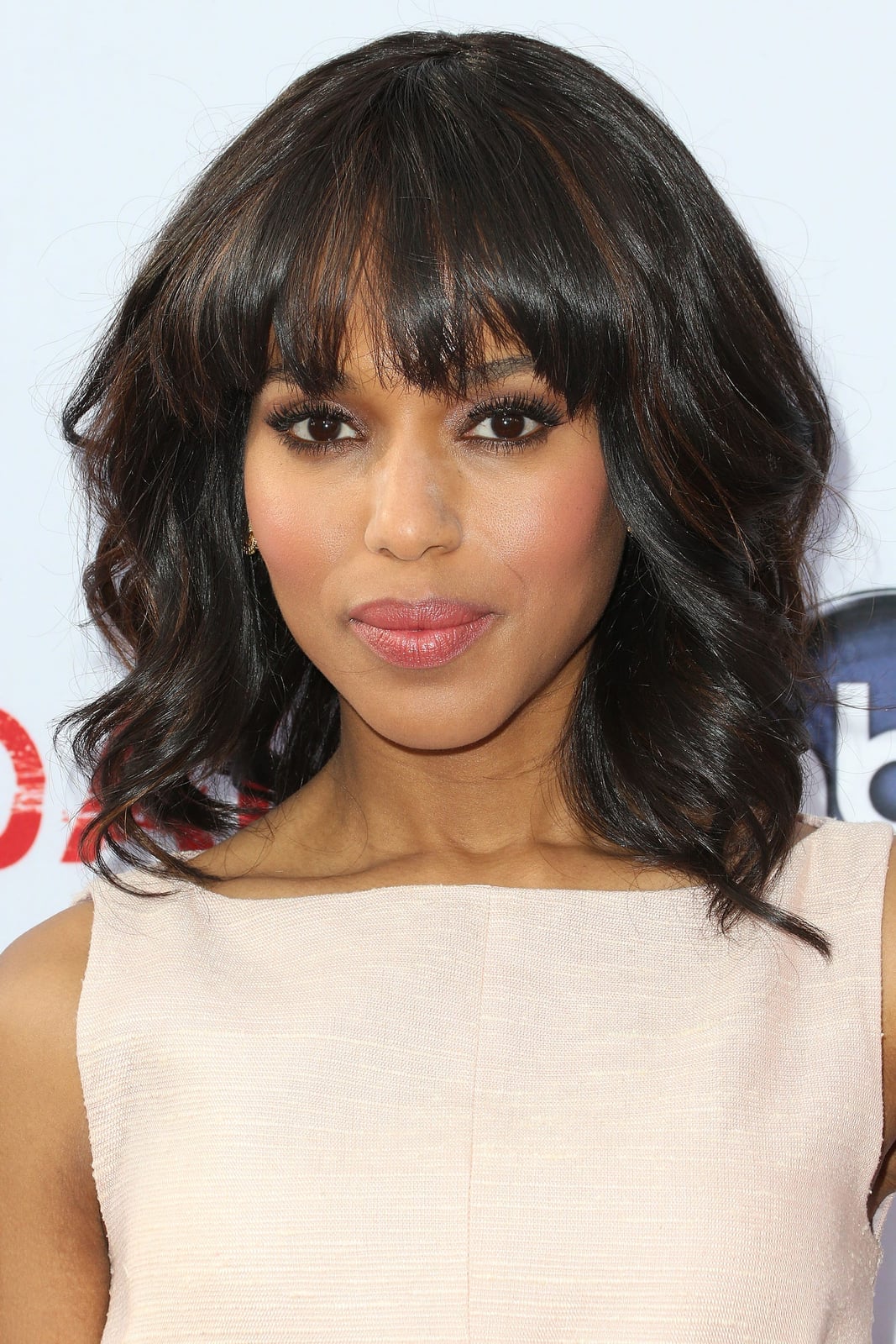
A collarbone lob with blunt bangs is a high-maintenance shape that looks low-maintenance for about a week. The straight, medium-textured dark brown hair here is blown out smooth, and blunt bangs sit best on that same straight finish. Ask your stylist for: collarbone length lob with blunt bangs, and be clear about the fringe width, since blunt bangs take more hair than most people expect. The drawback: blunt bangs show every bit of oil and need a wash or dry shampoo most mornings, plus a trim every three to four weeks. The lob itself needs a trim every six to eight weeks. For work or an evening out, a flat iron pass on the bangs is the whole routine.
Short Dark Brown Bob With Curtain Bangs

Courtesy of: snazzylair.com
A short dark brown bob that stops around the ear leaves no room for a lazy blowout, and the middle-parted curtain bangs carry most of the shape. Fine, straight hair holds that ear-length line best; anything thicker needs the stylist to thin the ends so the cut sits close. Ask your stylist for: short bob with curtain bangs. Doing the bangs yourself means guessing at the center split, so let the salon set that first cut. At home, wrap each side around a round brush and pull outward, then let the brush cool in the hair for a few seconds before unwinding.
Final Thoughts
For fine hair, keep bangs wispy or softly blended so they don’t weigh the front down. For thick hair, blunt or layered bangs give better control and hold their shape longer. A quick trim every two to four weeks keeps any fringe from turning into a curtain you did not ask for.
- Trim bangs every 2-4 weeks to maintain shape.
- Use dry shampoo at the roots to absorb oil between washes.
- Style bangs with a small round brush and heat protectant.
- Consider a texturizing spray for lived-in styles.
Bangs are a versatile way to refresh your look.
Hairstyle
20 Vivid Hair Color Inspiration 2027
Vivid Hair Color Inspiration 2027: Discover 20 bold looks with rainbow gradient and citrus neon streaks. See the looks and save your favorite.
Vivid hair color means a base shade pushed into high-chroma territory, placed with a technique that keeps the tone saturated for weeks. The current move is lived-in color: soft face-framing layers and curtain bangs carry the brightness while the root line stays softer.
These 20 ideas run from a chin-length bob to mid-back waves, and from a three-hour salon appointment to a single streak you can ask for by name. Vivid Hair Color Inspiration covers fine hair that loses its pop, a grow-out line that shows too soon, and a fringe that refuses to sit. Pick a length and texture you already have; the color does the rest.
Long Layered Hair With Bold Yellow And Purple Fringe

Courtesy of: fabmood.com
What happens when you want vivid color but you are not ready to commit from root to tip? A blunt, bold fringe in yellow and purple lets you keep the rest of your long, wavy layers neutral, so the payoff is concentrated right where people look first. Medium-density hair starting at shoulder length or longer gives the layers enough weight to hold the wave without looking stringy, and the middle part keeps the fringe as the clear focal point.
Ask your colorist for long layers with a blunt, bold yellow and purple fringe. The blunt cut on the fringe means it needs a trim every three to four weeks to stay sharp and graphic. This angle works best on oval and long face shapes, where the horizontal line of the bangs adds width rather than shortening the face.
Mid-Back Rainbow Gradient Color Melt
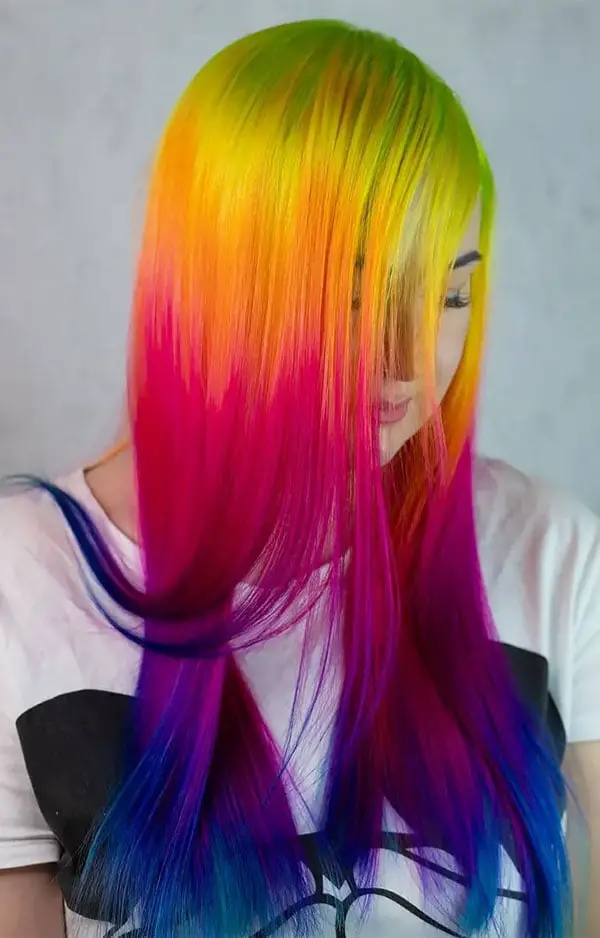
Photo credit: fabmood.com
The design moves from yellow at the roots through orange and pink into blue at the ends, and the trick is that no single color line is visible. Fine, straight hair at mid-back length lets the gradient read as a smooth ribbon, because there is no texture to break up the transition. Face-framing pieces keep some brightness near the jaw without pulling the whole rainbow forward.
Ask your colorist for a mid-back rainbow gradient color melt from yellow to blue. The upkeep is straightforward: a color-safe leave-in conditioner keeps the shine up, and a purple shampoo once a week helps the blue and yellow stay separate. A trim every eight weeks keeps the ends clean enough that the melt does not look faded.
Long Layers With Citrus Neon Streaks
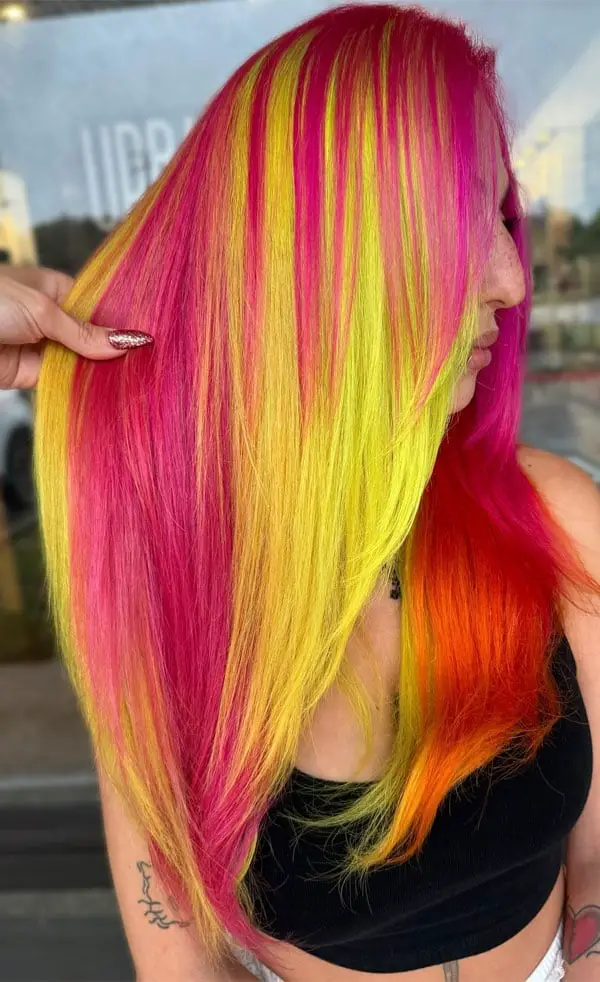
Image credit: itakeyou.co.uk
Thick, straight hair gets a jolt of energy from bright citrus neon streaks woven through the layers. The base stays dark enough that each streak reads as a separate ribbon, not a wash of color. Neon shades fade faster than pastels, so you are looking at a toning appointment every four to six weeks to keep the lime and orange bright. This one is for anyone who treats upkeep as part of the look.
Shoulder Length Layers With Vivid Color Blocks

Source: fabmood.com
This is not a highlight or a melt. Color blocking sections the hair into distinct zones of yellow, green and teal, so each block sits next to the next one without blending. Thick, straight hair at shoulder length gives the blocks enough surface area to read clearly, and the curtain bangs soften what could otherwise feel like a hard graphic line. Ask your stylist for a shoulder length with yellow, green and teal color blocks and curtain bangs. Against a traditional balayage, this is the version that says you planned every section on purpose.
Collarbone Wavy Lob With Teal Highlights
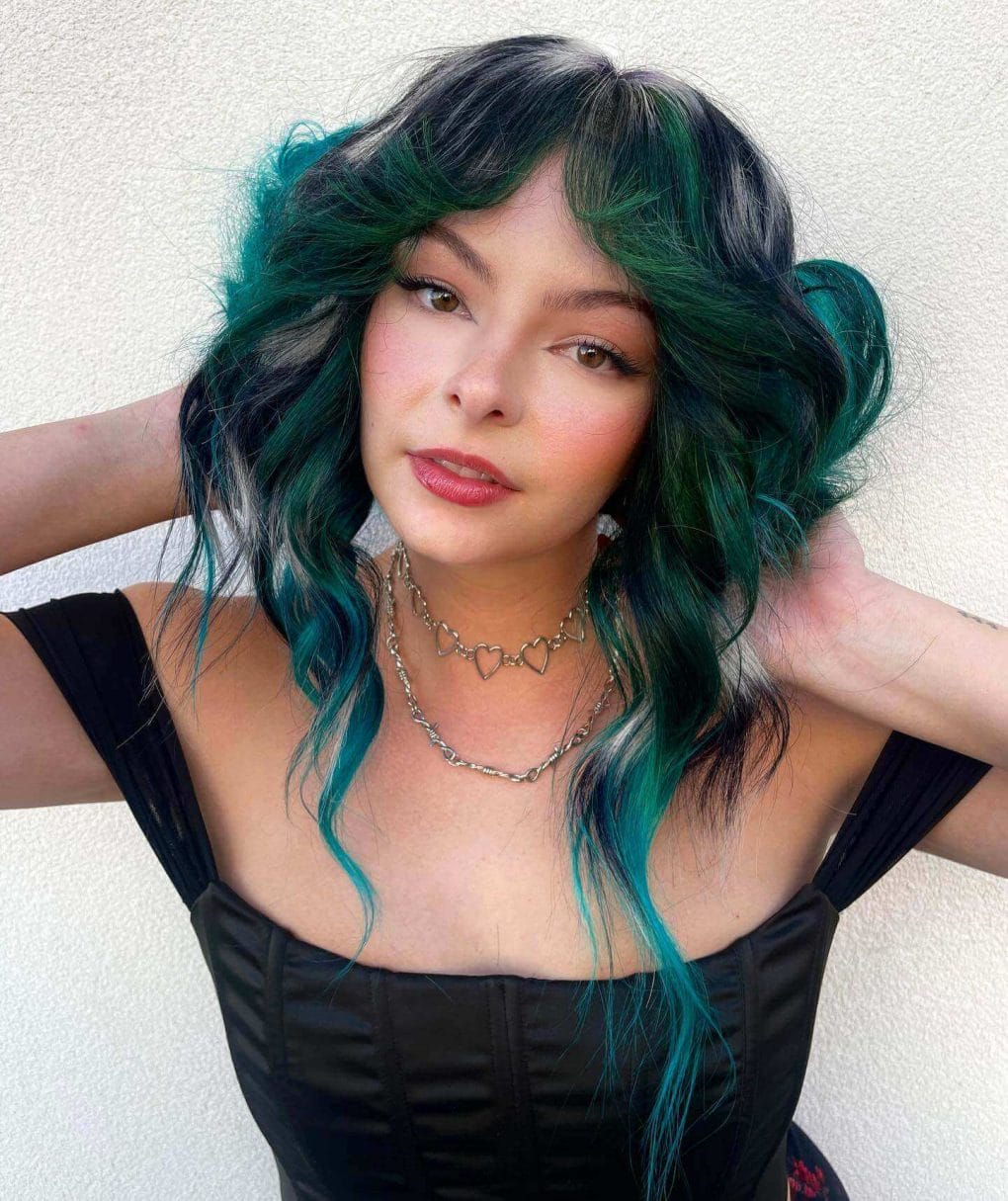
Via snazzylair.com
How do you add vivid color without committing to a full head of neon? A dark base with vivid teal highlights woven through a collarbone wavy lob keeps the impact concentrated. The curtain bangs pull the teal forward around the face, so the color registers even when the hair is down. Thick, wavy texture lets the highlights peek out without sitting flat. Ask your colorist for a collarbone wavy lob with curtain bangs and vivid teal highlights. This is a salon-only job: the base needs to stay dark enough that the teal pops, and a DIY kit tends to lift the dark base unevenly.
Mid-Back Long Layers With Purple Face-Framing
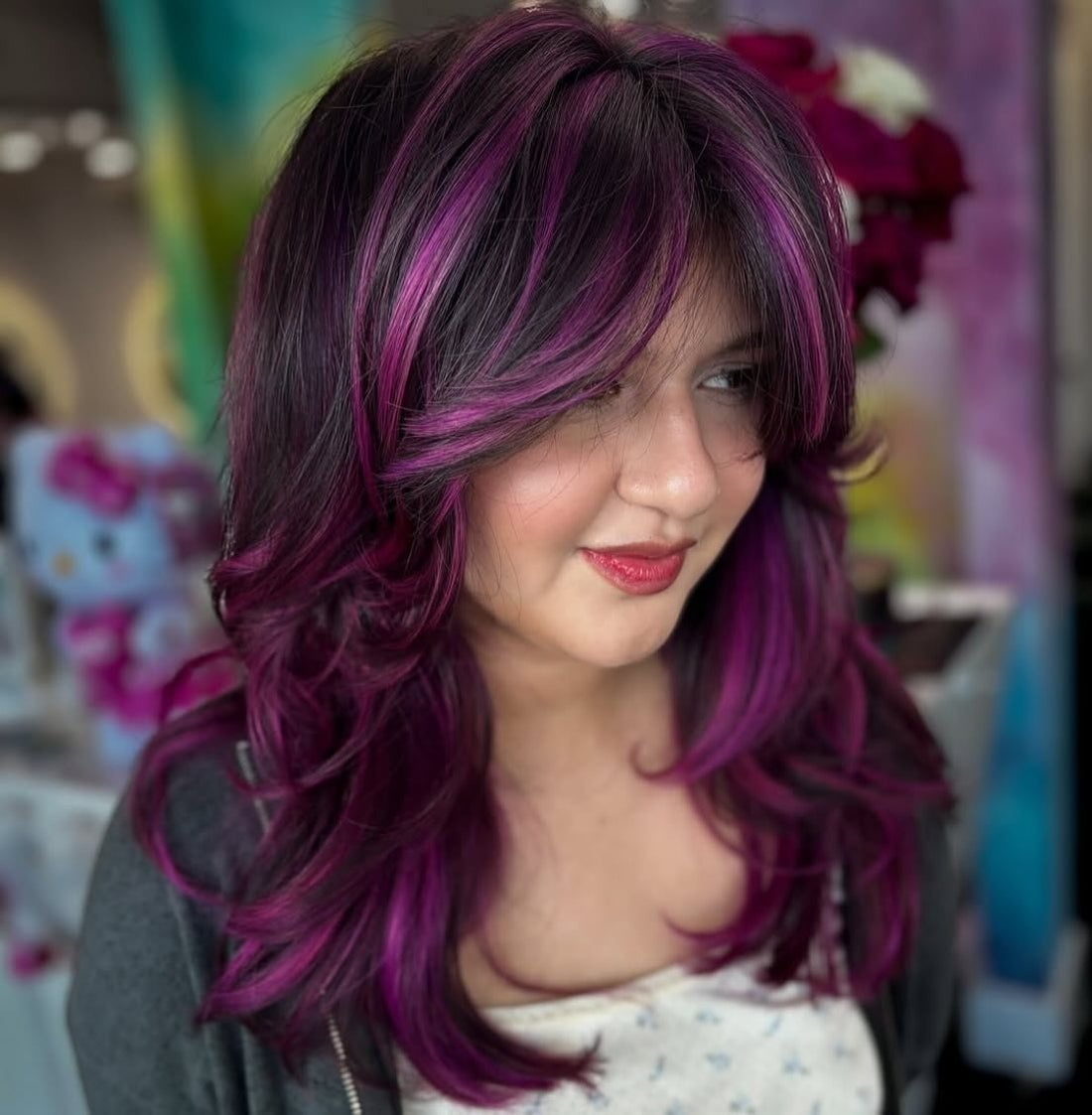
Courtesy of: creativebooster.net
Curtain bangs and long layers give this vivid purple face-framing a deliberate starting point. The dark base keeps the contrast sharp, so the purple highlights look like they were painted in, not just dropped on. Thick, wavy hair at mid-back length has enough weight to hold the shape; curtain bangs also soften a square or round jawline without hiding it.
Ask your colorist for: mid-back long layers with curtain bangs and vivid purple face-framing highlights. The trick is placement that lands a half inch inside the hairline, so grow-out creates a shadow effect. Style the curtain bangs with a round brush to keep them soft. Plan a trim every 8 to 10 weeks and a toning refresh around the same interval.
Shoulder Length With Neon Green Rainbow Face-Framing
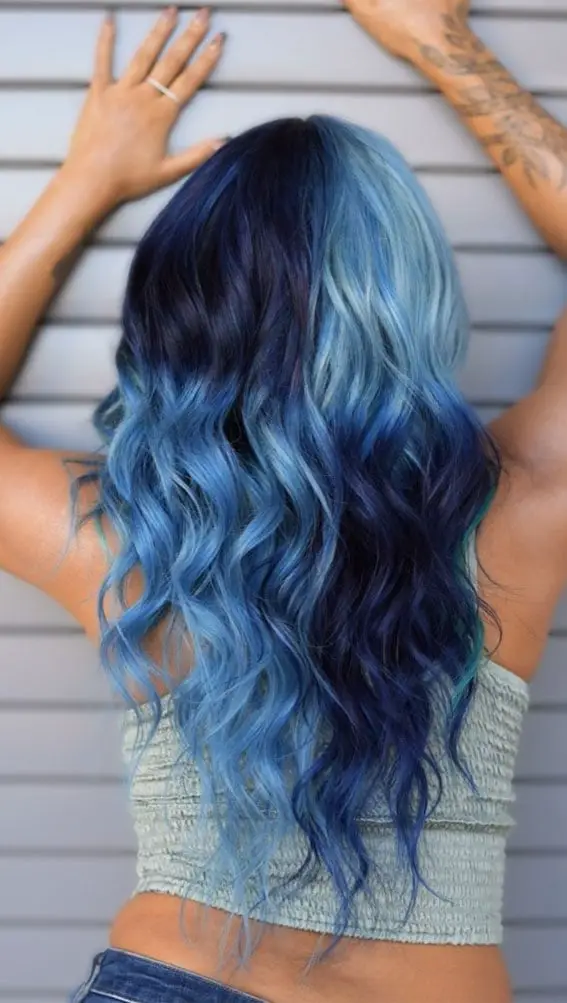
Photo credit: fabmood.com
Neon green is the base, but the rainbow streaks framing the face are the actual event. They sweep from the curtain bangs into teal on the sides, which keeps the color from feeling like a single note. Thick, wavy hair at shoulder length gives the streaks enough surface to read clearly. This lands best at summer festivals or a party where the lighting is good and the crowd is game. Ask your colorist for: shoulder length with neon green base, rainbow face-framing, and teal sides. It is a salon-only request, and you want someone who treats vivid placement like geometry.
Mid-Back Ombré From Magenta To Violet
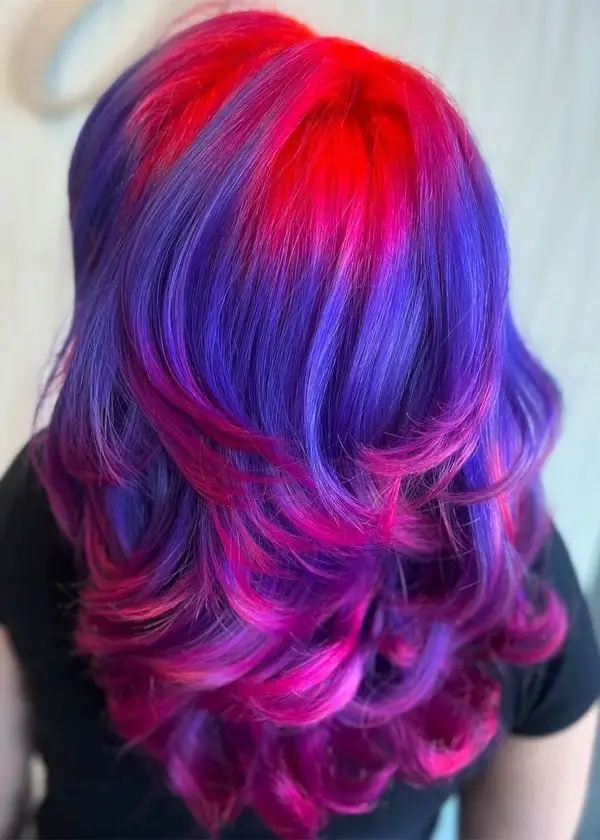
Image credit: fabmood.com
An ombré from electric magenta at the roots to violet at the ends sounds straightforward, but the transition is where most versions fail. This one uses a straight, medium-density cut at mid-back length, so the gradient travels cleanly without interruption from waves or layers. The back view shows no hard lines.
Ask your colorist for: mid-back ombré from electric magenta to violet. On fine or very straight hair, the color can settle into a visible demarcation if the stylist does not blend the midpoint thoroughly. A weekly deep conditioning treatment keeps both shades from looking dusty. Expect to refresh the violet ends every 6 to 8 weeks, since magenta holds longer.
Mid-Back Wavy Blend Of Blue And Purple
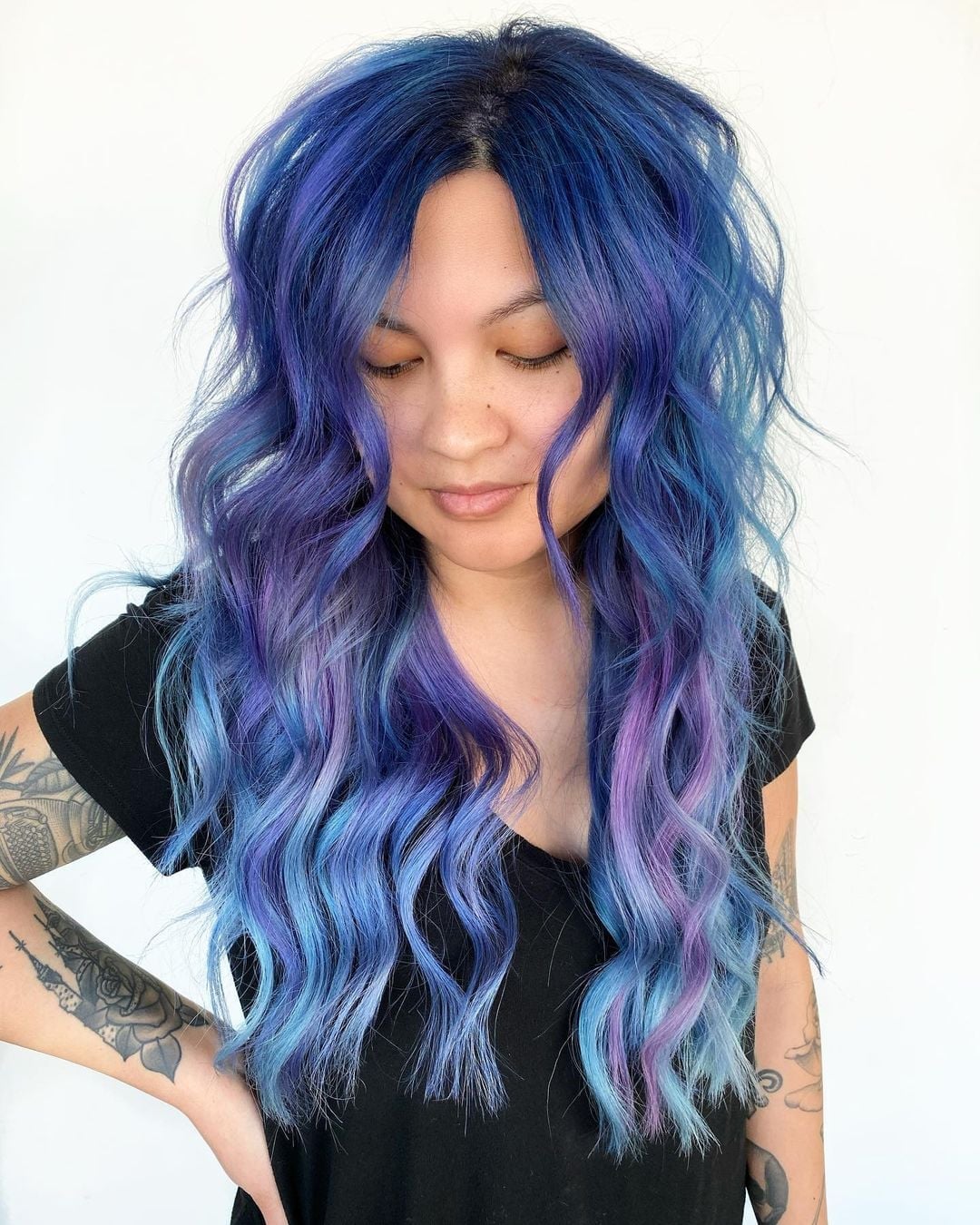
Source: therighthairstyles.com
Can a vivid blue and purple blend look dimensional rather than flat? Yes, when lighter streaks are woven through the mid-back layers. The loose waves break up the color, so the eye moves across blue, then purple, then the lighter accent. Medium-density, wavy hair at mid-back length carries the blend without it turning muddy. This is a color that works for most face shapes because the layers and waves do the framing. Ask your colorist for: mid-back layers with a vivid blue and purple blend and lighter streaks. A curl-defining cream helps the waves separate and show off the mix. Trim the layers every 8 to 10 weeks to keep the shape.
Chin Length Bob With Vivid Pink, Orange, Purple Stripes
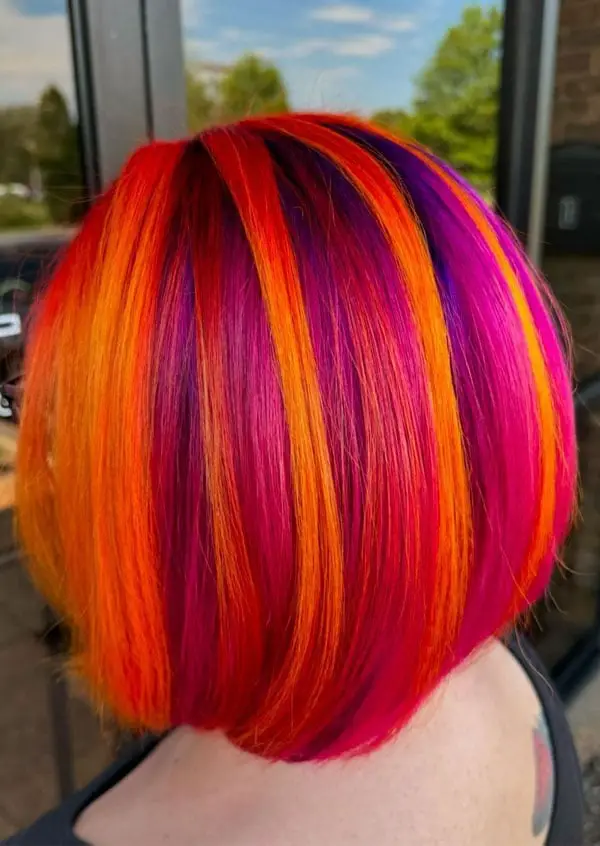
Source: fabmood.com
A chin-length bob with vivid pink, orange, and purple stripes is a geometry problem: each stripe has to land parallel and stay crisp. The smooth blowout and thick, straight texture here make the lines look deliberate. This color requires sectioning, foils, and a steady hand, so skip the DIY. Ask your colorist for: chin length bob with vivid pink, orange, and purple stripes. A smoothing serum keeps the bob sleek between washes. Plan a trim every 6 to 8 weeks to maintain the blunt edge.
Mid-Back Split Dye Green And Blue
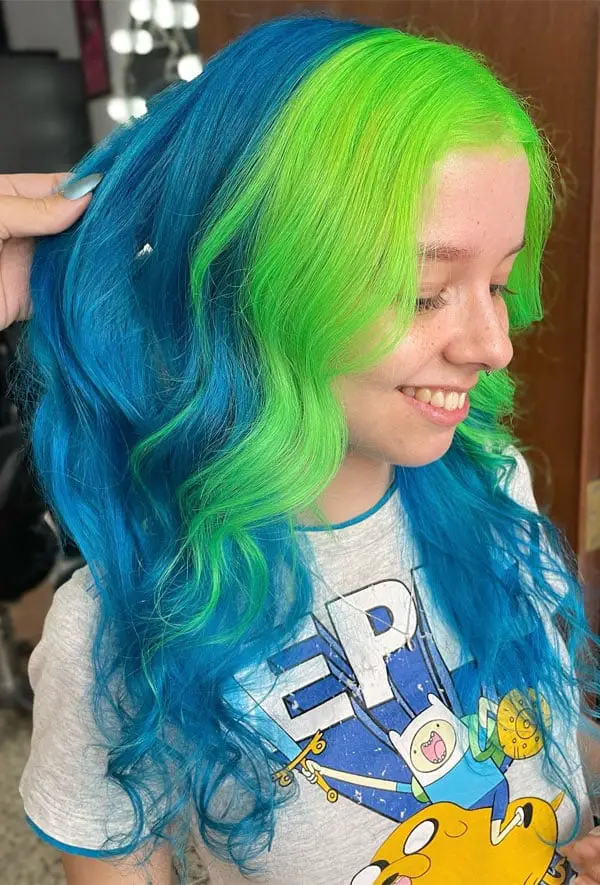
Via itakeyou.co.uk
A split dye demands precision: one clean vertical line divides neon slime green from deep ocean blue, each side claiming its own half. The side-swept bangs land on the green side, which keeps the contrast readable from the front. Thick wavy hair at mid-back length holds the divide best, since the weight of the hair helps the part stay put. A middle part would split the bangs unevenly, so stick with the side part the cut was built for.
Ask your colorist for: mid-back long layers with side swept bangs and neon slime green and deep ocean blue split dye. The honest drawback is the grow-out: once the roots come in, you cannot fudge a root shadow on one side without ruining the symmetry. Plan on a full root touch-up every four to five weeks, not eight. If you wash in water warmer than lukewarm, the green will bleed into the blue within two washes, so keep the rinse cold and the shampoo separate for each side.
Mid-Back Split Dye Purple And Pink
Courtesy of: urbanevolutionsalon.com
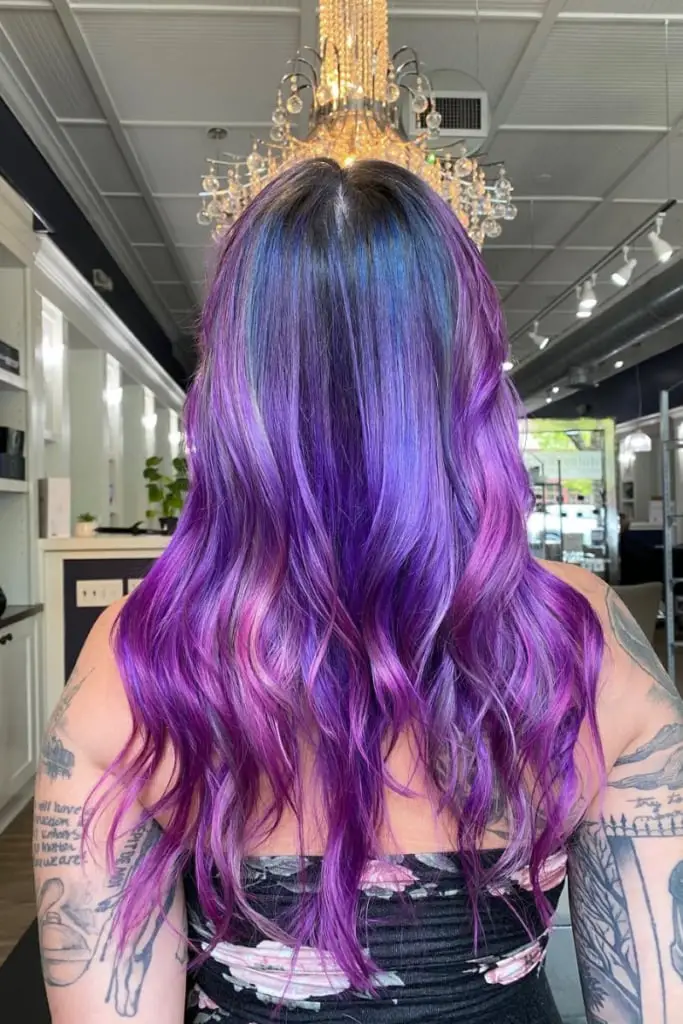
Can two vivid shades live on one head without turning into a bruise? Yes, when one side is bright purple and the other is pink, and the middle part keeps them from touching. The loose waves help, too: they soften the seam so the split looks like a planned design. Thick wavy hair at mid-back length gives each color enough surface area to register as its own block and not a muddy blend.
Ask your colorist for: mid-back layers with a vivid purple and pink split dye. Upkeep is where this gets real. A purple shampoo on the purple side and a pink color-depositing conditioner on the pink side will keep the tones separate. Use two towels after washing, one per side, or expect a lavender stain where the colors meet. A trim every eight to ten weeks keeps the ends healthy enough to hold the saturation.
Mid-Back Fiery Red With Darker Roots
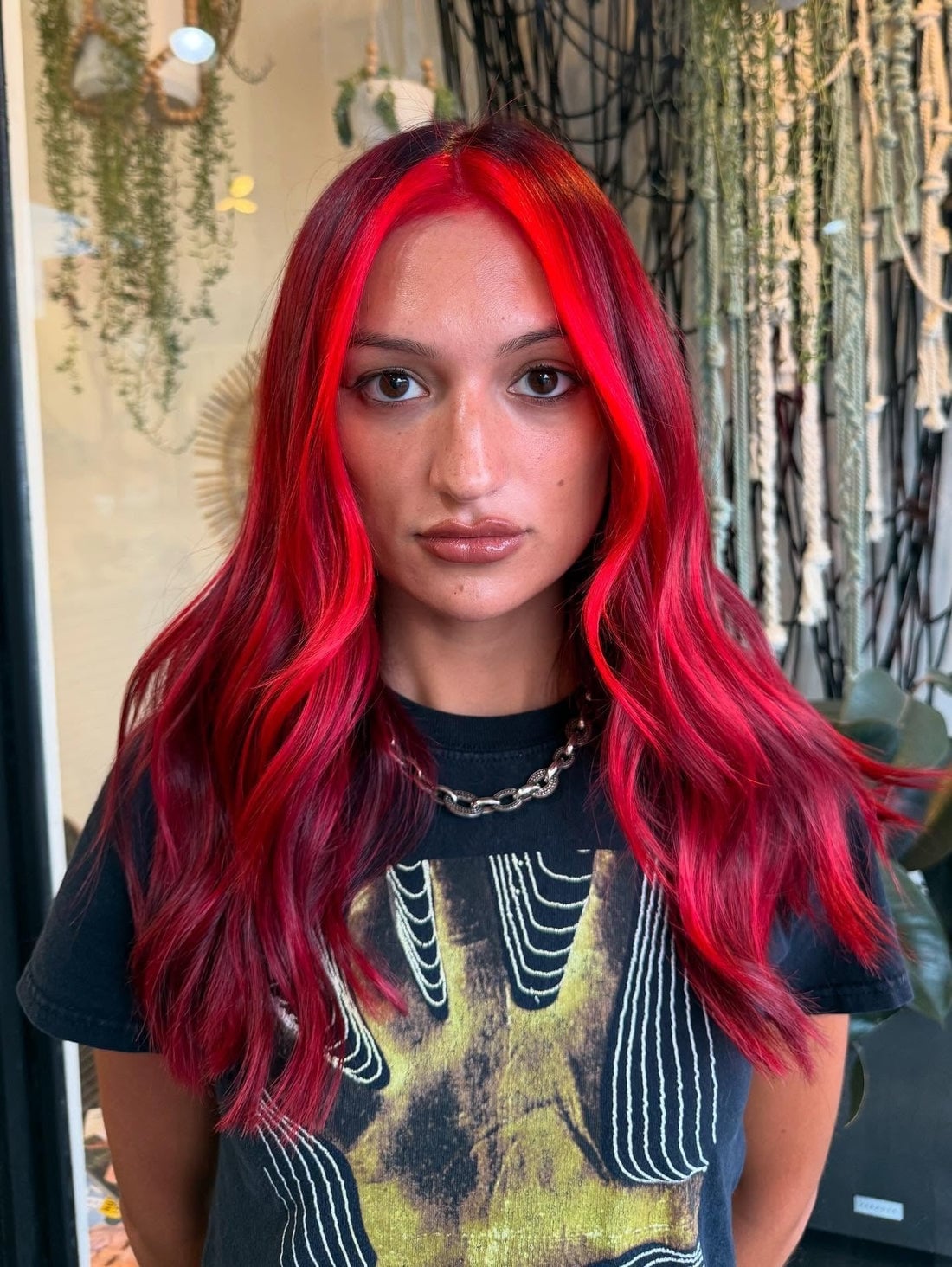
Photo credit: creativebooster.net
This is a vivid red that does not pretend the roots do not exist. The darker base at the crown graduates into a fiery, almost stop-sign red through the mid-lengths and ends, which makes the grow-out look like a deliberate shadow. The face-framing pieces show the color shift clearly, so round faces get softness and square faces get a little distraction near the jaw. The loose waves help the gradient move naturally instead of forming a hard line. Ask your colorist for: mid-back long layers with face-framing pieces in vivid fiery red with dark roots. This works best on thick wavy hair starting at mid-back length; fine hair will show the root shadow as a flat patch rather than a smooth transition.
Mid-Back Uniform Vivid Yellow Hue
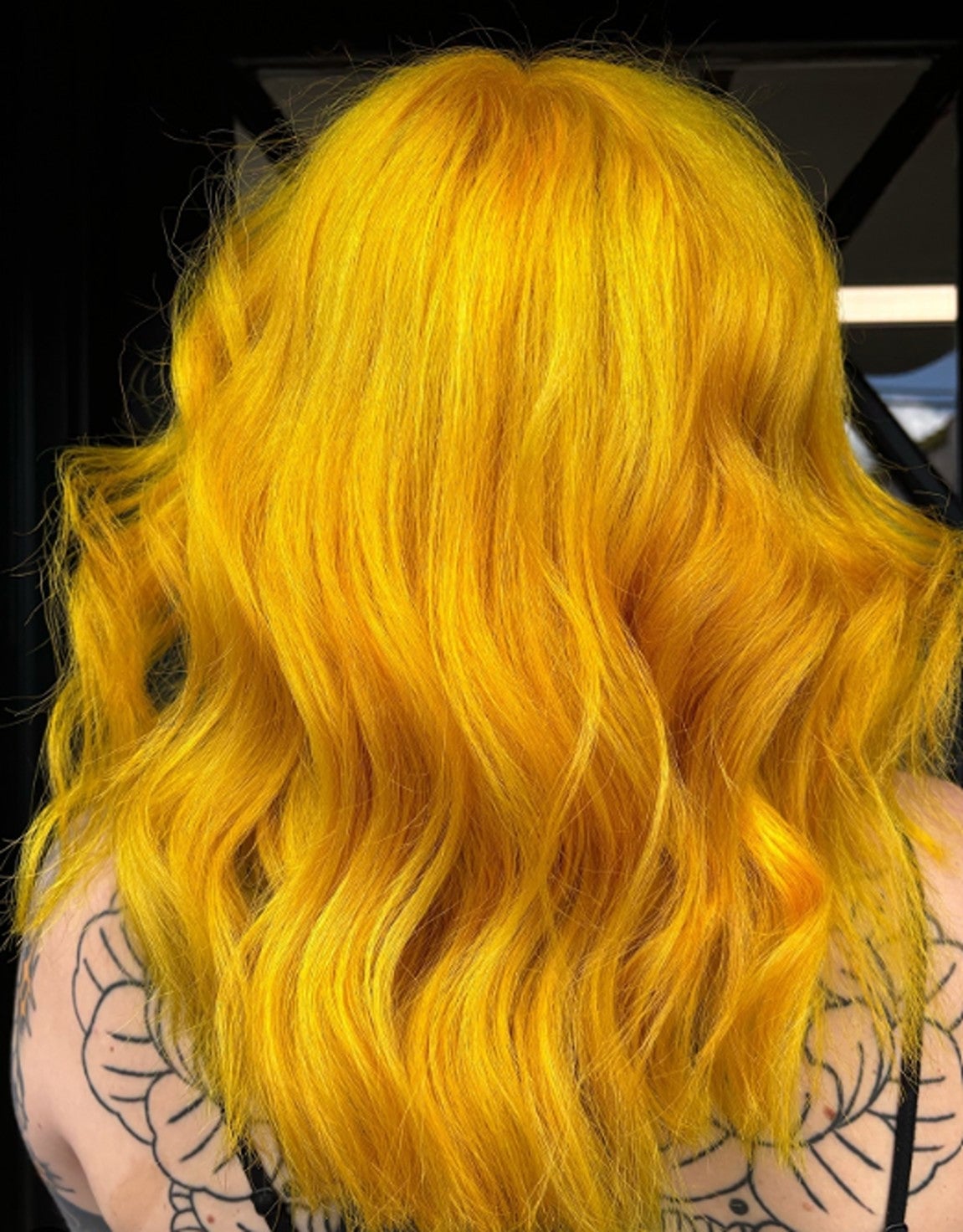
Image credit: amr.com.au
This is not a pastel buttercup or a honey-blonde hybrid. It is a single, consistent vivid yellow from root to tip, with no highlights, no lowlights, and no shadow. The uniform hue relies on the hair being lightened to the same pale level all over before the yellow is applied, which means any previous color must be stripped first. Thick wavy hair at mid-back length works well because the texture adds dimension that a flat, solid color would lack on straight hair. The loose waves break up the block of yellow, and the result is glossy, not flat.
Ask your colorist for: mid-back long layers in a uniform vivid yellow hue. The real drawback is brassiness. Yellow is already yellow, so it does not fade green or orange, but it does fade to a dull, chalky tone after about four weeks. A weekly color-depositing mask in a true yellow will keep it bright. Skip purple shampoo here; it will turn the yellow muddy gray.
Mid-Back Twisted Updo With Sunset Color Blend
Source: greenweddingshoes.com
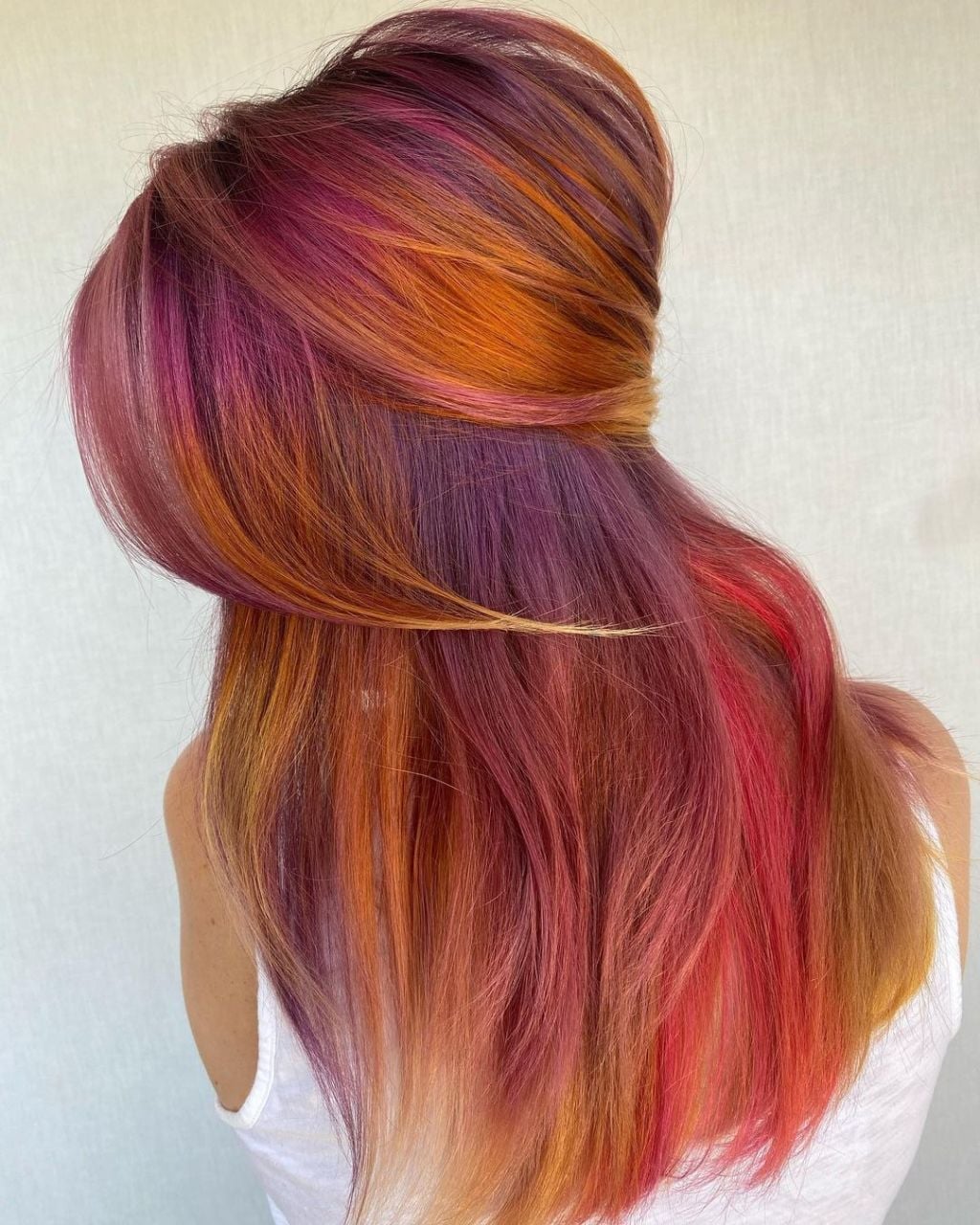
A twisted updo usually hides the color work, but this one does the opposite. The warm blend of orange, pink, purple and hints of blonde is placed so each twist reveals a new stripe of the gradient. The back view shows the sunset progression clearly, with the darkest shades at the nape and the lightest at the crown. Medium density wavy hair at mid-back length holds the twists without needing a full can of hairspray; fine hair would need more pinning and texture spray to keep the shape from slipping.
Ask your colorist for: mid-back twisted updo with a sunset color blend. This is a special-occasion design, not a daily wear look. The updo itself takes about twenty minutes with practice, but the color application requires a full day in the chair to layer the four tones so they blend rather than stripe. A tinted conditioner in a warm peach tone will refresh the pink and orange sections between salon visits.
Short Layered Bob With Vivid Green Highlights
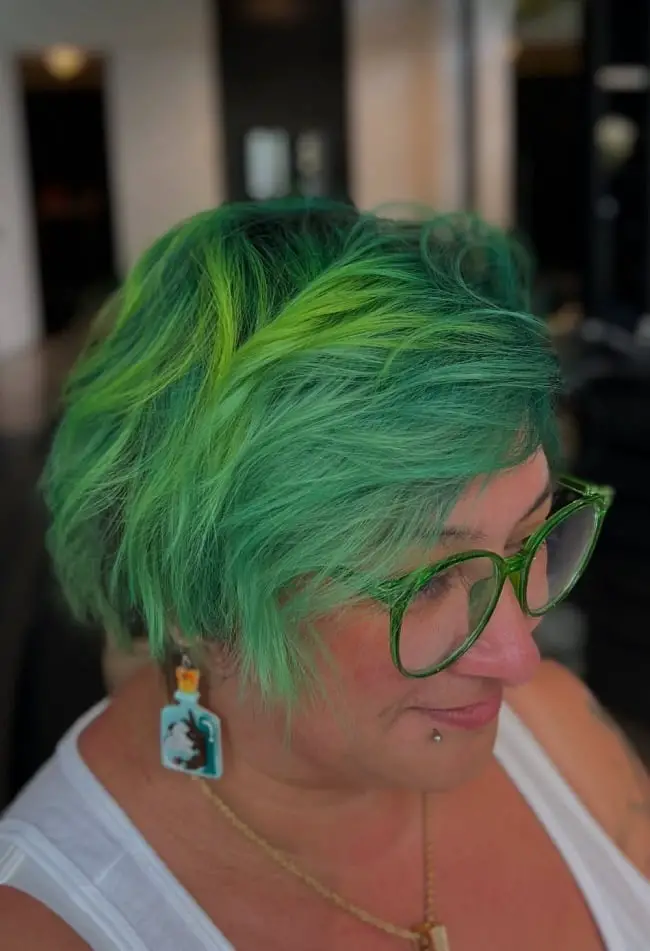
Via fabmood.com
Wondering how to make a vivid green bob look dimensional rather than like a single flat crayon? The trick is lighter green highlights woven through the choppy layers. This chin-length bob with short bangs and a side part works best on thick wavy hair that can hold the textured shape. Ask your colorist for: short layered bob with short bangs and vivid green with lighter green highlights. Style with a texturizing paste to define the pieces, and expect to trim every four to six weeks to keep the bob sharp.
Chin Length Sunset Ombré Bob
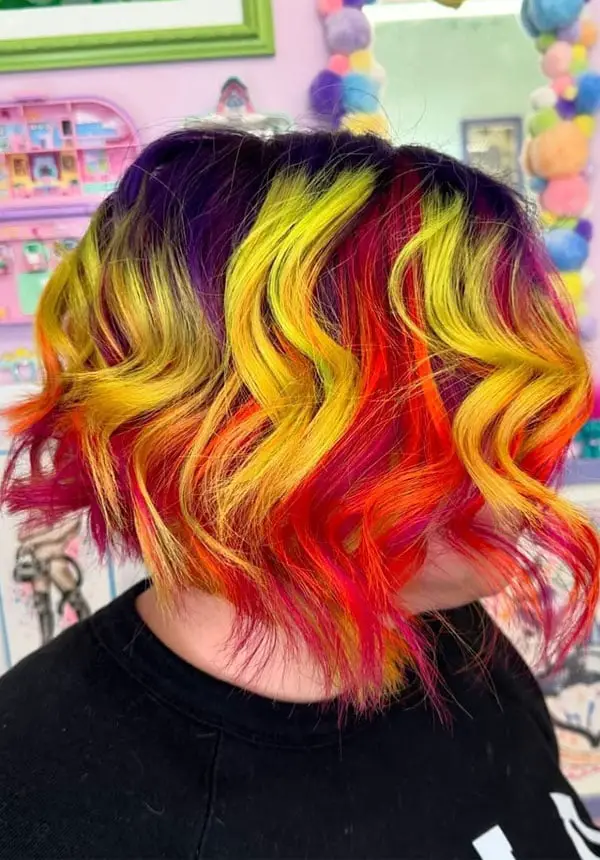
Courtesy of: fabmood.com
A sunset ombré on a chin-length bob creates distinct bands of color, magenta at the roots shifting to a clear orange at the ends. Unlike a traditional balayage that blends softly, this technique keeps the transition lines visible. The result works best on medium-density wavy hair with a middle part and no bangs, suiting most face shapes. A salon visit is necessary; the ombré requires precise sectioning to keep the two tones from muddying. Apply a sea salt spray to encourage the waves and trim every six to eight weeks.
Chin Length Bob With Neon Yellow And Pink Balayage
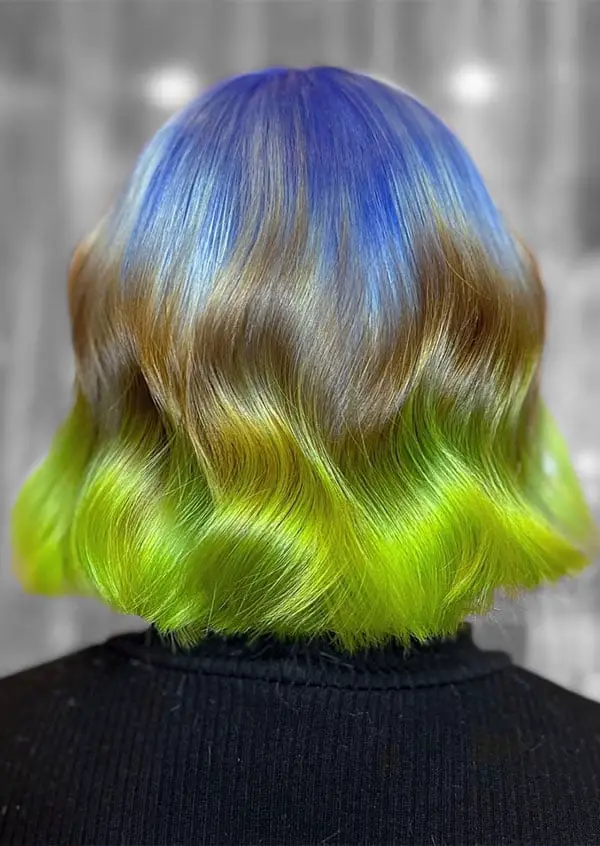
Photo credit: fabmood.com
Can a balayage glow like a neon sign? This chin-length bob proves yes, with vivid yellow and pink sweeping through soft waves. The back view shows the color placement clearly, with a middle part and no bangs. One real drawback: yellow tones in a neon balayage fade faster than the pink, so you will need color-depositing conditioner every few washes to keep the glow. The technique is salon-only and works best on thick wavy hair. Use a heat protectant before styling the waves, and plan a trim every six to eight weeks.
Mid-Back Curls With Pink, Teal, Blue Streaks
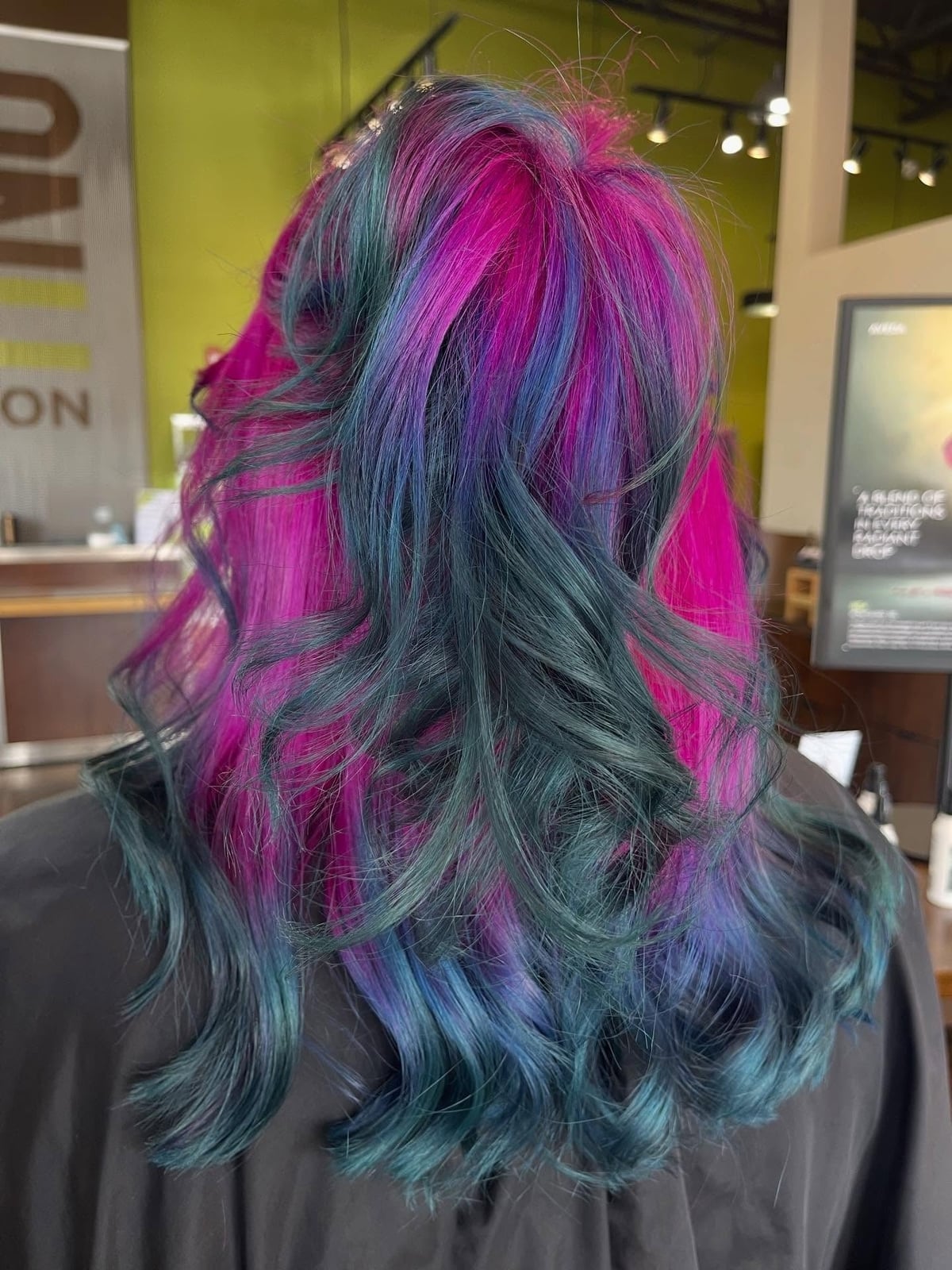
Image credit: creativebooster.net
Vivid streaks of pink, teal, and blue woven through loose curls create a playful contrast without a full head of color. The mid-back length with long layers and a half-up styling shows off the strands. This combination suits medium-density wavy hair best; the lighter base allows the bright tones to pop. Those with very fine hair may find the streaks look sparse. Ask your colorist for: mid-back long layers in loose curls with pink, teal, and blue streaks. Use a curl-enhancing product and scrunch to define the texture, and trim every eight to ten weeks.
Mid-Back Blue To Red Ombré Gradient
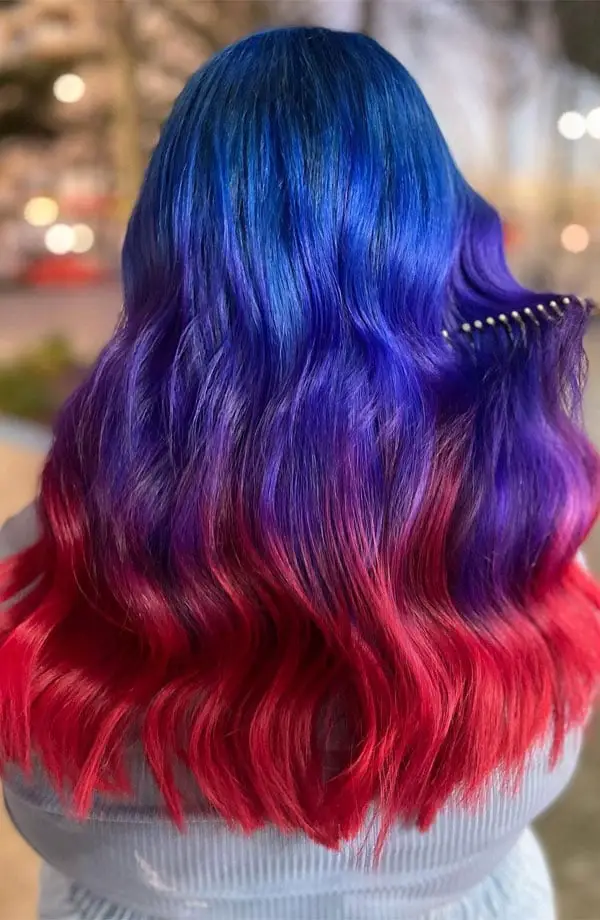
Via fabmood.com
A blue-to-red ombré requires precise color placement to avoid a muddy middle. Here the gradient moves from deep blue at the roots through purple to a vibrant red at the ends, with a middle part and wavy styling on thick hair. The layers help the transition read cleanly. This technique works best on mid-back length or longer, giving the color room to shift. The salon application takes time, but the payoff is a vivid gradient that holds its shape between trims. Expect to refresh the tone every six to eight weeks and trim every eight to ten weeks.
Final Thoughts
For an all-over vivid shade, plan on salon toning every four to six weeks and decide if that rhythm fits your calendar. For highlights or color blocking, the maintenance is lighter: color-safe washing and a weekly mask keep the vivid pieces from fading into each other.
- Wash with cool water and sulfate-free, color-safe shampoo.
- Refresh tones weekly with a color-depositing conditioner or mask.
- Skip heat styling where you can; use a heat protectant when you do not.
- Book salon toning every four to six weeks to hold vibrancy.
Dare to be bold with your next vivid hair color transformation.
Hairstyle
16 Trendy Shoulder Length Haircuts 2027 for a Fresh Look
Trendy Shoulder Length Haircuts 2027 featuring shag styles with bangs, wavy bobs, and rich dark brown shades. See the looks and save your favorite.
Shoulder length hair hits that sweet spot between short and long, offering enough weight to hold a shape and enough length to move. The shag and the butterfly cut have pushed this category into new territory, with curtain bangs and choppy texture replacing the one length lobs of recent years.
These 16 Trendy Shoulder Length Haircuts cover the range from a wash and wear shag to a polished blowout, for fine strands that fall flat to thick curls that need room to expand. The collection solves the grow out phase, the fringe that won’t sit, and the blunt cut that looks severe on a round face.
Honey Blonde Collarbone Shag With Curtain Bangs

Courtesy of: whowhatwear.com
The honey blonde shag at collarbone length combines choppy layers and full curtain bangs with a middle parting and air dried waves. This cut works best on medium to thick wavy hair, creating movement without heat styling. Ask your stylist for: collarbone length shag with choppy layers and full curtain bangs. The curtain bangs soften round and square faces, while the choppy texture gives a lived in finish that a texturizing spray enhances. Air dry for that relaxed look, and plan on trimming the bangs every four to six weeks to keep them face framing. It is a wash and go option that still looks deliberate.
Medium Brown Wavy Shag With Curtain Bangs
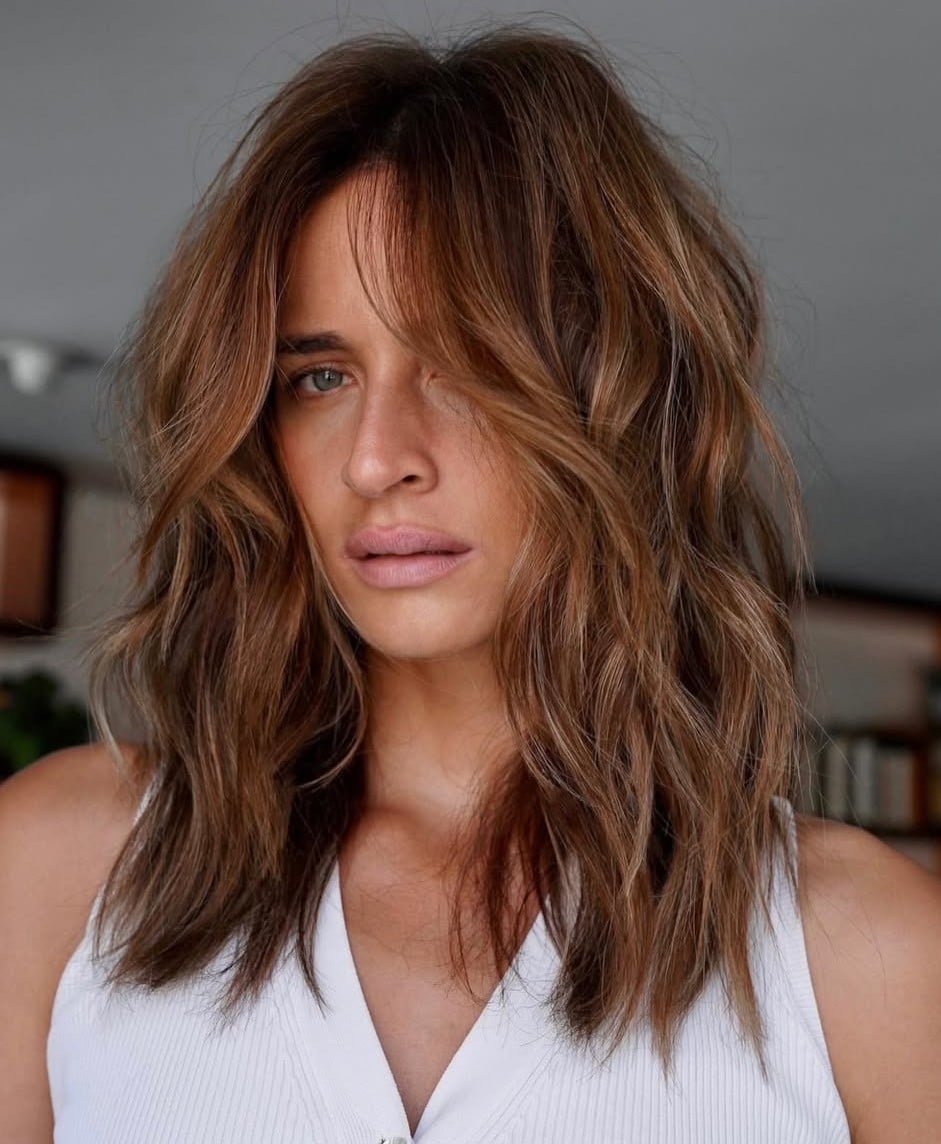
Photo credit: therighthairstyles.com
Wondering how to get that perfectly undone shag without looking like you gave up? Start by asking for a collarbone-length cut with choppy layers that hit at the cheekbones and chin, plus curtain bangs that sweep to the sides. The medium brown base with subtle highlights adds dimension, so the layers don’t blend into one flat mass. This style works best on medium to thick wavy hair, where the natural texture provides the volume. Ask your stylist for: collarbone shag with choppy layers and curtain bangs. The key is in the cutting, not the styling. A sea salt spray enhances the waves, and you’ll want to refresh the layers every eight to ten weeks to keep the shape from growing out into a triangle.
Dark Brown Chin Bob With Vintage Waves
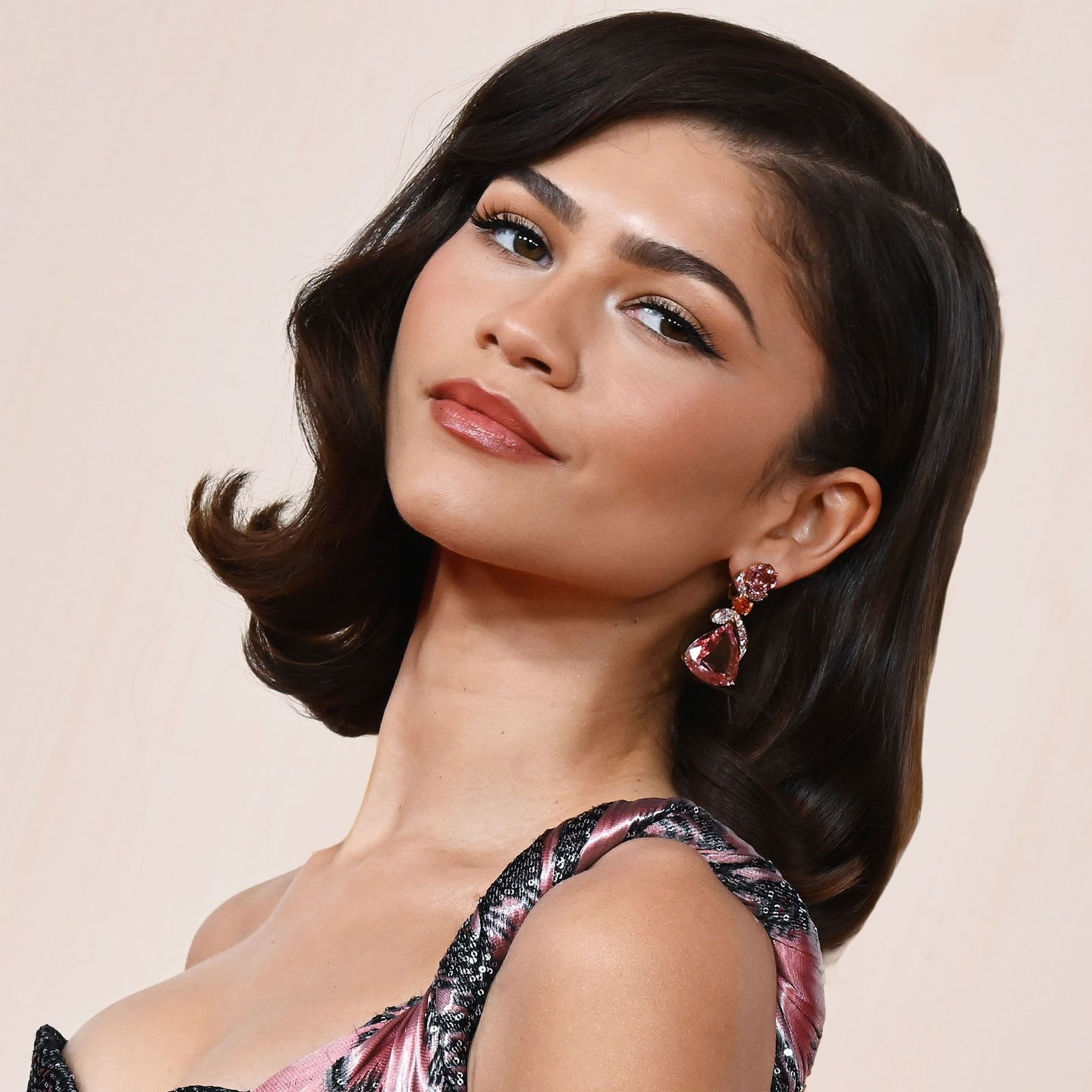
Image credit: glamourmagazine.co.uk
If you’re torn between a sleek modern bob and something with more personality, the vintage wave route offers a middle ground. This chin-length bob is sculpted with deep waves and side-swept bangs, giving fine straight hair a boost of volume that a flat iron can’t replicate. Ask your stylist for: chin length bob with deep vintage waves and side-swept bangs. The side part and the wave pattern add width to narrow faces, making it a solid choice if you want to balance proportions. The blowout finish requires a large barrel curling iron and a light-hold hairspray to keep the waves from falling flat. It’s a polished look that leans more evening than everyday.
Thick Dark Brown Bob With Inward Curls
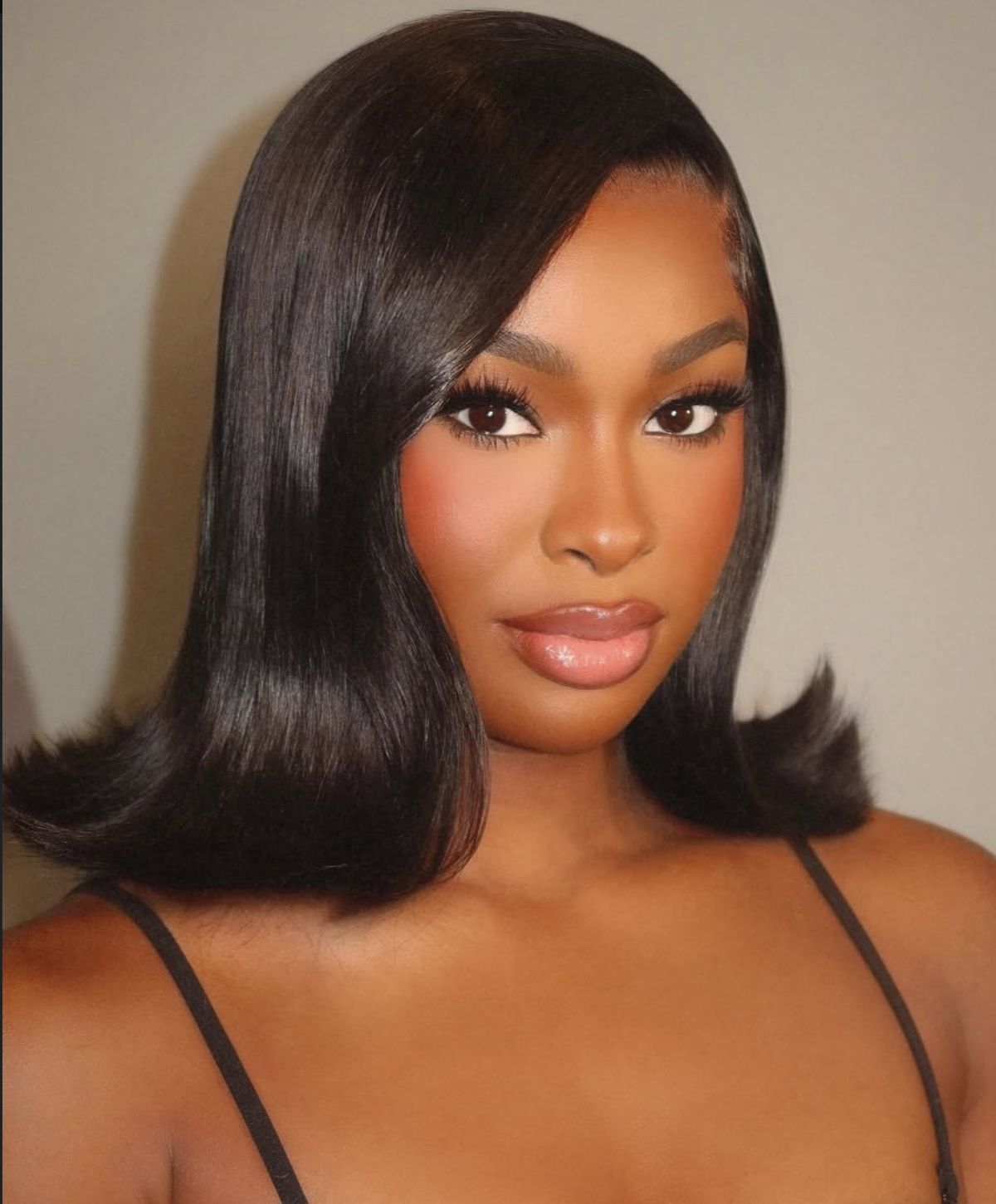
Source: stylerave.com
Thick, straight hair often fights against bobs, but this chin-length version works with it. The blunt cut and subtle inward-curling ends create a clean shape that holds volume without looking heavy. Side-swept bangs and a deep side part break up the density, so the style doesn’t read as a solid helmet. Ask your stylist for: chin length blunt bob with subtle inward curls and side-swept bangs. This cut suits long faces by adding width at the jaw, and the volume at the sides balances the length. Blow-dry with a round brush to smooth the ends and encourage that inward curve. Expect to trim every six to eight weeks, because the blunt edge shows growth quickly.
Dark Red Chin Length Shag With Choppy Bangs
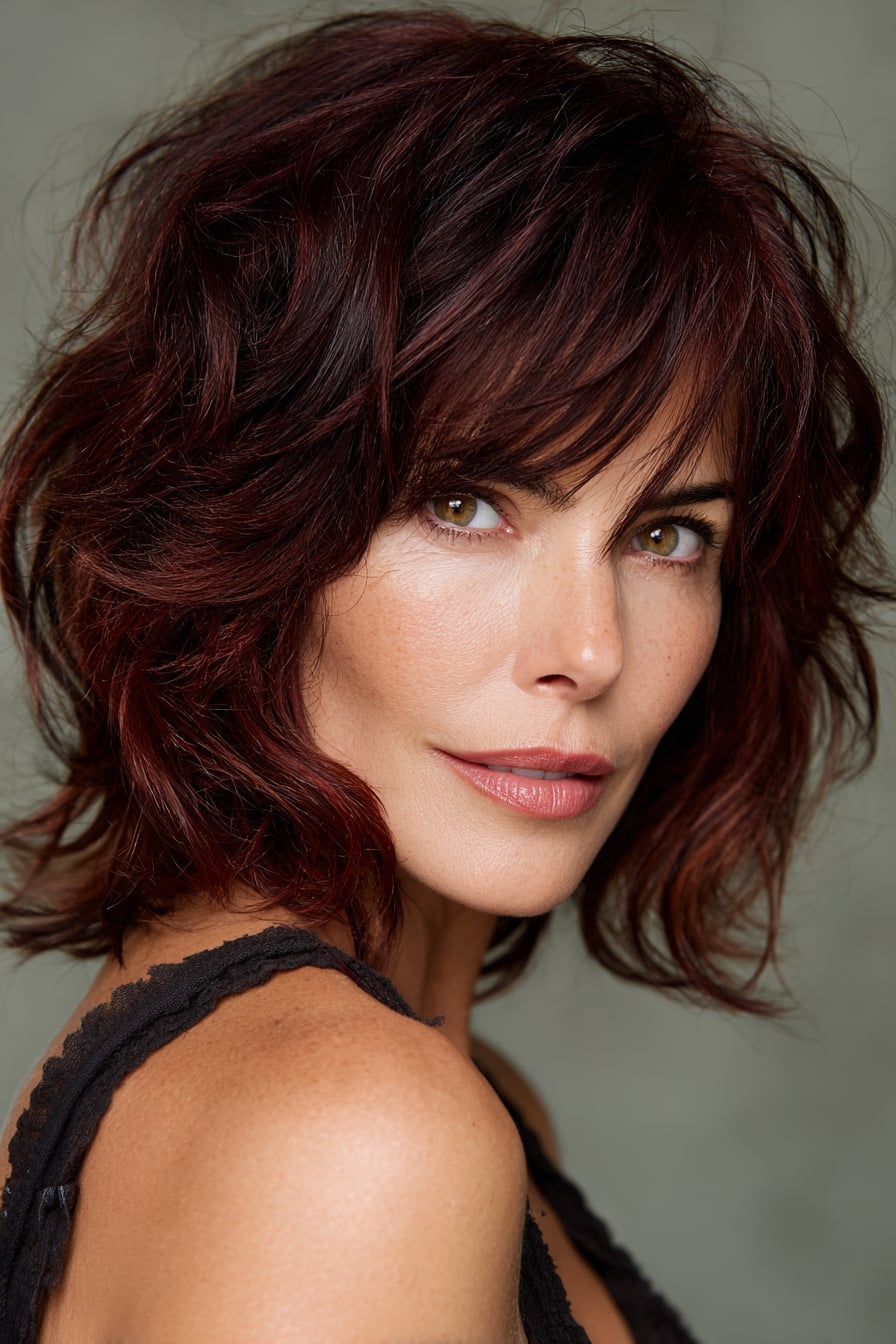
This chin-length shag in dark red is not a shy haircut. The choppy layers and matching choppy bangs create an edgy, textured silhouette that stands out even before you factor in the color. It’s a style that suits medium wavy hair, where the natural bend helps the layers separate and move. Ask your stylist for: chin length shag with choppy layers and choppy bangs. The middle part frames the cut, and the choppy texture means you can skip the perfect blowout. Work a texturizing paste through damp hair and let it air dry for that deliberately undone finish. The bangs are the high-maintenance part: they need a trim every three to four weeks to stay sharp and out of your eyes.
For wavy hair, this cut is forgiving on wash days, but the choppy ends can look ragged if you skip the product. A little paste goes a long way, so start small and add more if you need it.
Thick Wavy Dark Brown Shoulder Shag
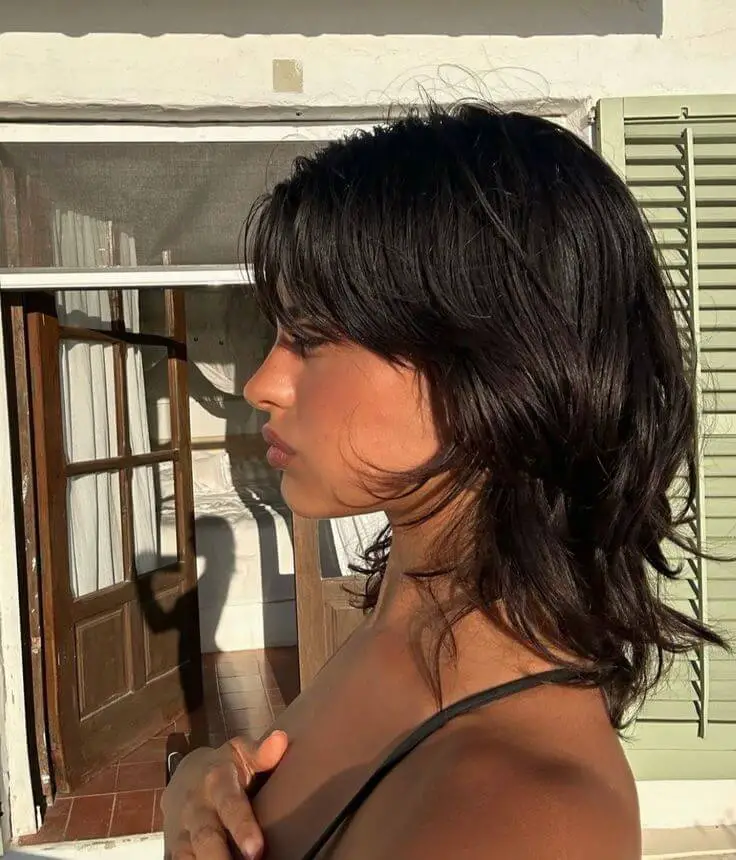
Courtesy of: nealandwolf.com
The shag is built on choppy layers that remove weight from thick wavy hair, letting the curls do the work instead of fighting them. Curtain bangs split at the middle and blend into the face-framing sections. Ask your stylist for: shoulder length shag with choppy layers and curtain bangs. The layering technique creates that lived-in texture without looking over-styled. A curl-defining cream on air-dried hair maintains the shape. Trim every 8 to 10 weeks.
Thick Wavy Dark Brown Collarbone Cut
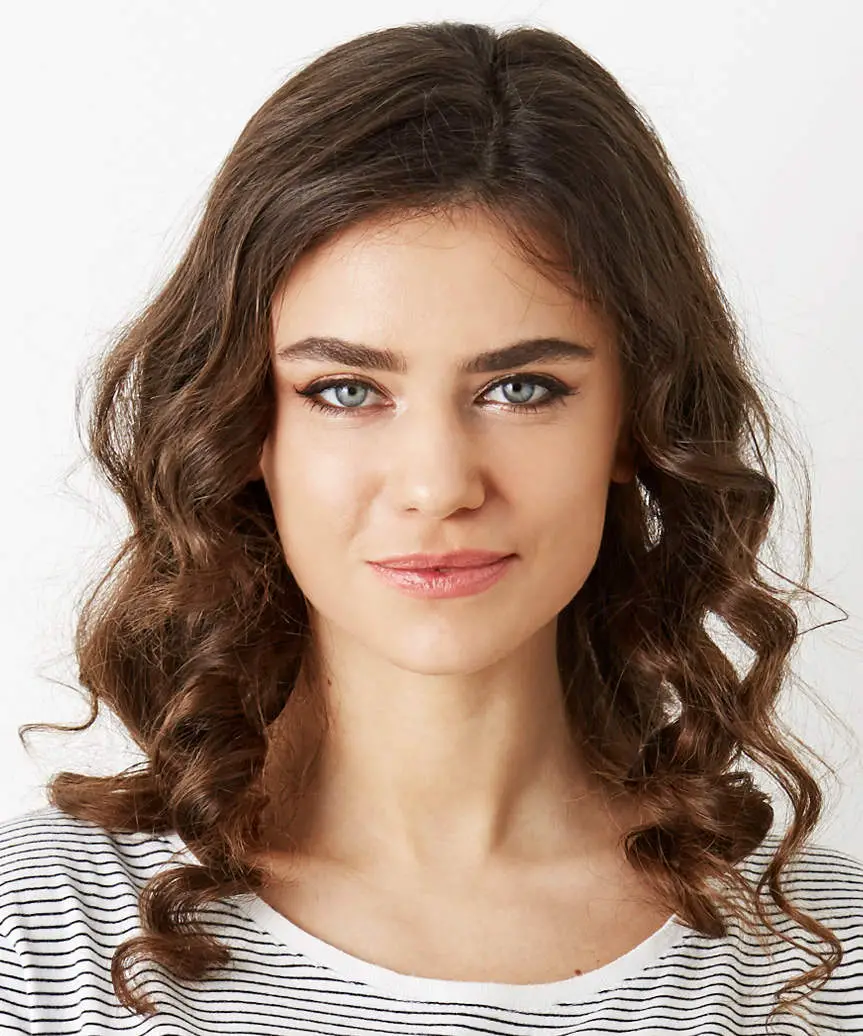
Photo credit: thehairstyler.com
Thick wavy hair at collarbone length can feel like a heavy curtain if the layers are too timid. The subtle face-framing pieces here keep the shape from a solid block of hair. Ask your stylist for: collarbone length with subtle face-framing layers. Thicker textures need internal thinning to avoid a bell shape. A diffuser on low heat helps the waves settle naturally. Plan a trim every 8 to 10 weeks.
Blonde Shoulder Length Blowout With Soft Waves

Image credit: vogue.co.uk
How do you get soft waves that hold without looking like a curling iron did all the work? A blowout with a large round brush creates the bend, not a wand. Ask your stylist for: shoulder length with soft waves and a subtle blowout. The subtle highlights add dimension without heavy contrast. This works for a wedding or a Tuesday, since the finish is polished but not stiff. A side parting adds volume on top for longer face shapes.
Blonde Shoulder Cut With Soft Curls
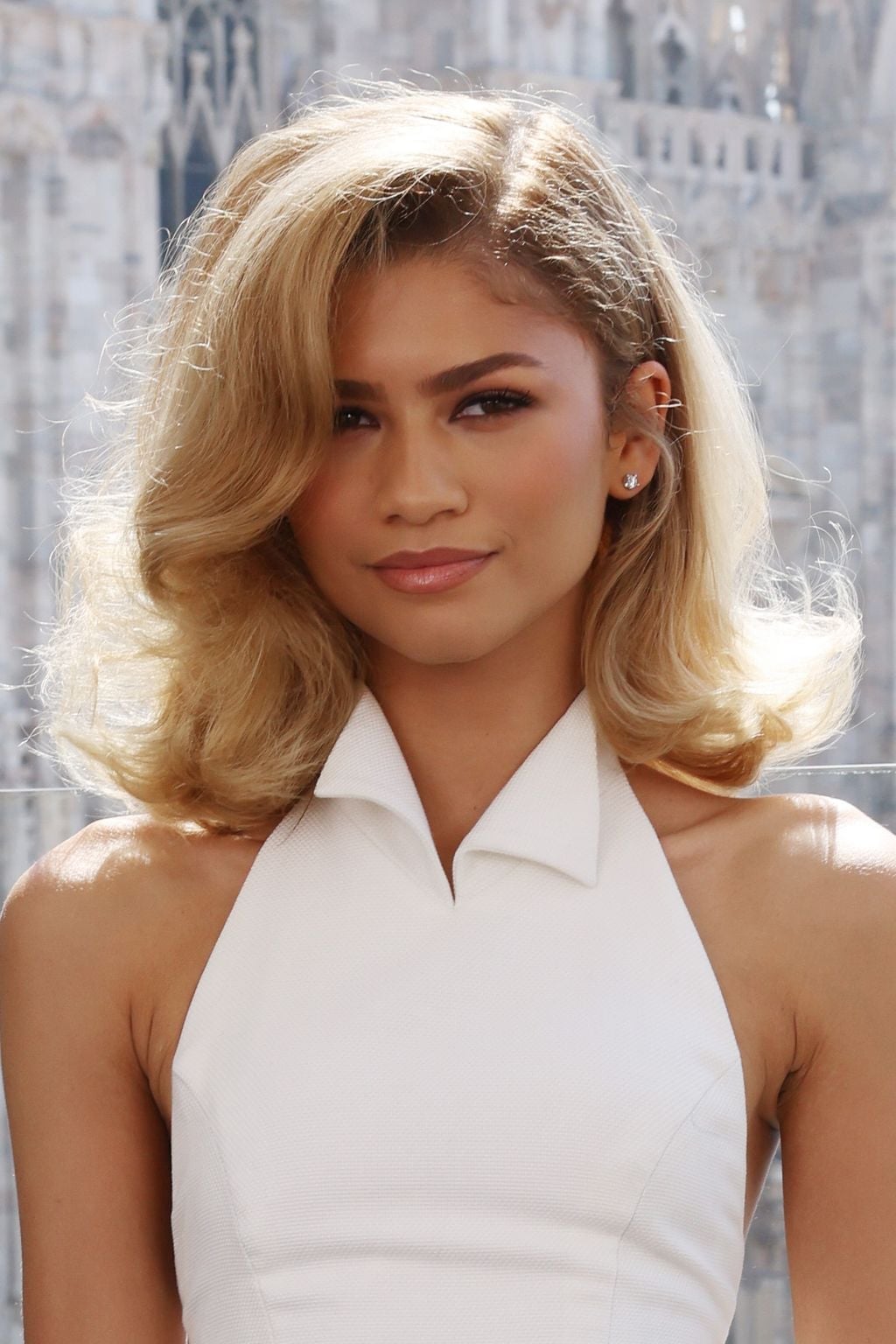
Source: glamour.com
Soft layers at shoulder length give fine wavy hair the body it lacks on its own. The gentle curls here add width at the sides, which balances a longer face. Ask your stylist for: shoulder length with soft layers and gentle curls. A side parting lifts the root area, helping the wave pattern hold longer. The subtle highlights add dimension without looking stripey. Styling takes about 15 minutes with a curling iron.
Medium Brown Collarbone Lob With Face-Framing Layers
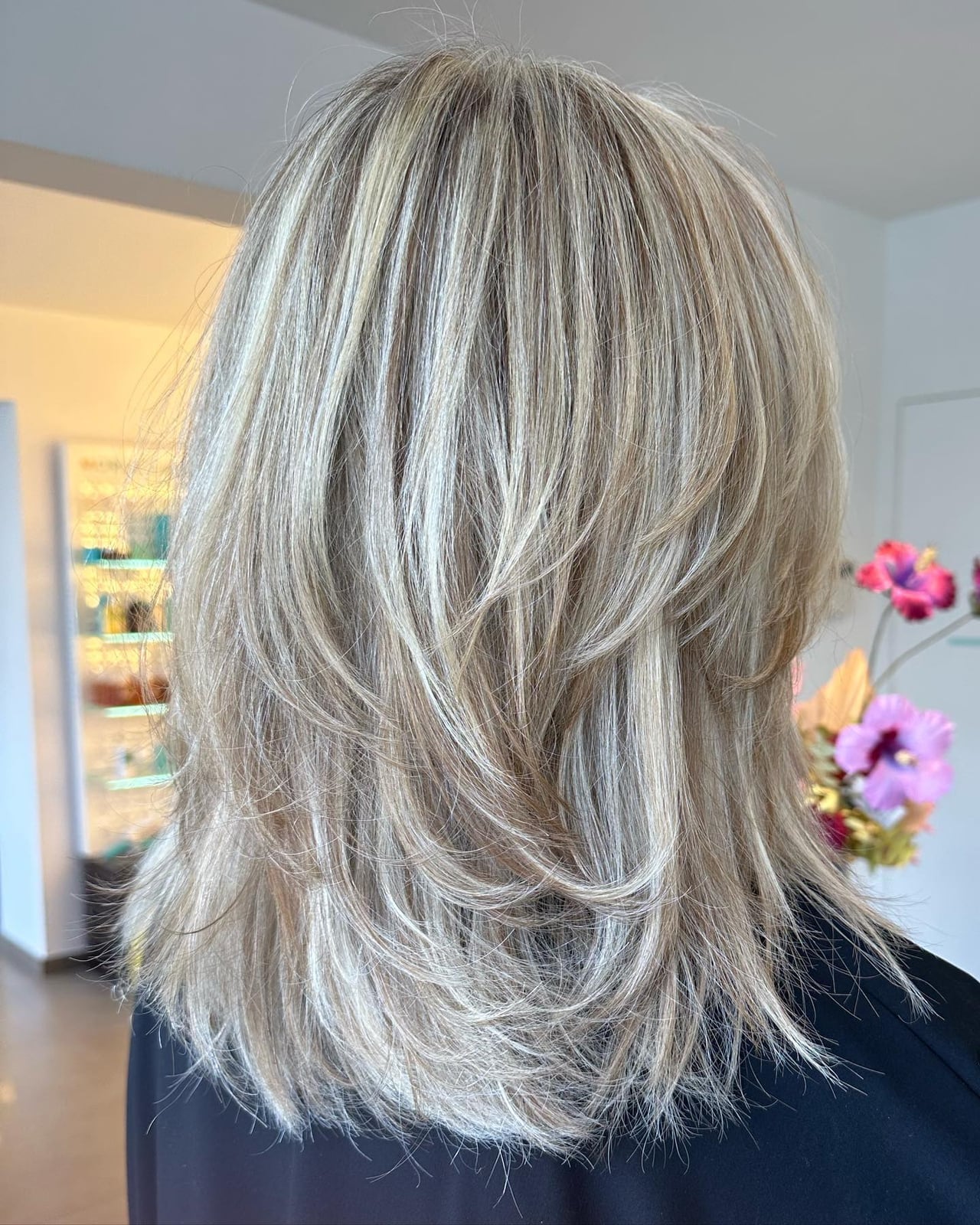
Source: hadviser.com
The collarbone lob with face-framing layers creates movement around the jaw without losing the weight at the ends. Curtain bangs blend into the layers for a soft, connected transition. Ask your stylist for: collarbone lob with face-framing layers and curtain bangs. The upkeep is moderate: a texturizing spray on the ends refreshes the shape between washes, and the layers grow out gracefully for about 10 weeks before needing a trim.
Fine Wavy Blonde Lob With Face-Framing Layers

Via perfectcorp.com
The lob itself is a collarbone-length shape, but the design here lives in its face-framing layers and curtain bangs. A dimensional blonde balayage is woven through the fine wavy texture so the lighter pieces land exactly where the layers fall, which makes the whole cut look intentionally pieced out rather than just shorter at the front. Ask your stylist for: collarbone lob with face-framing layers and curtain bangs. Fine wavy hair of at least collarbone length benefits from this approach because the layers remove weight without sacrificing density at the ends, and the curtain bangs add softness around angular jawlines.
A volumizing spray applied at the roots before blow-drying keeps the shape from going flat by midday. The balayage grows out softly, so you can stretch toning to about ten weeks, but the cut itself needs a trim every six to eight weeks to keep those face-framing pieces landing at the right spot.
Copper Blonde Collarbone Shag With Side Bangs
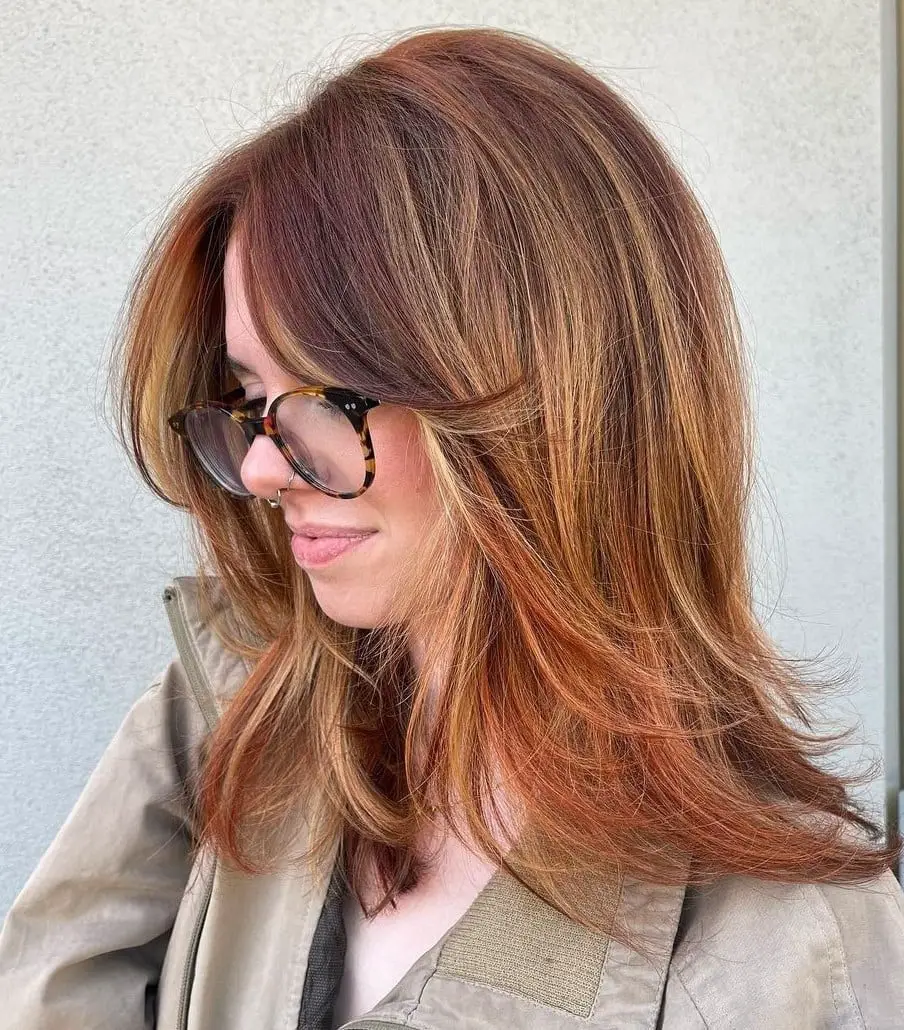
Courtesy of: hadviser.com
A soft blowout on a shag is a salon finish, and this copper-and-blonde-highlighted version is exactly that. The collarbone length is cut with face-framing layers and side-swept bangs that sweep across the cheekbone rather than sitting bluntly. If you try to replicate this at home with just a round brush, the layers tend to collapse into each other and the side-swept bangs lose their curve. Ask your stylist for: collarbone shag with face-framing layers and side-swept bangs. Medium density wavy hair of at least collarbone length holds the shape best, and the side-swept bangs soften a round face. For a decent approximation at home, a texturizing spray on dry hair and a quick blast of heat from a dryer can revive the layers between salon visits.
Thick Curly Dark Brown Shoulder Cut
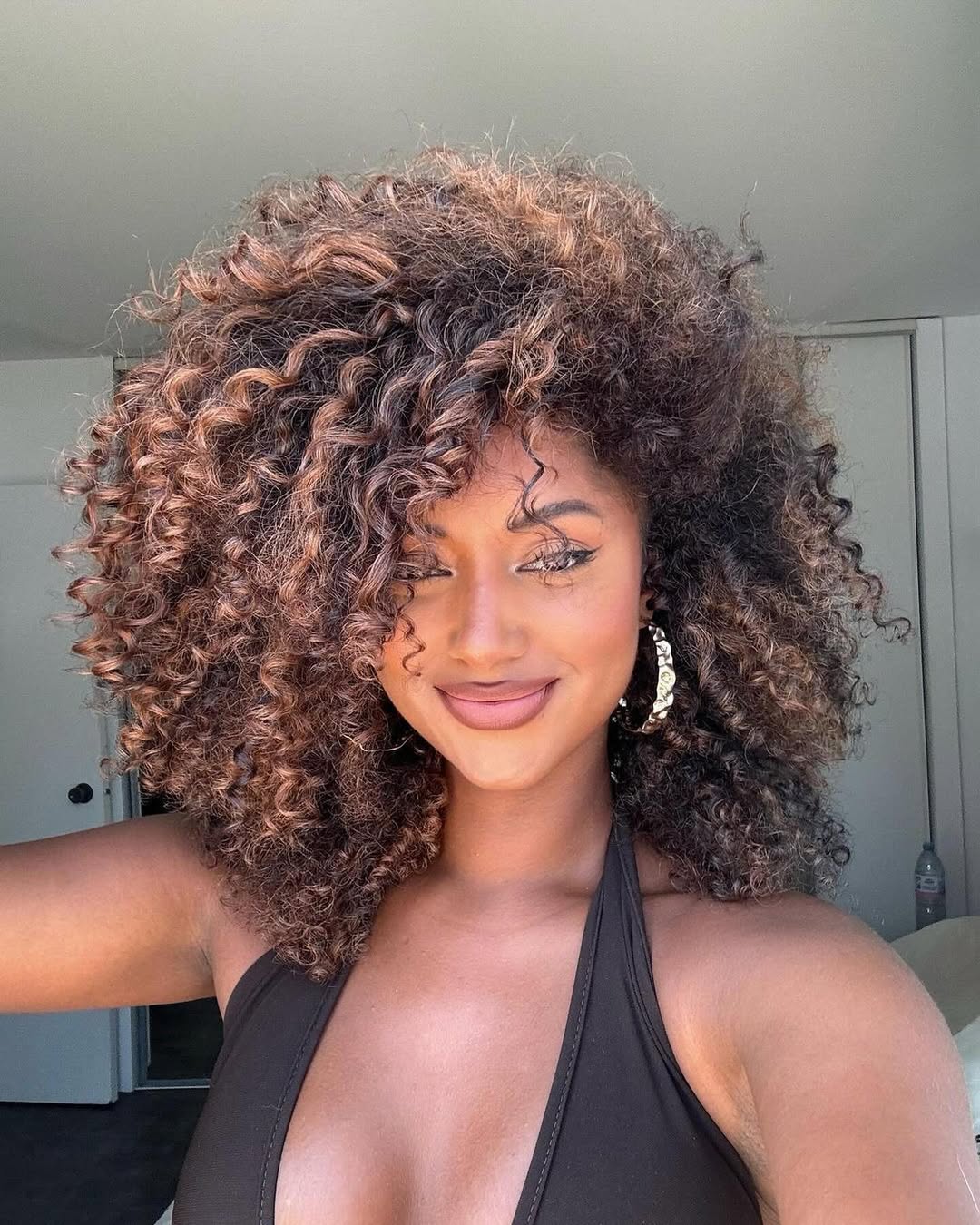
Photo credit: haircutinspiration.com
A shoulder-length cut on thick curly hair is about volume management, and this one uses subtle layers to let the curls stack without turning into a triangle. The dark brown base has very fine highlights that catch light at the curl peaks, which gives depth without a full color change. Ask your stylist for: shoulder length with subtle layers to enhance curls. Thick curly hair of shoulder length is the sweet spot here, and a side parting balances the natural volume on both sides. The person who should pass? Anyone with fine or low-density curls, because the shoulder length will expose how little bulk there is at the ends. A side part and air-drying are all this cut really asks for, and it behaves better the less you touch it.
Ash Blonde Shoulder Shag With Heavy Layers
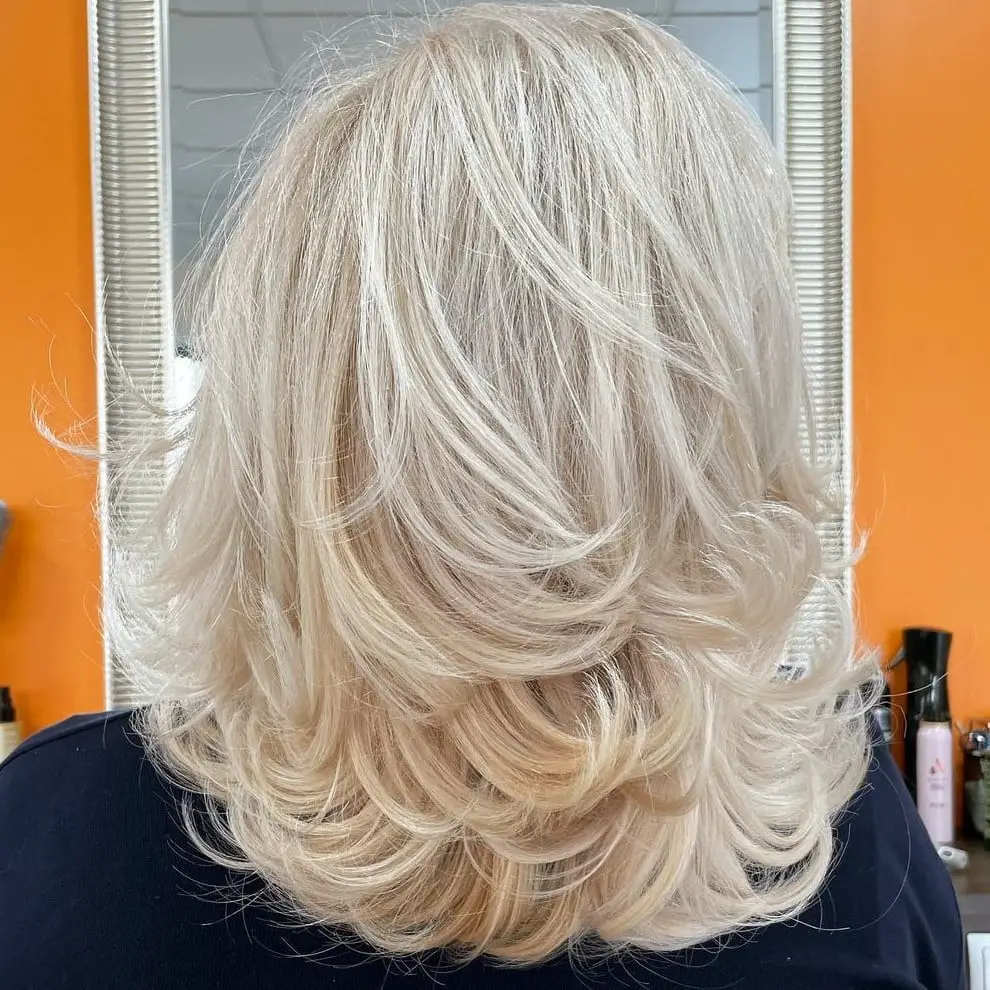
Image credit: hadviser.com
The back view of this shoulder-length shag shows its most defining feature: heavy, stacked layers that run from the nape up through the crown. The texture is fine and straight, and the cut relies on those layers to create the volume that a one-length ash blonde shoulder cut would lack. Ask your stylist for: shoulder length shag with heavy layers. Fine straight hair of shoulder length gets a real lift from this approach, especially if you blow-dry with a round brush and focus on lifting at the roots. The heaviest layers sit at the back, which means the front can look a little thin if your density is low. A trim every six to eight weeks keeps the stacked shape from growing into a blunt line, and the ash blonde color needs a toner refresh around week four to stay cool.
Fine Ash Blonde Shoulder Cut With Stacked Layers
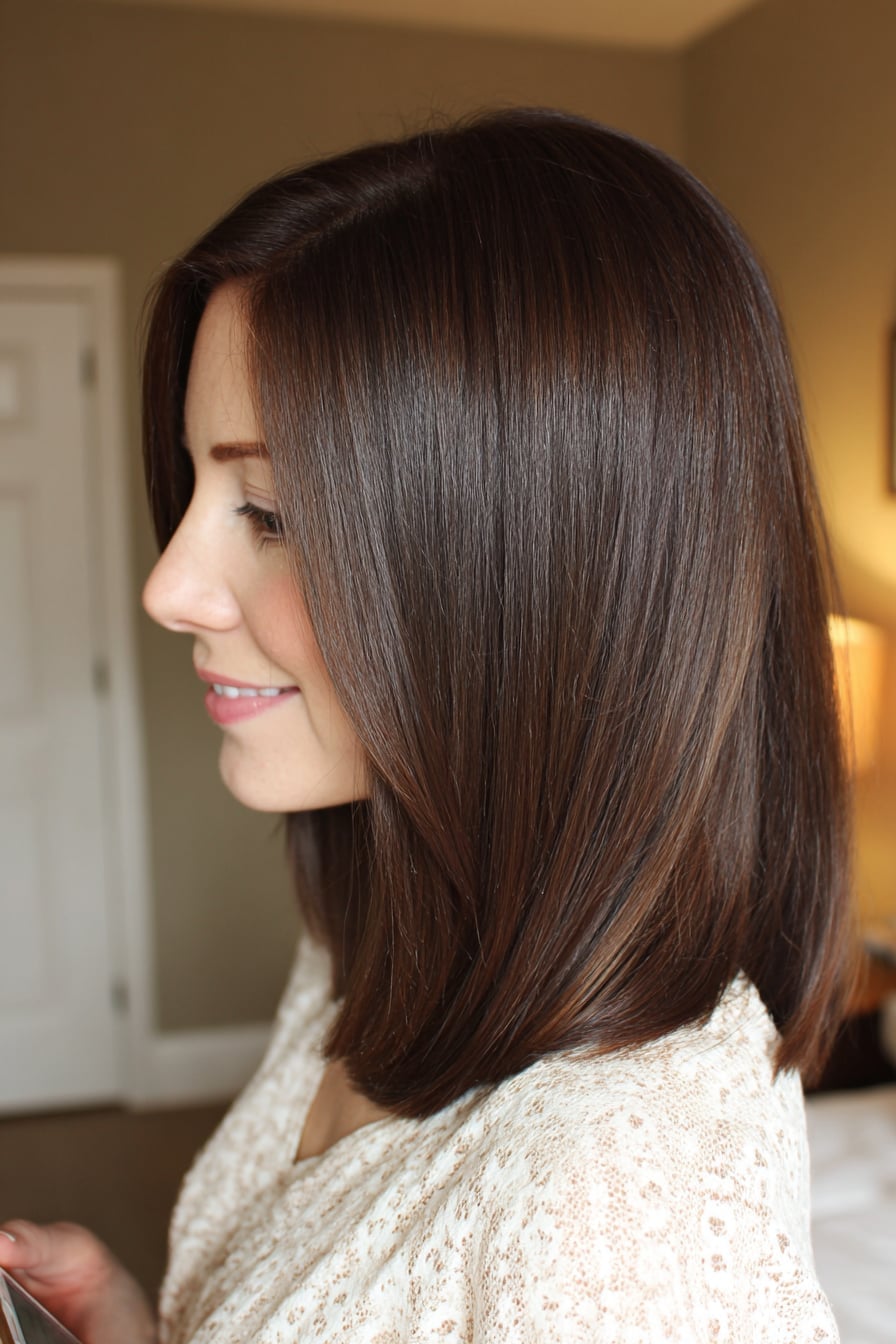
Source: creativebooster.net
How does a blunt cut behave on fine hair once it starts growing? This one is a collarbone-length cut with a clean, sharp hemline, styled air-dried to show exactly where the weight sits. The texture is straight and fine, so the blunt end creates a solid visual line that feels more substantial than a layered version would. Ask your stylist for: collarbone blunt cut for fine straight hair. Fine straight hair of collarbone length wears this shape well because the lack of layers keeps the density visible at the ends. The grow-out phase is forgiving for the first two inches, but after that the ends can start to feel wispy as they brush against clothing. A trim every eight weeks keeps the blunt line crisp, and a lightweight leave-in conditioner helps the ends stay smooth without weighing down the fine texture.
Dark Brown Collarbone Blunt Cut

Via whowhatwear.com
The blunt cut gets a softer reputation when the stylist carves face-framing layers into the front, so the collarbone length keeps its clean line without trapping you in a helmet of hair. This dark brown cut, parted down the middle with wavy blowout texture, lets those front pieces swing forward just enough to break up the solid edge. Ask your stylist for: collarbone length blunt cut. It suits fine, straight hair that already reaches the collarbone, and the shape works well for oval and long faces. A smoothing serum on the ends keeps the sharp line looking deliberate, and a trim every eight to ten weeks preserves the geometry.
Final Thoughts
Fine hair needs a blunt baseline or stacked layers to create density. Wavy and curly textures gain movement from shags and soft layers that follow the curl pattern, not fight it. Match the cut to your texture and the time you will actually spend with a round brush.
- Trim every 6-8 weeks to maintain shape and bluntness.
- Toning for blonde shades every 4-6 weeks to combat brassiness.
- Use heat protectant spray before styling with hot tools.
- Wash and condition 2-3 times per week for optimal texture.
Find your perfect shoulder length style. Keep it fresh.
-

 Makeup Trends2 years ago
29 Harley Quinn Makeup Ideas: Iconic Looks for Every Occasion
-

 Hairstyle2 years ago
Round Face Haircuts Ideas 2025: 29 Flattering Styles to Try
-

 Hairstyle2 years ago
25 90s Layered Hair Ideas to Inspire Your 2025 Look
-

 Fashion2 years ago
27 Every Day Spring Outfits Inspiration for 2025
-

 Hairstyle2 years ago
29 Long Layered Haircuts Ideas for 2025
-

 Hairstyle2 years ago
64 Fall Hair Color Trends to Elevate Your Style in 2024
-

 Hairstyle2 years ago
Choppy Bob Haircuts 2025: 29 Stylish Ideas
-

 Hairstyle2 years ago
27 Medium Length Haircut with Layers Ideas for 2025