
Hairstyle
20 Short Hair Styles 2027 for a Fresh Look
Short Hair Styles 2027 include layered pixie cuts with swept bangs, chin length shag curtain bangs, and asymmetrical pixie bob wisps.

Short haircuts for 2027 lean into soft face-framing layers and curtain bangs, ditching the flat-ironed poker straight finish for glossy, natural texture. The shift is subtle but real: more movement, less polish, and a lived-in feel that grows out gracefully.
This collection of 20 Short Hair Styles spans the spectrum from barely-there pixies to collarbone-grazing bobs, with options for fine, thick, curly, and coily textures. Whether you’re dodging a grow-out line or a fringe that won’t sit, each look comes with a practical ask-for and upkeep rhythm, so you can find the cut that works with your hair’s natural behavior, not against it.
Layered Pixie With Long Swept Bangs

Courtesy of: voguearabia.com
The dark brown base keeps the layering readable, and the side parting gives the texture somewhere to land. If your hair starts at ear length, this is a natural fit. Ask your stylist for: short layered pixie, long swept bangs. A texturizing spray on damp hair, a quick tousle, and you’re out the door; plan on a trim every four to six weeks to keep the shape honest.
Chin Length Shag With Curtain Bangs

Photo credit: hairiscurly.com
Curtain bangs are what keep a shag looking styled rather than just messy. On fine, wavy hair, they need a round brush and a blow-dry directed away from the face to hold their soft, face-framing arc. Ask your stylist for: chin length shag, curtain bangs. The middle parting and textured layers do the rest, giving round and square faces a longer line. A trim every six to eight weeks keeps the bangs from becoming a blunt wall.
Asymmetrical Pixie Bob With Wisps
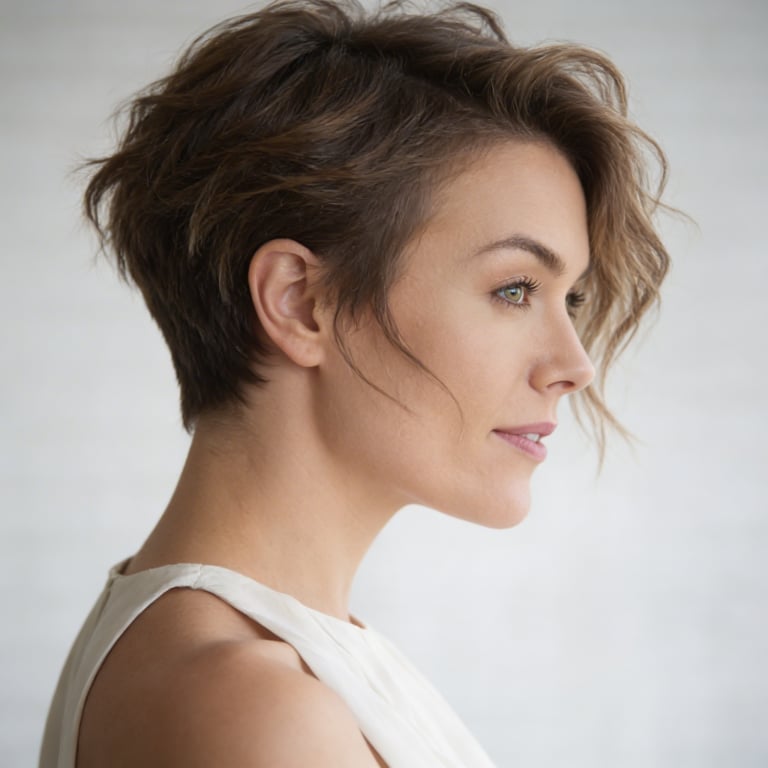
Image credit: numihair.com
If a traditional bob feels too symmetrical, this cut offers a different shape. One side sits longer than the other, ending at the chin, and the side-swept wisps soften what could be a severe line. The warm brown with subtle highlights shows off the wave pattern. Ask your stylist for: asymmetrical pixie bob, side-swept wisps. A smoothing serum tames frizz before you blow-dry the texture in. This cut requires a salon visit because the asymmetry needs a trained eye to land right.
Chin Length Shag With Air-Dried Texture
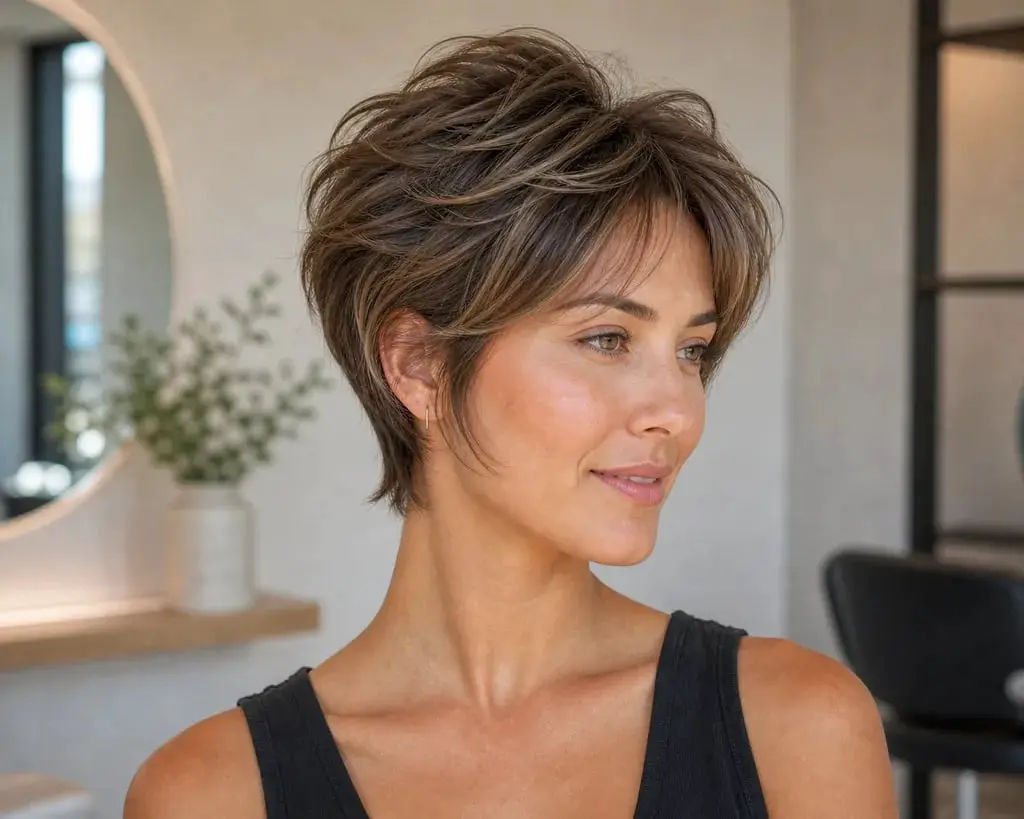
Source: hairellefashion.com
Air-drying is the whole point here. The chin length shag with curtain bangs and a side parting works with medium wavy hair’s natural movement, so you can skip the heat tools most days. A sea salt spray on damp hair, a scrunch, and the layers do the talking.
The catch: medium density waves can frizz if you skip product entirely, and the curtain bangs still need a quick blast with a round brush to fall right. A trim every six to eight weeks keeps the face-framing layers from growing into a shapeless blob. Ask your stylist for: chin length shag, curtain bangs, air-dried finish.
Classic Chin Bob With Side Bangs

Via snazzylair.com
The blowout is what sells it, using a round brush to tuck the bangs to the side and polish the ends into a sleek finish. Ask your stylist for: chin length bob, side-swept bangs. On oval and long faces, the line adds width where you want it. Expect to rebook every six to eight weeks, because the blunt edge shows growth fast.
Dark Brown Chin Bob With Blunt Bangs

Courtesy of: ladyandthehair.com.au
Ask your stylist for: chin length bob, blunt bangs. The trim rhythm is the drawback. Those bangs need a touch up every three weeks to stay above the brow, and a full trim every six weeks keeps the bob sharp. A flat iron finishes the look in five minutes, but the real work happens in the chair.
Textured Ear Length Pixie
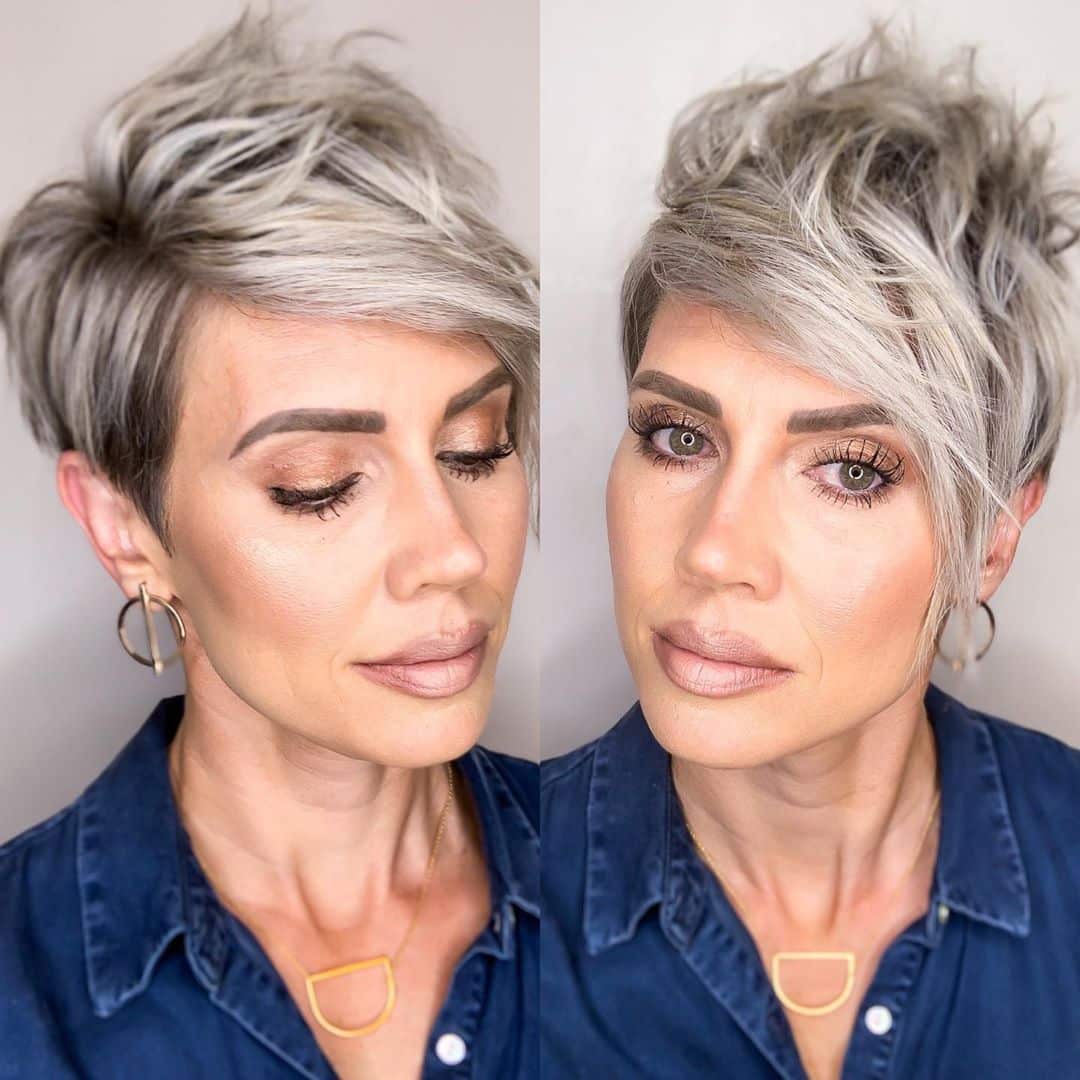
Photo credit: latest-hairstyles.com
An ear-length pixie with choppy layers requires a stylist who understands weight distribution. The ash-blonde base with darker roots and lighter highlights adds depth to the wavy, fine-to-medium texture, and the side-swept bangs break up the shape. Ask your stylist for: textured pixie, choppy layers, side-swept bangs. At home, a texturizing paste worked through dry hair defines the layers in about three minutes. This cut lands well for fall, when a shorter length tucks under a collar without bunching. Trims every five weeks keep the volume on top from collapsing.
Coily Pixie With Tapered Sides
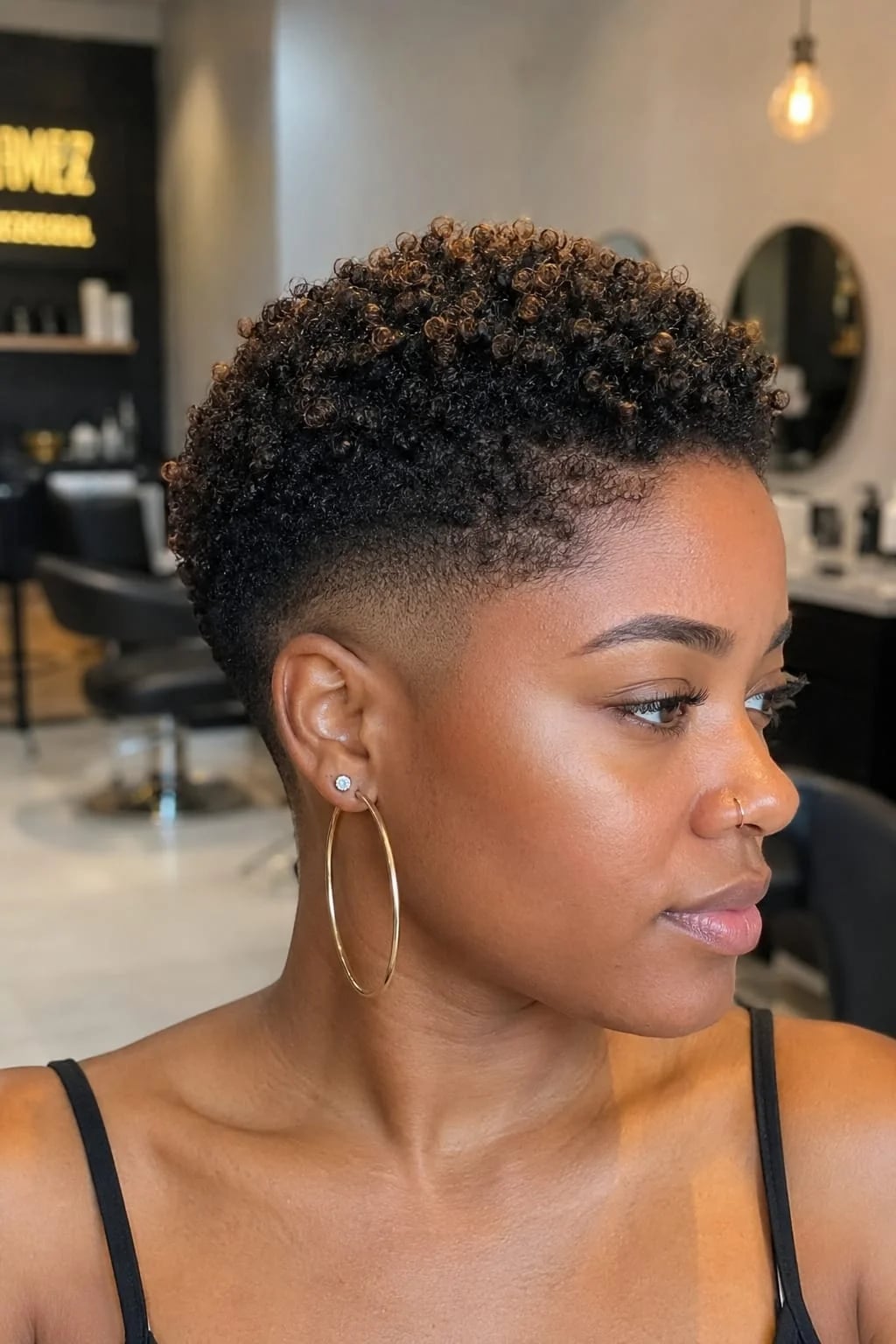
Image credit: dailyhairinspo.com
Why choose a pixie when the weather turns warm? The tapered sides lift the hair off the neck, and the coily, thick top stays defined without weight. This black pixie with a side part and close-shorn sides keeps the head cool in humidity. Ask your stylist for: pixie cut, tapered sides, natural coils. A curl-defining cream and finger twisting enhance the coils while they air-dry. The shape suits thick textures best, and a trim every seven weeks maintains the taper without losing the silhouette.
Textured Pixie With Swept Back Bangs
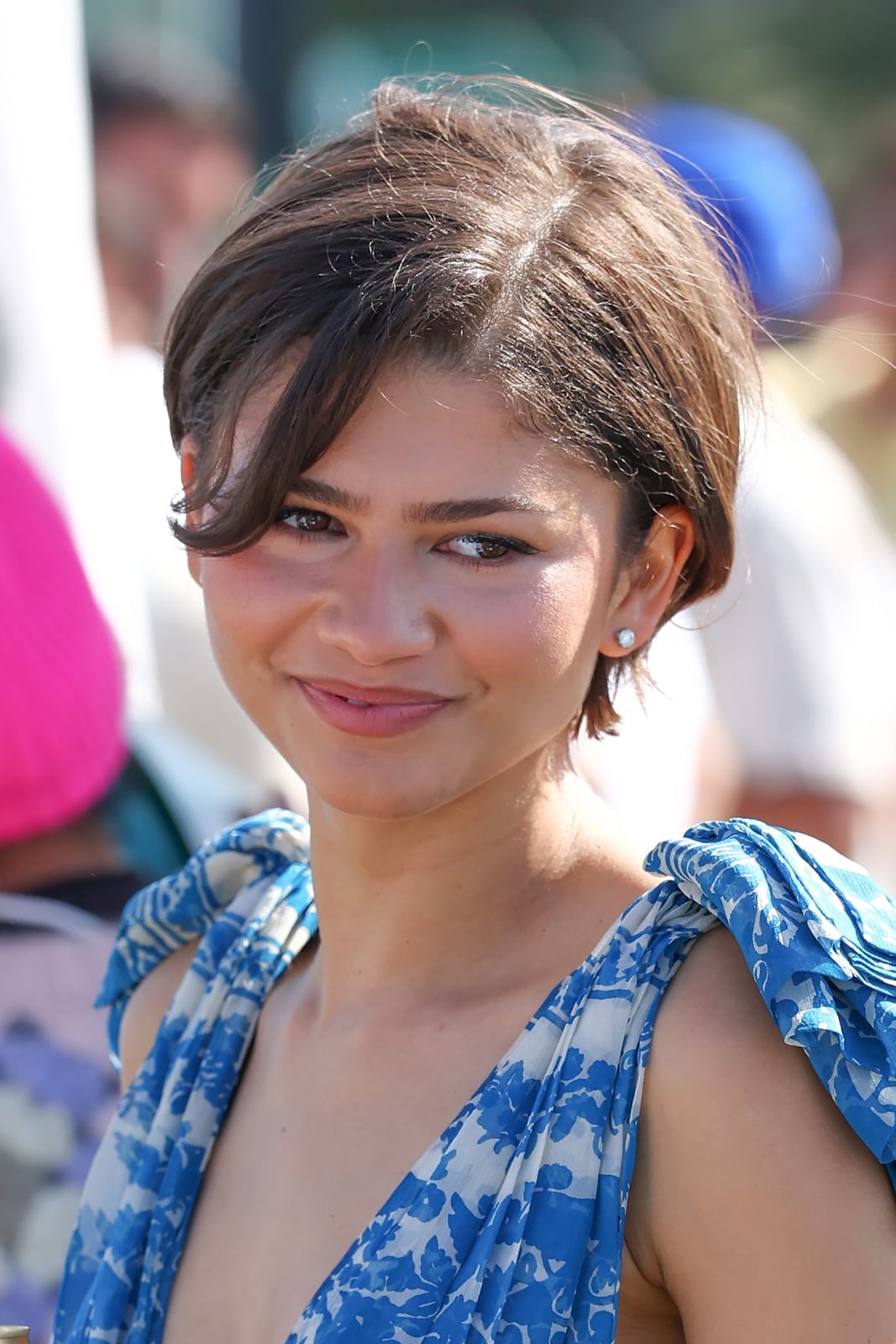
Source: harpersbazaar.com
The bangs sweep back, not to the side, which changes how this ear-length pixie reads. On fine, straight dark brown hair, the short fringe needs a styling product with grip to stay off the forehead. Ask your stylist for: pixie cut, short swept back bangs. Here is how to get the result at home:
- Work a pea-size amount of wax through damp hair from front to crown.
- Blow-dry the bangs backward using a small round brush, lifting at the root.
- Finish with a cool shot of air to set the direction.
The layers add texture without bulk, which matters for fine hair. A trim every five weeks keeps the shape clean.
White Blonde Pixie With Smooth Finish

Source: prima.co.uk
A smooth pixie versus a tousled one: this white-blonde version with short side-swept bangs and a polished finish is the high-maintenance alternative. The straight, fine texture takes a flat iron in two minutes, but the color is the real project. Ask your stylist for: short pixie, smooth finish, short side-swept bangs. DIY toning with a purple shampoo at home delays the brass, but a salon gloss every four weeks is required. The drawback? One missed toning appointment turns a bright platinum into a dull yellow. This cut is for someone who does not skip appointments.
Collarbone Layers With Thick Curls
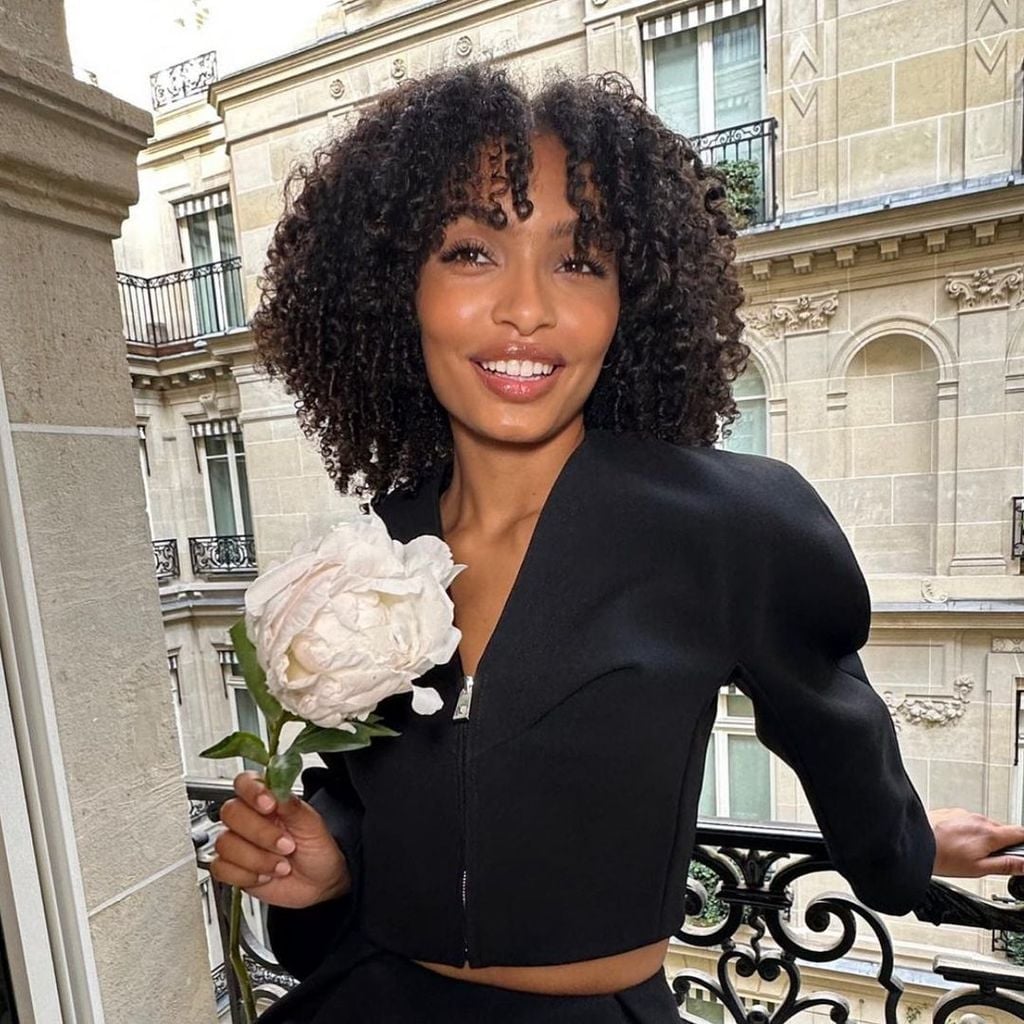
Via glamour.com
Does your thick, curly hair usually end up as a triangle by noon? This collarbone length cut with soft face-framing layers and curtain bangs solves that. The layers remove bulk so natural curls spring up instead of spreading out, and the center part lets the front pieces curve around your jaw. It suits round and square faces alike, since those soft front layers do the elongating work.
Ask your stylist for: collarbone length layers, curtain bangs, natural curls. Air drying with a curl-defining product lets the texture do its thing. A trim every 8 to 10 weeks keeps the shape from collapsing into a shapeless blob, and the grow-out is kind about it.
Textured Ear Pixie With Side Part
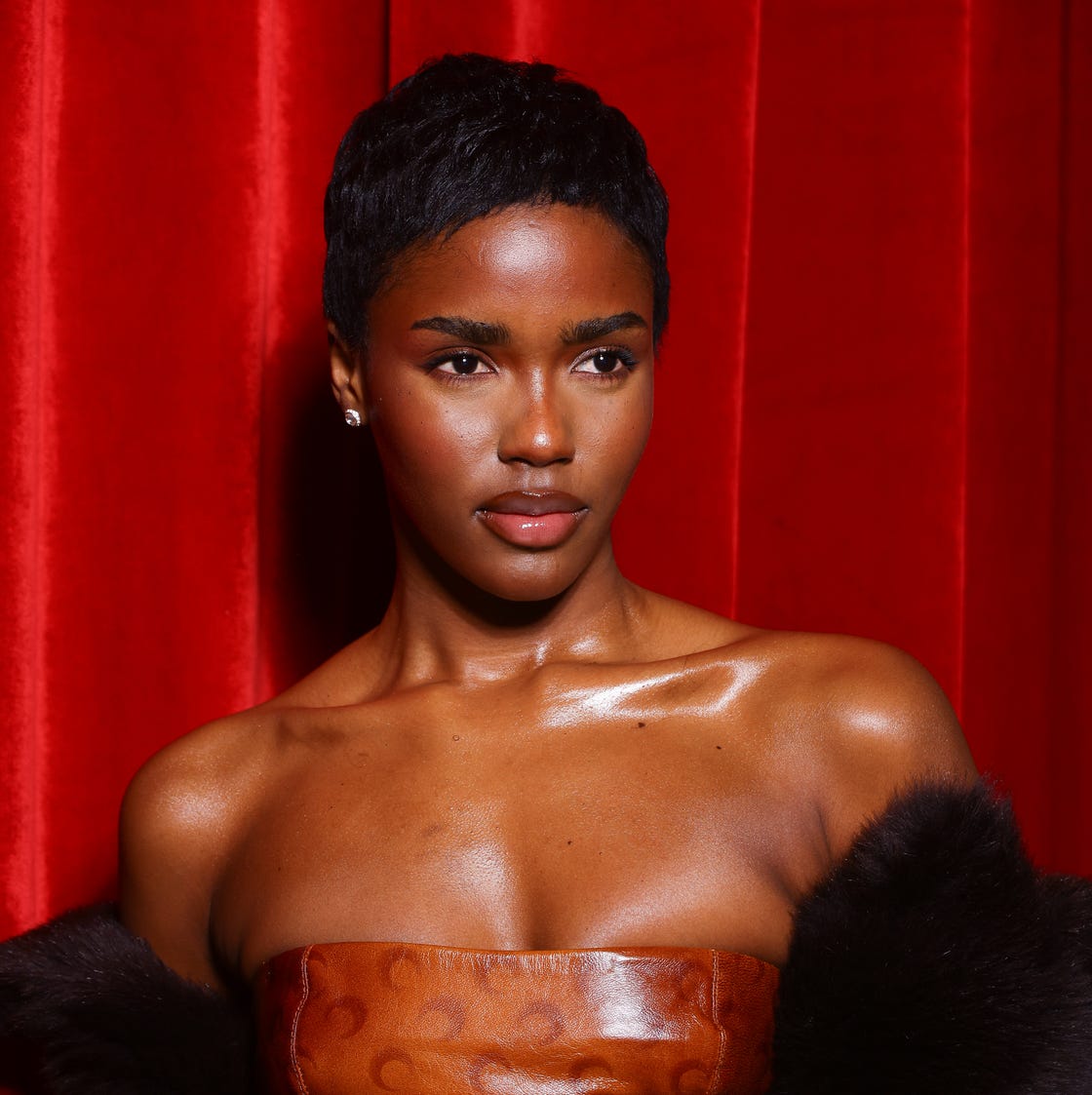
Courtesy of: elle.com
The texture keeps this cut from looking too solid. Ask your stylist for: short textured pixie, short side-swept bangs. The key is a texturizing paste applied to piece out the ends, giving fine hair the grip it lacks naturally. A trim every 4 to 6 weeks is necessary to maintain the shape.
Platinum Pixie Crop With Tousled Texture
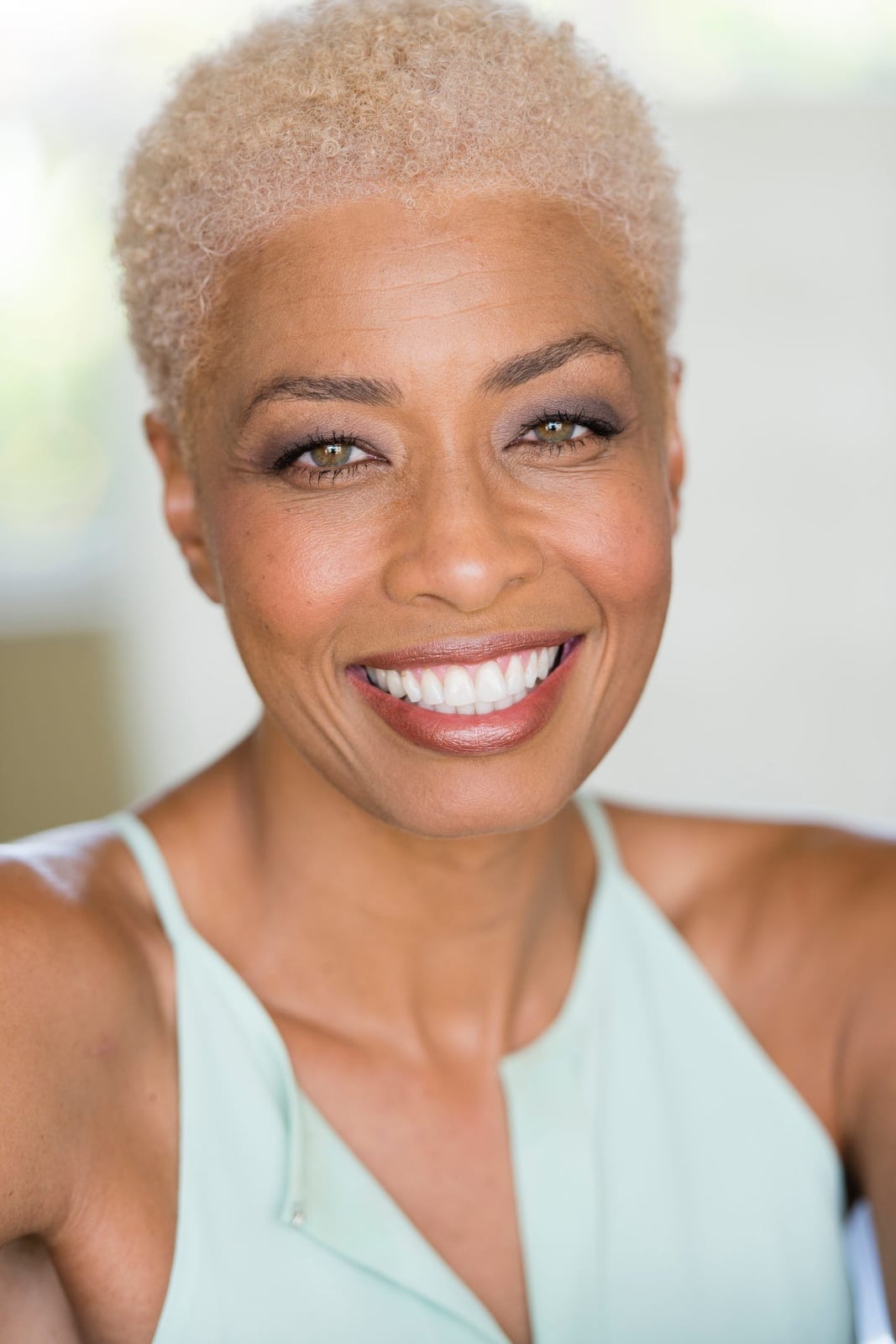
Photo credit: oprahdaily.com
If a structured pixie feels too stiff, this one is the laid-back cousin. The platinum blonde crop is styled upwards and back, with fine curly texture that you encourage, not fight. It is the kind of cut that looks like you woke up like this, though you will spend a few minutes with a volumizing mousse and your fingers to get there. Ask your stylist for: short pixie crop, tousled texture, platinum blonde. It is a bold statement for a night out, and while the styling is quick, the tone needs a salon visit every 4 to 6 weeks to keep the platinum bright.
Layered Collarbone Bob With Textured Waves
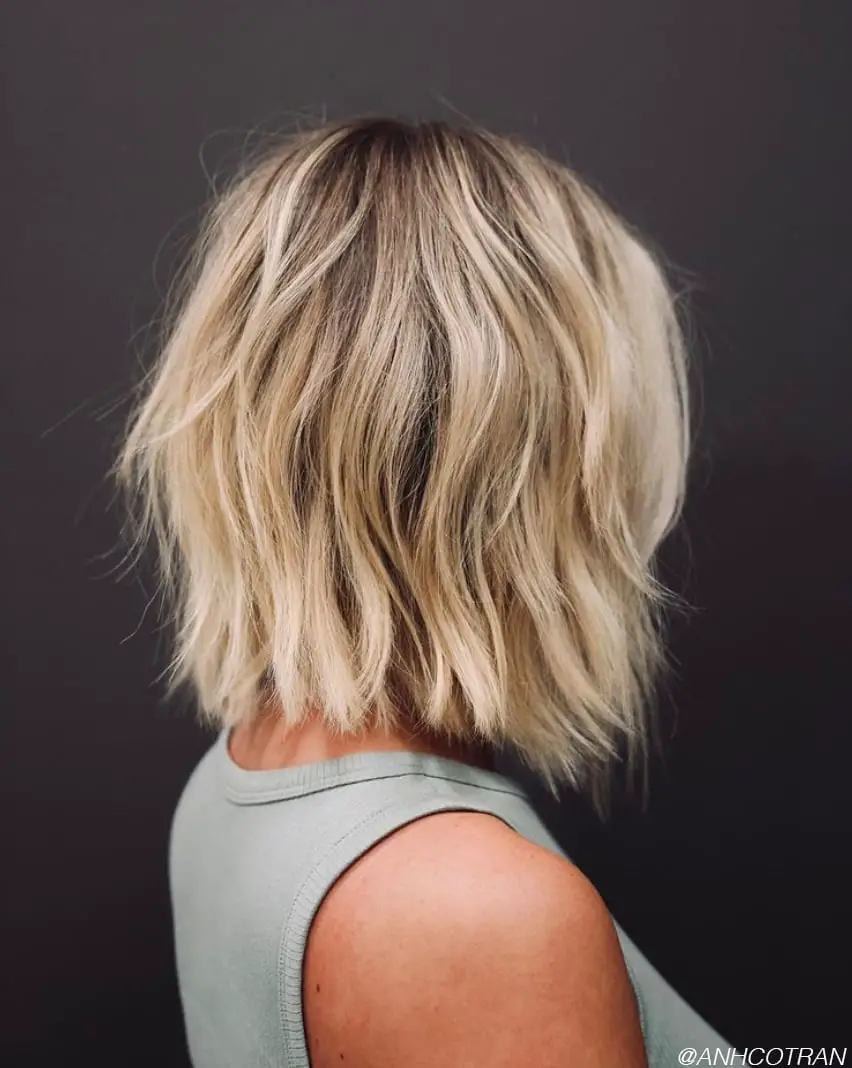
Image credit: bangstyle.com
The middle part keeps it modern, while the textured waves give medium density hair a reason to look fuller. Ask your stylist for: collarbone length layered bob, textured waves. Finish dry hair with a texturizing spray and a quick tousle. Those delicate ends split if you skip trims, so plan for one every 8 to 10 weeks.
Collarbone Layered Bob With Wispy Bangs
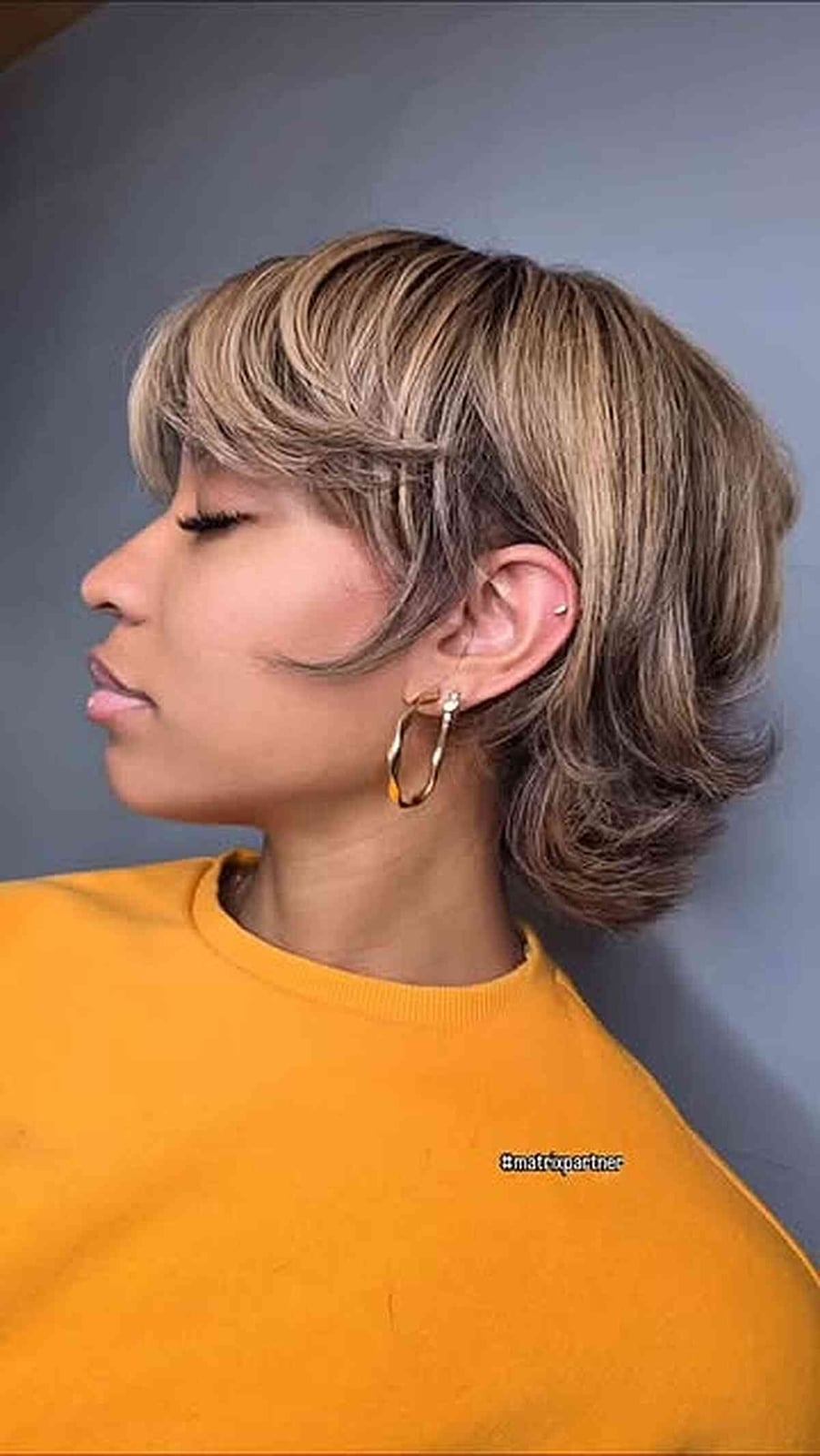
Source: latest-hairstyles.com
This collarbone length layered bob is built on face-framing layers and long, wispy bangs that feather out at the edges. The side parting lets those bangs sweep across the forehead, softening angular faces, while the honey blonde highlights add dimension to the wavy, medium density texture. Ask your stylist for: collarbone layered bob, long wispy bangs. To style, blow-dry the bangs with a round brush, then apply a texturizing spray to the rest. The layers are cut to blend, so there is no harsh line between the bangs and the length.
Bold Black Bowl Cut With Blunt Bangs
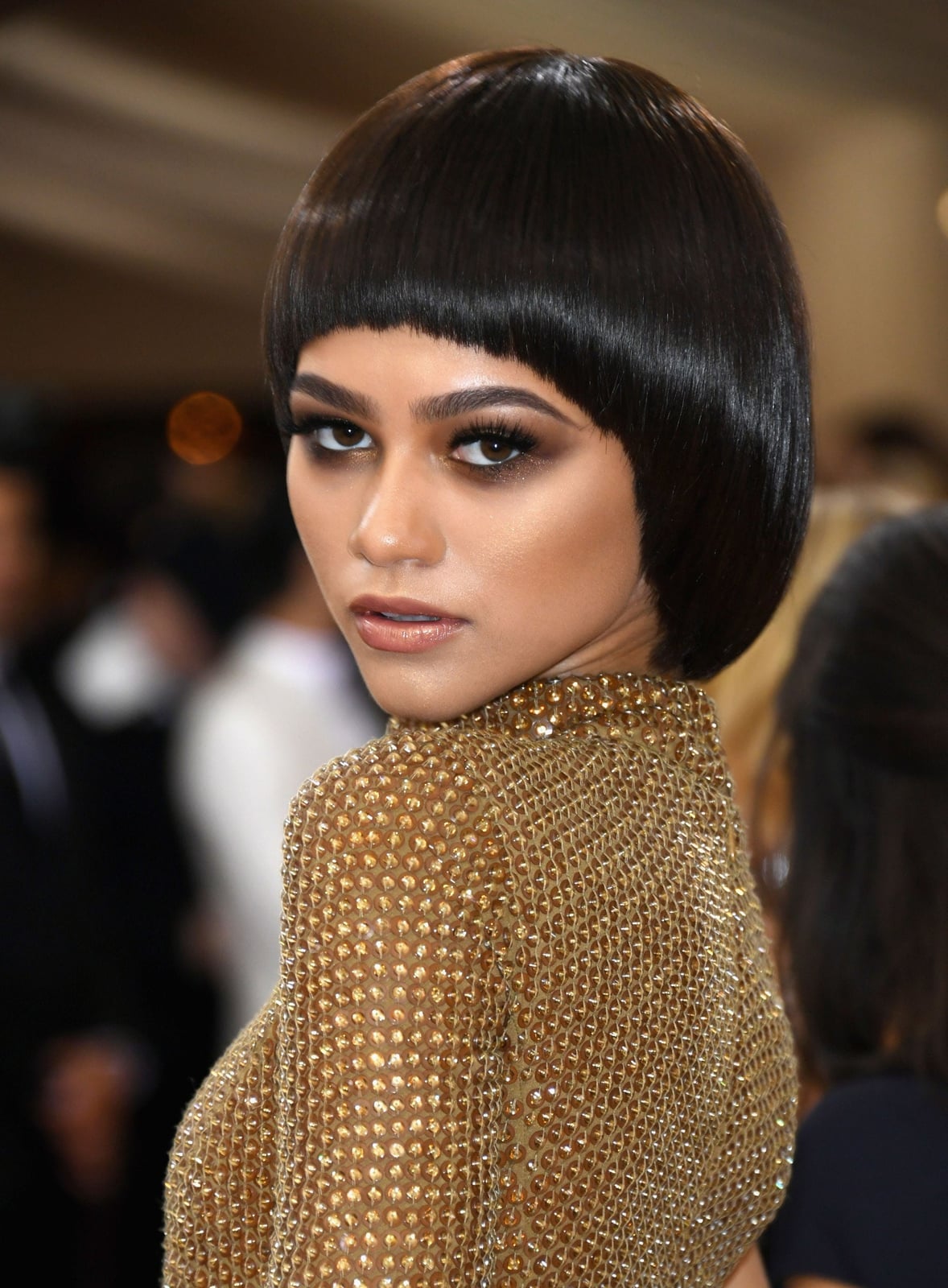
Via cosmopolitan.com
A bowl cut on thick straight hair is a precise geometry problem, not a DIY weekend project. The chin length, the blunt bangs, the middle parting, the sleek finish, every line depends on a sharp scissor cut that a mirror-and-bathroom-shears setup cannot deliver. Ask your stylist for: chin length bowl cut, blunt bangs. Thick straight hair starting at chin length carries the shape best; a strong jawline helps. The drawback is the grow-out: those blunt lines need a trim every four to six weeks to avoid looking like a helmet that shrank.
Voluminous Curly Bob With Air-Dried Texture

Courtesy of: stylecraze.com
A collarbone length curly bob with a side parting and no bangs is designed for one thing: letting thick curls do exactly what they want. The cut removes enough weight to stop the hair from widening into a triangle, so the volume stays above the shoulders where it reads as intentional shape. Ask your stylist for: collarbone length curly bob, voluminous curls. A curl cream on damp hair, then air drying, takes about 90 minutes total drying time, faster than a diffuser if you plan around it. Trim every eight to ten weeks keeps the ends from fraying. This is an everyday cut for casual settings, not a blowout-for-work routine.
Collarbone Bob With Face-Framing Layers

Photo credit: thepioneerwoman.com
Face-framing layers on a collarbone bob do two things at once: they keep the length long enough to pull back, and they soften the transition from jaw to neck without shortening the overall shape. The medium blonde base with lighter highlights catches the light on the shorter front pieces.
Ask your stylist for: collarbone bob, face-framing layers, curtain bangs. This is a salon cut. The layering needs a dry trim to land exactly where the jaw and cheekbones sit on your particular head. Medium wavy hair starting at collarbone length takes the shape easily; a round brush on the front sections is enough at home. The curtain bangs grow out gracefully for about eight weeks before they need a touch-up.
Collarbone Bob With Blunt Ends

Image credit: vogue.in
Can you get blunt ends at home on fine straight hair? Not really. A collarbone bob with curtain bangs and a side parting needs a single, clean horizontal line that a friend with kitchen scissors cannot deliver. The subtle highlights on dark brown help hide the tiny uneven spots that show up on one solid color. Ask your stylist for: collarbone blunt bob, soft curtain bangs. The drawback is that the blunt ends show every split end immediately, so a trim every eight to ten weeks is non-negotiable. A flat iron on low heat seals the line without adding bulk.
Polished Chin Bob With Textured Ends

Via cosmopolitan.com
A chin length bob with subtle layers and textured ends is the compromise between a sleek blunt cut and a full shag. The dark brown color reads as one solid block from the root to the jaw, then the texture at the ends breaks up the line enough to keep it from feeling severe. Ask your stylist for: chin length bob, subtle layers, textured ends. Fine straight hair starting at chin length works best here. The layers add movement without losing density. A texturizing spray on dry ends refreshes the piece-y look each morning. Trim every six to eight weeks keeps the shape from collapsing into a one-length bob.
Final Thoughts
For fine hair, stick with blunt lines and minimal layers to keep density at the ends. For thick or curly hair, textured layers and strategic shaping manage volume without the bulk. Match the cut to your hair’s natural habits, and the styling time drops fast.
- Trim pixies and blunt bobs every 4-6 weeks.
- Refresh layered cuts and shags every 6-8 weeks.
- Use a heat protectant before blow-drying or hot tools.
- Consider a color-depositing conditioner every 4-6 weeks.
Find the short style that makes you feel your most confident.
Hairstyle
20 Middle Part Bob Haircuts to Try in 2027
Middle Part Bob 2027 haircuts with curtain bangs, ash blonde root shadow, and dark brown highlights. See 20 styles from blunt to textured and glossy finishes.
The middle part bob is a study in symmetry, a cut that hands the face a clean frame and lets the hair do the talking. The current run of it leans softer than the poker-straight era, with lived-in color and a glossier natural texture taking the edge off the geometry.
This collection of 20 Middle Part Bob ideas spans the spectrum from low-maintenance, textured layers to sharp, blunt lines that demand a trim on schedule. Whether your hair is fine and falls flat, your color grows out with a hard line, or you are hunting a fringe that will actually sit still, there is a version here sized for your density, texture, and weekly styling budget.
Chin Length Bob With Curtain Bangs
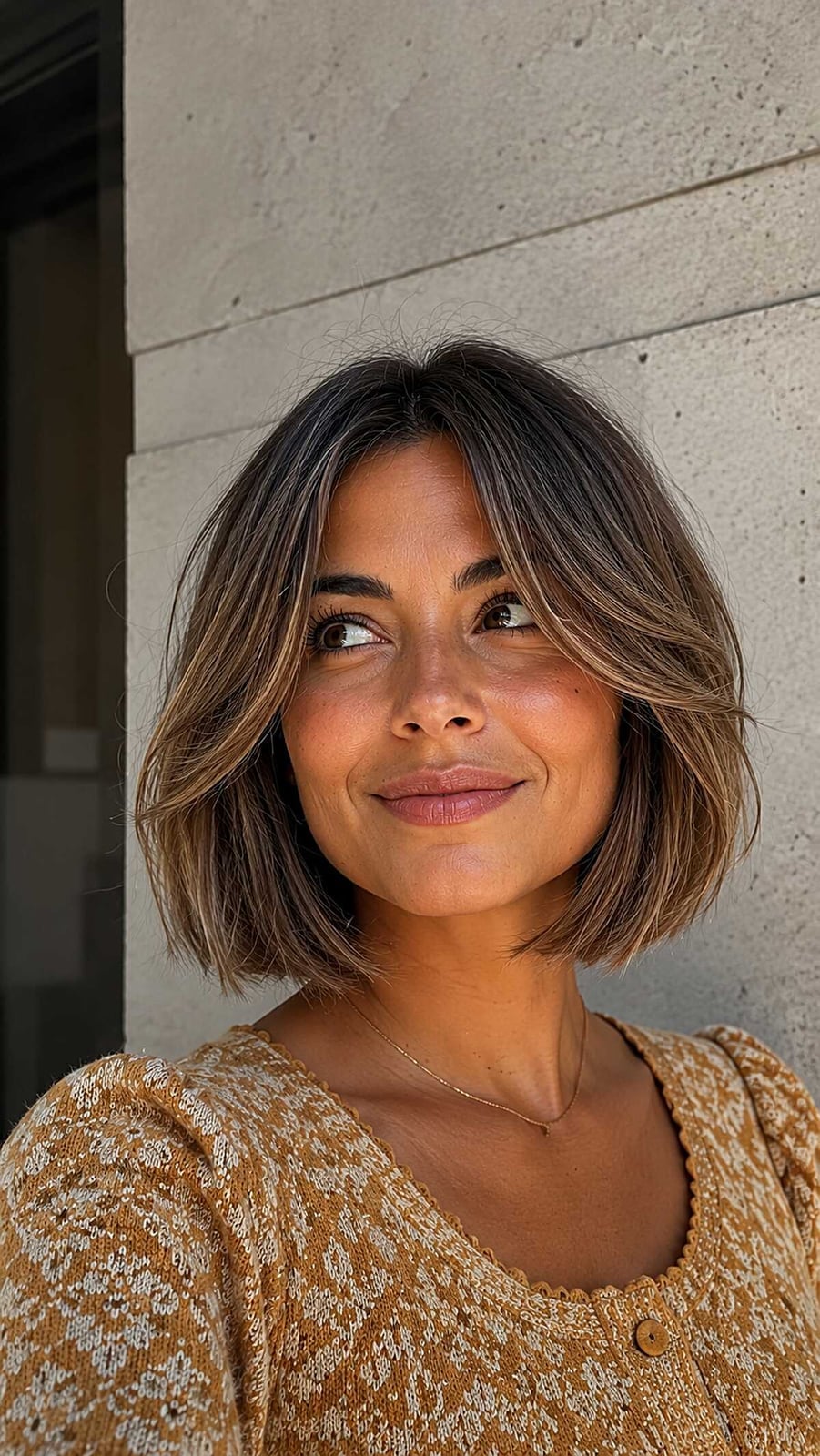
Courtesy of: latest-hairstyles.com
The design trick here is the way curtain bangs turn a standard bob into something that moves with you rather than sitting like a helmet. They frame the eyes and cheekbones without committing to a full fringe, which makes this cut surprisingly forgiving on round and heart face shapes. Ask your stylist for: chin length bob, soft curtain bangs, balayage. The dark blonde balayage keeps the roots low-maintenance while adding dimension through the ends, so you can stretch a few weeks between appointments without the grow-out line screaming for attention.
Blunt Chin Bob With Ash Blonde Root Shadow
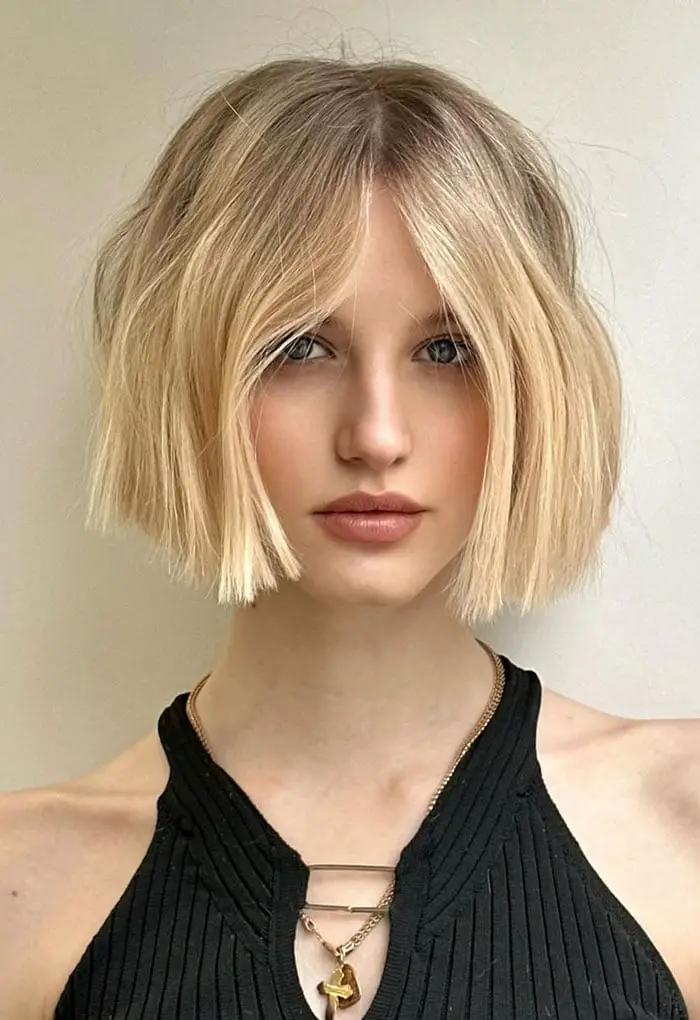
Photo credit: fabmood.com
A blunt bob like this one relies on clean ends, so fine hair actually benefits from the weight. It reads as thicker than it is. The sharp line comes from precision cutting, while a root shadow softens the transition from scalp to color. Ask your stylist for: blunt chin bob, face-framing pieces, ash blonde with root shadow. A DIY touch-up on the root shadow is risky; leave that part to the salon and plan on a refresh every four weeks if you want the ash tone to stay cool.
Collarbone Bob With Dark Brown Highlights
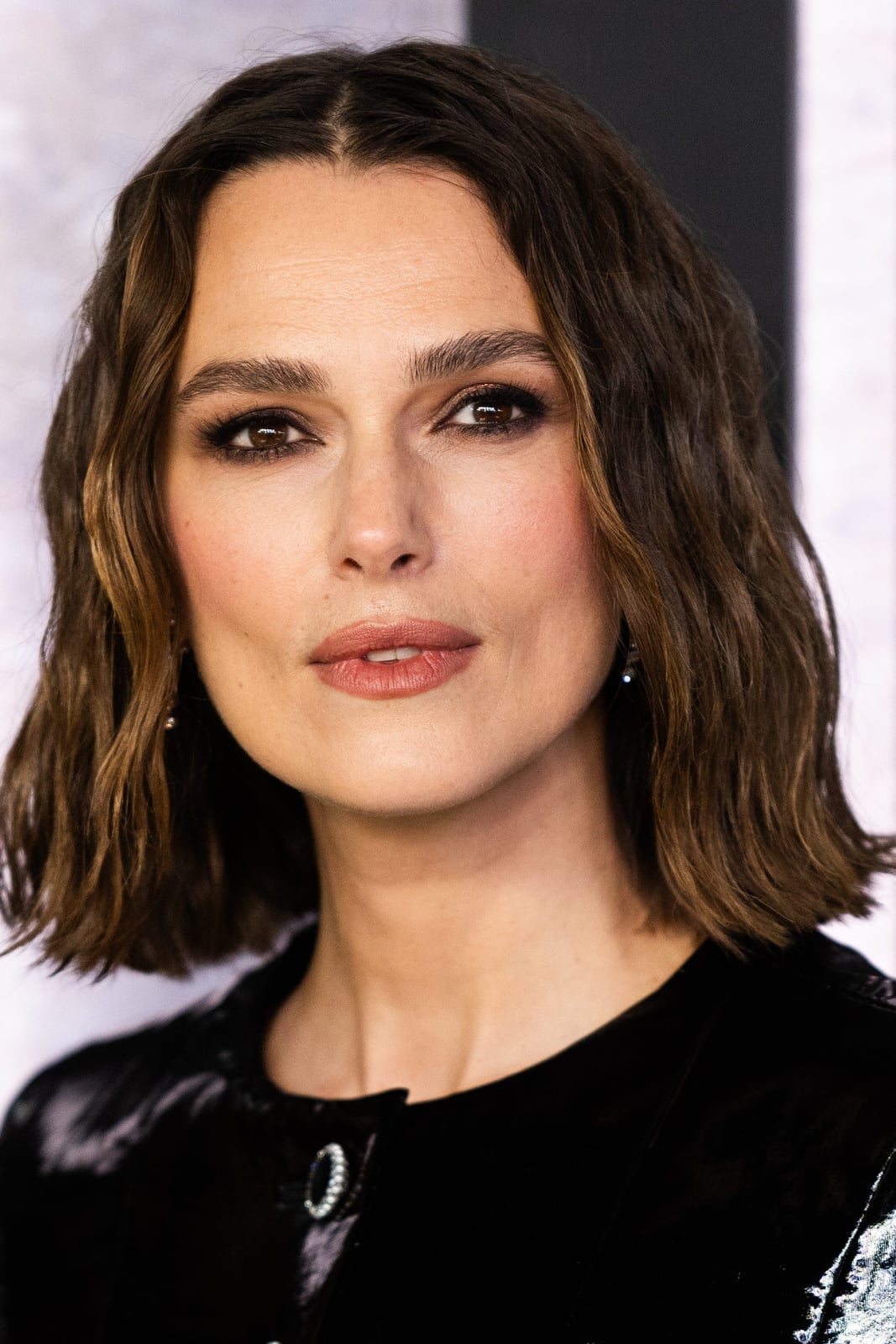
Image credit: harpersbazaar.com
A collarbone bob buys you the polish of a short cut without the commitment of something above the jaw. It tucks behind ears, goes up in a low ponytail, and still swings when you turn your head. The subtle highlights break up the dark brown base so the ends don’t look flat.
Curtain bangs complete the picture by softening the line where the bob meets the chin. Apply a smoothing serum after blow-drying to keep the ends from fanning out. You will need a trim every six to eight weeks to prevent the collarbone length from slipping into your shoulders and turning into a lob.
Textured Chin Bob With Dark Brown Waves and Showcasing A Thick Texture
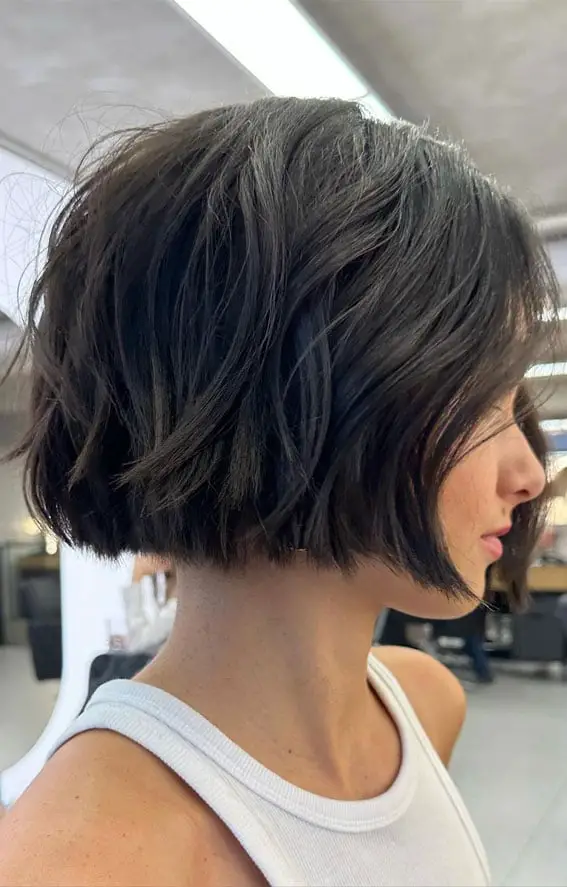
Source: fabmood.com
The side view tells you everything about this one: a chin length bob with textured layers cut through the ends, so the thick dark brown waves have somewhere to go instead of sitting as one heavy block. The middle part keeps the weight evenly split. Thick hair that reaches the chin is the ideal candidate, because the layering reduces bulk while the natural wave adds movement. Ask your stylist for a chin length bob with textured layers and natural waves. The honest drawback is that on very thick hair, the layers can need a firm hand to avoid looking too choppy as they grow. A trim every eight weeks keeps the shape honest.
Sleek Black Chin Bob With Glossy Finish
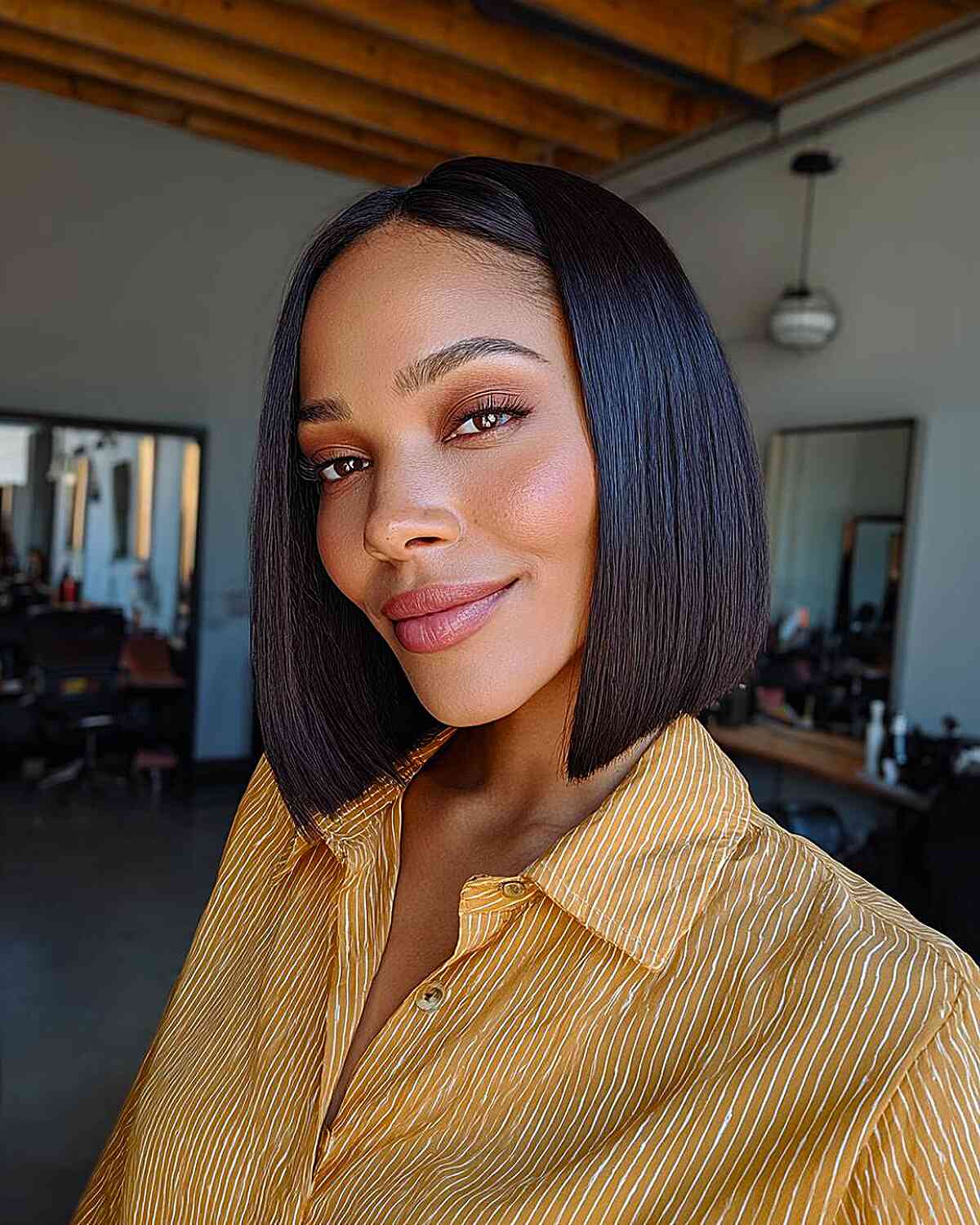
Ask your stylist for: sleek chin length bob, sharp middle part, jet black, glossy finish. If your hair has any natural wave or bend, you will need a flat iron and a heat protectant to get this result, and humidity will fight you. A textured bob is more forgiving; this one demands straight hair or the will to make it so.
Wavy Blonde Bob With Face-Framing Bangs
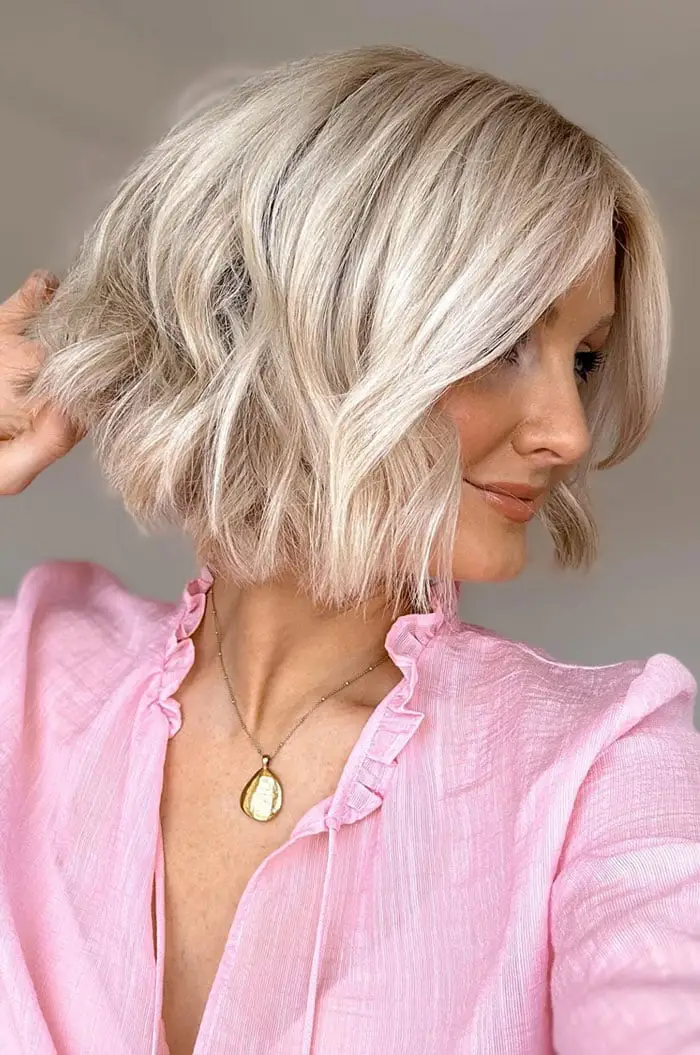
Courtesy of: fabmood.com
What does a chin-length bob need to stop feeling like a helmet? Movement, and curtain bangs give it plenty. Soft waves through a blonde base with highlights keep the shape from sitting flat, and the bangs break up the line at the cheekbones. Medium density hair holds the bend without fighting it. Ask your stylist for: chin length wavy bob, curtain bangs, blonde with highlights. Dry texture spray revives the wave between washes, and a trim every six to eight weeks keeps the ends from dragging the shape down. Good for a summer trip where the air does half the styling.
Platinum Blonde Blunt Bob
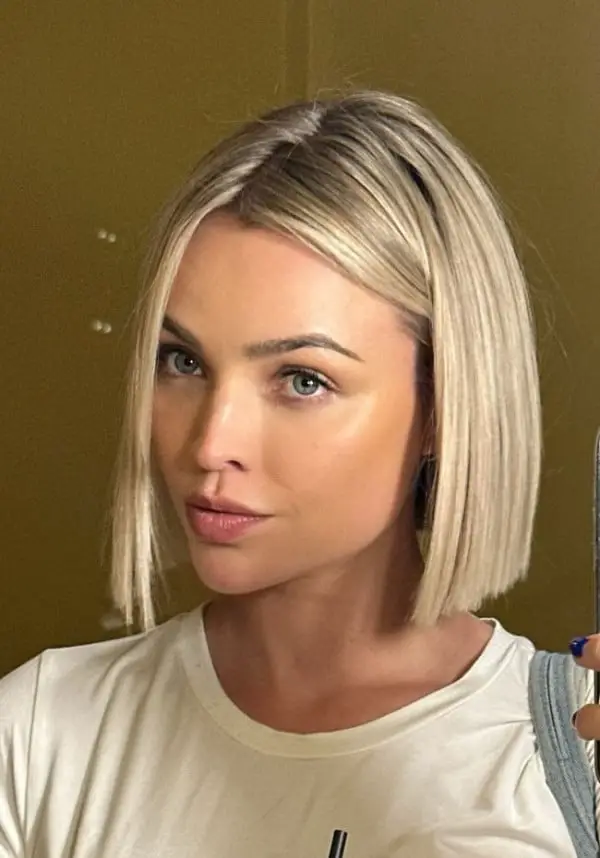
Photo credit: itakeyou.co.uk
A blunt line at the chin and a middle part leave nowhere to hide, which is exactly the point. Poker straight and fine in texture, this platinum blonde blunt bob relies on the cut being immaculate and the color being even. Fine hair benefits most: the sharp perimeter creates the look of more density. Ask your stylist for: platinum blonde blunt bob, chin length, middle part, poker straight. Here is the trade-off. Platinum is a commitment measured in root touch-ups every four to six weeks and a bond-building step at each lightening session, and fine hair can only take so much before it snaps. If your hair is already fragile or you want low upkeep, pass. A smoothing serum helps the straight finish; a trim every six weeks keeps the ends crisp.
Collarbone Wavy Bob With Natural Waves
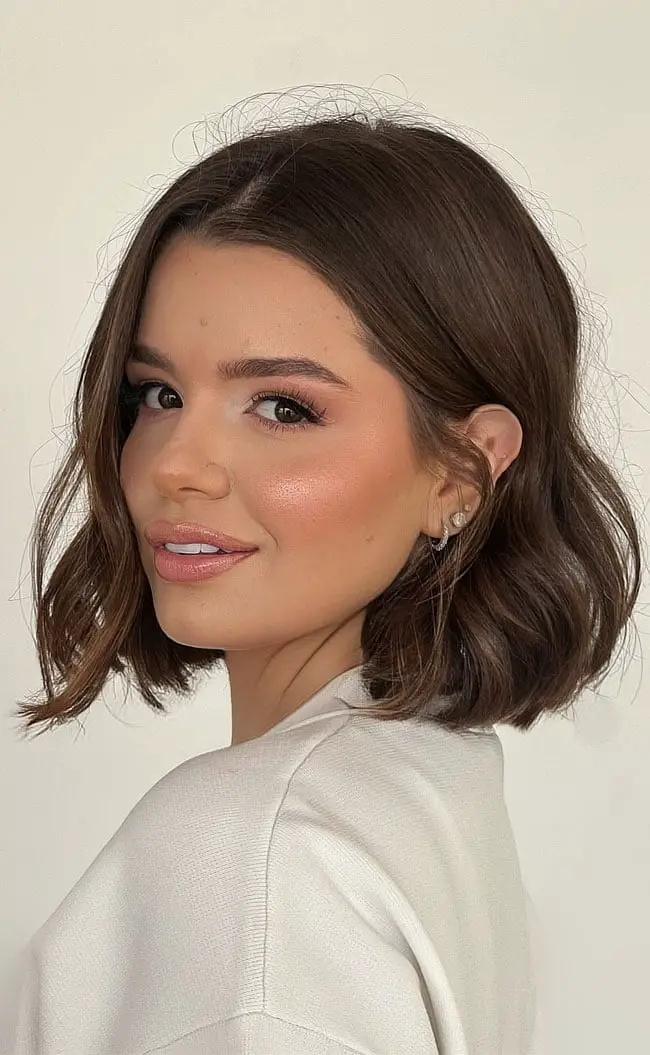
Image credit: fabmood.com
A middle part running clean to the collarbone, with waves that look like they happened on their own: that is the whole design. Medium texture and a dark brown base do the rest. This is the rare cut you can mostly reproduce at home. Ask your stylist for: collarbone length wavy bob, natural waves, dark brown. Then, on wash day:
- Comb a curl cream through damp hair and scrunch upward.
- Let it air dry without touching it, or diffuse on low if you are in a hurry.
- Finish with a light mist of texturizing spray to separate the waves.
No round brush required, which is the real selling point. A trim every eight weeks holds the collarbone line.
Sharp Auburn Chin Bob

Source: latest-hairstyles.com
Will a chin-length bob make a round face look rounder? Not this one, cut sharp and worn straight. The clean perimeter and middle part draw the eye down, so oval and long faces benefit from the elongation, and fine hair gains the illusion of weight it usually lacks. Ask your stylist for: sharp chin length bob, auburn color, middle part, straight. Auburn is a bold yet understated color, and on fine straight hair it shows every bit of shine. A flat iron for the sleek finish, a color-protecting shampoo to slow the fade, and a trim every six weeks to keep the line honest.
Ash Blonde Layered Bob With Curtain Bangs
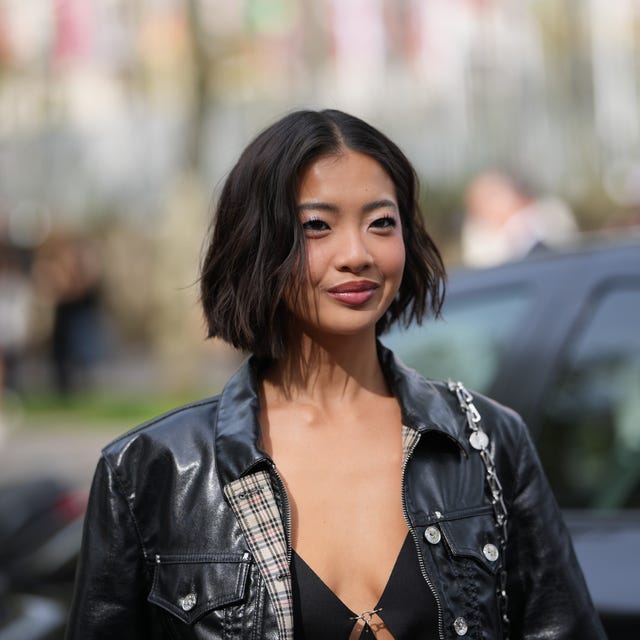
Source: cosmopolitan.com
The mistake is asking for bangs that are too thick or too long, which collapse by noon and leave the layers with nothing to blend into. Ask your stylist for: ash blonde layered bob, chin length, curtain bangs, air-dried waves. Keep the bangs light and let them graduate into the layers. Apply a texturizing spray to damp hair and air dry, then trim every six to eight weeks.
Blunt Ash Blonde Bob With Side View

The side profile of this bob reveals what a front view often hides: an immaculate straight line from root to chin with zero graduation. That blunt edge is doing the work here, giving fine, straight hair a density it does not naturally own. Ask your stylist for: blunt ash blonde bob, chin length, middle part, straight blowout. A smoothing cream and flat iron keep the line sharp, and a trim every six weeks is required once you commit to this level of precision.
Dark Brown Bob With Face-Framing Layers
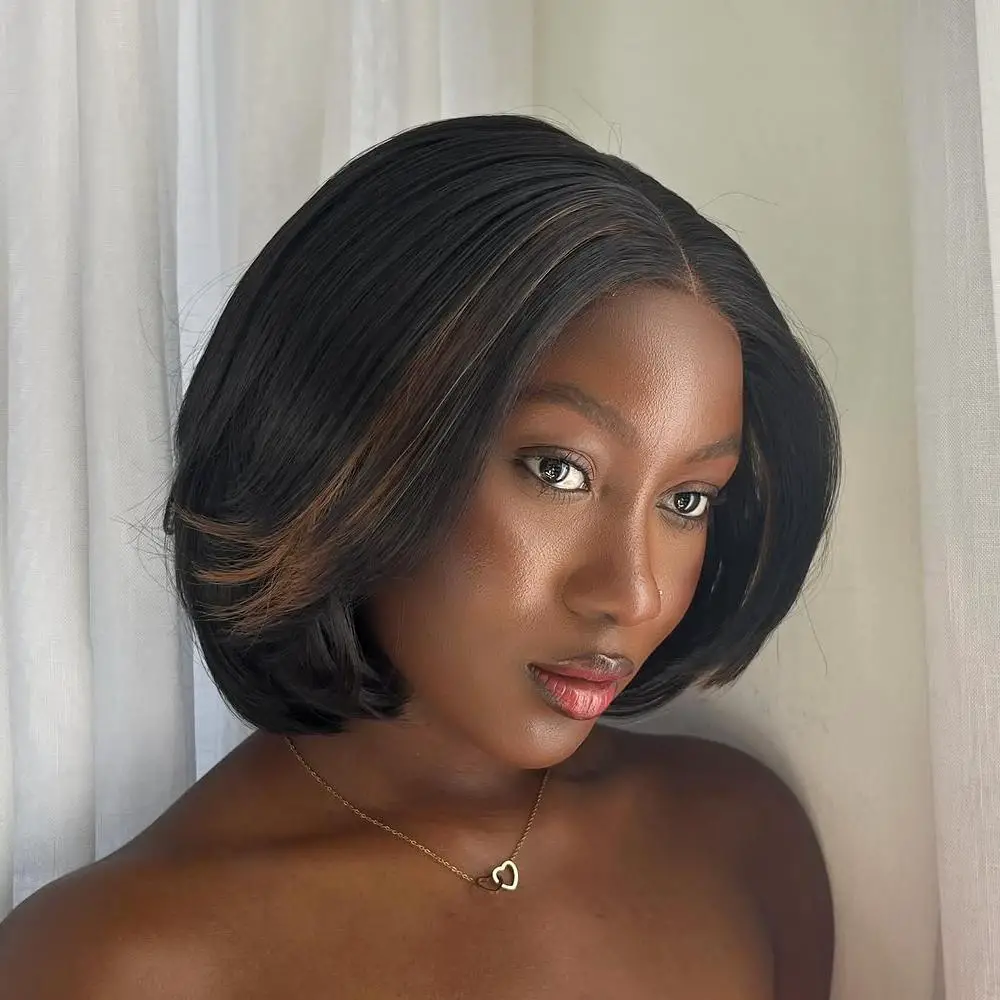
Courtesy of: ilikehairwig.com
This is not the blunt bob from the previous section. Here, soft face-framing layers cut into the ends around the jawline, so the shape reads lighter and moves more easily. The subtle blonde highlights add dimension without a heavy grow-out line. Ask your stylist for: chin length bob, face-framing layers, dark brown with subtle blonde highlights. A round brush during blow-drying keeps the layers from falling flat, and a trim every six to eight weeks prevents the face-framing pieces from losing their shape.
Vibrant Copper Red Blunt Bob
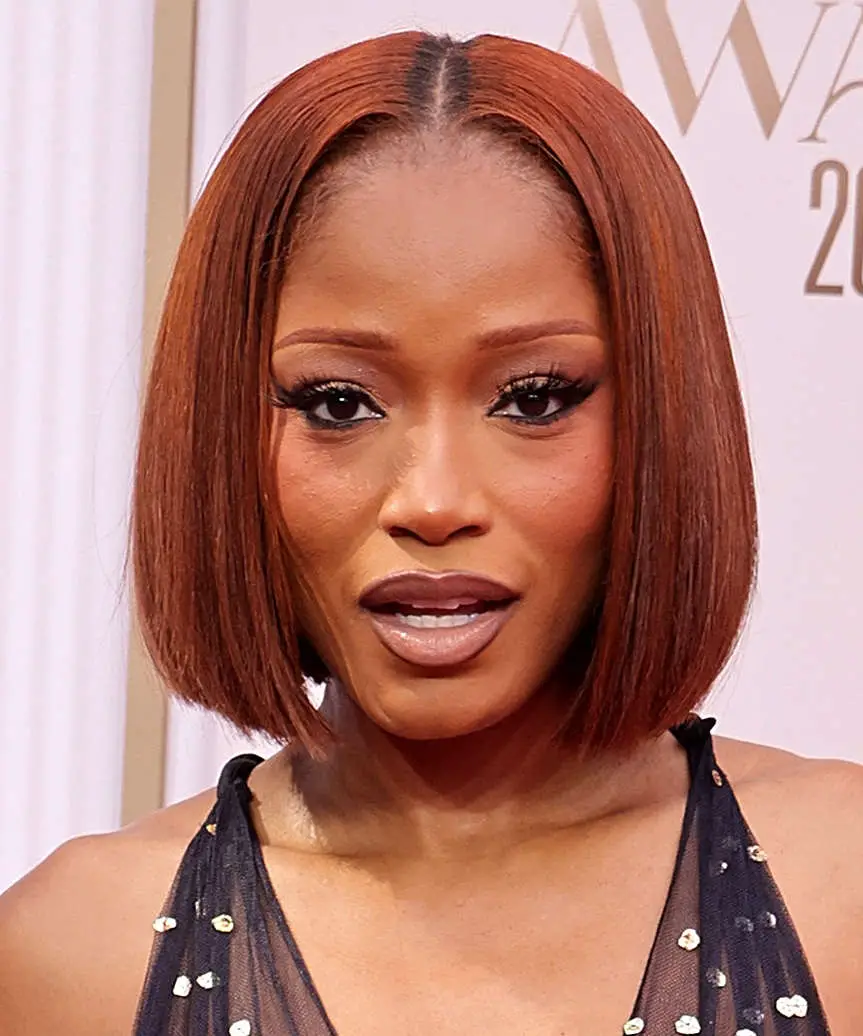
Photo credit: thehairstyler.com
Is there a more direct way to announce a mood shift than a copper red bob? The color lands somewhere between a new season and a new attitude, and the thick, straight texture here gives the shade the weight it needs. Ask your stylist for: copper red blunt bob, chin length, middle part, straight. A color-depositing conditioner every other wash keeps the tone from fading into brassy territory, and the cut itself works best on hair that does not need layers to hold shape.
Sleek Ash Blonde Bob With Subtle Highlights
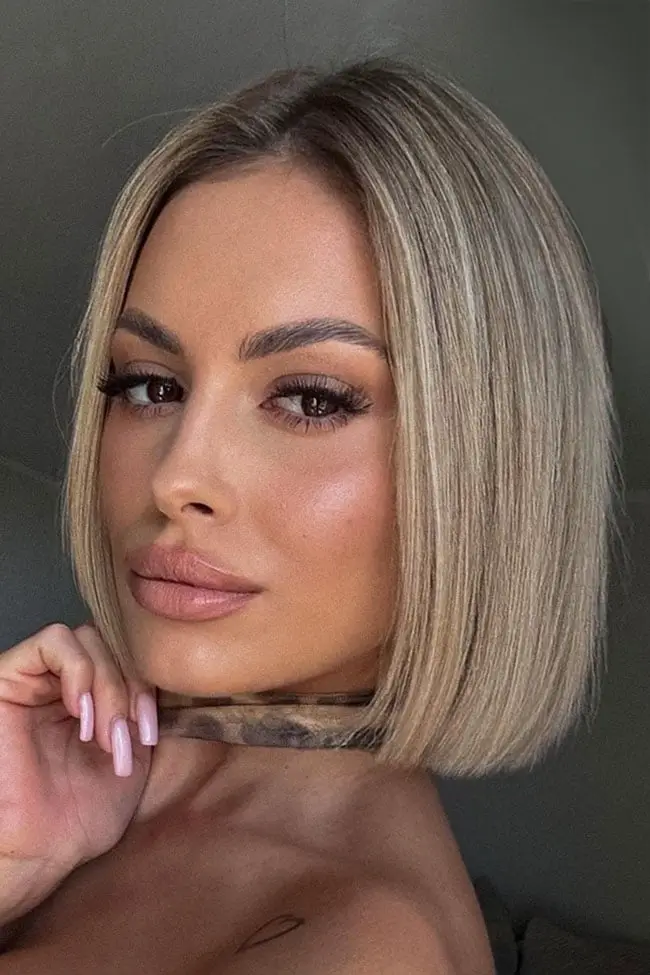
Image credit: fabmood.com
The subtle lighter highlights keep the ash blonde from reading as flat, but the real challenge is maintaining that glass-like polish in humidity. Ask your stylist for: sleek ash blonde blunt bob, chin length, middle part, subtle highlights. Fine hair at this length shows every bend or flyaway, so a shine spray is more necessity than luxury for this look.
Black Chin Bob With Blunt Cut Side View
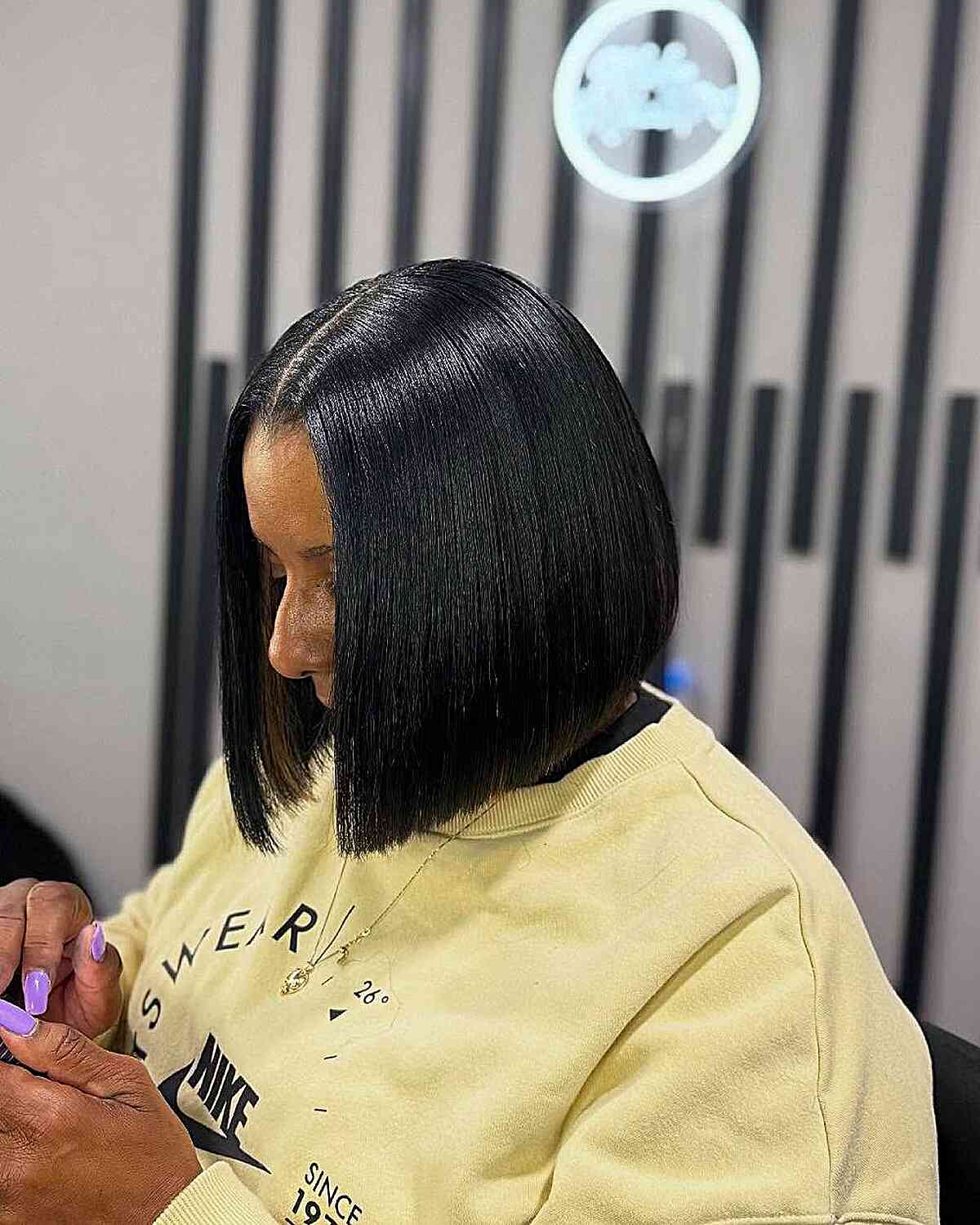
Source: latest-hairstyles.com
Medium density hair is the sweet spot here, thick enough to hold the shape but not so dense that the ends flip. Ask your stylist for: black chin length bob, blunt cut, middle part, sleek. This is a salon cut that needs no DIY maintenance beyond a flat iron pass and a trim every six weeks.
Sleek Dark Brown Bob With Blunt Ends
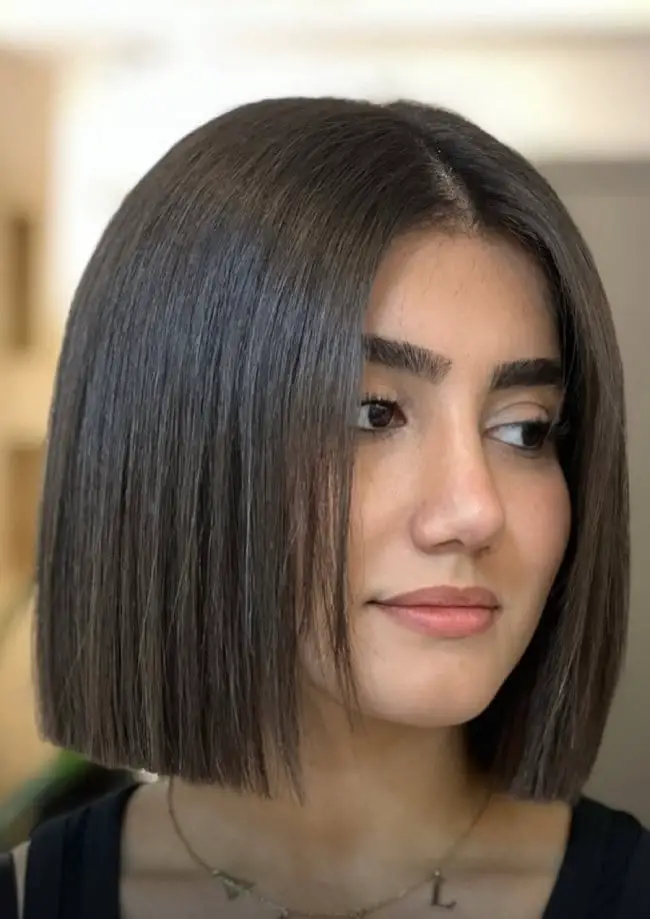
Via fabmood.com
A blunt cut is the fastest way to make fine hair look thicker, and this sleek dark brown bob leans into that trick. The chin length and middle part keep the line graphic, so the blunt ends appear deliberate. Ask your stylist for: a sleek dark brown bob with blunt ends at the chin. Fine hair tends to lose its shape by the second day, so a smoothing serum and a flat iron are your maintenance tools. Plan on a trim every six weeks to keep those ends from feathering.
Polished Black Bob With Sharp Clean Line
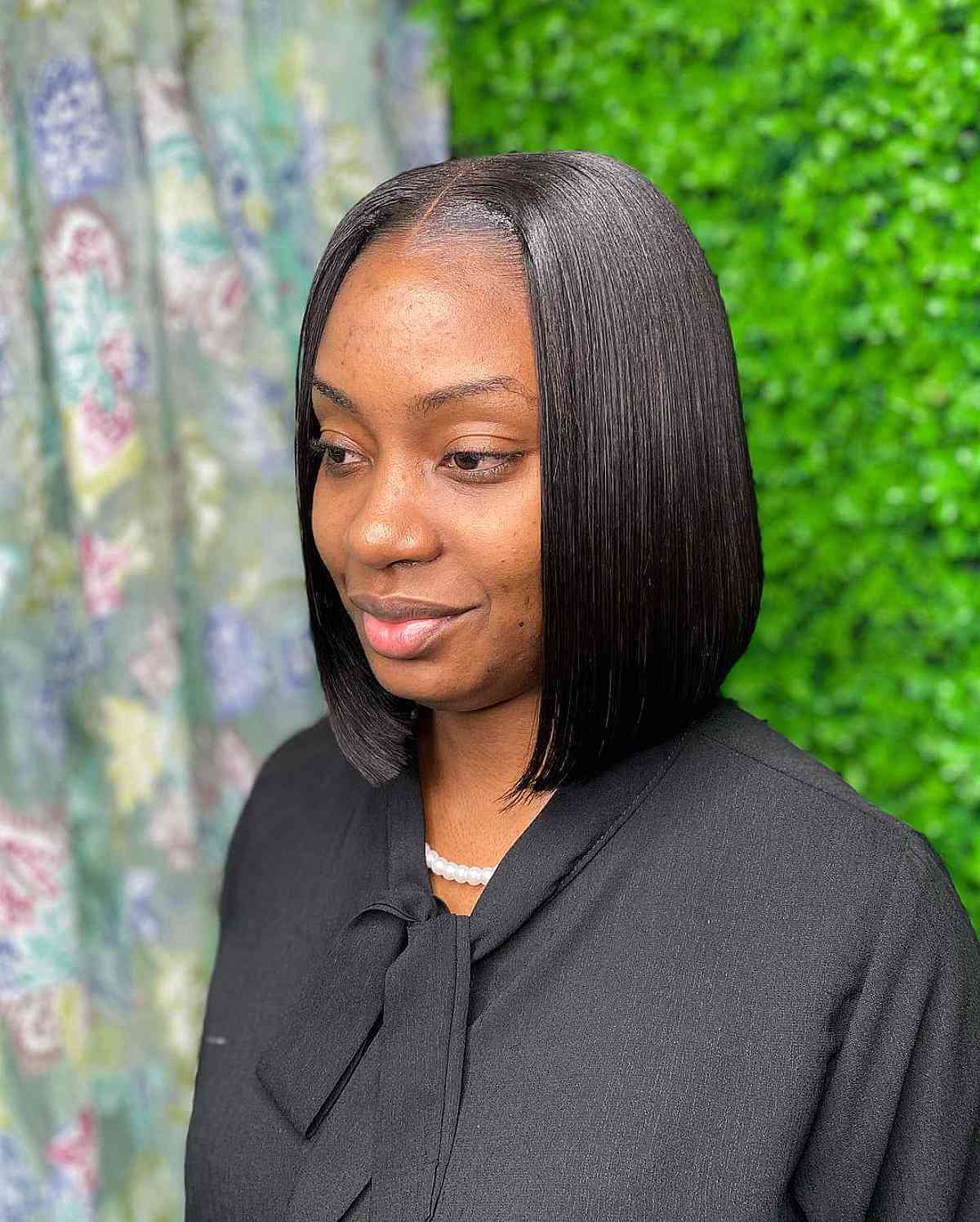
Courtesy of: latest-hairstyles.com
How do you get a bob that looks this precise without looking stiff? The answer is a sharp clean line, executed by someone who treats cutting like a geometry exam. This polished chin length black bob parts in the middle and stops exactly at the jaw, which suits oval and long faces by adding width where it helps. Ask your stylist for a polished chin length black bob with a sharp clean line. The part needs to be exact, so use a fine-tooth comb and a smoothing spray for shine. A trim every six weeks keeps the line from rounding out.
Collarbone Bob With Voluminous Waves

Photo credit: fabmood.com
Ash brown hair at collarbone length often reads as one flat block, but these voluminous waves give it movement and air. The curtain bangs frame the face without committing to a full fringe, and the middle part keeps the volume balanced on both sides. Fine hair can pull off this much body, provided you start with a volumizing mousse and dry with a large round brush. The drawback: waves this soft can fall flat by mid-afternoon in humid air. Ask your stylist for a collarbone length soft bob with curtain bangs. A trim every six to eight weeks keeps the ends from looking straggly.
Sharp Angled Black Bob Side Profile
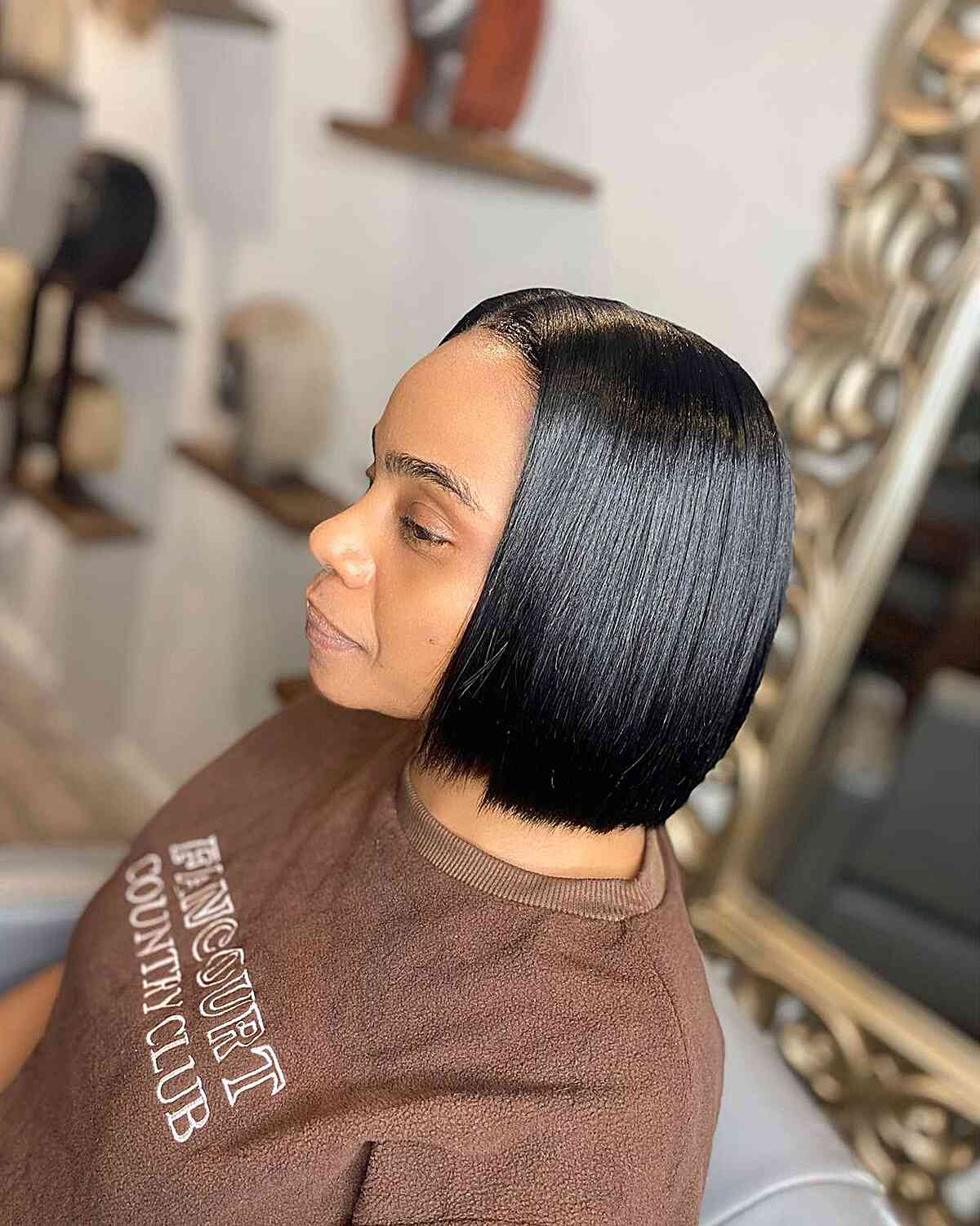
Image credit: latest-hairstyles.com
A sharp angle is a promise the haircut has to keep, and from the side this chin length black bob delivers. The cut drops straight from the middle part to a clean diagonal, which works best on thick hair that can hold the line without caving in. Ask your stylist for a sharp angled chin length black bob with a middle part. The mistake most people make is skipping the flat iron and letting natural texture bend the angle into a curve. Keep the finish sleek with a heat protectant, and book a trim every six weeks so the edge stays honest.
Collarbone Bob With Sharp Blunt Cut
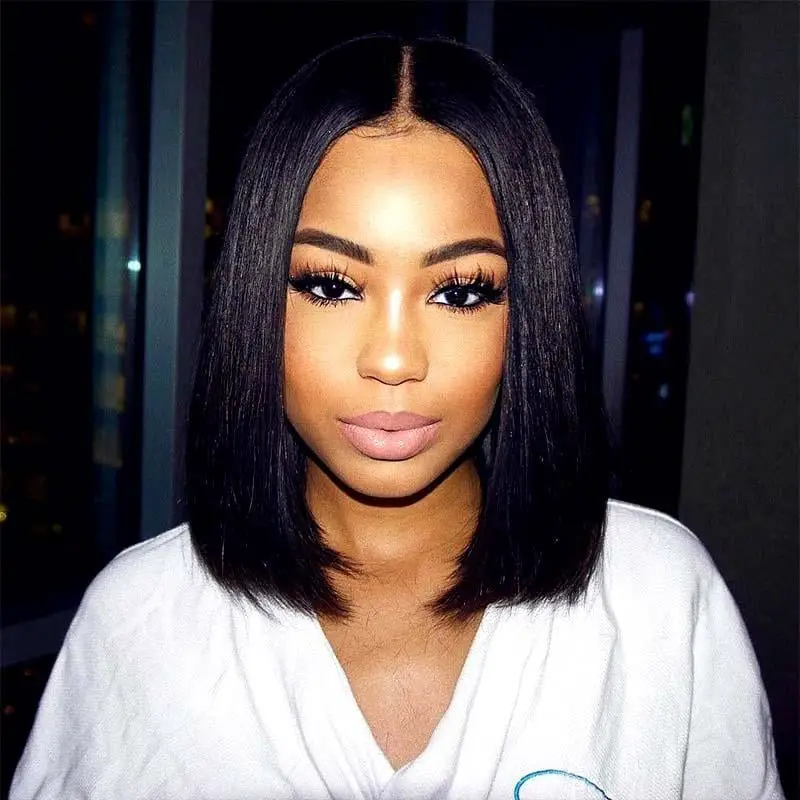
Via osztiem.de
This black bob parts precisely in the middle and ends at the collarbone, giving fine hair a density it does not naturally own. Ask your stylist for a collarbone length blunt bob with a sharp cut. The styling is straightforward: a smoothing cream, a flat iron, and a few minutes of patience. A trim every six weeks maintains the blunt edge.
Final Thoughts
For fine hair, keep one blunt baseline and skip heavy layers to hold density. For thick hair, textured layers will reduce weight and add movement. Let the length fall below the chin if you have a rounder face shape, and keep the part dead center for the cleanest line.
- Trim the baseline every six to eight weeks for blunt styles, or eight to ten weeks for layered versions.
- Use a heat protectant spray before blow-drying or straightening to maintain hair health.
- Toning for ash or platinum blondes may be needed every four to six weeks to maintain vibrancy.
- For wavy textures, use a sea salt spray or curl cream to enhance natural movement after washing.
Find the middle part bob that suits your style and hair type.
Hairstyle
20 Champagne Blonde Hair Color Ideas 2027
Champagne Blonde 2027 hair color ideas: try bright babylights or balayage on long hair for a warm, flattering glow. See 20 looks.
Champagne blonde splits the difference between warm honey and cool ash, landing somewhere luminous and deliberately understated. For 2027, the shift is away from flat, single-process blonde toward soft, face-framing layers and lived-in color that grows out gracefully rather than announcing itself at week four.
This collection of 20 champagne blonde ideas covers the full spectrum: high-impact babylights for a bright, polished finish and subtle balayage for those who prefer a lower-maintenance rhythm. Whether your hair is fine and needs a blunt baseline to hold shape or thick and wants soft dimension without a heavy grow-out line, these looks solve the specific problem of keeping blonde fresh without constant salon visits.
Long Layered Hair With Champagne Balayage
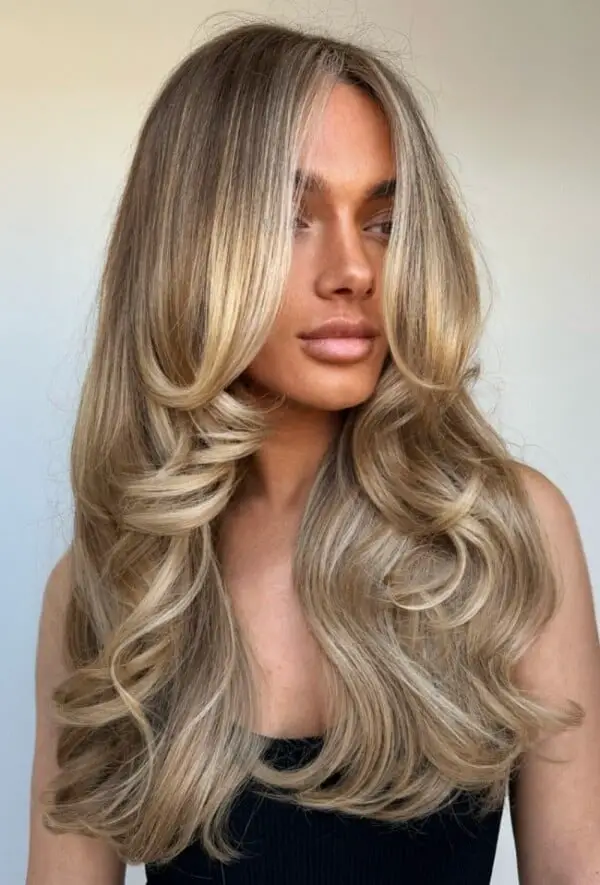
Courtesy of: itakeyou.co.uk
The champagne balayage here is painted with intent, sweeping brighter butter blonde pieces around the face while the length stays a softer, deeper champagne. That contrast gives the color its dimension. The face-framing highlights are visible first, then the eye travels down the long, loose waves. The middle parting keeps the layers open and the whole effect reads as lived-in rather than freshly salon-bright.
This cut suits medium to thick wavy hair starting at the shoulders, since the layers need some weight to move properly. The face-framing pieces soften square and oval face shapes. Ask your colorist for: long layers, champagne balayage with face-framing butter blonde highlights. The balayage technique means the color grows out with a softer line, so you can stretch touch-ups to every 10 to 12 weeks instead of the usual eight.
Mid-Back Length Champagne Blonde With Babylights
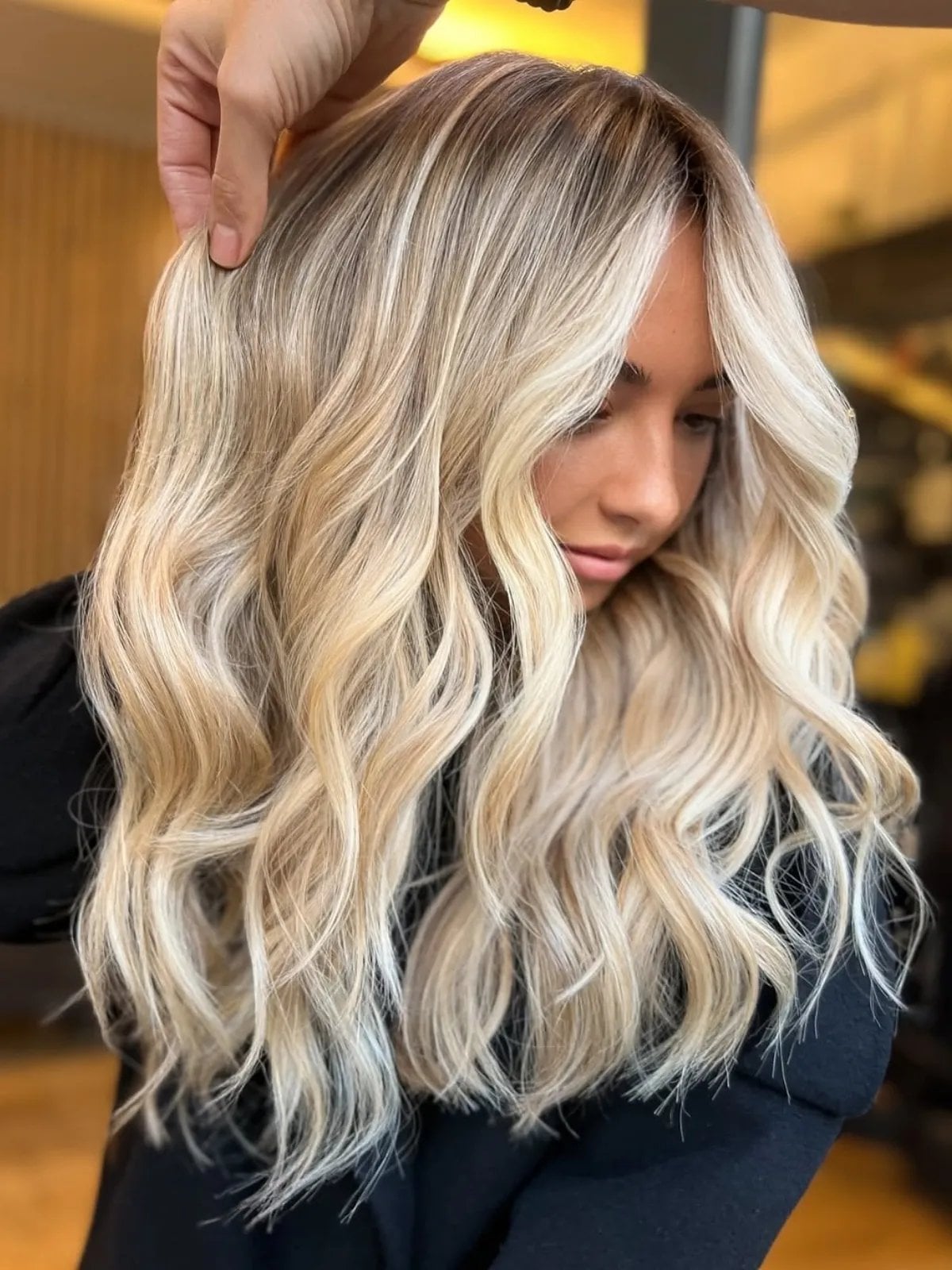
Photo credit: wella.com
What makes babylights different from regular highlights? They are woven much finer, closer to the width of a baby hair strand, which gives a bright champagne blonde base a subtle, all-over shimmer rather than obvious stripes. Here the mid-back length is styled in loose waves with a middle parting and soft curtain bangs, and the babylights add a gentle lift that keeps thick hair from looking heavy.
This works best on thick hair that reaches mid-back or longer; the density gives the fine highlights something to play against. Curtain bangs are flattering on round, oval, and heart-shaped faces. Ask your colorist for: mid-back length, bright champagne blonde with babylights, curtain bangs. Use a round brush during blow-drying to enhance the natural wave and volume. Plan for a touch-up every 8 to 10 weeks, since the fine weave fades faster than chunkier highlights.
Collarbone Length Champagne Blonde With Curtain Bangs
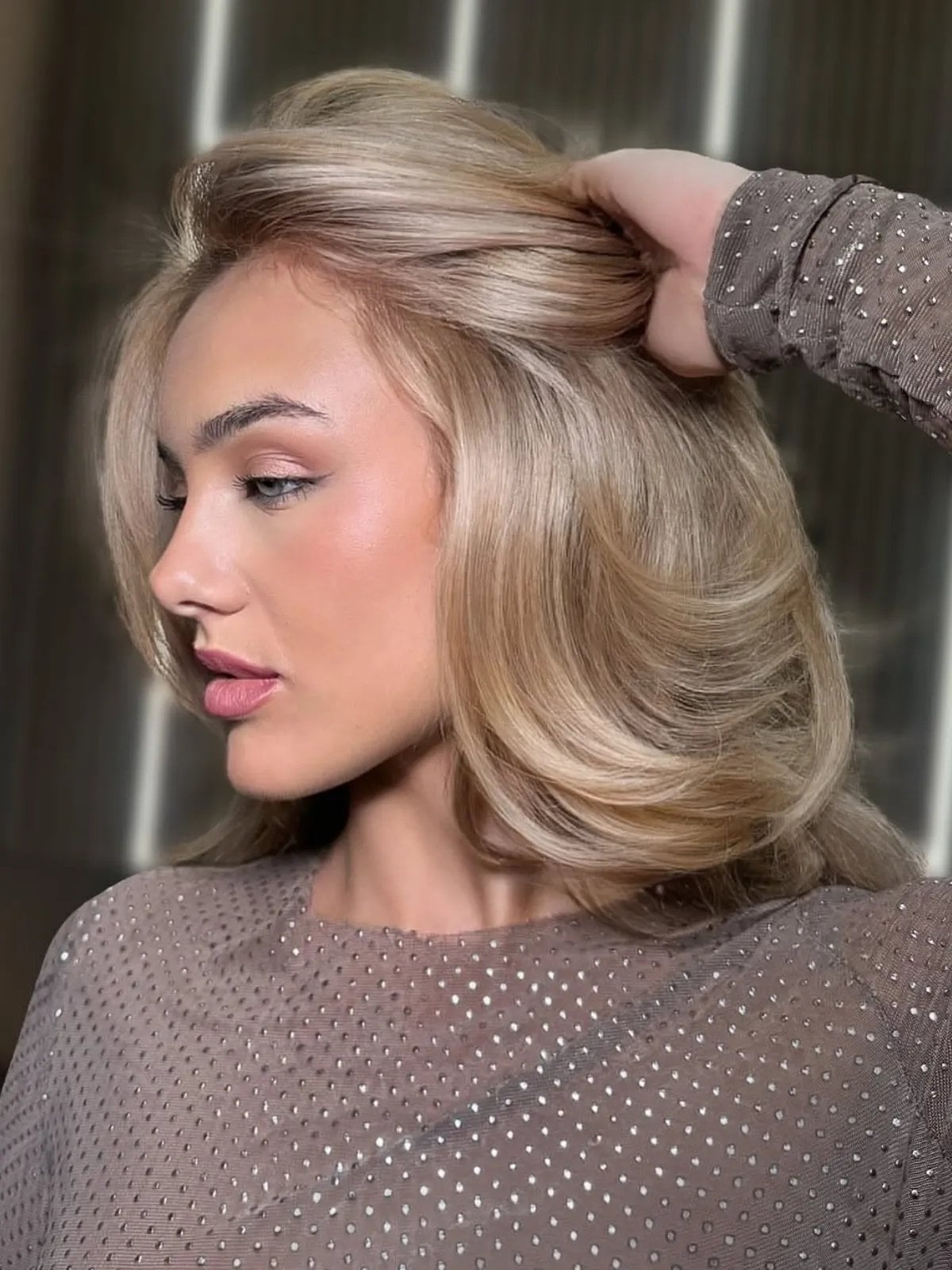
Image credit: wella.com
Fine, wavy hair at collarbone length is exactly where a champagne blonde blowout earns its keep, because the color adds the illusion of density without weighing the strands down. The curtain bangs are cut to sweep to the sides, and on this texture they land with a soft, airy movement. The middle parting and face-framing layers work together to open up the front, which suits square and angular face shapes by softening the jawline. Ask your colorist for: collarbone length, champagne blonde, curtain bangs, soft blowout. A root boosting product applied before drying keeps the shape from collapsing, and the bangs will need a trim every few weeks to hold their curve.
Chin Length Ash Blonde Bob With Side Swept Bangs

Source: fabmood.com
If champagne blonde leans warm, this chin-length bob is its cooler cousin: an ash blonde base with subtle lighter highlights woven through, finished with side-swept bangs. The cool tone is a natural fit for fall and winter, when the light is softer and the ashy notes look crisp. The bob is cut to sit right at the chin with a slight inward curve at the ends, which gives fine, straight hair shape without needing much styling. Ask your colorist for: chin length bob, side parting, side-swept bangs, ash blonde. It is a solid work-to-evening cut, and the straight texture means a quick blow-dry with a paddle brush is all it takes to maintain the line.
Mid-Back Ash Blonde With Natural Highlights
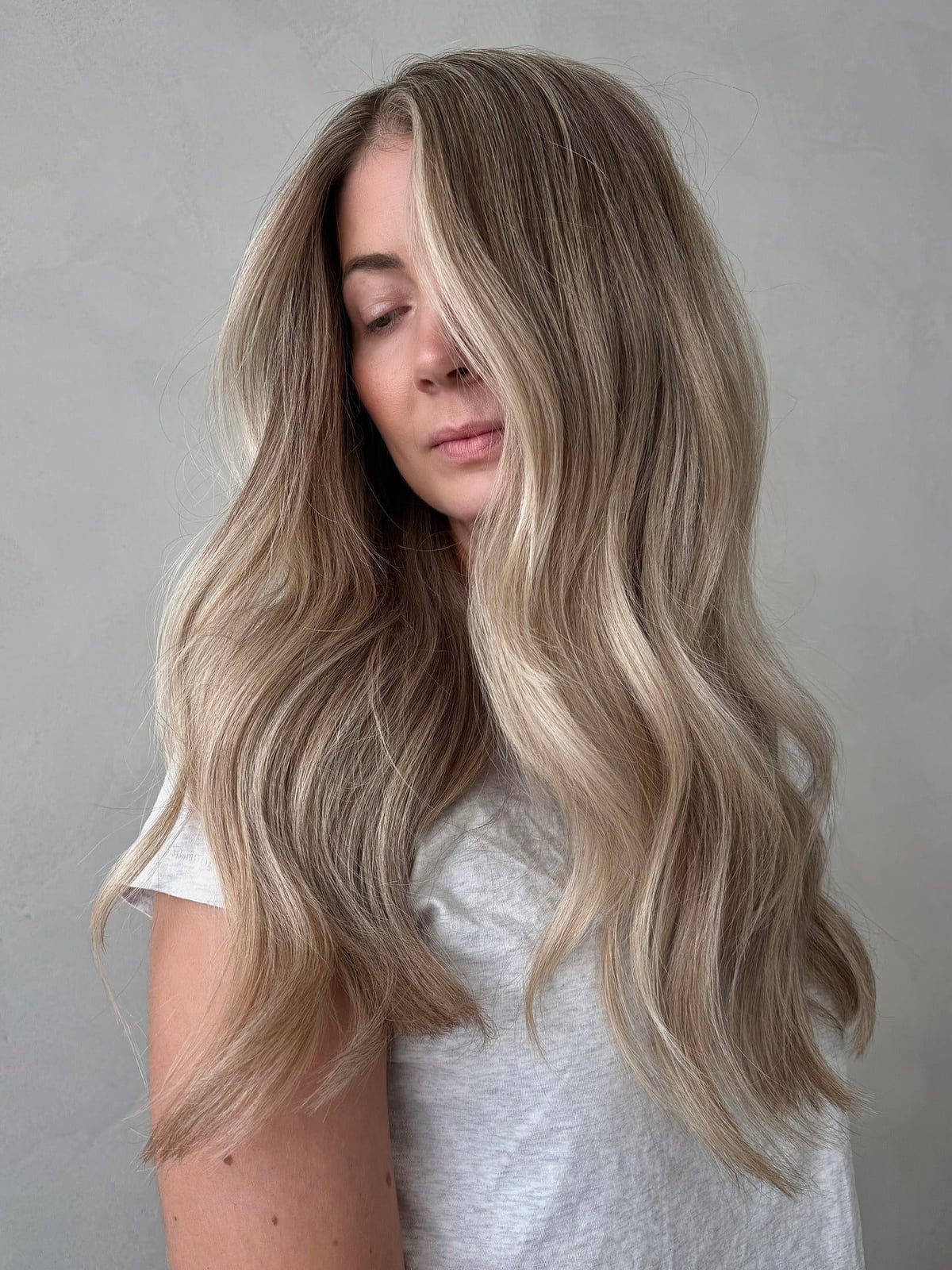
The trick to natural-looking highlights on an ash blonde base is asking for them to be painted in soft, uneven sections so they blend into the color the way sun-lightened hair does. Here the mid-back length is styled with an air-dried texture and the highlights are subtle enough that you notice the dimension before you notice the individual pieces. This suits thick wavy hair that can carry the weight of the length without going flat. Ask your colorist for: mid-back length, ash blonde with natural highlights, air-dried texture. To keep that just-rolled-out-of-bed finish, work a sea salt spray through damp hair and let it dry without touching it. Natural highlights need a touch-up every 10 to 12 weeks, and the grow-out line can look a little muddy if you let it go longer.
Collarbone Length Champagne Blonde With Subtle Highlights
Courtesy of: hair.com
Wondering if subtle highlights actually register as champagne blonde or just fade into a beige blur? On a collarbone-length cut with soft waves, they do the quiet work: a few lighter pieces provide dimension without turning the whole head into a stripe show. Medium-density wavy hair holds the dimension best, and the middle part helps elongate round faces. Ask your colorist for: collarbone length, champagne blonde with subtle highlights, soft waves. A texturizing spray keeps the waves lived-in, and you can stretch refresh visits to every 10 to 12 weeks since the contrast is gentle.
Mid-Back Pale Champagne Blonde Blowout
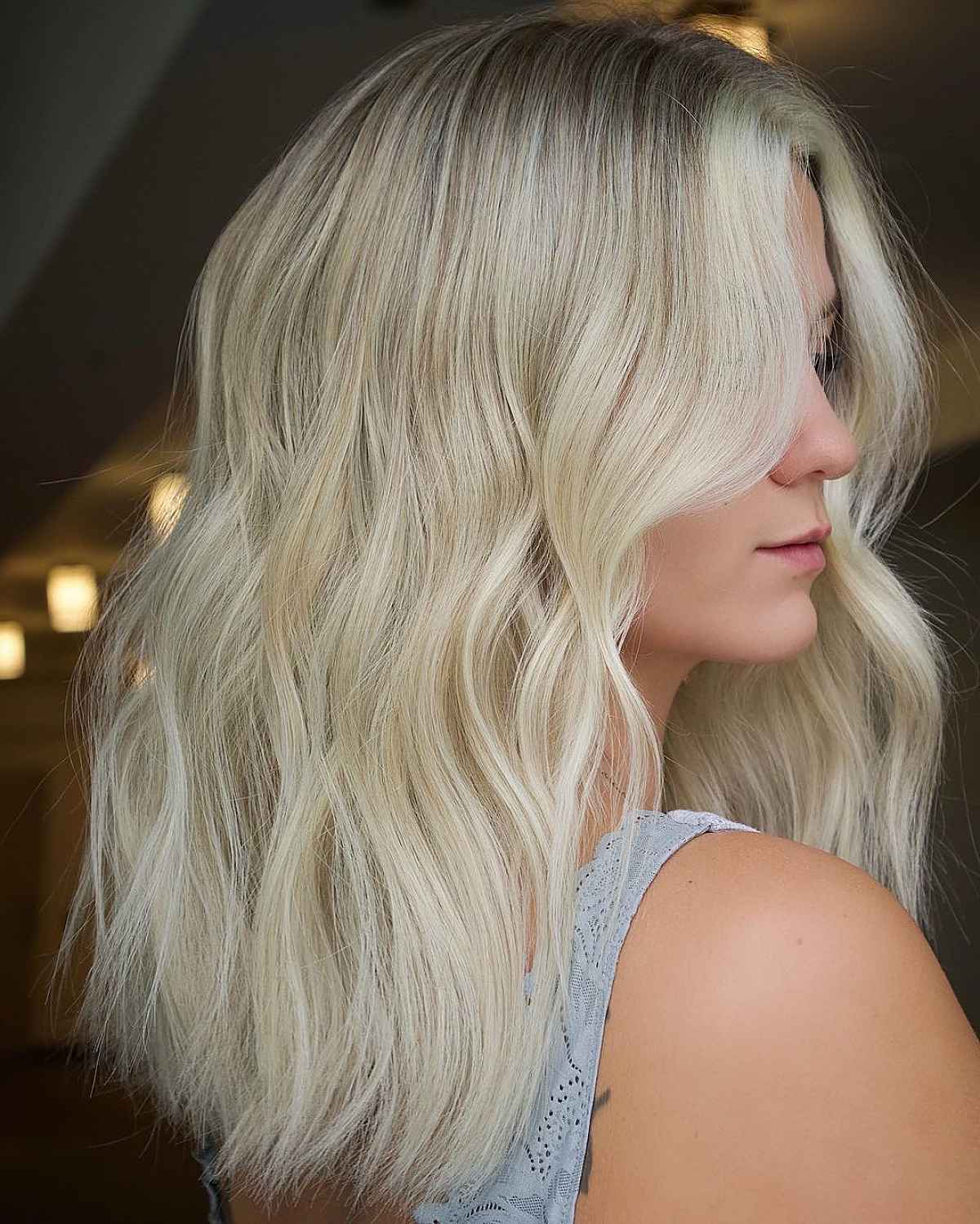
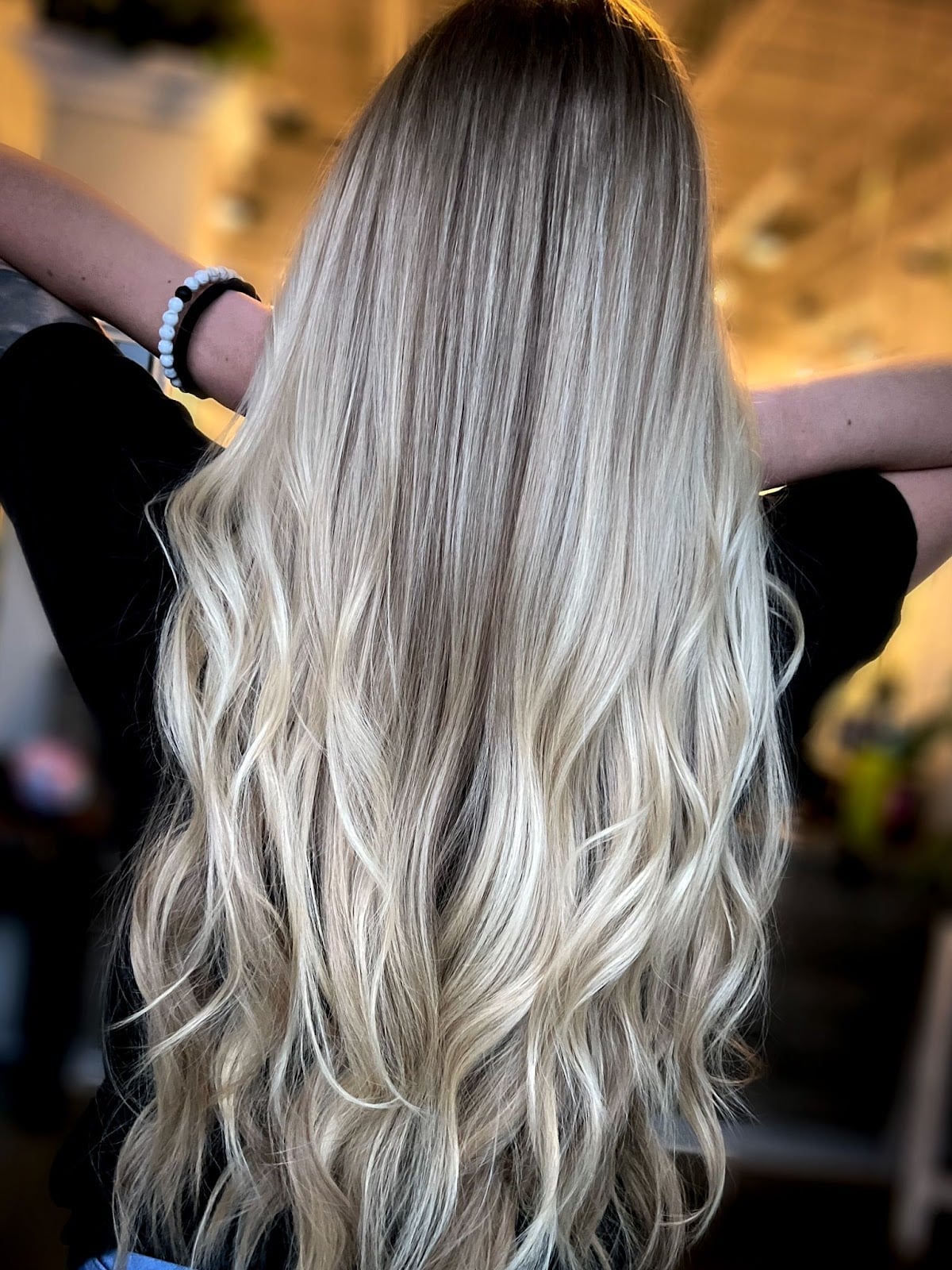
Photo credit: latest-hairstyles.com
A uniform pale champagne blonde is a colorist’s patience test, not a one-session miracle. Getting from your natural base to that even, glossy tone usually takes multiple lightening appointments, each one lifting the hair a shade or two so the cuticle stays intact. The back view here shows why the layers matter: on thick wavy hair, they stop the length from feeling like one heavy curtain.
Ask your colorist for: mid-back length, pale champagne blonde, smooth blowout. The salon time is the real investment, but if you want the polished result at home, a boar bristle brush pulls the wave straight as you dry. Pale roots show fast, so plan a touch-up every 6 to 8 weeks to keep the uniform look from going brassy at the base.
Collarbone Light Champagne Blonde Balayage
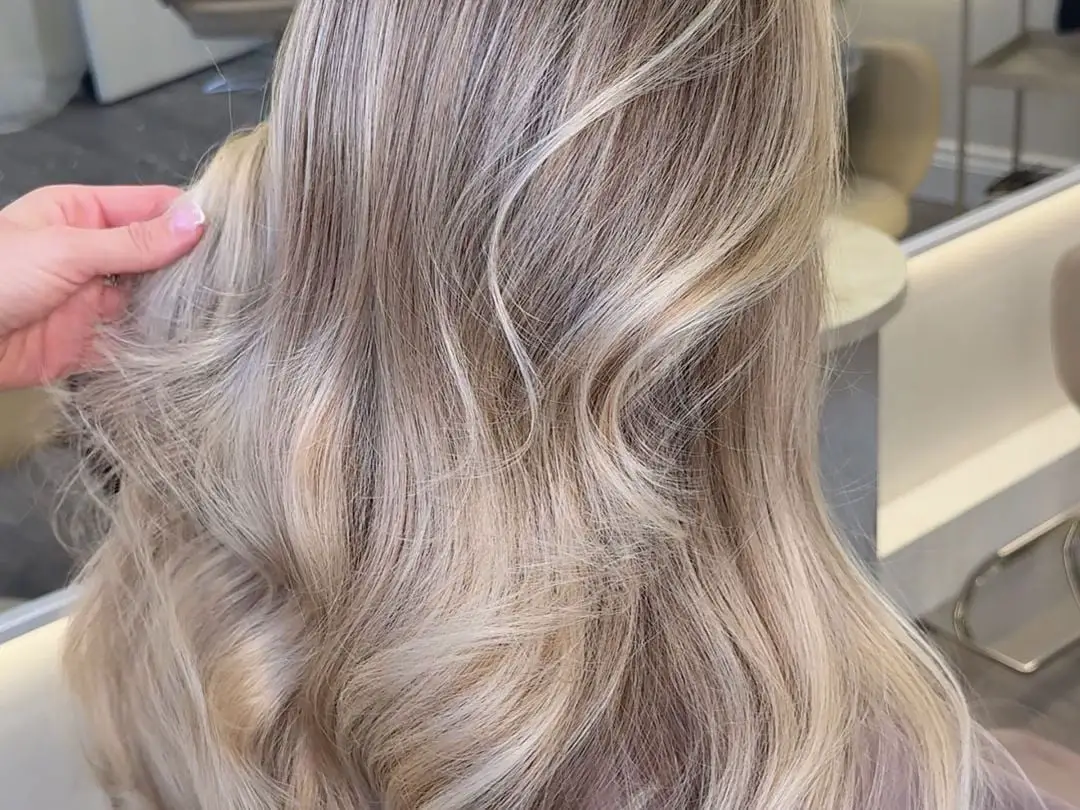
Image credit: glamour.com
Light champagne blonde sits in a different lane than the deeper, honeyed versions of the trend. Where a richer tone warms everything up, this lighter shade stays bright and airy, which makes it a sharper contrast against darker roots. The balayage technique keeps the transition soft, so the grow-out won’t slap you in the face at week six. Medium-density wavy hair at collarbone length takes the loose waves without looking thin, and a middle parting plays up facial symmetry. Ask your colorist for: collarbone length, light champagne blonde balayage, loose waves. The honest drawback: lighter bases drift toward brassiness faster, so a purple shampoo is your maintenance friend, and a refresh every 10 to 12 weeks keeps the tone from going orange.
Collarbone Champagne Blonde With Face Framing Bangs
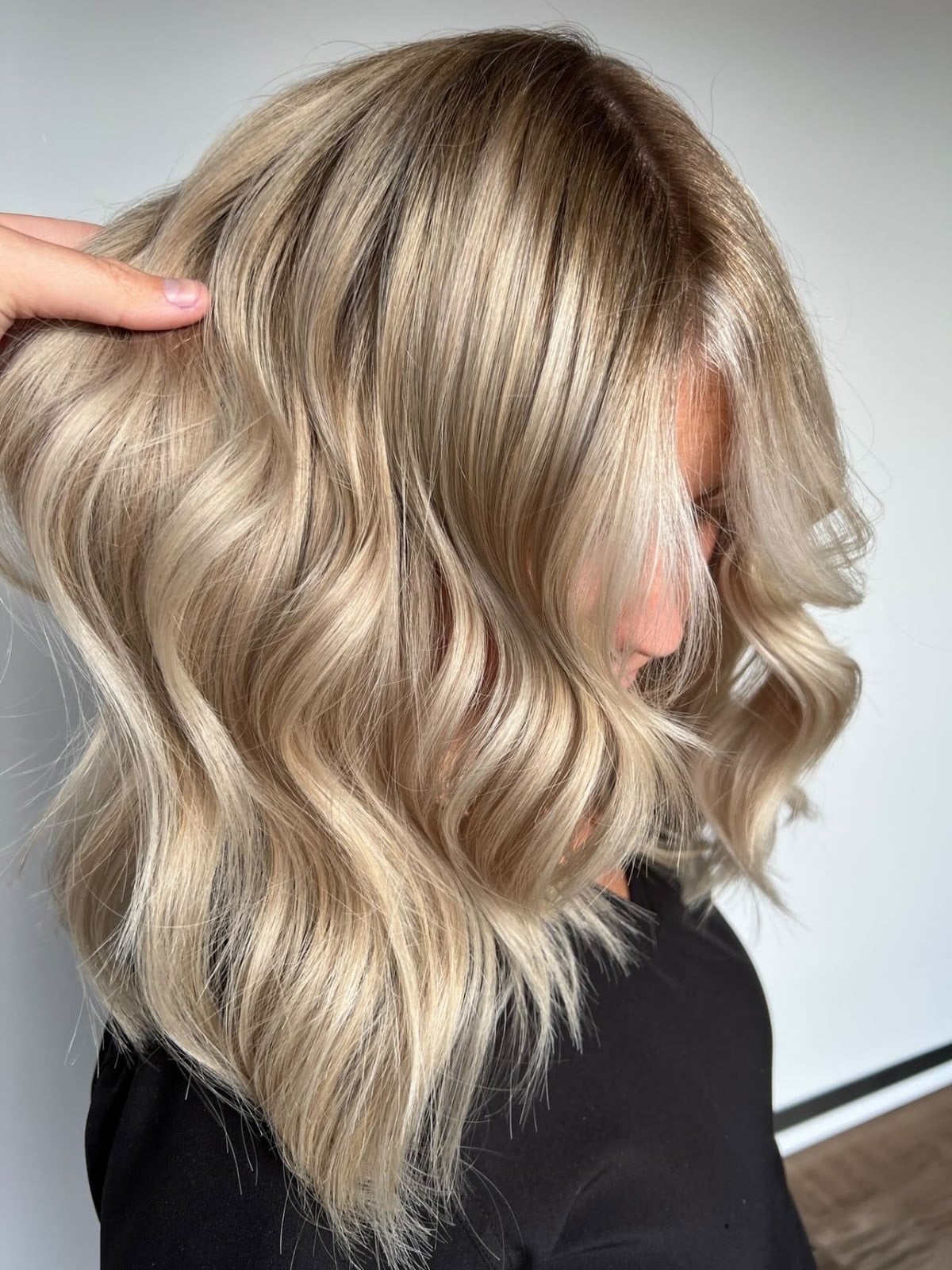
Source: hair.com
Who actually benefits from face-framing bangs on a collarbone-length champagne blonde? Anyone with an angular jawline, because those shorter pieces curve around the cheekbones and soften the hard lines. The middle parting keeps the bangs from feeling like a separate entity, blending them into the rest of the blowout. Medium-density wavy hair gives the volume enough body to hold the shape, and the collarbone length keeps everything from dragging down. Ask your colorist for: collarbone length, champagne blonde, voluminous blowout, face-framing bangs. A large barrel round brush is the tool for that bounce, and because the bangs are the first thing to grow out, plan a trim every 4 to 6 weeks to keep them in their lane.
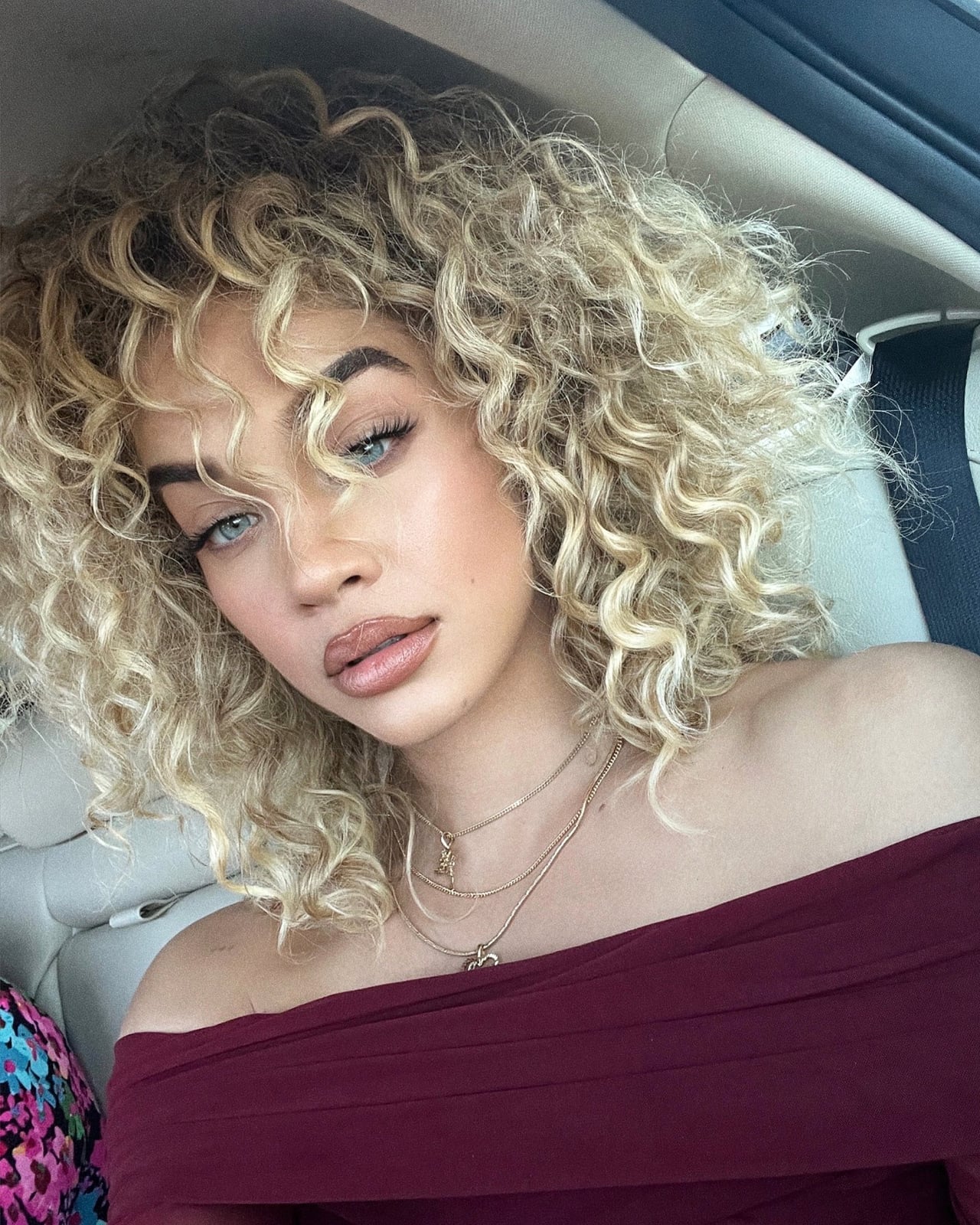
Shoulder Length Champagne Blonde Defined Curls
Source: whowhatwear.com
Champagne blonde on defined curls is a warm-weather move that actually earns its keep. The bright tone adds a glossy shimmer to thick, curly hair, and the shoulder length lets the curls spring up without feeling weighed down. A middle parting balances wider faces, and the layers give each curl its own shape instead of one dense mass. Ask your colorist for: shoulder length, champagne blonde, defined curls. A curl-defining cream and a diffuser are all you need to set the pattern, and since the color sits close to the roots, a refresh every 8 to 10 weeks keeps the brightness from dulling over festival season.
Mid-Back Blunt Cut In Champagne Blonde
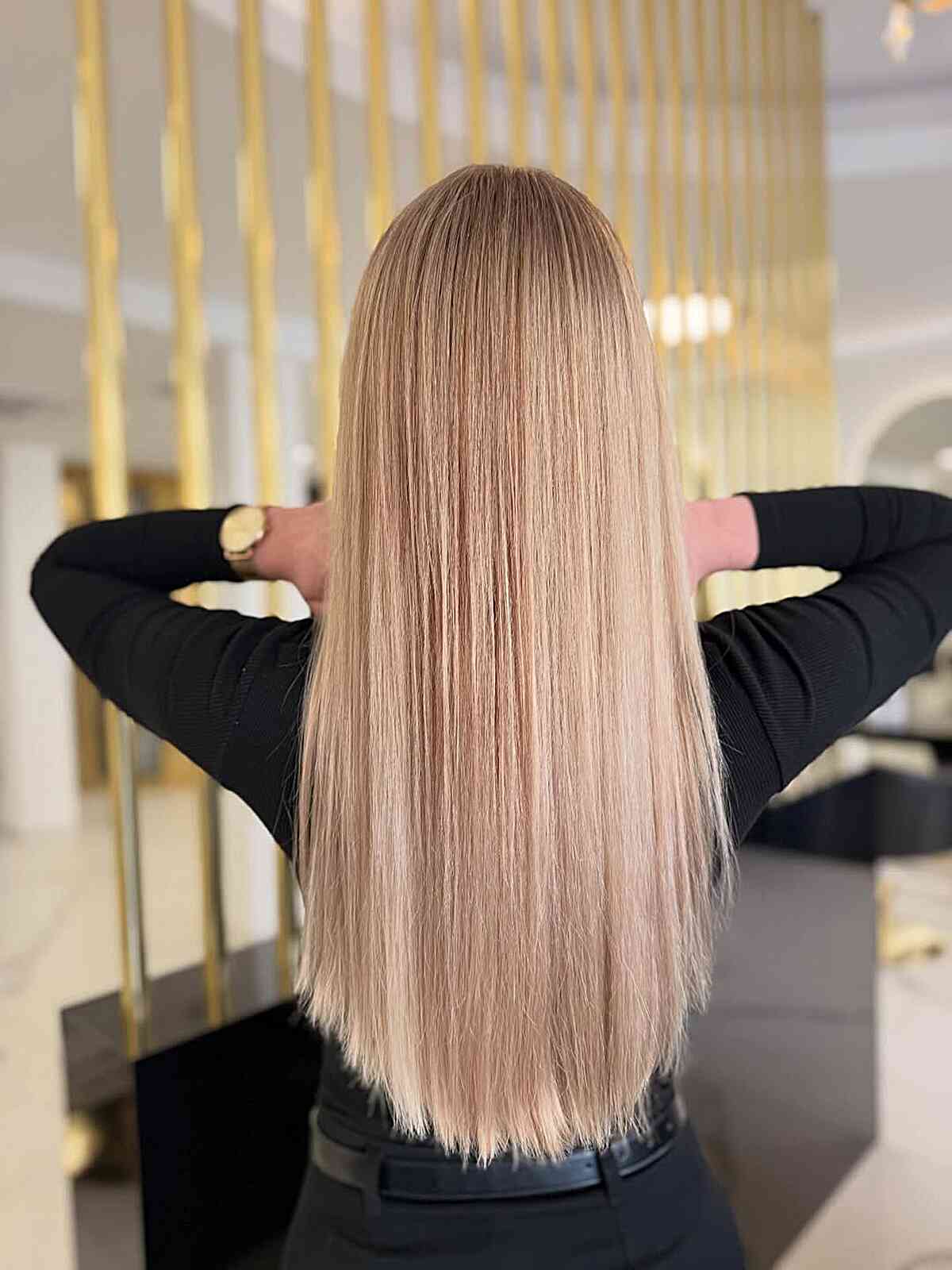
To keep that sharp edge looking sharp, you will need a trim every eight to ten weeks, since any split ends will show up as a ragged fringe. The straight texture does the heavy lifting here, but a flat iron with a heat protectant will keep the finish glassy between appointments. The one real drawback: there is nowhere to hide. If you skip the trim, the line softens fast, and the whole cut loses its architectural appeal.
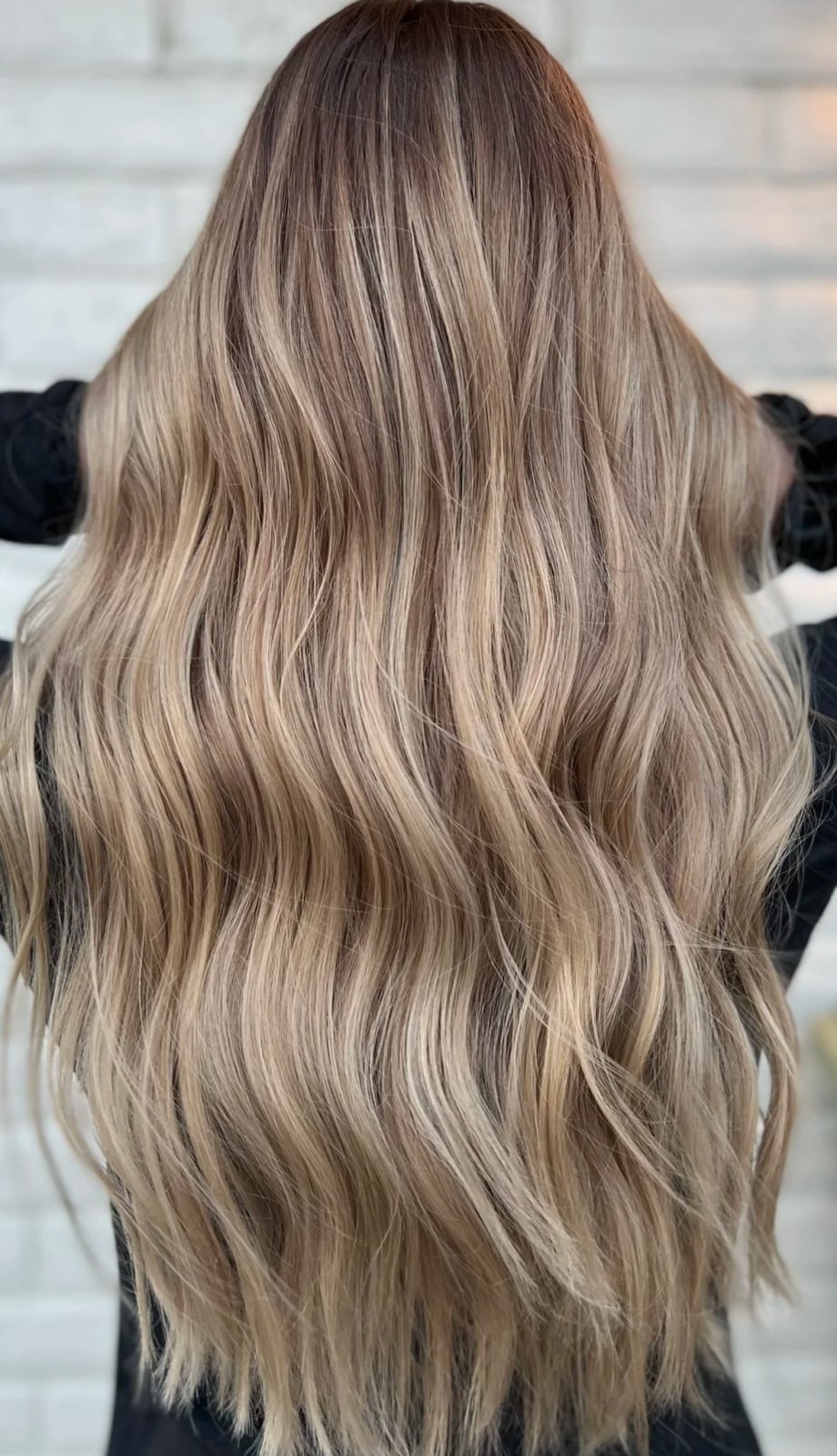
Mid-Back Beige Blonde With Balayage
Courtesy of: sway.salon
Ever wonder how some blondes look like they woke up with dimension while others look painted from a single bottle? The answer is balayage. Here, the beige blonde base is hand-painted with lighter strands throughout, so the color graduates from root to tip instead of sitting as one flat shade. On thick, wavy mid-back hair, the loose waves catch those lighter pieces and show off the blend from every angle.
Ask your colorist for: mid-back length, beige blonde with balayage, loose waves. Because the technique is painted, not foiled, the grow-out is naturally softer than a uniform application. A texturizing spray will give the waves grip and keep the ends from looking stringy. To maintain the brightness, plan a refresh every ten to twelve weeks, though the lived-in effect means you can stretch it if you like.
Mid-Back Champagne Blonde With Lowlights and Highlights
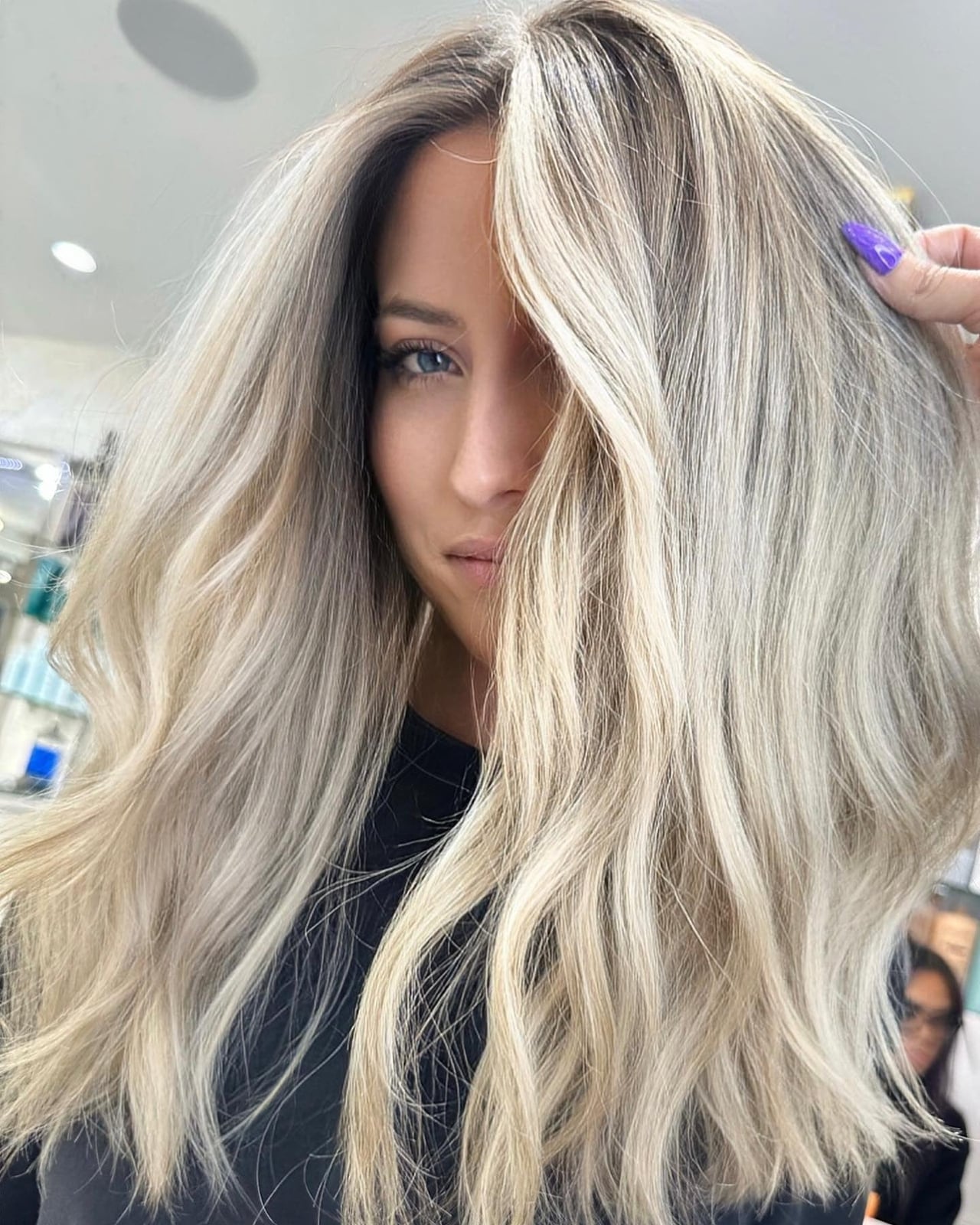
Photo credit: creativebooster.net
Notice how this champagne blonde has depth, not just lightness? That is the work of blended beige lowlights woven under butter blonde face-framing highlights. The lowlights sink the base, while the highlights pull the eye toward the curtain bangs and the layers. On thick, wavy mid-back hair, the mix creates a dimensional color that moves with you.
Ask your colorist for: mid-back length, champagne blonde with beige lowlights and butter blonde highlights, curtain bangs. For oval and heart-shaped faces, the curtain bangs soften the forehead and cheekbones. A round brush blowout will give the waves volume and let the highlights catch the light. Curtain bangs need a trim every four to six weeks to keep their shape, and the dimensional color can go ten to twelve weeks between toning visits.
Collarbone Lob With Soft Waves and Highlights
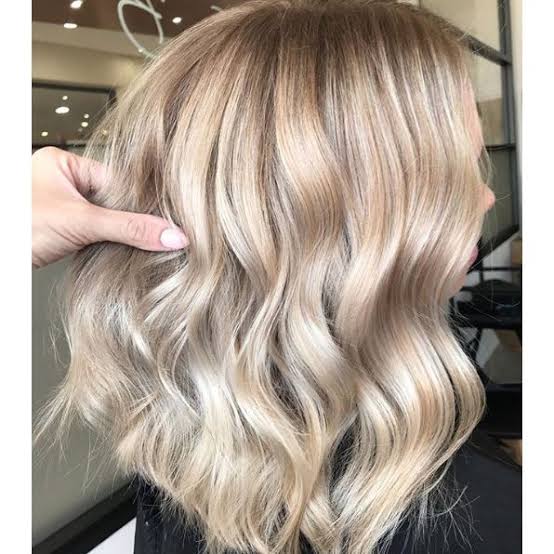
Image credit: southernliving.com
A collarbone-length lob with soft waves is a low-commitment blonde option that still looks polished. The champagne blonde base carries subtle, lighter highlights woven through, which gives the medium-density wavy hair a multi-dimensional finish without looking stripey. The middle part keeps it modern, and the length lands right at the collarbone, a forgiving spot for most face shapes.
Ask your colorist for: collarbone length lob, soft waves, champagne blonde with subtle highlights. This tone requires salon time, since the subtle highlights need a steady hand to avoid over-brightening. At home, use a scrunching motion or a diffuser to keep the waves soft. The trade-off: if you skip the salon for too long, the highlights can fade into a brassy wash, so plan a refresh every ten to twelve weeks.
Long Layered Beige Champagne Blonde With Face Framing
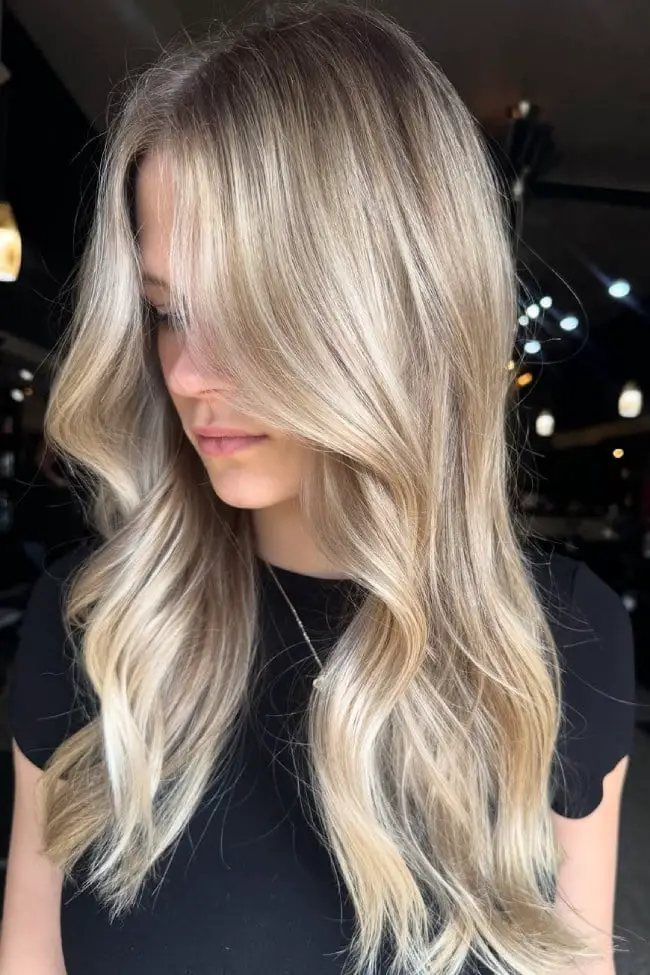
Source: itakeyou.co.uk
Who does a long layered cut with face-framing highlights actually suit? Anyone with medium-thick wavy hair and a face that wants a little softening. The butter blonde highlights sit right around the jaw and cheekbones, which works to draw the eye outward and balance angular features. On long, loose waves with a middle part, the effect is a gentle frame, not a hard line.
Ask your colorist for: long layered haircut, soft beige champagne blonde with butter blonde face-framing highlights. The layers give the waves movement, so they do not fall flat, and the face-framing pieces are cut to blend into the length. A large barrel curling iron will enhance the wave pattern, and a trim every eight to ten weeks keeps the layers from getting heavy. If your hair is fine, the highlights can look sparse, so this one leans toward those with more density to work with.
Shoulder Length Warm Champagne Blonde With Babylights

Via stylist.co.uk
The warm champagne blonde here gets its glow from fine babylights, which create a subtle shimmer without obvious streaks. Loose waves keep the shoulder-length cut soft, and the wispy bangs frame the face without demanding much styling. Medium-density wavy hair holds this shape well, and the babylights blend into the base so grow-out stays forgiving. Ask your colorist for: shoulder length, warm champagne blonde with babylights, wispy bangs. The wave pattern has a lived-in feel, and the babylights need refreshing every 8 to 10 weeks to keep that luminous tone from turning flat.
Mid-Back Dimensional Champagne Blonde
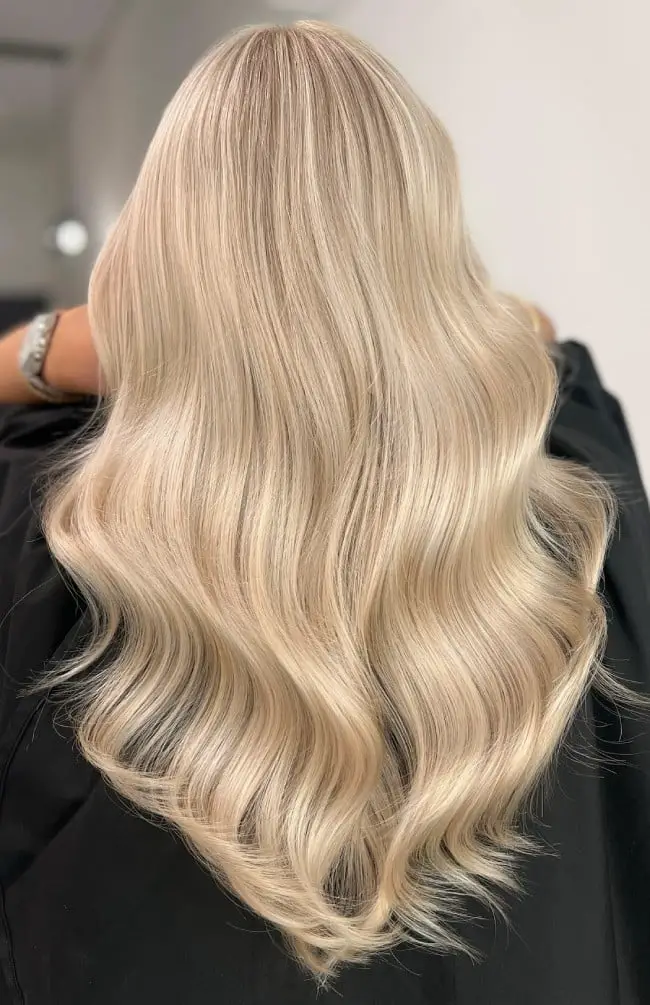
Courtesy of: fabmood.com
Dimensional champagne blonde works because lighter strands are woven through the mid-back length in soft, blended pieces, so the color moves when the hair does. Thick wavy hair takes the loose flowing waves especially well, and the layers give dense hair a lighter feel without sacrificing length. Ask your colorist for: mid-back length, dimensional champagne blonde with lighter strands. To keep the dimension visible, a shine serum on the lengths helps the lighter pieces catch light, and a color touch-up every 8 to 10 weeks prevents the highlights from fading into a single flat shade. The honest drawback is that skipping that toning appointment lets the champagne tone shift brassy, so the upkeep is steady but not demanding.
Mid-Back Champagne Blonde With Soft Curtain Bangs
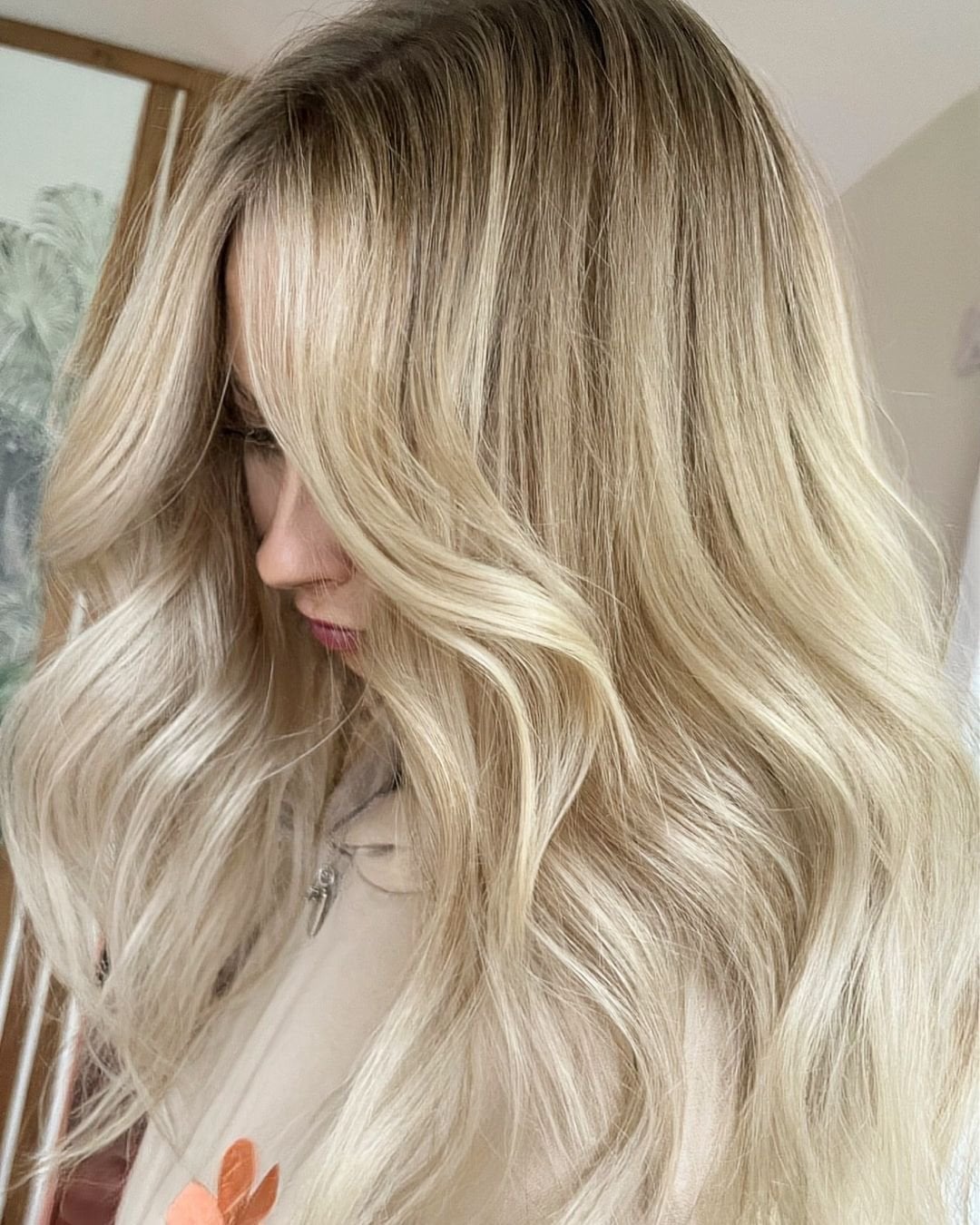
Photo credit: redkenpro.com
How does a champagne blonde finish look this glossy? It starts with a toning step that neutralizes any yellow or brassy cast, leaving the mid-back length with a soft, polished sheen. The technique pairs a middle part with soft curtain bangs, which blend into the thick wavy texture and frame the face without a blunt line. Ask your colorist for: mid-back length, champagne blonde with subtle highlights, soft curtain bangs. A volumizing spray at the roots and a round brush during the blowout lift the hair at the crown, and the curtain bangs need a trim every 6 to 8 weeks to hold their shape. The subtle highlights keep the color dimensional so the glossy finish never looks flat.
Mid-Back Rich Champagne Blonde With Balayage, Wavy
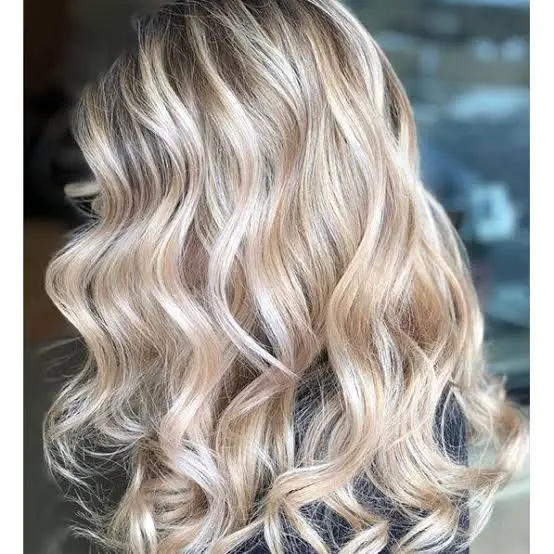
Image credit: southernliving.com
The rich champagne blonde base here is deepened by balayage highlights that sweep brighter toward the ends, giving the mid-back length significant dimension. Long layers and loose waves with a middle part let the color move in sections, and thick wavy hair carries that brightness without looking overdone. Ask your colorist for: mid-back length, long layers, rich champagne blonde with balayage highlights. The balayage technique keeps the grow-out line soft, so the roots stay low-maintenance, but the bright ends will need a toner every 10 to 12 weeks to hold that cool champagne tone. A texturizing spray adds grip to the waves and separates the lighter pieces for a natural, sun-lit finish.
Collarbone Lob With Wispy Bangs And Root Shadow
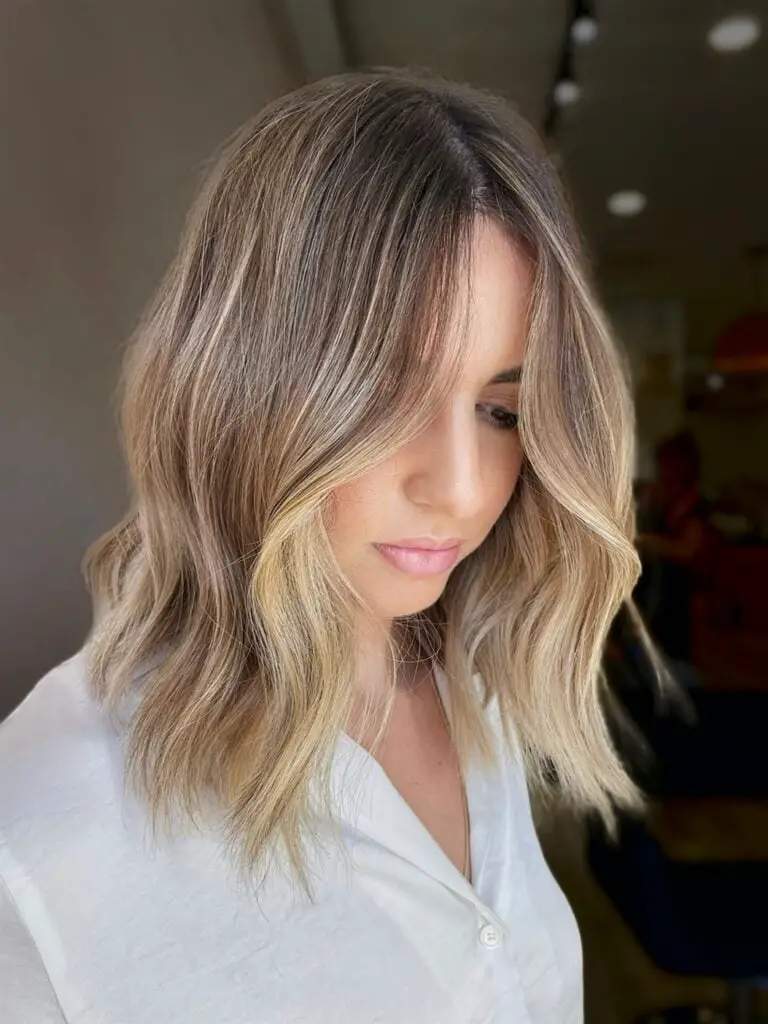
A root shadow grounds the beige blonde into a darker base and lets the lighter ends stand out on this collarbone lob. The wispy bangs and middle parting keep the cut soft on medium wavy hair, and the root shadow extends the grow-out window so the color line never looks harsh. Ask your colorist for: collarbone length lob, wispy bangs, beige blonde with root shadow. This is a salon-leaning process: the root shadow takes about an hour, and the beige blonde ends need a toner every 8 weeks to prevent brassiness. The root shadow can look overgrown if you skip those touch-ups, so it asks for a steady rhythm instead of a one-and-done color.
Final Thoughts
For a brighter, more impactful champagne blonde, opt for babylights or face-framing highlights. For a softer, low-maintenance look, choose balayage with a subtle root shadow.
- Use a purple or violet toning shampoo and conditioner every 2-3 washes.
- Use a color-safe shampoo and conditioner to preserve vibrancy and prevent fading.
- Deep condition weekly to keep blonde hair hydrated and prevent dryness.
- Trim ends every 6-10 weeks to maintain the cut’s shape and health.
- Minimize heat styling and always use a heat protectant spray.
Champagne blonde offers a spectrum of luminous, sophisticated blonde shades.
Hairstyle
20 Trendy Stacked Bob Haircuts 2027 with Wispy Bangs
Trendy Stacked Bob 2027 featuring rounded nape and wispy bangs, plus vibrant purple and silver tones. Save 20 ideas for a fresh haircut in 2027.
The stacked bob is built on graduated layers that lift the hair at the nape, giving you that inverted wedge of volume. For 2027, the shape is loosening up: softer texture and face-framing pieces replace the rigid lines of earlier versions.
These 20 trendy stacked bob haircut ideas run the gamut from a short, rounded nape to a longer collarbone-skimming silhouette, with bangs, color, and texture options for every density. If fine hair that falls flat or a fringe that won’t stay put sounds familiar, you will find a cut here that actually works for your routine.
Rounded Stacked Bob At The Nape
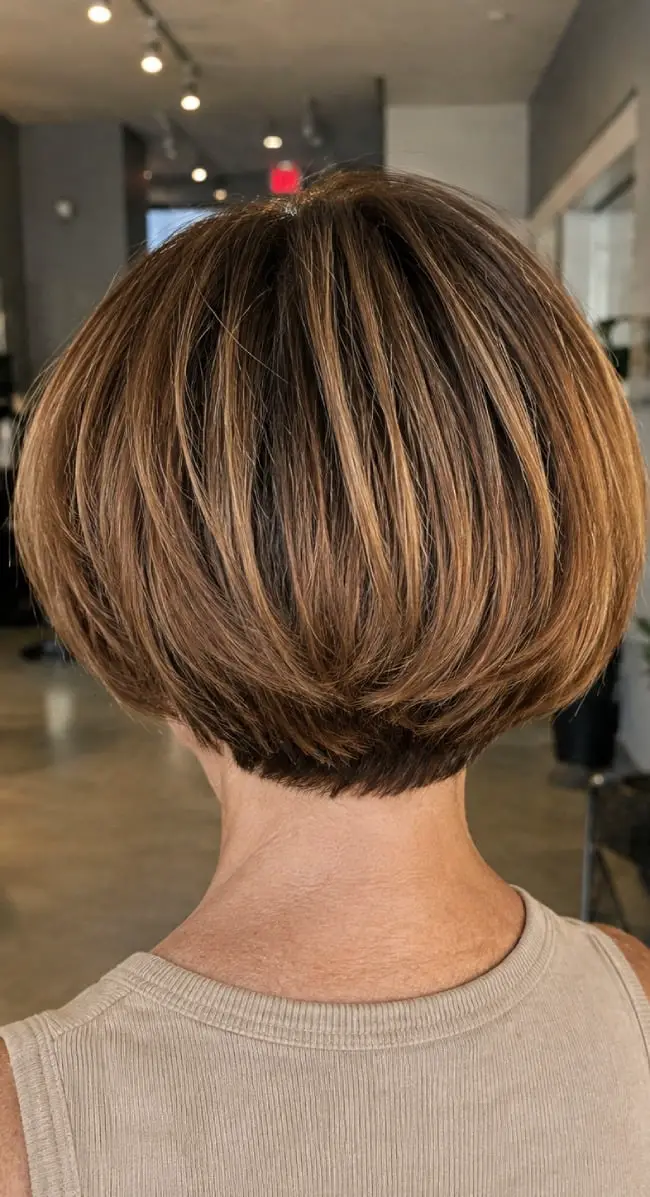
Courtesy of: itakeyou.co.uk
The graduation does all its work low, building a rounded silhouette at the nape while the front stays flat and clean. That is the quiet trick of a rounded stacked bob nape: all the volume sits behind you, so nothing crowds the face. Fine, straight hair gets the most from it, and it needs shoulder length or longer to start. Ask your stylist for: stacked bob with rounded nape graduation. A smooth blowout keeps the lines sharp, and the nape needs a trim every six weeks.
Short Stacked Bob With Wispy Bangs
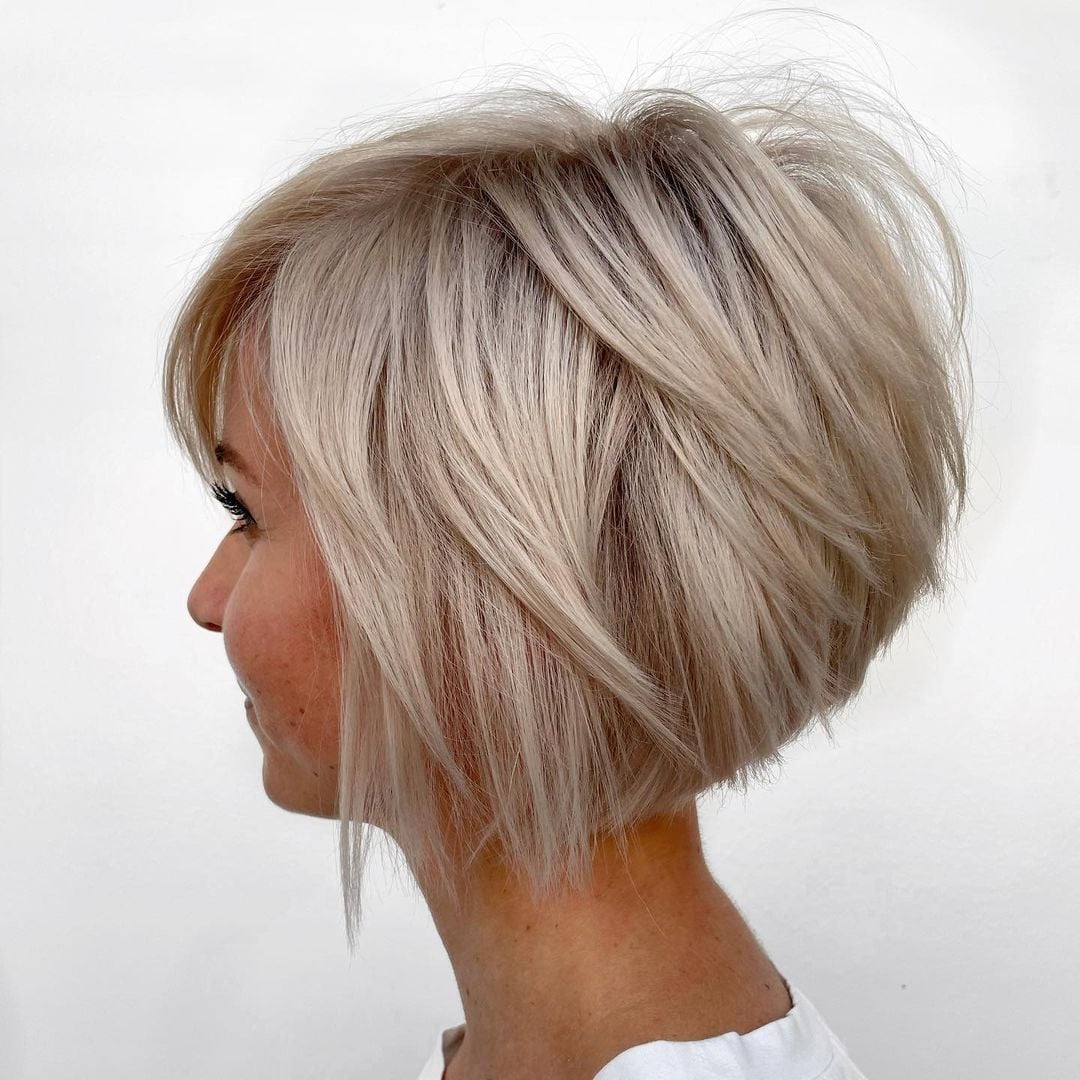
Photo credit: therighthairstyles.com
Worried short bangs will read as a decision you regret? The wispy version is the safe bet. Ask for a short stacked bob with short wispy bangs, and be specific: soft, broken up, never a solid line. The ear length and stacked layers do the volume work while the fringe stays light enough to see through. Fine, straight hair from chin length works best, and oval or heart-shaped faces carry it well. A texturizing product on the bangs and ends keeps the piece-y finish, with a trim every six to eight weeks.
Ash Blonde Stacked Bob Volume
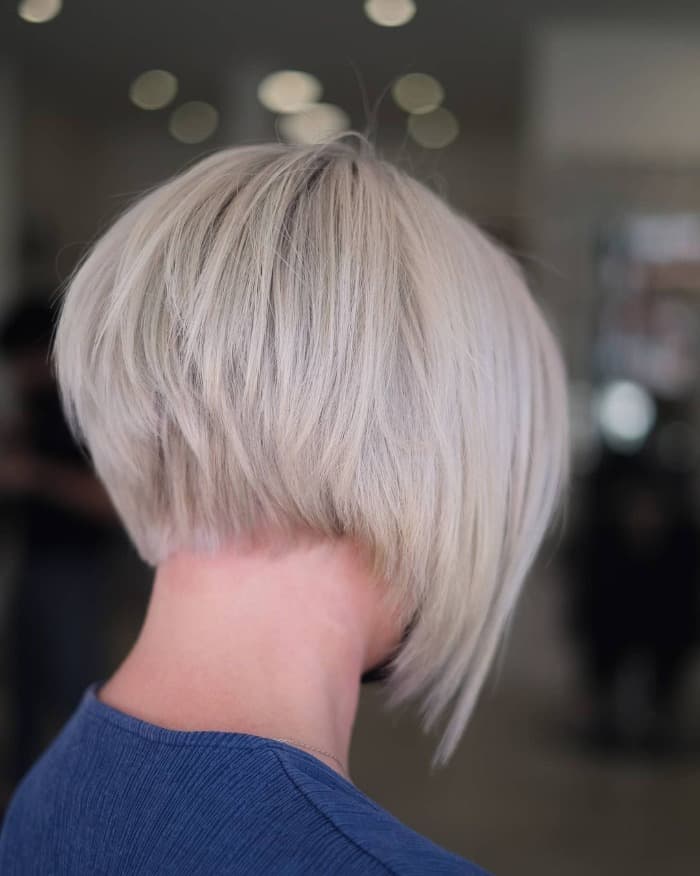
Image credit: hairstyleonpoint.com
The stacked layers at the nape create volume that fine, straight hair does not naturally hold. That is the trade: an ear-length ash blonde stacked bob looks full after a blowout and flatter by day two without help. A root-lifting spray at the crown and a round brush through the back are what keep the shape standing. Ash blonde needs toning every eight to twelve weeks to stop the cool cast going warm. Ask your stylist for: ear length stacked bob, ash blonde.
Textured Stacked Bob With Purple Tones
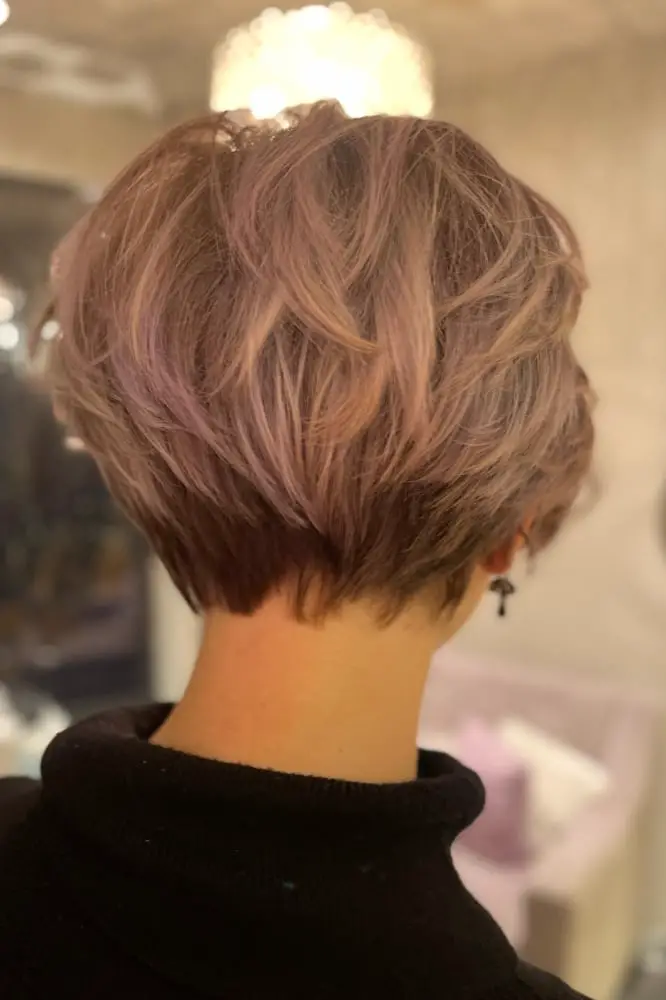
Source: fabbon.com
The stacked layers here are cut to be seen, not smoothed away. Your stylist builds the graduation at the nape first, then point-cuts through the ends so each layer separates instead of clumping into one line. On medium wavy hair, that technique turns the natural bend into shape: the wave does the lifting, and the cut gives it somewhere to go. Ear length keeps the whole thing light. The color is a light brown base with subtle purple tones, which shows most where the texture breaks up the surface. Ask your stylist for: ear length stacked bob, light brown with purple tones. A sea salt spray scrunched through damp ends defines the layers, and the shape needs a trim every six to eight weeks.
Silver White Stacked Bob With Side Bangs
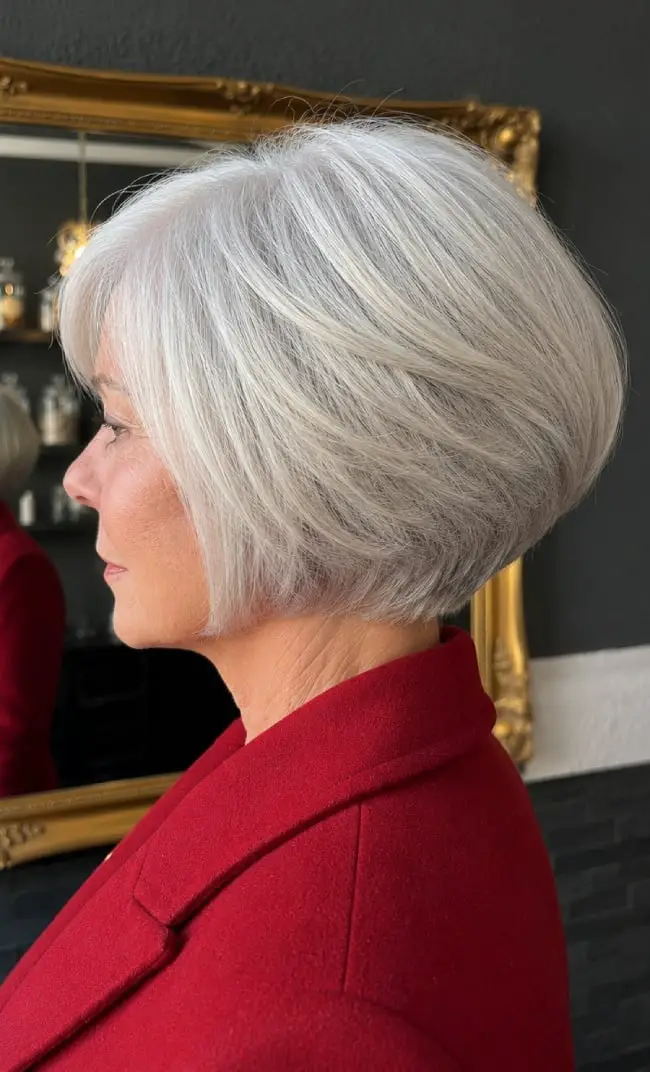
Via itakeyou.co.uk
No bangs keeps a stacked bob sharp and architectural; side-swept bangs soften the same graduation into something less severe. On this ear-length silver white version, the fringe sweeps across and breaks the hard line at the front, which suits angular faces better than a bare forehead. Fine, straight hair from chin length holds the smooth blowout without fighting it. Ask your stylist for: ear length stacked bob, silver white, side-swept bangs. A purple shampoo keeps the silver from turning yellow, and the baseline needs a trim every six weeks.
Dark Brown Stacked Bob With Vivid Undercut, Close-Up Take
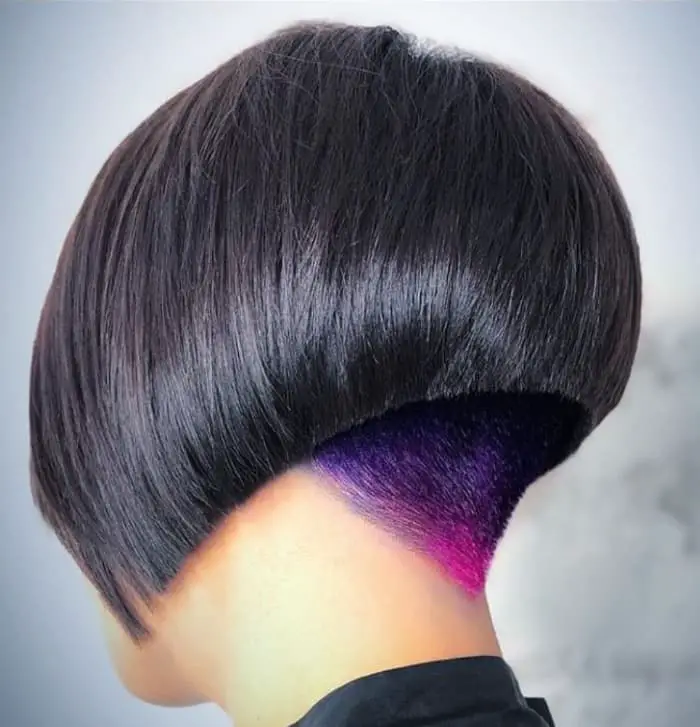
Courtesy of: hairstyleonpoint.com
Is a hidden panel of purple and pink worth the upkeep? The cut itself is a sleek stacked bob that ends above the ear, with no bangs to distract from the dark brown base. The undercut sits at the nape, and vivid fashion shades fade faster than any brown, so plan on a color refresh every four to six weeks to keep the pink from turning pastel. Ask your stylist for: stacked bob above ear, purple and pink undercut. Fine, straight hair starting at chin length wears it best; skip it if you want a cut you can ignore for three months.
Stacked Bob With Side-Swept Fringe
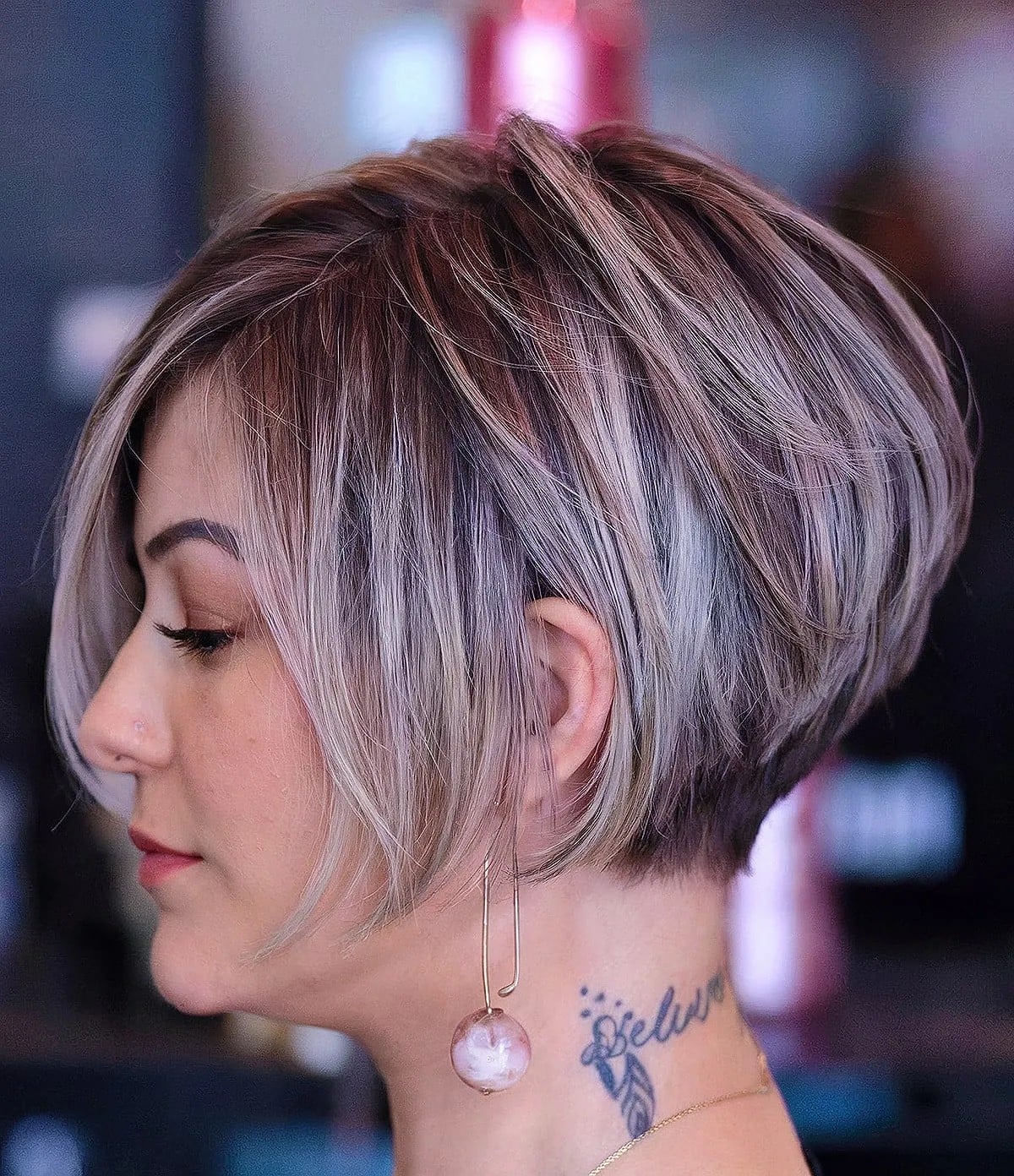
Photo credit: latest-hairstyles.com
The stacked back does the real work here, building volume where a bob usually falls flat. This version ends around the ear with a side-swept fringe and a dark brown base woven with blonde highlights. A side part and soft, wavy texture keep it from reading too severe. Ask your stylist for: stacked bob ear length, side-swept fringe. Specify the graduation you want at the nape, tighter stacking for more lift, looser for a gentler curve. The fringe should blend into the longer top layers, not sit as a separate piece.
Gray Stacked Bob With Root Shadow
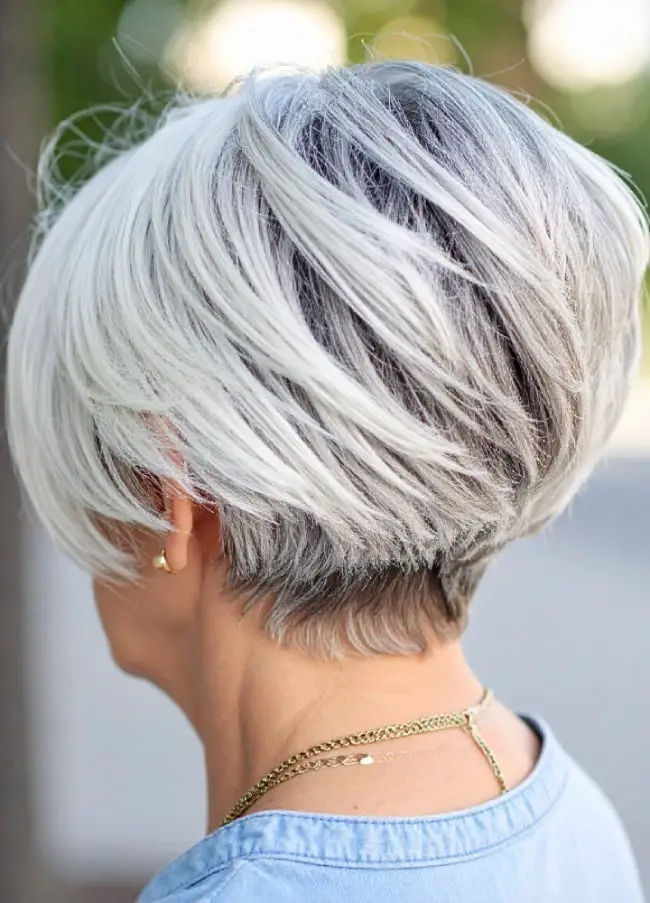
Image credit: fabmood.com
A gray stacked bob at ear length looks modern when it lands on fine, wavy texture and skips the harsh line at the root. The dark root shadow here does double duty: it adds depth at the crown and buys you time between touch-ups. Ask your stylist for: short stacked bob, gray with root shadow.
Upkeep is honest but manageable. The gray needs a toning appointment every four to six weeks to stay cool and avoid a muddy cast, but the root shadow grows out soft enough to stretch that to eight weeks. A textured blowout keeps the wavy pieces from sitting flat, and dry shampoo buys an extra day between washes.
Bob-Pixie Blend With Textured Layers
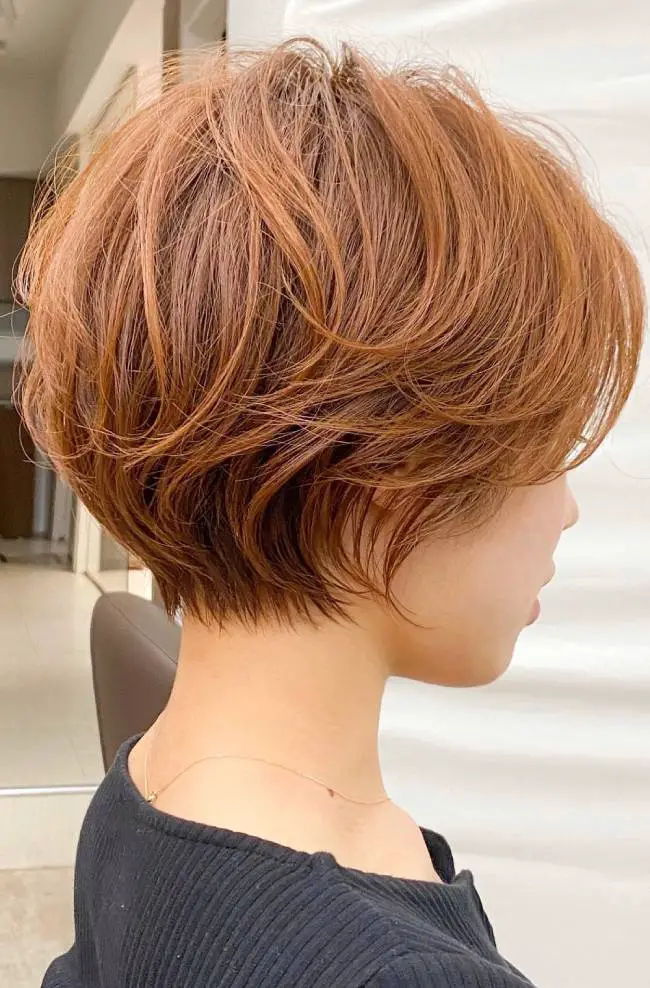
Source: fabmood.com
A traditional stacked bob keeps the weight at the nape; this bob-pixie blend removes it entirely. Short, textured layers and an ear-length ash blonde finish create a shape that sits closer to the head with more movement. It suits fine, wavy hair starting at chin length that can handle a shorter crown. Ask your stylist for: bob-pixie blend, textured layers, side-swept fringe. The difference shows in the crown: less stacking, more slicing through the top section for piecey separation.
Chin Length Bob With Curtain Bangs
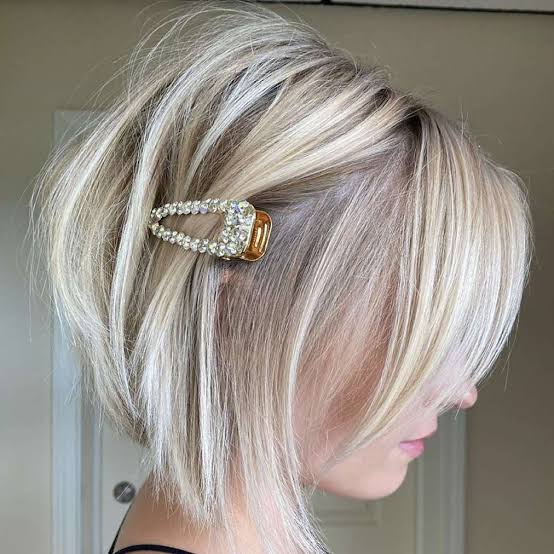
Source: southernliving.com
Does a chin-length bob work on round or square faces? It does when curtain bangs do the softening. This version uses a stacked cut for lift at the back, a middle part, and curtain bangs that sweep toward the cheekbones instead of cutting straight across. The platinum blonde with a darker root shadow keeps the grow-out period from looking undone. Ask your stylist for: chin length bob, stacked cut, curtain bangs. The bangs need a separate section cut to graze the cheekbones, not the brow, so they blend into the longer front pieces.
Stacked Bob With Curtain Bangs
Via haiirology.com
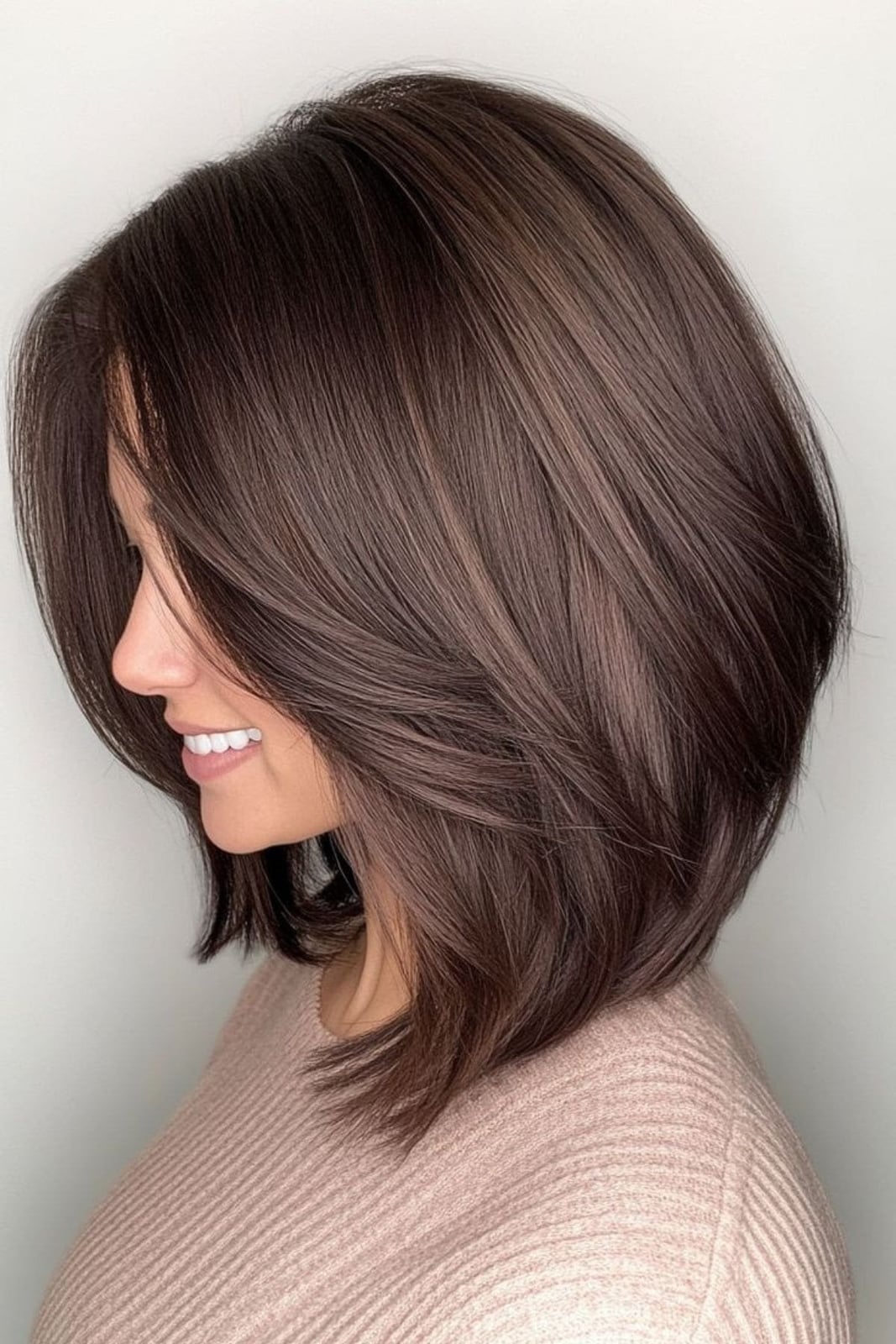
The stacked bob with curtain bangs is a lesson in geometry: the back is cut shorter and layered upward, which pushes the weight forward and gives the chin-length front a soft curve. On fine, straight hair starting at shoulder length, those stacked layers create movement without the ends looking ragged. Ask your stylist for: chin length stacked bob, curtain bangs. The side parting lets the bangs fall naturally, while a light-hold hairspray keeps the whole shape polished. The baseline will need a trim every six weeks, because that precise angle is the first thing to blur.
Medium Brown Stacked Bob With Rounded Nape
Courtesy of: itakeyou.co.uk
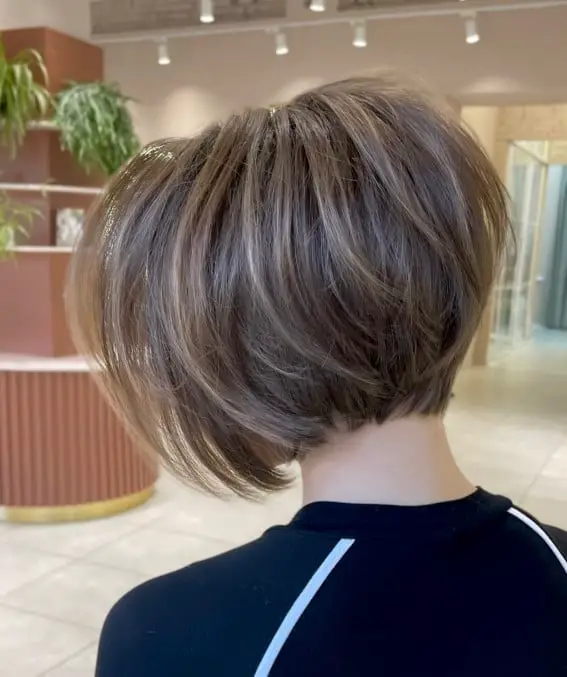
A medium brown stacked bob with a rounded nape holds its shape through the day, but only if the layers are cut to match your density. On straight, medium-density hair, the stacked back keeps its curve without flopping, though the lighter streaks can make the ends look thinner as they grow. Ask your stylist for: chin length stacked bob, rounded nape. A volumizing mousse at the roots before blow-drying gives the shape lift, and a trim every six to eight weeks keeps the nape clean and defined.
Ash Blonde Stacked Bob With Volume, Close-Up Take
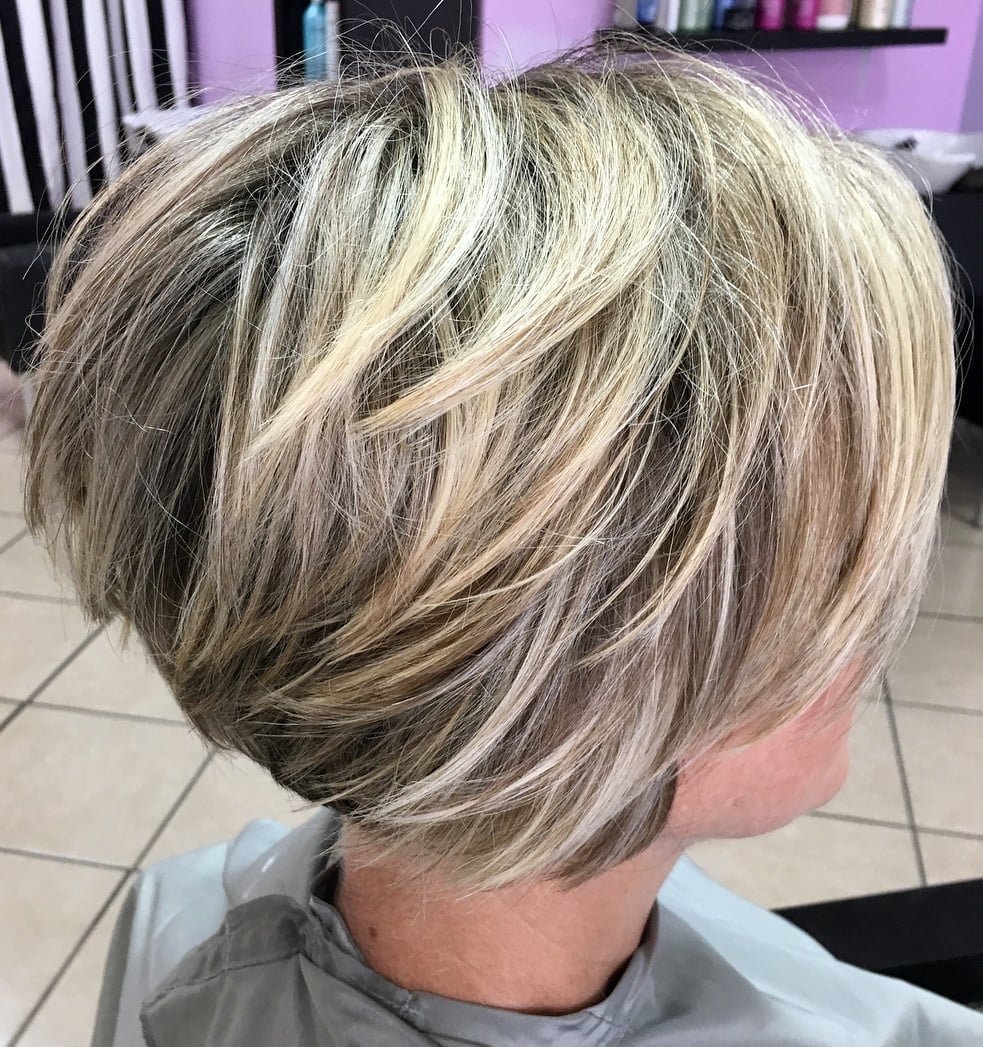
Photo credit: hadviser.com
Wondering how to get that stacked volume at the nape to look polished without puffiness? The trick is in the blowout: lift the roots with a round brush while the back is still damp, then let the wavy texture settle. On medium-density hair that starts at shoulder length, the chin-length bob with lighter highlights gains movement from the stacked layers. Ask your stylist for: chin length stacked bob, ash blonde with volume. A texturizing spray will enhance the layers for a looser finish, and a toning appointment every eight to twelve weeks keeps the ash from going brassy.
Chestnut Brown Stacked Bob
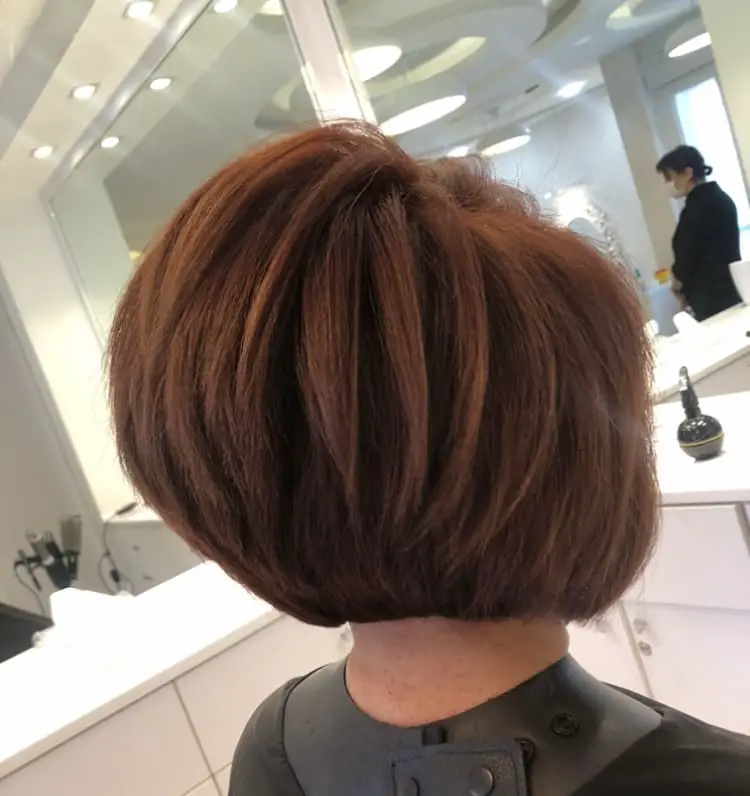
Image credit: hadviser.com
When you have thick, straight hair, resist the urge to cut the stacked back yourself. The precise graduation that makes a chestnut brown stacked bob look rounded at the nape is easy to botch at home, leaving an uneven line. Start with a shoulder-length cut and let a professional remove the bulk with internal layers, so the chin-length shape sits cleanly. Ask your stylist for: chin length stacked bob, chestnut brown with auburn highlights. A smoothing serum tames the thickness, and a trim every six to eight weeks preserves the silhouette.
Inverted Bob With Angled Cut
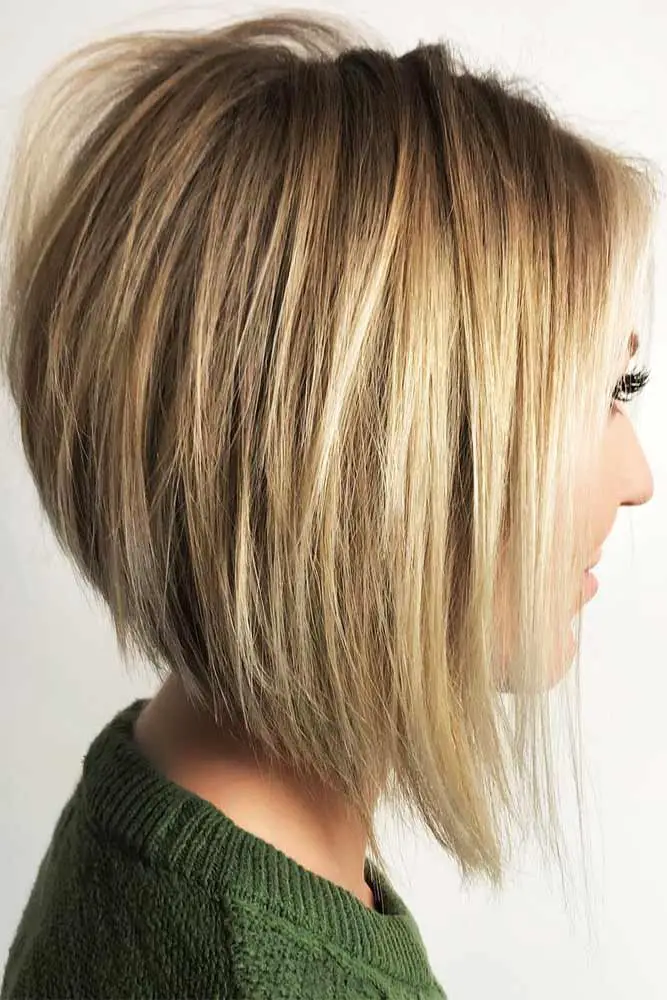
Source: glaminati.com
That line is unforgiving, so it suits medium straight hair that starts at shoulder length, where the cut can fall without flipping. A common mistake is asking for an angle that is too steep, which leaves the front looking heavy. Ask your stylist for: inverted bob, angled to the chin. A flat iron gives the sleek finish, the subtle highlights add depth, and a trim every six to eight weeks keeps the angle crisp.
Collarbone Stacked Bob With Dark Roots
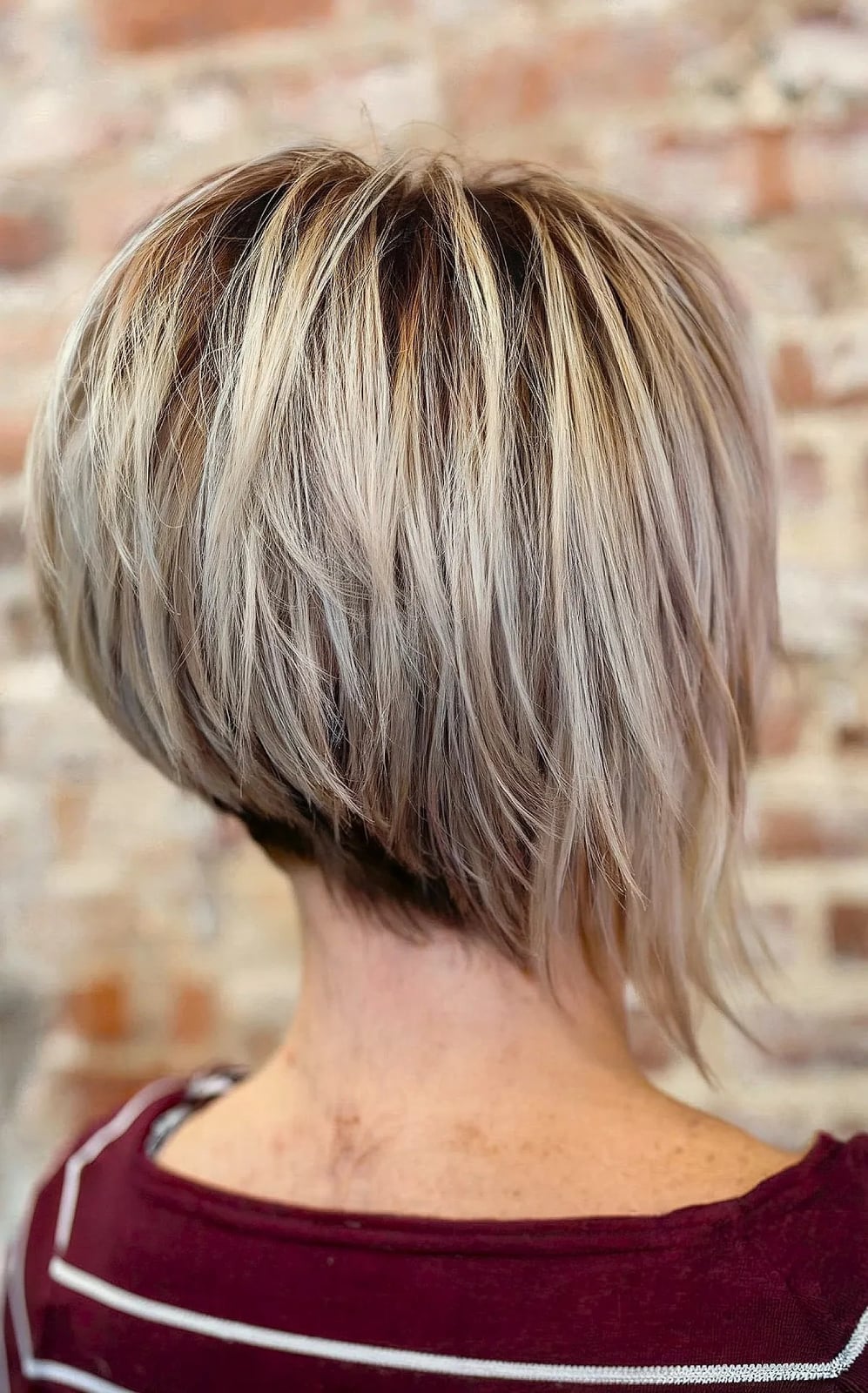
Fine, wavy hair at collarbone length can look a little flat without help. Stacked layers at the nape create the volume that texture alone won’t deliver, and the darker roots add a lived-in dimension that makes the ash blonde finish feel intentional rather than faded. Ask your stylist for: collarbone stacked bob, ash blonde with dark roots. A texturizing spray on the mid-lengths will keep the shape from collapsing into a triangle by midday. Expect a trim every six to eight weeks to maintain the graduation.
The darker root line also buys you time between color appointments, since the grow-out reads as part of the design. For anyone with fine hair who wants more body without committing to a shorter nape, this is the version that works with your texture rather than fighting it.
Dark Brown Stacked Bob With Texture
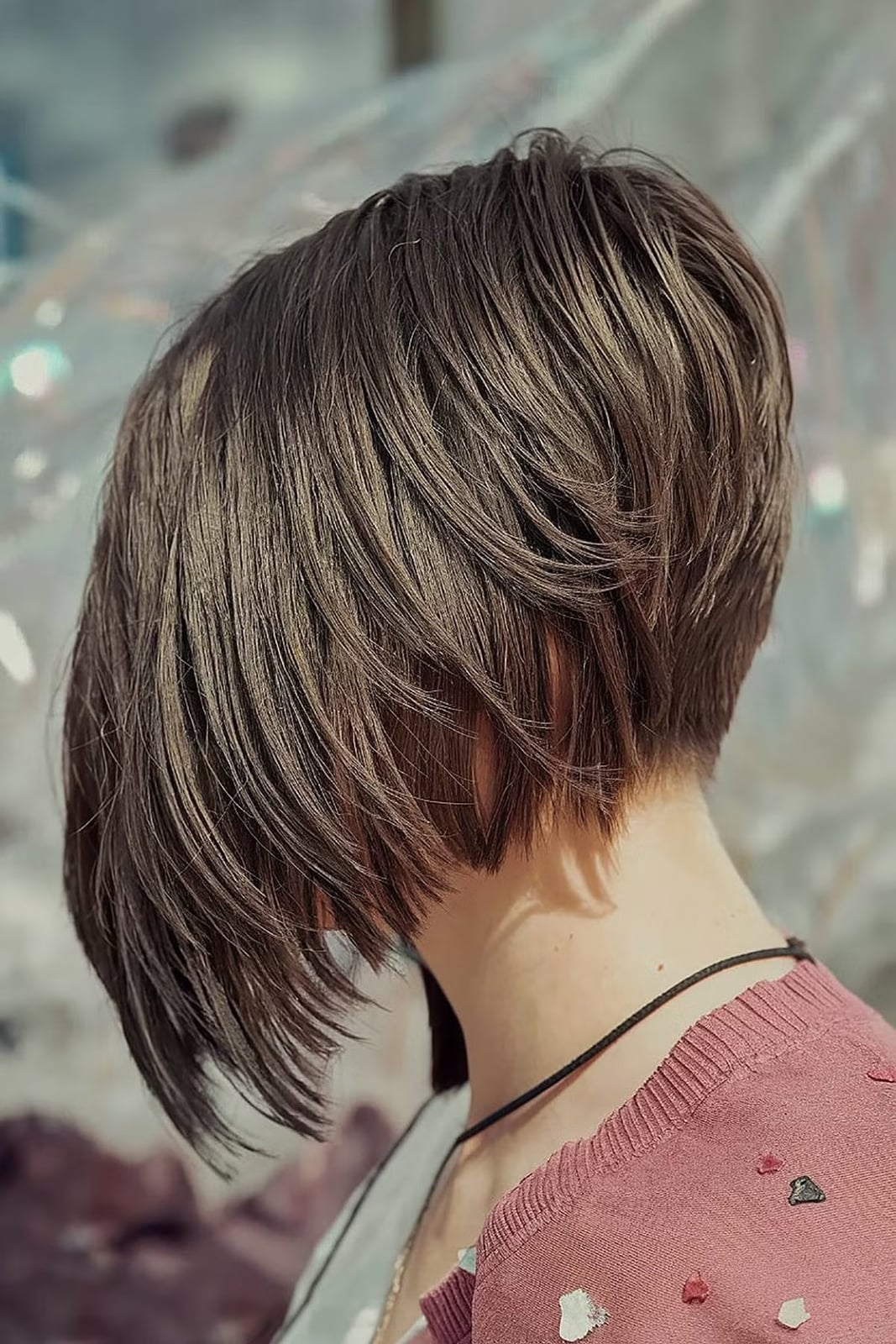
Courtesy of: latest-hairstyles.com
How does wavy, medium-density hair behave when you take it to collarbone length and stack the layers? It either falls into a shapeless blob or it looks like you meant to have that much volume. The stacked bob directs the waves to sit where the graduation builds, so the movement is concentrated at the back. Ask your stylist for: collarbone stacked bob, dark brown, textured. A diffuser attachment on low heat will enhance the wave pattern without frizz.
Air-drying works, but the result is softer and less defined. If you want the stacked shape to hold its silhouette, a quick blow-dry with a round brush at the nape makes the difference between tidy and tossed. Trims every six to eight weeks keep the layers from growing past their intended shape.
Blonde Stacked Bob With Caramel Highlights
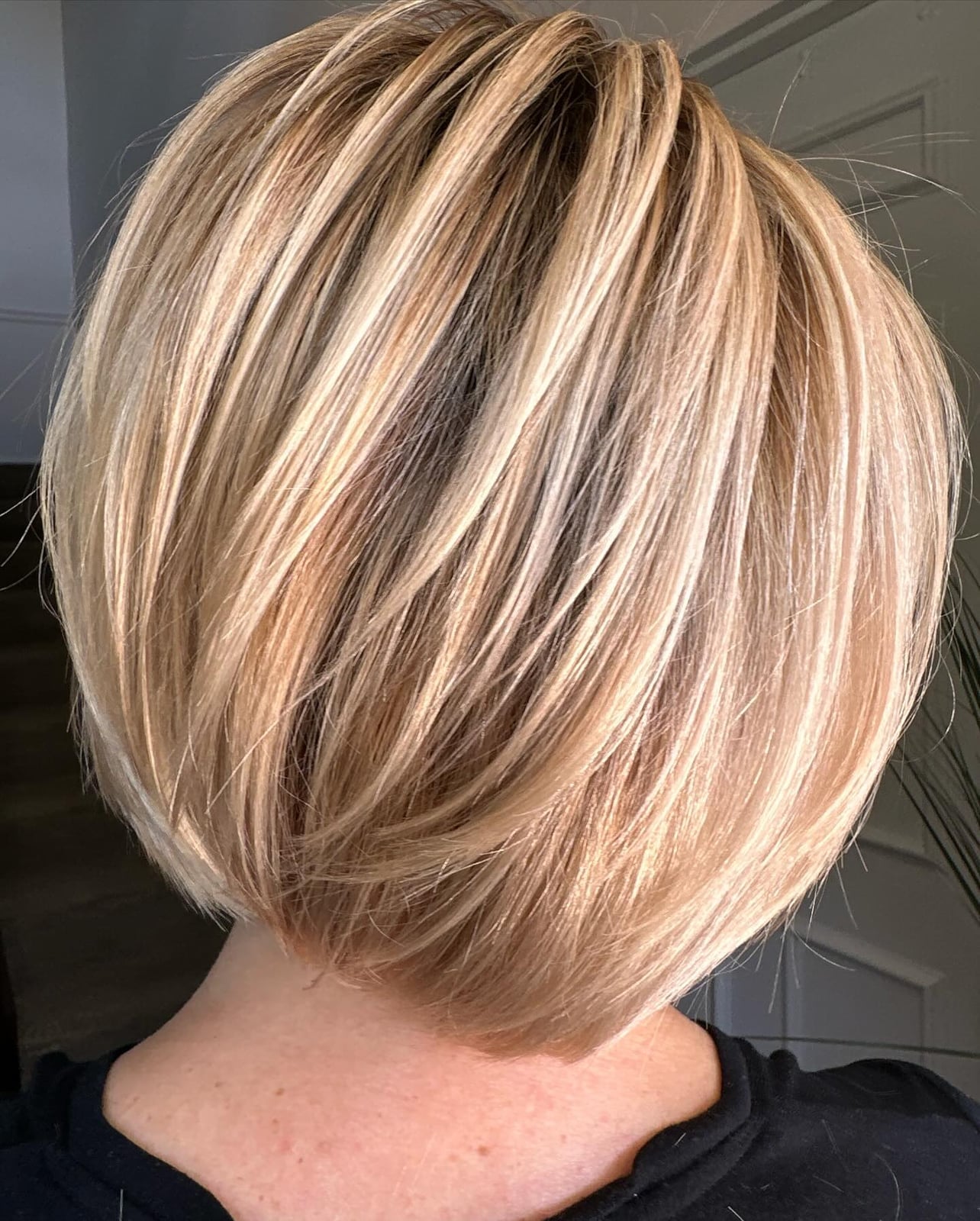
Photo credit: therighthairstyles.com
Thick, straight hair at collarbone length can feel heavy. Stacked layers lift the weight off the nape while the caramel highlights break up the solid blonde, adding depth that a single shade can’t provide. The smooth blowout keeps the polish, but the graduation gives it movement. Ask your stylist for: collarbone stacked bob, blonde with caramel highlights. A heat protectant before blow-drying helps maintain the gloss. Trims follow the six to eight week rhythm, and a toner every fourth week will keep the caramel from pulling brassy.
Stacked Bob With Dark Roots And Blonde Highlights
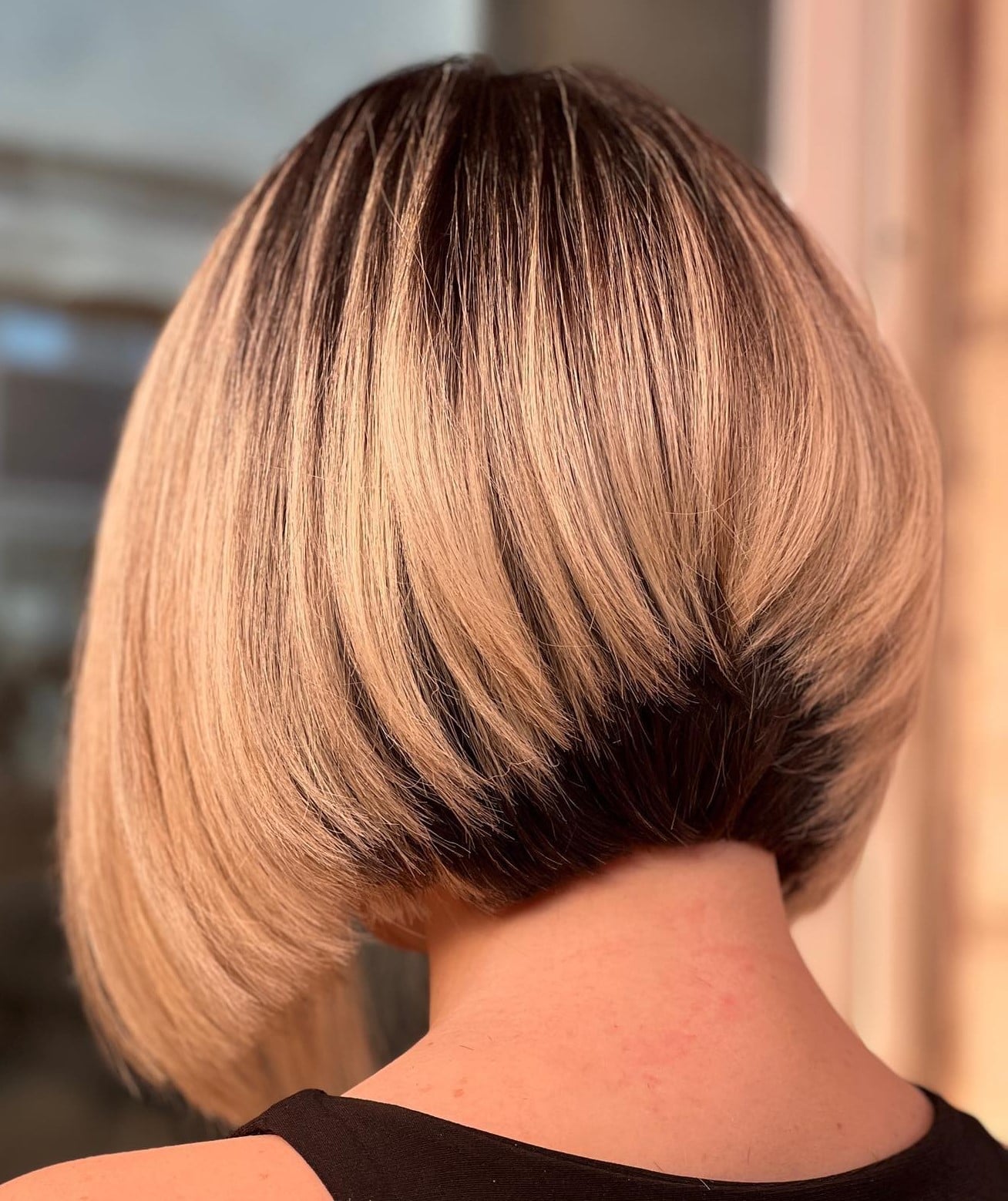
Image credit: therighthairstyles.com
A blowout with a round brush will emphasize the stacked shape, while air-drying with a smoothing cream produces a sleeker, less voluminous finish. For thick, straight hair that tends to look heavy, the graduation at the nape is the detail that changes everything.
Curly Stacked Bob With Copper Highlights
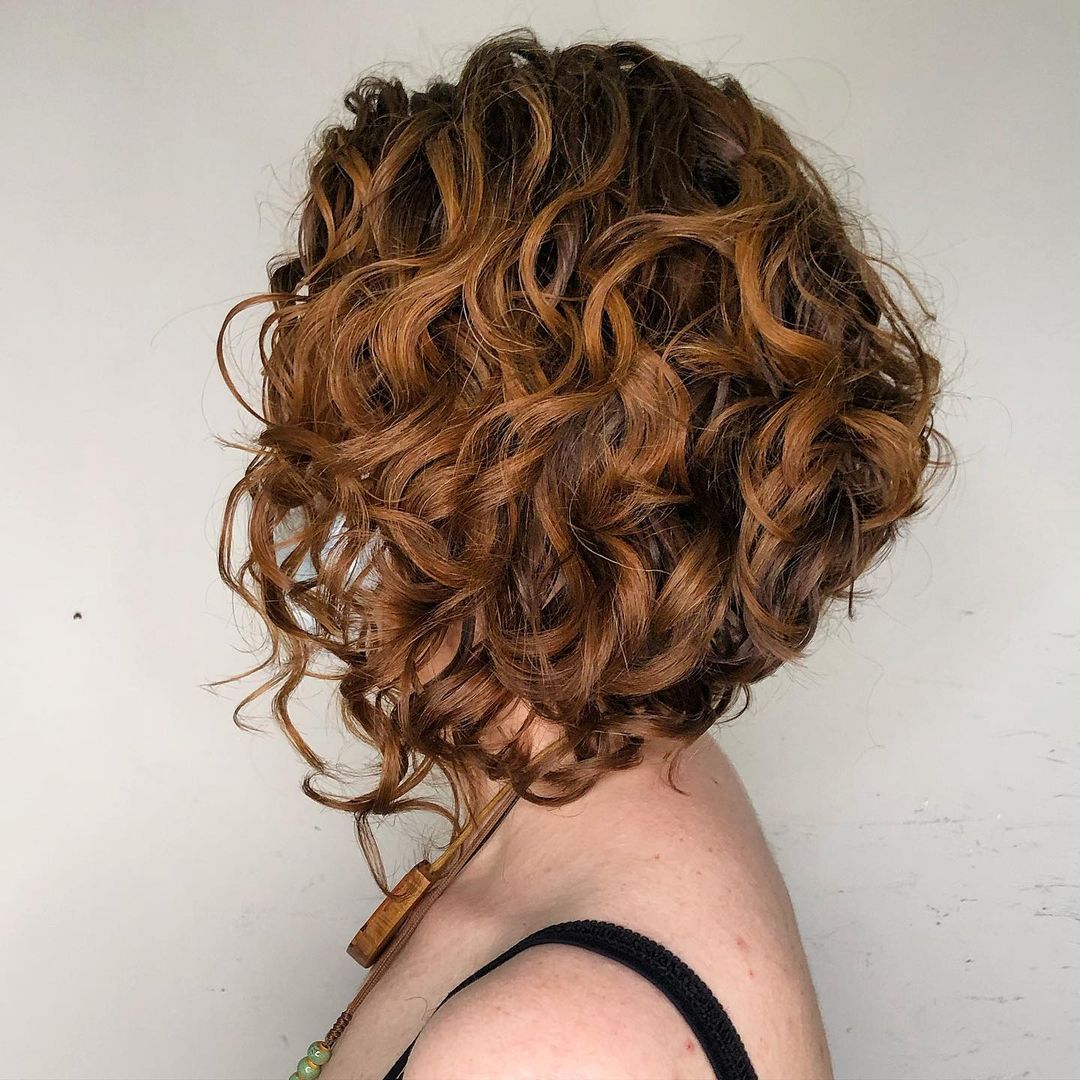
Curly hair at collarbone length can shrink into a shape that looks more round than stacked. The trick is to have the layers cut when the hair is dry and curly, so the graduation lands where it needs to be. Ask your stylist for: collarbone stacked bob, curly, copper with blonde highlights. A curl-defining cream applied to soaking wet hair will keep the copper and blonde pieces distinct, preventing them from blending into one muddy shade.
Air-drying is the fastest route, but a diffuser on low heat will add root lift without disturbing the curl pattern. Trims every eight to ten weeks are standard for curly cuts because the curl pattern hides the growth longer. If you have thick curls that tend to triangular, the stacked shape at the nape pulls the bulk inward.
Final Thoughts
For fine hair, keep the stacking tighter at the nape to build lift where you need it. Thicker hair benefits from a more graduated blend so the shape does not turn into a triangle. Low-maintenance types can skip the bangs and let longer face-framing layers carry the update.
- Trim the stacked baseline every six to eight weeks to maintain the shape.
- Use a volumizing mousse or spray before blow-drying for added lift.
- For highlighted versions, use a color-safe shampoo and conditioner.
- Toning may be needed every 8-12 weeks for ash blonde or silver shades.
Find the stacked bob that speaks to your style.
-

 Makeup Trends2 years ago
29 Harley Quinn Makeup Ideas: Iconic Looks for Every Occasion
-

 Hairstyle2 years ago
Round Face Haircuts Ideas 2025: 29 Flattering Styles to Try
-

 Hairstyle2 years ago
25 90s Layered Hair Ideas to Inspire Your 2025 Look
-

 Fashion2 years ago
27 Every Day Spring Outfits Inspiration for 2025
-

 Hairstyle2 years ago
29 Long Layered Haircuts Ideas for 2025
-

 Hairstyle2 years ago
64 Fall Hair Color Trends to Elevate Your Style in 2024
-

 Hairstyle2 years ago
Choppy Bob Haircuts 2025: 29 Stylish Ideas
-

 Hairstyle2 years ago
27 Medium Length Haircut with Layers Ideas for 2025